Looking for a structured learning path?
Explore our age-wise monthly curriculum with 4 subjects per month
Free Printable Worksheets
Browse Worksheets
Download free educational worksheets for children ages 1-8. Perfect for preschool, kindergarten, and early elementary learning activities.
Filters
Age Range
Curriculum
Tags

Letter F Worksheet: Trace, Write, and Color the Letter F!
This worksheet gives children ages 3-5 structured practice tracing, then independently writing, the letter F in both its uppercase and lowercase forms, building the fine motor precision needed for legible handwriting. Moving from a traced guide to writing F on plain lines is an important step up in independence for early writers. Coloring pictures of F words afterward reinforces the connection between the letter's shape and its beginning sound.

Letter E Tracing and Coloring Worksheet for Preschoolers
This tracing and coloring worksheet teaches children ages 3-5 to recognize and write both the uppercase and lowercase letter E, while also identifying pictures of objects that begin with that letter's sound. Practicing a letter in both its capital and lowercase forms helps children see that they represent the same sound despite looking different, an important early literacy concept. Circling matching pictures alongside the tracing also connects the visual letter shape to its corresponding beginning sound in spoken words.

Letter H Worksheet: Trace, Write, and Color the Letter H!
This worksheet gives children ages 3-5 layered practice with the letter H, moving from finger tracing to pencil tracing and finally to identifying and coloring pictures that begin with the H sound. Starting with a finger trace before picking up a pencil is a gentle way to build the motor pattern for a letter's shape without the added challenge of pencil control, making this a good scaffolded approach for less confident writers. Circling H pictures afterward reinforces the connection between the letter's shape and its beginning sound.

Letter I Tracing and Coloring Worksheet for Preschoolers
This worksheet helps children ages 3-5 build fine motor skills and letter recognition by tracing both the uppercase and lowercase forms of the letter I, then applying that recognition in a coloring task and a letter-hunt word search. Practicing a short, simple letter like I builds early writing confidence, while the letter-hunt component adds a visual-scanning challenge that pushes recognition beyond just copying a shape. Coloring pictures that start with I connects the shape to its beginning sound.

Letter T Tracing and Coloring Worksheet for Preschoolers
This worksheet helps children ages 3-5 build the fine motor control and directional awareness needed to form the letter T correctly, tracing both its uppercase and lowercase forms along guided dotted lines. Repeated tracing builds the muscle memory in small hand muscles that eventually allows children to write letters independently without a guide. Coloring pictures that begin with T and hunting for the letter in a grid also reinforce letter-sound and letter-shape recognition side by side.

Learn to Write Letter L Worksheet for Preschoolers
This worksheet builds fine motor control and letter formation skills in children ages 3-5 as they trace and then independently write the capital letter L, while also identifying words that begin with the same letter. Practicing the simple two-stroke shape of L — a straight line down and a straight line across — is a good early letter for building confidence, since its strokes are more forgiving than curved letters. Coloring L-word pictures afterward reinforces the letter-sound connection alongside the shape practice.
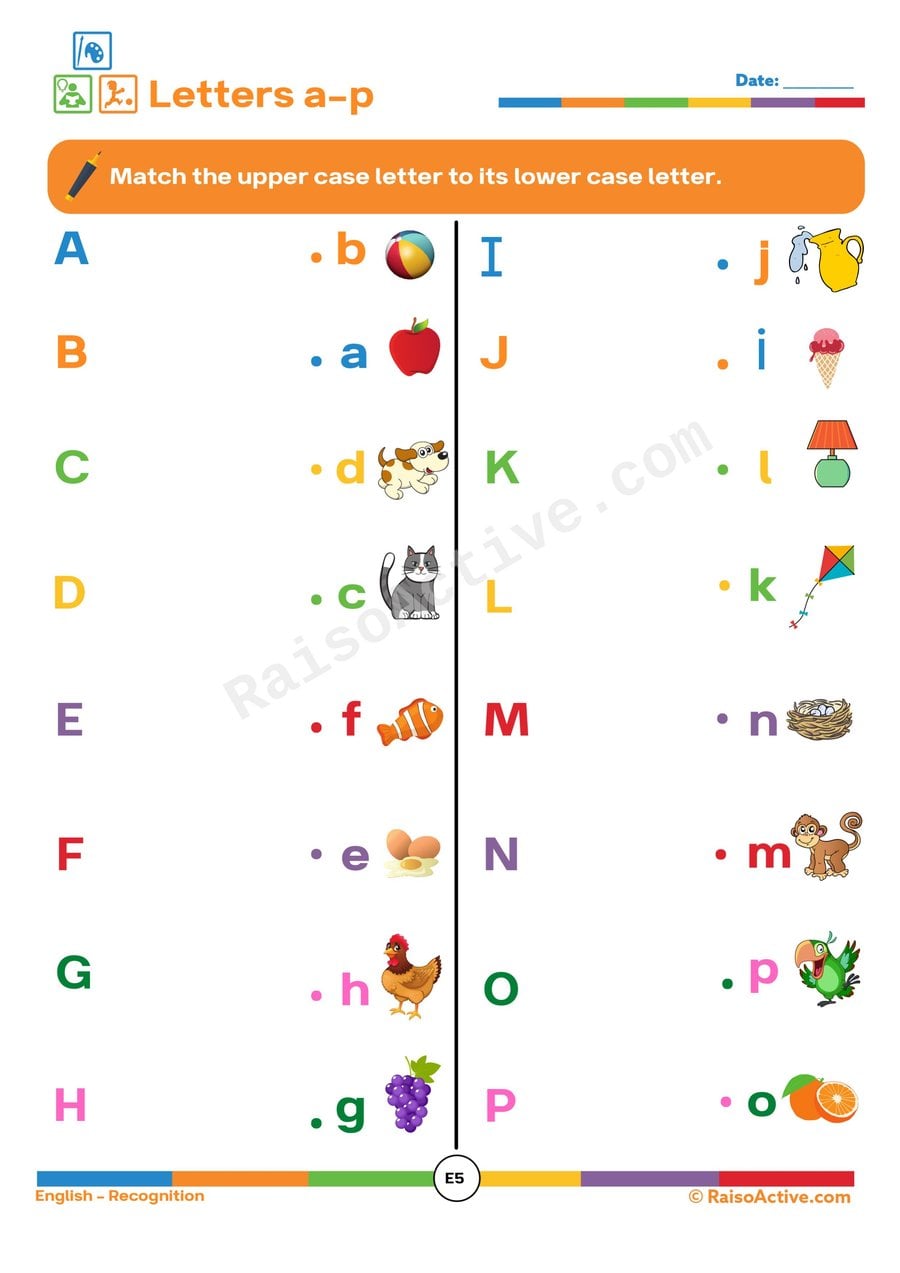
Match the Uppercase Letters: a-p Worksheet
This worksheet helps children ages 4-6 practice matching uppercase letters to their corresponding lowercase forms across the first half of the alphabet, letters A through P. Recognizing that an uppercase and lowercase letter, even ones that look quite different like G and g, represent the same letter is an essential skill for reading printed text, which mixes both cases constantly. Covering a larger range of letters than a single-letter worksheet also builds broader alphabet fluency in one sitting.
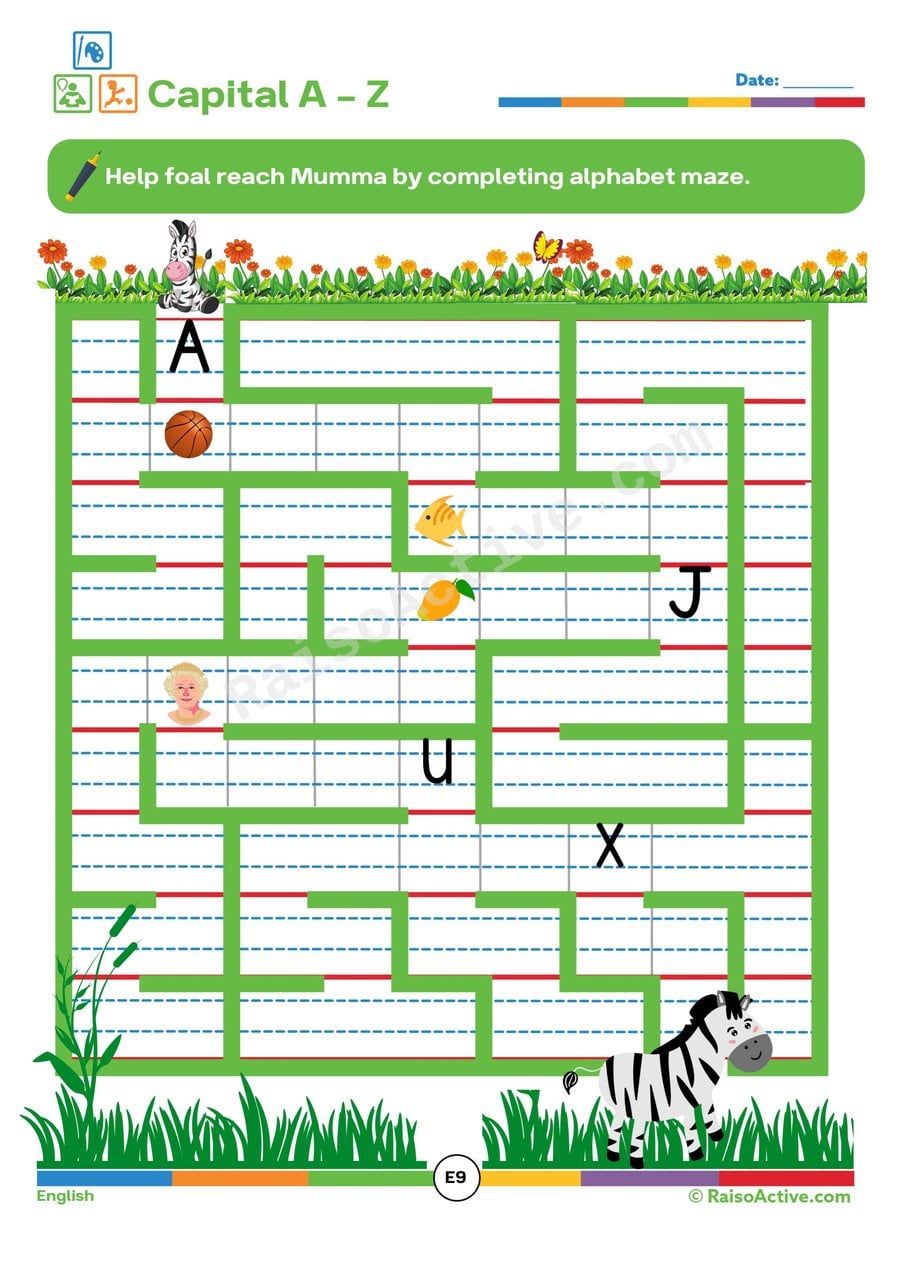
Capital Letter Maze: Help the Foal Find Mumma!
This maze worksheet combines fine motor tracing practice with capital letter recognition for children ages 3-5, as they navigate a path from letter to letter to reunite the foal with its mother. Following a maze path while simultaneously identifying letters along the way builds sustained visual attention and reinforces that letters appear in a meaningful, recognizable sequence. The storyline element also adds emotional motivation that keeps children engaged through a longer tracing task.

Alphabet Adventures: Complete the Vocabulary Table!
This worksheet helps children ages 4-6 strengthen letter-picture-word associations by filling in missing letters, finding matching pictures for each letter, and pasting them into a vocabulary table. Combining letter recall, picture matching, and gluing into one multi-step task pushes children beyond simple letter recognition into actively building and organizing vocabulary, an important step toward independent reading and writing.

Alphabet U-Z Worksheet: Find the Letter and Count!
This worksheet extends alphabet mastery to the less-practiced letters U through Z for children ages 4-6, combining beginning-sound identification with a counting task for each object pictured. Because letters at the end of the alphabet appear less often in early reading material, dedicated practice here helps round out full alphabet fluency, while the counting component keeps numeracy skills active alongside literacy.

Alphabet Adventures: Write the First Letter - A to T Worksheet
This worksheet builds early phonemic awareness in children ages 4-5 by asking them to identify a pictured object, say its name aloud, and isolate the very first sound to write as a letter. Practicing this across a wide range of letters, A through T, gives children repeated exposure to the letter-sound connection that underlies all future reading and spelling. It also strengthens letter formation as children physically write each capital letter.
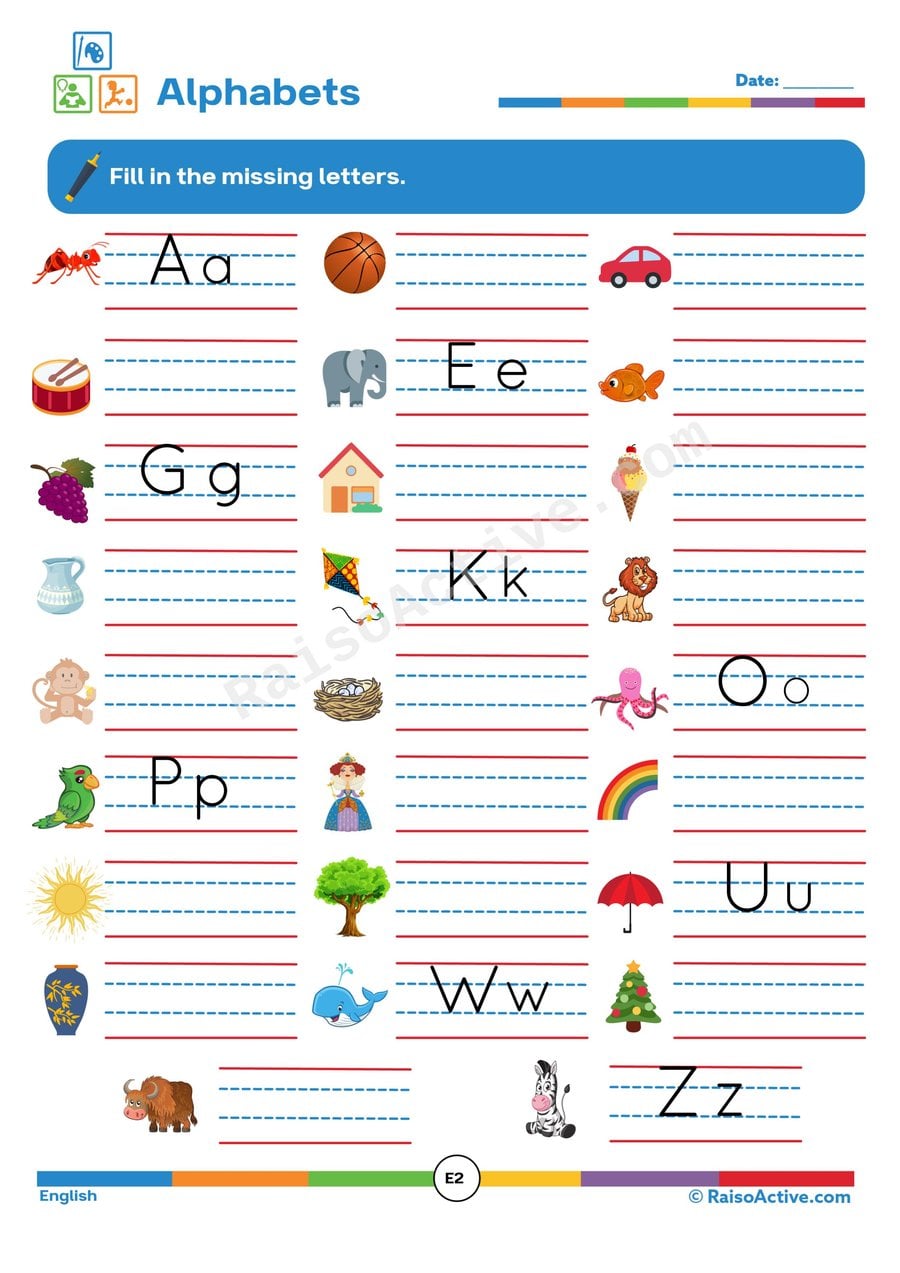
Alphabet Worksheet: Fill in the Missing Letters!
Filling in missing letters within the printed alphabet sequence builds letter recognition and sequencing for children ages 4-5, reinforcing both the order of the alphabet and the shape of each individual letter through handwriting practice.
Want Unlimited Downloads?
Subscribe to get unlimited access to all worksheets without watermarks
View Subscription Plans