Social-Emotional Learning Activities for Preschoolers: Nurturing Hearts and Minds
Author
RaisoActive - Kids Activities and Fun Learning
Published
Updated
Reading Time
12 min read

- What social-emotional learning (SEL) is and why it matters for preschoolers aged 2-6
- The 5 core SEL competencies and practical activities for each one
- Simple, everyday strategies to build emotional intelligence at home and in the classroom
- How SEL supports academic readiness, friendships, and long-term wellbeing
- Printable resources to practise emotion recognition, sharing, and cooperation
Why Social-Emotional Learning Matters More Than Ever
If you've ever watched a three-year-old burst into tears because their tower toppled, or a four-year-old beam with pride after zipping up their own jacket, you've witnessed social-emotional learning in action. These moments — big feelings, small victories, tricky social situations — are the building blocks of emotional intelligence.
Social-emotional learning (SEL) is the process through which children learn to understand and manage their emotions, show empathy for others, build healthy relationships, and make thoughtful decisions. For preschoolers, this isn't a separate "subject" to teach — it's woven into every interaction, every game of pretend, every moment of sharing (or not sharing!) a favourite toy.
Research consistently shows that children with strong social-emotional skills are better prepared for school, form stronger friendships, and develop greater resilience. And the best part? You don't need fancy programmes or expensive materials. The most powerful SEL activities happen through everyday moments — at the breakfast table, during playtime, and in those quiet bedtime conversations.
Get SEL activity ideas in your inbox
Free printable worksheets, activity guides, and expert tips for nurturing emotional intelligence in young children.
A landmark meta-analysis of over 200 studies found that children who participated in SEL programmes showed an 11-percentile-point gain in academic achievement compared to peers who did not.
Source: CASEL/Durlak et al., 2011
The 5 Core SEL Competencies Every Preschooler Needs
The Collaborative for Academic, Social, and Emotional Learning (CASEL) framework identifies five core competencies. Think of these as the pillars of your child's emotional development. Let's explore each one with activities you can try today.
1. Self-Awareness: Knowing My Feelings
Self-awareness is the ability to recognise and name one's own emotions, strengths, and challenges. For a preschooler, this means learning that the tightness in their chest is called "frustration" or the bubbly feeling is "excitement." When children can label their emotions, they're already halfway to managing them.
Feelings Check-In Chart
Create a simple feelings chart with 4-6 emotion faces (happy, sad, angry, scared, surprised, calm). Each morning, ask your child to point to how they're feeling. This daily ritual normalises talking about emotions and builds emotional vocabulary. You can use our printable emotion face cards to get started.
Mirror Emotions Game
Stand in front of a mirror with your child and take turns making different emotion faces. Ask: "What face is this? When do you feel like this?" This simple game helps children connect facial expressions to feelings — a foundational skill for both self-awareness and empathy.
- Label 4-5 jars or containers with different emotion faces (happy, sad, angry, calm, worried)
- Cut out pictures from old magazines showing people with different expressions
- Ask your child to sort the pictures into the matching emotion jars
- Talk about each picture: "Why do you think this person looks sad?"
- Extend the activity by asking your child to draw their own emotion faces
2. Self-Management: Handling Big Feelings
Self-management is the ability to regulate emotions, control impulses, and work towards goals. For preschoolers, this is hard work — their prefrontal cortex (the brain's control centre) is still developing. That's why tantrums are normal and expected. Our job isn't to stop big feelings but to help children learn healthy ways to move through them.
The Calm-Down Sequence (Teach This to Your Child)
Stop and notice
Help your child recognise the physical signs of big emotions: "Your fists are clenched. Your face feels hot. That tells us a big feeling is here."
Name the feeling
Use simple language: "It sounds like you're feeling really angry right now." Naming the emotion reduces its intensity — neuroscientists call this "name it to tame it."
Breathe together
Try "balloon breathing" — breathe in slowly through the nose as if inflating a balloon in your tummy, then breathe out slowly through the mouth. Do this 3-5 times together.
Choose a strategy
Offer 2-3 options: "Would you like to squeeze the stress ball, take a break in the cosy corner, or draw your feelings?" Giving choices builds autonomy.
Reflect afterwards
Once calm, talk briefly about what happened: "You were upset because your block tower fell. You took deep breaths, and that helped. I'm proud of you."
Emotional regulation is a skill, not a switch. Children need hundreds of guided practice moments before they can self-regulate independently. Be patient — every calm-down attempt is building neural pathways.
Create a Calm-Down Corner
Designate a small, cosy space in your home or classroom as a calm-down corner. Fill it with soft cushions, a jar of glitter (shake it and watch the glitter settle — just like big feelings settling down), stress balls, emotion cards, and a few favourite books. This isn't a "time-out" space — it's a safe haven where children can go voluntarily to manage their emotions.
3. Social Awareness: Understanding Others
Social awareness is the ability to empathise with others, understand different perspectives, and appreciate diversity. Preschoolers are naturally egocentric — they're still learning that other people have feelings and thoughts different from their own. Empathy doesn't come automatically; it develops through guided experiences.
Story Time with Feeling Questions
During story time, pause and ask perspective-taking questions: "How do you think the little bear feels right now? Why is he sad? What would you do if you were the bear?" Picture books are one of the most powerful tools for building empathy because they let children safely explore emotions from a distance.
- **The Colour Monster** by Anna Llenas — brilliant for naming and sorting emotions
- **Have You Filled a Bucket Today?** by Carol McCloud — teaches kindness and its ripple effect
- **Hands Are Not for Hitting** by Martine Agassi — great for discussing gentle behaviour
- **The Dot** by Peter H. Reynolds — encourages self-belief and creativity
- **Suno Suno: Listen** by Nandini Nayar — a beautiful Indian picture book about listening and empathy
Community Helper Role Play
Set up a pretend play station where children can be doctors, shopkeepers, teachers, or firefighters. Role play naturally builds perspective-taking skills as children step into someone else's shoes. Ask guiding questions: "What does the doctor need to do to help the patient feel better?" In Indian contexts, you might include roles like a dabbawala, a chai-wala, or a neighbourhood dhobi — making the play culturally relevant and meaningful.
4. Relationship Skills: Getting Along with Others
Relationship skills include the ability to communicate clearly, listen actively, cooperate, negotiate, and resolve conflicts constructively. For preschoolers, this often comes down to the fundamentals: taking turns, sharing, using kind words, and asking for help. These skills don't develop in isolation — they need real social practice.
The Sharing Clock
When two children want the same toy, use a visual timer (a sand timer works beautifully). One child plays for the timer's duration, then it's the other child's turn. This makes sharing concrete and predictable rather than abstract. Over time, children begin to internalise the concept of fair turn-taking.
Cooperative Art Projects
Give a group of children one large sheet of paper and ask them to create a collaborative mural or collage together. They'll need to negotiate space, share materials, and combine ideas. The emphasis is on the process, not the product. Afterwards, talk about how it felt to work together: "What was easy? What was tricky? How did you solve disagreements?"
- +"Can I have a turn when you're done?"
- +"I don't like it when you do that."
- +"Can you help me, please?"
- +"Let's find a way to play together."
- +"I feel sad when you say that."
- -"Give it to me!" (grabbing)
- -"You're mean!" (labelling)
- -Crying without asking for help
- -"I'm not playing with you!" (excluding)
- -Hitting or pushing (physical response)
Model the social language you want children to use. When they hear you say "I feel frustrated, so I'm going to take a deep breath," they learn that adults have big feelings too — and that there are healthy ways to handle them.
5. Responsible Decision-Making: Thinking Before Acting
Responsible decision-making involves learning to evaluate situations, consider consequences, and make constructive choices. While preschoolers aren't yet making complex ethical decisions, they are capable of simple choice-making — and every small decision builds this muscle.
The "What Would You Do?" Game
Present your child with simple social scenarios and ask what they would do: "Your friend fell down and is crying. What would you do?" "Someone took your crayon without asking. What could you say?" There are no wrong answers — the goal is to practise thinking through situations before they happen in real life.
Choice Boards
Offer structured choices throughout the day: "Would you like to paint or build with blocks?" "Should we read the book about feelings or the one about friends?" Giving children age-appropriate choices helps them practise weighing options and experiencing the outcomes of their decisions.
- Narrate your own emotions throughout the day: "I feel happy because we're cooking together"
- Avoid dismissing feelings with "don't cry" — instead, validate: "It's okay to feel sad"
- Practise "emotion coaching" — help children identify, accept, and work through feelings
- Read together daily and discuss characters' emotions and motivations
- Create family rituals like gratitude circles at dinner or "rose and thorn" sharing
- Be patient with social mistakes — every conflict is a learning opportunity
Weaving SEL into Your Daily Routine
The most effective SEL happens not in formal "lessons" but in the natural rhythm of the day. Here's how you can embed social-emotional learning into everyday moments without adding anything extra to your schedule.
- Morning arrival: Greet each child by name and ask how they're feeling today (self-awareness)
- Meal times: Practise waiting, sharing, and saying "please" and "thank you" (relationship skills)
- Free play: Observe and gently guide social interactions — step in to coach, not control (social awareness)
- Clean-up time: Work together as a team, assign roles, and celebrate group effort (cooperation)
- Story time: Pause to discuss characters' emotions and choices (empathy and decision-making)
- Transitions: Use deep breathing or singing to manage the discomfort of change (self-management)
- Goodbye rituals: End the day with a positive affirmation or a reflection on one kind thing someone did
For every ₹1 invested in quality early childhood SEL programmes, there is an average return of ₹6 in reduced need for remedial education, mental health services, and juvenile justice involvement.
Source: Heckman Equation / Nobel Laureate James Heckman
Common SEL Challenges and How to Navigate Them
The Child Who Struggles to Share
Sharing is genuinely difficult for preschoolers — it goes against their developmental instinct for ownership. Instead of forcing sharing, try parallel play first (playing side by side), then introduce turn-taking with a timer. Praise specific sharing behaviours: "I noticed you gave Aarav the red crayon. That was so kind!" Over time, children share more willingly when it's modelled and appreciated, not demanded.
The Child with Frequent Meltdowns
Frequent meltdowns are a sign that a child's emotional cup is overflowing. Look for patterns — are meltdowns happening at certain times of day, during transitions, or in overstimulating environments? Proactive strategies include giving advance warnings before transitions ("In five minutes, we'll tidy up"), maintaining consistent routines, and ensuring the child has enough downtime. Remember, behaviour is communication.
The Shy or Withdrawn Child
Some children are naturally more reserved, and that's perfectly fine. Introversion is not a problem to fix. However, you can gently support social confidence by pairing the child with one calm, kind peer for small-group activities, offering roles that play to their strengths (the artist, the book-reader), and never forcing participation. Create low-pressure opportunities for connection, like side-by-side drawing or building.
Every child develops social-emotional skills at their own pace. Comparing children is unhelpful — focus on individual progress and celebrate small steps. A child who managed to wait 30 seconds for their turn today has made real progress, even if other children can wait longer.
Build Stronger Social-Emotional Skills with Printable Activities
Join thousands of parents and teachers who use our free worksheets to help preschoolers learn about emotions, empathy, and cooperation. Subscribe for weekly activity ideas delivered to your inbox.
Frequently Asked Questions About SEL for Preschoolers
At what age should I start social-emotional learning activities?
How is SEL different from just teaching children to "be good"?
My child is very aggressive with other children. Will SEL activities help?
Can I do SEL activities at home, or does it need a classroom setting?
How do I know if SEL activities are working?
Are there any SEL resources specifically designed for Indian preschoolers?
Free worksheets for this topic
Browse all worksheets
Stick Man Emotions Worksheet: Happy, Sad, Angry, and Surprised!
Ages 4-6 · Pre-K–KindergartenAges 4-6 · Reception–Year 1Ages 4-6 · LKG–UKGAges 4-6
Children ages 4-6 practice reading facial expressions on this worksheet, matching stick-figure faces to their correct emotion labels by noticing details like mouth shape and eyebrow position. This strengthens emotional literacy — the ability to name and recognize feelings in others — which supports empathy and smoother social interactions as children move into more group play and classroom settings.
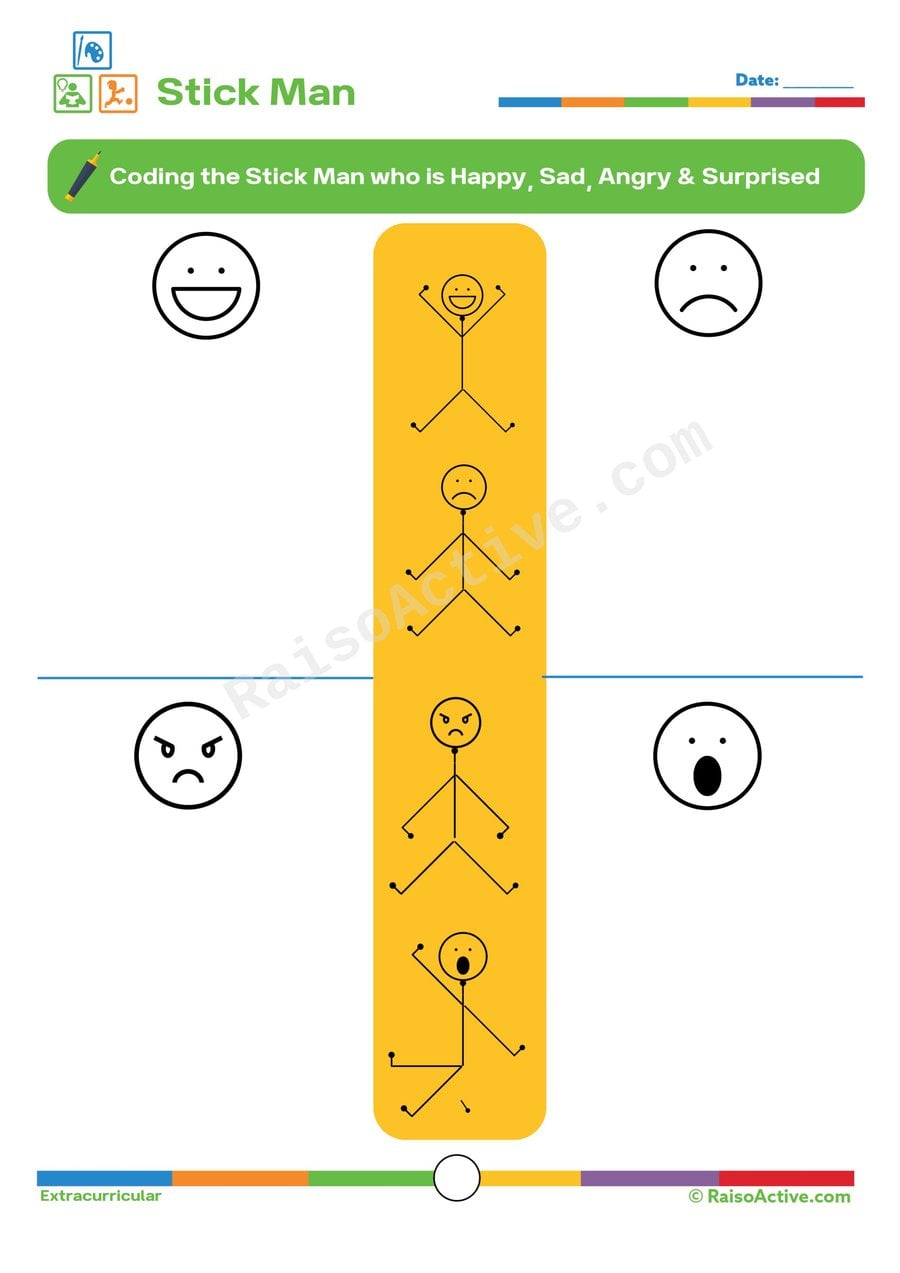
Stick Man Emotions Worksheet: Happy, Sad, Angry & Surprised!
Ages 3-5 · Preschool–Pre-KAges 3-5 · Nursery–ReceptionAges 3-5 · Nursery–LKGAges 3-5
Matching simple stick-figure faces to emotion words helps children ages 3-5 build an early emotional vocabulary, connecting facial cues like a curved mouth or raised eyebrows to specific feeling words. This kind of emotion recognition is a foundational social-emotional skill, helping children name what they and others are feeling instead of just reacting.
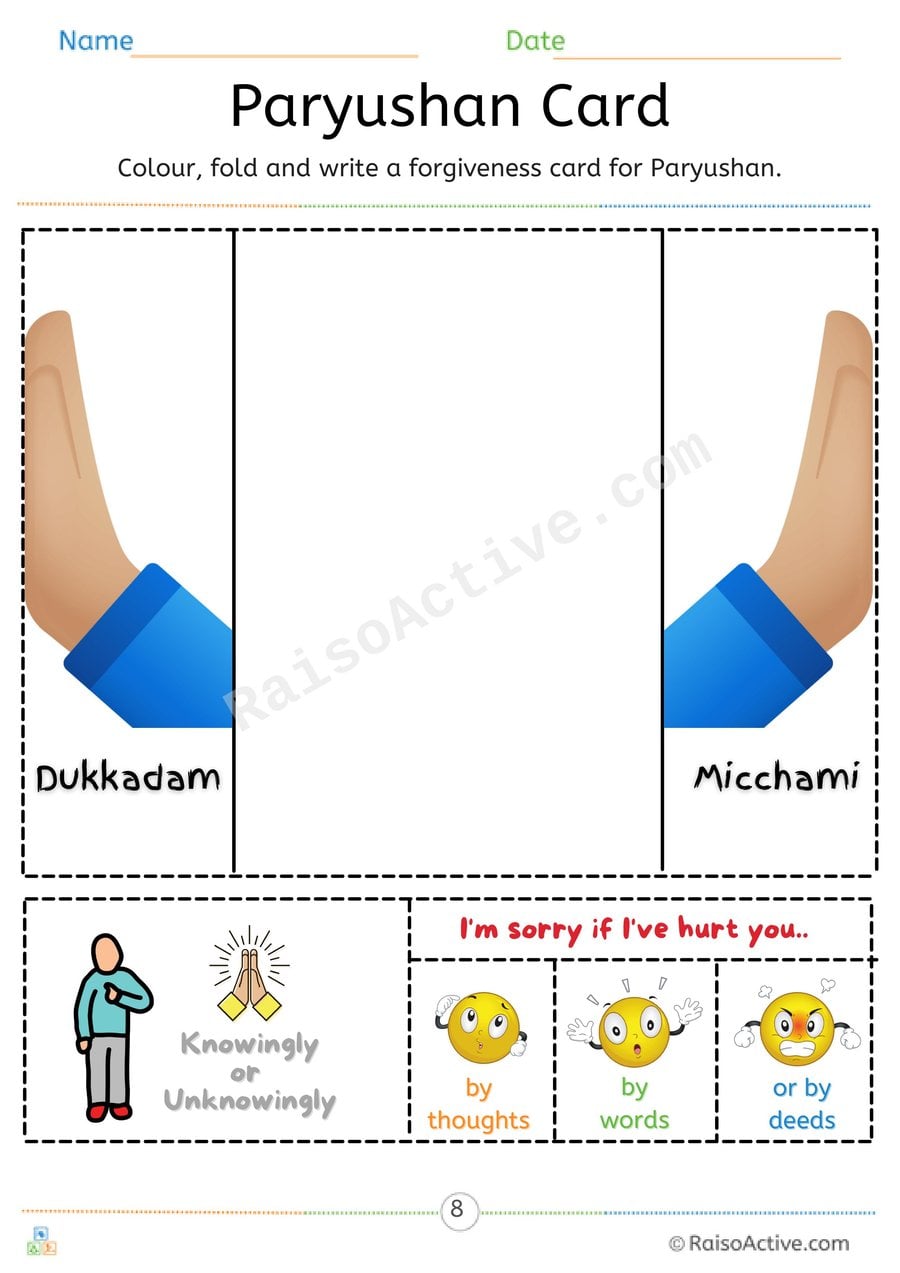
Paryushan Forgiveness Card Worksheet for Kids
Ages 4-8 · Pre-K–Grade 2Ages 4-8 · Reception–Year 3Ages 4-8 · LKG–Class 2Ages 4-8
Children learn that at Paryushan, Jains ask forgiveness with the words Micchami Dukkadam, and think about saying sorry for hurt caused by thoughts, words or deeds.
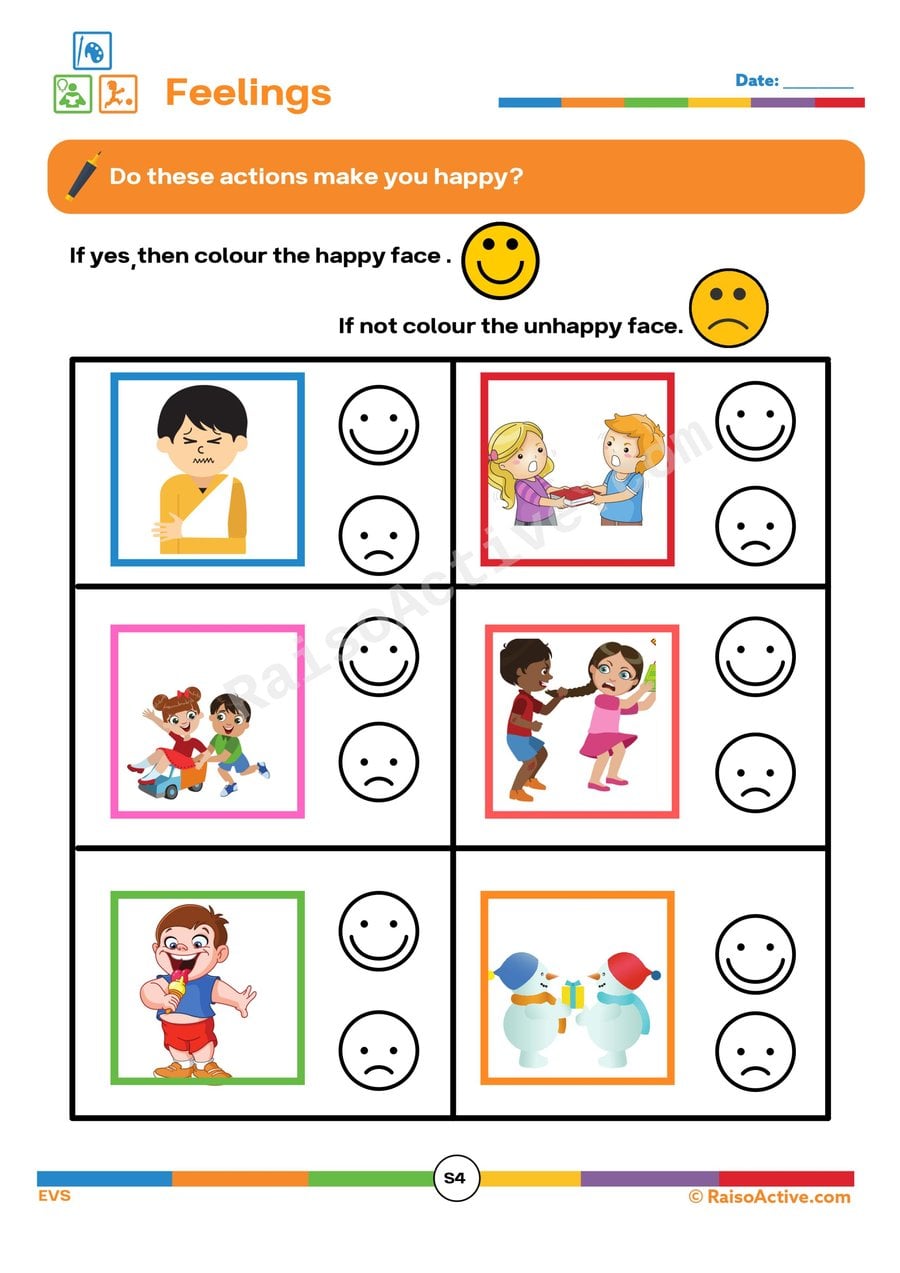
Feelings Worksheet: Happy or Sad?
Ages 3-5 · Preschool–Pre-KAges 3-5 · Nursery–ReceptionAges 3-5 · Nursery–LKGAges 3-5
Children ages 3-5 build emotional vocabulary and self-awareness as they decide whether different everyday situations would make them feel happy or sad. Naming and sorting emotions based on a scenario is an early social-emotional skill that helps children recognize and eventually talk about their own feelings more clearly.

Written by
Hemsweta Jain · Teacher Cheena
MBA and Early Childhood Educator, teaching since 2014 · Founder of RaisoActive, Mumbai
Published · Last reviewed
Related posts

Helping Your Shy Child Thrive in Learning Activities: A Complete Guide for Parents and Educators
Discover gentle strategies to help shy and introverted children flourish in learning activities and social settings — without forcing them out of their shell.
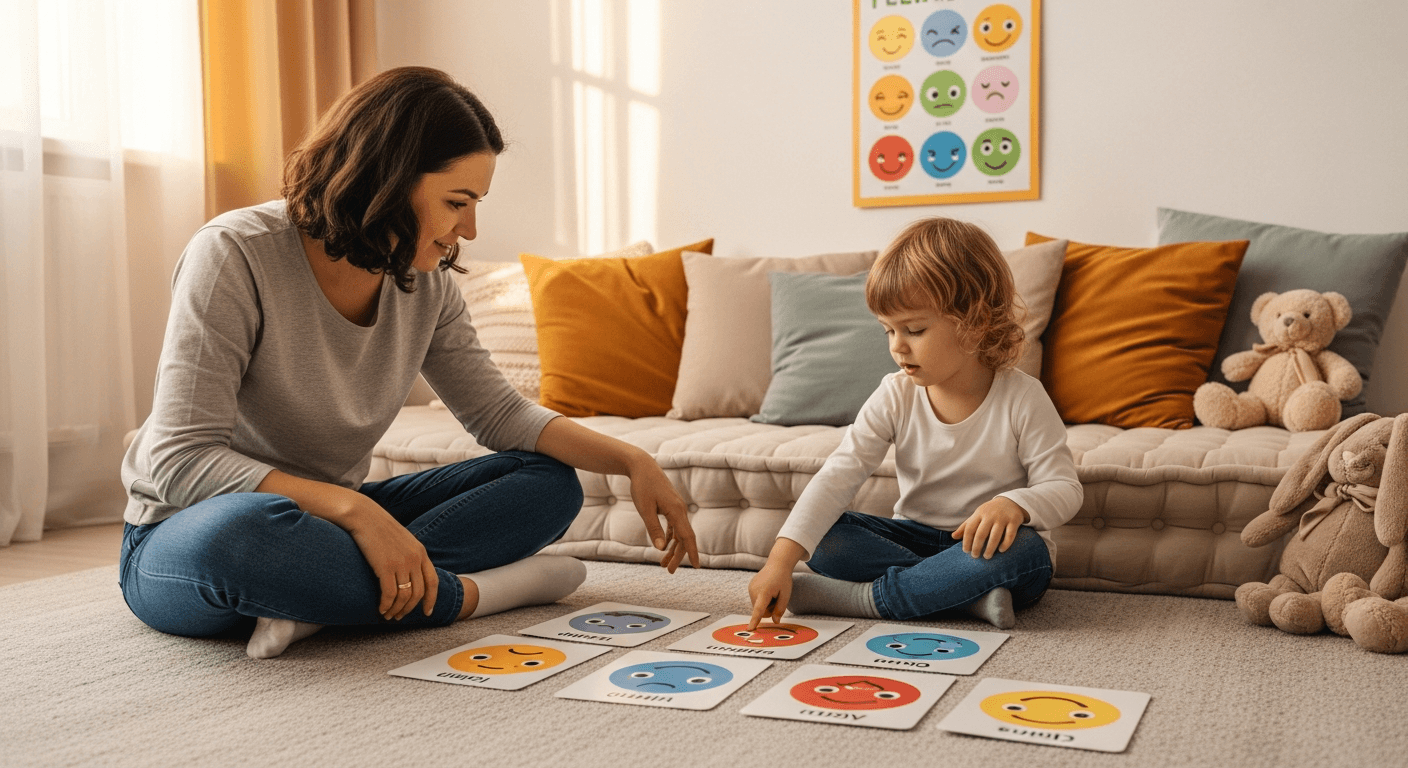
Addressing Mental Health with Young Children: A Compassionate Guide for Families
Learn how to support your young child's mental health with compassionate strategies. Recognise signs, build emotional resilience, and know when to seek professional help.
Building Bridges: How to Connect with Other Parents Facing Similar Challenges
Discover practical ways to connect with other parents facing similar challenges. From WhatsApp groups to school communities, build your support network today.
Related Resources
Printable Resources(9)
View all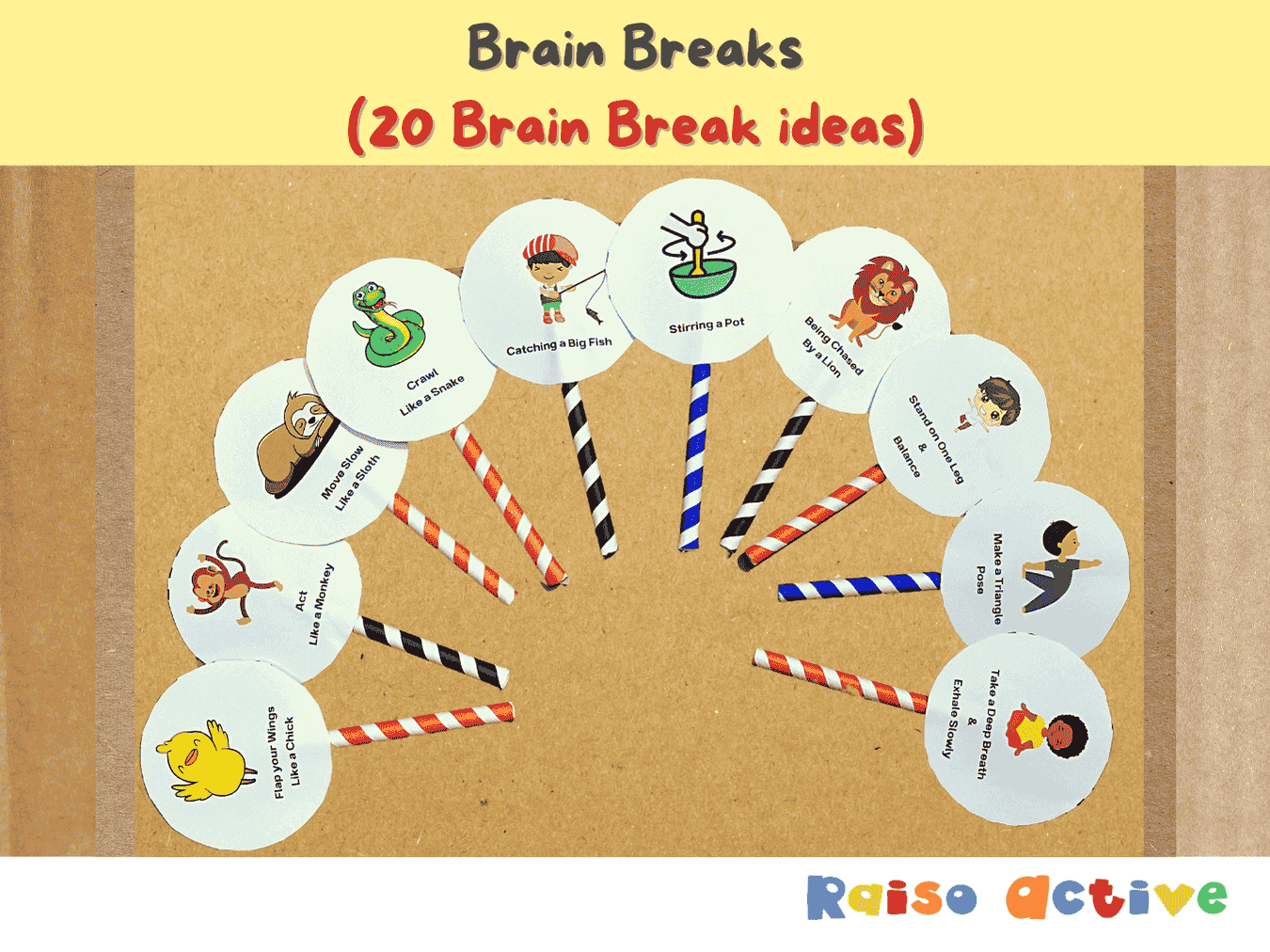
Gross Motor Movement & Imaginative Play Flashcards for Toddlers & Preschoolers
Ages 2-5 · Preschool–Pre-KAges 2-5 · Nursery–ReceptionAges 2-5 · Nursery–LKGAges 2-5 · 5 pages
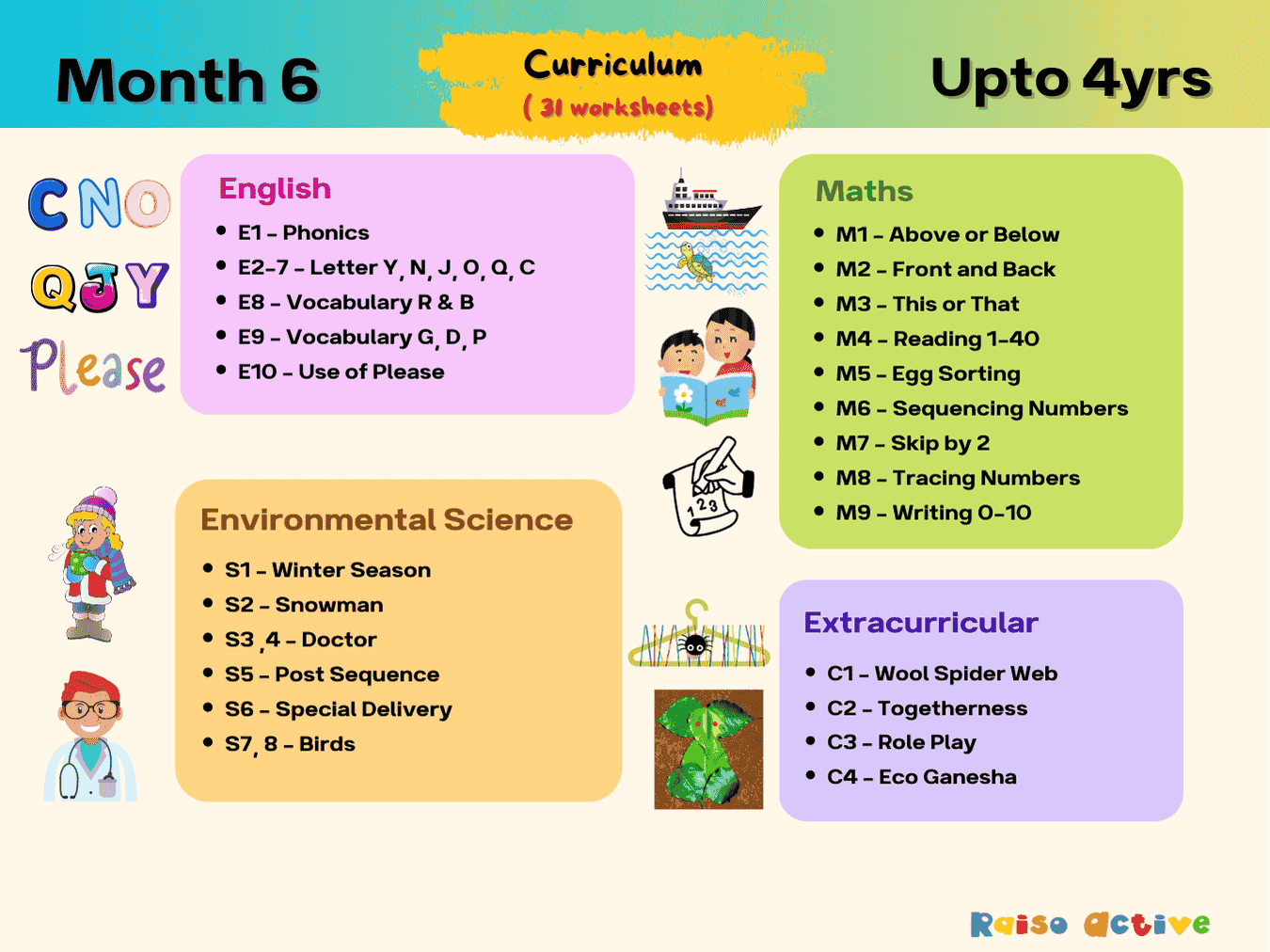

Month 6: Toddler Preschool Foundational Skills | Ages Up to 4
Ages 2-4 · PreschoolAges 2-4 · NurseryAges 2-4 · 34 pages
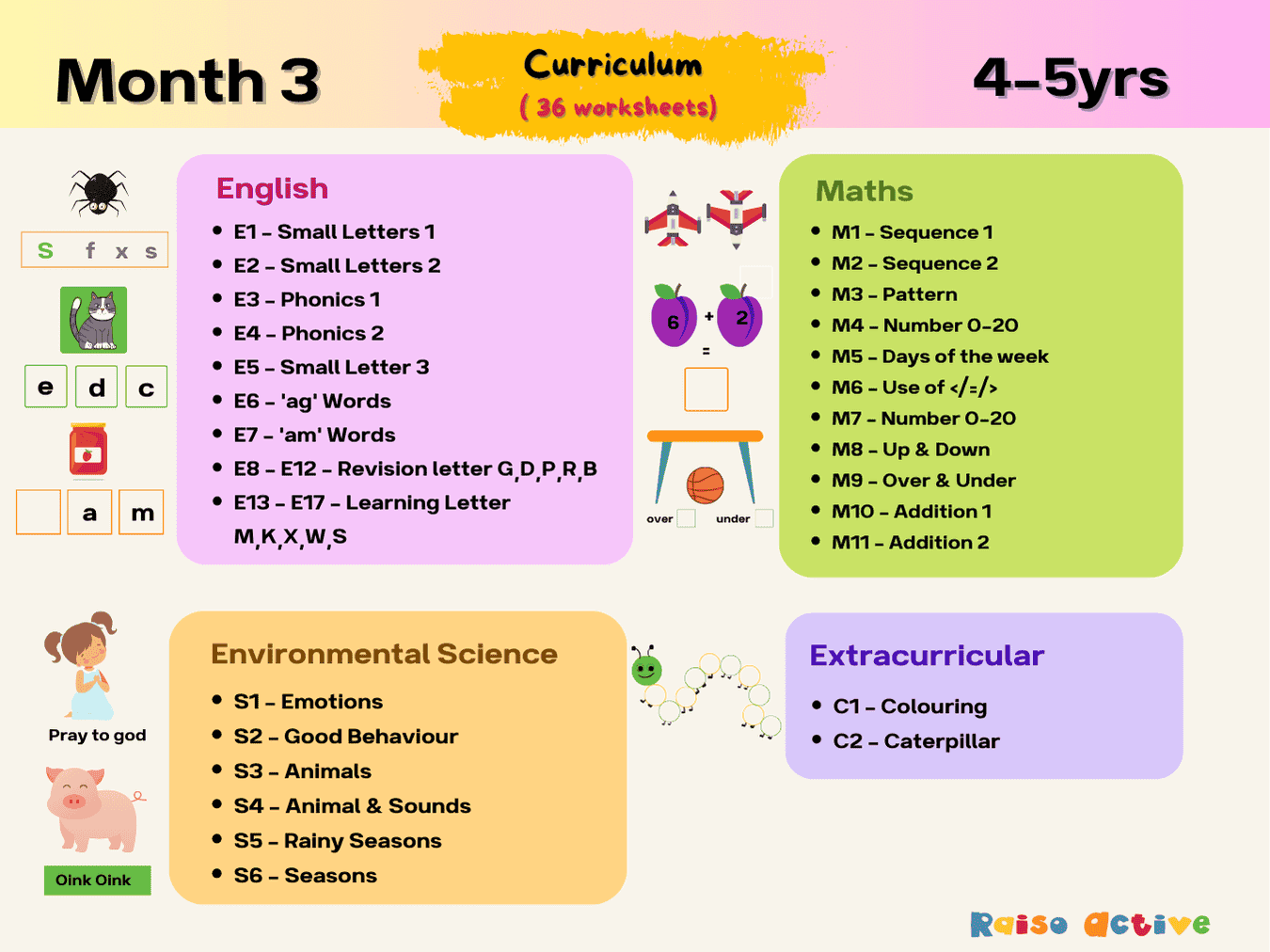
Month 3: Learning & Development | Ages 4-5
Ages 4-5 · Pre-KAges 4-5 · ReceptionAges 4-5 · LKGAges 4-5 · 39 pages

Month 10: Learning & Development | Ages Up to 4
Ages 2-4 · PreschoolAges 2-4 · NurseryAges 2-4 · 28 pages
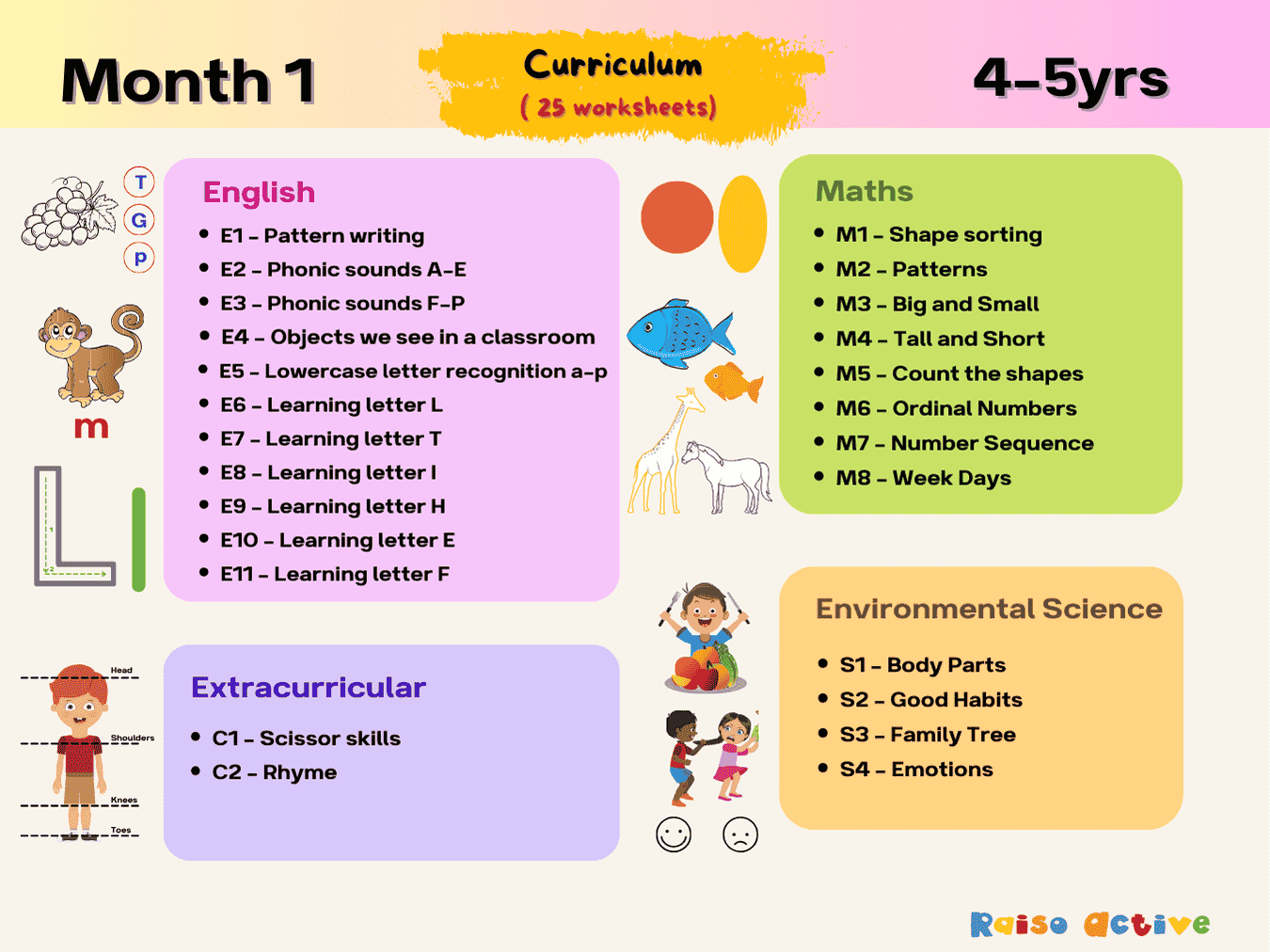
Play-Based Learning Activity Book for 4-5 Year Olds | Literacy, Math & EVS
Ages 4-5 · Pre-KAges 4-5 · ReceptionAges 4-5 · LKGAges 4-5 · 28 pages
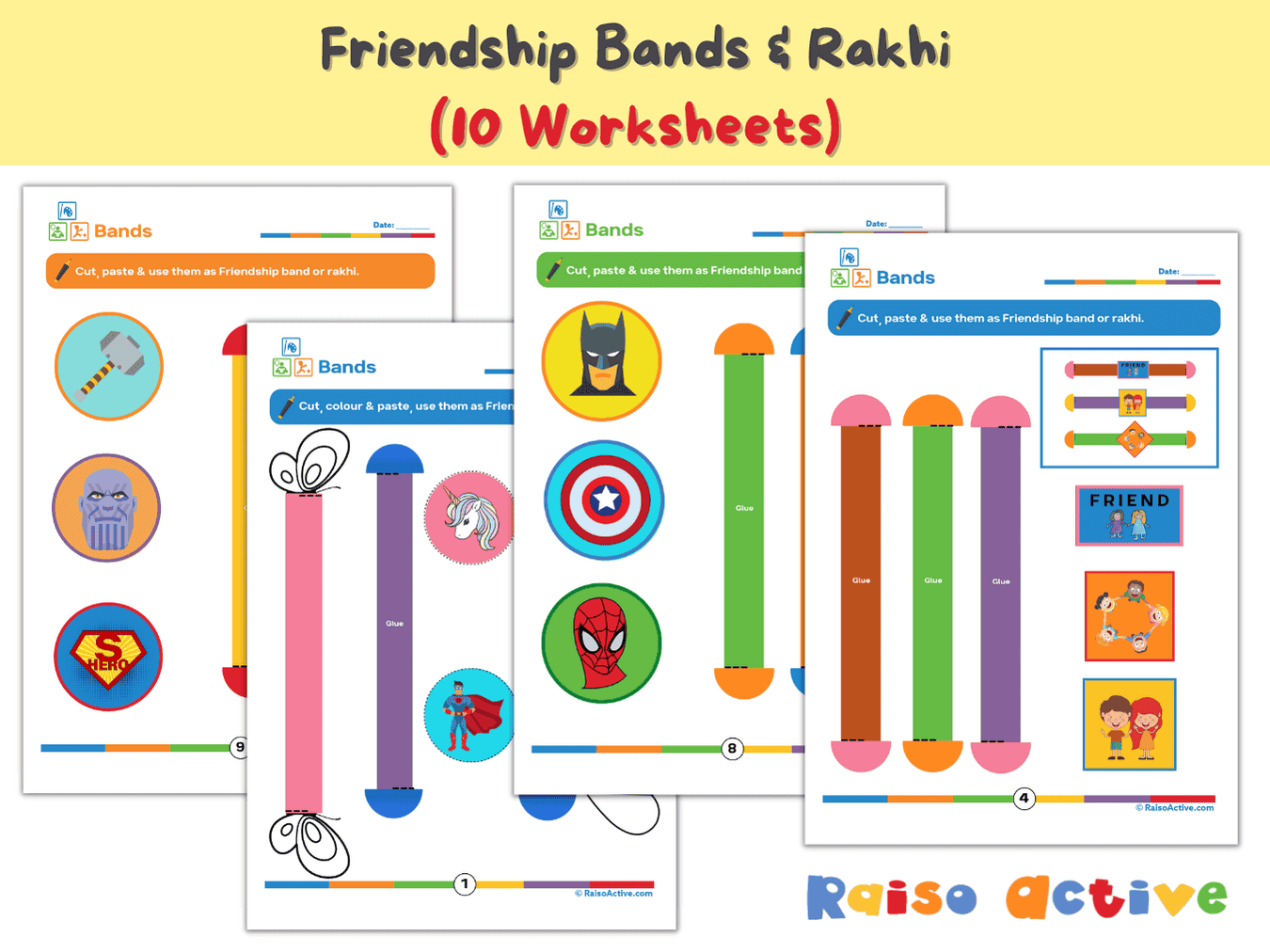
Friendship Band & Rakhi Craft Activity Pack for Kids (Ages 4-7)
Ages 4-7 · Pre-K–Grade 1Ages 4-7 · Reception–Year 2Ages 4-7 · LKG–Class 1Ages 4-7 · 10 pages
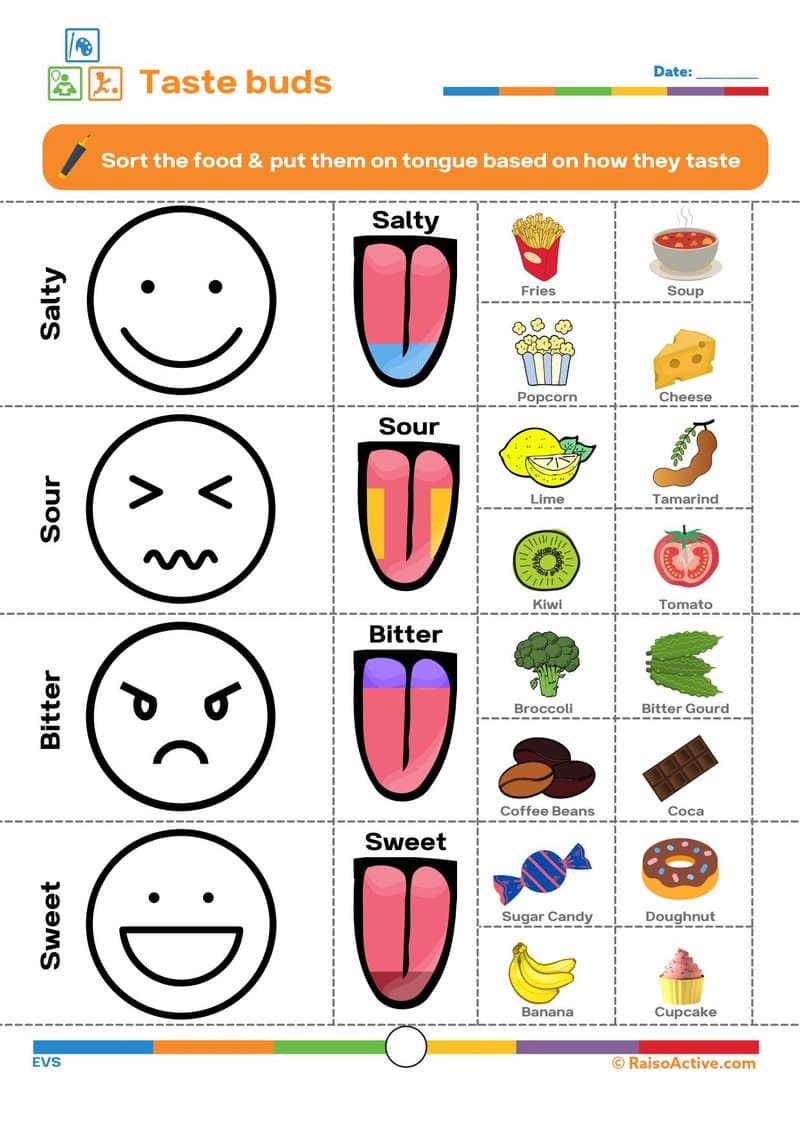

Hands-On Early Learning Activity Book: Math, Science, Literacy & Emotions for Ages 3-6
Ages 3-6 · Preschool–KindergartenAges 3-6 · Nursery–Year 1Ages 3-6 · Nursery–UKGAges 3-6 · 17 pages
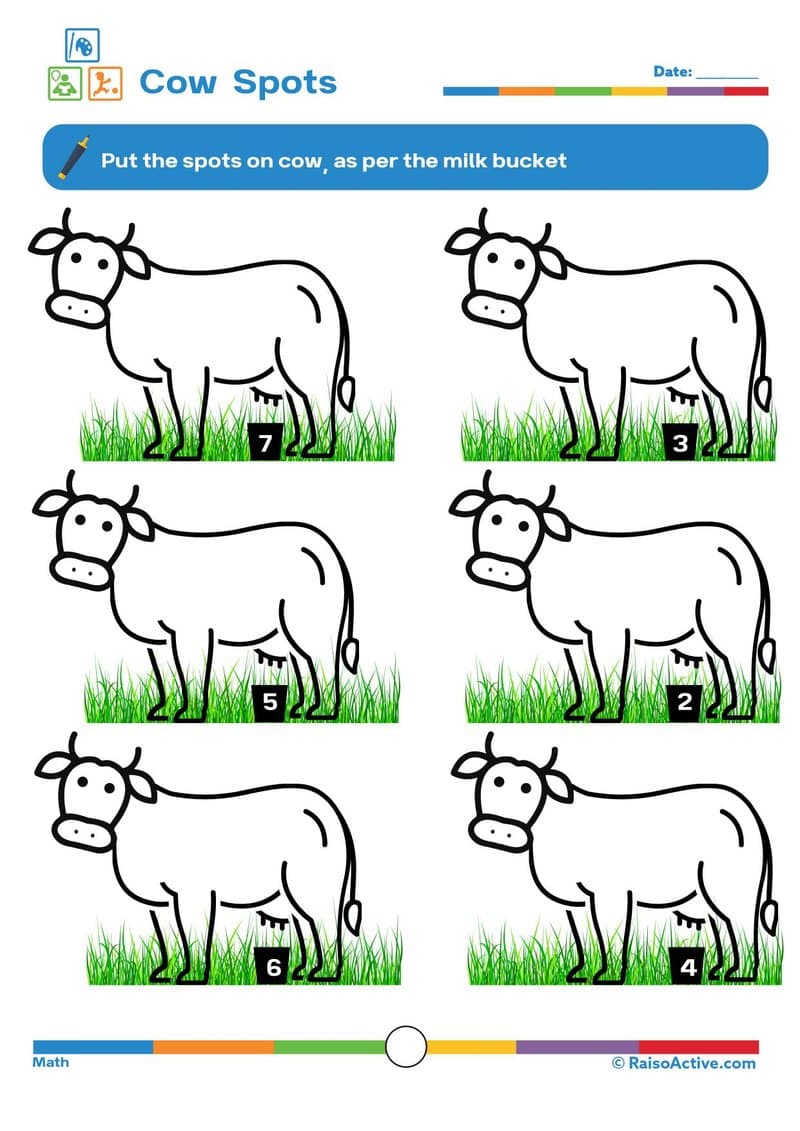
Early Learning Activity Book: Math, Science, Literacy & Cognitive Skills for Preschoolers (Ages 3-6)
Ages 3-6 · Preschool–KindergartenAges 3-6 · Nursery–Year 1Ages 3-6 · Nursery–UKGAges 3-6 · 16 pages
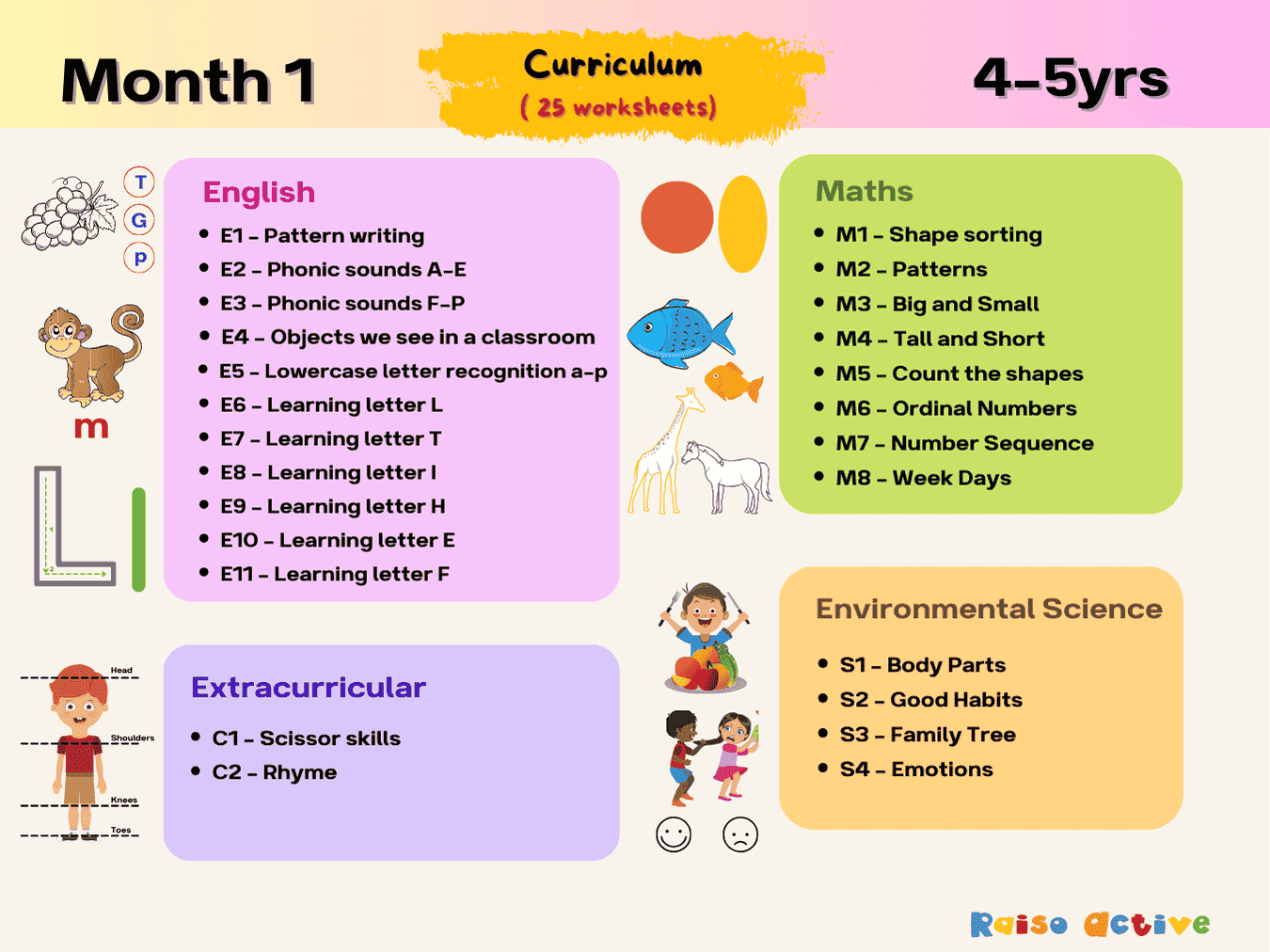
Month 1: Learning & Development | Ages 4-5
Ages 4-5 · Pre-KAges 4-5 · ReceptionAges 4-5 · LKGAges 4-5 · 28 pages