Literacy, Parenting & Homeschool
Helping Your First Grader Overcome Reading Struggles: A Comprehensive Parent's Guide
Author
RaisoActive - Kids Activities and Fun Learning
Date Published
Reading Time
11 min read

In This Article5 min read
- Reading struggles in Grade 1 are **very common** — most children hit a wall somewhere between decoding individual letters and reading connected text fluently, and it is rarely a sign of a deeper problem.
- The first step is to **identify the specific gap**: is it phonics (sounding out), fluency (reading speed and smoothness), or comprehension (understanding meaning)? Each requires a different approach.
- The **Orton-Gillingham method** — a structured, multi-sensory phonics approach — is one of the most evidence-backed strategies for children who struggle to decode words, including those with dyslexia.
- **Decodable books** (which use only letter-sound patterns already taught) are far more helpful for struggling readers than levelled readers that encourage picture-guessing.
- Reading aloud together every single day — even when your child can technically read alone — is one of the **most powerful interventions** a parent can offer, building vocabulary, fluency, and a love of stories simultaneously.
When Reading Feels Like Climbing a Mountain
You sit down with your Grade 1 child and open a simple reader. They squint at the first word, sound out each letter painstakingly slowly, lose the thread of the sentence, and then — frustrated — guess a completely different word based on the picture. By the third line, they have shut down entirely. You are not sure whether to push them to try again or just read the story yourself. And underneath it all is a quiet, worrying question: Is something wrong with my child?
Take a breath. What you are describing is one of the most common experiences parents of first graders have, and it does not automatically mean your child has a reading disorder. Reading is an extraordinarily complex skill — it requires the brain to simultaneously decode letter-sound patterns, hold words in working memory, combine them into meaning, and attend to punctuation, all while predicting what comes next from context. For most children, some part of this process is harder than others. The good news is that once you pinpoint where the difficulty lies, you can target your support precisely and efficiently.
Get Free Reading Worksheets for Grade 1
Join thousands of Indian parents and teachers using RaisoActive printables to support early readers. Free phonics, fluency, and comprehension worksheets delivered to your inbox.
What Typical Grade 1 Reading Looks Like
Before worrying about whether your child is behind, it helps to have a clear picture of what most six- and seven-year-olds can realistically do with reading. By the end of Grade 1, a child following a typical development trajectory should be able to: read simple three- and four-letter words by blending letter sounds (CVC words like cat, stop, frog); recognise 50-100 high-frequency sight words instantly (words like the, and, said, have, they); read simple sentences aloud with some expression and relatively few errors; and retell the main events of a short story in their own words.
They will not necessarily read smoothly at this stage — some choppy, word-by-word reading is completely normal in Grade 1. They will not recognise every word. They will occasionally guess. They may still confuse a few similar-looking letters. All of this is within the normal range. What is not typical — and worth addressing — is if a child cannot segment or blend sounds at all, consistently guesses words based entirely on pictures, reverses many letters well into the second half of Grade 1, or shows genuine distress and avoidance whenever books appear.
Diagnosing the Specific Gap: Phonics, Fluency, or Comprehension?
The most important thing you can do before trying any strategy is to figure out which part of reading is the problem. Reading difficulties are not one-size-fits-all, and a strategy that helps a fluency problem will do nothing for a phonics problem. Here is how to think about the three main areas:
Phonics gaps show up when a child cannot reliably decode unfamiliar words. They may know letter names but not letter sounds, or know individual sounds but be unable to blend them together (e.g., they know /c/, /a/, /t/ but cannot say 'cat'). They may know short vowel sounds but not long vowels or consonant blends. To check for a phonics gap, ask your child to read a list of simple nonsense words they have never seen before — words like bim, fop, strig, nult. If they cannot sound these out even slowly, the phonics foundation needs work.
Fluency gaps show up in children who can decode words but do so so slowly and effortfully that comprehension suffers. They read like a list of separate words rather than connected language. If your child can read individual words accurately when you point to them one at a time but loses the meaning of a sentence by the time they reach the full stop, fluency is the target. Fluency develops with practice — specifically, with repeated reading of texts at the right level.
Comprehension gaps show up when a child can read the words aloud reasonably well but cannot tell you what happened in the story. They decode fluently but 'switch off' meaning-making. This is less common in Grade 1 as a primary problem, but it does occur — particularly in children who are learning to read in English as a second language (common in India) and who may not have strong enough English vocabulary to construct meaning even when they can decode the text.
Key Takeaway
Identify the gap before choosing the strategy.
A child with a phonics gap needs structured phonics instruction. A child with a fluency gap needs repeated reading practice with texts at the right level. A child with a comprehension gap needs vocabulary building, read-alouds, and discussion. Applying the wrong strategy to the wrong gap wastes time and can increase a child's frustration.
Common Reading Struggles in Grade 1 and What They Mean
Letter reversals — writing or reading b as d, p as q, or n as u — are among the most anxiety-inducing things parents notice. The reassuring truth is that letter reversals are developmentally normal up to about age 7 and are present in the vast majority of children learning to read and write. The brain's visual system does not automatically treat mirror images as different objects — that is actually a learned ability. If reversals are still frequent and causing reading errors at age 7-8, mention it to your child's teacher, but do not panic before then.
Guessing from pictures is a strategy children fall back on when decoding is too hard. If a child looks at the picture before even attempting the text — and uses it to substitute words that were not there — this is a signal that phonics work needs to be the priority. A child who can decode does not need to guess from pictures; they read what is there. Decodable books (discussed below) help break the picture-guessing habit by ensuring the words are within the child's current phonics knowledge.
Losing the place on the page and tracking errors — skipping lines, re-reading the same line, or losing the place mid-sentence — may indicate a visual tracking issue or simply a working memory challenge. A bookmark or finger-tracking (pointing to each word as it is read) is an immediate, practical support. If the problem is persistent and significant, an optometrist check is worthwhile.
⚠️Red Flags That May Indicate Dyslexia
- Persistent difficulty learning letter-sound correspondences even with extensive practice, well into Grade 1 or Grade 2.
- Unusual difficulty rhyming or identifying the first sound in a word (poor phonological awareness).
- Difficulty remembering sequences — letters in a word, days of the week, months of the year.
- A family history of reading difficulties, spelling problems, or late reading development in parents or siblings.
- Significant gap between verbal ability (the child is clearly bright and articulate) and reading ability (cannot decode simple words).
- Reading and spelling errors that are not just slow but unusual — highly inconsistent, or showing no improvement despite practice.
The Orton-Gillingham Approach: What It Is and Why It Works
If you have been researching reading support online, you have almost certainly come across the term 'Orton-Gillingham' (OG). It can sound intimidating — like something only a specialist can do. In fact, the core principles are accessible to any parent, and understanding them will shape everything you do to support your child at home.
Orton-Gillingham is a structured, sequential, multi-sensory approach to teaching reading and spelling. 'Structured' means phonics rules are taught in a deliberate order — simple patterns first, complex patterns later — rather than incidentally or randomly. 'Sequential' means each new concept builds on the one before, with mastery confirmed before moving on. 'Multi-sensory' means every lesson engages at least two or three senses simultaneously: the child sees the letter, says its sound, hears themselves say it, and traces or writes it at the same time.
The multi-sensory element is not a gimmick — it is grounded in neuroscience. When multiple sensory pathways are activated at the same time, the brain creates stronger, more redundant memory traces. For a child who struggles to retain phonics patterns through visual instruction alone, adding a tactile or auditory channel can be the difference between a pattern that sticks and one that evaporates by the next morning. You do not need to be a trained OG tutor to apply the principles. Simply ensure that every phonics lesson at home involves seeing, saying, and doing — flashcards plus saying the sound aloud plus writing the letter or pattern in sand, on a whiteboard, or in the air.
🎨A Simple Orton-Gillingham Style Home Activity
- Choose one phonics pattern your child is working on — for example, the short 'a' vowel sound.
- Show a flashcard or write the letter 'a'. Say its sound together: '/a/ as in apple.'
- Have your child trace a large letter 'a' on sandpaper with their fingertip while saying '/a/'.
- Now build words with magnetic letters or letter tiles: *cat*, *map*, *had*, *ran*. For each word, point to each letter, say its sound, then blend.
- Read two or three simple sentences using those words from a decodable reader.
- Finally, ask your child to write one word from memory on a whiteboard — say the sounds as they write. This full cycle takes 10-15 minutes and covers all sensory channels.
Decodable Books vs Levelled Readers: Which Does Your Child Need?
This distinction matters enormously for struggling readers, yet most parents — and many teachers — are not aware of it. Levelled readers (the kind most commonly sent home from Indian schools) are graded by overall text difficulty and typically include high-frequency words alongside words beyond the child's current phonics knowledge. The assumption is that children will use a combination of phonics, picture clues, and context to 'read' the text. For a child who already has a solid phonics base, this is manageable. For a struggling reader with a phonics gap, it actively encourages guessing rather than decoding.
Decodable books, by contrast, are carefully controlled: they contain only the letter-sound patterns the child has already been explicitly taught. If a child has been taught short vowels and basic consonants but not consonant blends, the decodable book at that stage will not contain words with blends. This means the child can successfully decode every single word on the page without guessing — which builds genuine decoding skill, confidence, and a neural habit of looking carefully at every letter rather than skimming for context clues.
Levelled Readers
- +Graded by overall text difficulty, not phonics control
- +Contains words beyond current phonics knowledge — encourages guessing
- +Rich, natural language and engaging stories
- +Good for children with strong phonics foundations
- +Common in Indian school reading programmes (ORT, Macmillan, etc.)
Decodable Books
- -Controlled to include only taught phonics patterns
- -Child can decode every word — no guessing required
- -More artificial-sounding text, simpler storylines
- -Essential for struggling readers with phonics gaps
- -Examples: Dandelion Readers, Little Learners Love Literacy, Bob Books
Practical guidance: If your child has a phonics gap, switch to decodable books for their independent reading practice, even if the school is sending home levelled readers. Continue reading the levelled readers together with you supporting them — these are great for read-alouds and shared reading, where the vocabulary and story quality are an asset. Save the decodable books for the moments when your child is reading solo and needs to practise the actual skill of decoding without a crutch.
Reading Aloud Together: The Underrated Superpower
If you can only do one thing to support your struggling reader, make it this: read aloud to them every single day, beyond and separate from their independent reading practice. Not because they cannot read themselves, but because read-alouds do things that independent reading at a child's level simply cannot.
When you read aloud from books that are above your child's current reading level — books they could never decode independently right now — you are bathing them in rich vocabulary, complex sentences, and ideas that stretch their minds. You are modelling what fluent, expressive reading sounds like. You are building their background knowledge, which is one of the strongest predictors of reading comprehension. And perhaps most importantly for a child who has been struggling and feeling defeated, you are reconnecting them with the pleasure of stories — reminding them that books are wonderful, not torture.
In the Indian context, where many families read aloud in Hindi, Marathi, Tamil, or another home language, this is doubly powerful. Reading aloud in any language builds the cognitive and linguistic skills that transfer to reading in English. A rich listening diet in any language is a gift to a developing reader.
👋Making the Most of Read-Aloud Sessions
- Choose books slightly above your child's reading level but well within their listening comprehension — picture books, chapter books, or even illustrated non-fiction they find interesting.
- Pause and discuss as you read: *'What do you think will happen next?'*, *'Why did she do that?'*, *'What does the word 'reluctant' mean here?'* These conversations build comprehension skills directly.
- Let your child choose the book whenever possible. A child who has chosen the book is a child who is motivated to listen.
- Do not stop at Grade 1 — read aloud to your child through primary school and beyond. The research on the benefits of parent read-alouds is robust well into upper primary.
- Even 10-15 minutes of reading aloud at bedtime, done consistently every night, produces significant vocabulary and comprehension gains over a school year.
Sight Words, Indian English, and Curriculum Challenges
One aspect of reading instruction that catches many Indian parents off guard is that the phonics patterns in Indian English curricula do not always map cleanly onto the phonics patterns in the British or American resources they find online. Indian English has some distinctive pronunciation patterns — many Indian speakers pronounce vowels differently, stress syllables differently, and have different phonological backgrounds (particularly those whose home language is not English). When a child's classroom teacher pronounces words one way and their home environment models another, phonics learning can become genuinely confusing.
Additionally, most Indian English-medium schools use British English spellings (colour, neighbour, recognise, fulfil) — so if you are using American phonics resources, some examples will not match what your child sees in their schoolbooks. This is a minor but real source of confusion for some children. Whenever possible, use Indian or British English resources for phonics and sight word practice so the examples are consistent with what your child encounters at school.
For children who are multilingual — learning to read in English and Hindi or another Indian language simultaneously — the cognitive load is genuinely higher. This does not mean multilingual children are at a disadvantage overall (they are not; multilingualism has well-documented cognitive benefits), but in the short term they may appear to be 'behind' on English reading benchmarks when they are actually developing normally given the complexity of what they are doing. Patience and acknowledgment of their broader achievement is essential.
1 in 5
children have a learning difference that affects reading, such as dyslexia — making it one of the most common learning challenges worldwide. In India, where systematic screening is less consistent, many children reach Grade 2 or 3 without having received appropriate support for what was a diagnosable and highly treatable difficulty.
Source: International Dyslexia Association estimates
Motivating a Child Who Has Come to Hate Reading
One of the most heartbreaking consequences of unaddressed reading struggles is the emotional damage. A child who has repeatedly tried and failed — who has felt embarrassed in class, corrected at home, and aware that peers are reading things they cannot — often develops a defensive hatred of reading. 'Reading is boring.' 'I do not like books.' 'This is stupid.' These statements are almost always cover for 'I feel like a failure when I try to read and I want to protect myself from that feeling again.'
Rebuilding motivation requires two things: genuine progress (so there is something real to feel good about) and a series of successful experiences with books and reading that are not tinged with failure and correction. This means finding reading material your child actually wants to engage with — comic books, sports statistics in a newspaper, graphic novels, joke books, information books about animals or vehicles or whatever they love. It means dropping the level of independent reading material temporarily so they experience success rather than struggle. And it means separating 'reading practice' (deliberate, focused, targeted) from 'reading for pleasure' (relaxed, chosen, pressure-free) so the latter does not become contaminated by the stress of the former.
Key Takeaway
A child who reads willingly — even things you would not choose — is a child who is building a reading life.
Do not be too precious about what counts as 'real reading.' Comics, graphic novels, cereal boxes, menus, game instructions — all of it is print, all of it builds fluency and vocabulary, and all of it reinforces the fundamental message that reading is something people do because it is useful and enjoyable, not something done to them as a form of assessment.
20 minutes
of independent reading per day has been shown in multiple studies to produce dramatically better reading outcomes than children who read for shorter periods. Children who read 20 minutes a day encounter approximately 1.8 million words per year — compared to just 8,000 words per year for children who read less than 1 minute a day. The volume of reading is one of the strongest predictors of vocabulary growth and reading fluency.
Source: Anderson, Wilson & Fielding (1988), replicated in multiple subsequent studies
Key Takeaway
Recovery from reading struggles is genuinely possible — and more common than parents realise.
Most children who receive appropriate, targeted support in Grade 1 make significant gains and close the gap with their peers within 1-2 years. The key is early identification of the specific difficulty and consistent, structured support — not waiting and hoping the problem resolves on its own. The earlier intervention begins, the better the outcome.
💡Practical Daily Routine for a Struggling Grade 1 Reader
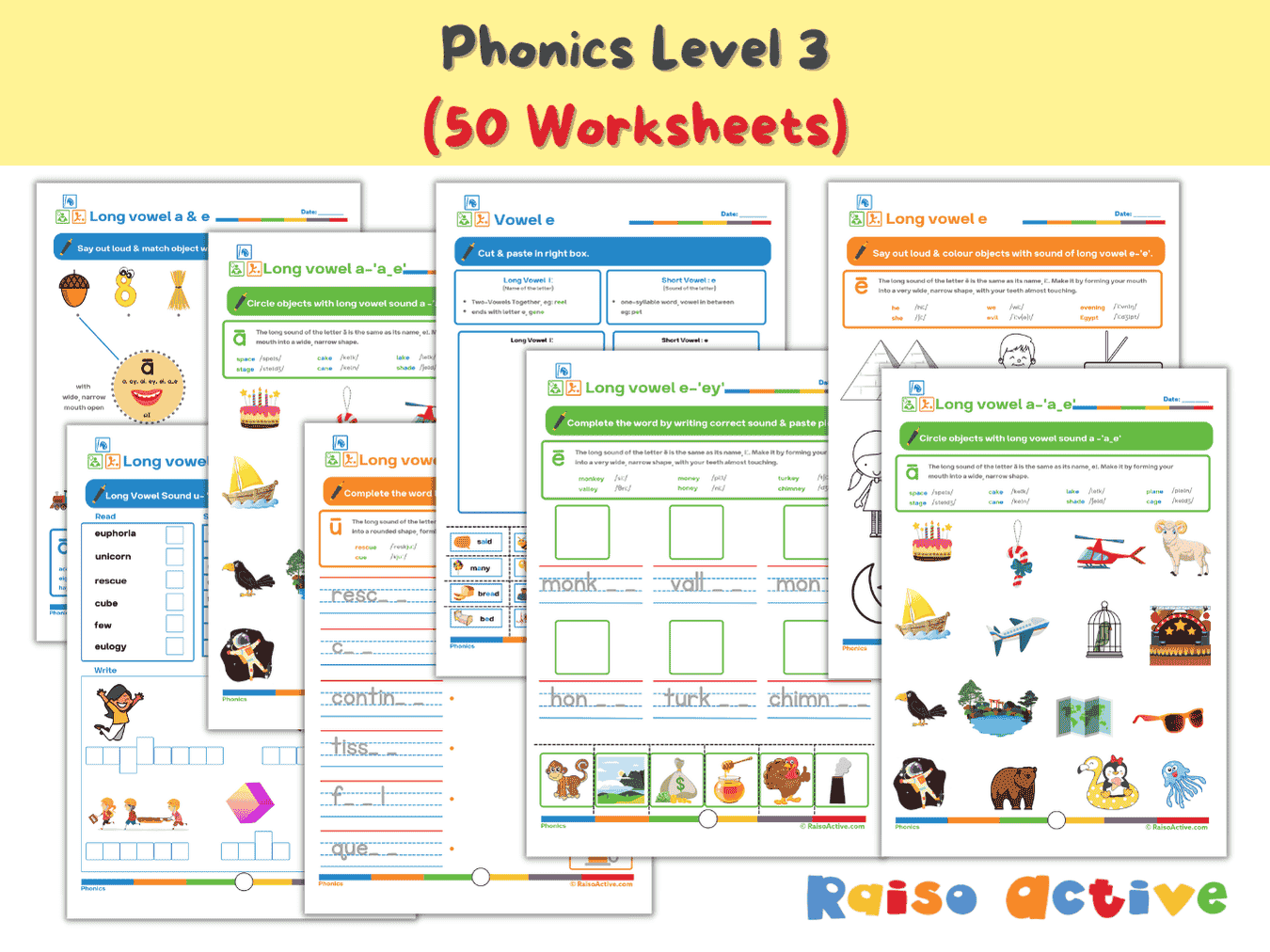
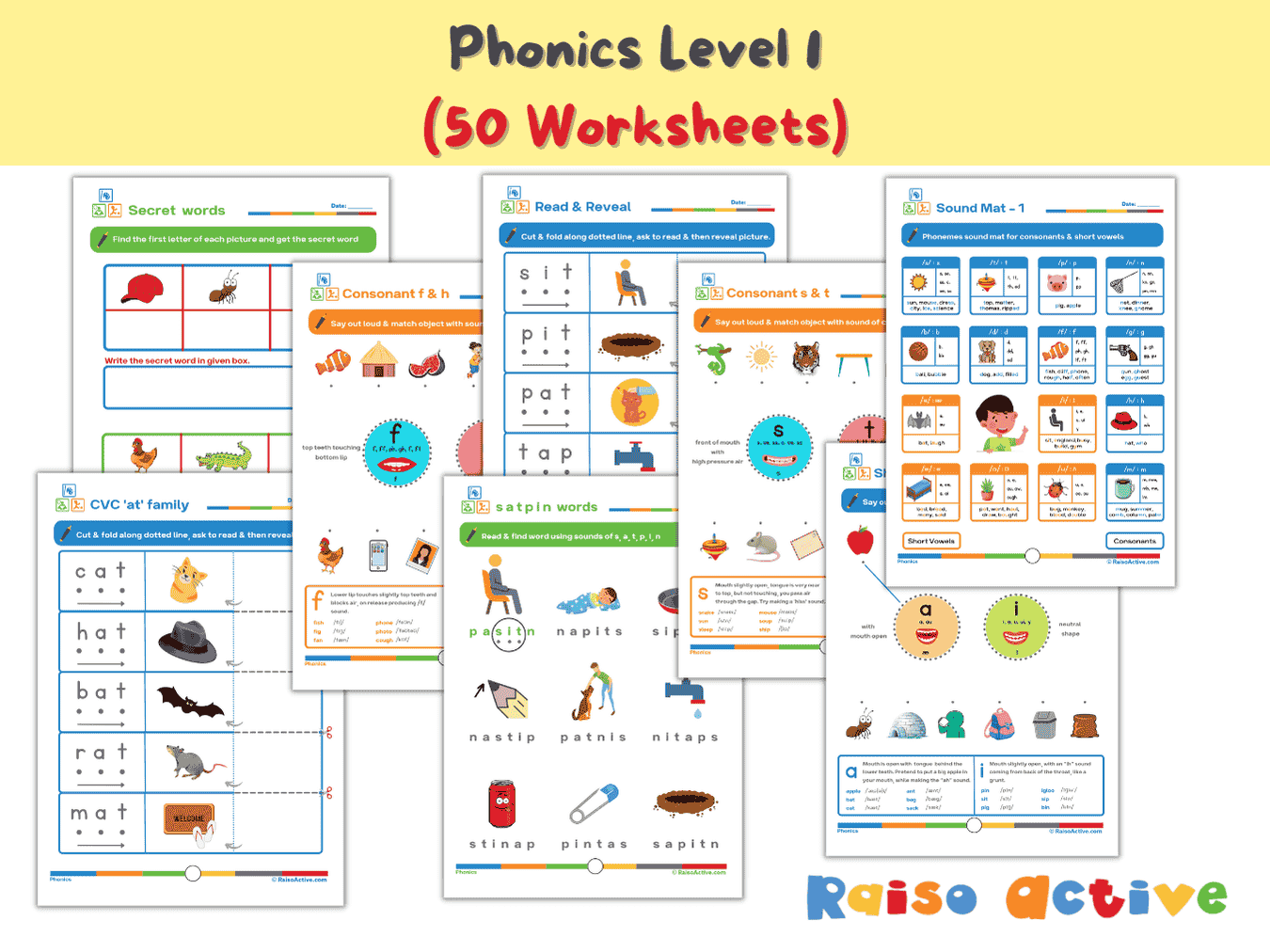
- **5-10 minutes: Phonics work.** Use letter tiles, flashcards, or a whiteboard to practise the current phonics pattern. Say sounds, blend words, make words. Keep it multi-sensory and low-pressure.
- **5-10 minutes: Decodable reading.** Your child reads a decodable book at their current phonics level independently or with minimal support. Avoid correcting every error — allow them to self-correct, or simply supply the word and move on if they are stuck.
- **2-3 minutes: Sight word practice.** Review 3-5 current sight words with flashcards or a simple game. Fast, playful, done.
- **10-15 minutes (separate from the above): Read-aloud.** You read to your child from a book they enjoy, above their reading level. No pressure, just pleasure.
- Total active practice time: 15-25 minutes. This is sustainable every day without burning anyone out — and it will produce genuine, measurable progress over a school term.
How to Support a Struggling Grade 1 Reader: Step by Step
1
Observe without jumping to conclusions
Spend a week watching your child read without intervening much. Notice: are they guessing from pictures? Sounding out laboriously but correctly? Reading accurately but without expression? Losing meaning after decoding? Write down what you observe. This 'data' will help you target the right area rather than throwing multiple strategies at the problem simultaneously.
2
Talk to the class teacher
Make an appointment with your child's teacher — not a rushed chat at the gate, but a proper conversation. Share what you have observed at home. Ask what they are seeing in class. Ask what phonics stage your child is at and what the class is currently working on. This alignment between home and school is one of the strongest predictors of reading improvement. Teachers often have early intervention resources they can share if they know a parent is engaged and concerned.
3
Assess the phonics foundation
Ask your child to read a list of simple CVC nonsense words (words they have never seen: *bim*, *fop*, *nult*). This isolates phonics decoding ability from sight word memory. If they cannot blend even simple nonsense words, phonics is the priority — start at the very beginning with letter sounds and CVC blending before anything else. If they can blend CVC words but struggle with blends, digraphs, or longer words, you know where the phonics gap is.
4
Choose the right books
For a child with a phonics gap, source decodable readers at the appropriate phonics stage (Bob Books, Dandelion Readers, or Phonics with Grimm's Fairy Tales are all available online and shipped within India). For a child with a fluency gap, use books just below their instructional level for repeated reading practice. For both types, ensure your daily read-aloud books are engaging and well above their current reading level.
5
Implement a consistent daily practice routine
Consistency matters more than session length. Fifteen minutes every day outperforms ninety minutes on weekends. Choose a time that works for your family — immediately after school, before dinner, or at bedtime — and protect it. Make it part of the daily rhythm rather than something that requires a daily decision. Children learn from predictable routines, and reading practice is no different.
6
Track progress gently
Every two to three weeks, do a simple re-check: can your child now read CVC words they could not before? Are they recognising more sight words instantly? Are they reading with slightly more expression and fluency? Small, consistent gains are exactly what you are looking for. If you see no change at all over six weeks of consistent daily practice, that is a signal to seek specialist input rather than simply doing more of the same.
7
Know when to seek professional support
If your child is showing multiple red flags for dyslexia, if six weeks of targeted home support has produced no measurable improvement, or if your child's distress around reading is affecting their self-esteem and willingness to go to school, it is time to seek an assessment from a learning specialist, educational psychologist, or speech and language therapist. In Indian cities, learning disability clinics and educational psychologists are increasingly available, and many schools now have learning support coordinators who can advise on the referral process.
🎨Sight Word Practice Ideas for Grade 1
- **Playdough word making:** Roll thin snakes of playdough to form each letter of a sight word. Say each letter as you form it, then read the whole word. The tactile engagement significantly improves retention compared to flashcards alone.
- **Word in a sentence:** For each new sight word, your child creates a simple illustrated sentence in their own words. Drawing the picture connects meaning to the word in a memorable way.
- **Hopscotch words:** Write 5-6 sight words in hopscotch squares with chalk on the terrace or compound. Your child reads each word as they hop on it. Combines physical movement with reading — excellent for active children who resist sitting still.
- **Rapid-fire flashcard game:** Time your child reading through their 'mastered' sight word cards. Each session, see if they can beat their previous time. A simple kitchen timer and a tally chart on the fridge turns it into a personal best challenge rather than a test.
Unlimited Access
Get Free Grade 1 Reading Support Worksheets
Subscribe to RaisoActive and receive phonics, fluency, sight word, and comprehension worksheets designed for Indian classrooms. Trusted by thousands of parents and teachers across India. New printables every week, completely free.
All worksheets & activitiesNew content weeklyDownload unlimited times
Subscribe NowFrequently Asked Questions
My Grade 1 child still reads very slowly, word by word. Is this normal?
Word-by-word reading is completely normal and expected in Grade 1, especially in the first half of the year. Reading fluency — the ability to read smoothly, at a reasonable pace, with appropriate expression — develops gradually as decoding becomes more automatic. The key question is whether there is *some* improvement over time. If your child is reading at the same laborious pace in the second term as they were in the first, focus on fluency-building strategies: repeated reading of the same short passage (reading it three or four times in a row), paired reading where you read a sentence and they echo it back, and ensuring they have regular access to books at the *right* level (not too easy, not too hard). Fluency generally improves naturally as phonics knowledge solidifies — it is a lag indicator, not a separate problem in most cases.
Should I be worried that my child reverses b and d constantly?
Letter reversals — particularly b/d, p/q, and n/u — are developmentally normal up to approximately age 7. Most children who reverse letters do so simply because the brain has not yet learned to treat mirror-image orientations as distinct (which is actually the correct approach for most objects — a cup turned sideways is still a cup). By the second half of Grade 1 (age 6.5-7), most children self-correct with experience. If reversals are still frequent and causing significant reading errors at age 7 or older, mention it to the teacher and consider a brief assessment. In the meantime, practical strategies like placing a small dot on the left side of the page (to establish directionality) and using the 'bed' trick (fingers and thumbs forming a 'b' on the left and a 'd' on the right, spelling 'bed' together) can help anchor the distinction.
My child is being taught to read with the whole-language approach at school. Is that a problem?
If your child is struggling to decode words — particularly if they guess from pictures frequently or cannot blend simple sounds into words — then yes, supplementing with explicit, structured phonics at home is a very good idea regardless of what method the school uses. The scientific consensus on reading instruction (sometimes called 'the science of reading') is now clear: systematic, explicit phonics instruction produces better decoding outcomes than approaches that rely on guessing from context or whole-word recognition. You can do this at home without undermining the school — simply add 10 minutes of structured phonics practice (letter sounds, blending, decodable books) to your daily routine. Most children benefit from explicit phonics, and struggling readers in particular require it.
How do I know if my child needs a dyslexia assessment?
Consider seeking an assessment if your child: has been receiving support for six or more weeks without measurable progress; shows several of the red-flag indicators (difficulty with phonological awareness, poor phonological memory, family history of reading difficulties, significant gap between verbal ability and reading ability); is showing significant emotional distress or school avoidance related to reading; or is in Grade 2 and still unable to reliably decode simple CVC words. In India, assessments are available through educational psychologists, some paediatric neurologists, and specialised learning disability clinics in most major cities. Some schools have their own learning support teams who can conduct preliminary screening. An assessment does not label your child — it gives you and the school a precise picture of what support is needed, which is enormously valuable.
My child reads English reasonably well but does not seem to understand what they read. What should I do?
Comprehension difficulties are often related to vocabulary and background knowledge rather than decoding skills. A child who can read the words *'the archaeologist excavated the ancient ruins'* may be decoding perfectly but have no mental model for what that sentence describes. The most effective support for comprehension is: regular read-alouds from books above their current reading level (to build vocabulary and familiarity with complex sentence structures); rich conversation about books, stories, and ideas; real-world experiences that build background knowledge (visits to museums, nature, markets, etc.); and direct vocabulary instruction — when you encounter an unfamiliar word, stop and discuss it rather than glossing over it. For children reading in English as a second or additional language, building English vocabulary through conversation, songs, and audiobooks is as important as any reading strategy.
What are some good decodable book series available in India?
While decodable readers are less widely stocked in Indian bookshops than levelled readers, several are available online and worth ordering. Bob Books (Sets 1-5) are affordable, widely available on Amazon India, and cover CVC words through consonant blends and digraphs. Dandelion Readers (Phonic Books, UK) are excellent and available via international shipping or some Indian educational suppliers. Little Learners Love Literacy (Australia) is another high-quality series. For free digital options, the Phonics International programme includes downloadable decodable books, and the Cued Articulation resources have some freely available decodable texts. If you are working with a specialist tutor who uses Orton-Gillingham, they will typically supply appropriate decodable materials as part of the programme.