How Do I Teach My Preschooler to Write Letters? A Comprehensive Guide for Parents
Author
RaisoActive - Kids Activities and Fun Learning
Published
Updated
Reading Time
18 min read

- Writing readiness is about muscle development and pre-writing strokes — not age or urgency
- Children must master lines, curves, circles, and zigzags before learning any letter formation
- The most effective letter teaching sequence follows stroke complexity, not alphabetical order
- Multi-sensory techniques like sand trays, sky writing, and wet-dry-try build muscle memory far faster than pencil-and-paper drills
- Capital letters are generally easier for beginners — lowercase can follow once confidence is established
The Question Every Parent Is Really Asking
If you have ever sat down with your 3 or 4-year-old and watched them struggle to copy a simple letter — or worse, refuse to try — you know the quiet anxiety that follows. Is my child behind? Am I doing something wrong? Should I be doing more? These are questions that teachers across India hear every single day from concerned parents, and the honest answer is almost always the same: your child is probably not behind — they may simply not be ready yet, and that is perfectly normal.
Writing letters is actually one of the most complex physical tasks we ask young children to perform. It requires hand strength, finger coordination, spatial awareness, memory for shapes, and the ability to control a tool with precision — all at the same time. Before any of that is possible, a child needs to build a very specific set of physical and cognitive foundations. This guide will walk you through exactly what those foundations are, how to build them systematically, and the most effective techniques for guiding your preschooler to confident, comfortable letter writing.
Is My Preschooler Ready to Write Letters? Signs to Look For
Readiness for letter writing is not determined by a birthday. It is determined by a cluster of physical and developmental signs. Watching for these markers will save you and your child enormous frustration — and help you time your teaching for maximum success.
Physical Readiness Signs
- Uses a pincer grip — the child can pick up small objects (a raisin, a button) using only the thumb and index finger
- Shows wrist rotation — can turn a doorknob, unscrew a lid, or twist playdough with one hand
- Holds a crayon with fingers — no longer grips it with the whole fist, at least some of the time
- Controls crayon direction — scribbles are becoming intentional; the child attempts to stay inside boundaries when colouring
- Can copy simple strokes — is able to imitate a vertical line, a horizontal line, and a circle when demonstrated
Cognitive and Language Readiness Signs
- Shows interest in letters — points to them in books, on signs, on cereal boxes
- Understands that print carries meaning — knows that the squiggles in a book say something
- Can name or recognise a few letters, particularly those in their own name
- Has enough attention to sit and work on a focused activity for 5 to 10 minutes
- Can follow simple two-step instructions
If your child shows most of these signs, they are likely ready to begin structured pre-writing and early letter activities. If fewer than half apply, focus first on the hand-strengthening and pre-writing stroke work described in the next section.
Most children show writing readiness between ages 4 and 5.5. Some are ready at 3.5; others not until 6. Both are within the normal developmental range.
Pre-Writing Strokes: The Foundation That Cannot Be Skipped
Here is the step that most well-meaning parents skip — and it is the most important one. Every letter in the English alphabet is built from a small set of basic strokes: vertical lines, horizontal lines, diagonal lines, curves, and circles. Before a child can write the letter "L", they need to be able to draw a confident vertical line and a horizontal line. Before they can write "C", they need to be able to draw a smooth, open curve. Teaching letters before these strokes are secure is like teaching a child to write sentences before they can speak words.
The Pre-Writing Stroke Sequence
Step 1: Vertical Lines (Top to Bottom)
The very first stroke. Ask the child to draw "rain falling" or "tall trees" — straight lines from top to bottom. Practise on large paper, in sand, on a whiteboard. These form the backbone of letters like I, H, T, L, F, E, and many others.
Step 2: Horizontal Lines (Left to Right)
Draw "roads" or "sleeping lines". Always teach left-to-right direction from the beginning — this builds the directional habit needed for reading and writing. Used in letters like T, E, F, H, and L.
Step 3: Circles and Ovals
Draw "suns" and "balls". Circles are among the most challenging strokes for young children because they require the wrist to rotate through a full arc. Start with large circles, then gradually reduce size. Used in O, C, G, Q, D, and P.
Step 4: Diagonal Lines
Draw "slides" and "mountains". Diagonal strokes are neurologically harder because they cut across the natural axis of hand movement. Practise both directions. Used in letters like A, V, W, X, Y, K, M, N, Z.
Step 5: Curved Lines and Arches
Draw "rainbows" and "waves". Smooth, controlled curves without corners. These form parts of letters like B, D, P, R, U, J, S, and C.
Step 6: Zigzags and Combined Strokes
Draw "lightning" and "mountains in a row". Zigzag strokes require the child to change direction mid-movement — a significant coordination milestone. Once this is mastered, the child is ready to begin letter formation.
- Name strokes with fun labels: "sleeping lines", "standing lines", "tunnels", "bumps", "circles" — children remember these far better than abstract descriptions
- Use a variety of surfaces: sand trays, shaving foam on a tray, chalkboard, large butcher paper on the floor
- Encourage large movements first — let children draw huge strokes with their whole arm before reducing to pencil-sized marks
- Play "copy me" games where you draw a stroke pattern and the child copies it — no pressure, just imitation
The Correct Letter Formation Sequence (Not Alphabetical Order)
Once pre-writing strokes are solid, most parents reach for an alphabet workbook and start from "A". This feels logical — but it is not actually the most effective approach. Teaching letters in alphabetical order means jumping constantly between very different motor patterns, which is confusing for young learners. A better approach is to group letters by the strokes they share, so each new letter builds naturally on the one before.
A Stroke-Based Teaching Sequence for Capital Letters
- Group 1 — Straight-line letters: L, I, T, H, E, F — introduce these first; they use only vertical and horizontal lines
- Group 2 — Diagonal letters: A, V, W, X, Y — add diagonal strokes once straight lines are confident
- Group 3 — Circle and curve letters: O, C, G, Q — these use circular strokes; start with O and C as the simplest
- Group 4 — Combination letters: D, B, P, R — combine a vertical line with a curve; require more coordination
- Group 5 — Complex letters: S, M, N, K, Z, J, U — save these for last as they involve the most complex stroke sequences
This sequence is not rigid — you can adjust it based on your child's interests and name. Always start with the letters in the child's own name, as these carry personal meaning and strong motivation. If your child's name is "Aanya", for example, start with A and then branch out to the groups above.
Teaching letters grouped by stroke type — rather than A to Z — reduces confusion, builds confidence faster, and makes each new letter feel easier because the physical movements are already familiar.
Multi-Sensory Techniques That Actually Work
The most powerful insight from decades of research on handwriting instruction is this: children learn letter formation best when multiple senses are engaged at once. When a child sees a letter, says its name, traces it with their finger, and feels the texture of the surface — four separate brain pathways are building the same memory simultaneously. This is why multi-sensory methods are routinely recommended by occupational therapists and literacy specialists worldwide.
1. Sand Tray Writing
Fill a shallow tray or plate with a thin layer of fine sand, salt, or semolina (rava or sooji — readily available in every Indian kitchen). The child draws letters with their index finger while saying the letter name aloud. The tactile feedback from the granules powerfully reinforces the motor pattern. This is also wonderfully forgiving — mistakes simply get smoothed away and the child tries again without any sense of failure.
2. Sky Writing
The child extends their dominant arm fully and uses their whole arm to "write" large letters in the air while looking at their fingertip. The parent or teacher stands behind and mirrors the movement, guiding the child's elbow if needed. The large gross motor movement uses the shoulder and arm muscles, which builds the neural pathways that the small finger muscles will later refine. Sky writing is also excellent for children who resist sitting at a table — it can be done anywhere, standing, lying on the grass, even in the car.
3. Wet-Dry-Try (Chalk Board Method)
This technique — popularised by the Handwriting Without Tears programme — uses a small slate or blackboard, a damp sponge, and chalk. Wet: The adult writes a letter in chalk; the child erases it with a damp sponge, feeling the letter's shape as they do. Dry: The child uses a dry small sponge to "dry" the board, again tracing the letter shape. Try: The child picks up the chalk and tries to write the letter independently. The repetition through three different physical experiences locks in the formation pattern.
4. Finger Tracing on Letter Cards
Create or print large letter cards with arrows showing the correct stroke sequence. Laminate them and let the child trace each letter with their finger, then with a dry-erase marker, then with a crayon on paper placed over the card. The layered progression — finger, marker, pencil — builds confidence by moving gradually from the most supported to the most independent.
- **Playdough snakes:** Roll playdough into thin "snakes" and shape them into letters together — great for letter recognition and muscle building in one activity
- **Finger painting letters:** Set up a large sheet of paper with washable paint and let children form letters with their fingers — messy but highly effective
- **Bath time letters:** Use foam bath letters or write on tiles with a bath crayon — the relaxed environment reduces performance anxiety
- **Magnetic letters on the fridge:** Let children arrange and rearrange magnetic letters; the physical manipulation reinforces letter recognition alongside writing
Studies comparing traditional pencil-and-paper instruction with multi-sensory approaches consistently show that children who learn letter formation through touch, movement, and sound alongside visual input develop more accurate and automatic handwriting — and retain it better over time.
Source: Journal of Learning Disabilities, Handwriting Research Review
Tracing vs Independent Writing — When to Make the Transition
Tracing is an excellent scaffold for early letter learning. It removes the burden of remembering the stroke sequence while the child focuses entirely on the physical movement. But it is also a crutch — and staying on it too long can actually slow progress. The goal of tracing is always to make itself unnecessary.
- +The child cannot recall the stroke sequence without looking
- +Letter formation is inconsistent — very different each time
- +The child lifts the pencil in random places mid-letter
- +Confidence is low and the child refuses to try independently
- +A new or complex letter is being introduced for the first time
- -The child can trace the letter without pressing unusually hard or drifting
- -They can describe the strokes in order ("down, then across")
- -Letter shape is recognisable and consistent across 3 or more attempts
- -The child tries to copy without the model or asks to "do it myself"
- -Previously taught letters are being reviewed and consolidated
A useful bridge between tracing and independent writing is faded tracing — dotted letter outlines that the child connects. Start with closely spaced dots, then gradually space them further apart until the child is producing the letter shape with minimal guidance. Most good preschool workbooks include this progression, and RaisoActive tracing worksheets are designed with exactly this fading scaffold built in.
Capital Letters First or Lowercase First? The Debate Settled
This is one of the most frequently debated questions in early literacy, and it can feel surprisingly contentious. Schools teach differently. Workbooks differ. Parents get confused. Here is the evidence-based answer: for most children, capital letters are the better starting point — and here is why.
- Capital letters use simpler strokes. Most uppercase letters are made of straight lines and curves. Lowercase letters add ascenders (tall parts), descenders (hanging parts), and complex internal proportions that require much finer spatial awareness.
- Capital letters are all the same size. Every capital letter sits uniformly between two lines. Lowercase letters require a child to understand three different "zones" — baseline, midline, and ascender/descender space — before their letters look correct.
- Capital letters are easier to distinguish from one another. The classic confusion pairs — b/d, p/q, m/n — are almost all lowercase problems. Capital versions of these letters look quite different.
- Children already see capitals everywhere. Book titles, signs, labels, and name tags all typically use capital letters. Your child is already primed to recognise them.
That said, if your child's school uses lowercase from the start, follow the school's approach. Consistency between home and school is more important than any pedagogical advantage. You can use capitals at home for exploratory and play-based activities while following the school curriculum for formal practice.
Start with capital letters unless the school curriculum specifies lowercase. Once capitals are confident and automatic, introduce lowercase by pairing each capital with its lowercase partner — "This is big A, and this is little a — they are the same letter wearing different clothes."
The Indian Context: Managing English and Hindi (or Regional Script) Simultaneously
For the majority of children growing up in India, learning to write is not a single-language task. Most children are simultaneously exposed to English, Hindi (or their regional language — Marathi, Tamil, Telugu, Kannada, Bengali, and so on), and sometimes a third language. Parents often worry that learning two writing systems at once will confuse their child. The research is reassuring: bilingual and multilingual children do not suffer writing confusion — they actually develop stronger phonological awareness overall.
However, there are practical strategies that make managing two scripts easier:
- Keep scripts visually separate during teaching. Use different colours, different books, or different times of day for English and Hindi writing practice. This helps the child's brain file the two systems in separate mental categories.
- Start letter writing in one script first. Most Indian preschools and the NCERT curriculum recommend beginning with English letters, followed by Devanagari/regional script once the first system is reasonably established. Starting both simultaneously from scratch can overwhelm a child whose fine motor skills are still developing.
- Celebrate the differences. Rather than treating the second script as "harder" or "extra", help children notice interesting differences: "Hindi matras hang from a line at the top; English letters sit on a line at the bottom." This comparative awareness actually accelerates learning.
- Use mother-tongue strength. If a child is more verbally fluent in their regional language, use that language to explain English letter formation. "This letter C is like an unfinished circle — a half-moon" communicates more clearly when said in the child's strongest language.
- If your child attends an English-medium school, prioritise English letter formation for homework and school-aligned practice
- Dedicate a separate, enjoyable "mother tongue time" for regional script — perhaps during a calm after-school slot or on weekends
- Avoid mixing both scripts in a single practice session when a child is a beginner — it increases cognitive load unnecessarily
- Remember that Devanagari and most Indian scripts have different directional patterns and use a top-line (shirorekha) anchor — teach this explicitly when you introduce Hindi writing
India's multilingual education landscape means most children manage two writing systems by age 6. Research from multilingual education contexts shows this does not harm either language — but structured, scaffolded introduction of each script reduces confusion and builds stronger overall literacy skills.
Source: National Curriculum Framework for Foundational Stage (NCF-FS), NCERT India
Common Mistakes Parents Make When Teaching Letter Writing
Even the most attentive parents can inadvertently slow their child's progress. These are the most common mistakes — and how to course-correct if you recognise yourself in any of them.
- **Rushing to letter writing before pre-writing strokes are secure.** If a child cannot draw a controlled circle or a straight line, they are not yet ready to form letters. Skip this foundation and you will be fighting the same battles six months later.
- **Correcting pencil grip while the child is writing.** Interrupting mid-flow to fix finger placement kills concentration and creates anxiety. If grip needs work, address it in a separate, dedicated activity — not during letter practice.
- **Using adult-sized pencils and small paper.** Young children need chunky pencils (or short pencils), wide lines, and large paper. Expecting small, neat letters from a 4-year-old is developmentally inappropriate.
- **Repeating letters too many times in one sitting.** Writing the same letter 20 times on a page does not accelerate learning — it builds frustration and fatigue. Three to five clear, focused attempts with full attention are worth far more than 20 tired, inattentive repetitions.
- **Comparing your child to other children or siblings.** Letter writing readiness is extraordinarily variable. A child who writes confidently at 4 and a child who finds it difficult at 5 can both end up with beautiful handwriting by age 8.
A Simple 10-Minute Daily Letter Writing Routine
Minute 1-2: Warm-Up (Hand Exercises)
Before any pencil work, warm up the hand. Roll a ball of playdough for 60 seconds, or do 10 finger taps (each finger touching the thumb in turn, both hands). This is not optional — it genuinely prepares the small muscles for focused work.
Minute 3-4: Multi-Sensory Review
Revisit the target letter using a multi-sensory method — trace it in sand, sky write it, or trace a large version with a finger. Say the letter name and a simple description of the stroke sequence aloud: "L: tall stick, then sleeping stick."
Minute 5-7: Guided Tracing
Move to paper or a worksheet. The child traces the letter 2 to 3 times, using the correct starting point and stroke direction. Offer calm verbal guidance if needed. Avoid grabbing their hand — verbal cues and demonstration are more effective.
Minute 8-9: Independent Attempt
Cover the traced letters and ask the child to write the letter independently once or twice. Celebrate the attempt regardless of the result. If it is wildly off, simply demonstrate again rather than marking it as wrong.
Minute 10: Celebration and Transition
End positively — always. Acknowledge one specific thing the child did well: "Your starting point was perfect!" or "Look how straight that stick is!" Then transition to free play. Never extend the session because it "went well" — consistency works better than intensity.
Frequently Asked Questions About Teaching Preschoolers to Write Letters
My 3-year-old has no interest in writing. Should I be worried?
Which letter should I teach first?
How do I get my child to hold the pencil correctly without a battle?
My child writes some letters backwards (like b and d, or s). Is this dyslexia?
My child's preschool uses one method and I am using a different one at home. Will this confuse them?
How much writing practice is appropriate for a preschooler each day?
Free worksheets for this topic
Browse all worksheets
Dussehra and First Letters: Vidyarambham Tracing and Letter Hunt
Ages 4-6 · Pre-K–KindergartenAges 4-6 · Reception–Year 1Ages 4-6 · LKG–UKGAges 4-6
Children learn about Vidyarambham, when little children write their first letters in rice on Vijayadashami, and about Dussehra, when Rama won against Ravana. They trace letters, sort things we use to learn, count to 10 and match letters to beginning sounds.
Navratri Symmetry Rangoli and Acrostic Poem
Ages 7-11 · Grade 2–Grade 3Ages 7-11 · Year 3–Year 4Ages 7-11 · Class 2–Class 3Ages 7-11
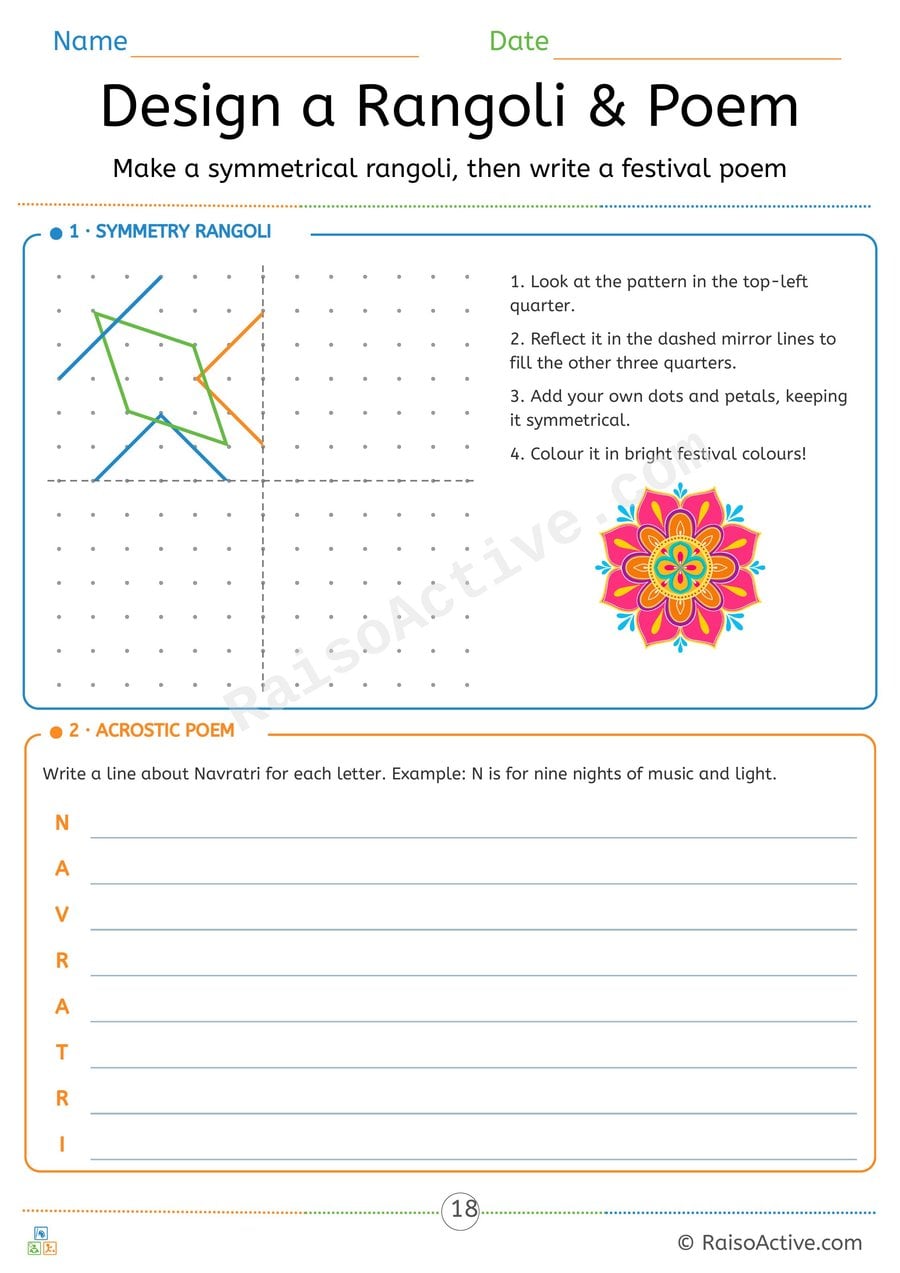
Children reflect a pattern in two mirror lines to complete a four-way symmetrical rangoli on a dot grid, add their own symmetrical details, and write an acrostic poem with one line for each letter of NAVRATRI.
My Nine-Day Outfit Plan: Navratri Colours Design and Writing
Ages 7-11 · Grade 2–Grade 3Ages 7-11 · Year 3–Year 4Ages 7-11 · Class 2–Class 3Ages 7-11
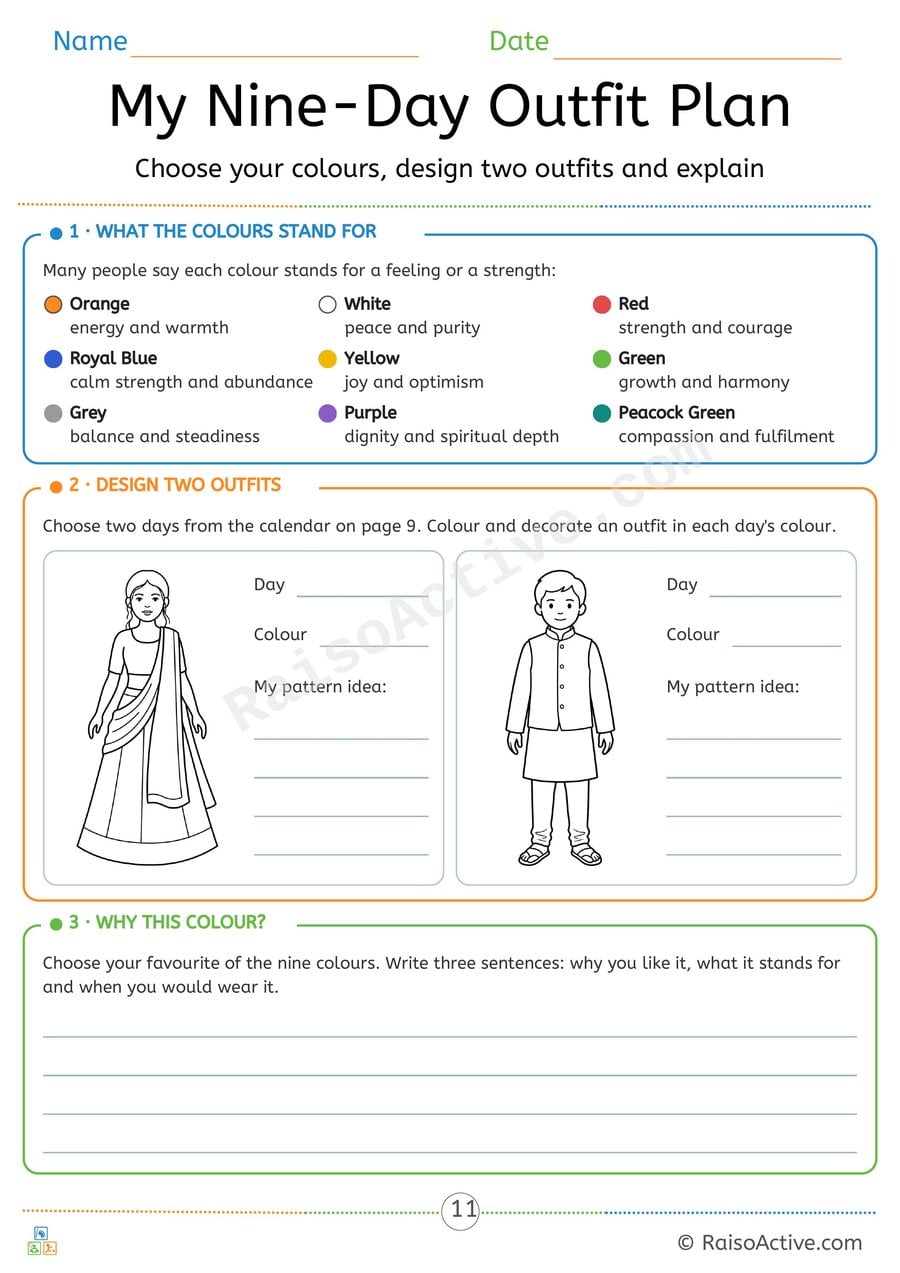
Children read what each of the nine colours is often said to stand for, choose two days from the calendar, colour and pattern a lehenga-style outfit and a kurta outfit in those colours, and write three sentences explaining their favourite colour.
The Nine Nights: Durga and Mahishasura Reading Comprehension
Ages 7-11 · Grade 2–Grade 3Ages 7-11 · Year 3–Year 4Ages 7-11 · Class 2–Class 3Ages 7-11
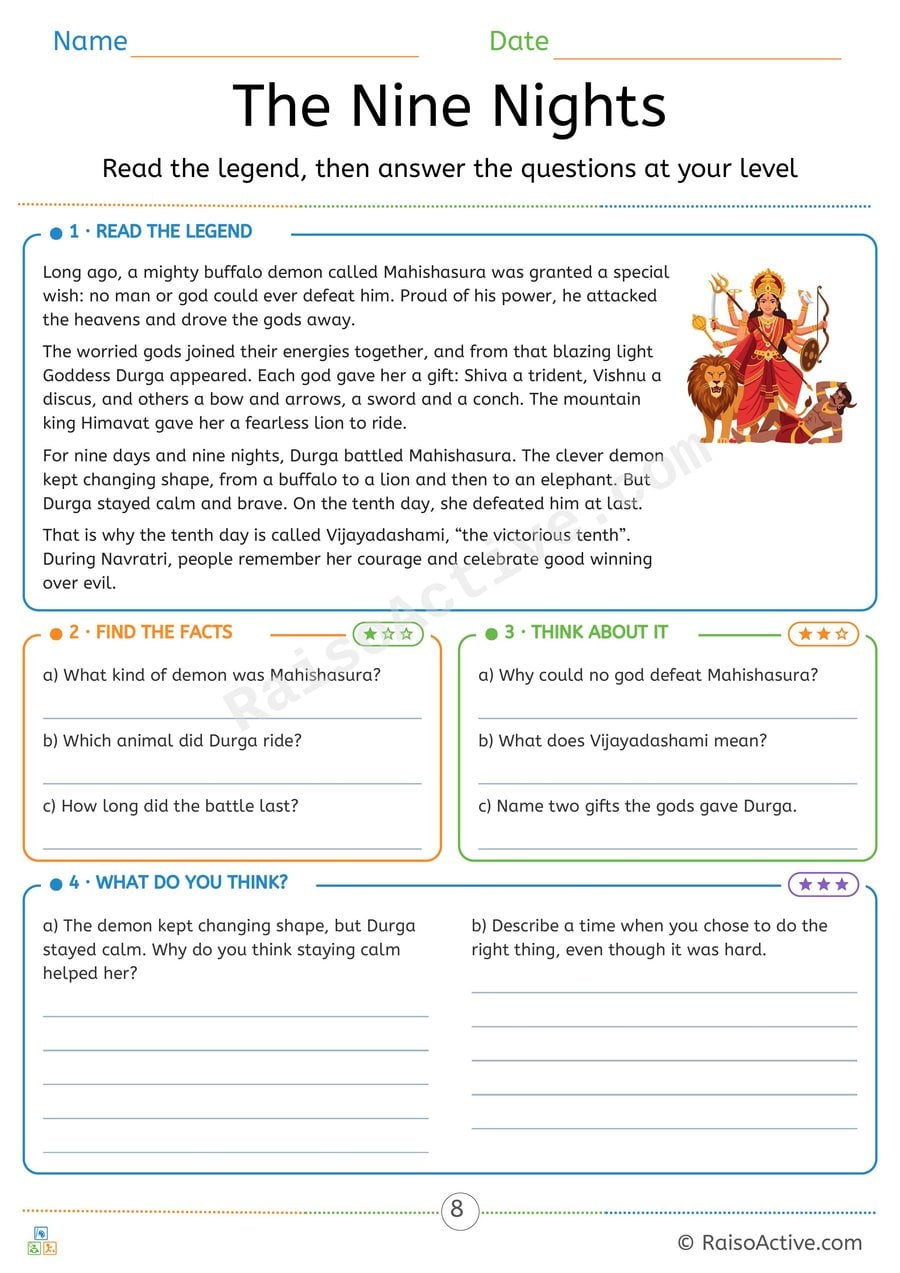
Children read a retelling of the legend of Durga and Mahishasura, find facts in the text, answer inference questions about why things happened, and write their own opinion about staying calm and doing the right thing.

Written by
Hemsweta Jain · Teacher Cheena
MBA and Early Childhood Educator, teaching since 2014 · Founder of RaisoActive, Mumbai
Published · Last reviewed
Related Resources
Printable Resources(10)
View all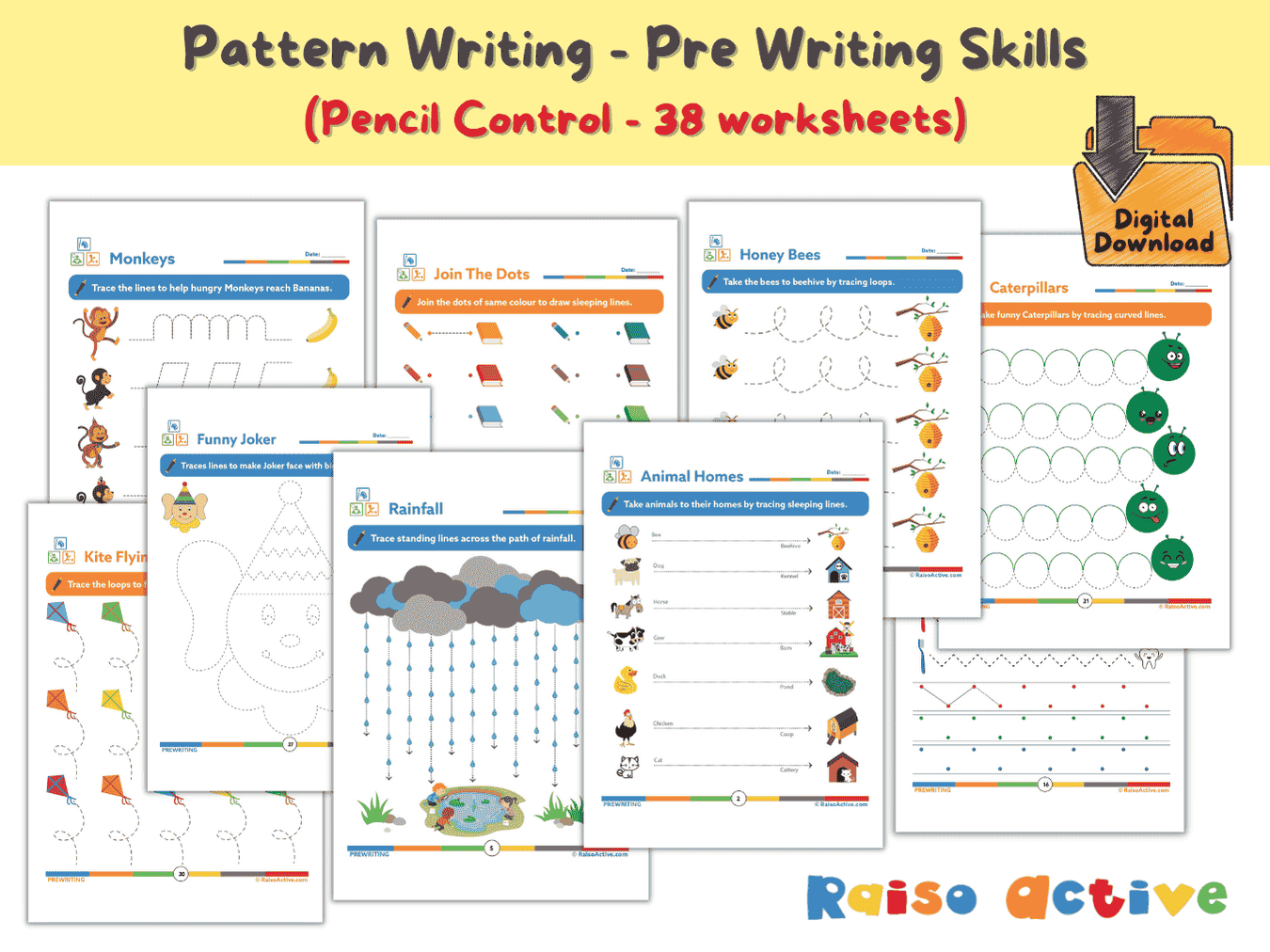

Pattern Writing Pre-writing Skills Activity Book for 3-4 Year Olds
Ages 3-4 · PreschoolAges 3-4 · NurseryAges 3-4 · 44 pages
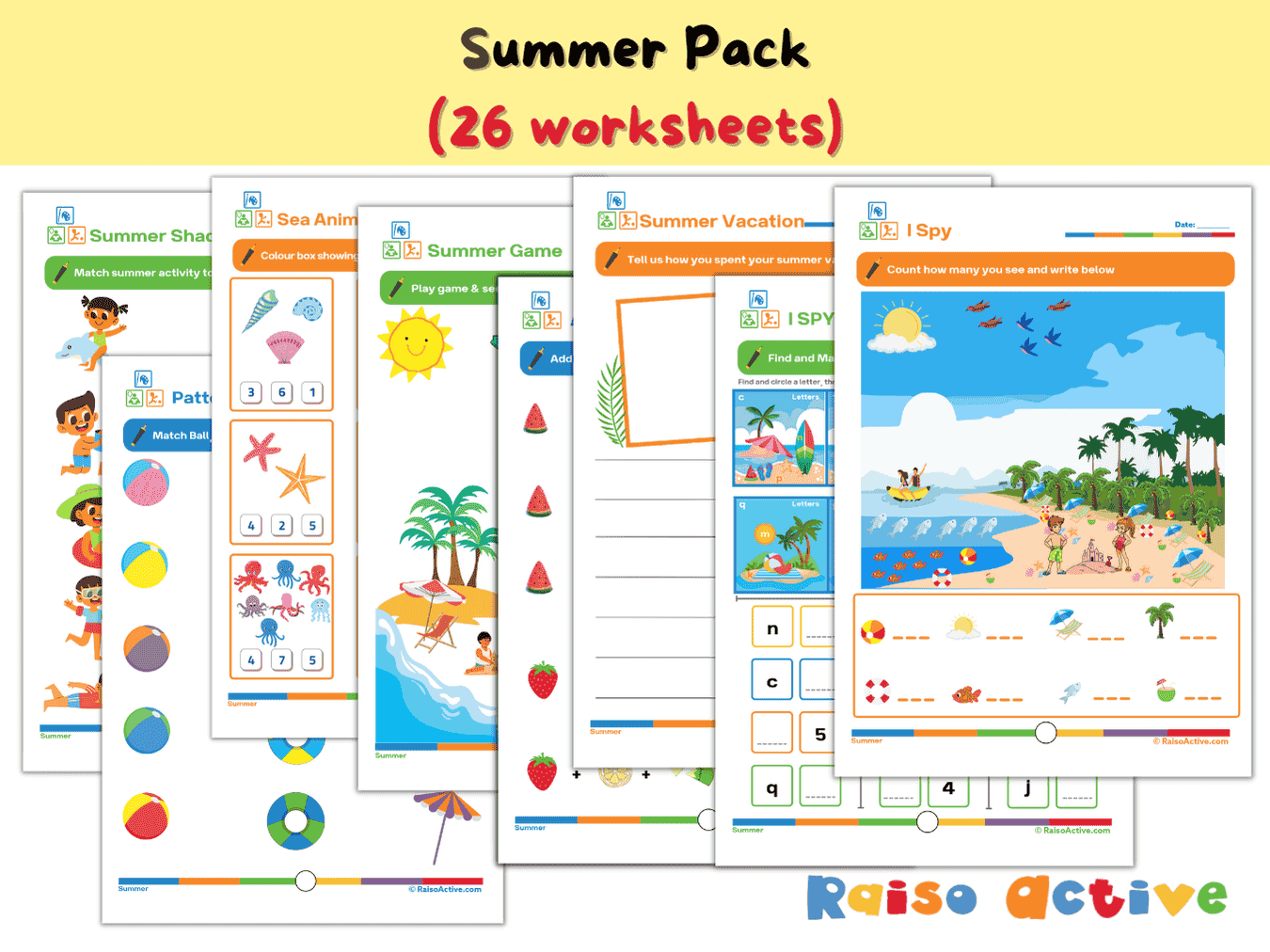

Summer Activity Pack: Math, Literacy, Puzzles & More for Preschool & Kindergarten
Ages 3-7 · Preschool–Grade 1Ages 3-7 · Nursery–Year 2Ages 3-7 · Nursery–Class 1Ages 3-7 · 26 pages
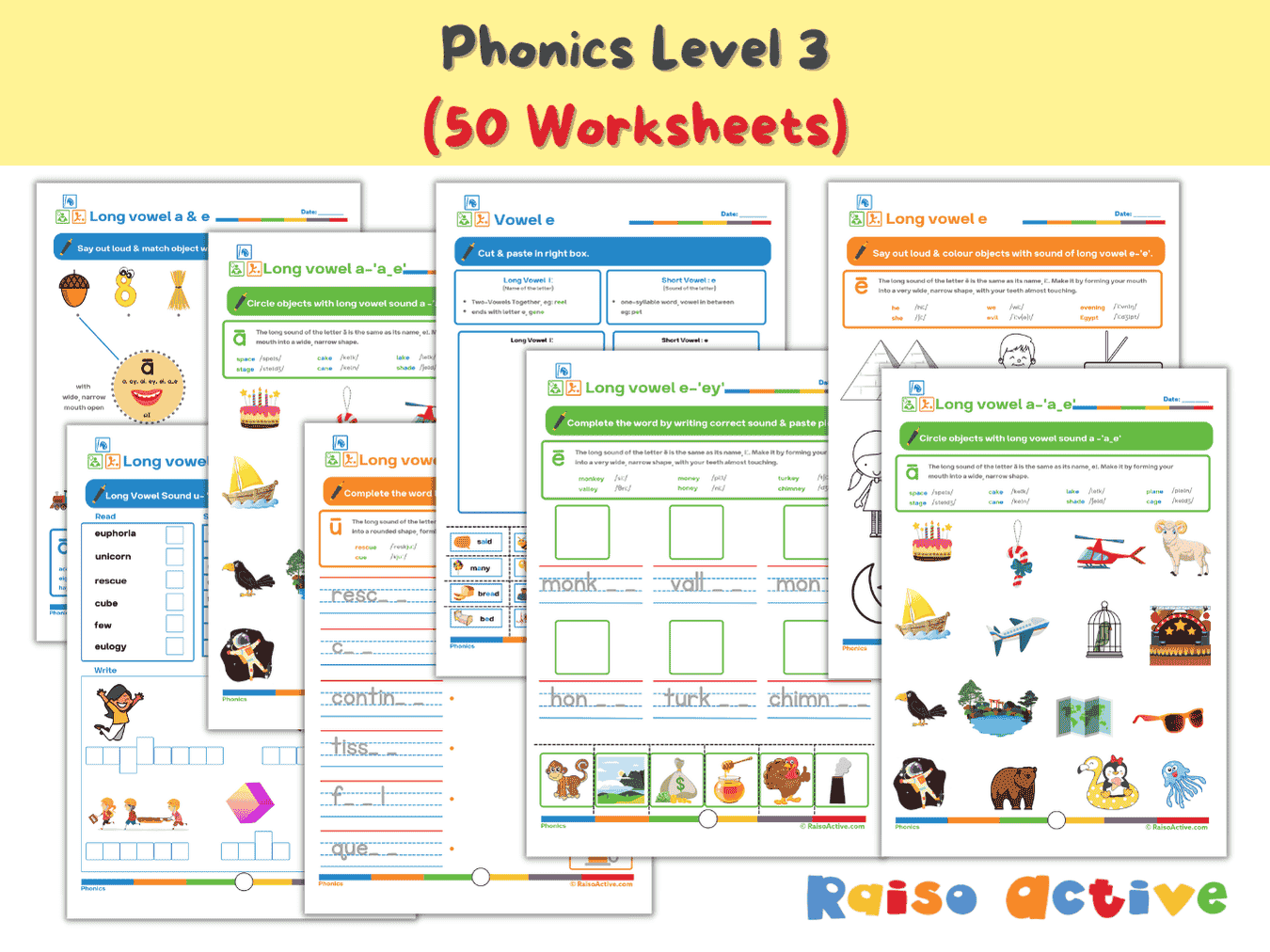

Phonics Level 3 Long Vowels Activity Book for Kindergarten & 1st Grade
Ages 5-7 · Kindergarten–Grade 1Ages 5-7 · Year 1–Year 2Ages 5-7 · UKG–Class 1Ages 5-7 · 51 pages
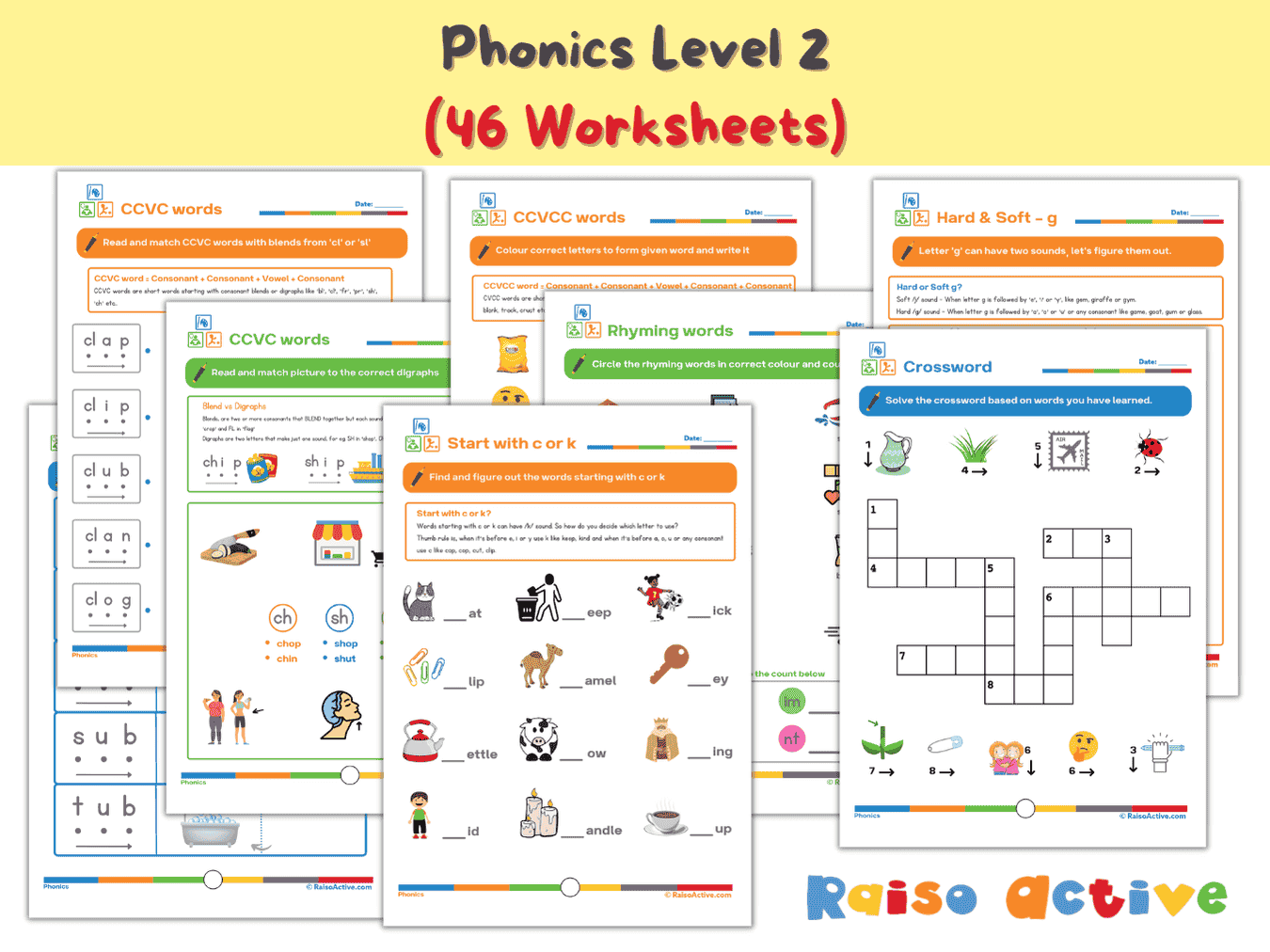
Phonics Level 2 Worksheets: CVC, CCVC, CVCC Word Families & Blends for Early Readers (Ages 4-7)
Ages 4-7 · Pre-K–Grade 1Ages 4-7 · Reception–Year 2Ages 4-7 · LKG–Class 1Ages 4-7 · 47 pages
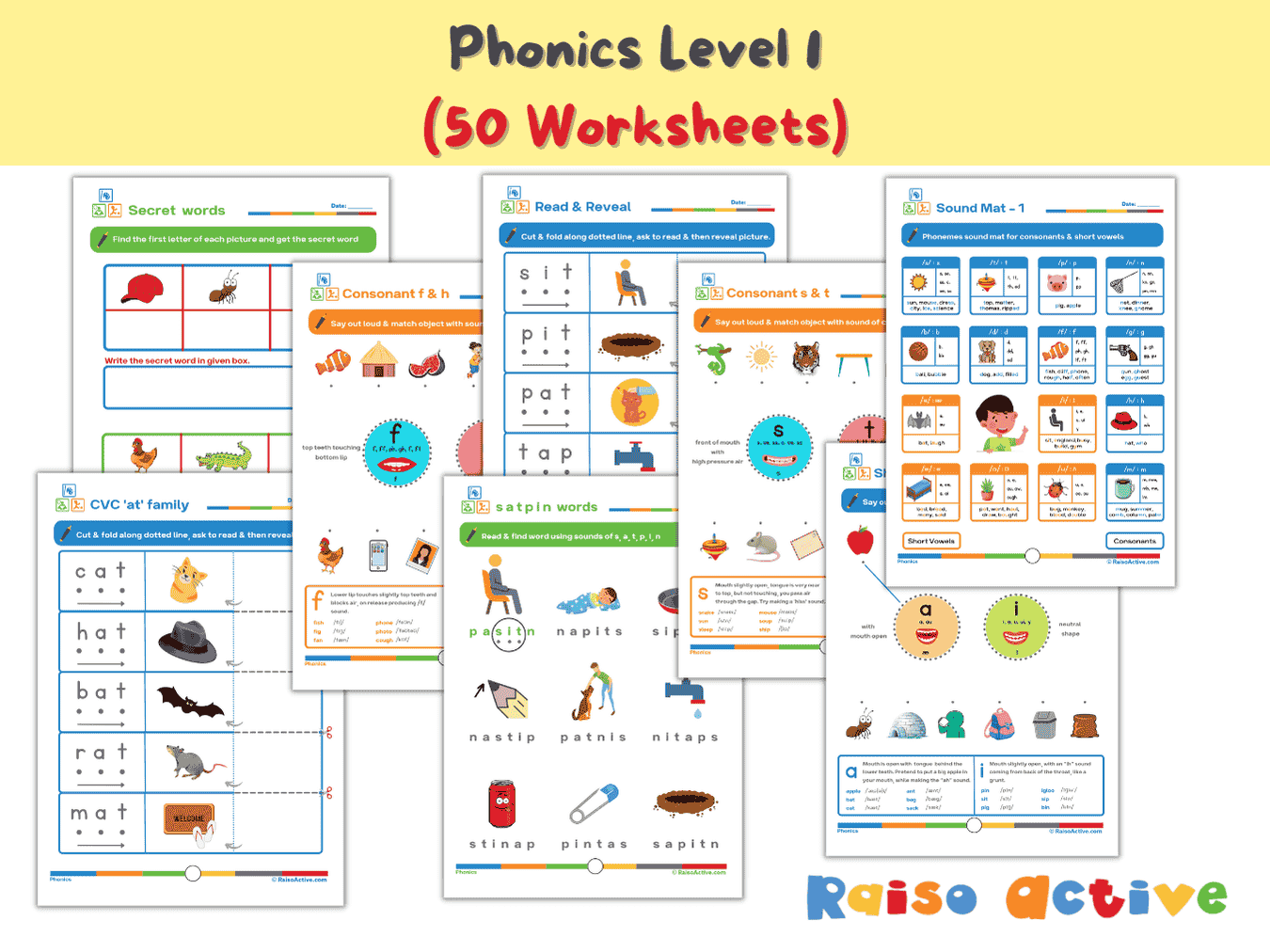
Phonics Level 1 Activity Book: Letter Sounds, Blending & CVC Words for Preschool & Kindergarten
Ages 3-6 · Preschool–KindergartenAges 3-6 · Nursery–Year 1Ages 3-6 · Nursery–UKGAges 3-6 · 60 pages
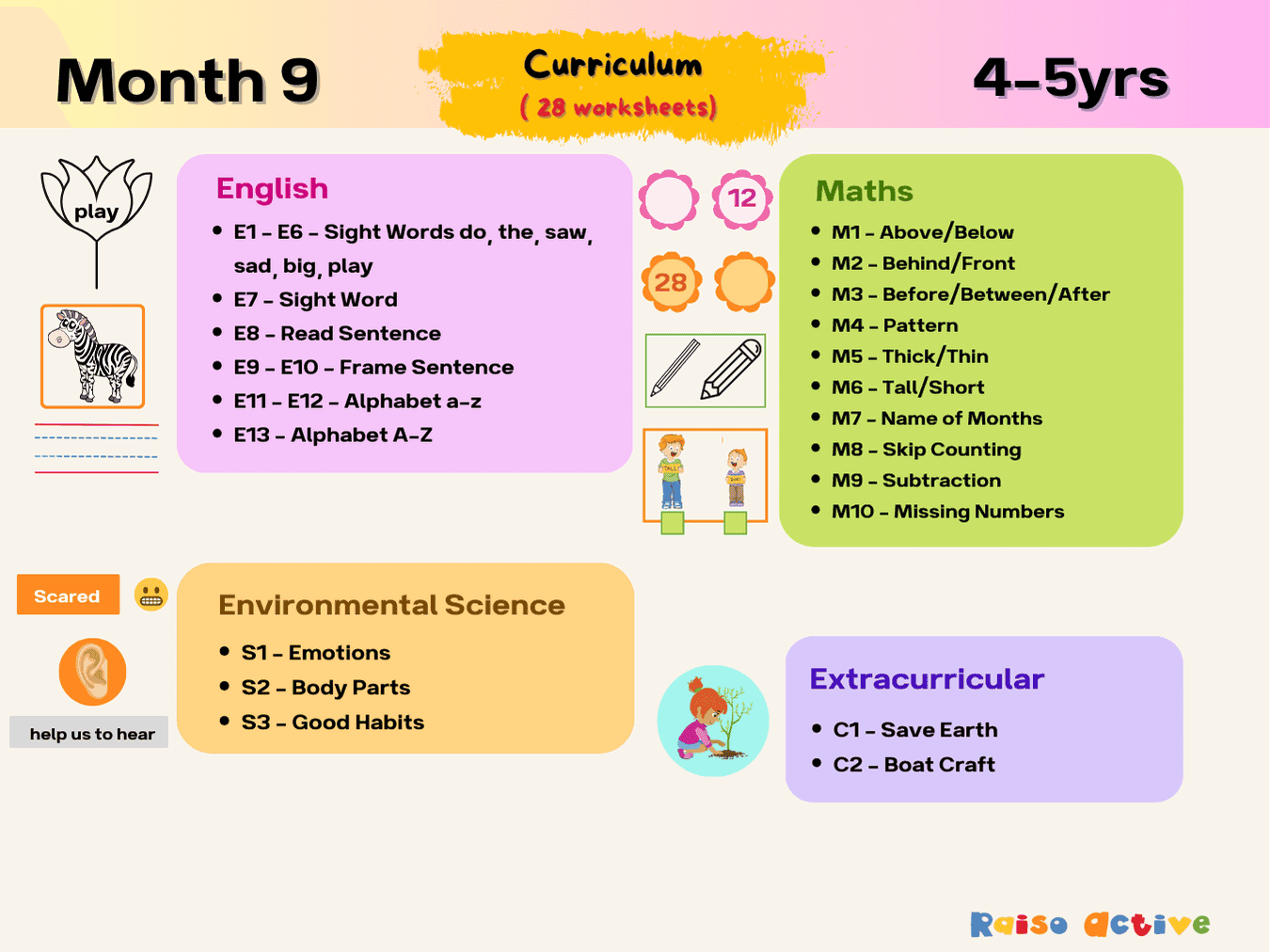
Month 9: Play-Based Preschool Foundational Skills | Ages 4-5
Ages 4-5 · Pre-KAges 4-5 · ReceptionAges 4-5 · LKGAges 4-5 · 31 pages
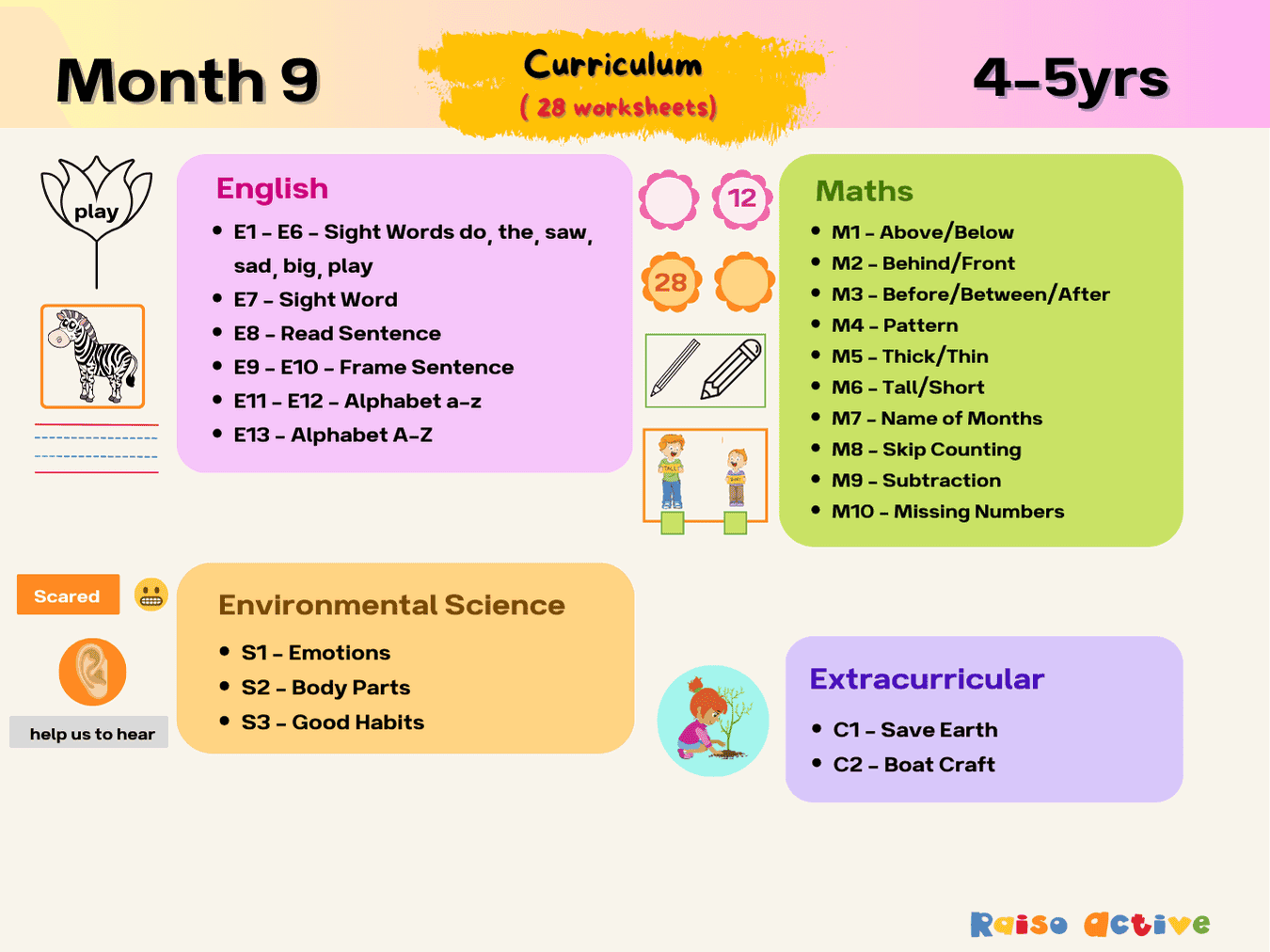
Month 9: Preschool Early Learning Activities | Ages 4-5
Ages 4-5 · Pre-KAges 4-5 · ReceptionAges 4-5 · LKGAges 4-5 · 31 pages
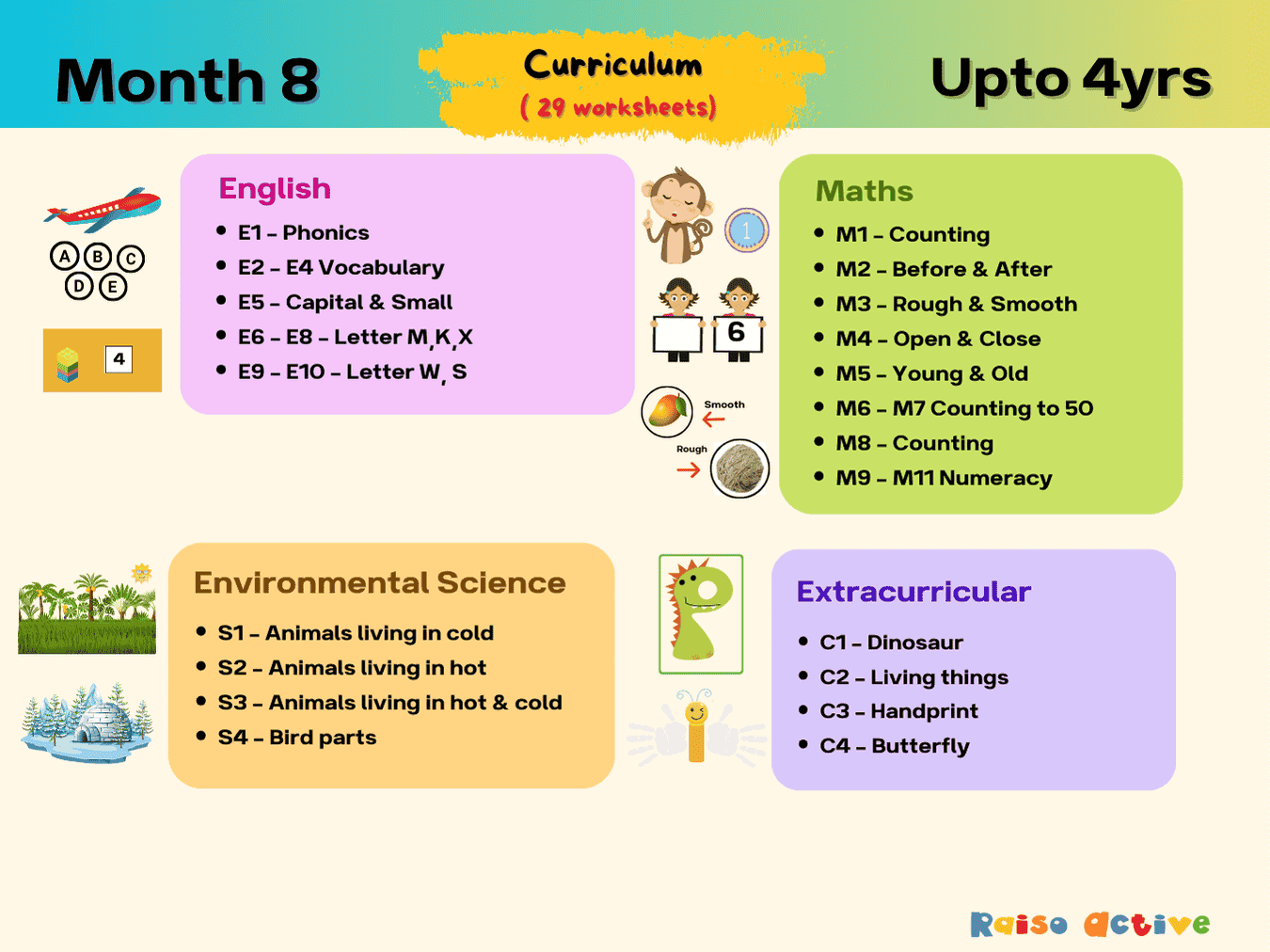
Month 8: Phonics, Math, Science, Creativity | Ages Up to 4
Ages 3-5 · Preschool–Pre-KAges 3-5 · Nursery–ReceptionAges 3-5 · Nursery–LKGAges 3-5 · 32 pages
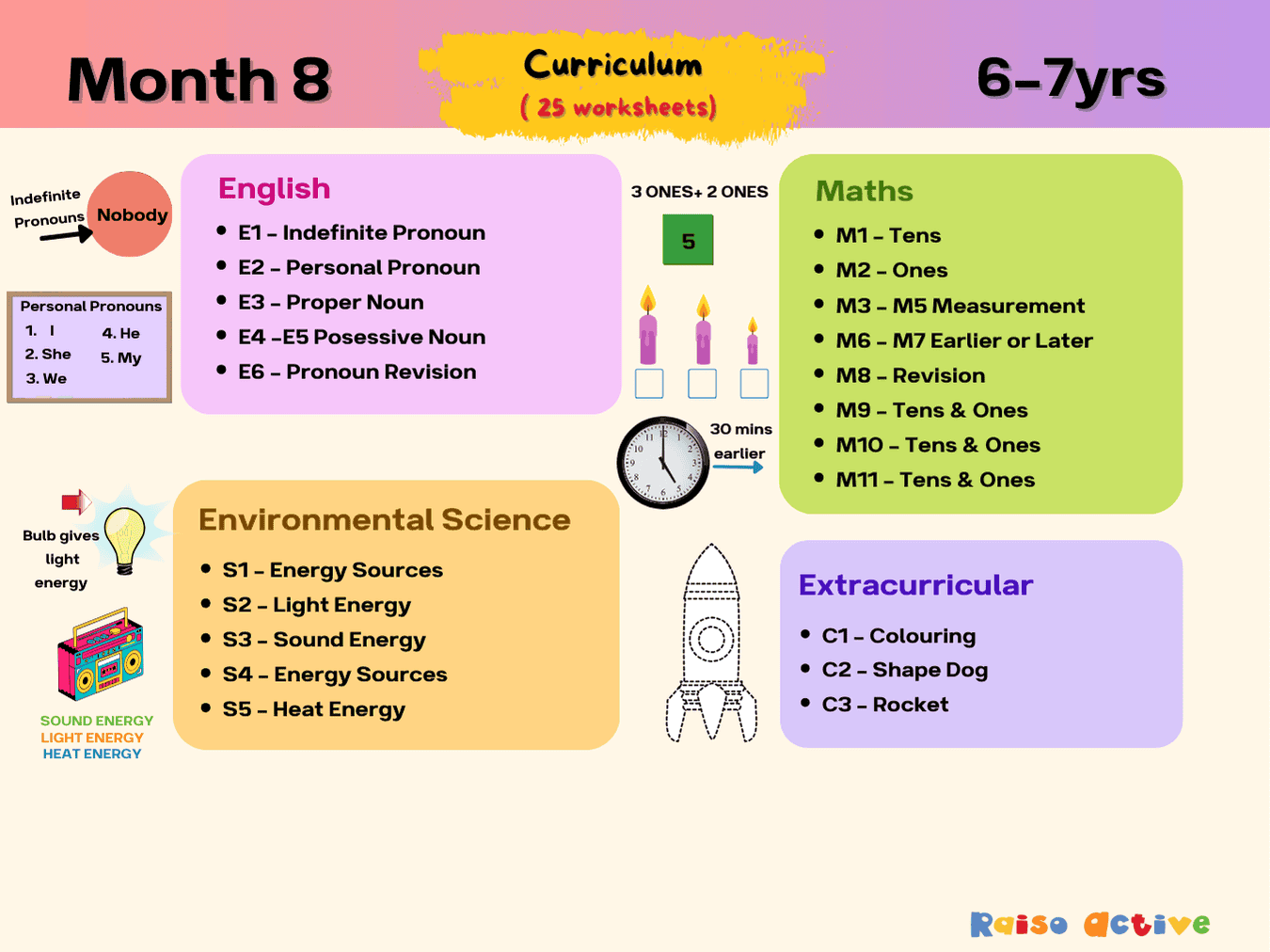
Month 8: English, Math, Science | Ages 6-7
Ages 6-7 · Grade 1Ages 6-7 · Year 2Ages 6-7 · Class 1Ages 6-7 · 28 pages
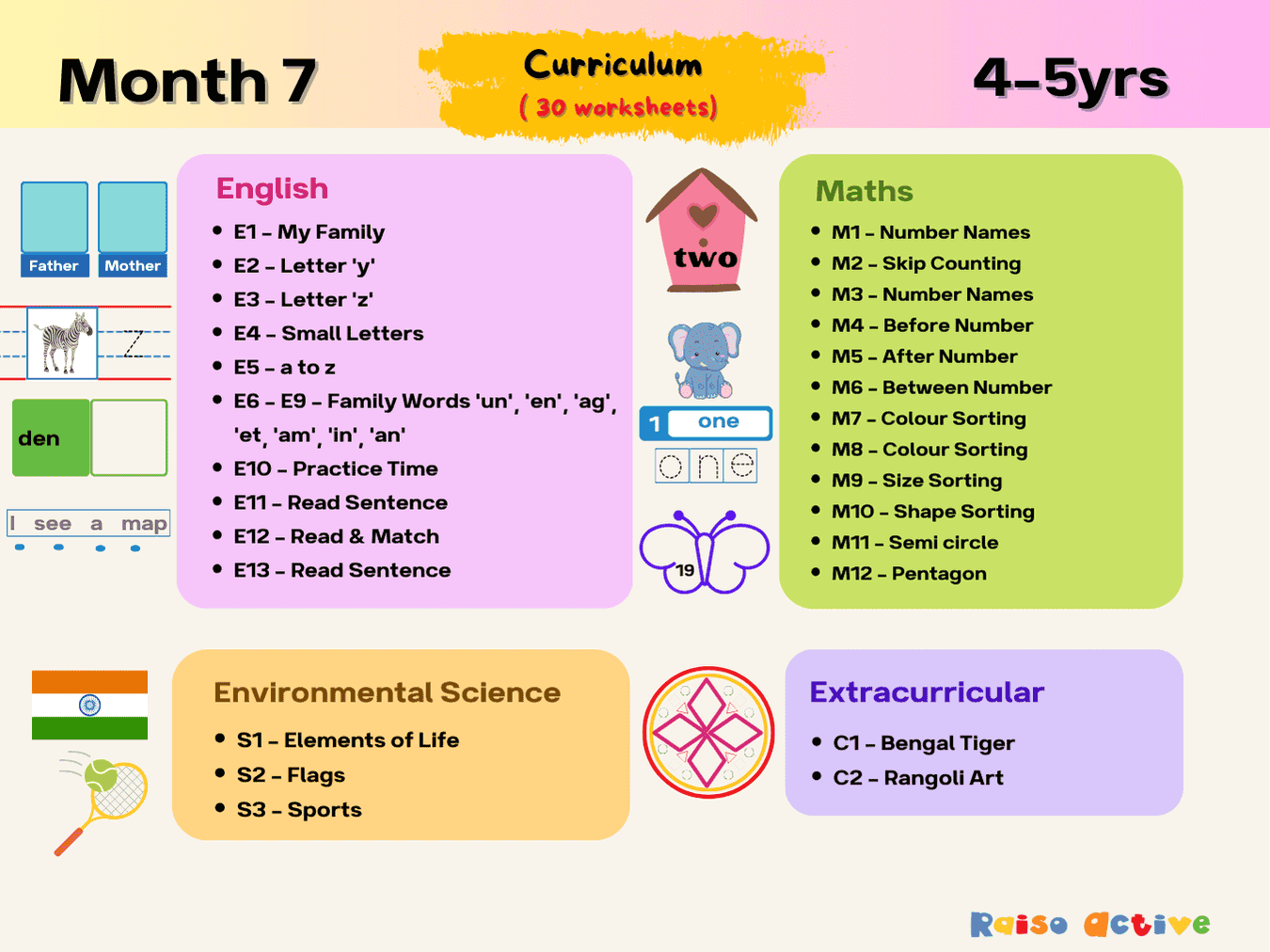
Month 7: Preschool Skills Through Play | Ages 4-5
Ages 4-5 · Pre-KAges 4-5 · ReceptionAges 4-5 · LKGAges 4-5 · 33 pages