How to Teach Your 4-5 Year Old to Read at Home: A Comprehensive Parent's Guide
Author
RaisoActive - Kids Activities and Fun Learning
Published
Updated
Reading Time
14 min read

- Most children aged 4-5 show clear signs of reading readiness — recognising letters, showing interest in books, and understanding that print carries meaning.
- Research strongly supports a **phonics-first** approach: teaching letter sounds before whole words leads to faster, more confident readers.
- A consistent **15-20 minute daily routine** — broken into fun, bite-sized activities — is far more effective than long, infrequent sessions.
- Sight words and simple CVC (consonant-vowel-consonant) words like *cat*, *dog*, and *sun* are the perfect bridge from letter sounds to real reading.
- For bilingual and multilingual families in India, teaching phonics in English alongside the home language gives children a powerful dual advantage.
Why 4-5 Is a Golden Window for Early Reading
Your child picks up a book, points at a word, and asks, "What does this say?" If that moment made your heart leap, you are not alone — and you are right to pay attention. The ages of four and five represent one of the most important developmental windows in a child's entire life. The brain is forming new neural pathways at a remarkable pace, language acquisition is at its peak, and children are naturally motivated to make sense of the world around them — including the squiggly marks on paper that the grown-ups seem to find so meaningful.
Teaching your child to read at home is not about creating pressure or rushing milestones. It is about meeting your child where they are, building confidence brick by brick, and making the journey joyful. This guide will walk you through everything you need — from spotting readiness signs to setting up a daily routine, choosing the right approach, and navigating the special context of bilingual Indian households.
Get Free Phonics & Reading Worksheets
Join thousands of Indian parents who use RaisoActive printables to make early reading fun at home. New worksheets every week, completely free.
Is Your Child Ready? Signs of Reading Readiness at Age 4-5
Before diving into teaching strategies, it helps to check whether your child is showing signs of reading readiness. These are not rigid gates — every child develops differently — but they give you a useful starting point.
- Shows interest in books and stories — asks to be read to, picks books up independently, or pretends to "read" to toys.
- Recognises some letters, especially the ones in their own name.
- Understands left-to-right directionality — knows that we read from left to right and top to bottom.
- Can rhyme simple words — cat/hat, dog/log — which signals phonological awareness.
- Speaks in complete sentences and has a reasonable vocabulary for their age.
- Asks what printed words say — on signs, packets, books, or anywhere else.
- Can hold a pencil or crayon with reasonable control.
If your child ticks most of these boxes, they are likely ready to begin a structured early reading programme. If they tick only a few, don't worry — start with phonological awareness games (rhyming, clapping syllables, identifying beginning sounds) and revisit formal letter-sound work in a few weeks.
Reading readiness is a spectrum, not a switch.
A child who isn't "ready" today may blossom in six weeks with the right playful exposure. Focus on building interest and oral language skills first — the decoding will follow naturally.
Phonics-First vs Whole Language: Which Approach Actually Works?
You may have heard debate among educators about whether to teach reading through phonics (letter-by-letter sounds, then blending) or whole language (recognising whole words by sight and context). This debate has been going on for decades, but the research has become increasingly clear: for most children, a systematic phonics approach produces faster results and stronger long-term reading outcomes.
- +Teaches letter sounds (phonemes) first
- +Children learn to decode any new word independently
- +Strong evidence base from large-scale research
- +Works even for children with early dyslexia indicators
- +Can feel mechanical at first — needs to be made playful
- -Teaches whole words as single units by sight and context
- -Children rely on memorisation and context clues
- -Popular in some schools, but weaker evidence for struggling readers
- -Works well for children with very strong visual memory
- -Can leave gaps when children encounter unfamiliar words
Our recommendation: Start with a solid phonics foundation. Once your child can blend CVC words confidently, layer in high-frequency sight words that don't follow regular phonics rules (like the, said, was). This combination — sometimes called "structured literacy" — gives children both the decoding skills and the reading fluency they need.
Step-by-Step: The Reading Journey from Letter Sounds to Simple Sentences
Here is a clear progression you can follow at home. Move through these stages at your child's pace — some children will race through Stage 1 in two weeks; others will need two months. Both are completely normal.
The 5-Stage Home Reading Roadmap
Stage 1: Phonological Awareness (2-4 weeks)
Before touching letters, build your child's *ear* for sounds. Play rhyming games ("cat rhymes with...?"), clap syllables in words (el-e-phant = 3 claps), and identify beginning sounds ("What sound does *moon* start with?"). This is the invisible foundation of all future reading.
Stage 2: Letter Names and Sounds (4-6 weeks)
Introduce one letter sound every 2-3 days. Use a consistent sequence — many experts recommend starting with **s, a, t, p, i, n** because these six letters can form many simple words immediately. Pair every letter with a memorable picture and action (e.g., *s* is a slithering snake that says "ssss"). Use alphabet puzzles, letter stamps, and sand tracing to make it tactile.
Stage 3: Blending CVC Words (4-8 weeks)
Once your child knows 6-10 letter sounds, start blending. CVC words — consonant, vowel, consonant — like *sat*, *pin*, *top*, *mud* — are the perfect first words. Teach your child to "push" the sounds together: /s/ /a/ /t/ → *sat*. Use colourful letter tiles or magnetic letters so blending is hands-on and visual.
Stage 4: High-Frequency Sight Words (ongoing from Stage 3)
Introduce sight words like *the*, *a*, *is*, *it*, *he*, *she*, *we*, *my* alongside CVC blending. Start with the **Dolch Pre-Primer list** (about 40 words). Write them on index cards, play snap, or make a "word wall" on your refrigerator. These words appear so often in books that recognising them instantly transforms reading fluency.
Stage 5: Simple Sentences and Early Books (ongoing)
Combine blending + sight words into reading simple sentences: *"The cat sat on a mat."* Choose decodable readers — books written specifically to practise phonics patterns — rather than regular picture books at this stage. Oxford Reading Tree, Bob Books, and Jolly Phonics readers all work beautifully.
The English language has 44 distinct sounds (phonemes) but only 26 letters — which is why explicit phonics instruction is so important. Children need to learn the *sounds*, not just the letter names.
Source: National Reading Panel, USA
Building a Daily Reading Routine That Actually Sticks
Consistency beats intensity every time. A 15-20 minute daily session is far more powerful than an hour-long session twice a week. The key is to make it feel like a fun, special time — not homework. Here is how to structure it.
- **Minutes 1-3: Warm-up** — Review 3-5 previously learned letter sounds using flashcards or a quick game. Keep it fast and celebratory.
- **Minutes 4-8: New learning** — Introduce one new letter sound, blend new CVC words, or practise 3-5 new sight words. One focused activity only.
- **Minutes 9-13: Reading practice** — Read a decodable book together. Let your child do the decoding; you provide support, not answers.
- **Minutes 14-15: Celebration** — Acknowledge progress warmly. A sticker chart, a high-five, or simply telling them specifically what they did well goes a long way.
Beyond the structured session, surround your child with print throughout the day. Read signs together on the road, point out letters on food packets, write their name on their lunchbox in big letters, play "I spy something starting with /b/." Reading readiness grows in these small, everyday moments just as much as in formal lessons.
- **Pushing too fast** — If your child is guessing rather than decoding, slow down and consolidate the sounds they already know.
- **Teaching letter names instead of sounds** — The letter "bee" makes the sound /b/. Always emphasise the sound first.
- **Correcting every mistake immediately** — Give your child 5-10 seconds to self-correct. Jumping in too quickly erodes confidence.
- **Making it feel like a test** — Keep the tone warm and curious, not evaluative. The moment it feels like a test, engagement drops.
- **Skipping phonological awareness** — Jumping straight to letters without building a sound awareness foundation is one of the most common home-teaching mistakes.
Books, Apps, and Resources Worth Trying
You do not need to spend a lot of money to teach your child to read. Here are some well-tested resources across different budgets.
- Books for decodable reading practice: Bob Books (Series 1), Oxford Reading Tree (Stage 1-2), Jolly Readers, Usborne Very First Reading series.
- Books for read-aloud and love of reading: The Very Hungry Caterpillar by Eric Carle, Goodnight Moon by Margaret Wise Brown, Chicka Chicka Boom Boom by Bill Martin Jr.
- Apps: Starfall (free, excellent phonics), Reading Eggs (subscription, comprehensive), Homer Learn and Grow (interactive stories and phonics).
- YouTube channels: Alphablocks (BBC, brilliant for phonics), Jack Hartmann Kids Music Channel (songs for letter sounds and sight words).
- Physical resources: Magnetic lowercase letters on the fridge, alphabet puzzles, letter stamps and an ink pad, sand trays for letter writing.
Decodable books are different from picture books — and both matter.
Decodable books are carefully written so children can sound out almost every word using the phonics they know. They may seem simple or repetitive, but that is the point — success builds confidence. Read beautiful, rich picture books *to* your child separately for vocabulary and love of stories.
Teaching Reading in Bilingual and Multilingual Indian Homes
For millions of Indian families, English is not the first language at home. Children may grow up hearing Hindi, Marathi, Tamil, Telugu, Kannada, Bengali, or any number of other beautiful languages before they encounter formal English literacy. This is not a disadvantage — it is a tremendous cognitive asset. Research consistently shows that bilingual children develop stronger phonological awareness and metalinguistic skills, which transfer directly to reading in any language.
Here are some practical adjustments for multilingual households:
- Build oral English first — Before teaching English phonics, make sure your child has enough spoken English vocabulary to understand what they are decoding. Watch English cartoons together, sing English nursery rhymes, and have simple conversations in English daily.
- Use the home language to explain concepts — If a child understands a phonics concept in Hindi first, they will transfer that understanding to English much faster. Code-switching during lessons is fine and even helpful.
- Read in both languages — A child who sees their home language honoured in books and stories will approach all reading with greater enthusiasm and cultural confidence.
- Don't rush the timeline — Bilingual children sometimes begin reading slightly later than monolingual peers. This is normal. By age 7-8, bilingual readers typically catch up and often surpass monolingual peers in reading comprehension and vocabulary.
- Leverage phonetic scripts — If your child is also learning Devanagari (Hindi) or any other phonetically regular Indian script, the concept of "letters make sounds" transfers powerfully. Children who learn to read in a phonetically regular script often grasp English phonics concepts more quickly.
- Pick a common object — say, a *mango*. Say the English name, then the name in your home language.
- Ask your child: *"What sound does 'mango' start with?"* Then ask the same in your home language.
- Notice together whether the beginning sound is the same or different. This builds cross-linguistic phonological awareness.
- Try this with 3-5 objects a day during meals or car rides. It is joyful, zero-prep, and surprisingly effective.
speak a language other than English as the primary home language, making bilingual reading strategies essential for the majority of Indian children learning to read English.
Source: Census of India 2011 language data
Red Flags: When to Seek Additional Support
Most children learn to read with patient, consistent home practice. But some children have underlying challenges — such as dyslexia, auditory processing difficulties, or vision problems — that make reading acquisition significantly harder without specialist support. Watch for these signs, especially after 6+ months of consistent instruction:
- Cannot remember letter sounds even after many repetitions, with no apparent reason.
- Consistently confuses letters that look similar — b/d, p/q — well past age 5.5.
- Avoids all print-related activities or shows significant distress around reading.
- Speech is unclear enough that strangers frequently cannot understand them.
- Cannot rhyme simple words or identify beginning sounds after phonological awareness games.
- Has a family history of dyslexia or reading difficulties.
If you notice several of these signs, consult your paediatrician and ask for a referral to a developmental paediatrician or educational psychologist. Early identification and structured intervention make an enormous difference — the earlier, the better. Seeking help is not a failure; it is the most effective thing you can do for your child.
Early intervention works best.
Research shows that reading difficulties identified and addressed before age 6 respond far better to intervention than those identified at age 9 or 10. If something feels persistently difficult, trust your instinct and get a professional opinion.
Practise with These Free Worksheets
Get a New Reading Worksheet Every Week — Free
Subscribe to RaisoActive and receive freshly designed phonics and reading worksheets straight to your inbox. Trusted by parents and teachers across India.
Frequently Asked Questions
At what age should I start teaching my child to read?
How long should each reading session be for a 4-5 year old?
My child knows all the letters but cannot blend them into words. What should I do?
Should I teach reading in English or our home language first?
My child's school uses a different reading method. Should I follow the school approach at home?
How do I keep my child motivated when reading practice starts to feel boring or frustrating?
Free worksheets for this topic
Browse all worksheets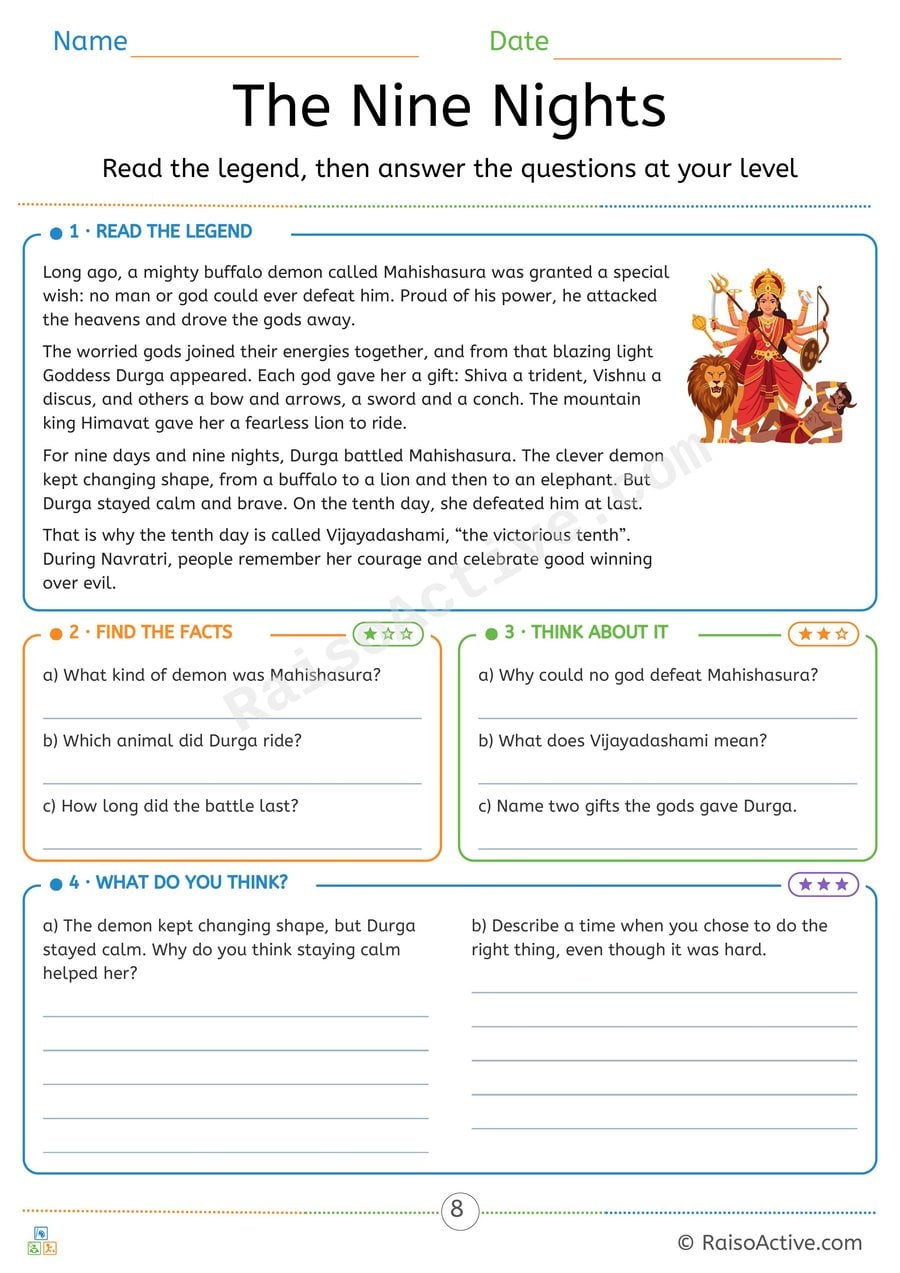
The Nine Nights: Durga and Mahishasura Reading Comprehension
Ages 7-11 · Grade 2–Grade 3Ages 7-11 · Year 3–Year 4Ages 7-11 · Class 2–Class 3Ages 7-11
Children read a retelling of the legend of Durga and Mahishasura, find facts in the text, answer inference questions about why things happened, and write their own opinion about staying calm and doing the right thing.

Meera's Garba Night: Navratri Reading Comprehension Story
Ages 4-6 · Pre-K–KindergartenAges 4-6 · Reception–Year 1Ages 4-6 · LKG–UKGAges 4-6
Children listen to or read a short story, recall details by circling answers, write answers using a word bank and explain a simple idea in their own words.
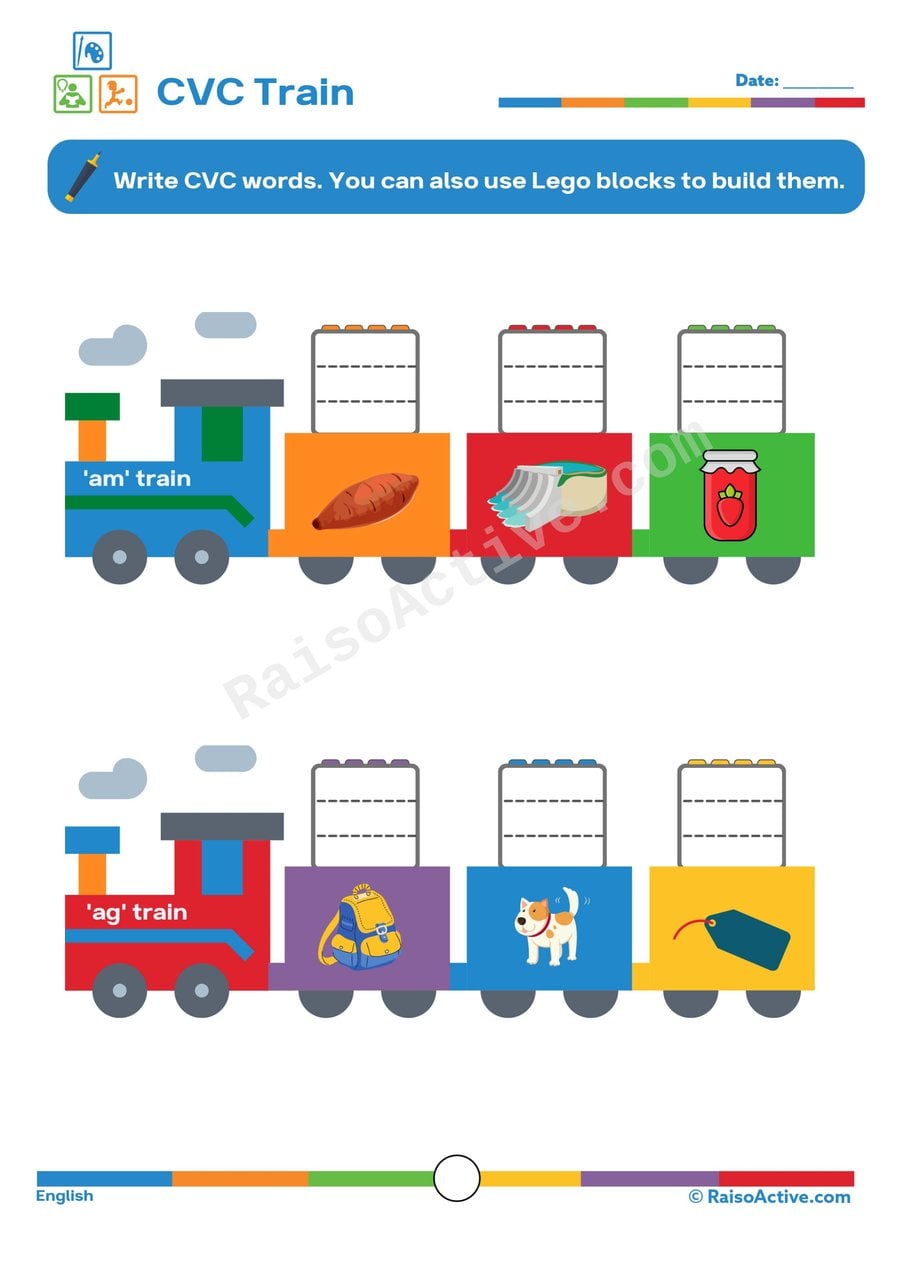
CVC Train Worksheet: Write and Build CVC Words!
Ages 4-6 · Pre-K–KindergartenAges 4-6 · Reception–Year 1Ages 4-6 · LKG–UKGAges 4-6
This worksheet gives children ages 4-6 focused practice blending letter sounds into consonant-vowel-consonant words, using train-car pictures as clues for words like 'dog,' 'hen,' or 'cup.' Because children both write the word and can optionally build it with Lego blocks, this worksheet reinforces the same phonics skill through two different physical actions — handwriting and hands-on construction — which helps the spelling patterns stick.
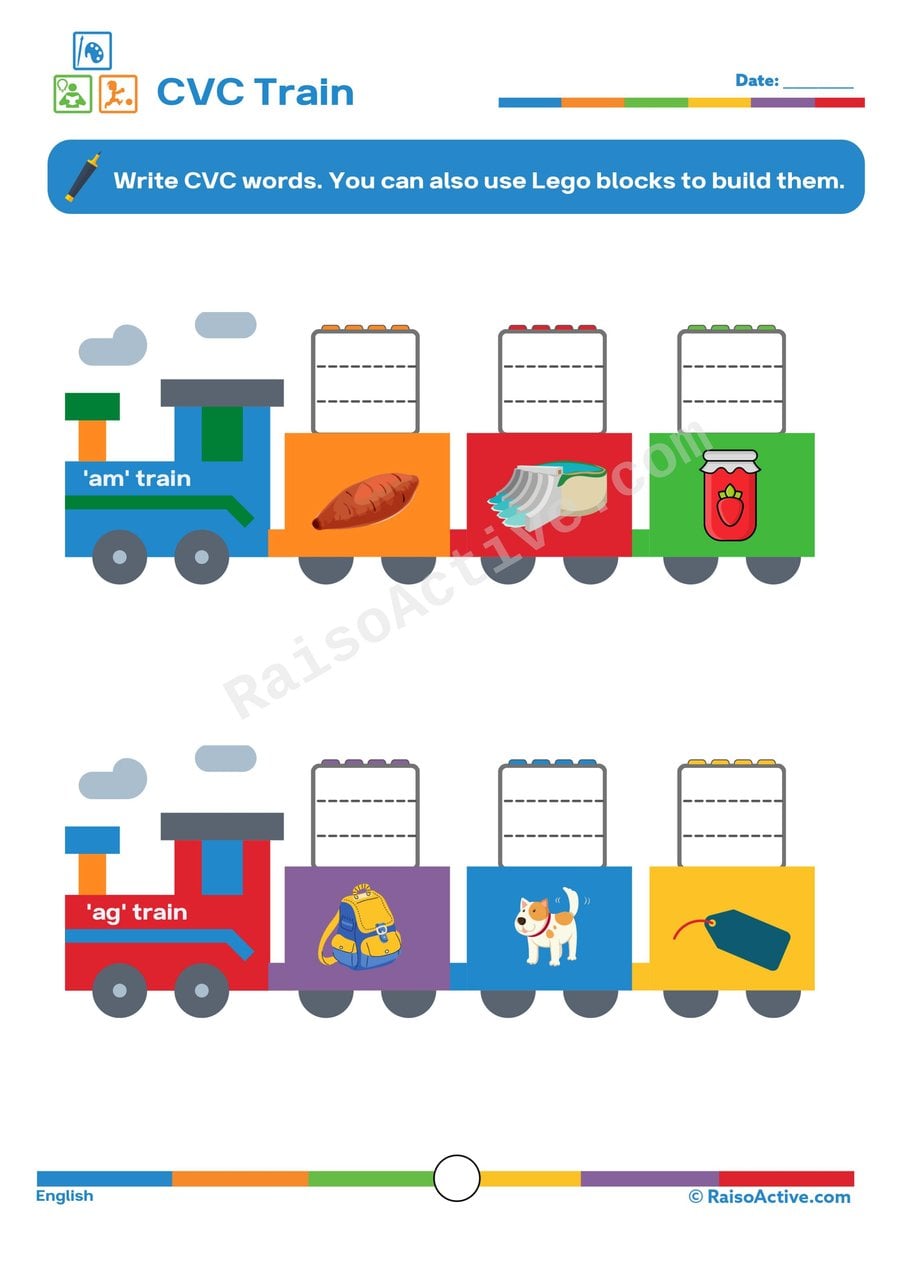
CVC Train Worksheet: Write CVC Words!
Ages 4-6 · Pre-K–KindergartenAges 4-6 · Reception–Year 1Ages 4-6 · LKG–UKGAges 4-6
Writing consonant-vowel-consonant words like 'cat,' 'sun,' or 'pig' under matching pictures gives children ages 4-6 direct practice with letter-sound blending, a core phonics skill that underpins independent reading. Because each train car pairs a picture clue with a blank space, children also practice translating a spoken word they can sound out into its correctly spelled written form.

Written by
Hemsweta Jain · Teacher Cheena
MBA and Early Childhood Educator, teaching since 2014 · Founder of RaisoActive, Mumbai
Published · Last reviewed
Related Resources
Printable Resources(10)
View all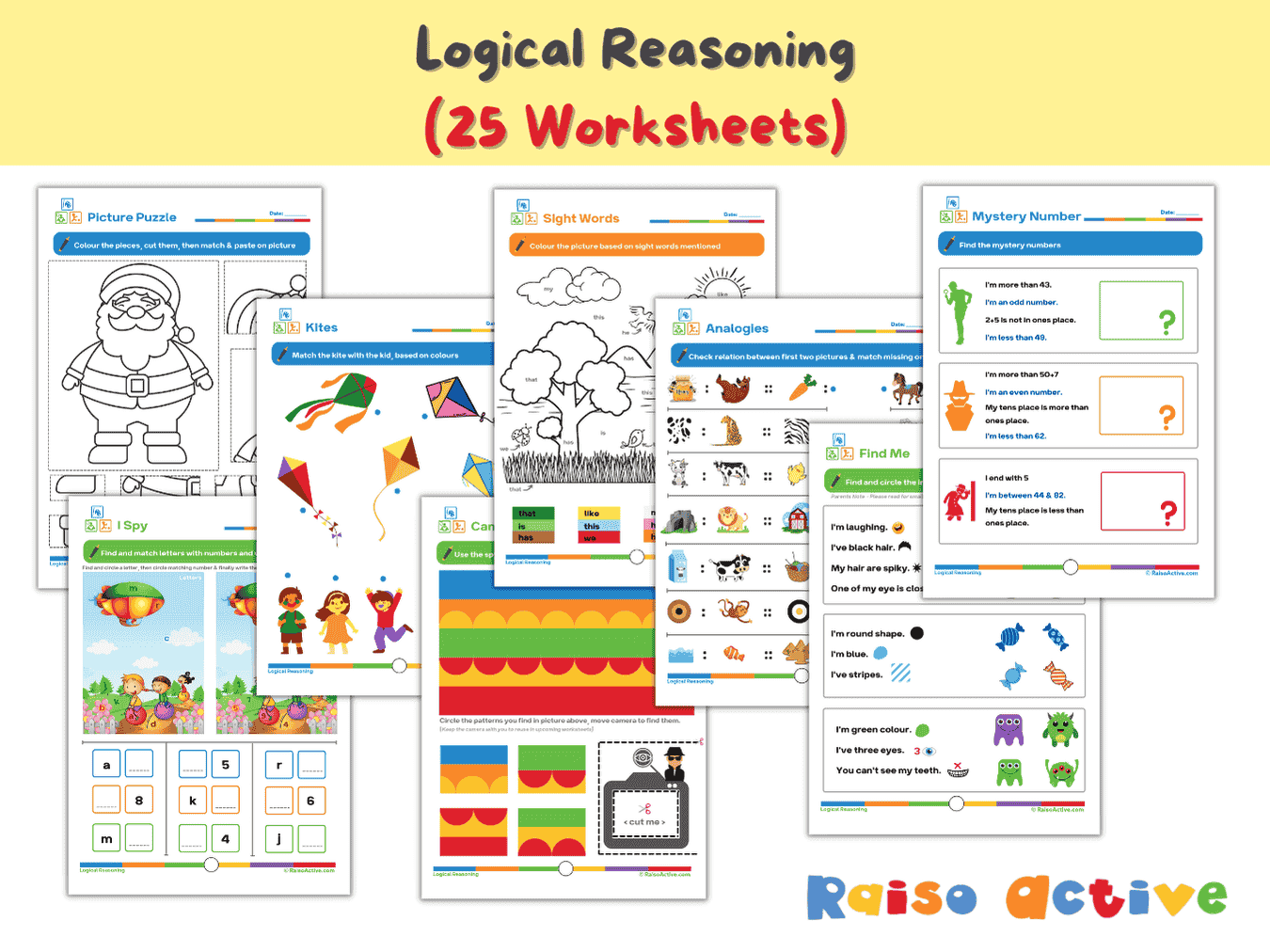

Logical Reasoning Activity Book for Preschool & Kindergarten | Patterns, Puzzles & Analogies
Ages 4-7 · Pre-K–Grade 1Ages 4-7 · Reception–Year 2Ages 4-7 · LKG–Class 1Ages 4-7 · 26 pages
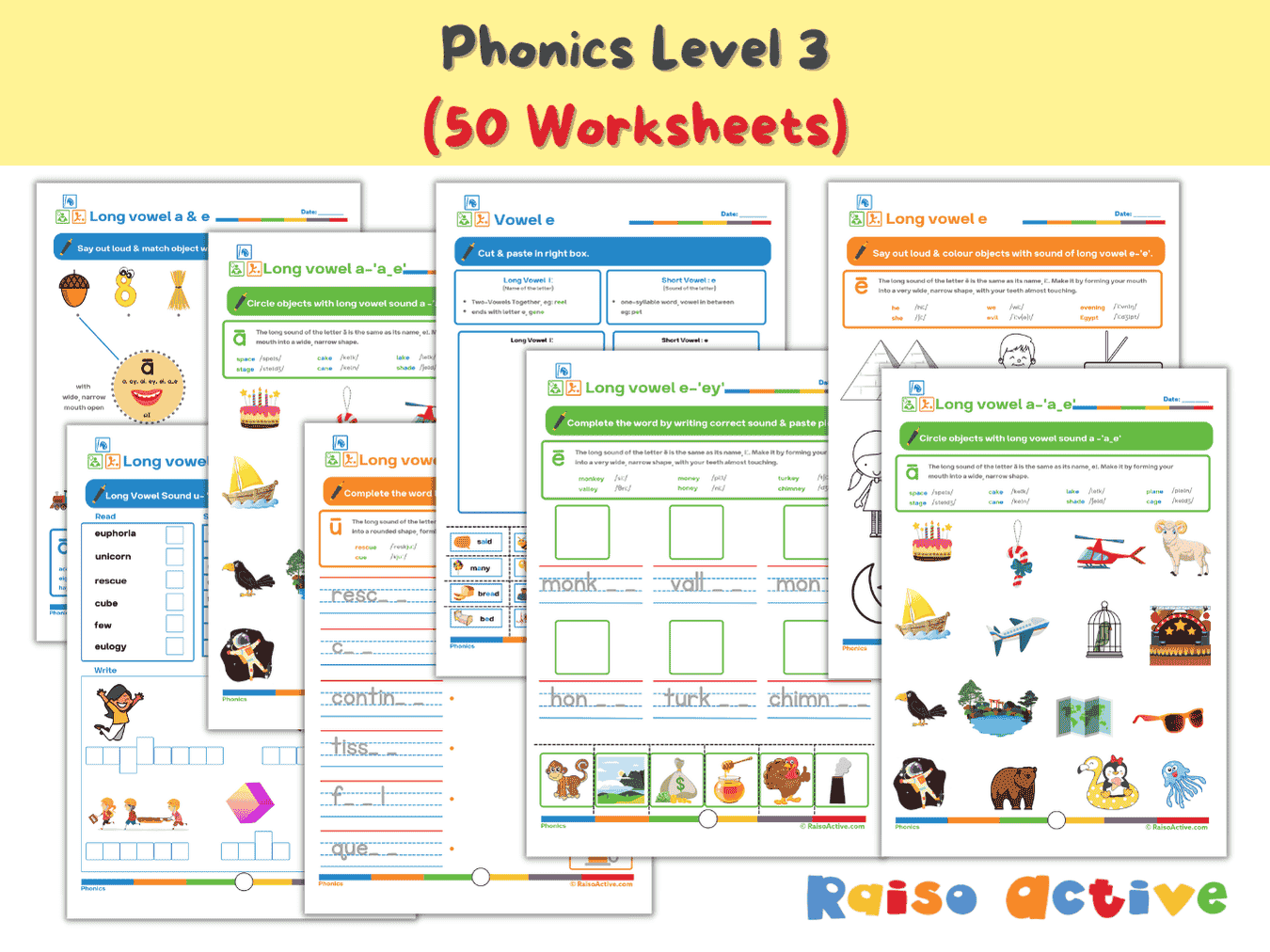

Phonics Level 3 Long Vowels Activity Book for Kindergarten & 1st Grade
Ages 5-7 · Kindergarten–Grade 1Ages 5-7 · Year 1–Year 2Ages 5-7 · UKG–Class 1Ages 5-7 · 51 pages
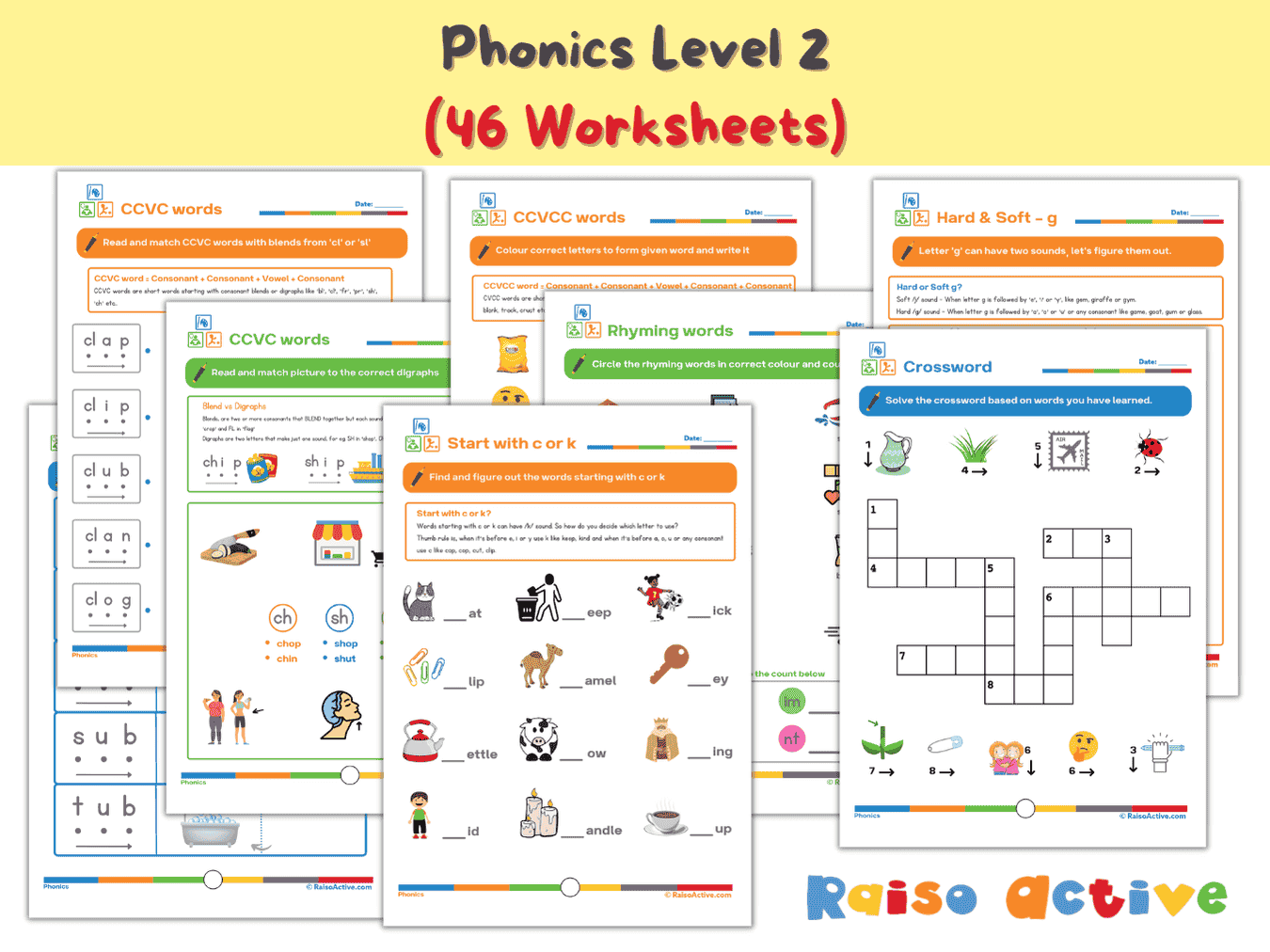
Phonics Level 2 Worksheets: CVC, CCVC, CVCC Word Families & Blends for Early Readers (Ages 4-7)
Ages 4-7 · Pre-K–Grade 1Ages 4-7 · Reception–Year 2Ages 4-7 · LKG–Class 1Ages 4-7 · 47 pages
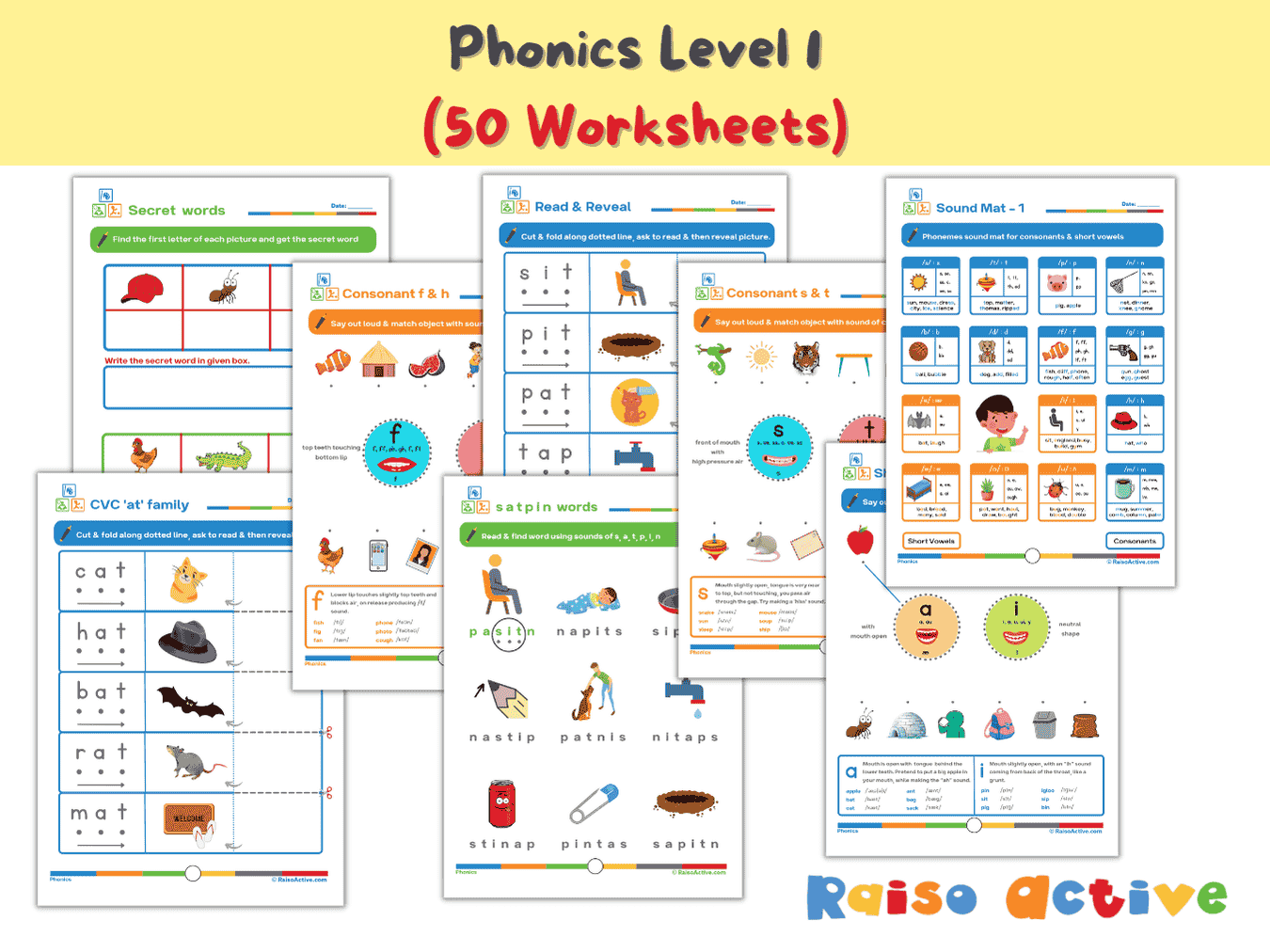
Phonics Level 1 Activity Book: Letter Sounds, Blending & CVC Words for Preschool & Kindergarten
Ages 3-6 · Preschool–KindergartenAges 3-6 · Nursery–Year 1Ages 3-6 · Nursery–UKGAges 3-6 · 60 pages
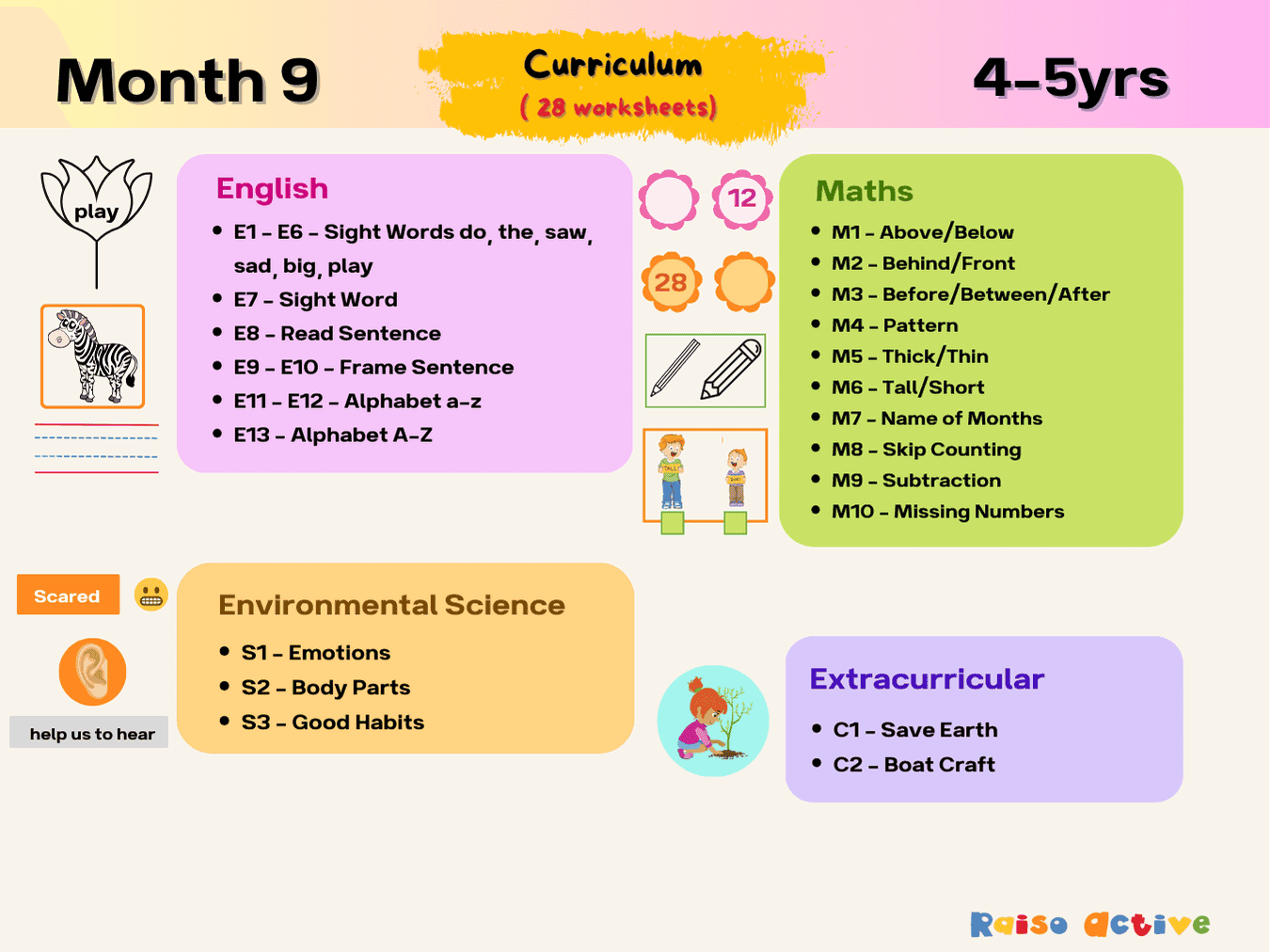

Month 9: Play-Based Preschool Foundational Skills | Ages 4-5
Ages 4-5 · Pre-KAges 4-5 · ReceptionAges 4-5 · LKGAges 4-5 · 31 pages
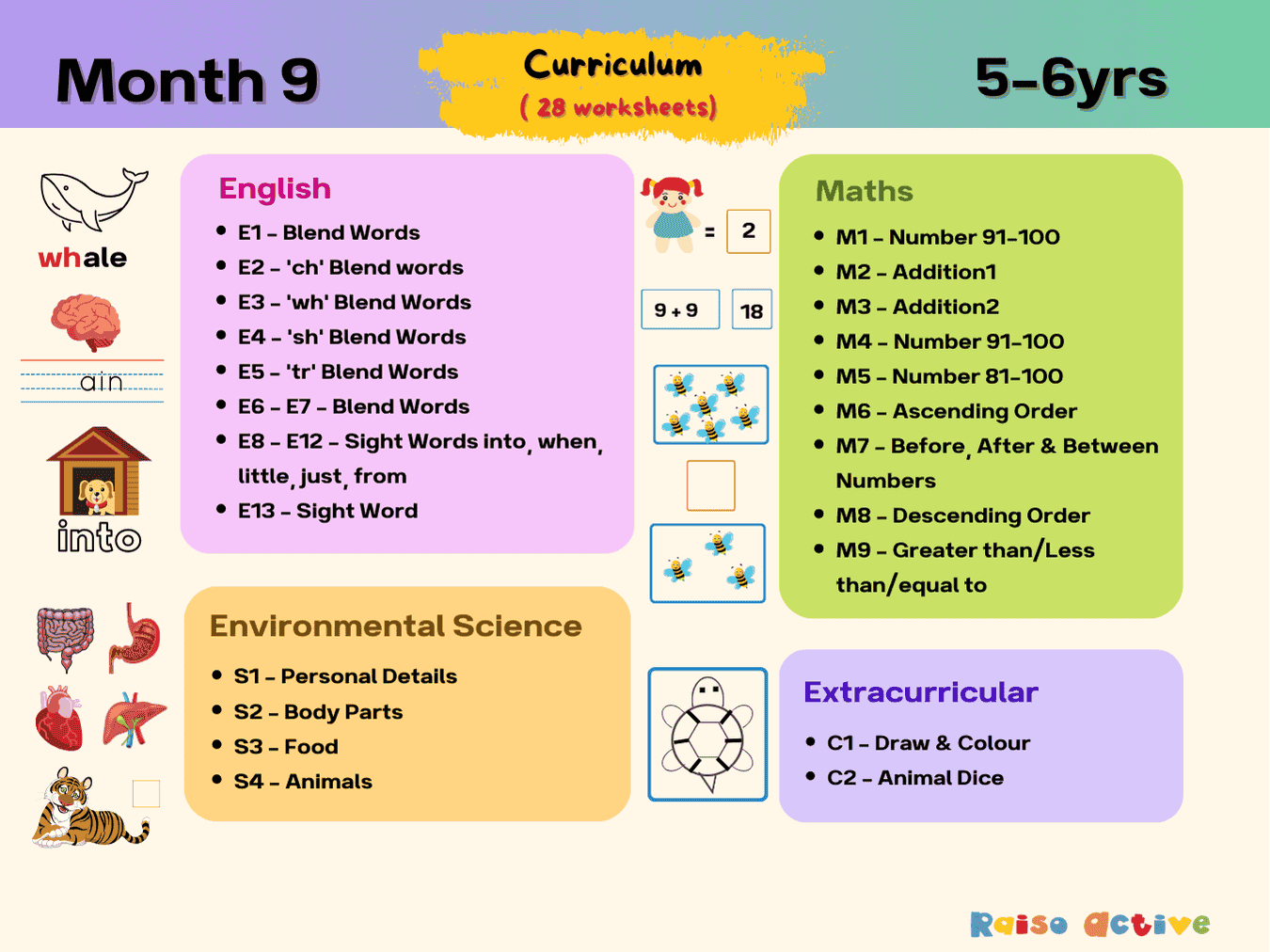
Month 9: Early Learning English Math Science | Ages 5-6
Ages 5-6 · KindergartenAges 5-6 · Year 1Ages 5-6 · UKGAges 5-6 · 31 pages
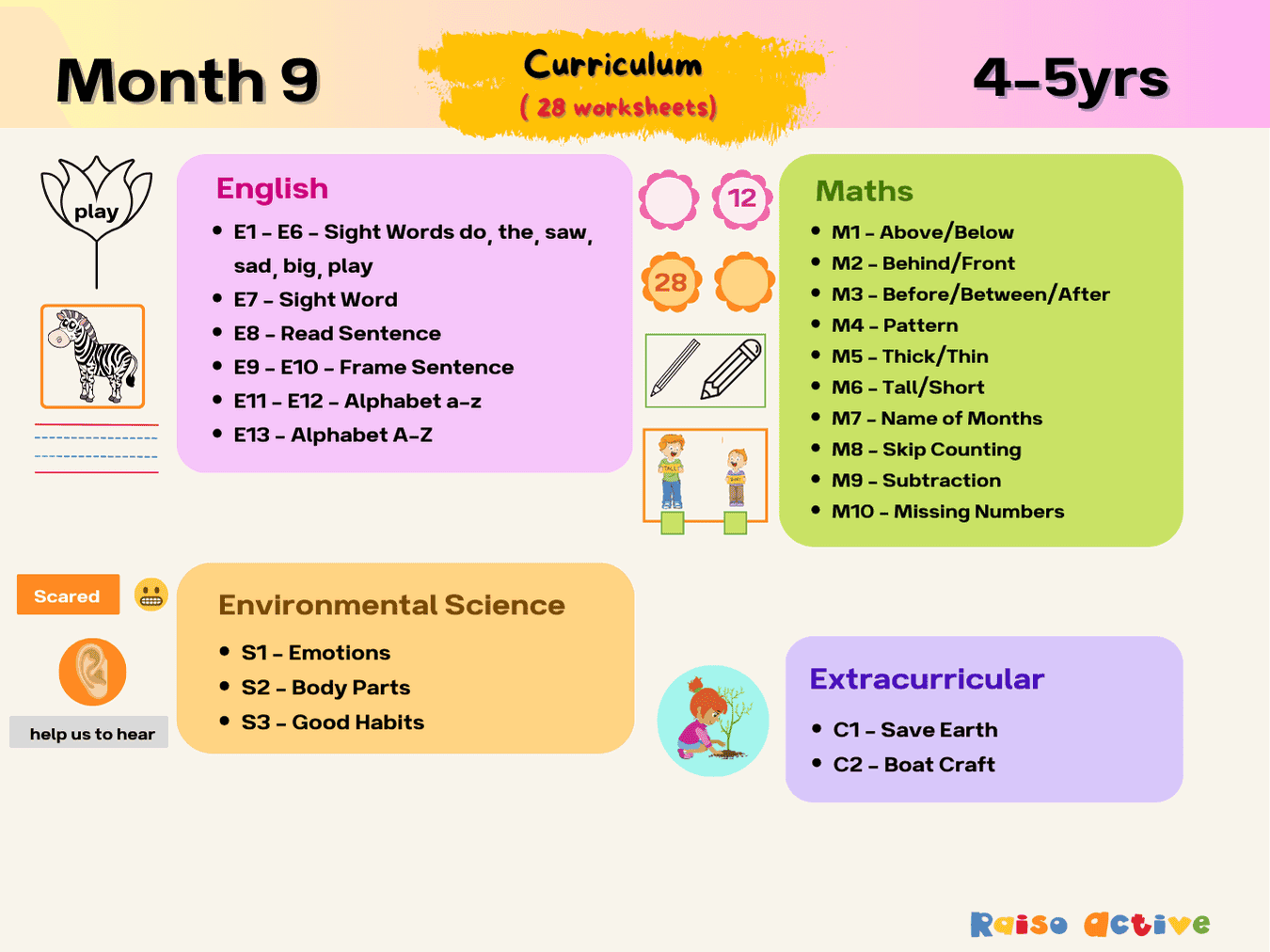
Month 9: Preschool Early Learning Activities | Ages 4-5
Ages 4-5 · Pre-KAges 4-5 · ReceptionAges 4-5 · LKGAges 4-5 · 31 pages
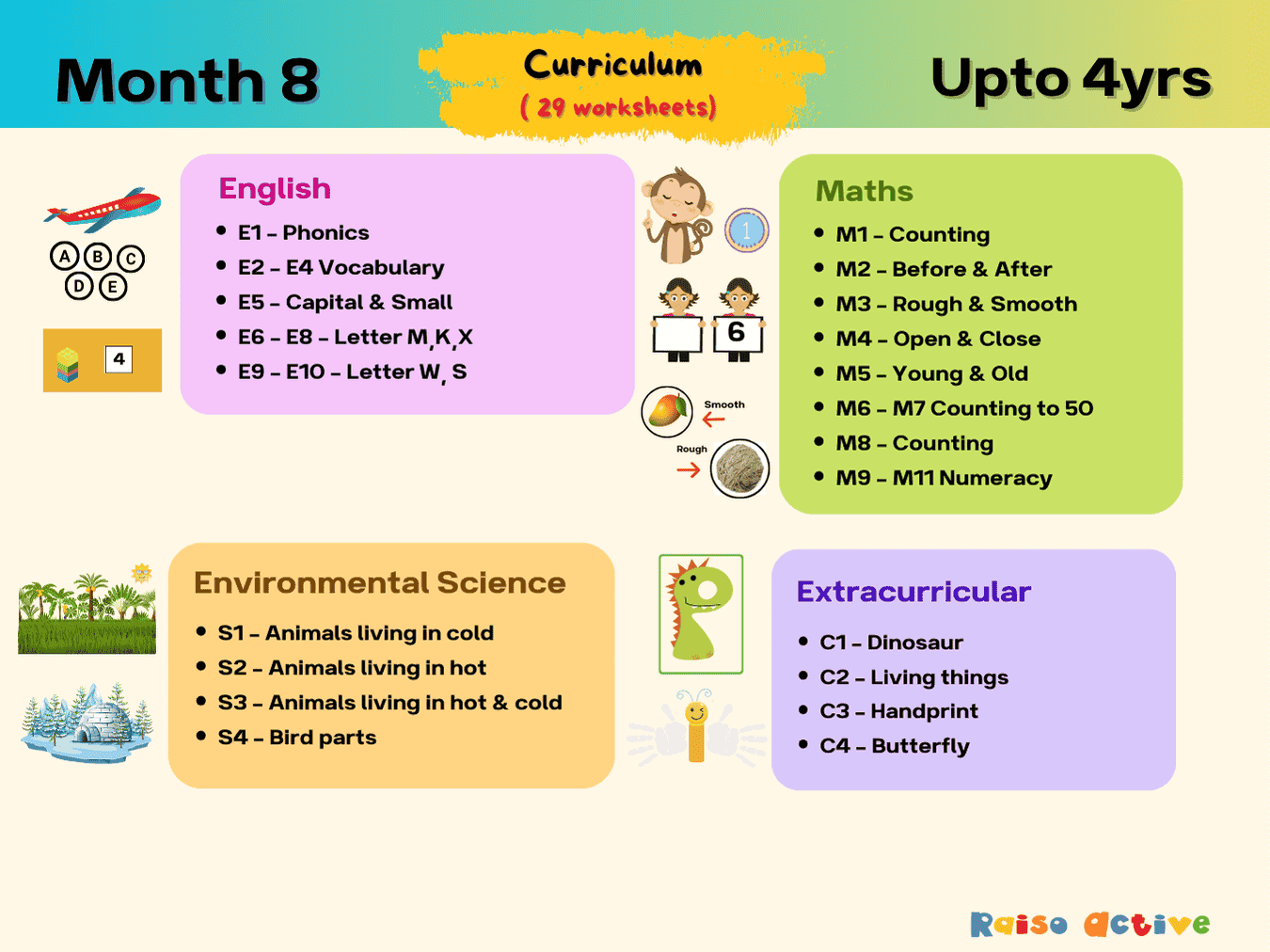
Month 8: Phonics, Math, Science, Creativity | Ages Up to 4
Ages 3-5 · Preschool–Pre-KAges 3-5 · Nursery–ReceptionAges 3-5 · Nursery–LKGAges 3-5 · 32 pages
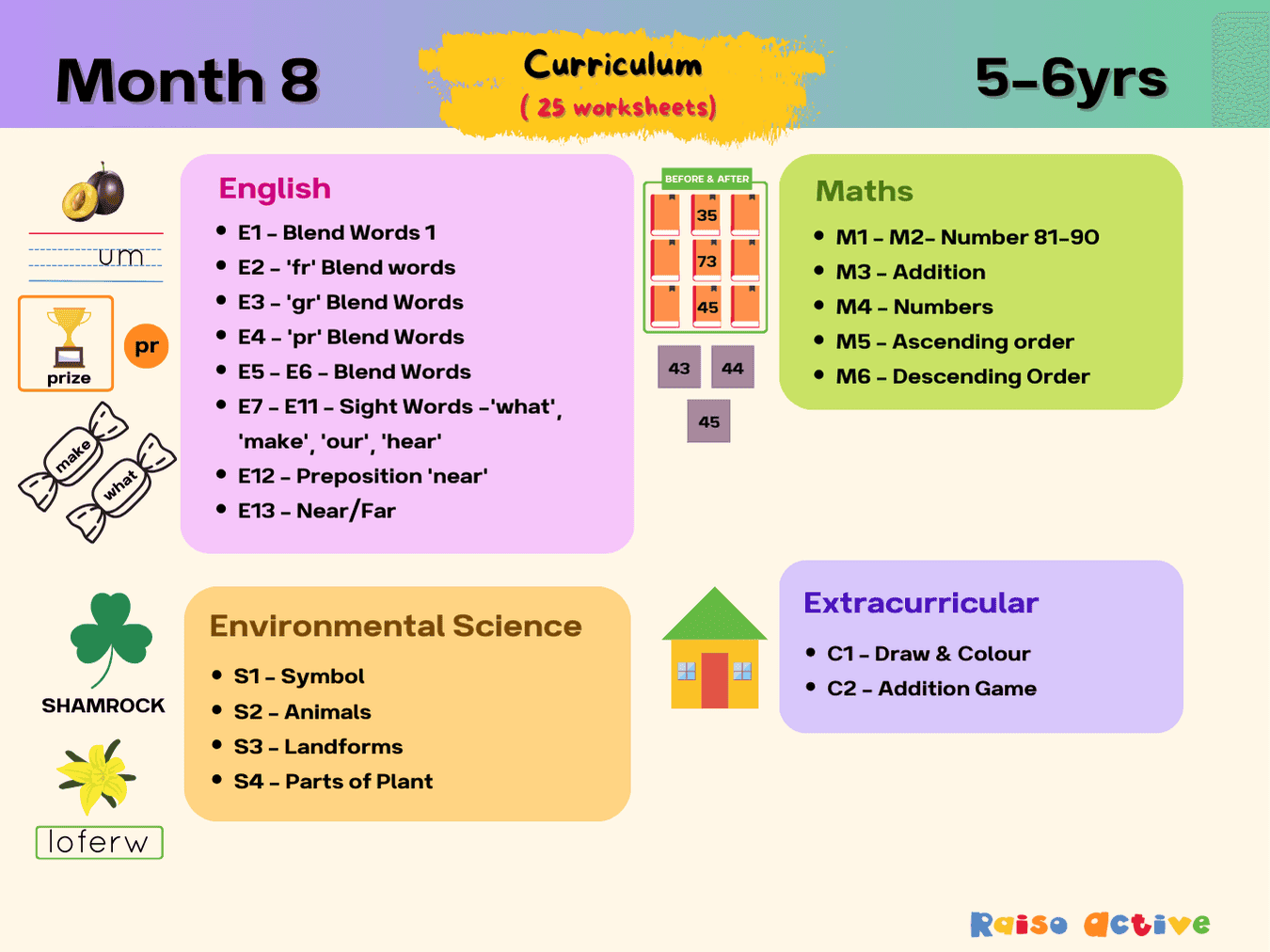
Month 8: Literacy, Math, Science Foundations | Ages 5-6
Ages 5-6 · KindergartenAges 5-6 · Year 1Ages 5-6 · UKGAges 5-6 · 28 pages
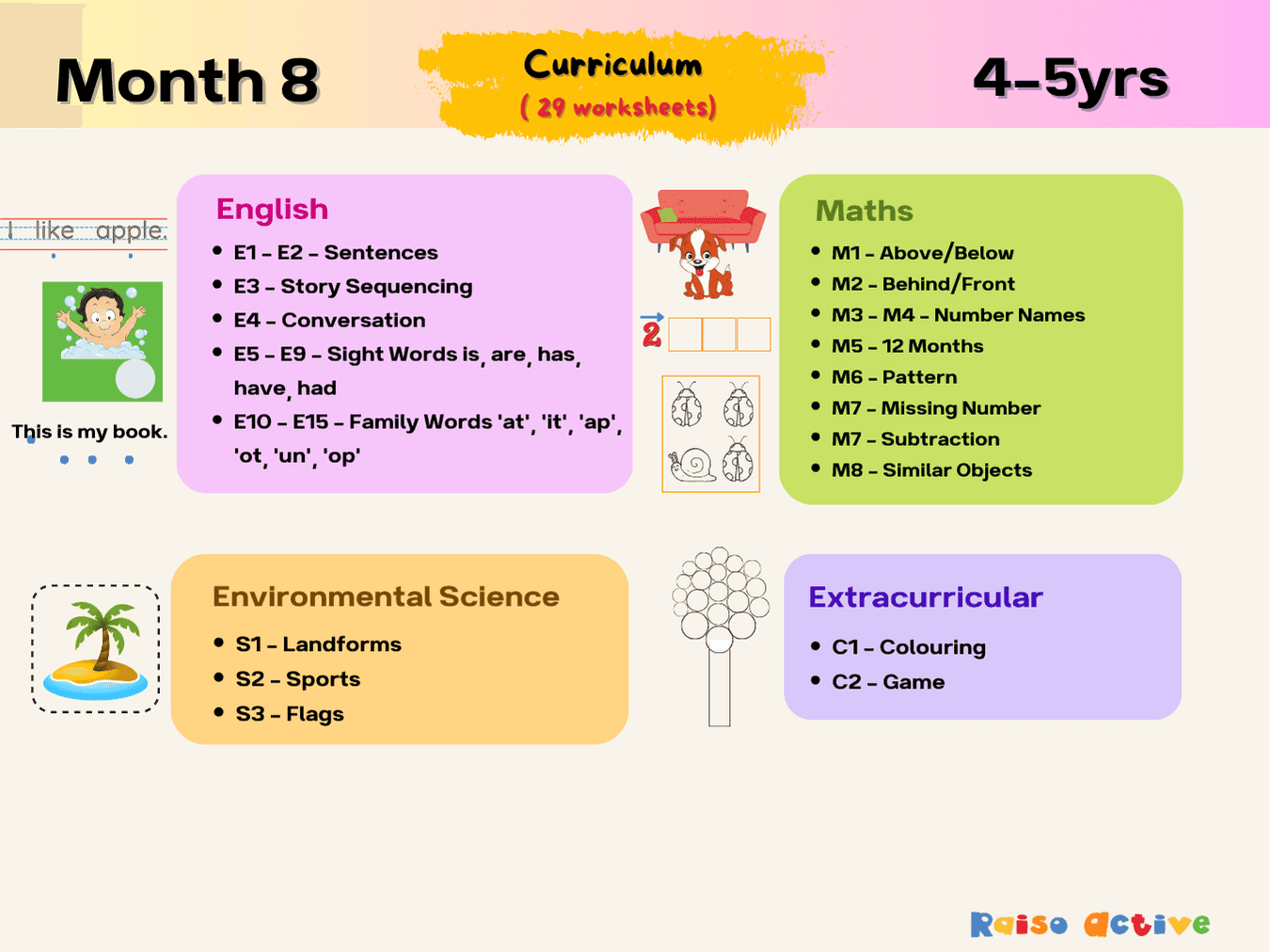
Month 8: English, Math, Science Foundations | Ages 4-5
Ages 4-5 · Pre-KAges 4-5 · ReceptionAges 4-5 · LKGAges 4-5 · 32 pages