Literacy
My Child Is 5 and Can't Blend CVC Words — What Should I Do? A Comprehensive Guide for Parents
Author
RaisoActive - Kids Activities and Fun Learning
Date Published
Reading Time
8 min read

In This Article9 min
- Struggling to blend CVC words at age 5 is **very common and completely normal** — blending is a separate, learnable skill that sits on top of letter-sound knowledge.
- The most common culprits are **gaps in phonemic awareness**, shaky letter-sound recall, or limited working memory — not intelligence or effort.
- The **continuous blending technique** (stretching sounds together rather than saying them in staccato) is the single most effective strategy for teaching blending from scratch.
- Hands-on activities — magnetic letters, sound-pushing games, and syllable clapping — build blending skills faster than worksheets alone at this stage.
- In bilingual Indian homes, switching between languages is normal and children may need a little extra time — this is a developmental difference, not a delay.
Why Blending Feels So Hard — Even When Your Child Knows the Letters
You have done everything right. You taught your child the alphabet. They can point to the letter c and say /k/, look at a and say /a/, spot t and say /t/. And yet — the moment you ask them to put those three sounds together and read the word cat — blank stare. Or they say the sounds one by one perfectly, then announce something that sounds nothing like the actual word. If this is your household right now, take a deep breath. This is one of the most universal stumbling blocks in early literacy, and it has nothing to do with how bright your child is.
Blending — the ability to merge individual phoneme sounds into a whole word — is a skill that sits on top of letter-sound knowledge. It requires the brain to hold multiple sounds in working memory simultaneously, compress them at speed, and map them to a word that already exists in your child's spoken vocabulary. That is genuinely complex cognitive work for a five-year-old. The good news is that blending responds beautifully to the right targeted practice, and most children make rapid progress once you understand what is blocking them. This guide will walk you through exactly that.
Get Free Phonics & Blending Worksheets
Join thousands of Indian parents using RaisoActive printables to build confident readers at home. Fresh worksheets every week, always free.
Is It Normal for a 5-Year-Old to Struggle With Blending?
The short answer is yes — and the longer answer is nuanced. Developmental reading research places the typical window for blending simple CVC words between ages 5 and 6.5, with significant variation on either side. Some children crack blending at 4.5; others need until 6 or even 6.5 before it fully clicks. The range is wide enough that a 5-year-old who cannot yet blend is well within normal developmental limits.
What matters more than age is the trajectory: is your child making any progress with the right kind of practice? A child who has been exposed to blending for several months with no movement at all deserves a closer look. But a child who is just beginning to encounter blending, or who is making slow but steady gains, is almost certainly following a perfectly healthy path.
Key Takeaway
Blending is a skill, not a gift.
Children are not born knowing how to blend — they learn it. The speed at which they learn depends on phonemic awareness, letter-sound fluency, working memory, and the quality of instruction. All of these can be directly supported at home.
What Blending Actually Requires — The Two Engines Under the Hood
To blend CVC words successfully, a child needs two separate systems working together at the same time:
Engine 1: Phonemic Awareness
Phonemic awareness is the ability to hear, identify, and manipulate the individual sounds (phonemes) in spoken words — entirely without letters. It includes skills like recognising that cat has three sounds (/k/ /a/ /t/), rhyming words, isolating beginning and ending sounds, and blending sounds that the adult says aloud into a word. This is a purely oral skill, and it forms the invisible foundation on which all reading is built. Many children who struggle to blend written CVC words actually have gaps here — their phonemic awareness is not yet strong enough to support decoding.
Engine 2: Letter-Sound Fluency (Decoding)
Decoding is what happens when those phonemic awareness skills get linked to printed letters. When your child sees c, they retrieve the sound /k/ from memory. When they see a, they retrieve /a/. When they see t, they retrieve /t/. If any one of those retrieval steps is slow or uncertain — if the child has to think about what sound a letter makes — their working memory gets used up by the retrieval, and there is nothing left to blend. Fluency in letter-sound recall is not a nice-to-have; it is a prerequisite for smooth blending.
Think of it like reading a recipe while cooking. If you have to re-read each ingredient three times before you remember it, you will burn the onions while you are still trying to remember the next step. Blending works the same way — the more automatic the letter-sound recall, the more mental capacity is available for the blending itself.
Three Common Reasons Children Struggle to Blend
Reason 1: Shaky Letter-Sound Knowledge
Check carefully: does your child know the sounds, or do they recognise them when prompted? There is a big difference. If your child needs a second or two to recall a sound, or gives you the letter name instead of the sound ("bee" instead of /b/), their letter-sound knowledge is not yet automatic enough to support blending. The fix is more repetition of individual letter sounds — not more blending practice — until recall becomes instant.
Reason 2: Weak Phonemic Awareness
Test this by removing the letters entirely. Say to your child: "I am going to say some robot sounds. Can you tell me what word I mean? /d/ /o/ /g/." If your child cannot blend those spoken sounds into dog, the issue is phonemic awareness, not letter knowledge. Solving this requires oral blending games — no letters involved — until the concept of merging sounds clicks in the ear before it can click on the page.
Reason 3: Working Memory Overload
Some children have phonemic awareness and decent letter-sound knowledge but still struggle to blend because they simply cannot hold all three sounds in mind simultaneously. By the time they have retrieved the third sound, the first one has faded. If this sounds familiar, the solution is to reduce the load: use physical objects (push a counter for each sound, then sweep them together) and start with two-sound blends (like at, in, up) before moving to three-sound CVC words.
1 in 5 children
experience some form of reading difficulty, and weak phonemic awareness is identified as the primary underlying factor in the vast majority of cases — making it the most impactful area to target in early literacy support.
Source: International Dyslexia Association
Teaching Blending From Scratch: The Continuous Blending Technique
The single most powerful shift you can make is moving from staccato blending to continuous blending. Staccato blending is what most of us instinctively do: we say the sounds one at a time with a tiny pause between them — /k/ ... /a/ ... /t/ — and then expect the child to merge them. The problem is that those pauses break the sounds apart in a way that is very hard for young working memories to stitch back together.
Continuous blending works differently. Instead of pausing between sounds, you stretch the sounds into each other without breaking: "kkkkaaaaaat" — all one connected breath, held just long enough that the word emerges naturally. With this technique, the word is audible within the blend itself, which makes the connection between sounds and words much easier for children to grasp. Practise it yourself first so it feels natural before you model it for your child.
A Step-by-Step Approach to Teaching Blending
1
Step 1: Build Oral Blending First (No Letters)
Before picking up letter cards, practise spoken blending using the "robot talk" game. Speak to your child in a slow robot voice — */d/ /o/ /g/* — and ask them to "fix the robot" by saying the real word. Do this for 5 minutes daily with words from everyday life. Once your child can reliably fix 3-sound robot words, their phonemic awareness is ready for print.
2
Step 2: Check Letter-Sound Fluency
Hold up individual letter cards (not the whole alphabet at once — just the 6-10 letters you will use for CVC words) and time how quickly your child recalls each sound. Aim for instant recall with no hesitation. If any sounds are slow or uncertain, drill those specific sounds in isolation for a week before attempting blending again.
3
Step 3: Introduce the Sound-Push With Objects
Line up three small objects — buttons, pebbles, or counters — in front of your child, one for each sound in a CVC word. As you say each sound slowly, push one object forward. Then sweep all three objects together while saying the word continuously: "kkkaaaat — cat!" Let your child do the sweeping. This physical action anchors the abstract concept of merging.
4
Step 4: Move to Magnetic Letters or Tiles
Use magnetic lowercase letters or printed letter cards to build short CVC words. Start with words that use only sounds your child knows very well: sat, pin, top, bug, hen. Place the letters far apart, say each sound as you point to it, then slide the letters together while stretching the sounds continuously. Let your child slide the letters themselves — the action of physically merging the letters reinforces the concept.
5
Step 5: Practise Reading CVC Words in Short Bursts
Once your child can blend with physical support, move to flashcards with CVC words printed on them. Show the card, point under each letter while your child says the sound, then give a slight pause and ask them to blend it. Keep sessions to 5-8 words — stop while energy is high rather than pushing to frustration. Celebrate every success warmly and specifically: "You blended *sit* all by yourself — that is brilliant!"
6
Step 6: Connect Blended Words to Meaning
Always confirm that a blended word connects to something real in your child's world. After blending *dog*, ask: "Do you have a dog? What sound does a dog make?" After blending *cup*, point to a real cup. This meaning-making step prevents blending from feeling like an abstract exercise and builds reading comprehension from the very beginning.
Activities and Games That Build Blending Without Worksheets
At age 5, hands-on and playful activities often produce faster results than sitting down with worksheets — especially in the early stages of learning to blend. Here are some tried-and-tested activities that children genuinely enjoy.
🎨5 Blending Games to Play at Home
- **Sound Hopscotch:** Draw a hopscotch grid outside with chalk. Write one letter sound in each square. Call out a CVC word slowly and have your child hop on each sound in sequence, then jump with both feet at the end to "blend" the word.
- **Blending Buckets:** Fill three small bowls or cups with objects whose names blend together — e.g., a small toy *cat*, a drawing of a *sun*, a toy *bus*. Stretch the sound of each word, then ask your child to pick which cup has the item you described.
- **Word Stretcher:** Pretend to stretch an invisible elastic band between your hands as you stretch a word's sounds, then snap it together as you blend. The physical metaphor of stretching and releasing clicks for many children.
- **CVC Word Snap:** Make pairs of letter cards (C, V, C separately). Shuffle and deal them — when a player can form a complete CVC word, they call Snap and collect the set. Works wonderfully with two players and keeps competitive engagement alive.
- **Silly Robot Voice at Dinner:** During meals, make silly requests in robot voice: "/p/ /a/ /s/ /s/ the /s/ /a/ /l/ /t/ please." Family members blend the sounds to understand the request. Laughter makes the phonemic awareness stick.
💡Everyday Blending Moments
- When reading a picture book together, pause at a simple CVC word and whisper the sounds one by one, then let your child blend them aloud.
- While grocery shopping, slowly say the sounds of a short word on a packet and ask your child to blend it. */m/ /i/ /l/ /k/* — "Milk!"
- At bath time, write letters on the tub tiles with a bath crayon, point and stretch the sounds, then blend.
- Use your child's name as a blending warm-up — segment it into sounds and ask them to blend it back, then do the same for siblings' names.
When Worksheets Help — and Which Types Work Best
Worksheets have an important place in building blending fluency — but timing matters. If your child cannot yet blend with physical objects and teacher support, paper worksheets will feel frustrating and demoralising. The general rule is: worksheets should consolidate a skill the child has already begun to acquire, not introduce a skill from scratch.
Once your child can blend CVC words with some support, worksheets help by providing repeated practice in a structured format, building automaticity, and giving a sense of accomplishment. Look for worksheets that:
Worksheets That Help
- +Show a picture and 2-3 CVC word options to circle — reduces decoding load while building recognition
- +Ask children to cut and paste letter tiles to build CVC words — tactile and engaging
- +Practise one vowel sound at a time (e.g., all short /a/ CVC words on one sheet)
- +Include a "say it, blend it, write it" sequence for each word
- +Use large, clear fonts with well-spaced letters
Worksheets to Avoid at This Stage
- -Dense lists of 20+ CVC words to decode in one session — overwhelming for a beginner
- -Mixed vowel sounds on the same worksheet before any single vowel is consolidated
- -Worksheets with confusing illustrations that distract from the word
- -Activities that require writing full sentences before blending is secure
- -Timed exercises — adding time pressure to a fragile new skill kills confidence
Blending Challenges in Bilingual Indian Homes
For families across India — whether you speak Hindi, Tamil, Telugu, Kannada, Marathi, Bengali, or any of the country's many beautiful languages at home — the blending journey in English has some unique dimensions worth understanding.
First, the phoneme inventory of English is different from most Indian languages. English has sounds like the short /æ/ vowel (as in cat) that simply do not exist in Hindi or Tamil. When children who primarily speak a home language try to blend English CVC words, they may substitute the nearest vowel sound they know, producing something like "cut" for cat. This is not a blending failure — it is a phoneme awareness gap in the specific English sounds, and it is easily addressed by doing extra oral discrimination work on the unfamiliar English vowel sounds.
Second, code-switching between languages during blending practice is completely fine and often helpful. If explaining the concept of "pushing sounds together" in Hindi or your home language makes it click faster, do that. The concept transfers to English once understood. There is no evidence that mixing languages during home practice harms literacy development — in fact, it often accelerates it.
👋For Indian Parents: A Quick Reality Check
- If your child is stronger in their home language than English, their blending skills will likely develop faster in the home language first — and then transfer to English. This is normal and healthy.
- Many Indian scripts (Devanagari, Tamil, Telugu) are highly phonetic, which means children who are learning to read in those scripts already understand the concept of "sounds make words." Leverage this: help your child notice the parallel.
- English CVC words often use vowel sounds that are rare in Indian languages — the short /æ/ in *cat*, the short /ɛ/ in *bed*. Spend extra time on these specific sounds orally before expecting blending to be smooth.
- Private school pressure in India sometimes creates anxiety around reading milestones. If your child's school is concerned but your child is progressing with home practice, ask the teacher to share specific observations — then work together rather than in parallel.
Up to 80% faster
phonemic awareness skills develop when children receive explicit, structured instruction compared to incidental exposure alone — making targeted blending games and activities significantly more effective than simply reading books and hoping blending develops naturally.
Source: National Reading Panel, Report of the Subgroups (2000)
Red Flags vs Normal Struggle — When to Talk to the School
Most children who struggle with blending at age 5 simply need more time and better-targeted practice. However, some children have underlying challenges — such as dyslexia, auditory processing disorder, or speech and language delays — that make blending acquisition significantly harder without specialist support. It is important to know the difference between a child who is struggling normally and a child who needs additional assessment.
Normal Blending Struggle
- +Can blend oral sounds (robot talk) but not written letters yet
- +Blends words correctly one day and forgets the next — inconsistency is typical
- +Makes progress with targeted practice over 4-8 weeks
- +Letter-sound recall is slow but improving
- +Speech is clear and vocabulary is age-appropriate
Signs That Warrant a Closer Look
- -Cannot blend even two spoken sounds orally after 6+ weeks of practice
- -Confuses b/d, p/q consistently well past age 5.5 despite repeated correction
- -No measurable progress after 2-3 months of consistent, structured practice
- -Significant distress or avoidance around all print-related activities
- -Unclear speech, very limited vocabulary, or a family history of dyslexia
If you are seeing multiple signs from the right-hand column, speak to your child's class teacher first. Share what you have observed at home and ask what they are noticing in class. If concerns persist, ask for a referral to a special educational needs coordinator (SENCO) or, in the Indian context, to an educational psychologist or speech-language pathologist. Early identification and early intervention produce dramatically better outcomes — the research on this is unambiguous. Asking for help is not an overreaction; it is the most effective thing you can do for your child.
Key Takeaway
Progress over 4-8 weeks of targeted practice is the most reliable indicator.
A child who is moving — even slowly — is almost certainly developing typically. A child who shows zero movement after consistent, well-structured practice over two or more months is worth having assessed by a professional.
Key Takeaway
Dyslexia does not mean low intelligence — and early support makes an enormous difference.
Dyslexia affects an estimated 10-15% of the population and has nothing to do with IQ or effort. Children with dyslexia can become fluent, confident readers with structured literacy intervention. The earlier it is identified, the better the outcomes.
⚠️Mistakes That Slow Blending Progress
- **Drilling the same worksheet over and over** without building the underlying phonemic awareness first — this leads to rote memorisation of specific words, not transferable blending skill.
- **Correcting every attempt immediately** — give your child at least 5 seconds to self-correct. Jumping in too fast creates learned helplessness.
- **Mixing too many vowel sounds at once** — stick to one short vowel (e.g., short /a/) until it is solid before introducing the next.
- **Practising when your child is tired or hungry** — blending is cognitively demanding. The best time is mid-morning or after a snack, never right before bed.
- **Comparing your child to siblings, classmates, or cousins** — reading development timelines vary enormously. Comparison creates anxiety, and anxiety is the enemy of learning.
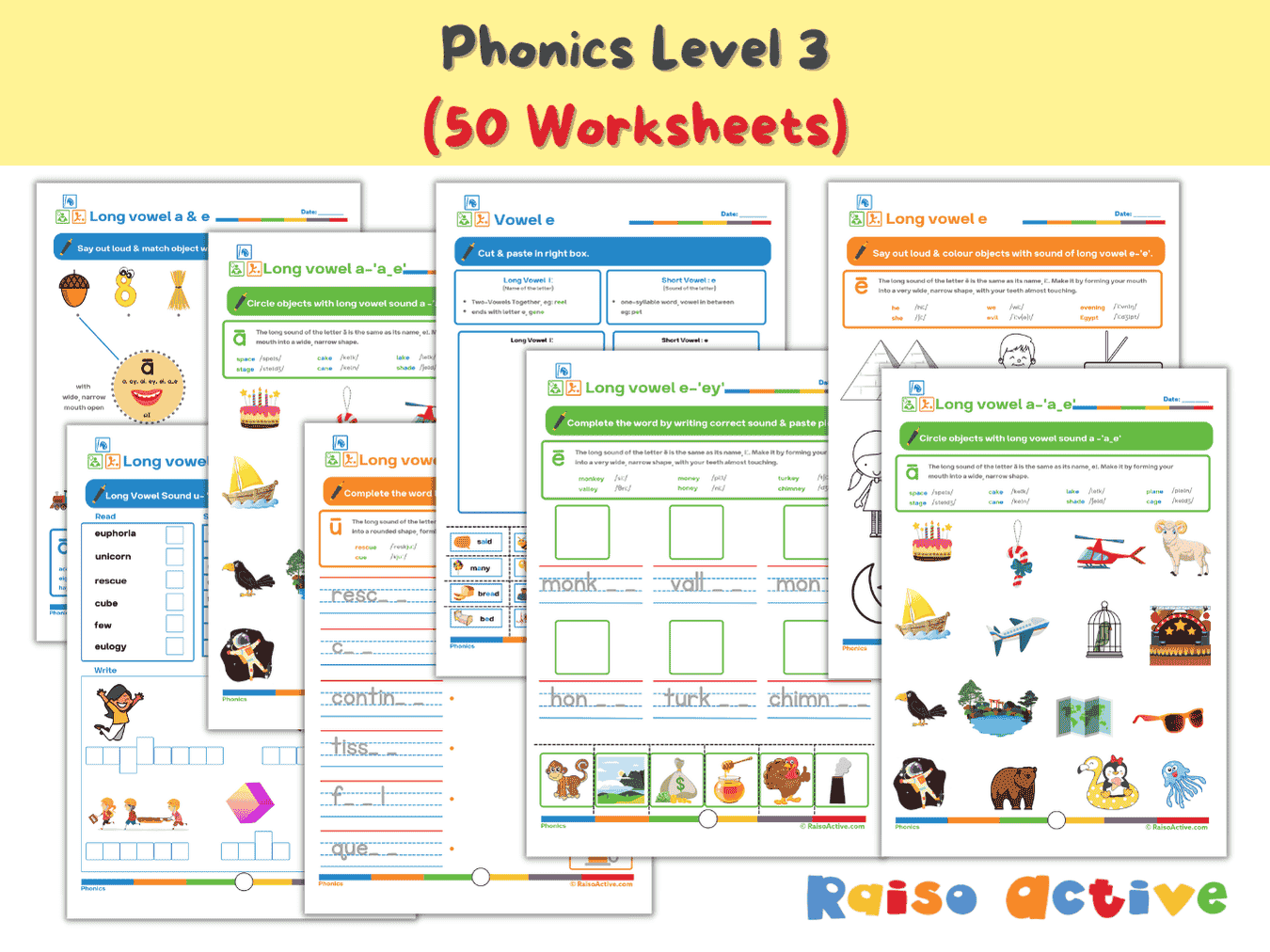
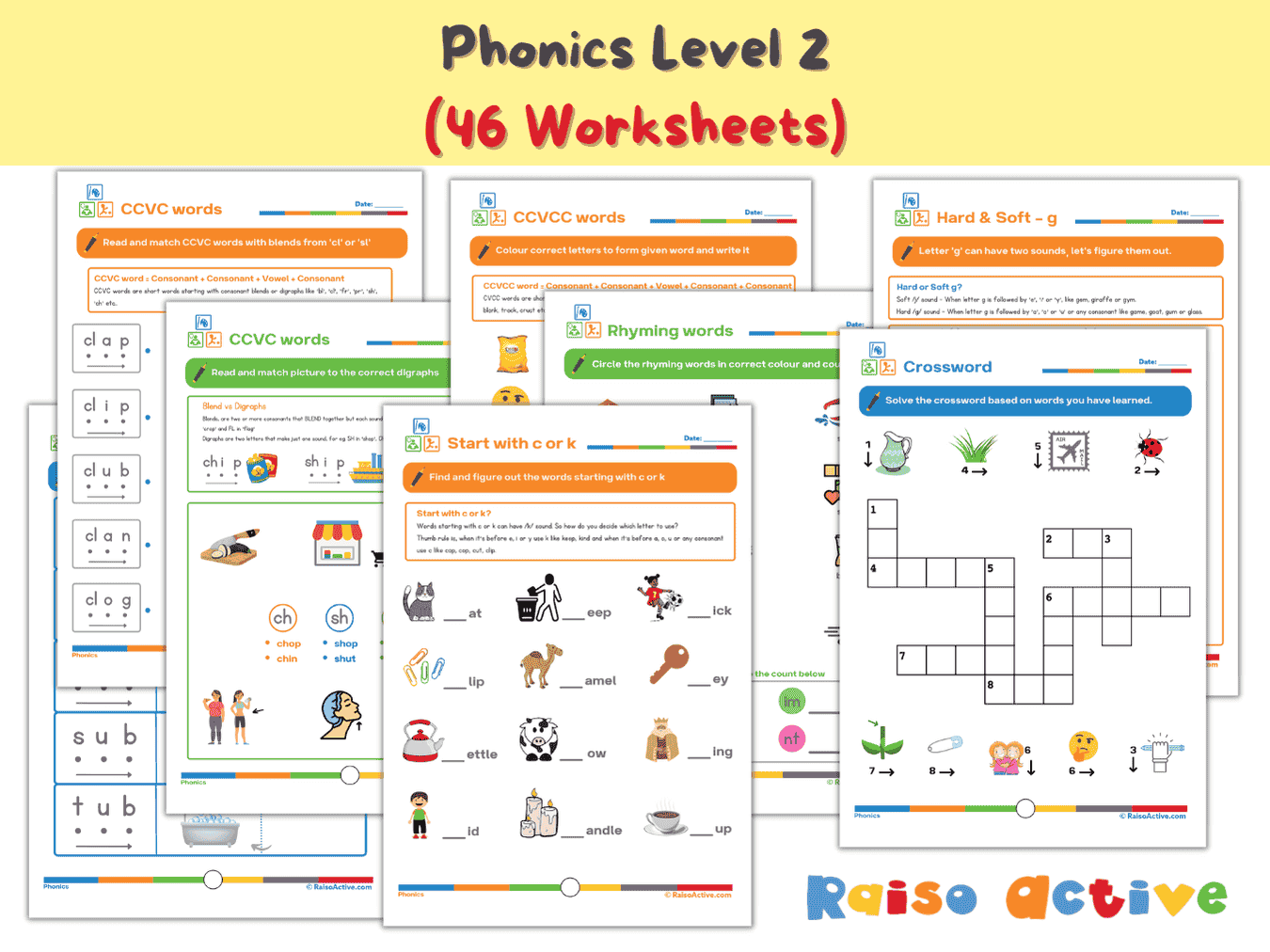
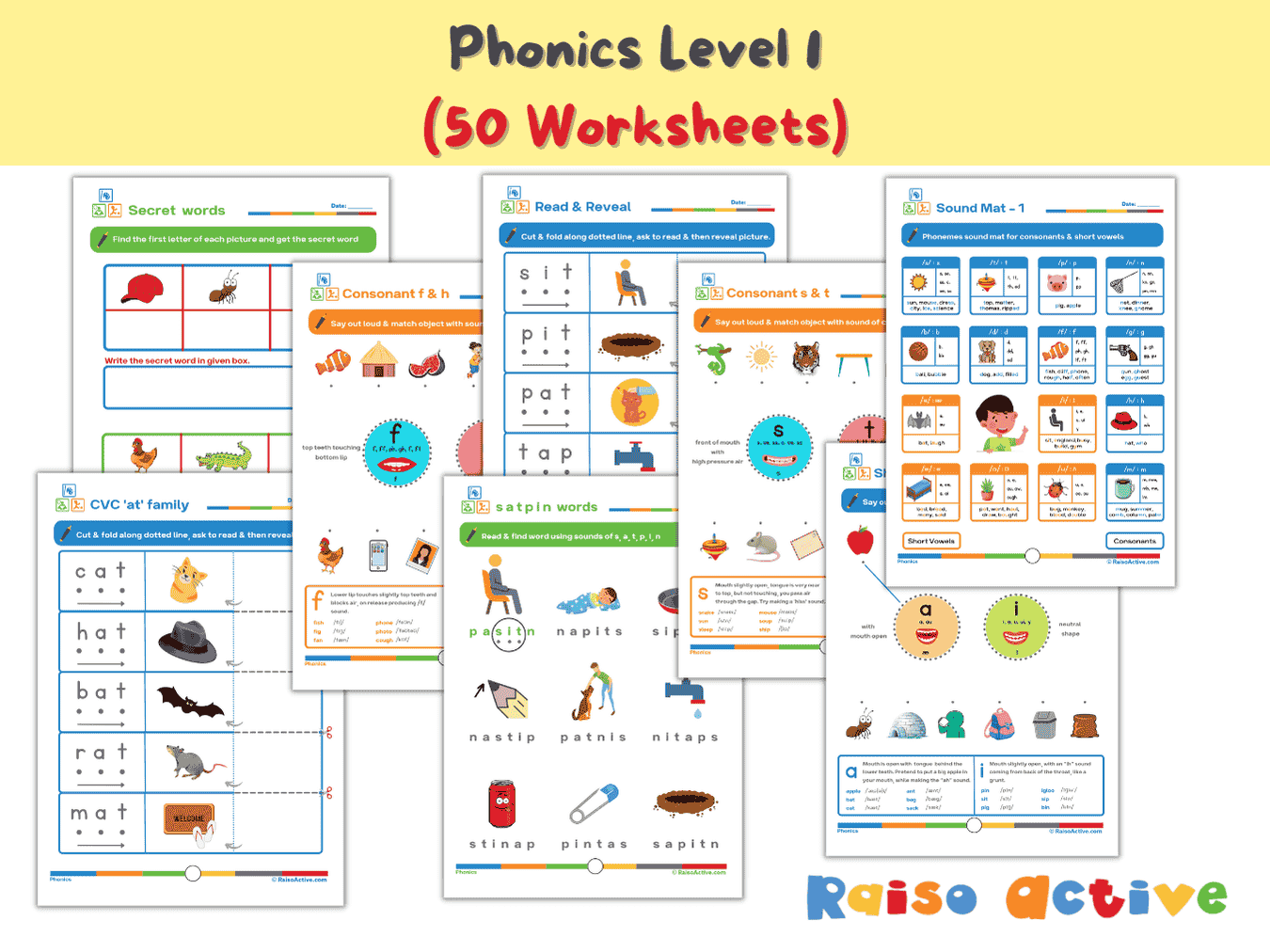
Practise Blending With These Free Worksheets
Unlimited Access
Get Fresh Phonics Worksheets Every Week — Free
Subscribe to RaisoActive and receive carefully designed CVC blending, phonics, and early reading worksheets straight to your inbox. Loved by parents and teachers across India.
All worksheets & activitiesNew content weeklyDownload unlimited times
Subscribe NowFrequently Asked Questions
My child knows all the letter sounds but still cannot blend. Why?
Knowing letter sounds and being able to blend them are two different skills. Blending also requires strong **phonemic awareness** (the ability to hear and manipulate sounds in spoken words) and enough working memory to hold multiple sounds simultaneously while merging them. Try the oral blending test: remove the letters entirely and say the sounds of a simple word aloud — */d/ /o/ /g/* — and ask your child to blend them. If they cannot do this without letters, work on oral blending first. If they can blend orally but not in print, the issue is likely letter-sound automaticity — the sounds need to be recalled more quickly and effortlessly.
How long should it take for a 5-year-old to learn to blend CVC words?
With consistent, targeted practice of **10-15 minutes daily**, most children who are developmentally ready make meaningful progress within **4-8 weeks**. Some children click with blending in as little as two weeks; others need three months. The key variable is not time — it is whether the practice is targeting the right underlying skill. If your child is practising blending but not progressing, it is worth diagnosing whether the bottleneck is phonemic awareness, letter-sound fluency, or working memory, and adjusting your approach accordingly.
Should I use phonics worksheets or games to teach blending?
**Both have their place, and the right timing matters.** Games and hands-on activities (magnetic letters, sound-pushing, robot talk) are usually more effective for *introducing* blending, because they reduce the abstract cognitive load and make the concept feel tangible. Once a child has begun to grasp blending through play, worksheets are excellent for *consolidating* the skill — providing structured repetition that builds automaticity. The mistake is using worksheets too early, before the concept has clicked through hands-on experience. Think of it as: games unlock the door, worksheets furnish the room.
We speak Hindi at home. Could that be making English blending harder for my child?
Bilingualism itself is not a disadvantage — in fact, bilingual children typically develop stronger phonological awareness overall. However, **English has some vowel sounds that do not exist in Hindi or other Indian languages**, and these unfamiliar phonemes can slow blending of specific CVC words. The short /æ/ sound (as in *cat*) and the short /ɛ/ sound (as in *bed*) are common stumbling points. The solution is to spend extra time on those specific English vowel sounds orally — listen, discriminate, and produce them — before expecting smooth blending. Also note that children learning to read in Devanagari (Hindi script) already understand the principle that sounds make words, which is a powerful foundation for English phonics.
My child's school says they are behind in reading. What should I do at home?
First, ask the school for specifics: exactly which skills are they observing as below expectation? Vague statements like *"behind in reading"* are hard to act on. Once you know whether the concern is letter recognition, phonemic awareness, blending, or reading fluency, you can target your home practice precisely. Second, share with the teacher what you are doing at home so you can work together rather than at cross-purposes. Third, **begin structured daily practice immediately** — even 10-15 minutes of well-targeted phonics practice at home makes a measurable difference within weeks. And fourth, if the concern is significant or persists after a term of focused support, ask the school whether an assessment by a specialist is warranted.
Are there any apps or tools that specifically help with CVC blending?
Several excellent digital tools are worth knowing: **Starfall** (free, strong phonics and blending focus), **Reading Eggs** (subscription-based, comprehensive programme from phonemic awareness through to fluency), and **Phonics Hero** (game-based, aligns with systematic phonics). For Indian families, **Khan Academy Kids** is free and includes early literacy activities. That said, screen-based tools work best as a *supplement* to — not a replacement for — direct practice with physical letters, oral games, and read-alouds. The social interaction of a parent playing a blending game with a child produces learning effects that apps alone cannot replicate.