Literacy
My Child Writes Letters Backwards — Should I Be Worried? Understanding Letter Reversal in Young Children
Author
RaisoActive - Kids Activities and Fun Learning
Date Published
Reading Time
7 min read

In This Article12 min read
- Letter reversals (b/d, p/q, s, 3, 5, 7) are completely normal and developmentally expected up to age 7-8
- The young brain has not yet established left-right directionality — this is a neurological milestone, not laziness or a learning problem
- Reversals alone do not indicate dyslexia; dyslexia involves a cluster of persistent reading and phonological difficulties
- Multi-sensory activities, anchor letter tricks, and verbal cues are the most effective ways to help children build directional memory
- Children learning two scripts simultaneously (such as Hindi and English) may show reversals slightly more often — this is a normal part of bilingual literacy development
That Backwards "b" Is Not What You Think It Is
It happens to nearly every parent. You watch your child carefully copy their name, tongue out in concentration, and then you notice it — the "d" written as a "b", the "s" curving the wrong way, the number "3" facing left instead of right. Your stomach drops. You start searching for answers.
Here is the reassurance you came for: letter reversal in young children is one of the most normal things in early literacy development. It is not a sign of poor teaching, careless parenting, or a serious learning disorder. It is, in fact, a completely expected feature of how the young brain learns to read and write — and understanding why it happens will transform the way you respond to it.
In this guide, we will walk through the brain science behind reversals, the most common letters and numbers affected, the critical distinction between reversals and dyslexia, and the practical activities that genuinely help — without stress, shame, or repeated erasing.
Why Young Brains Mirror Letters — The Neuroscience Explained Simply
To understand why letter reversals happen, you first need to understand something remarkable about how the human brain processes visual information. For most of human evolution, recognising objects regardless of which way they face was a survival advantage. A lion facing left is just as dangerous as a lion facing right. A cup turned around is still a cup. The brain evolved to be "mirror generalisation" efficient — treating left-right reflections as the same object.
Reading and writing, however, require the brain to unlearn this mirror generalisation for a very specific set of symbols. The letter "b" and the letter "d" are not the same thing even though they are mirror images of each other. The number "3" and its reversal are not interchangeable. This is a deeply unnatural thing to ask a young brain to do — and it takes time.
Research in developmental neuroscience shows that the brain regions responsible for establishing consistent left-right directionality in symbol recognition continue maturing well into middle childhood. For most children, this solidifies between ages 7 and 8. Until then, mirror-writing and letter reversals are the brain doing exactly what brains at that stage do.
Key Takeaway
Letter reversals are a neurological milestone, not a mistake. The young brain is actively working to distinguish between mirror-image symbols — a skill that takes years to consolidate, not weeks.
Developmental studies consistently show that up to 50% of typically developing children aged 5-6 produce letter reversals. By age 7-8, most children self-correct without any formal intervention.
The Most Common Reversals — Which Letters and Numbers Are Affected
Not all letters are equally prone to reversal. The ones that cause the most confusion are those that are mirror images of each other or that look similar when rotated. Understanding which reversals are most common helps you see patterns rather than random errors.
💡Most Commonly Reversed Letters and Numbers
- **b and d** — The most frequent reversal of all. Both are a vertical stick with a bump, just on different sides. Children often know one and guess the other by mirroring.
- **p and q** — Similar to b/d but also rotated vertically. The bump goes below the line and switches sides.
- **n and u** — Rotational reversals; the arch faces up or down depending on orientation.
- **s** — Often written as a mirror-image, curving in the opposite direction to standard.
- **Numbers 3, 5, and 7** — These are among the most commonly reversed numerals; 3 and 5 especially look like their mirror images when a child is still building directional memory.
- **e and some capitals (E, F, J)** — Capital letters with clear directionality are often written facing the wrong way in early writing.
It is worth noting that the letters a child reverses most often are usually the ones they are actively learning. Reversal is a sign of engagement with the symbol, not avoidance of it. When a child writes "b" as "d", they know it is a letter with a stick and a bump — they are just still working out which way the bump goes.
Letter Reversals vs Dyslexia — The Critical Distinction
This is the question every worried parent asks: "Does this mean my child has dyslexia?" The answer, in almost all cases for children under 8, is: reversals alone tell us very little about dyslexia. This myth is one of the most persistent misunderstandings in early literacy — and it causes enormous, unnecessary anxiety.
Dyslexia is a specific learning difficulty that primarily affects the ability to decode written language through phonological processing — understanding how sounds map to letters and words. It is characterised by difficulties in reading fluency, spelling, and phonological awareness that persist despite good instruction and are unexpected given a child's other abilities.
Normal Letter Reversals
- +Occurs in children under 7-8 years old
- +Primarily b/d, p/q, s and a handful of numerals
- +Gradually decreases as reading exposure increases
- +Child can read words correctly even if they write letters reversed
- +Reversals improve with simple anchor cues and practice
- +Child makes progress in phonics and reading at expected pace
Signs Warranting Assessment
- -Persistent reversals after age 8 with no improvement
- -Difficulty reading words, not just writing letters
- -Struggles to connect sounds to letters despite instruction
- -Reading is slow, laboured, and does not improve with practice
- -Difficulty rhyming, segmenting, or blending sounds
- -Multiple co-occurring difficulties: reading, spelling, phonological awareness
The key insight is that most children with dyslexia do reverse letters — but most children who reverse letters do not have dyslexia. Reversal is a developmental behaviour. Dyslexia is a persistent, specific pattern of difficulty with language processing that goes far beyond letter orientation.
Key Takeaway
Do not use letter reversals as your primary indicator for dyslexia. Look instead at whether your child is making expected progress in reading and phonics. If reading development is broadly on track, reversals are almost certainly developmental.
The Indian Context — Navigating Two Scripts at Once
For children in India and in Indian families globally, there is an additional layer worth understanding. Many children learn to read and write in two scripts simultaneously — English and Hindi, or English and Marathi, Gujarati, Tamil, Telugu, or another regional language. Each script has its own directionality, letter shapes, and spatial logic.
Devanagari, for instance, has letters that extend differently from the central headline, with some strokes moving in directions that have no equivalent in the Latin alphabet. When a child's brain is simultaneously building spatial memory for two entirely different symbol systems, it is entirely expected that reversal frequency increases temporarily. This is not a cause for alarm — it is a sign that a lot of sophisticated learning is happening at once.
👋Supporting Bilingual Learners with Letter Reversals
- Keep script-specific practice sessions distinct — a Hindi writing session and an English writing session, rather than mixed practice, helps the brain categorise each system separately.
- Celebrate the cognitive achievement of learning two scripts — it is genuinely hard, and most bilingual children catch up and surpass monolingual peers in visual discrimination by age 8-9.
- Use colour-coding: practise English letters in one colour and Hindi/regional script in another on the same page to help the brain sort symbols by system.
- Do not panic if a child temporarily applies the wrong directional logic — for example, writing an English letter with Devanagari-style strokes. Gently point it out as "the English way" vs "the Hindi way."
Up to 50% of typically developing 5-6 year olds produce letter reversals
This figure rises in bilingual or multi-script learners, where the brain is simultaneously building directional memory for two or more symbol systems. In both cases, reversals are expected to decrease substantially by age 7-8 without formal intervention.
Source: Journal of Learning Disabilities, Developmental Review
Activities That Genuinely Help — Multi-Sensory Approaches
The most effective strategies for reducing letter reversals do not involve repeated correction or erasing. They use multi-sensory pathways — touch, movement, sound, and visual anchoring — to build strong, distinctive muscle memory for each letter's correct orientation. The goal is to make "b" feel so different from "d" that confusion becomes less and less likely.
1. The Bed Trick — An Anchor for b and d
The most famous and most effective anchor for b/d confusion is the "bed" trick. Ask your child to make a fist with their left hand and extend the thumb upward — this is the letter "b" (the stick is on the left, the bump is on the right). Then make a fist with the right hand and extend the thumb upward — this is the letter "d". Put both hands together and they spell "b-e-d", which also looks like a bed with a headboard and footboard.
Draw a simple bed on a card and label the headboard "b" and the footboard "d". Keep this card on your child's desk. When they are unsure which way a letter faces, they look at the card rather than guessing — and over time, the correct orientation is internalised.
2. Verbal Cues and Letter Stories
Children who are auditory learners respond well to verbal cues that describe the letter's shape in a memorable way. For the letter "b": "Bat before ball — the stick comes first, then the bump." For "d": "Dig a circle, then climb the stick." These little rhymes and stories give children a sequence to follow, turning an abstract shape into a process.
The key is consistency — use the same cue every single time you practise the letter, so it becomes automatic. Within a few weeks, most children will be silently reciting the cue in their head as they write.
3. Multi-Sensory Letter Formation
When a child writes a letter only on paper, the brain uses one pathway. When they trace it in sand, form it with playdough, and say the sound aloud at the same time, three or four sensory pathways are reinforced simultaneously — dramatically improving retention. Try these approaches for any reversed letter:
🎨Multi-Sensory Formation Activities
- **Salt or sand tray tracing** — Fill a tray with a thin layer of salt or fine sand. Ask the child to trace the letter with their index finger while saying the letter sound. The tactile feedback is powerful for directional memory.
- **Playdough letters** — Roll a thin snake of playdough and form the letter shape, always starting from the correct point. This slows the process down and makes directionality physical.
- **Sky writing** — Have the child stand up and write the letter in the air with their whole arm, saying the sound as they go. Large movements engage the gross motor system and reinforce direction.
- **Glitter glue or puffy paint letters** — Create raised letter cards that children can trace with their fingertips. The texture of the raised surface anchors the correct direction.
- **Rainbow writing** — Trace the same letter three or four times in different colours, each time starting from the correct point. The layering effect builds muscle memory.
A Week of Reversal-Reduction Practice (10 Minutes a Day)
1
Day 1 — Identify and Observe
Look through your child's recent writing and identify which letters they reverse most consistently. Do not correct in the moment — just note the patterns. Choose one letter pair to focus on for the week (for example, b and d).
2
Day 2 — Introduce the Anchor
Introduce one anchor cue for the target letter — the bed trick, a verbal story, or a picture card. Spend 5 minutes creating the anchor together (draw the bed, form the letter in playdough, or write the verbal cue on a card). Place the anchor where the child writes.
3
Day 3 — Multi-Sensory Formation
Practise forming the target letter using two or three sensory pathways: trace in a sand tray, sky-write with the arm, and write on paper — all while saying the letter sound. Keep the session short and positive. 10 minutes maximum.
4
Day 4 — Letter in Context
Write simple words containing the target letter (for b: bat, bus, ball; for d: dog, dab, dig). Refer to the anchor card before writing the tricky letter each time. Celebrate each correct attempt — do not erase incorrect ones in frustration.
5
Day 5 — Consolidation and Play
Play a simple sorting game: write a mix of b and d on cards and ask the child to sort them into two piles. Or use magnetic letters to build words while identifying which is b and which is d. End with something the child enjoys — free drawing, colouring — to associate writing with pleasure.
6
Day 6 & 7 — Rest and Natural Practice
Take the weekend off from structured practice. Allow natural writing to happen — colouring, drawing, signing cards. Observe whether the anchor is being used independently. The brain consolidates learning during rest, so downtime is genuinely useful.
What NOT to Do — Common Mistakes That Make Reversals Worse
Parents and teachers, out of genuine concern, sometimes respond to reversals in ways that are well-intentioned but counterproductive. Here is what to avoid:
⚠️What Not to Do When Your Child Reverses Letters
- **Do not erase repeatedly.** Grabbing the eraser every time a letter faces the wrong way communicates urgency and failure. It disrupts the flow of writing and creates anxiety around the task. Instead, circle the letter gently and revisit it after the writing is done.
- **Do not express alarm or frustration.** Children are exquisitely sensitive to a parent's emotional tone. If they sense that a backwards b is a big problem, they may begin to avoid writing altogether to prevent disappointment.
- **Do not label the child.** Saying you always do your b's backwards or you have a problem with letters creates a fixed identity around the difficulty. Children internalise these labels quickly.
- **Do not drill the same letter repetitively in a single session.** Ten minutes of focused, multi-sensory practice is far more effective than forty minutes of repetitive copying. Fatigue and boredom work against memory formation.
- **Do not compare with siblings or classmates.** Letter reversal rates vary enormously between children even at the same age and ability level. Comparison adds pressure without adding any benefit.
Key Takeaway
The most important thing you can do when your child reverses a letter is stay calm and curious. Ask "which way does this one go?" rather than "why did you write it backwards again?" — small language shifts make a big difference in how a child feels about writing.
When to Seek a Professional Assessment
While reversals are normal in young children, there are circumstances where a professional assessment is worth pursuing. Think of assessment not as a diagnosis of failure, but as gathering information that helps you support your child more effectively.
👋Signs That Warrant a Professional Conversation
- Your child is **8 years or older** and still reversing multiple letters consistently with no improvement over the past 6-12 months.
- Reversals are accompanied by significant **reading difficulties** — slow, halting reading, difficulty sounding out unfamiliar words, or very poor spelling that does not improve with instruction.
- The child shows **phonological difficulties** — struggling to rhyme, blend sounds, or segment words into syllables.
- There is a **family history of dyslexia** and multiple signs are co-occurring (not reversals alone).
- The child is showing **emotional distress** around reading and writing — avoidance, tearfulness, or declining confidence that is affecting their relationship with school.
In India, you can seek an assessment from a special educator or learning disabilities specialist through your child's school, a child development centre, or a private educational psychologist. Many cities now have dedicated dyslexia assessment services, and several organisations such as the Indian Dyslexia Association offer resources and referrals.
Dyslexia affects approximately 10-15% of the population worldwide
While dyslexia is more common than many people realise, the vast majority of children who reverse letters in early childhood do not have dyslexia. Early, targeted support for reading and phonological skills — regardless of diagnosis — produces the best outcomes for all children.
Source: International Dyslexia Association
Frequently Asked Questions About Letter Reversals
My child is 6 and reverses almost every letter. Should I be worried?
At age 6, frequent letter reversals are still within the normal developmental range, particularly if your child is making general progress in reading and phonics. The brain's directional discrimination system is still maturing at this age. Focus on multi-sensory practice, anchor cues, and keeping writing positive. If reversals are still frequent and widespread at 7.5 to 8 with no improvement, that is a more appropriate time to seek a professional opinion.
Does letter reversal mean my child has dyslexia?
No — not on its own. Letter reversal is a normal developmental behaviour that the majority of young children display. Dyslexia is a specific learning difficulty characterised by persistent difficulties with reading, phonological processing, and spelling — not by letter orientation alone. Many children with dyslexia do reverse letters, but the reversal is a very small part of a broader pattern of reading difficulty. Children who reverse letters but are making good progress in reading are almost certainly developing typically.
Should I use special worksheets or tracing exercises for reversed letters?
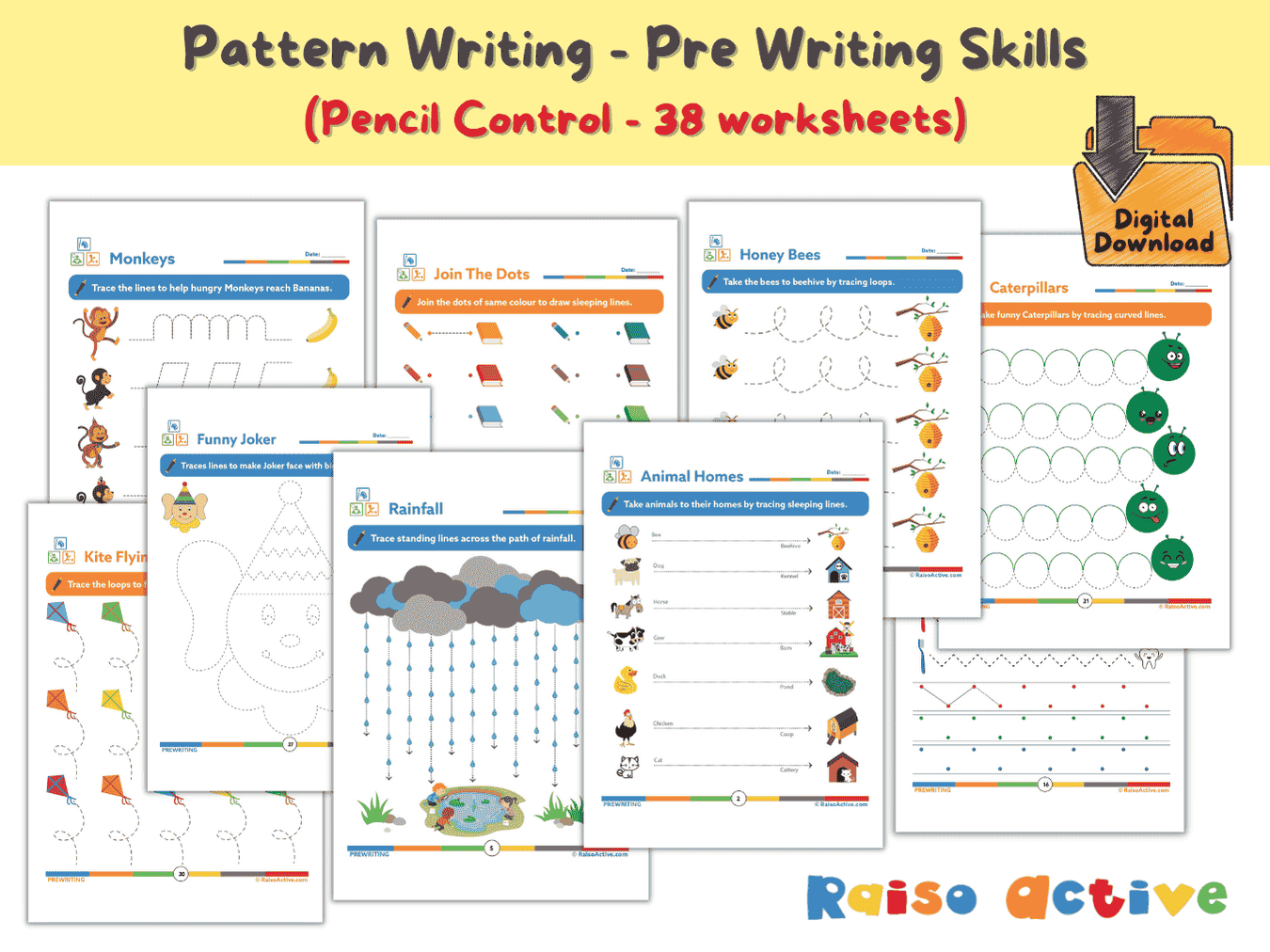
Tracing and writing worksheets can be very helpful, but they work best as part of a multi-sensory approach rather than as a standalone solution. Use tracing sheets alongside sand tray practice, verbal cues, and hands-on letter formation activities. Start with capital letters, which are generally easier to distinguish directionally, before moving to lowercase pairs like b and d. Keep sessions short — 10 to 15 minutes — and end on a positive note.
My child reverses letters in both English and Hindi. Is that normal?
Yes, this is completely normal and quite common in children learning two scripts simultaneously. Each script requires the brain to build separate directional memory for a different set of symbols. This doubled cognitive load means that reversal frequency can be higher in bilingual learners, and the timeline for resolution may extend slightly compared to monolingual peers. By age 8-9, most bilingual children resolve reversals in both scripts without specific intervention beyond good, consistent literacy instruction in both languages.
Is there anything I can do at home that actually helps?
Yes — several things. The most effective home strategies are: (1) The bed trick for b and d — forming the word "bed" with both hands is memorable and tactile. (2) Multi-sensory formation — tracing letters in salt trays, forming them with playdough, sky-writing while saying the sound. (3) Anchor cards — a small reference card kept at the writing area that shows the correct orientation. (4) Short, regular practice — 10 minutes daily is far more effective than a long session once a week. (5) Calm, supportive responses — avoiding alarm or repeated correction keeps writing emotionally safe.
When should I stop worrying completely?
Most children naturally reduce and then eliminate letter reversals between ages 7 and 8 as their reading experience grows and their brain's directional system matures. If your child is under 8, is making general progress in literacy, and you are using supportive strategies at home, you can afford to take a deep breath and trust the process. Continue monitoring, stay engaged, and seek advice if reversals are still prominent after age 8 or if reading development is not progressing as expected.