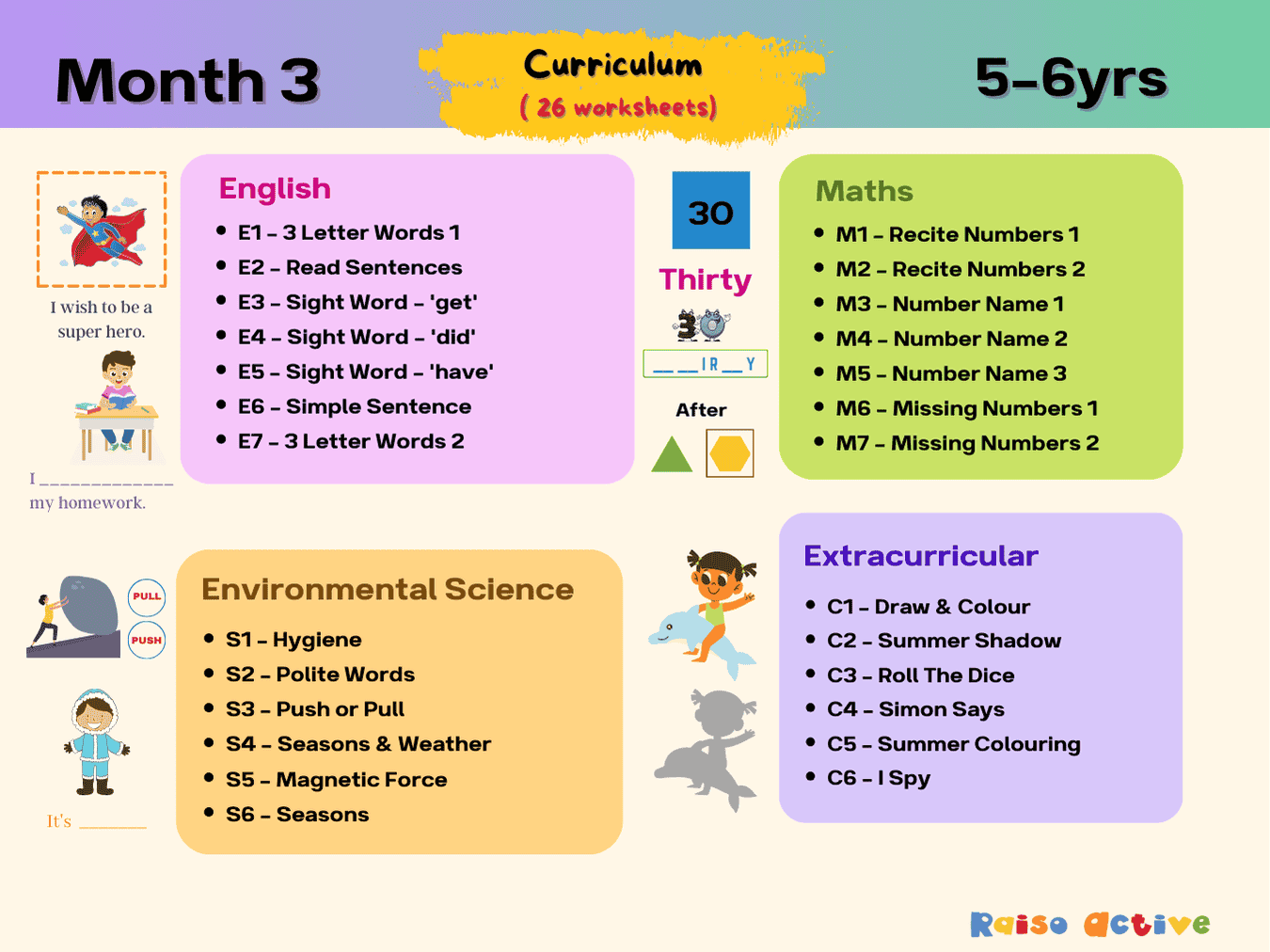
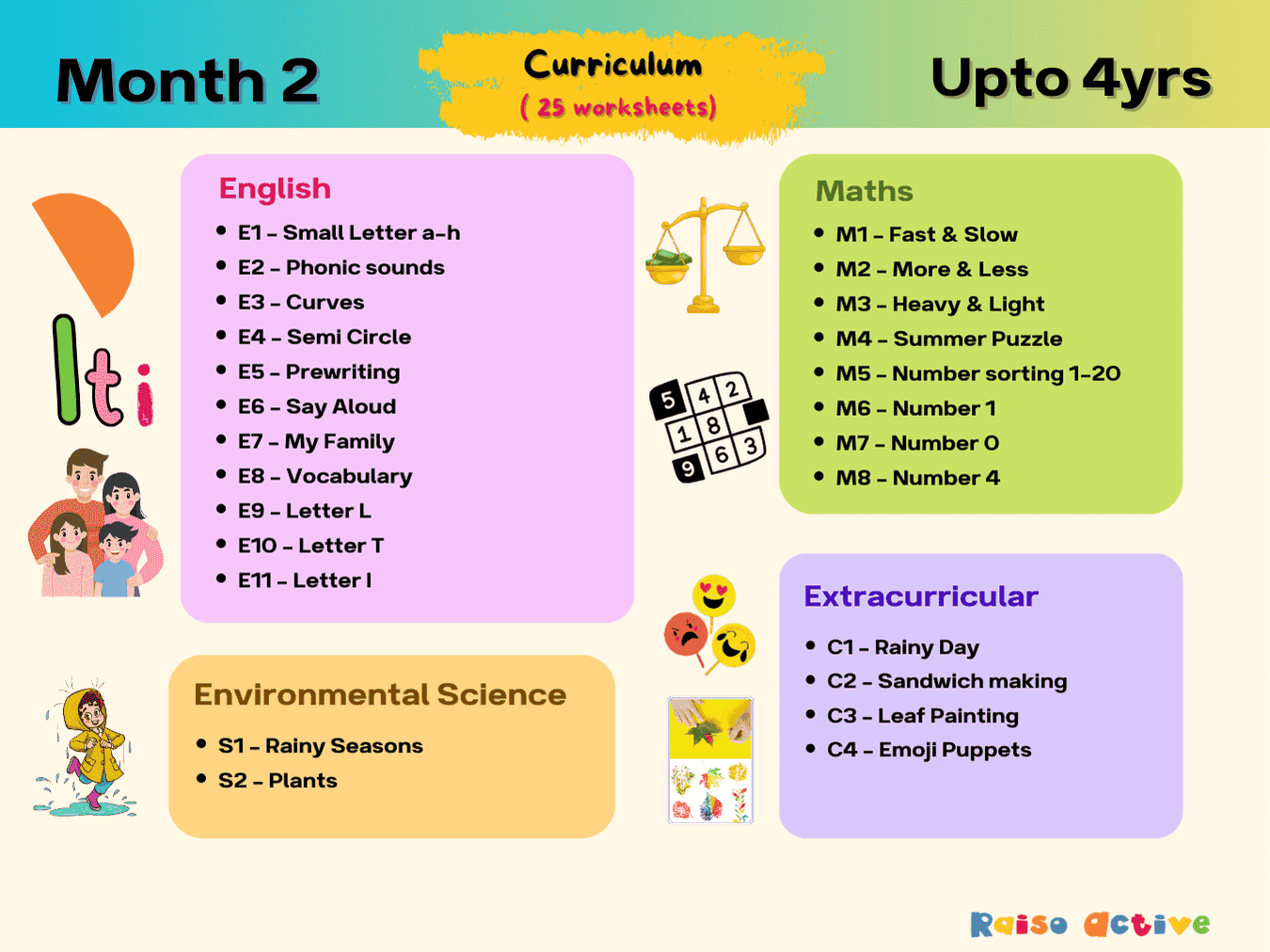
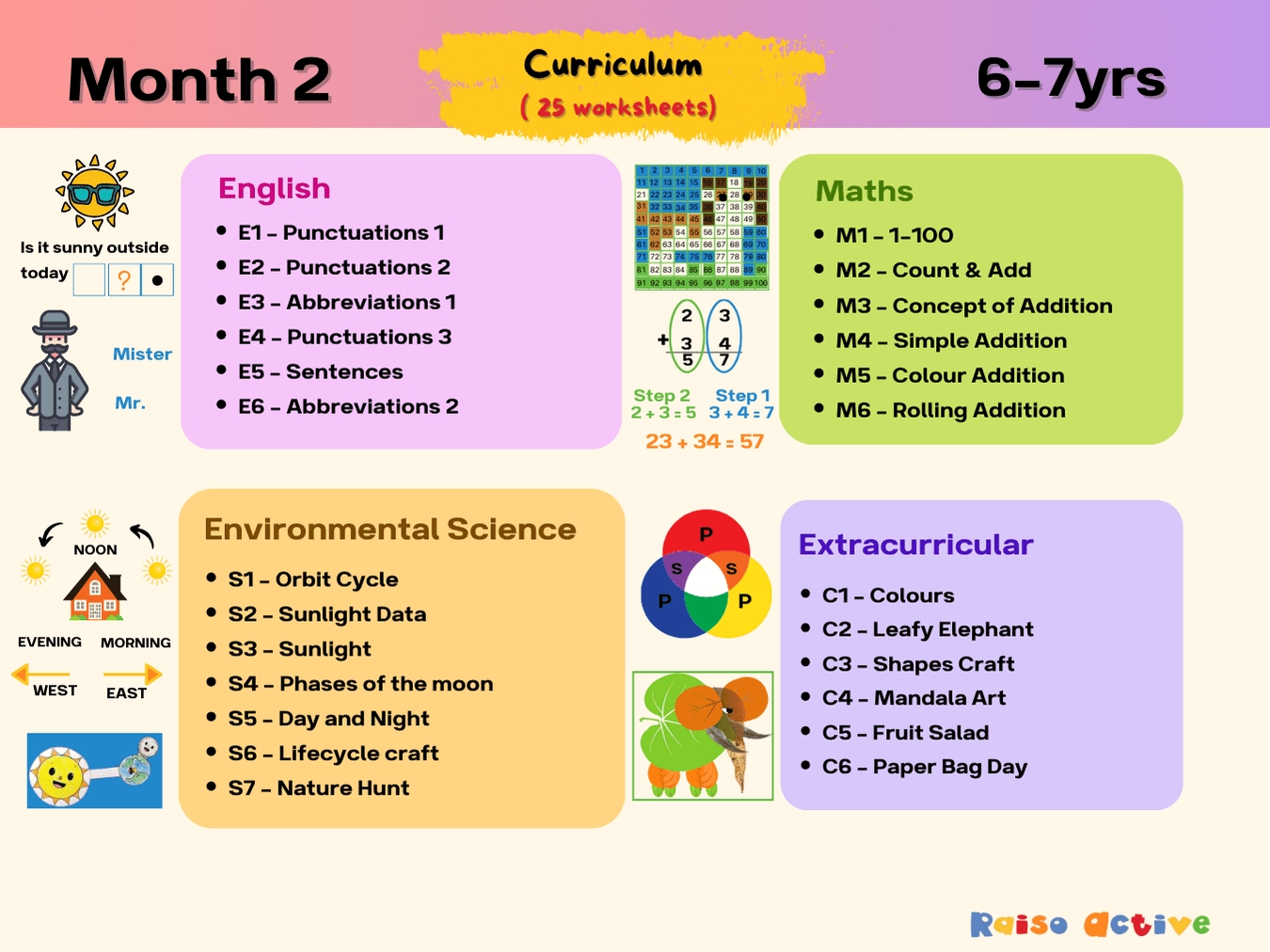
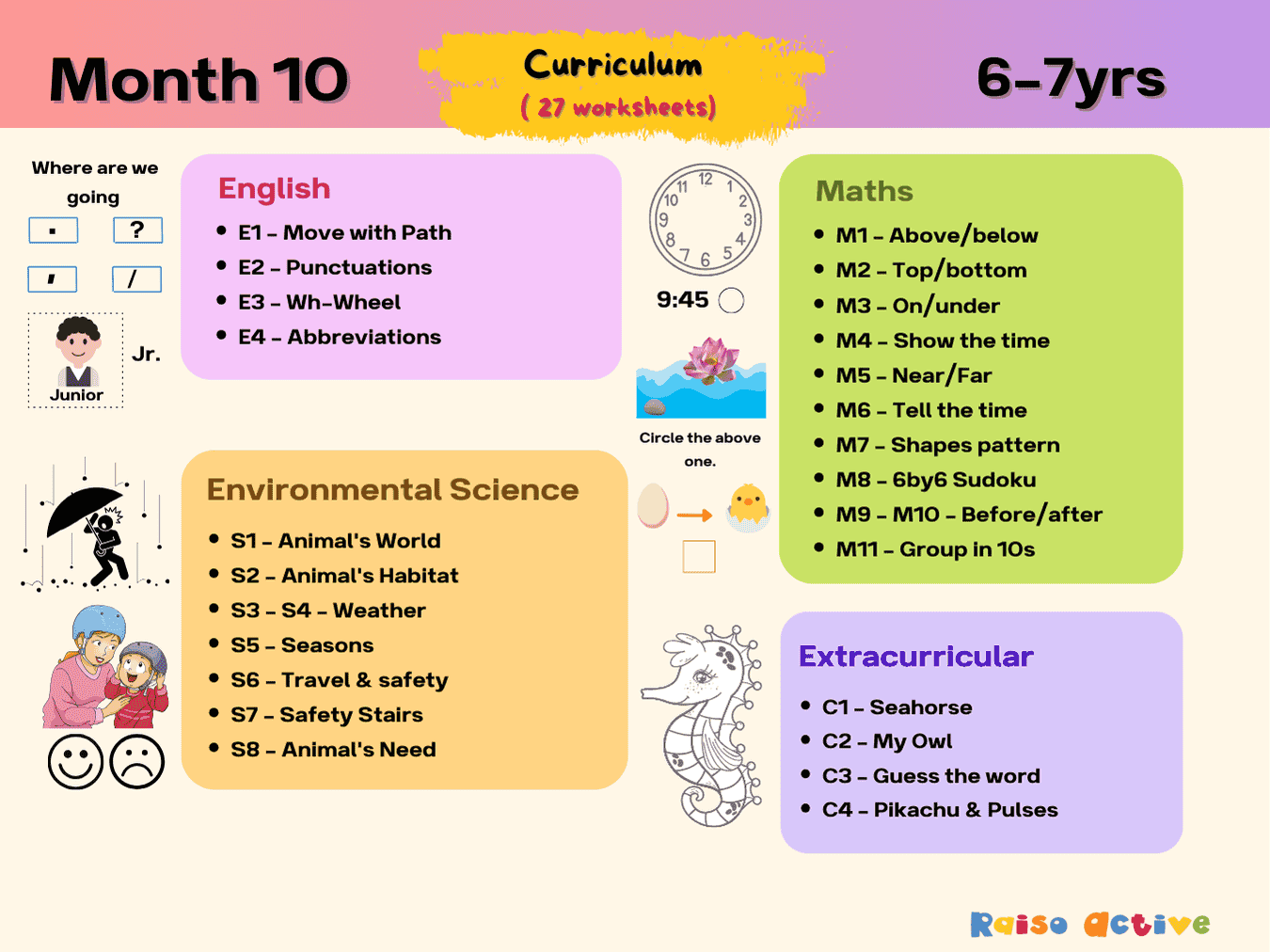
Early Learning, Parenting & Homeschool
The Ultimate Guide to Seasonal Worksheets for Preschool: Making Learning Fun Year-Round
Author
RaisoActive - Kids Activities and Fun Learning
Date Published
Reading Time
9 min read

In This Article5 min read
- Seasonal worksheets tap into a child's natural curiosity about the changing world around them, making abstract concepts feel real and relevant
- India's three broad seasons — monsoon, winter, and summer/spring — offer rich, culturally meaningful themes that resonate deeply with young learners
- Festival-themed worksheets for Diwali, Holi, Eid, and Christmas connect learning with joyful family traditions children already love
- Seasonal themes can be woven across every subject — maths, writing, science, art — keeping the curriculum cohesive and engaging
- Building a seasonal worksheet library does not have to be expensive; this guide covers free sources, subscription options, and how to choose quality resources
Why Seasonal Learning Never Gets Old
Think back to the moment the first monsoon shower of the year hits. Children rush to windows, press their noses to glass, and pepper every adult in sight with questions: "Why is the sky grey? Where do the puddles come from? Why does the mitti smell so good?" That irrepressible curiosity — sparked by the world changing around them — is one of the most powerful learning engines a parent or teacher can harness.
Seasonal worksheets do exactly that. They anchor learning in the sights, smells, and feelings of right now — the jasmine blooming outside the window, the foggy winter mornings, the sticky summer afternoons. When a three-year-old colours a raindrop or traces the outline of a mango, she is not just practising fine motor skills. She is connecting a skill to something that matters in her world. And that connection is what makes learning stick.
In this guide, we will explore how to use seasonal worksheets to keep preschool learning fresh, joyful, and culturally relevant across every month of the year — tailored specifically to India's seasons and festivals, not the Western four-season calendar that dominates most international worksheet packs.
Get seasonal worksheets delivered to your inbox
Subscribe to the RaisoActive newsletter for monthly seasonal activity packs, festival-themed worksheets, and expert tips for parents and teachers of children ages 1-8.
Why Seasonal Themes Engage Young Learners So Effectively
Young children are fundamentally concrete thinkers. Abstract concepts — letters, numbers, shapes — become meaningful only when anchored to experiences they can see, touch, taste, and feel. The season happening right outside the door is one of the most universally accessible "anchors" available to every child, regardless of their background, language, or learning style.
Developmental psychologist Jean Piaget's research on preoperational thought (ages 2-7) reminds us that children at this stage learn best through direct, sensory-rich engagement with their environment. Seasonal themes deliver this in abundance. A winter worksheet about fog is not just a colouring page — it is an invitation to look out the window and talk about what you see. A monsoon worksheet about rain cycles connects to the puddles in the courtyard and the smell of wet earth.
There is also the motivational factor. Children are naturally excited about what is happening around them right now. A worksheet about summer fruits feels thrilling in May when mangoes are piled high at every street corner. The same worksheet in December would feel random and disconnected. Timeliness is a quiet superpower of seasonal learning.
India's Seasons: A Parent's and Teacher's Worksheet Calendar
Most international worksheet packs are designed around the Western four-season model — autumn leaves, snowmen, spring flowers, beach scenes. While these are charming, they can feel alien to a child in Mumbai or Chennai who has never seen snow or raked autumn leaves. India's seasons offer far richer and more relatable material. Here is how to think about the Indian seasonal calendar for worksheet planning.
Monsoon (June to September): The Season of Wonder
The Indian monsoon is arguably the most dramatic seasonal shift in the world, and children feel it viscerally. Worksheets for this period can explore the water cycle in simple terms (rain falls, fills rivers, evaporates), frogs and their life cycles, rainbow colours, counting raindrops, and the vegetables that appear in the monsoon market — ridge gourd, bottle gourd, cluster beans. Art-based worksheets can involve painting rain using fingers or toothbrushes, creating paper umbrella crafts, and drawing "what I see from my window on a rainy day." Writing prompts can ask children to describe the smell of rain or their favourite monsoon food.
Winter (November to February): The Season of Warmth and Gathering
Winter in India is mild compared to European winters, but it brings its own distinct magic — foggy mornings, warm shawls, steaming cups of chai, oranges and strawberries in the market, and a string of beloved festivals. Winter worksheets can cover seasonal fruits and vegetables (peas, cauliflower, carrots, amla), animals that migrate or behave differently in cooler weather, and simple science observations ("Is your breath visible in the morning? Why?"). Festival themes are particularly rich in this period, covering Diwali, Eid, Christmas, Lohri, Makar Sankranti, and Pongal. Maths worksheets can use diyas, kites, and rangoli patterns for counting, symmetry, and shapes.
Summer and Spring (March to May): The Season of Colour and Energy
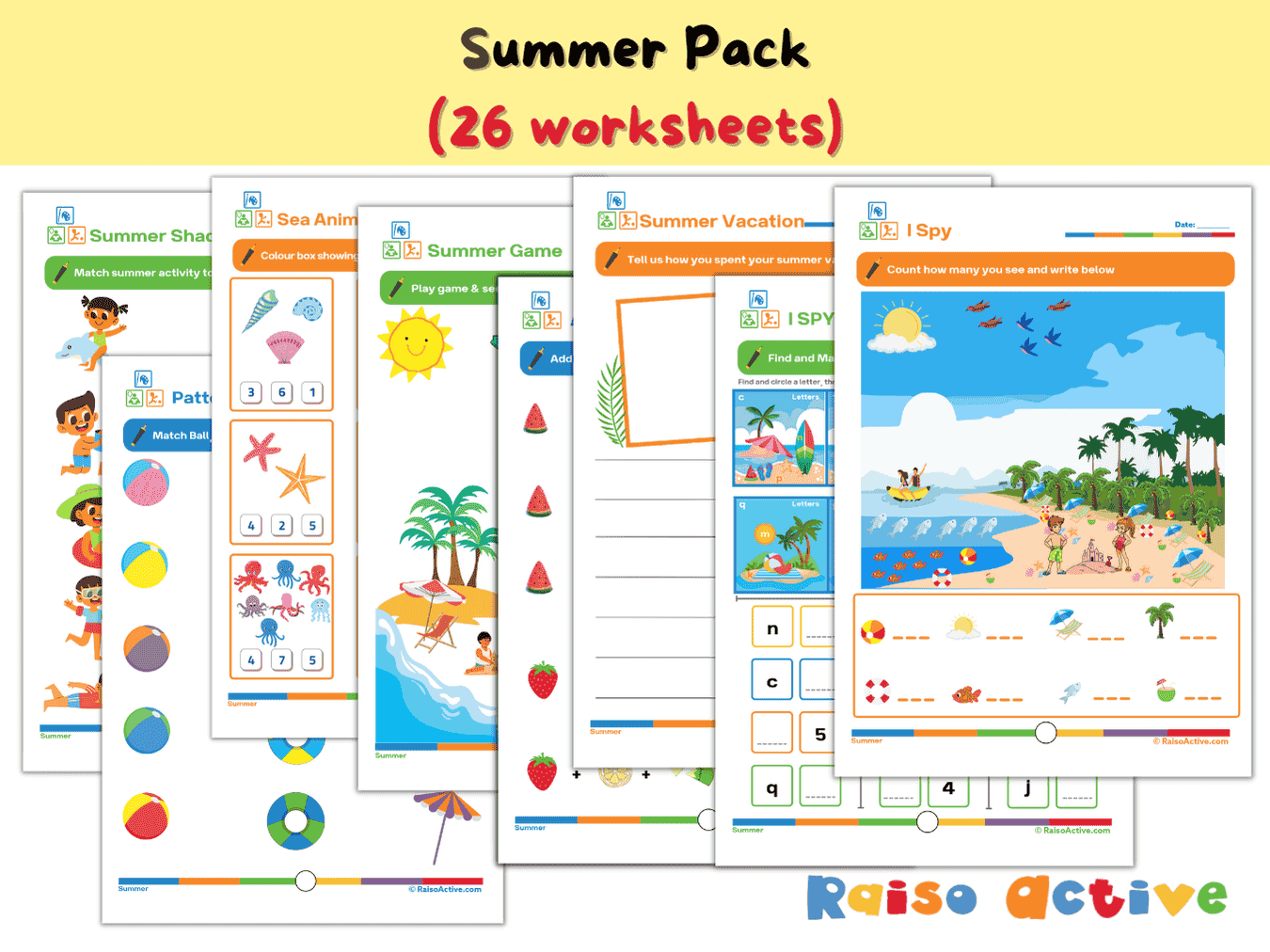
The period from March to May brings Holi's riot of colour, the blossoming of gulmohar and amaltas trees, and the glorious arrival of mangoes. It is also, frankly, the hottest part of the year — which means children need worksheets they can do indoors during peak afternoon hours. Summer worksheets can explore heat and shade (simple science), tropical fruits and their seeds, insects like butterflies and bees, conservation of water (an urgent and culturally important topic), and the many ways families stay cool — ceiling fans, earthen pots, cold lassi. Spring-adjacent worksheets can focus on new leaves, flowers, and the concept of growth — seeds sprouting, chicks hatching, caterpillars becoming butterflies.
Key Takeaway
Align worksheets with India's actual seasons, not imported Western themes.
A worksheet about falling autumn leaves means little to a child in Pune or Kolkata. Replacing it with one about monsoon leaves glistening in rain, or mango blossoms in spring, connects learning to the child's lived reality — and that connection is what transforms a worksheet from a chore into a conversation.
Festival-Themed Worksheets: Celebrating Every Occasion
India's festivals are not just cultural events — they are immersive, multi-sensory learning laboratories. The lights of Diwali, the colours of Holi, the fasting and feasting of Eid, the star and tree of Christmas — each festival brings unique symbols, stories, foods, and traditions that are incredibly rich material for preschool worksheets.
Festival worksheets work best when they go beyond simple colouring pages and invite children to think, count, create, and connect. A Diwali worksheet might ask a child to count the diyas in a rangoli pattern (maths), colour a rangoli using only two colours in a pattern (pre-maths and art), or trace the word "light" and draw what light means to them (pre-writing and emotional literacy). A Holi worksheet might explore mixing colours (science), match each colour to a feeling, or sequence the steps of how gulal is made.
Importantly, inclusive festival worksheets — ones that celebrate Diwali, Eid, Christmas, Holi, Pongal, Baisakhi, and Gurpurab with equal warmth — teach children that India's diversity is something to be celebrated, not flattened. This is one of the most valuable lessons a preschool classroom can offer.
Key Takeaway
Festival worksheets are most powerful when they teach skills through celebration.
A worksheet that uses Diwali diyas to teach counting is more memorable than a plain number sheet. A Holi colour-mixing activity teaches science through joy. Connecting academic skills to festivals children love is not a shortcut — it is excellent pedagogy that honourss cultural identity while building core competencies.
Weaving Seasonal Themes Across Every Subject
One of the great strengths of seasonal worksheet planning is that the same theme can be a thread woven through maths, language, science, and art — creating a cohesive learning experience rather than a fragmented collection of unrelated activities. Here is how this works in practice for each core subject area.
Maths: Counting with Seasonal Objects
Seasonal objects make the best maths manipulatives — and their worksheet equivalents are just as effective. Monsoon worksheets can ask children to count umbrellas, frogs, or raindrops in groups of 1-10. Winter worksheets can use oranges, woollen mittens, or diyas for counting, simple addition, and pattern making. Summer worksheets can count mangoes, ice cream scoops, or butterflies. These are not gimmicks — they are the concrete anchors that make abstract number concepts real for preoperational thinkers.
Language and Pre-Writing: Weather Words and Season Stories
Seasonal worksheets are rich with vocabulary-building potential. Monsoon worksheets can introduce words like "pour," "drizzle," "puddle," "flood," and "rainbow." Winter worksheets can explore "fog," "mist," "chilly," "woolly," and "harvest." Pre-writing worksheets can ask children to trace seasonal words, copy a simple sentence about the weather, or draw and label their favourite seasonal fruit. Older preschoolers (ages 5-6) can dictate or write two to three sentences about what they love about the current season — a powerful early writing exercise.
Science: Understanding the Seasons Through Observation
Science worksheets grounded in seasonal observation build genuine scientific thinking — asking questions, observing, comparing, and drawing conclusions. A simple monsoon science worksheet might ask children to draw what the sky looks like before, during, and after rain. A winter worksheet might track daily temperature using a simple thermometer picture (circle the right number). A summer worksheet might ask children to predict which container of water will stay coolest in the sun — and then actually try it. These activities build the habit of looking at the natural world with curious, scientific eyes.
💡Seasonal Worksheet Planning Tip
- Plan your worksheet themes a month ahead — this gives you time to gather materials and prepare conversation starters
- Use a simple seasonal calendar: June-Sept (monsoon), Oct-Nov (transition/festival), Nov-Feb (winter), March-May (summer/spring)
- Keep a small seasonal "curiosity basket" — leaves, flowers, stones, seeds — that children can touch while doing worksheets about that season
- Photograph your child completing seasonal worksheets and make a year-in-review book — it becomes a treasured keepsake and a powerful learning review
How to Build Your Seasonal Worksheet Library
Building a well-organised seasonal worksheet library saves time, reduces planning stress, and ensures you always have the right resource at the right moment. You do not need hundreds of worksheets — a curated collection of 8-12 quality worksheets per season is more than sufficient for most families and small preschool classrooms.
Organise your library by season first, then by subject within each season. A simple folder system — physical or digital — works beautifully. Label folders: Monsoon (Maths / Language / Science / Art / Festivals), Winter (Maths / Language / Science / Art / Festivals), and Summer-Spring (Maths / Language / Science / Art / Festivals). Within each folder, keep worksheets sorted by difficulty level so you can quickly find age-appropriate options.
If you are building a library for a classroom or home-school setting with multiple children, note the age range each worksheet is designed for. A good seasonal worksheet should be usable across a range — perhaps ages 3-4 and ages 5-6 versions of the same theme, allowing siblings or mixed-age groups to learn together without any child feeling left out.
⚠️Warning: Common Seasonal Worksheet Mistakes to Avoid
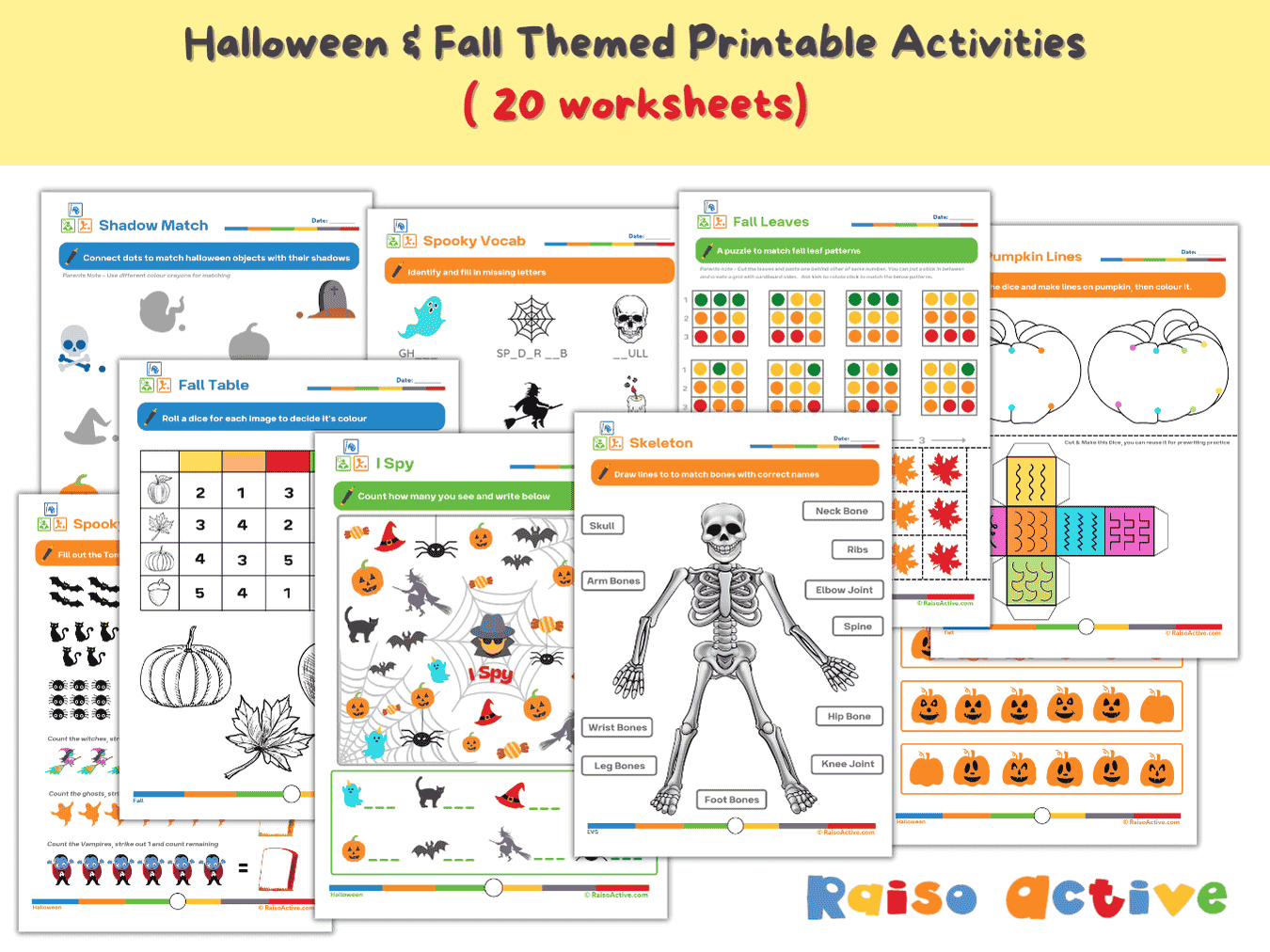
- Using worksheets from US or UK packs that feature autumn leaves, Thanksgiving, or Easter — children in India do not have these seasonal reference points
- Printing worksheets that are too small or too cluttered — preschoolers need large, clear images with plenty of white space
- Saving worksheets for "when the time is right" but never doing them — set a simple seasonal kickoff date and start there
- Treating seasonal worksheets as tests rather than conversations — always talk about the theme before and after the worksheet
3x
Children are up to three times more likely to retain new vocabulary when it is introduced through a theme connected to their current real-world experience, compared to decontextualised vocabulary instruction.
Source: National Reading Panel; Early Childhood Literacy Research
🎨Seasonal Activity Idea: The Weather Journal
- Give your child a simple blank booklet and make it their "weather journal" for one full season
- Each week, they draw the weather they see outside, colour in a simple weather symbol (sun, cloud, rain, fog), and practise writing one weather word
- At the end of the season, look back through the journal together — children are always delighted to see how much the weather changed
- This activity builds observation skills, sequential thinking, fine motor skills, and a love of documentation — all through joyful seasonal engagement
Free vs Subscription Worksheets: Making the Right Choice
The internet is flooded with free worksheets, and it is tempting to simply download whatever appears at the top of a Google search. However, free worksheets vary wildly in quality — some are beautifully designed and developmentally appropriate, while others are cluttered, poorly illustrated, or culturally irrelevant to Indian children. Here is how to navigate the options.
Free resources work best for: supplementary colouring pages, basic tracing practice, and one-off festival activities. They are a good starting point but often lack cohesion — each worksheet comes from a different source with a different design language, which can feel chaotic rather than curated. For the occasional extra activity, free worksheets are perfectly fine.
Subscription-based platforms and curated Indian educational resources (like RaisoActive) offer more: coherent design, age-specific levelling, cultural relevance, and a library organised by theme and skill. If you find yourself spending significant time hunting for quality worksheets each month, a subscription often saves more in time than it costs in money — and the quality difference is usually noticeable immediately.
How to Evaluate Any Seasonal Worksheet Before Using It
1
Check the cultural fit
Does the worksheet feature scenes, foods, clothing, and festivals that your child recognises from their own life? A worksheet about raking autumn leaves will not resonate with a child in Bangalore. Look for worksheets that feature mangoes, marigolds, diyas, kites, monsoon rain, and other elements from the Indian everyday.
2
Assess the visual clarity
Is the layout clean and uncluttered? Are images large enough for small hands and young eyes? Preschoolers are easily overwhelmed by busy, crowded pages. A good seasonal worksheet should have one clear focal theme, generous white space, and images that are immediately recognisable.
3
Check the developmental level
Is the task genuinely appropriate for your child's age and stage? A tracing activity should have lines wide enough for an unsteady three-year-old's crayon. A counting activity should not require writing numbers if your child is still learning to form digits. Always look for tasks your child can complete mostly independently.
4
Look for cross-subject richness
Does the worksheet do more than one thing? A great seasonal worksheet might combine counting (maths) with colouring (fine motor), or tracing a word (pre-writing) with drawing a picture (creative expression). Multi-skill worksheets give you more learning for the same amount of time and paper.
5
Consider the conversation potential
Will this worksheet spark questions and conversation? The best worksheets are not ends in themselves but invitations to talk. A monsoon worksheet that asks "Draw what you hear in the rain" opens a conversation about sound, weather, and observation. Look for worksheets that invite a child to think, not just fill in blanks.
6
Check for inclusive festival representation
If the worksheet is festival-themed, does it represent the diversity of Indian celebrations? A worksheet collection that only covers Hindu festivals will not serve all families. Look for resources that include Eid, Christmas, Holi, Diwali, Pongal, Baisakhi, Gurpurab, and more — this teaches children that all celebrations matter.
7
Try it yourself first
Before giving any new worksheet to a child, do it yourself. This takes only a minute and is extraordinarily revealing. You will immediately notice if the lines are too small, the instructions are confusing, the task is too easy or too hard, or if something about the design is simply off. Your experience as the adult doing the worksheet is a reliable guide to whether your child will enjoy it.
Strong Seasonal Worksheet
- +Features culturally relevant imagery (mangoes, diyas, monsoon rain, rangoli)
- +Clean, uncluttered layout with generous white space
- +Matches the current Indian season
- +Builds multiple skills (maths + fine motor, or language + observation)
- +Invites open-ended thinking or drawing
- +Can be completed by a child mostly independently
- +Sparks natural conversation about the season or festival
Weak Seasonal Worksheet
- -Uses imported Western imagery (pumpkins, autumn leaves, snow angels)
- -Crowded page with many small images and multiple instructions
- -Season is random or out of sync with the calendar
- -Drills a single isolated skill repetitively
- -Has only one correct answer with no room for creativity
- -Requires significant adult help or explanation to complete
- -Child finishes and immediately forgets — no conversation or connection
Unlimited Access
Never Run Out of Seasonal Worksheets Again
Subscribe to RaisoActive for a curated library of India-specific seasonal worksheets, festival activity packs, and monthly learning guides — designed for children ages 1-8 by early childhood educators.
All worksheets & activitiesNew content weeklyDownload unlimited times
Subscribe NowFrequently Asked Questions
Can I use seasonal worksheets if my child's school already uses a fixed curriculum?
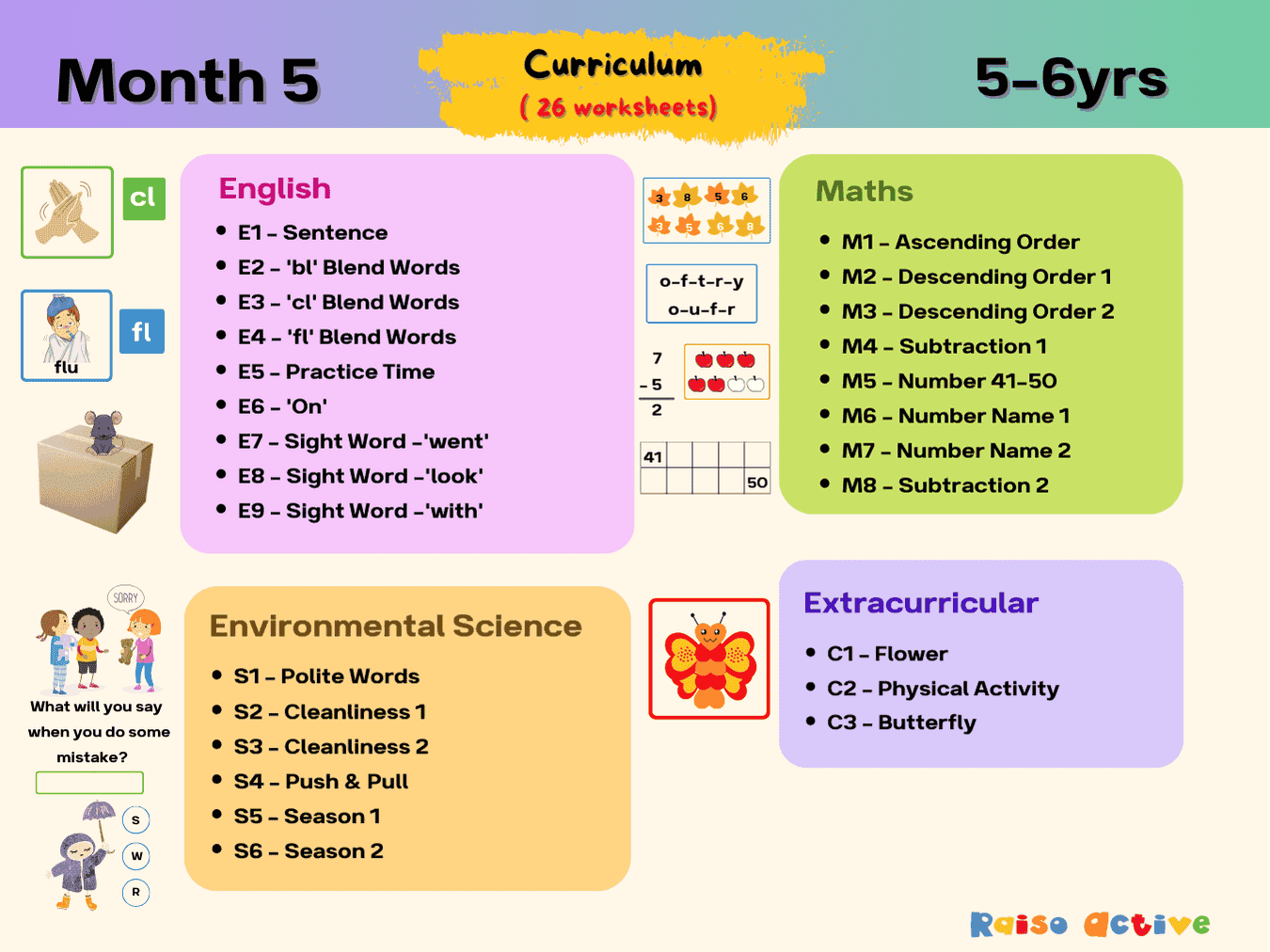
Absolutely. Seasonal worksheets work best as a supplement to whatever your child is doing at school, not a replacement. Even 10-15 minutes of seasonal activity a few times a week can significantly enrich a child's learning experience. Look for worksheets that reinforce skills the school is already teaching — if the school is working on counting to 10, use monsoon worksheets that count raindrops or frogs up to 10. This creates positive reinforcement without any conflict with the school curriculum.
How do I adapt seasonal worksheets for different ages in the same family?
Seasonal themes are wonderfully flexible across ages. You can often use the same theme with differently levelled worksheets — a younger child (age 2-3) colours a monsoon raindrop while an older child (age 5-6) traces the word "rain" and writes how many raindrops they can count. If you only have one worksheet, adapt it: the younger child points to and names things while the older child completes the full task. Doing seasonal activities together, even if at different levels, builds family bonding and gives younger children aspirational models to learn from.
Where can I find Indian-specific seasonal worksheets?
RaisoActive offers a growing library of worksheets and activity packs specifically designed for Indian children, with culturally relevant imagery, festival themes, and seasonal content aligned to the Indian calendar. Beyond RaisoActive, look for worksheets from Indian educational publishers and homeschool communities. When using international sites like Teachers Pay Teachers or Pinterest, filter your search with terms like "India seasonal worksheets," "Diwali worksheets," or "monsoon activities" to find more contextually appropriate resources.
How many seasonal worksheets should I use per week?
For children aged 3-4, two to three seasonal worksheets per week is ample — quality and engagement matter far more than quantity. For children aged 4-6, you might comfortably use one seasonal worksheet per day as part of a broader routine. Always follow your child's lead: if they are excited and asking for more, offer more. If they are resistant or disengaged, pull back and try approaching the same seasonal theme through a hands-on activity — a rainy-day sensory tray, a festival craft, or a nature walk — before returning to paper-based worksheets.
Do seasonal worksheets work for children who are behind developmentally?
Seasonal worksheets can be particularly beneficial for children who find learning challenging, because the themes are intrinsically motivating and familiar. The key is to ensure the skill level of the worksheet matches the child's current developmental stage, not their age. A five-year-old who is still developing fine motor skills should use worksheets designed for three to four year olds — just with a seasonal theme that feels age-appropriate and engaging. When in doubt, simplify the task (tracing over dotted lines rather than copying independently) while keeping the theme exciting and relevant.
Can I make my own seasonal worksheets at home?
Yes, and homemade worksheets can be wonderfully personalised. The simplest approach is to draw or print a large seasonal image (a mango tree, a rangoli pattern, a rainy window) and then add a simple task: "Colour the mangoes yellow," "Count the flowers and write the number," or "Draw what you would eat on a rainy day." You do not need to be an artist — even simple line drawings work beautifully for preschoolers. Involve your child in creating the worksheet; letting them choose the theme ("Should we make a frog worksheet or a rainbow worksheet today?") increases buy-in enormously.