Literacy
When Should My Child Learn to Read? Is Kindergarten Too Early? A Complete Guide to Reading Readiness
Author
RaisoActive - Kids Activities and Fun Learning
Date Published
Reading Time
8 min read

In This Article9 min
- Research points to **ages 5-7** as the brain-ready window for formal reading instruction — though pre-reading skills can and should start much earlier, from age 3.
- Reading readiness is not just about knowing letters — it includes phonological awareness, print concepts, oral vocabulary, and a child's emotional willingness to engage.
- **Pushing reading too early** (before readiness) can create anxiety, negative associations with books, and longer-term resistance to learning.
- **Waiting too long** also has real costs — the gap between early and late readers widens quickly once school begins.
- In India, pressure to read in LKG and UKG is common — this guide explains what is developmentally appropriate versus what creates unnecessary stress.
The Question Every Parent Is Really Asking
If you have ever sat at a parent-teacher meeting and felt a quiet panic — "Other children are already reading. Should mine be too?" — you are in very good company. Reading readiness is one of the most anxiety-producing topics in early childhood, particularly for parents navigating the intense academic expectations of Indian schooling. The admissions pressure, the comparison with the neighbour's child, the well-meaning grandparent asking whether your four-year-old knows their ABCs — it all adds up.
The good news is that developmental science has clear, reassuring answers. Understanding what the research actually says about optimal reading age — and why — can free you from comparison anxiety and help you support your child in the way that will serve them best for life. This guide covers everything: brain development, readiness checklists, the Indian school context, what to do at each stage, and how to build a love of reading that lasts.
Free Reading Readiness Worksheets — Delivered to Your Inbox
Join thousands of Indian parents who use RaisoActive printables to build pre-reading skills the playful way. New worksheets every week, completely free.
What Does the Research Actually Say About Reading Age?
Decades of developmental research — from Piaget's early work on cognitive stages to more recent neuroscience studies — consistently point to ages 5 to 7 as the range when most children's brains are ready for formal reading instruction. This is not arbitrary. Several things converge in this window:
- Phonological awareness matures — the brain's ability to consciously hear, manipulate, and play with the sounds of language (not just meaning) develops reliably around age 5-6.
- Visual processing stabilises — children younger than 5 often reverse letters (b/d, p/q) not because of any difficulty but because their visual system is still learning to distinguish orientation. This typically resolves naturally by 6-7.
- Working memory expands — blending letter sounds into words requires holding multiple sounds in mind simultaneously. The working memory capacity needed for this expands significantly between ages 5 and 7.
- Executive function develops — following multi-step instructions, staying focused during a reading task, and managing the frustration of not knowing a word all require executive function that is still rapidly developing before age 5.
This does not mean a bright four-year-old cannot begin to read — some do, and joyfully. But it does mean that for the majority of children, the brain is simply not optimally wired for formal decoding before age 5. Teaching reading before a child is developmentally ready is a bit like trying to teach a baby to walk at six months — the effort is real, but the wiring isn't there yet.
Key Takeaway
The optimal window for formal reading is ages 5-7, but pre-reading skills start at 3.
Ages 3-4 are for building the invisible foundations: oral vocabulary, phonological awareness, love of books, and print concepts. Ages 5-7 are when most children are ready to decode. Both stages matter enormously.
The Reading Readiness Checklist: Four Pillars to Look For
Reading readiness is not a single switch that flips on. It is a cluster of four distinct skill areas that need to develop together. You can use this checklist to get a clear picture of where your child stands — regardless of their age.
1. Phonological Awareness
This is the ability to hear and play with the sounds in spoken language — and it is the single strongest predictor of later reading success. Signs to look for:
- Can rhyme simple words (cat/hat, dog/log, sun/run)
- Can clap out syllables in words (el-e-phant = 3 claps)
- Can identify the first sound in a spoken word ("Moon starts with /m/")
- Enjoys tongue twisters, alliteration, and word games
2. Print Awareness (Print Concepts)
Understanding how books and print work — before being able to read a single word. Signs to look for:
- Holds books the right way up and turns pages front-to-back
- Knows that we read left-to-right and top-to-bottom in English
- Understands that the print (not the pictures) carries the story
- Can point to where you would start reading on a page
- Notices print in the environment — on signs, shops, food packets
3. Letter Knowledge
Basic familiarity with the alphabet — not necessarily all 26 letters perfectly, but a growing recognition. Signs to look for:
- Recognises most letters of the alphabet, especially in their own name
- Understands that letters are different from numbers and pictures
- Beginning to associate letters with their sounds (even imperfectly)
- Shows interest in copying or writing letters, even approximations
4. Oral Language and Vocabulary
Reading is, at its heart, turning printed symbols back into spoken language. A child needs a rich spoken vocabulary to comprehend what they decode. Signs to look for:
- Speaks in full, mostly grammatical sentences
- Has a growing vocabulary for their age
- Can retell a simple story in order
- Asks questions about the meaning of new words
- Listens to and understands stories read aloud
Key Takeaway
Phonological awareness is the most powerful predictor of reading success.
A child who can rhyme, clap syllables, and identify beginning sounds will learn to read much more easily than a child who knows all 26 letter names but has weak sound awareness. If you invest in one pre-reading skill, make it phonological awareness.
Why Pushing Too Early Can Backfire
The instinct to give your child a head start is completely natural. But a substantial body of research — including landmark studies in New Zealand, Germany, and the United States — shows that formal reading instruction that begins before a child is ready can cause measurable harm. This is not alarmism; it is developmental science worth taking seriously.
Here is what early pressure can do:
- Creates negative associations with books and reading — when reading feels hard and effortful before the brain is ready, children associate reading with struggle. This association can persist for years.
- Generates literacy anxiety — children who are pushed beyond their developmental stage often begin to believe they are 'bad at reading,' which becomes a self-fulfilling prophecy.
- Crowds out play — play is the primary vehicle for cognitive, social, and emotional development in early childhood. Replacing it with premature academic drills is a net loss, not a gain.
- Does not produce durable advantages — several longitudinal studies have found that children who begin formal reading later (age 6-7) but with readiness catch up entirely to early starters by age 8-9, and sometimes surpass them in comprehension.
⚠️Signs You May Be Pushing Too Hard
- Your child says "I don't like reading" or "Reading is hard" after just a few weeks of practice.
- They become tearful or avoidant when books or letter activities come out.
- They are guessing randomly rather than attempting to sound out — a sign of overwhelm, not disinterest.
- Bedtime stories, which used to be enjoyable, are now associated with the stress of "reading practice."
- If you notice these signs, pull back from formal instruction and return to joyful, low-pressure book sharing for a few weeks.
Why Waiting Too Long Also Has Real Costs
The research is equally clear on the other side: children who do not begin reading by age 7-8 face growing challenges. Reading is the foundation of all academic learning — science, social studies, maths word problems — and the gap between strong and struggling readers widens with every passing school year, not narrows.
Waiting too long is particularly costly for children who have underlying phonological difficulties (such as dyslexia). The earlier these are identified and supported, the better the outcomes. A child who does not receive support until Class 3 or 4 has already experienced years of academic and emotional difficulty that earlier intervention could have prevented.
The takeaway is not to push early or wait indefinitely — it is to watch for readiness signs, build pre-reading foundations from age 3, begin gentle formal instruction around age 5-6, and seek support early if progress stalls.
85% of children
who struggle to read at the end of Grade 1 will still struggle to read at the end of Grade 4, without targeted intervention — making early identification and support critical.
Source: National Reading Panel, USA (2000)
The India Context: Is LKG/UKG Reading Pressure Appropriate?
In India, children typically enter LKG (Lower Kindergarten) at age 3.5-4 and UKG (Upper Kindergarten) at age 4.5-5. In many urban schools — particularly competitive private schools in cities like Mumbai, Delhi, Bengaluru, and Chennai — children are expected to recognise letters, write their name, and sometimes begin reading simple words by the end of LKG. By UKG, some schools expect children to read simple sentences.
How does this align with developmental science? The honest answer is: it is a mixed picture.
Developmentally Appropriate (LKG/UKG)
- +Recognising letters and associating them with sounds by end of UKG
- +Writing their own name and a few familiar words
- +Phonological awareness activities: rhyming, clapping syllables
- +Print awareness: left-to-right, how books work
- +Reading simple 3-letter CVC words by mid-UKG if ready
- +A love of stories through daily read-alouds
Potentially Too Much Pressure (LKG/UKG)
- -Reading and writing sentences fluently in LKG (age 3.5-4)
- -Formal worksheet-heavy homework at LKG level
- -Comparing children's reading levels openly in class
- -Penalising children for not reading independently in UKG
- -No time for play-based learning in the name of academics
- -Parents drilling flashcards for hours to match school pace
If your child's school has reasonable expectations (letter recognition and beginning sounds in LKG, simple words and early reading in UKG), they are broadly in line with what is developmentally achievable for children who are ready. If the school expects fluent reading sentences at age 3.5-4, that is genuinely beyond what most children's brains are wired for — and worth discussing with the school.
👋Talking to Your Child's School About Expectations
- Ask the teacher what *specific* reading milestones they expect by the end of the year — not "reading well" but concrete skills.
- Share your child's strengths: "She rhymes beautifully and loves books. We are working on letter sounds at home."
- If expectations seem unrealistic, ask about differentiation: "How does the school support children who are not yet at this milestone?"
- Remember that teachers in reputable schools know child development — a calm, curious conversation usually goes a long way.
Building Pre-Reading Skills from Age 3-4 (Without Formal Instruction)
Ages 3 and 4 are the richest preparation period for reading — and the best preparation looks nothing like sitting down with a workbook. Here is what actually builds the foundations:
- Read aloud together every single day — this is the single most impactful thing you can do. It builds vocabulary, comprehension, love of books, and print awareness all at once. Aim for at least 15-20 minutes of shared reading daily.
- Sing nursery rhymes and songs — rhyming is not just fun; it is phonological awareness training in disguise. Classics like Baa Baa Black Sheep, Jack and Jill, and Humpty Dumpty are doing serious cognitive work.
- Play with words — rhyming games, 'I Spy' with sounds ("I spy something starting with /b/"), alliteration tongue twisters, making up silly words. These are the activities that build phonological awareness.
- Expose them to print everywhere — point out letters on signs, read menus together at restaurants, notice their name on their school bag. Print awareness grows through daily environmental print exposure.
- Tell and retell stories — oral storytelling builds narrative comprehension that directly transfers to reading comprehension later. Ask your child to tell you what happened in a story, or make up stories together at bedtime.
- Build vocabulary through conversation — use precise, interesting words in everyday talk. Instead of "big," say "enormous." Instead of "sad," say "disappointed." Rich vocabulary is a crucial reading comprehension resource.
🎨A Week of Pre-Reading Play for Ages 3-4
- **Monday:** Rhyme time at dinner — take turns saying words that rhyme with *sun* (run, fun, bun, gun).
- **Tuesday:** Syllable clapping — clap the syllables in every family member's name. Who has the most? Nagesha = 3, Papa = 2
- **Wednesday:** I Spy with sounds — spy something in the room starting with a particular sound. Switch roles so your child gives the clues.
- **Thursday:** Library or bookshop visit — let your child choose a book. Talk about the cover, the title, what they think the story will be about.
- **Friday:** Read a favourite book together twice — once straight through, then point to words as you read and let your child "read" any word they know.
Signs Your Child Is Ready vs Not Ready for Formal Reading
Rather than going by age alone, watch for these concrete signals:
Likely Ready to Begin (Age 5+)
- +Points at words and asks "What does that say?"
- +Can identify the first sound in most spoken words
- +Rhymes words easily and enjoys word play
- +Recognises at least 10-15 letters and some sounds
- +Knows that print is read left to right
- +Has a strong oral vocabulary and speaks in full sentences
- +Is emotionally willing and curious about reading
May Need More Pre-Reading Time
- -Shows no interest in print or books
- -Cannot rhyme simple words after exposure
- -Cannot identify any beginning sounds in spoken words
- -Holds books upside down or treats them like toys
- -Has limited vocabulary or unclear speech
- -Becomes distressed when letters or reading are mentioned
- -Below age 5 and showing none of the ready signs
What to Do at Each Stage: Kindergarten, Grade 1, and Grade 2
Reading Development Stage by Stage
1
Preschool / LKG (Ages 3-4): Build the Invisible Foundations
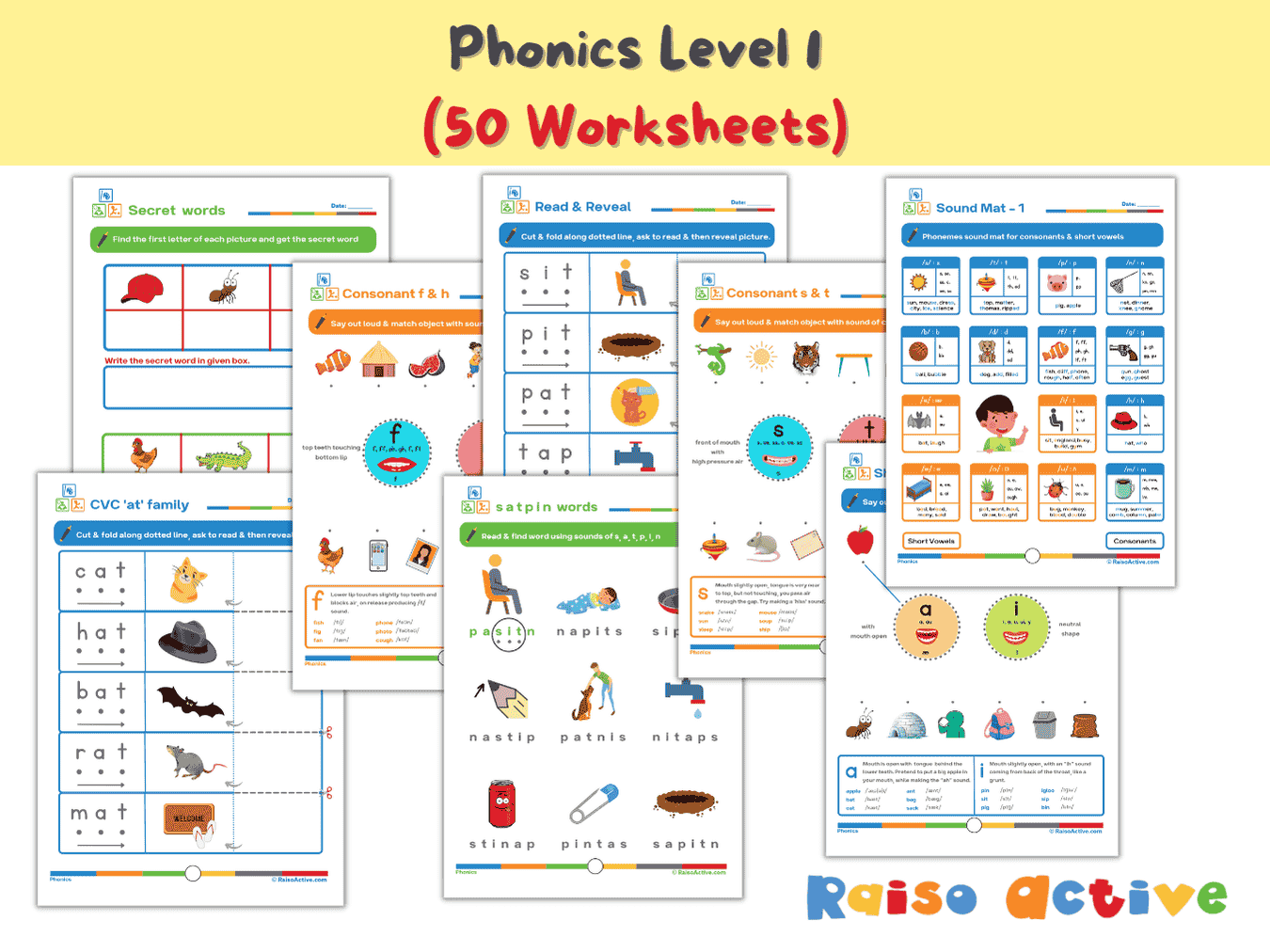
Focus exclusively on pre-reading skills — no formal decoding yet. Daily read-alouds, phonological awareness games (rhyming, clapping syllables, I Spy with sounds), environmental print exposure, and rich oral vocabulary. Introduce letter names and sounds playfully through songs, puzzles, and stories — but do not push blending or decoding. The goal is curiosity and love of books.
2
UKG / Prep (Ages 4.5-5.5): Gentle Introduction to Letters and Sounds
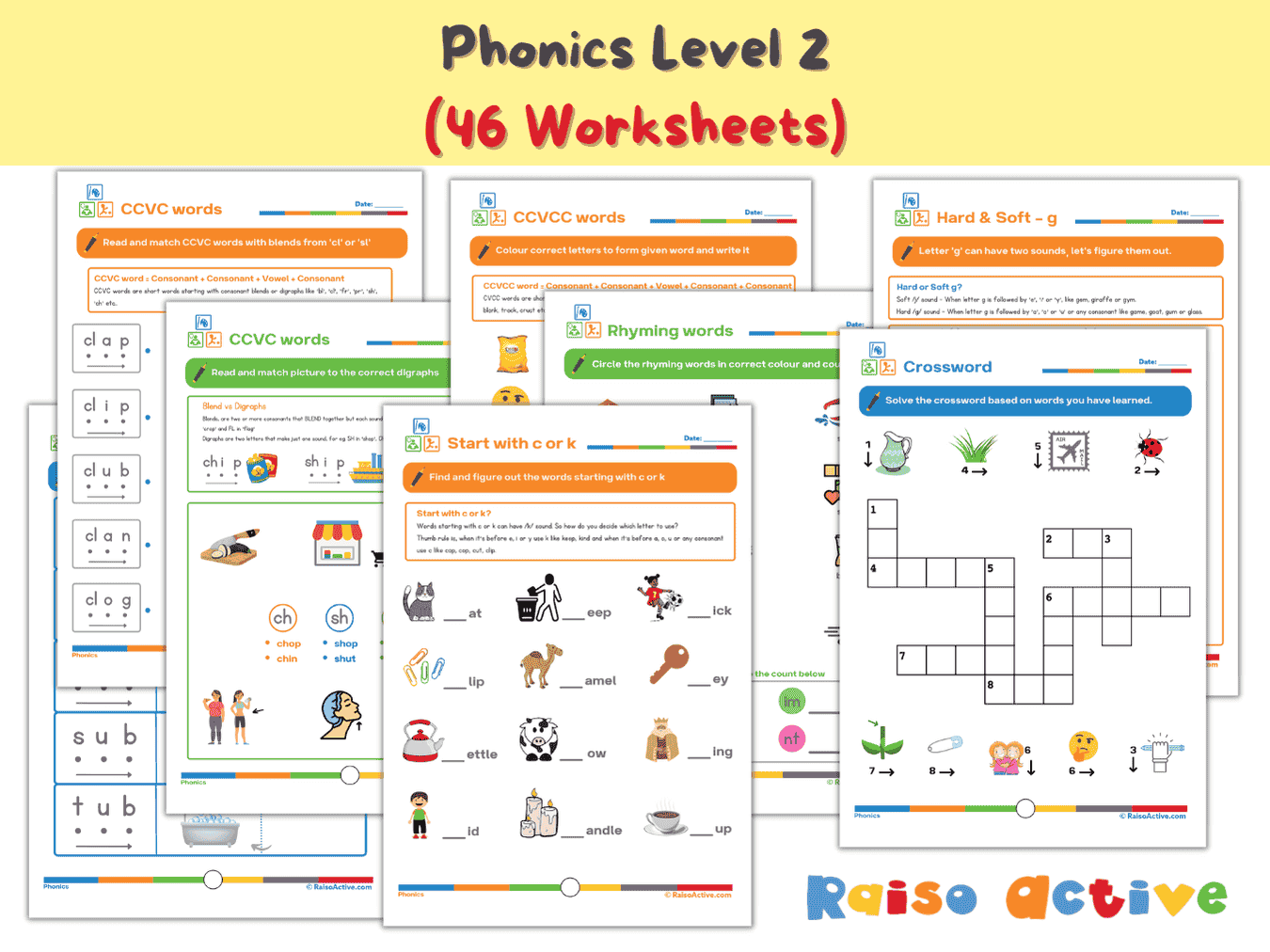
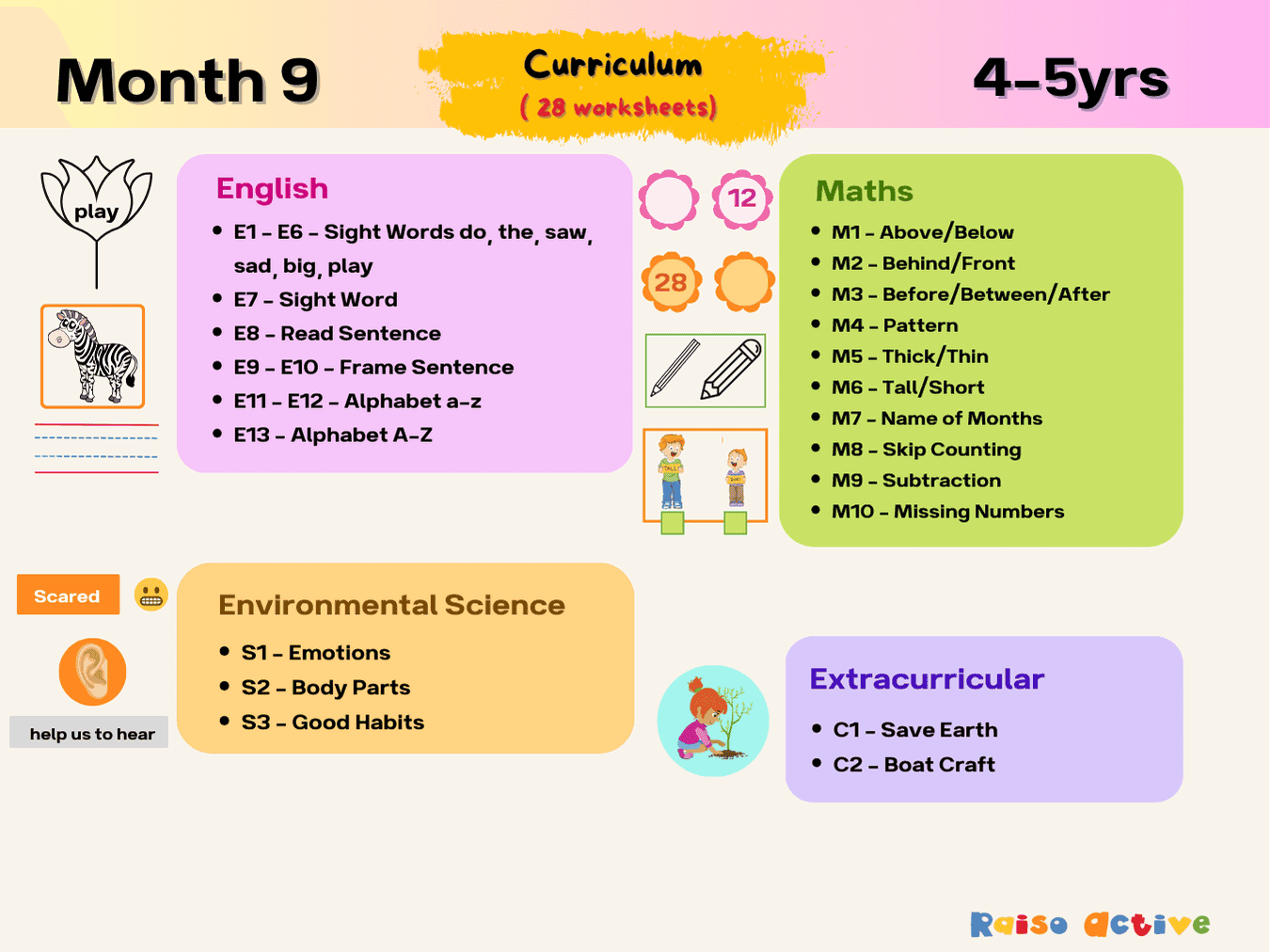
Begin more systematic letter-sound teaching — one letter at a time, tied to memorable pictures and actions (Jolly Phonics works beautifully). Introduce simple CVC word blending with the first 6-10 sounds learned. Start a small sight word bank (the, a, is, it, I, my). Continue daily read-alouds — these remain essential. Keep sessions short (10-15 minutes) and always end on a success.
3
Kindergarten / Class 1 (Ages 5.5-6.5): Systematic Reading Instruction
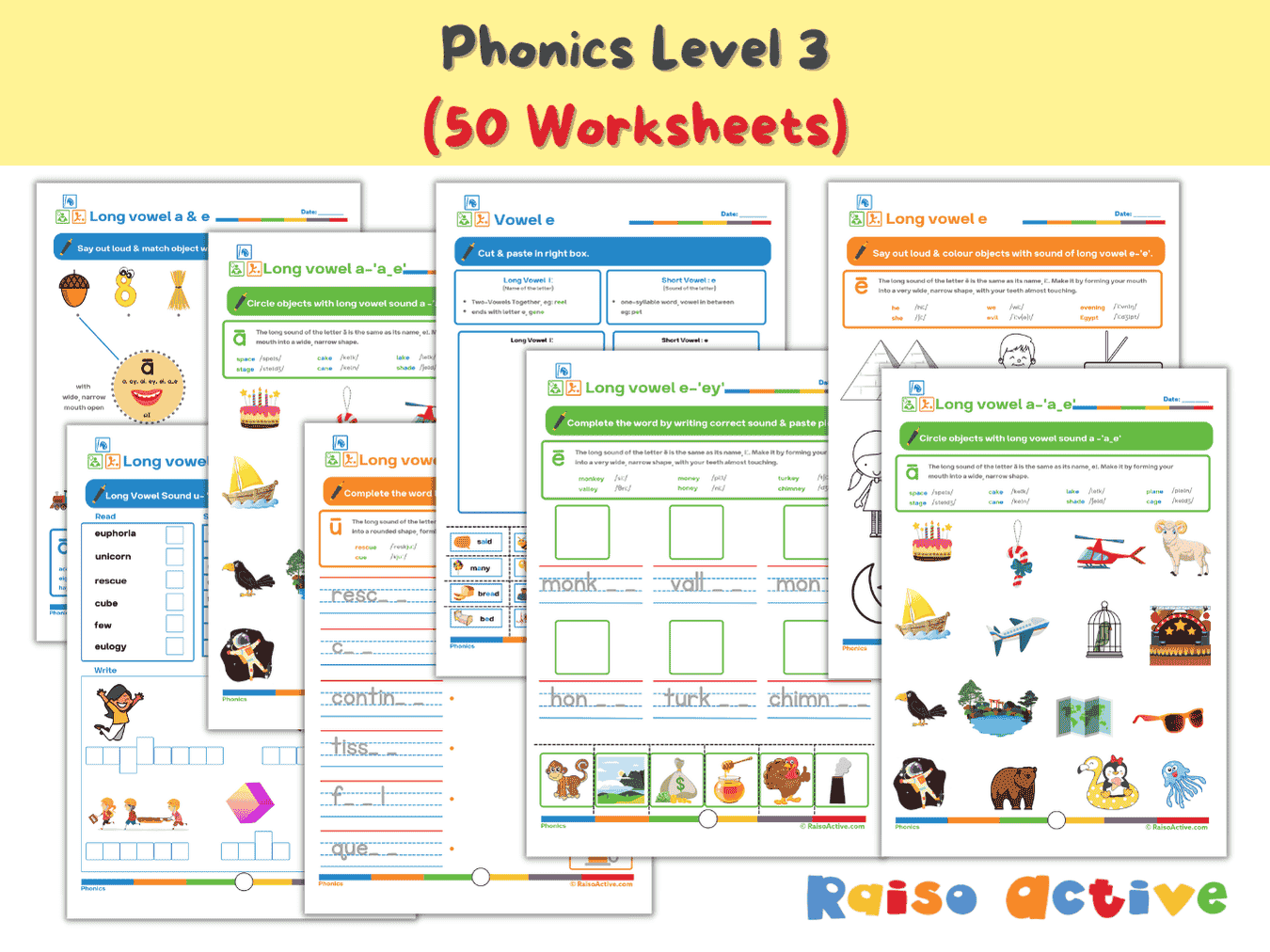
This is when most children are ready for structured phonics instruction. Work through the complete phonics sequence: CVC words, consonant blends (bl, cr, st), long vowel patterns, digraphs (sh, ch, th). Introduce decodable readers alongside read-alouds. Build a sight word bank of 50-100 high-frequency words. Aim for 15-20 minutes of focused reading practice daily. Celebrate every new word read independently — momentum is everything at this stage.
4
Class 2 (Ages 6.5-7.5): Fluency and Comprehension
Children who have a solid phonics foundation now transition from "learning to read" to "reading to learn." Focus shifts to fluency (smooth, expressive reading), comprehension strategies (predicting, summarising, asking questions about text), and expanding the range of books. Introduce chapter books with simple chapters. Encourage independent reading in addition to shared reading. If a child is still struggling to decode at this stage, early specialist assessment is recommended.
Age 6, not 4
is the age at which many countries with consistently high reading outcomes — including Finland and Estonia — begin formal reading instruction. Finnish children, who start school at age 7, rank among the world's top readers by age 10.
Source: PISA International Reading Assessment, 2022
Key Takeaway
Later formal start + strong pre-reading foundations = better long-term reading outcomes.
Countries that prioritise play-based pre-reading skill-building in the early years, then begin formal instruction at age 6-7, consistently outperform countries that push formal reading at age 4-5. The quality of the foundation matters more than the age of the start.
Practice These Skills with Free Worksheets
Unlimited Access
Get New Reading Readiness Worksheets Every Week — Free
Subscribe to RaisoActive and receive freshly designed pre-reading and phonics printables straight to your inbox. Trusted by parents and teachers across India.
All worksheets & activitiesNew content weeklyDownload unlimited times
Subscribe NowFrequently Asked Questions
My child is 5 and not reading yet. Should I be worried?
Not at all — **age 5 is the very beginning of the typical reading window, not the end of it**. Most children begin formal reading instruction around age 5-6 and become fluent readers by 7-8. If your 5-year-old is showing pre-reading readiness signs — rhyming, interest in books, recognising some letters — they are right on track. Focus on phonological awareness games and daily read-alouds, and begin gentle, playful phonics instruction. If by age 6.5 they are still not recognising letter sounds or showing interest in print despite consistent exposure, that would be worth discussing with their teacher.
Is it harmful if my child's school teaches reading in LKG?
It depends entirely on *how* they teach it. A LKG programme that introduces letters and sounds through songs, games, stories, and movement — and does not formally test or compare children — is broadly fine, even if it is a little ahead of the research ideal. A LKG programme that drills worksheets, gives homework, and makes children feel like failures for not reading at age 3.5-4 is genuinely concerning from a developmental standpoint. Watch your child's attitude toward school and books. If they remain curious and enthusiastic, the programme is probably working for them. If they are stressed or avoidant, it is worth having a conversation with the school.
My 3-year-old already knows all the letters. Should I start teaching them to read?
What wonderful curiosity your child has! Knowing letter names at 3 is a lovely sign of print awareness — but it is not the same as being ready to decode. At age 3, the best thing you can do is **follow your child's lead and keep it playful**. If they ask what a word says, tell them. If they want to trace letters, let them. Play rhyming games and I Spy with sounds. But do not begin a structured reading programme — the phonological awareness and working memory needed for decoding typically are not mature enough at 3. Let this beautiful curiosity be nurtured gently, and formal instruction will flow naturally when the brain is ready, usually from age 5.
We speak Hindi at home. Will this delay my child's English reading?
Not at all — in fact, being bilingual is a cognitive advantage for reading. **Phonological awareness skills transfer across languages**: a child who can rhyme in Hindi, clap syllables in Telugu, or identify beginning sounds in Marathi has built the exact same neural pathways they need for English phonics. The key is to build strong oral English alongside phonological awareness in any language. Watch English cartoons together, sing English nursery rhymes, read English picture books aloud daily. Once your child has enough spoken English vocabulary and a solid phonological awareness base in any language, English phonics will click naturally.
What is the difference between phonics and whole-word reading? Which should I use?
**Phonics** teaches children to decode by learning the sounds that letters and letter combinations represent, then blending those sounds into words. **Whole-word (whole language)** teaches children to recognise entire words as visual units, relying on memory and context. Research strongly favours a *systematic phonics approach* for most children — particularly those who have not yet started reading, or who are struggling. Phonics gives children a powerful, generative decoding tool they can apply to *any* new word. Once a solid phonics foundation is in place, children naturally and quickly build a sight-word bank for high-frequency irregular words. The two approaches are not mutually exclusive — they complement each other — but phonics should come first.
How do I know if my child might have dyslexia?
Dyslexia is a specific learning difference that affects phonological processing — the ability to hear and manipulate the sounds of language. It is *not* about intelligence or effort. Early signs to watch for include: persistent difficulty rhyming despite lots of exposure; inability to remember letter sounds after many weeks of instruction; reversing letters (b/d, p/q) well past age 6-7; slow, laborious reading with little improvement; and a family history of reading difficulties. Importantly, **dyslexia cannot be reliably diagnosed before age 6-7** — many of these signs are normal in younger children. If your child is 7+ and showing several of these signs consistently, seek a referral to an educational psychologist or developmental paediatrician. Early structured literacy intervention works extremely well for dyslexia when started early.