When Your Child Knows Letters But Can't Read: Understanding the Missing Pieces
Author
RaisoActive - Kids Activities and Fun Learning
Published
Updated
Reading Time
20 min read

- Knowing the **names** of letters (A, B, C) is completely different from knowing the **sounds** letters make (/a/, /b/, /k/) — and it is the sounds, not the names, that unlock reading.
- The **alphabetic principle** — the idea that letters represent sounds, and sounds can be blended into words — is the single biggest conceptual leap in early literacy, and many children need it taught directly.
- **Phonemic awareness** (hearing and playing with sounds in spoken words) must be strong before a child can decode print — the alphabet song alone cannot build this skill.
- **Blending** is the engine of reading: without it, a child can name every letter and still be unable to read a single word.
- Most children bridge this gap within **4 to 12 weeks** of well-targeted phonics practice — and there are clear signs to watch for if extra support is needed.
The Moment Every Parent Recognises
Picture this scene, which plays out in homes across India every single day. You sit down with your child — perhaps a bright, curious five-year-old — and point to the word cat on a page. They look at the letter C and say "cee." They look at A and say "ay." They look at T and say "tee." Then they look up at you, completely stuck, with no idea what the word says. You have spent months singing the alphabet, doing flashcard drills, watching phonics videos together. Your child can recite A to Z without missing a beat. How is it possible that they still cannot read?
This gap — between knowing letters and being able to read — is one of the most common and most misunderstood challenges in early literacy. It is not a sign that your child is slow, or that you have done something wrong. It is a sign that there are a few crucial pieces of the reading puzzle that have not yet been put in place. This post will walk you through exactly what those pieces are, why they matter, and what you can do to help your child find them.
Get Free Phonics & Reading Worksheets
Join thousands of Indian parents using RaisoActive printables to build confident readers at home. Carefully designed phonics and blending sheets, always free.
Piece 1: Letter Names Versus Letter Sounds — A Critical Distinction
The very first missing piece is one that surprises most parents: the name of a letter and the sound a letter makes are two completely different things. When your child sings the alphabet, they are learning letter names — ay, bee, cee, dee, ee, eff... These names are useful for many things: alphabetical order, spelling words aloud, identifying letters on a keyboard. But they are almost useless for reading.
Reading requires letter sounds. The letter C does not say "cee" in a word — it says /k/ (or sometimes /s/). The letter A does not say "ay" — it says /a/ as in apple. The letter T does not say "tee" — it says /t/. When a child who knows only letter names tries to read the word cat, they piece together "cee-ay-tee" — which sounds nothing like cat and gives them no useful information. Letter-sound knowledge — phonics — is the true foundation of reading, and it must be taught separately and explicitly.
This is why the alphabet song, while a lovely memory tool, is not a reading programme. It teaches letter names in sequence. Reading requires letter sounds in context. The two are related but not the same, and confusing them is the single most common reason children who "know their letters" still cannot decode a simple word.
Piece 2: The Alphabetic Principle — The Big Idea Behind All Reading
Once a child knows that letters represent sounds (not names), they need to grasp a second, deeper idea: the alphabetic principle. This is the understanding that written words are made of letters, each letter represents a sound, and when you put those sounds together in order, you get a spoken word. It sounds obvious to us as adults — we have been reading so long that this process is completely automatic. But for a young child, this is a genuinely profound conceptual leap.
Think of it this way. When your child looks at the printed word sun, the alphabetic principle is what tells them: "That squiggle represents /s/, that circle represents /u/, that shape represents /n/ — and those three sounds together make the word I already know from speech." Without the alphabetic principle, letters are just arbitrary shapes on a page, like tiny pieces of abstract art. With it, every letter becomes a meaningful clue. Teaching this principle directly — naming it, explaining it, practising it with simple words — transforms a child's relationship with print.
Letter recognition is not the same as phonics knowledge.
A child can identify all 26 letters perfectly and still have no idea how to read. Phonics — the system of letter-sound correspondences — must be taught explicitly. Recognising letter shapes is a visual skill; reading is a language skill that builds on spoken-sound awareness.
Piece 3: Phonemic Awareness — The Invisible Foundation
Here is the piece that most parents and even some teachers overlook entirely: before a child can use letter sounds to decode print, they must be able to hear and manipulate the individual sounds in spoken words — completely without letters. This skill is called phonemic awareness, and it is the deepest, most fundamental layer of reading readiness.
Phonemic awareness includes skills like: recognising that the spoken word dog has three separate sounds (/d/ /o/ /g/); clapping syllables in a word; identifying the first sound in ball; rhyming words; substituting sounds to make new words (change the /k/ in cat to /s/ and you get sat). None of these tasks involve print. They are all about hearing the structure of spoken language.
Why does this matter for reading? Because when a child encounters the printed word pin, they need to be able to blend the sounds /p/ /i/ /n/ into a word. If they have never practised hearing that spoken words are made of separate, manipulable sounds, the act of blending three sounds together has no meaning. It is like trying to do arithmetic when you have never understood that numbers represent quantities. Phonemic awareness is the conceptual foundation; phonics is the application. Both must be in place.
- **Oral blending test:** Say the sounds of a simple word slowly, one at a time — "/d/ /o/ /g/" — without showing any letters. Ask your child: "What word am I saying?" If they cannot blend three spoken sounds into a word, phonemic awareness is the piece to build first.
- **Sound isolation test:** Ask your child: "What is the first sound you hear in the word *map*?" A child with strong phonemic awareness will say /m/. A child who confuses sound and name may say "em" (the letter name).
- **Rhyming test:** Say three words and ask which two rhyme: "cat, bus, hat." Strong phonemic awareness makes this effortless; weak awareness makes it genuinely difficult.
- If your child struggles with any of these tasks using only spoken words, this is the place to focus — not on printed letters or worksheets yet.
Piece 4: Blending — The Engine That Drives Reading
Even when a child knows letter sounds and has solid phonemic awareness, there is still one more piece to put in place: blending. Blending is the ability to take individual sounds — /k/ /a/ /t/ — and push them together smoothly to form a whole word: cat. It sounds simple. For many children, it is genuinely one of the hardest things they will ever learn to do.
The reason blending is hard is that it makes demands on working memory — the brain's mental scratchpad. A child has to retrieve the sound for the first letter (/k/), hold it in mind while retrieving the second sound (/a/), hold both while retrieving the third (/t/), and then compress all three into one word at speed — before the first sound fades from memory. If any step in that chain is slow or uncertain, the whole thing falls apart. This is why a child can say /k/, /a/, /t/ perfectly one at a time and then look completely lost when asked to read cat.
The most powerful technique for teaching blending is continuous blending — instead of saying sounds with pauses between them (/k/ ... /a/ ... /t/), you stretch the sounds into each other without any break: "kkkaaaat." The word emerges naturally within the blend, which makes the connection between sounds and words much easier for young children to grasp. Practise this technique yourself before modelling it, so it feels natural.
Why Flashcards and Alphabet Songs Are Not Enough
Alphabet flashcards and songs have an important place in early childhood — they build letter recognition, a love of language, and early print awareness. But they cannot, on their own, teach a child to read. Here is why: flashcards typically associate a letter with its name and a picture word ("A is for Apple") — not with the phoneme it represents in actual decoding. The image of an apple tells the child nothing about how to read the word ant or ask.
Similarly, the alphabet song is a sequence memory task, not a language processing task. A child who can sing A to Z at speed has demonstrated a strong auditory memory. What they have not demonstrated is the ability to isolate the sound /b/ in a spoken word, or to blend /s/ /a/ /t/ into sat. Reading requires a fundamentally different set of skills from memorisation, and those skills — phonemic awareness, letter-sound knowledge, blending, decoding — must be built deliberately and systematically.
English has 44 distinct phonemes (sounds) but only 26 letters to represent them, which means letter-sound relationships are not one-to-one. Teaching only letter names leaves children entirely unprepared for this complexity. Explicit phonics instruction — which teaches the sounds and their patterns directly — produces dramatically stronger readers than incidental or name-based approaches.
Source: National Reading Panel, Report of the Subgroups (2000)
The Simple View of Reading — What Science Tells Us
Reading researchers have spent decades studying what makes children good readers. One of the most robust findings is captured in a framework called the Simple View of Reading, developed by Philip Gough and William Tunmer. It states that reading comprehension is the product of two things: decoding (the ability to turn printed letters into words) and language comprehension (the ability to understand spoken language). Written as a formula: Reading = Decoding × Language Comprehension.
This matters for our discussion because it tells us precisely where the gap lies for a child who knows letters but cannot read. Their language comprehension is almost certainly fine — they understand speech, follow instructions, tell stories, and have a good vocabulary. What is missing is decoding: the ability to convert print into sound. And decoding, in turn, depends on the alphabetic principle, phonics knowledge, and blending — exactly the pieces we have been discussing.
The Simple View of Reading also tells us something reassuring: decoding is teachable. It is not a mysterious gift that some children are born with. It is a learnable skill that responds to direct, explicit, systematic instruction. Every child who can hear and speak can learn to decode — with the right support.
Reading is decoding plus language comprehension — and decoding can be taught.
Most children who know their letters but cannot yet read have strong language comprehension already. What they need is targeted decoding instruction: letter sounds, the alphabetic principle, blending, and phonemic awareness. These skills are learnable by every child, and they respond quickly to well-structured practice.
- **Start with oral phonemic awareness** — play rhyming games, clap syllables, say words in "robot voice" — before introducing any letters.
- **Teach letter sounds explicitly**, one at a time, starting with the most common consonants (s, a, t, p, i, n) which can form the most early CVC words.
- **Practise blending orally** — say the sounds of simple words aloud and ask your child to merge them — before moving to printed words.
- **Introduce CVC (consonant-vowel-consonant) words** like *sat*, *pin*, *top*, *bug* using only the sounds your child has already learnt.
- **Add sight words gradually** — common irregular words like *the*, *a*, *said* — alongside, not instead of, phonics instruction.
A Practical Roadmap: From Letters to Reading CVC Words
Step 1: Build Oral Phonemic Awareness (No Letters Yet)
Before touching a single letter card, spend one to two weeks on purely oral sound games. Play 'robot talk' — say a word in slow robot voice (/s/ /u/ /n/) and ask your child to decode it. Clap syllables. Rhyme words. Ask 'What sound does *mat* start with?' These games build the sonic scaffolding that letter-sound knowledge will later attach to. Ten minutes a day of playful oral work at this stage is worth weeks of flashcard drilling later.
Step 2: Teach Letter Sounds One at a Time
Choose a small set of letters — s, a, t, p, i, n is the classic starting point, as these six sounds can make dozens of CVC words. Introduce one new letter sound every two to three days. When you show the letter *s*, say the sound /s/ (a snake hiss, not "ess"). Have your child repeat it. Connect it to a familiar object or action — /s/ like a snake, /t/ like a ticking clock. Do not move on until the current sounds are recalled instantly and automatically.
Step 3: Practise Oral Blending With the New Sounds
Once your child knows three or four sounds, play oral blending with those specific phonemes. Say: "/s/ /a/ /t/ — what word is that?" Let them hear the sounds and merge them before ever seeing them in print. This bridges phonemic awareness and decoding beautifully. Confirm every answer enthusiastically: 'Yes! /s/ /a/ /t/ — sat! You blended it!'
Step 4: Introduce Physical Letter Manipulation
Use magnetic lowercase letters or cut-out letter cards. Build a simple word — *sat* — spacing the letters apart. Point to each letter and say its sound slowly. Then slide the letters together while stretching the sounds continuously: 'sssaaattt — sat!' Let your child slide the letters and stretch the sounds. The physical act of merging the letters makes the abstract idea of blending concrete and memorable.
Step 5: Read Simple CVC Words From Cards
Write five to eight CVC words using only sounds your child knows well: *sit, tap, nip, pan, tip.* Show one card at a time. Point under each letter as your child says its sound. Give a one-second pause, then ask them to blend. Celebrate every attempt — not just correct answers. Keep sessions short (five to ten minutes) and always end on a success so the experience feels positive.
Step 6: Connect Words to Meaning
Each time your child successfully reads a CVC word, connect it to something real. After reading *cup*, point to an actual cup. After reading *tap*, mime turning on a tap. After reading *pin*, show a drawing pin. This meaning-making step prevents reading from feeling like an empty sound exercise and begins building reading comprehension from the very first word.
Step 7: Move to Simple CVC Books and Readers
Once your child can reliably decode CVC words in isolation, introduce a simple decodable reader — a book where almost every word uses only the phonics patterns they have learnt. Decodable readers are specifically designed for this transition stage and are far more effective than regular picture books for building decoding confidence. Read together, pointing under each word. Celebrate each page completed as a genuine achievement.
- +Letter sounds (the phonemes each letter represents)
- +Phonemic awareness — hearing and manipulating sounds in spoken words
- +The alphabetic principle — understanding that letters map to sounds
- +Blending — merging sounds smoothly into whole words
- +Decoding — applying all of the above to printed text in real time
- -Letter names (ay, bee, cee) — useful for spelling aloud, not for decoding
- -Letter recognition — identifying letter shapes visually
- -Alphabet sequence — knowing the order of letters A to Z
- -Picture-word associations (A is for Apple) — visual, not phonemic
- -Memorisation of whole-word shapes (sight word approach only, without phonics)
- **Teaching letter names before letter sounds** — if your child learns that *B* is called "bee," they may say "bee-ay-tee" when trying to read *bat*, which is completely unhelpful. Always lead with sounds.
- **Using only sight-word flashcards as the reading programme** — sight words are essential, but they cannot substitute for phonics. Children need both, with phonics as the primary strategy.
- **Drilling the same letters repeatedly without building phonemic awareness first** — if the oral foundation is shaky, more visual drilling will not fix it.
- **Moving to longer words too quickly** — consolidate two- and three-sound words fully before introducing four-sound words. Rushing creates gaps that compound over time.
- **Practising when the child is tired, hungry, or anxious** — blending is cognitively demanding. Short, joyful sessions during high-energy times are worth far more than long, tense ones.
- Many Indian languages (Hindi, Tamil, Telugu, Kannada, Marathi, Bengali) are highly phonetic — the script reflects sounds very closely. If your child is learning to read in a home language alongside English, they may already understand the alphabetic principle through that language. Leverage it: 'You know how in Hindi, each akshar makes a sound? English works the same way.'
- English has several vowel sounds that do not exist in most Indian languages — the short /æ/ in *cat*, the short /ɛ/ in *bed*. Children may substitute the nearest familiar vowel sound, making their blending attempts sound a little off. Spend extra oral time on these specific English vowel sounds before expecting clean blending.
- Pressure from schools and relatives to read early is common across India. If your child's school uses a whole-language or sight-word-heavy approach without systematic phonics, supplementing with phonics practice at home is not only appropriate — it is strongly supported by reading research.
- It is completely fine to explain the concept of letter sounds in your home language first. Understanding that letters make sounds (not just have names) is a conceptual breakthrough — once it happens in any language, it transfers to English.
are preventable with early, systematic phonics instruction, according to reading researchers. The window between ages 4 and 7 is the most powerful period for establishing the phonics and phonemic awareness skills that underpin all future reading. Explicit teaching during this window produces readers who are significantly more fluent and confident by age 8 than peers who received only incidental literacy exposure.
Source: Louisa Moats, Language Essentials for Teachers of Reading and Spelling (LETRS)
How Long Should This Take — and When to Be Concerned
With consistent, well-targeted practice of ten to fifteen minutes daily, most children who are developmentally ready make meaningful progress on phonemic awareness and basic blending within four to eight weeks. Some children have a sudden breakthrough moment — the alphabetic principle clicks, blending becomes fluid, and reading seems to happen almost overnight. Others progress more gradually, gaining confidence sound by sound and word by word over two to three months. Both patterns are normal.
What is worth monitoring is not speed, but trajectory. Is your child making any forward movement — however slow — with the right kind of support? A child who is progressing, even gradually, is almost certainly developing along a healthy path. A child who shows absolutely no movement in phonemic awareness or blending after two to three months of consistent, appropriately-targeted practice is worth having looked at more closely.
Dyslexia does not mean a child cannot learn to read — it means they need a different route.
Dyslexia affects approximately 10 to 15 percent of children and has nothing to do with intelligence. Children with dyslexia have particular difficulty with phonemic awareness and phonological processing — the very skills that underpin blending and decoding. With structured literacy intervention (explicit, systematic, multisensory phonics), children with dyslexia can and do become confident readers. The earlier the identification, the better the outcomes. If you suspect your child may have dyslexia, speak to a speech-language pathologist or educational psychologist — not to label your child, but to get them the precise support they need.
Get Fresh Phonics Worksheets Every Week — Free
Subscribe to RaisoActive and receive carefully designed letter sounds, blending, and early reading worksheets straight to your inbox. Loved by parents and teachers across India.
Frequently Asked Questions
My child can name every letter perfectly. Why can't they read a single word?
What is phonemic awareness and why does my child need it before learning to read?
We have been using alphabet flashcards for months. Why is my child still not reading?
At what age should my child be able to read simple CVC words?
My child's school does not seem to teach phonics. What should I do at home?
How do I know if my child might have dyslexia, and what should I do?
Free worksheets for this topic
Browse all worksheets
Dussehra and First Letters: Vidyarambham Tracing and Letter Hunt
Ages 4-6 · Pre-K–KindergartenAges 4-6 · Reception–Year 1Ages 4-6 · LKG–UKGAges 4-6
Children learn about Vidyarambham, when little children write their first letters in rice on Vijayadashami, and about Dussehra, when Rama won against Ravana. They trace letters, sort things we use to learn, count to 10 and match letters to beginning sounds.
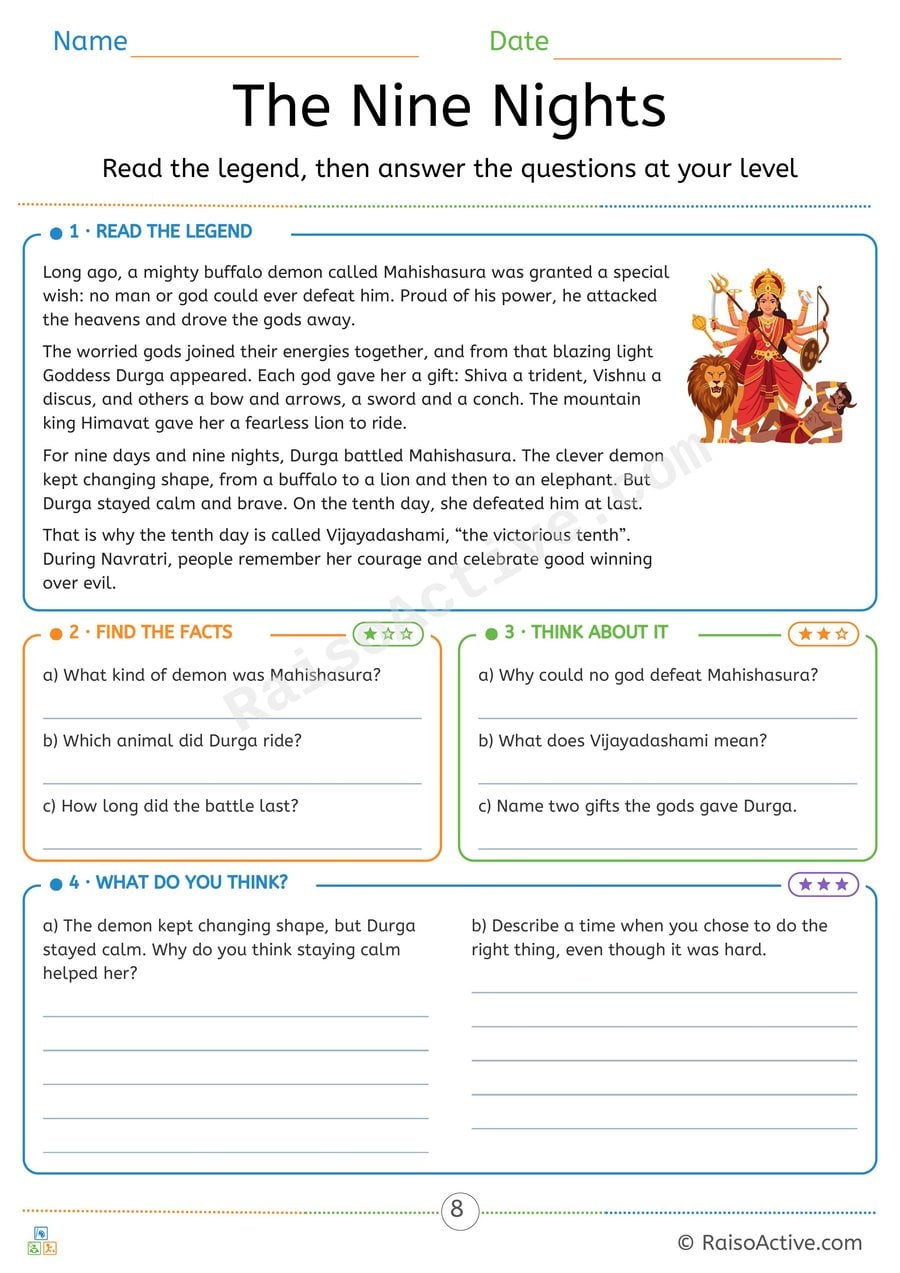
The Nine Nights: Durga and Mahishasura Reading Comprehension
Ages 7-11 · Grade 2–Grade 3Ages 7-11 · Year 3–Year 4Ages 7-11 · Class 2–Class 3Ages 7-11
Children read a retelling of the legend of Durga and Mahishasura, find facts in the text, answer inference questions about why things happened, and write their own opinion about staying calm and doing the right thing.

Meera's Garba Night: Navratri Reading Comprehension Story
Ages 4-6 · Pre-K–KindergartenAges 4-6 · Reception–Year 1Ages 4-6 · LKG–UKGAges 4-6
Children listen to or read a short story, recall details by circling answers, write answers using a word bank and explain a simple idea in their own words.
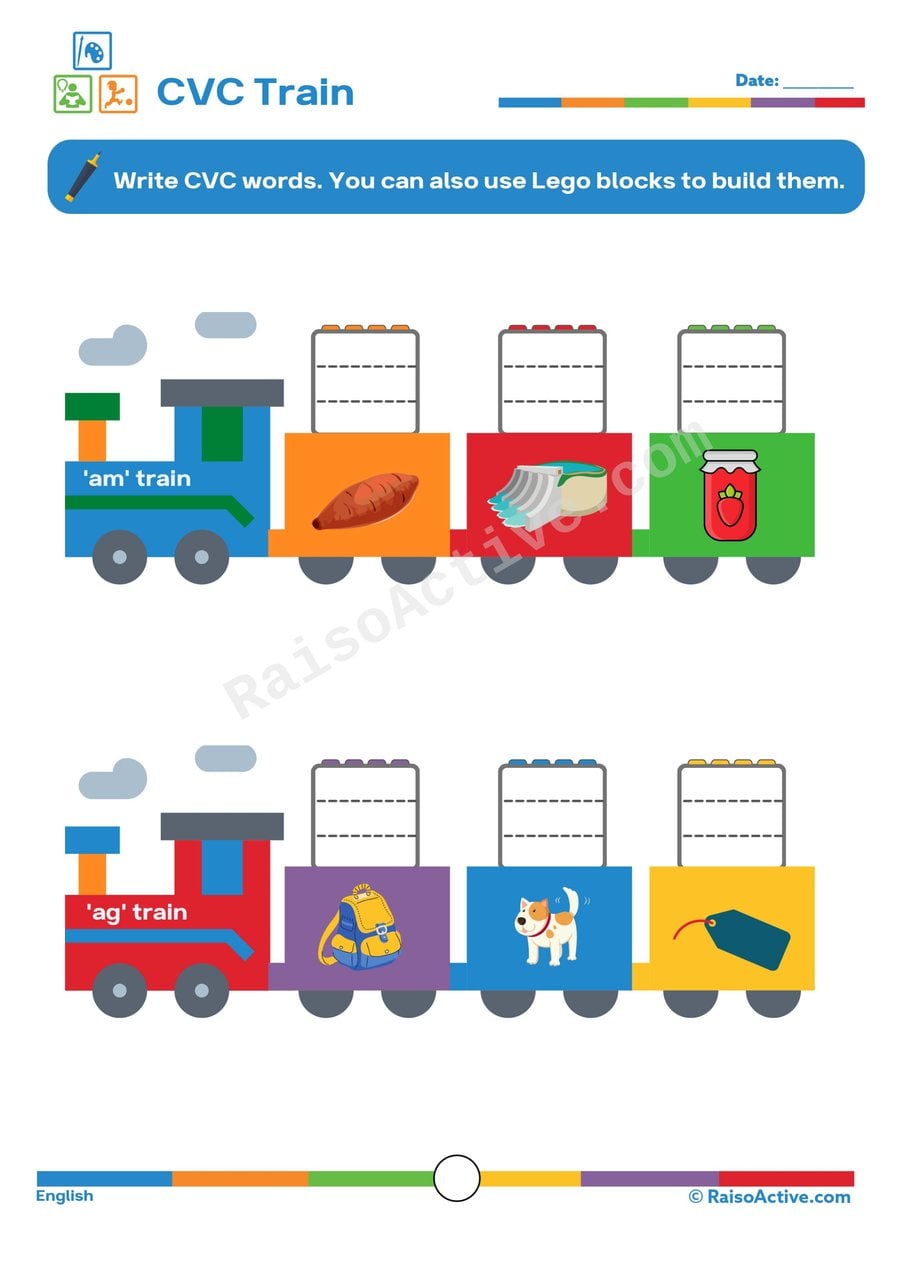
CVC Train Worksheet: Write and Build CVC Words!
Ages 4-6 · Pre-K–KindergartenAges 4-6 · Reception–Year 1Ages 4-6 · LKG–UKGAges 4-6
This worksheet gives children ages 4-6 focused practice blending letter sounds into consonant-vowel-consonant words, using train-car pictures as clues for words like 'dog,' 'hen,' or 'cup.' Because children both write the word and can optionally build it with Lego blocks, this worksheet reinforces the same phonics skill through two different physical actions — handwriting and hands-on construction — which helps the spelling patterns stick.

Written by
Hemsweta Jain · Teacher Cheena
MBA and Early Childhood Educator, teaching since 2014 · Founder of RaisoActive, Mumbai
Published · Last reviewed
Related Resources
Printable Resources(10)
View all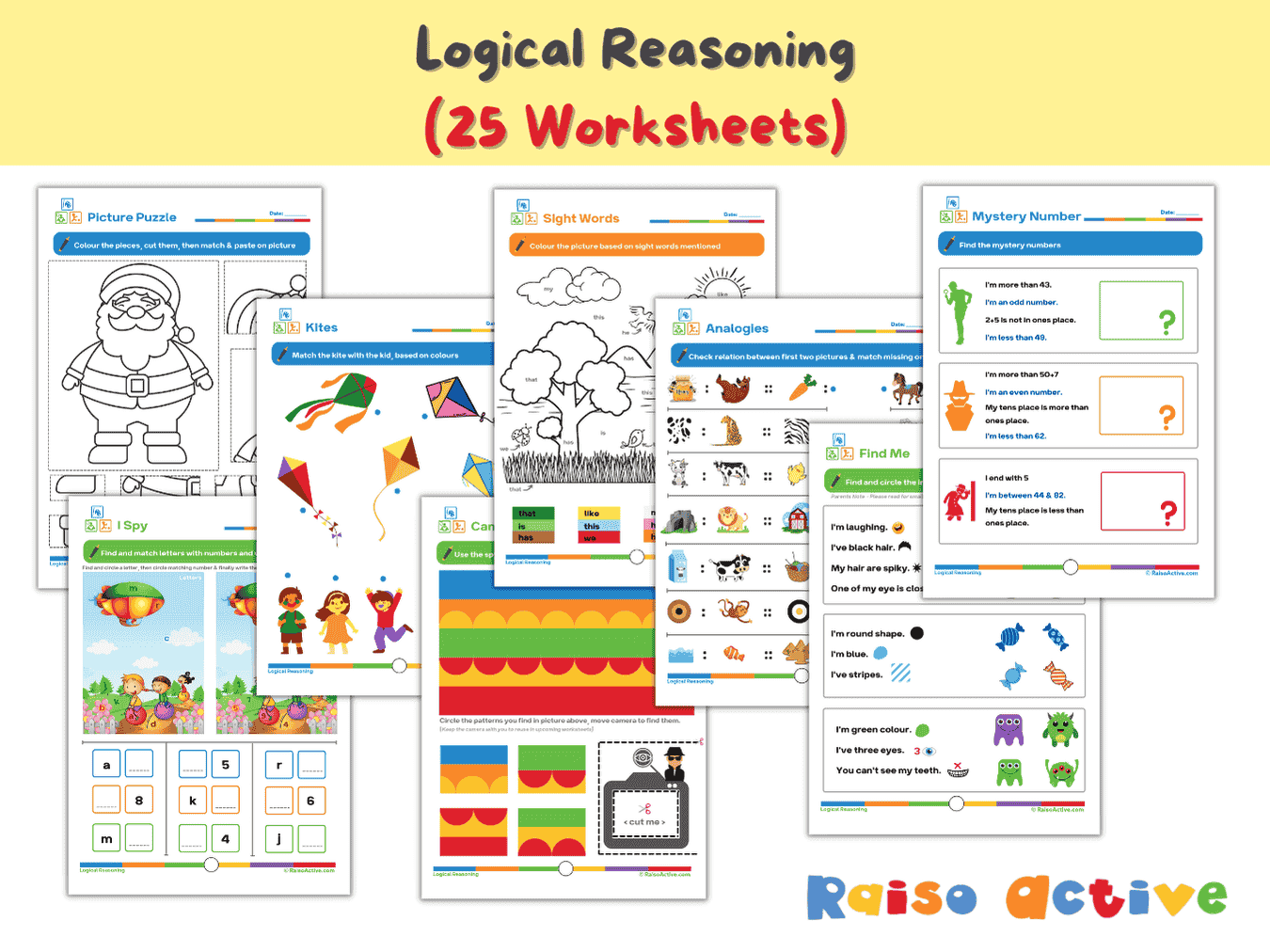

Logical Reasoning Activity Book for Preschool & Kindergarten | Patterns, Puzzles & Analogies
Ages 4-7 · Pre-K–Grade 1Ages 4-7 · Reception–Year 2Ages 4-7 · LKG–Class 1Ages 4-7 · 26 pages
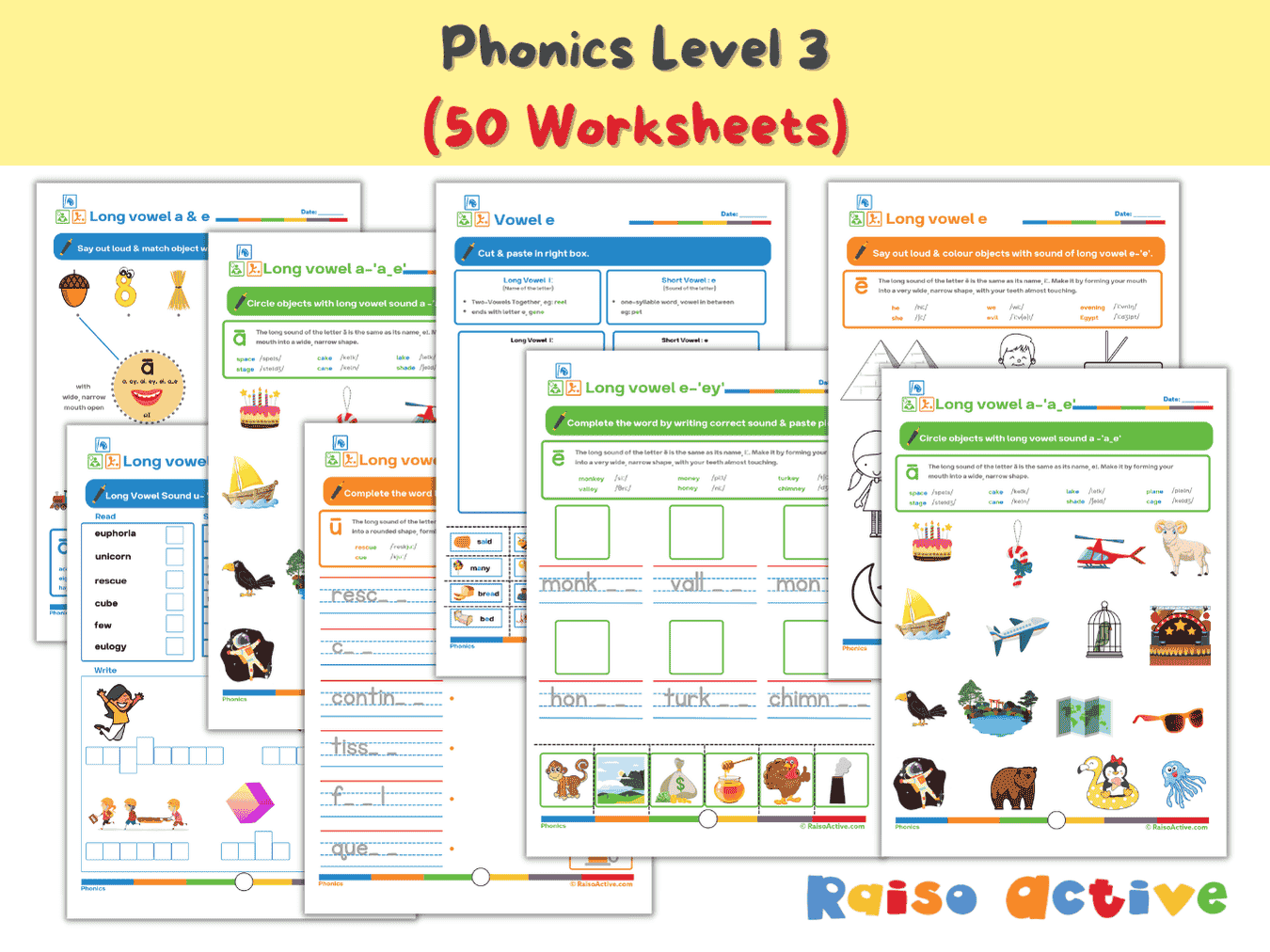

Phonics Level 3 Long Vowels Activity Book for Kindergarten & 1st Grade
Ages 5-7 · Kindergarten–Grade 1Ages 5-7 · Year 1–Year 2Ages 5-7 · UKG–Class 1Ages 5-7 · 51 pages
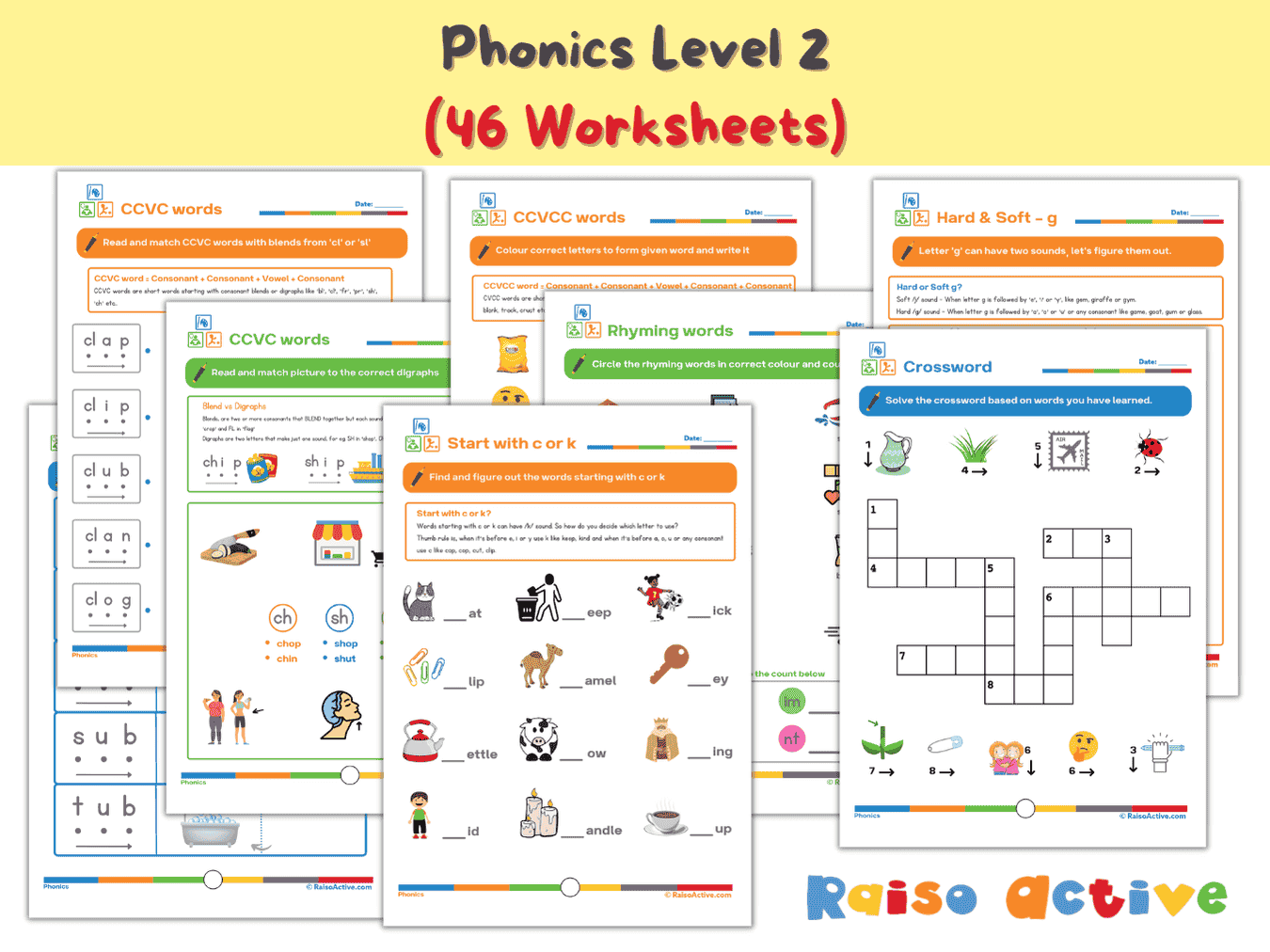
Phonics Level 2 Worksheets: CVC, CCVC, CVCC Word Families & Blends for Early Readers (Ages 4-7)
Ages 4-7 · Pre-K–Grade 1Ages 4-7 · Reception–Year 2Ages 4-7 · LKG–Class 1Ages 4-7 · 47 pages
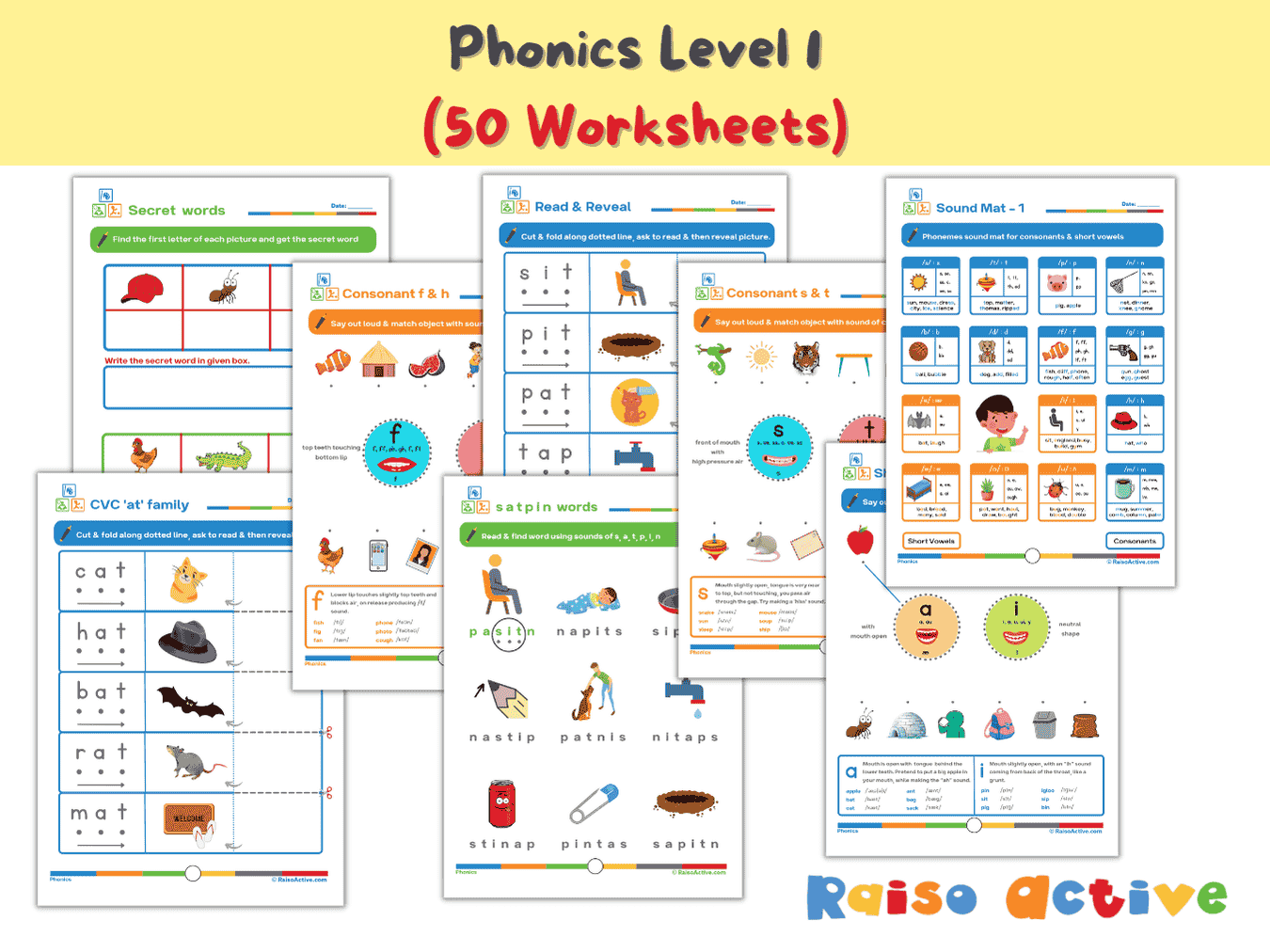
Phonics Level 1 Activity Book: Letter Sounds, Blending & CVC Words for Preschool & Kindergarten
Ages 3-6 · Preschool–KindergartenAges 3-6 · Nursery–Year 1Ages 3-6 · Nursery–UKGAges 3-6 · 60 pages
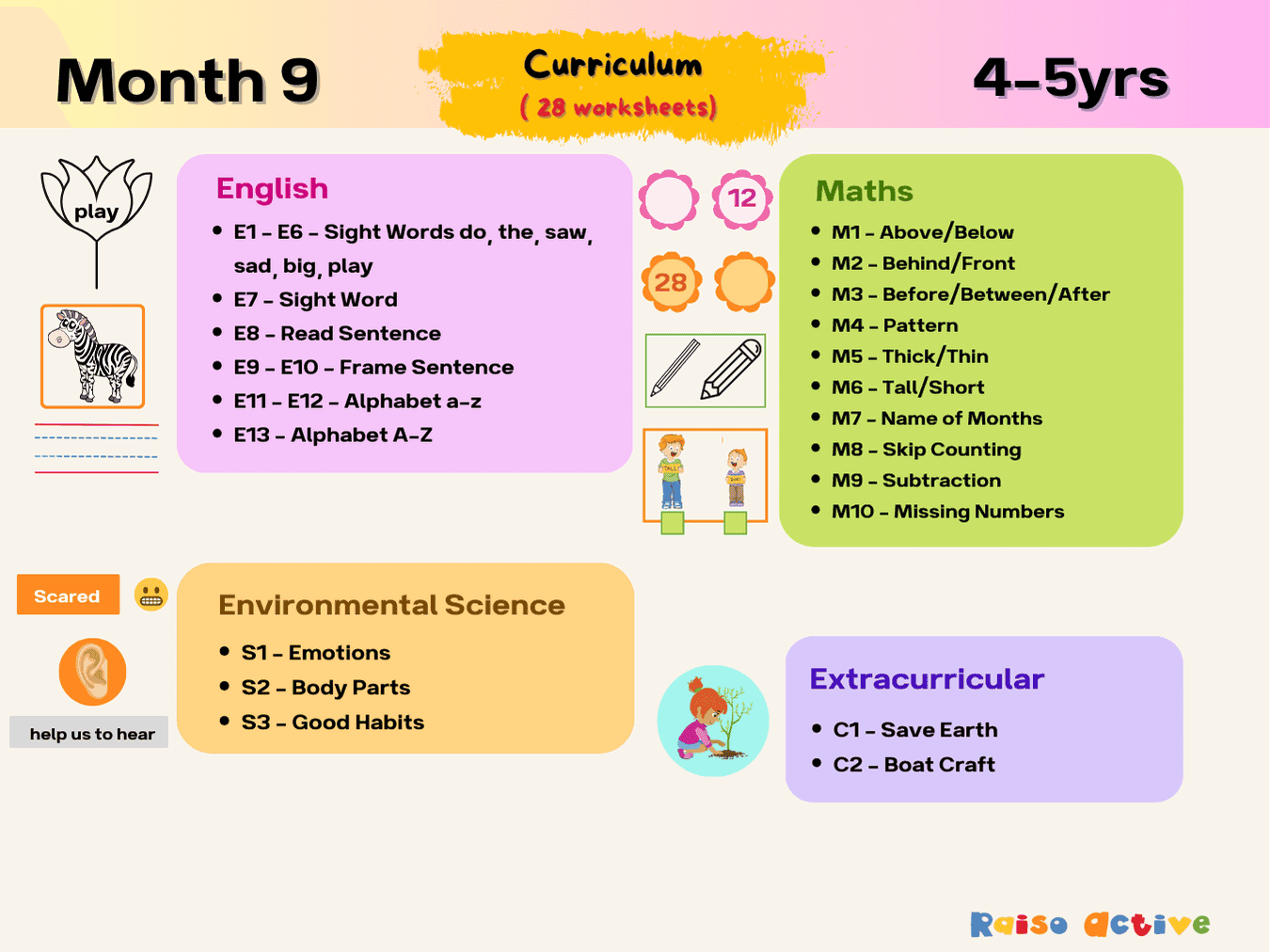

Month 9: Play-Based Preschool Foundational Skills | Ages 4-5
Ages 4-5 · Pre-KAges 4-5 · ReceptionAges 4-5 · LKGAges 4-5 · 31 pages
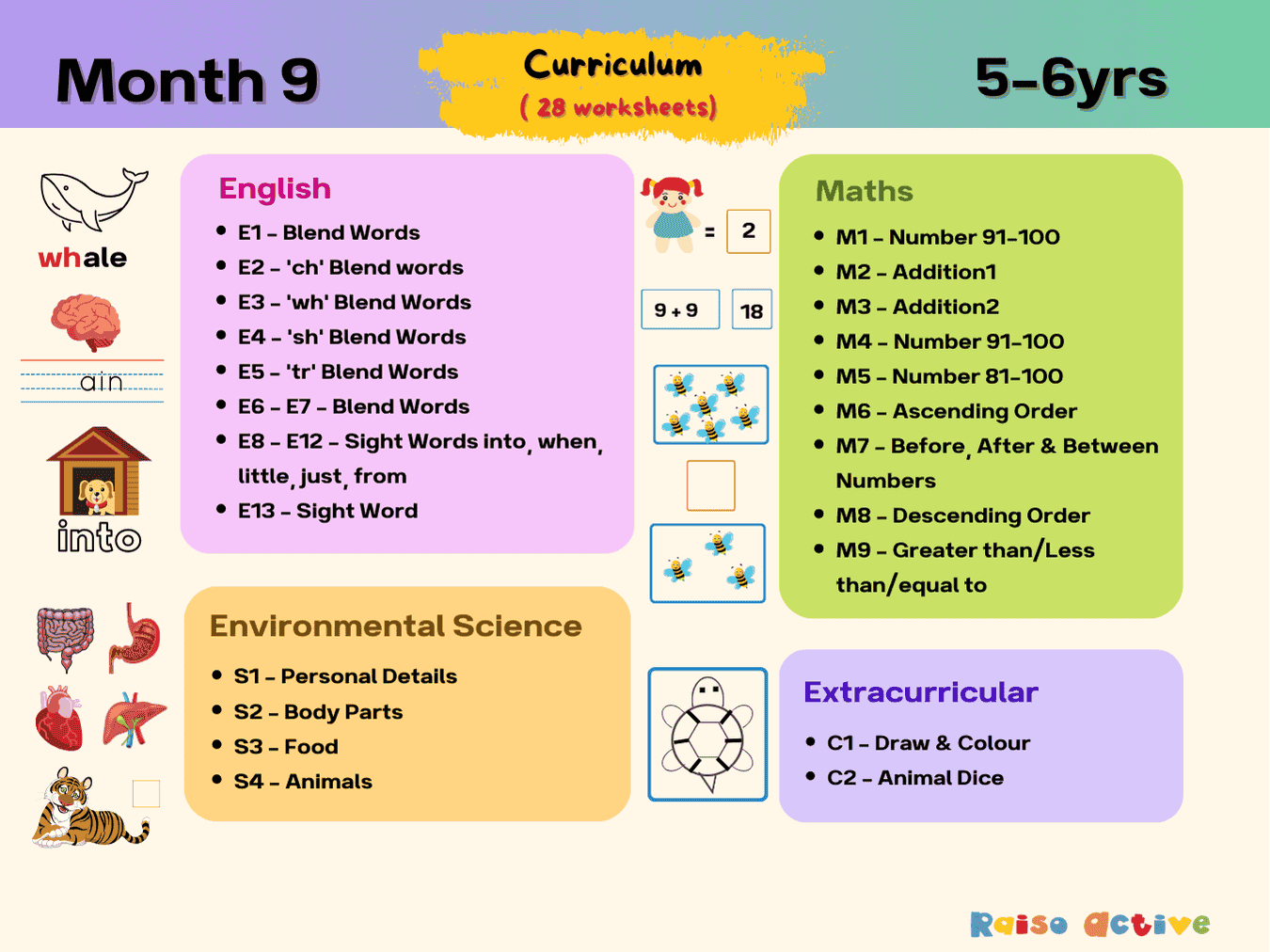
Month 9: Early Learning English Math Science | Ages 5-6
Ages 5-6 · KindergartenAges 5-6 · Year 1Ages 5-6 · UKGAges 5-6 · 31 pages
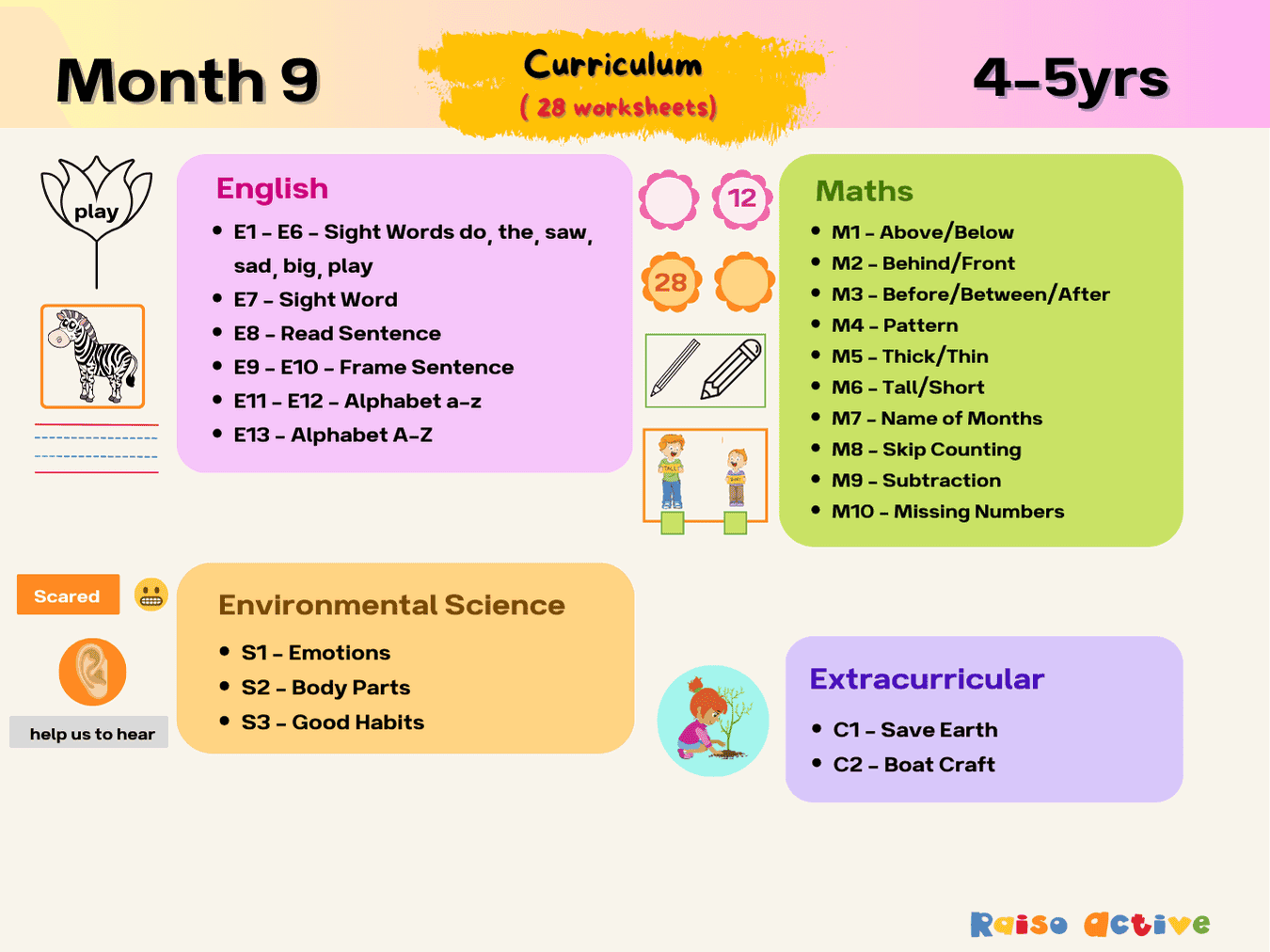
Month 9: Preschool Early Learning Activities | Ages 4-5
Ages 4-5 · Pre-KAges 4-5 · ReceptionAges 4-5 · LKGAges 4-5 · 31 pages
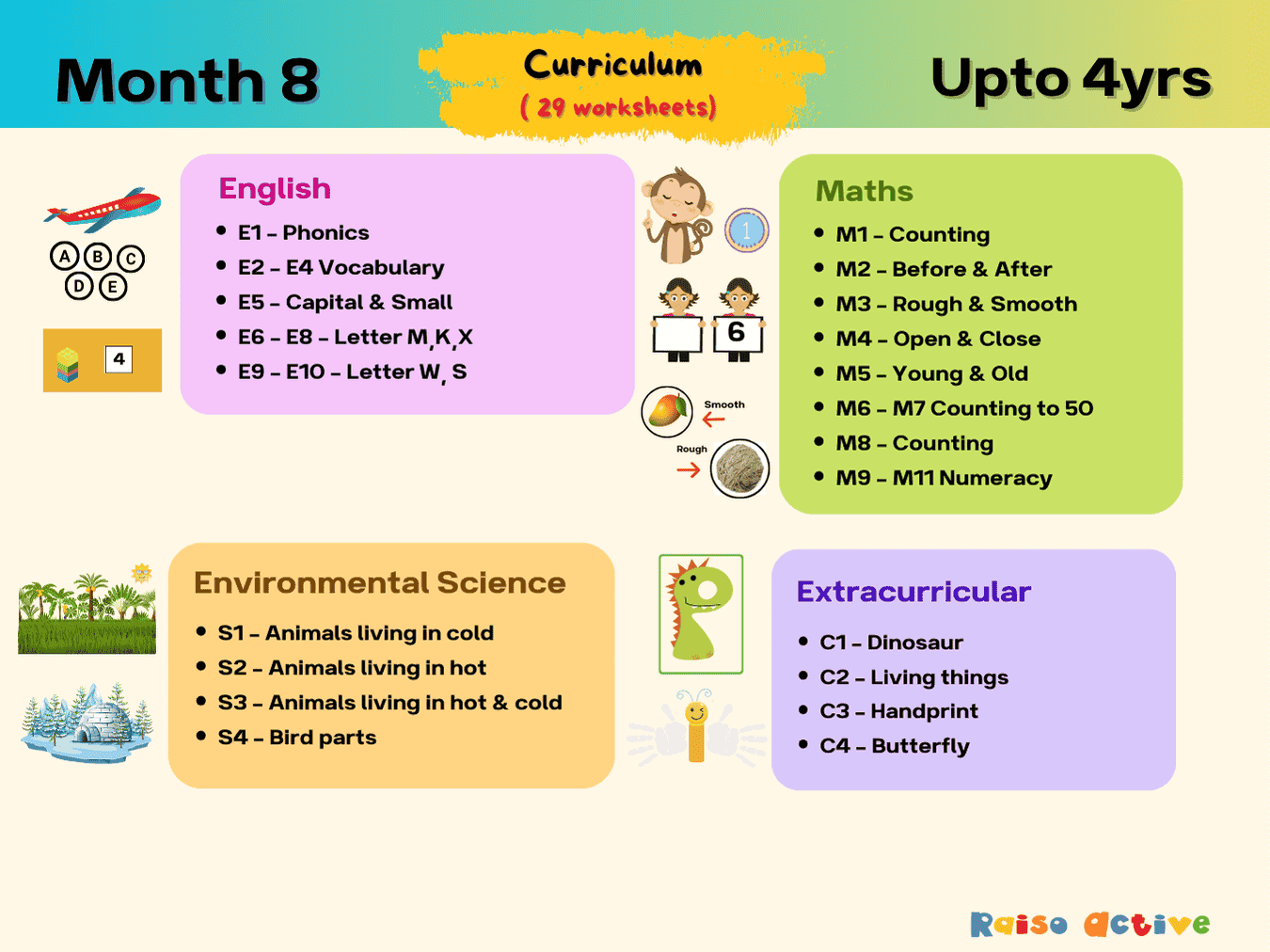
Month 8: Phonics, Math, Science, Creativity | Ages Up to 4
Ages 3-5 · Preschool–Pre-KAges 3-5 · Nursery–ReceptionAges 3-5 · Nursery–LKGAges 3-5 · 32 pages
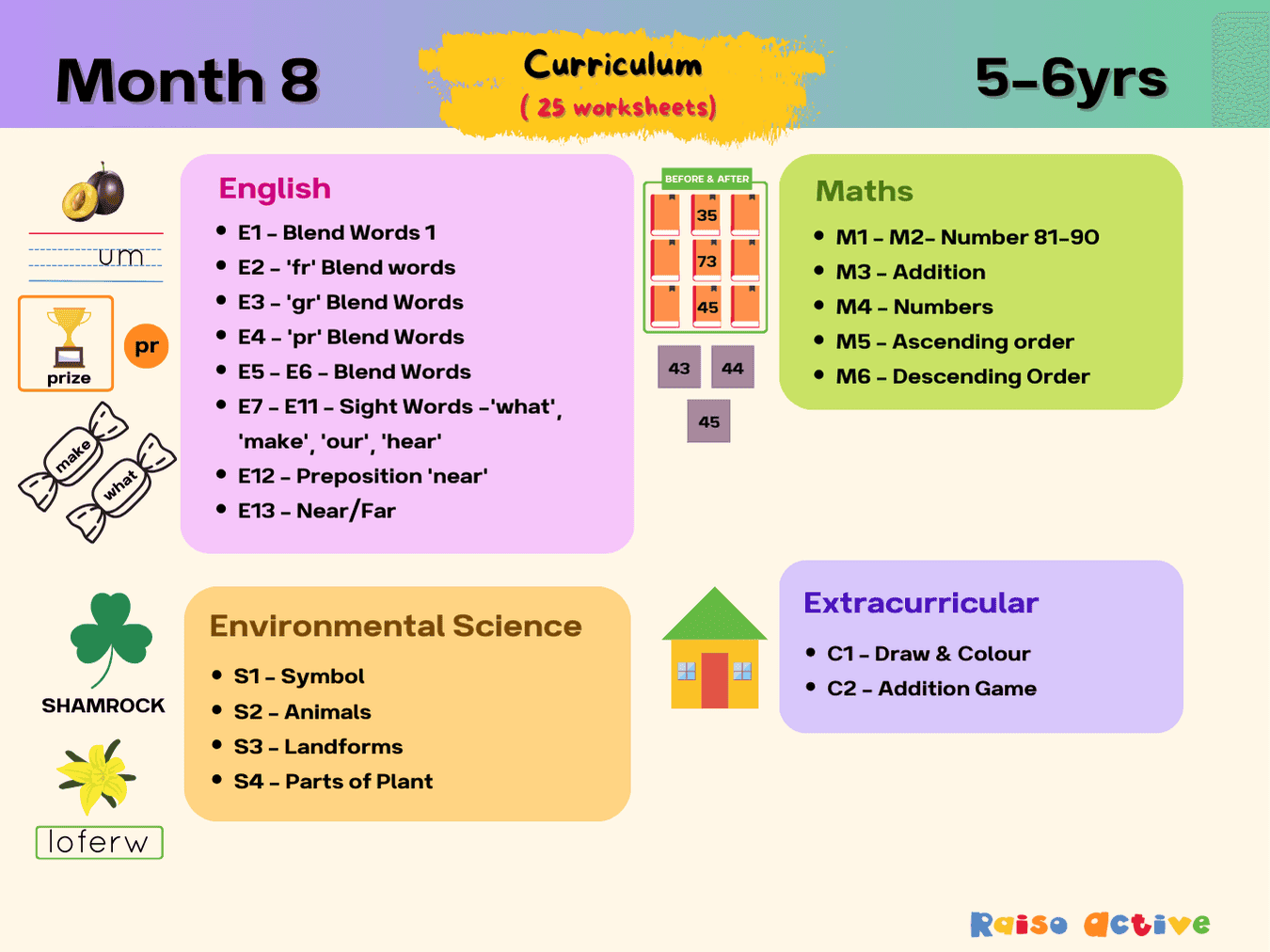
Month 8: Literacy, Math, Science Foundations | Ages 5-6
Ages 5-6 · KindergartenAges 5-6 · Year 1Ages 5-6 · UKGAges 5-6 · 28 pages
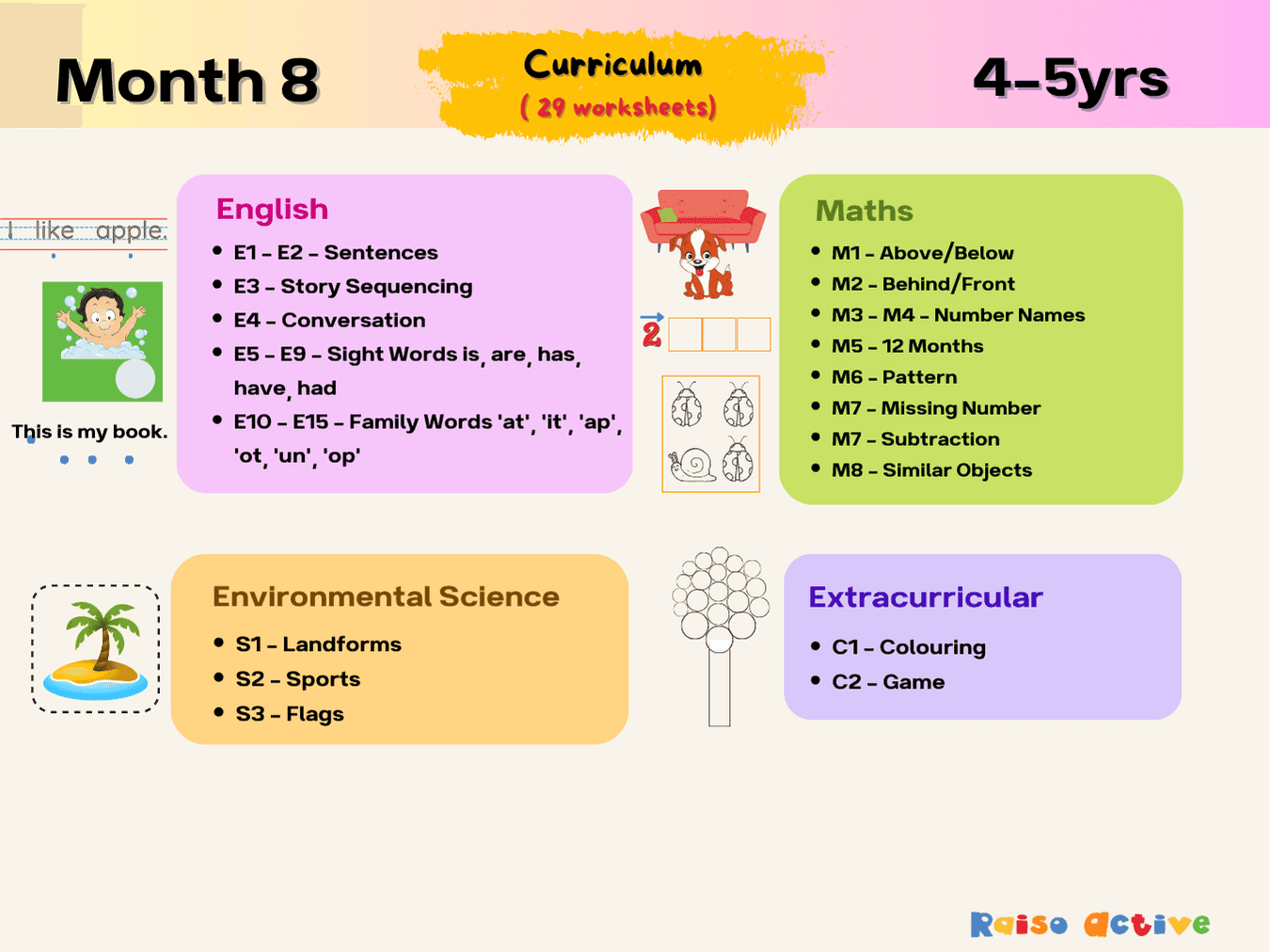
Month 8: English, Math, Science Foundations | Ages 4-5
Ages 4-5 · Pre-KAges 4-5 · ReceptionAges 4-5 · LKGAges 4-5 · 32 pages