Where to Find Free Worksheets for Kindergarten Reading: A Complete Resource Guide
Author
RaisoActive - Kids Activities and Fun Learning
Published
Updated
Reading Time
25 min read

- A good kindergarten reading worksheet targets one specific, measurable skill — phonics decoding, sight word recognition, letter-sound matching, or simple comprehension — rather than keeping a child busy with colouring and tracing that requires no reading at all
- The most effective worksheet types include letter-sound sorting, CVC blending mats, sight word trace-and-write sheets, and short-passage comprehension pages — each targeting a distinct reading sub-skill
- In India, CBSE and ICSE kindergarten programmes expect children to know all 26 letter sounds, decode simple CVC words, and read 30–50 high-frequency sight words by the end of UKG — worksheets that address these skills directly are curriculum preparation, not extras
- Worksheets work best as one part of a reading routine that includes daily read-alouds, decodable books, and word games — not as a replacement for actual reading experiences
- RaisoActive offers a curated, curriculum-aligned library of reading worksheets designed specifically for Indian kindergarteners, freely accessible with a subscription and sequenced by reading stage rather than age
The Quest for the Right Reading Worksheet (And Why So Many Fall Short)
Every parent and teacher who has searched for kindergarten reading worksheets online knows the feeling: you find a page, it looks colourful and cheerful, you print it, and ten minutes later your child has coloured in the pictures and declared themselves done — without actually reading a single word. Not because your child is being difficult. Because the worksheet was not designed to teach reading. It was designed to look like it was teaching reading.
This distinction — between worksheets that genuinely build reading skills and worksheets that simply keep children occupied — is the most important thing a parent or teacher can understand before searching for free resources. A good kindergarten reading worksheet targets one specific decoding or comprehension skill, requires the child to actively engage with print, and connects directly to where the child currently is in their reading journey. A worksheet that asks a child to colour a picture of a cat when they cannot yet decode the word "cat" is not a reading worksheet — it is a colouring page wearing a reading worksheet costume.
In this guide, we walk you through exactly what makes a kindergarten reading worksheet worth printing, which types to look for at each stage of reading development, how to sequence them as your child progresses, what Indian curriculum boards formally expect, and where to find high-quality, curriculum-aligned worksheets — including our growing library at RaisoActive, built specifically with Indian kindergarteners in mind.
Looking for ready-to-print reading worksheets?
Subscribe to RaisoActive for free access to phonics, sight word, and comprehension worksheets designed for Indian kindergarteners — new resources added every week.
What Makes a Quality Kindergarten Reading Worksheet (Not Just Busywork)
Before we explore specific worksheet types and sources, it helps to establish the criteria that separate genuinely useful reading worksheets from the ocean of generic printables. Five qualities consistently distinguish effective worksheets from the merely printable.
It Targets One Specific Reading Skill
The best worksheets are precise. A worksheet focused on the short-A sound asks children to identify, circle, or write words with the short-A pattern. It does not also ask them to colour animals, trace numbers, and draw their favourite food. Specificity is a feature, not a limitation. When a child completes a focused phonics worksheet, both parent and teacher can see clearly whether the child has mastered that particular concept — which is genuinely useful information for planning what comes next. A worksheet that tries to address everything at once teaches nothing reliably.
It Requires Active Engagement with Print
A reading worksheet must involve the child actually looking at, decoding, or producing written language — not just colouring pictures that happen to have letters nearby. Good indicators: the child must read a word to complete the task. They must match a word to a picture because they read it, not because the picture gave away the answer. They must write or trace a word from dictation or memory. If a child could complete the worksheet without reading anything, it is not a reading worksheet. It may be a fine motor worksheet, or a colouring activity — both of which have their place — but it should not be counted as reading practice.
It Matches the Child's Current Reading Stage
Reading development follows a predictable sequence: letter recognition → letter-sound correspondence → blending simple words → reading high-frequency sight words → reading connected text with comprehension. A worksheet designed for stage three given to a child at stage one will frustrate rather than teach. The single most common error parents make with reading worksheets is printing material that is either too advanced (leading to guessing) or too easy (providing no challenge or learning). We address the developmental sequence in detail in the step-by-step section below.
It Uses Clear, Child-Friendly Visual Design
For five-year-olds, visual clarity is not a cosmetic consideration — it is a functional one. Text should be large enough to read easily. Pictures should be unambiguous and clearly represent their intended words. Instructions should be simple enough that a child can understand the task without lengthy adult explanation. Cluttered worksheets with many different tasks crammed onto one page, tiny font sizes, or confusing picture choices actively interfere with the reading work the child is supposed to be doing. For Indian children in particular, images that include familiar objects — a mango, a diya, a chapati, an auto-rickshaw — provide context that supports engagement and vocabulary connection.
It Can Be Completed with Mostly Independent Effort
The ideal worksheet sits in the zone of proximal development — slightly challenging but mostly achievable without adult help for every single item. If you need to guide your child through every question, the worksheet is at frustration level and is not building independent reading ability. If your child whizzes through in under two minutes without a moment of hesitation, it is at their independent level and providing no challenge. The sweet spot — where genuine consolidation happens — is when the child needs to think carefully but can mostly succeed. This is the hallmark of a well-matched worksheet.
A reading worksheet is only worthwhile if the child must actually read something to complete it — decoding, recognising, or comprehending print.
Before printing any worksheet, ask: 'Could my child finish this without reading a single word?' If the answer is yes — because they can guess from pictures, copy a model at the top, or simply colour in predrawn shapes — it is not genuinely building reading skills. Useful reading worksheets always require some engagement with print, however simple: recognising a letter, sounding out a three-letter word, reading a sight word in a sentence.
Types of Kindergarten Reading Worksheets and When to Use Each
Kindergarten reading covers several distinct sub-skills, each with its own worksheet types. Understanding the landscape helps you choose purposefully rather than grabbing whatever comes up first in a search result.
Phonics Decoding Worksheets
Phonics worksheets teach the relationship between letters (graphemes) and sounds (phonemes) — the engine of reading. The best phonics worksheets for kindergarteners progress through a clear sequence: individual letter sounds first, then short vowels with consonants, then CVC word families (cat, bat, hat; pin, tin, bin), then consonant blends (bl-, st-, cr-). Look for worksheets that ask children to sort pictures by beginning sound, blend phoneme tiles to form words, or read and match CVC words to pictures — these require genuine decoding, not guessing from context.
Red flag to avoid: worksheets that present all 26 letters simultaneously at the start of the year, expecting children to learn all sounds at once. Effective phonics instruction introduces sounds cumulatively — typically four to six new sounds every two weeks, always reviewing previously learned sounds. Choose worksheets that align with the specific sounds your child is currently learning, not a general 'all letters' practice page that offers no real differentiation.
Letter-Sound Matching Worksheets
Letter-sound matching worksheets build the crucial bridge between knowing letter names (the alphabet) and knowing letter sounds (phonics) — a distinction that trips up many parents who assume their child 'knows phonics' because they can recite the alphabet song. Knowing that the letter is called 'aitch' is completely different from knowing that it makes the /h/ sound in 'hat.' Typical formats include: circle the picture that begins with the target letter, draw a line from the letter to the matching picture, sort pictures into two-column tables by beginning or ending sound, or fill in the missing beginning letter of a word shown in a picture.
Letter-sound matching worksheets are most powerful in the first two to three months of kindergarten, when the foundational phoneme-grapheme connections are being established. They should remain in rotation alongside more advanced work throughout the year, as review and consolidation — particularly for the less common consonants and the five short vowel sounds, which are often the weakest links in a child's phonics foundation.
Sight Word Worksheets
Sight words — also called high-frequency words — are the words children must recognise instantly and automatically: the, and, is, said, have, was, they, with. Many of these words are phonetically irregular, meaning phonics rules alone will not fully crack them (think of how 'said' is not pronounced the way it is spelled). Sight word worksheets use deliberate repetition to build that automaticity: tracing, rainbow writing, fill-in-the-blank sentences, word hunts in short passages, and read-and-cover-and-write activities. The goal is instant, effortless recognition — the same way a fluent adult reads 'the' without consciously decoding it.
For Indian kindergarteners following CBSE or ICSE programmes, sight word lists typically align with Dolch or Fry word lists, which schools sometimes call 'popcorn words' or 'red words.' Most Indian schools expect 30–50 sight words by the end of UKG. Worksheets that practise these words in sentence context (not just in isolation) are more useful than lists alone, because they train children to recognise sight words within the flow of actual reading.
Blending and CVC Word-Building Worksheets
Blending — running individual sounds together to read a whole word — is the central act of decoding, and it needs dedicated practice. Blending worksheets might ask children to look at segmented sounds (/c/ /a/ /t/) and write the whole word, cut and arrange letter cards to build a word shown in a picture, or complete a word by choosing the missing vowel from a set of options. These worksheets are often the most challenging for kindergarteners and the most rewarding when a child suddenly 'gets it' and reads a word they have never seen before — a genuine milestone worth celebrating at length.
Reading Comprehension Worksheets
Once a child can decode simple words and recognise basic sight words, comprehension worksheets introduce reading as meaning-making — the actual point of the entire enterprise. Early comprehension worksheets use very short passages (two to four sentences) followed by simple questions: Who is in the story? What colour is the dog? Where does the cat sit? Children answer by circling a picture, writing one word, or ticking a box. More advanced kindergarten comprehension worksheets ask children to sequence events, identify the main idea, or make a simple prediction. Research consistently shows that comprehension must be explicitly taught and practised — it does not develop automatically once decoding is in place.
Phonics and sight words are complementary, not competing — a kindergartener needs both, working in parallel throughout the year.
Systematic phonics gives children the decoding tools to sound out new words. Sight word memorisation gives them instant access to the high-frequency words that appear on almost every page of a simple reader. Reading instruction that uses only one approach will leave gaps. The best kindergarten reading programmes — and the best worksheet collections — address both simultaneously, building a child who can both decode unfamiliar words and recognise common ones fluently without effort.
Letter-sound matching is a distinct skill from letter-name knowledge — and it is the one that actually matters for reading.
Many parents celebrate when their child can sing the alphabet song or identify every letter by name. These are valuable milestones. But reading requires something different: knowing that the letter 'b' makes the /b/ sound in 'bat', that 'c' and 'k' can make the same /k/ sound, that 'sh' together make a single sound different from either letter alone. Letter-sound matching worksheets explicitly build these phoneme-grapheme connections that letter-name activities leave untouched. If your child knows all the letter names but cannot decode a simple word, start here.
- The task requires the child to identify or produce a sound — not just trace a letter shape. 'Circle all the pictures that start with /s/' is a reading task. 'Trace the letter S twenty times' is a handwriting task.
- Pictures on the worksheet are unambiguous and clearly represent the intended word. A picture of a 'ship' that could be confused with a 'boat' will lead to wrong answers for the wrong reason — the child's vocabulary, not their phonics knowledge.
- The worksheet introduces new concepts in a familiar context — using known sounds to decode words, rather than introducing three new phonemes simultaneously in the same activity.
- Instructions are brief and visual enough that the child can understand the task from the example at the top, without needing a paragraph of explanation from an adult.
- The font is large, clean, and uses print letterforms (not cursive) that match what the child is learning in school — inconsistent letter shapes between school and home worksheets cause genuine confusion for young readers.
- **The child can complete every question without reading anything.** If all answers can be guessed from pictures, the worksheet is a picture comprehension activity, not a reading one. Add a decoding step: cover the picture and ask the child to read the word first.
- **The child cries, refuses, or shuts down when worksheets appear.** This is almost always a mismatch signal — the worksheet is too hard, too repetitive, or has been associated with pressure. Step back, reduce difficulty, and rebuild positive associations before continuing.
- **The worksheet covers too many different concepts at once.** A page that includes letter tracing, sight word matching, picture labelling, and a comprehension question is not focused teaching — it is multiple activities compressed onto one sheet. Use it as four separate activities across multiple sessions, not all at once.
- **Every worksheet looks identical week after week.** If your child is still tracing 'the' and 'and' three months into kindergarten with no introduction of new words or patterns, the worksheet practice is not keeping pace with their development. Move forward.
Research from the National Assessment of Educational Progress consistently shows that children who do not achieve reading fluency by the end of Grade 3 face significantly higher academic risk across all subjects — not just English. Systematic phonics instruction in kindergarten, supported by targeted worksheet practice and daily read-alouds, is one of the most well-evidenced interventions for closing the reading gap before it becomes entrenched.
Source: National Reading Panel; NAEP Reading Report Card
English has 26 letters but 44 distinct phonemes (sounds). Kindergarteners need to learn only the most common single-letter sounds and a handful of digraphs to decode the majority of simple words they will encounter in early readers. Good phonics worksheets introduce these sounds cumulatively — typically four to six new sounds per fortnight — rather than overwhelming children with all 44 simultaneously. This is why a sequenced worksheet library is far more useful than a random collection of individual pages.
Source: Phonics International; Letters and Sounds (DfE, UK)
Kindergarten Reading Worksheet Progression: Stage by Stage
Stage 1: Letter Recognition and Initial Sounds (First 4–6 Weeks)
Begin with letter recognition worksheets — matching uppercase to lowercase, identifying letters in groups of similar shapes, tracing letters with correct formation. Simultaneously introduce letter-sound matching for the most common consonants (s, m, t, p, n, c, d, b, f, g first). Worksheets should feature large, clear print, very simple tasks (circle, tick, match), and familiar pictures. Sight words: introduce the five to eight most common words (I, the, a, is, it, in, can, see) using trace-and-write and fill-in-the-sentence formats. Do not rush this stage — confident letter-sound knowledge here is the foundation for everything that follows.
Stage 2: Short Vowels and CVC Blending (Weeks 7–14)
Introduce short vowel sounds — short A first (cat, hat, mat), then I (pin, sit, big), O (hop, dog, pot), U (cup, mud, bug), E (bed, hen, net). Dedicated worksheets for each vowel sound: sort pictures by vowel, fill in the missing vowel, circle the correct word to match a picture. Move to CVC word-family worksheets and simple blending mats. Begin simple sentence-reading worksheets using only known CVC words and the small bank of sight words already introduced. Sight words: build to 20–25 words.
Stage 3: Word Families, Digraphs, and Simple Sentences (Weeks 15–24)
Expand CVC work across all five short vowels. Introduce word-family activities — the -at family, -in family, -og family — so children see the pattern of changing the onset while keeping the rime. Begin digraphs (sh, ch, th, wh, ck) with dedicated sound-sorting worksheets: does this picture start with sh or ch? Comprehension worksheets now use two to three sentences with picture-matching or one-word-answer questions. Sight words: 40–50 words total. Children at this stage should begin reading very simple decodable books alongside worksheet practice.
Stage 4: Blends, Longer Words, and Paragraph Comprehension (Weeks 25–36)
Introduce consonant blends (bl, cr, st, sp, tr, fl) with sorting and blending worksheets. Move to CCVC and CVCC words (flat, best, drip, jump, lamp). Comprehension worksheets now use four to six sentences with sequence, main-idea, and simple prediction questions. Sight words: 60–80 words by year-end. Some children will be ready for short decodable-book comprehension sheets that mirror actual early reader texts. By this stage, worksheet practice should feel like a complement to real reading, not a substitute for it.
Stage 5: Consolidation and Reading for Meaning (End of Year Review)
Use end-of-year review worksheets to identify any remaining gaps — a child who reads fluently in connected text but stumbles on certain vowel patterns or digraph spellings benefits from targeted consolidation. Comprehension worksheets should now include retelling, making connections, and simple inference questions ('How do you think the character felt? Why?'). This final stage is also the time to introduce the concept of reading strategies — using pictures, context, and re-reading when a word does not make sense — through structured discussion alongside the worksheet task.
- +Child must read print to complete the task — no way to answer by guessing from pictures alone
- +One focused skill per page: short-A words, or sight word 'said', or sequence-the-story — not all at once
- +Difficulty is matched to the child's current reading stage
- +Progresses across the year: new sounds, patterns, and text complexity as skills grow
- +Used alongside read-alouds, decodable books, and word games
- +Child completes the task with some effort but mostly independently
- -Child can finish every question by looking at pictures without decoding a single word
- -Multiple unrelated tasks crammed onto one page with no clear learning focus
- -Same level of difficulty regardless of how much the child has learned
- -Same worksheet format repeated week after week without progression
- -Worksheets replace actual reading time with books — child does ten pages but reads nothing
- -Child either races through effortlessly or is confused and needs adult help for every item
CBSE and ICSE Kindergarten Reading Expectations: What Indian Schools Actually Require
For parents choosing reading worksheets for Indian kindergarteners, understanding what schools formally assess is enormously helpful — because 'kindergarten' in India covers a range of programmes (LKG, UKG, or a combined KG year depending on the school), and reading expectations vary accordingly. Worksheets that are tightly aligned to curriculum benchmarks are direct preparation for what schools measure; worksheets that are not aligned may look educational but miss the actual targets.
In most CBSE schools, by the end of UKG, children are expected to: recognise all 26 uppercase and lowercase letters, know the primary sound of each letter, read simple CVC words (two-to-three letter phonetic words independently), recognise 30–50 high-frequency sight words, and read very simple two-to-three word sentences. Many schools also expect children to begin writing simple words from dictation. ICSE schools tend to have slightly more ambitious reading expectations and often introduce blends and digraphs within the UKG year. International schools following IB or Cambridge frameworks use literacy continuum benchmarks rather than fixed word lists, but the developmental sequence is broadly similar.
What this means practically: worksheets focused on phonics decoding of simple CVC words and core sight word recognition are not optional extras — they are directly aligned with what Indian schools formally assess. A child who enters Class 1 with strong phonics foundations and a bank of 50+ sight words will find the transition to formal reading instruction significantly smoother than a child who was given colouring pages in the name of kindergarten preparation.
Indian LKG and UKG assessments test actual reading of simple words and sentences — not just letter-name recitation.
Many parents focus on teaching their child to recite the alphabet beautifully and identify letters by name. These are important baseline skills. But school reading assessments — and Class 1 English instruction — quickly move to decoding words and reading sentences. A child who can name all 26 letters but cannot blend cat or read 'the dog is big' has a gap that letter flashcards alone will not close. Balance letter-name and letter-recognition work with phonics decoding practice and sight word activities to ensure full curriculum readiness.
- Many Indian children are learning English alongside Hindi and a regional language simultaneously. This is a cognitive strength — multilingual children typically develop stronger phonological awareness overall, because they are accustomed to hearing and distinguishing different sound systems.
- When using English phonics worksheets, choose ones with clear, unambiguous pictures. A picture of a 'jam jar' works better than 'jug' if your child knows the English word for one but not the other. Vocabulary gaps can obscure genuine phonics knowledge.
- Pair phonics worksheets with a brief oral discussion of the vocabulary first. 'This picture shows a ship — can you say that? Now let us find the beginning sound.' This ensures the worksheet builds reading skills rather than vocabulary confusion.
- Sight words like 'the', 'and', 'is', 'can', 'see' are function words that work the same in any English-language context — these translate directly to Indian school reading expectations regardless of the curriculum board.
- If your child attends a school where the medium of instruction is Hindi or a regional language, English phonics worksheets used at home provide valuable supplementary input without conflicting with school content — keep sessions short (10–15 minutes) and positive.
How to Use Reading Worksheets as Part of a Balanced Literacy Routine
The research on early literacy is unambiguous on one point: the single most powerful thing you can do for a young child's reading development is read aloud to them every day. Worksheets build specific, isolated skills; read-alouds build vocabulary, comprehension, story grammar, the understanding that print carries meaning, and a love of books. These are not competing priorities — they work together. The mistake is using worksheets as a substitute for reading time rather than as a complement to it.
A child who completes two phonics worksheets per day but never hears a story read aloud and never holds a picture book will have stronger decoding than comprehension — and will find reading increasingly difficult as texts become more complex in Class 1 and beyond. Conversely, a child who has rich daily read-aloud experience but no structured phonics practice may develop excellent listening comprehension and vocabulary but struggle with the mechanics of decoding on the page. Both elements are necessary.
- **Morning (10 minutes): Read-aloud.** Pick a picture book — fiction or non-fiction — and read it together with full expression. Stop to discuss the pictures, ask 'What do you think happens next?', and let your child turn the pages. This is non-negotiable and requires no preparation. It is the highest-return reading activity at this age.
- **Midday (10–15 minutes): Worksheet practice.** One or two focused worksheets matched to the current phonics or sight word lesson. Do this when your child is alert and fed, not when they are tired or hungry. Sit beside them, not across the table — learning at this age happens more readily next to a warm, encouraging adult.
- **Afternoon or evening (5–10 minutes): A reading game.** Flashcard games, letter-sound sorting with picture cards, word-family flip books, or a magnetic letter board. Games provide the same practice repetition as worksheets but feel entirely different to a five-year-old who needs variety to stay engaged.
- **Weekly: One decodable reader.** A short, phonetically controlled book your child can actually read independently gives the whole picture — the skills built by worksheets, experienced in the context of a real book. Watching a child read their first decodable book independently is a milestone no worksheet can replicate.
Where to Find Free, High-Quality Kindergarten Reading Worksheets
The challenge with free reading worksheet searches is not scarcity — it is curation. There are genuinely thousands of free worksheets available, but finding ones that are developmentally appropriate, correctly sequenced, visually clear, and aligned to Indian curriculum expectations requires sorting through a great deal of material that is none of these things. A few principles can help narrow your search before you commit to printing.
Look for worksheets organised by skill and reading stage (letter-sound matching, CVC blending, sight word review, sentence comprehension) rather than just by age or grade label. A site that offers 'reading worksheets for 5-year-olds' is less useful than one that offers 'short-A CVC worksheets, Dolch pre-primer sight word sheets, and two-sentence comprehension activities' — because the skill label tells you what the child will actually practise, whereas the age label tells you almost nothing about reading readiness.
RaisoActive was built to solve exactly this curation problem for Indian families. Our reading worksheet library is organised by skill and stage — phonics worksheets by specific sound pattern, sight word sheets by word frequency, comprehension sheets by text length and question type — so you can find the right worksheet for where your child actually is in their reading development. Every worksheet is designed to require genuine reading engagement: print to decode, words to recognise, text to understand. Because we create worksheets specifically for Indian kindergarteners, our resources use familiar vocabulary and imagery, align to CBSE and ICSE curriculum benchmarks, and are sequenced to match a typical Indian academic year.
A free subscription gives you full access to the entire kindergarten reading worksheet library, including phonics decoding, letter-sound matching, sight word practice, and comprehension sheets across a range of difficulty levels. Unlike pay-per-download sites where building a comprehensive worksheet bank quickly becomes expensive, RaisoActive subscribers can print as many worksheets as they need, whenever they need them. If you have been piecing together a reading programme from scattered free samples across five different websites, a single RaisoActive subscription gives you everything organised and ready to use.
Get Your Full Kindergarten Reading Worksheet Library — Free
Subscribe to RaisoActive for unlimited access to phonics decoding, sight word, letter-sound matching, and comprehension worksheets aligned to CBSE and ICSE kindergarten standards. Designed for Indian children, with new resources added every week.
Frequently Asked Questions About Free Kindergarten Reading Worksheets
How many reading worksheets should a kindergartener do per day?
My child knows all the letter names but cannot read words. What worksheets should I use?
What is the difference between phonics and phonological awareness, and do worksheets address both?
Are free worksheets online as good as the ones in paid workbooks?
My child's school only sends home letter tracing as reading homework. Should I supplement?
How do I know if my kindergartener is on track with reading development?
Free worksheets for this topic
Browse all worksheets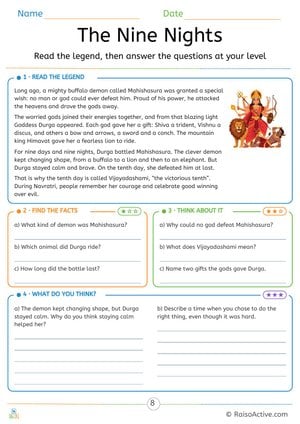
The Nine Nights: Durga and Mahishasura Reading Comprehension
Ages 7-11 · Grade 2–Grade 3Ages 7-11 · Year 3–Year 4Ages 7-11 · Class 2–Class 3Ages 7-11
Children read a retelling of the legend of Durga and Mahishasura, find facts in the text, answer inference questions about why things happened, and write their own opinion about staying calm and doing the right thing.
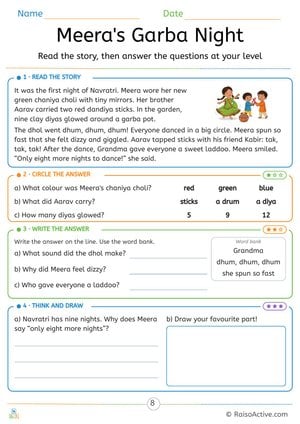
Meera's Garba Night: Navratri Reading Comprehension Story
Ages 4-6 · Pre-K–KindergartenAges 4-6 · Reception–Year 1Ages 4-6 · LKG–UKGAges 4-6
Children listen to or read a short story, recall details by circling answers, write answers using a word bank and explain a simple idea in their own words.
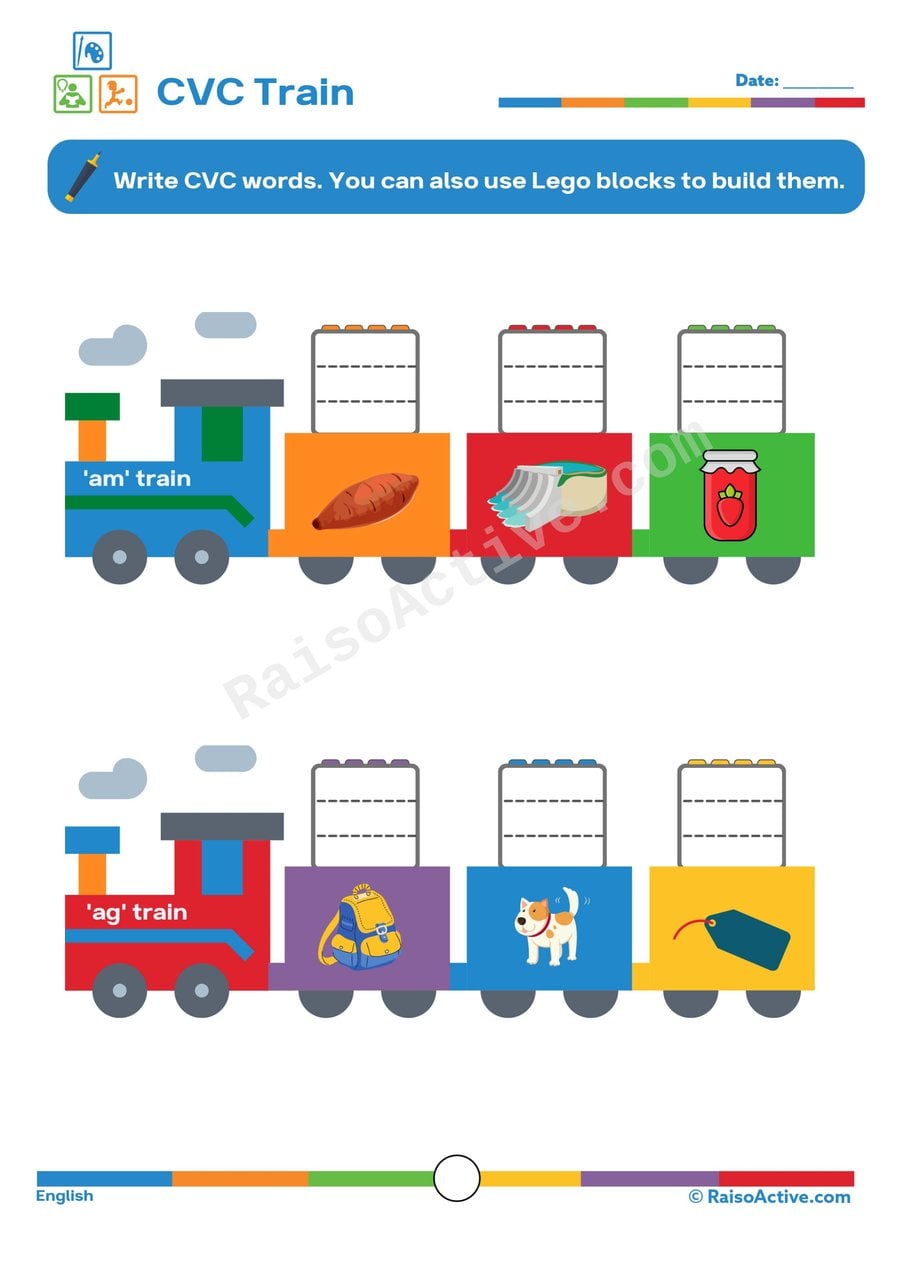
CVC Train Worksheet: Write and Build CVC Words!
Ages 4-6 · Pre-K–KindergartenAges 4-6 · Reception–Year 1Ages 4-6 · LKG–UKGAges 4-6
This worksheet gives children ages 4-6 focused practice blending letter sounds into consonant-vowel-consonant words, using train-car pictures as clues for words like 'dog,' 'hen,' or 'cup.' Because children both write the word and can optionally build it with Lego blocks, this worksheet reinforces the same phonics skill through two different physical actions — handwriting and hands-on construction — which helps the spelling patterns stick.
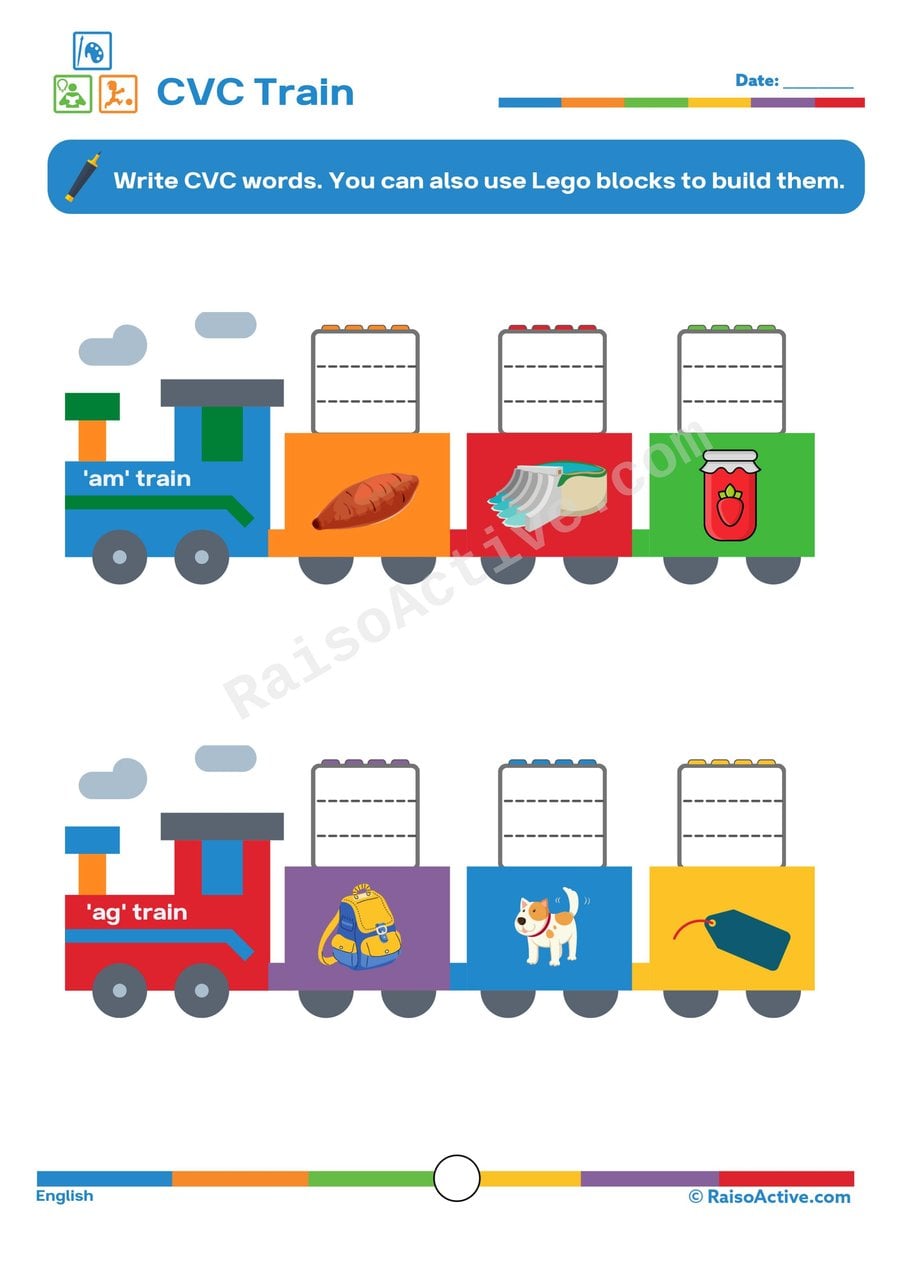
CVC Train Worksheet: Write CVC Words!
Ages 4-6 · Pre-K–KindergartenAges 4-6 · Reception–Year 1Ages 4-6 · LKG–UKGAges 4-6
Writing consonant-vowel-consonant words like 'cat,' 'sun,' or 'pig' under matching pictures gives children ages 4-6 direct practice with letter-sound blending, a core phonics skill that underpins independent reading. Because each train car pairs a picture clue with a blank space, children also practice translating a spoken word they can sound out into its correctly spelled written form.

Written by
Hemsweta Jain · Teacher Cheena
MBA and Early Childhood Educator, teaching since 2014 · Founder of RaisoActive, Mumbai
Published · Last reviewed
Related Resources
Printable Resources(10)
View all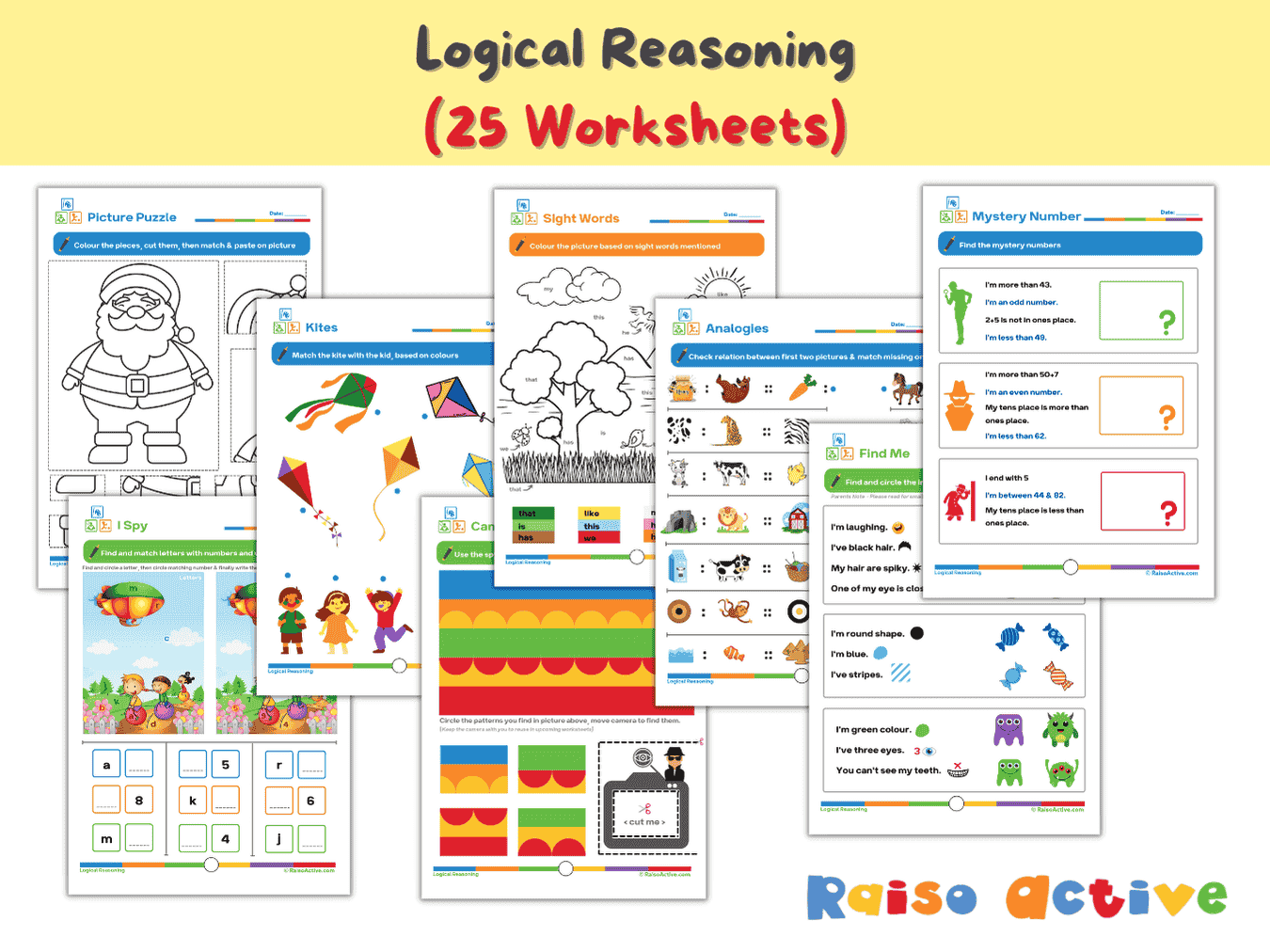

Logical Reasoning Activity Book for Preschool & Kindergarten | Patterns, Puzzles & Analogies
Ages 4-7 · Pre-K–Grade 1Ages 4-7 · Reception–Year 2Ages 4-7 · LKG–Class 1Ages 4-7 · 26 pages
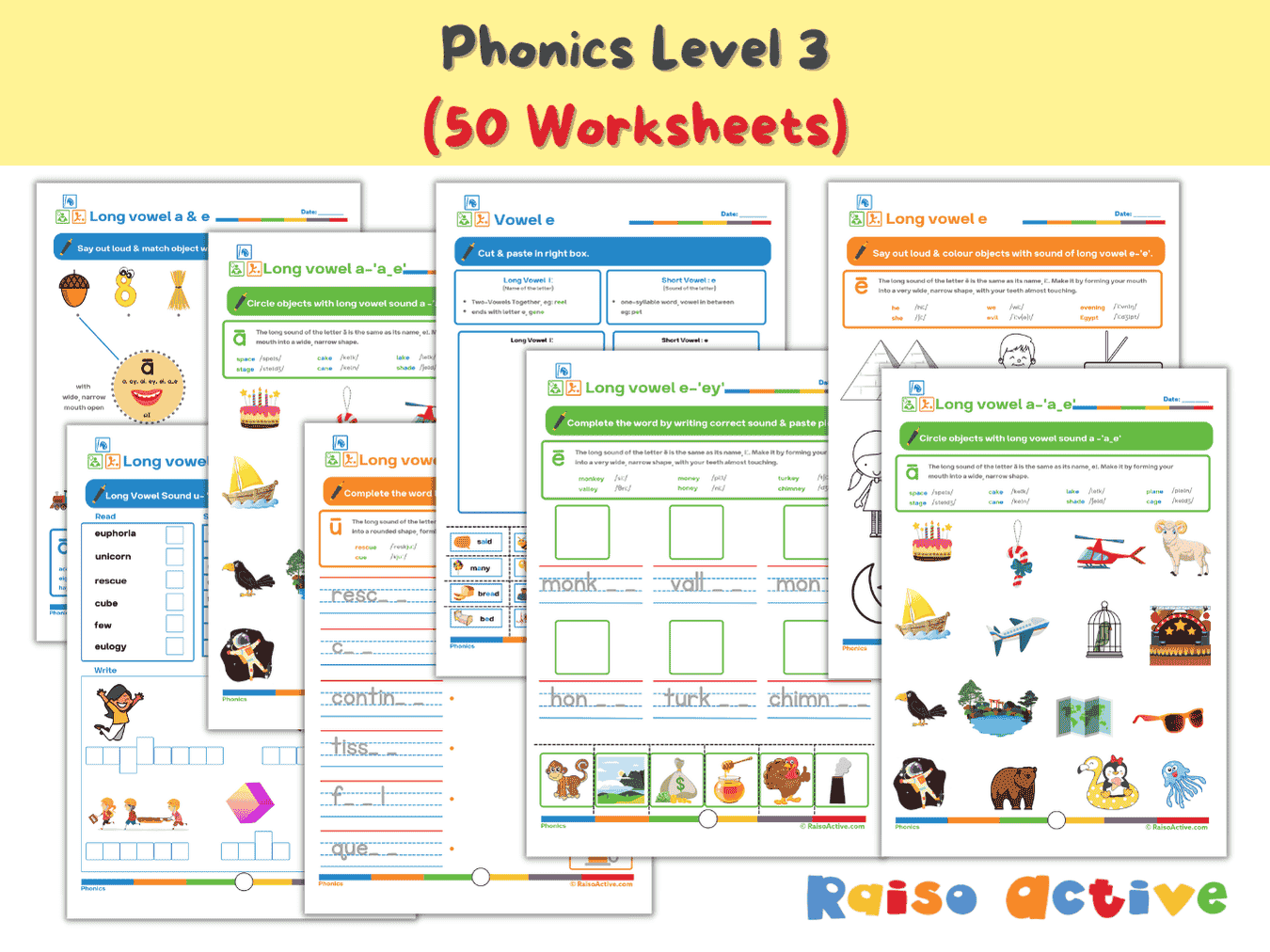

Phonics Level 3 Long Vowels Activity Book for Kindergarten & 1st Grade
Ages 5-7 · Kindergarten–Grade 1Ages 5-7 · Year 1–Year 2Ages 5-7 · UKG–Class 1Ages 5-7 · 51 pages
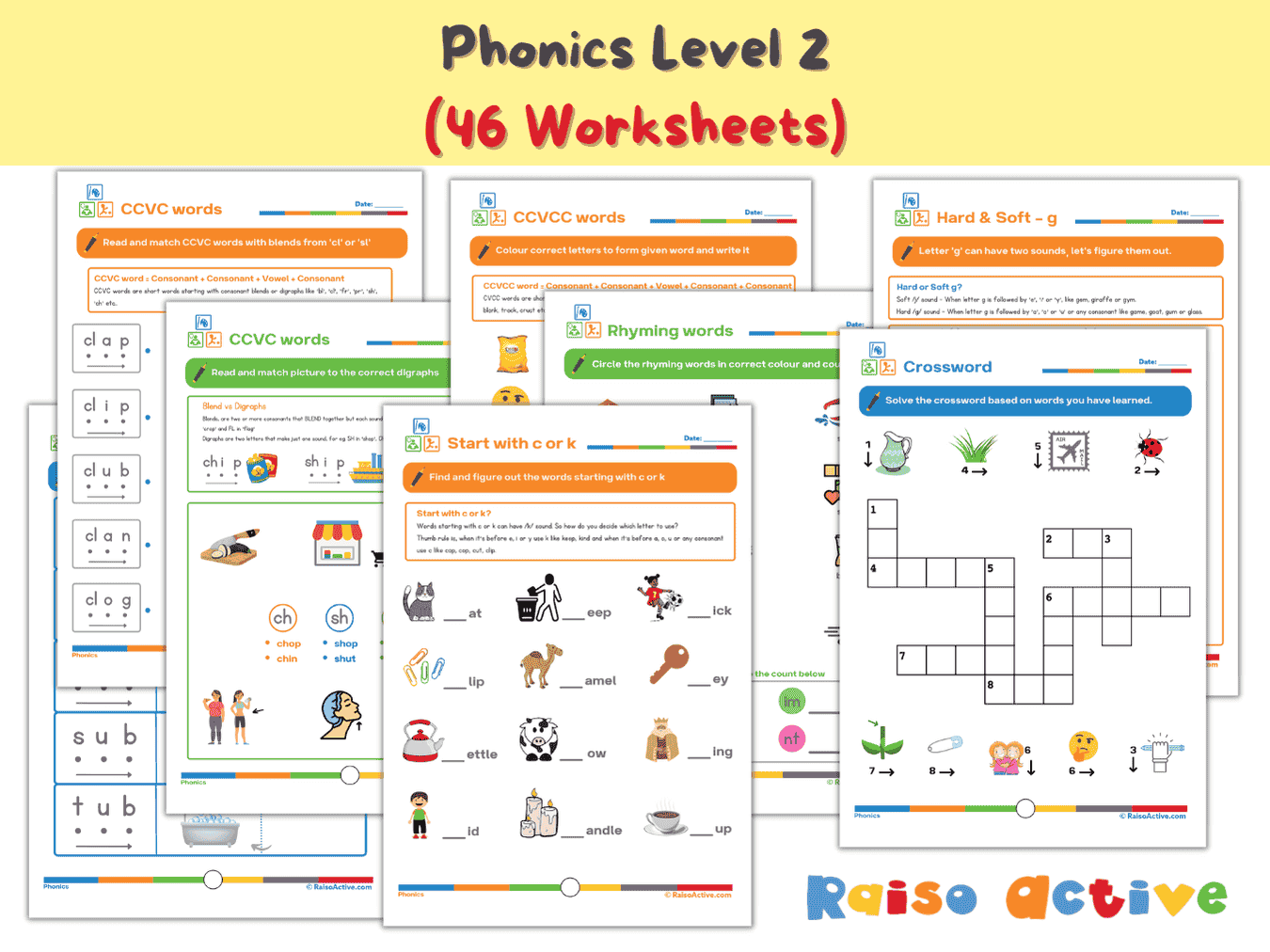
Phonics Level 2 Worksheets: CVC, CCVC, CVCC Word Families & Blends for Early Readers (Ages 4-7)
Ages 4-7 · Pre-K–Grade 1Ages 4-7 · Reception–Year 2Ages 4-7 · LKG–Class 1Ages 4-7 · 47 pages
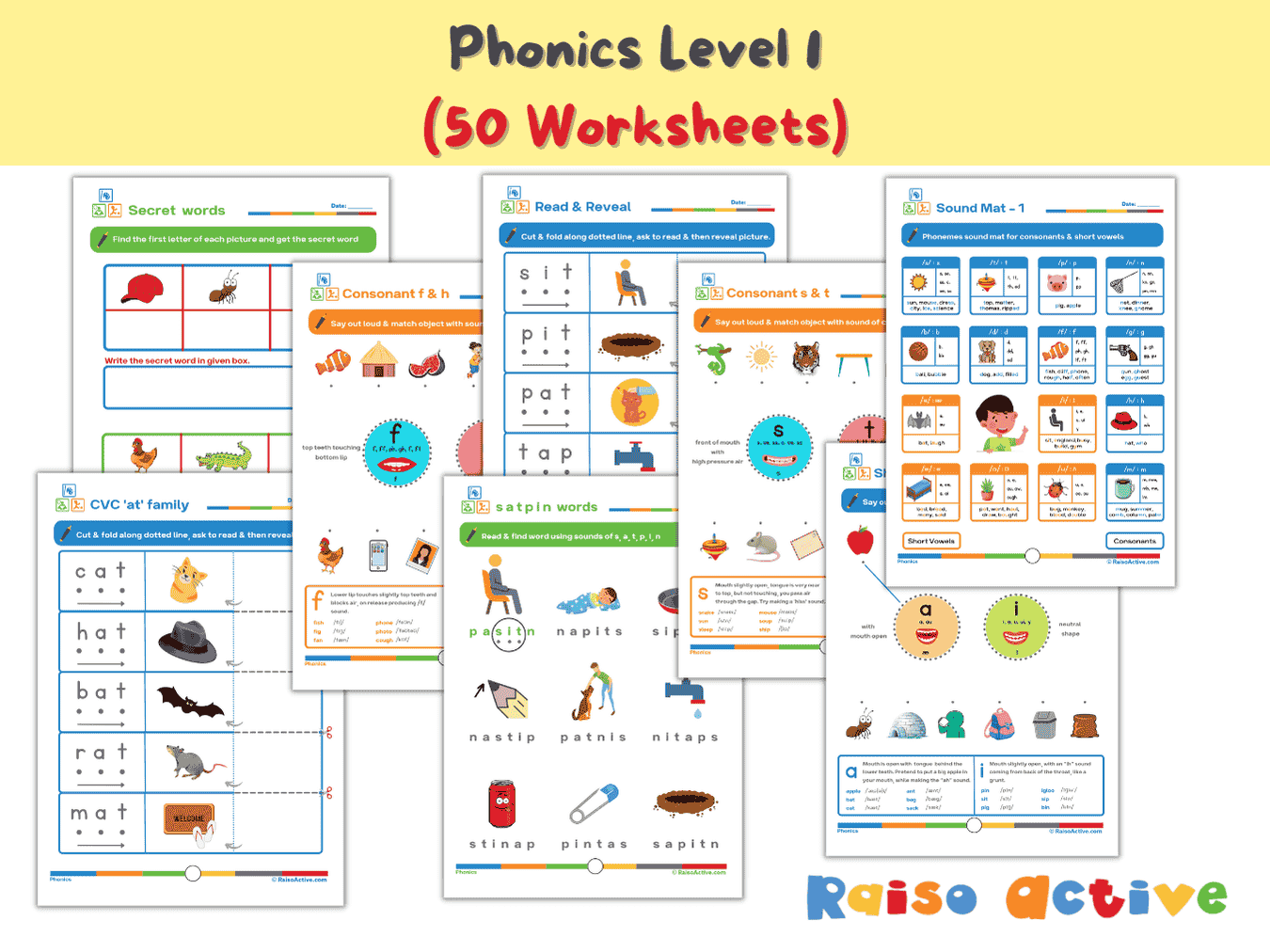
Phonics Level 1 Activity Book: Letter Sounds, Blending & CVC Words for Preschool & Kindergarten
Ages 3-6 · Preschool–KindergartenAges 3-6 · Nursery–Year 1Ages 3-6 · Nursery–UKGAges 3-6 · 60 pages
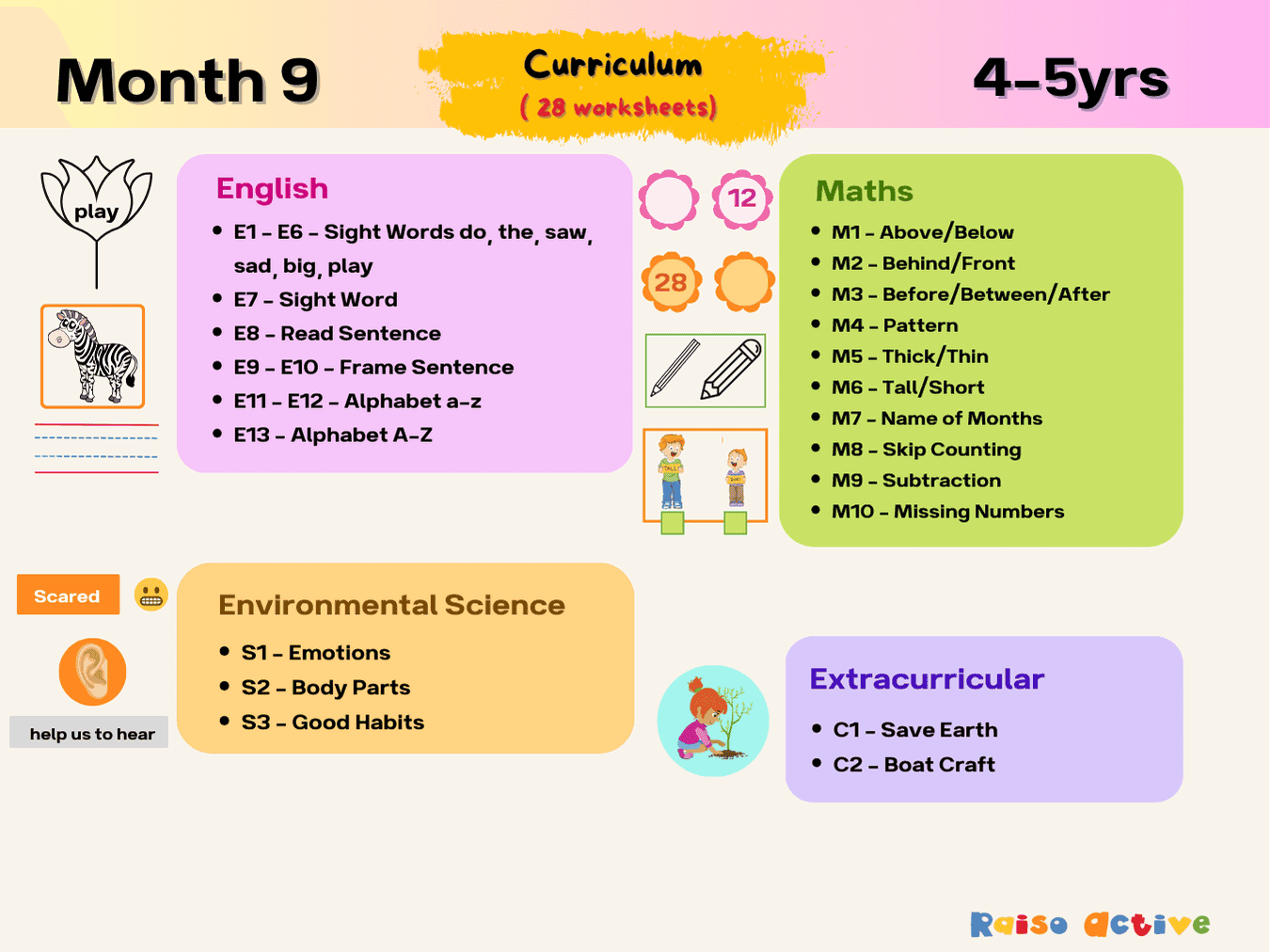

Month 9: Play-Based Preschool Foundational Skills | Ages 4-5
Ages 4-5 · Pre-KAges 4-5 · ReceptionAges 4-5 · LKGAges 4-5 · 31 pages
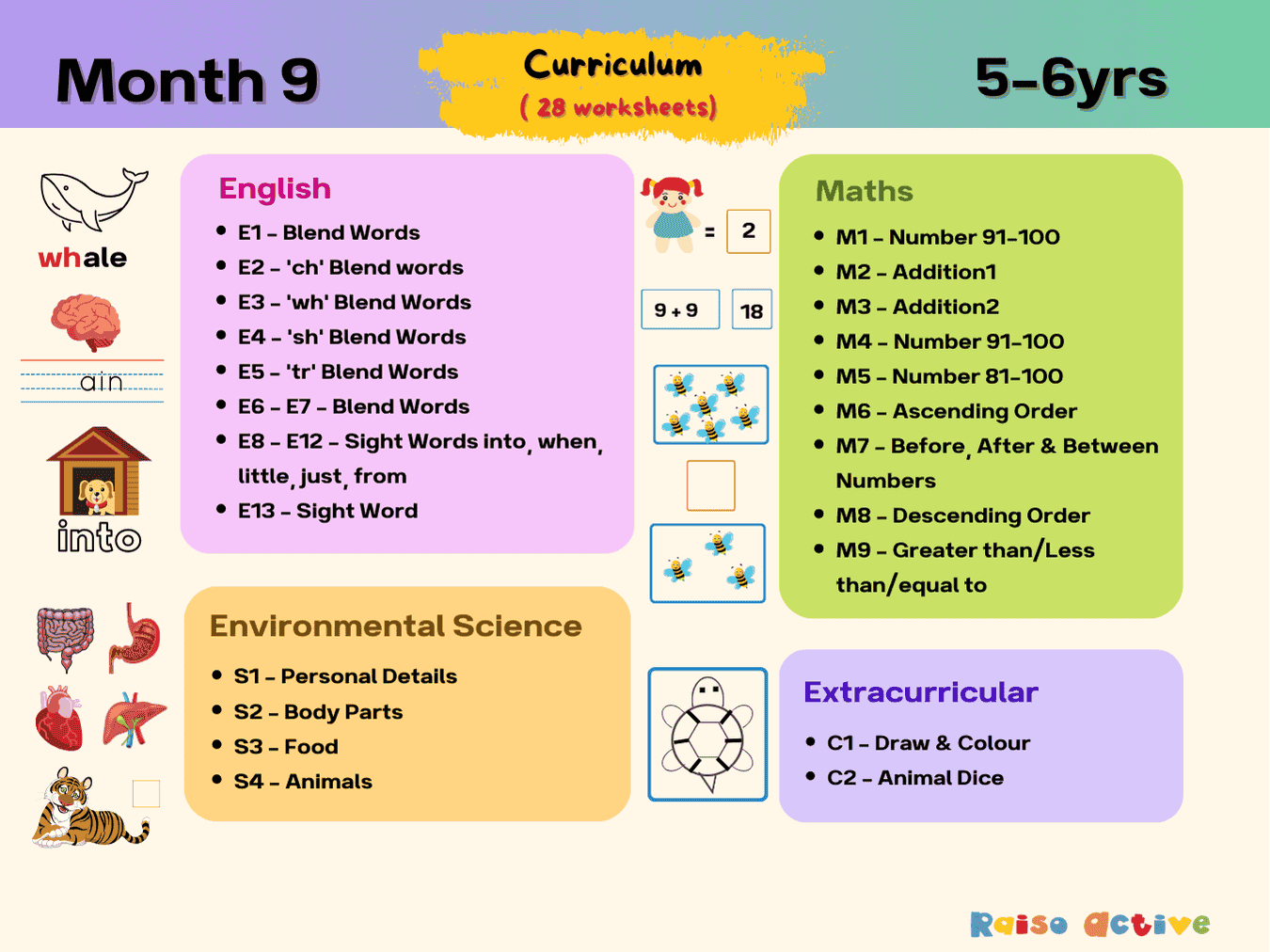
Month 9: Early Learning English Math Science | Ages 5-6
Ages 5-6 · KindergartenAges 5-6 · Year 1Ages 5-6 · UKGAges 5-6 · 31 pages
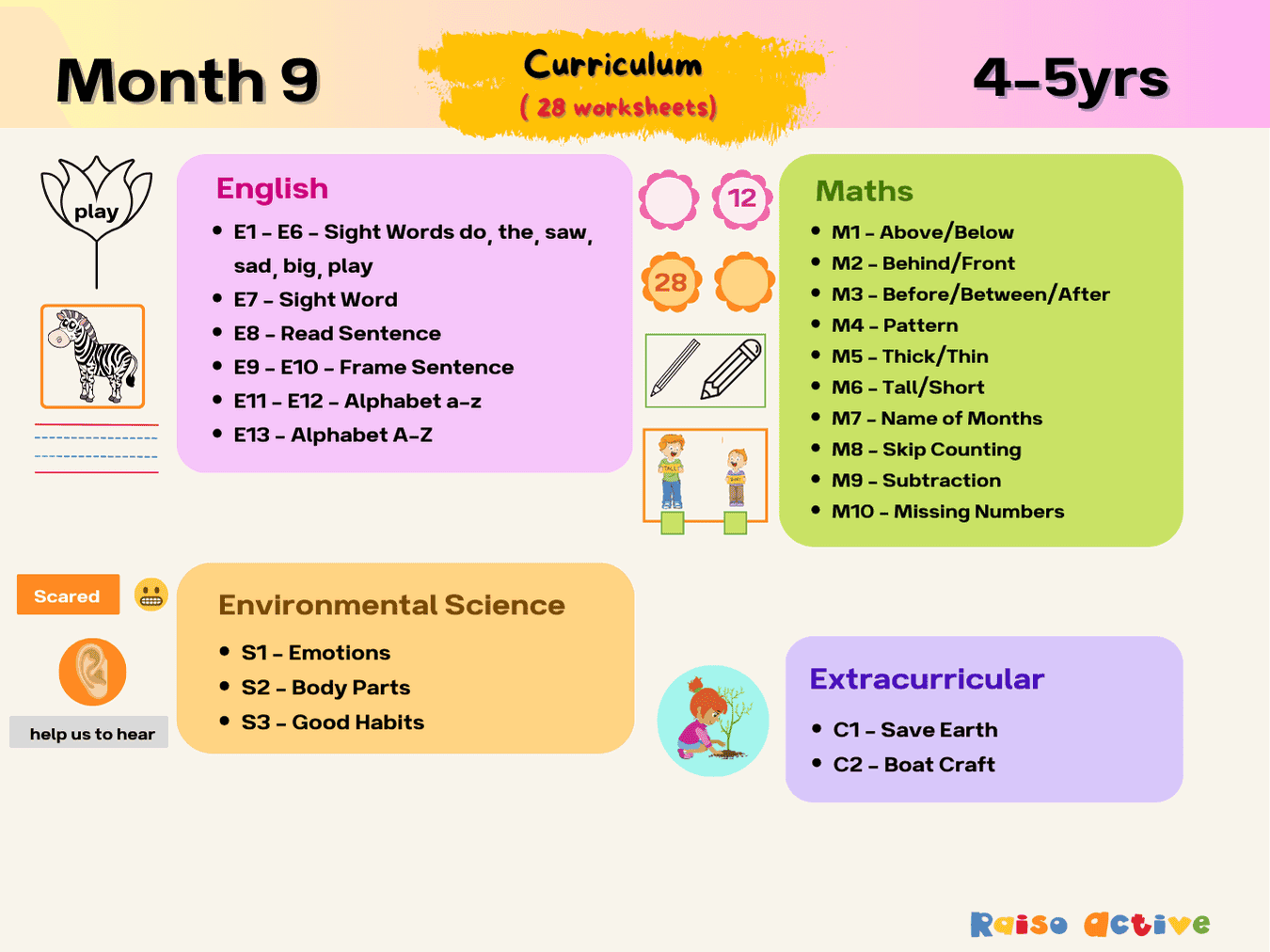
Month 9: Preschool Early Learning Activities | Ages 4-5
Ages 4-5 · Pre-KAges 4-5 · ReceptionAges 4-5 · LKGAges 4-5 · 31 pages
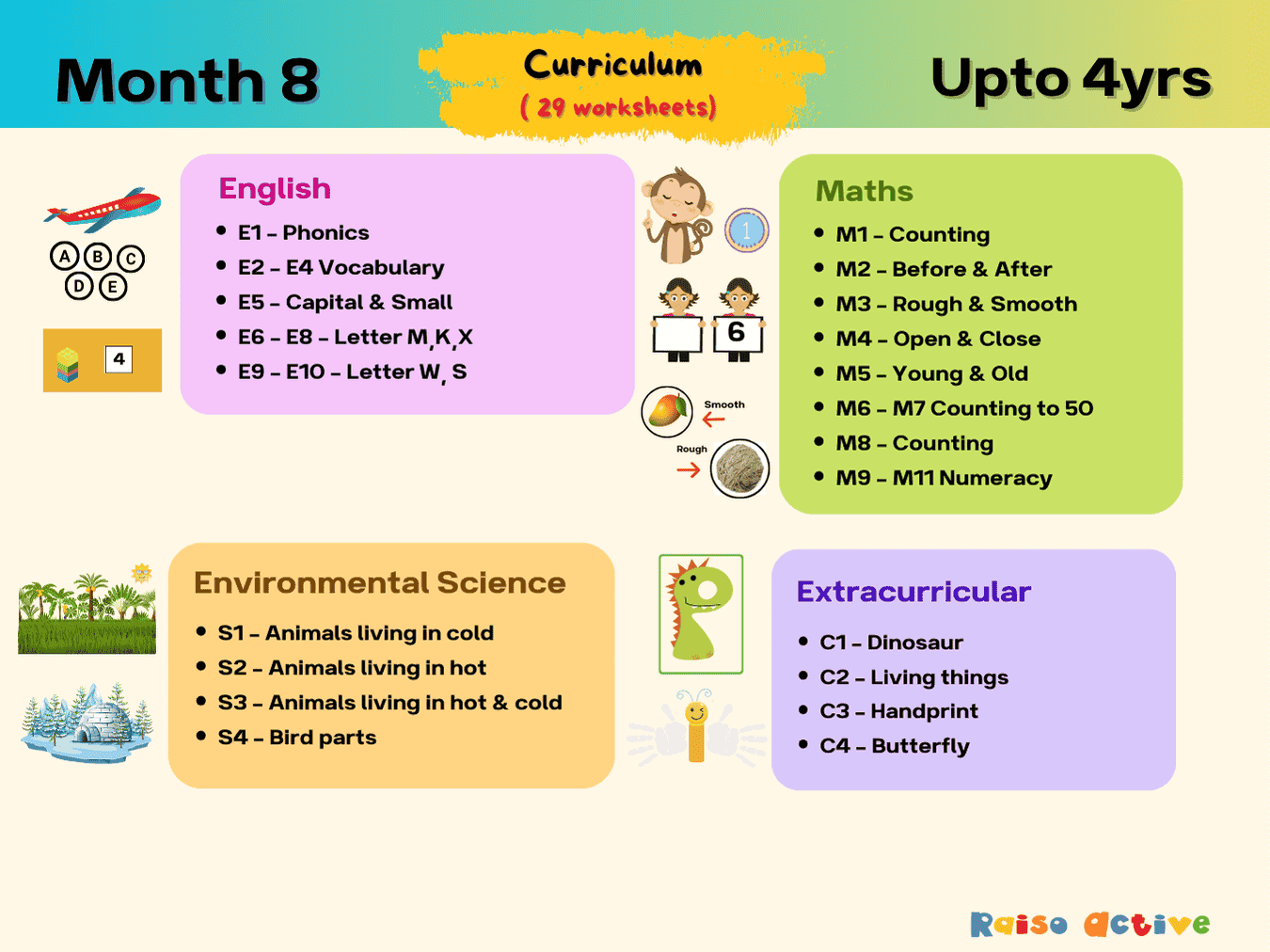
Month 8: Phonics, Math, Science, Creativity | Ages Up to 4
Ages 3-5 · Preschool–Pre-KAges 3-5 · Nursery–ReceptionAges 3-5 · Nursery–LKGAges 3-5 · 32 pages
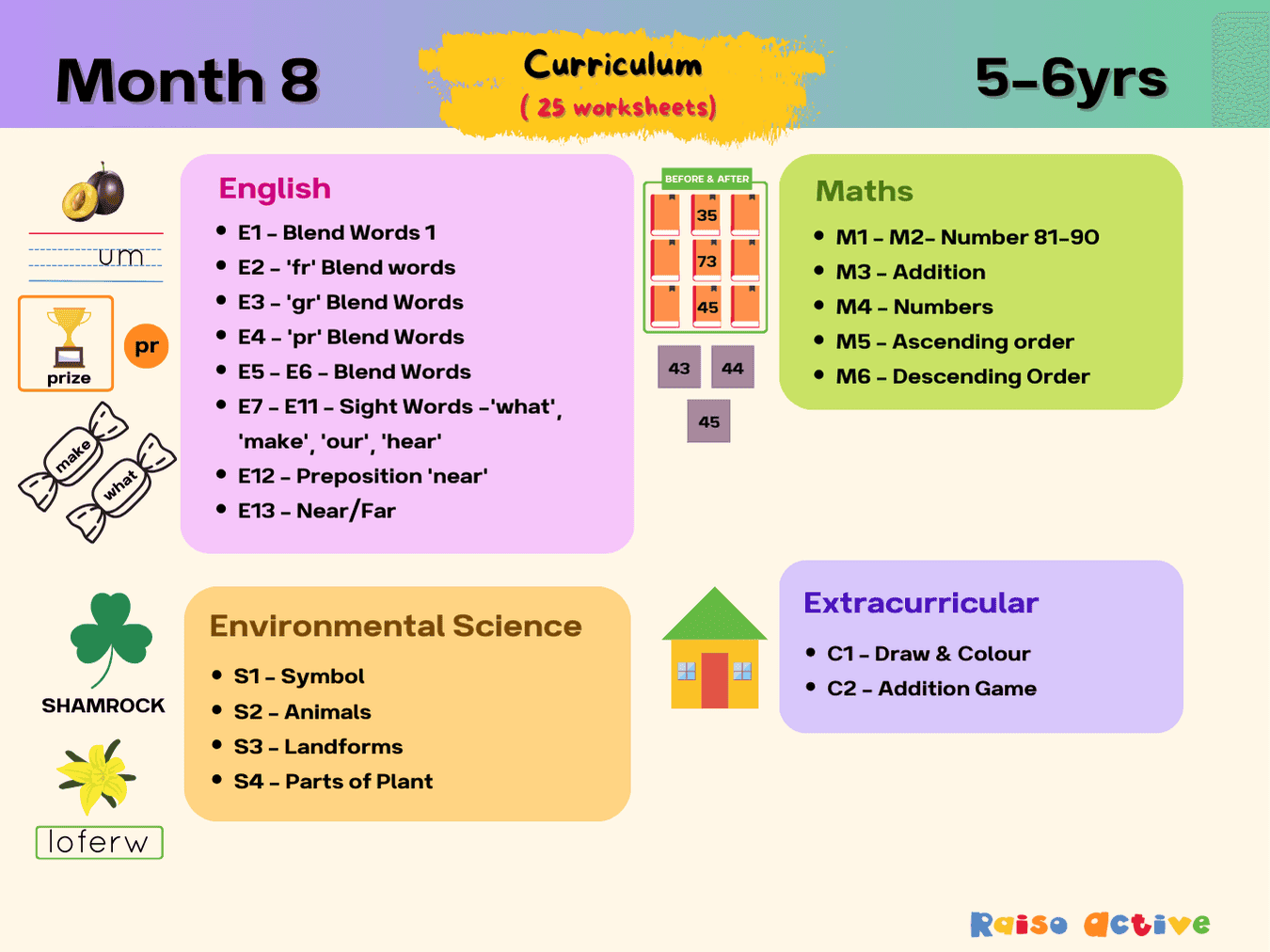
Month 8: Literacy, Math, Science Foundations | Ages 5-6
Ages 5-6 · KindergartenAges 5-6 · Year 1Ages 5-6 · UKGAges 5-6 · 28 pages
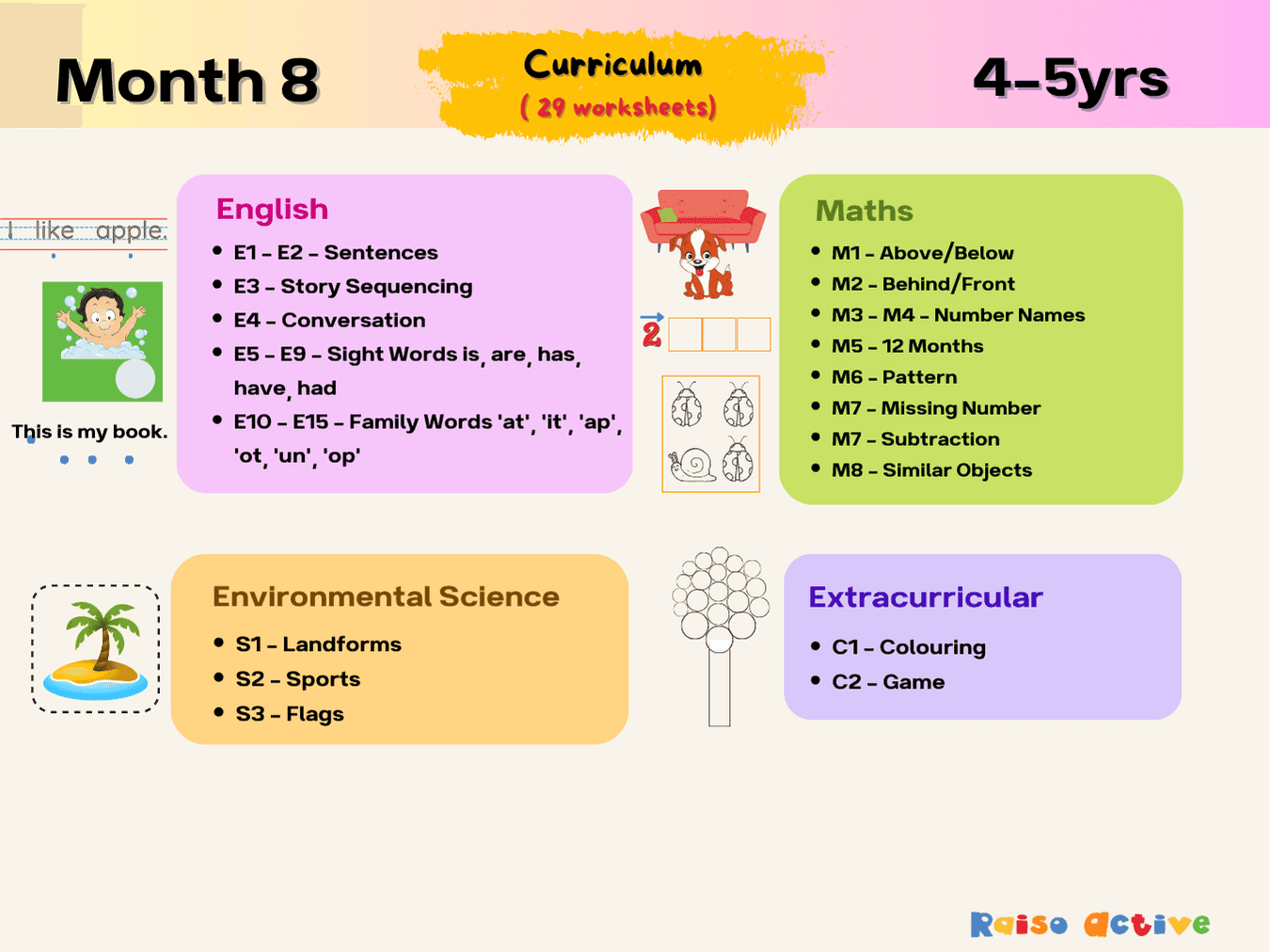
Month 8: English, Math, Science Foundations | Ages 4-5
Ages 4-5 · Pre-KAges 4-5 · ReceptionAges 4-5 · LKGAges 4-5 · 32 pages