Early Learning
Empowering Multilingual Learners: Essential Resources and Strategies for Bilingual and Multilingual Children
Author
RaisoActive - Kids Activities and Fun Learning
Date Published
Reading Time
10 min read

In This Article5 min read
- Multilingualism is a cognitive advantage — children's brains are biologically wired to handle more than one language simultaneously
- Code-switching (mixing languages mid-sentence) is a sign of bilingual sophistication, not confusion or laziness
- Balancing English with Hindi, Tamil, Telugu, Marathi, or any mother tongue is entirely achievable with consistent daily routines
- Grandparents and extended family are irreplaceable resources for heritage language preservation — involve them actively
- Age-appropriate worksheets, apps, songs, and games can meaningfully support multilingual vocabulary development across all age groups
Raising Children Who Speak More Than One Language
Picture this: your five-year-old comes home from school speaking a stream of fluent English, then turns to their Nani and says, "Nani, aaj school mein we made a clay pot!" seamlessly blending Hindi and English in a single breath. You might feel a flicker of worry — is this confusion? Should they be speaking one language at a time? The answer, backed by decades of language research, is a resounding no. Your child is not confused. They are gifted.
India is one of the most linguistically diverse nations on earth, with over 22 constitutionally recognised languages and hundreds of regional dialects. Most Indian adults switch effortlessly between two, three, or even four languages every single day. English at the office, Hindi with the shopkeeper, Marathi at home, Kannada with the building watchman — this is not unusual. It is normal. And yet, when our children do the same thing, we sometimes panic.
This guide is for every parent, grandparent, and early childhood educator who wants to raise genuinely multilingual children — children who carry English and their mother tongue with equal pride and competence. We will explore the science of multilingual brains, bust common myths, offer practical strategies for daily life, and share resources (including printable worksheets) that support vocabulary and literacy development across multiple languages. Whether your family speaks Hindi, Tamil, Telugu, Bengali, Gujarati, Punjabi, Marathi, or Malayalam, the principles here apply to you.
Raising a multilingual child?
Get weekly printable resources, activity ideas, and expert tips for supporting language development in young children — delivered free to your inbox.
The Remarkable Cognitive Benefits of Multilingualism
For years, a persistent worry circulated among Indian parents and even some educators: "Learning two or three languages simultaneously will overload a young child's brain and delay their development." Modern neuroscience has firmly put this myth to rest. Not only does multilingualism not harm cognitive development — it actively enhances it in measurable, lasting ways.
The key mechanism is what researchers call executive function — the brain's ability to focus attention, switch between tasks, hold information in working memory, and inhibit distractions. When a multilingual child speaks, their brain is simultaneously activating both (or all) of their languages and then selecting the right one for the context. This constant mental juggling act is like a daily workout for the prefrontal cortex. The result? Multilingual children consistently outperform monolingual peers on tasks requiring cognitive flexibility, sustained attention, and creative problem-solving.
There are social and emotional benefits too. A child who can speak their heritage language feels a deeper connection to their grandparents, their cultural traditions, their extended community, and ultimately to their own identity. Research from the University of Washington has found that bilingual children show greater empathy and perspective-taking than monolingual peers — perhaps because managing two languages requires a constant awareness of which language this listener understands. The multilingual brain is, in many ways, a more socially attuned brain.
Code-Switching: Why Mixing Languages Is a Sign of Strength
"Proper mein bol, Hindi ya English" — how many of us have said something like this to our children or heard it said? The instinct to keep languages separate is understandable, but linguists have long known that code-switching — moving between two or more languages within a single conversation or even a single sentence — is not a failure of language learning. It is evidence of mastery.
When a child says "Mummy, I want to go to the park — abhi, please!" they are not confused about which language to use. They are making a sophisticated real-time linguistic choice, leveraging the expressive resources of both languages simultaneously. Research by Dr. François Grosjean, one of the world's leading experts on bilingualism, confirms that code-switching follows consistent grammatical rules. Children do not mix languages randomly — they mix them purposefully, and their choices reveal genuine communicative intelligence.
Code-switching between English and Hindi, Tamil, Telugu, or any other Indian language is also deeply embedded in Indian cultural identity. It is how Indian adults naturally communicate in many contexts — in WhatsApp groups, at family dinners, in college canteens. When children code-switch, they are not making a mistake. They are learning to speak the way their community speaks. The appropriate response is curiosity and celebration, not correction.
Key Takeaway
Code-switching is a hallmark of genuine bilingualism, not a sign of confusion or poor language skills. Children who move fluidly between languages are exercising advanced cognitive and linguistic abilities.
If you want to model a specific language, do so naturally: respond in the language you want to encourage without shaming or correcting the child's choice. Over time, consistent modelling is far more effective than correction.
Balancing English with Your Mother Tongue: Practical Daily Strategies
Most Indian families today face a real tension: English is the language of schooling, competitive exams, and professional opportunity. But Hindi, Tamil, Telugu, Marathi, Gujarati, and every other mother tongue carries the family's stories, prayers, recipes, and emotional vocabulary. How do you honour both without sacrificing either?
The good news is that this is not a zero-sum game. Research on bilingual language acquisition has repeatedly shown that a strong foundation in the mother tongue supports English acquisition rather than competing with it. Children who are confident speakers of their mother tongue develop superior metalinguistic awareness — the ability to think about language itself — which transfers directly to learning English grammar, reading, and vocabulary. In other words, investing in your mother tongue is also investing in your child's English.
The most evidence-based approach for Indian families is something linguists call Minority Language at Home (ML@H): speak the mother tongue consistently at home, and allow English to be learned naturally through school, media, and peers. The mother tongue gets the reinforcement it needs from home, while English gets ample input from the outside world. You do not need to create structured "English lessons" at home — English will come. What needs nurturing is the language your child may not encounter anywhere else.
💡The Language of Daily Routines
- Morning routines (dressing, breakfast, packing school bags) are perfect for mother tongue conversation — name clothes, foods, and actions in your language
- Cook together and narrate the process entirely in the mother tongue — spice names, measurements, and cooking actions create rich vocabulary naturally
- Bedtime stories in the mother tongue are especially powerful; the emotional warmth of bedtime amplifies language learning
- Evening walks are ideal for nature vocabulary in the mother tongue — name trees, birds, clouds, and vehicles in Hindi, Tamil, or whichever language you speak
- Keep TV time in the mother tongue at least some of the time — Chhota Bheem in Hindi, Eena Meena Deeka in Telugu, or regional folk tale animations
Resources, Apps, and Tools to Support Multilingual Learning
We are fortunate to live in an era where multilingual learning resources are more abundant than ever. Alongside the irreplaceable value of human conversation, there is a growing ecosystem of apps, books, worksheets, and digital content designed specifically to support heritage language development in young children.
For digital resources, a few stand out for Indian languages. Pratham Books' StoryWeaver (storyweaver.org.in) offers thousands of free children's stories in Hindi, Tamil, Telugu, Marathi, Kannada, Bengali, and many more languages — many with beautiful illustrations. Gismart's Baby Piano and Lingokids offer multilingual interfaces. For Hindi specifically, Hindi Varnamala apps gamify letter recognition and pronunciation beautifully. YouTube channels like "Katha Kids" (Hindi folk tales) and "KidsTV India" (Tamil nursery rhymes) provide hours of engaging mother tongue content.
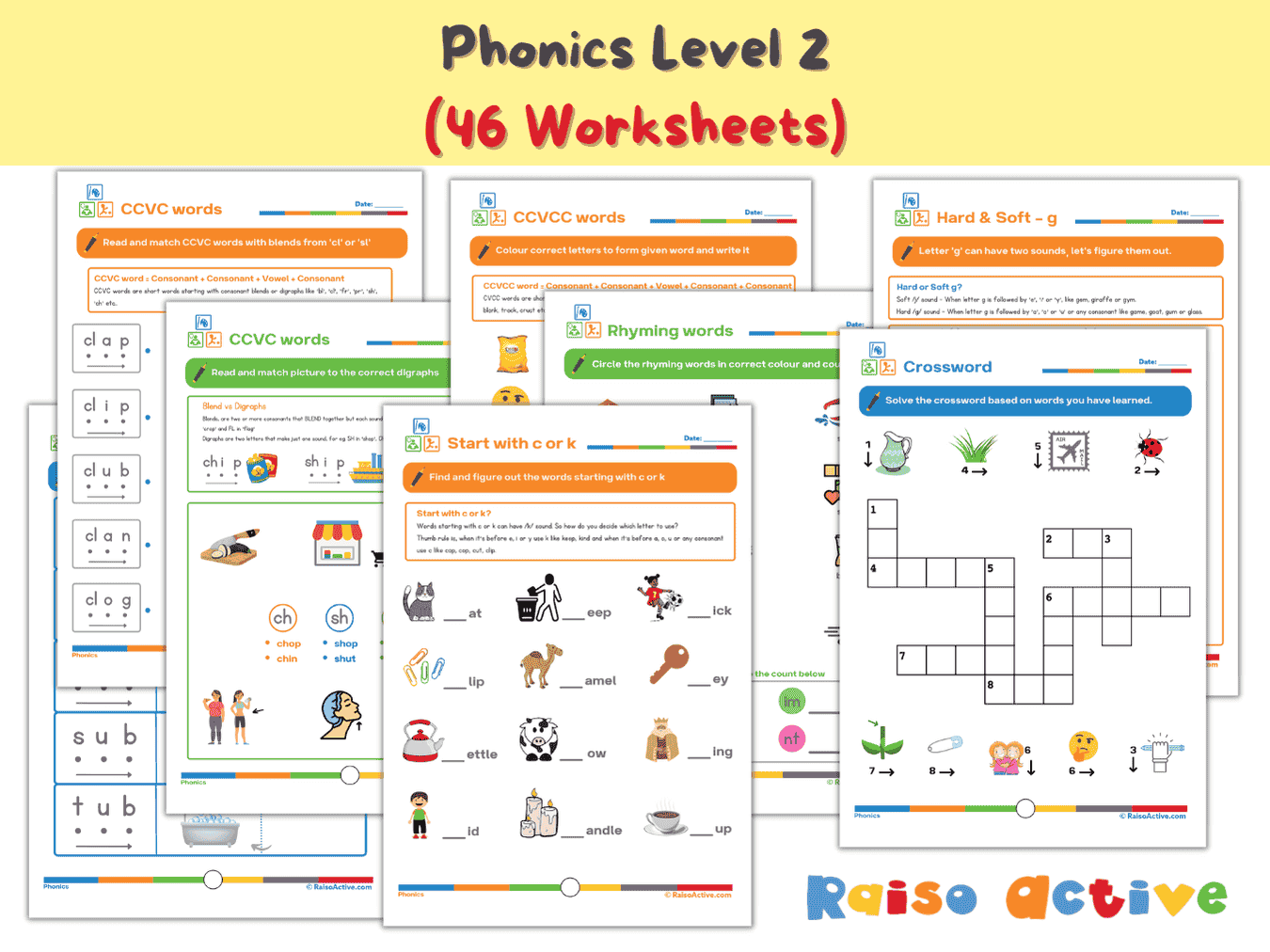
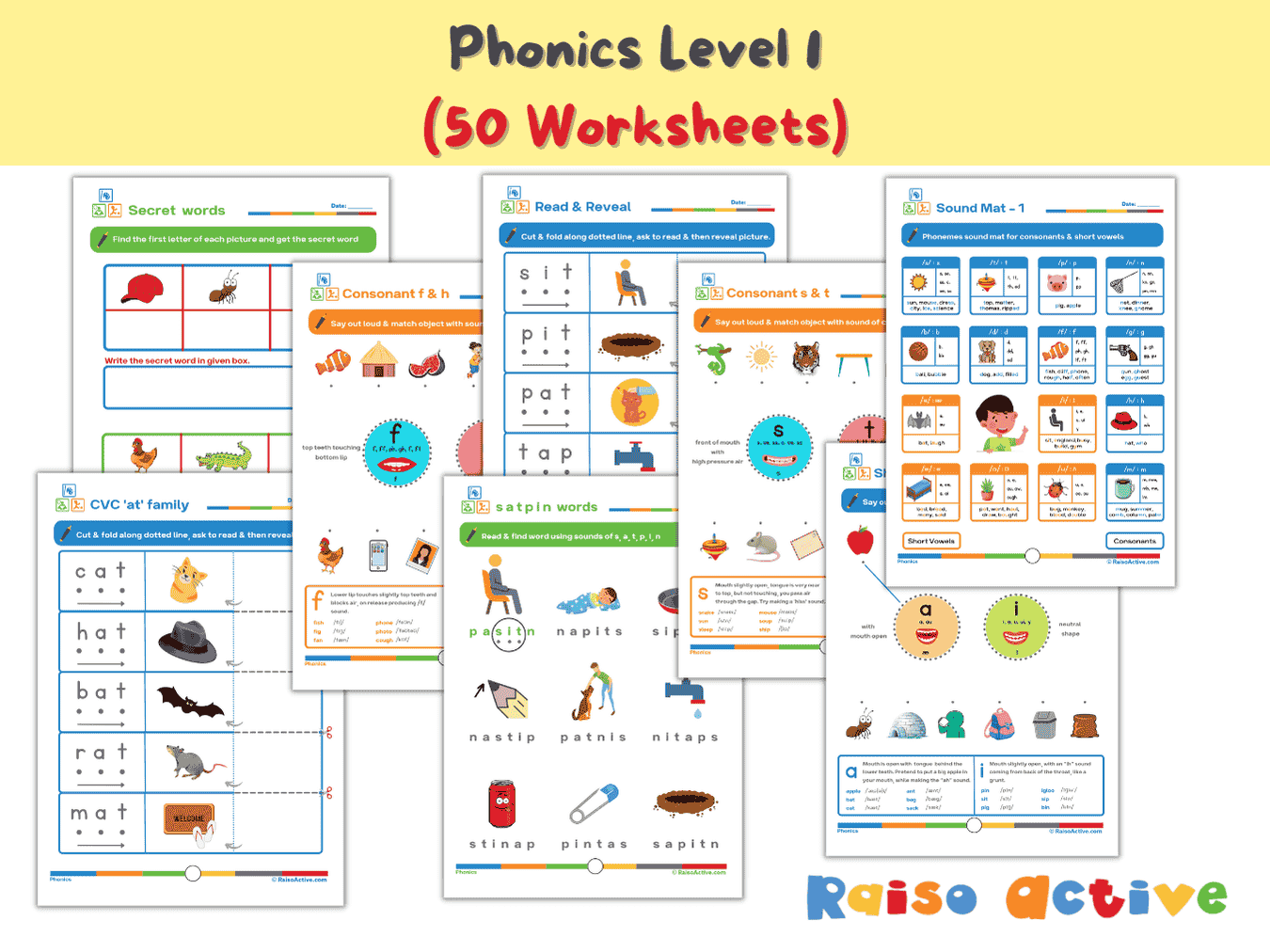
For physical resources, bilingual board books are worth every rupee. Look for books that present text in both English and your heritage language on the same page — children enjoy spotting the differences and similarities between the two scripts. Magnetic letter sets in the Devanagari script are available online and make excellent bathtub or fridge activities. And of course, printable worksheets that focus on vocabulary building, letter tracing, and matching activities can be beautifully adapted for multilingual learning, as we explore further below.
⚠️Screen Time That Actually Supports Language
- Not all screen time is equal — interactive video calls with grandparents in the mother tongue are far more valuable than passive TV watching
- Choose shows where characters *use* the language naturally in context, not just recite vocabulary lists
- Watch English shows *with* the child and discuss what happened using your mother tongue — this builds vocabulary bridges between both languages
- Look for regional language content on Doordarshan DD National and DD Regional channels — classic shows like Bournvita Quiz Contest were multilingual and brilliant
- Limit isolated screen time; the greatest language learning always happens through human interaction
How Printable Worksheets Can Support Multilingual Vocabulary Development
Worksheets often get a bad reputation in early childhood circles — and it is true that poorly designed, drill-heavy worksheets have no place in a young child's learning. But well-designed, developmentally appropriate worksheets are a different matter entirely. For multilingual families, they offer something particularly valuable: a structured, tactile way to practise vocabulary, letter recognition, and matching skills across two languages simultaneously.
Consider a simple picture-word matching worksheet that shows familiar objects — a mango, a bicycle, a pot, a kite — with both English and Hindi (or Tamil, Telugu, or Marathi) labels. A child completing this worksheet is not just practising reading. They are building bilingual mental dictionaries, connecting the same concept to two different sound-symbol systems. This kind of activity directly supports what researchers call conceptual vocabulary — understanding words deeply enough to use them fluently in multiple languages.
Tracing worksheets for heritage language scripts (Devanagari, Tamil, Telugu, Gujarati) are especially valuable for children who are simultaneously learning to write in English at school. The fine motor practice is the same; only the symbol system differs. Children who practise both scripts develop stronger overall handwriting skills and greater script flexibility. Starting with the letters in the child's own name — in both scripts — is the most motivating entry point.
Key Takeaway
Worksheets designed for bilingual learners — with vocabulary, matching, and tracing activities in two languages — build conceptual depth and script flexibility simultaneously. They are most effective when used playfully, not as a test.
Tips for Parents Who Are Not Confident in English
A concern that many Indian parents share privately but rarely say aloud: "I am not fluent in English myself. How can I raise an English-confident child?" This worry is more common than you might think, particularly among parents from smaller towns or those who studied in regional medium schools. And the good news is: you do not need to be an English expert to raise a bilingual child.
Your most important gift to your child is not English vocabulary — it is the cognitive and linguistic foundation of a fully developed mother tongue. Research by Dr. Jim Cummins of the University of Toronto established what he called the Common Underlying Proficiency model: language skills learned in one language transfer to all other languages. A child who has a rich, expressive vocabulary in Hindi, who has been read to extensively in Tamil, who can narrate complex stories in Telugu — that child will learn English faster and more deeply than a child who has been given impoverished language input in any language.
Speak to your child richly and expansively in your mother tongue. Tell them long, detailed stories. Ask them open-ended questions. Argue playfully, debate, joke, philosophise — in your language. This is the greatest cognitive gift you can give them. English will come; the depth of the mother tongue is what sets them up for genuine bilingual excellence.
👋For Parents Not Confident in English
- Never feel ashamed of your English level — your mother tongue fluency is your child's most valuable language inheritance
- Read English picture books together even if you cannot read them perfectly — point to pictures and discuss them in your mother tongue
- Use English labels for household objects (the refrigerator, the window, the spoon) without pressure — environmental print is a powerful passive teacher
- Enrol your child in a good English-medium school and trust the process — children are remarkably fast language learners in formal environments
- Connect with other parents in your community who share your language — peer learning in the mother tongue is enormously valuable for children
Children learning 2 or more languages show 20-30% stronger executive function
compared to monolingual peers on tasks requiring attention control and cognitive flexibility, according to a meta-analysis of 63 studies on bilingual cognitive development.
Source: Adesope et al., Review of Educational Research, 2010
Grandparents: The Most Powerful Multilingual Resource You Already Have
No app, curriculum, or worksheet can replicate what a grandparent offers a multilingual child. Grandparents bring the heritage language alive in its fullest, most authentic form — complete with idioms, proverbs, folk songs, bedtime stories, and the emotional warmth of genuine family connection. For Indian families in particular, where the joint family or near-family network remains strong, grandparents are an extraordinary and often underutilised language resource.
Dadi's stories about her village in UP, Thatha's Tamil songs from his own school days, Ajji's recipes narrated in Kannada while making chitranna — these are not just lovely memories. They are rich, contextualised language input that develops vocabulary, narrative comprehension, and cultural knowledge simultaneously. Children who have regular, warm interactions with heritage-language-speaking grandparents consistently show stronger heritage language retention than those who do not, even when other family factors are similar.
👋Involving Grandparents in Language Learning
- Schedule regular video calls where Nana or Dadi tells a story, teaches a song, or plays a simple game — entirely in the heritage language
- Ask grandparents to record voice messages in the heritage language that the child can listen to at bedtime — these feel magical and deeply personal
- During visits, let grandparents lead cooking sessions with the child, narrating every step in the mother tongue
- Encourage grandparents to share proverbs, riddles, and tongue twisters — these are linguistically rich, fun to memorise, and culturally precious
- Reassure grandparents: if the child replies in English, that is fine. They should continue speaking the heritage language naturally without switching
Heritage language maintenance is the strongest predictor of positive cultural identity
in children from multilingual families, according to a 2019 study in the Journal of Multilingual and Multicultural Development, surpassing even cultural practices and religious observance.
Source: Journal of Multilingual and Multicultural Development, 2019
A Practical 7-Step Plan for Multilingual Families
1
Choose Your Home Language Strategy
Decide on a clear approach: One Parent One Language (each parent speaks one language), Minority Language at Home (mother tongue at home, English at school), or Time-Based (mother tongue in the mornings and evenings, English during school hours). Any consistent strategy works; what matters is that everyone in the household understands and follows it.
2
Create a Language-Rich Home Environment
Fill your home with books, music, and visual materials in the mother tongue. Display the alphabet in the heritage script alongside English. Label objects bilingually. Keep heritage language books where children can reach them independently. Make the mother tongue visually present and emotionally positive.
3
Build Heritage Language into Daily Routines
Identify three or four daily routines that will consistently happen in the mother tongue: morning conversations at breakfast, cooking together, the evening walk, and bedtime stories. Consistency within routines builds language exposure without requiring special effort or scheduling.
4
Involve Grandparents and Extended Family Actively
Schedule regular video calls, encourage grandparents to tell stories and sing songs, and plan visits with heritage language immersion in mind. The emotional bond between grandparent and grandchild is one of the most powerful motivators for heritage language learning.
5
Introduce Heritage Script Gently Through Play
Begin with the child's name in the heritage script, then letters that appear in familiar words. Use multisensory methods: trace in sand, form with play dough, paint with water. Keep it playful and unhurried — two or three new letters per week is plenty.
6
Use Worksheets and Activities to Reinforce Vocabulary
Incorporate age-appropriate printable activities — bilingual word matching, picture-labelling, letter tracing — to give children structured practice that complements conversational learning. Choose worksheets that connect to real-life vocabulary: food, animals, family members, colours, and numbers in both languages.
7
Celebrate Multilingualism as a Superpower
Frame your child's ability to speak multiple languages as something extraordinary — because it is. When they switch between languages with ease, praise it. When they ask "Mummy, how do you say 'rainbow' in Tamil?" celebrate that curiosity. Children internalise the attitudes adults model. Let your attitude be one of genuine pride.
Approaches That Work
- +Speak the mother tongue naturally and joyfully in daily conversation
- +Celebrate code-switching as evidence of bilingual strength
- +Involve grandparents and extended family as language partners
- +Use heritage language during warm, positive experiences (cooking, storytelling, festivals)
- +Introduce heritage script gently through multisensory play
- +Allow the child to progress at their own pace across both languages
Approaches That Backfire
- -Insisting on one language at a time and correcting code-switching harshly
- -Treating the mother tongue as a "lesson" rather than a living language
- -Focusing exclusively on English at home to "give them an advantage"
- -Pressuring the child to perform the heritage language for guests or relatives
- -Comparing the child's bilingual vocabulary to monolingual peers
- -Abandoning the heritage language when the child shows any resistance
Common Myths About Multilingual Children — Debunked
Misinformation about bilingualism is surprisingly common, even among educated, well-meaning parents and some early childhood professionals. Here are the most persistent myths and what the research actually says.
Myth: "Two languages will delay my child's speech." Reality: Some bilingual children take a few months longer to reach certain vocabulary milestones — but when you count words across both languages, their total vocabulary is equal to or greater than monolingual peers. Any initial difference resolves by age four or five and has no long-term effect on language ability.
Myth: "My child should master English before learning the mother tongue properly." Research shows this is backwards. A strong foundation in the mother tongue — rich vocabulary, complex sentence structures, narrative ability — directly accelerates English acquisition. The two languages support each other; they do not compete.
Myth: "Heritage language is only useful for family conversations." Actually, bilingual and multilingual individuals have significantly higher earning potential across their lifetimes, greater cross-cultural communication skills, and stronger creative and analytical thinking. In an increasingly global economy, a child who speaks Hindi, Tamil, or Telugu fluently alongside English has a genuine professional advantage — particularly as India's economic influence continues to grow.
Key Takeaway
Every myth that positions multilingualism as a problem for children has been contradicted by research. The scientific consensus is unambiguous: growing up with multiple languages is a cognitive, social, cultural, and economic advantage.
If you encounter a teacher, doctor, or family member who suggests your child's multilingualism is causing delays or problems, feel empowered to ask for evidence. In the vast majority of cases, any language concerns are unrelated to the number of languages the child is learning.
Unlimited Access
Get Free Multilingual Learning Resources Every Week
Join thousands of Indian parents who receive our free weekly newsletter — packed with printable worksheets, bilingual activity ideas, and expert guidance for raising confident, multilingual children.
All worksheets & activitiesNew content weeklyDownload unlimited times
Subscribe NowFrequently Asked Questions About Raising Multilingual Children
Will learning multiple languages confuse my young child?
No. This is one of the most thoroughly debunked myths in language acquisition research. Young children's brains are extraordinarily well-suited to managing multiple languages simultaneously. Any apparent 'confusion' — such as mixing words from two languages — is actually a sign of sophisticated bilingual processing, not a developmental problem. The confusion, if any, exists only in the minds of adults who are used to keeping languages strictly separate.
My child speaks English perfectly at school but refuses to speak Hindi (or Tamil, Telugu, etc.) at home. What should I do?
This phase, which often begins when children start school, is called language resistance and is completely normal. The child is becoming aware that English is the prestige language in their school environment. The best response is to continue speaking the heritage language to them without pressure or shame, even if they reply in English. Create natural situations where the heritage language feels necessary — video calls with grandparents who speak only the mother tongue, heritage language playdates, cultural events. Most children who go through this phase and receive consistent exposure do become active speakers of the heritage language, often by age 8-10.
How much time does my child need in the mother tongue each day?
Language researchers suggest a minimum of 30% of waking hours for a child to develop functional proficiency in a language. For a child awake 12 hours a day, that is roughly 3.5-4 hours. This includes listening, not just speaking. Morning routines, mealtimes, cooking together, bedtime stories, and evening conversations in the mother tongue can easily add up to this. Remember that quality interactive exposure — real conversations, storytelling, questions and answers — is far more valuable than passive listening to TV or background music.
I am not confident in English. Can I still support my child's bilingual development?
Absolutely, and you may be doing more for your child's bilingual development than you realise. Your richly spoken mother tongue — full of idioms, stories, proverbs, and expressive vocabulary — builds the cognitive and linguistic foundation that all language learning rests upon. Research by Dr. Jim Cummins shows clearly that strong mother tongue development supports English acquisition, not the reverse. Speak to your child in your language as richly, expressively, and extensively as you can. English will come through school and peers. The mother tongue is what needs you.
When should I introduce the heritage language script (Devanagari, Tamil, Telugu, etc.)?
There is no single right age, but most children are ready to begin exploring a second script between ages 4 and 6, once they have some familiarity with the Roman alphabet from school. Start with the letters in the child's own name — this is always the highest-motivation entry point. Use multisensory methods: tracing in sand or play dough, painting letters with water, forming them with clay. Aim for 2-3 new letters per week, always connected to familiar words. Research confirms that learning two scripts simultaneously does not cause confusion — it actually strengthens phonemic awareness and reading development overall.
Are there good apps or digital resources for Indian heritage languages?
Yes — several are excellent. Pratham Books' StoryWeaver (storyweaver.org.in) offers thousands of free illustrated children's stories in Hindi, Tamil, Telugu, Marathi, Kannada, Bengali, and many more languages. YouTube channels like Katha Kids (Hindi folk tales), Pebbles Tamil (Tamil nursery rhymes and stories), and Mooshika Telugu offer engaging age-appropriate content. For letter learning, search for 'Hindi Varnamala' or 'Tamil Alphabet' apps — several well-reviewed options are available free on Android and iOS. Supplement digital resources with physical books, worksheets, and most importantly, human conversation — no app replaces a real conversation with a caring adult.