Parenting & Homeschool, Technology & Digital Learning
Do Educational YouTube Videos Really Help Kids Learn? A Comprehensive Analysis for Parents
Author
RaisoActive - Kids Activities and Fun Learning
Date Published
Reading Time
14 min read

In This Article5 min read
- Research shows a clear "video deficit effect" in children under 2.5 — they learn far less from screens than from the same experience with a live person
- Children aged 5-8 can learn effectively from well-designed educational videos, but only when content is slow-paced, interactive, and watched with an engaged adult
- Channels with genuine research backing — like Sesame Street and Numberblocks — are very different from flashcard or rapid-fire alphabet videos that merely look educational
- Co-viewing and follow-up hands-on activities are the two most powerful things parents can do to make screen time genuinely educational
- YouTube Kids presents real challenges for Indian parents — this guide gives you practical strategies to navigate it confidently
The Question Every Indian Parent Is Already Asking
Walk into almost any middle-class home in India today and you will find a familiar scene: a young child propped in front of a phone or tablet, watching videos that claim to teach colours, numbers, alphabets, or nursery rhymes. Parents allow it — often with a mixture of relief and guilt — because the content looks educational. The characters are cheerful. The songs are catchy. The child seems engaged. Surely something is going in?
This is one of the most important questions in early childhood education right now, and the research gives a nuanced answer that is neither "yes, videos are great" nor "screens are harmful." The honest truth is: it depends enormously on the child's age, the quality of the content, how the video is watched, and what happens after the screen goes off. This guide unpacks each of those factors so that you can make genuinely informed choices rather than relying on marketing claims or anxious WhatsApp forwards.
We will look at what peer-reviewed studies actually say, explore the well-documented video deficit effect in very young children, identify what separates truly educational video content from content that merely looks the part, and give you a practical framework for using videos well — alongside printed activities and hands-on play — rather than in place of them.
Get evidence-based learning tips for young children
Join thousands of Indian parents and early childhood educators who receive our weekly roundup of research-backed activities, worksheets, and honest technology guidance for children aged 1-8.
What the Research Actually Says About Video-Based Learning
The scientific study of children learning from screens goes back to the earliest days of educational television. The most consistent finding across decades of research can be summarised simply: children learn less from a screen than from the same interaction with a real person, and the younger the child, the larger that gap. Researchers call this the video deficit effect, and it is one of the most replicated findings in developmental psychology.
The landmark studies by Dr Georgene Troseth at Vanderbilt University are instructive. When toddlers aged 2 were shown a short video of an adult hiding a toy in a room, they could not use that information to find the toy — even though they could follow identical spoken instructions from a person standing in front of them. The information was the same; the medium made all the difference. Follow-up studies found the same pattern with language learning: toddlers who watched vocabulary videos showed no measurable word gains, while children who received the same vocabulary through live interaction learned the words readily.
Importantly, the video deficit effect is not absolute — it diminishes as children get older and as the quality of the video content improves. Research published in the journal Child Development suggests the effect largely closes by around age 3 to 3.5 for well-designed content, and by age 5-8, children are generally capable of learning effectively from thoughtfully produced video — particularly when an adult is present to support comprehension.
Under 2.5, 2.5 to 5, and 5 to 8: Why Age Makes All the Difference
One of the most important things to understand about children and video is that "young children" is not a single category. A 2-year-old and a 7-year-old are in entirely different cognitive developmental stages, and the same video will have dramatically different effects on each of them.
Under 2.5 years: The video deficit effect is at its strongest here. Children this young do not yet understand that a flat, moving image represents a three-dimensional, real-world object or person. They lack the symbolic understanding needed to translate screen content into usable knowledge. This is why the American Academy of Pediatrics recommends avoiding screen media other than video calls for children under 18 months, and limiting it to high-quality programming watched with a caregiver for children aged 18-24 months. Indian Academy of Pediatrics guidance is consistent with this position. For this age group, no amount of cheerful animation makes a YouTube video an effective teaching tool.
Ages 2.5 to 5 years: This is the transitional period. Children begin to understand symbolic representation — they can follow a story, understand that a character on screen is pretending, and make connections between screen events and the real world. However, learning from video at this stage is still significantly weaker than learning through direct experience, conversation, and hands-on play. Well-designed programmes like Sesame Street show genuine learning gains for this age group, but only for specific, age-appropriate content delivered at appropriate pacing — and results are much stronger when a caregiver watches alongside the child.
Ages 5 to 8 years: By this stage, children have developed the cognitive tools to learn quite effectively from high-quality video content. They can follow narrative, understand cause and effect, retain information across episodes, and apply what they have seen to real-world tasks. The key qualifier remains "high-quality" — slow-paced, focused, interactive content designed around specific learning goals produces meaningful gains, while fast-paced entertainment with educational window dressing does not.
What Actually Makes a Video Educationally Effective?
Not all educational videos are equal, and the differences that matter most are not immediately obvious to the naked eye. A flashy animation packed with rapid cuts, sound effects, and catchy music may hold a child's attention — but attention and learning are not the same thing. Genuine educational effectiveness in video content comes from a specific cluster of features that developmental researchers have identified through controlled studies.
Pacing is perhaps the most important and most underappreciated factor. Research by Dr Daniel Anderson at the University of Massachusetts found that fast editing rates — the kind common in most commercial children's content and many YouTube videos — actively interfere with young children's ability to form lasting memories of what they have watched. The cognitive system responsible for encoding new information simply cannot keep up with rapid visual transitions. Slow-paced programmes like the original Sesame Street segments and Numberblocks allow children to process, rehearse, and consolidate what they are seeing.
Interactivity matters too, though it looks different in a video than in an app. Genuine interactivity in educational video means moments where the programme pauses and asks the child to answer a question, make a prediction, or perform an action — and then waits for a real response before proceeding. Dora the Explorer pioneered this format; Bluey does it informally through its realistic family conversations that children are invited to engage with. Videos that simply deliver information without inviting any response from the viewer produce significantly weaker learning outcomes.
Repetition with variation — revisiting the same concept across multiple episodes using different contexts, characters, or story frames — is another hallmark of genuinely effective educational video. A child who sees the concept of "five" as five Numberblocks stacked together, then hears it in a song, then sees five ducks waddling, then counts five steps is building a rich, multi-dimensional concept. A child who watches a flashcard video showing the digit 5 fifty times is building a much shallower representation.
Parasocial relationships — the bond children form with beloved characters — also facilitate learning when cultivated thoughtfully. Research shows children learn more readily from characters they feel they know and trust. This is why Elmo, Bluey, and the Numberblocks are so effective: children are in a genuine relationship with them, not just watching strangers on a screen. It is also why random compilation channels with no consistent characters produce such poor educational outcomes despite sometimes having millions of views.
Key Takeaway
Holding a child's attention and facilitating learning are two completely different things.
Many YouTube videos that parents consider "educational" are actually optimised for engagement — rapid cuts, flashing colours, catchy loops — features that hijack attention but actively interfere with memory formation and concept building. A child who watches a fast-paced alphabet video for 20 minutes has spent 20 minutes being entertained, not 20 minutes learning letters. The research is unequivocal on this distinction.
Channels With Genuine Research Backing vs Channels That Just Look Educational
The gulf between evidence-based educational video and educational-looking entertainment is vast, and it is rarely obvious from the thumbnail. Here is an honest guide to what the research actually supports.
Sesame Street is the gold standard. It has been continuously evaluated through independent research since its debut in 1969 and remains the most studied educational programme in the world. Multiple large-scale studies — including a landmark longitudinal study by researchers at the University of Massachusetts — found that regular Sesame Street viewing in preschool was associated with higher academic performance in secondary school. The programme is specifically designed around educational objectives, is slow-paced, features repetition with variation, and builds parasocial relationships with recognisable characters. It is available on Netflix internationally and through the Sesame Street YouTube channel.
Numberblocks (BBC CBeebies) is the most rigorously praised early maths programme in recent years. A 2020 study published in the Early Childhood Education Journal found that children who watched Numberblocks showed significantly stronger number sense and cardinality understanding than a matched comparison group. The programme's core insight — that numbers are quantities, not just symbols — is delivered through beautifully slow-paced animation with clear visual models. It is freely available on YouTube.
Alphablocks (also from CBeebies) applies the same approach to phonics and early reading. Each episode focuses on a small number of letter sounds in a story context, with consistent repetition and clear phoneme articulation. It is one of the very few video resources that developmental reading researchers actually recommend by name.
Flashcard videos — the genre where a voice reads out words or numbers while the corresponding card appears on screen — are among the worst offenders in terms of the gap between perceived and actual educational value. Research has found no learning benefit from these videos and some evidence that they displace more valuable activities like book-sharing and conversation. They are enormously popular in India, partly because they look studious and partly because babies appear to watch them attentively. That attentiveness is a response to the visual contrast and audio stimulation, not evidence of learning.
Rapid compilation channels — "Learn Colours with Slime," "1000 Vegetables for Kids," "Baby Songs Compilation 3 Hours" — are entertainment, not education, regardless of what their titles claim. They are optimised for watch time, not learning outcomes. The editing is too fast, there are no consistent characters, there is no narrative, and there is no invitation for the child to engage cognitively. If your child watches these, they are being entertained, which is occasionally fine — but it should not be counted as educational screen time.
Key Takeaway
The most educational YouTube channels for young children are often the least flashy ones.
Sesame Street, Numberblocks, and Alphablocks all share a quality that stands out in the context of modern YouTube: they are deliberately slow. Scenes linger. Characters pause and wait. Songs are repeated. This pacing feels almost boring to adult viewers, but it is precisely what gives young children's brains time to process, encode, and consolidate new information. If a children's video feels too fast to you, it is almost certainly too fast for your child to learn from.
6x
children learn approximately six times more from educational video content when a familiar, trusted adult watches alongside them and discusses the content — compared to the same child watching the same video alone
Source: Georgetown University Center on Media and Child Health
Co-Viewing: The Single Most Powerful Thing You Can Do
If you take away only one thing from this entire article, let it be this: watching with your child transforms the educational value of almost any video. The research on co-viewing — adults watching and discussing video content with young children — is among the most consistent in the whole field. Studies by Sandra Calvert at Georgetown University have repeatedly found that co-viewing amplifies learning by a factor of five to six compared to solo viewing, even when the content itself is identical.
The mechanism is well understood. When you watch with your child and speak aloud — naming what you see, asking questions, making connections to things the child already knows — you are doing several things simultaneously. You are bridging the symbolic gap between the flat screen and the real three-dimensional world. You are building vocabulary by labelling and describing. You are modelling the kind of engaged, questioning attention that distinguishes learning from passive reception. And you are deepening the child's emotional engagement through your own presence and enthusiasm.
Co-viewing does not require you to turn every video into a structured lesson. Informal, conversational engagement is sufficient and often more effective. Point at the screen and say "Look, they are counting — let's count with them!" Pause the video and ask "What do you think will happen next?" When the episode ends, ask "Which character was your favourite? What did they do?" These simple acts of engagement do more for your child's learning than an hour of solo screen time with the highest-quality content available.
👋Co-Viewing Strategies for Busy Indian Parents
- You do not need to watch the whole episode — even sitting with your child for the first five minutes and naming what you see together significantly boosts learning
- Pause at natural breaks and ask open questions: what did that character just do, can you show me the same thing with your fingers?
- Make connections to real life during the video: point out when what they see matches everyday experiences, like counting steps or sorting objects
- Let your child narrate the video to you as it plays — explaining to someone else is one of the strongest memory-consolidation strategies in learning science
- If you genuinely cannot watch together, watch the episode yourself first so you can ask specific, targeted questions afterwards
Active Versus Passive Viewing: Teaching Your Child to Watch Differently
Beyond co-viewing, there is a skill that children can gradually develop: active watching, as opposed to passive reception. Passive watching is what most children default to — a blank, slightly glazed expression, jaw slightly open, processing nothing beyond the immediate sensory stimulation. Active watching involves prediction, questioning, and mental engagement with the content as it unfolds.
You can explicitly cultivate active watching habits in children from around age 3.5 to 4. Before starting a video, spend 60 seconds looking at the thumbnail or episode title together and asking: "What do you think this one will be about?" During the video, normalise pausing to wonder aloud: "I wonder why she did that." After the video, make it routine to discuss: not "did you like it" (which invites a yes or no) but "tell me something you noticed" or "what would you have done differently?"
Over time, children who are consistently guided towards active viewing develop what researchers call "media literacy" — the ability to engage with screen content critically rather than absorptively. This is a life skill of enormous importance in an era when children will encounter screens in every domain of their educational and professional lives.
Key Takeaway
Passive screen time and active screen time are not the same thing — and only one of them produces lasting learning.
A child who watches Numberblocks while lying on the sofa, not responding to the programme's questions, and immediately picks up a toy when the episode ends has had passive screen time. A child who watches the same episode while you sit beside them, pausing to count blocks together, and then spends five minutes building towers of five objects afterwards has had active, genuinely educational screen time. The video was identical; the learning outcomes will be dramatically different.
⚠️Warning Signs That Screen Time Is Not Educational
- Your child cannot tell you anything about what they just watched — a sign of passive absorption rather than active engagement
- The video has extremely fast cuts, constant sound effects, and no pauses — your child's brain cannot encode information at that pace
- The channel is a compilation with no consistent characters or narrative — there is no relational or story-based hook for memory formation
- Your child becomes distressed or disoriented when the video ends abruptly — this suggests overstimulation rather than engaged learning
- The content is repeated endlessly on autoplay — YouTube's autoplay function is designed to maximise watch time, not educational benefit, and should always be disabled for young children
Less than 5%
of the videos in YouTube's top 1,000 most-viewed children's videos meet research-based criteria for genuine educational content, according to an independent analysis by the Joan Ganz Cooney Center at Sesame Workshop
Source: Joan Ganz Cooney Center at Sesame Workshop
Combining Videos with Hands-On Follow-Up: Where Real Learning Happens
The research on educational video and the research on early childhood learning point in exactly the same direction: young children learn best through multi-modal, embodied experiences — seeing, hearing, touching, doing, and talking all at once. A video can deliver the "see" and "hear" components well, but it cannot replicate the "touch, do, and talk" that makes learning stick.
The solution is not to abandon video but to design deliberate follow-up activities that extend and embody what the video introduced. Educational researchers call this the "transfer bridge" — the moment when abstract screen content becomes concrete real-world understanding. Building this bridge is the single most impactful thing parents and teachers can do to maximise the educational value of screen time.
The good news is that follow-up activities do not have to be elaborate or expensive. They can be as simple as counting real objects after watching a maths video, drawing a character from the story after a literacy episode, or acting out a scene from the programme with soft toys. The key is immediacy — the transfer bridge is most effective when it happens within 10-15 minutes of the screen going off, while the memory trace is still fresh and active.
A Simple Video-to-Activity Framework for Young Children
1
Choose intentionally — not from autoplay
Select a specific episode from an evidence-backed programme (Numberblocks, Sesame Street, Alphablocks) rather than letting YouTube's algorithm choose. Check the episode title and know what concept it addresses before pressing play. Intentional selection takes 60 seconds and completely changes the educational value of what follows.
2
Set up the watching space
Sit together if at all possible — or at minimum be in the same room. Have the materials for the follow-up activity already prepared and nearby but out of sight: a printed worksheet, some blocks, crayons, or a few household objects related to the episode's theme. This avoids a scramble after the video ends and keeps the momentum going.
3
Watch actively — pause and talk
Pause at least twice during the video to ask a simple question or make a connection. For a Numberblocks episode: "That's the number six — can you hold up six fingers?" For Alphablocks: "They made the sound 'sss' — can you think of something at home that starts with that sound?" Two pauses per episode is sufficient; you do not need to turn it into an interrogation.
4
Transition with a bridge question
When the video ends, before the screen goes blank, ask a single connecting question: "What was the most interesting thing?" or "What shall we try with what we just learned?" This question activates the child's working memory, holds the episode's content in mind, and frames the transition to hands-on activity as a natural continuation rather than a sharp ending.
5
Do a hands-on follow-up activity immediately
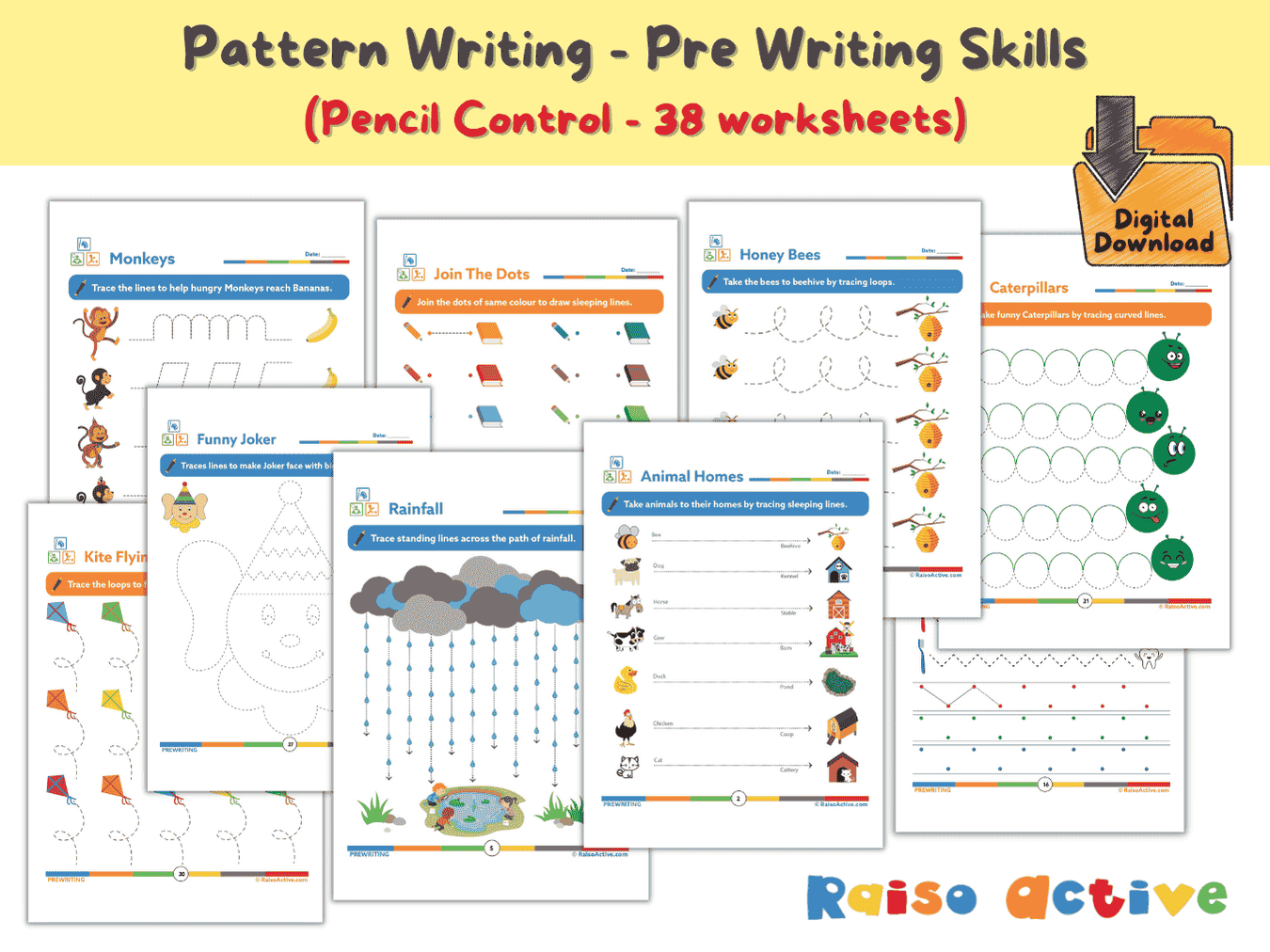
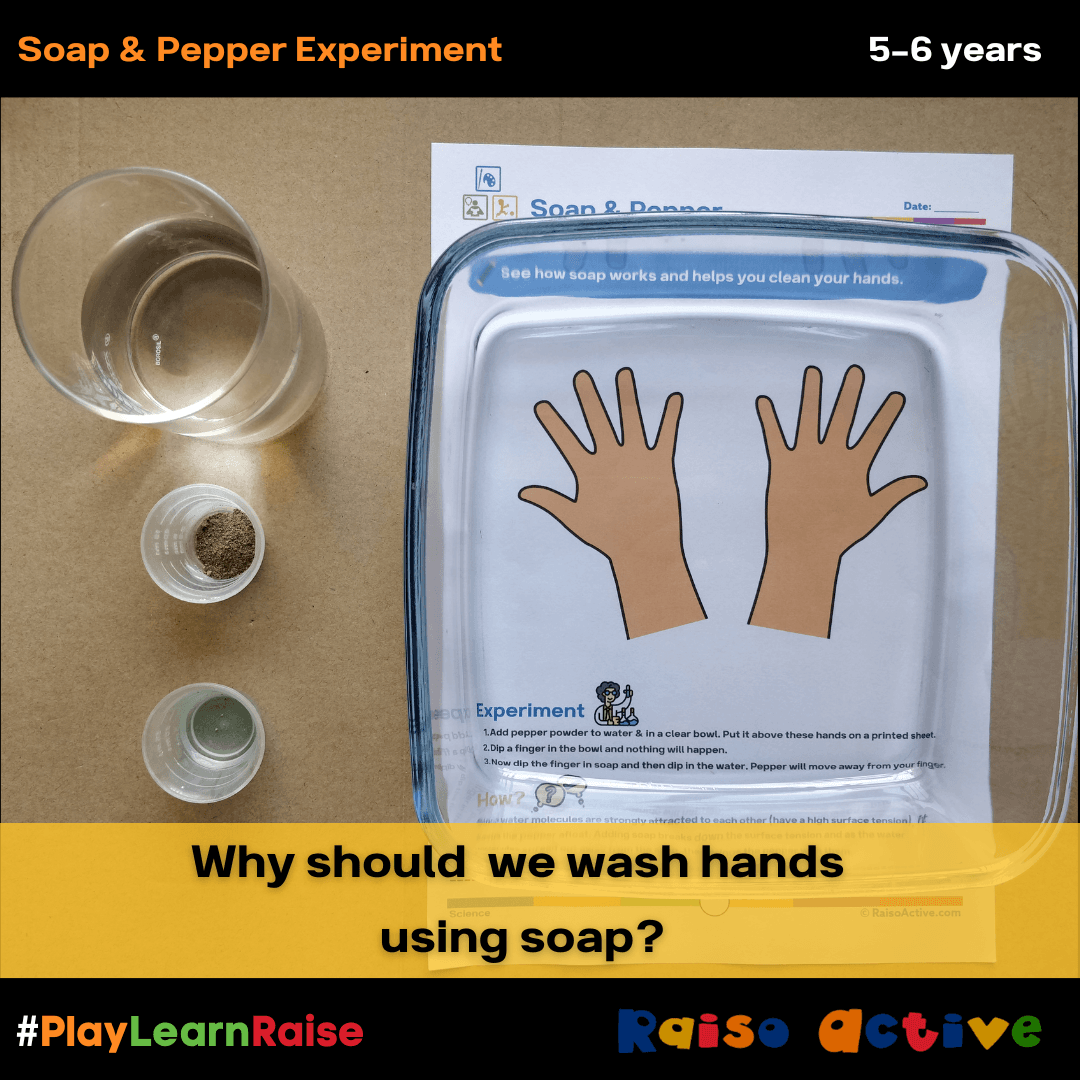
Spend 10-15 minutes on a concrete activity that uses the same concept. After a maths video: count and sort real objects, do a number worksheet, build towers. After a literacy video: trace the featured letters on paper, find the letter around the house, complete a phonics worksheet. After a science video: try the simple experiment yourself with household materials. The activity does not need to be perfect — what matters is the physical, real-world engagement.
6
Talk about it later in the day
At dinner or bedtime, bring up the episode casually: "Do you remember the Numberblocks episode this afternoon? Which number was your favourite?" This simple act of revisiting the memory — called "spaced retrieval practice" in cognitive science — significantly strengthens long-term retention. It takes 30 seconds and costs nothing.
7
Connect to the next video session
At the start of the next video session, spend one minute recapping what you learned last time before pressing play. "Before we watch today, tell me — what did we learn about the number 6?" This creates continuity, strengthens the link between sessions, and signals to your child that watching videos is part of an ongoing learning journey rather than isolated entertainment episodes.
🎨Quick Follow-Up Activity Ideas for Popular Educational Videos
- After any Numberblocks episode: collect that many objects from around the house and arrange them into groups — rice grains, coins, books, cushions
- After an Alphablocks episode: go on a sound hunt — find five things in the room that start with today's letter sound
- After a Sesame Street segment about emotions: act out the emotions with faces in a mirror, then draw a character showing each feeling
- After any nature or science video: draw what you observed and add labels together — this builds both scientific vocabulary and early writing skills
- After a story-based episode: retell the story in order using three drawings — beginning, middle, end — a powerful narrative comprehension and pre-writing activity
Evidence-Based Educational Video
- +Slow pacing with deliberate pauses — allows memory encoding
- +Consistent, beloved characters children form relationships with
- +Repetition with variation across episodes
- +Invites child responses — asks questions and waits
- +Designed around specific, age-appropriate learning objectives
- +Examples: Sesame Street, Numberblocks, Alphablocks
Educational-Looking Entertainment
- -Fast cuts and constant stimulation — overwhelms encoding
- -Random or interchangeable characters with no ongoing narrative
- -Same content repeated identically — no conceptual building
- -Passive delivery only — child is a spectator throughout
- -Designed around watch time and engagement metrics
- -Examples: flashcard compilations, rapid alphabet loops, 3-hour baby mix videos
Honest Advice for Indian Parents Navigating YouTube Kids
YouTube Kids is the most-used children's video platform in India, and it presents parents with a genuine challenge: it contains both some of the best early childhood educational content in the world (Sesame Street, Numberblocks, Alphablocks) and some of the most aggressively engagement-optimised, educationally worthless content ever produced. The algorithm that decides what your child sees next is not designed to prioritise learning outcomes — it is designed to maximise watch time.
This means that letting YouTube Kids run on autoplay is essentially handing your child's learning environment over to an engagement algorithm. The video that follows Numberblocks may be a genuinely excellent follow-up episode — or it may be a fast-cut compilation channel that has been tagged with "educational" keywords purely to reach parents searching for learning content. You have no way to know which it will be without watching every transition yourself.
The practical solution for most Indian families is a combination of three approaches. First, always disable autoplay in YouTube Kids settings. Second, use the approved content list in parental controls to whitelist specific channels (Sesame Street, CBeebies, Numberblocks) and block everything else. Third, curate a watch playlist at the start of the week — choose five or six specific episodes, add them to a playlist, and let your child choose from that list rather than from the algorithm's suggestions.
A note on Hindi and regional language content: the landscape here is more limited but improving. Sesame Street has excellent Galli Galli Sim Sim episodes in Hindi that retain the original programme's research-backed pacing and educational design. Several Indian educational publishers now produce animated content in Hindi, Marathi, Tamil, and other regional languages — look for content from known publishers (like those associated with Pratham Books or EkStep Foundation) rather than from anonymous channels.
Finally, a word on guilt. Most Indian parents are navigating screen time in difficult circumstances — long working hours, smaller homes, limited options for outdoor play in many cities, and the genuine reality that sometimes you need 20 minutes to cook dinner. Using a screen for that purpose is not a failure. The research does not suggest that any screen time is harmful; it suggests that the quality, context, and follow-up matter far more than the raw duration. A well-chosen, co-viewed 20-minute episode followed by a brief activity is genuinely educational. Two hours of unsupervised autoplay compilation videos is not — but the problem there is the structure, not the existence of screens.
Unlimited Access
Help Your Child Learn More From Every Screen Session
Get our weekly guide to evidence-based educational videos, co-viewing conversation starters, and printable follow-up activities for children aged 1-8. Trusted by parents and early childhood educators across India.
All worksheets & activitiesNew content weeklyDownload unlimited times
Subscribe NowFrequently Asked Questions
At what age can children actually start learning from YouTube videos?
The research suggests that meaningful learning from video content begins around age 2.5 to 3, and even then only under specific conditions: the content must be slow-paced and designed for that age group, and an engaged adult must watch alongside the child. Before age 2.5, the video deficit effect is very strong — children gain little educationally from screen content, even high-quality programming. From age 5 onwards, children with co-viewing support can learn quite effectively from well-designed educational video. The key word throughout is 'well-designed' — most content on YouTube Kids does not meet this criterion regardless of how it is labelled.
Is Cocomelon educational?
Cocomelon is among the most watched children's channels in the world, including in India. It is designed as entertainment rather than education, and its production values reflect this: extremely fast editing rates, constant stimulation, and no curriculum-aligned learning objectives. Some speech-language pathologists have expressed concern that Cocomelon's pacing may not support language development in the way that slower, more conversational programming does. There is no peer-reviewed research finding educational benefit from Cocomelon specifically. It is appropriate as occasional entertainment for toddlers, but it should not be counted as educational screen time and should not replace the genuinely research-backed alternatives available on the same platform.
Do flashcard videos help babies learn words faster?
No — this is one of the most thoroughly debunked claims in early childhood media. Multiple studies, including research by Dr Andrew Meltzoff at the University of Washington, have found that babies and toddlers who watch vocabulary videos (including the famous Baby Einstein series) do not acquire words faster than those who do not watch them. In some studies, heavy flashcard video viewers actually had slightly smaller vocabularies, likely because video time displaced conversational interaction with caregivers — which is the single most powerful driver of early vocabulary growth. If you want to build your baby's vocabulary, talk to them constantly, read picture books aloud, and sing songs. No video can match the learning value of a parent's voice in real conversation.
How long should video sessions be for young children?
The WHO and American Academy of Pediatrics recommend no more than one hour of high-quality screen time per day for children aged 3-5, and one to two hours for children aged 6 and above. Within that total, shorter sessions with breaks are better than one long block. For preschoolers, two 20-25 minute sessions — one in the morning and one in the afternoon, each followed by a physical or hands-on activity — produce better outcomes than a single 50-minute sitting. Always avoid video immediately before meals (distracted eating) or within an hour of bedtime (screen light affects melatonin and sleep quality). Natural episode lengths — one Numberblocks episode is typically 5-7 minutes — actually work well as built-in stopping points.
My child only wants to watch the same video over and over again. Is that okay?
Repetitive viewing is extremely common in young children and is not a cause for concern — it is actually a sign of healthy cognitive development. Young children revisit the same content because each viewing allows them to notice and process details they missed before. Research has found that children learn more from a programme on the second or third viewing than on the first, because familiar content reduces the cognitive load of following the plot and frees up mental resources for deeper processing. If your child is asking for the same Numberblocks episode again, let them watch it — but use the familiarity as an opportunity: "You know this one so well now — can you tell me what happens before we watch?" Narrating a familiar episode from memory is a powerful language and memory exercise.
Are there any good educational YouTube channels in Hindi for young children?
Yes, though the options are more limited than in English. Galli Galli Sim Sim — the Indian co-production of Sesame Street — has episodes on YouTube with Hindi-medium content that retains the original show's research-backed educational design. It covers literacy, numeracy, health, and social-emotional learning in culturally relevant Indian contexts. Beyond that, look for content from educational publishers with known standards rather than anonymous channels. Bolo by Google (primarily an app, but with accompanying video content) supports Hindi and English read-aloud. The Storyweaver platform by Pratham Books has multilingual stories that can be read aloud together. The honest advice for Hindi-medium families is to supplement Indian-language video with plenty of live conversation, Hindi picture books, and hands-on activities rather than relying on YouTube to fill the gap.