Art & Creativity, Literacy
Creative Foundations: Art Activities That Build Essential Pre-Writing Skills in Young Children
Author
RaisoActive - Kids Activities and Fun Learning
Date Published
Reading Time
11 min read

In This Article5 min read
- Art activities like finger painting, brush painting, and drawing directly build the fine motor strength, pencil control, and spatial awareness children need for writing
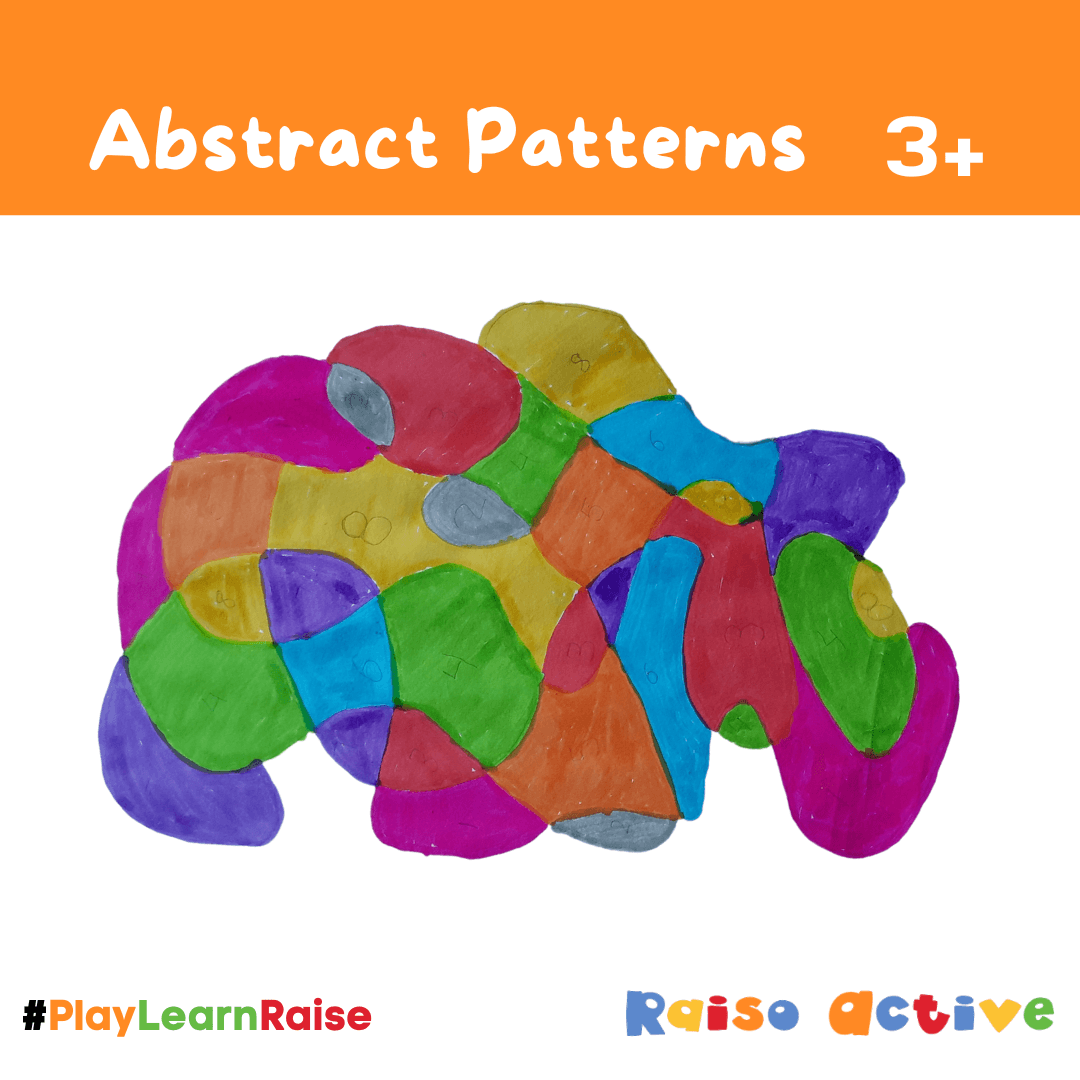
- Open-ended art — where children create freely — is far more developmentally valuable than colouring books for building pre-writing skills
- Indian art traditions such as rangoli, kolam, and warli painting are powerful, culturally rich pre-writing activities that develop precision and pattern-making
- The progression from finger painting to brush painting to crayon drawing mirrors the natural development of pencil control
- Celebrating the process of art-making — not the finished product — builds confidence, persistence, and the love of mark-making that underpins early writing
The Surprising Connection Between Art and Writing Readiness
Watch a 3-year-old completely absorbed in smearing bright orange paint across a piece of paper, and you might think: lovely, but what is she actually learning? The answer, it turns out, is quite a lot — and much of it is directly relevant to the act of writing. The strokes she is making, the pressure she is applying, the way her fingers and wrist move — all of this is laying the neurological and muscular groundwork for the day she will pick up a pencil and form her first letter.
Pre-writing skills are not just about holding a pencil correctly. They encompass a whole constellation of abilities: fine motor strength in the small muscles of the hand, control over the direction and pressure of marks, spatial awareness (understanding where shapes are in relation to each other), visual-motor integration (making the hand do what the eye directs), and the ability to plan and sequence movements. Art activities, when chosen thoughtfully, develop every single one of these skills — and they do it joyfully, without any pressure.
In India, we have a beautiful inheritance of art traditions that parents have unknowingly used for generations to develop these very skills in children. From the intricate dot patterns of rangoli to the flowing lines of kolam, these activities ask the hand to do exactly what writing will one day require. In this guide, we will explore how to harness both traditional and contemporary art activities to give your child the strongest possible foundation for writing success.
What Are Pre-Writing Skills and Why Do They Matter?
Before we dive into specific activities, it helps to understand what pre-writing skills actually are. Pre-writing skills are the foundational abilities a child needs before formal handwriting instruction can be successful. They include fine motor control (the ability to use small muscles of the hand and fingers with precision), pencil control (the ability to make intentional, directed marks), spatial awareness (understanding concepts like above, below, left, right, inside, and outside), visual-motor integration (co-ordinating what the eyes see with what the hand does), and pre-writing strokes (the ability to copy basic shapes and lines: horizontal, vertical, diagonal, circle, cross, and square).
Children who enter formal writing instruction with strong pre-writing skills learn to write more easily, experience less frustration, and develop better handwriting in the long term. Children who lack these foundations often struggle — not because they are not intelligent or capable, but because the underlying muscles and neural pathways simply have not been built yet. The good news is that art activities are one of the most effective and enjoyable ways to build these foundations, and you can start at home or in the classroom from as young as age 2.
Art Activities Ranked by Pre-Writing Skill Developed
Not all art activities are equal in terms of what they contribute to writing readiness. The following progression — from finger painting through to pencil control exercises — mirrors the natural development of fine motor control in young children. Work through these activities in order, spending several months at each stage rather than rushing ahead. You will know a child is ready to progress when the current activity feels comfortable and controlled rather than effortful and wild.
Stage 1: Finger Painting (Ages 2-3)
Finger painting is the perfect starting point because it removes the tool entirely and connects the child directly to the surface. When a child pushes paint with their finger, they are building sensory awareness of pressure and direction, developing independent finger movement (isolating one finger from the rest is a crucial pre-skill), experiencing cause and effect in mark-making, and exploring spatial relationships on the paper surface.
To get the most developmental value from finger painting, encourage your child to use individual fingers rather than the whole hand, make different types of marks (dots, lines, swirls, zigzags), and vary the pressure — pressing hard versus very lightly. This is more than art: it is the child's first lesson in controlled mark-making.
Stage 2: Brush Painting (Ages 2.5-4)
Introducing a paintbrush is a significant step because now the child must hold a tool — and the way they hold it closely mirrors the tripod grip they will eventually use for a pencil. Fat, chunky brushes are best for beginners; as control develops, gradually introduce thinner brushes. Painting on a vertical surface (an easel or paper taped to the wall) is particularly valuable because it naturally positions the wrist correctly and builds shoulder stability.
Brush painting builds hand strength around the tool, develops wrist rotation and control, teaches the child to moderate pressure (too much pressure destroys the brush; too little makes no mark), and encourages the child to make intentional, planned strokes. Ask children to paint specific things — a sun, a fish, a flower — to develop planning and visual-motor integration alongside fine motor control.
Stage 3: Drawing with Chunky Crayons and Chalk (Ages 3-4)
Moving from a brush to a crayon or chalk is the next step in the progression towards pencil use. Crayons and chalk require more precision of grip and control of direction than a brush, because the marks are thinner and more precise. Short crayons (broken ones work beautifully) and short pieces of chalk naturally encourage a tripod grip because there is not enough length to use a fist grip. This is a simple and effective trick used by occupational therapists worldwide.
Drawing with crayons develops grip strength and precision, directional control (drawing lines that go where intended), pressure awareness (how hard to press to get the colour desired), and — as children begin to draw representational objects — planning and spatial organisation. Encourage free drawing rather than only colouring; free drawing is far more valuable for pre-writing skill development.
Stage 4: Pencil Control Exercises Embedded in Art (Ages 4-6)
By this stage, children are ready for art activities that specifically target the strokes and movements of writing. Drawing mazes, creating patterned borders, drawing repetitive shapes (waves, zigzags, loops), and tracing over lightly-drawn outlines all develop the precise directional control that writing demands. The key is to embed these exercises within engaging art contexts — drawing a wavy ocean beneath a boat, filling a border with loops, creating patterns inside a mandala — so that children are motivated to practise the movements repeatedly.
Key Takeaway
The progression from finger painting to brush painting to crayon drawing to pencil work mirrors the natural development of fine motor control. Each stage builds the foundations for the next. Rushing ahead before a child is ready leads to grip problems and writing difficulties later.
Occupational therapists recommend spending several months at each stage and allowing children to revisit earlier stages freely — the brain builds skills through repetition, not speed.
Open-Ended Art vs Colouring Books: Why It Matters for Writing
Colouring books are wildly popular, and it can feel like they are great for fine motor development. But here is what the research and occupational therapists consistently tell us: open-ended art — where a child creates from their own imagination — is significantly more valuable for pre-writing development than colouring books. This is a nuanced point worth understanding, because it has real implications for what you buy and provide for your child.
When a child colours in a pre-drawn outline, they are practising staying within boundaries — which has some value. But they are not practising planning, spatial organisation, directional decision-making, or any of the motor sequencing that writing requires. When a child creates their own drawing, they must decide where to start, which direction to go, how to change direction, how much space to use — all of which are exactly what writing demands. Open-ended art also builds the child's confidence in their own mark-making, which translates directly into confidence with writing.
This does not mean colouring books are harmful — they can be enjoyable and can practise the staying-within-lines skill. But if you have limited time, prioritise open-ended art. And if your child loves colouring books, complement them with plenty of free drawing, painting, and creating from imagination.
Open-Ended Art (Prioritise This)
- +Child decides what to draw and how — builds planning and spatial thinking
- +All mark-making directions are chosen by the child — builds directional control
- +Child creates representations of real things — builds visual-motor integration
- +Child experiences intrinsic motivation — builds persistence and love of creating
- +Mistakes are impossible — builds confidence in mark-making
- +Develops all pre-writing strokes naturally through varied, self-directed drawing
Colouring Books (Use Sparingly)
- -Outlines already provided — no spatial planning required
- -Only skill practised is staying within boundaries
- -Subject already determined — no creative or planning component
- -Child may feel frustrated if they go outside the lines — can reduce confidence
- -Limited directional variety — mostly inside-boundary strokes
- -Develops only one aspect of pre-writing (boundary awareness)
Indian Art Traditions as Powerful Pre-Writing Activities
One of the most exciting insights for Indian parents and teachers is that our own cultural art traditions are, quite accidentally, some of the best pre-writing activities in existence. These are not just beautiful art forms — they are intricate, systematic, repetitive mark-making practices that develop exactly the precision, pattern recognition, and directional control that writing requires. And they carry the added gift of cultural connection, which research shows is deeply meaningful for children's sense of identity and motivation to learn.
Rangoli is perhaps the most accessible for young children. The act of placing coloured dots in a grid, connecting dots with lines, and filling in symmetrical patterns develops dot-to-dot precision (a direct pre-writing skill), left-right directionality, spatial symmetry, and fine pincer grip. Even very young children can participate by placing coloured dots or flower petals in simple patterns. As they grow, the complexity of the patterns can increase naturally.
Kolam, the South Indian tradition of drawing patterns on the floor using rice flour, takes this further. Creating kolam requires the child (or adult guiding the child) to place dots precisely in a grid, connect them with flowing curves and straight lines, and maintain symmetry across the design. The flowing, connected line work of kolam is remarkably similar to the connected stroke work of cursive writing. For young children, start by showing them how to make simple 3x3 dot kolam patterns on paper.
Warli painting, the tribal art tradition from Maharashtra, uses only geometric shapes — circles, triangles, and lines — to create detailed scenes of village life. Because warli is built from basic geometric strokes, it is perfectly aligned with pre-writing shape practice. Children who practise warli patterns are directly practising the circles, lines, and triangles that letters are built from. The repetitive, rhythmic nature of warli painting also builds the kind of controlled, sustained pencil movement that handwriting requires.
🎨Starting Rangoli and Kolam with Young Children
- Begin with very simple patterns: a 3x3 grid of dots for kolam, or a flower shape made of 5 dots around a centre dot for rangoli.
- Use chunky chalk on the floor or the courtyard for a traditional feel — the larger surface makes it accessible for smaller hands.
- For indoor versions, draw a light dot grid on paper and invite children to connect dots with lines or curves in any pattern they choose.
- Celebrate any attempt: the goal is the process of placing dots and making connecting lines, not a perfect finished product.
- Older children (5-6) can try recreating simple geometric kolam patterns traced from reference cards.
Key Takeaway
India's own art traditions — rangoli, kolam, and warli — are extraordinary pre-writing tools hiding in plain sight. They develop dot placement precision, directional control, geometric shape-making, and sustained fine motor effort — all of which are essential foundations for writing.
Children who engage in regular art activities show 40% stronger fine motor skills at school entry
Research across early childhood education studies consistently shows that children with rich art experiences in their preschool years demonstrate significantly greater fine motor readiness for writing. The varied mark-making, tool-holding, and directional control practised in art directly transfers to the small muscle skills required for handwriting.
Source: Early Childhood Education Journal, Comparative Fine Motor Studies
Setting Up an Art Corner at Home
One of the most powerful things you can do for your young child's pre-writing development is to make art materials accessible every single day. Not just on weekends or when you have time to supervise closely — every day, the way books and toys are accessible. Children who can reach for art materials whenever the impulse strikes them will engage in far more mark-making practice than children who wait for art to be set up for them.
You do not need a dedicated room or expensive supplies. A low shelf, a small table or a mat on the floor, and a basic set of materials is enough. The key is that children can access and use the materials independently, which builds autonomy and ensures that art-making is driven by the child's own curiosity rather than by an adult's schedule.
How to Set Up an Art Corner at Home
1
Choose a low, accessible surface
A low shelf, a plastic drawer unit, or even a basket on a low table works well. The child must be able to reach all the materials without adult help. Place the art corner in a room with easy-to-clean flooring if possible — kitchens and dining areas work well. Keep the supplies at the child's height.
2
Start with a basic material set
For children ages 2-4: chunky washable crayons, large sheets of plain paper, washable finger paints, and a fat paintbrush. For children ages 4-6: add thinner crayons, pencils, a small watercolour set, child-safe scissors, and glue sticks. Rotate materials every few weeks to maintain interest. Too many options at once can be overwhelming.
3
Provide a variety of paper sizes and types
Variety is important for developing different types of mark-making. Large sheets of paper encourage big arm movements and shoulder development. Small paper encourages more precise, controlled work. Include lined paper, grid paper, and plain paper. Old newspapers, the backs of used envelopes, and brown paper bags all work beautifully.
4
Set up a display space
String a piece of rope or ribbon at the child's height and clip artwork to it with pegs. Or dedicate a section of wall for pinning finished work. Displaying artwork sends a powerful message: what you create matters and is worth celebrating. This motivates children to keep creating.
5
Establish simple, clear boundaries
Art stays at the table or mat, not the walls or furniture. Paintbrushes are for paper, not for painting siblings. Keep a small cloth or sponge nearby for wiping hands during painting. Clear, consistent boundaries mean you can let the child work independently without anxiety, which is the whole point.
6
Include a vertical surface
An easel is ideal, but if space or budget is tight, simply tape paper to the wall at the child's height. Drawing on a vertical surface naturally positions the wrist in the correct extended position for writing, and builds shoulder stability. Even 10 minutes of vertical drawing each week makes a meaningful difference.
7
Add natural and tactile materials
Leaves, twigs, flowers, and feathers can be arranged into patterns (like rangoli) or used to make prints. Clay or playdough should also be part of the art corner rotation — squeezing, rolling, and shaping clay directly builds the hand strength needed for pencil control. A tray of sand or salt for finger-drawing is another wonderful addition.
👋Age-Appropriate Art Materials: A Quick Reference
- **Ages 2-3:** Chunky washable crayons (triangular shape is excellent for grip development), large flat brushes (2-3 cm wide), washable finger paints, playdough, large sheets of paper, chalk for outdoor drawing.
- **Ages 3-4:** Shorter/broken crayons to encourage tripod grip, medium-width brushes, watercolour sets, safety scissors for snipping, dot markers (bingo dabbers), cotton buds for dot painting.
- **Ages 4-5:** Standard-sized crayons and coloured pencils, thin brushes, oil pastels, patterned stampers, tracing paper, simple drawing guides for rangoli and warli patterns.
- **Ages 5-6:** Full pencil set, fine-tip markers, detailed watercolour work, introduction to kolam dot grids, pattern-making tools, ruler for drawing straight lines in geometric art.
- **Always avoid:** Permanent markers for very young children, sharp tools without supervision, materials that cannot be washed from skin or clothing for independent art time.
Reading Your Child's Artwork: Signs of Writing Readiness
Children's artwork is not just art — it is a developmental record. If you know what to look for, you can read the signs of growing pre-writing readiness in the way your child creates. You do not need to be an expert; just be a careful observer. The following signs, appearing progressively from about age 2 to age 6, indicate that the relevant pre-writing skills are developing well.
Around age 2-3: You will see scribbles that begin to show intention — the child makes the same mark repeatedly, or tries to make a circle or line. The scribbles have more direction and less randomness than at age 1. The child talks about what they are drawing, even if the image looks nothing like it to adult eyes. These are all excellent signs.
Around age 3-4: Closed shapes begin to appear — rough circles and squares, even if wobbly. The child may draw a face: a circle with dots for eyes and a line for a mouth. This is significant because it shows the child can plan a drawing spatially, which is directly related to planning letters on a page. Lines that are meant to be straight are noticeably straighter than before.
Around age 4-5: People appear in drawings with bodies, arms, and legs. The child fills in details: fingers, hair, clothes. Drawings are organised on the page — sky at the top, ground at the bottom. This spatial organisation is a direct precursor to organising letters on a line. The child may begin including letter-like shapes or attempts at writing their own name in their artwork.
Around age 5-6: Drawings are detailed and representational. The child can copy basic geometric shapes (circle, square, triangle, cross, diagonal line) accurately. They hold the crayon or pencil in a three-finger grip. They can colour within boundaries with reasonable accuracy. All of these signs together indicate that the child is ready to begin formal letter-formation practice.
Key Takeaway
A child's artwork is a window into their developing fine motor and spatial skills. Rather than evaluating whether drawings 'look right', observe the quality of the lines, the organisation of the page, and the child's grip on the drawing tool. These tell you far more about writing readiness than any test.
If a child's artwork shows no intentional shapes or planning by age 4, or if their grip remains a whole-fist grip past age 4, it may be worth consulting an occupational therapist for an assessment.
💡A Note on Process Over Product
- The most important thing you can do to support your child's art and pre-writing development is to celebrate the process, not evaluate the product.
- Instead of asking 'What is this supposed to be?', try: 'Tell me about your picture' or 'I notice you used lots of blue today.'
- Instead of saying 'That is beautiful!', try: 'I can see you worked really hard on that' or 'Look how many different lines you made!'
- Avoid correcting grip, mark-making direction, or colour choices during free art time. Save guidance for specific skill-building activities.
- Children who feel their art is accepted and celebrated — whatever it looks like — will make more art. And more art means more pre-writing practice. The quantity of mark-making matters as much as the quality.
Children who make art daily enter school with fine motor skills 6-12 months ahead of peers who rarely draw or paint
The cumulative effect of daily art-making is profound. Small, regular sessions — even just 10-15 minutes of drawing or painting — compound over weeks and months into a significant developmental advantage. Daily art access is one of the most accessible and powerful interventions available to parents of young children.
Source: Journal of Early Childhood Research, Longitudinal Fine Motor Development Studies
⚠️Warning: Signs That Art is Causing Frustration Rather Than Development
- If a child consistently refuses to do any art activities, do not force it — explore sensory-friendly alternatives like drawing in sand or making marks with their finger in shaving foam.
- If a child becomes very distressed when their drawing doesn't look 'right', they may have developed a fixed mindset about art. Respond by doing more unstructured, process-based art with no representational goal.
- If a child over age 4 still has no control over their marks — lines go in random directions, shapes never close, grip is always a full fist — this may indicate a fine motor delay worth discussing with a paediatrician or occupational therapist.
- Art should feel pleasurable and engaging. If it consistently does not, adjust the materials, the context, or the level of adult involvement rather than pushing through.
Frequently Asked Questions About Art Activities and Pre-Writing Skills
At what age should I start doing art activities with my child to build pre-writing skills?
You can start as early as 12-18 months with simple finger painting and exploration of mark-making materials. At this age, the goal is purely sensory exploration — getting comfortable with tools and surfaces. From age 2, you can begin to gently introduce more intentional mark-making (asking the child to draw a line or a circle). By age 3, art activities can directly target pre-writing skills. The earlier you make art materials accessible and enjoyable, the stronger the foundation your child will build.
My child only wants to scribble. Should I be encouraging more 'proper' drawing?
Scribbling is not a sign that a child is not progressing — it is a crucial developmental stage that every child must pass through. The quality and intentionality of scribbling evolves significantly from age 1 to age 3. Rather than pushing 'proper' drawing, enrich the scribbling stage: provide a variety of tools and surfaces, join in with your own scribbling, talk about the marks being made ('Look at that long swooshy line!'), and ask the child to tell you about their scribbles. The transition to representational drawing happens naturally and cannot be rushed effectively.
Is rangoli appropriate for young children, or is it too difficult?
Rangoli is wonderfully adaptable for all ages. For children as young as 2, you can fill a tray with coloured rice or sand and invite them to make patterns by pushing the material around with their fingers — this captures the sensory and spatial exploration of rangoli without requiring precision. From age 3, children can place flower petals or stones in simple circular patterns. From age 4-5, dot-based rangoli on paper (place a grid of dots and connect them with lines) is an excellent pre-writing activity. The key is scaling the complexity to the child's current ability.
How long should art sessions be for young children?
Short, frequent sessions are far more valuable than occasional long ones. For toddlers (age 2-3), 10-15 minutes is about the right length before attention wanders. For preschoolers (age 3-5), 20-30 minutes is typical. For children age 5-6, sessions can extend to 30-45 minutes if the child is engaged. The most important thing is to follow the child's lead: when interest wanes, end the session positively rather than pushing through. A child who ends art time wanting more will come back eagerly next time.
My child always uses a fist grip when painting or drawing. Should I correct this?
A whole-fist grip is completely normal and expected up to about age 3.5 for painting and drawing. For children in this age range, focus on building hand strength through art and play rather than correcting grip. Short crayons and chalk naturally discourage a fist grip because there is not enough length to wrap the whole hand around — this is a gentle, non-corrective way to encourage a more mature grip. For children over age 4 who still use a fist grip for all tools, gentle guidance to a two- or three-finger grip is appropriate, but avoid constant correction during creative play as this disrupts the flow and joy of the activity.
Are there any art activities specifically good for children who resist writing or have fine motor difficulties?
Yes — several art activities are especially helpful for children who find writing challenging or resist pencil-based activities. Finger painting removes the tool barrier entirely and lets the child experience mark-making directly. Drawing in sand or salt trays provides sensory feedback that many children find easier to process than paper. Drawing with chunky chalk outdoors has a physical freedom that appeals to children who feel constrained by a desk. Warli-style pattern-making using only geometric shapes provides a highly structured, achievable form of drawing that builds confidence. If a child has significant fine motor difficulties, an assessment by a paediatric occupational therapist is the most valuable next step.