Early Learning, Cultural Diversity, Social Skills
Building Future Citizens: How to Teach Social Studies to Young Children Through Creative Exploration
Author
RaisoActive - Kids Activities and Fun Learning
Date Published
Reading Time
9 min read

In This Article10 min read
- Why social studies matters for children as young as two — and how it builds empathy, identity, and civic awareness
- Age-appropriate activities: community helpers, Indian states, map skills, and cultural festivals
- Research-backed strategies for introducing geography, history, and diversity through play
- Practical role-play ideas, craft projects, and printable worksheets you can use today
- How to weave Indian culture and global awareness into everyday learning moments
Why Social Studies Matters — Even for Toddlers
When we think of early childhood education, most of us jump to the ABCs, 123s, and perhaps a bit of colouring. But there's a powerful subject that often gets overlooked in the early years — social studies. And yet, it's one of the most important foundations we can lay for raising thoughtful, empathetic, and engaged citizens.
Social studies for young children isn't about memorising capitals or dates. It's about helping them understand the world they live in — their family, their neighbourhood, their country, and the rich tapestry of cultures that make up our planet. It's about answering the questions children naturally ask: Who are the people in my community? Why do we celebrate Diwali? What does that map show? Why does my friend eat different food?
In India, where we're blessed with 28 states, 22 official languages, and countless festivals, the opportunities for social studies learning are everywhere — from the sabzi wala who visits your lane to the rangoli your grandmother draws on Onam. This guide will show you how to harness that everyday richness and turn it into meaningful learning experiences for children ages 2 to 8.
Get free social studies worksheets in your inbox
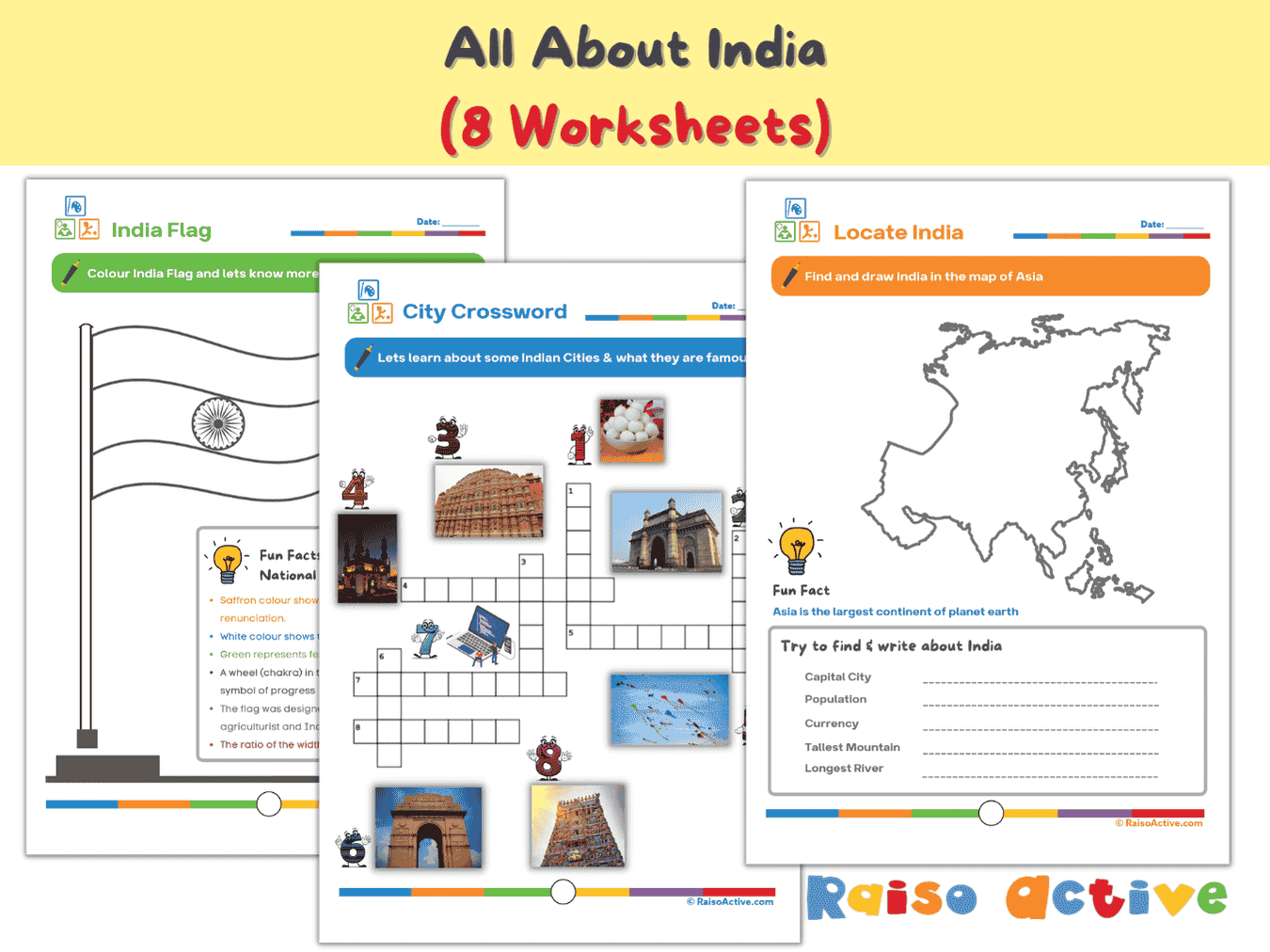
Map activities, community helper printables, Indian festivals colouring pages, and flag worksheets — all designed for ages 2-8.
What Research Tells Us About Early Social Studies Education
You might wonder: are young children really ready for social studies? The answer is a resounding yes. Developmental research shows that children begin forming their sense of identity, community belonging, and cultural awareness well before they enter formal schooling. By age three, children can already recognise differences in skin colour, language, and customs — and they're actively making sense of these observations.
85%
of a child's brain development occurs before age five, making the early years a critical window for forming attitudes about diversity, fairness, and community belonging.
Source: Harvard Center on the Developing Child, 2023
The National Council for the Social Studies (NCSS) identifies ten themes that form the backbone of social studies education — including culture, people, places and environments, civic ideals and practices, and individual development and identity. While these sound academic, they translate beautifully into early childhood: learning about festivals is culture; exploring your neighbourhood on a walk is people, places and environments; taking turns in a game is civic ideals.
Key Takeaway
Social studies is not an add-on subject — it is woven into every interaction a child has with their family, community, and the wider world.
From sharing toys to understanding why we celebrate Republic Day, children are already doing social studies. Our job is to make it intentional and enriching.
Community Helpers: Understanding the People Around Us
One of the most engaging entry points into social studies is the concept of community helpers — the people who keep our neighbourhoods running. For Indian children, this is wonderfully tangible. The doodh wala, the postman on his red bicycle, the doctor at the local clinic, the police constable at the crossing, the kisan (farmer) who grows our rice — each of these is a living lesson in how communities function.
Role-Play Activities for Learning About Community Helpers
Children learn best through doing, and role-play is one of the most powerful tools in your teaching toolkit. When a child puts on a toy stethoscope and "examines" a teddy bear, they're not just playing — they're developing empathy, understanding social roles, and building vocabulary.
Setting Up a Community Helpers Role-Play Corner
1
Choose 3-4 helpers to focus on each week
Start with helpers your child sees regularly — the doctor, shopkeeper, teacher, and police officer. In later weeks, introduce lesser-known roles like the librarian, firefighter, or forest ranger.
2
Gather simple props from around the house
You don't need expensive costumes. A white dupatta becomes a doctor's coat, a cardboard box becomes a shop counter, and an old diary becomes a register. Encourage children to help make the props — this builds ownership.
3
Create scenario cards with simple situations
Write or draw scenarios: "A child has a fever — what does the doctor do?" or "Someone needs to post a letter — where does the postman take it?" Let children act out the scenarios in pairs or small groups.
4
Debrief with open-ended questions
After play, ask: "What did you enjoy about being a shopkeeper? What was difficult? Why is this job important for our neighbourhood?" These reflective conversations deepen understanding.
🎨Making It Real
- Take your child on a **neighbourhood walk** and point out all the community helpers you see — the auto-rickshaw driver, the security guard, the chai wala. Let your child ask them one question about their work.
- Invite a community helper to your child's classroom or home (virtually or in person) for a **5-minute show-and-tell**. Even a brief conversation with a real firefighter or nurse creates lasting impressions.
- Create a **"Thank You" card project** where children make cards for community helpers they appreciate. Delivering these cards teaches gratitude and strengthens community bonds.
Geography for Little Explorers: Maps, States, and the World
Geography might sound like a big word for little learners, but children are natural geographers. They understand "near" and "far," they know the way to Nani's house, and they're fascinated by pictures of mountains, oceans, and faraway lands. Our job is to build on that natural curiosity.
Starting With the Familiar: My Home, My Neighbourhood, My City
The best geography lessons start with what children already know. Before introducing maps of India or the world, help your child create a mental map of their own environment. Walk around your home and talk about directions — "the kitchen is behind the living room" or "the park is across the road from our building." For children aged 4 and above, try drawing a simple map of your home together. It doesn't need to be accurate — the process of thinking spatially is what matters.
Exploring Indian States Through Stories and Food
India's incredible diversity makes it a natural geography classroom. Each state has its own language, food, dress, dance, and festivals — and children are often more interested in these tangible details than in borders on a map.
- Food exploration: Cook or order a dish from a different state each week. Try appam from Kerala, litti chokha from Bihar, or momos from Sikkim. Talk about where the state is on the map, what language people speak there, and what the weather is like.
- Dance and music: Watch short videos of Bharatanatyam (Tamil Nadu), Bihu (Assam), Bhangra (Punjab), or Garba (Gujarat). Let children try the movements. Discuss why each dance is special to its region.
- Dress-up days: Organise occasional "state dress-up days" where children come wearing traditional clothing from different states — a lungi, a phiran, a mekhela chador, or a lehenga.
- Story time: Read folktales from different states. Panchatantra stories, Tenali Raman tales from Andhra Pradesh, or Birbal stories from Mughal India all connect children to India's cultural heritage.
💡Simple Map Activities for Ages 3-6
- Use a **jigsaw puzzle map of India** — children learn state shapes and locations through hands-on play. Start with just 5-6 states and build up gradually.
- Create a **sensory map** by gluing different textures onto regions: sand for Rajasthan, cotton for Punjab (cotton fields), green felt for Kerala (greenery), and blue fabric for coastal states.
- Hang a **large map of India** at your child's eye level. Each time you learn about a new state, let your child place a sticker or pin on it.
- For ages 5+, introduce **simple compass directions** (North, South, East, West) using the map. "Kashmir is in the North. Kerala is in the South."
Key Takeaway
Geography becomes meaningful when it connects to things children can taste, touch, hear, and see — not just lines on a map.
A child who has tasted idli, heard Bihu music, and felt the texture of Banarasi silk has a richer understanding of India than one who has simply memorised state capitals.
Celebrating Cultural Diversity: Festivals, Traditions, and Belonging
India is often described as a land of festivals — and for good reason. From Diwali and Eid to Christmas, Pongal, Baisakhi, Onam, and Bihu, there is always something to celebrate. For young children, festivals are not just fun — they are powerful vehicles for learning about cultural diversity, religious tolerance, and shared values.
When a Hindu child learns why her Muslim friend fasts during Ramadan, or when a Christian child helps make rangoli for Diwali, something profound happens: children learn that different doesn't mean strange — it means interesting. This early exposure to diversity builds the empathy and open-mindedness that our society desperately needs.
3 years old
Research shows children begin noticing racial and cultural differences by age 3. Talking openly about diversity from this age — rather than avoiding the topic — helps children develop positive attitudes toward people who are different from them.
Source: American Academy of Pediatrics, 2019
Festival-Based Learning Activities
- Festival calendar project: Create a classroom or home calendar marking major festivals from different religions and cultures. Each month, explore one festival in depth — its story, food, music, and significance. Children can contribute drawings or photos from their own celebrations.
- Cooking together: Food is the universal connector. Make sewaiyan for Eid, modak for Ganesh Chaturthi, Christmas cake, or payasam for Onam. Even simple tasks like stirring, kneading, or decorating involve children in the celebration.
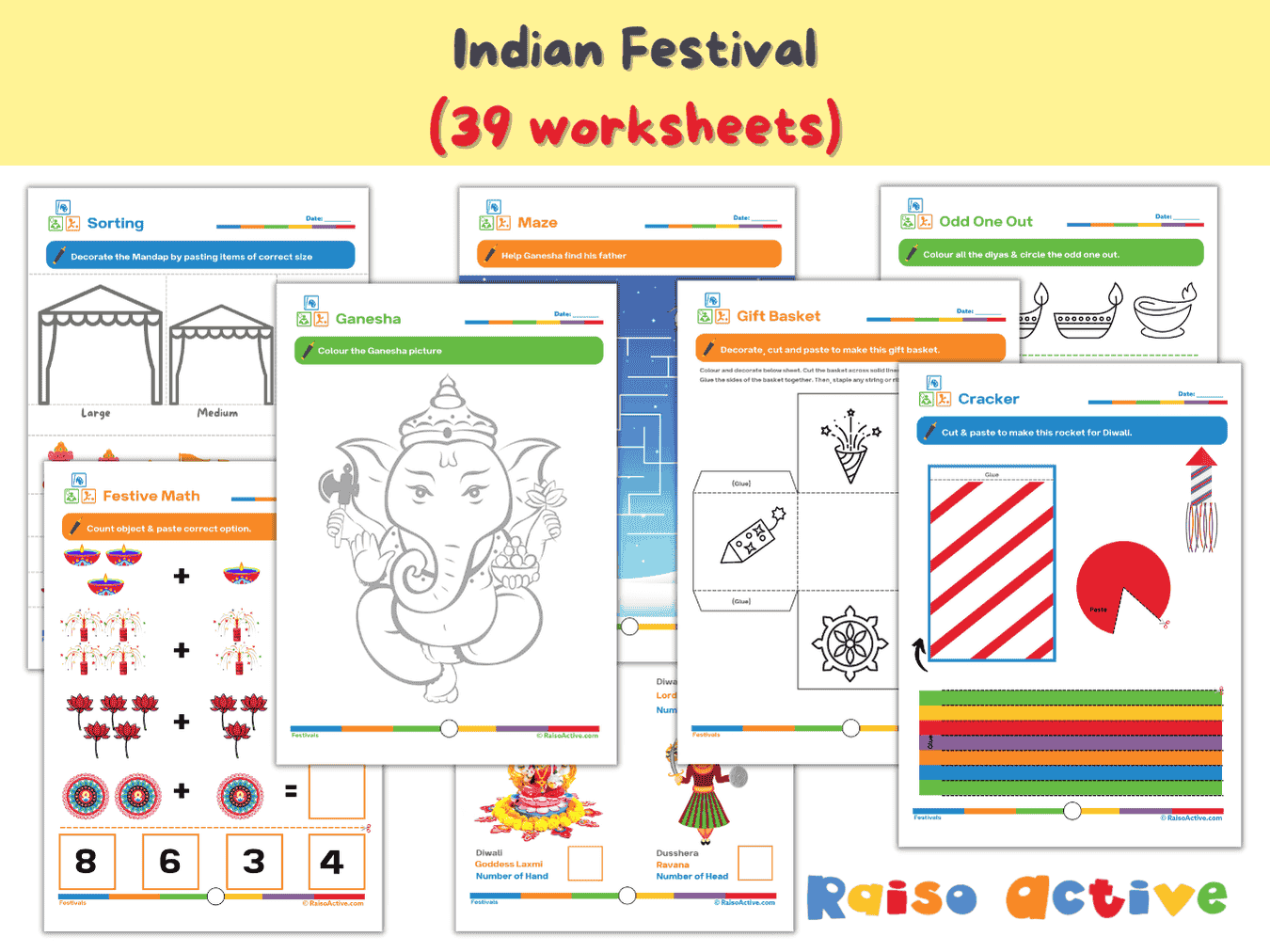
- Art and craft: Diya painting for Diwali, lantern making for Christmas, kite making for Makar Sankranti, or flower arrangement for Onam — each craft teaches about the festival while building fine motor skills.
- Story circles: Gather children and tell the story behind each festival. Use picture books, puppets, or simple props. Ask children to share how their family celebrates — this validates every child's experience.
⚠️A Note on Sensitivity
- **Never present one culture as "normal" and others as "exotic."** All traditions deserve equal respect and curiosity in the classroom.
- **Involve families**: Ask parents and grandparents to share their festival traditions, recipes, or songs. This creates a sense of belonging for every child.
- **Avoid stereotypes**: Don't reduce any culture to a single food, costume, or festival. Emphasise that every community is rich and varied.
- **Use inclusive language**: Say "some families celebrate..." rather than "we celebrate..." to include children from all backgrounds.
National Symbols and Civic Awareness: Building Pride and Responsibility
Understanding national symbols is one of the earliest ways children connect with their identity as citizens. The Indian national flag (Tiranga), the national emblem (Ashoka Chakra), the national anthem (Jana Gana Mana), the national bird (peacock), and the national flower (lotus) — these symbols carry meaning that even young children can begin to appreciate.
Age-Appropriate Ways to Teach About National Symbols
- Ages 2-3: Focus on recognition. Show the flag, name the colours (saffron, white, green), and let children colour a simple flag printable. Sing the national anthem together and clap along.
- Ages 4-5: Introduce the meaning behind the symbols. "The Ashoka Chakra has 24 spokes — it reminds us to keep moving forward." Show pictures of the peacock and lotus. Read simple stories about Independence Day.
- Ages 6-8: Discuss concepts like rights and responsibilities. "We have the right to go to school — and the responsibility to learn. We have the right to play in the park — and the responsibility to keep it clean." Introduce leaders like Mahatma Gandhi, Dr. B.R. Ambedkar, and Sardar Patel through age-appropriate biographies.
Do This
- +Make flag colouring and craft activities fun and creative
- +Explain symbols using simple stories and relatable examples
- +Encourage questions — "Why is the chakra blue?" is a great question!
- +Connect civic concepts to daily life: sharing, taking turns, following rules
- +Celebrate Republic Day and Independence Day with age-appropriate activities
Avoid This
- -Force children to memorise facts without understanding
- -Present civic education as boring or lecture-heavy
- -Dismiss children's questions as "too advanced"
- -Limit civic learning to just two national holidays a year
- -Skip discussion of responsibilities alongside rights
Making History Come Alive: Stories From the Past
History for young children is not about dates and timelines — it's about stories. Children love stories, and history is full of them. The key is choosing stories that are age-appropriate, engaging, and connected to the child's world.
Start with family history. Ask grandparents to share stories about what life was like when they were young. What games did they play? What did their school look like? Did they have a television? These conversations create a sense of continuity — children begin to understand that the world has changed and will continue to change.
Then widen the lens to community and national history. For Indian children, stories about the freedom struggle are particularly powerful. The Dandi March, Bhagat Singh's bravery, Rani Lakshmibai's courage — these can be told as adventure stories that inspire children and connect them to their heritage. Use picture books, short videos, and dramatic storytelling to bring these narratives to life.
👋History Activities for Different Age Groups
- **Ages 2-3**: Create a simple "then and now" photo display. Show pictures of old telephones vs. smartphones, bullock carts vs. cars, or handwritten letters vs. email.
- **Ages 4-5**: Make a **family timeline** with photos and drawings. Place events in order: "First Nani was born, then Mummy, then me!" This introduces the concept of chronological order.
- **Ages 6-8**: Research a historical figure together. Let children "interview" the figure by writing questions and finding answers in books or child-friendly websites. They can present their findings as a poster or short talk.
- **All ages**: Visit local historical sites — forts, museums, old temples, or heritage buildings. Even a short visit with guided conversation creates lasting memories.
Beyond India: Nurturing Global Citizens
While it's important for children to know and love their own culture, global awareness is equally vital in our interconnected world. Children today will grow up to work with, live near, and befriend people from all over the globe. Introducing them to other countries, languages, and ways of life helps them become open-minded and adaptable.
- Country of the week: Each week, explore a new country. Find it on the globe, learn to say "hello" in its language, try a simple recipe from that country, and listen to its music. Keep a scrapbook of your explorations.
- Pen pals or video pals: Connect with a classroom or family in another country through letters or short video calls. Children are fascinated to learn that kids their age in Japan eat different lunches, or that children in Kenya play different games.
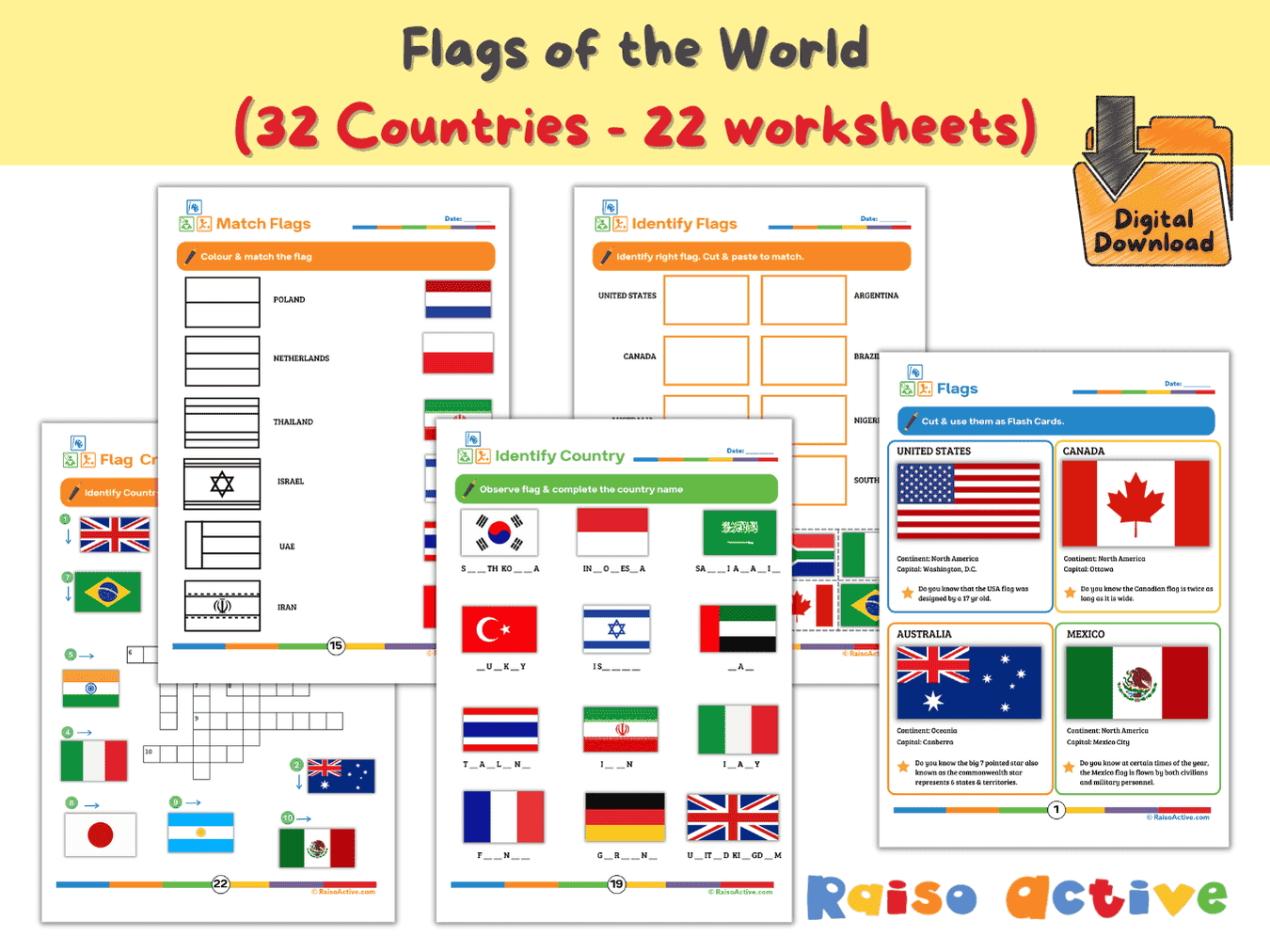
- World flag activities: Print and colour flags from different countries. Discuss what the colours and symbols mean. Create a "Flags of the World" display wall.
- Global stories: Read folktales from around the world — Anansi stories from Ghana, Grimm's fairy tales from Germany, Jataka tales from India. Compare themes across cultures: "All these stories teach us about being kind!"
Key Takeaway
The goal of early social studies is not to fill children with facts, but to fill them with curiosity about people, places, and the way the world works.
A child who asks "Why?" about customs, maps, and history is already a social studies learner. Your role is to nurture that curiosity and guide it with warmth and intention.
Unlimited Access
Want More Social Studies Resources for Your Little Learner?
Join thousands of Indian parents and teachers who receive free printable worksheets, activity ideas, and expert tips every week. From map activities to community helper role-play cards — we have got you covered.
All worksheets & activitiesNew content weeklyDownload unlimited times
Subscribe NowFrequently Asked Questions About Teaching Social Studies to Young Children
At what age should I start teaching social studies to my child?
You can begin as early as age 2. At this stage, social studies is simply about naming the people in your child's life (family, neighbours, community helpers), pointing out features in the environment (roads, parks, shops), and reading simple picture books about different cultures. Formal concepts like maps and history can be introduced gradually from age 4 onwards.
How do I teach social studies without it feeling like a lecture?
The golden rule is to **make it experiential**. Use role-play, cooking, art, neighbourhood walks, storytelling, and music instead of worksheets alone. When a child dresses up as a postman or helps make laddu for Diwali, they're learning social studies without even realising it. Follow the child's interests — if they love animals, explore the national animals of different countries.
Is it appropriate to discuss sensitive topics like religion and caste with young children?
Yes, but keep it age-appropriate and positive. Young children don't need detailed theological explanations. Focus on shared values: kindness, generosity, respect for others. When children ask questions about differences ("Why does Riya wear a different uniform?"), answer honestly and simply: "Different families have different traditions, and that's what makes our world interesting." Avoiding these conversations can lead children to form their own — often inaccurate — conclusions.
What are the best resources for teaching Indian geography to kids?
Start with a good **jigsaw puzzle map of India** — this is hands-on and reusable. Picture books like *Tulika Publishers*' regional series and *Pratham Books*' free digital library (StoryWeaver) are excellent. For ages 5+, the *National Geographic Kids* series introduces world geography beautifully. And of course, RaisoActive's printable map worksheets and flag colouring pages are designed specifically for young Indian learners.
How can I teach about community helpers if we live in a city where children rarely see farmers or artisans?
Great question! Use **videos and virtual field trips** to bridge the gap. YouTube has wonderful child-friendly videos showing how farmers grow rice, how potters make clay pots, or how fishermen catch fish. You can also visit local markets, fire stations, post offices, or police stations for real-world exposure. Books and role-play fill in the rest — the key is making these roles real and relatable, even if the child hasn't met these helpers in person.
How do I balance teaching Indian identity with global awareness?
Think of it as concentric circles: start with the child's immediate world (home, family, neighbourhood), then expand to their city, state, country, and finally the globe. Rooting children firmly in their own culture gives them confidence to explore others. A child who knows the story of Diwali and feels proud of it will be genuinely curious about how Christmas or Hanukkah are celebrated elsewhere. The two goals — Indian identity and global citizenship — are not in conflict; they complement each other beautifully.