Science
Discovering Wonder: Nature-Based Learning Activities That Captivate Young Children
Author
RaisoActive - Kids Activities and Fun Learning
Date Published
Reading Time
8 min read

In This Article5 min read
- Nature-based learning develops children's observation, language, maths, and science skills through direct sensory experience outdoors
- Simple activities like leaf rubbings, bug hunts, cloud watching, and mud play are free, effective, and deeply engaging for ages 2–7
- A nature journal — even just a plain notebook and crayons — transforms outdoor time into rich learning documentation
- Indian seasons offer unique learning opportunities: monsoon puddles, winter kitchen gardens, and summer shade walks all count as science
- Setting up a small nature corner at home keeps curiosity alive on days when going outside is not possible
Why the Outdoors Is the Best Classroom for Young Children
Before a child learns to read a textbook or solve a printed maths problem, they are natural scientists. They crouch to watch a line of ants carry crumbs twice their size. They splash in puddles to see how far the water spreads. They pick up fallen leaves and study them with an intensity no classroom activity quite replicates. This instinct — to touch, to wonder, to investigate — is not a distraction from learning. It is learning, in its most powerful and developmentally appropriate form.
Nature-based learning is the practice of using the outdoor environment and natural materials as the primary context for early childhood education. It is not a new idea — educators from Friedrich Froebel (who invented the kindergarten) to Charlotte Mason to Maria Montessori all recognised that the natural world is the richest classroom available to young children. What is new is the weight of scientific evidence now supporting this intuition, and the growing awareness that children in cities — including Indian cities — need deliberate, joyful access to nature more than ever before.
In this guide, we will walk through the key benefits of outdoor and nature learning, a collection of simple activities suited to children aged 2 to 7, ideas for seasonal exploration across India's diverse climates, and practical advice for setting up a nature corner at home. Whether you have a sprawling garden, a small balcony, or simply a windowsill facing a tree, there is a nature-learning adventure waiting for you.
Love learning through nature?
Subscribe for weekly nature activity ideas, printable observation sheets, and seasonal learning guides designed for young children.
The Science Behind Nature Learning: Why It Works So Well
Research on nature-based learning has grown substantially over the past two decades, and the findings are striking. Children who spend regular time outdoors in nature show measurably better attention spans, reduced stress hormones, improved mood, stronger gross and fine motor skills, and — crucially — better academic outcomes in literacy and numeracy. These are not marginal gains. Studies across multiple countries consistently find that outdoor learning produces strong results even on traditional academic measures.
For young children, the sensory richness of nature is particularly important. The natural world engages all five senses simultaneously in a way that no indoor learning environment can replicate. A child feeling the texture of bark, smelling wet earth after rain, hearing birdsong, watching a caterpillar move, and tasting a fresh guava from the garden is having an integrative sensory experience that builds neural connections rapidly. Occupational therapists often recommend outdoor sensory play — especially mud play and water play — as therapeutic for children with sensory processing difficulties.
20% improvement in concentration
A landmark study found that just 20 minutes of time in a green outdoor environment significantly improved concentration and reduced symptoms of inattention in children — including those with ADHD. Regular nature exposure appears to restore directed attention that is depleted by structured indoor tasks.
Source: Faber Taylor & Kuo, Journal of Attention Disorders, 2009
Six Easy Nature Activities That Children Ages 2–7 Absolutely Love
The best nature activities for young children share a few qualities: they require minimal materials, they follow the child's interest rather than a fixed script, and they invite open-ended exploration rather than a single correct answer. Here are six activities you can try this week, each adaptable to children across the 2–7 age range.
Leaf Rubbings: Art Meets Science
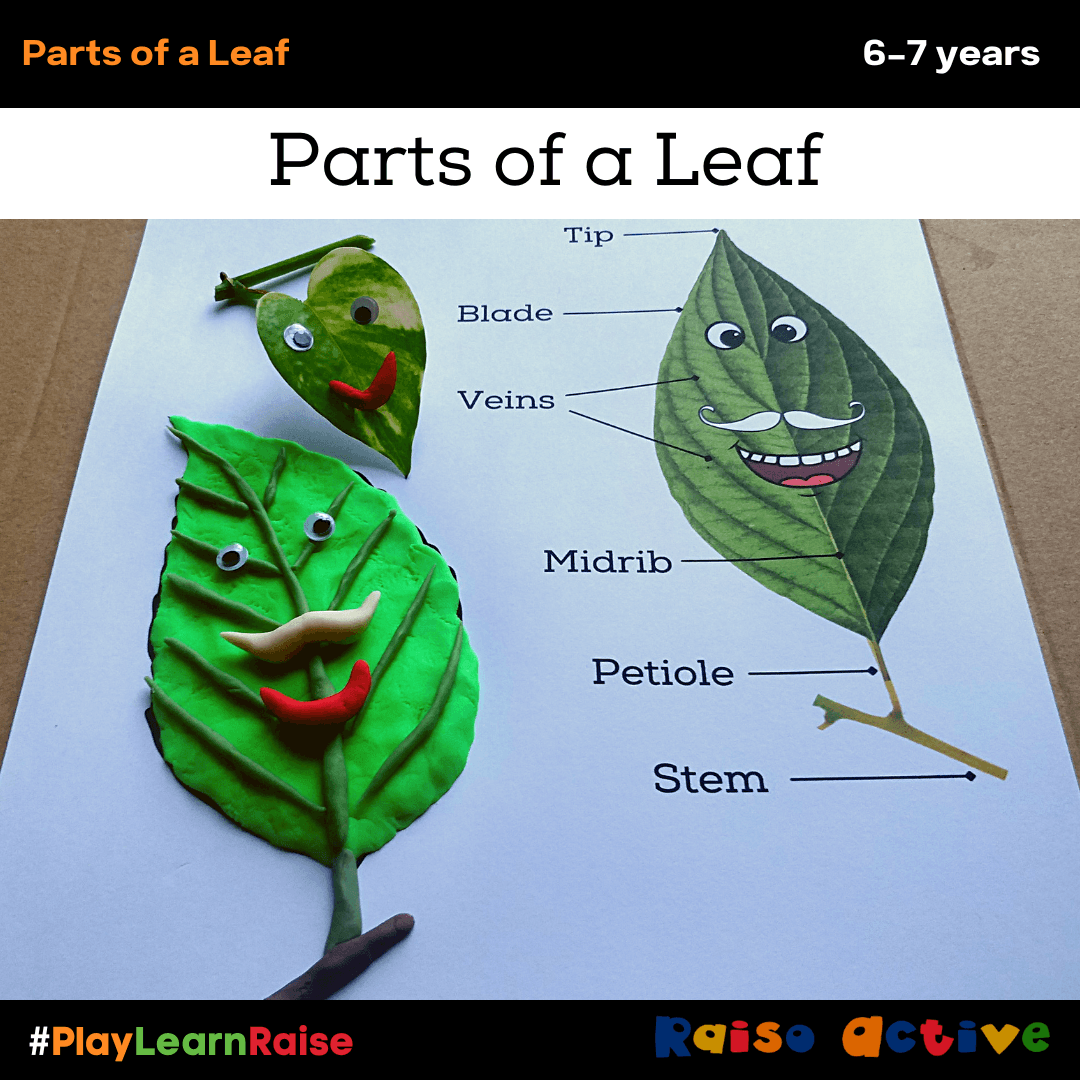
Collect leaves of different shapes and sizes — from your garden, balcony, a nearby park, or even houseplants. Place each leaf vein-side-up under a plain sheet of paper and rub a crayon or soft pencil over it. The leaf's skeleton magically appears. Older children can sort leaves by shape, count the veins, or try to identify the tree they came from. Younger toddlers simply delight in watching the pattern emerge. This activity develops fine motor skills, introduces botanical vocabulary (veins, midrib, margin, petiole), and produces beautiful art that children are genuinely proud of.
Bug Hunt: Becoming a Young Entomologist
Give each child a small container or jar and a magnifying glass if you have one, and set them loose to find as many different insects and small creatures as they can. Under stones, in the soil, on plant stems, and under leaf litter are all excellent hunting grounds. After observing, always release the creatures where you found them — this is an important lesson in care and respect for living things. For children aged 5 and above, use a simple illustrated insect guide (Pratham Books has lovely free options online) to identify what you found. Younger children simply enjoy the thrill of discovery.
Cloud Watching: Stillness and Imagination
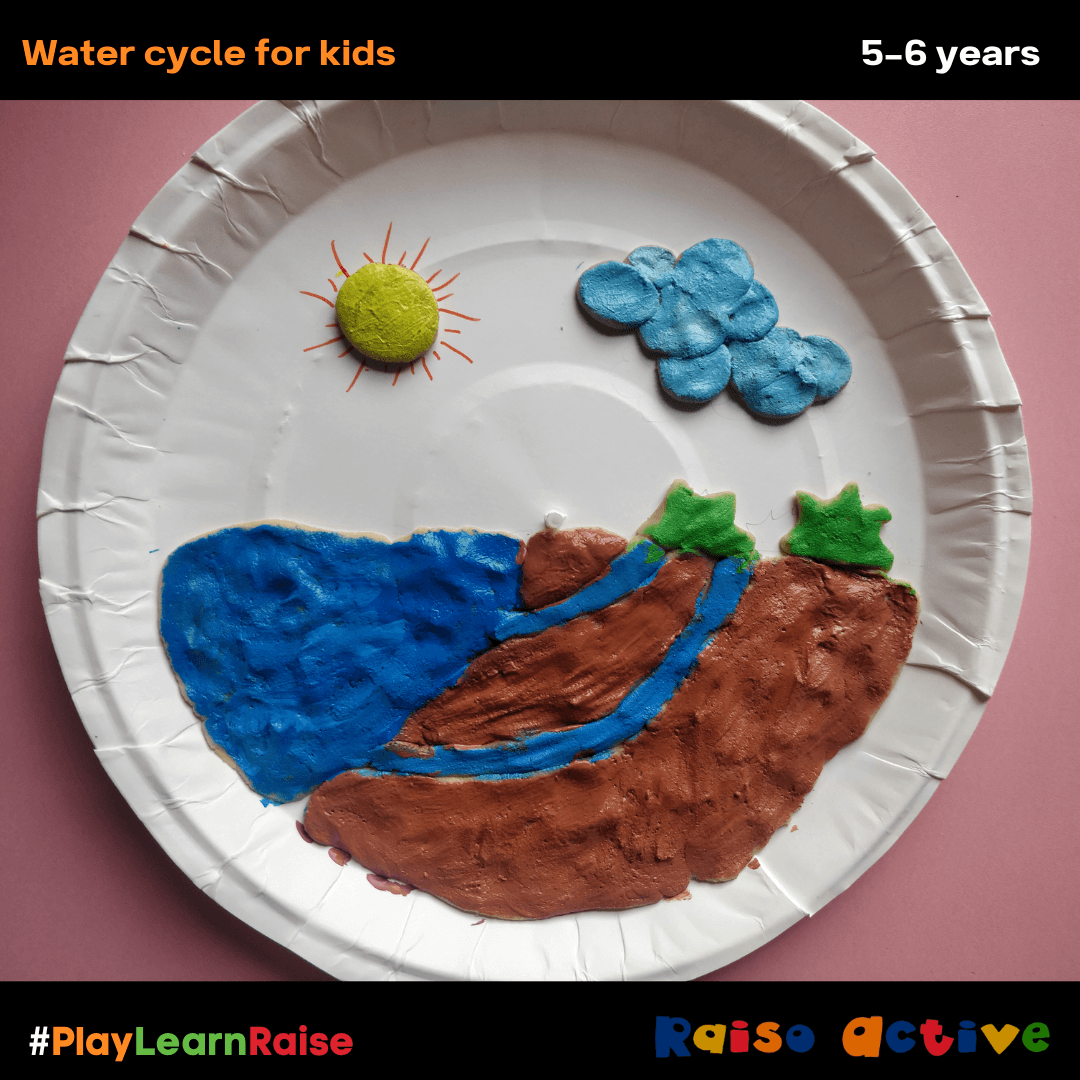
Lie on your back on a mat in the garden or on your terrace and watch the clouds for ten minutes. Ask open questions: What shapes can you see? Where do you think this cloud is going? Is it moving fast or slow? This seemingly simple activity builds observation skills, rich descriptive vocabulary, and the capacity for stillness and focused attention — all foundational for later literacy and learning. During the Indian monsoon, cloud watching becomes even more dramatic and awe-inspiring as towering cumulonimbus formations roll in from the sea.
Mud Play: Messy, Meaningful, and Marvellous
Mix soil with a little water to make mud and let children dig, sculpt, pour, and explore freely. Mud play is one of the most researched early childhood activities. It develops bilateral coordination, spatial reasoning, and sensory integration. It introduces concepts of volume, texture, and cause-and-effect. Research also shows that soil contains beneficial microorganisms that may support immune system development and mood regulation via the gut-brain axis. Keep old clothes for mud play days, accept that things will get messy, and watch your child demonstrate genuine scientific thinking as they experiment.
⚠️Nature Activity Safety Tips
- Always check for fire ants, wasps, or thorny plants before settling children in a new outdoor space
- Ensure mud play uses clean garden soil, not soil from near drains or construction areas
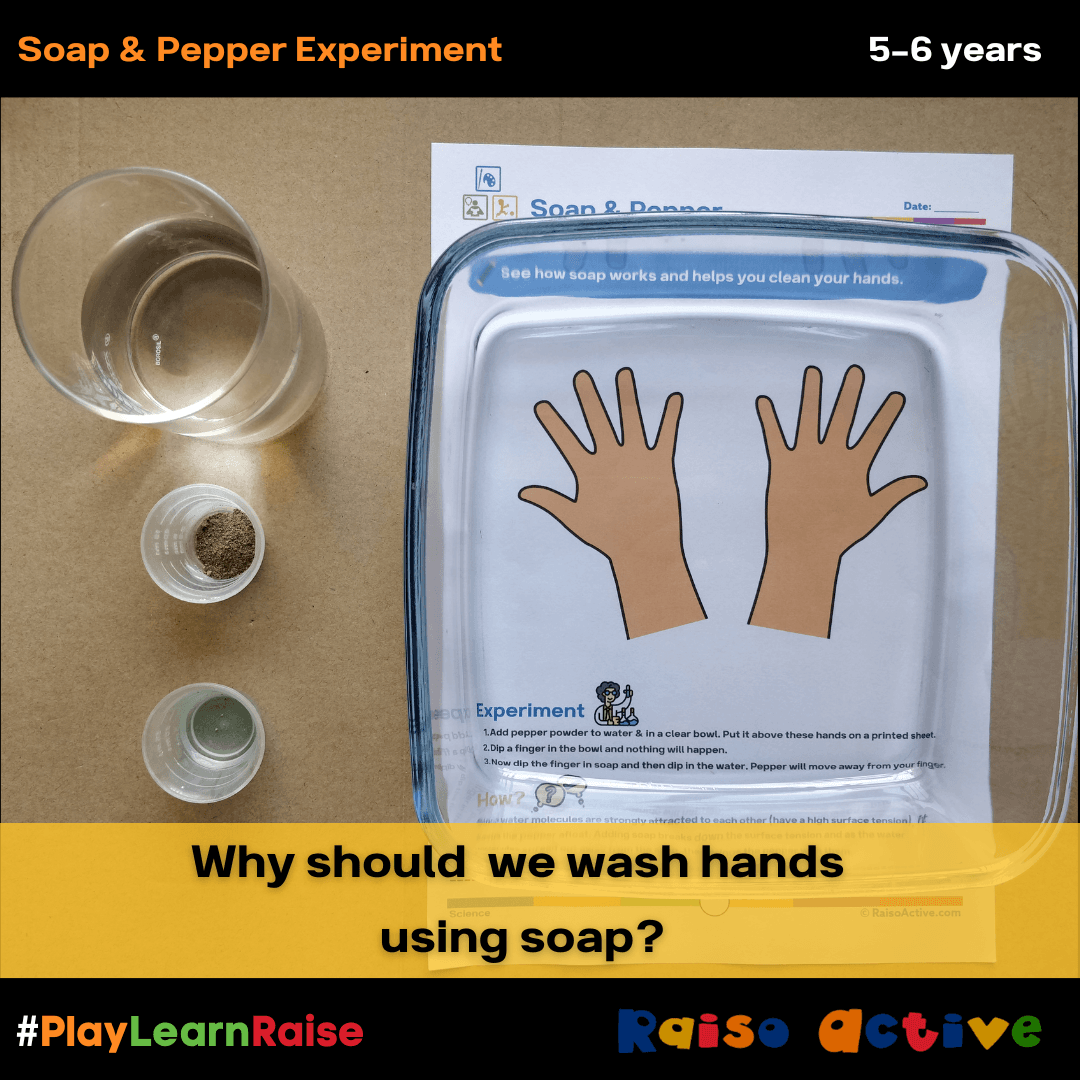
- Wash hands thoroughly with soap after bug hunts and mud play — make it a fun routine, not a punishment
- Supervise water play near any container deeper than a few centimetres for children under 5
- Apply sunscreen and use hats for outdoor activities during India's hot summer months, especially between 10 am and 4 pm
Creating a Nature Journal: Your Child's Scientific Record
A nature journal is one of the most powerful tools in nature-based learning. It transforms casual observation into documented scientific inquiry, builds writing and drawing skills organically, and creates a treasured record of a child's growing curiosity about the world. The best nature journals are not perfect — they are full of wobbly drawings, misspelled words (for older children), glued-in feathers and dried flowers, and notes that capture exactly what the child found interesting at that moment in time.
You do not need a special book. A plain unlined notebook works beautifully. For very young children aged 2 to 4, the journal might simply be a place to stick a leaf or make a hand print. Children aged 4 to 6 can draw what they observe, with a parent writing a dictated sentence beneath. By age 6 or 7, many children are ready to write their own brief entries. The key is that the journal belongs to the child — not a showcase for parents, not a school assignment, but a genuine scientific and artistic record.
Starting a Nature Journal with Your Child
1
Choose a simple, unpretentious notebook
A plain unlined sketchbook or even a stapled bundle of A4 paper works perfectly. Avoid fancy pre-printed nature journals — they can create pressure to be 'correct' rather than free. Keep it in a dedicated spot alongside pencils, a glue stick, and a few crayons.
2
Begin with one outdoor session per week
Set aside 20 to 30 minutes of unhurried outdoor time — your garden, a nearby park, your terrace, or even a walk to the local market. The location matters far less than the intention to look closely.
3
Observe before you draw
Encourage children to look at their chosen object — a flower, an insect, a stone, a cloud — for a full minute before drawing. Ask: What colours do you see? What shape is it? What does it feel like? This trains the scientific habit of observation before recording.
4
Draw together, side by side
Sit with your child and make your own sketch of the same object. This normalises imperfect drawing and shows children that adults also practise observation. Never correct their drawings — encourage and wonder alongside them.
5
Add words, dates, and found objects
Write the date and location on each entry. Younger children can dictate a sentence for you to write. Tape in small finds: a dried leaf, a flower petal, a feather. These tactile elements make the journal irresistible to return to.
6
Review the journal together regularly
Look back through old entries every month or so. 'Do you remember finding this beetle? Do you think it is the same season now?' This builds seasonal awareness, memory, and genuine scientific thinking about change over time.
Key Takeaway
A nature journal is not an art project — it is a scientific record that belongs to the child.
Resist the urge to tidy entries, correct drawings, or make the journal look presentable for others. The wobbliest, most earnest entry a child makes themselves is worth infinitely more than a polished page completed with heavy adult direction. Your role is to provide time, materials, and genuine curiosity alongside them.
Seasonal Nature Learning in the Indian Climate
India's diverse climate offers extraordinary seasonal learning opportunities that are quite different from the four-season model most Western nature education resources assume. Understanding and celebrating India's distinct seasons — from the dramatic arrival of the monsoon to the cool, flower-filled winter and the blazing summer — gives children a deep and culturally rooted connection to the natural world they actually live in.
🎨Seasonal Nature Activities for Indian Families
- **Monsoon (June–September):** Measure rainfall with a homemade rain gauge (a jar with a ruler). Jump in puddles and observe how they drain. Collect rain water and watch evaporation over days. Study earthworms and snails that emerge after showers. Grow cress or methi seeds — they sprout remarkably fast in monsoon humidity.
- **Winter (October–February):** Start a small kitchen garden with spinach, coriander, tomatoes, or peas on your balcony or windowsill. Observe early-morning dew on leaves. Spot migratory birds in local parks and wetlands — Siberian cranes and flamingoes visit many Indian states. Press winter flowers from marigold garlands.
- **Summer (March–May):** Do nature activities in the early morning (6–9 am) or late evening to avoid midday heat. Observe which trees provide the best shade and why. Study how animals and plants cope with heat — look for animals resting during the hottest hours. Make nature sun prints using construction paper left in sunlight under leaves and objects.
93% of Indian children
A survey by the Centre for Science and Environment found that the vast majority of urban Indian children spend less than 30 minutes outdoors daily. With screens competing for attention and safety concerns limiting free play, deliberate nature-learning time is more important than it has ever been for Indian families.
Source: Centre for Science and Environment, India
How Nature Learning Supports Literacy and Maths
One of the most common concerns parents raise about nature-based learning is that it seems separate from academic skills like reading and maths. In reality, nature activities are among the richest contexts available for developing precisely these skills. The connection is not incidental — it is structural. Nature exploration naturally generates the vocabulary, questioning, pattern recognition, and quantitative thinking that underpin literacy and numeracy.
Consider vocabulary: a single outdoor session might introduce a child to words like 'transparent', 'segment', 'camouflage', 'spiral', 'symmetrical', and 'nocturnal' — all in context, all attached to real objects they can see and touch. Research consistently shows that vocabulary acquired in rich, meaningful contexts is retained far longer and used more flexibly than vocabulary learned from lists or worksheets. Nature is a vocabulary-building engine.
For maths, nature offers concrete, three-dimensional work with concepts that worksheets can only represent abstractly. Sorting leaves by size or shape is a real sorting and classification activity. Counting legs on insects, petals on flowers, or seeds in a pod is genuine one-to-one correspondence. Measuring the height of a sprouting seed week by week introduces graphing and data recording. Arranging stones from smallest to largest is seriation. All of these are foundational early maths concepts — and nature provides them freely, in a context children actually find interesting.
Nature Learning Context
- +Describing a leaf — smooth, bumpy, oval, pointed
- +Counting petals, seeds, and insect legs
- +Sorting pebbles from small to large
- +Measuring weekly plant growth with a ruler
- +Drawing and labelling a bug in the nature journal
- +Noticing patterns in shells and flower heads
Academic Skill Developed
- -Rich descriptive vocabulary for writing
- -One-to-one correspondence and number sense
- -Seriation and ordering (foundational maths)
- -Data recording, graphing, and measurement
- -Early writing composition and scientific labelling
- -Mathematical patterns and symmetry concepts
Key Takeaway
Nature learning is not a break from academic preparation — it is academic preparation in its most developmentally appropriate form.
Children who regularly engage in rich outdoor and nature-based activities enter formal schooling with stronger vocabularies, better attention spans, more flexible problem-solving skills, and greater motivation to learn. The outdoor environment is not the alternative to the classroom — for children aged 2 to 7, it is the primary classroom.
Setting Up a Nature Corner at Home
A nature corner is a dedicated space in your home where natural objects are displayed, examined, and celebrated. It does not need to be large — a windowsill, a low shelf, or a corner of your child's play area works perfectly. The nature corner serves two purposes: it keeps curiosity alive on days when outdoor time is limited, and it gives children a sense of ownership over their natural collections and findings.
Setting Up Your Nature Corner in Five Steps
1
Choose a low, accessible shelf or surface
The corner should be at your child's eye level so they can examine objects independently. A low windowsill, a small wooden shelf, or even a large tray on the floor works well. Natural light is a bonus but not essential.
2
Start with a simple collection of found objects
Gather a few natural items together on your next outdoor trip: interesting stones, a beautiful feather, a seed pod, a piece of bark, a dried flower. Let your child choose what to bring home. Avoid anything with sharp edges, fragile wings, or that might harbour pests.
3
Add tools for investigation
A magnifying glass is the single most useful tool for a young nature investigator. You might also add a small ruler, a set of tweezers (for older children), a few small glass jars or clear containers, and a simple field guide or picture book about local plants, birds, or insects.
4
Include your child's nature journal and art materials
Keep the nature journal and a few pencils or crayons near the corner so children can sketch what they are observing at any moment. Having materials immediately to hand dramatically increases spontaneous use.
5
Rotate the collection seasonally
Every few weeks, swap out old finds for new ones from your latest outdoor adventures. This keeps the corner fresh and interesting. Letting children decide what stays and what is returned to nature (or composted) gives them agency and models environmental respect.
👋Nature Corner Ideas for Small Homes and Flats
- A single windowsill with one potted plant (tulsi, money plant, or a sprouting mango seed) can anchor a nature corner beautifully
- Display your child's best nature journal drawings in a small frame near the collection — it signals that their observations are valued
- A shallow tray of kinetic or play sand with a few stones and shells provides sensory nature play even on rainy days when going out is not possible
- Grow cress or bean sprouts in a small glass jar on the nature corner shelf — children are mesmerised by visible root growth against the glass
- A bird feeder hung outside a window (even a simple tray with millet or broken rice) brings nature directly to children who cannot easily access outdoor spaces
Key Takeaway
Even twenty minutes of unhurried nature time, once a week, makes a measurable difference to a young child's development.
Research and practitioner experience both confirm that frequency and attitude matter more than duration. A parent who goes outdoors with genuine curiosity and no agenda — who crouches down to look at the same ant trail their child is studying — models the scientific habits of mind that will serve that child throughout their education and life.
Unlimited Access
Bring Nature Learning Into Your Home
Subscribe for weekly nature activity ideas, printable observation journals, seasonal exploration guides, and free worksheets — all designed for young children ages 2 to 7 in Indian homes and classrooms.
All worksheets & activitiesNew content weeklyDownload unlimited times
Subscribe NowFrequently Asked Questions About Nature-Based Learning
What age is appropriate to start nature-based learning activities?
Nature-based learning can begin from birth — babies benefit enormously from time outdoors, exposure to natural light, the sounds of birds, and the feeling of grass under their hands. Structured activities like leaf rubbings and simple bug hunts are suitable from around age 2 to 3. Nature journalling with adult support works well from age 3 or 4, and children aged 5 to 7 can begin independent observation and simple identification activities with guidance.
We live in a flat in a city. Can we still do nature-based learning?
Absolutely. Nature-based learning does not require countryside access or a large garden. A balcony with a few pots, a windowsill plant, a nearby park, the insects on your building's exterior walls, the moon and stars visible from your terrace, and the birds that visit your neighbourhood are all rich subjects for nature study. Many families in Mumbai, Delhi, Bengaluru, and Chennai practise excellent nature-based learning entirely within urban environments.
How do I handle the mess of activities like mud play at home?
Have a mud play kit: a set of dedicated old clothes (or a waterproof apron), a wash bucket near the play area, and an outdoor or balcony space. Set clear expectations beforehand — mud play happens in this spot, in these clothes, and we wash hands and feet before coming inside. Once the routine is established, children (and parents) find that the cleanup is quick and the learning is absolutely worth it. Old towels and a garden hose make the end of a mud play session quite cheerful.
My child is afraid of insects. How do I encourage bug hunts without forcing them?
Never force contact with insects or any living creature. Start at a comfortable distance — observe insects through a glass jar rather than handling them, or use a magnifying glass from a few centimetres away. Read books about insects together first; familiarity through stories often reduces fear. Model calm, curious behaviour yourself. Over time, most children move naturally from observation at a distance to gentle, respectful contact as their confidence grows. The goal is never bravery — it is curiosity.
How does nature learning relate to what children learn in school?
Nature-based learning directly supports the Indian school curriculum from Class 1 onwards. Environmental Studies (EVS), Science, and Hindi/English language subjects all have strong connections to outdoor observation, classification, and descriptive writing. Children who have spent time genuinely observing plants, animals, weather, and natural processes come to classroom science lessons with real experiential knowledge that makes abstract concepts far more accessible. Teachers frequently note that children with rich nature experience ask better questions and engage more deeply with science topics.
What is the best way to use worksheets alongside nature-based learning?
Worksheets work best as a follow-up to real experience, not a replacement for it. After a bug hunt, a simple observation recording sheet — where a child draws what they found and writes or dictates a description — consolidates the learning beautifully. Nature-themed worksheets for tracing, colouring, matching, and classification are ideal for children who are transitioning between outdoor exploration and more structured activities. Look for worksheets that invite genuine thinking rather than simple fill-in-the-blank responses.