Assessment & Progress, Early Learning, Parenting & Homeschool
Documenting Learning Without Drowning in Data: A Practical Guide for Parents and Teachers
Author
RaisoActive - Kids Activities and Fun Learning
Date Published
Reading Time
7 min read

In This Article10 min read
- Why simple documentation beats complex data systems for young learners
- Three low-effort methods: photo journals, portfolio folders, and quick observation notes
- Ready-to-use frameworks for tracking milestones without spreadsheets
- How to turn everyday moments into meaningful learning records
- Printable trackers and checklists to get started today
Why Documenting Learning Matters (But Doesn't Have to Be Hard)
You've just watched your four-year-old count to twenty for the first time. Your heart swells with pride. But then a familiar thought creeps in — should I be writing this down somewhere? Am I tracking enough? Too little?
If you've ever felt overwhelmed by the pressure to document every milestone, you're not alone. In a world of apps, spreadsheets, and elaborate learning management systems, it's easy to feel like you need a PhD in data science just to keep track of your child's progress.
Here's the truth: documenting learning doesn't have to be complicated. The best documentation systems are the ones you'll actually use — simple, sustainable, and meaningful. Whether you're a parent homeschooling at the kitchen table or a teacher managing a classroom of twenty-five, this guide will show you how to capture what matters without drowning in data.
Simple strategies, straight to your inbox
Get practical tips for tracking your child's learning — no overwhelm, no jargon.
The Problem with Over-Documentation
Before we talk about what to do, let's talk about what not to do. Many parents and educators fall into the trap of trying to record everything — every worksheet completed, every book read, every skill attempted. The result? Burnout, guilt, and ironically, less useful information.
73%
of teachers report spending more time on documentation and paperwork than on actual instruction planning
Source: National Education Association Survey, 2023
When you try to capture everything, you end up with a mountain of data but very little insight. A folder full of worksheets tells you what a child did, but not what they learned. A spreadsheet tracking thirty different skills might look impressive, but if it takes an hour to update each week, it's not sustainable.
Over-Documentation
- +Records every single activity
- +Requires daily data entry
- +Focuses on quantity of evidence
- +Feels like a chore
- +Hard to see patterns
- +Often abandoned after a few weeks
Smart Documentation
- -Captures meaningful moments
- -Takes 5-10 minutes per week
- -Focuses on growth and patterns
- -Feels natural and rewarding
- -Reveals clear progress over time
- -Sustainable for months and years
Three Simple Methods That Actually Work
After years of working with families and educators, I've found that the most effective documentation falls into three simple categories. You don't need all three — pick the one that fits your life best, or combine them as you like.
1. The Photo Journal Method
This is the easiest method for busy parents. Your phone is already in your hand — use it! The key is being intentional about what you photograph and adding a quick note about why it matters.
💡Making Photo Journals Work
- Create a dedicated album on your phone called "Learning Moments"
- Snap a photo when you notice something new — a first attempt at writing their name, building a taller tower, or reading a new word
- Use the photo's caption or notes feature to jot down one sentence: what happened and why it's significant
- Review the album monthly to spot patterns and celebrate growth
In India, many parents already share learning moments on family WhatsApp groups. That's documentation happening naturally! Consider creating a dedicated group or broadcast list just for your child's learning highlights. Grandparents, aunts, and uncles will love being part of the journey, and you'll have a built-in timeline of progress.
2. The Portfolio Folder Method
A portfolio is simply a curated collection of your child's work that shows growth over time. The magic word here is curated — you're not keeping everything, just the pieces that tell a story.
Setting Up a Learning Portfolio in 15 Minutes
1
Grab a simple folder or binder
Nothing fancy needed — a clear folder with pockets, a ring binder, or even a large envelope works perfectly. Label it with your child's name and the date range.
2
Create four dividers
Divide into sections: Literacy (reading and writing), Numeracy (maths and logic), Creative (art, craft, and music), and Social-Emotional (behaviour observations and milestones).
3
Choose one piece per section per month
At the end of each month, select ONE piece of work from each category that best shows where your child is right now. Write the date on it and a brief note about what it demonstrates.
4
Add a "wow moment" sticky note
Stick a small note describing something your child said or did that surprised you. These qualitative moments are often more revealing than any worksheet.
5
Review quarterly
Every three months, flip through the portfolio from start to finish. You'll be amazed at the growth that's invisible day-to-day but obvious over time.
Key Takeaway
A portfolio with 4 pieces per month tells a richer story than a box of 40 worksheets.
Quality over quantity is the golden rule. One carefully chosen writing sample with a date and a note reveals more about a child's progress than a stack of undated colouring pages.
3. The Quick Observation Note Method
This method is especially powerful for teachers, but parents can use it too. It's based on a technique early childhood educators call anecdotal records — short, factual notes about what you observe a child doing.
The format is simple: Date + What I Saw + What It Tells Me. That's it. No rubrics, no scoring, no elaborate frameworks. Just honest observation.
🎨Observation Note Examples
- "12 March — Riya sorted the buttons by colour without being asked. Shows independent classification skills."
- "15 March — Arjun held the pencil with a tripod grip for the first time. Fine motor milestone reached."
- "18 March — Zara retold the story of The Very Hungry Caterpillar in sequence. Comprehension and sequencing developing well."
- "20 March — Dev got frustrated during the puzzle but took a deep breath and tried again. Self-regulation improving."
Keep a small notebook or use the notes app on your phone. Aim for two to three observations per week — that's enough to spot patterns without becoming a full-time job.
What to Actually Track: A Practical Framework
One of the biggest sources of overwhelm is not knowing what to look for. When everything seems important, nothing feels manageable. Here's a simple framework that covers the essentials without going overboard.
The Five-Finger Check
Think of your hand as a guide. Each finger represents one area of development to keep an eye on. You don't need to track all five every week — just notice which ones show up naturally.
- Thumb (Literacy) — Letter recognition, phonics awareness, reading attempts, storytelling, writing
- Index Finger (Numeracy) — Counting, number recognition, patterns, sorting, basic operations
- Middle Finger (Motor Skills) — Pencil grip, cutting, drawing, building, physical coordination
- Ring Finger (Social-Emotional) — Sharing, turn-taking, emotional expression, self-regulation, friendships
- Little Finger (Curiosity & Creativity) — Questions asked, imaginative play, problem-solving approaches, artistic expression
Key Takeaway
The Five-Finger Check gives you a mental framework for balanced observation without needing a checklist.
Over time, you'll naturally start noticing which areas your child is thriving in and which might need gentle support. This organic awareness is far more useful than any standardised tracker.
5 minutes
is all it takes to write a meaningful weekly observation note that captures real learning progress
Making It Work for Different Settings
For Parents Homeschooling
Homeschooling parents often feel extra pressure to "prove" their child is learning. In India, where homeschooling is growing but still uncommon, this pressure can be even more intense when well-meaning relatives ask, "But how do you know they're keeping up?"
Your documentation is your answer. A simple portfolio with monthly samples and a few observation notes is more than enough to show progress. It's also incredibly satisfying to flip through at the end of the year and see just how far your child has come.
👋Homeschool Documentation Tips
- Keep a simple log of topics covered each week — even bullet points count
- Photograph hands-on activities that don't produce "work" (science experiments, cooking, nature walks)
- Let your child help choose what goes in the portfolio — it builds ownership and pride
- Save a few favourite drawings or writings from each term for a year-end "memory book"
For Classroom Teachers
If you're managing a classroom, individual documentation for every child can feel impossible. Here's a realistic approach: use a rotating focus system. Each week, choose five children to observe more closely. Over a month, you'll have notes on everyone without trying to watch all of them at once.
Keep a class grid — a simple chart with student names down the side and the five development areas across the top. Place a dot or brief note when you observe something noteworthy. Over time, patterns emerge effortlessly.
Common Mistakes to Avoid
- Comparing to other children — Documentation is about tracking your child's individual growth, not measuring them against peers
- Only recording academics — Social skills, emotional growth, and creativity matter just as much as reading and maths
- Waiting for "perfect" moments — The messy first attempt at writing their name is more valuable than the polished final version
- Forgetting to date everything — Without dates, you can't see growth over time. Make dating a habit
- Making it stressful — If your system causes anxiety, simplify it. The goal is to celebrate learning, not audit it
Key Takeaway
The best documentation system is one you enjoy using. If it feels like a burden, simplify until it feels like a gift.
Remember, you're not creating evidence for a courtroom — you're building a beautiful record of your child's unique learning journey. Keep it joyful.
Using Printable Trackers and Worksheets
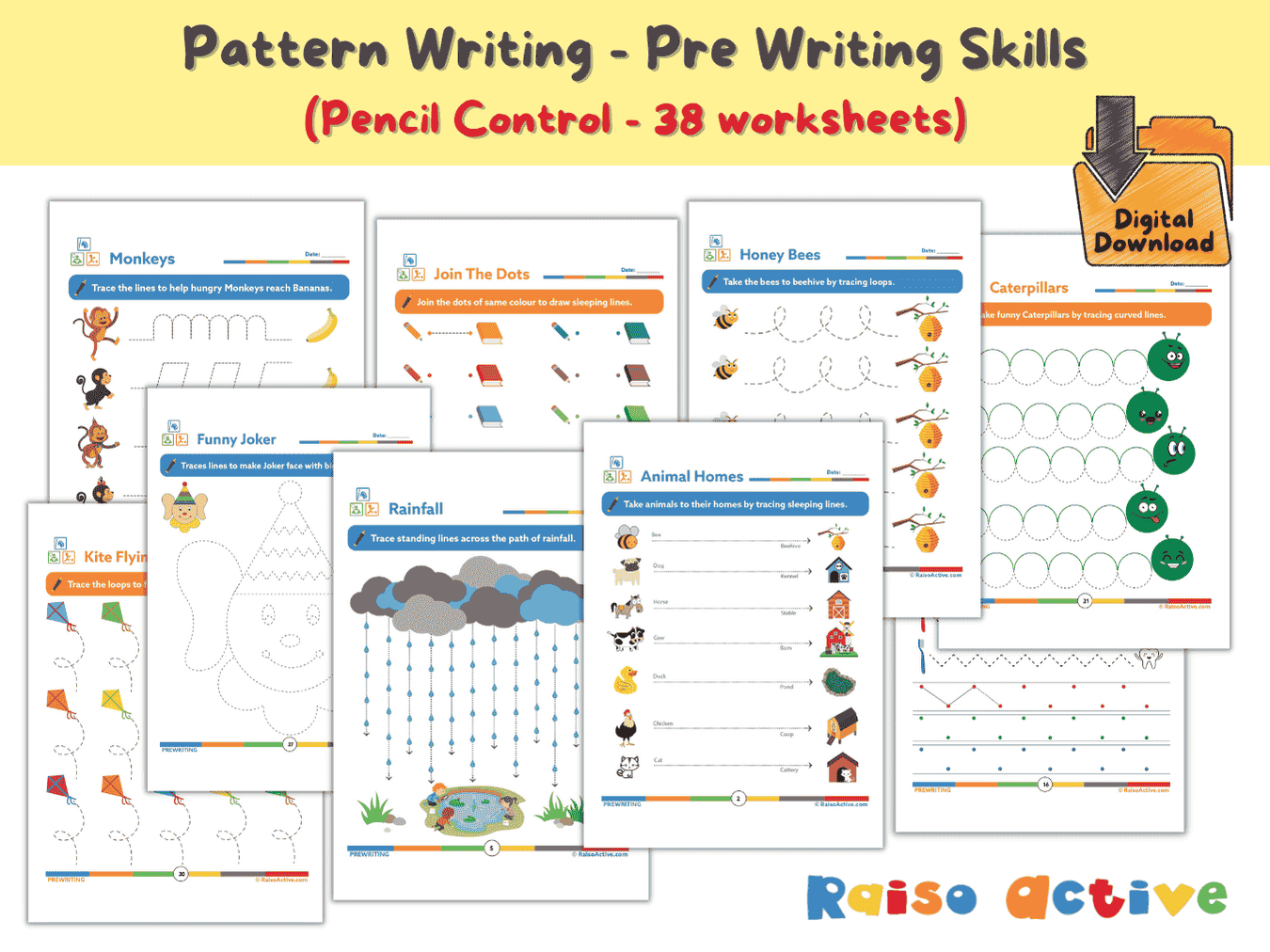
While the methods above are intentionally low-tech, having a few well-designed printable tools can make documentation even easier. Simple milestone checklists, weekly observation templates, and skill-tracking worksheets give you a framework without forcing you into a rigid system.
The worksheets your child completes can themselves become part of the portfolio. A tracing worksheet from September compared to one from January tells a vivid story of fine motor development — no data entry required.
Digital vs. Paper: Which Is Better?
There's no single right answer — it depends on your habits. If you're always on your phone, a digital system (photo albums, notes apps, or a simple Google Doc) might work best. If you prefer something tangible, a physical folder is wonderfully satisfying.
Many families find a hybrid approach works best: digital photos for everyday moments, and a physical portfolio for selected work samples. The important thing is consistency, not the medium.
💡Quick Digital Setup
- Create a Google Drive or iCloud folder named "[Child's Name] Learning 2026"
- Add subfolders for each month
- Drop in photos, scanned worksheets, and typed observation notes
- Set a monthly reminder to curate — delete duplicates and add brief captions
Turning Documentation into Conversations
The real power of documentation isn't in the records themselves — it's in what they enable. When you have a portfolio or collection of observations, you can have richer conversations with your child, your partner, your child's teacher, or a specialist if needed.
Try sitting with your child and looking through their portfolio together. Ask them: "What are you most proud of? What was hard? What do you want to learn next?" These conversations build metacognition — the ability to think about their own thinking — which is one of the most powerful skills a child can develop.
For parent-teacher meetings, bringing a few observation notes transforms the conversation from vague impressions ("She's doing well") to specific, actionable dialogue ("She's showing strong pattern recognition but still working on letter formation — here are some examples").
Getting Started This Week
Don't wait for the "perfect" system. Start this week with one small step. Here's your action plan:
Your Week-One Action Plan
1
Choose your method
Pick one: photo journal, portfolio folder, or observation notes. Don't try to do all three at once.
2
Set up in under 10 minutes
Create a phone album, grab a folder, or open a new note. Label it and you're ready.
3
Capture three moments this week
Just three. A photo with a caption, a worksheet with a date, or a brief observation note. That's your entire goal for week one.
4
Reflect on Sunday
Spend five minutes looking at what you captured. Notice what your child is working on. Smile at how much they're growing.
Remember, the goal is progress, not perfection. A few thoughtful snapshots of learning are infinitely more valuable than a database full of data you never look at. Your child's learning journey is beautiful — documenting it should feel that way too.
Unlimited Access
Want More Practical Parenting & Teaching Tips?
Join thousands of parents and educators who receive our weekly newsletter with simple strategies, printable resources, and expert guidance for supporting young learners ages 1-8.
All worksheets & activitiesNew content weeklyDownload unlimited times
Subscribe NowFrequently Asked Questions
How often should I document my child's learning?
For most families, capturing two to three meaningful moments per week is plenty. This gives you enough data points to see patterns and growth without turning documentation into a full-time job. Quality matters far more than quantity — one thoughtful observation note is worth more than ten hastily snapped photos.
What if I've never documented before and my child is already 5 or 6?
It's never too late to start! Begin from where you are right now. Take a baseline sample of your child's current abilities — a writing sample, a drawing, a photo of them reading — and date it. In just a few months, you'll have a wonderful record of growth. There's no need to go back and reconstruct the past.
Do I need special apps or software for learning documentation?
Not at all. The simplest tools work best: your phone's camera and notes app, a physical folder, or a basic cloud storage folder. While there are dedicated apps like Seesaw, Storypark, and Tadpoles, they're mainly designed for schools. For home use, keeping it simple ensures you'll actually stick with it long-term.
How do I document learning for children who aren't yet reading or writing?
For younger children (ages 1-3), focus on photos and observation notes. Capture sensory play, first attempts at stacking or sorting, early scribbles, and social interactions. Note developmental milestones like first words, colour recognition, or counting attempts. These early records are incredibly precious and paint a vivid picture of cognitive and motor development.
Can learning documentation help if I suspect my child has a developmental delay?
Absolutely. Consistent documentation is one of the most helpful things you can bring to a paediatrician or developmental specialist. Dated observations showing specific behaviours, skill attempts, and progress (or lack thereof) over time give professionals concrete information to work with. It's far more useful than trying to remember details from memory during an appointment.
How is this different from the progress reports my child gets from school?
School reports typically assess against a standardised curriculum at fixed points (term-end or semester-end). Your personal documentation captures the in-between moments — the daily growth, the creative breakthroughs, the emotional milestones that don't appear on report cards. Together, they give a much more complete picture of your child as a learner. Think of school reports as the "what" and your documentation as the "how" and "why".