Science
Hands-On Science Fun: Age-Appropriate Science Activities That Spark Curiosity in Preschoolers
Author
RaisoActive - Kids Activities and Fun Learning
Date Published
Reading Time
12 min read

In This Article5 min read
- Young children are natural scientists — curiosity, questioning, and experimenting are already built into how they explore the world
- Simple science experiments using everyday Indian household items (atta, dal, turmeric, coconut shells) are all you need to get started
- The best science activities for preschoolers focus on predicting and observing, not getting the right answer
- STEM foundations built through play in the early years directly strengthen later school learning in maths, language, and reasoning
- Setting up a small science station at home takes under ten minutes and costs almost nothing
Your Preschooler Is Already a Scientist — They Just Need You to Notice
Watch a two-year-old at the dinner table and you will see a scientist at work. They poke their dal to see what happens. They drop a spoon to hear the clang. They smear turmeric on their fingers and hold them up to the light. Every single one of these moments is the scientific method in miniature: observe, interact, observe again, and draw a conclusion. The only thing missing is an adult who names what is happening and creates space for more of it.
Hands-on science for preschoolers is not about replicating a school laboratory. It is about honouring the natural curiosity your child already carries and giving it somewhere meaningful to go. Research consistently shows that children who engage in regular science exploration during the early years develop stronger language skills, richer vocabularies, more persistent problem-solving habits, and a genuine love of learning that carries them through formal schooling.
The beautiful truth is that you do not need expensive kits, specialised equipment, or even a particular science background to do this well. Your kitchen, your garden, and your neighbourhood are overflowing with the raw materials for genuinely rich scientific exploration. In this guide, we will walk through more than ten specific experiments, the science behind why young children learn so powerfully through these experiences, how to ask the questions that make the learning stick, and how to set up a simple science station at home that your child will return to again and again.
Get weekly science activity ideas for young children
Join thousands of Indian parents and early childhood educators who receive our curated science, nature, and STEM activity ideas every week.
Why Young Children Are Natural Scientists
Science is fundamentally about asking questions and finding ways to answer them. Preschoolers do this instinctively and relentlessly. Studies of toddler behaviour show that children between the ages of two and five ask an average of 40,000 questions before they start primary school. The questions may sound simple — "Why is the sky blue?" or "What happens if I pour this into that?" — but the cognitive processes behind them are sophisticated. Children are forming hypotheses, testing them through action, and updating their mental models based on what they observe.
This natural disposition is what developmental psychologists call the "scientist in the crib" — a phrase popularised by researchers Alison Gopnik, Andrew Meltzoff, and Patricia Kuhl. Their decades of research demonstrate that babies and toddlers use the same logical tools as adult scientists: they run experiments, look for causal patterns, and revise their theories when the evidence does not match their expectations. The difference is that their experiments involve spilled water and knocked-over cups rather than laboratory equipment.
Understanding this changes how we think about science education for young children. Our job is not to teach them to be scientists — they already are. Our job is to create environments and experiences that honour and extend that natural drive, and to use language that helps children understand what they are doing.
The STEM Foundation That Play-Based Science Builds
Every time a child measures water into a bowl, watches a seed sprout, or discovers that a magnet sticks to their tiffin box but not to their wooden pencil, they are building cognitive structures that will support mathematics, reading, and critical thinking for years to come. This is not metaphorical — it is neurological. The prefrontal cortex, which governs executive function, planning, and reasoning, is actively shaped by hands-on inquiry experiences during the early years.
Here is what specific types of science play build in the developing brain:
- Sorting and classifying ("Which objects float?") builds the categorical thinking that underlies both mathematics and reading comprehension
- Cause-and-effect exploration ("What happens when I add vinegar to baking soda?") develops logical reasoning and sequential thinking
- Measurement and comparison ("Which stone is heavier?") lays the foundation for number sense and mathematical understanding
- Observation and description ("Tell me what you see") dramatically expands vocabulary and the ability to communicate precisely
- Prediction and reflection ("What do you think will happen? What actually happened?") builds metacognitive skills — the ability to think about one's own thinking
India's National Education Policy 2020 specifically calls for "experiential learning, inquiry-based discovery, and hands-on activities" as the primary mode of teaching in the foundational stage (ages 3-8). Play-based science is not enrichment — it is the core of what early learning should look like.
10+ Science Experiments Using Everyday Indian Household Items
Every experiment below uses materials you already have at home. We have organised them loosely by the scientific concept they explore, though in practice you will find that one experiment naturally leads a curious child to three more questions and then three more experiments. That is exactly how it should be.
1. Sink or Float: The Classic for a Reason
Fill a large basin or bucket with water. Gather a collection of small household objects: a coin, a dal grain, a turmeric piece, a leaf, a small stone, a button, a feather, a piece of atta dough, a wooden clothespeg, and an empty bottle cap. Before placing each object in the water, ask your child: "Do you think this will sink to the bottom or float on top?"
The magic is in the prediction, not the result. Children who are wrong are getting the most out of the activity — their brain is actively updating its model of how the physical world works. Make a simple two-column chart (draw a wave for float and an arrow pointing down for sink) and have your child draw or paste each object in the right column after testing. This turns the experiment into a rich literacy and data-recording experience as well.
2. Baking Soda and Vinegar: The Fizzing Reaction
Place a small cup or bowl on a tray (for easy clean-up). Spoon two teaspoons of baking soda (meetha soda, available in every Indian kitchen) into the cup. Add a few drops of food colouring if you have it. Ask your child: "What do you think will happen when I pour this liquid in?" Then slowly pour white vinegar or diluted lime juice over the baking soda and watch the fizzing eruption together.
The key science language to use: "This is a chemical reaction — the two substances changed each other and made something new, the bubbles of gas." You can deepen the exploration by asking: "What happens if we use more baking soda? Less vinegar? What if we put the soda inside a larger container?" Each variation is a new experiment with a new hypothesis.
3. Seeds and Sprouts: Watching Life Begin
Soak a handful of moong dal (green gram) or chana overnight. The next morning, let your child examine the soaked seeds: are they bigger? Softer? Then place them between wet cotton or a damp cloth, put them in a shallow tray near a window, and check on them every day. Within two to three days in most Indian climates, small white shoots will appear.
This experiment teaches the scientific values of patience and systematic observation. Keep a simple science journal (even just a folded A4 paper) where your child draws what the seeds look like each day. On day five, look back at day one and compare. "What changed? What does the plant need to grow? What would happen if we forgot to add water?" The last question sets up a natural controlled experiment.
4. Colour Mixing: The Science of Hues
Set out three small bowls with water coloured red, blue, and yellow using food colouring or natural dyes (turmeric makes a vivid yellow; boiled beetroot makes deep pink; spinach juice makes a pale green). Give your child a pipette, a spoon, or even just a straw for transferring small amounts of liquid between cups.
Before mixing, ask: "What do you think we will get if we mix the red water and the yellow water?" Then let them discover primary and secondary colours through their own exploration. This activity is particularly magical because the outcome is often surprising — children rarely predict orange or purple correctly the first time. You can extend it by introducing natural pigments from Indian spices: haldi, beetroot, palak, and even chai to explore different browns.
5. Magnet Exploration: What Does It Pull?
A small refrigerator magnet (or a horseshoe magnet from any stationery shop) opens up an entire world of exploration. Take your child on a "magnet hunt" around the house. Test the magnet against: the tiffin box lid, a coin, a wooden spoon, a steel thali, a plastic cup, a fabric piece, a paper clip, a rubber band, and the refrigerator door.
Organise findings into two categories: magnetic and not magnetic. Ask: "Can you see a pattern? What do the magnetic objects have in common?" Preschoolers will often notice that metallic objects tend to be magnetic — which is close enough to accurate for this age and shows genuine inductive reasoning. You can then introduce the word "metal" and help them refine their category.
6. Shadow Puppets: Exploring Light and Shadow
On a sunny afternoon, take a torch (or use sunlight through a window) and let your child hold different objects in front of the light beam on a white wall. Ask: "What shape is the shadow? Does the size change if we move the object closer to the wall? Further away? What happens to the shadow when we turn the object sideways?"
Shadow puppet shows are a deeply Indian art form, which makes this a culturally resonant entry point into optics. After exploring, let your child make simple hand puppet shapes and create their own shadow story. The science is embedded in the creative play: light travels in straight lines, opaque objects block light and create shadows, and the angle of the light source changes the shadow's length and direction.
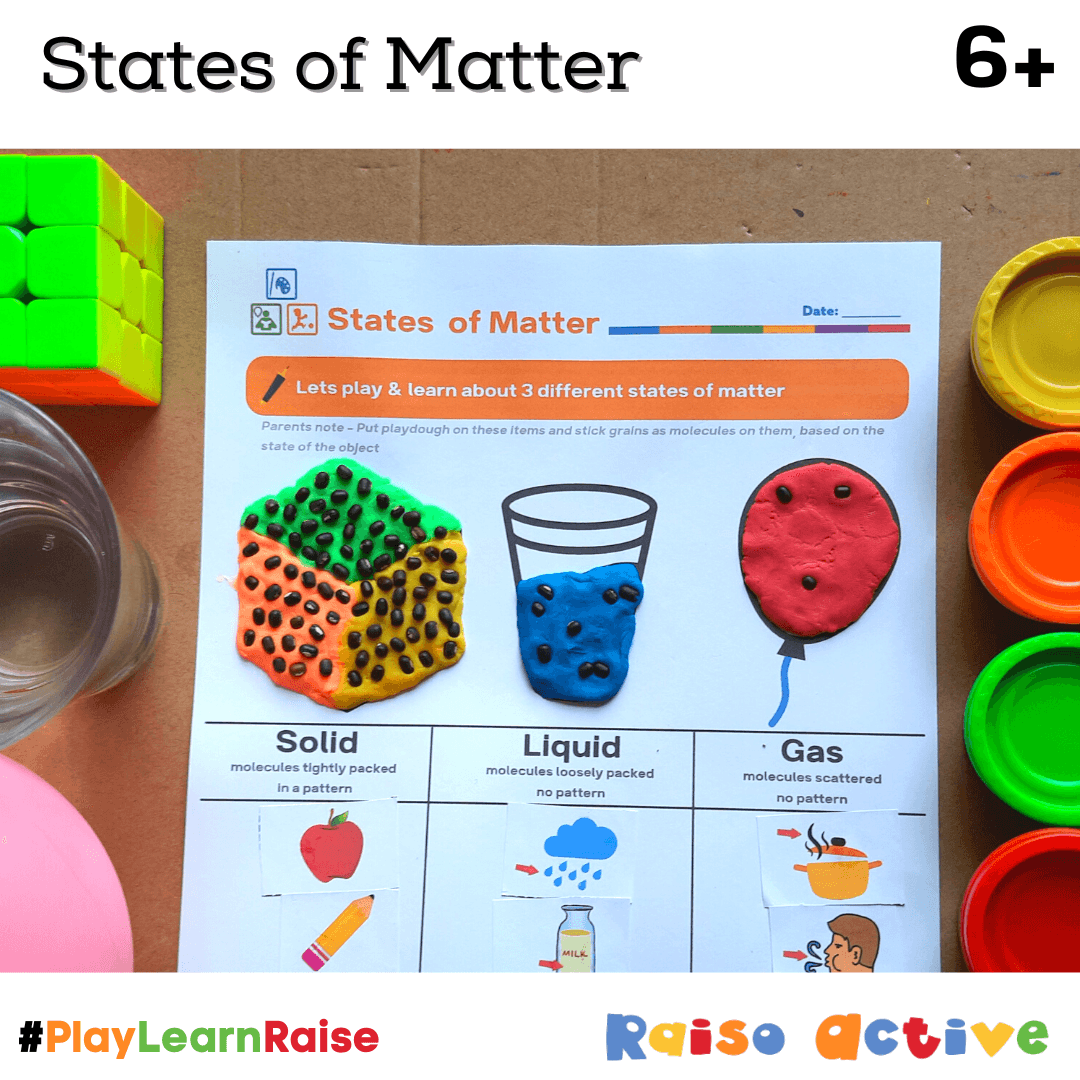
7. Ice Melting: States of Matter
Freeze water in a few ice-cube moulds the night before. In the morning, place one ice cube in the sun, one in the shade, one on a steel plate, and one in a cloth. Ask your child: "Which one do you think will melt first? Why?" Set a timer for ten minutes and check back.
This simple experiment introduces temperature as a variable, the concept of solid and liquid states, and the idea that the same material can exist in different forms. You can extend it with food colouring: freeze coloured water and watch the puddle as it melts, or let children lick an ice lolly and notice that their warm mouth melts it faster than the shade does.
8. Sound Vibrations: Feeling the Music
Fill a steel thali or a wide steel bowl with a small amount of water. Tap the edge gently with a spoon and ask your child to watch the surface of the water. They will see ripples spreading out from the point of vibration. Ask: "What makes the ripples? Why do they stop?" Now let them tap with different force and notice how the ripples change.
You can extend this by making a simple rubber-band guitar: stretch two or three rubber bands of different thicknesses around an open dabbha (tin box). Pluck each rubber band and listen to the different pitches. Ask: "Does the thick band or the thin band make a higher sound? Why do you think that is?" Children cannot answer this correctly at age three, but the question plants a seed that will bloom when they encounter the concept formally in school.
Key Takeaway
The experiment does not need to work perfectly to be a perfect experiment.
In real science, experiments that produce unexpected results are the most valuable ones. When your preschooler's baking soda reaction is less dramatic than expected, or when their prediction about floating turns out to be wrong, that is the heart of scientific thinking: observe what actually happened, wonder why, and try again. Framing "failures" this way — "Oh interesting! That's not what we expected. Why do you think that happened?" — teaches scientific resilience that will serve your child for life.
How to Ask Science Questions That Make Children Think
The most powerful tool a parent or teacher has in a science exploration is the question they ask. Closed questions — "Is the stone heavy or light?" — have a correct answer and shut down thinking. Open-ended wondering questions expand thinking, invite language, and signal to a child that their ideas matter.
Here are the most effective question types to use during science activities, with examples:
- Prediction questions: "What do you think will happen if...?" or "I wonder what would happen if we tried..." — these activate hypothetical thinking
- Observation questions: "What do you notice? What does it look like / feel like / smell like?" — these build precise descriptive language
- Comparison questions: "How is this one different from that one? Which is bigger / heavier / softer?" — these build categorical and mathematical thinking
- Causation questions: "Why do you think that happened? What made it change?" — these develop causal reasoning and scientific explanation
- Wondering questions: "I wonder why..." — modelling curiosity is perhaps the most important thing an adult can do in a science moment
The most important habit to build is silence after the question. Wait at least five full seconds before offering any answer or hint. Research shows that the quality of children's answers improves dramatically with even a three-second wait time — and for young children who are still forming their verbal thoughts, five to ten seconds is even better. Resist the urge to fill the silence.
Key Takeaway
"I don't know — let's find out together" is the best science answer a parent can give.
When your child asks a science question you cannot answer, the most powerful response is honest curiosity rather than a quick look-up. Say: "I don't know! I wonder how we could find out." Then explore together — look it up, try an experiment, ask a grandparent, or simply observe the natural world. This models the scientific disposition that matters most: the belief that questions are always worth asking and answers are always findable through investigation.
Connecting Science Activities to Worksheets and Science Journals
Hands-on science activities become even more powerful when paired with simple recording activities. Science worksheets for preschoolers are not about writing long sentences — they are about drawing what was observed, circling a prediction, or placing a sticker in the right column. This recording step does two important things: it reinforces the child's memory of the experience, and it introduces the concept of scientific record-keeping in an age-appropriate way.
A simple science journal can be made from any stapled A4 paper. After each experiment, help your child add one page: draw what they started with, draw what happened, and circle or draw whether their prediction was right or wrong. Over time, this journal becomes a treasured record of their scientific journey and a tangible symbol of their growing competence as a thinker.
Science observation worksheets can also extend the learning beyond the experiment. A "sink or float" recording sheet, a plant growth chart, a colour-mixing prediction grid — these structured activities help consolidate the conceptual learning from the hands-on experience and create a bridge to more formal scientific notation that children will encounter in school.
🎨Setting Up a Science Station at Home in Under 10 Minutes
- Designate a low shelf, a basket, or even a corner of a kitchen counter as the science station — accessibility is everything
- Stock it with: a magnifying glass, a few small containers and bowls, a measuring cup, a pipette or dropper, a small notebook and pencils, and a few rubber bands
- Add rotating mystery objects every week — a pinecone, a feather, an interesting stone, a piece of bark — for open-ended observation
- Keep baking soda, white vinegar, and food colouring accessible (with supervision guidelines clearly communicated) for child-initiated experiments
- Put a simple prediction sheet on the shelf with two columns for predictions and results so children can record independently
⚠️Safety Considerations for Preschool Science
- Always supervise water-based activities — even shallow water in a bowl requires an adult nearby for children under 4
- Avoid experiments involving fire, boiling water, or sharp objects with preschoolers — there is no science concept that requires these risks at this age
- Turmeric and beet stains clothing permanently — use old clothes or a painting smock and place newspapers on the table
- Ensure all materials used are food-safe, since preschoolers will inevitably taste things
- Teach the habit "we look, we touch, we ask before we taste" — this is both a safety rule and a genuine scientific practice
85%
of brain development occurs in the first five years of life — making early childhood the single most important window for building scientific thinking habits and a positive relationship with learning
Source: Harvard Center on the Developing Child
👋For Parents Who Struggle With Science Confidence
- You do not need to know the scientific explanation before doing an activity — explore it together and look up the explanation afterward
- If your child asks why and you don't know, say that's such a good question and genuinely explore the answer together — this models scientific curiosity
- Your enthusiasm matters more than your expertise. Genuine wonder does more for a child's science development than perfect explanations delivered without joy
- Science conversations happen best outdoors: at the park, on the way to school, in the rain, during meals. You need a curious mindset throughout the day, not dedicated science time
3×
Children who engage in regular hands-on science exploration in the preschool years are three times more likely to choose science-related subjects in secondary school, according to a longitudinal study of early childhood experiences
Source: Early Childhood Science Learning Longitudinal Study, University of Melbourne
How to Run a Science Experiment With Your Preschooler (Step by Step)
1
Step 1: Choose a Simple Question
Start with a question, not an answer. "Will this sink or float?" or "What will happen when we mix these two things?" A good science question for preschoolers is one where the answer is not immediately obvious and can be found through direct observation.
2
Step 2: Make a Prediction Together
Before doing anything, ask your child what they think will happen. Accept all predictions without judgement — the point is to have a guess that the experiment will either confirm or challenge. For children who cannot yet write, they can draw their prediction or point to a picture.
3
Step 3: Gather Your Materials
Involve your child in gathering everything needed. Naming and describing each material is a vocabulary-building opportunity: "This is baking soda — let's feel it, it's a powder. This is vinegar — let's smell it. What does it smell like?"
4
Step 4: Do the Experiment and Observe
Carry out the experiment slowly, narrating each step. Encourage your child to watch closely and use all their senses (safely). During the experiment, keep asking: "What do you notice? What is happening? What does it look like?"
5
Step 5: Compare Results With the Prediction
After observing, go back to the original prediction. "You thought it would float — did it? What happened instead?" If the prediction was wrong, celebrate that: "Great — now we know something new! Science surprises are the best kind."
6
Step 6: Record or Discuss
Have your child draw what happened or dictate a sentence for you to write. Even a quick three-sentence conversation — "We tried..., we thought..., we found out..." — consolidates the learning and introduces the structure of scientific communication.
7
Step 7: Wonder What Comes Next
End every experiment with a wondering question: "What would happen if we used more? Less? Something different?" This keeps curiosity alive and plants the seed for the next experiment. The best science sessions for preschoolers never truly end — they just transform into new questions.
Science Through Structured Experiments
- +Clear hypothesis and prediction built in from the start
- +Controlled variables teach basic scientific method
- +Results are dramatic and immediately visible
- +Easier to record and document learning
- +Great for focused, intentional learning sessions
Science Through Everyday Observation
- -Happens naturally throughout the day with no preparation
- -Builds the habit of noticing and wondering in all situations
- -Connects science to real-world, meaningful context
- -Incorporates Indian cultural and seasonal experiences naturally
- -Models that science is a way of life, not a separate activity
Key Takeaway
The process of science matters infinitely more than the product.
For preschoolers, the goal of science is never a correct answer or a neat completed worksheet. The goal is the habits of mind: curiosity, careful observation, honest reporting, willingness to be wrong, and persistence in trying again. A child who finishes a science session with three new questions is doing better science than one who memorises the right answer. Protect and nourish the process, and the knowledge will follow naturally.
Unlimited Access
Ready to Raise a Curious Scientist? Start Today.
Get age-appropriate science activities, observation worksheets, and STEM ideas for young children ages 2-8 delivered to your inbox each week. Trusted by parents and teachers across India.
All worksheets & activitiesNew content weeklyDownload unlimited times
Subscribe NowFrequently Asked Questions
At what age can I start science activities with my child?
You can begin very simple science exploration as early as 18 months to 2 years. At this age, science looks like: filling and emptying containers of water, exploring the texture of sand, or watching leaves fall. Formal experiments with predictions and recording are better suited to ages 3 and above, when children have the language to discuss what they observe and can hold a prediction in mind while they test it. The activities in this guide are designed for ages 2-6, with notes on how to make each one simpler for younger children or more challenging for older ones.
I don't have a science background. Can I still do this well?
Absolutely — and in fact, parents without a strong science background often make the best early science guides, because they are more willing to genuinely wonder alongside their child rather than rushing to explain. The most important thing you can offer is curiosity and time. You do not need to know why baking soda fizzes when vinegar touches it before doing the experiment — you can look it up together afterward, which is itself a wonderfully scientific act. What matters is the attitude you bring: open, wondering, patient, and genuinely interested in what your child observes.
How long should a preschool science activity last?
Most science activities for preschoolers work best in 15-25 minute sessions, roughly matching a child's natural attention span for focused activities at this age. However, do not be rigid about timing — if your child is deeply engaged and wants to keep experimenting, follow their lead. Science exploration is one of the few activities where sustained concentration from a preschooler is natural and should be celebrated rather than interrupted. On days when interest wanes after ten minutes, that is perfectly fine too. End on a positive note with a wondering question rather than pushing through.
Are there science activities specifically suited to the Indian monsoon season?
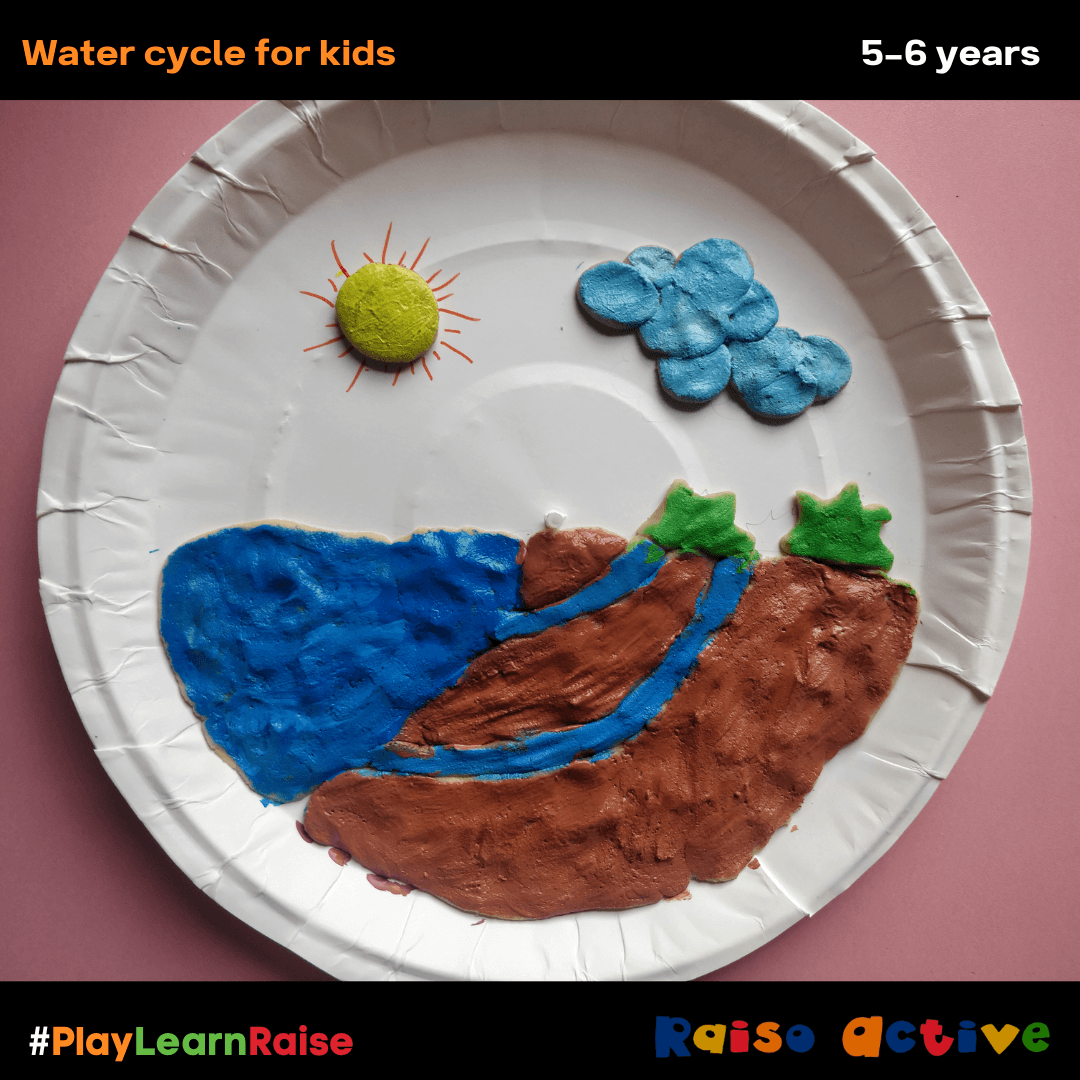
The Indian monsoon is one of the richest science classrooms available! Monsoon season offers: watching rain collect in a measuring cup to track rainfall, observing which puddles disappear first and why (evaporation), examining earthworms that surface after rain and discussing their role in soil, collecting rainwater and comparing it to tap water under a magnifying glass, noticing which plants grow faster after rain, and observing how clouds change shape. These seasonal, culturally embedded experiences connect science to your child's actual lived world in a way that packaged experiments cannot replicate.
How do I connect science activities to the worksheets my child brings home from school?
When your child receives a science worksheet from school — on plants, animals, weather, or simple machines — do the hands-on activity first, then use the worksheet as a recording or extension activity. For example, if the worksheet is about parts of a plant, first germinate some moong dal sprouts and examine the root, stem, and first leaves before completing the labelling worksheet. This hands-on-first approach means the worksheet consolidates real experience rather than introducing abstract concepts. Children who do this consistently score significantly higher on science assessments because they have genuine memories to draw on.
My child loses interest after just a few minutes. What should I do?
Losing interest quickly is completely normal for younger preschoolers (ages 2-3) and even for some 4-year-olds on some days. The most effective response is to follow the child's attention rather than fighting it. If they drift away from the sink-or-float experiment to splash the water, narrate what they are doing: "You are making waves! I wonder what makes waves in the ocean." Let the science follow their natural movement. For children who consistently show short attention spans during structured activities, focus on science through daily routines — cooking, nature walks, bath time — rather than dedicated experiment sessions, and introduce more formal experiments gradually as their capacity for sustained attention grows.