Help! My Child Won't Sit Still for Learning Activities — A Parent's Complete Guide
Author
RaisoActive - Kids Activities and Fun Learning
Published
Updated
Reading Time
18 min read

- Young children are biologically wired to learn through movement — sitting still is actually harder for a developing brain than moving while learning
- Appropriate attention spans are much shorter than most parents expect: a 3-year-old can focus for 6–9 minutes, not 30
- Movement breaks, floor activities, and standing work are not indulgences — they are evidence-based learning strategies
- High energy, sensory needs, and ADHD look similar from the outside but require very different responses; knowing the difference matters
- With the right environment and structure, even the most active child can engage deeply with learning activities at home
Why Your Child's Inability to Sit Still Is Not a Problem — It's a Signal
It is one of the most common refrains in parenting forums, WhatsApp groups, and parent-teacher meetings across India: "My child just cannot sit still." You sit down with a worksheet, a puzzle, or even a book they chose themselves — and within minutes they are off the chair, rolling on the floor, asking for water, noticing a lizard on the wall, or dismantling something on the shelf. You feel frustrated. You wonder whether something is wrong. You wonder if you are doing something wrong.
Here is what the developmental science actually says: a young child who cannot sit still for learning is not defiant, inattentive, or delayed. They are, in most cases, doing exactly what their brain and body are designed to do. The human brain — particularly the pre-school and early primary-aged brain — is not built for static, chair-bound learning. It is built for exploration, physical engagement, and learning through the body. Asking a 4-year-old to sit quietly at a desk for 20 minutes is a bit like asking them to swim before they can float: the hardware simply is not ready.
That said, this guide is not about letting your child run wild and calling it learning. It is about understanding the genuine developmental reasons behind the movement need — and then working with those reasons rather than against them. By the end, you will have a toolkit of practical strategies, a clearer sense of what is developmentally normal, and the ability to tell the difference between typical high energy, sensory-seeking behaviour, and something that might benefit from professional support.
The Developmental Science: Why Young Children Are NOT Meant to Sit Still
Movement is not a distraction from learning in early childhood. Movement IS learning. This is not a motivational slogan — it is neuroscience. The cerebellum, the part of the brain primarily responsible for motor coordination, is also deeply involved in cognitive functions including attention, language processing, and working memory. When a young child moves, they are not just exercising their body; they are stimulating neural pathways that directly support thinking.
Research from Harvard Medical School's Dr John Ratey and others has shown that physical activity increases levels of brain-derived neurotrophic factor (BDNF) — sometimes called 'Miracle-Gro for the brain' — which supports the growth of new neurons and strengthens connections between existing ones. In practical terms: a child who has just run, jumped, or done a movement activity is neurologically better prepared to focus and learn than one who has been sitting still.
There is also a proprioceptive dimension to this. Proprioception — the body's sense of its own position in space — is a sense that young children are still calibrating. Many children, particularly those in the 2–6 age range, need to move frequently to keep their proprioceptive system regulated. When they fidget, rock, or get up and walk around, they are often unconsciously seeking the sensory input their nervous system needs to stay organised and focused. Stopping the movement does not help them focus — it disrupts the very regulatory system that makes focus possible.
Movement is not the enemy of learning for young children — it is a prerequisite for it. A child who moves frequently is often seeking the neurological input their brain needs to stay regulated and ready to learn.
This understanding has led many progressive schools in Finland, Scandinavia, and increasingly in urban India to build movement into the learning day rather than treating it as a reward or a break.
What Is a Realistic Attention Span for Your Child's Age?
Before we talk about how to help your child focus, it is worth recalibrating what 'focused' actually looks like at different ages. Most parents dramatically overestimate what is developmentally appropriate — and that gap between expectation and reality is the source of enormous daily frustration.
- +1–2 years
- +2–3 years
- +3–4 years
- +4–5 years
- +5–6 years
- +6–8 years
- -2–5 minutes on a single activity; total learning time 10–15 minutes with movement
- -4–6 minutes; best engagement through sensory and physical play
- -6–9 minutes; can extend to 15 minutes if highly motivated and activity is hands-on
- -8–12 minutes; with brief movement breaks can sustain 20–25 minutes total
- -10–15 minutes; structured learning with physical components can extend to 30 minutes
- -12–20 minutes; can manage seat-based learning but still benefits greatly from movement breaks every 20–30 minutes
A useful rule of thumb used by many early childhood educators: a child can focus for approximately 2–5 minutes per year of age — and that is on something they find genuinely engaging. A worksheet on a topic they are indifferent to? Expect the lower end of that range. A craft that involves their current obsession? You might get the higher end, and then some. The goal is not to extend your child's attention span through willpower — it is to work within it intelligently.
Many Indian preschools expect 3 and 4-year-olds to complete 30-minute structured sessions at tables. The developmental mismatch between these expectations and actual attention capacity is a primary driver of the behaviour parents describe as 'not sitting still' — children are not being naughty, they are simply past their neurological limit.
Source: American Academy of Pediatrics, Developmental Milestones Guidelines
Movement as Learning: Active Alternatives That Actually Work
The best news in this whole conversation is that you do not have to choose between movement and learning. You can have both — and in fact, combining them produces better outcomes than either alone. Here are active learning alternatives that work beautifully for young children who struggle with sitting.
1. Floor-Based Learning
The floor is not a concession — it is often the ideal learning surface for young children. On the floor, children can sprawl, roll onto their tummies, sit cross-legged, or kneel — all of which provide proprioceptive input that actually helps regulate the nervous system. Sorting activities, puzzles, matching games, pattern work, and even early reading can all happen on a large floor mat. In Indian homes where space is often limited, a dedicated floor mat — a dhurrie or cotton play mat — in a corner of the room creates a clear, contained learning zone without needing a table and chair at all.
2. Movement Breaks Built Into the Session
Rather than fighting the movement need, plan for it. Structure learning time as alternating blocks: 8–10 minutes of focused activity, then a 3–5 minute movement break, then back to learning. Movement breaks do not need to be elaborate. Some ideas that work in small spaces: jumping on the spot 20 times, crawling from one end of the room to the other, rolling across a yoga mat, doing 10 star jumps, spinning in place 5 times and stopping. The physical activity resets the nervous system and actually improves focus in the next learning block — this is not a theory, it is consistently documented in classroom research.
3. Standing and Moving While Working
You do not need to buy an expensive standing desk. A low shelf at your child's standing height, a kitchen counter with a step stool, or even a stack of books under a tray can create a standing work surface. Many children who cannot focus at a seated desk will work happily and effectively while standing. Standing allows subtle weight-shifting and movement that keeps the proprioceptive system engaged without requiring the child to leave the activity entirely.
4. Learning Through Large Muscle Activities
Some concepts are best learned through the body first. Counting can happen with jumping jacks. Letter shapes can be traced on a partner's back or formed with the whole body. Patterns can be stamped out with feet on large paper. Sorting can involve carrying objects across the room to different containers. In Indian homes, the dal and rice sorting activity that grandmothers have always used is genuinely excellent for early maths cognition — not despite the physical component, but because of it.
- **Maths**: Hop to count, sort objects into containers across the room, build number towers with blocks, measure with body parts (how many hands wide is the sofa?)
- **Literacy**: Stamp letters in sand or atta flour, form letter shapes with the whole body, act out story sequences, play rhyming hopscotch
- **Science**: Nature scavenger hunts in the building compound, water pouring and measuring on the balcony, shadow tracing outdoors in the morning light
- **Life skills**: Cooking simple tasks, folding clothes by matching pairs, setting the table — all build maths, sequencing, and categorisation through movement
How to Structure a Learning Session for an Active Child
Structure is not the enemy of an active child — the wrong kind of structure is. An active child benefits enormously from a clear routine that they can predict and that builds in the movement they need. Here is a practical framework for home learning sessions.
A Movement-Friendly Learning Session (30 minutes total)
Step 1 — Body Wake-Up (3–5 minutes)
Before sitting down to any learning, do a brief physical warm-up together. This is not wasted time — it is investment. Try: animal walks (bear crawl, crab walk, bunny hops), a simple obstacle course across the living room, or a brief yoga sequence. This pre-loads the proprioceptive system and significantly increases the child's available attention for what follows.
Step 2 — Focused Learning Block 1 (8–10 minutes)
Start with the most cognitively demanding activity first, when energy is highest. Use hands-on materials — blocks, cards, manipulatives, puzzles — rather than a worksheet if possible. Sit beside your child rather than across from them. Match the session length to your child's age-appropriate window and stop slightly before they hit the wall.
Step 3 — Movement Break (3–5 minutes)
A purposeful movement break. Make it physical and slightly silly so it genuinely discharges energy: jumping, spinning, crawling, dancing to one song. Avoid screens during the break — even a 3-minute video resets the attention system in an unhelpful direction. Give a clear signal that the break is ending: a timer, a song, or a simple cue like 'one more jump and then we come back.'
Step 4 — Focused Learning Block 2 (8–10 minutes)
Return to learning with a slightly lower-intensity activity than Block 1. This is a good time for drawing, colouring within a theme, simple writing practice, or listening to a story while doing a related hand activity. The nervous system is now regulated from the movement break and the child will often engage more deeply than in Block 1.
Step 5 — Creative or Open-Ended Play (5–10 minutes)
End the structured session with free creative play related to what you covered — building something with the concept, acting it out, drawing a picture, or making up a game. This consolidation phase cements learning far more effectively than an additional worksheet. It also ends the session on a positive, self-directed note that your child will remember.
Sensory Needs and Proprioceptive Input: What Is Really Going On
Some children move not just because of age-appropriate developmental energy but because of a specific need for sensory input. These children are sometimes described as sensory-seeking — they need more proprioceptive (deep pressure, heavy work) and vestibular (balance, movement through space) input than the average child to feel regulated and organised in their bodies.
Signs of a sensory-seeking child: they crash into furniture or people seemingly on purpose, they love being wrapped tightly in a blanket, they prefer rough physical play, they cannot walk past a wall without touching it, they frequently seek spinning or swinging, and they may have a high pain threshold. For these children, the solution is not less movement — it is more structured, heavy-work movement to fill their sensory tank before seated learning.
- Carrying a heavy bag or tray from room to room (use a bag with books inside)
- Pushing a loaded laundry basket or a chair across the floor
- Animal walks — particularly bear crawls and crab walks, which involve heavy shoulder and core loading
- Wheelbarrow walking — hold their feet while they walk on their hands
- Pulling a sibling or a bag on a mat across a smooth floor
- Pressing palms together hard in the midline (wall push-ups, prayer press)
In Indian homes, heavy work is often already embedded in culture without parents realising it: carrying water, helping with shopping bags, kneading chapati dough, sweeping with a broom. If your child is sensory-seeking, involve them in these daily tasks deliberately and frequently. Ten minutes of carrying, pushing, and pulling before a learning session can make a dramatic difference in how long they can then focus.
Heavy work activities — pushing, pulling, carrying, climbing — provide the deep proprioceptive input that sensory-seeking children need to feel regulated. Done before a learning session, they act like a neurological reset that enables significantly longer and calmer focus.
The WHO recommends at least 60 minutes of moderate-to-vigorous physical activity daily for children aged 3–17. In India, estimates suggest many urban children — particularly in academic-pressure households — get significantly less than this. The learning attention problems many parents attribute to 'not trying hard enough' are often directly connected to chronic under-movement.
Source: World Health Organization, Physical Activity Guidelines for Children
High Energy vs Sensory Needs vs ADHD: Understanding the Difference
Parents often wonder: is my child just energetic? Do they have sensory processing differences? Could this be ADHD? These can look very similar from the outside — all three may involve a child who cannot sit still, who is easily distracted, and who exhausts adults. But understanding the distinctions helps you respond more effectively.
- +Can focus for age-appropriate periods on activities they choose
- +Settles with predictable routine and adequate outdoor play
- +Movement need reduces noticeably after physical activity
- +Can transition between activities with some preparation
- +Behaviour is broadly consistent across most environments
- +Responds to simple structure and calm explanation
- -Cannot sustain focus even on highly preferred, self-chosen activities
- -Remains dysregulated even after significant physical discharge
- -Movement need is intense and does not easily satisfy
- -Transitions cause significant and consistent distress
- -Behaviour varies dramatically across environments — much worse in some settings
- -Needs significant adult scaffolding to manage most transitions and activities
It is worth saying clearly: ADHD is not caused by parenting, diet, or screen time. It is a neurodevelopmental difference in how the brain's executive function and attention systems are wired. Sensory processing differences are also neurological, not behavioural choices. Both are real, both are manageable, and both benefit enormously from the movement-based learning strategies in this guide — but ADHD and sensory profiles may also need additional professional support that typical high energy alone does not require.
If you are in India and concerned about whether your child might have ADHD or sensory processing differences, the right first step is a paediatric developmental assessment — available at developmental paediatric clinics in most large cities, and increasingly via tele-consultation. An occupational therapist can assess sensory processing; a developmental paediatrician or paediatric psychiatrist can assess for ADHD. Early identification means earlier, more targeted support.
Most young children who cannot sit still are developmentally normal. A smaller number have sensory processing differences, and a smaller number still have ADHD. All three benefit from movement-integrated learning, but the latter two may also need professional assessment and support.
Red flags worth investigating: the child cannot focus even on activities they love and choose; behaviour is significantly more dysregulated than same-age peers; distress around transitions is extreme and consistent; or the pattern persists past age 6 with no meaningful improvement despite movement-based strategies.
When Worksheets Work Best for Active Children
Worksheets are not incompatible with active children — they just need to be used strategically. A worksheet handed to a physically under-stimulated child will fail almost every time. The same worksheet offered after a movement warm-up, in a comfortable floor position, for a brief and clearly time-limited session, often works beautifully.
The key principles: keep sessions short (match to the age-appropriate attention window), allow position flexibility (floor, standing, lying on their tummy), use worksheets as one activity in a varied session rather than the whole session, and choose worksheets that have a physical or playful element — dot-to-dot, mazes, cutting and pasting, colouring with a purpose. Worksheets that are purely repetitive tracing lines on paper are the hardest for active children and offer the least developmental return for the investment of their attention.
- Do 5 minutes of movement first — always, without exception
- Offer a flexible seating option: floor mat, standing surface, or a wobble cushion on a chair
- Set a visible timer (a sand timer works well for young children who cannot yet read clocks)
- Choose ONE worksheet, not a stack — completing one successfully builds more confidence than abandoning three
- Stay nearby but do not hover; active children often focus better with quiet company than watchful attention
- Follow the worksheet with something the child chooses — this makes the structured activity feel like a door to freedom rather than a cage
The Indian Context: Small Homes, Hot Weather, and Big Expectations
Parents in India face some specific challenges when it comes to movement-based learning. Many families live in 1BHK or 2BHK flats in dense urban areas — there is simply no garden, no dedicated playroom, and often no outdoor space that is safely accessible during afternoon heat. Add to this the significant academic pressure that begins from nursery in many Indian cities, and the expectation — from schools, relatives, and the broader culture — that a child who is sitting quietly is learning and a child who is moving is wasting time.
None of this changes the developmental reality. But it does require creativity. Movement in small spaces is very possible: yoga mats create instant floor space, corridors become crawling tracks, balconies become outdoor activity zones. In the hot months, early morning (before 9am) and evening (after 5pm) are ideal for any outdoor movement — a 15-minute park visit or building compound run before home learning makes a significant difference. In schools that have heavy worksheet loads, your role as a parent is to ensure the movement need is met at home — before school, after school, and during any home learning time.
- Roll a yoga mat in the corridor for bear crawls and animal walks — even a 3-metre stretch is enough
- Tape a hopscotch grid on the floor with masking tape for indoor number games
- Use the balcony for sand or water play on a small plastic sheet — proprioceptive and deeply calming
- Create a simple obstacle course using sofa cushions, a rolled blanket, and a low stool
- Play classical or Bollywood music and have a full-body dance break before any learning session
- Early morning staircase climbing counts as excellent vestibular and proprioceptive heavy work
Multiple studies, including research published in the Journal of Attention Disorders, have found that aerobic exercise produces immediate and measurable improvements in attention and impulse control in children with ADHD — comparable in some studies to the effect of stimulant medication for mild presentations. For all children, movement before learning is one of the most evidence-backed strategies available to parents.
Source: Journal of Attention Disorders, Exercise and ADHD Meta-Analysis
Frequently Asked Questions
My 3-year-old will not sit for even 5 minutes. Is this a problem?
My child's school teacher says they cannot sit still in class. What should I do?
How do I get my active child to complete their homework?
Could my child's inability to sit still be ADHD?
Are there specific activities that help active children focus better?
My child can focus for hours on screens but not on learning activities. Why?
Free worksheets for this topic
Browse all worksheets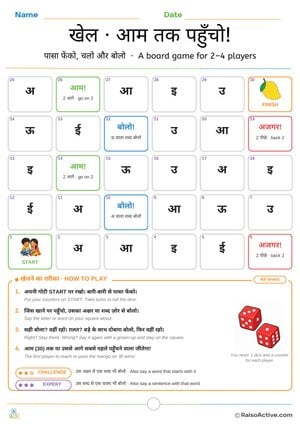
Reach the Mango: Hindi Vowels Board Game for 2–4 Players | खेल · आम तक पहुँचो!
Ages 3-7 · Preschool–Grade 1Ages 3-7 · Nursery–Year 2Ages 3-7 · Nursery–Class 1Ages 3-7
A 30-square path with the six vowels, bonus squares (go on 2) and trap squares (back 2). Children say the letter or a word starting with it each time they land, and the first to reach the mango on 30 wins. It makes letter recognition into a game.
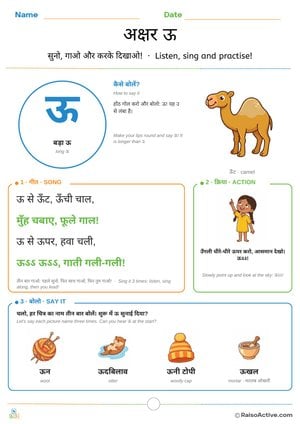
Hindi Letter ऊ (oo) Song, Action and Say It | अक्षर ऊ
Ages 3-7 · Preschool–Grade 1Ages 3-7 · Nursery–Year 2Ages 3-7 · Nursery–Class 1Ages 3-7
Children hear and say the long vowel ऊ, learn a short rhyme with an action, and say the names of the picture words ऊँट (camel), ऊन (wool), ऊनी टोपी (woolly cap), ऊदबिलाव (otter), ऊखल (mortar) to practise hearing ऊ at the start.
Hindi Letter उ (u) Song, Action and Say It | अक्षर उ
Ages 3-7 · Preschool–Grade 1Ages 3-7 · Nursery–Year 2Ages 3-7 · Nursery–Class 1Ages 3-7
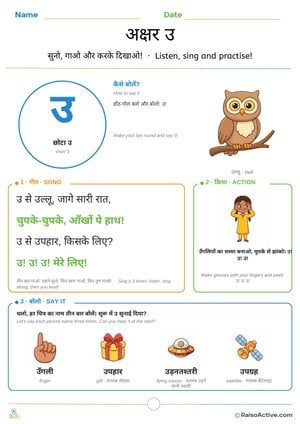
Children hear and say the short vowel उ, learn a short rhyme with an action, and say the names of the picture words उल्लू (owl), उँगली (finger), उपहार (gift), उड़नतश्तरी (flying saucer), उपग्रह (satellite) to practise hearing उ at the start.
Hindi Letter ई (ee) Song, Action and Say It | अक्षर ई
Ages 3-7 · Preschool–Grade 1Ages 3-7 · Nursery–Year 2Ages 3-7 · Nursery–Class 1Ages 3-7
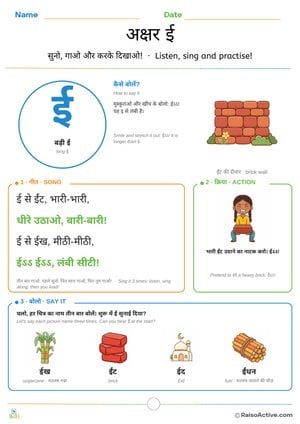
Children hear and say the long vowel ई, learn a short rhyme with an action, and say the names of the picture words ईंट (brick), ईख (sugarcane), ईद (Eid), ईंधन (fuel) to practise hearing ई at the start.

Written by
Hemsweta Jain · Teacher Cheena
MBA and Early Childhood Educator, teaching since 2014 · Founder of RaisoActive, Mumbai
Published · Last reviewed
Related posts
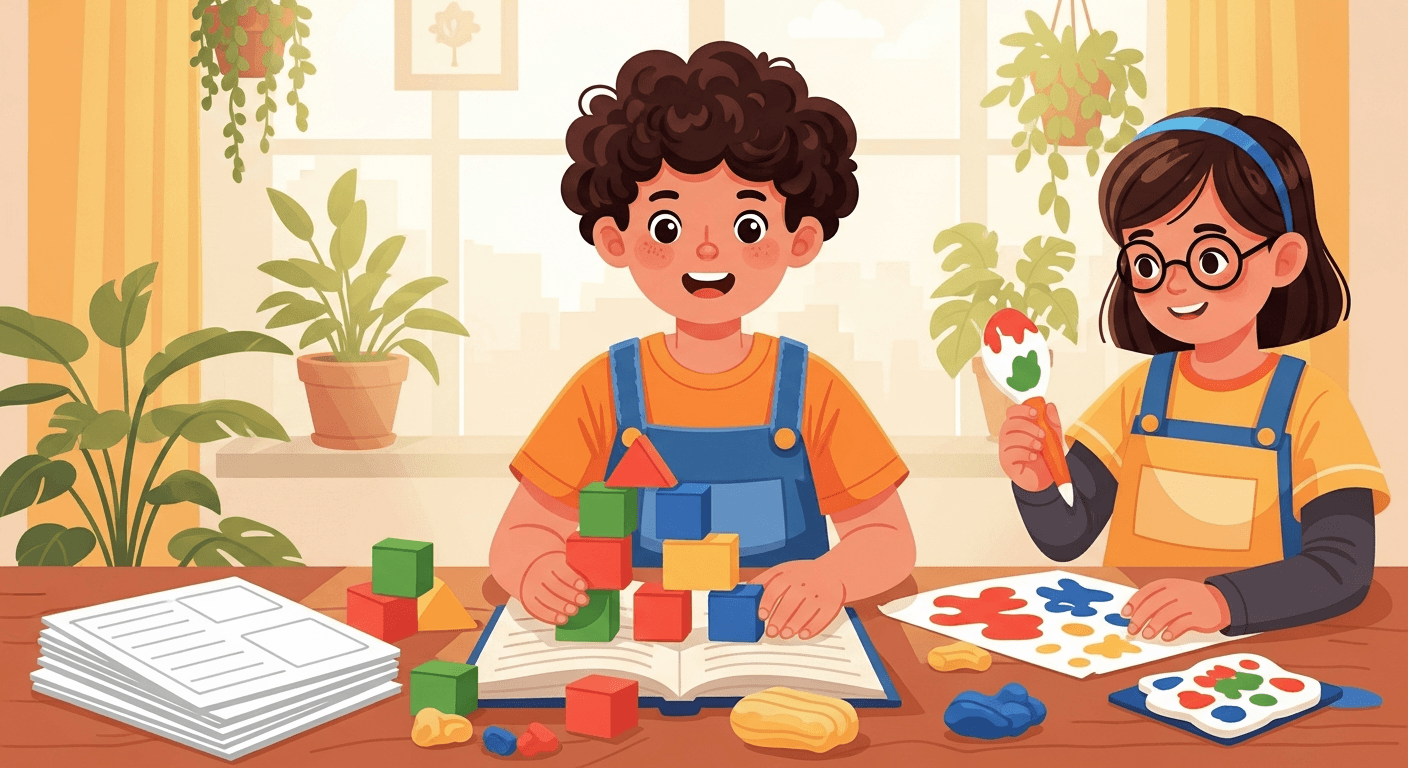
Beyond Worksheets: Engaging Alternatives for Your 5-Year-Old Who Refuses Paper-and-Pencil Activities
Discover practical, research-backed alternatives when your 5-year-old refuses worksheets. Hands-on activities, sensory play, and movement-based learning that build the same skills.
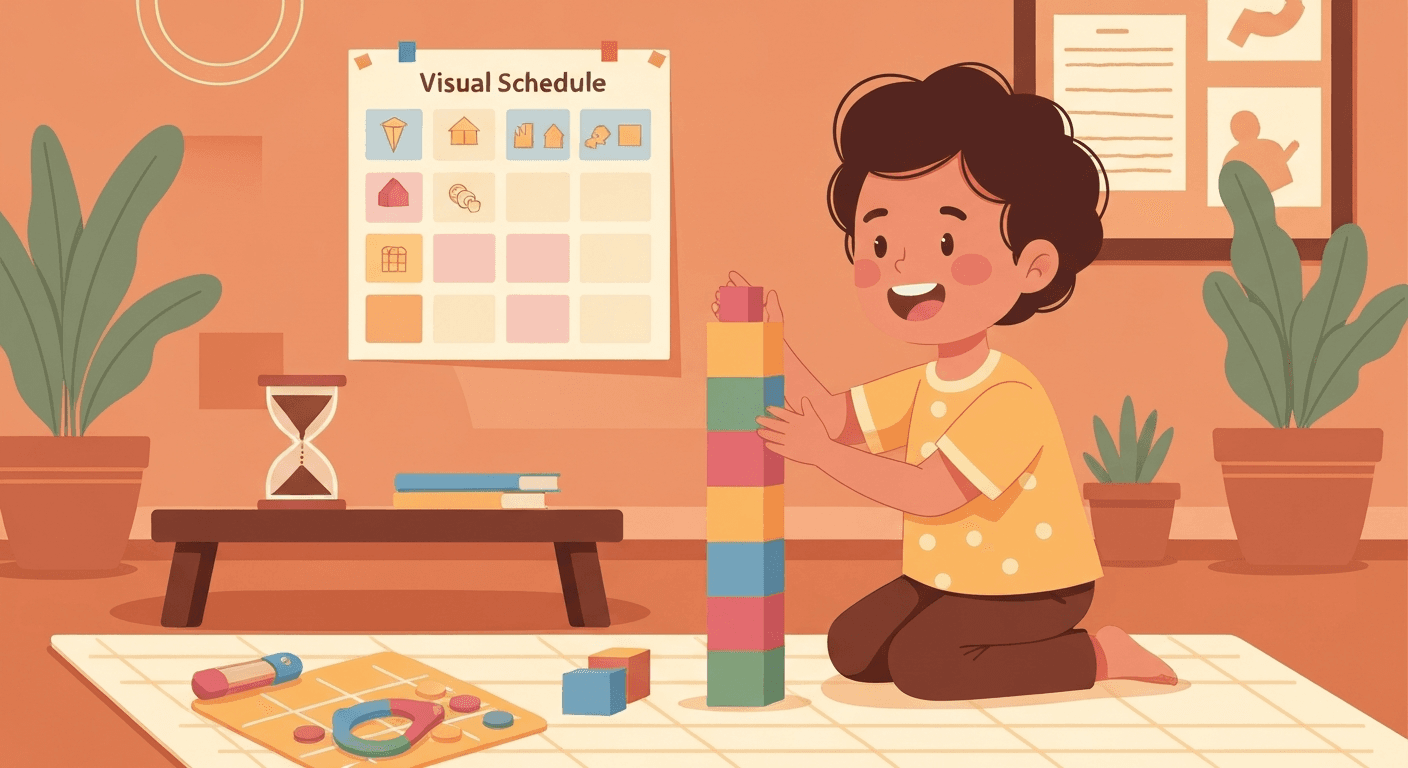
Learning Activities That Work: A Comprehensive Guide for Children with ADHD
Discover hands-on, movement-based learning activities that genuinely work for children with ADHD. Practical tips for Indian parents and educators, ages 1-8.
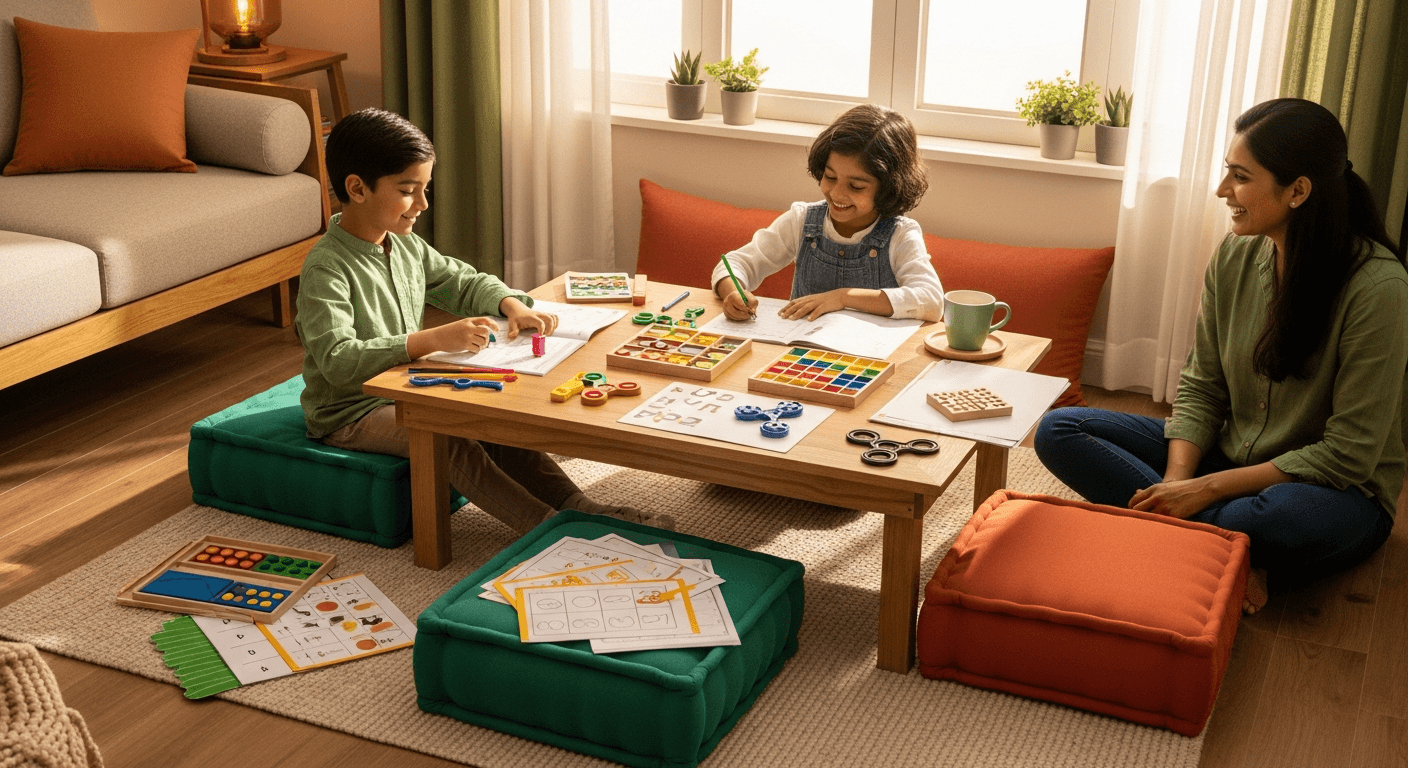
Creating an Inclusive Learning Environment at Home: A Complete Guide for Families
Learn how to create an inclusive learning environment at home for children with ADHD, dyslexia, sensory needs, and more. Practical tips for Indian families.
Related Resources
Printable Resources(10)
View all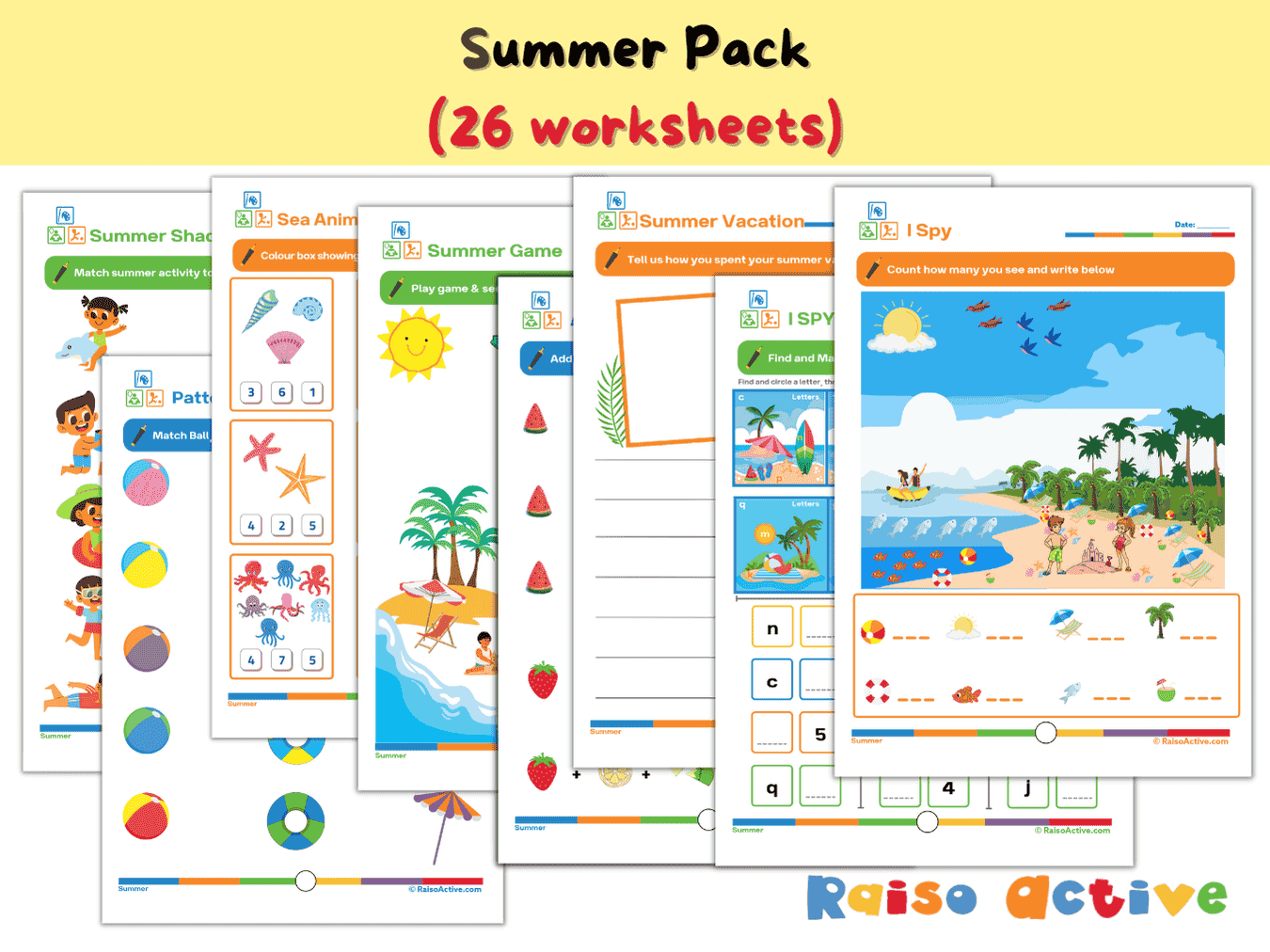

Summer Activity Pack: Math, Literacy, Puzzles & More for Preschool & Kindergarten
Ages 3-7 · Preschool–Grade 1Ages 3-7 · Nursery–Year 2Ages 3-7 · Nursery–Class 1Ages 3-7 · 26 pages
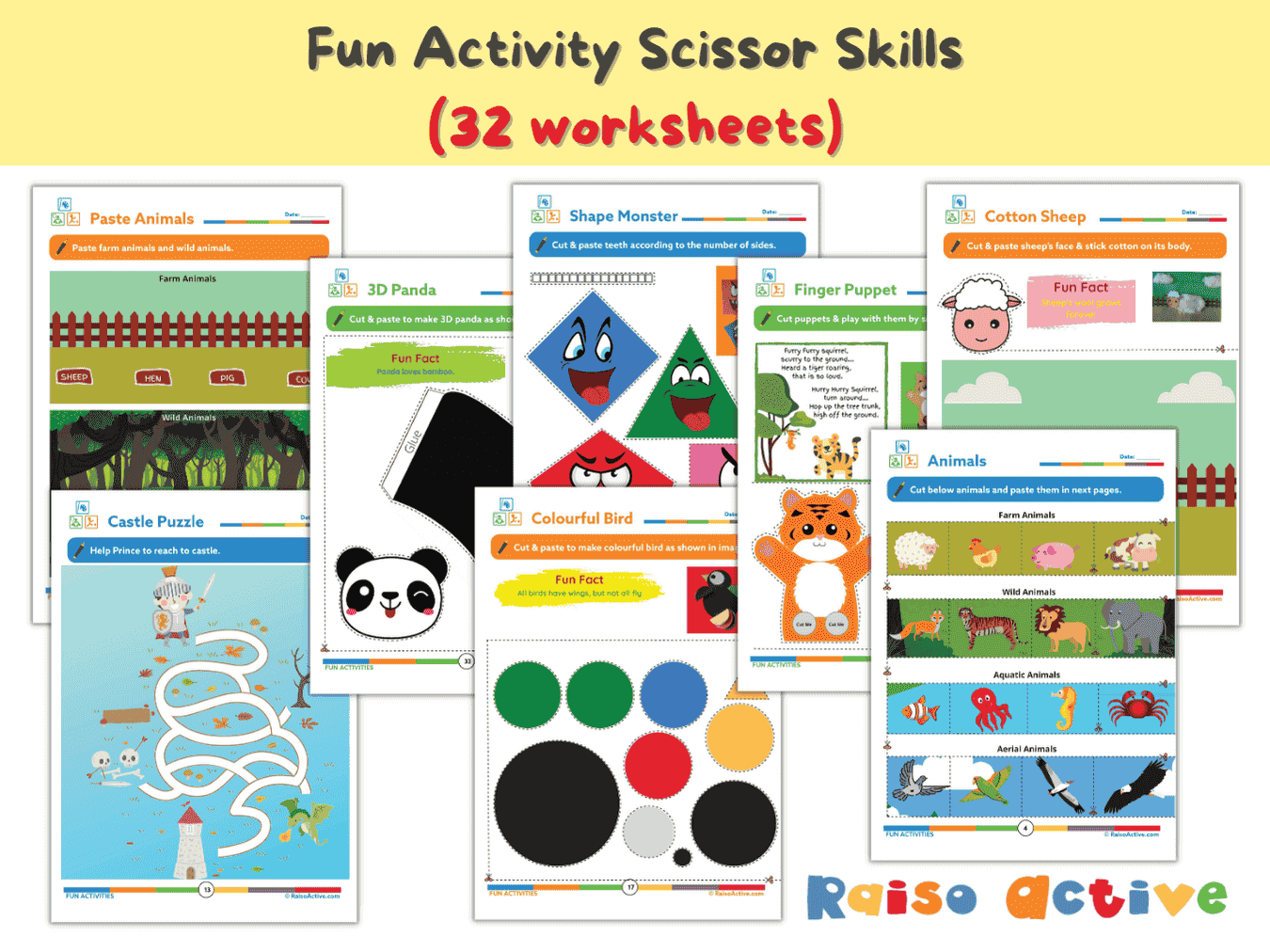

Preschool Scissor Skills Activity Book: Fine Motor & Craft Fun for Ages 3-6
Ages 3-6 · Preschool–KindergartenAges 3-6 · Nursery–Year 1Ages 3-6 · Nursery–UKGAges 3-6 · 35 pages
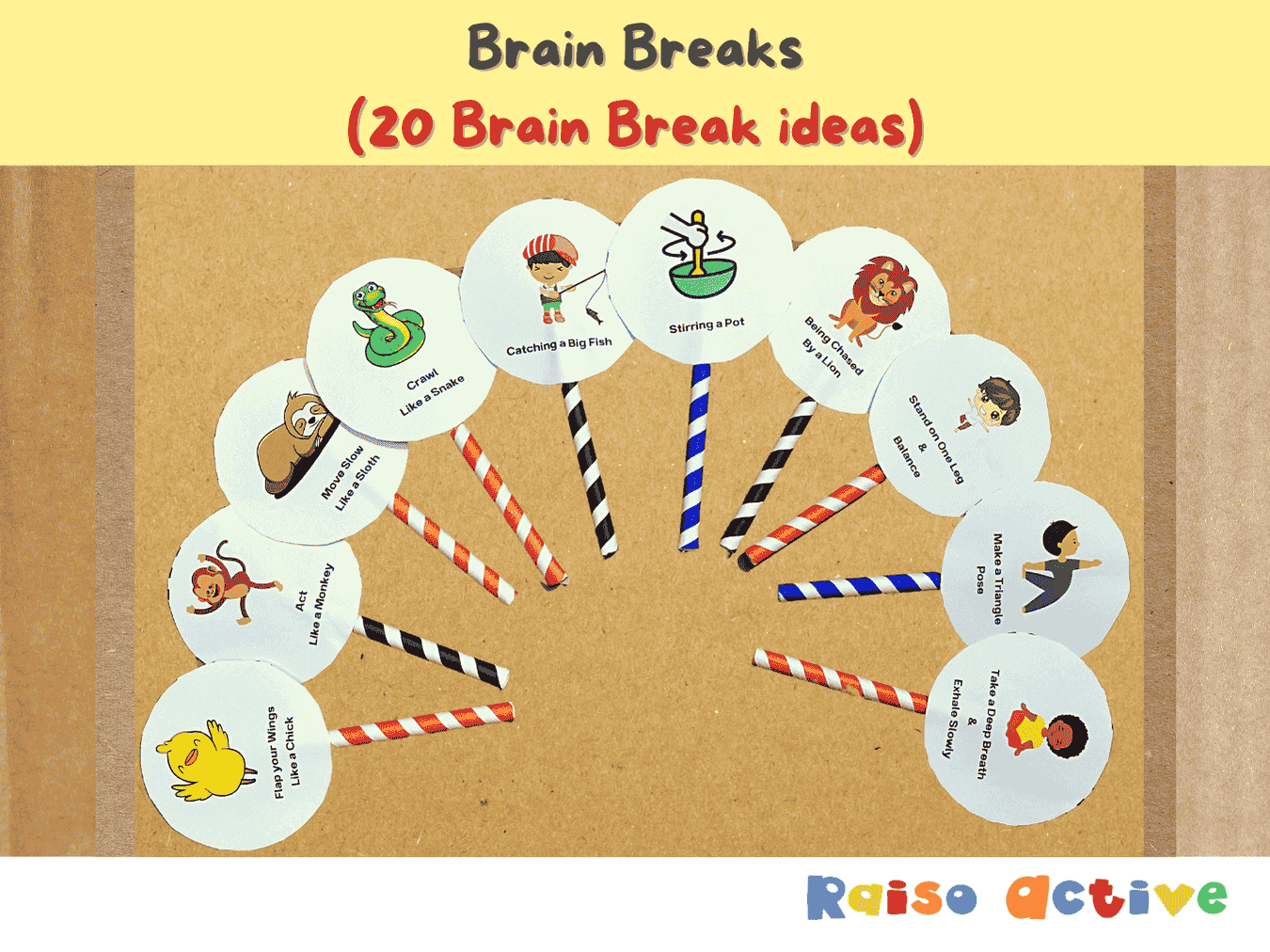
Gross Motor Movement & Imaginative Play Flashcards for Toddlers & Preschoolers
Ages 2-5 · Preschool–Pre-KAges 2-5 · Nursery–ReceptionAges 2-5 · Nursery–LKGAges 2-5 · 5 pages

Month 9: Holistic Preschool Play Learning | Ages Up to 4
Ages 3-4 · PreschoolAges 3-4 · NurseryAges 3-4 · 30 pages
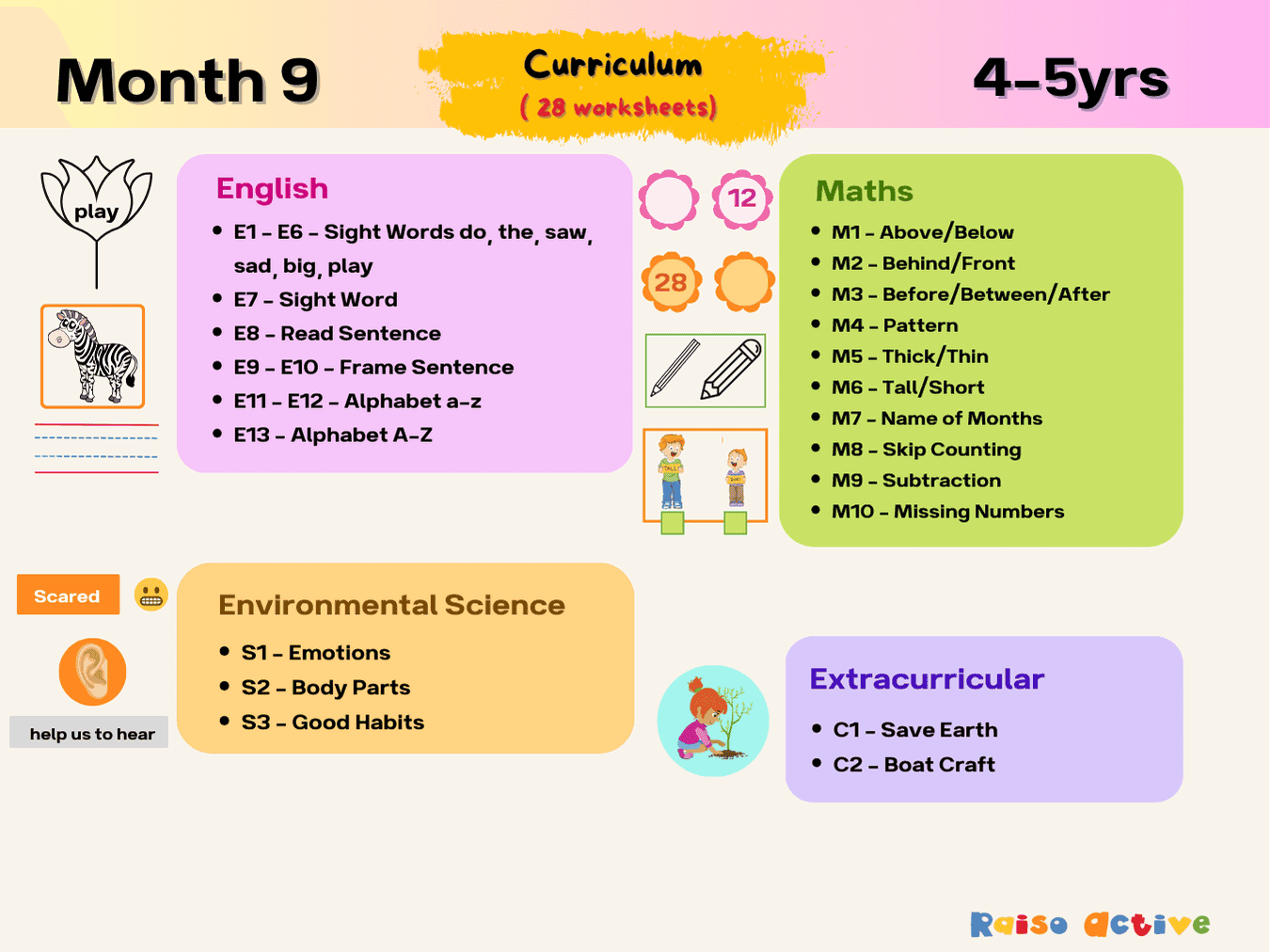
Month 9: Play-Based Preschool Foundational Skills | Ages 4-5
Ages 4-5 · Pre-KAges 4-5 · ReceptionAges 4-5 · LKGAges 4-5 · 31 pages
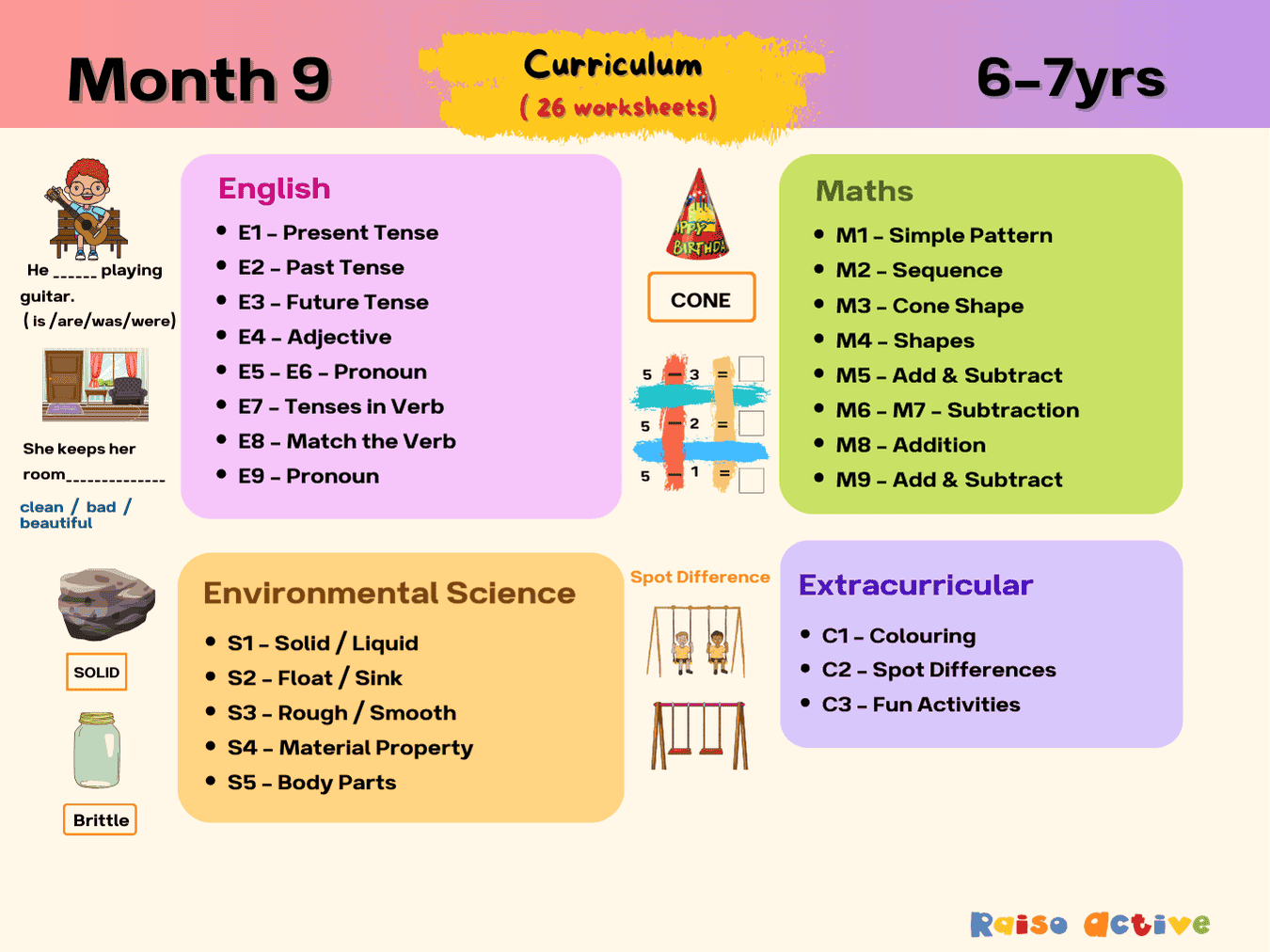
Month 9: Multi-Subject Early Learning | Ages 6-7
Ages 6-7 · Grade 1Ages 6-7 · Year 2Ages 6-7 · Class 1Ages 6-7 · 29 pages
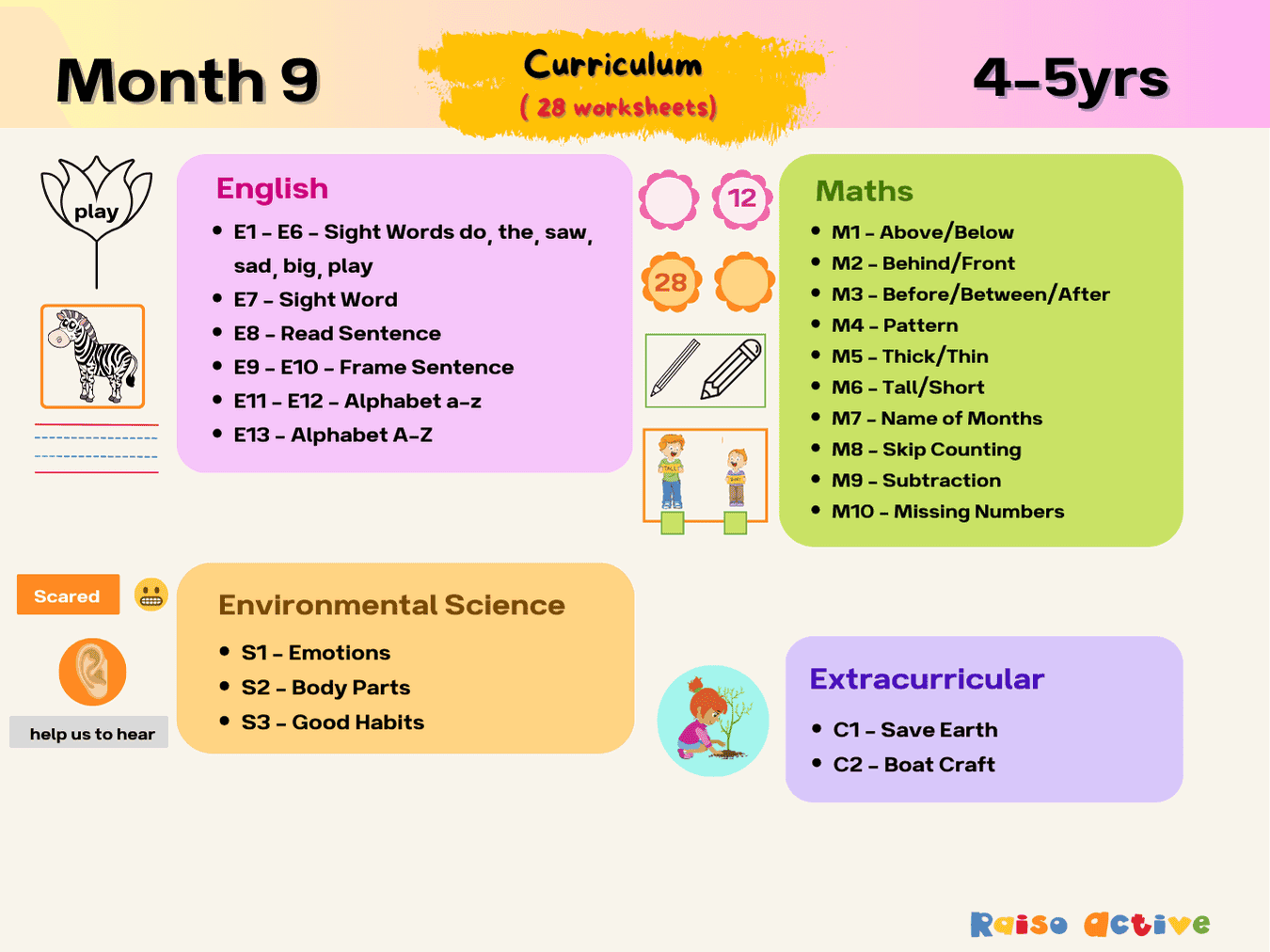
Month 9: Preschool Early Learning Activities | Ages 4-5
Ages 4-5 · Pre-KAges 4-5 · ReceptionAges 4-5 · LKGAges 4-5 · 31 pages
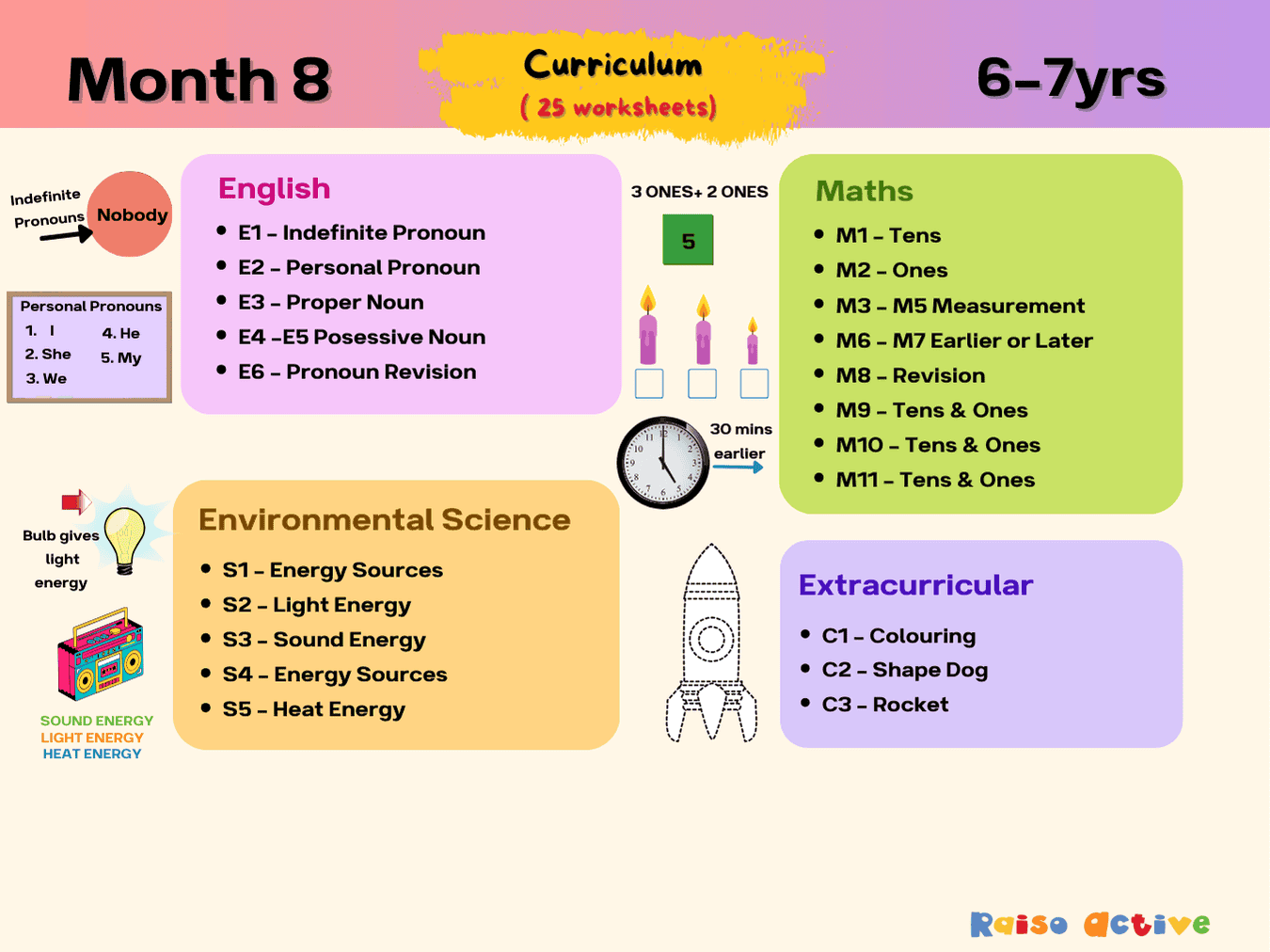
Month 8: English, Math, Science | Ages 6-7
Ages 6-7 · Grade 1Ages 6-7 · Year 2Ages 6-7 · Class 1Ages 6-7 · 28 pages
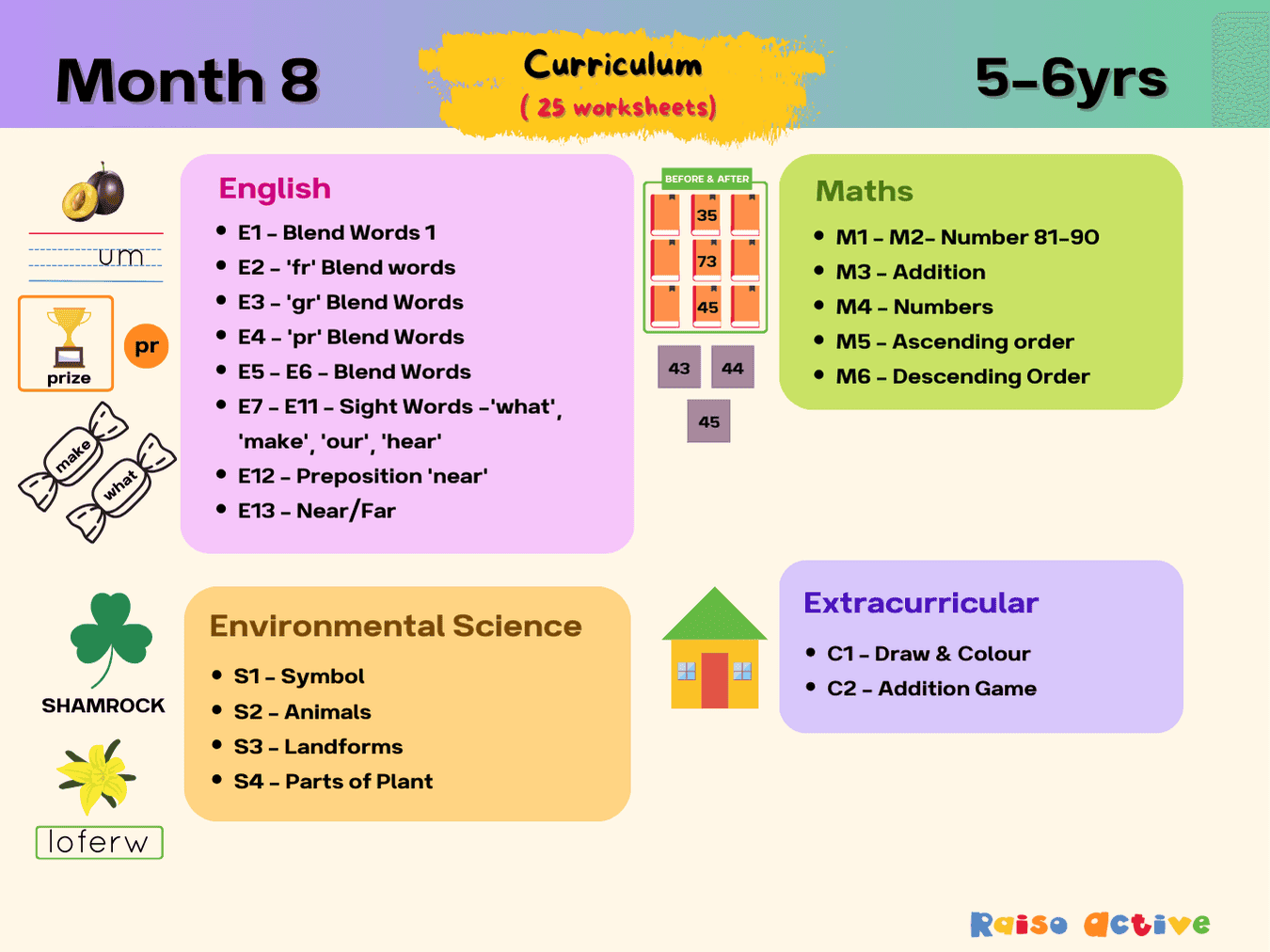
Month 8: Literacy, Math, Science Foundations | Ages 5-6
Ages 5-6 · KindergartenAges 5-6 · Year 1Ages 5-6 · UKGAges 5-6 · 28 pages
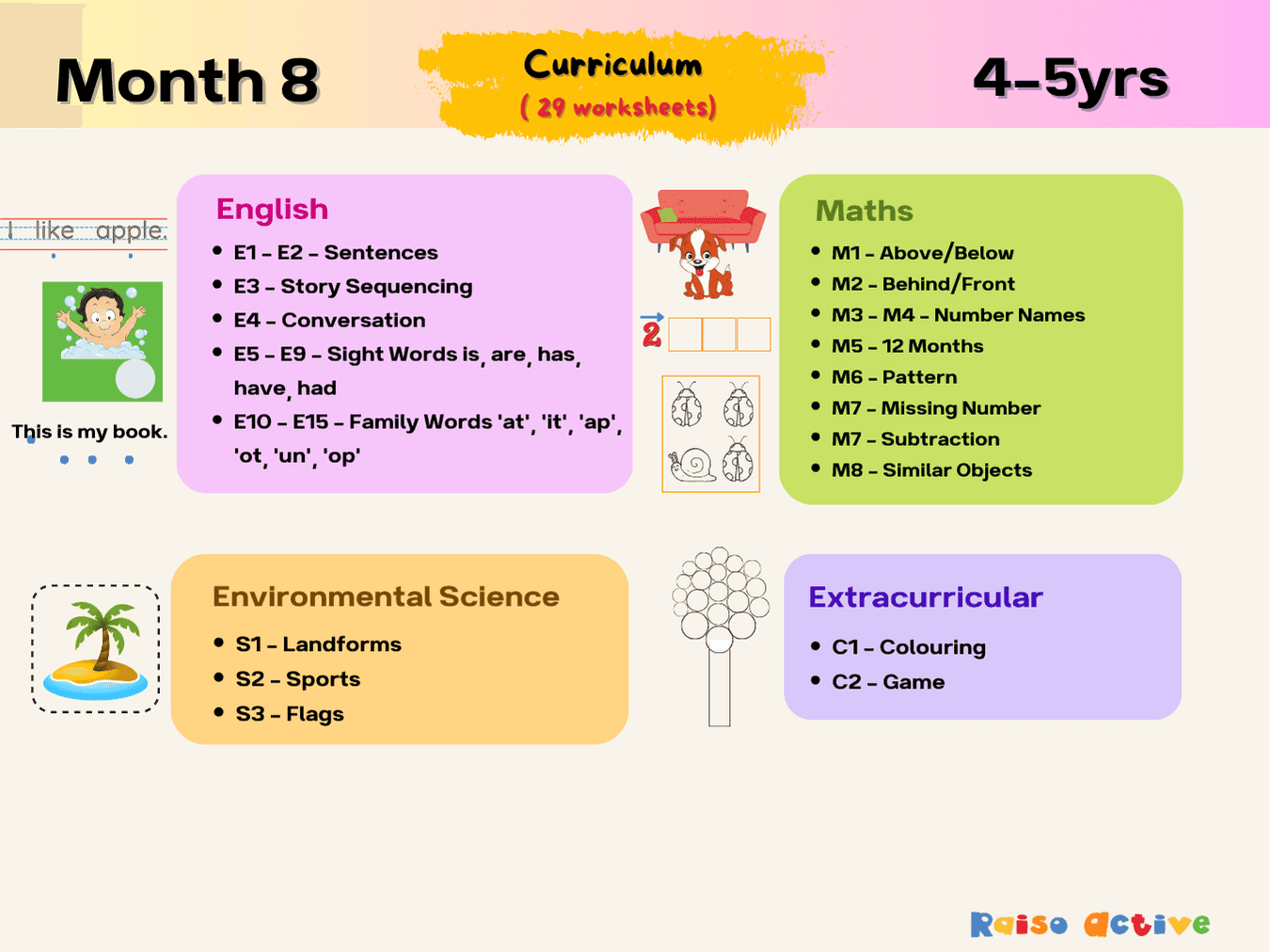
Month 8: English, Math, Science Foundations | Ages 4-5
Ages 4-5 · Pre-KAges 4-5 · ReceptionAges 4-5 · LKGAges 4-5 · 32 pages