How Much Homework Should My Kindergartner Have? A Complete Guide for Parents
Author
RaisoActive - Kids Activities and Fun Learning
Published
Updated
Reading Time
16 min read

- Research — including the landmark Harris Cooper meta-analysis — finds **no academic benefit** to homework for children under age 6, and little benefit before middle school.
- The widely cited **10-minute rule** (10 minutes per grade level per night) puts kindergarten homework at a maximum of 10 minutes — and many experts recommend zero.
- What genuinely **does** help kindergartners thrive at home: reading together daily, unstructured free play, conversation, and hands-on exploration — none of which require worksheets.
- In India, heavy homework in early years is common practice in many private schools. There are respectful, effective ways to **manage expectations and talk to teachers** without conflict.
- When homework is unavoidable, making it **calm, short, and low-stakes** protects your child's love of learning — which matters far more than any worksheet completed.
The Homework Question Every Kindergarten Parent Asks
Your five-year-old has just come home from school. They are tired, probably a little grumpy, and desperately want to run, play, or simply lie on the sofa doing nothing for a while. And then you see it — the homework diary. Three pages of letter tracing, a maths worksheet, and a note asking them to 'read two pages aloud and get a signature.' Your heart sinks a little. You wonder: is all this actually necessary? Is my child falling behind if we don't do it all?
These are completely valid questions, and you are not alone in asking them. Across India and around the world, parents of kindergartners are navigating the tension between what schools send home and what research actually tells us about how young children learn best. This guide will walk you through what the evidence says, what genuinely supports your child's development at home, and how to make peace with the homework reality — whatever form it takes in your household.
Get Free Kindergarten Worksheets & Activity Ideas
Join thousands of Indian parents who use RaisoActive printables to make home learning joyful — not stressful. New worksheets and activity ideas every week, completely free.
What Research Actually Says About Kindergarten Homework
The most comprehensive body of research on homework was conducted by Duke University professor Harris Cooper, whose 2006 meta-analysis reviewed decades of studies on homework across all age groups. His conclusion was striking in its clarity: for children in primary school, the correlation between homework and academic achievement is minimal to non-existent. For children under the age of six — the kindergarten years — he found no measurable academic benefit at all.
Cooper's widely referenced "10-minute rule" suggests a maximum of 10 minutes of homework per grade level per night. By this formula, a kindergartner (Grade 1 in many Indian systems, KG in others) should have at most 10 minutes of homework — and many developmental experts go further, recommending zero formal homework for children under six. The National Association for the Education of Young Children (NAEYC) in the US explicitly states that homework for young children is not developmentally appropriate.
Harris Cooper's landmark meta-analysis of homework research found no measurable academic benefit of homework for children in early primary school years. The positive correlation between homework and achievement only begins to appear in middle school and high school.
Source: Cooper et al., 2006 — Review of Educational Research
Why Most Homework at This Age Is Actually Counterproductive
Understanding why homework doesn't help — and can actively harm — young children helps you respond to it more confidently, whether you're talking to a teacher or simply deciding how much energy to put into the homework folder each evening.
- The brain is not ready. A kindergartner's prefrontal cortex — the part of the brain responsible for sustained attention, task-switching, and self-regulation — is still in very early development. Sustained desk-work after a full school day asks that underdeveloped system to keep performing when it has genuinely run out of capacity.
- It erodes the love of learning. When a child associates "learning" with tired, reluctant evenings of tracing and colouring-in, they start to see school and learning as a chore. The intrinsic curiosity that drives genuine academic achievement later is fragile at this age — and homework pressure can quietly damage it.
- It displaces what actually matters. Every minute spent on a worksheet is a minute not spent playing freely, reading a story, having a conversation, or sleeping — all of which have far stronger developmental evidence behind them.
- Family stress has a cost. Research published in the American Journal of Family Therapy found that homework regularly caused family stress, arguments, and negative emotions in households with young children. That stress is not neutral — it affects the child's relationship with both learning and home.
- It doesn't reflect school readiness skills. Kindergarten homework often focuses on rote tasks — colouring letters, copying words — rather than the skills that predict school success: vocabulary, listening comprehension, curiosity, self-regulation, and social skills.
A child who hates homework at five is not lazy — they are developmentally appropriate.
Resistance to after-school academic tasks in a kindergartner is not a character flaw or a parenting failure. It is a sign that their brain is working exactly as it should at this age. The goal is to protect that resistance from becoming a resistance to learning itself.
What Actually Helps: The Home Activities That Make a Real Difference
If formal homework doesn't benefit young children, what does? The research here is actually quite encouraging — the most powerful things you can do with and for your kindergartner at home are free, require no special materials, and feel nothing like school.
- Read together every day. This is the single most evidence-backed activity for early literacy and long-term academic success. Reading aloud to your child — anything they enjoy, in any language — builds vocabulary, comprehension, listening skills, and a relationship with books that no worksheet can replicate. Fifteen to twenty minutes at bedtime is transformative over time.
- Talk with them — properly. Extended conversations about the world, about their day, about what they're wondering, build oral language skills that predict reading comprehension for years ahead. Ask open questions: "Why do you think that happened?" "What would you do if...?" Let them talk at length without correcting or rushing.
- Let them play freely. Unstructured play — especially imaginative play, building, and outdoor play — builds executive function, creativity, social skills, and problem-solving ability. These are not soft skills; they are the cognitive foundations of academic learning. A child who builds a fort out of sofa cushions is doing genuinely important developmental work.
- Cook and do chores together. Counting cups of rice, sorting laundry by colour, estimating how long something will take — everyday life is full of embedded maths and science. These activities contextualise abstract concepts in a way that worksheets cannot.
- Visit new places and ask questions. A trip to the market, a park, a library, or even a different neighbourhood gives children rich new vocabulary, observations to process, and things to wonder about. Wondering is the beginning of all learning.
The most powerful learning tool a kindergartner has is a curious, talking adult.
Research by Hart and Risley showed that the quantity and quality of conversation children have with adults in early childhood predicts vocabulary size, reading ability, and academic achievement more strongly than almost any other factor — including the school they attend.
The Indian School Homework Culture: Why It Exists and How to Navigate It
If you are raising children in India — or in an Indian family anywhere in the world — you are likely navigating a school culture that has very different expectations around homework than what the international research recommends. In many Indian private schools, even nursery and KG children receive daily homework across multiple subjects: Hindi, English, Maths, sometimes EVS (Environmental Studies). This is not malicious — it stems from deeply held cultural beliefs about academic rigour, parental involvement, and preparation for competitive examinations later in life.
Understanding this context matters because it changes how you respond. Dismissing Indian school homework as simply wrong misses the genuine anxieties driving it — anxieties that many Indian parents share. But accepting all homework without question, at the cost of your child's wellbeing and your family's evenings, is equally unhelpful. The goal is to find a thoughtful middle path.
- **Understand the school's perspective.** Teachers often assign homework because they feel pressure from principals, parents, and a competitive curriculum. They are not trying to stress your child — they are operating within a system that equates busyness with rigour.
- **Do not skip homework silently.** If you choose to limit homework, communicate with the teacher. A brief, respectful note — 'We did 15 minutes and then stopped as our child was very tired' — is far better than an unsigned diary that creates confusion.
- **Pick your battles.** If there are four pages of homework and your child can genuinely manage one or two pages calmly, do those and stop. It is better to do a little well than to push through all of it in a stressed, tearful state.
- **Request a parent-teacher meeting** if homework volume is consistently causing distress. Go with curiosity rather than complaint — 'Can you help me understand what the homework is meant to achieve?' opens a far better conversation than 'This is too much.'
- **Find community.** Talk to other parents in the class. If many families are struggling with homework volume, a collective, respectful request to the school carries far more weight than individual complaints.
How to Talk to Your Child's Teacher About Homework
Many parents worry that questioning homework will make their child look unmotivated or make them seem like a difficult parent. In reality, most thoughtful teachers welcome a well-framed conversation — it shows you are engaged and thinking carefully about your child's development. Here is how to approach it.
A Step-by-Step Approach to the Homework Conversation
Step 1: Request a specific time to talk
Do not bring this up at pick-up time or during a busy school event. Send a note in the diary or an email asking for a 10-15 minute meeting or phone call. 'I'd love to understand how I can best support [child's name] at home with their learning — could we find a time to chat?' is a warm, non-confrontational opener.
Step 2: Start with curiosity, not complaint
Begin by asking what the teacher hopes the child will gain from homework. 'What skills are the homework activities meant to reinforce?' is genuinely useful to know — and it frames you as a partner, not a critic. You may discover that the teacher has more flexibility than the diary suggests.
Step 3: Share what you observe at home
Share specific observations, not general frustrations. 'By the time we sit down for homework, she is quite exhausted and often in tears — I am finding it hard to know how to help' is concrete and child-focused. Teachers respond much better to this than to 'There is too much homework.'
Step 4: Ask for guidance on prioritising
Ask directly: 'If we only have 15 minutes on a given evening, which tasks should we prioritise?' Most teachers will give you a helpful answer and appreciate that you are being realistic rather than just not doing the homework at all.
Step 5: Agree on a reasonable approach together
End the conversation with a shared plan. This might be: do the reading daily and one written task; skip any task that takes longer than 15 minutes without making it feel like failure; or use weekends for longer tasks. Having an agreed-upon approach reduces guilt and confusion on all sides.
Optional Practice vs Assigned Homework: Understanding the Difference
It is worth making a clear distinction between assigned homework — tasks the school sends home that are expected to be completed and signed — and optional practice that you choose to do because your child is interested or because you want to reinforce something specific. These two things are very different in how you should approach them.
- +Set by the school and expected to be completed
- +Often non-negotiable in many Indian school cultures
- +May cover topics regardless of child's current readiness
- +Can feel like an obligation and create resistance
- +Should be kept to under 10-15 minutes for KG children
- +Prioritise the reading component above written tasks
- -Chosen by you or your child based on interest and energy
- -Entirely flexible — do it when the moment feels right
- -Can be matched perfectly to your child's current level
- -Feels like play or exploration, not work
- -No time limit needed — stop when the child loses interest
- -Worksheets, books, games, activities — whatever sparks curiosity
Optional practice is wonderful and worth doing — but it should always follow the child's energy and interest, never be forced, and never happen at the cost of free play and rest. A colouring worksheet done happily for ten minutes because your child chose it is a completely different experience from the same worksheet done tearfully because it is in the homework folder.
Optional practice done joyfully is worth ten times the same activity done under compulsion.
The emotional context in which a child encounters learning shapes their long-term relationship with it. Choose your moments carefully — a child who asks to do a worksheet has already done something far more important than completing the worksheet.
Making Homework Less Stressful When You Cannot Avoid It
Sometimes — perhaps often — you will find yourself in a situation where homework simply has to be done. The school expects it, your child's teacher checks it, and opting out entirely is not realistic. In those situations, the goal is not to eliminate homework but to make the experience as calm, short, and positive as possible.
- **Time it well.** Never sit down for homework the moment your child walks in the door. Give them at least 30-45 minutes to decompress, snack, and play first. A child who has had a break is a completely different homework companion from one who is still in 'school mode.'
- **Keep it short and stop on time.** Set a timer for 10-15 minutes. When it goes off, stop — regardless of whether everything is done. A note to the teacher explaining that your child was tired is more honest and less harmful than a worksheet completed in tears.
- **Sit with them, but don't do it for them.** Your presence and warmth matter enormously. But doing the homework for your child — or hovering anxiously over every letter — teaches them nothing and increases pressure. Be nearby, be calm, and let them work.
- **Make it physical where possible.** If the homework is counting, count on fingers, blocks, or fruit in the bowl. If it is tracing letters, do it with a big marker on a whiteboard rather than a pencil on paper. Physical variation reduces the grind.
- **End with something they love.** After homework is done, immediately transition to something enjoyable — a game, a story, outdoor play. This trains the brain to associate homework with a reliably positive outcome, which reduces resistance over time.
- **Never use homework as punishment or as leverage.** 'Finish your homework or no screen time' escalates the emotional stakes and turns homework into a battleground. Keep the emotional temperature as neutral and matter-of-fact as possible.
- Your child regularly cries, has meltdowns, or becomes physically unwell (stomach aches, headaches) in anticipation of homework.
- Homework takes more than 20 minutes most evenings despite your best efforts to keep it brief.
- Your child is asking to stay home from school because of homework anxiety.
- Family evenings have become consistently unhappy because of the homework routine.
- Your child is losing interest in learning, books, or activities they previously enjoyed.
in a Stanford University study reported that homework was a source of significant stress in their household. The study also found that primary school children who did more than the recommended amount of homework showed higher levels of anxiety and poorer physical health — with no corresponding academic benefit.
Source: Galloway et al., 2013 — Journal of Experiential Education
Free Worksheets to Make Optional Practice Fun
Get Kindergarten Worksheets Designed for Joyful Learning
Subscribe to RaisoActive and receive freshly designed worksheets for kindergartners straight to your inbox — short, engaging, and created to supplement school without adding stress. Trusted by parents and teachers across India.
Frequently Asked Questions
How much homework should a kindergartner actually have?
My child's school sends a lot of homework. Am I a bad parent if I don't make them do all of it?
What should I do instead of homework when my child is too tired?
Will my child fall behind if we do less homework than their classmates?
My child actually enjoys doing their worksheets at home. Should I stop them?
How do I talk to my in-laws or extended family who think more homework is better?
Free worksheets for this topic
Browse all worksheets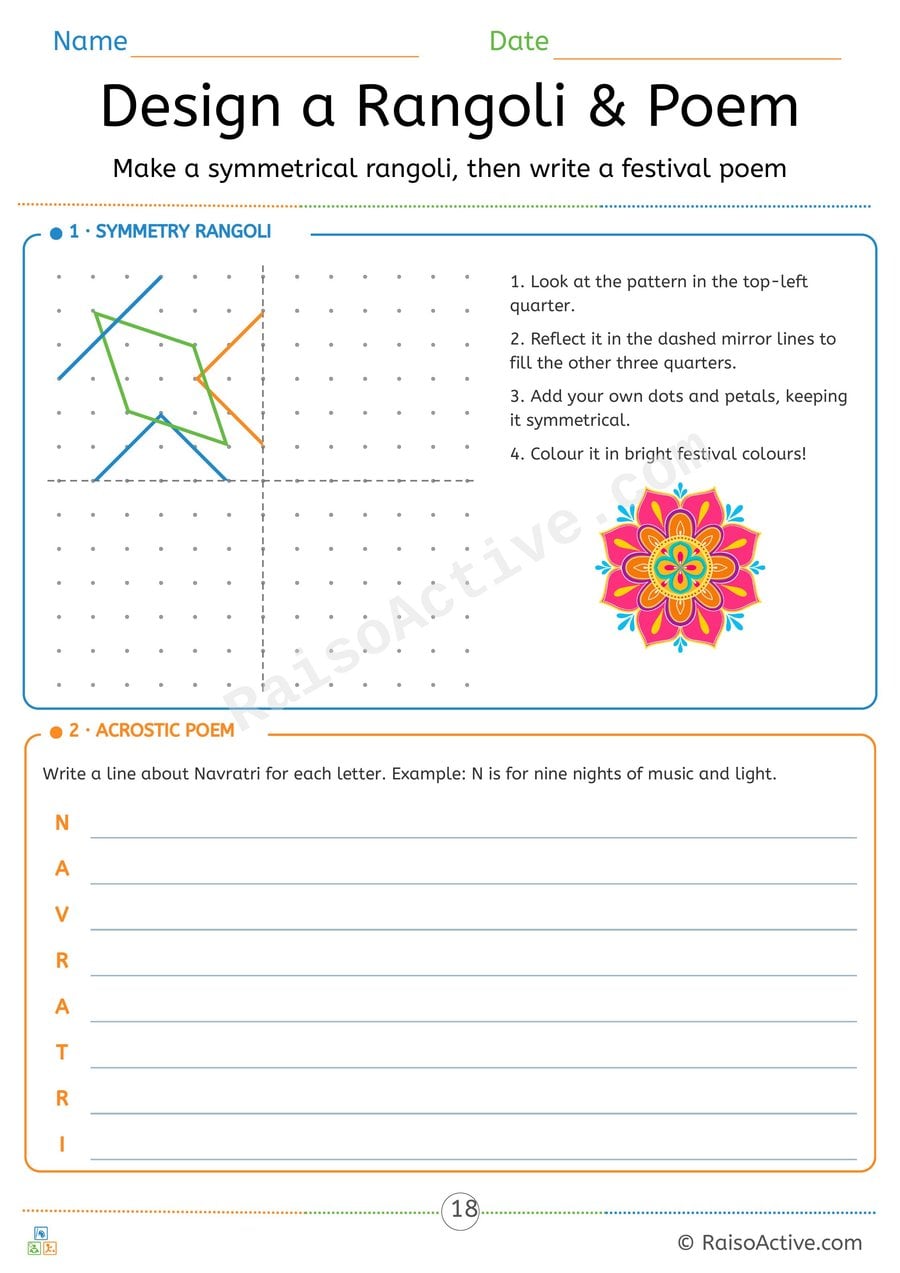
Navratri Symmetry Rangoli and Acrostic Poem
Ages 7-11 · Grade 2–Grade 3Ages 7-11 · Year 3–Year 4Ages 7-11 · Class 2–Class 3Ages 7-11
Children reflect a pattern in two mirror lines to complete a four-way symmetrical rangoli on a dot grid, add their own symmetrical details, and write an acrostic poem with one line for each letter of NAVRATRI.
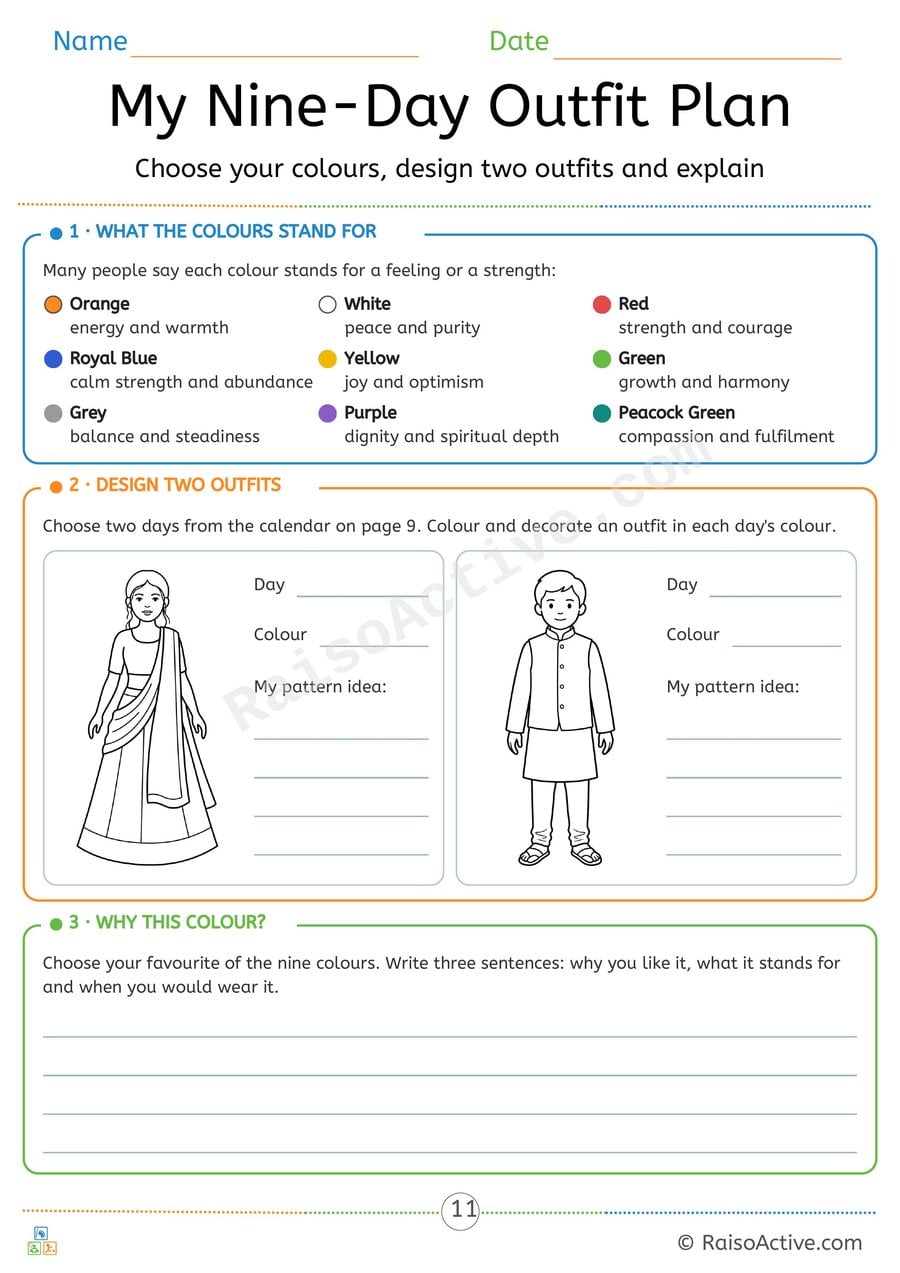
My Nine-Day Outfit Plan: Navratri Colours Design and Writing
Ages 7-11 · Grade 2–Grade 3Ages 7-11 · Year 3–Year 4Ages 7-11 · Class 2–Class 3Ages 7-11
Children read what each of the nine colours is often said to stand for, choose two days from the calendar, colour and pattern a lehenga-style outfit and a kurta outfit in those colours, and write three sentences explaining their favourite colour.
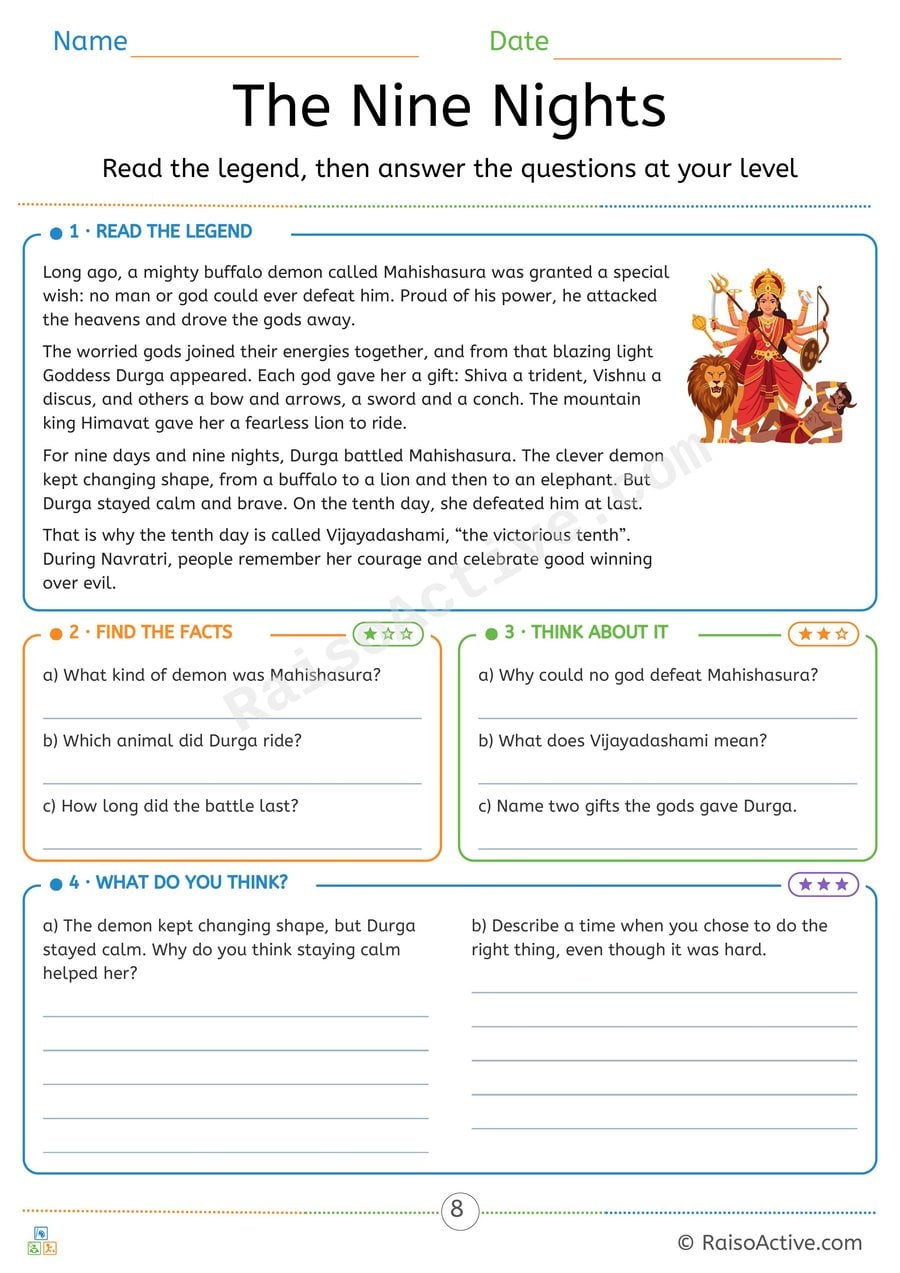
The Nine Nights: Durga and Mahishasura Reading Comprehension
Ages 7-11 · Grade 2–Grade 3Ages 7-11 · Year 3–Year 4Ages 7-11 · Class 2–Class 3Ages 7-11
Children read a retelling of the legend of Durga and Mahishasura, find facts in the text, answer inference questions about why things happened, and write their own opinion about staying calm and doing the right thing.

Meera's Garba Night: Navratri Reading Comprehension Story
Ages 4-6 · Pre-K–KindergartenAges 4-6 · Reception–Year 1Ages 4-6 · LKG–UKGAges 4-6
Children listen to or read a short story, recall details by circling answers, write answers using a word bank and explain a simple idea in their own words.

Written by
Hemsweta Jain · Teacher Cheena
MBA and Early Childhood Educator, teaching since 2014 · Founder of RaisoActive, Mumbai
Published · Last reviewed
Related Resources
Printable Resources(10)
View all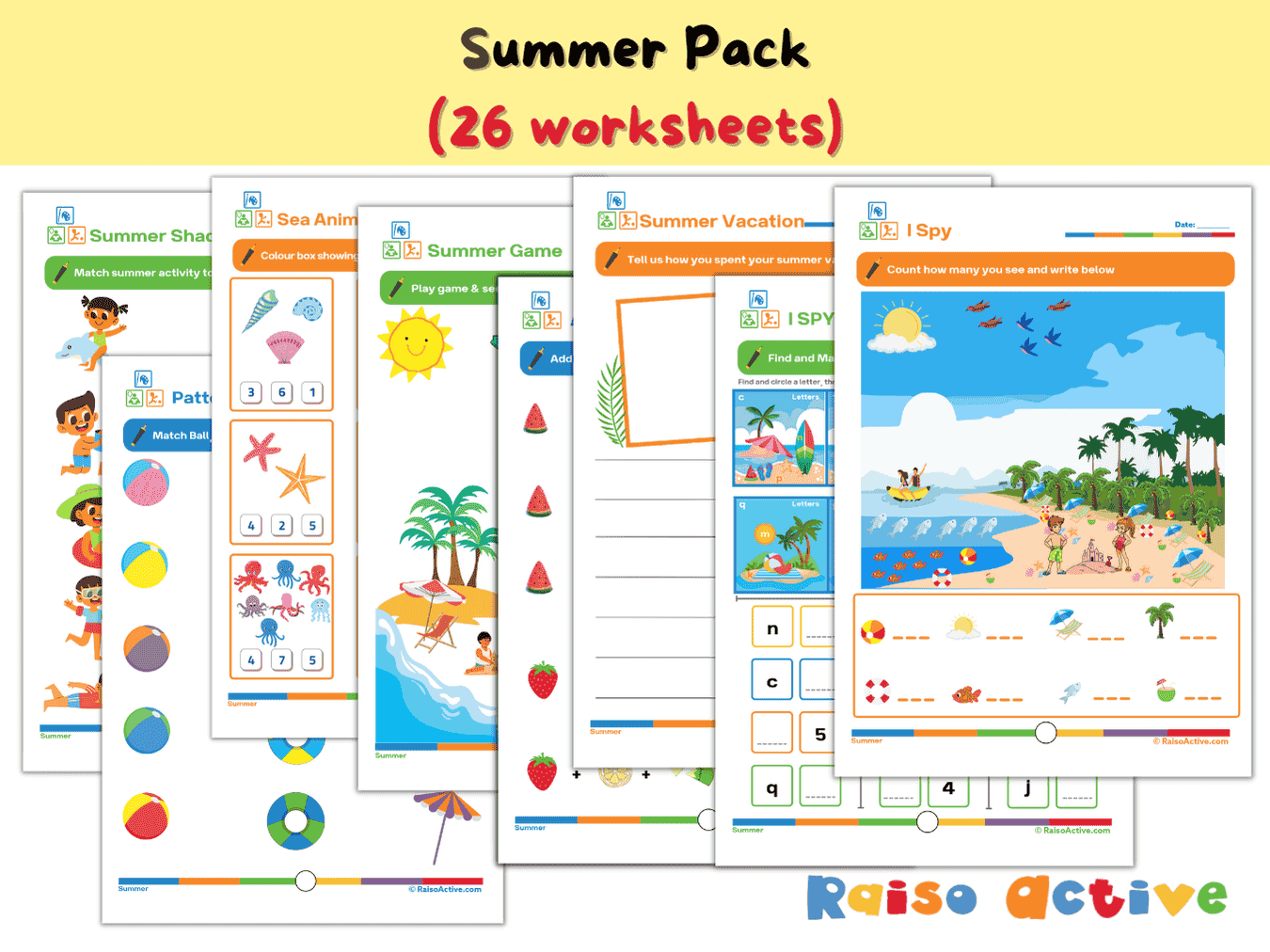

Summer Activity Pack: Math, Literacy, Puzzles & More for Preschool & Kindergarten
Ages 3-7 · Preschool–Grade 1Ages 3-7 · Nursery–Year 2Ages 3-7 · Nursery–Class 1Ages 3-7 · 26 pages
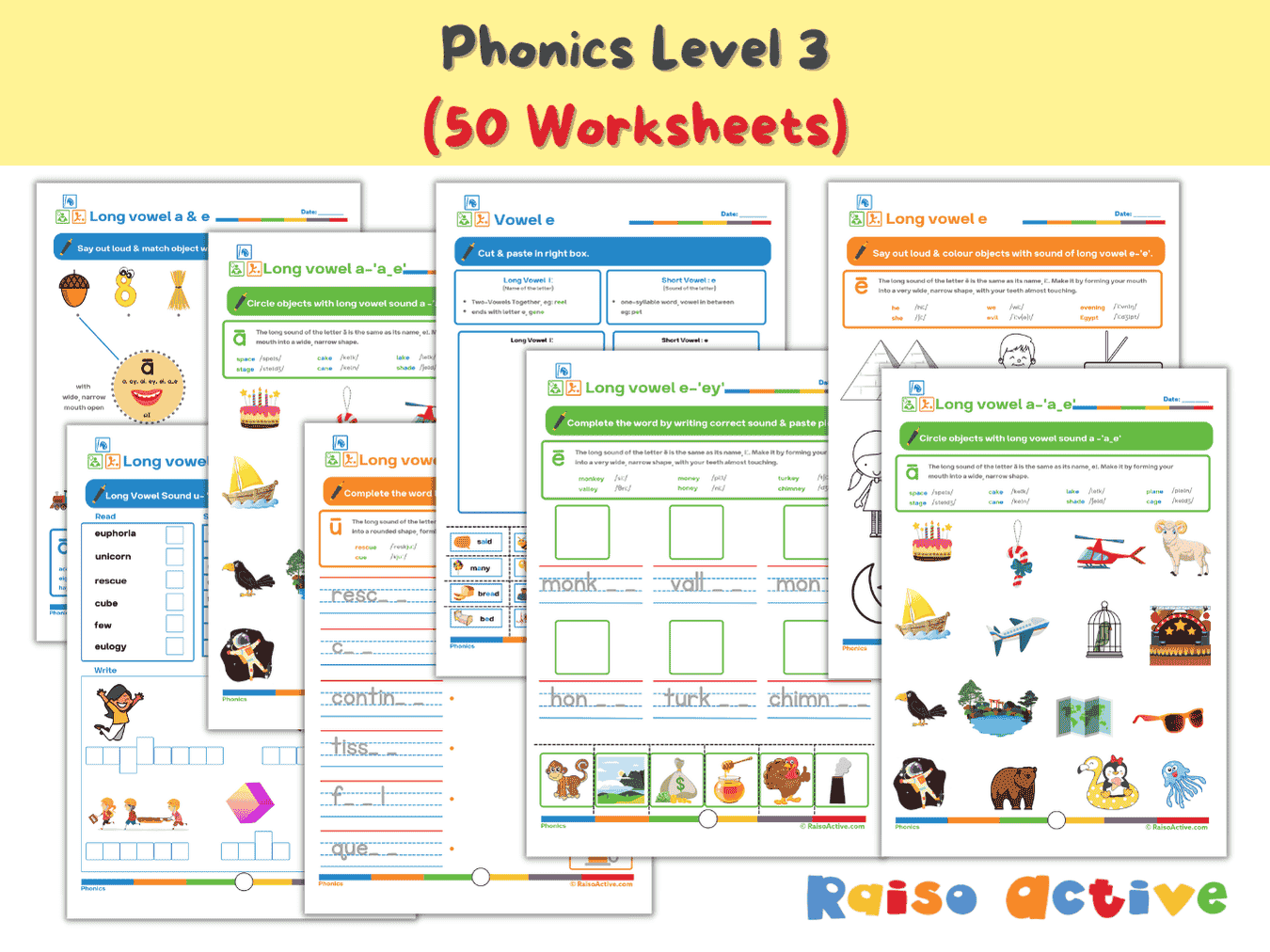

Phonics Level 3 Long Vowels Activity Book for Kindergarten & 1st Grade
Ages 5-7 · Kindergarten–Grade 1Ages 5-7 · Year 1–Year 2Ages 5-7 · UKG–Class 1Ages 5-7 · 51 pages
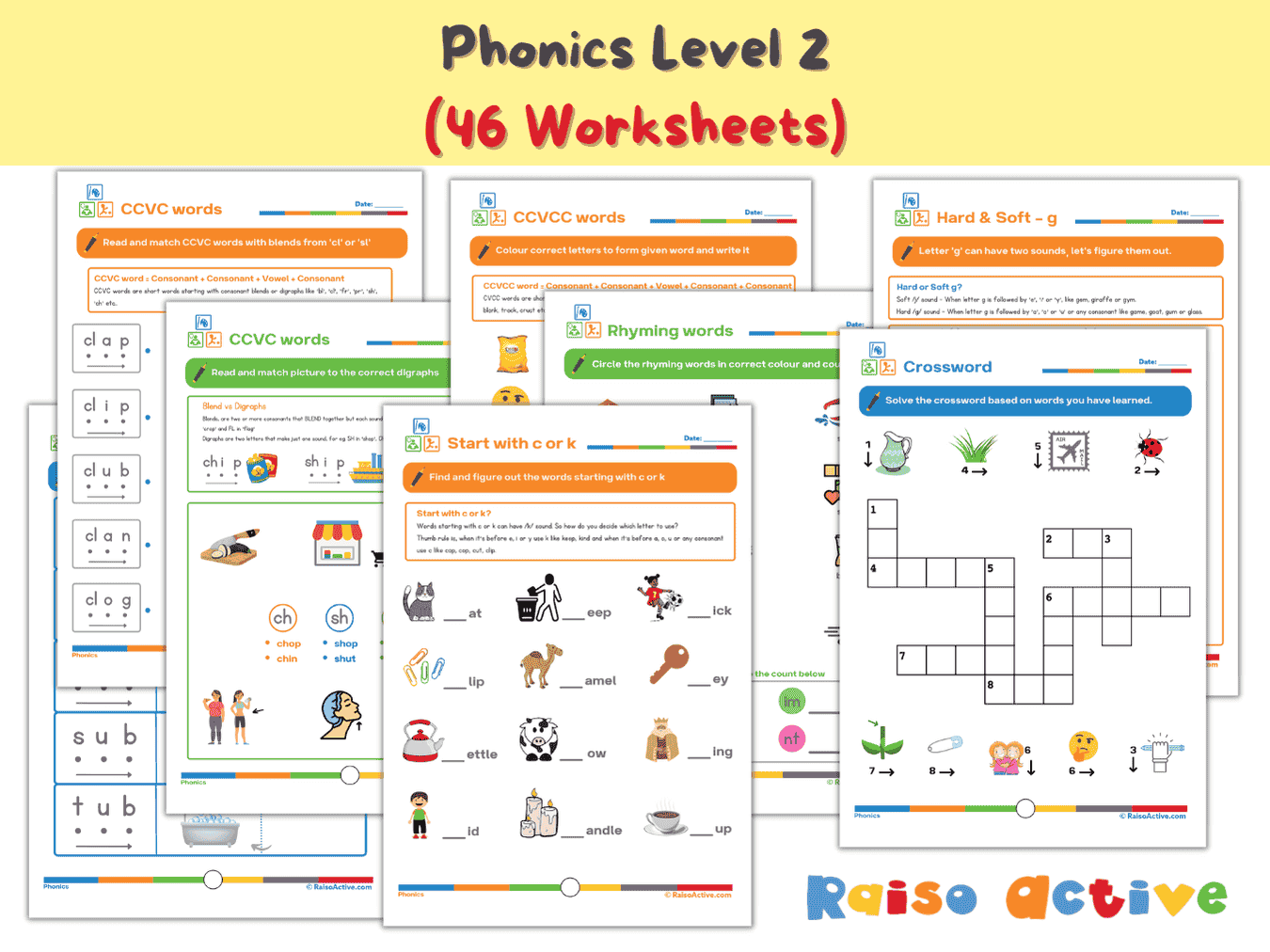
Phonics Level 2 Worksheets: CVC, CCVC, CVCC Word Families & Blends for Early Readers (Ages 4-7)
Ages 4-7 · Pre-K–Grade 1Ages 4-7 · Reception–Year 2Ages 4-7 · LKG–Class 1Ages 4-7 · 47 pages
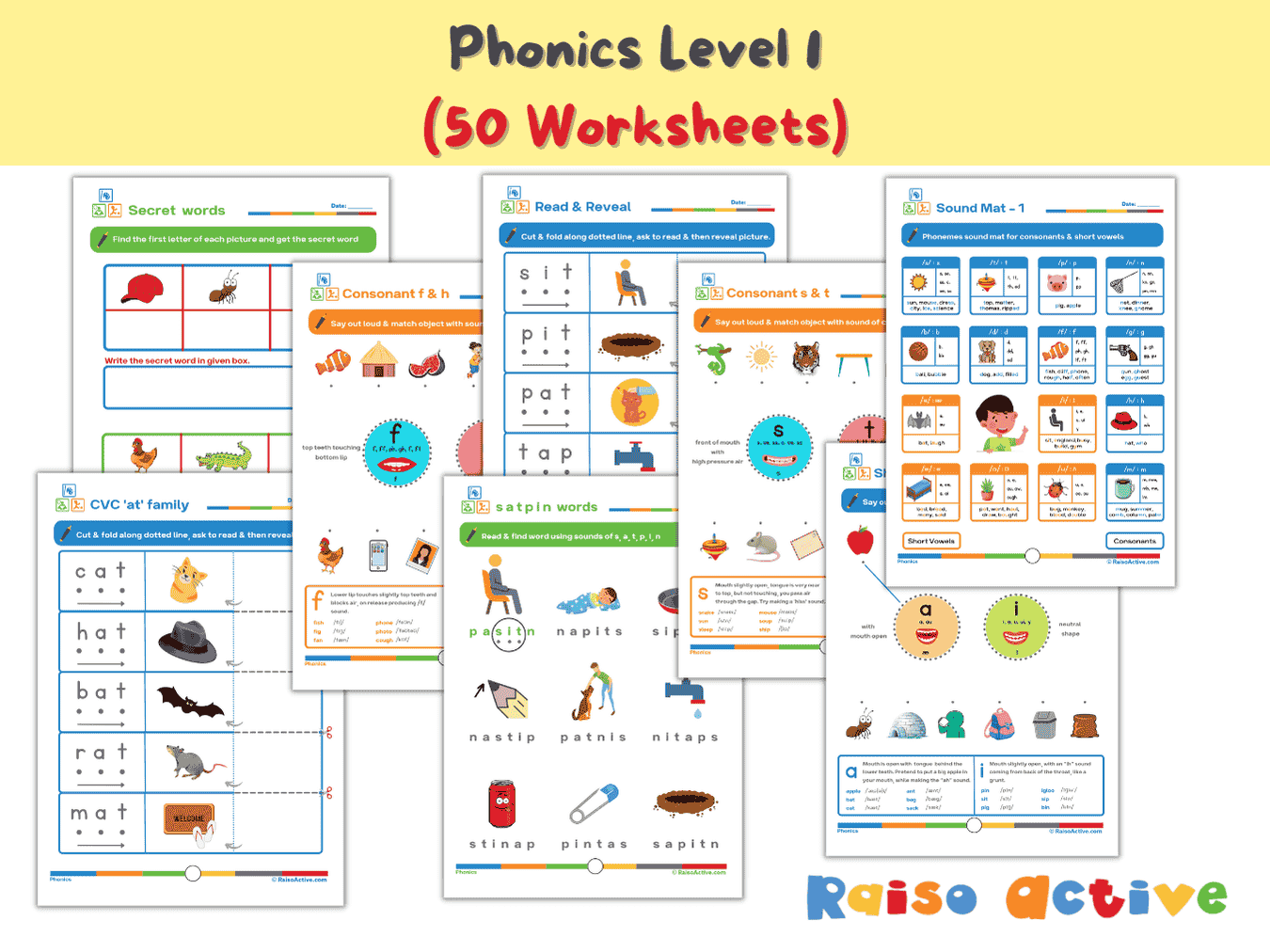
Phonics Level 1 Activity Book: Letter Sounds, Blending & CVC Words for Preschool & Kindergarten
Ages 3-6 · Preschool–KindergartenAges 3-6 · Nursery–Year 1Ages 3-6 · Nursery–UKGAges 3-6 · 60 pages
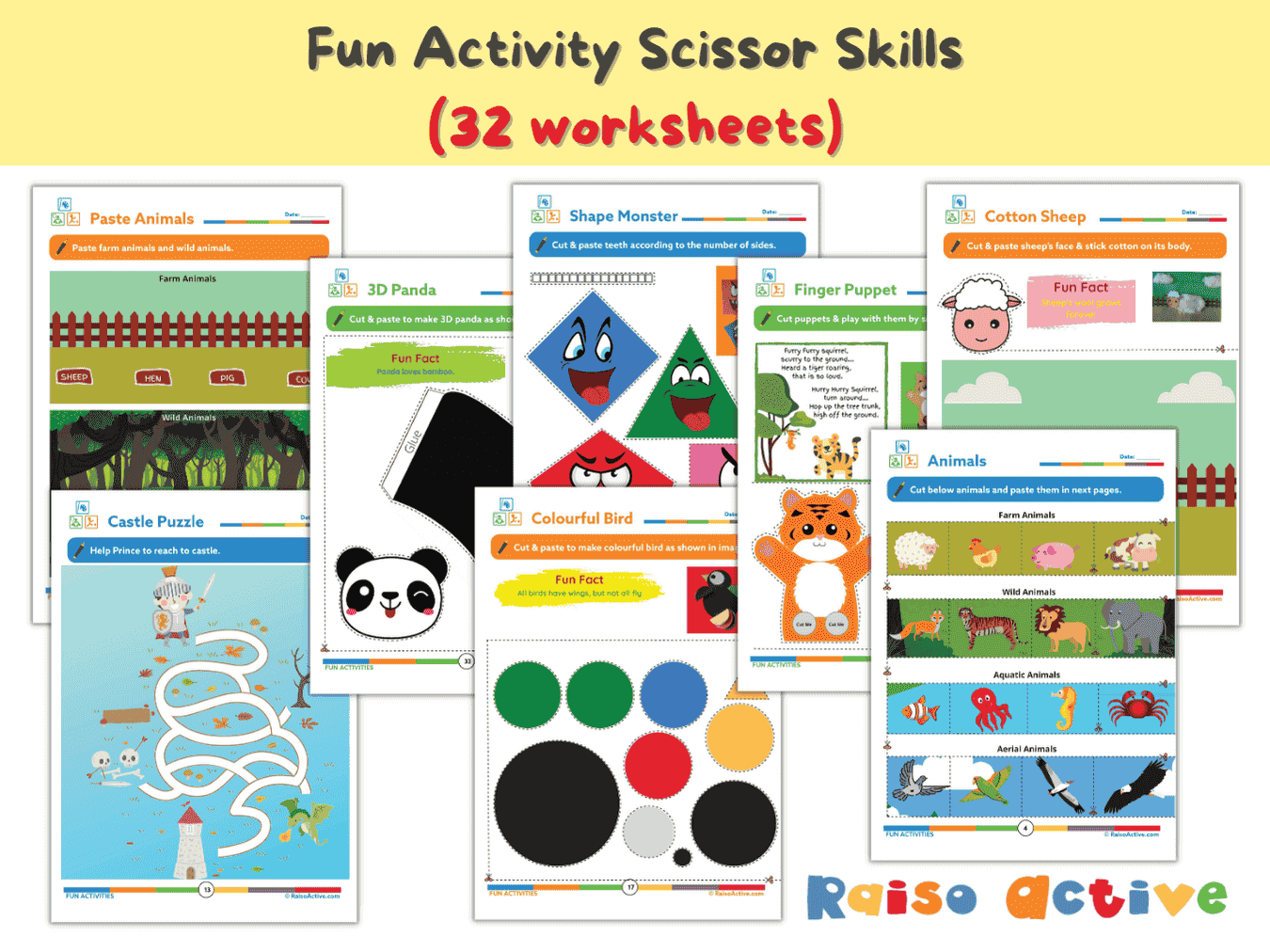

Preschool Scissor Skills Activity Book: Fine Motor & Craft Fun for Ages 3-6
Ages 3-6 · Preschool–KindergartenAges 3-6 · Nursery–Year 1Ages 3-6 · Nursery–UKGAges 3-6 · 35 pages

Month 9: Holistic Preschool Play Learning | Ages Up to 4
Ages 3-4 · PreschoolAges 3-4 · NurseryAges 3-4 · 30 pages
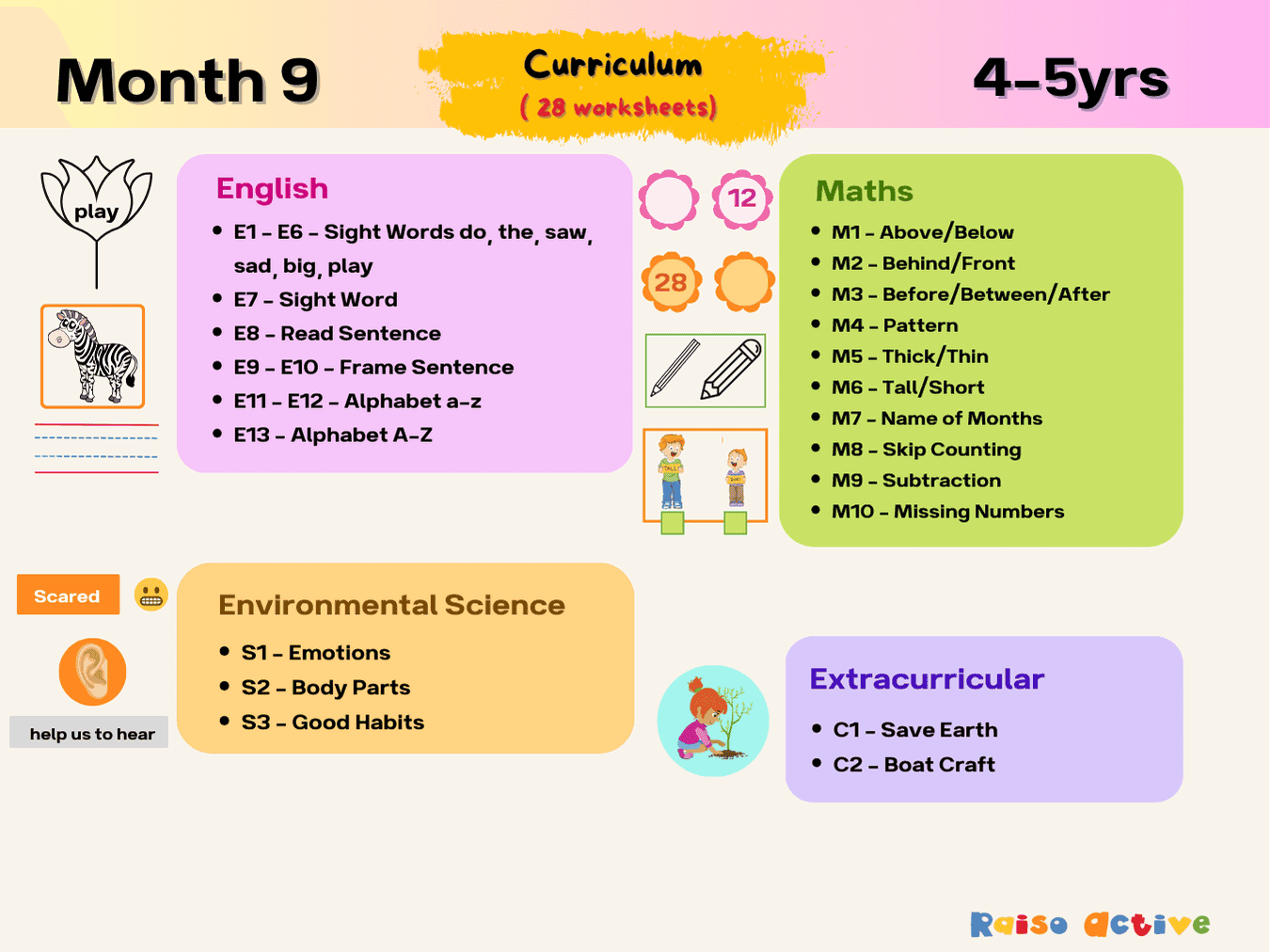
Month 9: Play-Based Preschool Foundational Skills | Ages 4-5
Ages 4-5 · Pre-KAges 4-5 · ReceptionAges 4-5 · LKGAges 4-5 · 31 pages
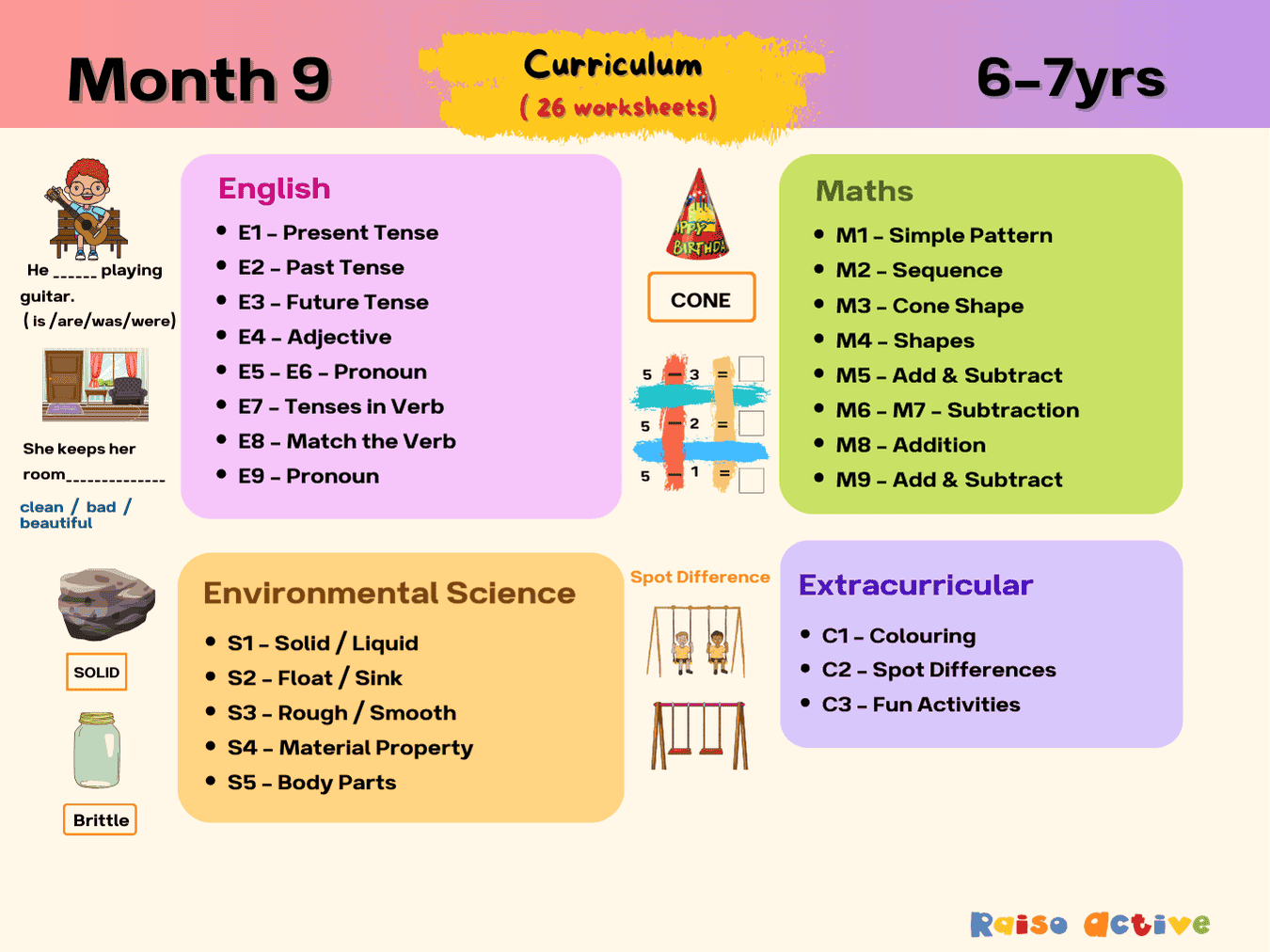
Month 9: Multi-Subject Early Learning | Ages 6-7
Ages 6-7 · Grade 1Ages 6-7 · Year 2Ages 6-7 · Class 1Ages 6-7 · 29 pages
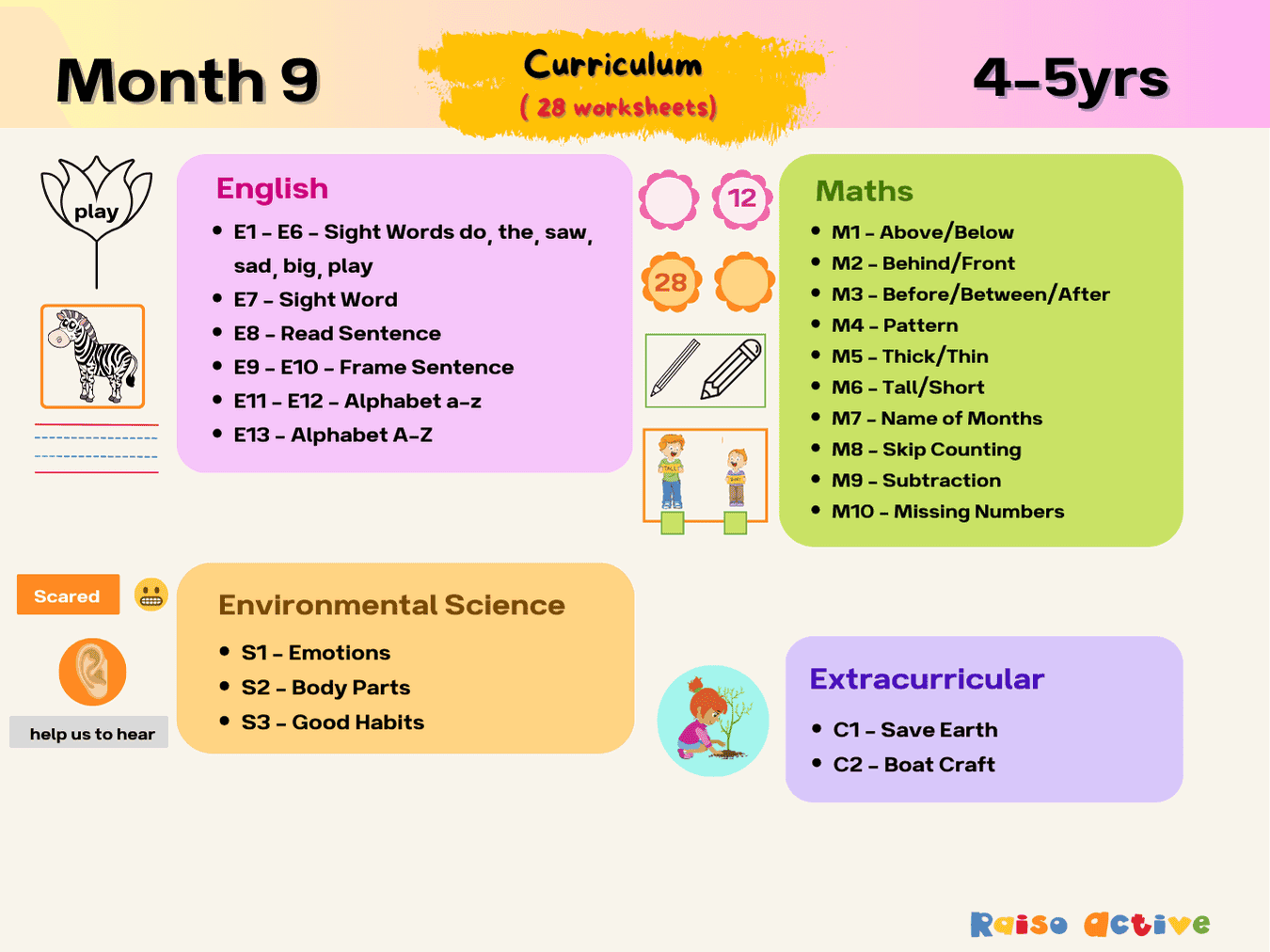
Month 9: Preschool Early Learning Activities | Ages 4-5
Ages 4-5 · Pre-KAges 4-5 · ReceptionAges 4-5 · LKGAges 4-5 · 31 pages
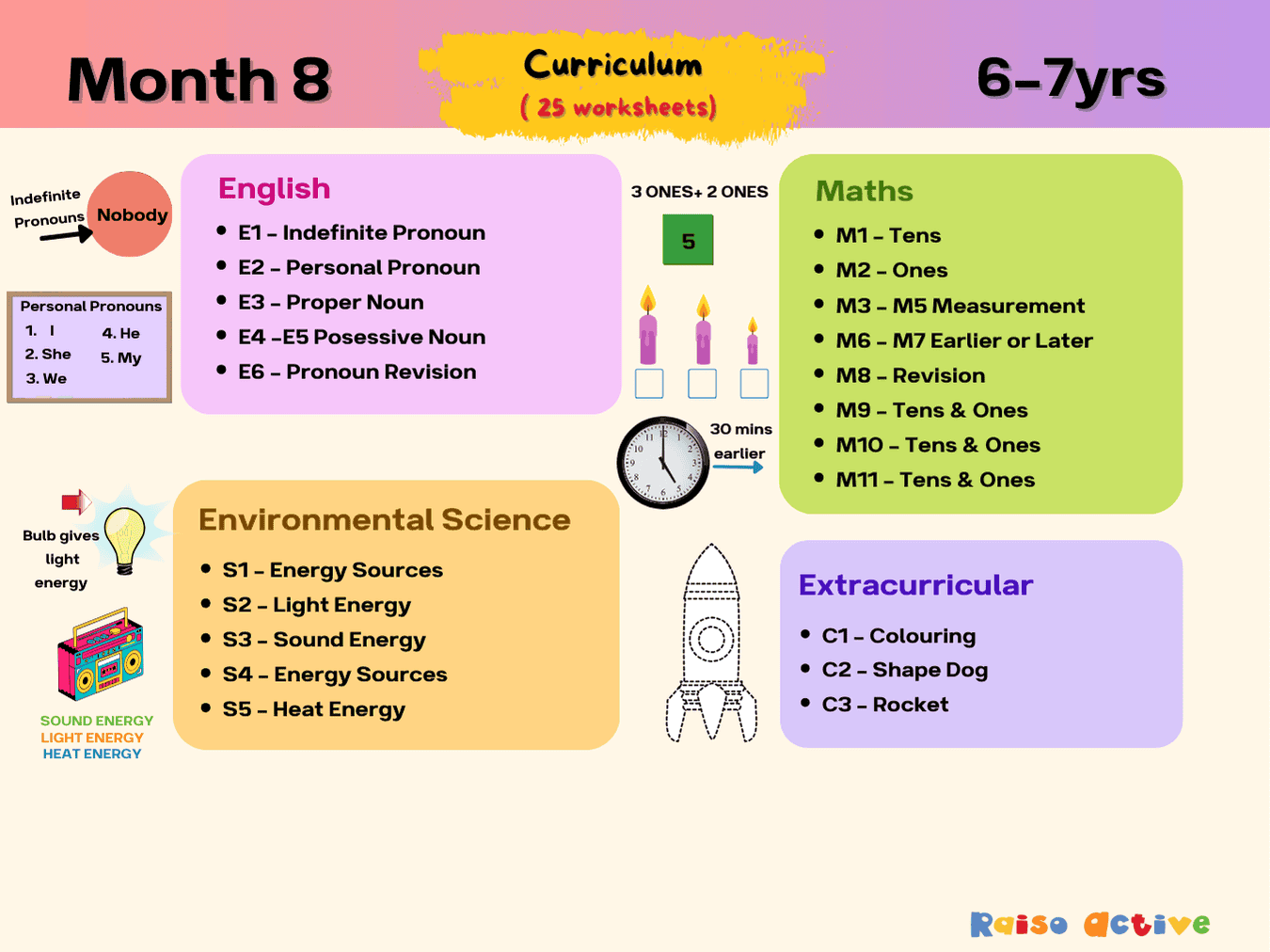
Month 8: English, Math, Science | Ages 6-7
Ages 6-7 · Grade 1Ages 6-7 · Year 2Ages 6-7 · Class 1Ages 6-7 · 28 pages