Learning Activities That Work: A Comprehensive Guide for Children with ADHD
Author
RaisoActive - Kids Activities and Fun Learning
Published
Updated
Reading Time
22 min read

- Why ADHD is a neurological difference — not naughtiness — and how understanding it changes everything about how you teach
- How ADHD affects executive function, working memory, and emotional regulation in children aged 1-8, and what that looks like in daily learning
- The activity types that genuinely engage ADHD brains: hands-on, movement-based, high-interest, and chunked into small wins
- Practical Indian-context strategies including visual schedules, timers, movement breaks, and fidget tools you can source locally
- How to adapt worksheets and structured tasks so they work with your child — not against them
Your Child Is Not Difficult — Their Brain Just Learns Differently
Picture a six-year-old who knows every dinosaur species by heart, builds elaborate LEGO structures for hours, and has an infectious laugh that lights up every room — but cannot sit still for a ten-minute phonics worksheet and melts down when asked to copy ten sentences from the board. If this sounds familiar, you may be parenting or teaching a child with ADHD.
Attention Deficit Hyperactivity Disorder, or ADHD, is one of the most commonly diagnosed neurodevelopmental conditions in early childhood — and one of the most widely misunderstood. In India especially, children with ADHD are frequently labelled as naughty, lazy, or disrespectful. Teachers ask parents to "discipline" the child more firmly at home. Well-meaning relatives suggest the child is simply not trying hard enough. None of this is accurate, and all of it causes genuine harm to a child who is already working twice as hard as their peers just to get through the school day.
ADHD is a neurological difference — a variation in how the brain manages attention, impulse control, and activity level. It is not caused by poor parenting, too much screen time, or a lack of willpower. Children with ADHD are not choosing to be distracted; their brains are wired to seek stimulation and novelty in ways that make traditional sit-still-and-listen learning genuinely difficult. The good news is that when we design learning activities that align with how ADHD brains actually work, these same children can thrive spectacularly.
This guide is for parents, homeschooling families, playschool teachers, and anyone who supports a child aged one to eight who has ADHD or shows signs of attention and hyperactivity challenges. We will explore what is happening in the ADHD brain, which activity types produce genuine engagement, and how to build a learning environment at home or in the classroom that transforms frustration into progress.
Get ADHD-friendly activity ideas in your inbox
Free worksheets, movement break cards, and practical strategies for supporting children with ADHD — delivered straight to your inbox every week.
Understanding ADHD in Early Childhood: What Is Actually Happening in the Brain
ADHD presents in three broad ways: predominantly inattentive (the child seems to daydream and forget instructions), predominantly hyperactive-impulsive (the child cannot stay seated, blurts out answers, and acts before thinking), or combined (both patterns together). Most young children with ADHD present with the combined type, which is why the classroom picture can feel so chaotic.
At the neurological level, ADHD involves differences in how the brain regulates dopamine and norepinephrine — the chemicals responsible for motivation, attention, and the ability to delay gratification. This means children with ADHD are not simply distracted; they are in a near-constant search for sufficient stimulation to keep their brain engaged. An activity that produces enough interest, novelty, or movement will hold their attention beautifully. An activity that does not — no matter how educationally important — simply will not register.
Three core areas are consistently affected: executive function (the ability to plan, organise, and start tasks), working memory (holding information in mind while using it), and emotional regulation (managing frustration, disappointment, and excitement). Understanding these three areas will guide every practical strategy in this guide.
How ADHD Affects Learning in Children Aged 1-8
Very young children with ADHD (ages one to three) may present as significantly more active and impulsive than peers, have shorter attention spans even for preferred activities, and find transitions between activities particularly distressing. In toddlerhood, this can be difficult to distinguish from typical developmental variation — and that is completely normal. ADHD is rarely diagnosed before age four.
By ages four to six, the differences become more visible in structured settings. A child with ADHD may struggle to wait for their turn, interrupt constantly, have difficulty following multi-step instructions, and find it nearly impossible to sit at a table for the duration of a learning activity. Their working memory difficulties mean that by the time they pick up the pencil, they may have forgotten what they were asked to do. Emotional responses — tears, frustration, or excitement — come quickly and can derail learning sessions entirely.
In the early school years (ages six to eight), executive function demands increase sharply. Children are now expected to plan, organise their materials, start tasks independently, and sustain attention for significantly longer periods. For children with ADHD, this mismatch between expectation and ability often shows up as avoidance, incomplete work, apparent defiance, or emotional outbursts that teachers and parents may read as behavioural problems rather than neurological ones.
ADHD is not a deficit of ability — it is a deficit of consistency. A child with ADHD may complete a task brilliantly one day and struggle completely the next. This is not laziness; it reflects how dopamine regulation works in the ADHD brain. Your job is to create conditions that make consistency more achievable, not to wonder why the child is "choosing" to underperform.
Activity Types That Genuinely Engage ADHD Brains
Not all learning activities are created equal for children with ADHD. Research consistently shows that certain types of engagement activate the ADHD brain in ways that produce genuine focus, retention, and even joy. These are not workarounds or lesser alternatives — they are simply better-designed learning for this type of brain.
Hands-on and manipulative-based activities are the gold standard. When a child can touch, move, build, sort, and rearrange physical objects, their brain receives the multi-sensory stimulation it needs to sustain engagement. Counting with dried rajma, building letter shapes from clay, sorting coloured buttons by size — these activities teach the same concepts as a printed worksheet, but deliver them in a format the ADHD brain can actually process. The hands are busy, the eyes are moving, and the body is engaged rather than fighting the urge to fidget.
Movement-integrated learning is equally powerful. Jumping to count, tossing a ball while reciting letters, walking a number line drawn on the floor, or running to collect flashcards placed around the room — when movement is built into the learning rather than treated as the enemy of it, children with ADHD often show remarkable focus. This is not coincidental; physical movement increases dopamine release, which is precisely the brain chemical that children with ADHD have in lower-than-typical supply during sustained tasks.
High-interest and theme-based learning is another essential lever. When a child with ADHD is deeply interested in the topic — whether that is trains, superheroes, dinosaurs, or cricket — their brain's reward system activates in ways that dramatically increase focus and retention. A child who cannot complete five generic addition problems may sail through ten problems involving cricket scores or the ages of their favourite Pokémon characters. This is not bribery; it is intelligent instructional design.
Chunked tasks with built-in completion rewards address the executive function challenges directly. Instead of one long task, break learning into a series of short, clearly bounded micro-tasks, each with a visible end point. Complete section one, get a sticker. Complete section two, choose the next activity. Complete section three, take a movement break. The sense of achievement after each small win generates the dopamine that fuels the next step.
Using Timers and Visual Schedules to Create Predictability
Children with ADHD often struggle with time blindness — a genuine neurological difficulty in perceiving and tracking the passage of time. Instructions like "finish soon" or "just five more minutes" are genuinely meaningless to a brain that cannot feel time the way neurotypical brains do. This is why timers and visual schedules are so transformative for children with ADHD: they make the invisible visible.
A visual sand timer (available at most toy or stationery shops in India for under a hundred rupees) gives the child a physical, moving representation of time passing. Three minutes of writing practice, five minutes of reading, and two minutes of drawing can each have their own timer. The child can see time — and that changes everything. Time Timer clocks, which show a shrinking red disc, work even better for older children. On a tablet or phone, countless free timer apps serve the same purpose.
A visual schedule is a simple picture-based list of what will happen during a learning session, displayed where the child can see it. Even very young children who cannot yet read can follow a schedule made of photographs, drawings, or simple icons: first we do puzzles, then we count with beads, then we have a dance break, then we read a story. Knowing what is coming next reduces the anxiety that many children with ADHD experience around transitions, and gives them something to look forward to at each step.
- Draw or print simple pictures of each activity and laminate them (or pop them in a plastic sleeve). Velcro or blu-tack them to a strip of card on the wall at the child's eye level.
- Keep sessions short: aim for 20-30 minutes total for children aged 4-6, with at least one movement break built in. Children aged 6-8 can manage 30-45 minutes with two breaks.
- Include a finished pocket or envelope at the end of the schedule — the child moves each activity card to the finished pocket as they complete it. This physical action is deeply satisfying for the ADHD brain.
- Always include something the child loves (free play, a preferred activity, a snack) at the end of the schedule. Knowing it is coming motivates completion of the earlier activities.
- Review the schedule together at the start of each session, naming each activity in order. This primes the brain and reduces transition anxiety.
Fidget Tools and Movement Breaks: Not Distractions, But Regulation Tools
In many Indian households and schools, fidgeting is treated as a sign of disrespect or inattentiveness. A child who jiggles their leg, taps their pencil, or squeezes a small object in their hand is told to sit still and pay attention. But for children with ADHD, this understanding is backwards: the fidgeting is often what allows the child to pay attention. When the body is occupied with a small, repetitive sensory input, the brain is freed up to focus on the cognitive task at hand.
Fidget tools are small objects that provide quiet sensory input without disrupting learning. A smooth stone, a textured rubber ring, a small stress ball, a folded piece of thick fabric, or a few dried lentils sealed in a small zip-lock bag — all of these cost next to nothing and can make a significant difference to how long a child with ADHD can sustain focus during seated work. The rule is simple: if the fidget tool is helping the child focus without disturbing others, it is doing its job.
Movement breaks between learning tasks are not a reward for finishing — they are a neurological necessity. Brief bursts of physical activity increase blood flow to the prefrontal cortex (the brain region most affected by ADHD) and release the dopamine that sustains motivation and focus. Build movement breaks into every learning session: ten jumping jacks, a quick hallway run, five minutes of Simon Says, a spontaneous dance to a favourite song. Keep them short, predictable, and joyful.
- Yoga animal poses — child does cat pose, dog pose, and tree pose for two minutes. Simple yoga keeps the body active while also building body awareness and breath control.
- Run and bring — place flashcards face-down around the room or courtyard. The child runs to collect one card, brings it back, answers the question on it, then runs for the next. Combines literacy/numeracy practice with genuine physical activity.
- Dholki beat — tap out a rhythm on a table or dholki drum and have the child clap it back. Rhythmic activities are deeply regulating for many children with ADHD.
- 10 wall push-ups — these provide proprioceptive (deep pressure) input through the hands and arms, which is particularly calming for children who are seeking sensory stimulation.
- Hallway hopscotch — draw a simple hopscotch grid with chalk or tape. Each square has a question (letter, number, word). The child hops and answers. Learning meets movement beautifully.
Movement is not a break from learning for children with ADHD — it is part of the learning. Integrating physical activity into your session design is not lowering your expectations; it is raising the quality of engagement you will get from the child.
improvement in sustained attention during academic tasks has been observed in children with ADHD following brief (10-minute) bouts of aerobic exercise. This effect lasts for up to 45 minutes — enough to carry them through a full learning session.
Source: Journal of Attention Disorders, 2021
ADHD traits that create challenges in traditional learning settings — boundless energy, intense curiosity, creative thinking, and the ability to hyperfocus on topics they love — are genuine strengths in the right environment. Your goal is not to suppress these traits but to channel them into learning experiences that harness them.
Many of India's most creative entrepreneurs, artists, scientists, and thinkers show strong ADHD traits. The energy that makes sitting at a desk unbearable can become the fuel for extraordinary achievement when it is directed, not punished.
How to Design a 30-Minute ADHD-Friendly Learning Session
Review the visual schedule together (2 minutes)
Sit with the child and point to each picture or icon on the visual schedule for today's session. Narrate it warmly: "First we are going to build letters with playdough, then we will count jumping jacks, then we will do our worksheet strips, then we will have a dance break, and then we will read our favourite dinosaur book together." This primes the brain, reduces anxiety about transitions, and creates motivation by showing what is coming.
Start with a hands-on warm-up (5 minutes)
Begin with a high-engagement, low-stakes activity that eases the brain into learning mode. Rolling playdough snakes into letter shapes, sorting coloured counters, building a simple pattern with blocks — something the hands can do that gently activates the topic for the session. Never start with the most demanding task; that is a recipe for immediate resistance.
Core learning activity in chunks (10-12 minutes)
Deliver the main learning content in two or three micro-chunks of three to five minutes each, separated by ten-second micro-breaks (stand, stretch, sit back down). Use a visual sand timer so the child can see how long each chunk lasts. Chunking is the single most effective structural change you can make for a child with ADHD — it transforms an overwhelming task into a series of achievable wins.
Movement break (3-5 minutes)
A genuine movement break — not just standing up, but actual physical activity. Ten star jumps, a quick run to touch the front door and back, three yoga poses, or a short dance. Keep it joyful and brief. Signal the end of the break clearly with a timer so the transition back to learning is smooth and expected.
Consolidation activity (5-7 minutes)
Revisit the core concept through a different modality — if the first activity was hands-on building, consolidate with a short oral discussion, a simple drawing, or a matching game. This dual exposure significantly improves retention for children with working memory difficulties. The change of format also provides the novelty the ADHD brain needs to re-engage.
Celebrate completion explicitly (1 minute)
End every session with a clear, specific acknowledgement of what the child achieved: "You finished all three of your letter strips today — that is brilliant work!" Move the activity cards to the finished pocket on the visual schedule together. This ritual reinforces the sense of accomplishment and builds positive associations with learning that carry forward to the next session.
Preferred activity or free time (5+ minutes)
The session always ends with something the child loves — free play, a favourite book, an outdoor run, or a preferred game. This is not a reward for perfect behaviour; it is the final item on the schedule that every child can count on. Knowing it is coming is a powerful motivator during the earlier, harder parts of the session.
How to Adapt Worksheets So They Actually Work for Children with ADHD
Worksheets are not inherently bad for children with ADHD — but the standard format is almost perfectly designed to frustrate them. Twenty small questions on a dense page, presented all at once, with no clear visual breaks, no movement, and no sense of partial completion along the way: every single one of those features works against the ADHD brain.
The good news is that adapting worksheets requires no special materials and very little time. Cut a standard worksheet into strips of three to five questions each, placing each strip in a separate envelope. The child opens one envelope at a time, completes that strip, and puts it in the finished pile before opening the next. The content is identical to the original worksheet; the format is transformed. Alternatively, cover all but the current section with a blank piece of paper — the "window" technique costs nothing and works brilliantly.
Remove visual clutter from worksheets wherever possible. Decorative borders, competing clip art, and dense text all create visual noise that the ADHD brain finds genuinely difficult to filter. Print worksheets on a simple white background with generous spacing, or use a highlighter to mark the specific line or question you want the child to focus on right now. Adding a green dot for "start here" and a red dot or star for "you are done" gives the child clear visual anchors for the task.
- **Cut the worksheet into strips.** Each strip has three to five items. The child works through one strip at a time. This single change often transforms a worksheet refusal into willing engagement.
- **Use a sand timer.** Challenge the child to finish a strip before the sand runs out. The timer reframes the task as a game and makes time visible for a brain that cannot feel it.
- **Write movement break between sections.** Literally write it on the worksheet — do five jumps, then come back for the next section. The break becomes part of the task, not a deviation from it.
- **Reduce visual noise.** Print worksheets with clean, uncluttered layouts. Remove borders and decorative images. A worksheet that looks like breathing room is easier to start.
- **Offer alternative response formats.** Circle the answer instead of writing it. Stick a sticker on the correct picture. Give a verbal answer while a parent writes it. When the learning goal is the concept — not the handwriting — the format can flex.
- **Use a highlighter to mark the active question.** The child can only see one highlighted question at a time. When it is done, they highlight the next one. This simple tool prevents the overwhelm of seeing the full page at once.
ADHD in the Indian Context: Navigating Stigma and School Systems
In India, ADHD is still widely under-diagnosed and misunderstood. Many parents receive feedback from schools that their child is "too naughty to sit in class" or "not serious about studies" — language that places the problem squarely in the child's character rather than in the school's inability to accommodate a different kind of learner. Getting an ADHD diagnosis can feel like an admission of failure rather than the helpful explanation it actually is.
The reality is that an ADHD diagnosis opens doors rather than closing them. Under the Rights of Persons with Disabilities Act 2016, which includes ADHD as a specified condition, children are entitled to reasonable accommodations in educational settings. The National Education Policy 2020 further mandates inclusive education and flexible assessment. While implementation varies enormously across schools, the legal framework exists, and knowing it gives parents a foundation from which to advocate.
When approaching your child's school, frame the conversation around specific strategies rather than diagnoses. "My child focuses much better when tasks are broken into smaller steps — could the teacher try giving worksheets in two halves?" is far more likely to land well than leading with the diagnosis. Bring a teacher an example of what worked at home. Teachers who see evidence of a strategy working are more likely to try it in the classroom.
- You do not owe anyone an explanation of your child's diagnosis. Share information strategically — with people who need it to help your child, and at a pace that feels safe for your family.
- If family members dismiss ADHD as "just bad parenting" or "too much screen time," focus the conversation on specific behaviours and what helps rather than the diagnosis itself. Practical evidence is often more persuasive than a medical label.
- Connect with other parents of children with ADHD in India. Online communities and parent support groups (many are active on WhatsApp and Facebook) can provide invaluable peer support, school navigation advice, and recommendations for specialists in your city.
- Medication is one option among many, not a first or last resort. A qualified child psychiatrist or developmental paediatrician can discuss all options — behavioural therapy, occupational therapy, parent training, school accommodations, and medication — and help you make an informed, unhurried decision that is right for your child and family.
of school-aged children worldwide are estimated to have ADHD — making it one of the most common neurodevelopmental conditions in any Indian classroom. In a class of 40 children, at least two or three are likely to have significant ADHD traits, whether or not they have a formal diagnosis.
Source: World Health Organisation, Global ADHD Prevalence Estimates
- +Short, chunked tasks with clear start and end points and visible completion markers
- +Hands-on manipulatives: playdough, counters, blocks, sorting trays, sand writing
- +Movement integrated into learning: jump to count, run and collect, yoga letter poses
- +High-interest themes drawn from the child's passions and special interests
- +Visual schedules showing exactly what will happen and in what order
- +Sand timers and visual clocks that make time tangible and predictable
- +Fidget tools in the non-writing hand during seated tasks
- +Immediate, specific positive feedback after each small achievement
- -Long, unbroken tasks with no visible checkpoints or sense of partial progress
- -Worksheets with 20+ items on a single dense, visually cluttered page
- -Expecting children to sit still for 30+ minutes without movement or sensory input
- -Generic, low-interest content with no connection to what the child cares about
- -Verbal instructions only, delivered once, without visual or written backup
- -Open-ended time limits like "finish when you are done" with no time reference
- -Treating all fidgeting as misbehaviour requiring correction and removal
- -Delayed or vague feedback: "good job" at the end of a long session
Free Resources for ADHD Learners — Every Week
Join thousands of Indian parents and educators who are rethinking how children with ADHD learn. Get free ADHD-friendly worksheets, movement break cards, visual schedule templates, and expert strategies delivered straight to your inbox.
Frequently Asked Questions
How do I know if my child has ADHD or is just being a typical energetic toddler?
My child can focus for hours on their iPad or LEGO — how can they have ADHD?
Should I tell my child's school about the ADHD diagnosis?
What is the difference between medication and non-medication approaches for ADHD?
My child refuses to do any learning activity at all. Where do I start?
Are there good resources for parents of children with ADHD in India specifically?
Free worksheets for this topic
Browse all worksheets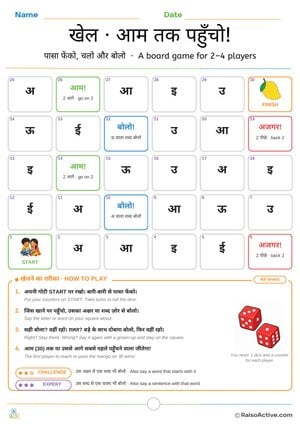
Reach the Mango: Hindi Vowels Board Game for 2–4 Players | खेल · आम तक पहुँचो!
Ages 3-7 · Preschool–Grade 1Ages 3-7 · Nursery–Year 2Ages 3-7 · Nursery–Class 1Ages 3-7
A 30-square path with the six vowels, bonus squares (go on 2) and trap squares (back 2). Children say the letter or a word starting with it each time they land, and the first to reach the mango on 30 wins. It makes letter recognition into a game.
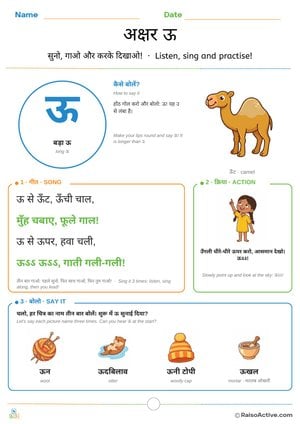
Hindi Letter ऊ (oo) Song, Action and Say It | अक्षर ऊ
Ages 3-7 · Preschool–Grade 1Ages 3-7 · Nursery–Year 2Ages 3-7 · Nursery–Class 1Ages 3-7
Children hear and say the long vowel ऊ, learn a short rhyme with an action, and say the names of the picture words ऊँट (camel), ऊन (wool), ऊनी टोपी (woolly cap), ऊदबिलाव (otter), ऊखल (mortar) to practise hearing ऊ at the start.
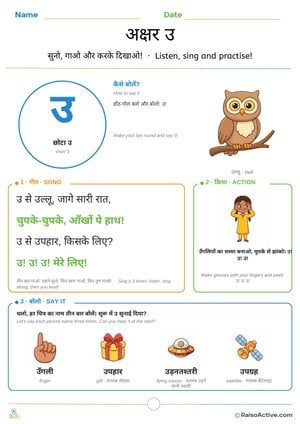
Hindi Letter उ (u) Song, Action and Say It | अक्षर उ
Ages 3-7 · Preschool–Grade 1Ages 3-7 · Nursery–Year 2Ages 3-7 · Nursery–Class 1Ages 3-7
Children hear and say the short vowel उ, learn a short rhyme with an action, and say the names of the picture words उल्लू (owl), उँगली (finger), उपहार (gift), उड़नतश्तरी (flying saucer), उपग्रह (satellite) to practise hearing उ at the start.
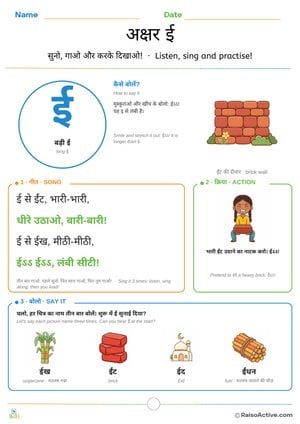
Hindi Letter ई (ee) Song, Action and Say It | अक्षर ई
Ages 3-7 · Preschool–Grade 1Ages 3-7 · Nursery–Year 2Ages 3-7 · Nursery–Class 1Ages 3-7
Children hear and say the long vowel ई, learn a short rhyme with an action, and say the names of the picture words ईंट (brick), ईख (sugarcane), ईद (Eid), ईंधन (fuel) to practise hearing ई at the start.

Written by
Hemsweta Jain · Teacher Cheena
MBA and Early Childhood Educator, teaching since 2014 · Founder of RaisoActive, Mumbai
Published · Last reviewed
Related posts

Empowering Your Child's Success: How to Advocate for Your Child's Learning Needs
Learn how to advocate for your child's learning needs in Indian schools. Understand RTE rights, request accommodations, and build a strong support team.
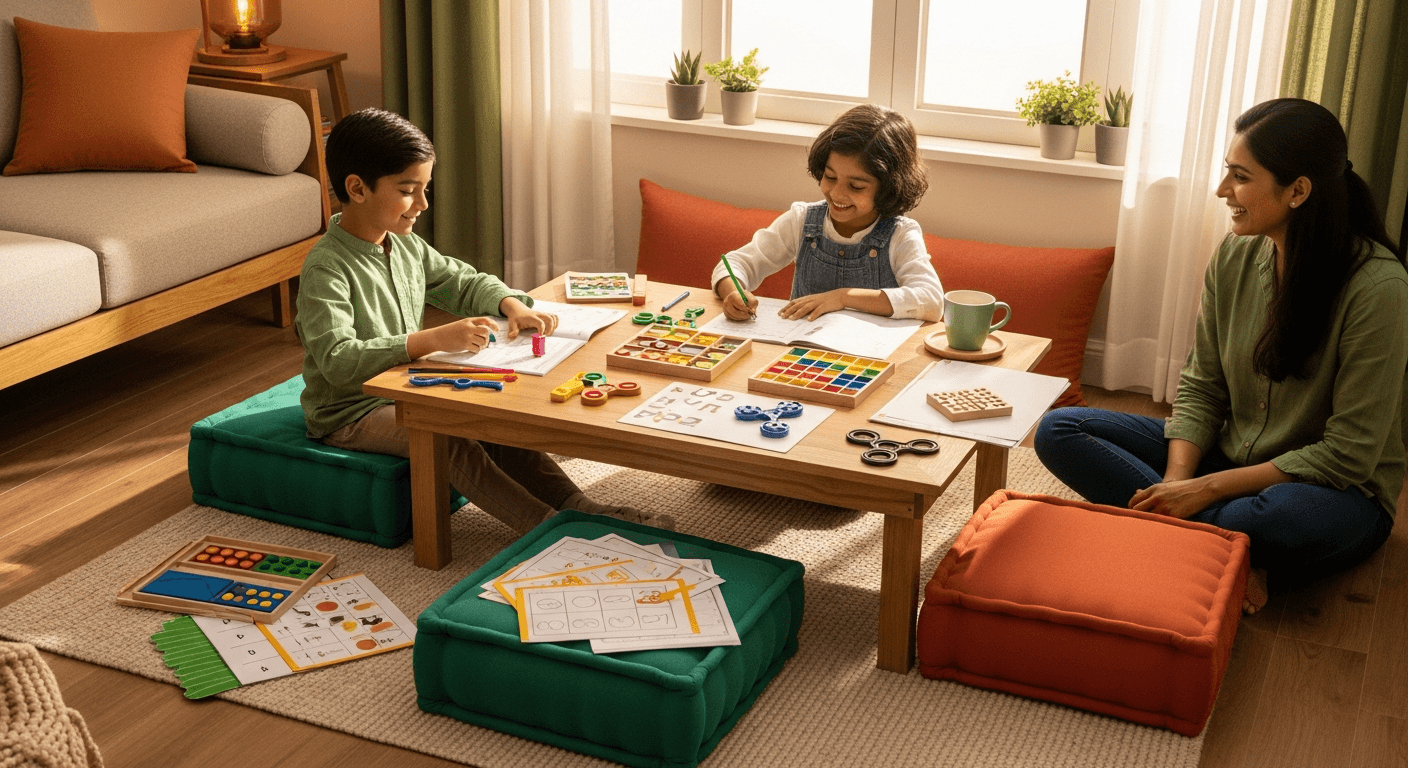
Creating an Inclusive Learning Environment at Home: A Complete Guide for Families
Learn how to create an inclusive learning environment at home for children with ADHD, dyslexia, sensory needs, and more. Practical tips for Indian families.
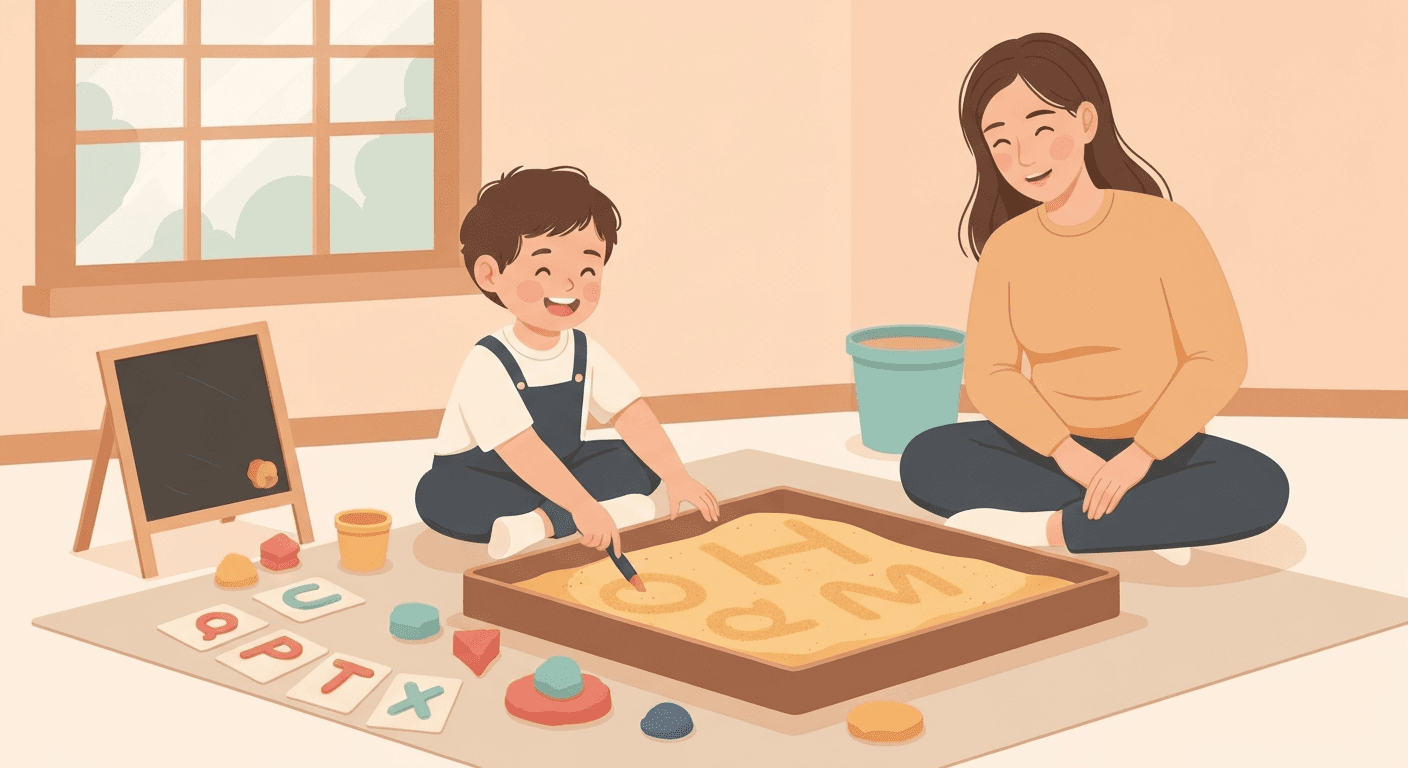
Sensory Processing Issues: Creative Alternatives to Traditional Worksheets
Creative, sensory-friendly alternatives to traditional worksheets for children with tactile defensiveness, proprioceptive seeking, and auditory sensitivity. Indian context included.
Related Resources
Printable Resources(10)
View all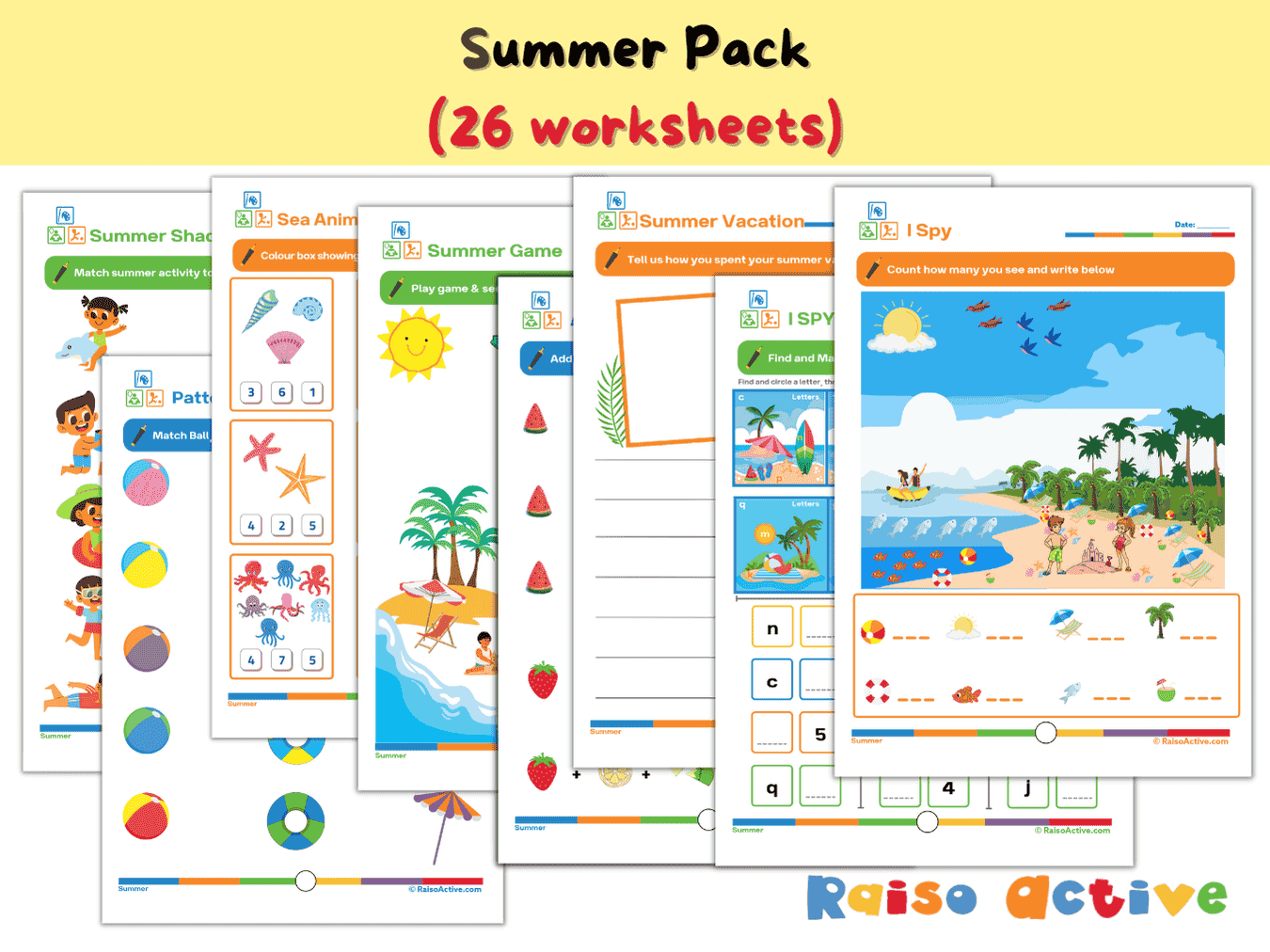

Summer Activity Pack: Math, Literacy, Puzzles & More for Preschool & Kindergarten
Ages 3-7 · Preschool–Grade 1Ages 3-7 · Nursery–Year 2Ages 3-7 · Nursery–Class 1Ages 3-7 · 26 pages
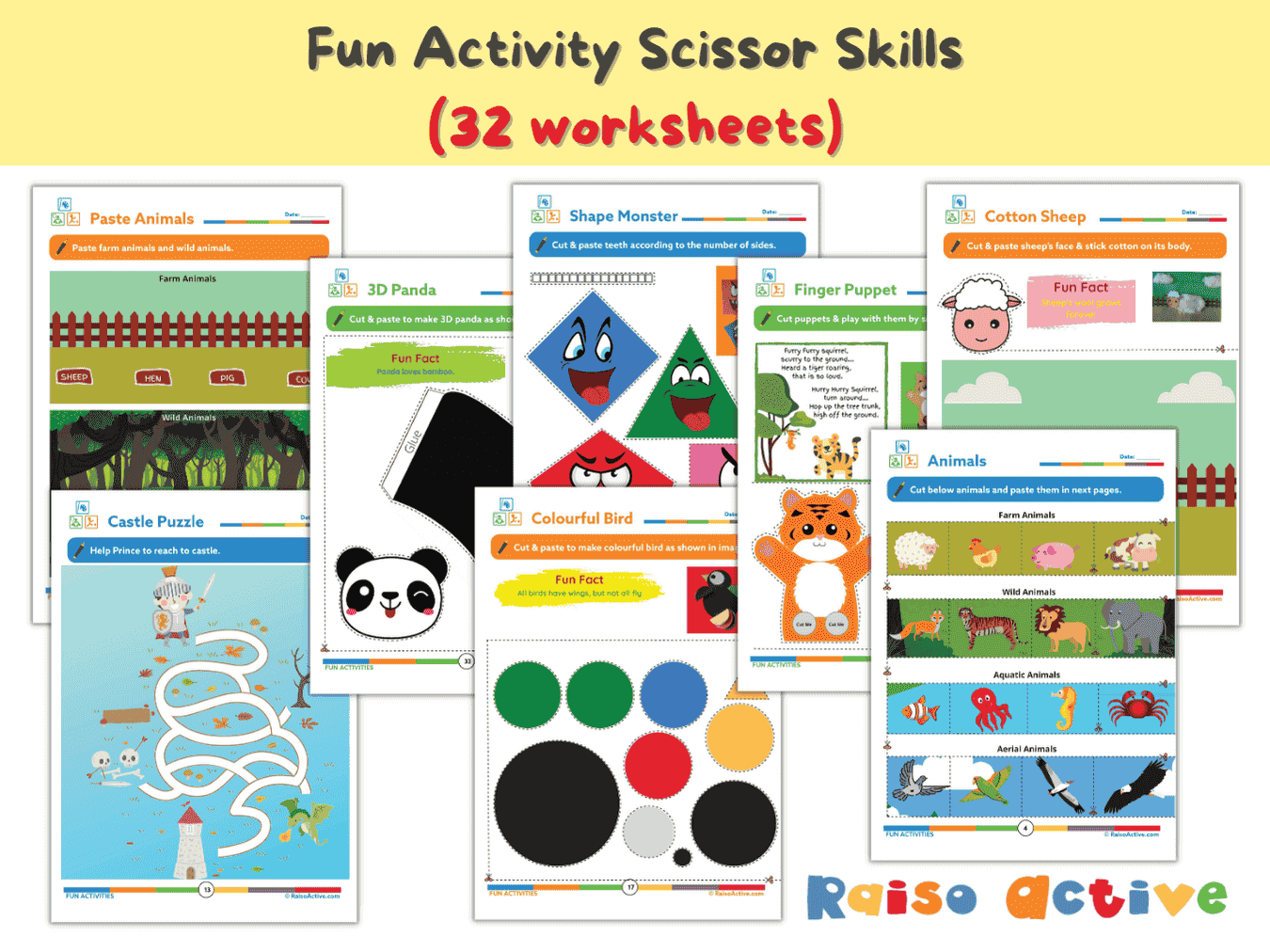

Preschool Scissor Skills Activity Book: Fine Motor & Craft Fun for Ages 3-6
Ages 3-6 · Preschool–KindergartenAges 3-6 · Nursery–Year 1Ages 3-6 · Nursery–UKGAges 3-6 · 35 pages
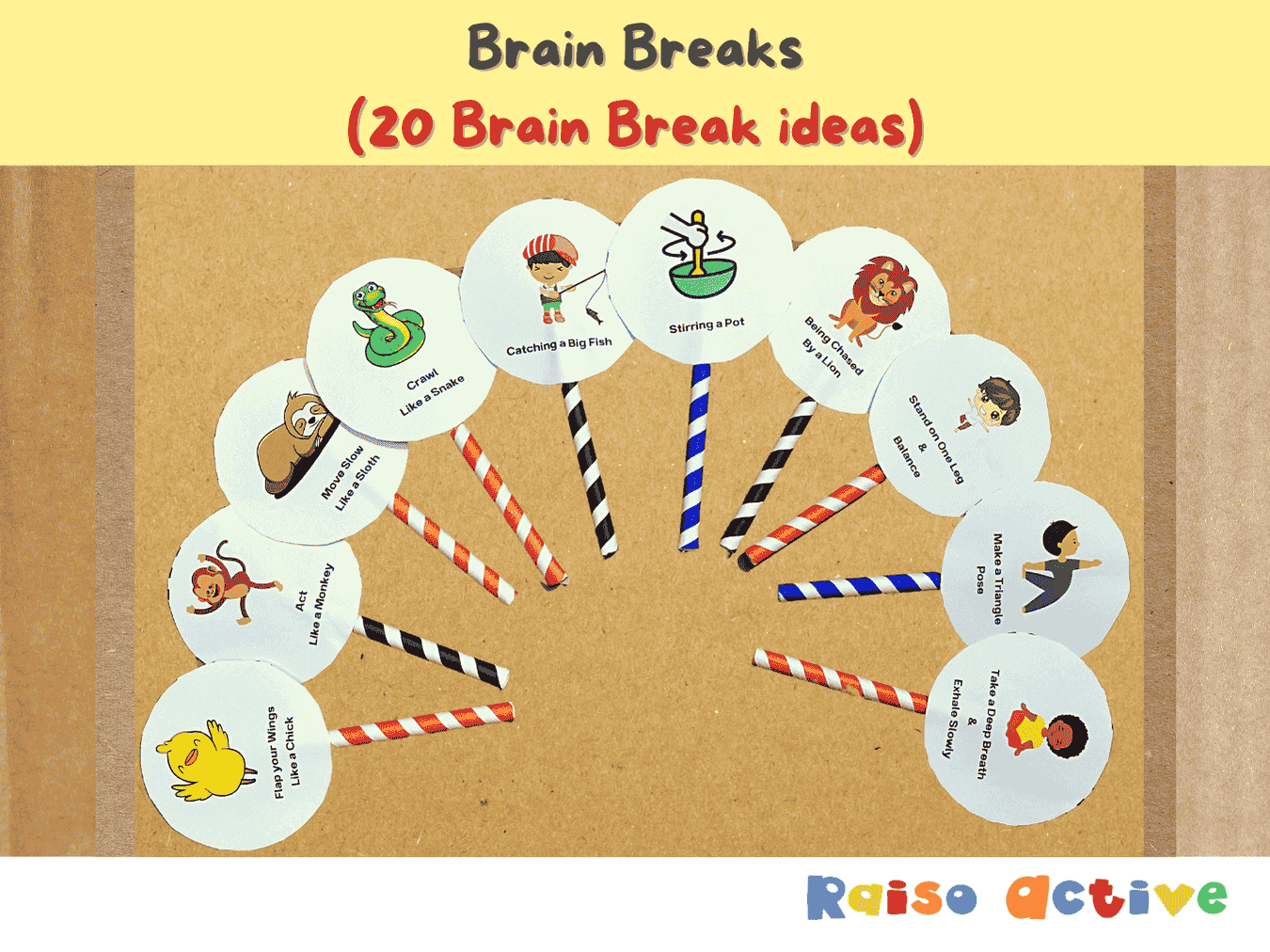
Gross Motor Movement & Imaginative Play Flashcards for Toddlers & Preschoolers
Ages 2-5 · Preschool–Pre-KAges 2-5 · Nursery–ReceptionAges 2-5 · Nursery–LKGAges 2-5 · 5 pages

Month 9: Holistic Preschool Play Learning | Ages Up to 4
Ages 3-4 · PreschoolAges 3-4 · NurseryAges 3-4 · 30 pages
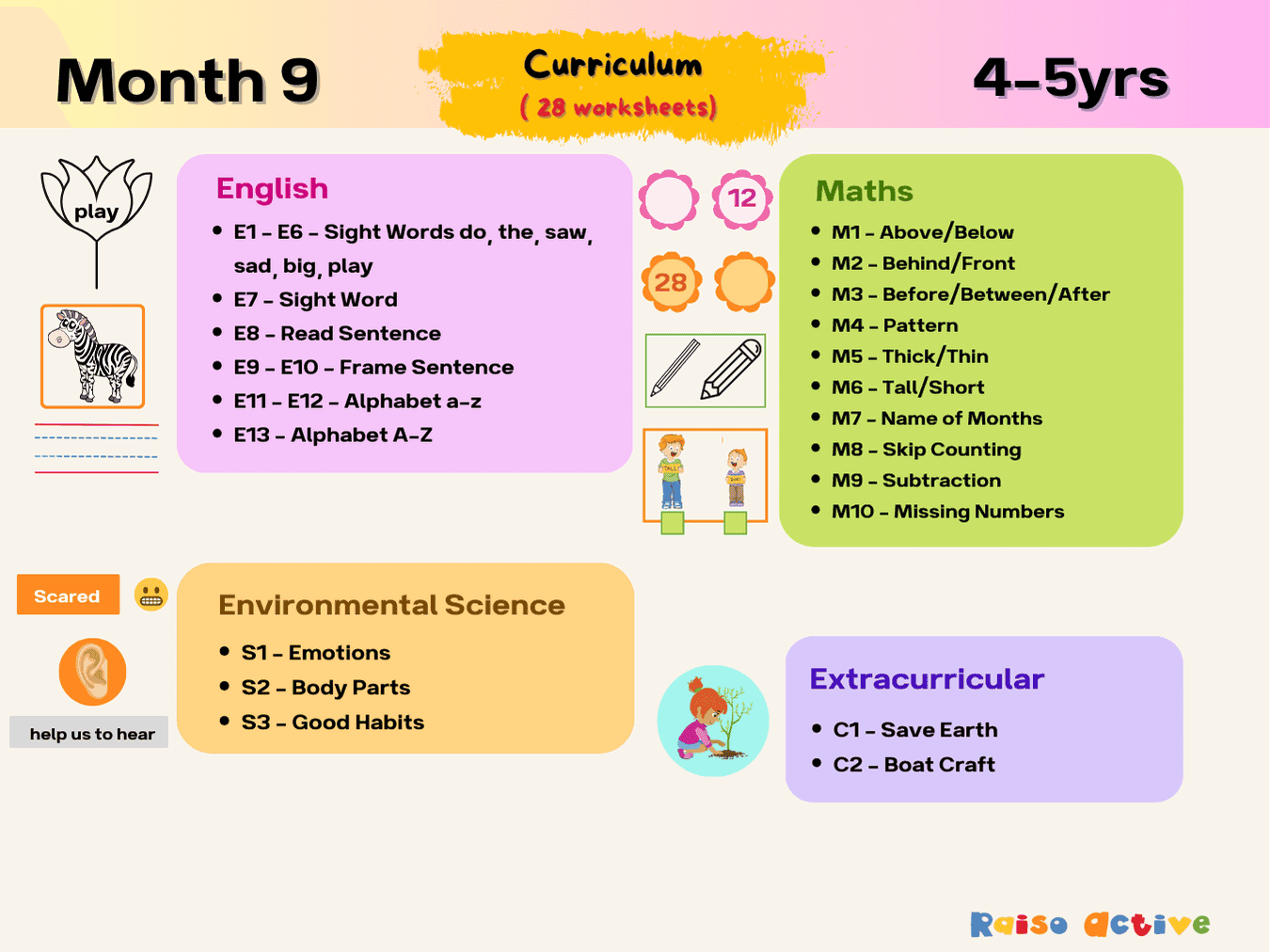
Month 9: Play-Based Preschool Foundational Skills | Ages 4-5
Ages 4-5 · Pre-KAges 4-5 · ReceptionAges 4-5 · LKGAges 4-5 · 31 pages
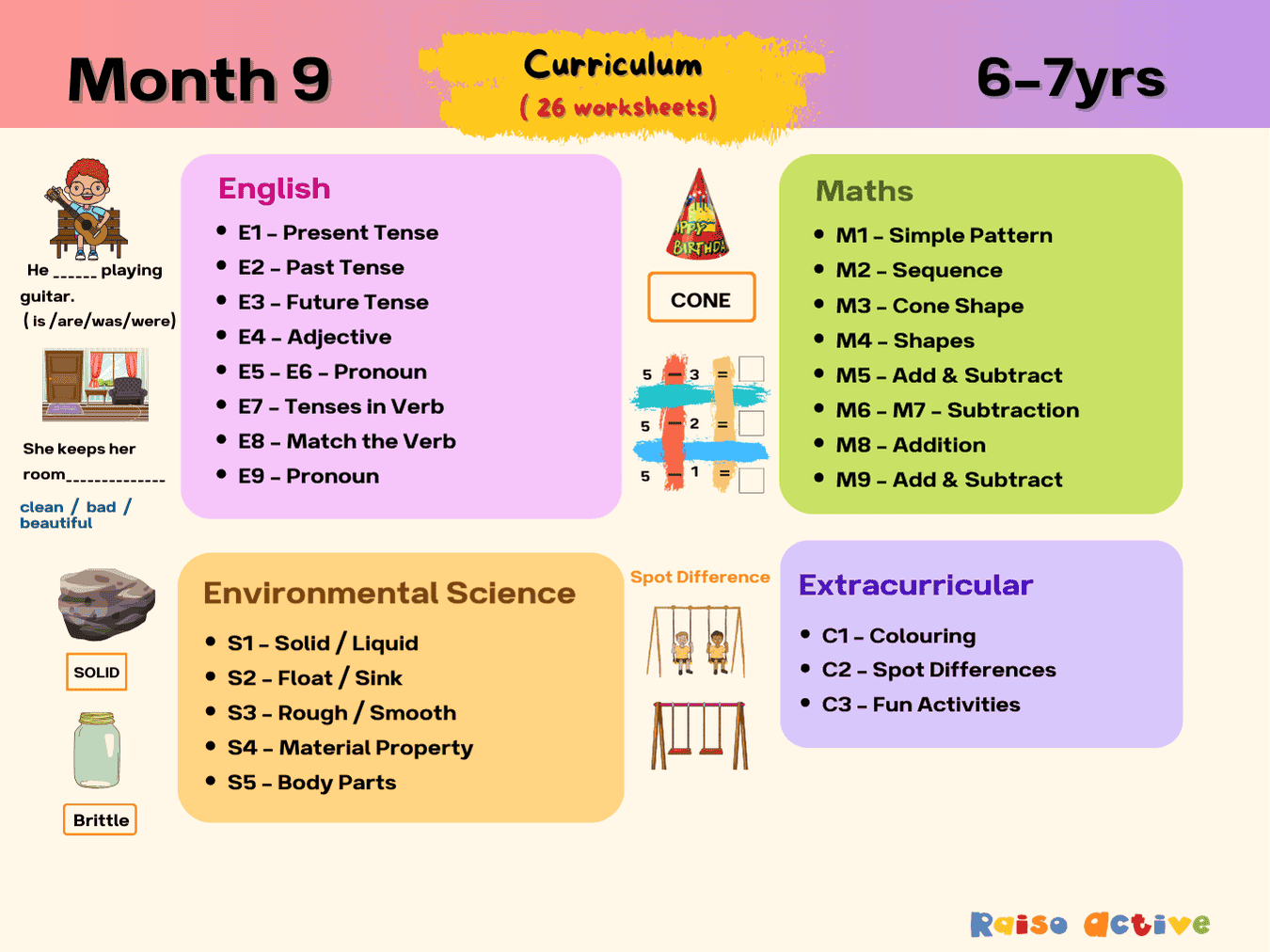
Month 9: Multi-Subject Early Learning | Ages 6-7
Ages 6-7 · Grade 1Ages 6-7 · Year 2Ages 6-7 · Class 1Ages 6-7 · 29 pages
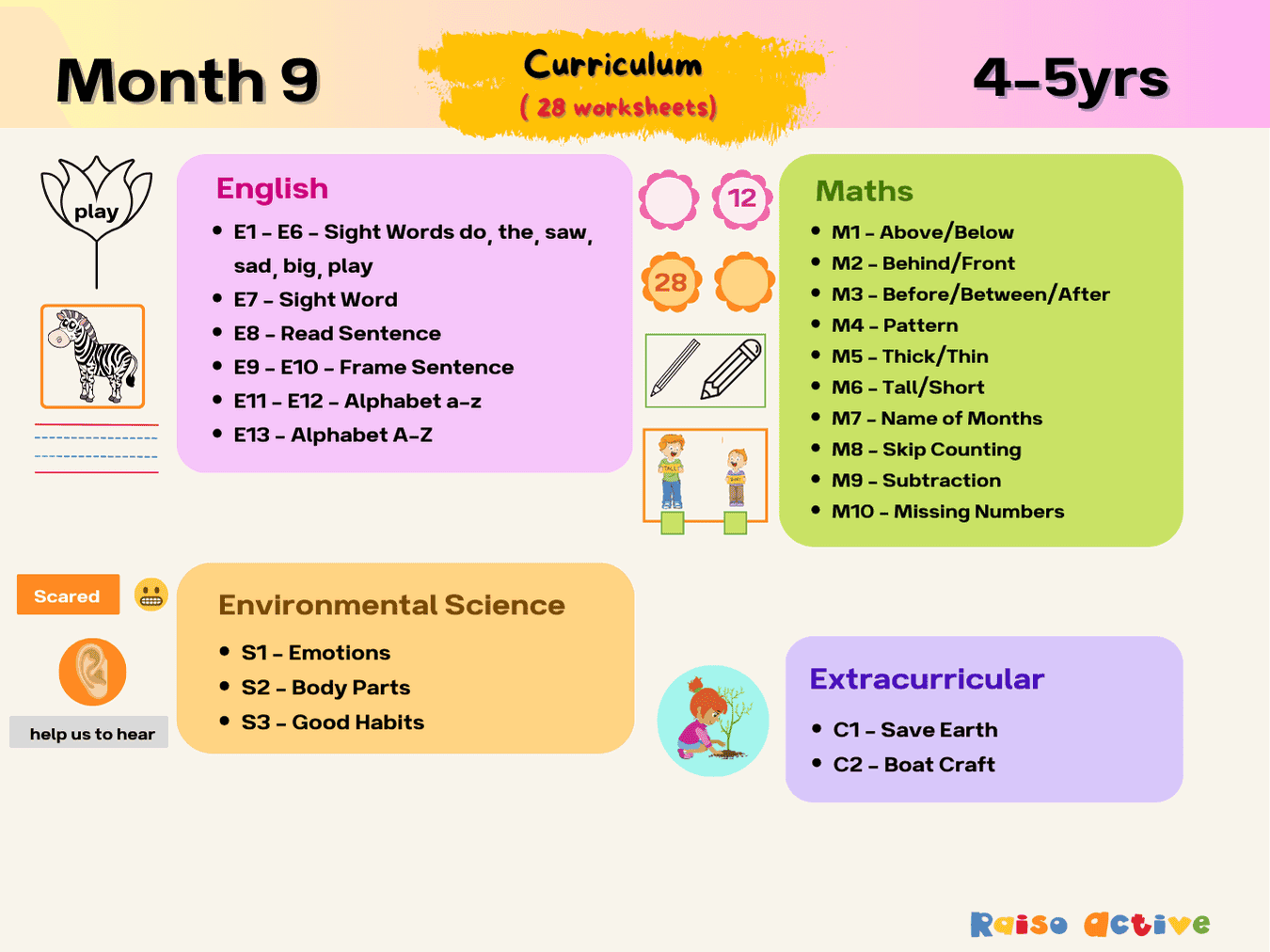
Month 9: Preschool Early Learning Activities | Ages 4-5
Ages 4-5 · Pre-KAges 4-5 · ReceptionAges 4-5 · LKGAges 4-5 · 31 pages
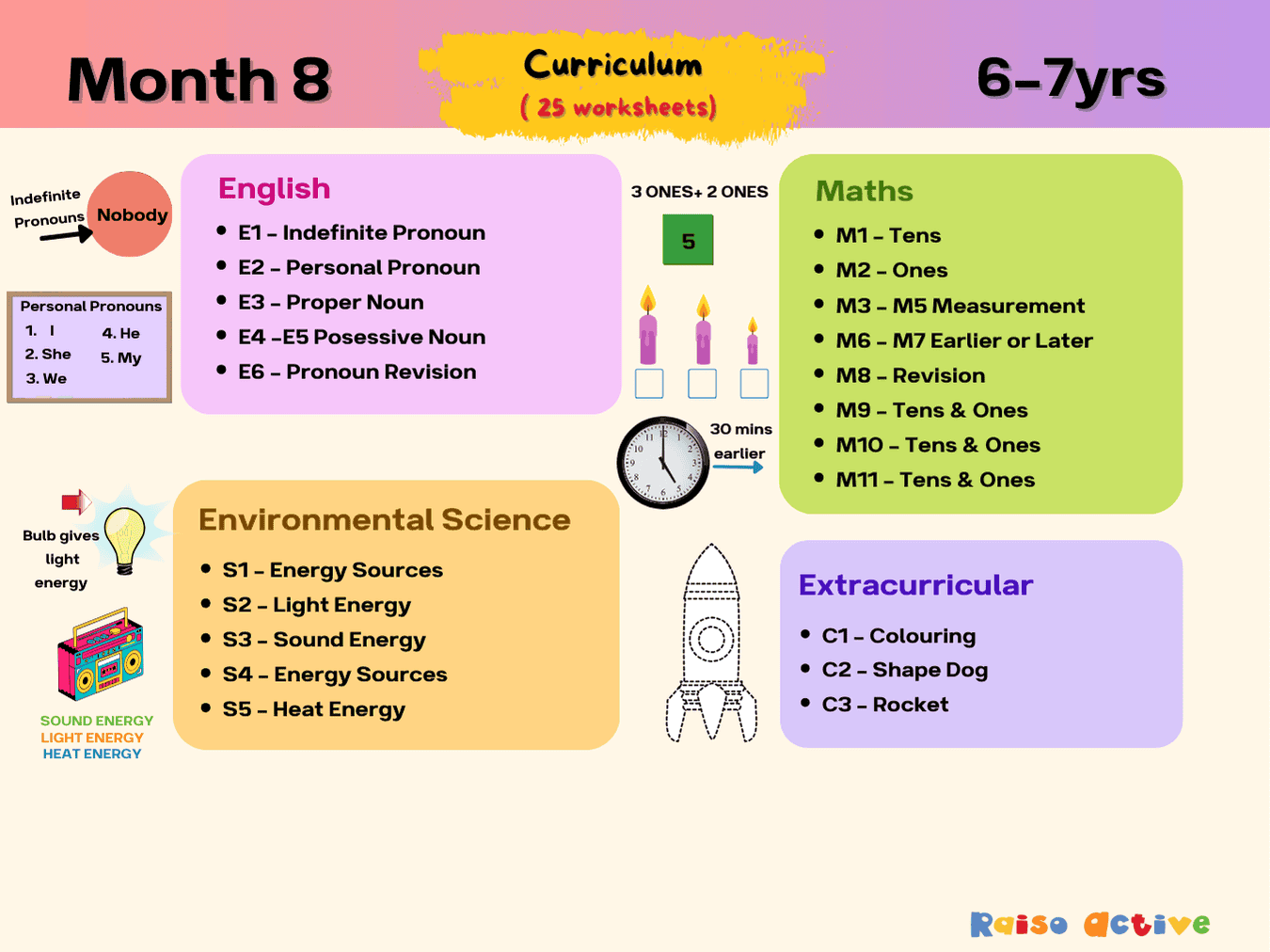
Month 8: English, Math, Science | Ages 6-7
Ages 6-7 · Grade 1Ages 6-7 · Year 2Ages 6-7 · Class 1Ages 6-7 · 28 pages
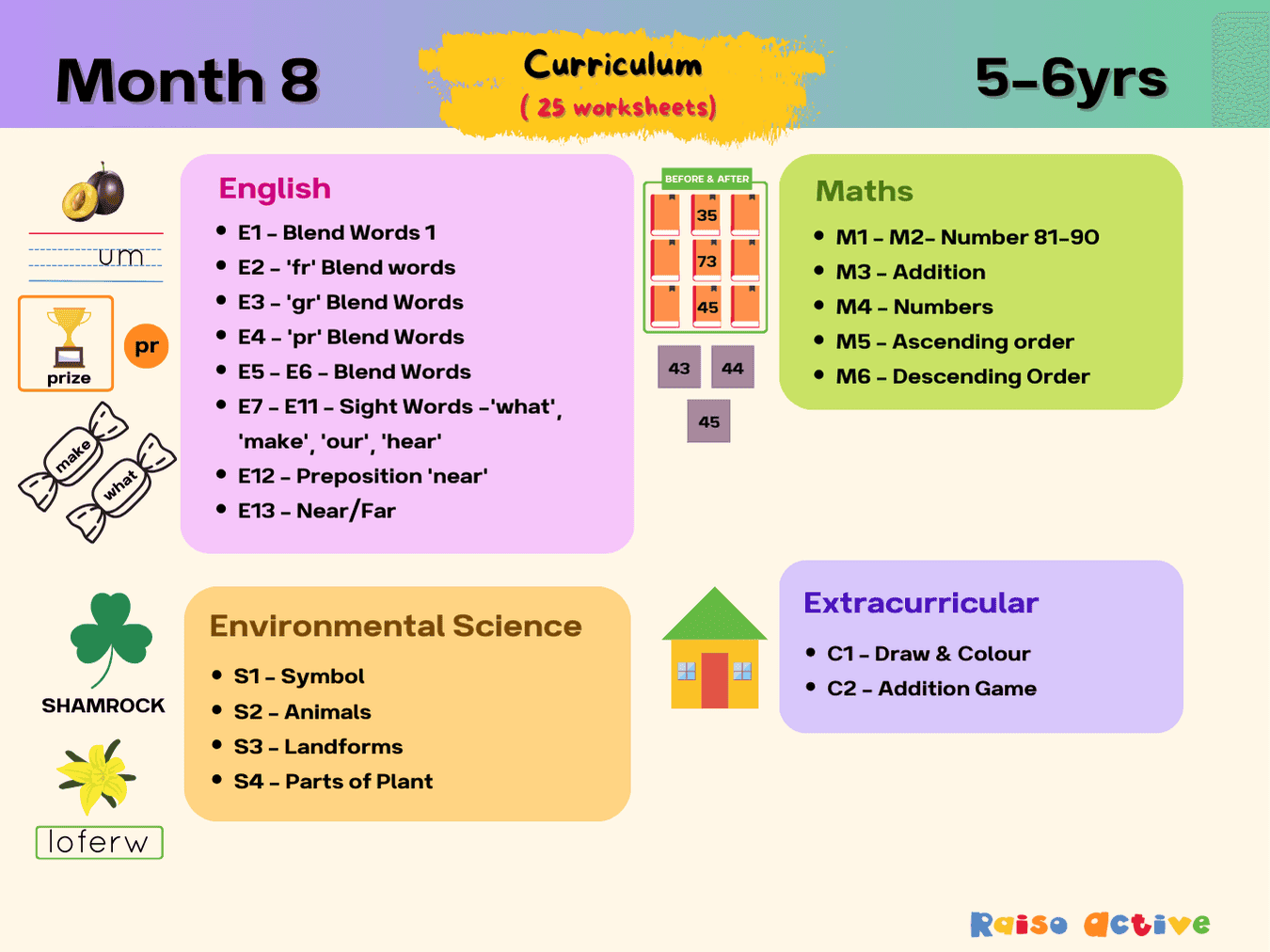
Month 8: Literacy, Math, Science Foundations | Ages 5-6
Ages 5-6 · KindergartenAges 5-6 · Year 1Ages 5-6 · UKGAges 5-6 · 28 pages
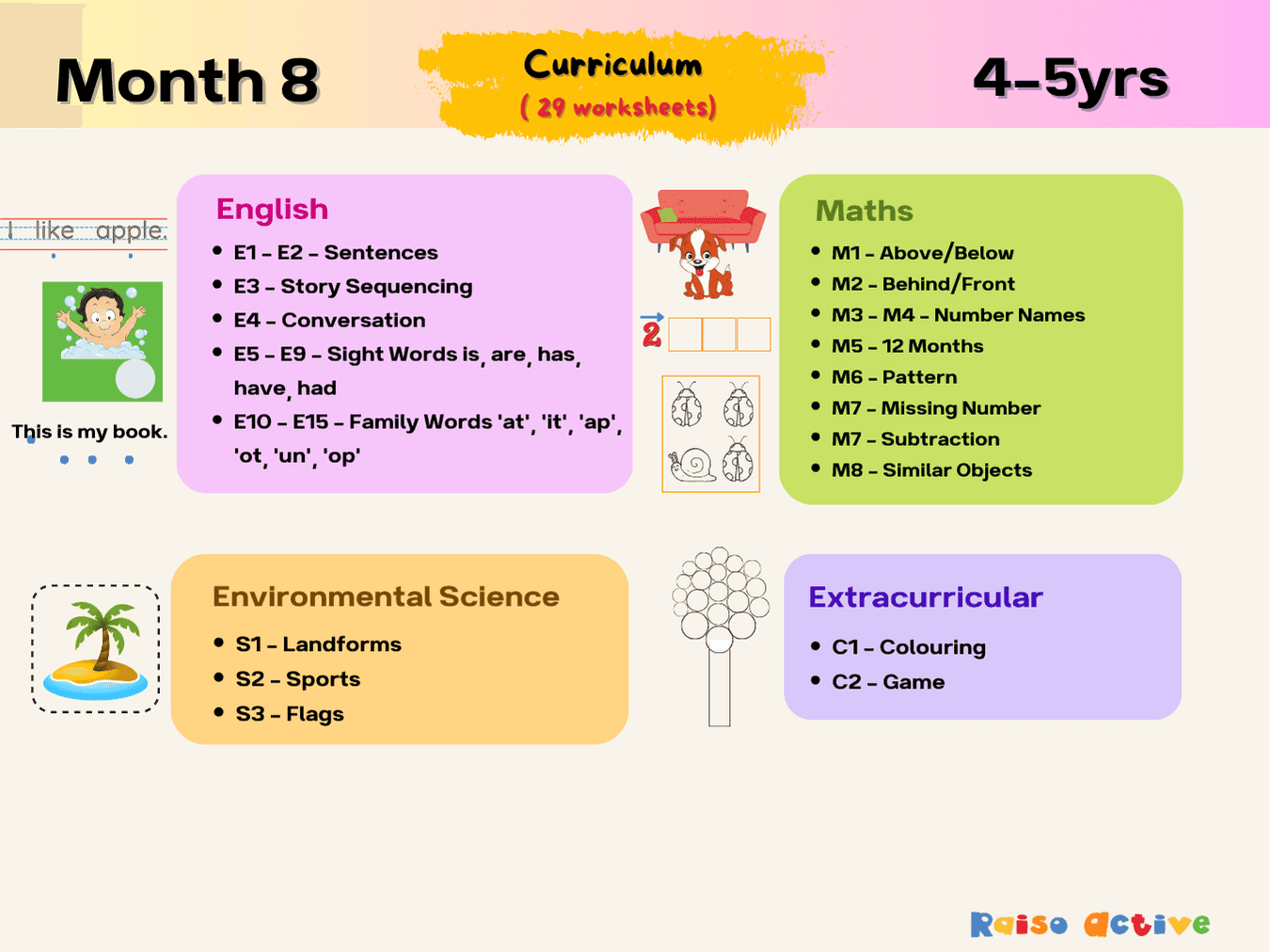
Month 8: English, Math, Science Foundations | Ages 4-5
Ages 4-5 · Pre-KAges 4-5 · ReceptionAges 4-5 · LKGAges 4-5 · 32 pages