Supporting Children with Dysgraphia: Essential Accommodations and Strategies
Author
RaisoActive - Kids Activities and Fun Learning
Published
Updated
Reading Time
23 min read

- What dysgraphia actually is — a neurological difference in the brain, not laziness or carelessness — and why that distinction changes everything for how we support children
- Common signs to watch for: slow, painful writing, wildly inconsistent letter sizes, illegible handwriting even after lots of practice, and strong avoidance of any writing task
- Home strategies that work right now: alternative writing tools, vertical writing surfaces, wider-lined paper, and reducing unnecessary copy work
- School accommodations available in India — extra time, typed assignments, scribes — and how to request them confidently from your child's teacher
- When to seek an occupational therapist, how technology tools like voice-to-text can transform your child's learning, and how to protect their self-esteem along the way
When Writing Hurts: Understanding What Your Child Is Really Experiencing
Your child is bright, curious, and full of ideas. They can tell you a vivid story, solve a puzzle, and explain a concept clearly when they talk it through. But the moment a pencil is placed in their hand and they are asked to write, something changes. The letters come out in different sizes. The words drift off the lines. The writing is painfully slow. The hand cramps. And within minutes, your child is in tears, refusing to continue, or simply staring at the page.
If this sounds familiar, your child may have dysgraphia — a specific learning difference that affects the physical process of writing. Dysgraphia is not a reflection of intelligence, effort, or character. It is a neurological condition that makes the complex motor and cognitive demands of handwriting genuinely difficult, often exhausting, and sometimes physically painful. Recognising it for what it is — a brain-based difference, not a behavioural choice — is the first and most important step towards helping your child.
In India, dysgraphia remains far less understood than dyslexia, even though it affects roughly as many children. Many children with dysgraphia spend years being told to "try harder" or "be neater," when what they actually need are targeted strategies, the right tools, and a supportive adult who understands what is happening in their brain. This guide brings together everything parents and teachers need to know: the signs, the types, how to get a diagnosis in India, and the practical day-to-day strategies that genuinely make a difference.
Get learning support resources in your inbox
Free strategies, worksheets, and expert guidance for supporting children with learning differences — delivered straight to your inbox every week.
What Exactly Is Dysgraphia? (And What It Is Not)
Dysgraphia is a specific learning disability that affects written expression. It primarily impacts a child's ability to write by hand, but it can also affect spelling, the organisation of written ideas, and the speed at which writing can be produced. The term comes from the Greek: dys (difficulty) and graphia (writing).
The root of dysgraphia is neurological, not motivational. Brain imaging research shows that children with dysgraphia use different neural pathways when writing compared to children without the condition — and those pathways require significantly more cognitive effort for the same output. This means that a child with dysgraphia who produces one paragraph of legible writing may have expended the same mental and physical energy that a child without dysgraphia would use to write a full page.
What dysgraphia is not: it is not poor parenting, lack of practice, laziness, low intelligence, or a problem that will simply resolve with more drilling of handwriting. Children with dysgraphia often practice writing far more than their peers — they have simply been doing so without the specific support their brain actually needs.
Researchers typically describe three overlapping types of dysgraphia. Spatial dysgraphia involves difficulty with spatial planning — the child understands letters but cannot reliably place them correctly on the page, resulting in inconsistent sizing and letters drifting above or below the line. Motor dysgraphia involves poor fine motor skills and muscle coordination in the hand and wrist, making the physical act of forming letters effortful and often painful. Phonological (or linguistic) dysgraphia involves difficulty connecting sounds to their written symbols, which particularly affects spelling. Many children show features of more than one type.
Common Signs of Dysgraphia in Children Ages 3 to 8
Because young children are still developing writing skills, it can be challenging to distinguish typical developmental struggles from dysgraphia. The key signals are persistence and disproportionality: the difficulty continues well beyond the age when peers have mastered the skill, and the effort required is far greater than what the child's overall ability would predict.
In the pre-writing years (ages 3 to 5), watch for: strong resistance to any colouring, drawing, or tracing activities; difficulty holding a crayon or pencil using a functional grip; inability to copy simple shapes like a circle or cross even with demonstration; and a marked preference for verbal or physical activities over anything involving a pencil. In the early school years (ages 5 to 8), more specific signs emerge: extremely slow writing speed relative to classmates; letters that vary wildly in size within the same word; frequent mixing of upper and lower case letters; inability to stay on the writing lines despite effort; cramped, awkward pencil grip; complaints of hand pain during or after writing; and visible physical tension — hunched shoulders, a contorted wrist, extreme pencil pressure — while writing. Perhaps the most telling sign of all is the gap between verbal ability and written output: a child who can compose a beautiful story aloud but produces only a few disjointed words on paper when given the same amount of time.
The most reliable indicator of dysgraphia is a persistent, significant gap between a child's verbal intelligence and their written output — a gap that does not close with extra handwriting practice alone.
If your child can discuss ideas fluently, understand complex concepts, and perform well in oral tasks, but consistently struggles to express the same ideas in writing, that discrepancy is worth investigating with a professional.
Getting a Diagnosis in India: What to Expect
A formal diagnosis of dysgraphia in India is typically carried out by a clinical psychologist, special educator, or paediatric occupational therapist with training in learning disabilities. The process usually involves a psycho-educational assessment that looks at a child's cognitive abilities, fine motor skills, writing speed and legibility, and the relationship between these areas. Some centres also include a neurological examination.
Government hospitals in major cities — including child development units at AIIMS Delhi, KEM Mumbai, and Government Medical College institutions across the country — offer assessments, as do private paediatric clinics and specialist learning disability centres. In smaller towns, the school special educator (also called the resource room teacher) is often the best first point of contact. They can conduct an initial screening and refer the family to an appropriate professional for a comprehensive evaluation.
The Rights of Persons with Disabilities Act (RPWD) 2016 lists specific learning disabilities — including dysgraphia — as recognised disabilities under Indian law. A formal diagnosis from a government-recognised institution or registered professional entitles children to accommodations in CBSE and state board examinations, including extra time, a scribe, exemption from deduction of marks for spelling errors in certain subjects, and access to a computer for examination responses. Initiating the assessment process early — ideally by Class 3 or 4 — allows time for documentation and accommodation requests before high-stakes examinations.
- **Speak first to the class teacher and special educator.** Share specific examples — photographs of your child's handwriting, notes about how long homework takes, descriptions of the physical distress during writing — rather than general concerns.
- **Request a written record of the meeting.** Ask for notes from any discussion about your child's writing difficulties to be kept in the school file. This creates a paper trail that supports future accommodation requests.
- **Frame the conversation as partnership.** Teachers are far more receptive to parents who come with curiosity and collaboration in mind, rather than demands. Ask what they are observing in class and share what you see at home.
- **Do not wait for the school to suggest an assessment.** Parents can independently arrange a psycho-educational assessment through a private clinic or hospital without school referral, especially if the school is slow to acknowledge the concern.
Practical Home Strategies You Can Start Today
A formal diagnosis is useful, but it is not a prerequisite for starting to help your child. Many of the most effective dysgraphia strategies can be introduced at home immediately, with materials that cost very little. The goal at home is twofold: to reduce the physical struggle of writing through the right tools and setup, and to rebuild the confidence that repeated failure with writing tasks has eroded.
Writing tools make an enormous difference. For many children with dysgraphia, the standard thin HB pencil is simply not the right tool. Try a triangular pencil — the shape naturally guides finger placement. Add an ergonomic pencil grip (available for under fifty rupees at any stationery shop) to reduce the death grip that many children with dysgraphia adopt. Thicker markers or crayons require less fine motor precision and can be a relief for children whose finger muscles fatigue quickly. Some older children do better with a mechanical pencil (no need to sharpen, consistent line weight) or even a rollerball pen that glides more smoothly than a standard pencil.
Vertical writing surfaces are one of the most underused strategies for fine motor difficulties. When a child writes on a wall-mounted whiteboard, an easel, or a clipboard propped at an angle, the wrist naturally extends into a better position for pencil control. This reduces the cramped grip that is so common in children with dysgraphia and builds the shoulder and forearm strength that supports better handwriting. Even taping a worksheet to the wall for ten minutes of practice can make a noticeable difference.
Wider-lined paper is a simple adaptation that immediately reduces spatial planning demands. Most school exercise books in India use 4 mm ruled lines — far too narrow for children who are still developing the motor precision to stay within them. Switching to double-spaced or 8 mm ruled paper for homework and practice allows children to produce larger letters that are easier to form and far more legible. Raised-line paper, which provides a tactile bump at the baseline, is particularly helpful for children who struggle with spatial dysgraphia.
Reduce unnecessary copy work. Copying from the board or from a textbook combines two demanding tasks — reading and writing — and is one of the most exhausting activities for a child with dysgraphia. At home, instead of asking your child to copy their notes again as revision, try reading the content aloud together, discussing it verbally, or creating a voice recording. Reserve the child's limited writing energy for tasks where the act of writing itself serves the learning goal.
Reducing the physical difficulty of writing does not mean reducing expectations. It means removing the barriers that prevent your child's genuine knowledge and ideas from reaching the page.
- **Play-dough and clay:** Rolling, pinching, and squeezing dough builds the exact hand and finger muscles used in writing — without the pressure of a formal handwriting task. Make it a daily five-minute activity.
- **Threading and lacing:** Beading bracelets, lacing cards, or threading pasta onto string develops the pincer grip and bilateral coordination that support pencil control.
- **Tweezers and tongs:** Picking up small objects (cotton balls, cubes, dried chickpeas) with tweezers or kitchen tongs is excellent for developing finger strength and precision.
- **Vertical chalkboard drawing:** Drawing large shapes, letters, and pictures on a chalkboard or whiteboard at shoulder height builds the shoulder stability and wrist extension that make handwriting easier.
- **Finger tracing in sand or salt:** Tracing letters in a shallow tray of sand or salt is a multisensory alternative to pencil practice that many children with dysgraphia find far less stressful and more enjoyable.
School Accommodations That Make a Real Difference
At school, children with dysgraphia need accommodations that separate the assessment of their knowledge from the assessment of their handwriting — except in those situations where handwriting itself is the explicit learning objective. The following accommodations are recognised under CBSE guidelines and the RPWD Act and can be requested formally once a child has a documented diagnosis.
Extra time is the most commonly granted and impactful accommodation. Writing takes significantly longer for children with dysgraphia, and without extra time, examinations measure writing speed rather than knowledge. CBSE currently grants eligible students 20 minutes of additional time per hour of examination. Typed assignments are a transformative accommodation for children from Class 2 or 3 onwards. When the learning goal is to demonstrate knowledge of a subject — not to practise handwriting — allowing children to type their responses levels the playing field entirely. Many schools in Indian cities now have computer labs that can be used for this purpose. A scribe (a person who writes on the child's behalf as they dictate) is available for qualifying students in formal examinations and, with the teacher's agreement, can be used for classroom assessments too.
Beyond formal accommodations, everyday classroom adjustments are equally important. These include: allowing the child to use a pencil grip without comment, providing printed notes or photocopied board content so the child is not required to copy at the same pace as the class, grading written work on content rather than handwriting quality, seating the child where they can see the board clearly (poor visibility forces children to copy from greater distances, increasing errors), and giving the child additional time to complete written class work rather than marking incomplete work as a failure.
- Never mark down a child's written work solely for messy handwriting if the content demonstrates understanding. The child with dysgraphia has already spent three times the energy of their peers to produce what is on the page.
- Avoid calling attention to a child's handwriting difficulties in front of classmates. The shame associated with public comparison is one of the most damaging long-term consequences for children with dysgraphia.
- When in doubt about whether a child knows the answer, ask them to tell you verbally. You will often discover that the child who produced one illegible line on paper can give you a beautifully clear and complete answer aloud.
The Role of Occupational Therapy in Supporting Dysgraphia
A paediatric occupational therapist (OT) is a specialist who assesses and supports the fine motor, sensory, and executive function skills that underlie handwriting. For children with dysgraphia, OT is often one of the most impactful interventions available — and it works most effectively when started early.
An OT working with a child with dysgraphia will typically assess pencil grip, hand and finger strength, bilateral coordination, visual-motor integration (the ability to coordinate what the eye sees with what the hand does), and postural stability (the ability to maintain a stable seated position while writing). Based on this assessment, the OT designs a personalised programme of activities to build the specific skills that are weak, alongside strategies for modifying the writing environment to reduce demands. They can also recommend specific tools — the right pencil grip, the right paper type, the right seating position — based on that individual child's profile rather than a generic recommendation.
In India, paediatric OTs are available at government hospitals, private paediatric rehabilitation clinics, and some specialist schools in larger cities. Organisations such as the Cerebral Palsy India Network and developmental paediatrics units at major hospitals can provide referrals. Telehealth OT consultations have become increasingly available since the pandemic, making specialist support accessible to families in smaller towns and rural areas where in-person OT services may not be available.
of school-age children are estimated to experience some degree of dysgraphia, making it one of the most common specific learning disabilities — yet it remains one of the least recognised and least supported in Indian classrooms.
Source: Learning Disabilities Association of America, 2023
The Emotional Impact of Dysgraphia and How to Protect Self-Esteem
The academic consequences of dysgraphia are visible and measurable. The emotional consequences are often harder to see — but they are just as real, and they can persist long after any writing difficulty has been accommodated. Children who spend years struggling with a task that appears effortless for their peers frequently internalise a story about themselves: that they are careless, sloppy, not trying hard enough, or simply not as capable as others. This story, once established, can be remarkably resistant to change.
Protecting your child's self-esteem begins with the language you use. Never describe dysgraphia as a problem with the child — describe it as a difference in how their brain handles a very specific task. Celebrate what your child is good at, loudly and specifically: "Your ideas in that story were extraordinary. You have such a creative mind." Make sure your child knows that many remarkable people have had dysgraphia. Thomas Edison, Leonardo da Vinci, and Albert Einstein are all believed to have experienced significant writing difficulties. In more recent times, filmmaker Steven Spielberg and author Henry Winkler have spoken publicly about their experiences with learning differences including writing difficulties.
Help your child develop a vocabulary for talking about their own experience. A child who can say "I have dysgraphia — my brain finds writing harder than most people, but I find other things easier" has a far more grounded and resilient self-concept than a child who has simply been told they are sloppy. This kind of self-knowledge, supported by understanding adults, is one of the strongest protective factors against the anxiety and low self-worth that can otherwise accompany years of unexplained writing difficulty.
Your child's handwriting is not a measure of their intelligence, their effort, or their future. It is one specific skill that their brain finds genuinely difficult — and with the right support, they can learn to manage it and build a life full of the things they are brilliant at.
The children who do best with dysgraphia in the long term are not necessarily those who receive the most intensive handwriting intervention. They are the children whose key adults consistently separate the difficulty from the child's identity — and make sure the child can clearly see and celebrate their own real strengths.
Technology Tools That Transform Learning for Children with Dysgraphia
Technology has fundamentally changed the landscape for children with dysgraphia, and the tools available today are more powerful, more affordable, and more accessible than ever before. For children from around Class 2 onwards, introducing technology as a legitimate writing alternative — not a consolation prize, but a genuine tool that professional writers, journalists, and academics use every day — can be genuinely liberating.
Voice-to-text (speech recognition) is arguably the single most transformative technology for children with dysgraphia. When a child can speak their ideas and have them appear on screen as text, the physical bottleneck of handwriting is removed entirely and their actual cognitive ability can flow freely. Google Docs has a built-in voice typing feature (free, available on any browser or Android device) that works well in English and is increasingly accurate with Indian English accents. Apple devices have a built-in dictation function accessible through the keyboard on any text field. Spend a few sessions practising with your child so they become comfortable with the tool — it typically takes two to three weeks of regular use before a child feels confident.
Typing practice is a valuable parallel investment. Touch typing does not require fine motor precision in the same way that handwriting does, and most children with dysgraphia find typing significantly less painful and more productive. Free typing programmes designed for children — including BBC Dance Mat Typing and the many apps available on school tablets — make learning to type engaging and game-like. Aim for ten to fifteen minutes of daily typing practice from around age six onwards, and within a few months most children achieve a functional typing speed.
Audio recording is a valuable low-tech alternative for capturing ideas, completing comprehension tasks verbally, or producing content for a task where the teacher is assessing understanding rather than writing. A simple voice memo on a smartphone takes two seconds to set up. For children who find written homework consistently overwhelming, negotiating with the teacher to accept a voice memo response — at least on some tasks — can dramatically reduce evening stress for the entire family.
more content is typically produced by children with dysgraphia when they use voice-to-text technology compared to handwriting — and the quality of ideas is consistently rated as higher by teachers who assess them blind to the production method used.
Source: Dysgraphia Research Collaborative, International Journal of Inclusive Education, 2022
A Step-by-Step Plan for Supporting Your Child with Dysgraphia
Observe and document what you see
Before seeking a diagnosis or requesting school support, spend one to two weeks carefully observing and documenting your child's writing experiences. Note how long handwriting tasks take, describe the physical posture and grip, photograph examples of their handwriting, and record any verbal or behavioural signs of distress. This documentation becomes invaluable when speaking with teachers, paediatricians, and assessors.
See your paediatrician first
Book an appointment with your child's paediatrician to rule out any vision, hearing, or neurological concerns that might contribute to writing difficulty. Share your observations and ask specifically about a referral for a psycho-educational assessment and/or occupational therapy evaluation. Your paediatrician can also provide a referral letter that speeds up the assessment process at government hospitals.
Arrange a formal assessment
Contact a clinical psychologist, special educator, or paediatric OT for a comprehensive assessment. Ask specifically whether they assess for specific learning disabilities including dysgraphia. A full assessment typically takes two to three sessions and results in a written report with a diagnosis (if applicable) and specific recommendations for home and school. This report is the document your school and CBSE will require for formal accommodations.
Share the assessment report with the school
Request a meeting with the class teacher and special educator. Bring copies of the assessment report and, if possible, the written recommendations from the psychologist or OT. Discuss specifically which accommodations the school can implement immediately (pencil grip, extra time on class tests, typed assignments where possible) and what steps are needed for formal CBSE accommodations in future examinations.
Implement home strategies immediately
Do not wait for the school to take action before making changes at home. Switch to wider-lined paper for homework, purchase a triangular pencil and pencil grip, begin daily fine motor play activities, introduce voice-to-text for long written tasks, and start ten minutes of daily typing practice. These low-cost changes can produce visible improvements in your child's experience within a few weeks.
Start OT if recommended
If the assessment includes an OT referral, begin therapy as soon as practically possible. OT sessions typically happen once or twice a week, and the OT will give you a home programme of activities to do on the days in between. Consistency is key — the activities only work if they are practised regularly. Ask the OT to visit or video-call the school if possible, so teachers receive the same guidance on accommodation strategies.
Revisit, review, and celebrate progress
Review your child's progress every three months. Are the accommodations helping? Is the OT programme producing changes in hand strength and pencil control? Is your child's confidence improving? Celebrate every step forward, however small — a child who previously refused to pick up a pencil and now completes five minutes of writing without distress has made a genuinely significant achievement. Keep the focus on progress rather than comparison with peers, and adjust strategies as your child grows and develops.
- +Provide wider-lined paper, triangular pencils, and ergonomic grips to reduce the physical difficulty of writing
- +Allow typed responses or voice recordings when the learning goal is content knowledge rather than handwriting
- +Celebrate the ideas, creativity, and knowledge in written work — not the neatness of the handwriting
- +Break writing tasks into smaller steps with rest breaks between each phase
- +Seek a formal assessment early so accommodations can be put in place before high-stakes examinations
- +Use voice-to-text and typing as genuine, valued alternatives to handwriting from an early age
- +Explain dysgraphia to the child in age-appropriate terms so they understand why writing is harder for them
- -Insist on more handwriting practice as the sole intervention, without changing tools or supports
- -Grade written work on neatness or penmanship when the task is intended to assess subject knowledge
- -Compare the child's written output directly to the volume and neatness produced by peers
- -Require the child to rewrite messy work repeatedly without addressing the underlying motor difficulty
- -Wait until secondary school to request accommodations, missing years of valuable support during formative learning
- -Treat voice-to-text or typing as "cheating" rather than legitimate tools that bypass a specific neurological barrier
- -Tell the child to try harder, be neater, or pay more attention — when the difficulty is neurological, not volitional
Free Resources for Supporting Children with Dysgraphia
Join thousands of Indian parents and educators who are learning how to support children with learning differences. Get free strategies, adapted worksheets, and expert guidance delivered to your inbox every week.
Frequently Asked Questions About Dysgraphia
How is dysgraphia different from just having bad handwriting?
At what age can dysgraphia be identified?
Can dysgraphia be cured?
Will my child's CBSE school accept requests for accommodations?
Are there Indian resources or support groups for families of children with dysgraphia?
My child gets very upset when I mention their handwriting. How do I support them emotionally?
Free worksheets for this topic
Browse all worksheets
Maze Worksheet for Kids: Bee Maze and Tangled Lines
Ages 4-7 · Pre-K–Grade 1Ages 4-7 · Reception–Year 2Ages 4-7 · LKG–Class 1Ages 4-7
Children plan a route through a maze to take the bee home, then trace three tangled lines with their eyes and finger to match each child to a toy. Both tasks build focus, planning and visual tracking.
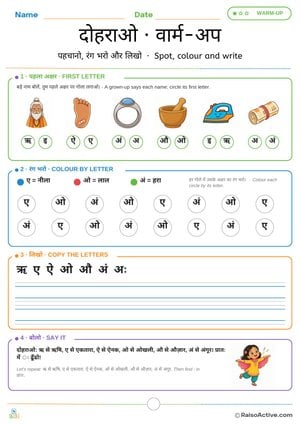
Hindi Vowels Part 2 Revision: Spot, Colour and Write | दोहराओ – वार्म-अप
Ages 3-7 · Preschool–Grade 1Ages 3-7 · Nursery–Year 2Ages 3-7 · Nursery–Class 1Ages 3-7
A warm-up revision: circle the first letter of each picture word, colour circles by letter (ए blue, ओ red, अं green), copy the seven letters and repeat the words ऋषि, एकतारा, ऐनक, ओखली, औज़ार and अंगूर.
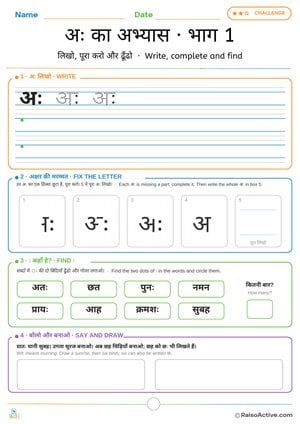
Hindi Visarga अः (ah) Practice 1: Write, Fix the Letter and Find | अः का अभ्यास · भाग 1
Ages 4-7 · Pre-K–Grade 1Ages 4-7 · Reception–Year 2Ages 4-7 · LKG–Class 1Ages 4-7
A challenge page: write अः between the lines, complete four letters each missing a part and write the whole अः in box 5, find the two dots ः in words such as अतः, पुनः, प्रायः and क्रमशः, and draw a sunrise with six birds (छः can also be written छह).
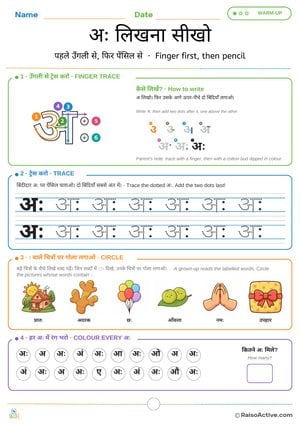
Learn to Write Hindi Visarga अः (ah) – Tracing Worksheet | अः लिखना सीखो
Ages 3-7 · Preschool–Grade 1Ages 3-7 · Nursery–Year 2Ages 3-7 · Nursery–Class 1Ages 3-7
Children learn to write अः step by step: write अ, then add two dots after it, one above the other. They trace with a finger, then a pencil, circle the pictures whose labelled words contain ः (प्रातः, छः, नमः) and colour every अः in a grid.

Written by
Hemsweta Jain · Teacher Cheena
MBA and Early Childhood Educator, teaching since 2014 · Founder of RaisoActive, Mumbai
Published · Last reviewed
Related posts
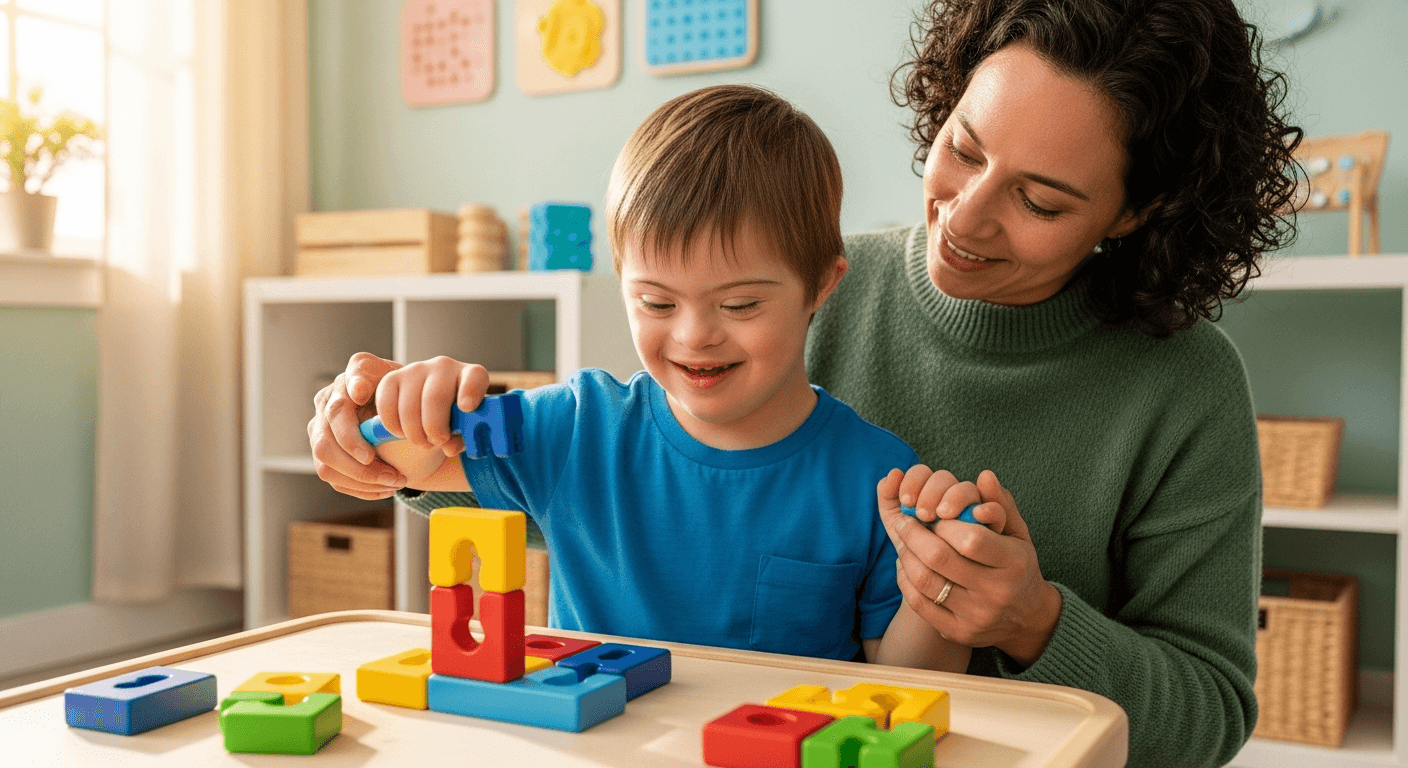
Supporting Your Child Who Learns Differently: A Comprehensive Guide for Parents
Practical strategies to support children with dyslexia, ADHD, dysgraphia & auditory processing differences at home and school. Indian context included.
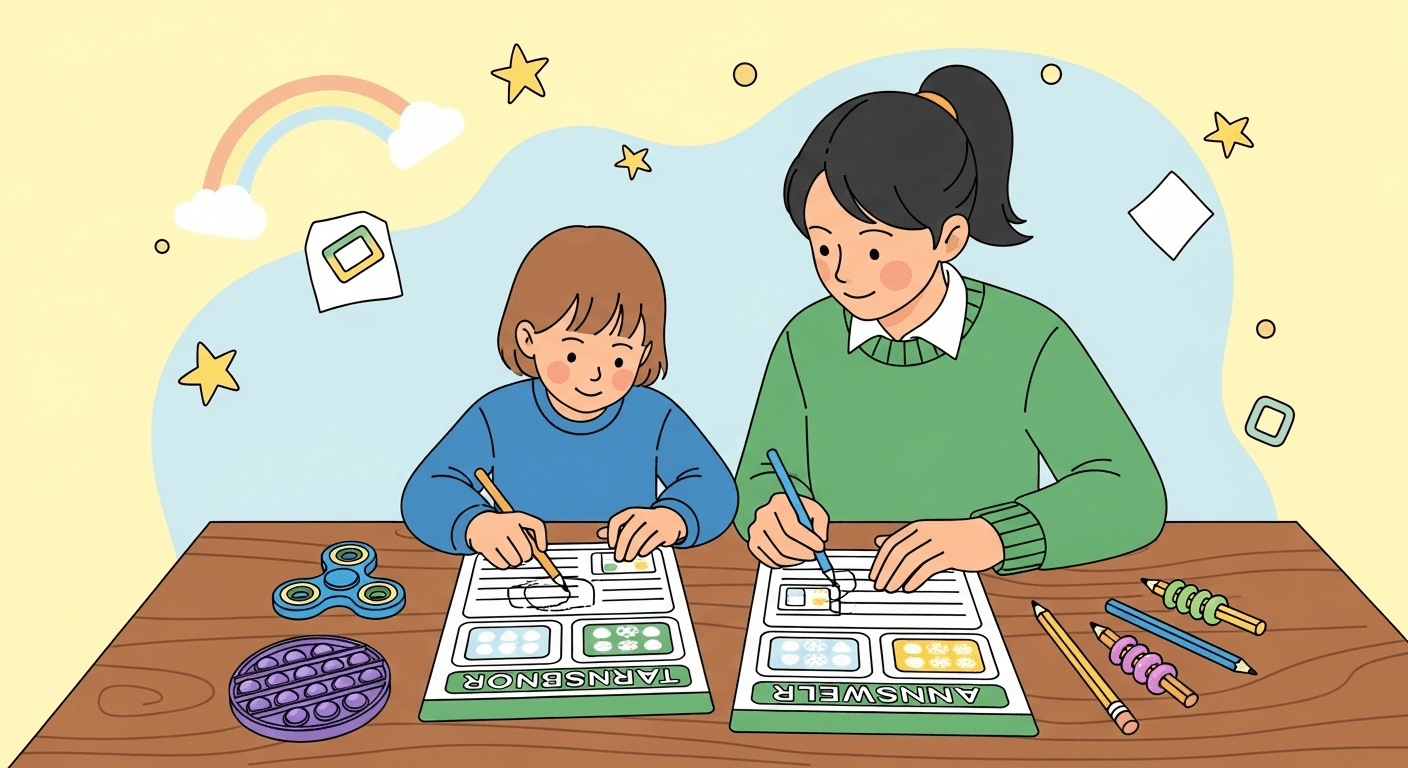
Adapting Worksheets for Children with Special Needs: A Complete Guide for Parents and Educators
Practical strategies to adapt worksheets for children with ADHD, dyslexia, dysgraphia & sensory differences. Indian school context, CBSE tips, and OT advice included.
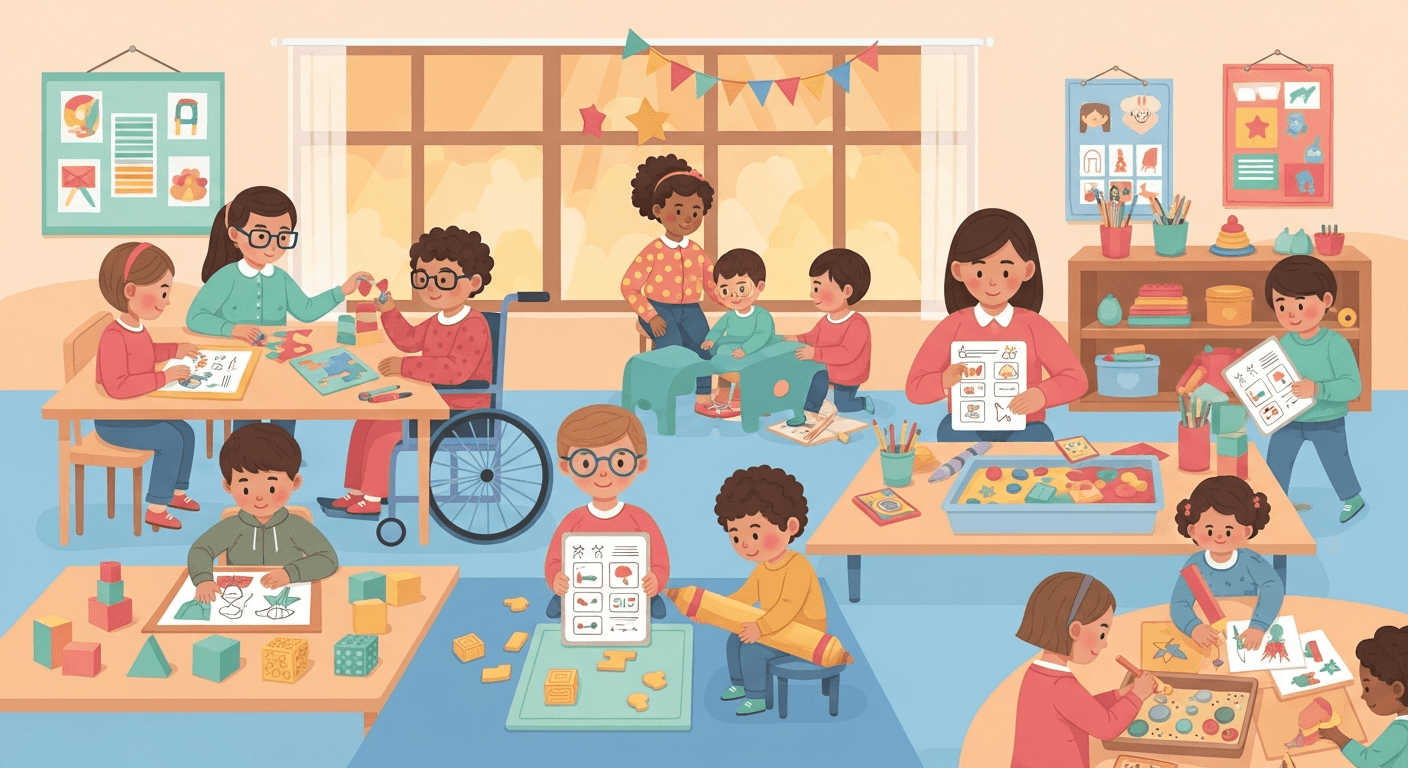
Resources for Children with Multiple Disabilities: A Comprehensive Guide for Families
Discover essential resources for children with multiple disabilities. Therapies, inclusive learning, assistive technology, and printable activities for ages 1-8.
Related Resources
Printable Resources(10)
View all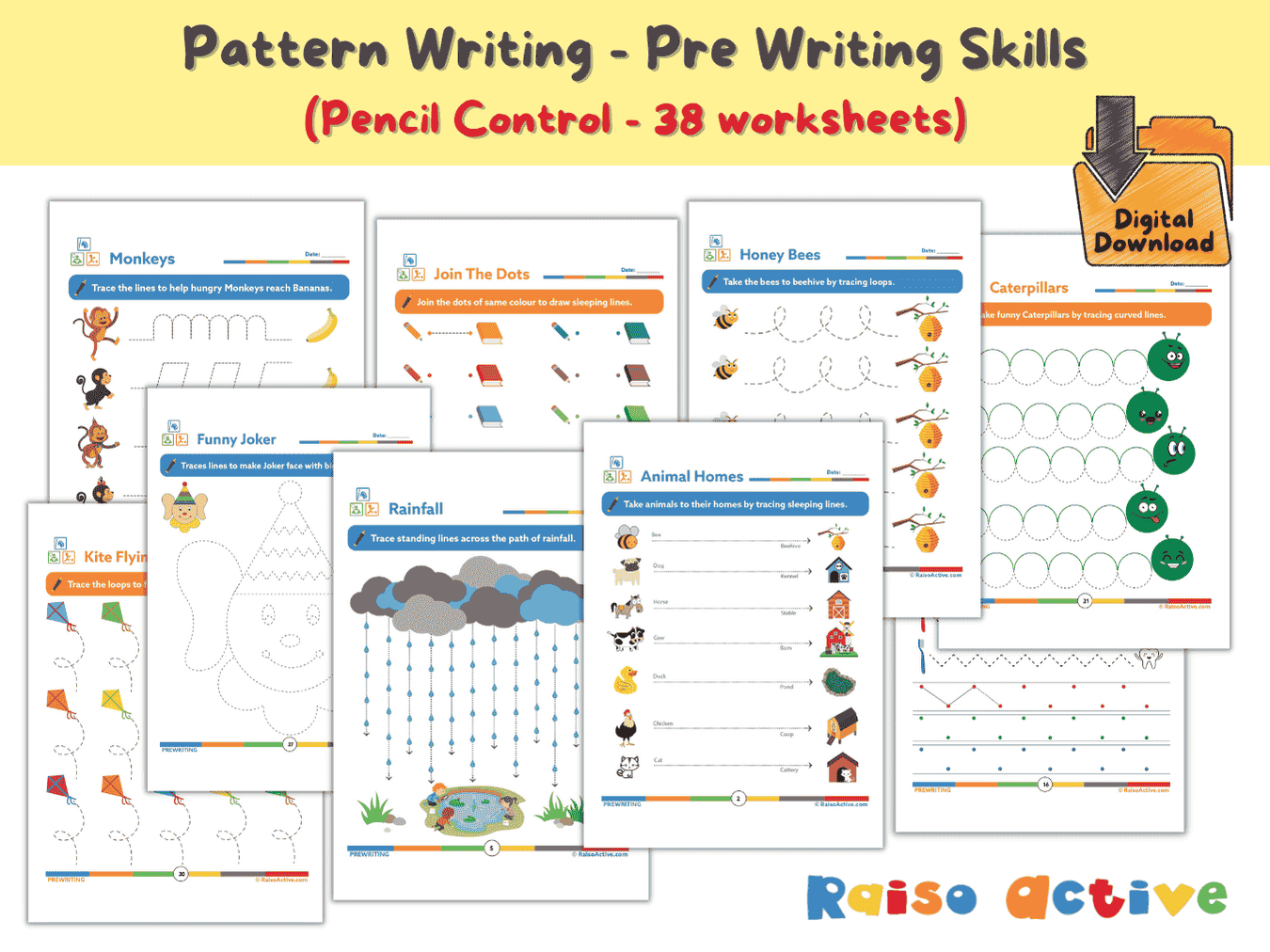

Pattern Writing Pre-writing Skills Activity Book for 3-4 Year Olds
Ages 3-4 · PreschoolAges 3-4 · NurseryAges 3-4 · 44 pages
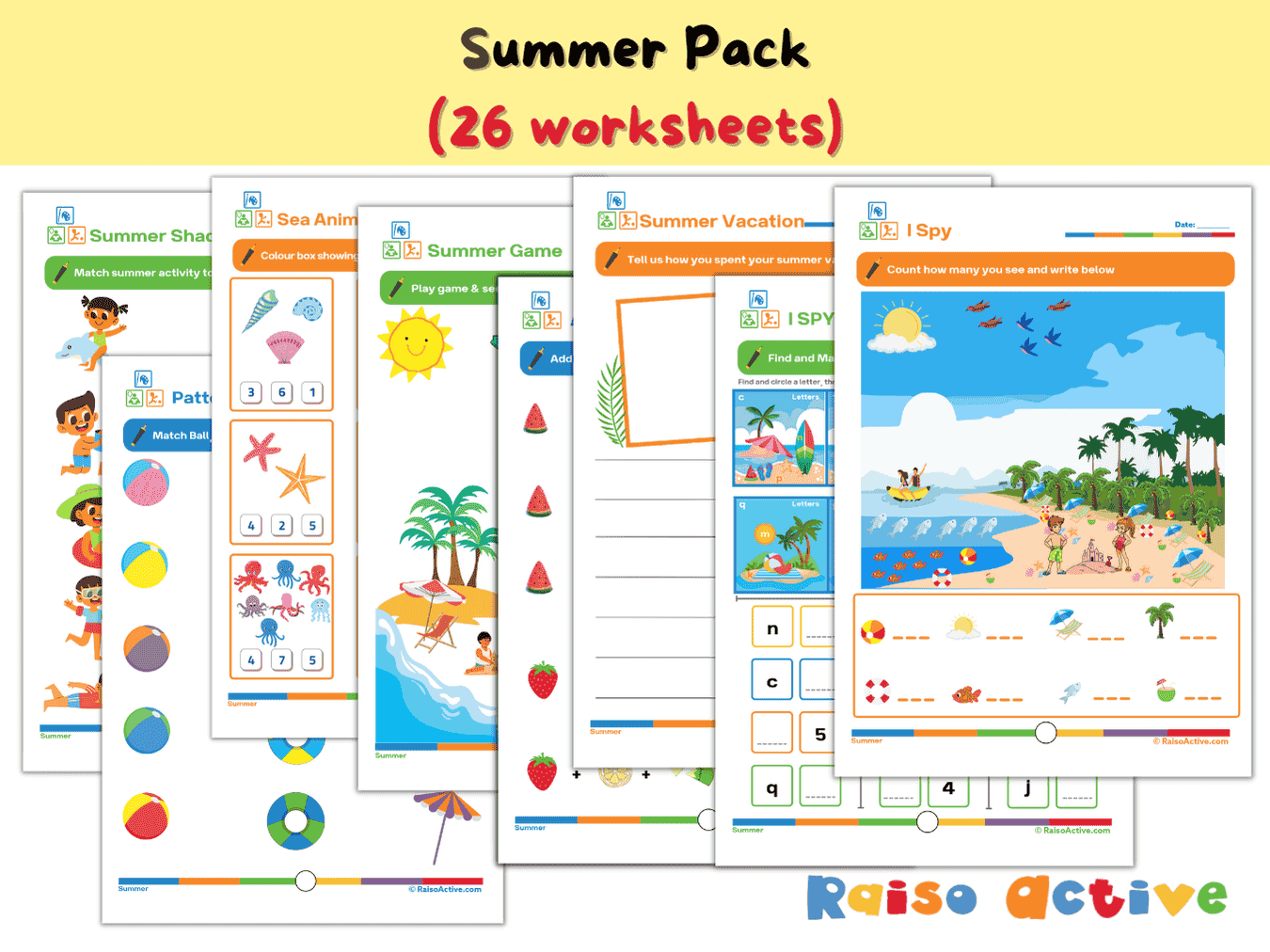

Summer Activity Pack: Math, Literacy, Puzzles & More for Preschool & Kindergarten
Ages 3-7 · Preschool–Grade 1Ages 3-7 · Nursery–Year 2Ages 3-7 · Nursery–Class 1Ages 3-7 · 26 pages
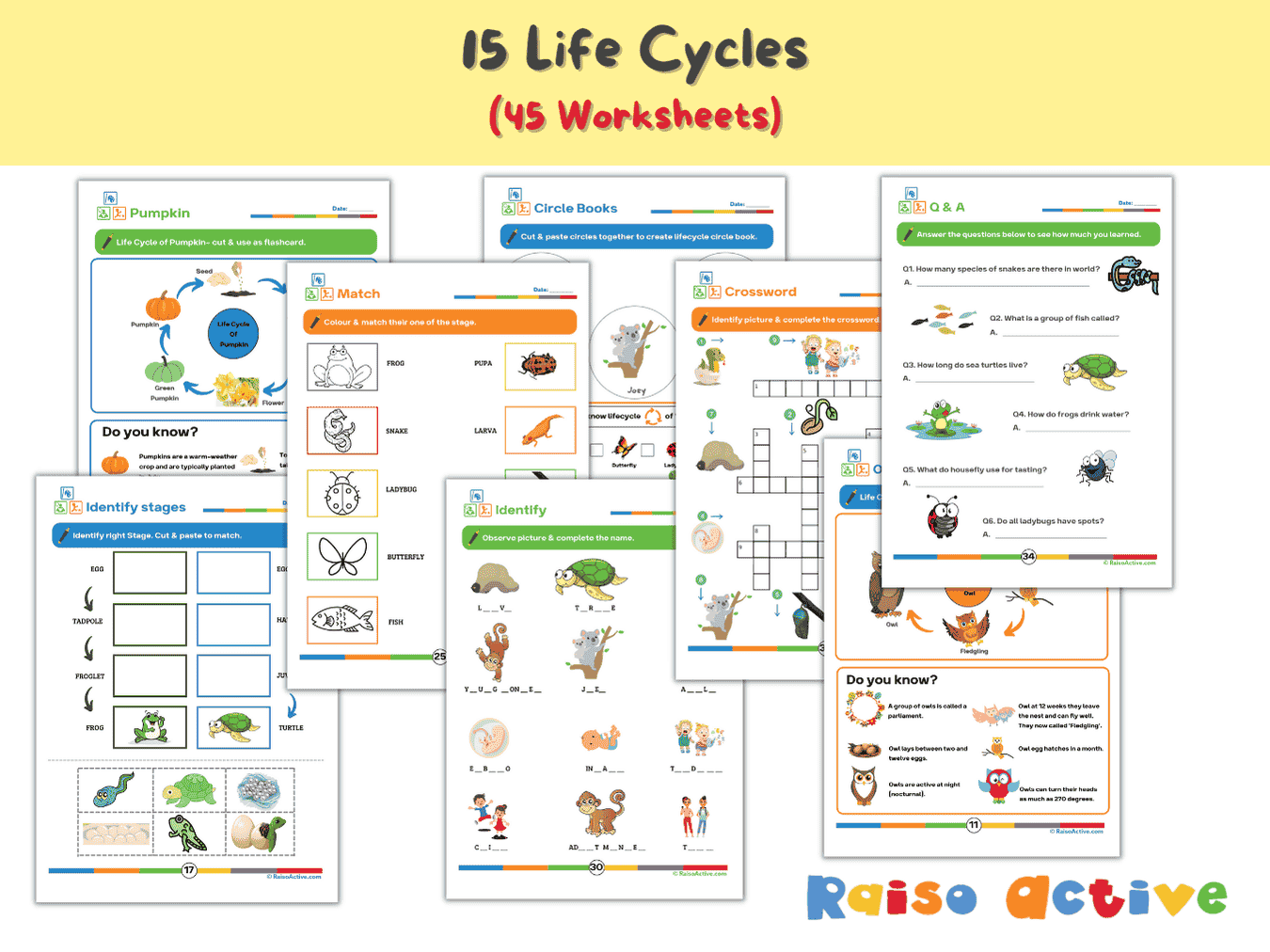

Lifecycles Activity Book & Flashcards for Preschool & Early Elementary
Ages 3-8 · Preschool–Grade 2Ages 3-8 · Nursery–Year 3Ages 3-8 · Nursery–Class 2Ages 3-8 · 46 pages
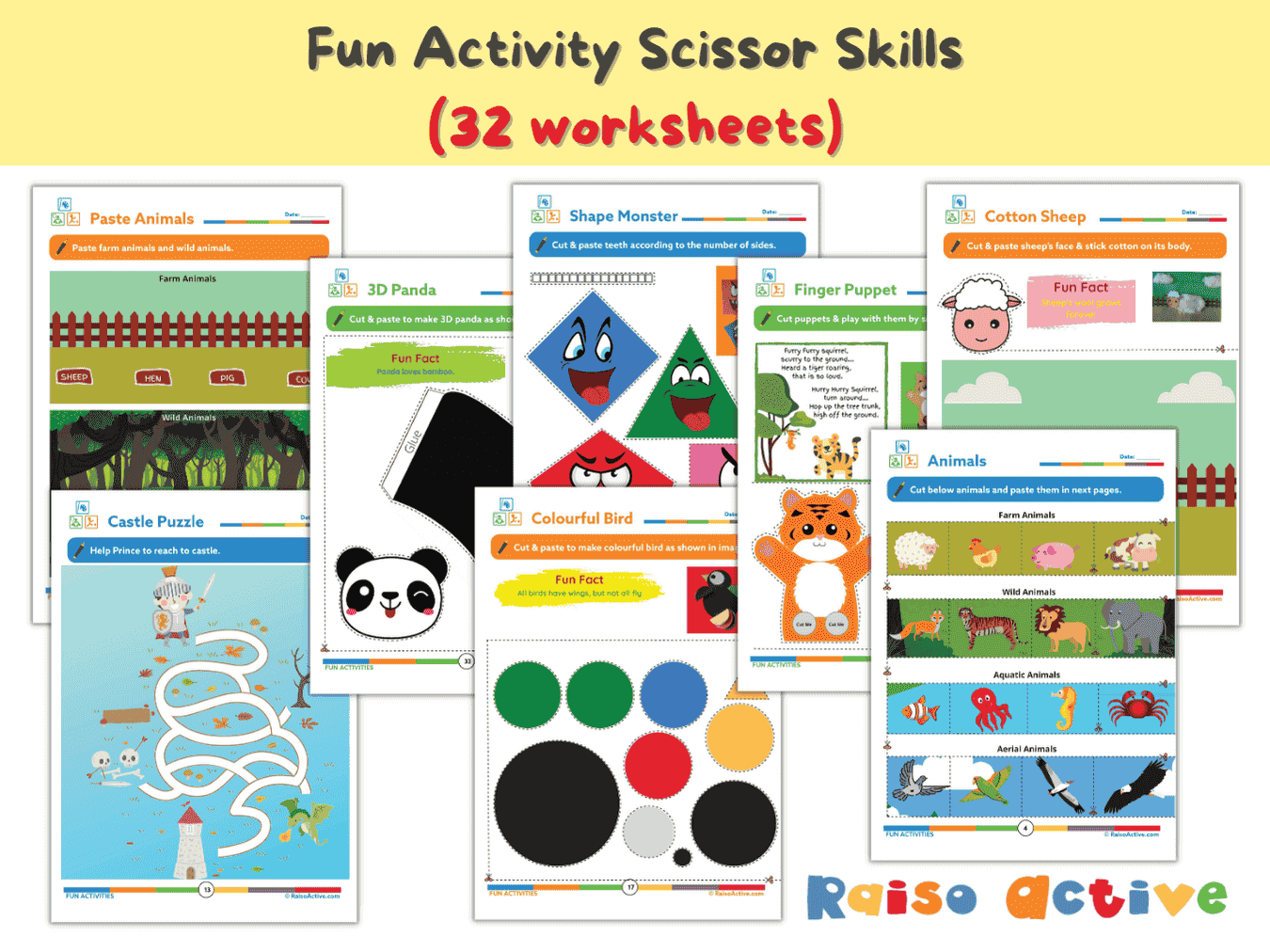
Preschool Scissor Skills Activity Book: Fine Motor & Craft Fun for Ages 3-6
Ages 3-6 · Preschool–KindergartenAges 3-6 · Nursery–Year 1Ages 3-6 · Nursery–UKGAges 3-6 · 35 pages

India's Festivals & Cultural Diversity Activity Book for Kids 4-8
Ages 4-8 · Pre-K–Grade 2Ages 4-8 · Reception–Year 3Ages 4-8 · LKG–Class 2Ages 4-8 · 42 pages
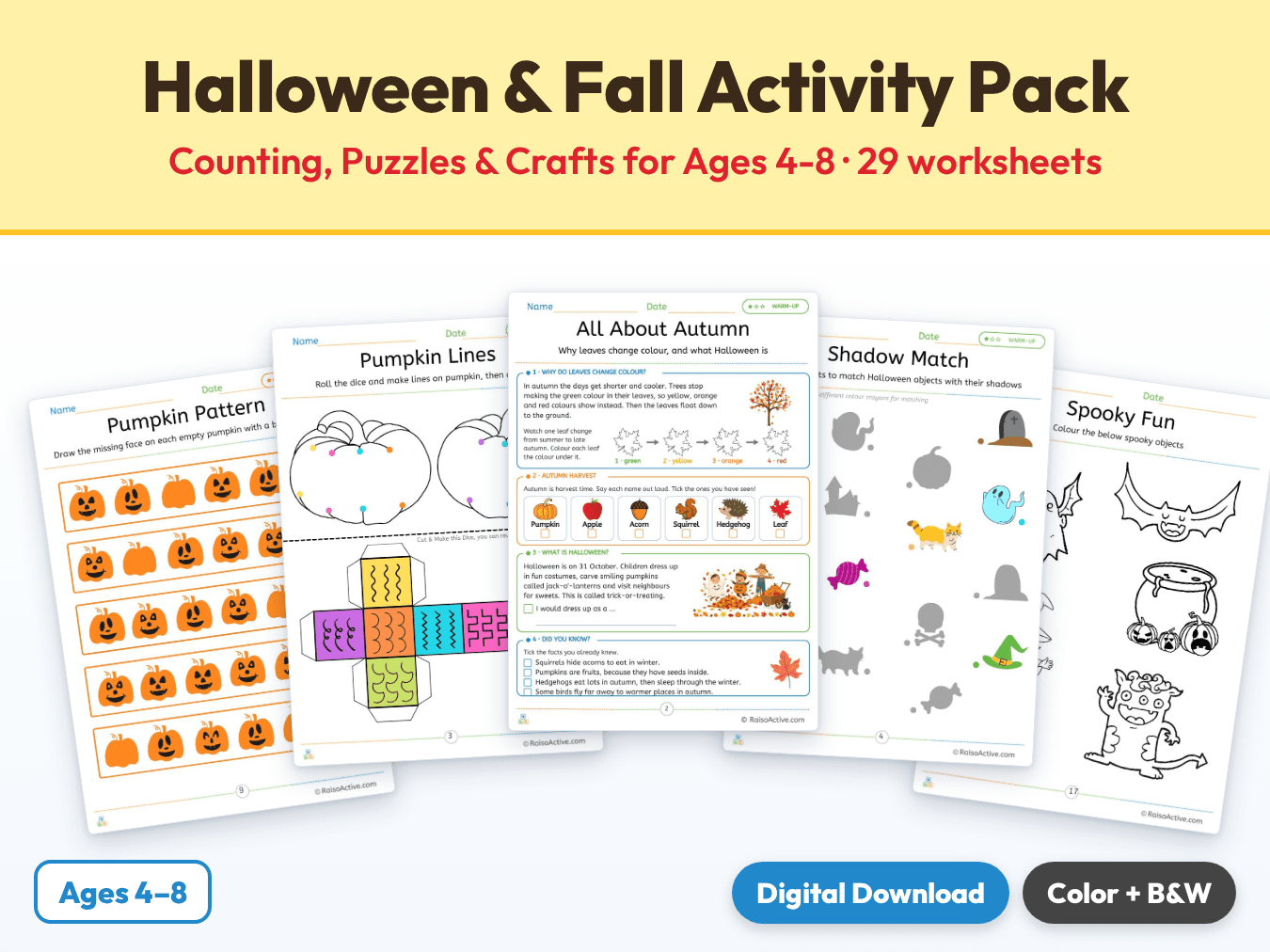
Halloween & Fall Activity Pack: Counting, Puzzles & Crafts for Ages 4-8
Ages 4-8 · Pre-K–Grade 2Ages 4-8 · Reception–Year 3Ages 4-8 · LKG–Class 2Ages 4-8 · 30 pages
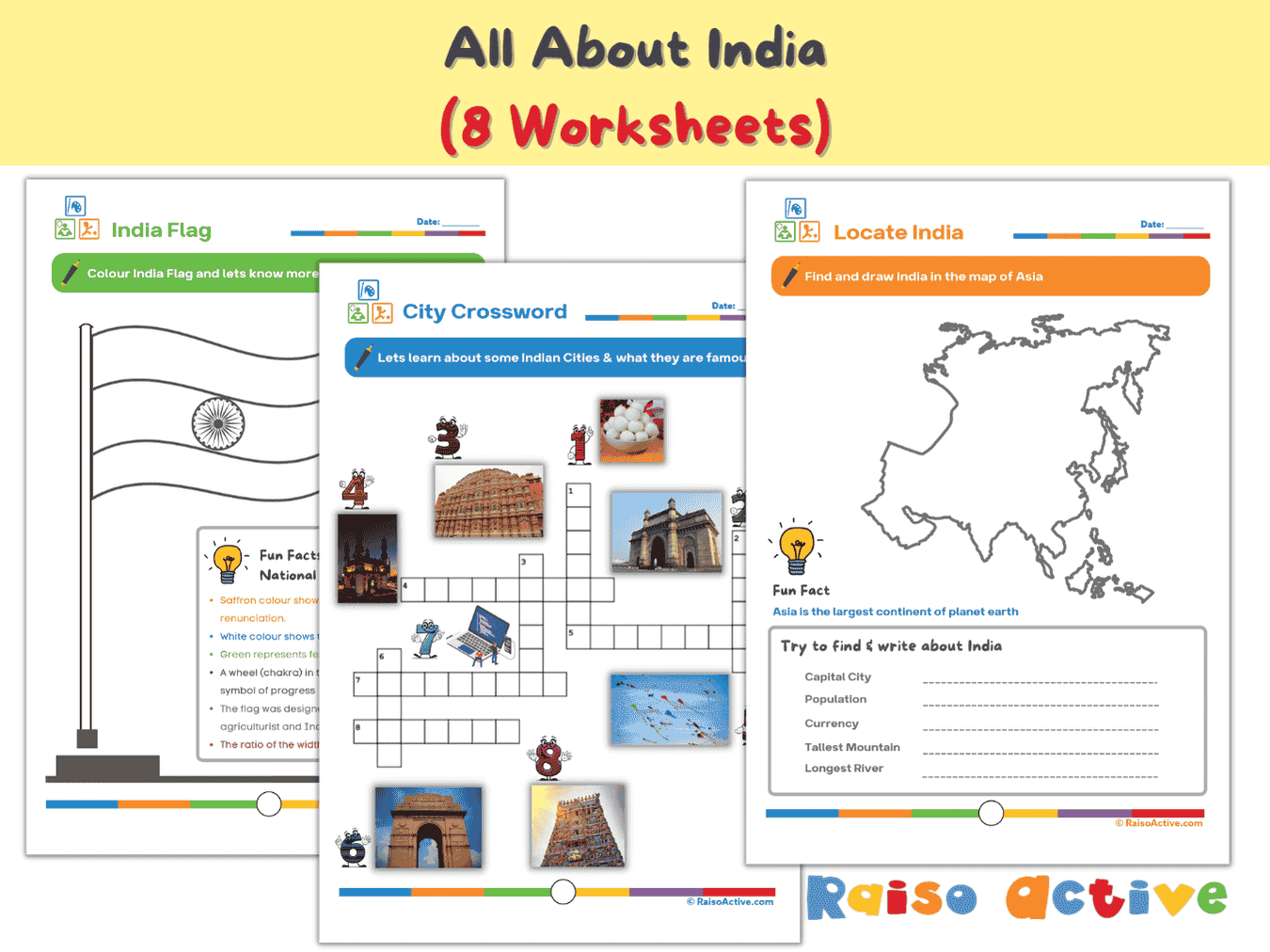
India Activity Book for Kids: Explore Geography, Culture & Symbols (Ages 5-8)
Ages 5-8 · Kindergarten–Grade 2Ages 5-8 · Year 1–Year 3Ages 5-8 · UKG–Class 2Ages 5-8 · 8 pages
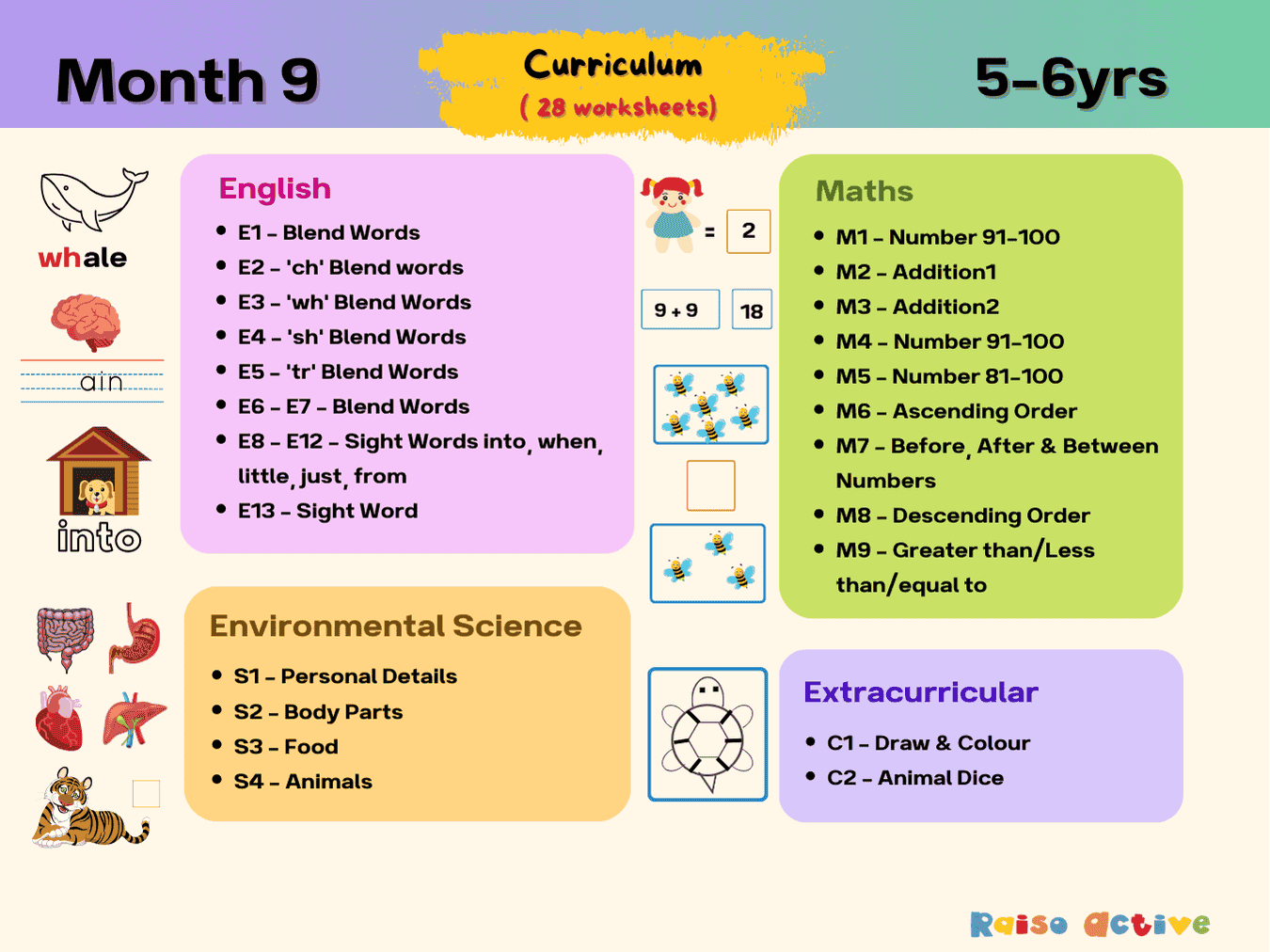
Month 9: Early Learning English Math Science | Ages 5-6
Ages 5-6 · KindergartenAges 5-6 · Year 1Ages 5-6 · UKGAges 5-6 · 31 pages
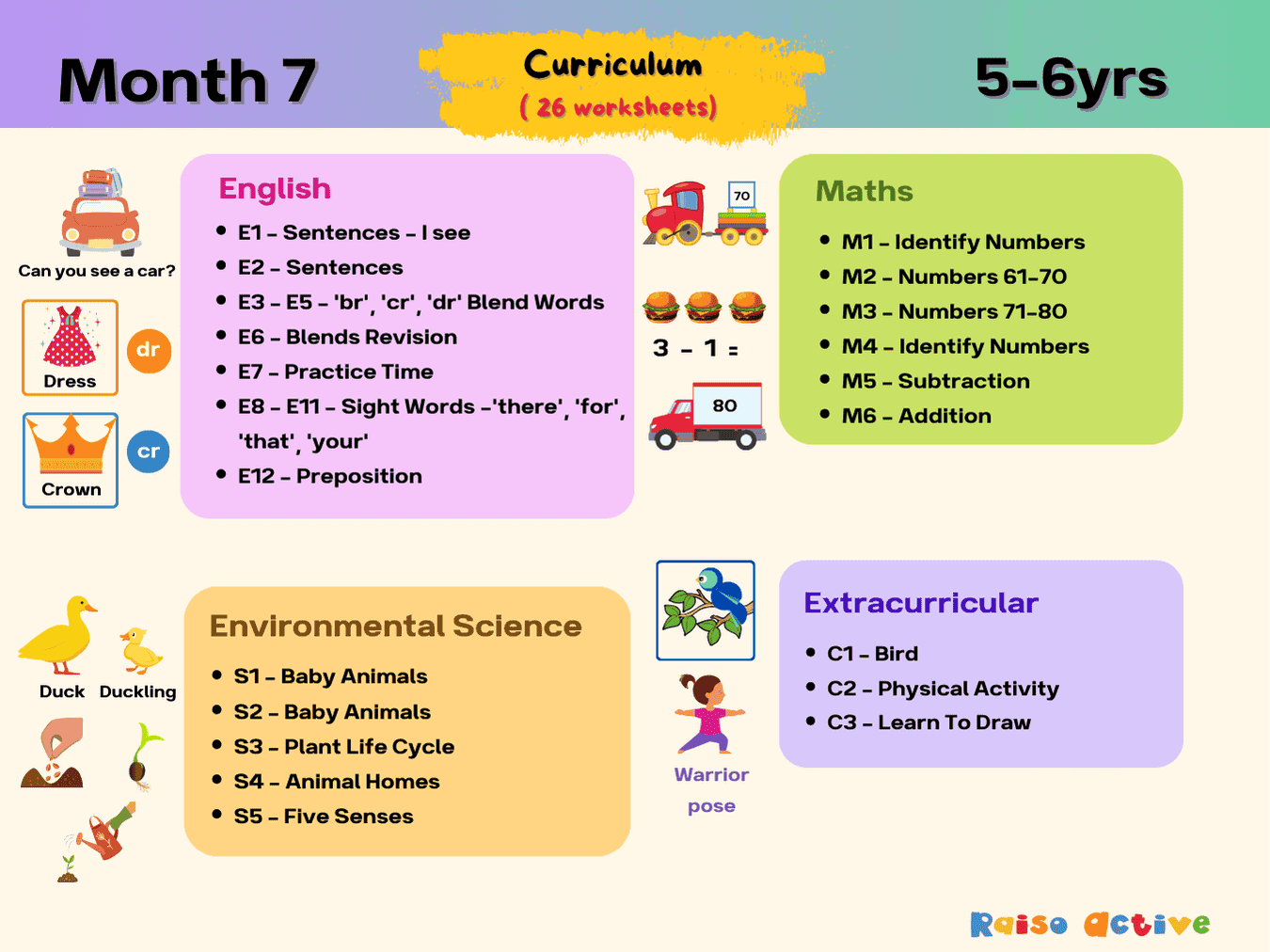
Month 7: Holistic Kindergarten Curriculum | Ages 5-6
Ages 5-6 · KindergartenAges 5-6 · Year 1Ages 5-6 · UKGAges 5-6 · 29 pages
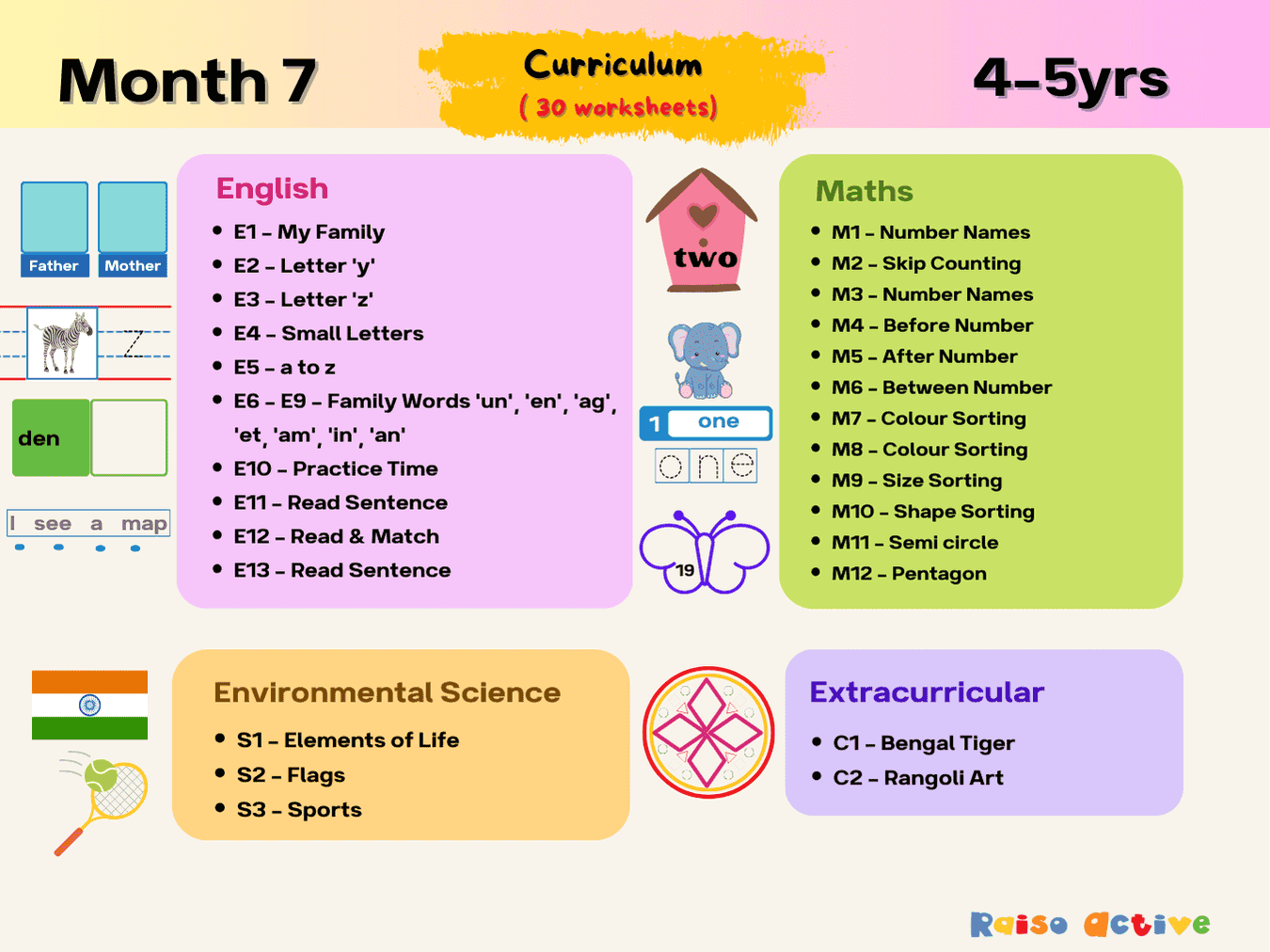
Month 7: Preschool Skills Through Play | Ages 4-5
Ages 4-5 · Pre-KAges 4-5 · ReceptionAges 4-5 · LKGAges 4-5 · 33 pages