Parenting & Homeschool, Early Learning
What Supplies Do You Need for Preschool Learning at Home: The Complete Essential Guide
Author
RaisoActive - Kids Activities and Fun Learning
Date Published
Reading Time
9 min read

In This Article5 min read
- You do not need expensive gadgets — most of the best preschool learning happens with simple, everyday materials
- The essentials: paper, crayons, pencils, child-safe scissors, glue, and playdough cover an enormous range of learning
- Manipulatives like counting blocks and pattern blocks build maths foundations far better than workbooks alone
- Most supplies are easily available at local stationery shops, Amazon India, or FirstCry at very reasonable prices
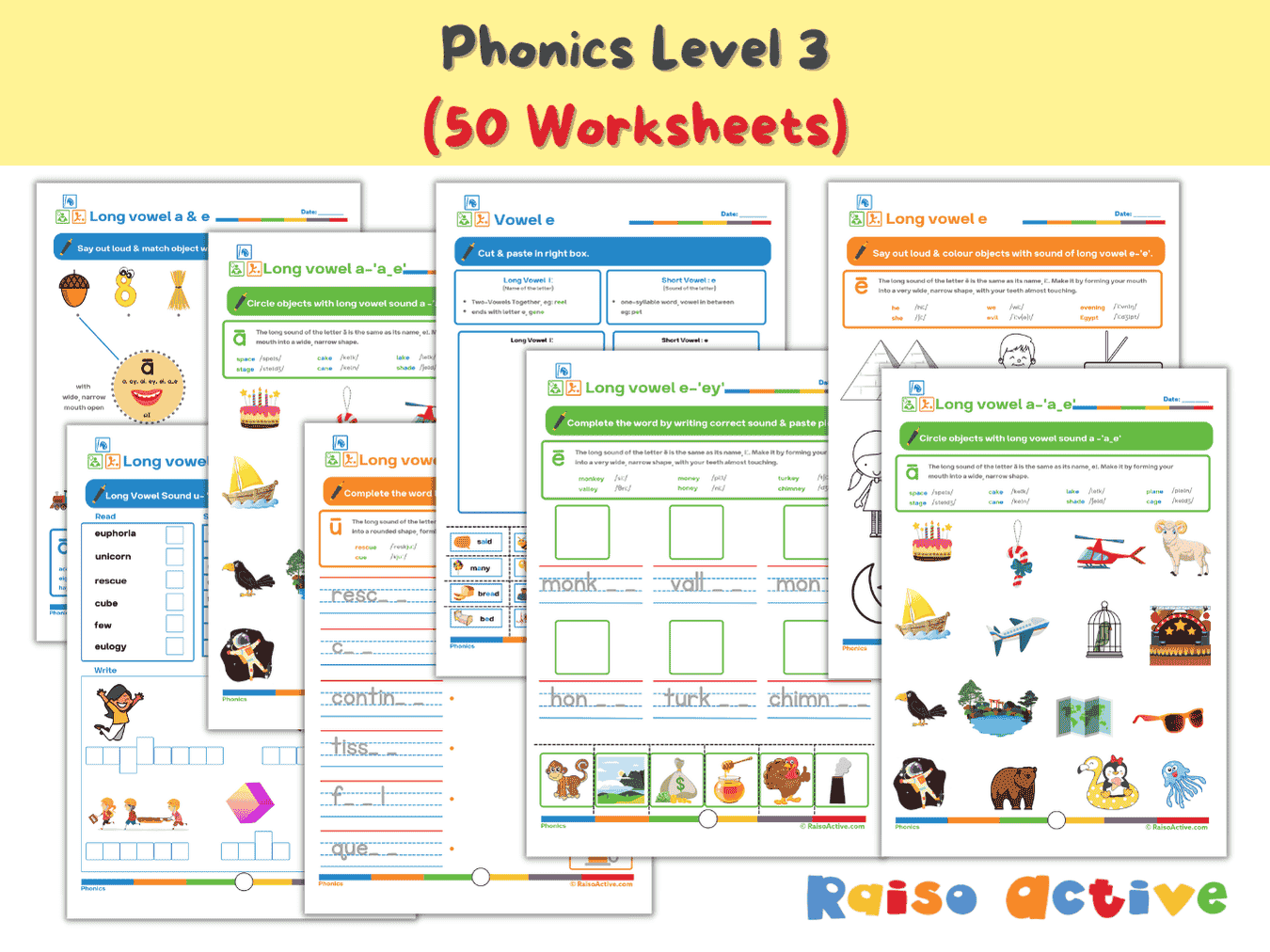
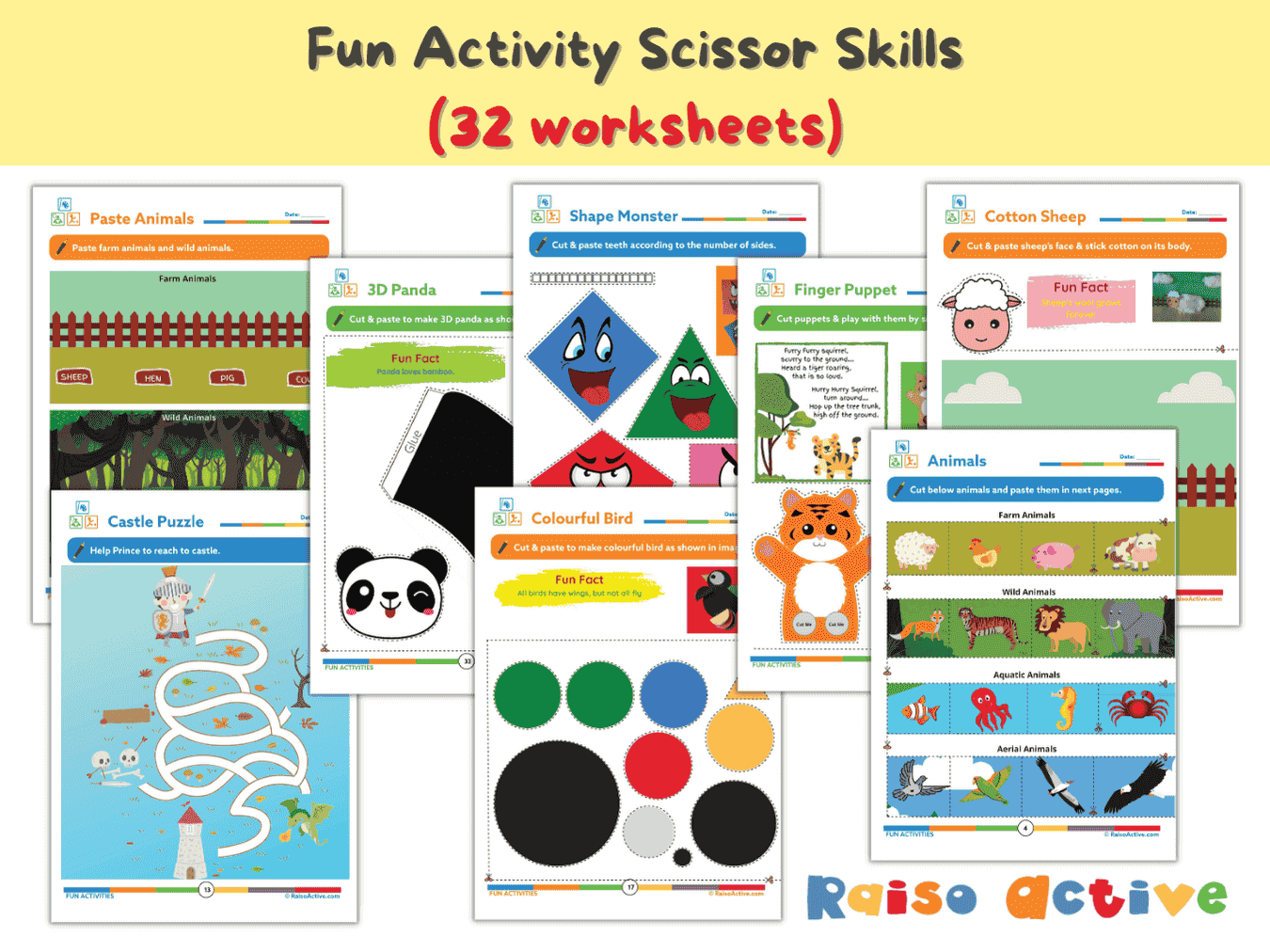
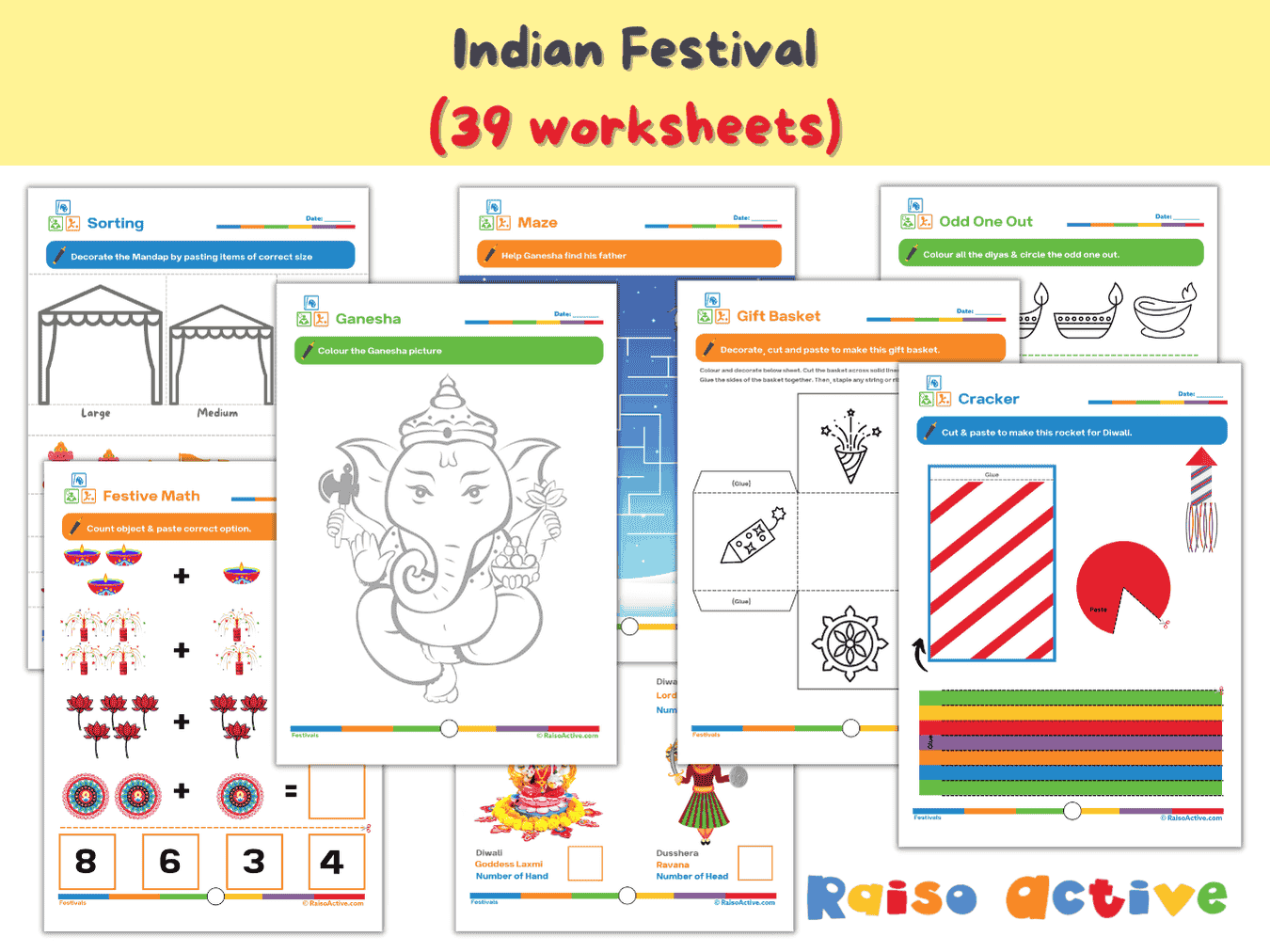
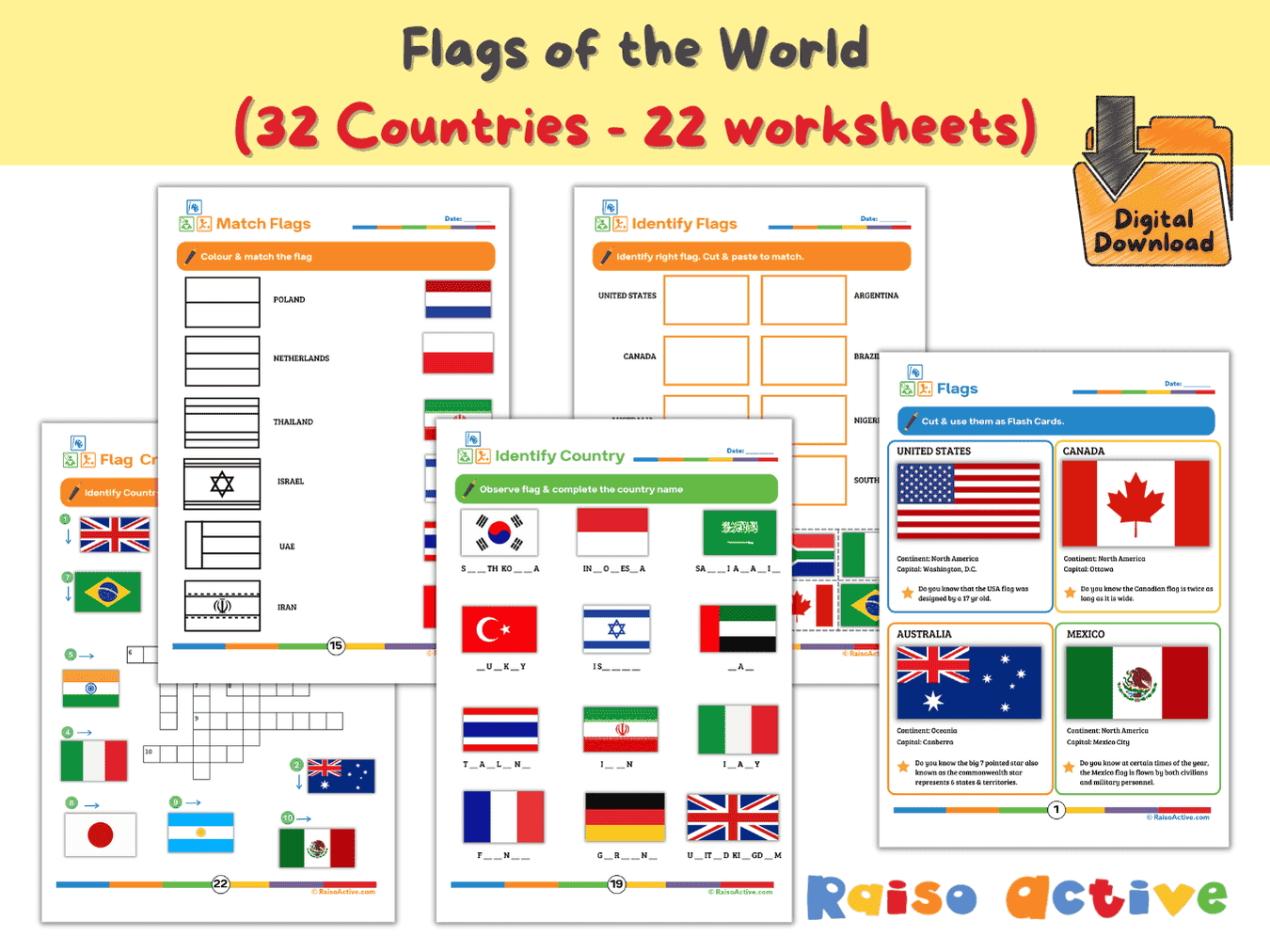
- Printable worksheets are one of the most cost-effective additions to any home learning setup
Why You Do Not Need to Spend a Fortune to Set Up Preschool Learning at Home
Walk into any large toy store or scroll through an online marketplace and you will quickly feel overwhelmed — and perhaps a little alarmed at the prices. Talking robots, electronic learning tablets, programmable toys, and elaborate STEM kits line the shelves, each promising to give your child a head start. Here is the truth that experienced early childhood educators quietly know: young children learn best with simple, open-ended materials that they can touch, manipulate, and use imaginatively.
A ₹30 box of wax crayons and a stack of recycled paper will do more for your 3-year-old's fine motor development, creativity, and pre-writing readiness than a ₹3,000 electronic drawing tablet. Playdough made at home from flour, salt, and food colour costs almost nothing and provides hours of rich sensory, creative, and language-building play. The goal of this guide is not to send you on an expensive shopping spree — it is to help you make intentional, affordable choices that genuinely support how young children learn.
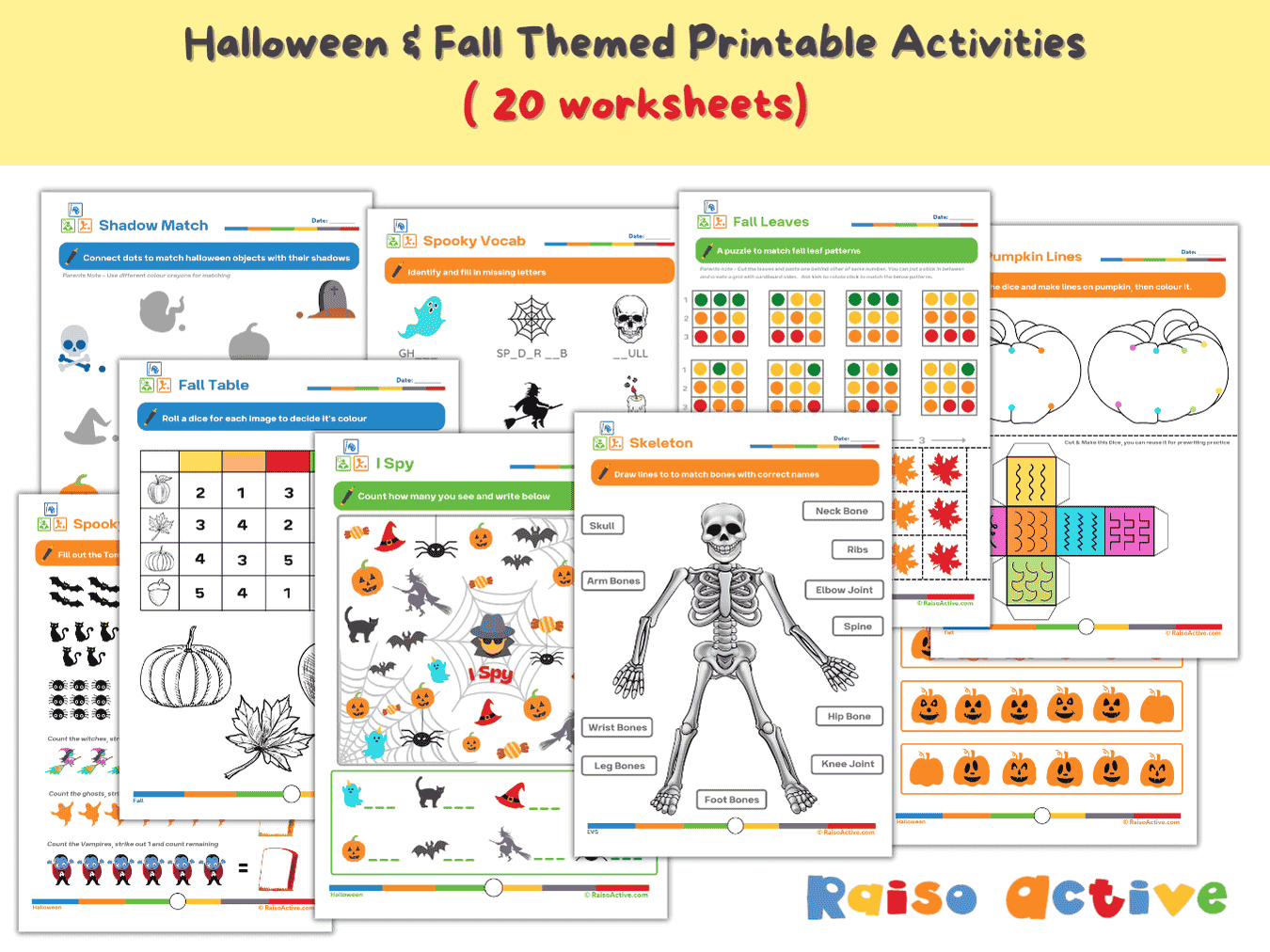
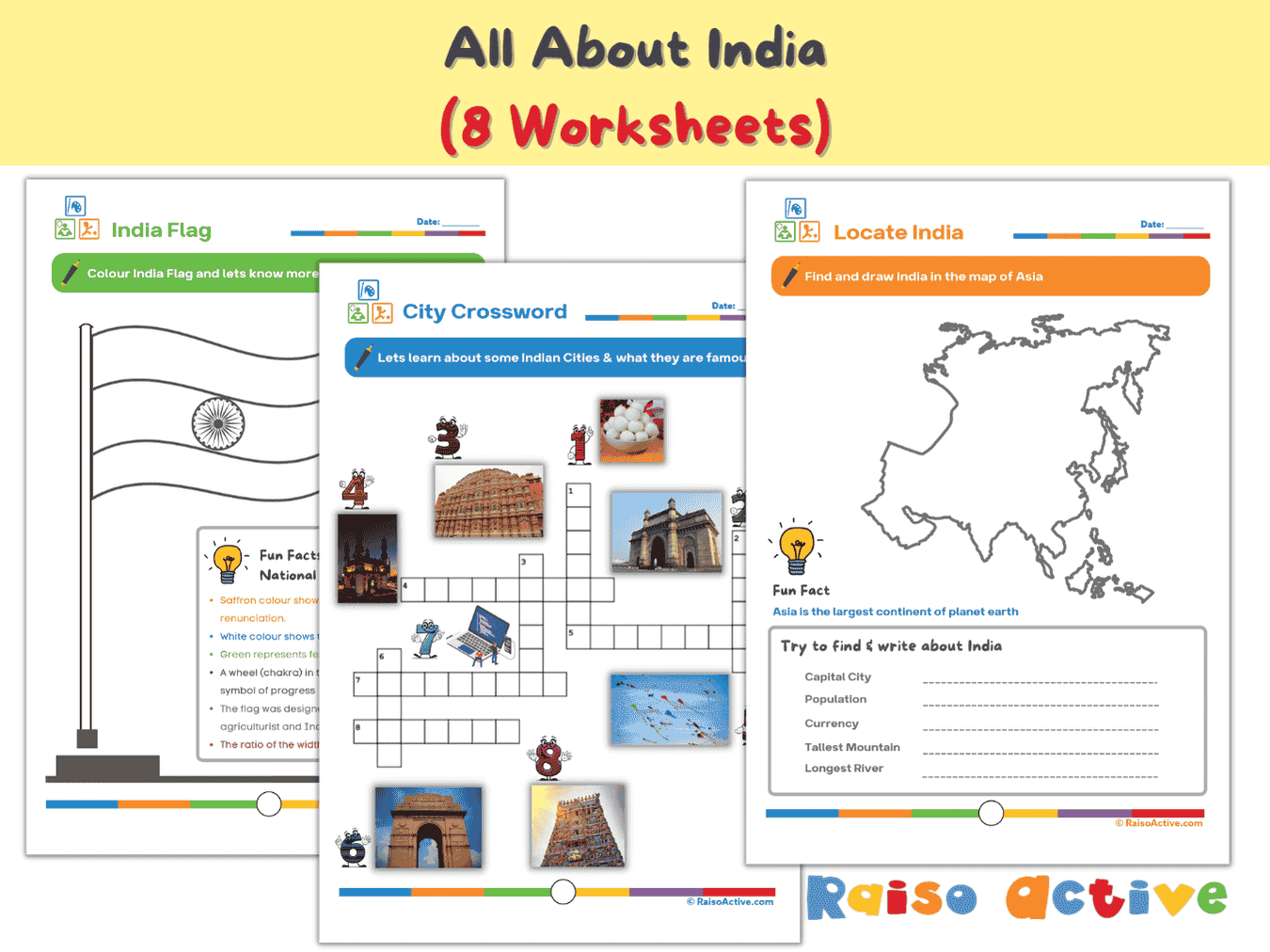
Free Printable Worksheets for Home Learners
Subscribe to RaisoActive and get instant access to hundreds of printable worksheets designed for Indian preschoolers — a cost-effective way to build your home learning toolkit.
The Absolute Basics: What Every Home Learning Space Needs
Start here. These are the materials that form the backbone of preschool learning at home. If you have these, you have everything you need to run a genuinely rich early learning programme for your child.
Paper is the single most versatile material you own. White A4 paper, construction paper in multiple colours, and old newspapers all have a place. Use paper for drawing, painting, cutting, folding, tearing (great for fine motor skills!), printing worksheets, and craft projects. Buy in bulk from your local stationery shop — a 500-sheet ream of A4 paper costs around ₹150–200 and lasts months.
Wax crayons are far better than felt-tip markers for very young children because they require more pressure to use, which strengthens hand muscles and prepares children for pencil grip. Look for thick, chunky crayons for children under 3, and standard-sized crayons for ages 3 and above. Brands like Camlin and Kokuyo Camlin are widely available at any stationery shop across India for ₹30–80 a box.
Pencils — both standard HB and coloured — are essential from around age 3.5 to 4 onwards, when children begin pre-writing practice. A triangular grip pencil (available at most stationery shops) naturally encourages the correct three-finger pinch grip without any additional aid. Keep a small pencil sharpener handy and teach children to use it — it is excellent for fine motor development!
Child-safe scissors with rounded tips are a non-negotiable for the preschool years. Cutting is one of the most important fine motor activities for this age group, strengthening the small hand muscles needed for writing. Look for scissors specifically labelled for children aged 3+. Brands like Faber-Castell and Staedtler make excellent options available on Amazon India for ₹80–150. Always supervise cutting activities and teach scissor safety from the very first use.
Glue sticks (not liquid glue) are the safest choice for young children as they are non-toxic and less messy. Use them for collage work, craft projects, and sticking cut-out shapes. Fevistik makes a reliable, affordable glue stick widely available across India. Keep liquid Fevicol handy for the parent to use when a stronger bond is needed.
Maths Manipulatives: Building Number Sense Through Touch
Young children are concrete learners — they understand mathematical concepts by handling physical objects long before abstract numbers on a page make sense. Manipulatives are hands-on maths tools, and they are genuinely transformative for preschool maths learning.
Counting blocks or Duplo bricks — whatever you have at home — are the foundation. Children can count them, sort them by colour, build towers and compare heights, and use them for simple addition and subtraction. If you do not have branded blocks, small stones from the garden, dried beans, or bottle caps work just as well for counting activities.
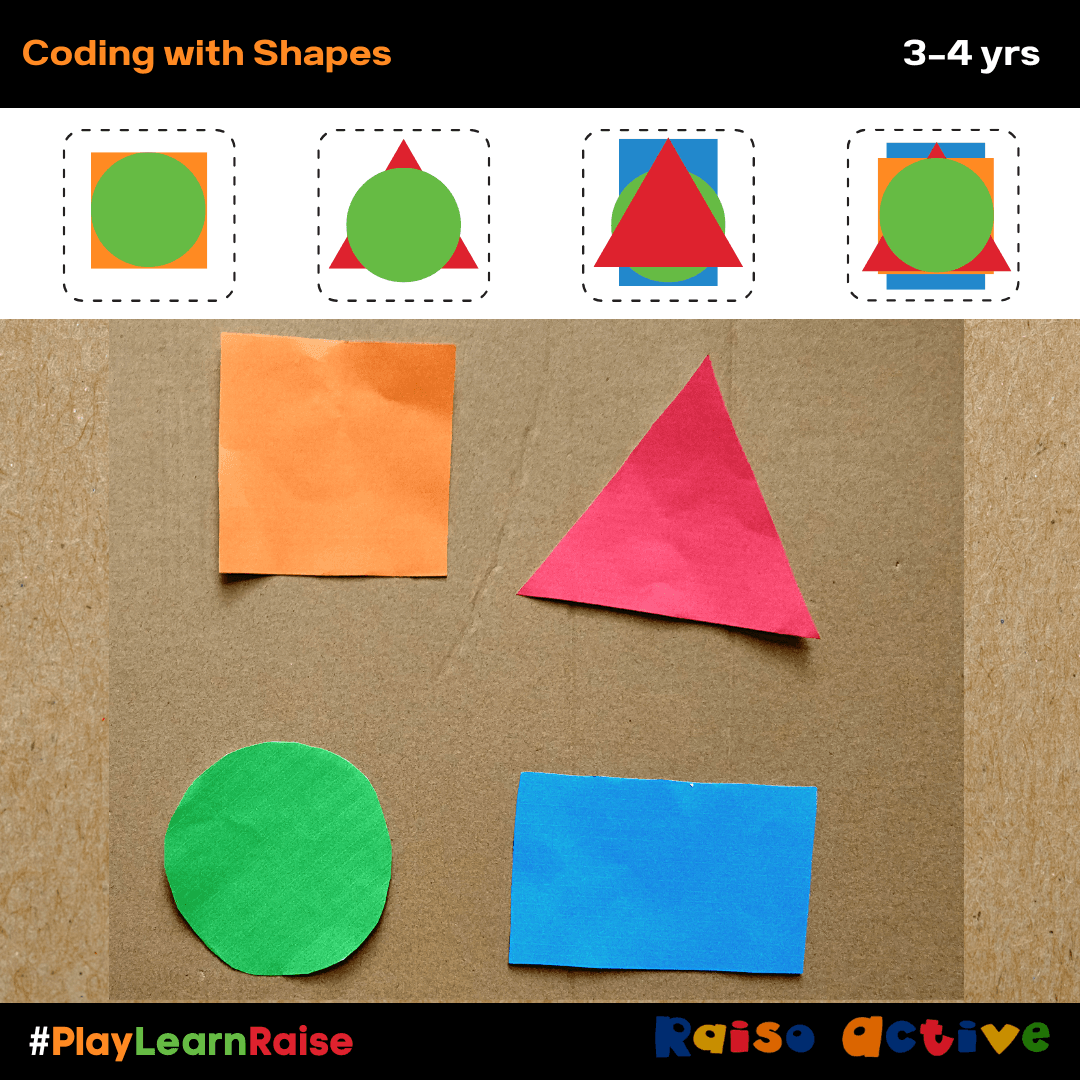
Pattern blocks — flat wooden or plastic shapes in standard colours (hexagons, triangles, squares, rhombuses) — are brilliant for shape recognition, pattern making, and spatial reasoning. They are available on Amazon India and FirstCry for around ₹300–500 for a good set. These will be used from ages 3 to 6 and beyond.
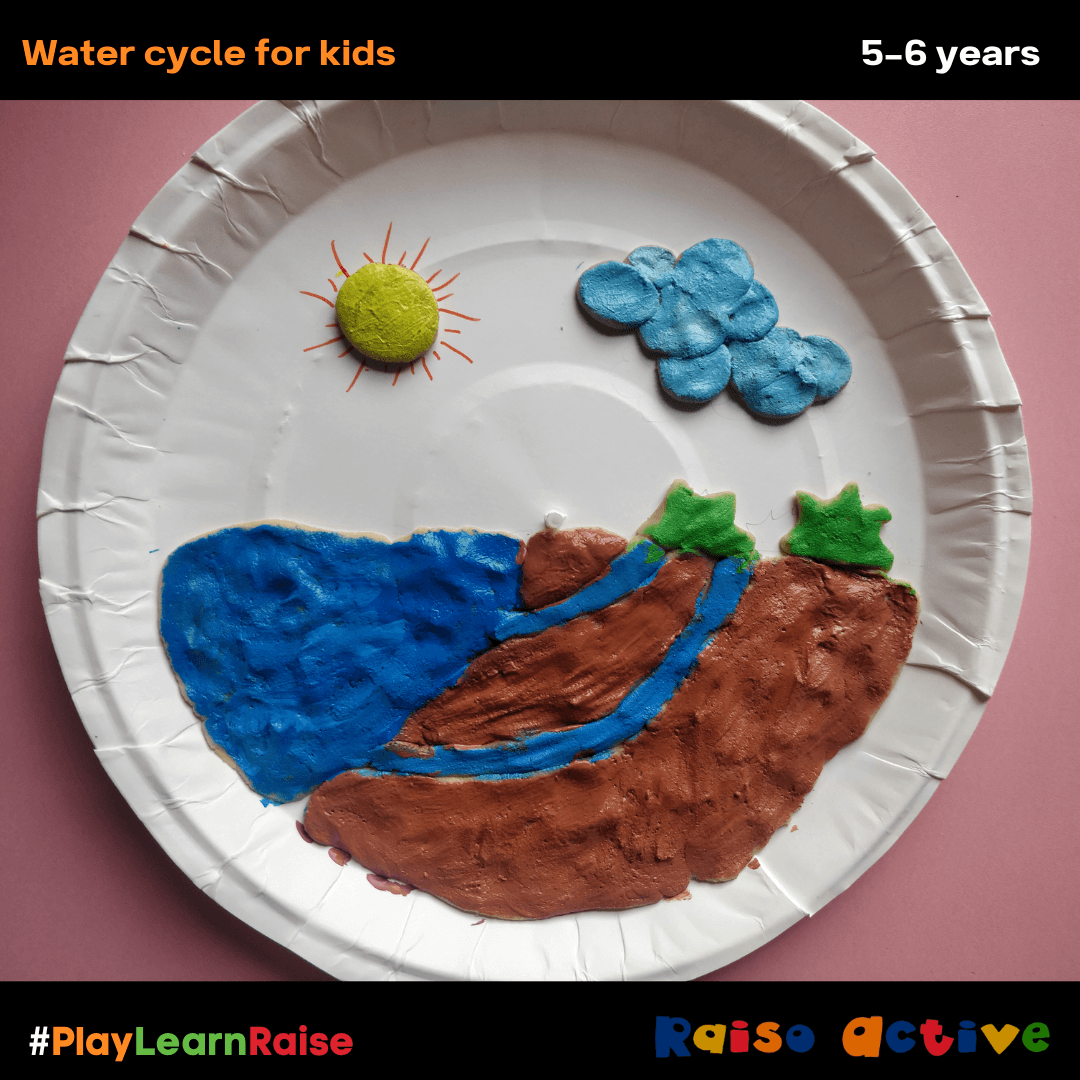
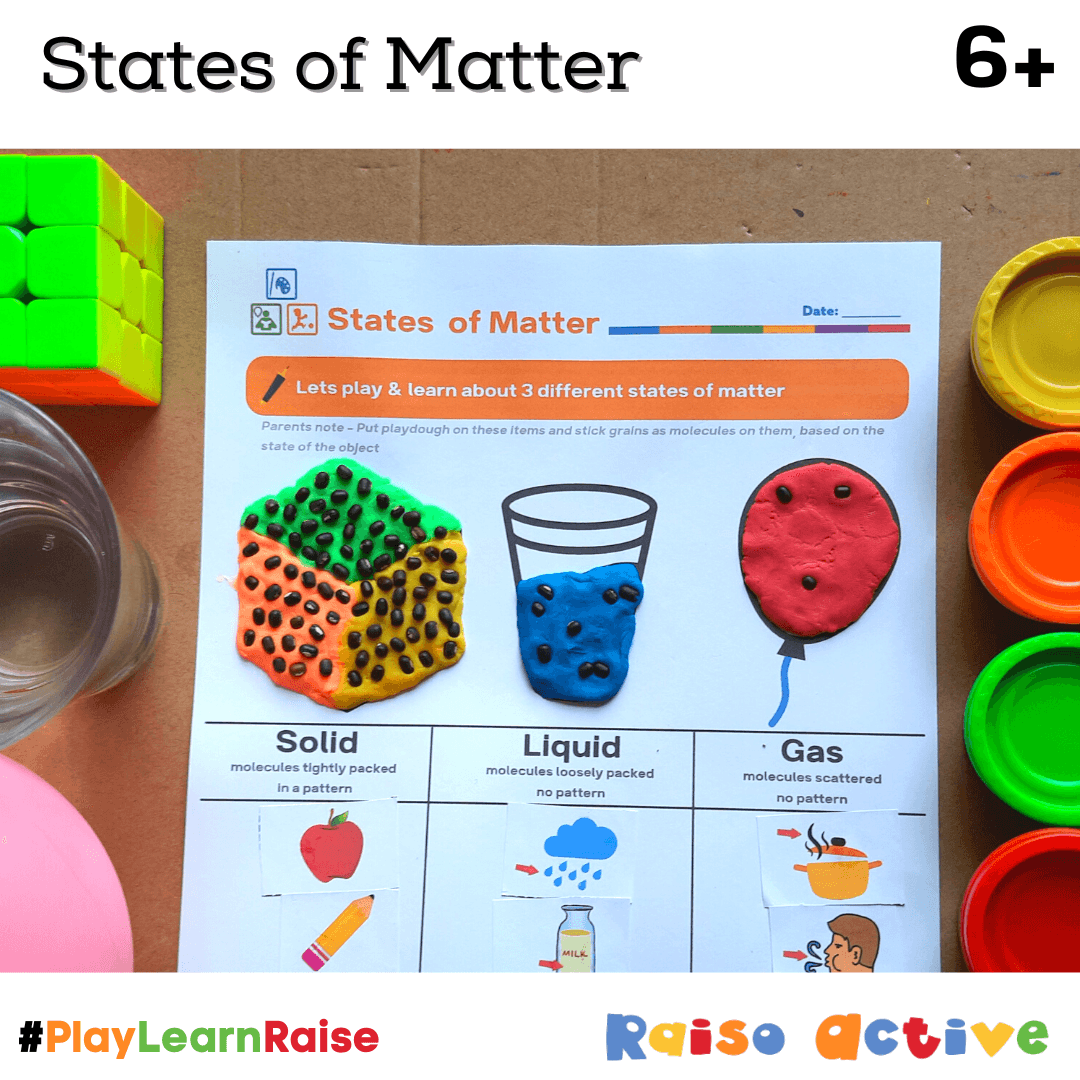
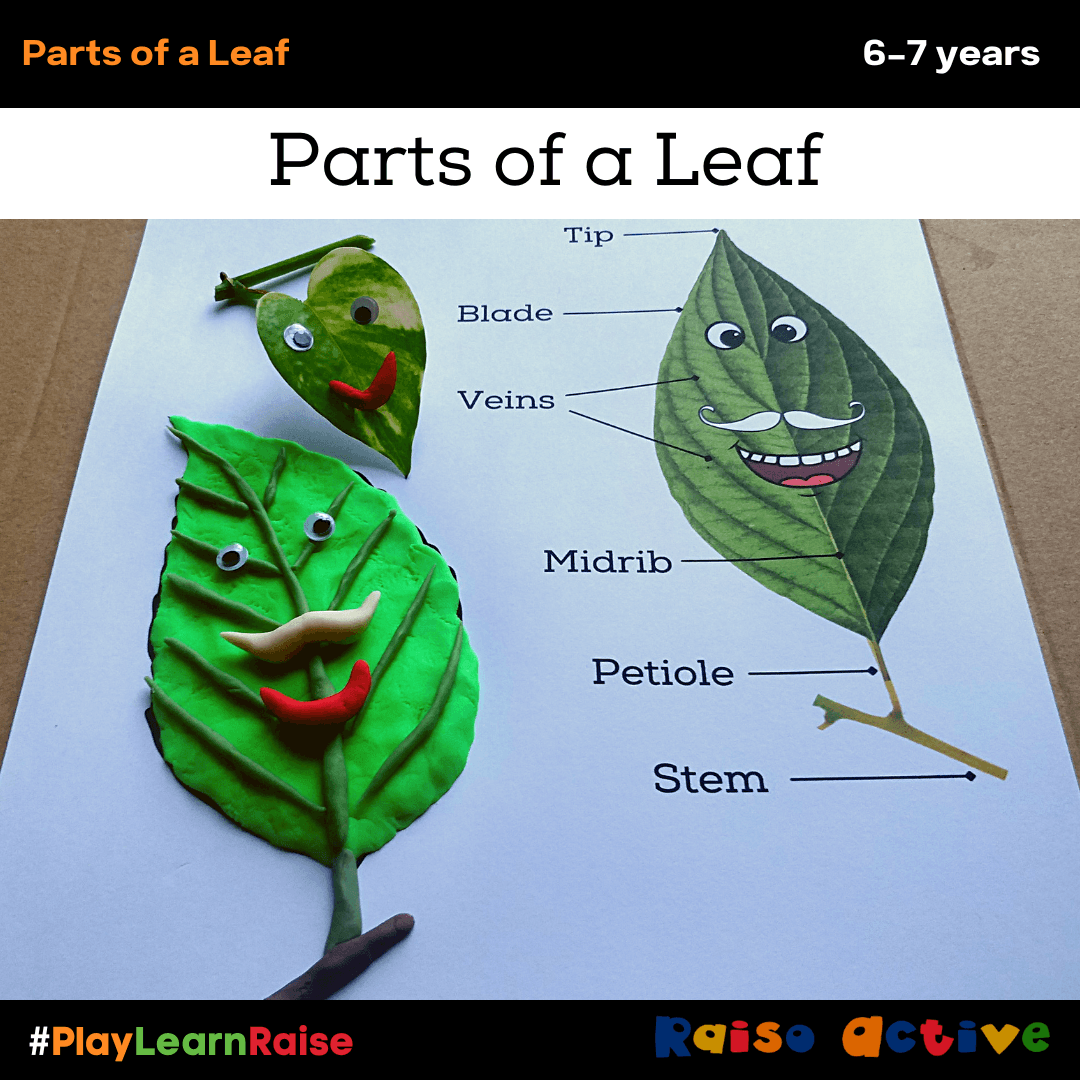
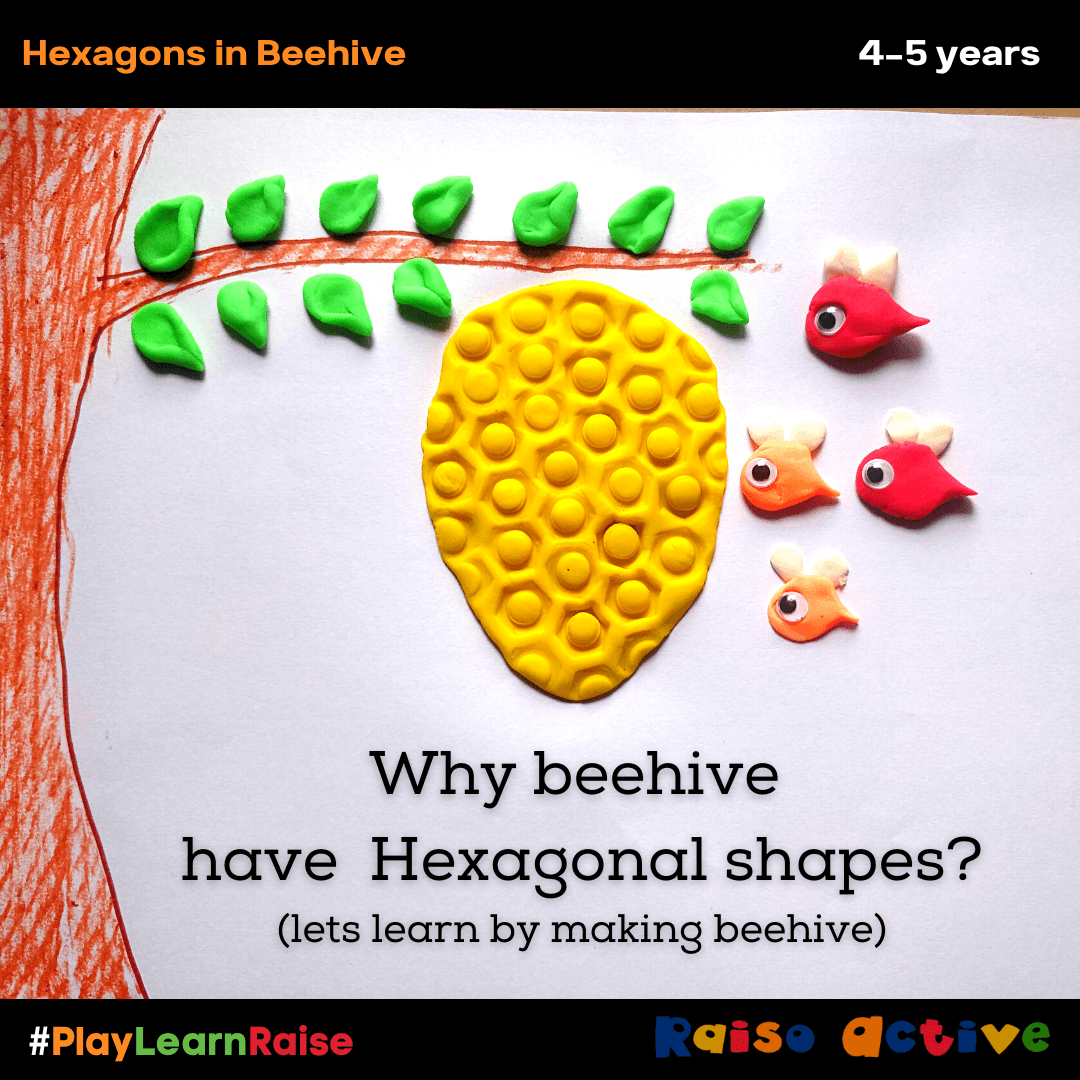
Playdough deserves a special mention as a maths manipulative. Children can roll snakes and compare lengths, press in number stamps, form shapes, and practise one-to-one correspondence by pressing small objects (beads, seeds) into the dough. Make your own at home: mix 2 cups flour, 1 cup salt, 2 tablespoons cream of tartar (or vinegar), 2 tablespoons oil, and 1.5 cups boiling water. Add food colouring and knead. It lasts weeks in an airtight container.
💡Everyday Objects Make the Best Manipulatives
- Dried rajma, chana, or moong dal are perfect for counting, sorting, and sensory play
- Bottle caps in different colours make excellent sorting and counting tokens
- Old bangles and rubber bands can be sorted by size and colour
- Ice cube trays are brilliant for sorting small objects into compartments
- All of these cost nothing and are already in your home
Reading Materials: Building a Love of Books from the Start
Reading aloud to children is the single highest-impact literacy activity you can do at home — and it costs almost nothing if you use your local library or borrow from friends. That said, having a small collection of books your child can return to again and again has real value.
Picture books with rich illustrations and simple text are the gold standard for ages 2–5. Look for books where the illustrations carry as much meaning as the words. Indian publishers like Tulika Books, Karadi Tales, and Pratham Books publish wonderful picture books featuring Indian settings, characters, and contexts. Many Pratham Books are also available free on the StoryWeaver platform online.
Alphabet cards and number cards are simple, affordable tools that make a big difference when displayed at the child's eye level. You can buy laminated sets at any stationery shop for ₹50–100, or print and laminate them at home. Point to letters and numbers naturally throughout the day rather than drilling — keep it conversational and playful.
Magnetic letters and numbers on a whiteboard or refrigerator door allow children to touch, rearrange, and explore letters in a hands-on way. Available at FirstCry and Amazon India for around ₹200–350 for a full set. These are excellent for children who are beginning to recognise letters but are not yet ready for pencil-and-paper letter work.
Art Supplies: Creativity That Builds Academic Skills
Art is not a nice extra in early childhood — it is core to development. Drawing, painting, and crafting build fine motor skills, self-expression, creative thinking, and the hand-eye coordination that underpins writing. Here is what to stock.
Finger paints are ideal for children under 4 as they bypass the challenge of brush control and allow children to explore colour mixing directly with their hands. Camel and Faber-Castell make non-toxic finger paint sets available across India for ₹150–300. Lay down an old newspaper or a plastic sheet, roll up sleeves, and let the exploration begin.
Watercolour sets are excellent from age 4 onwards when children can manage a paintbrush. They teach colour mixing, brush control, and cause-and-effect (more water = lighter colour). Camlin watercolour cakes are an Indian classic for good reason — affordable, widely available, and surprisingly durable. A good set costs ₹80–150.
Chalk — both white and coloured — is wonderful for outdoor art, large-scale drawing, and practising letter and number formation on the ground without the pressure of paper and pencil. A box of coloured chalk costs ₹30–50 and lasts a very long time.
⚠️Art Safety for Young Children
- Always check that paints, crayons, and playdough are labelled non-toxic and safe for children
- Supervise all art activities for children under 4 — small items like beads and buttons are choking hazards
- Avoid glitter with children under 3 as fine glitter can cause eye irritation
- Store scissors safely out of reach when not in use, even child-safe ones
- Test all art materials on a small patch of skin before use on children with sensitive skin or eczema
Sensory Bin Materials: Learning Through the Senses
A sensory bin is simply a container filled with a base material and small objects to explore. Sensory play builds language (children narrate what they feel and find), fine motor skills (scooping, pouring, pinching), and scientific thinking (comparing textures, weights, and properties). And it is almost entirely free if you use materials from your kitchen and garden.
Use a large plastic tub, a washing-up basin, or even a deep baking tray as your container. For the base, try: rice, sand, dried dal, oats, shredded paper, dried leaves, or water. Add small objects for exploration: spoons and cups for pouring, small toy animals, stones, shells, or seasonal items (flower petals during Holi, small diyas at Diwali). Change the sensory bin theme every week or two to maintain interest.
🎨Sensory Bin Ideas Using Indian Kitchen Staples
- Rice bin: fill with uncooked rice, hide small coins or buttons for children to find — great for counting too
- Dal sorting: mix two types of dal (like masoor and chana) and ask your child to sort them into cups
- Flour cloud dough: mix 8 cups flour with 1 cup oil — it clumps when squeezed and crumbles when released
- Spice exploration (supervised): small amounts of dried spices like jeera or ajwain for smell-based sensory exploration
- Water play: a basin of warm water with a few drops of food colour, cups, spoons, and small containers
Setting Up a Dedicated Learning Space on a Budget
You do not need a separate room or expensive furniture to create an effective home learning space. What you need is a consistent, organised corner that signals to your child: this is where we learn. Even a small coffee table with two cushions can serve as a perfectly functional learning station.
The key is organisation at the child's level. Keep supplies in low baskets, trays, or small bins that your child can access independently. When children can get their own crayons, choose their own paper, and put things away themselves, they develop autonomy and a sense of ownership over their learning. IKEA-style storage from Pepperfry or local furniture markets, or even old masala tins, work beautifully as supply holders.
Display your child's artwork on a wall-mounted cord with pegs (a simple washing line at child height), keep a small shelf for books at browsing height, and put up an alphabet or number chart where your child can easily see it. These small touches create an environment that communicates learning is valued here without spending a great deal.
Key Takeaway
A dedicated learning corner — even a very small one — tells your child that their learning matters and creates a positive association with focused work.
Children who have a consistent, organised space for learning tend to transition into learning activities more smoothly because the environment itself becomes a cue. The space does not need to be large or expensive — consistency and accessibility matter far more than size or cost.
75% of brain development happens before age 6
Research from the Harvard Center on the Developing Child shows that the architecture of the brain is most rapidly built during the early years. High-quality sensory experiences, hands-on exploration, and language-rich interactions during this window have lifelong effects on learning capacity — all achievable with simple, affordable materials at home.
Source: Harvard Center on the Developing Child, 2020
Where to Buy Supplies Affordably in India
You absolutely do not need to shop at premium toy stores or import expensive materials. Here is where Indian parents can find excellent quality supplies at reasonable prices.
Your local stationery shop (the old-fashioned kind on your street or in your nearest market) is genuinely your best friend for the basics: paper, pencils, crayons, glue sticks, rulers, erasers, scissors, and chalk. Brands like Camlin, Faber-Castell, and Staedtler are widely stocked and offer excellent quality at very fair prices. Building a relationship with your local stationery shop owner also means you can often ask for bulk discounts.
Amazon India is ideal for slightly more specialised items: pattern blocks, magnetic letters, watercolour sets, child-safe scissors, and sensory bin containers. Use the filter to sort by price and check 'sold by Amazon' for reliable delivery. Most items arrive within 2–4 days even in smaller cities.
FirstCry is particularly strong for art and craft supplies, playdough, and educational toys. They run frequent sales and have a wide range of Indian and international brands. Their 'FirstCry Intellikit' subscription boxes can be good value if you want a curated monthly delivery of age-appropriate materials.
D-Mart and Big Bazaar stock Camlin and Faber-Castell art supplies at very competitive prices, especially during back-to-school season. Local stationery wholesale markets in cities like Chandni Chowk (Delhi), Crawford Market (Mumbai), and Commercial Street (Bangalore) are excellent for buying in bulk at wholesale rates.
Key Takeaway
Skip the expensive electronic learning gadgets. The research is clear: open-ended, hands-on materials produce far better learning outcomes for children under 6 than screen-based tech toys.
Electronic toys with pre-programmed responses limit creative thinking because they do the imagining for the child. A simple set of blocks, some playdough, and a box of crayons invite the child to create, invent, and problem-solve independently — which is where real learning happens. Save the screen time for carefully chosen, parent-co-viewed content and protect hands-on play time.
Open-ended toys develop 54% more language
A study published in JAMA Pediatrics found that children playing with open-ended toys (blocks, figures, playdough) produced 54% more language and vocalisations than children playing with electronic toys — demonstrating that simpler materials drive richer cognitive engagement.
Source: JAMA Pediatrics, 2019
👋Budget-Friendly Supplies You Can Make at Home
- Playdough: flour, salt, cream of tartar, oil, and food colour — costs less than ₹30 and lasts weeks
- Sensory bin base: uncooked rice from your kitchen is completely free
- Finger paint: mix cornflour with water and food colour for a completely safe, edible-grade paint
- Sand tray for letter practice: a shallow tray filled with fine sand lets children trace letters with their finger
- Lacing cards: punch holes around a printed picture and thread with a shoelace — brilliant for fine motor skills
Key Takeaway
Printable worksheets are one of the most cost-effective additions to your home learning toolkit — a single A4 printout can provide 15–20 minutes of meaningful, skill-building activity.
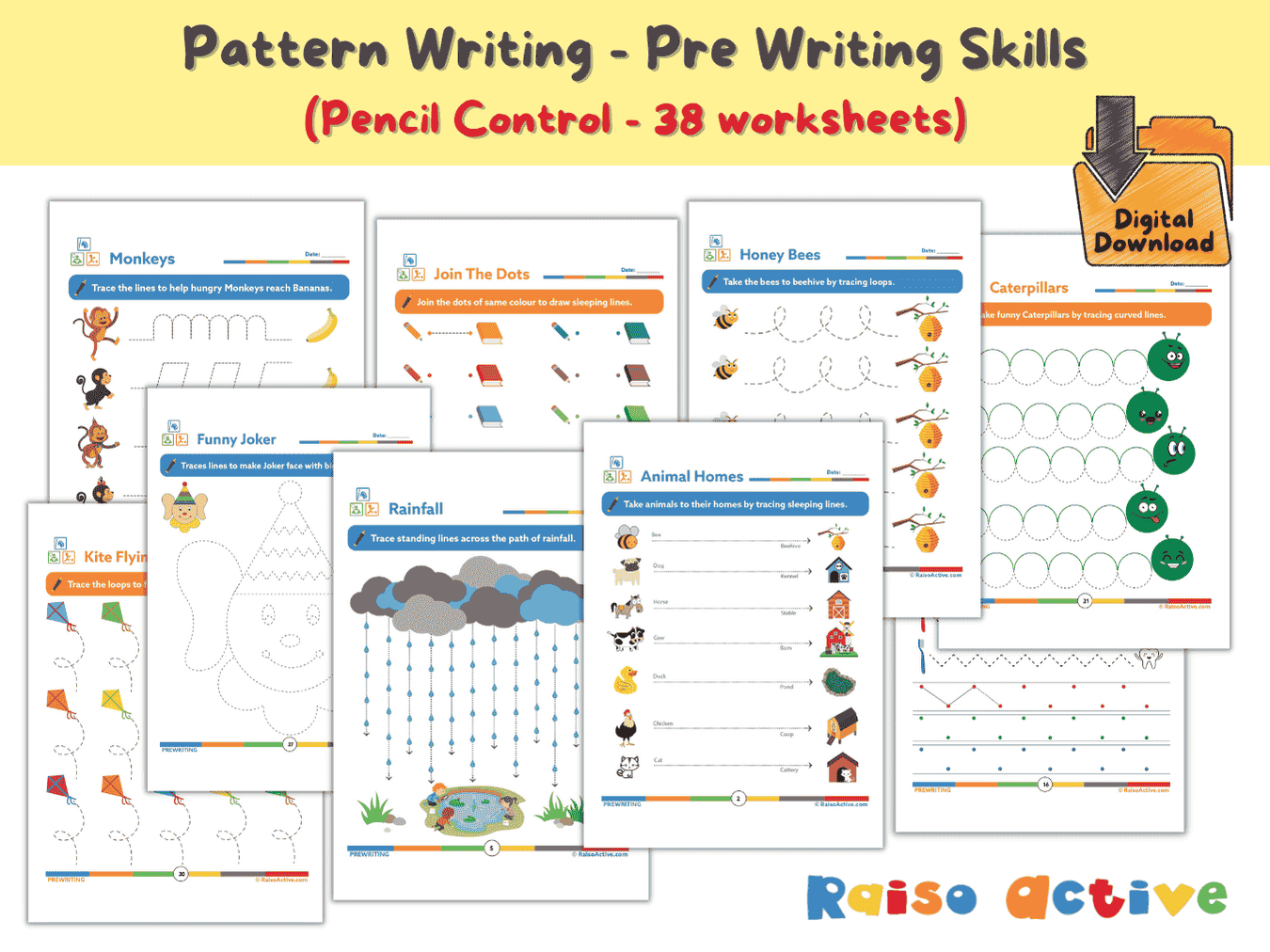
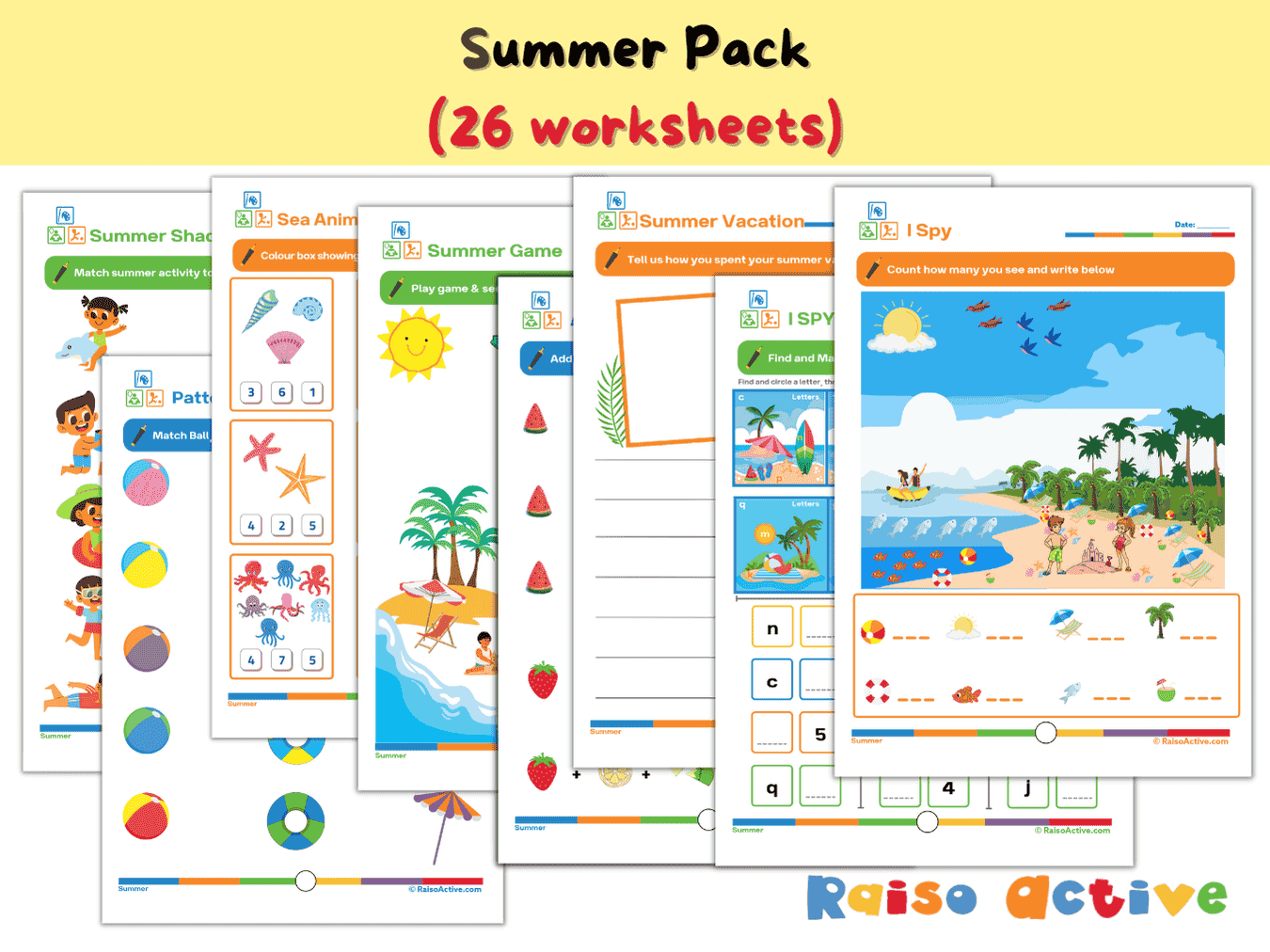
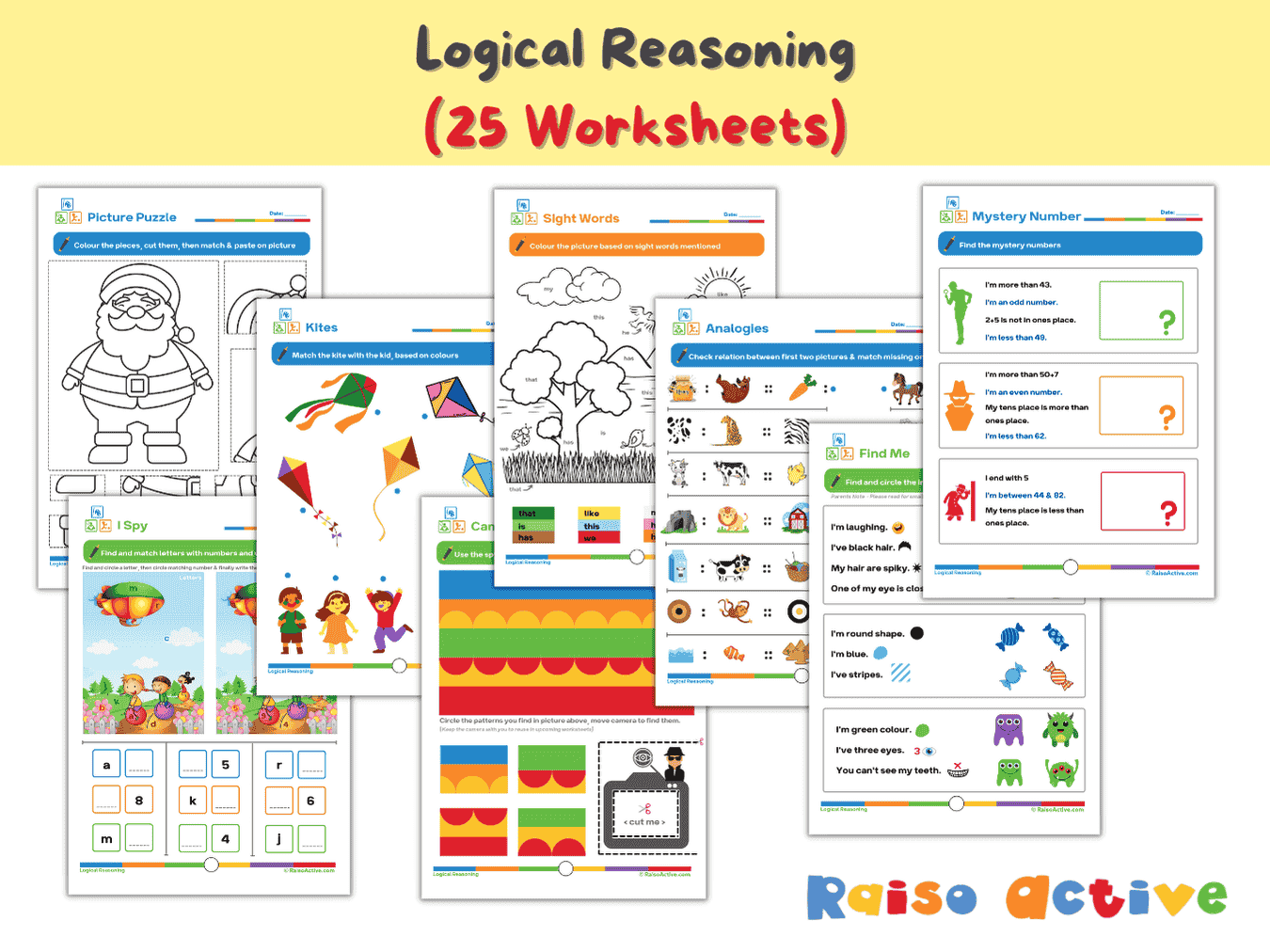
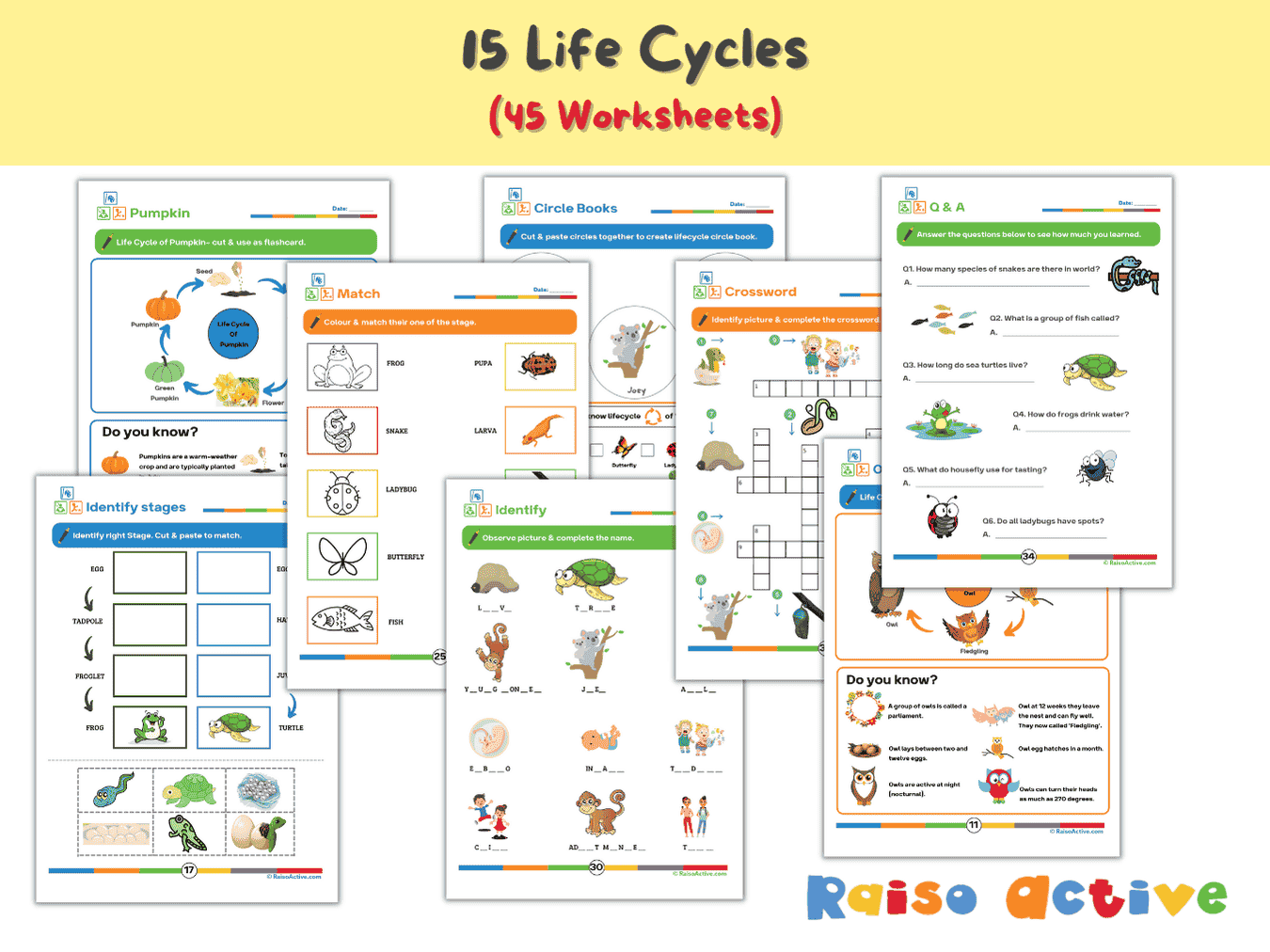
When chosen thoughtfully, worksheets build pencil control, letter and number recognition, fine motor skills, and logical thinking. The key is to use them as one tool among many — not as the whole programme. At RaisoActive, our worksheets are designed specifically for Indian children and cover pre-writing, tracing, phonics, maths, and creative activities.
How to Set Up Your Home Learning Space Step by Step
1
Choose a consistent location
Pick a spot that your child will use for learning activities every day — a corner of the living room, a low table in their bedroom, or even a dedicated spot at the dining table. Consistency matters more than size. The same spot every day builds a powerful mental association between the space and focused learning.
2
Get the basics first
Before buying anything else, stock your learning corner with the absolute essentials: A4 paper, wax crayons, HB pencils, a glue stick, and child-safe scissors. These five items unlock an enormous range of activities and cost less than ₹200 total from any local stationery shop.
3
Add one set of manipulatives
Choose one set of maths manipulatives to start: counting blocks, pattern blocks, or simply a bag of dried beans for counting. You do not need all three. Use what you have — bottle caps, stones, or bangles work just as well for sorting and counting activities.
4
Create a small book basket
Gather 5–10 picture books and place them in a low basket or on a small shelf at your child's eye level so they can browse independently. Rotate books every 2–3 weeks to keep things fresh. Visit your local library, swap with other parents, or look for second-hand books at book fairs and online.
5
Set up an art station
Dedicate one small tray or basket to art supplies: crayons, watercolours, finger paint, and paper. Keep it accessible so your child can choose to draw or paint independently during free time. Cover the table with an old newspaper or a wipeable mat to protect the surface.
6
Add a sensory bin
Fill a large plastic tub or basin with a base material (rice, sand, or dried dal) and add a few small objects to explore. Change the contents every week or two. Store the bin on a low shelf when not in use and bring it out for dedicated sensory play time.
7
Print a batch of worksheets
Print 10–15 worksheets appropriate for your child's current level and store them in a simple folder. This gives you a ready supply of structured learning activities for days when you want guided work. Rotate the topics — include pre-writing, tracing, maths, and creative colouring sheets.
Worth Buying
- +Wax crayons (Camlin, Faber-Castell)
- +Child-safe scissors with rounded tips
- +Watercolour set
- +Pattern blocks or counting tokens
- +Picture books (Tulika, Pratham, Karadi Tales)
- +Magnetic letters and numbers
- +Playdough (homemade or store-bought)
- +Printable worksheets
- +Sensory bin with kitchen materials
Worth Skipping
- -Electronic learning tablets for under-5s
- -Expensive branded STEM kits
- -Talking learning robots
- -Flashcard machines
- -Subscription boxes you will barely use
- -Branded playdough at high prices (make your own)
- -Elaborate craft kits with pre-set outcomes
- -Workbooks that drill rather than explore
- -Any toy that does the thinking for the child
Unlimited Access
Get Hundreds of Printable Worksheets for Your Home Learning Corner
Subscribe to RaisoActive for instant access to our full library of printable worksheets designed for Indian children ages 1–8. Pre-writing, tracing, phonics, maths, crafts, and more — the most cost-effective addition to any home learning setup.
All worksheets & activitiesNew content weeklyDownload unlimited times
Subscribe NowFrequently Asked Questions
How much should I budget for preschool learning supplies in India?
You can set up a genuinely excellent home learning space for under ₹1,000–1,500 if you are starting from scratch. The basics (paper, crayons, pencils, scissors, glue) cost around ₹200 from a local stationery shop. A set of pattern blocks or counting tokens costs ₹300–500. Watercolours and finger paint add another ₹200–300. Homemade playdough and sensory bins using kitchen materials cost almost nothing. After the initial setup, your ongoing monthly cost is mainly paper and any new books or worksheets — easily under ₹200–300 a month.
Is playdough safe for children under 3?
Homemade playdough made from flour, salt, and food colour is non-toxic, but it is not meant to be eaten. Always supervise children under 3 during playdough activities as they may still put things in their mouths. Avoid adding any essential oils or strong spices to homemade playdough. Commercial playdough brands like Play-Doh and Funskool are labelled non-toxic but should still be used under supervision. If your child has a wheat allergy, make playdough with rice flour or cornflour instead.
At what age should I introduce scissors?
Most children are ready to begin learning to use child-safe scissors between the ages of 3 and 3.5 years, when they have developed enough hand strength and coordination. Start with snipping play — cutting strips of play dough or thin paper into small pieces rather than following a line. Progress gradually to cutting along straight lines, then curves, then simple shapes. Always use scissors specifically designed for children with rounded tips, and always supervise. Some left-handed children may benefit from left-handed scissors, which are available on Amazon India.
Do I need to buy name-brand art supplies or will cheaper ones work?
For most preschool art activities, mid-range Indian brands like Camlin work perfectly well and represent excellent value. The most important thing is that paints and crayons are labelled non-toxic and age-appropriate. For a few specific items — child-safe scissors and watercolour sets — spending slightly more on a Faber-Castell or Staedtler product is worth it for durability and quality. Avoid the very cheapest off-brand art supplies as they can be low quality and sometimes contain harmful dyes.
My child is not interested in sitting at a table for learning activities. What can I do?
This is very normal, especially for children under 4. Young children learn best through movement and exploration, not by sitting still. Try taking the learning off the table: do maths activities on the floor with blocks, let your child paint at an easel or on a vertical surface (taped to a wall), use chalk on the ground outdoors, or do sensory bin activities standing up. Floor-based learning is completely valid and often more engaging for active children. As children approach 4–5, they naturally develop more capacity for seated activities — do not rush it.
Are printable worksheets appropriate for preschoolers?
Yes, when chosen thoughtfully and used as one tool among many. The best worksheets for preschoolers are open-ended, developmentally appropriate, visually appealing, and short (a single activity per page). They should invite exploration rather than demand perfection. Avoid worksheets that are repetitive, drill-based, or that ask children to produce neat, uniform output — these are not appropriate for this age. Good worksheets support tracing, matching, colouring with purpose, cutting practice, and simple pattern work. At RaisoActive, our worksheets are specifically designed with early childhood development principles in mind.