Art & Creativity, Early Learning, Parenting & Homeschool
Christmas and Winter Activities That Combine Fun and Learning: Creating Magical Educational Experiences
Author
RaisoActive - Kids Activities and Fun Learning
Date Published
Reading Time
8 min read

In This Article11 min read
- Christmas and winter are among the richest seasons for weaving learning into everyday festivities — from counting ornaments to writing letters to Santa
- Simple crafts like snowflake cutting, wreath making, and reindeer tracing build fine motor skills that directly support early writing development
- Seasonal themes increase engagement and motivation: children learn more willingly when activities feel joyful and purposeful
- Both Christmas and the broader winter season offer globally relevant opportunities — relevant to children in India celebrating the holiday spirit, winter school concerts, and New Year festivities
- Printable worksheets and hands-on activities together create a powerful learning duo that suits both home and classroom settings
Why Christmas and Winter Activities Make Such Powerful Learning Moments
There is something genuinely magical about December. Children feel it — the excitement, the anticipation, the warmth of lights and decorations — and that heightened emotional state is actually one of the best conditions for learning. When children are engaged and emotionally invested, they absorb new skills faster, remember more, and ask better questions.
Christmas and winter activities offer a natural bridge between celebration and education. Counting the ornaments on a tree is maths. Writing a letter to Santa is literacy. Cutting out a snowflake is fine motor development. Making a paper wreath is art, symmetry, and colour theory all at once. The beauty is that children rarely notice they are learning — they are simply having the best time.
In India, Christmas is widely celebrated across schools, malls, and communities, often as a joyful cultural moment that transcends religious boundaries. Winter school concerts, fancy dress as Santa or snowmen, craft fairs, and holiday activity days are a familiar part of December for millions of children across the country. This guide is designed for all families who want to make that festive energy count — turning a wonderful season into an unforgettable learning experience.
Christmas Maths Activities That Make Numbers Sparkle
The festive season is absolutely full of mathematical opportunities. From counting baubles and sorting sweets to measuring ribbon and graphing favourite Christmas songs, numbers are everywhere in December. Here are activities organised by age group:
Ages 2–3: Counting and Sorting with Festive Objects
Toddlers are at the concrete operational stage — they need to touch, handle, and manipulate objects to understand mathematical concepts. Christmas offers some wonderful manipulatives:
🎨Ornament Counting Tray
- Gather 10–15 small, unbreakable ornaments in different colours (wooden or plastic baubles work wonderfully).
- Place numbered cards 1–5 on a tray. Ask your child to put the correct number of ornaments on each card.
- For older toddlers, introduce simple sorting: "Put all the red ones here and all the gold ones there."
- This builds **one-to-one correspondence and colour recognition** — two foundational skills for early maths and literacy.
Ages 3–5: Patterns, Shapes, and Measurement
Preschoolers are ready to explore patterns and early geometry — and Christmas decorations are practically designed for this:
- Christmas bead patterns — Thread alternating red and green beads onto a pipe cleaner to make a bracelet. Ask your child to continue the pattern and describe it (red, green, red, green...).
- Shape ornaments — Cut ornament shapes from cardboard (circles, stars, triangles, squares). Ask children to identify and sort by shape, then decorate each one differently.
- Ribbon measurement — Use a length of ribbon to measure toys, books, and household objects. Compare: "Is the ribbon longer or shorter than this book?"
- Santa beard counting — Draw a simple Santa face and give children cotton balls numbered 1–10. Ask them to glue the correct number of "beard" puffs onto numbered Santa cards.
- Snowman size ordering — Draw or print three snowmen of different sizes. Ask your child to arrange them smallest to largest and describe using comparison language.
Ages 5–8: Operations, Graphs, and Problem-Solving
School-age children can dive into more sophisticated mathematical thinking wrapped in festive themes:
- Christmas shopping maths — Set up a pretend Christmas market with price tags on items. Give children play money and challenge them to buy three items within a set budget.
- Wrapping paper area — Give children a small box and ask them to estimate how much paper they will need to wrap it. Measure, cut, and compare the estimate to reality.
- Christmas graphing — Survey family members: "What is your favourite Christmas activity?" or "What is your favourite Christmas food?" Create a bar graph and discuss the results.
- Advent calendar countdown — Use the Advent countdown to practise subtraction: "There are 24 days until Christmas. We have opened 7 doors. How many days left?"
- Symmetry snowflakes — Fold paper in quarters, cut shapes, and unfold. Identify lines of symmetry and discuss why snowflakes are symmetrical in nature.
Key Takeaway
Christmas maths activities are most effective when they use real, tangible objects children can hold and move.
Ornaments, ribbons, cotton balls, and gift boxes all become powerful maths tools when paired with intentional questions: "How many more?" "Which is heaviest?" "Can you make a pattern?" The festive context provides the motivation; the questions provide the learning.
Literacy Through the Christmas Season: Reading, Writing, and Storytelling
Christmas is a season steeped in stories — from classic picture books to the tales we tell children about reindeer, elves, and the magic of giving. This narrative richness makes December an exceptional month for literacy development. Here is how to harness it:
Building Christmas Vocabulary
The Christmas season introduces children to wonderful new vocabulary: reindeer, chimney, ornament, tinsel, wreath, sleigh, carol, mistletoe, festive, generosity. For younger children, focus on five to eight words with pictures. For older children, challenge them to write sentences or create their own Christmas dictionary.
Writing a Letter to Santa: A Literacy Activity for Ages 4–8
1
Brainstorm together
Talk about what your child might want to say to Santa. Encourage them to think beyond just a wish list — maybe they want to tell Santa something about their year, or ask him a question.
2
Create a rough draft
For younger children (ages 4–5), they can dictate while you write. For ages 5–7, support them in writing simple sentences. For ages 7–8, encourage a full letter with a greeting, body, and sign-off.
3
Focus on letter format
Teach the parts of a letter: date, greeting ("Dear Santa,"), body, closing ("With love,"), and signature. This is a genuine literacy and communication skill.
4
Illustrate the letter
Let children draw a picture to accompany their letter — a self-portrait, their favourite Christmas decoration, or what they imagine the North Pole looks like.
5
Send or display it
If possible, post the letter or display it prominently. The act of writing for a real purpose dramatically increases literacy motivation and pride.
Christmas Storytelling and Creative Writing
For children aged five to eight, Christmas is a rich source of creative writing prompts. Descriptive writing, narrative structure, and imaginative thinking all develop beautifully through seasonal stories:
💡Christmas Story Starters for Young Writers
- "On Christmas Eve, I heard a sound on the rooftop. When I looked out of my window, I saw..."
- "The Christmas star in our tree had a secret. Every night, when the house went quiet, it would..."
- "Rudolph the reindeer had lost his red nose. He had to find it before Christmas morning, so he..."
- "Santa knocked on our door this year. He said he had something very important to tell us: ..."
- For children who find writing difficult, **voice-record their story** and transcribe it together. The storytelling skill is what matters most.
Christmas Crafts for Fine Motor Development
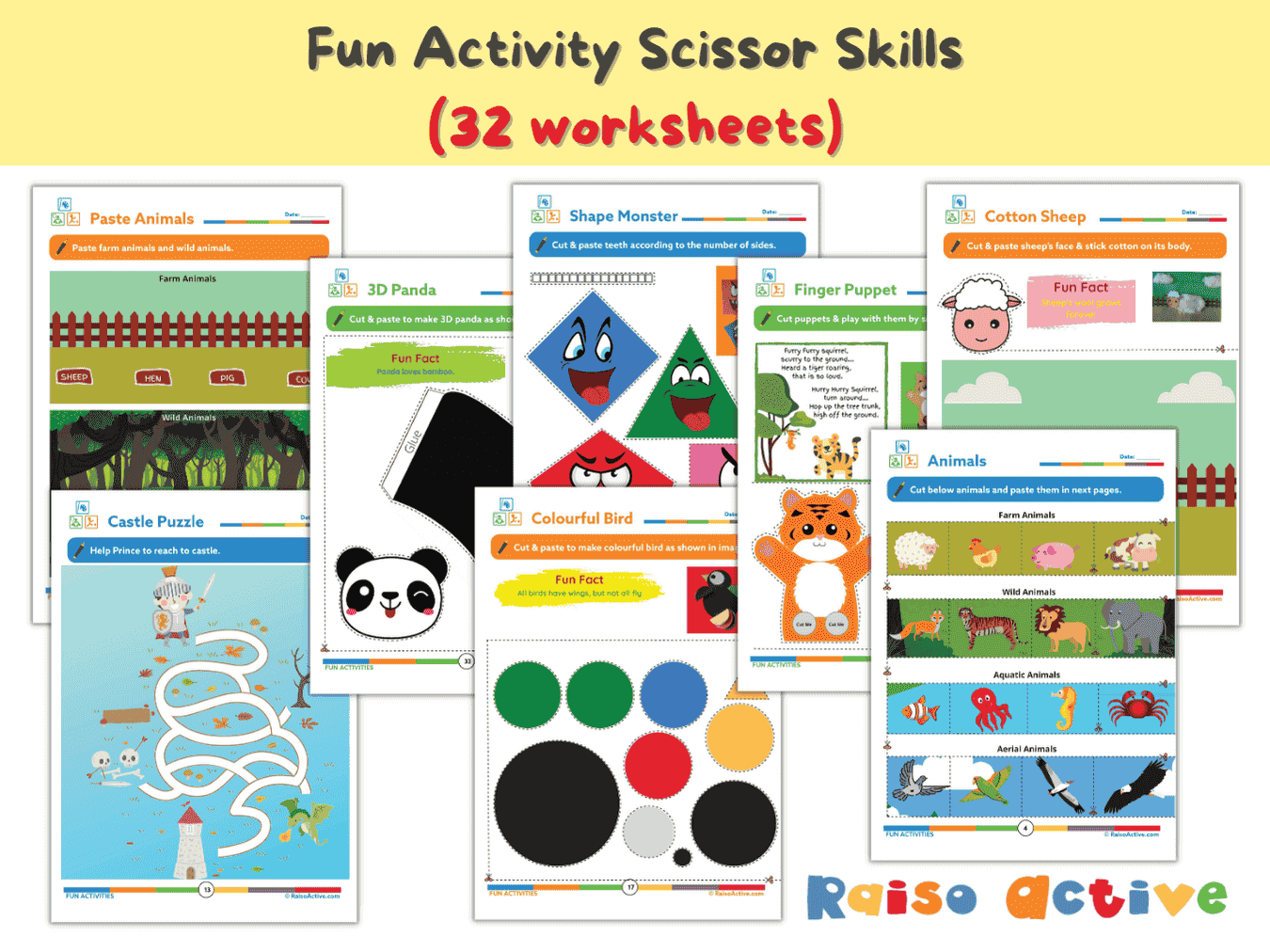
Christmas crafts are not simply decoration projects — they are fine motor skills training disguised as pure joy. The small muscles in children's hands that are strengthened by cutting, folding, threading, and gluing are the exact same muscles needed for writing. Every craft is a writing lesson in disguise.
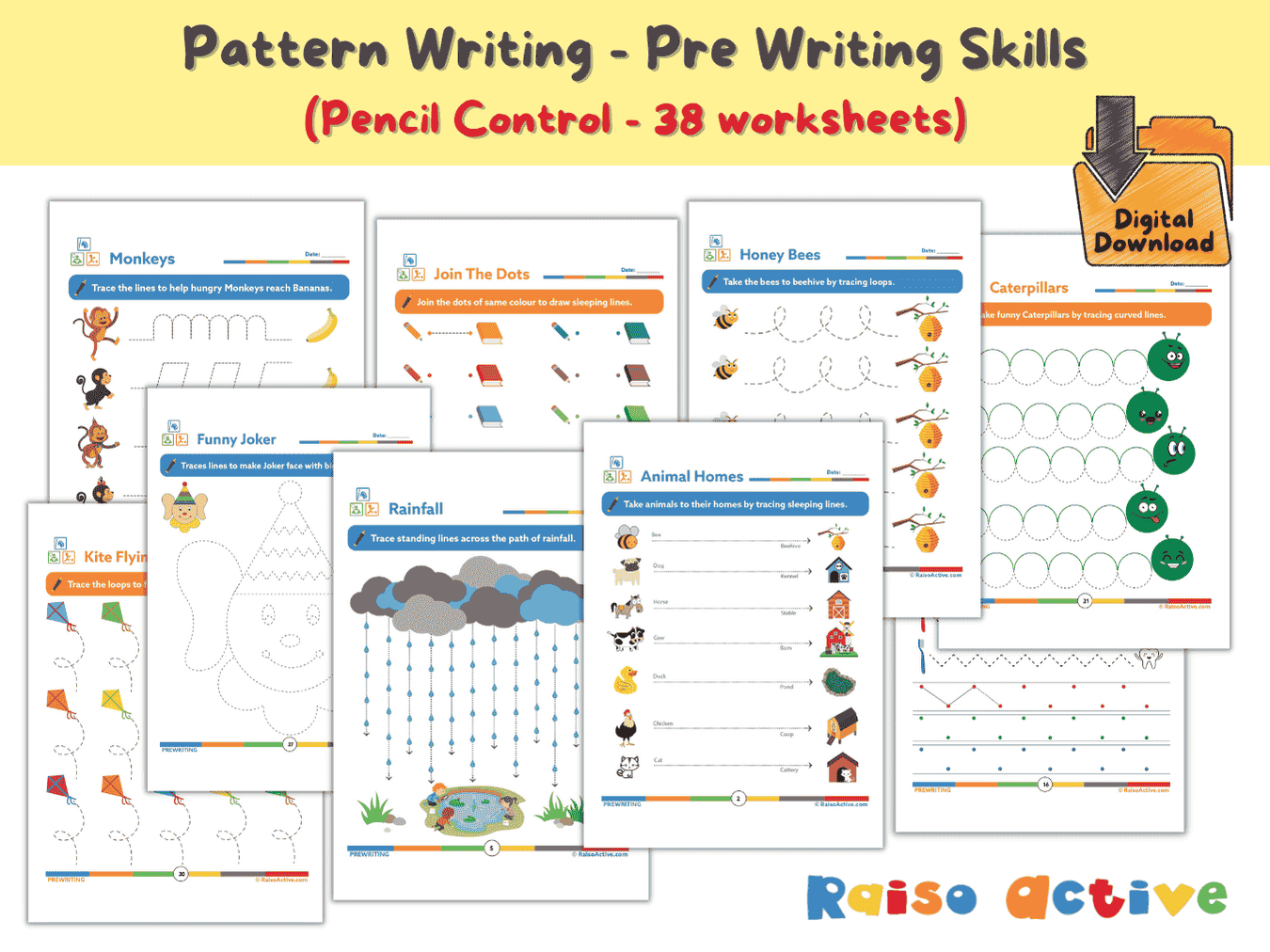
- Snowflake cutting (ages 4+) — Fold paper in half twice, then cut small shapes along the folded edges. Unfold to reveal a unique snowflake. Excellent for developing scissor control and bilateral coordination.
- Wreath making with paper strips (ages 3+) — Loop and glue strips of red and green paper into a chain, then form a circular wreath. Builds pincer grip and hand-eye coordination.
- Reindeer handprint craft (ages 2+) — Trace a child's hand, flip it upside down, and transform it into a reindeer face with googly eyes and a red pompom nose. Great for toddlers.
- Ornament threading (ages 3+) — Thread large wooden beads or pasta pieces onto a ribbon with a needle threaded through. Builds the hand-eye coordination essential for writing.
- Santa card folding (ages 5+) — Fold, cut, and assemble a pop-up Santa card. Builds spatial reasoning, sequencing, and precision cutting.
- Paper star weaving (ages 6+) — Weave strips of gold and silver paper to create a geometric star. Develops attention to detail, patience, and fine motor precision.
- Cotton wool snowman (ages 2+) — Glue cotton balls onto a pre-drawn snowman outline. Perfect for toddlers who are not yet ready for scissors.
Fine motor activities in early childhood increase writing readiness by up to 30%
Research consistently shows that children who engage in regular cutting, threading, and manipulation activities before formal writing instruction develop pencil grip and letter formation skills significantly faster. Christmas crafts offer a motivating, low-pressure context for this critical development.
Source: Early Childhood Education Journal, 2019
Winter Science: Exploring the Season Through Discovery
Winter offers extraordinary science learning opportunities — even for children in warmer climates like most of India, where winter looks quite different from the snowy scenes of picture books. Here is how to make science magical this Christmas season:
🎨Christmas and Winter Science Activities for Young Learners
- **Crystal snowflake experiment** — Dissolve borax (or salt) in boiling water, shape a pipe cleaner into a snowflake, suspend it in the solution overnight. By morning, crystals will have grown. Discuss: "Why did the crystals form? Where do real snowflakes come from?"
- **Ice and melting exploration** — Make ice blocks with Christmas-coloured water (red and green food colouring). Watch them melt and discuss states of matter. Ask: "What would make them melt faster or slower?"
- **Evergreen trees investigation** — Examine pine needles, pinecones, and evergreen branches with a magnifying glass. Discuss why some trees lose leaves in winter and others do not.
- **Christmas light science** — Look at how light travels through glass ornaments and prisms. If you have fairy lights, use a magnifying glass to examine the bulbs. Discuss electricity and circuits at a simple level.
- **Insulation experiment** — Ask: "Which wrapping keeps ice from melting longest — newspaper, foil, cotton wool, or nothing?" Test and record results.
Thematic learning increases retention by 20–25% compared to isolated skill practice
Studies in early childhood education show that embedding skills within meaningful, emotionally engaging themes — like Christmas — significantly improves both engagement and long-term retention. Children remember what they learnt in context far better than decontextualised drills.
Source: Journal of Research in Childhood Education, 2020
Art and Creativity: Making Christmas Colouring and Drawing Educational
Christmas colouring pages are a favourite for good reason — they are calm, focused, and genuinely skill-building. But you can take colouring, drawing, and art activities much further with a few intentional additions that transform them into rich educational experiences:
- Directed drawing — Follow step-by-step guides to draw a snowman, Santa, or Christmas tree. Develops spatial reasoning, sequencing, and fine motor control.
- Colour mixing exploration — Ask: "Can you mix two colours to make red? What happens when you mix red and white?" Festive colours become a colour theory lesson.
- Christmas scene storytelling — After colouring or drawing a Christmas scene, ask children to tell you the story: "Who lives in this house? What happened on Christmas Eve?" Combines art with narrative development.
- Textured Santa beard art — Use cotton wool, string, or torn tissue paper to create Santa's beard. Explores texture, composition, and sensory development.
- Nature wreath collage — Glue dried leaves, seed pods, and twigs into a circular wreath shape. Connects art with nature observation and the season.
Simple Colouring Activity
- +Child colours a Christmas tree picture
- +Child draws a snowman from imagination
- +Child traces a reindeer outline
- +Child cuts out a Santa shape
- +Child glues cotton balls on a snowman
Enhanced Educational Activity
- -Child colours tree, then counts and labels the decorations on each branch
- -Child draws snowman, then writes or dictates a story about where the snowman lives
- -Child traces reindeer, names all 9 reindeer, and writes one fact about each
- -Child cuts Santa, then sorts the cut pieces by shape and size before assembling
- -Child glues cotton balls, counts them, and compares "more than" and "fewer than" with a partner
Christmas in the Indian Context: Embracing the Season Culturally
Across India's cities — from Mumbai and Delhi to Kolkata and Bengaluru — Christmas is celebrated with genuine warmth and enthusiasm. Schools host carol concerts, fancy dress competitions, gift exchanges, and elaborate decoration activities. Shopping centres glitter with lights, and many families exchange gifts and share special meals regardless of faith.
For Indian families and educators, Christmas learning activities offer a wonderful cross-cultural enrichment opportunity. Just as children learn about Diwali through lamps and rangoli, Eid through crescent moons and star patterns, and Holi through colour mixing, Christmas provides its own visual, sensory, and narrative richness that translates beautifully into learning.
You can also draw meaningful parallels: the act of giving gifts connects to the Indian value of seva (selfless service); decorating the home with lights echoes Diwali; and the emphasis on family gathering resonates across all Indian celebrations. You do not need to adopt every aspect of a tradition to appreciate its educational richness — pick what works for your family and community.
Key Takeaway
Christmas activities work beautifully as cultural enrichment for all families, not only those who celebrate the holiday religiously.
The themes of generosity, light, warmth, family, and creativity that run through Christmas are universal human values. Framing activities around these themes allows any family to participate joyfully and meaningfully.
A 5-Day Christmas Learning Plan You Can Start Today
Feeling inspired but not sure how to organise everything? Here is a simple five-day plan that covers maths, literacy, art, science, and fine motor development — without overwhelming you or your child:
5-Day Christmas Learning Week
1
Day 1 — Maths Monday
Ornament counting and sorting for younger children; Christmas shopping maths or Advent calendar subtraction for older children. End with a simple Christmas number worksheet.
2
Day 2 — Literacy Tuesday
Write a letter to Santa (or a Christmas card to a friend or family member). Build a Christmas word wall with five to eight new vocabulary words. Read a Christmas picture book together.
3
Day 3 — Art and Craft Wednesday
Snowflake cutting for fine motor development, followed by a Christmas colouring activity with an educational extension (counting decorations, writing a caption, or mixing colours).
4
Day 4 — Science Thursday
Choose one science experiment: crystal snowflakes, ice melting investigation, or the insulation challenge. Record predictions and results using simple drawings or sentences.
5
Day 5 — Celebration Friday
Assemble a mini Christmas showcase: display the letter, the snowflake, the science findings, and the artwork. Celebrate the week's learning with a Christmas story, a carol, and a festive treat.
👋Tips for Parents: Making the Most of Christmas Learning
- Follow your child's lead — if they are captivated by a particular activity, linger there rather than rushing to the next one.
- Ask open-ended questions throughout: what do you notice, what would happen if, how do you know? These questions deepen thinking without disrupting the fun.
- For mixed-age groups, run the same activity at different complexity levels simultaneously — a 2-year-old stamps Christmas shapes while a 6-year-old writes a sentence about each shape.
- Keep a simple Christmas Learning Journal — a small notebook where children stick their work, write observations, and draw what they discovered each day.
- Do not stress about perfection. A slightly lopsided snowflake made independently is worth far more developmentally than a perfect one made by an adult.
Key Takeaway
The most powerful Christmas learning happens when children are so absorbed in the magic that they forget they are practising skills.
A child threading beads is developing fine motor control. A child counting ornaments is building number sense. A child writing a letter to Santa is practising literacy for a real purpose. Trust the process — the learning is deep, even when it looks like play.
Key Takeaway
Combining printable worksheets with hands-on activities creates a balanced learning approach that suits different learning styles.
Some children prefer the structured focus of a worksheet; others need to move and create to absorb new concepts. Offering both — a snowman counting worksheet alongside an actual snowman cotton ball craft — ensures every child has a way to engage.
⚠️Warning: Signs Your Child Needs a Break
- If your child becomes frustrated, starts rushing through activities, or loses interest, they are telling you something important — they need rest, not more stimulation.
- The holiday season itself can be overwhelming for young children. Sensory overload from lights, music, and excitement is real.
- Build in quiet time every day: calm colouring, simple puzzles, or reading together. Balance is the key to joyful seasonal learning.
- Never use learning activities as a reward or punishment for behaviour during the holiday season. Keep learning associated with joy and curiosity, not compliance.
Unlimited Access
Get Seasonal Learning Ideas All Year Round
Subscribe to receive age-appropriate Christmas and winter activity ideas, printable worksheets, and expert parenting tips — delivered free to your inbox every month.
All worksheets & activitiesNew content weeklyDownload unlimited times
Subscribe NowFrequently Asked Questions About Christmas Learning Activities
Are Christmas learning activities appropriate for very young children (under 3)?
Absolutely. Toddlers under three can enjoy ornament counting, cotton wool snowman crafts, Christmas-themed stamping, and simple sorting activities. Keep the focus on sensory exploration and very basic counting (1–5). Avoid small beads or parts that could be a choking hazard, and always supervise closely with craft materials.
How do I make Christmas activities inclusive for children who do not celebrate Christmas?
Frame activities around winter, the season of giving, or simply as creative projects rather than specifically Christmas celebrations. Many of the skills — counting, cutting, colouring, writing — can be delivered through winter themes (snowflakes, snowmen, stars, winter animals) that are culturally neutral and seasonally relevant. The learning is in the activity, not the specific theme.
Can these activities genuinely replace screen time during the school holiday break?
Yes, with the right preparation. Stock a simple art trolley or box with basic supplies — paper, scissors, glue, crayons, cotton balls, and a few printable worksheets — and make them accessible without adult setup. Children who have engaging alternatives available tend to reach for screens out of boredom less often. The key is having materials ready before the moment of boredom hits.
What is the right balance between structured activities and free creative play during Christmas?
A good rule of thumb is roughly 50-50. Offer structured activities (a counting worksheet, a directed drawing lesson, a science experiment) in the morning when children are fresh, and allow free creative play in the afternoon. During free play, simply make seasonal materials available — paper, glue, holiday stickers, cardboard tubes — and step back. Some of the richest learning happens when children direct their own Christmas creativity.
My child wants to do the same Christmas colouring page repeatedly. Should I redirect them?
Not necessarily. Repetition is actually how young children consolidate learning and build mastery. If your child wants to colour the same Santa page three times, let them. Each time, they are refining their motor control, colour choices, and attention to detail. You can gently extend the activity by asking different questions each time — "Can you count all the buttons on Santa's coat?" or "Can you colour his coat a different colour this time and tell me why you chose it?"
How do I handle a child who finds scissors frustrating and avoids cutting activities?
Scissors are genuinely hard for many children, and frustration is a sign that the task is at or beyond the edge of their current skill. Start with tearing paper (no scissors needed), then progress to cutting playdough or clay with plastic scissors, then cutting along thick straight lines, then curves, then more complex Christmas shapes. Pair the cutting practice with high-motivation materials — sparkly paper for snowflakes, red paper for Santa hats — and keep sessions short (5–10 minutes) until confidence builds.