Nurturing Your Gifted Child: How to Provide Appropriate Challenges at Home
Author
RaisoActive - Kids Activities and Fun Learning
Published
Updated
Reading Time
11 min read

- Giftedness in young children often appears as intense curiosity, advanced vocabulary, and complex thinking — not just high marks
- Gifted children have heightened emotional needs including overexcitabilities and deep sensitivity that require gentle parental support
- Appropriate challenge means stretching without overwhelming — the sweet spot between boredom and burnout
- Enrichment at home can go far beyond academics: philosophy, complex puzzles, and open-ended projects all nourish gifted minds
- The Indian school system rarely caters to gifted learners, but parents can bridge the gap meaningfully at home
When Your Child Seems to Be on a Different Frequency
You noticed it early. Perhaps your two-year-old asked why the moon does not fall down. Perhaps your four-year-old corrected the spelling in a shop sign, or your five-year-old could not sleep because she was "thinking about how fish breathe." Perhaps teachers have told you your child is "advanced" or "intense" or "a little too much sometimes." Perhaps you have simply known, in that quiet, certain way parents often do, that your child experiences the world differently.
Gifted children are not just clever children. They are children whose minds operate at a pace and depth that can be as confusing and overwhelming for them as it is remarkable to watch. Understanding giftedness — what it looks like in early childhood, what it demands emotionally, and how to nurture it at home — is one of the most loving investments you can make as a parent.
This guide is written for Indian parents navigating a school system that rarely has room for the child who already knows the lesson, the child who asks questions the teacher cannot answer, the child who is simultaneously three grade levels ahead in reasoning and in tears because a classmate did not understand their joke. We will look at what giftedness actually is, how to challenge your child appropriately, and how to protect their joy of learning in the process.
What Does Giftedness Actually Look Like in Young Children?
The popular image of a gifted child is one who sits quietly, completes assignments early, and scores top marks on every test. In reality, gifted children in early childhood often look quite different. They may be the child who cannot stop talking about a topic that fascinates them, or who refuses to do "baby" tasks they find beneath them, or who melts down dramatically when plans change unexpectedly. Giftedness in young children is less about performance and more about the intensity and complexity of how they engage with the world.
Research from the National Association for Gifted Children describes several common early indicators. Gifted young children often demonstrate an unusually large vocabulary for their age, asking and understanding words most children will not encounter for years. They frequently exhibit asynchronous development — being far ahead cognitively while still being emotionally and socially at their actual age. A five-year-old who can discuss the water cycle in impressive detail may still cry inconsolably when they lose a board game.
Other common signs include an exceptional memory that retains unusual details, the ability to think abstractly at a young age (asking "what was there before the universe?"), an early interest in reading or numbers without being formally taught, an unusual sensitivity to injustice or suffering, and a relentless drive to understand why rather than simply accepting what they are told. Perfectionism — often misunderstood as a flaw — is frequently rooted in a gifted child's gap between what they imagine and what they can currently produce.
- **Unusually advanced vocabulary** — Uses complex words correctly in context, and asks about words they encounter
- **Abstract thinking at a young age** — Asks philosophical or existential questions about death, time, fairness, and how the world works
- **Learns new concepts very quickly** and becomes restless once mastered
- **Intense, narrow interests** — Becomes deeply absorbed in one topic for months at a time
- **Strong sense of justice** — Becomes genuinely distressed about fairness, rules being broken, or suffering
- **Perfectionism** — Erases and redoes work repeatedly, or refuses to start for fear of making mistakes
The Emotional World of a Gifted Child
One of the most important and least discussed aspects of giftedness is what Polish psychologist Kazimierz Dabrowski called overexcitabilities — heightened ways of experiencing the world across five domains: psychomotor (high energy, physical restlessness), sensual (intense sensitivity to textures, sounds, lights), intellectual (unrelenting curiosity, love of ideas), imaginational (vivid fantasy, intense daydreaming), and emotional (deep empathy, intense feelings). Many gifted children experience several of these simultaneously.
This means that a gifted child is not just thinking more — they are feeling more, sensing more, and imagining more than most of their peers. A tag inside a shirt is unbearable. A sad story about an animal lingers for weeks. A perceived slight from a friend can feel catastrophic. These are not behavioural problems to be corrected; they are natural features of a nervous system wired for intensity.
In the Indian context, these traits are often misread. The emotionally sensitive child may be labelled as "too dramatic" or "over-sensitive." The intellectually intense child who argues with teachers about incorrect facts in textbooks may be called "disrespectful." Understanding that these behaviours often have roots in giftedness — not poor parenting or bad character — is the first step toward genuinely supporting your child.
A gifted child's emotional intensity is not a weakness to manage — it is a feature of the same mind that notices everything, questions everything, and cares deeply about everything.
Validate their feelings before trying to reason with them. A child who feels understood can regulate far better than one who is told their feelings are "too much."
Challenging Without Causing Burnout: Finding the Sweet Spot
One of the most common mistakes parents make with gifted children is over-scheduling and over-programming in an attempt to keep up with their apparent capacity. Weekend classes, coaching, extra worksheets, abacus, chess, coding — all layered on top of an already demanding school day. The result is a child who is technically busy but internally depleted, performing but not thriving.
Appropriate challenge for a gifted child is not about volume — it is about depth, novelty, and genuine intellectual engagement. A gifted six-year-old does not need more maths sums; they need to encounter a problem that genuinely puzzles them. They do not need another colouring page; they need an open-ended creative challenge with no single right answer. The goal is to place them in what psychologist Mihaly Csikszentmihalyi called flow — a state of deep, effortless engagement that stretches ability without overwhelming it.
Watch for signs that challenge has tipped into burnout: persistent reluctance to do activities they once loved, increased emotional meltdowns, sleep disturbances, physical complaints before school, or a sudden drop in the quality of their thinking. These are signals to pull back, simplify, and restore free unstructured time before adding anything new.
- **Sudden loss of interest** in activities that previously fascinated them
- **Increased irritability and meltdowns**, especially in the evenings
- **Refusing to attempt** tasks for fear of making mistakes or failing
- **Sleeping difficulties** — trouble falling asleep due to an overactive, busy brain that will not switch off
- **Physical complaints** — headaches or stomach aches before school or activities
- **Flat, robotic answers** where rich, curious responses used to be
Enrichment Beyond Academics: What Gifted Minds Actually Need
When parents think of enrichment for gifted children, they often think of more advanced academics — higher grade maths, early reading of chapter books, extra science projects. These have value, but gifted children also thrive with enrichment that cannot be measured on a test: philosophy, ethics, complex narrative, creative projects, and the kind of slow, exploratory thinking that has no deadline.
Philosophy for children, or P4C, is a structured approach of discussing big questions with young children: Is it ever okay to lie? What makes something beautiful? If you changed every part of a ship, is it still the same ship? These conversations are not above young children — gifted four and five-year-olds engage with them with remarkable sophistication, and the practice builds the kind of nuanced reasoning that no worksheet can replicate.
Complex, multi-day projects are another powerful tool. Instead of a craft completed in twenty minutes, offer a project that unfolds over weeks: building a model city, conducting simple science experiments and recording observations, writing and illustrating a chapter book, or creating a field guide to the birds in your neighbourhood. The long arc of sustained effort teaches gifted children to tolerate incompleteness, revise their thinking, and find satisfaction in process rather than just product.
- **Philosophy discussions** — Start with would-you-rather questions, then move to ethical dilemmas such as whether it is fair for one person to have much more than others
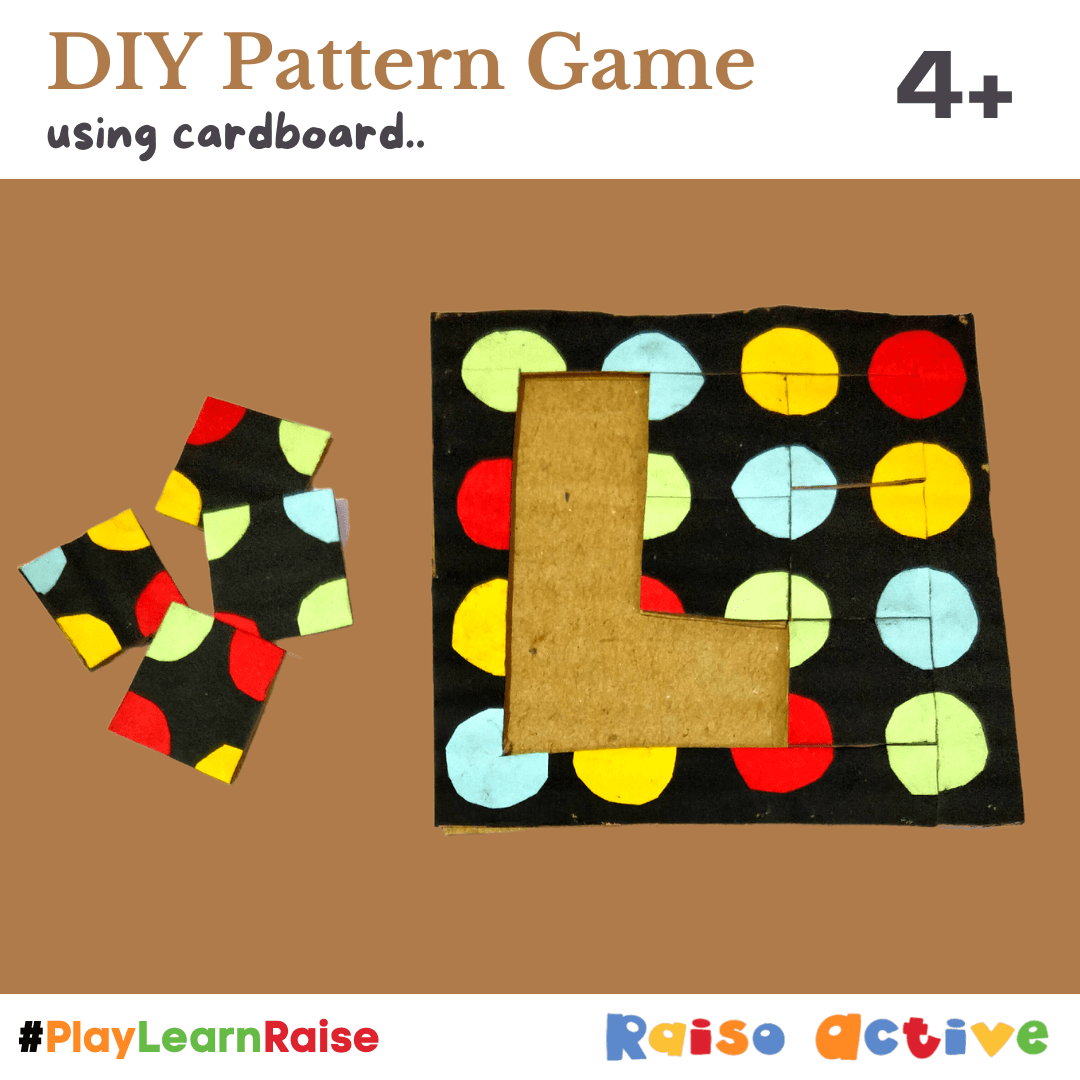
- **Complex puzzle challenges** — 500-piece jigsaw, tangram puzzles, Rush Hour logic games, or wooden brain teasers
- **Long-form creative projects** — Writing a story chapter by chapter over several weeks; building a model of the solar system to scale
- **Citizen science projects** — Tracking moon phases, recording local bird species, monitoring plant growth with data tables
- **Biography exploration** — Reading about scientists, mathematicians, artists, and social reformers; discussing their choices and obstacles
- **Chess, Go, or strategy games** — Turn-based thinking games that build patience and long-range planning
Studies on gifted education in India suggest that the vast majority of gifted learners go unrecognised, with schools focusing resources on remediation rather than acceleration or enrichment. This places the primary responsibility for supporting gifted children squarely on parents and families.
Source: National Policy on Education Review, India
Navigating the Indian School System as a Parent of a Gifted Child
India does not have a robust national framework for identifying and supporting gifted learners. Unlike countries such as the United States, Australia, or Singapore — which have formal gifted programmes, pull-out enrichment, and specialist teacher training — most Indian schools operate on a single curriculum delivered at a single pace. A child who grasps concepts in a fraction of the expected time has two options: wait for the rest of the class, or find challenges elsewhere.
This is not a criticism of individual teachers, many of whom work hard in classrooms of forty or more children with limited resources. It is simply a structural reality that parents of gifted children need to understand and plan around. The school will likely not address your child's needs adequately — not out of indifference, but out of incapacity. Your role as a parent is to supplement, not to fight.
Practical approaches include speaking with teachers about allowing your child to go deeper rather than faster on topics — producing a research presentation rather than completing the standard worksheet, for instance. Many teachers respond positively when parents frame it as: "My child is passionate about this topic — would you be willing to let them explore it further?" rather than "My child is bored and not being challenged." Tone and framing matter enormously in these conversations.
In the Indian context, the most effective advocacy for a gifted child is quiet, collaborative, and relationship-based — not confrontational.
Build a warm rapport with your child's teacher before raising concerns about challenge level. A teacher who feels respected is far more likely to accommodate special requests than one who feels criticised.
The Gifted Underachiever: When Ability and Performance Don't Match
One of the most puzzling and distressing situations for parents is the gifted child who is not performing well academically. They can discuss complex topics at home with sophistication, but they hand in sloppy, incomplete work at school. They ace tests they did not study for, but fail assignments they could easily complete. This phenomenon — the gifted underachiever — is more common than most people realise.
Underachievement in gifted children typically has roots in one of several causes: chronic boredom leading to disengagement; perfectionism so intense that starting feels too risky (if the work might not be perfect, better not to try); social camouflaging where the child deliberately performs at average level to fit in with peers; or an undiagnosed learning difference (gifted children can also have dyslexia, ADHD, or sensory processing differences — this is called twice-exceptional, or 2e).
The worst response to a gifted underachiever is pressure, shame, or comparison to peers. These tactics deepen the very perfectionism and disconnection that drive underachievement. Instead, focus on rebuilding the intrinsic love of learning through low-stakes, self-directed exploration at home. Let them lead. Let them choose topics. Let them show you what they know without any evaluative eye. When a child remembers that learning feels good, motivation often follows.
Gifted underachievement is rarely about laziness — it is almost always a signal that something in the child's environment or emotional state needs attention.
Before addressing the underachievement itself, investigate the root: Is your child bored? Anxious? Socially unhappy at school? Struggling with perfectionism? The solution changes significantly depending on the cause.
Avoiding the Label Trap: Why "Gifted" Can Help or Harm
There is a difficult tension in discussing giftedness with children themselves. On one hand, children benefit from understanding why they feel different — why they think in ways that seem at odds with their classmates, why they are so much more affected by things others brush off. A child who understands "your brain just processes things very quickly and very deeply" often feels less alone and less like something is wrong with them.
On the other hand, the label "gifted" can become a burden. Children who identify strongly with being gifted sometimes become risk-averse and terrified of failure — because failure would challenge the identity. They avoid stretching challenges, preferring tasks where they know they will succeed and therefore stay "gifted." This is the dark side of fixed-ability praise: "You are so smart" can inadvertently teach a child to protect their self-image rather than risk it in genuine challenge.
The healthier approach is what Carol Dweck's research on growth mindset supports: praise effort, strategy, and persistence rather than ability. "You worked so hard on that puzzle" and "I love how you tried a different approach when the first one did not work" build far more resilience than "You are so clever." Help your child understand that intelligence grows through challenge, not despite it.
Carol Dweck's landmark research found that children told they were "smart" after an initial task chose easier subsequent tasks to protect their label, while children praised for effort chose harder tasks and performed significantly better over time.
Source: Carol Dweck, Mindset: The New Psychology of Success
How to Create a Weekly Enrichment Rhythm at Home
Start with a "Passion Project" block
Set aside 30-45 minutes each week (or daily if possible) for your child to pursue a self-chosen topic in depth. No output required. No evaluation. Just deep exploration of whatever fascinates them this week — insects, ancient history, architecture, cooking chemistry.
Introduce one thinking challenge per week
Choose a logic puzzle, a philosophical question, a strategy game, or a hands-on problem with no single correct answer. Present it casually, leave it out, and let your child return to it in their own time.
Replace one passive activity with a creative challenge
Instead of one episode of television or one colouring sheet, offer an open-ended creative prompt: "Build something that moves," or "Draw a map of a world you invented," or "Write the worst possible poem about our cat." Low stakes, high engagement.
Read aloud books above grade level
Gifted children often have listening comprehension far ahead of their independent reading level. Choose chapter books with complex characters, moral dilemmas, and rich vocabulary. Stop often to ask "Why do you think they did that?" and "What would you have done?"
Have at least one philosophical conversation per week
During a meal or a car ride, pose a big question and genuinely explore it together: "Is it possible to be completely fair?" or "What would the world be like if no one ever made mistakes?" Let your child lead and resist the urge to correct or conclude.
Protect unstructured free time fiercely
For every hour of structured enrichment, gifted children need equivalent time with nothing scheduled — time to daydream, invent games, build things, take things apart, and be bored. Boredom, for a gifted child with a rich inner world, is often the beginning of their best ideas.
Check in on emotional wellbeing monthly
Ask your child directly: "What is the best part of your week? What is the hardest part? Is there anything you are worrying about a lot?" Gifted children often carry heavy emotional loads quietly. Regular, low-pressure check-ins keep the lines of communication open.
- +Piling on extra worksheets and rote practice
- +Praising your child for being "so smart" or "gifted"
- +Filling every free hour with structured activities
- +Comparing your child to peers or siblings
- +Pushing academic acceleration as the primary solution
- +Dismissing emotional intensity as "drama" or "sensitivity"
- -Offering deep, open-ended projects with no single correct answer
- -Praising effort, strategy, and persistence specifically
- -Protecting generous blocks of unstructured free time
- -Helping your child understand their own unique learning style
- -Combining breadth with depth — enrichment alongside acceleration
- -Validating emotional intensity as part of how their mind works
Resources for Parents of Gifted Children in India
The gifted education community in India is small but growing. While formal institutional support remains limited, parents today have access to far more information and community than previous generations. Online communities of Indian parents raising gifted children have sprung up on Facebook and WhatsApp, and international resources translate well to the Indian context with a little adaptation.
Books that Indian parents of gifted children consistently find helpful include Gifted Children: Myths and Realities by Ellen Winner, A Parent's Guide to Gifted Children by James Webb, and Raising Your Spirited Child by Mary Sheedy Kurcinka — this last one is not specifically about giftedness but speaks beautifully to the intensity that many gifted children display. For the philosophical side of enrichment, Philosophy for Kids by David White and the resources from the Philosophy for Children (P4C) movement are excellent starting points.
Within India, the Gifted Education Trust and individual university departments of educational psychology in cities like Pune, Delhi, and Chennai have occasionally offered support and assessment services. The key is not to seek a formal label for its own sake, but to understand your child's profile well enough to advocate effectively for what they need — at home, at school, and in the wider world.
Want More Resources for Nurturing Your Gifted Child?
Subscribe to get expert parenting tips, printable enrichment activities, and thoughtful guides delivered to your inbox — completely free. We know raising a gifted child is a privilege and a challenge in equal measure.
Frequently Asked Questions About Gifted Children
How do I know if my child is truly gifted or just a fast learner?
My child's teacher says they are doing well in class and does not seem concerned. Should I still seek extra support at home?
My child is gifted but also has ADHD. How do I manage both?
Is it better to accelerate my child academically (skip a grade) or enrich them in their current grade?
How do I help my gifted child cope with perfectionism?
My gifted child has no friends their age. What can I do?
Free worksheets for this topic
Browse all worksheets
Clothing Pattern Match Worksheet for Preschoolers
This worksheet has children ages 3-5 study repeating patterns on clothing items — stripes, polka dots, or checks — and match each item to its identical twin, building visual discrimination and early pattern-sequencing skills. Distinguishing between similar-looking patterns also sharpens attention to detail, a skill that later supports letter and word recognition.

Elephant Shapes: Fun Sorting Worksheet for Preschoolers!
This playful sorting worksheet has children ages 3-5 use an elephant's 'trunk' (their own hand reaching through a cut circle) to pick and sort shapes, building both shape recognition and simple classification skills. Physically selecting and grouping shapes by type, rather than just naming them on sight, helps solidify the concept that shapes can share a category even when their size or color differs.
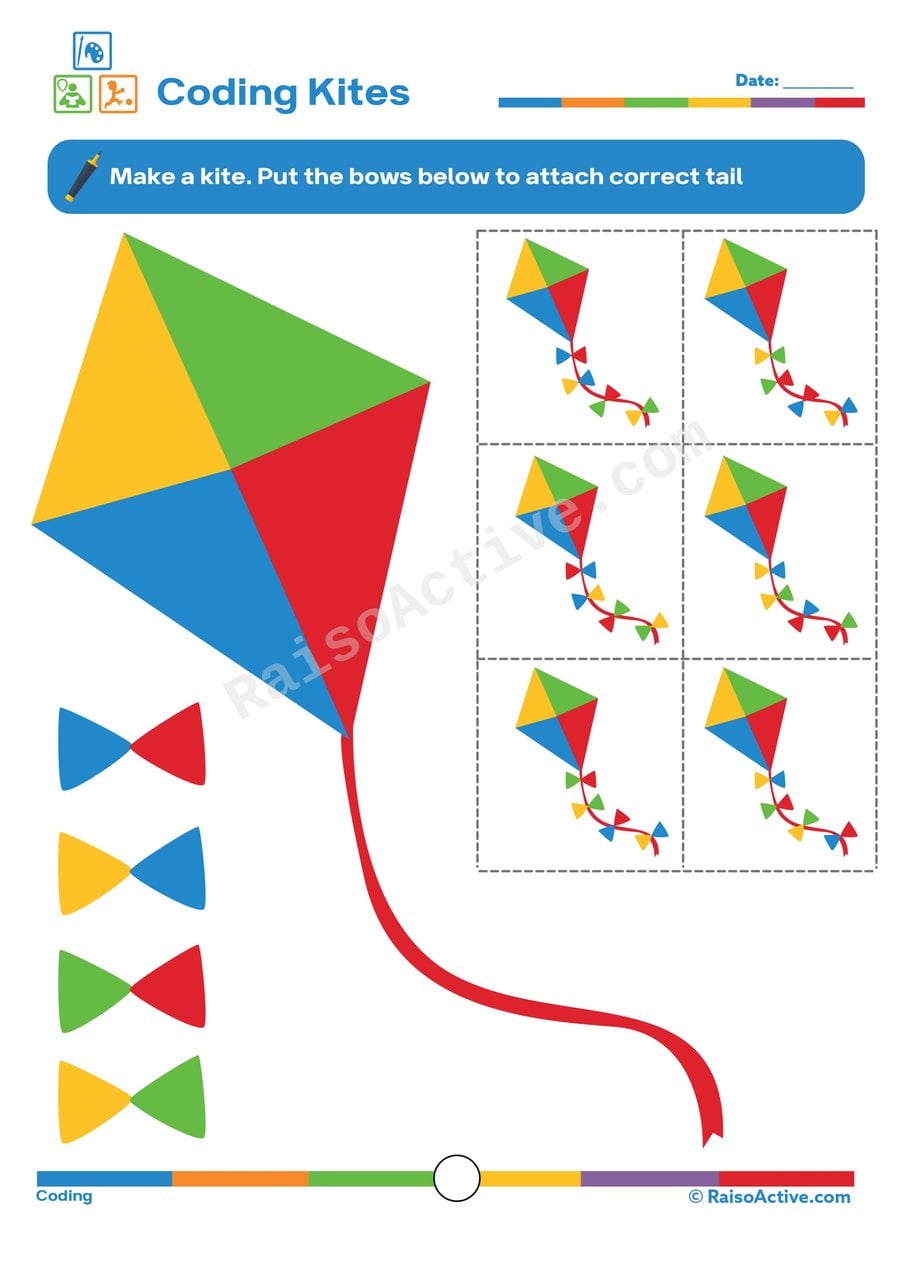
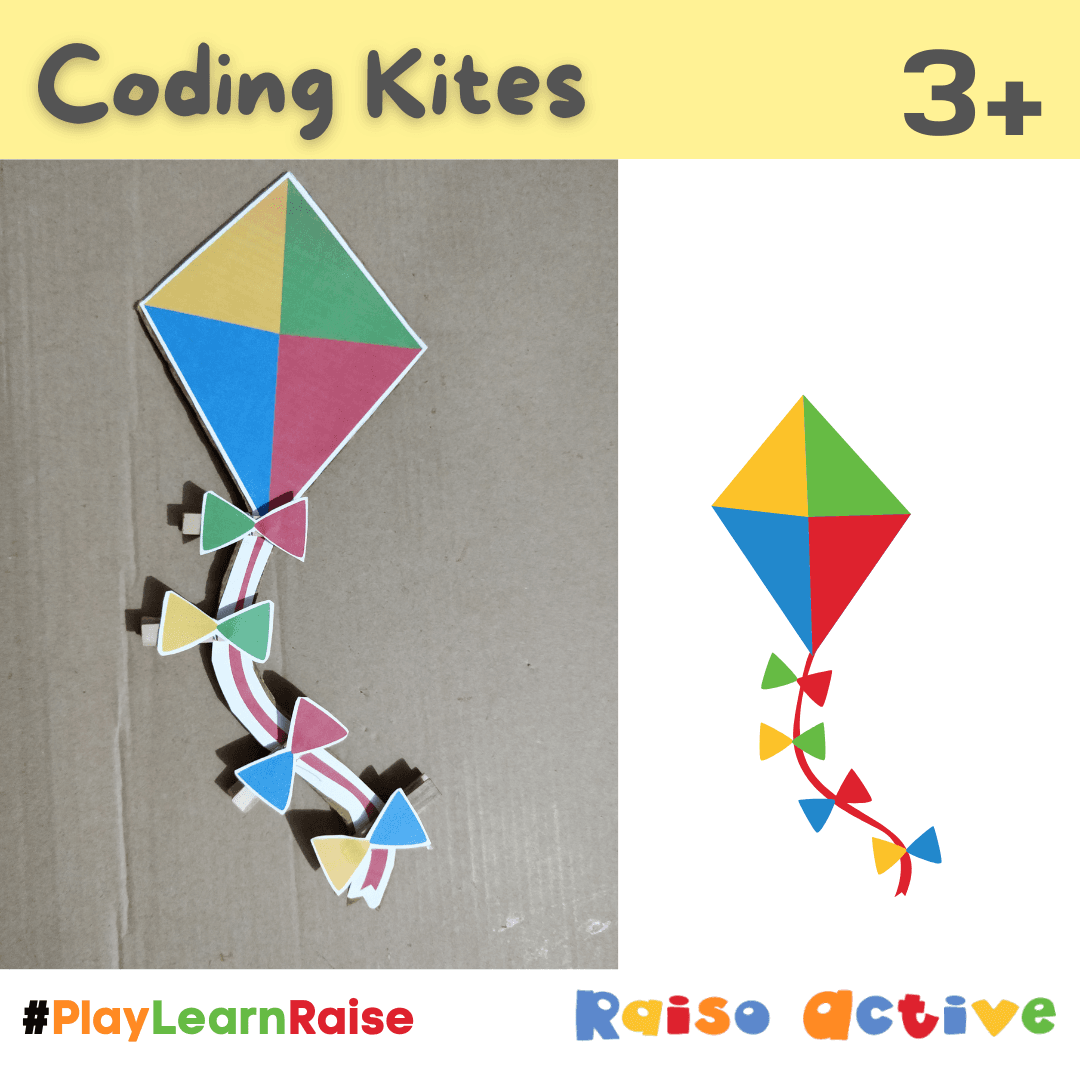
Coding Kites Worksheet: Match the Bows!
This activity sharpens visual observation in children ages 3-5 as they compare color sequences on each kite to a set of loose bows and find the exact match. Careful, systematic comparison — checking each color in order rather than glancing quickly — builds an attention-to-detail habit that transfers directly to early reading and number work.
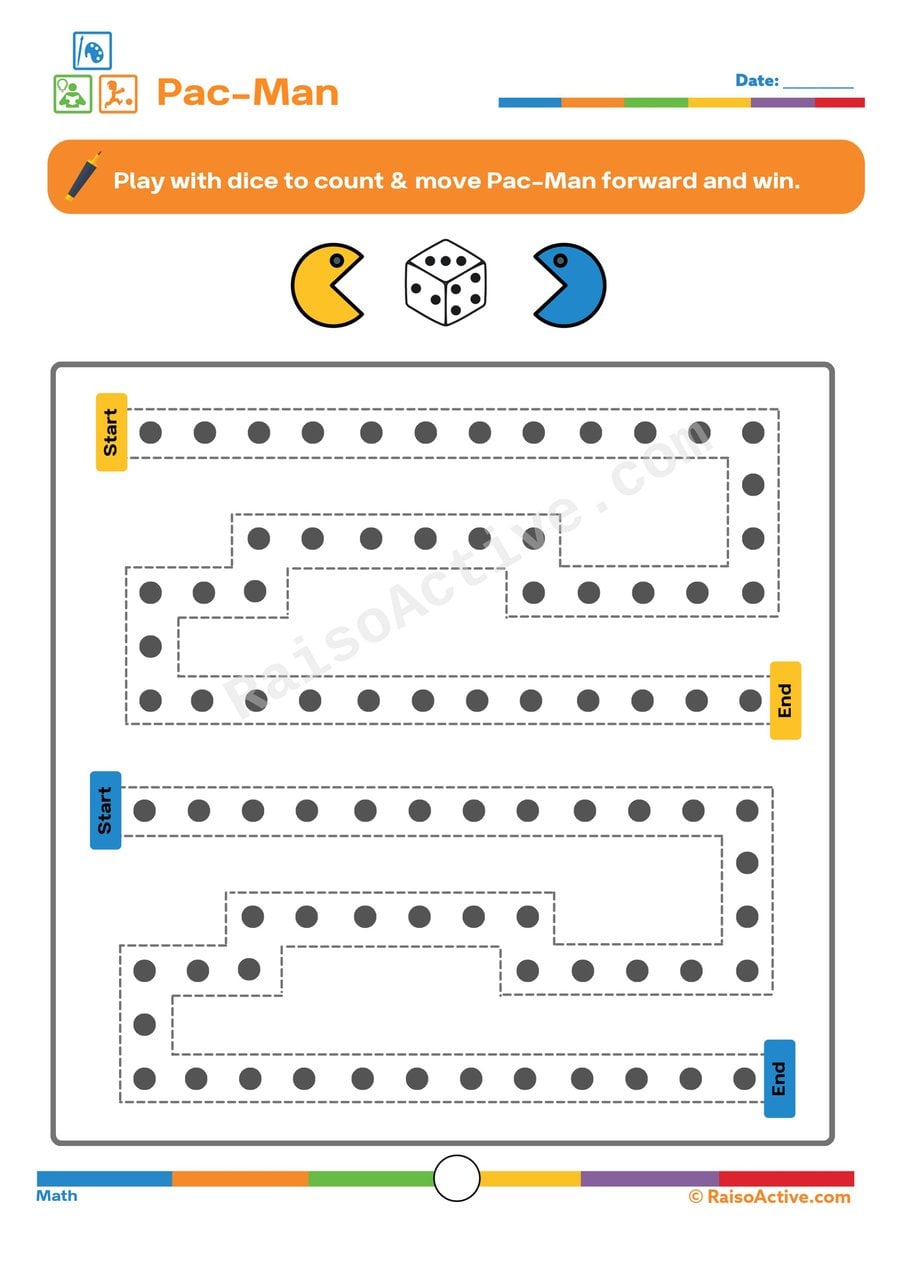
Pac-Man Maze Worksheet: Count and Move!
This dice-counting maze gives children ages 3-5 repeated practice matching a rolled number to the correct number of moves, reinforcing accurate counting under a bit of playful pressure. Tracking Pac-Man's current position after each roll also builds short-term spatial memory, since children must remember where they left off before moving again.

Written by
Hemsweta Jain · Teacher Cheena
MBA and Early Childhood Educator, teaching since 2014 · Founder of RaisoActive, Mumbai
Published · Last reviewed