Is My Child Ready for Kindergarten? Essential Skills and Honest Assessment
Author
RaisoActive - Kids Activities and Fun Learning
Published
Updated
Reading Time
21 min read

- School readiness spans five domains — cognitive, language, fine motor, social-emotional, and self-care — and your child does not need to master all of them before day one
- What readiness IS: following two-step instructions, sharing, managing toileting, holding a pencil, and knowing a few letters or numbers
- What readiness is NOT: reading independently, knowing the full alphabet, or sitting perfectly still for 30 minutes
- How Indian schools assess readiness — from formal entrance tests to informal teacher observation — and what you can realistically expect
- Practical ways to build readiness at home in the months before school, and how to ease the transition anxiety that almost every child (and parent) feels
The Question Every Parent Asks
Every year, as admission season approaches, a quiet anxiety settles over millions of Indian households. Your child's fifth birthday is approaching, the school forms are on the table, and you find yourself watching your little one and wondering: Is she ready? Is he ready enough? The neighbour's daughter apparently already knows all her alphabets in both Hindi and English. The other child from your building can apparently count to 100. And here is yours, still wanting you to tie their shoelaces and occasionally throwing a tantrum when the biscuit breaks in half.
Take a breath. School readiness is one of the most misunderstood concepts in early childhood — both by anxious parents and, frankly, by some schools themselves. It is not a single skill or a checklist of academic achievements. It is a constellation of abilities across five different developmental domains, and most children have a mixed profile: strong in some areas, still developing in others. That is entirely normal, and it is exactly what good early childhood programmes are designed to work with.
This guide will walk you through what genuine school readiness looks like, what it absolutely does not require, how Indian schools typically assess children at entry, and what you can do in the months before school begins to set your child up for a confident, happy start.
Get school readiness resources in your inbox
Free worksheets, activity ideas, and milestone guides for children aged 1–8, curated for Indian families. Join thousands of parents who prepare their children with confidence.
The Five Domains of School Readiness: What Actually Matters
Researchers and early childhood educators agree that school readiness is best understood across five interconnected domains. No single domain is more important than the others, and strength in one area can support growth in another. Here is what each domain looks like in a child who is approaching kindergarten or Class 1:
1. Cognitive and Academic Skills: This is what most parents think of first — can my child count, recognise letters, and identify shapes? A kindergarten-ready child typically knows some numbers (can count reliably to at least 10 and identify a few numerals), recognises several letters (especially those in their own name), can sort objects by colour and shape, and understands basic concepts like big/small, more/less, and first/last. They do not need to be able to read or write sentences. They do not need to know every letter of the alphabet. What matters most is curiosity, the ability to problem-solve, and willingness to try.
2. Language and Communication: A school-ready child can express their needs and ideas in sentences, follow two- to three-step verbal instructions ("Go to the cupboard, get your water bottle, and bring it here"), listen while a teacher reads aloud or gives directions, and answer simple questions about a story or event. In India's multilingual context, this may happen across multiple languages — a child who communicates confidently in Hindi at home and is learning English at school is demonstrating strong language readiness, not a gap.
3. Fine Motor Skills: Children need adequate fine motor control to manage the writing, drawing, and cutting activities of a classroom. A ready child can hold a crayon or pencil with some grip — not necessarily a perfect tripod grip, but not a full-fist grip either. They can draw basic shapes, colour within rough boundaries, and use child-safe scissors to cut along a line. They can manage their own belongings — opening a lunch box, zipping a bag, turning pages in a book.
4. Social-Emotional Readiness: This is arguably the most important domain for early school success, and the one least often discussed in admission conversations. A child who can share materials with others, take turns, separate from a parent without prolonged distress, manage their emotions reasonably well, and follow basic classroom rules is far better prepared for school than a child who can recite the alphabet but falls apart at the sight of an unfamiliar adult. Social-emotional readiness is the foundation on which all academic learning is built.
5. Self-Care and Independence: School demands a level of physical independence that many Indian children are not accustomed to — particularly in families where adults manage dressing, toileting, and eating for children well into the school years. A school-ready child can use the toilet independently (including managing clothing and handwashing), eat their lunch without needing an adult to feed them, carry and manage their own school bag, and communicate when they are unwell, uncomfortable, or need help.
What School Readiness Is NOT — And Why This Matters
Let us be direct: a 5-year-old who cannot yet read is not behind. Reading is a complex cognitive skill that most children are developmentally ready to acquire between ages 5 and 7, with enormous variation between individuals. A child who starts formal reading instruction at age 5 and one who starts at 6.5 will, by age 8, typically show no meaningful difference in reading ability — provided both have had rich language experiences in their early years. Pushing reading before a child is developmentally ready does not accelerate long-term outcomes; it can create anxiety, avoidance, and a belief that they are not a reader.
School readiness is also not: knowing the full alphabet in order, being able to write all their letters perfectly, sitting completely still for extended periods, having zero separation anxiety, or knowing their address and phone number by heart. These things will come. What children need at the point of school entry is a solid foundation in the five domains described above — curiosity, communication, some motor control, emotional tools, and basic independence.
Sadly, the Indian private school system — particularly in metro cities — has moved the goalposts considerably. It is not uncommon for LKG or Class 1 admission processes to include written tests, interviews, or activities that assess academic skills well beyond what is developmentally appropriate. This has created a generation of parents drilling 3- and 4-year-olds on alphabets and numbers under significant pressure. The research is clear that this kind of early academic pressure does not improve long-term outcomes and can be actively harmful to children's relationship with learning.
How Indian Schools Assess Readiness — And How to Prepare
The way schools assess kindergarten readiness in India varies enormously by school type, city, and philosophy. Government schools and many community-based schools use age as the primary criterion (typically 5 years completed by June of the admission year for Class 1) and do not conduct readiness assessments. Many progressive private schools conduct teacher observation — watching children play, interact, and engage with simple activities during a play-based orientation session. They look for curiosity, social engagement, and basic communication.
Some private schools, particularly those with competitive admissions, conduct more structured assessments. These might include: naming colours and shapes, counting a small set of objects, identifying a few letters or numbers, drawing a person or a shape, and answering simple questions in a brief interview with a teacher. A few schools also conduct a parent interaction alongside the child's assessment, looking at family values and support systems.
The most honest preparation for any school assessment is not drilling academics but building the five domains consistently. A child who can hold a conversation, follows simple instructions calmly, shows curiosity and engagement, and manages basic self-care will make a strong impression in any school assessment — regardless of whether they know every letter of the alphabet.
Should You Delay School Entry? Understanding Redshirting
"Redshirting" is the practice of intentionally delaying a child's school entry by a year, typically to give them more time to mature. Common in the United States, the practice is less prevalent in India but is a question many parents consider — particularly for children with late birthdays, children who seem emotionally young for their age, or boys (who on average tend to mature slightly later than girls in several developmental domains).
Arguments for delaying entry: An extra year of preschool or home-based learning can give a child time to develop emotional regulation, fine motor skills, and social confidence. Children who start school when they are emotionally and developmentally ready tend to have smoother transitions, better early relationships with teachers, and less school-related anxiety. In a competitive classroom environment, being one of the older and more mature children can be a significant advantage in the early years.
Arguments against delaying entry: The research on long-term academic benefits of redshirting is mixed. Children who delay often lose any developmental advantage by the end of primary school. Delaying can also limit social opportunities if a child is separated from their peer group. In India's structured admission system, delaying entry may complicate school placement and create practical logistical challenges. And for children who are developmentally ready but emotionally anxious about school, a delay may reinforce rather than resolve the anxiety.
Our recommendation: The decision to delay should be made on an individual basis, in conversation with your child's current preschool teacher (who knows your child well), your paediatrician, and if possible a developmental specialist. Age alone is not a sufficient reason to delay. Significant developmental concerns — particularly in the social-emotional or language domains — are more compelling reasons to consider an extra year. If your child is within the typical developmental range but you feel they are not quite ready, speak openly with the receiving school — many good schools are equipped to support children through a supported transition.
School readiness is not about academic achievement — it is about whether a child has enough social-emotional, cognitive, language, motor, and self-care foundations to engage with a classroom environment. Most children entering kindergarten are a work in progress across all five domains, and that is exactly as it should be.
Supporting School Readiness at Home: What Actually Works
The most powerful school readiness support you can provide happens not through worksheets or drilling — though structured activities have their place — but through the quality of daily interactions in the months and years before school. Talk to your child constantly: narrate what you are doing, ask them questions, tell them stories, and listen when they talk back. Read aloud together every day. Let them help in the kitchen, the garden, and with household tasks. Play — unstructured, imaginative, physical play — is not a break from learning; it is the primary vehicle for learning in early childhood.
In the six months before school begins, you can gradually introduce more structured activities to build classroom stamina and specific skills. Short, playful practice with pencils and scissors builds fine motor control. Simple board games and card games teach turn-taking, rule-following, and how to manage losing. Playing school at home — where your child takes turns being the teacher — builds confidence and familiarity with the school environment. Reading and re-reading books about starting school helps children process their feelings and know what to expect.
Practical life skills matter enormously. Practise opening and closing the lunchbox independently. Practise managing the school uniform — buttons, zips, and buckles. Walk through the morning routine together and create a visual chart. If possible, visit the school campus before the first day. The more familiar the environment feels before school begins, the less overwhelming the first day will be.
What to Expect in the First Weeks — And How to Ease Transition Anxiety
The first two to four weeks of school are an adjustment period for almost every child — and almost every parent. It is completely normal for a child who seemed perfectly ready to cry at drop-off, cling to a parent's leg, refuse to eat lunch, come home exhausted, or regress in skills they had already mastered (bedwetting, thumb-sucking, baby talk). This is not a sign that your child is not ready; it is a sign that they are processing a significant life change and need extra support and patience at home.
Separation anxiety at school drop-off is one of the most distressing experiences for parents. The most effective strategy is a short, warm, consistent goodbye ritual — a hug, a specific phrase ("I'll be here at 1 o'clock. I love you. Have a great day."), and then leaving. Prolonged goodbyes and repeated returns make separation harder, not easier. Trust that most children settle within minutes of a parent leaving, and communicate with the teacher to confirm this if you need reassurance.
After school, prioritise downtime. A child who has been managing a classroom environment all morning needs quiet time, a good snack, and ideally some physical outdoor play before they can engage in anything else. Avoid asking "What did you learn today?" — try instead "What was the best part of your day?" or "Did anything funny happen?" or simply sit together with a snack and let them lead. Many children process school experiences in play, in dreams, and in quiet moments rather than through direct conversation.
Transition anxiety is normal for children AND parents. A consistent goodbye ritual, warm teacher communication, and extra patience and downtime at home in the first few weeks can make an enormous difference to how quickly your child settles into the rhythm of school.
- **Fine motor:** Offer playdough, lacing boards, tearing and pasting collages, and drawing with chunky crayons — 10-15 minutes daily builds pencil readiness without pressure
- **Cognitive:** Play simple memory card games, do basic puzzles (10-15 pieces), and practise counting objects during everyday activities like setting the table
- **Language:** Read together every day — choose books about starting school (there are lovely options in Hindi and English both) and ask open-ended questions as you read
- **Social-emotional:** Arrange playdates with unfamiliar children, practise waiting and taking turns through games, and name and validate all emotions throughout the day
- **Self-care:** Build a consistent morning routine with a visual chart, and actively practise lunchbox, uniform, and bag management — let your child do it themselves even if it takes longer
- **School familiarity:** Visit the school campus together before the first day, meet the teacher if possible, and play 'school at home' where your child takes turns as teacher and student
- Your child can sense your anxiety — if you are worried about drop-off, they will be too. Practise calm, confident goodbyes even when you do not feel calm inside
- Avoid comparing your child's readiness to that of neighbours, cousins, or friends — development is individual, and readiness looks different in every child
- Connect with the classroom teacher early: a brief note or message introducing your child's personality, strengths, and any particular concerns creates a partnership that supports your child all year
- Trust the process — most children who struggle in the first two weeks of school are thriving by the end of the first month. The transition is hard; it is also temporary
- Your child cannot separate from a parent at all without extreme distress lasting more than 30 minutes — speak with a child psychologist about transition support strategies
- Speech is very difficult to understand even for familiar adults, or your child avoids communication — request a speech-language pathology assessment before school begins
- Your child has significant difficulty with basic self-care (toileting, dressing, eating) despite consistent opportunity to practise — an occupational therapist can help identify and address underlying challenges
- Your child shows no interest in drawing, painting, or mark-making, or holds all writing tools in a full-fist grip — again, an occupational therapist can support fine motor development before formal schooling begins
of brain development occurs before age 5. The quality of a child's early experiences — language, relationships, play, and responsive caregiving — lays the neural foundation for all future learning, including everything they will encounter in school.
Source: Harvard Center on the Developing Child
more likely to succeed academically are children with strong social-emotional skills at school entry, compared to children who struggle with self-regulation and peer relationships — even when controlling for cognitive ability. Social-emotional readiness is the single strongest predictor of long-term school success.
Source: Robert Wood Johnson Foundation, School Readiness Research
How to Assess Your Child's School Readiness: A Practical Parent's Guide
Observe across all five domains — not just academics
Spend a week paying attention to your child across cognitive skills, language, fine motor, social-emotional, and self-care domains. Notice what comes easily and what requires more support. Write it down. A holistic picture is far more useful than a single data point.
Have an honest conversation with your child's current teacher
The adults who know your child best in a group setting are their current preschool or nursery teachers. Ask directly: 'What areas do you see as strengths? What are you still working on with them? In your professional view, do you feel they are ready for the next level of school?' Their answer, combined with your own observations, is more reliable than any external checklist.
Check the specific skills that Indian classrooms will need from day one
Can your child follow two-step instructions? Can they separate from you with reasonable comfort? Can they use the toilet independently? Can they hold a pencil and draw basic shapes? Can they communicate their needs? These are the practical skills that will determine day-to-day functioning in a classroom — focus your preparation on any gaps here.
Build the gaps deliberately but playfully in the months before school
Once you have identified areas that need strengthening, target them through daily activities that feel like play. Fine motor gaps can be addressed with playdough, scissors, and threading. Social skills can be built through playdates and board games. Self-care independence is built by stepping back and letting your child practise — slowly and consistently.
Prepare your child emotionally and practically for what is coming
Talk about school positively and honestly. Visit the campus. Buy the uniform together and let your child choose their water bottle. Read books about starting school. Practise the morning routine. The more familiar and predictable school feels before day one, the less anxiety your child will carry into the classroom.
Plan a warm, confident transition strategy for the first weeks
Agree on a specific goodbye ritual and stick to it. Tell the teacher your plan. Arrange for your child to arrive at the same time each day so routines become predictable. Build in generous downtime after school. Stay in close communication with the teacher about how your child is settling.
Give it time — and trust the process
Most children go through a genuine settling-in period of two to six weeks. If your child is still significantly distressed after six weeks, re-engage with the teacher and consider seeking support from a child psychologist. But in the vast majority of cases, time, consistency, and warmth are all that is needed. Your child is more capable than you know.
The most reliable readiness assessment is a combination of your own careful observation across all five developmental domains, honest input from your child's current teacher, and a frank look at the practical skills your child will need on day one — especially toileting independence, separation ability, and following simple instructions.
- +Follow 2-3 step verbal instructions from an unfamiliar adult
- +Separate from a parent with some emotional difficulty but without prolonged distress
- +Share materials and take turns with other children
- +Manage toileting completely independently
- +Hold a crayon or pencil (not necessarily in perfect tripod grip)
- +Recognise their own name in print and a handful of letters or numbers
- +Carry and manage their own school bag and lunchbox
- +Communicate basic needs — hunger, thirst, discomfort — to a teacher
- -Read words or sentences independently
- -Know all 26 letters of the English alphabet (or full Hindi varnamala)
- -Write all letters or numbers perfectly or at adult size
- -Sit completely still and silently for more than 10-15 minutes
- -Know their full address and phone number
- -Have zero separation anxiety on the first day
- -Already know how to tie shoelaces
- -Perform flawlessly in a school admission test or interview
Free Kindergarten Readiness Resources for Indian Families
Join thousands of Indian parents and educators who receive free age-specific worksheets, school readiness checklists, and playful activity ideas straight to their inbox every week. No spam — just resources that genuinely help.
Frequently Asked Questions About Kindergarten Readiness
My child is turning 5 in October but the school cutoff is June. Should I wait a full year or try to get an exception?
My daughter seems academically bright but has meltdowns every day and refuses to share. Should I still send her to school this year?
The school asked for an admission test with alphabets, numbers, and simple writing. My child is not prepared. What do I do?
My son is scared of going to school and has been crying since we started talking about it. Is this a problem?
How do I know if my child needs an extra year before starting school, or if I am just being an over-anxious parent?
What should I do if my child's school sends homework home from day one of kindergarten?
Free worksheets for this topic
Browse all worksheets
Maze Worksheet for Kids: Bee Maze and Tangled Lines
Ages 4-7 · Pre-K–Grade 1Ages 4-7 · Reception–Year 2Ages 4-7 · LKG–Class 1Ages 4-7
Children plan a route through a maze to take the bee home, then trace three tangled lines with their eyes and finger to match each child to a toy. Both tasks build focus, planning and visual tracking.
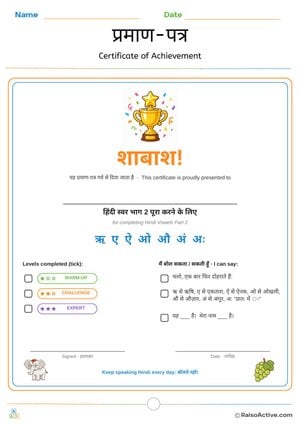
Hindi Vowels Part 2 Certificate of Achievement | प्रमाण-पत्र
Ages 3-7 · Preschool–Grade 1Ages 3-7 · Nursery–Year 2Ages 3-7 · Nursery–Class 1Ages 3-7
A certificate that celebrates finishing the pack, with a place for the child's name, tick boxes for the levels completed, sentences the child can say and space for a signature and date.
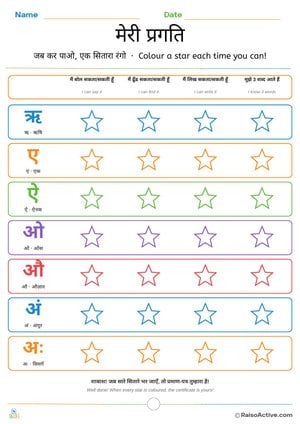
Hindi Vowels Part 2 Progress Tracker | मेरी प्रगति
Ages 3-7 · Preschool–Grade 1Ages 3-7 · Nursery–Year 2Ages 3-7 · Nursery–Class 1Ages 3-7
A progress chart with one row for each letter or sign (ऋ, ए, ऐ, ओ, औ, अं, अः) and four stars to colour: I can say it, I can find it, I can write it and I know 3 words.
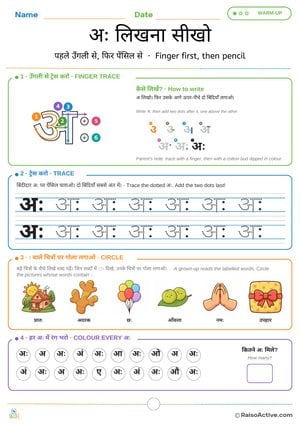
Learn to Write Hindi Visarga अः (ah) – Tracing Worksheet | अः लिखना सीखो
Ages 3-7 · Preschool–Grade 1Ages 3-7 · Nursery–Year 2Ages 3-7 · Nursery–Class 1Ages 3-7
Children learn to write अः step by step: write अ, then add two dots after it, one above the other. They trace with a finger, then a pencil, circle the pictures whose labelled words contain ः (प्रातः, छः, नमः) and colour every अः in a grid.

Written by
Hemsweta Jain · Teacher Cheena
MBA and Early Childhood Educator, teaching since 2014 · Founder of RaisoActive, Mumbai
Published · Last reviewed
Related posts
Understanding Normal Developmental Milestones for 4-Year-Olds: A Comprehensive Guide for Parents and Educators
Discover what your 4-year-old should be doing across language, cognitive, motor, and social domains — plus red flags to watch for and Indian context tips.
Should I Use Formal Assessments with My Preschooler? A Balanced Guide for Parents and Educators
Wondering whether to test your preschooler formally? Explore what early childhood experts say, Indian school traditions, and better alternatives for ages 1-6.
What's the Best Way to Teach Number Formation to Young Children? A Complete Guide
Discover the best methods to teach digit formation (0-9) to young children — stroke sequences, verbal cues, multi-sensory techniques, and fixing common reversals.
Related Resources
Printable Resources(10)
View all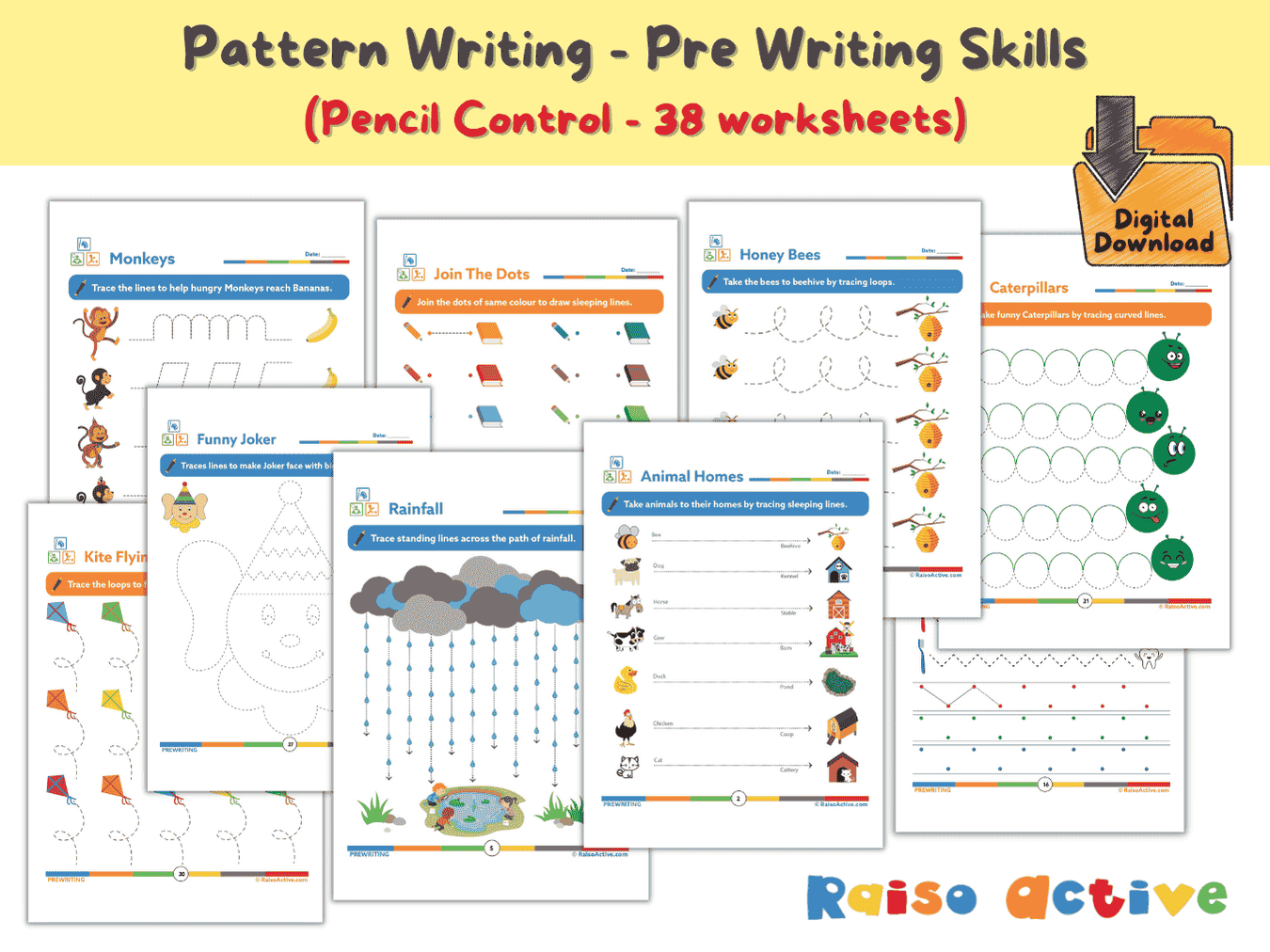

Pattern Writing Pre-writing Skills Activity Book for 3-4 Year Olds
Ages 3-4 · PreschoolAges 3-4 · NurseryAges 3-4 · 44 pages
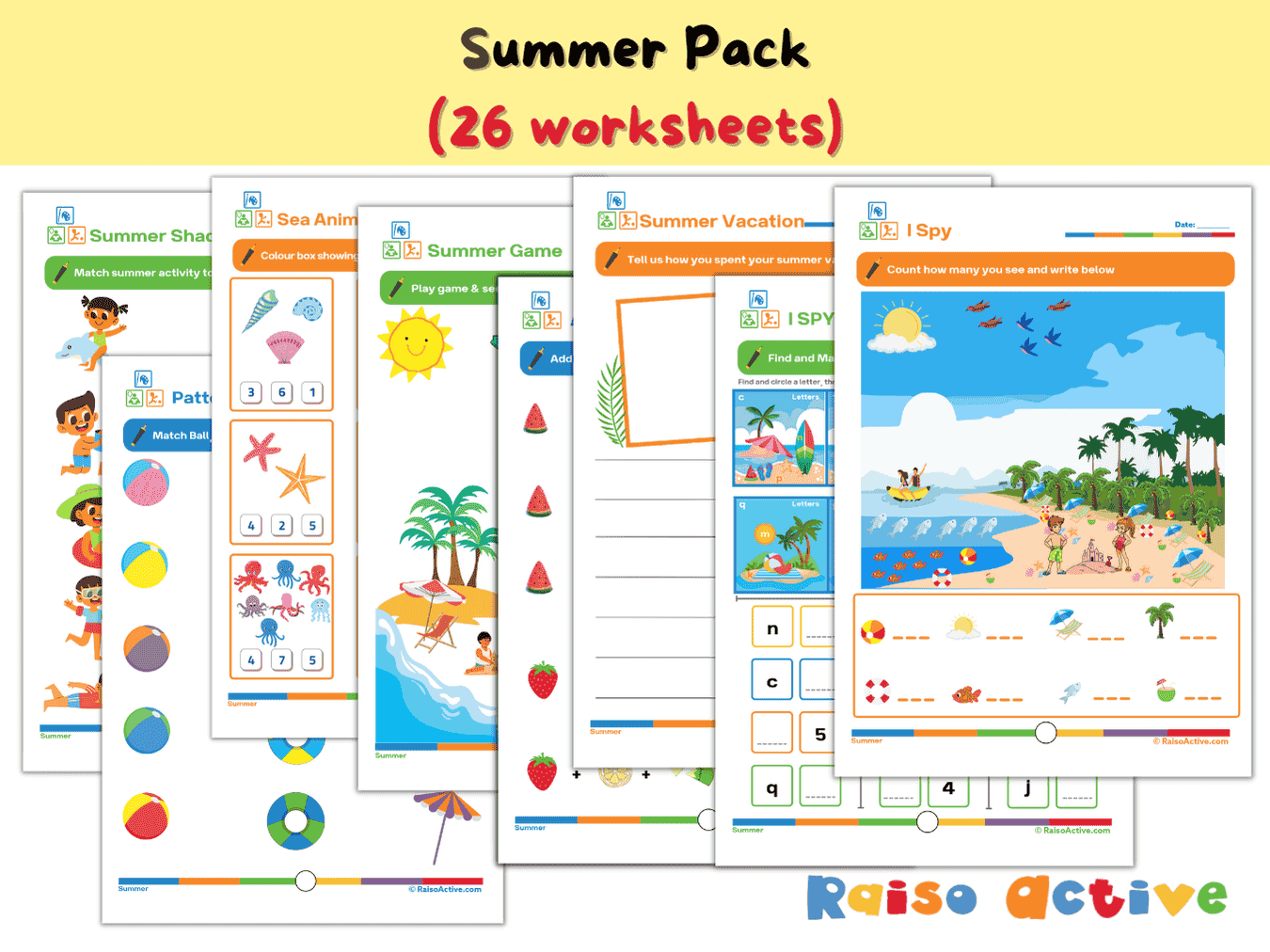

Summer Activity Pack: Math, Literacy, Puzzles & More for Preschool & Kindergarten
Ages 3-7 · Preschool–Grade 1Ages 3-7 · Nursery–Year 2Ages 3-7 · Nursery–Class 1Ages 3-7 · 26 pages
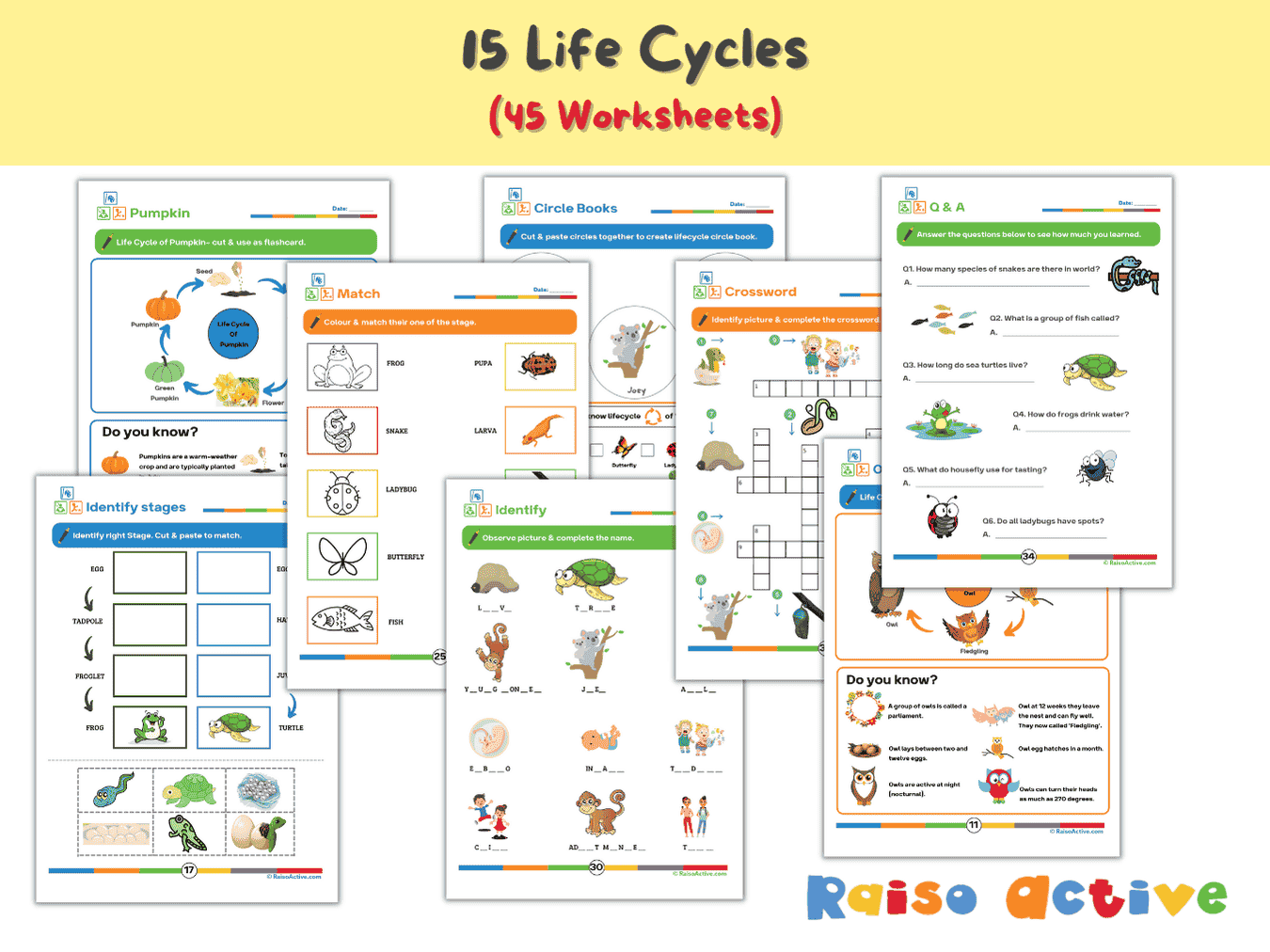

Lifecycles Activity Book & Flashcards for Preschool & Early Elementary
Ages 3-8 · Preschool–Grade 2Ages 3-8 · Nursery–Year 3Ages 3-8 · Nursery–Class 2Ages 3-8 · 46 pages
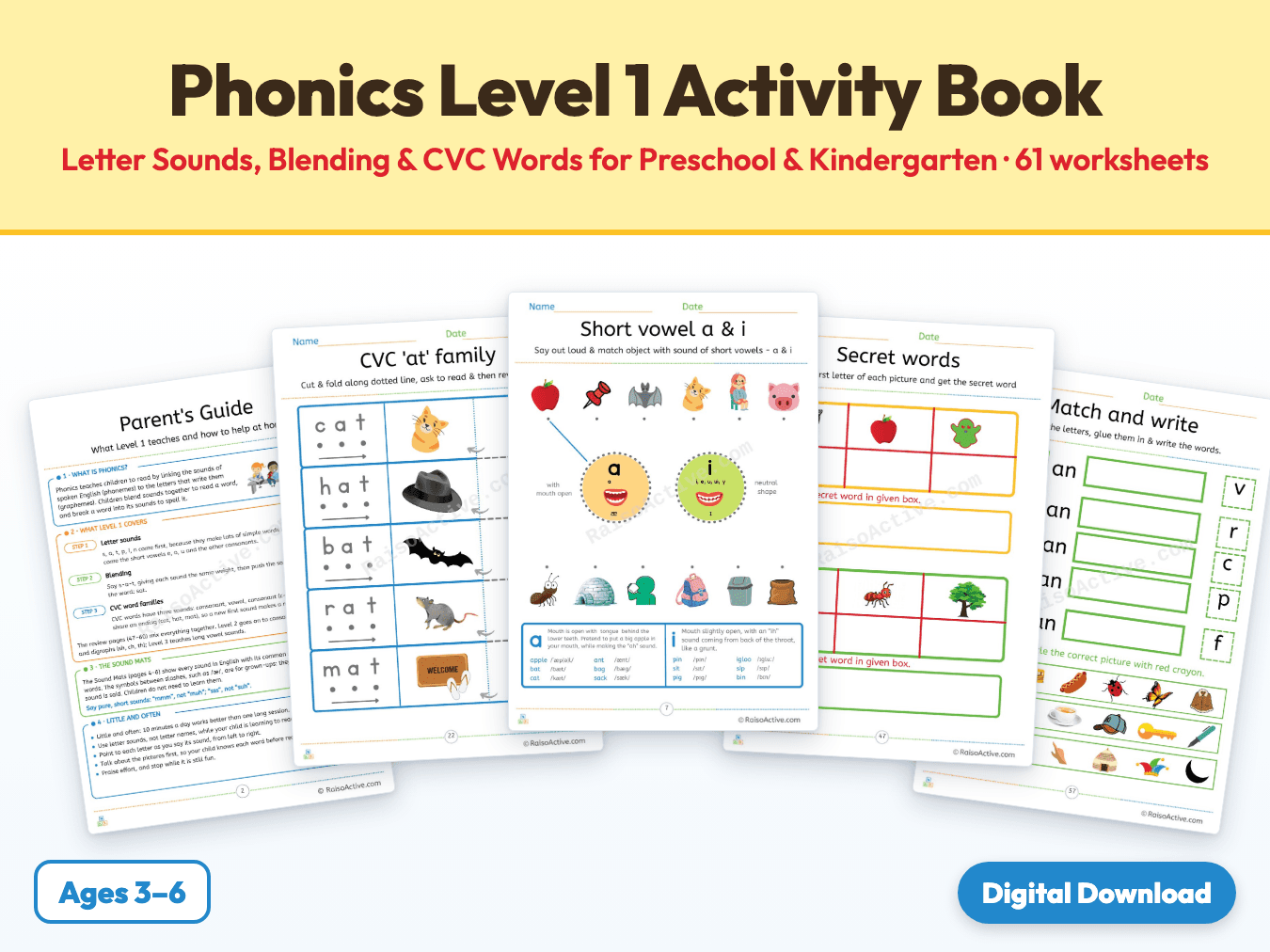

Phonics Level 1 Activity Book: Letter Sounds, Blending & CVC Words for Preschool & Kindergarten
Ages 3-6 · Preschool–KindergartenAges 3-6 · Nursery–Year 1Ages 3-6 · Nursery–UKGAges 3-6 · 62 pages
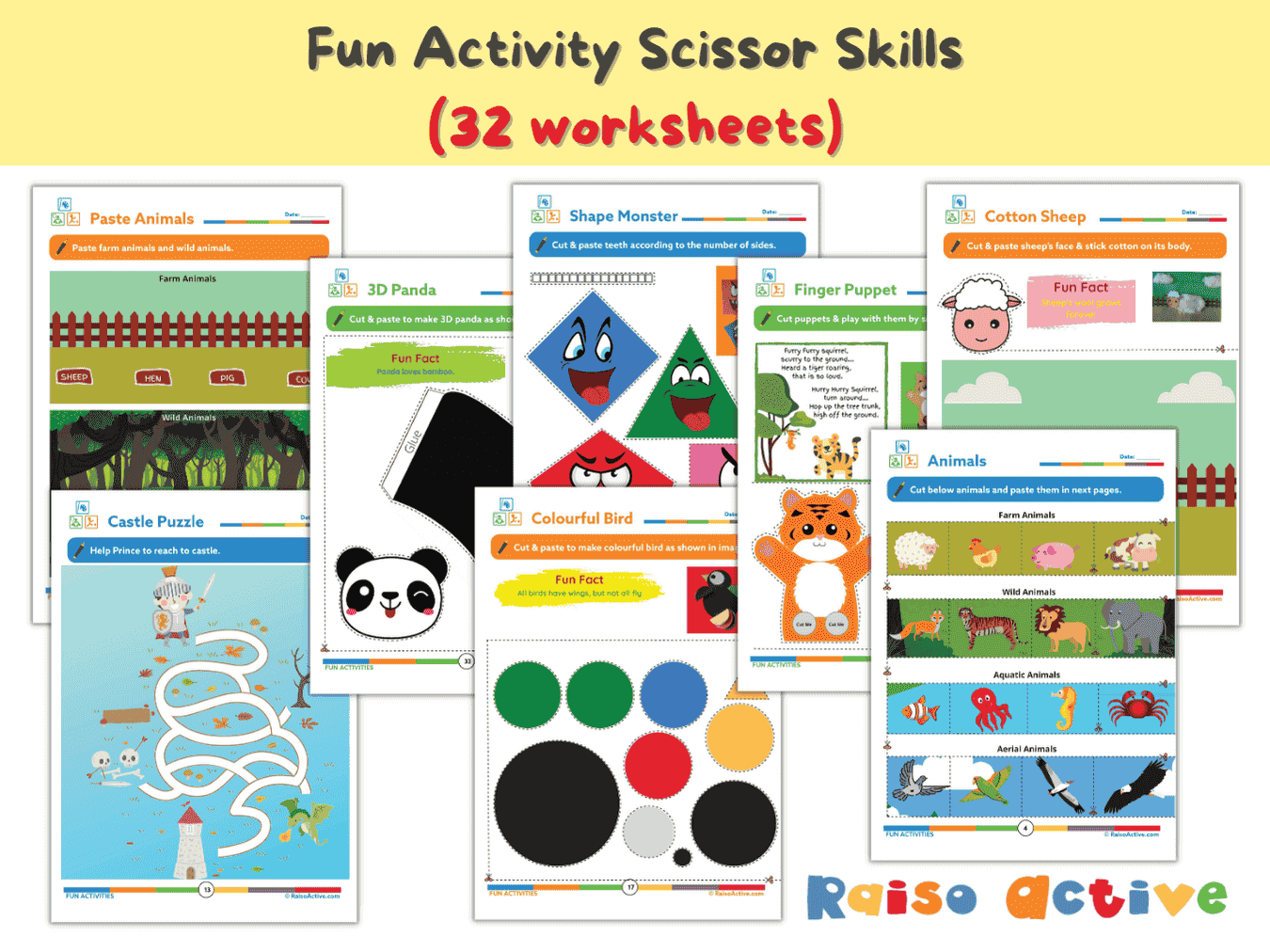
Preschool Scissor Skills Activity Book: Fine Motor & Craft Fun for Ages 3-6
Ages 3-6 · Preschool–KindergartenAges 3-6 · Nursery–Year 1Ages 3-6 · Nursery–UKGAges 3-6 · 35 pages

India's Festivals & Cultural Diversity Activity Book for Kids 4-8
Ages 4-8 · Pre-K–Grade 2Ages 4-8 · Reception–Year 3Ages 4-8 · LKG–Class 2Ages 4-8 · 42 pages
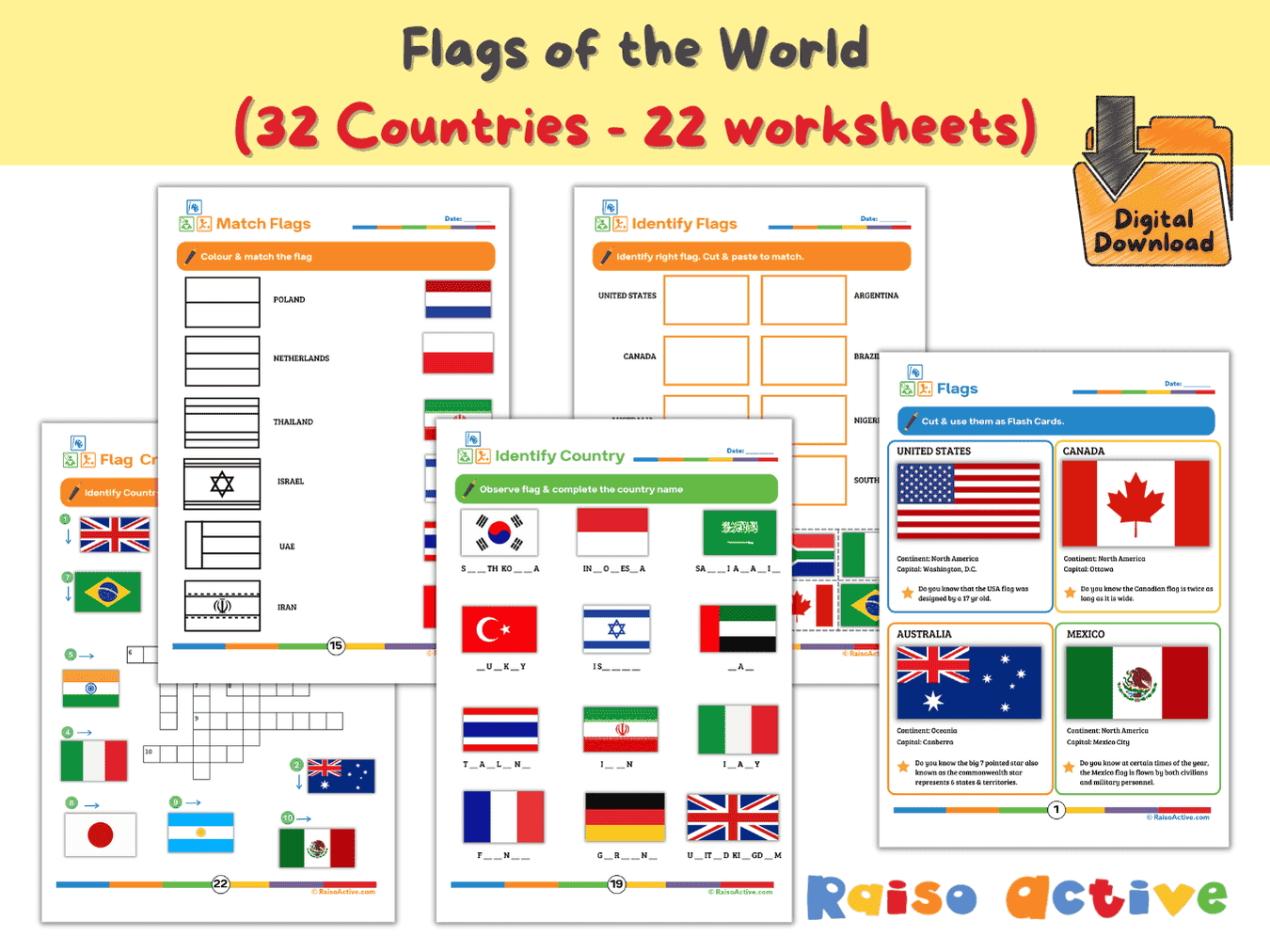
Flags of the World Activity Book & Flashcards for Kids (Ages 5-9)
Ages 5-8 · Kindergarten–Grade 2Ages 5-8 · Year 1–Year 3Ages 5-8 · UKG–Class 2Ages 5-8 · 23 pages
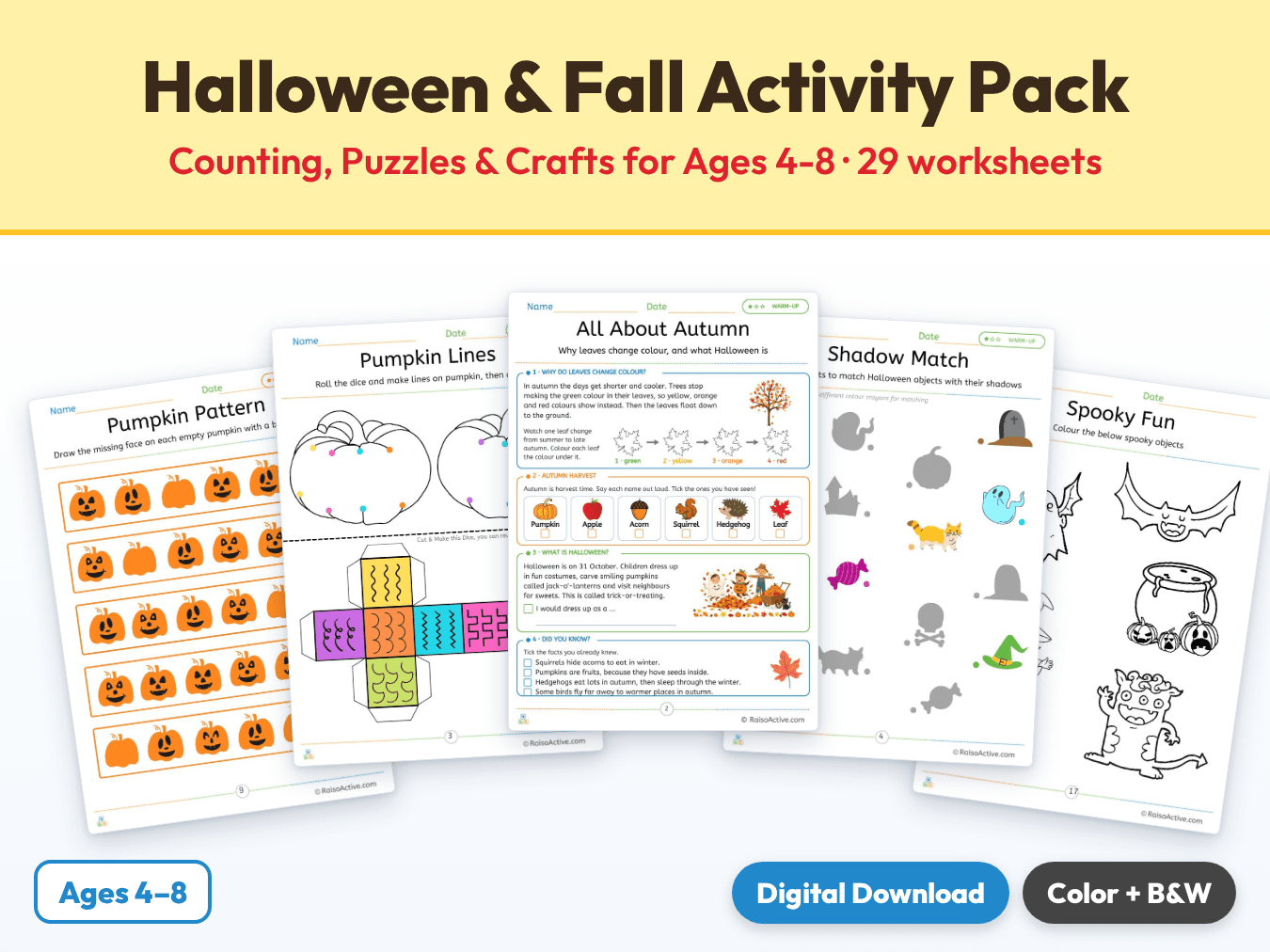
Halloween & Fall Activity Pack: Counting, Puzzles & Crafts for Ages 4-8
Ages 4-8 · Pre-K–Grade 2Ages 4-8 · Reception–Year 3Ages 4-8 · LKG–Class 2Ages 4-8 · 30 pages
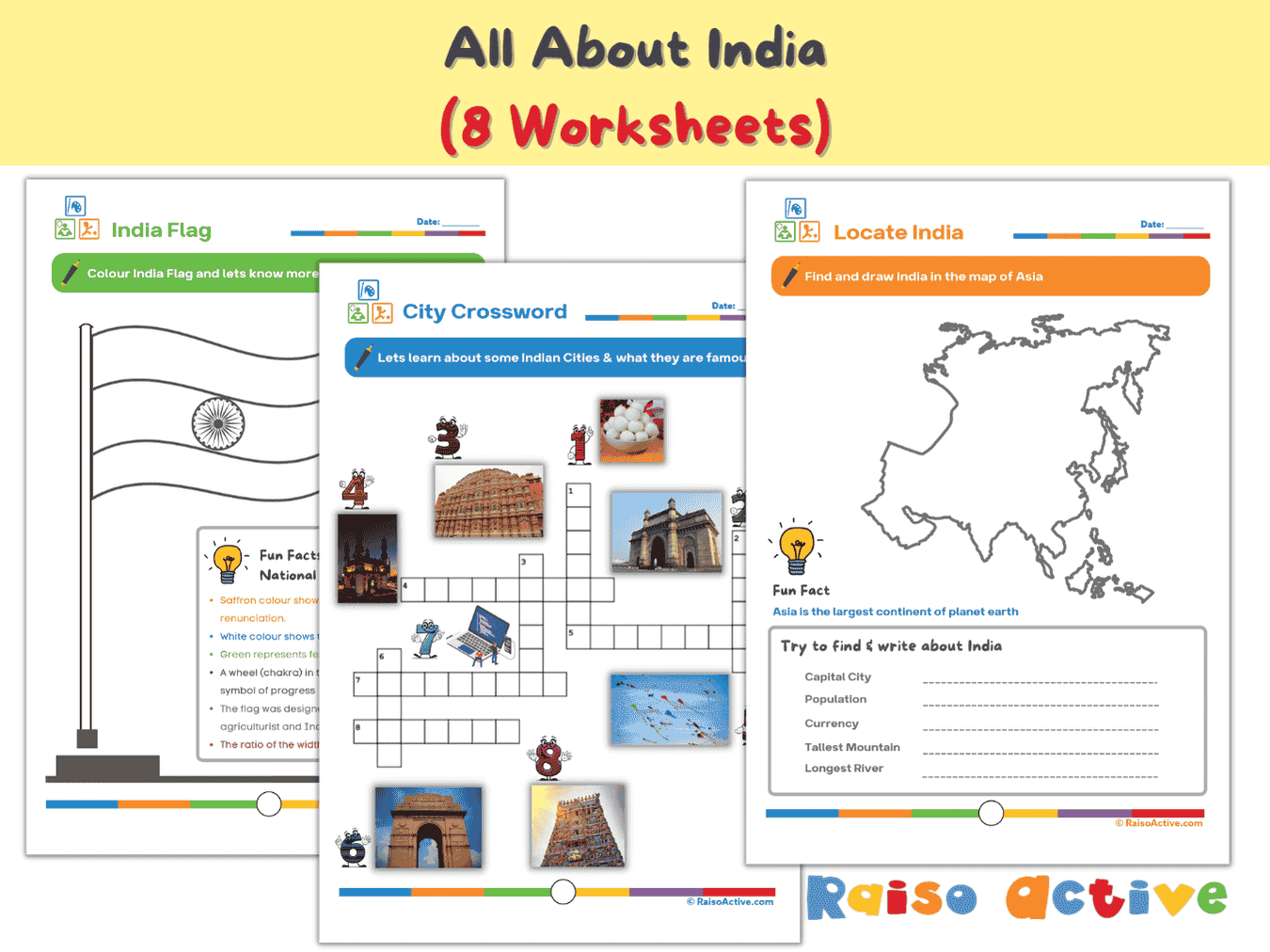
India Activity Book for Kids: Explore Geography, Culture & Symbols (Ages 5-8)
Ages 5-8 · Kindergarten–Grade 2Ages 5-8 · Year 1–Year 3Ages 5-8 · UKG–Class 2Ages 5-8 · 8 pages
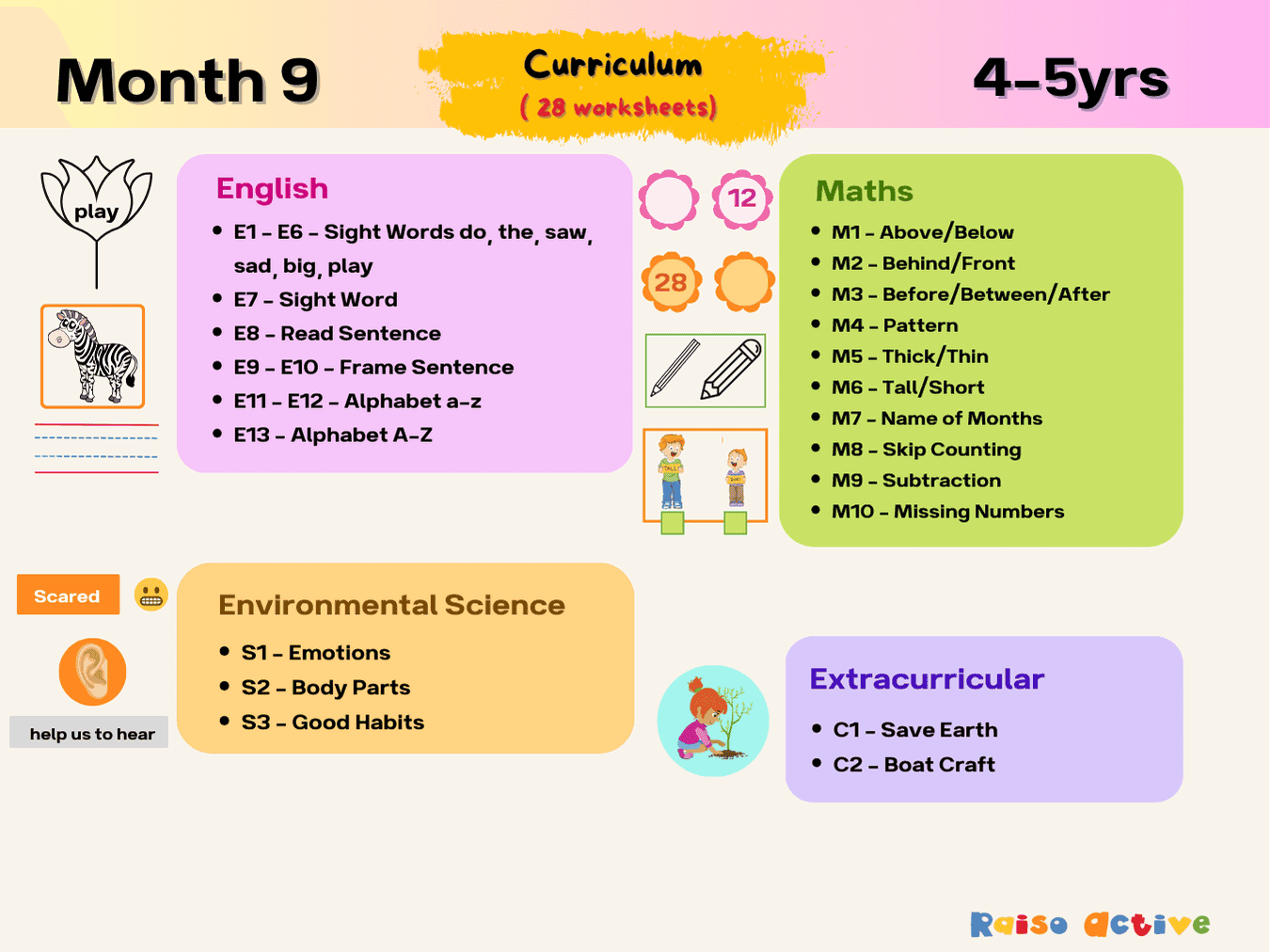
Month 9: Play-Based Preschool Foundational Skills | Ages 4-5
Ages 4-5 · Pre-KAges 4-5 · ReceptionAges 4-5 · LKGAges 4-5 · 31 pages