Cognitive Skills, Early Learning
Age-Appropriate Problem-Solving Activities: Building Critical Thinkers from the Ground Up
Author
RaisoActive - Kids Activities and Fun Learning
Date Published
Reading Time
6 min read

In This Article10 min read
- Problem-solving is a foundational life skill that children begin developing from infancy
- Activities should match your child's developmental stage — too easy leads to boredom, too hard leads to frustration
- Play-based problem-solving builds critical thinking, persistence, and confidence
- Simple household items and printable worksheets are all you need to get started
- This guide covers age-specific activities from toddlers (1-2) through early primary (6-8)
Why Problem-Solving Matters More Than You Think
Every time your toddler figures out how to stack one block on top of another, or your five-year-old works out which puzzle piece fits where, something remarkable is happening inside their brain. Neural pathways are forming, strengthening, and connecting — building the very foundation of critical thinking that will serve them for the rest of their lives.
As parents and educators, we often focus on teaching children what to think — the right answers, the correct spellings, the proper way to do things. But research consistently shows that teaching children how to think is far more valuable. Problem-solving activities are the bridge between these two approaches, helping children develop reasoning skills while keeping learning joyful and engaging.
The good news? You don't need expensive toys or elaborate setups. The best problem-solving activities use simple materials, follow your child's natural curiosity, and feel like play rather than work. In this guide, we'll walk through age-appropriate activities that you can start today — whether you're a parent at home, a teacher in a classroom, or a homeschooling family looking for fresh ideas.
Get weekly activity ideas in your inbox
Join thousands of parents and teachers who receive our curated problem-solving activities every week.
85%
of brain development happens before age 5, making early problem-solving experiences critical for building thinking skills
Source: Harvard Centre on the Developing Child
How Problem-Solving Skills Develop in Young Children
Children don't wake up one morning knowing how to solve problems. Like all developmental skills, problem-solving follows a predictable progression — and understanding this progression helps you choose the right activities at the right time.
Between ages 1-2, children solve problems through trial and error. They bang, drop, push, and pull objects to see what happens. This isn't random — it's scientific experimentation in its purest form. By ages 3-4, children begin using mental representation: they can picture a solution before trying it. They start sorting, categorising, and recognising patterns. By ages 5-6, logical reasoning emerges. Children can follow multi-step instructions, predict outcomes, and explain their thinking. And by ages 7-8, abstract thinking takes root — children can consider multiple solutions, evaluate options, and apply strategies from one problem to another.
Key Takeaway
Match activities to your child's developmental stage, not their age on paper.
Every child develops at their own pace. If an activity feels too easy, move up. If it causes consistent frustration, step back. The sweet spot is where your child feels challenged but not overwhelmed — what psychologists call the "zone of proximal development."
Problem-Solving Activities for Toddlers (Ages 1-2)
At this age, everything is a problem-solving activity. Your toddler is constantly experimenting with cause and effect, spatial relationships, and object permanence. Your role is to provide safe, stimulating environments and resist the urge to solve problems for them.
Simple Activities for Tiny Thinkers
1
Container Play
Give your child containers of different sizes with lids. Let them figure out which lid fits which container. This builds spatial reasoning and fine motor skills simultaneously.
2
Object Retrieval
Place a favourite toy slightly out of reach (on a blanket or behind a cushion). Watch as your child figures out how to pull the blanket or move the cushion to get the toy. This is problem-solving in action!
3
Simple Shape Sorters
Start with 2-3 shapes only. Resist helping immediately — let your toddler rotate, push, and experiment. The "aha moment" when they get it right is pure gold for brain development.
4
Stacking and Nesting
Provide cups, blocks, or boxes of different sizes. Your child will naturally try to stack and nest them, learning about size, balance, and gravity through hands-on experimentation.
👋The Power of Waiting
- When your toddler struggles with a task, count to 10 silently before stepping in
- Offer encouragement ("You're working so hard!") rather than solutions
- If they get frustrated, simplify the task slightly rather than doing it for them
- Celebrate the process, not just the result — "You tried so many different ways!"
Problem-Solving Activities for Preschoolers (Ages 3-4)
This is where problem-solving gets really exciting. Preschoolers are developing symbolic thinking — they can use one thing to represent another, imagine scenarios, and begin to plan ahead. Their growing language skills mean they can start talking through problems, which is a powerful metacognitive tool.
- Pattern recognition activities — Use coloured beads, blocks, or stickers to create simple AB patterns (red-blue-red-blue) and ask your child to continue them
- Sorting challenges — Sort household items by colour, size, shape, or function. "Can you put all the round things together?"
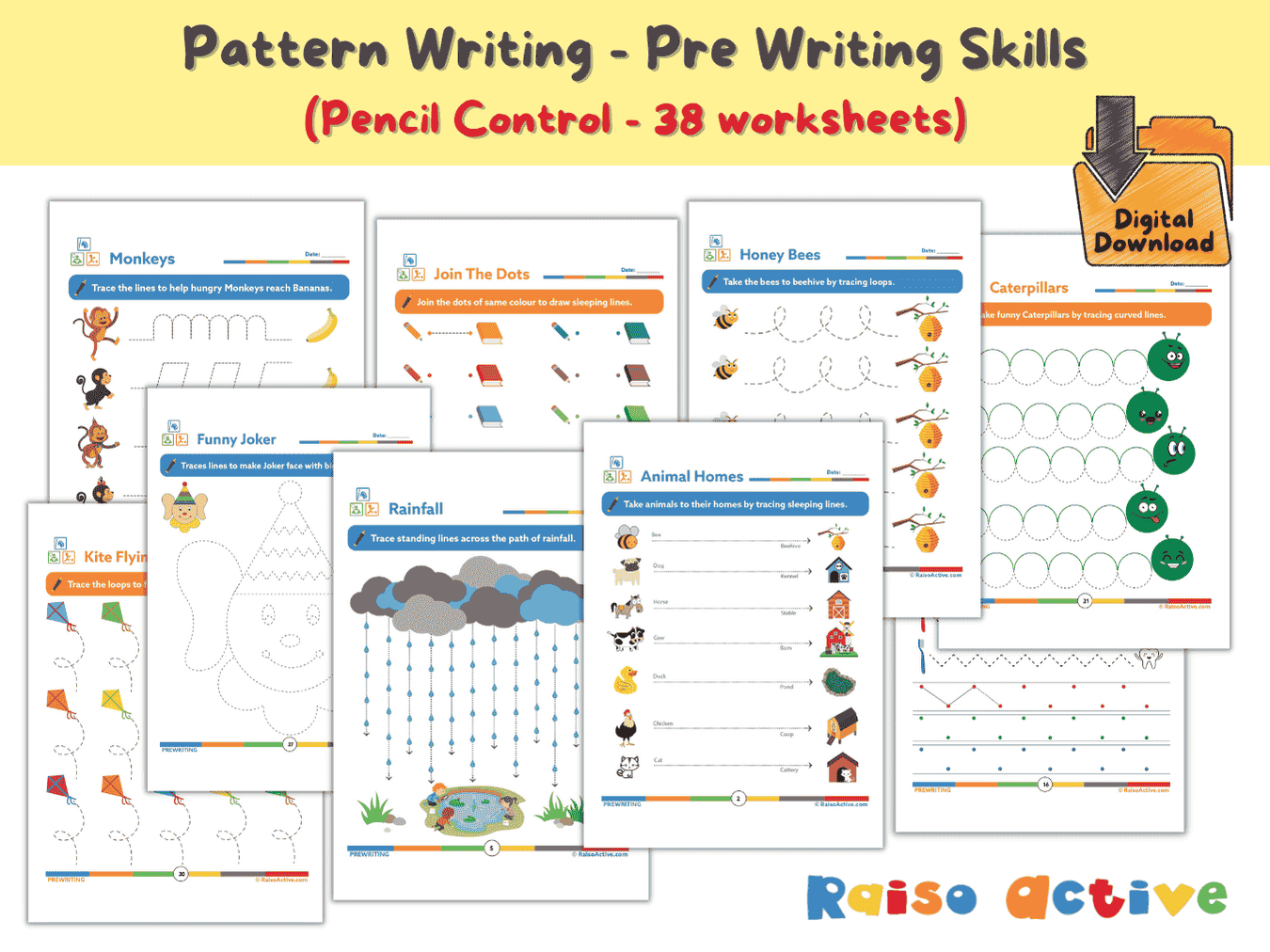
- Simple mazes — Start with wide-path mazes on paper. Tracing the path builds planning skills and visual-spatial reasoning
- Building challenges — "Can you build a tower as tall as this teddy bear?" gives a concrete goal that requires experimentation
- Story problem-solving — While reading stories, pause and ask "What do you think will happen next?" or "What would you do?"
🎨Kitchen Problem-Solving for 3-4 Year Olds
- Ask your child to help sort groceries — "Where do the fruits go? Where do the vegetables go?"
- Let them figure out how many plates are needed for dinner (one-to-one correspondence)
- Give them a simple recipe step: "We need 3 bananas. Can you count them out?"
- Challenge them to fit all the containers back into the drawer (spatial reasoning)
Problem-Solving Activities for Kindergarteners (Ages 5-6)
Five and six-year-olds are logical thinkers in training. They can follow rules, understand sequences, and begin to use deductive reasoning. This is the age where structured problem-solving activities really shine — think puzzles, strategy games, and guided experiments.
In Indian classrooms, this is typically the UKG to Class 1 transition — a period where children are expected to move from play-based learning to more structured academics. The best approach blends both: use structured activities that still feel playful and exploratory.
- Jigsaw puzzles (20-50 pieces) — These build spatial reasoning, patience, and strategic thinking. Teach your child to start with edge pieces and group by colour
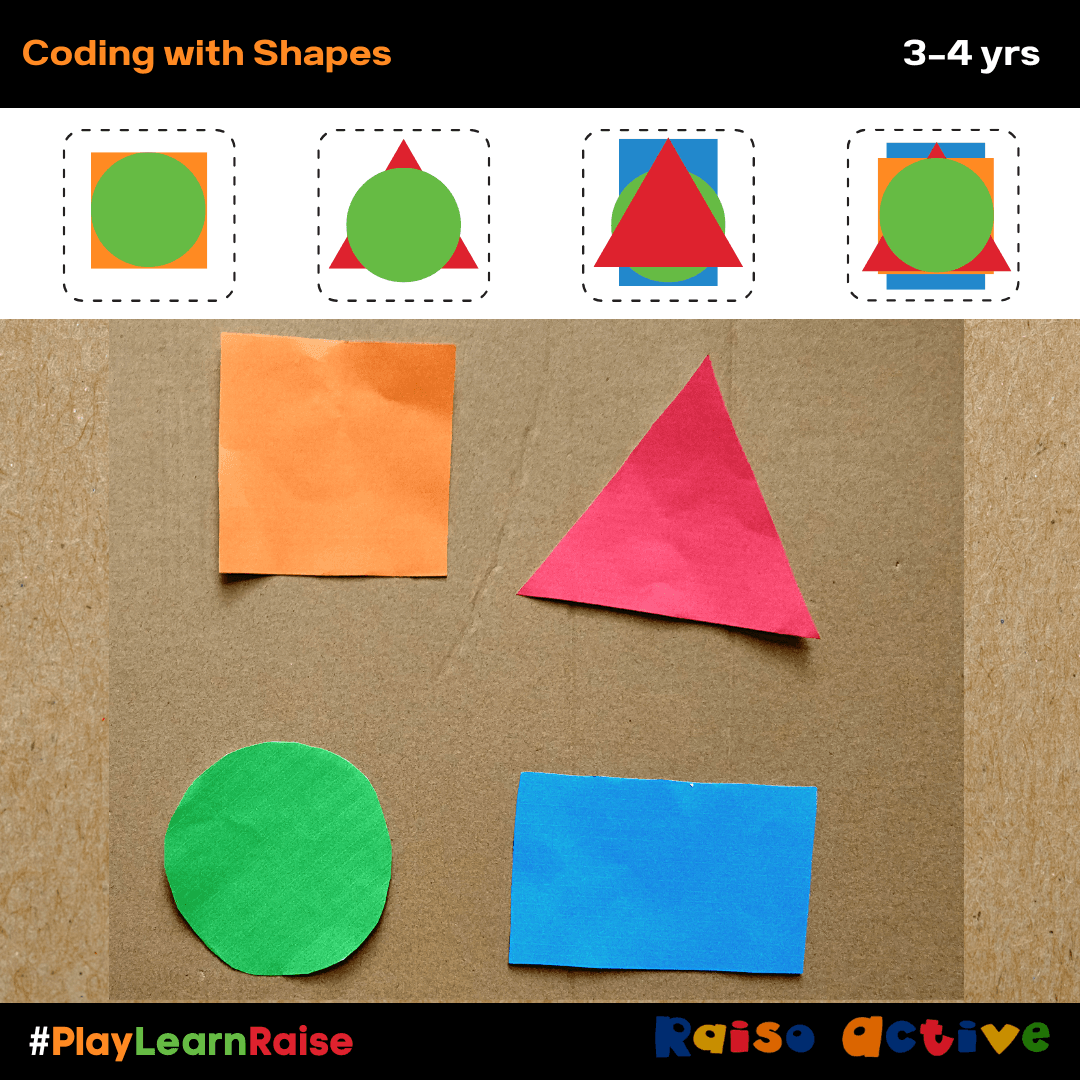
- Tangram challenges — Give children the seven tangram pieces and a silhouette to fill. This ancient Chinese puzzle is brilliant for spatial reasoning and geometric thinking
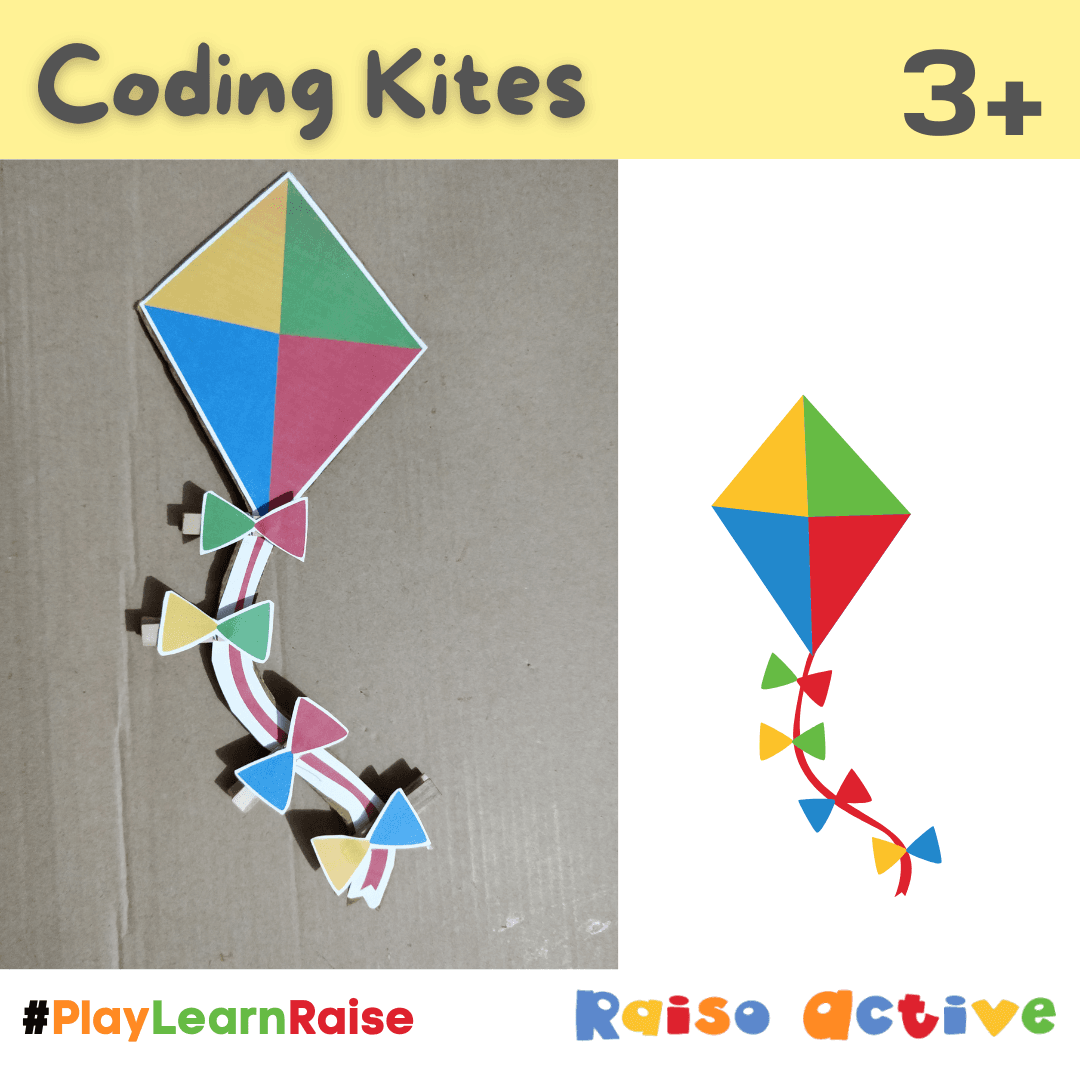
- Simple coding activities — Use grid-based movement activities: "Move the toy 3 steps forward, turn right, move 2 steps." This is computational thinking without a screen
- Pattern continuation with increasing complexity — Move beyond AB patterns to ABC, AAB, and growing patterns (1, 2, 4, 7...)
- Sudoku for beginners — 4x4 picture sudoku introduces logical deduction in a fun, visual format
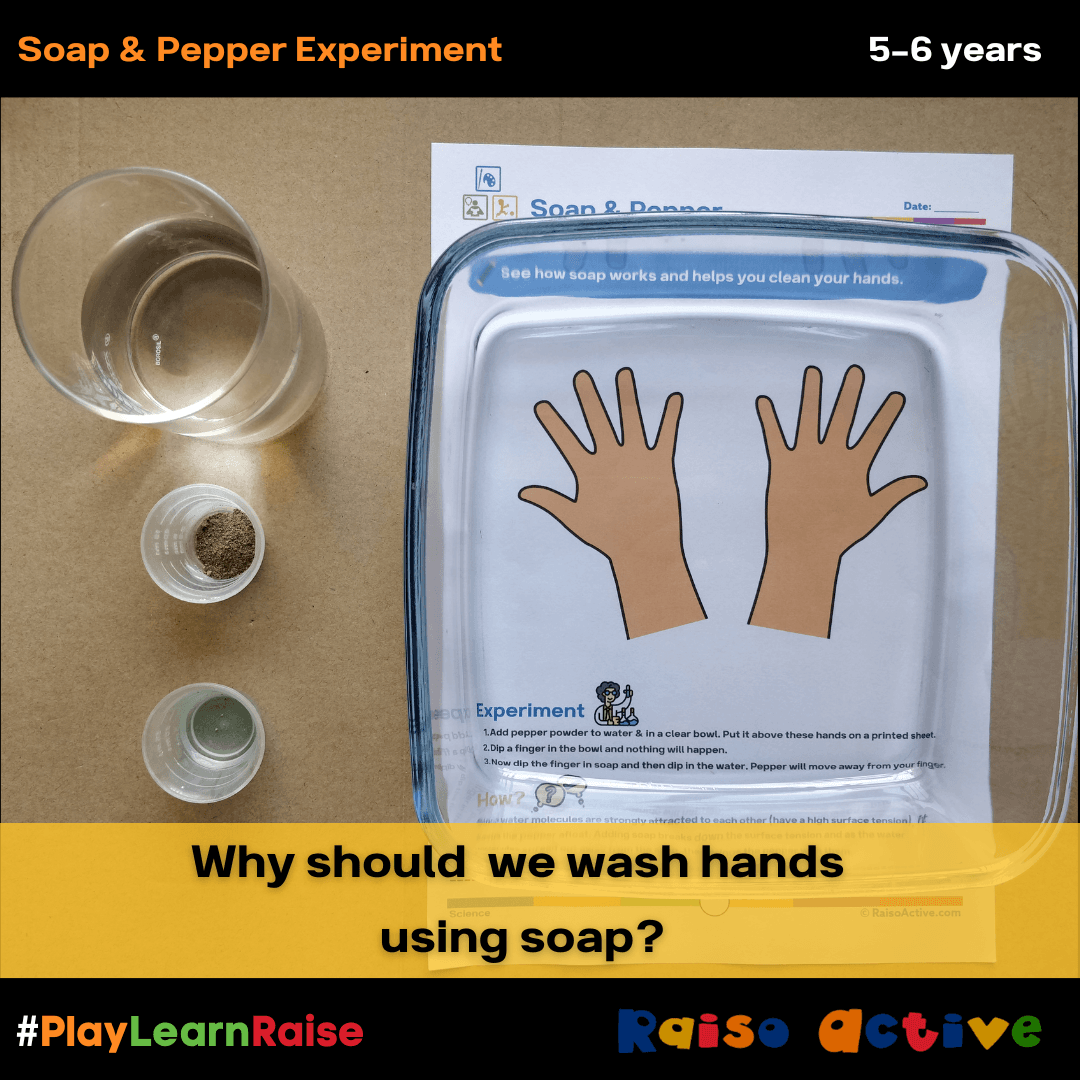
- Science experiments — "What happens when we mix these colours?" or "Which objects float and which sink?" encourage hypothesis formation and testing
73%
of employers rank problem-solving as the most important skill they look for — and its foundations are built in the first 8 years
Source: World Economic Forum Future of Jobs Report
Key Takeaway
The goal is not to find the right answer — it's to develop the thinking process.
When your child solves a problem, ask them "How did you figure that out?" This simple question builds metacognition — awareness of their own thinking — which research identifies as one of the strongest predictors of academic success.
Problem-Solving Activities for Early Primary (Ages 7-8)
By ages 7-8, children can handle multi-step problems, consider multiple solutions, and begin to think abstractly. They're ready for activities that require planning, strategy, and reflection. This is also the age where collaborative problem-solving becomes incredibly valuable — working through challenges with peers teaches negotiation, perspective-taking, and communication.
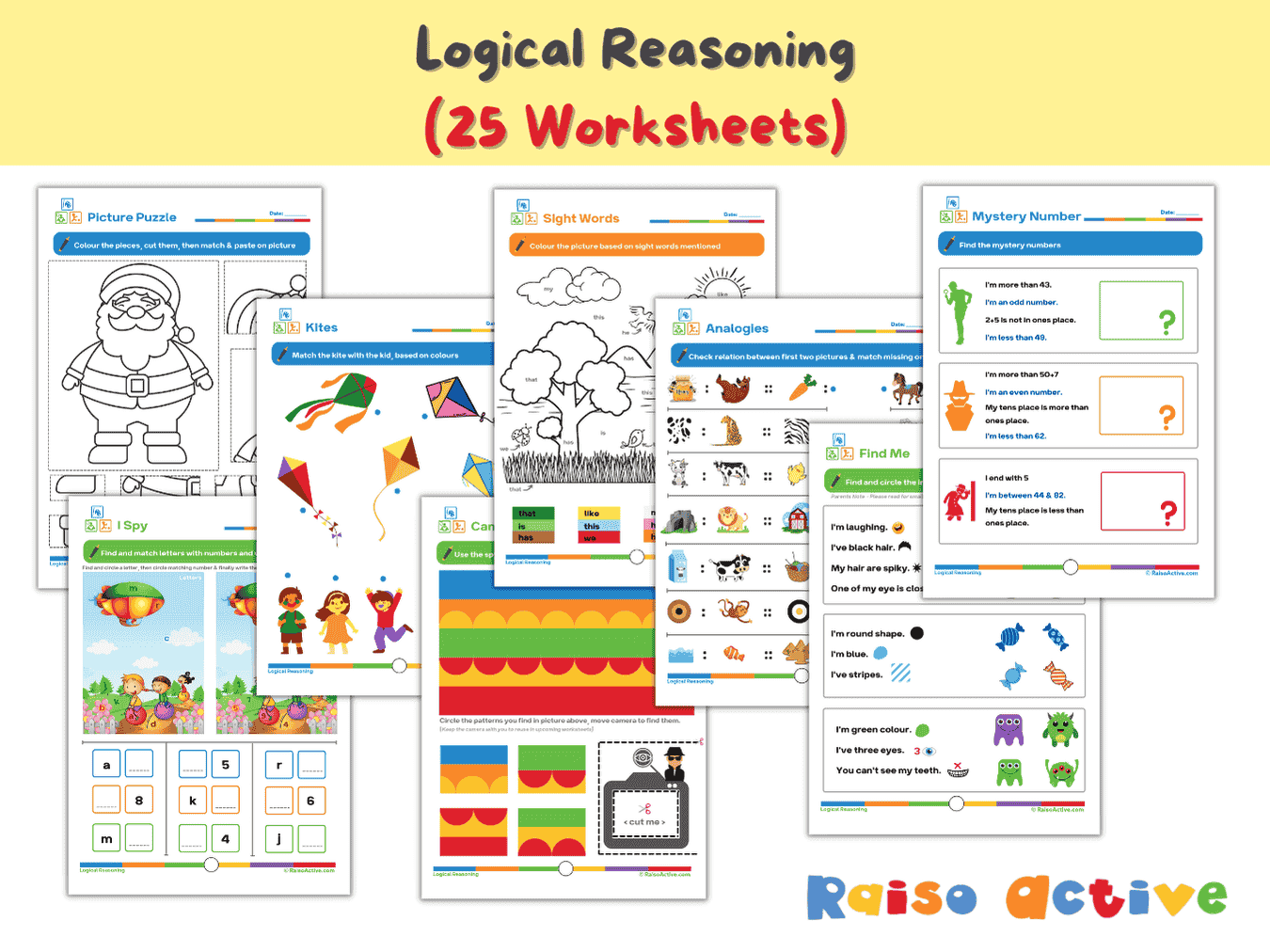
- Logic puzzles and riddles — "I have hands but can't clap. What am I?" builds lateral thinking
- Strategy board games — Chess, checkers, Ludo, and carrom (popular across India) teach planning ahead and considering consequences
- Word problems in maths — Move beyond computation to contextual problems: "If you have 24 sweets and want to share them equally among 6 friends, how many does each person get?"
- Design challenges — "Build a bridge using only paper and tape that can hold a book." Engineering thinking at its finest
- Mystery and detective activities — Give clues and let children piece together information to solve a mystery
- Crossword puzzles and word searches — These build vocabulary, spelling, and pattern recognition simultaneously
Helpful Problem-Solving Support
- +Asking guiding questions: "What could you try next?"
- +Allowing time for struggle and experimentation
- +Celebrating effort and persistence
- +Offering hints that point toward the process
- +Modelling your own problem-solving out loud
Unhelpful Problem-Solving Support
- -Giving the answer immediately
- -Stepping in at the first sign of frustration
- -Only praising correct answers
- -Doing the task for the child to save time
- -Saying "That's easy, just do it like this"
Creating a Problem-Solving Culture at Home
The most powerful thing you can do is normalise struggle. When your child sees you working through a problem — whether it's figuring out a new recipe, fixing something around the house, or navigating an unfamiliar route — narrate your thinking out loud. "Hmm, this isn't working. Let me try a different approach." This teaches children that problems are normal, solvable, and even enjoyable.
Building a Problem-Solving Mindset
1
Name the Problem
Help your child articulate what's going wrong. "So the tower keeps falling down. What do you think is happening?" Naming the problem is the first step to solving it.
2
Brainstorm Solutions
Ask "What are some things you could try?" Accept all ideas without judgement — even silly ones. This builds creative thinking and confidence.
3
Try One Solution
Let your child pick one idea to test. Even if you know it won't work, the learning from failure is invaluable.
4
Reflect and Adjust
After trying, ask "Did that work? What happened? What could you change?" This reflection cycle is the heart of critical thinking.
5
Celebrate the Process
Whether or not they "solved" the problem, acknowledge the thinking: "You tried three different ideas and didn't give up. That's what real problem-solvers do."
⚠️Common Pitfalls to Avoid
- Avoid labelling your child as not a problem-solver — this creates a fixed mindset
- Avoid time pressure during problem-solving activities — rushing kills creative thinking
- Avoid comparing your child's approach to other children's — there are many valid paths to a solution
- Resist buying problem-solving toys that have only one correct answer — open-ended materials are more valuable
Key Takeaway
The best problem-solving tool is a patient adult who asks good questions.
Expensive educational toys are optional. What truly builds critical thinking is a supportive adult who resists giving answers, asks thoughtful questions, and creates a safe space for children to struggle, fail, and try again.
Problem-Solving Across the Curriculum
Problem-solving isn't just a maths skill — it shows up in every area of learning. Here's how to weave it into your child's daily experience:
- Literacy — Predicting story endings, figuring out unfamiliar words using context clues, and sequencing story events all require problem-solving
- Maths — Beyond computation, encourage children to solve problems in multiple ways. "Can you think of another way to make 10?"
- Science — Every experiment is a problem-solving exercise. "What do you think will happen? Let's find out!"
- Art — Open-ended art projects ("Make something that moves") are brilliant problem-solving challenges
- Social situations — "Your friend wants the same toy. What could you both do?" is real-world problem-solving at its most important
Unlimited Access
Ready to Raise a Critical Thinker?
Get age-appropriate problem-solving worksheets, activity ideas, and parenting tips delivered to your inbox every week. Join our community of thoughtful parents and educators.
All worksheets & activitiesNew content weeklyDownload unlimited times
Subscribe NowFrequently Asked Questions
At what age should I start problem-solving activities with my child?
You can start from infancy! Even a 6-month-old reaching for a toy that's slightly out of reach is problem-solving. For structured activities, simple sorting and shape-matching can begin around 18 months. The key is to match the complexity of the activity to your child's developmental stage. If they're interested and engaged, they're ready.
My child gets very frustrated when they can't solve something. How do I handle this?
Frustration during problem-solving is normal and even healthy in small doses — it means your child is being challenged. Acknowledge the feeling first: "I can see this is really frustrating." Then offer a scaffolded hint rather than the answer: "What if you tried turning it the other way?" If frustration is consistently overwhelming, the activity may be too advanced. Step back to an easier version and build up gradually. Teaching children to manage frustration is itself a critical problem-solving skill.
Are screen-based problem-solving games (apps, tablets) as effective as hands-on activities?
Research suggests that hands-on, manipulative-based activities are more effective for young children (under 6) because they engage multiple senses and build spatial awareness that screens cannot replicate. However, well-designed educational apps can complement hands-on learning for older children. The key is balance: prioritise physical materials and real-world problem-solving, and use screens as a supplement rather than a replacement. Look for apps that encourage open-ended thinking rather than just tapping the right answer.
How is problem-solving different from critical thinking?
Problem-solving is finding a solution to a specific challenge — like figuring out how to build a bridge that doesn't collapse. Critical thinking is the broader ability to analyse information, question assumptions, and make reasoned judgements. Problem-solving is one expression of critical thinking. When children regularly engage in problem-solving activities and are encouraged to reflect on their thinking process, they naturally develop critical thinking skills. The two are deeply interconnected.
What if my child always wants me to solve problems for them?
This is very common and usually means the child has learned that asking an adult is the fastest route to a solution. Gradually shift your role from problem-solver to problem-solving coach. Instead of answering, respond with questions: "What do you think we should try?" or "You solved something similar yesterday — what did you do then?" Start with easier challenges where success is likely, building their confidence that they can figure things out independently. It takes patience, but the payoff in confidence and resilience is enormous.
How much time should my child spend on problem-solving activities each day?
There's no magic number, but 15-20 minutes of focused, age-appropriate problem-solving activity daily is a great starting point. More important than duration is quality: a child deeply engaged in a 10-minute puzzle is getting more benefit than 30 minutes of a too-easy activity. Also remember that problem-solving happens naturally throughout the day — getting dressed, helping in the kitchen, negotiating with siblings. You're probably doing more problem-solving practice than you realise!