Cognitive Skills, Early Learning, Parenting & Homeschool
Critical Thinking Activities That Actually Work for Young Children: Building Tomorrow's Thinkers Today
Author
RaisoActive - Kids Activities and Fun Learning
Date Published
Reading Time
6 min read

In This Article9 min read
- Critical thinking can be nurtured from as early as age 2 through play-based activities
- Simple questioning techniques transform everyday moments into thinking opportunities
- Sorting, classifying, and predicting are powerful logic activities children love naturally
- A thinking-friendly home culture matters more than expensive educational toys
- Research shows early critical thinking skills predict later academic success across subjects
Why Critical Thinking Matters More Than Ever
If you have ever watched a toddler examine a ladybird with the intensity of a scientist peering through a microscope, you already know something important: young children are born thinkers. They question, compare, test, and wonder — all before they can tie their own shoelaces.
Yet somewhere between preschool and primary school, many children begin to lose that instinct. They learn to look for the "right" answer instead of asking better questions. They memorise rather than reason. And by the time formal education ramps up, the gap between children who think critically and those who simply recall information becomes strikingly clear.
The good news? Critical thinking activities for kids do not require fancy curricula or expensive materials. What they do require is intentional practice — and parents and teachers are perfectly placed to provide it. In this guide, we will walk through activities, techniques, and mindset shifts that genuinely build thinking skills in preschool and early primary years.
What Exactly Is Critical Thinking in Young Children?
Before diving into activities, let us clarify what critical thinking actually looks like at ages 2 to 8. It is not about solving complex puzzles or debating philosophy (though some four-year-olds might try!). At its core, critical thinking for young children means the ability to observe, compare, question, predict, and reason — skills that form the foundation for every subject they will ever study.
- Observation — Noticing details others miss ("That leaf has five points, but this one has three!")
- Comparison — Finding similarities and differences between objects, ideas, or experiences
- Classification — Sorting items by rules and creating new categories
- Prediction — Guessing what might happen next and explaining why
- Reasoning — Connecting cause and effect ("The ice cream melted because we left it in the sun")
70% of the brain's neural connections form by age 3
Early exposure to thinking activities helps shape neural pathways responsible for logic and reasoning, making the preschool years a critical window for cognitive development.
Source: Harvard Center on the Developing Child
Critical Thinking Activities by Age Group
Ages 2–3: The Little Explorers
Toddlers are sensory learners. They understand the world by touching, tasting, and testing boundaries. Logic activities for children this age should be simple, hands-on, and embedded in play.
🎨Activities for Ages 2–3
- **Sorting by colour or size** — Give your child a bowl of mixed dal (lentils) or buttons and ask them to sort into cups. Start with two categories, then add more.
- **"Which one is different?"** — Place three identical spoons and one fork on the table. Ask which one does not belong.
- **Texture baskets** — Collect rough, smooth, soft, and hard objects. Let children feel and group them.
- **Prediction play** — Before dropping a ball, ask "Will it bounce or roll?" Then test it together.
Ages 3–5: The Curious Questioners
This is the glorious "why?" stage. Children at this age are primed for thinking skills development — their curiosity is relentless and their imagination is limitless. The trick is to harness that curiosity rather than simply answering every question.
The "What Would Happen If...?" Game
1
Choose a familiar scenario
Pick something from daily life — cooking, getting dressed, going to the park.
2
Pose an imaginative question
Ask "What would happen if we put ice cubes in hot chai?" or "What if dogs could talk?"
3
Let your child reason freely
Resist correcting. Let them build their own logic, even if it is fantastical.
4
Test when possible
If the question is testable (like the ice cube one), try it! Observe together and discuss.
5
Reflect together
Ask "Was your guess right? What surprised you?" This builds metacognition — thinking about thinking.
Other excellent activities for this age group include sequencing picture cards (what comes first, next, last?), odd-one-out games, and story prediction — pausing mid-story to ask "What do you think will happen next?"
Key Takeaway
Children aged 3–5 learn to think critically not by being given answers, but by being asked better questions.
Turn their "why?" back on them with "Why do YOU think that happens?" This one shift transforms passive curiosity into active reasoning.
Ages 5–8: The Young Reasoners
By age five, children can handle more structured logic activities. They can follow multi-step instructions, understand basic cause and effect, and begin to argue a point (as every parent of a six-year-old can confirm!). Critical thinking activities for kids in this age range should challenge them just enough to stretch their abilities without causing frustration.
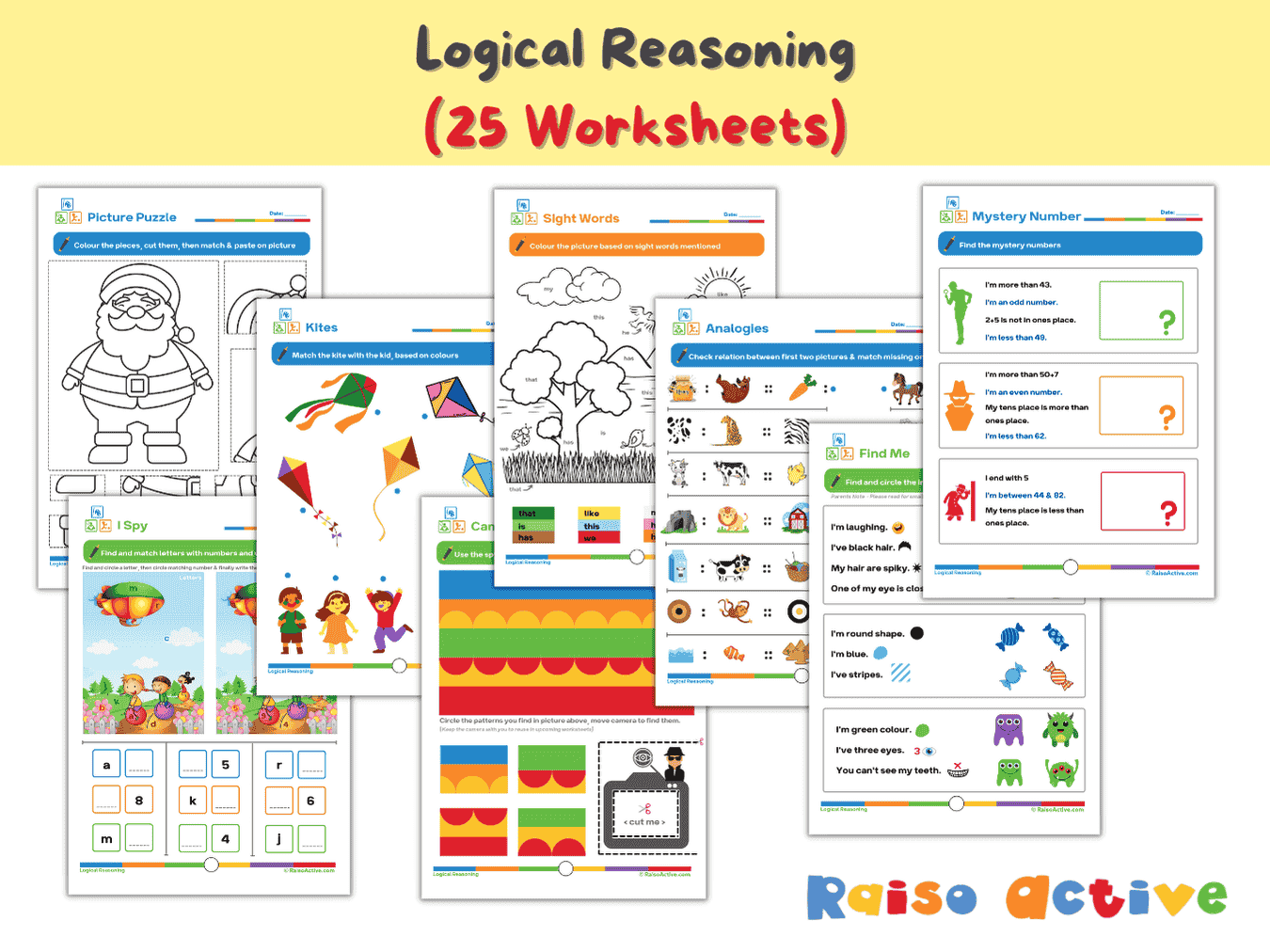
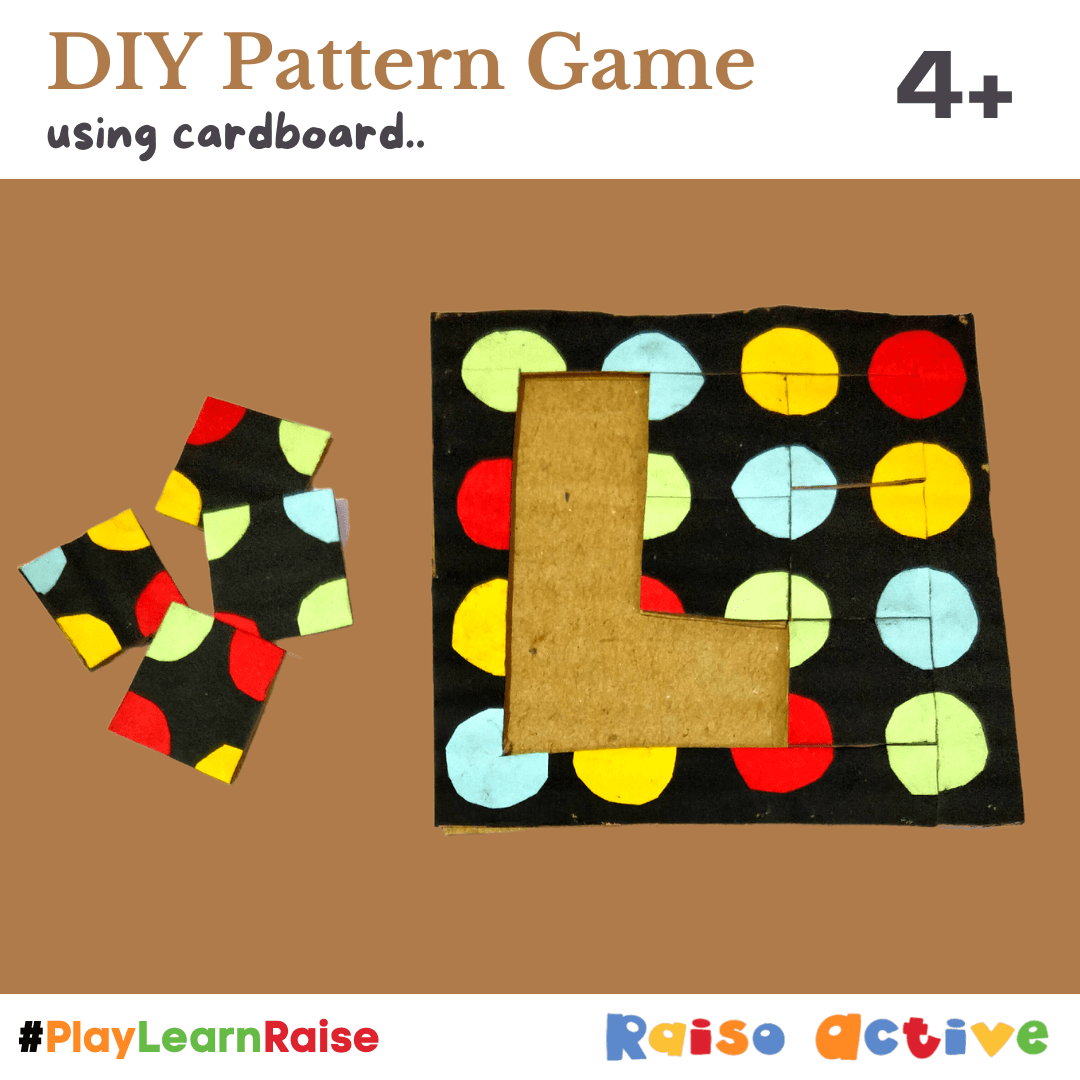
- Pattern recognition worksheets — Completing visual patterns builds logical reasoning
- Simple sudoku and logic grids — Start with 4x4 grids and picture-based clues
- "Two truths and a fib" — Share three statements; let children identify the false one and explain why
- Categorisation challenges — "Sort these animals into groups. Now sort them a DIFFERENT way." This teaches flexible thinking
- Mystery bag — Place an object inside a cloth bag. Children ask yes/no questions to identify it, building deductive reasoning
- Building challenges — "Build the tallest tower using only 10 blocks." Then discuss: "Why did your tower fall? What would you change?"
Questioning Techniques That Build Thinking Skills
The single most powerful tool for developing critical thinking in children is not a worksheet or a toy — it is the questions you ask. Research consistently shows that the type of question matters far more than the number of questions. Here is the difference:
Closed Questions (Less Effective)
- +"What colour is this?"
- +"Did you like the story?"
- +"Is this a triangle?"
- +"What sound does a cow make?"
Open-Ended Questions (More Effective)
- -"How are these two colours different?"
- -"What would you change about the story?"
- -"How do you know it is a triangle?"
- -"Why do you think cows moo but dogs bark?"
Open-ended questions invite children to observe, reason, compare, and justify — the very core of critical thinking. You do not need to eliminate closed questions entirely, but aim for a healthy mix with emphasis on how, why, what if, and how do you know.
💡The 3-Question Habit
- After any activity or experience, ask these three questions consistently:
- **1. What did you notice?** (Observation)
- **2. Why do you think that happened?** (Reasoning)
- **3. What would happen if we changed something?** (Prediction)
- Over time, children will begin asking these questions themselves — that is when real critical thinking takes root.
Building a Thinking Culture at Home
Activities and techniques are valuable, but they work best within a home environment that genuinely values thinking. This does not mean turning your living room into a classroom. It means creating a culture where curiosity is celebrated, mistakes are learning opportunities, and "I don't know — let's find out!" is a favourite family phrase.
Everyday Moments as Thinking Opportunities
You do not need dedicated "thinking time" to develop critical thinking skills in preschool-aged children. The richest opportunities hide in daily routines:
- Cooking together — "Why do we add baking powder? What happens if we skip it?" Predict, then test.
- Grocery shopping — "We need 6 bananas. There are 4 in the bunch. How many more do we need?"
- Getting dressed — "It is raining today. Which shoes should we wear and why?"
- Bedtime stories — Pause and ask "What would YOU do if you were this character?"
- Nature walks — "Why do you think this tree has no leaves but that one does?"
Children asked open-ended questions score 40% higher on reasoning assessments
A longitudinal study found that children whose parents regularly used open-ended questioning during ages 3–5 significantly outperformed peers in reasoning tasks by age 7.
Source: Early Childhood Research Quarterly, 2019
The Role of Mistakes and Struggle
One of the most important things you can do for your child's thinking development is to let them struggle productively. When a child is building a block tower and it keeps falling, the instinct to jump in and fix it is strong. But that moment of frustration — that pause where they study the fallen blocks and try again differently — is where critical thinking lives.
Key Takeaway
Productive struggle is not the same as frustration. The difference lies in your support.
Stay present, offer encouragement ("You are really thinking hard about this!"), and ask guiding questions rather than providing solutions. Step in only when frustration becomes overwhelming.
👋What to Say When Your Child Is Stuck
- Instead of "Let me do it for you," try "What have you tried so far?"
- Instead of "That is wrong," try "Interesting! What makes you think that?"
- Instead of "Here is the answer," try "Where could we look to find out?"
- Instead of "Be careful," try "What do you think might happen if you do that?"
Screen Time That Builds Thinking
While hands-on activities are ideal, screen time can also support critical thinking when used intentionally. Choose apps and programmes that require problem-solving rather than passive consumption. Puzzle games, coding apps designed for young children, and interactive story apps where children make choices are all excellent options. The key is to sit with your child and discuss what they are doing — turning screen time into thinking time.
Common Mistakes That Hinder Critical Thinking
Even well-meaning parents and educators sometimes inadvertently shut down critical thinking. Being aware of these pitfalls helps you avoid them:
- Rushing to correct — When a child gives an "incorrect" answer, immediately correcting them teaches them to fear being wrong rather than to reason through mistakes.
- Over-praising results — Saying "You are so smart!" focuses on innate ability. Try "I love how you figured that out!" to praise the process of thinking.
- Providing too much structure — Every activity having a predetermined outcome leaves no room for creative thinking. Allow open-ended exploration.
- Answering every "why" — It is tempting to show off your knowledge, but turning the question back ("What do YOU think?") builds independence.
- Avoiding messy play — Sensory exploration, mixing, pouring, and experimenting are inherently messy — and inherently valuable for developing thinking skills.
Key Takeaway
The goal is not to raise children who always have the right answer, but children who know how to find it.
Critical thinking is a process, not an outcome. Focus on nurturing the habits of observation, questioning, and reasoning rather than memorising correct responses.
Getting Started: Your First Week of Thinking Activities
Feeling inspired but unsure where to begin? Here is a simple plan to introduce critical thinking activities into your week without overwhelming yourself or your child:
A Simple 7-Day Thinking Kickstart
1
Day 1 — Sorting Fun
Gather household items (spoons, socks, fruits). Ask your child to sort them into groups — then sort them again using different rules.
2
Day 2 — Story Predictions
During storytime, pause three times and ask "What do you think will happen next?" Discuss their reasoning.
3
Day 3 — Nature Detective
Go on a walk and collect five natural items. At home, ask "How are these the same? How are they different?"
4
Day 4 — Building Challenge
Give your child 15 blocks or Lego pieces. Challenge: "Build something that can hold a book." Discuss what worked and what did not.
5
Day 5 — Cooking Scientist
While making a simple recipe (like chapati dough), ask "What happens if we add more water? Less flour?" Let them predict and test.
6
Day 6 — Odd One Out
Play odd-one-out with pictures, toys, or real objects. Start easy and increase complexity. Always ask "How did you decide?"
7
Day 7 — Reflection Day
Ask your child: "What was your favourite activity this week? What did you learn?" This builds metacognition — awareness of their own thinking.
💡Remember: Progress Over Perfection
- You do not need to do every activity perfectly. Even five minutes of thoughtful questioning during a meal makes a difference.
- Follow your child's interests — a child fascinated by insects will engage more with bug-sorting than shape-sorting.
- Celebrate the process: "I loved watching you think about that!" matters more than "Good job getting the right answer."
Unlimited Access
Want More Activities Like These?
Subscribe to get weekly thinking activities, printable worksheets, and expert tips delivered to your inbox — completely free.
All worksheets & activitiesNew content weeklyDownload unlimited times
Subscribe NowFrequently Asked Questions About Critical Thinking for Kids
At what age can children start developing critical thinking skills?
Children begin developing basic critical thinking skills from around 18 months to 2 years, when they start sorting objects, recognising patterns, and understanding cause and effect. You can introduce simple activities like sorting by colour or predicting what happens next from this age onwards.
How is critical thinking different from intelligence?
Intelligence refers to cognitive ability, while critical thinking is a skill that can be taught and practised. A child of any intelligence level can become an excellent critical thinker with the right support. It is about habits of mind — questioning, reasoning, and evaluating — rather than innate ability.
My child gets frustrated when they cannot solve something. How do I help?
Productive struggle is healthy, but overwhelming frustration is not. Stay present and offer encouragement like "You are working so hard on this!" Ask guiding questions rather than giving answers. If frustration peaks, take a break and return later. Over time, children build tolerance for challenge when they feel supported.
Do worksheets help with critical thinking?
Worksheets can support critical thinking when they involve pattern recognition, sequencing, classification, or problem-solving — not just rote tasks. The best approach combines worksheets with hands-on activities and open-ended discussion. Always ask your child to explain their reasoning, not just fill in answers.
How much time should I dedicate to thinking activities each day?
You do not need a separate time slot. Embedding thinking questions into daily routines — meals, bath time, walks, storytime — is the most sustainable approach. Even 10–15 minutes of intentional questioning throughout the day can make a significant difference over weeks and months.
Can screen time support critical thinking?
Yes, when used intentionally. Choose apps and programmes that require problem-solving, decision-making, or creative thinking rather than passive watching. Most importantly, sit with your child and discuss what they are doing — ask "Why did you choose that?" or "What would happen if you tried something different?"