Parenting & Homeschool, Early Learning
How to Know if Activities Are Developmentally Appropriate: A Parent's Guide to Age-Appropriate Learning
Author
RaisoActive - Kids Activities and Fun Learning
Date Published
Reading Time
9 min read

In This Article5 min read
- Developmentally appropriate activities match your child's current cognitive, physical, social, and emotional abilities — not just their age on a chart
- Clear signs that an activity is too advanced include frequent frustration, avoidance, and needing constant adult help to complete even simple steps
- DAP (Developmentally Appropriate Practice) is the gold standard framework used by early childhood educators worldwide to design effective learning experiences
- Indian academic pressure often pushes children into activities 1-2 years ahead of their readiness, which can backfire and create learning resistance
- Every child has a unique developmental profile — the same 5-year-old may be advanced in language yet still developing in fine motor skills
Is This Activity Actually Right for My Child?
Scroll through any parenting group or education app and you will find an overwhelming flood of activities labelled "perfect for 3-year-olds" or "great for kindergarten readiness." But how do you actually know if a particular activity is right for your child, at this moment in their development? The answer requires understanding a little more than just your child's age — it requires understanding how children grow.
Developmentally appropriate practice is not a complicated concept once you understand the basics. At its heart, it simply means meeting children where they are — not where you hope they will be next year, and not where their classmates happen to be. An activity that is right for a child should challenge them just enough to stretch their abilities without pushing them into frustration or shutting down their natural curiosity.
In India, this question is especially important. Competitive preschool admissions, relatives who compare milestones, and schools that send home worksheets for two-year-olds create enormous pressure on parents to accelerate their children's learning. This guide will give you the tools to push back on that pressure thoughtfully — and to choose activities that truly serve your child's development.
Get age-appropriate activity ideas every week
Join our newsletter for expert-backed tips on early childhood learning, free printables, and practical guidance for parents of children ages 1-8.
What Does "Developmentally Appropriate" Actually Mean?
The term Developmentally Appropriate Practice — often abbreviated as DAP — comes from the National Association for the Education of Young Children (NAEYC), the world's leading early childhood professional organisation. DAP is a framework that guides educators and parents in designing experiences that are matched to how children actually develop, rather than how adults wish they would develop.
DAP rests on three core considerations. First, what is typical for children in this age range — the general patterns of physical, cognitive, language, and social-emotional development. Second, what is true for this individual child — their temperament, interests, strengths, and areas of growth. Third, what is culturally and contextually relevant — the family's values, the community the child belongs to, and the language and experiences they are immersed in.
Practically speaking, a developmentally appropriate activity for a 4-year-old looks very different from one designed for a 7-year-old — even if both children are described as "bright." A 4-year-old is still in the preoperational stage of cognitive development (as defined by Jean Piaget), meaning they think in symbols and imaginative ways but cannot yet use logical reasoning. Asking them to understand abstract concepts like multiplication or grammar rules is not just ineffective — it can create anxiety and a sense of failure that damages their relationship with learning.
Understanding Developmental Stages: Ages 2 to 8
Children develop across four interconnected domains: cognitive (thinking and problem-solving), physical (gross motor and fine motor), social (relating to others), and emotional (understanding and managing feelings). Here is what is typically happening in each domain across the early childhood years, and what kinds of activities naturally support each stage.
Ages 2-3: The Age of Exploration and Imitation
Two and three-year-olds are sensory explorers. Cognitively, they are beginning to use symbols — a banana becomes a telephone, a stick becomes a horse. They learn through imitation, watching and copying everything they see adults do. Physically, their gross motor skills are developing rapidly (running, climbing, jumping), but fine motor control is still maturing — holding a crayon involves the whole fist, not a pinch grip. Socially, children this age engage in parallel play (playing alongside but not yet truly with other children). Emotionally, they are learning to identify their own feelings but cannot yet regulate them reliably — tantrums are developmentally normal, not a parenting failure.
Appropriate activities at this stage include sensory bins filled with rice or sand, water play, simple stacking and sorting with chunky pieces, finger painting, scribbling freely with thick crayons, pretend play with real household items, and nursery rhymes with actions. The emphasis should be entirely on exploration with no expectation of a "correct" outcome.
Ages 4-5: The Age of Questions and Social Play
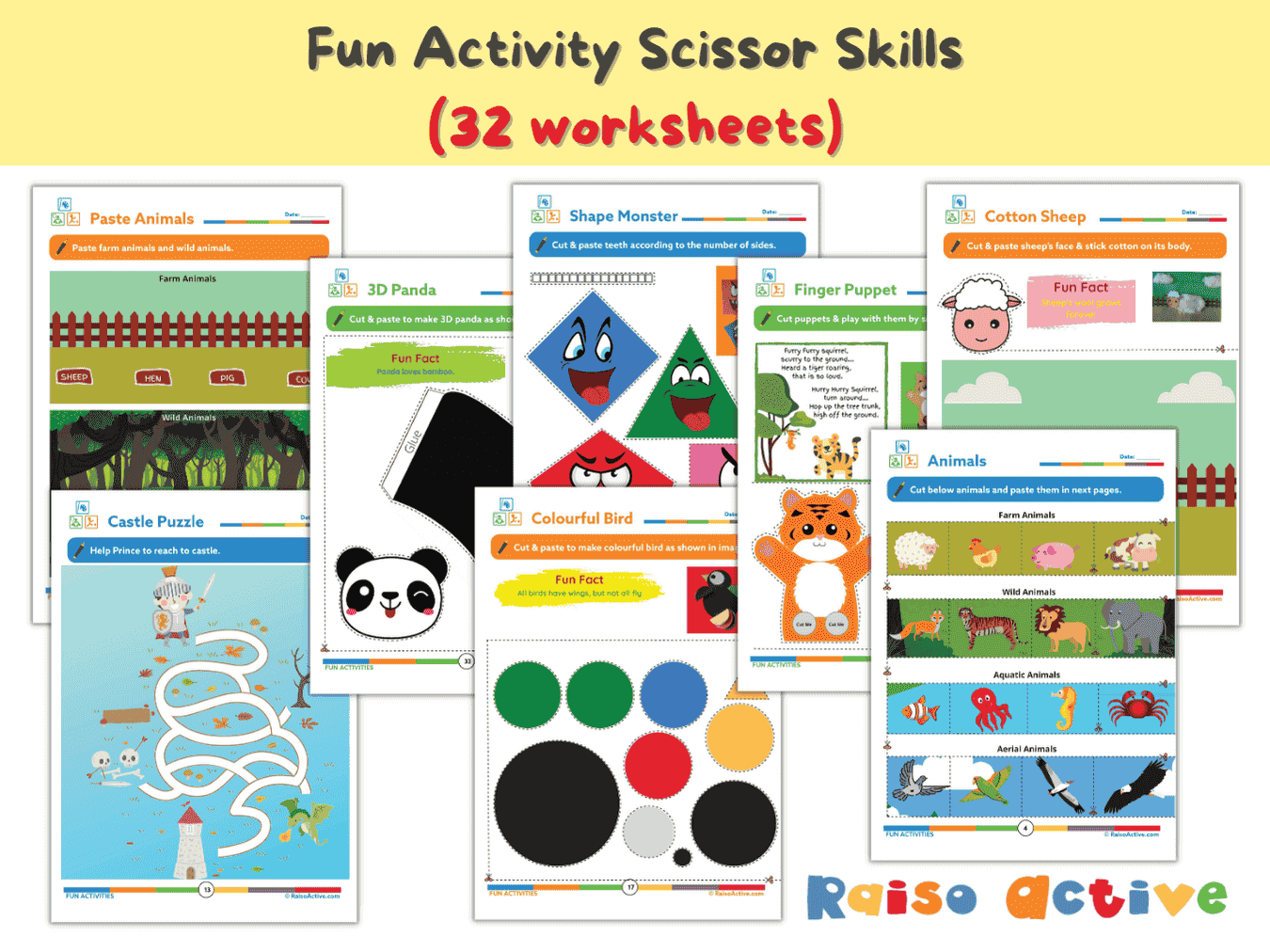
Four and five-year-olds are famously curious — this is the "why" stage where children ask questions incessantly. Cognitively, they can understand cause and effect ("if I pour water, it spills"), begin to grasp sequencing (first, then, last), and engage in simple classification (sorting objects by colour or shape). Fine motor skills are developing meaningfully — they can use a pinch grip on a pencil, cut with scissors along straight lines, and complete simple puzzles. Socially, cooperative play emerges: children negotiate roles, share materials, and begin to understand rules in simple games. Emotionally, they are becoming aware of others' feelings and developing empathy.
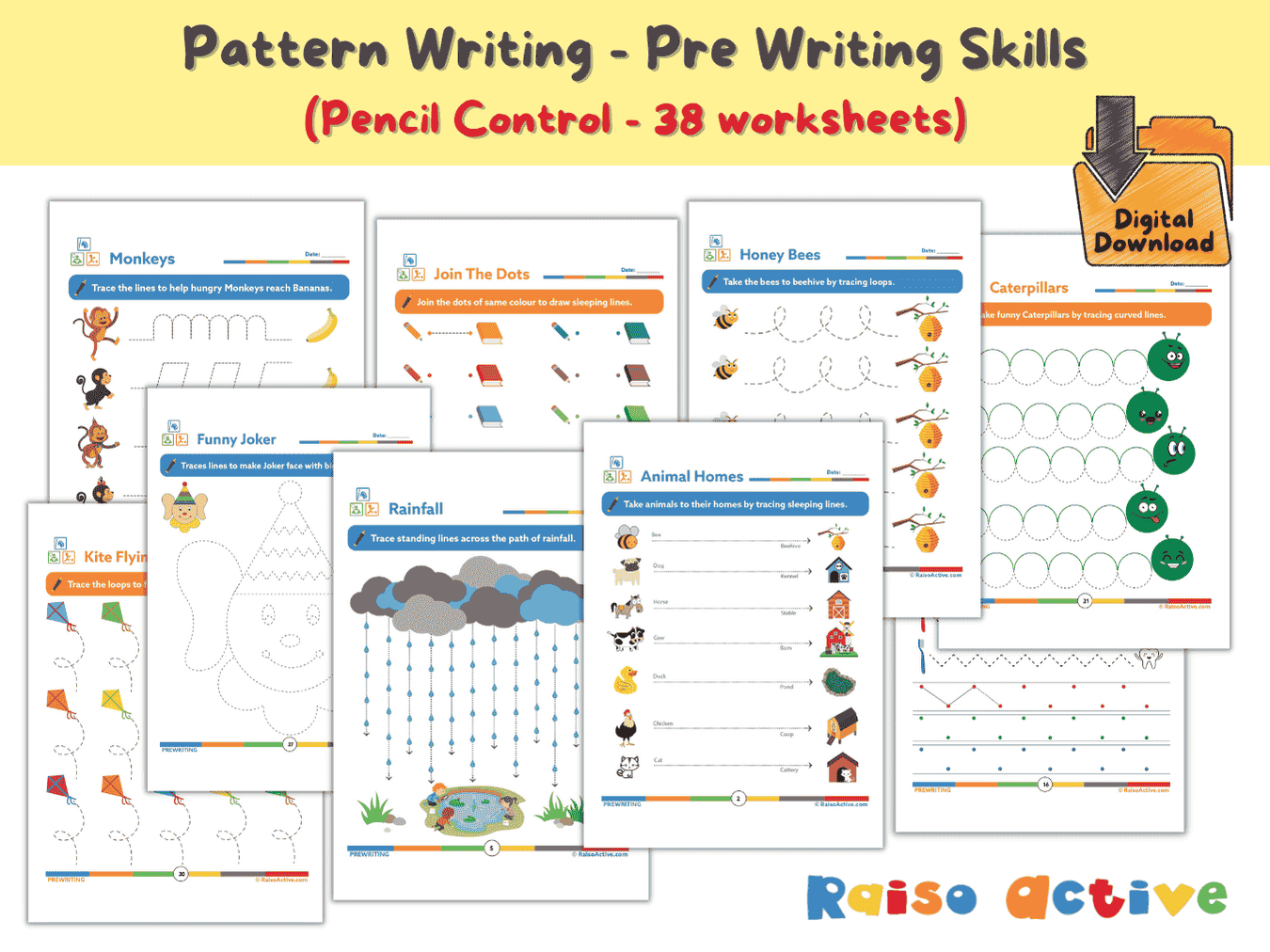
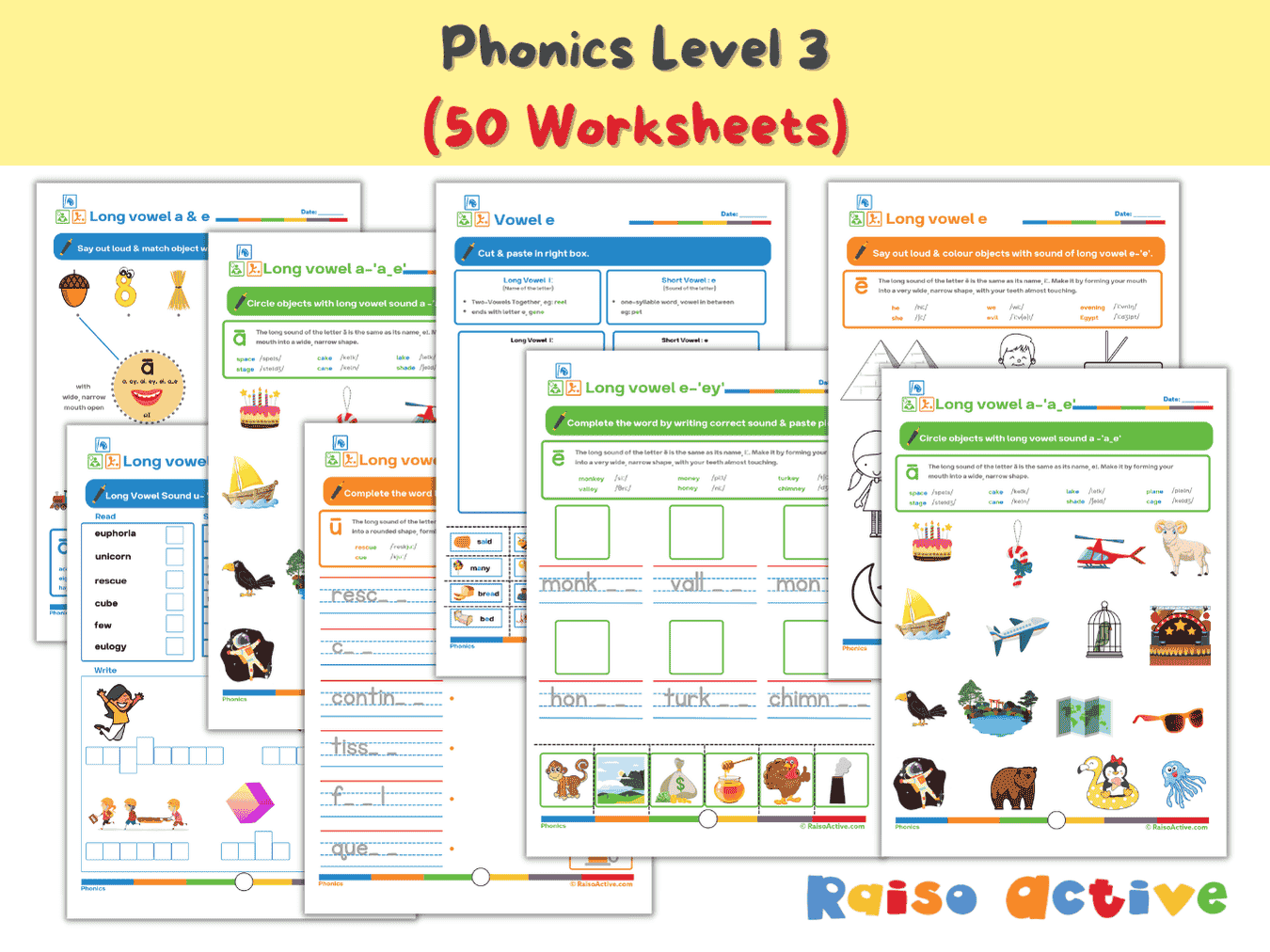
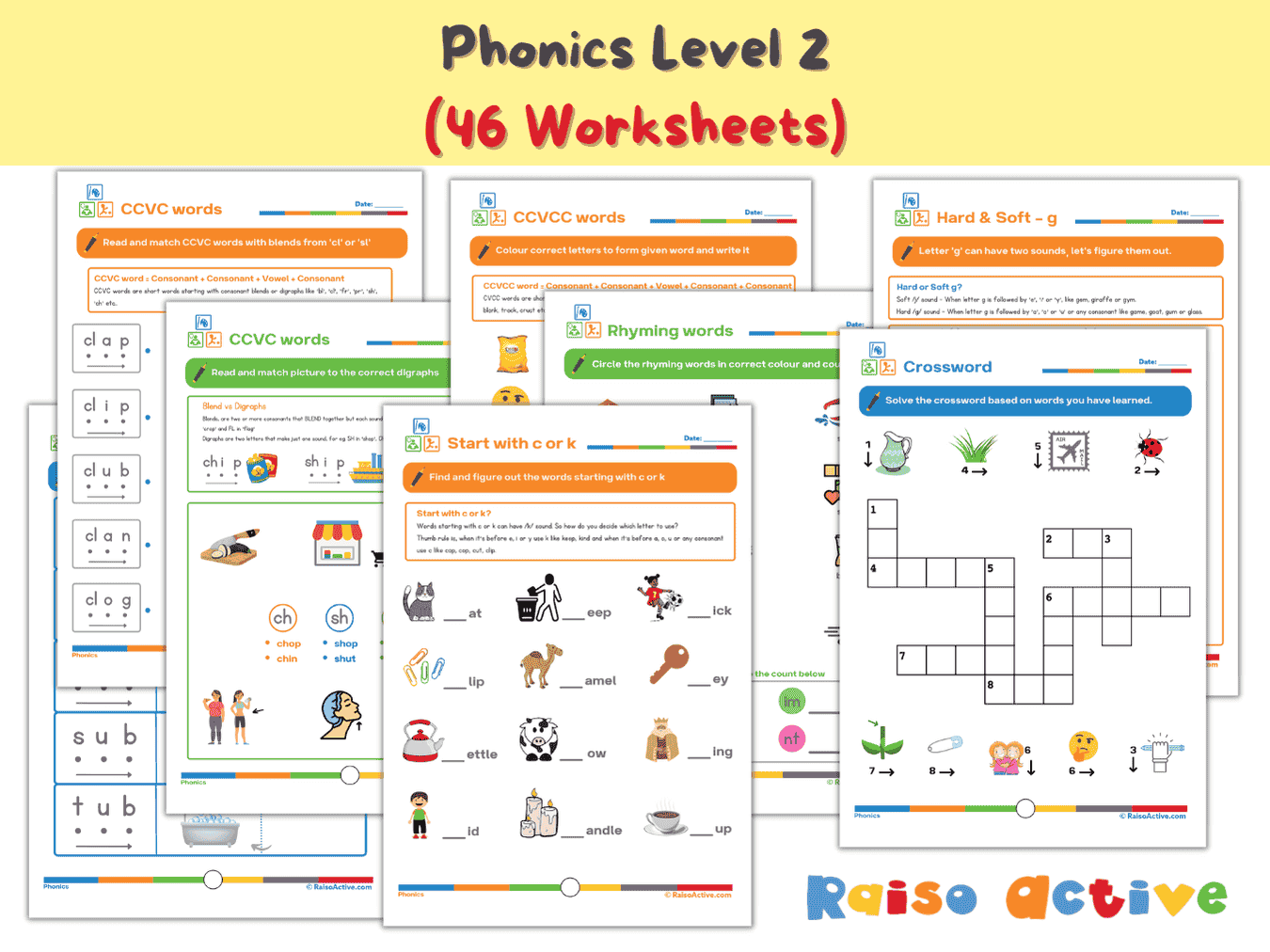
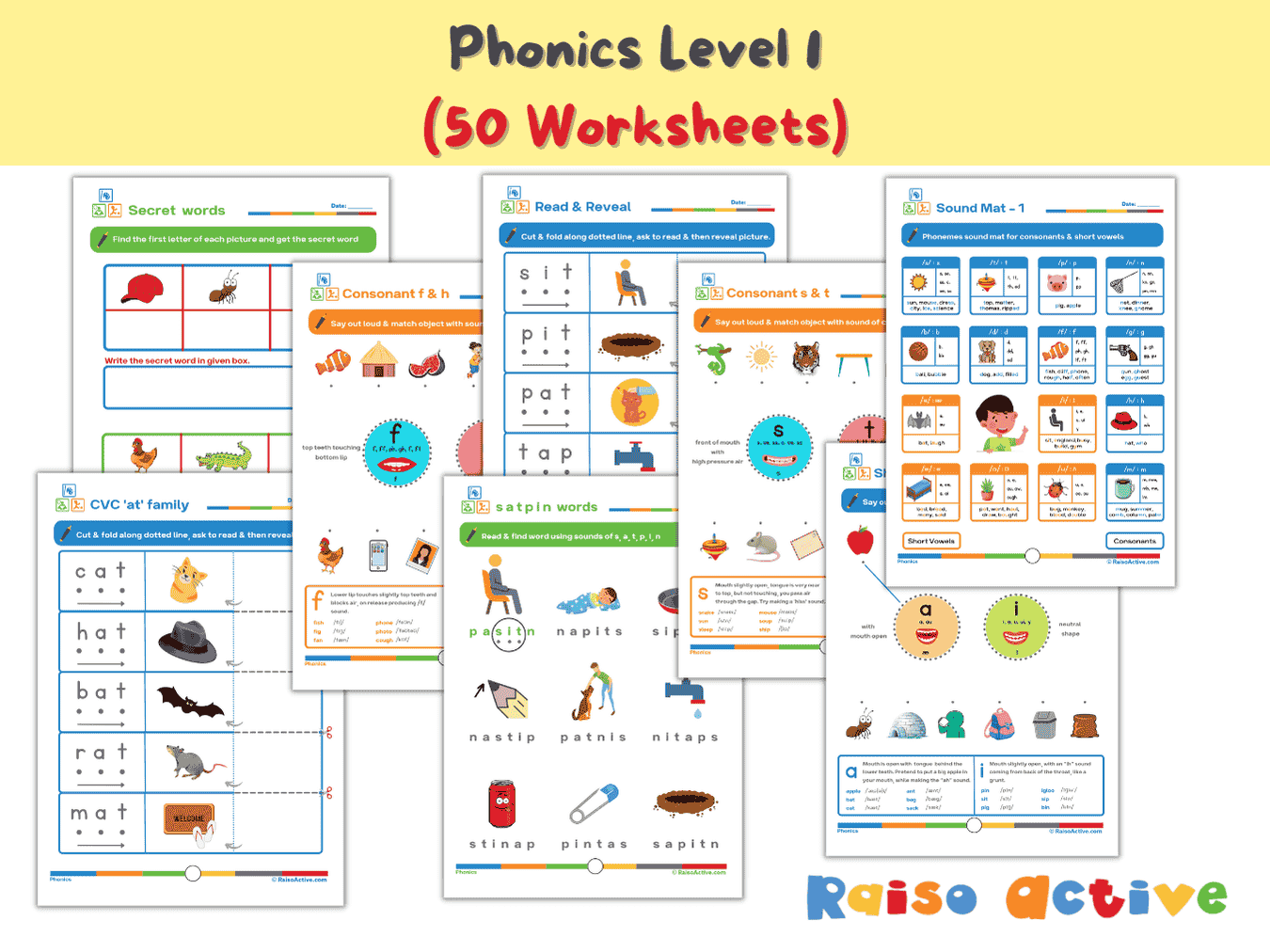
Appropriate activities include simple board games with rules (Snakes and Ladders is excellent), role play and dress-up, sorting and pattern-making, simple craft projects, singing and movement activities, storytelling with pictures, and beginning phonics and number recognition in playful ways. Short, focused worksheets (5-10 minutes) on pre-writing skills can be appropriate if the child is willing and engaged.
Ages 6-8: The Age of Logic and Friendship
From age 6, children enter Piaget's concrete operational stage. They can now think logically about concrete objects and events — understanding that a ball of playdough rolled into a snake still has the same amount of clay (conservation). They can classify objects in multiple ways simultaneously, understand reversibility, and begin to think about sequences and patterns with genuine logic. Fine motor skills are usually well-developed enough for sustained writing and drawing. Socially, friendships become deeply important; peer approval and belonging are powerful motivators. Emotionally, children are developing a more stable sense of self, though self-esteem is fragile and sensitive to criticism.
Appropriate activities at this stage include reading chapter books (or being read to), writing simple stories and letters, more complex craft projects, group games with rules, basic science experiments (growing plants, mixing colours with water), maths with manipulatives (beads, blocks), and creative projects that allow personal expression. Academic worksheets can be used more freely but should still be balanced with hands-on, creative, and social activities.
Key Takeaway
Developmental stages are guides, not gates. A child does not "pass" from one stage to the next on their birthday.
Development is continuous and uneven. A child might show advanced language abilities while their fine motor skills are still catching up, or be emotionally mature while their attention span is typical for a younger child. The most useful question is not "Is this normal for age X?" but "Is this the right challenge level for where *my* child is right now?"
Red Flags: Is This Activity Too Advanced or Too Easy?
One of the most practical skills a parent can develop is the ability to read their child's response to an activity as real-time developmental feedback. Children communicate with their behaviour far more honestly than they do with words. Here is what to watch for.
⚠️Signs an Activity Is Too Advanced
- Consistent frustration or tears when attempting the activity, even with encouragement
- Needing adult help for every single step — the child cannot make any independent progress
- Avoidance: suddenly needing the toilet, feeling tired, wanting a snack, or becoming disruptive
- Physical complaints like hand pain, headaches, or eye strain during the activity
- Refusing to attempt similar activities in the future — a sign that the experience has created a sense of failure
- Completing the activity only by watching and copying exactly, with no evidence of understanding
💡Signs an Activity Is Too Easy
- The child finishes in seconds without apparent engagement or thought
- Boredom, distraction, or restlessness during the activity despite initial willingness
- The child begins making the activity more complex on their own — adding rules, making it harder
- No sense of satisfaction or pride on completion — it felt like nothing was achieved
- The child explicitly says the activity is boring or too easy — always take this feedback seriously
The ideal activity sits in what educational psychologist Lev Vygotsky called the Zone of Proximal Development (ZPD) — the range of tasks a child cannot quite do alone but can accomplish with a little support. This is the sweet spot where real learning happens: enough challenge to require effort, enough support to make success possible.
Key Takeaway
A child's honest response to an activity is the most reliable developmental assessment tool you have.
Before spending money on curricula or programmes, spend time observing how your child responds to what they already encounter. Do they seek out puzzles? Do they ask for stories to be read again and again? Do they arrange objects into patterns spontaneously? These natural behaviours tell you far more about where they are developmentally than any age-graded chart.
Common Mistakes Parents Make (And How to Avoid Them)
Even the most loving, thoughtful parents fall into patterns that inadvertently push children ahead of their developmental readiness. Understanding these patterns is the first step to changing them.
Pushing Academic Skills Too Early
In India, it is common to see 2-year-olds being taught to write the alphabet and 3-year-olds drilling multiplication tables. Parents who do this are acting from a place of love and genuine concern about their child's future. But research consistently shows that early academic instruction before a child is developmentally ready does not produce lasting advantages — and often produces lasting resistance to learning. A child who is pushed to write before their fine motor skills are ready may develop an uncomfortable pencil grip that takes years to correct. A child drilled on rote memorisation before they can think logically may learn to produce correct answers without understanding anything.
Comparing to Other Children
"My neighbour's daughter was reading at 3" is perhaps the most common trigger for developmentally inappropriate activities. Children's development is remarkably variable. Within a normal, healthy range, children may begin reading anywhere from age 4 to age 7. A child who reads at 4 is not fundamentally more intelligent than one who reads at 6 — they simply developed that specific skill earlier. Comparing your child to others leads to anxiety, pressure, and a distorted sense of what your child "should" be doing.
Overreliance on Screens and Apps
Educational apps are sophisticated and genuinely appealing, and some are well-designed. But for children under 5, the physical, sensory experience of real-world learning — touching, smelling, tasting, moving, building — cannot be replicated by a screen. Passive screen time (watching videos) does very little for development; even interactive screen time is a poor substitute for hands-on play. The Indian Academy of Paediatrics recommends no screen time at all for children under 2, and no more than one hour per day for children aged 2-5, of high-quality, co-viewed content.
How Indian Academic Pressure Affects Developmental Pacing
India's education system has historically rewarded rote memorisation and early academic achievement. Competitive school admissions — even at the nursery level in cities like Mumbai, Delhi, and Bengaluru — create pressure on families that begins before a child can walk steadily. Parents are sometimes told that their child "needs" to know the alphabet, colours in two languages, and basic counting before being admitted to a reputable preschool. This has created a culture of early academic pressure that runs directly counter to what developmental science recommends.
India's National Education Policy (NEP) 2020 explicitly pushes back against this. The policy mandates a play-based, activity-centred approach for the foundational stage (ages 3-8) and discourages formal reading and writing instruction before age 6. The NIPUN Bharat mission, launched in 2021 under NEP 2020, also emphasises foundational literacy and numeracy through experiential and play-based methods. Choosing developmentally appropriate activities for your child is not just good parenting — it is aligned with India's own national educational vision.
6 years
The age recommended by NEP 2020 and global early childhood experts before formal reading and writing instruction begins — yet many Indian preschools begin formal literacy at age 2.5 or 3, creating unnecessary pressure and potential learning resistance.
Source: NEP 2020, Ministry of Education, Government of India
If you feel pressure from family, school, or social media to push your child faster, it helps to remember: no research supports the idea that earlier is better for academic skills in the long run. Children who have rich play-based early childhoods consistently perform as well or better in school by age 7-8 as children who began formal academics early. What early pressure does risk is damaging a child's intrinsic motivation — their natural love of learning — which is the most valuable asset they can carry into school and beyond.
👋When Family Pressure Feels Overwhelming
- Acknowledge the concern behind the pressure — relatives who push are usually acting from love, not malice
- Share one or two simple research points calmly: "The NEP 2020 actually recommends play-based learning until age 6"
- Focus conversations on what your child *can* do, rather than defending what you are not doing yet
- Create a simple visual — a photo or drawing your child made — to share with concerned relatives as evidence of meaningful learning
- Trust your observations of your own child over generalised expectations from others
How to Adapt Activities to Suit Your Specific Child
Even the best-designed activity may not be a perfect fit for your child. The good news is that most activities can be adapted — made simpler or more complex — to match where your child actually is. This skill, sometimes called "scaffolding," is one of the most powerful tools in a parent's learning support toolkit.
30%
Variation in developmental pace within a "normal" range for children the same age, according to developmental psychology research — meaning two healthy 5-year-olds can differ by the equivalent of 18 months in their readiness for specific skills.
Source: Zero to Three, National Centre for Infants, Toddlers and Families
A Step-by-Step Guide to Checking If an Activity Is Right for Your Child
1
Observe before you intervene
Before introducing an activity, watch your child at free play for a few minutes. What are they choosing to do? What skills are they naturally practising? This gives you a developmental baseline without any pressure or performance anxiety.
2
Introduce the activity with low stakes
Present the activity as an invitation, not an instruction. "Look what I found — would you like to try this?" removes the pressure of expected performance. If your child is not interested, note it and try again another day. Repeated disinterest is useful developmental data.
3
Observe their response in the first two minutes
Watch closely at the beginning. Do they engage with curiosity? Do they attempt something independently? Or do they immediately look confused, ask for help repeatedly, or turn away? The first two minutes tell you most of what you need to know about the activity's fit.
4
Offer just enough support — no more
If your child is struggling, offer the minimum support needed to keep them going — a demonstration, a hint, a simplification of one step. If they still cannot make progress even with significant adult scaffolding, the activity is likely too advanced for now.
5
Note physical and emotional signals
Look at your child's body: Are their shoulders tense? Are they gripping too tightly? Are they giggling and leaning in? Physical relaxation and engagement signal a good developmental fit. Tension, fidgeting, and avoidance signal a mismatch.
6
Adjust up or down based on what you see
If the activity is too hard: simplify one element (fewer pieces, larger format, fewer steps). If it is too easy: add a challenge (a time element, a creative twist, a new rule). Most activities can be adapted to a wide range of developmental levels with small adjustments.
7
Revisit the activity over time
An activity that was too advanced at age 3.5 may be perfect at 4. An activity your child loved at 4 may be outgrown by 5. Revisiting activities over several months lets you track development naturally and celebrate genuine growth.
Developmentally Appropriate Activities
- +Child can complete most steps independently with minimal adult guidance
- +Child chooses to return to or repeat the activity voluntarily
- +Activity matches the child's current fine motor and cognitive level
- +Child shows pride, satisfaction, or excitement on completion
- +Activity allows for exploration and some variation in approach
- +Child stays engaged for an age-appropriate duration (5-20 min for ages 2-6)
- +Mistakes are easy to recover from and part of the process
Developmentally Inappropriate Activities
- -Child requires constant adult hand-holding just to begin or continue
- -Child avoids or actively resists the activity when offered again
- -Activity demands pencil grip, reading, or logic before those skills are ready
- -Child feels shame, embarrassment, or frustration when they cannot succeed
- -Only one "correct" outcome is accepted — no room for creativity or variation
- -Sessions routinely extend to 30+ minutes with a child who is disengaged
- -Errors are highlighted and corrected repeatedly, creating anxiety
Key Takeaway
Adapting an activity to your child is not lowering standards — it is raising the quality of their learning experience.
A 4-year-old who successfully sorts objects by two attributes (colour AND shape) has accomplished something genuinely sophisticated for their stage. The goal is not to rush children to the next level — it is to help them fully inhabit and explore the capabilities of their current level. Deep engagement at the right level builds stronger neural foundations than superficial exposure to advanced content.
Unlimited Access
Get Expert Early Learning Resources Every Week
Subscribe to the RaisoActive newsletter for developmentally appropriate activity ideas, free printables, and practical parenting guidance — designed for children ages 1-8 by educators who understand how children actually grow.
All worksheets & activitiesNew content weeklyDownload unlimited times
Subscribe NowFrequently Asked Questions
How do I know if my 3-year-old is ready to start learning the alphabet?
Readiness for letter learning is not about age alone — it is about a cluster of skills coming together. Look for these signs: your child is interested in books and being read to, they can hold a crayon with a pinch grip (not a full fist grip), they can focus on a simple activity for 5-7 minutes, they recognise their own name in print, and they enjoy songs and rhymes. If most of these are in place, gentle letter introduction through songs, foam letters in the bath, and magnetic letters on the fridge is appropriate. Formal letter-writing practice should generally wait until age 4.5-5 when fine motor control and pencil grip are more established.
My 5-year-old cannot sit still for learning. Does this mean they have a problem?
Almost certainly not. Five-year-olds are developmentally designed to move — their brains actually require physical movement to consolidate learning. A child who cannot sit still for a 30-minute structured lesson is displaying normal, healthy development, not a disorder. The problem is usually the activity, not the child. Try shortening the sitting time (5-10 minutes maximum for ages 4-5), breaking learning into movement-based activities (counting while hopping, spelling while building blocks), and ensuring plenty of physical play before any structured learning time. If movement needs feel very intense and are interfering significantly with daily functioning across multiple settings, a conversation with your paediatrician is worthwhile.
Is it harmful to teach my 2-year-old to read using phonics apps?
A 2-year-old is generally not developmentally ready for structured phonics instruction. At this age, the brain's language centres are focused on building vocabulary, understanding sentence structure, and learning through spoken language and play. Exposure to letters through songs ("A-B-C"), board books, and labelled objects is entirely appropriate and beneficial. Structured phonics instruction — systematically decoding letters into sounds — requires auditory processing maturity and working memory capacity that most children do not develop until age 4-5. Pushing phonics apps at age 2 is unlikely to be harmful if the child is willing and the screen time is limited, but it is also unlikely to produce the reading head-start parents often hope for.
My child's school expects a lot of worksheets and homework. How do I balance this?
This is one of the most common dilemmas for parents in India. First, know that you do not have to complete every worksheet sent home — particularly for children under 5. Complete what your child can do willingly in a short session, and set it aside if they are resisting. Schools rarely penalise a child meaningfully for incomplete homework at the preschool and lower primary level. Second, balance school-directed worksheet time with ample free play, outdoor time, creative activities, and family conversation — these are not less educational than worksheets, they are foundational. Third, if the homework load feels genuinely excessive or is causing distress, a calm conversation with the class teacher about your child's specific needs is always appropriate.
How do learning styles relate to developmentally appropriate activities?
Learning styles (visual, auditory, kinaesthetic, and others) interact with developmental stage but are a separate consideration. A kinaesthetic learner at age 4 needs movement-based activities even more than a visually-oriented child the same age — but both need activities pitched to the 4-year-old developmental level, not the 6-year-old level. Pay attention to how your child most naturally engages: Do they want to touch and manipulate everything? Then hands-on, three-dimensional activities will suit them especially well. Do they love music and rhythm? Incorporate songs and chants. Learning style preferences become clearer from around age 4-5 and can guide which activities within the appropriate developmental range are most engaging for your specific child.
At what age should I start worrying if my child is not meeting developmental milestones?
Developmental milestones are ranges, not deadlines. That said, there are genuine markers worth discussing with your paediatrician. By 18 months: saying at least a few words, pointing to things of interest, engaging in simple back-and-forth play. By 2 years: using 2-word phrases, following simple 2-step instructions, showing interest in other children. By 3 years: using 3-word sentences, engaging in pretend play, showing some interest in other children. By 4 years: speaking in sentences, understanding simple stories, playing cooperatively with peers for short periods. By 5 years: drawing simple recognisable shapes, following 3-step instructions, beginning to show interest in letters and numbers. If your child is significantly behind in *multiple* domains (not just one), or is losing skills they previously had, consult your paediatrician promptly — early support makes a meaningful difference.