Free printable worksheets · United States
Preschool Worksheets (Ages 3–4)
Preschool worksheets are short printable activities for children aged 3 to 4, the year or two before Pre-K and kindergarten. They build readiness skills rather than academics: pre-writing strokes and pencil control, recognizing uppercase letters, counting objects to 10, naming basic shapes and colors, cutting along lines, and matching pictures that go together.
At three, most children are just discovering that marks on paper mean something. Their grip is still a fist or a four-finger hold, they name a few letters (usually the ones in their own name) and they count to 10 by rote long before they can count 10 objects accurately. Preschool worksheets work with that stage rather than ahead of it: straight and curved lines to trace, big pictures to match or color, and one instruction per page. Most US preschools are play-based, and teachers use a sheet like these as a five-minute table activity within a session of blocks, dramatic play and stories. At home the same rule applies: one sheet, a chunky crayon, a parent alongside, and stop while the child still wants more.
- 24 worksheets
- Free PDF download
- Print on A4 or Letter
Made for your child
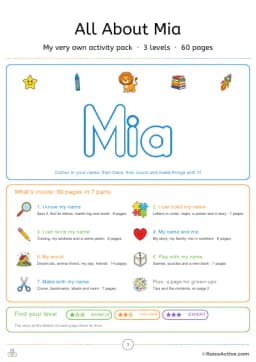
A whole activity pack made with their name
60 pages to spot, build, trace and write their own name, plus pages about their favourites, feelings and family. See a free preview with their name.
Make an All About Me packFree preview · free for members
Or start free: a name tracing sheet with their namePreschool Worksheets to print
Browse all worksheets for ages 3–4
Month 6: Toddler Preschool Foundational Skills | Ages Up to 4 - Page 19
Ages 2-4 · PreschoolAges 2-4 · NurseryAges 2-4
As part of an ongoing toddler foundational skills series, this page gives children up to age 4 low-pressure practice with coloring and simple fine motor prompts, building the pencil and crayon grip control that comes before formal writing instruction. Repeated, varied activity pages like this one help very young children build attention span and comfort with sitting down to a focused task, both important readiness skills for structured learning ahead.

Clothing Pattern Match Worksheet for Preschoolers
Ages 3-5 · Preschool–Pre-KAges 3-5 · Nursery–ReceptionAges 3-5 · Nursery–LKGAges 3-5
This worksheet has children ages 3-5 study repeating patterns on clothing items — stripes, polka dots, or checks — and match each item to its identical twin, building visual discrimination and early pattern-sequencing skills. Distinguishing between similar-looking patterns also sharpens attention to detail, a skill that later supports letter and word recognition.

Parent's Guide: Fun Activities for Storytelling, Addition, and More!
Ages 3-5 · Preschool–Pre-KAges 3-5 · Nursery–ReceptionAges 3-5 · Nursery–LKGAges 3-5
This parent's guide walks through a set of hands-on activities that build storytelling and sequencing through puppet play, early addition through a simple 'addition house,' and sorting skills, giving children ages 3-5 practice across language, number, and reasoning in one sitting. Because the activities are play-based rather than worksheet-based, they let children absorb these concepts through natural exploration.
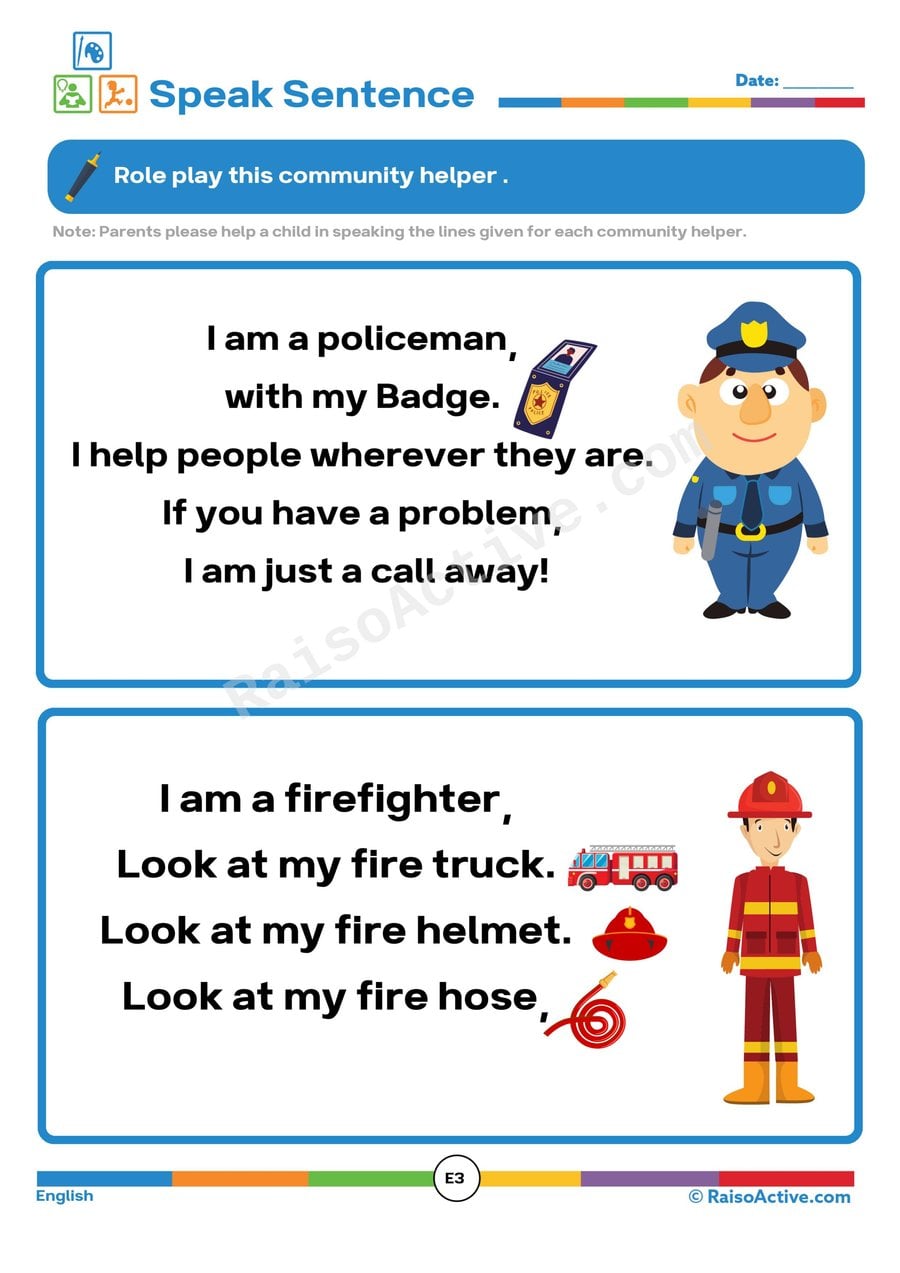
Community Helpers Role Play Worksheet for Kids
Ages 3-5 · Preschool–Pre-KAges 3-5 · Nursery–ReceptionAges 3-5 · Nursery–LKGAges 3-5
This worksheet helps children ages 3-5 learn about community helpers while practicing spoken sentence structure through guided role play. Reading a short scripted sentence aloud and then acting out the role of that helper builds oral language and expressive confidence alongside social studies knowledge, giving children a chance to practice full sentences in a low-pressure, playful context.
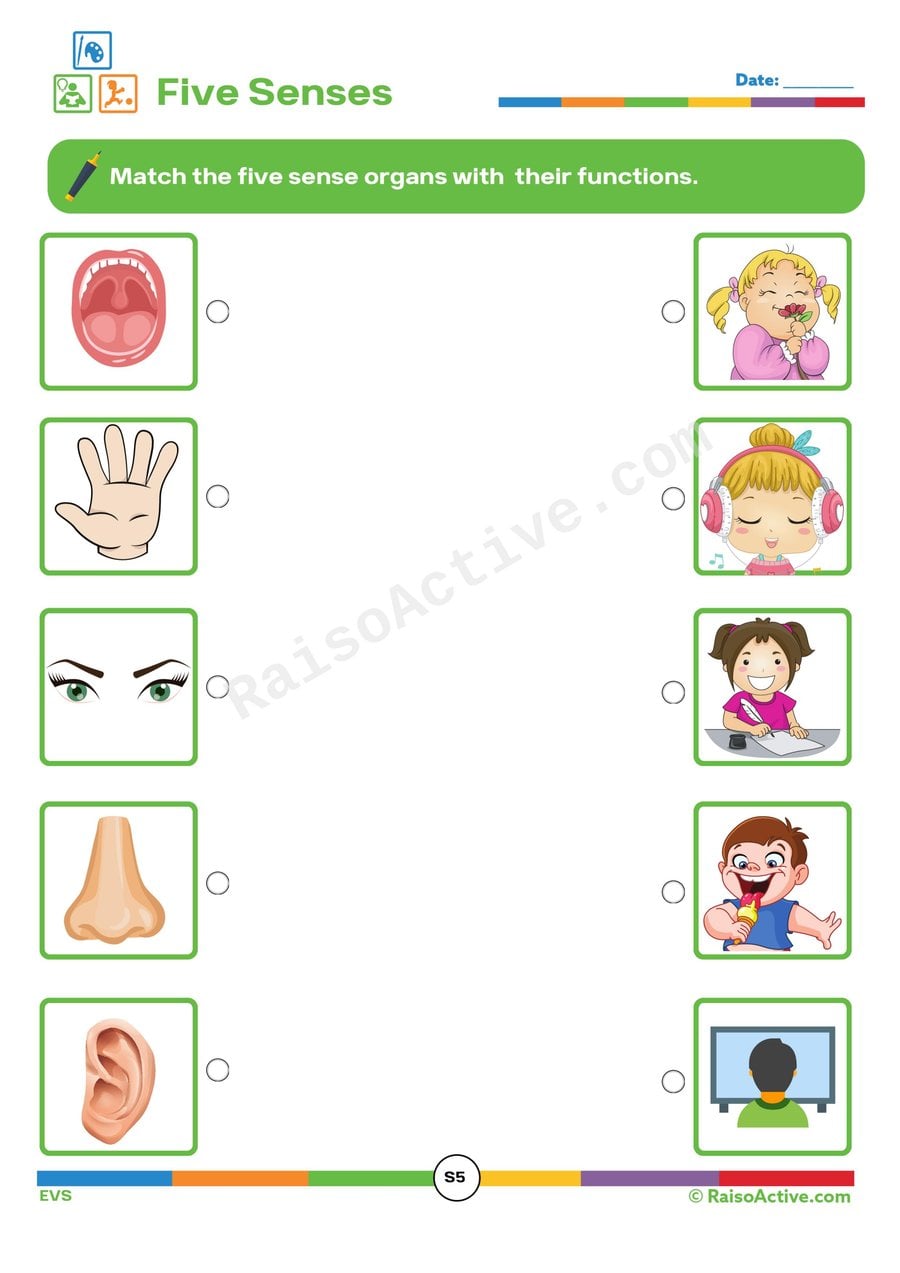
Five Senses Matching Worksheet for Preschoolers
Ages 3-5 · Preschool–Pre-KAges 3-5 · Nursery–ReceptionAges 3-5 · Nursery–LKGAges 3-5
Matching each sense organ, eyes, nose, ears, hands, mouth, to its correct function teaches children the basic science of how their bodies gather information about the world, an early concept in human biology. For ages three to five, connecting a body part to a specific job, eyes for seeing, nose for smelling, also builds descriptive vocabulary they can use to talk about their everyday experiences.

Keeping Our Environment Clean Worksheet for Kids
Ages 3-5 · Preschool–Pre-KAges 3-5 · Nursery–ReceptionAges 3-5 · Nursery–LKGAges 3-5
This worksheet builds early environmental awareness in children ages 3-5 by having them evaluate pictured actions — like throwing litter in a bin versus littering on the ground — and mark each one as good or bad for the environment. Making this judgment call requires children to connect a specific action to a broader consequence, an early form of cause-and-effect reasoning applied to environmental responsibility. Introducing this concept young helps normalize caring for shared spaces as a natural part of daily behavior rather than an abstract adult concern.
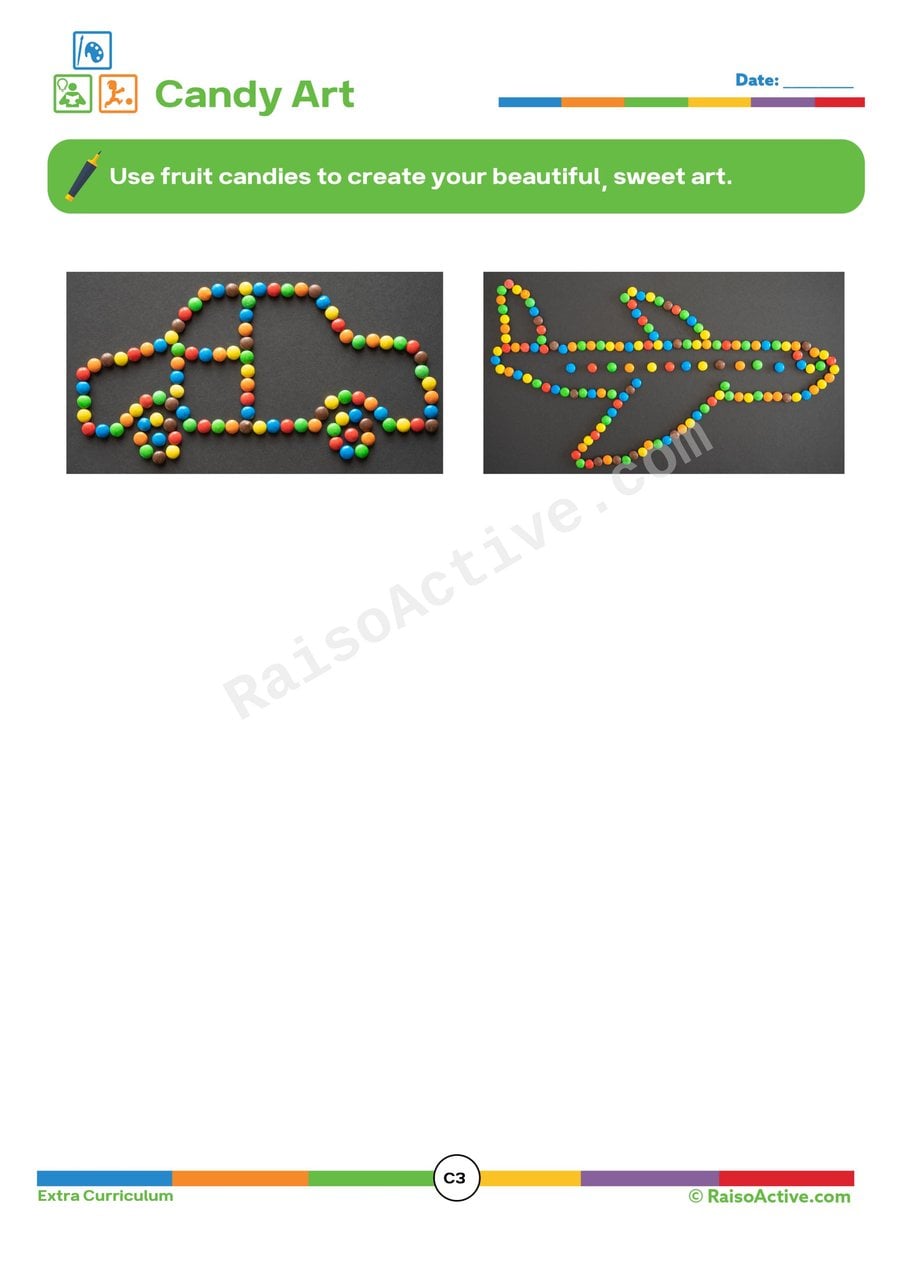
Candy Art: Create Sweet Art with Fruit Candies!
Ages 3-5 · Preschool–Pre-KAges 3-5 · Nursery–ReceptionAges 3-5 · Nursery–LKGAges 3-5
Arranging fruit candies into the outline of a car and an airplane gives children ages 3-5 a playful, sensory way to practice fine motor precision and pattern-following, since each candy must be placed carefully to build the recognizable shape. This open-ended art activity also builds early spatial reasoning, as children figure out how small individual pieces combine to form a larger, specific picture. Because the medium is candy rather than paper, it adds a multisensory, highly motivating twist that keeps younger children engaged longer than a typical craft.

Wild or Domestic? Animal Sorting Worksheet for Kids
Ages 3-5 · Preschool–Pre-KAges 3-5 · Nursery–ReceptionAges 3-5 · Nursery–LKGAges 3-5
Preschoolers ages 3-5 practice classifying animals into wild and domestic categories, an early science skill that builds understanding of how living things relate to their environment and to humans. Cutting, sorting, and labeling each animal with 'W' or 'D' reinforces the vocabulary of the two categories while strengthening fine motor skills through scissor and glue work. This classification task is a foundational step toward broader scientific thinking about categories and groups.
Parent's Guide: Fun Activities for Kids!
Ages 3-5 · Preschool–Pre-KAges 3-5 · Nursery–ReceptionAges 3-5 · Nursery–LKGAges 3-5
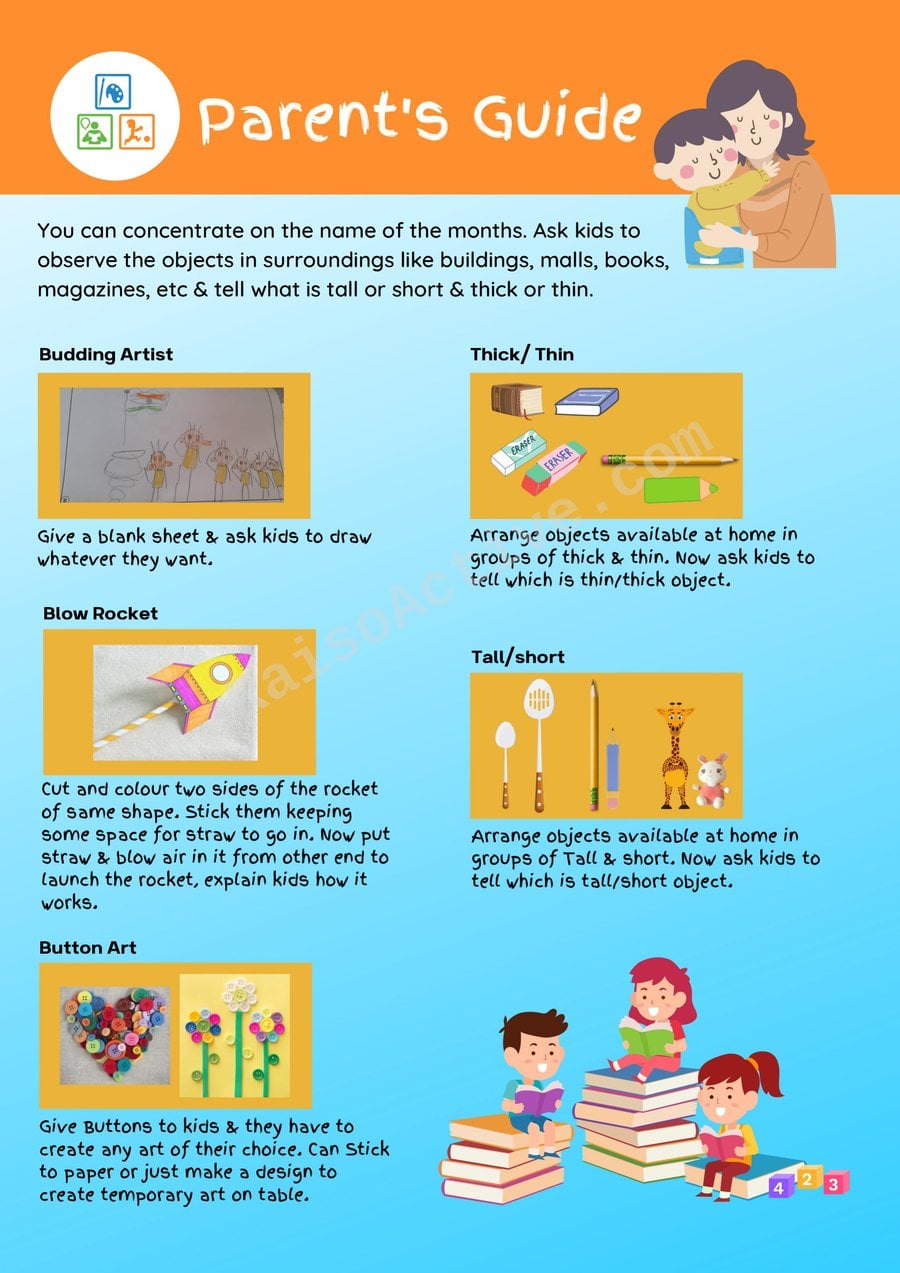
This parent's guide bundles several short activities that build early comparison vocabulary - thick versus thin, tall versus short - alongside fine motor practice with buttons and straws and beginning calendar awareness through talking about the months. For children ages 3-5, comparing sizes verbally is an important pre-math skill, while threading buttons onto straws strengthens the pincer grip needed later for writing. Together these activities give a well-rounded session touching language, math, and motor development.
Parent's Guide: Learning Letters, Numbers, and More!
Ages 3-5 · Preschool–Pre-KAges 3-5 · Nursery–ReceptionAges 3-5 · Nursery–LKGAges 3-5
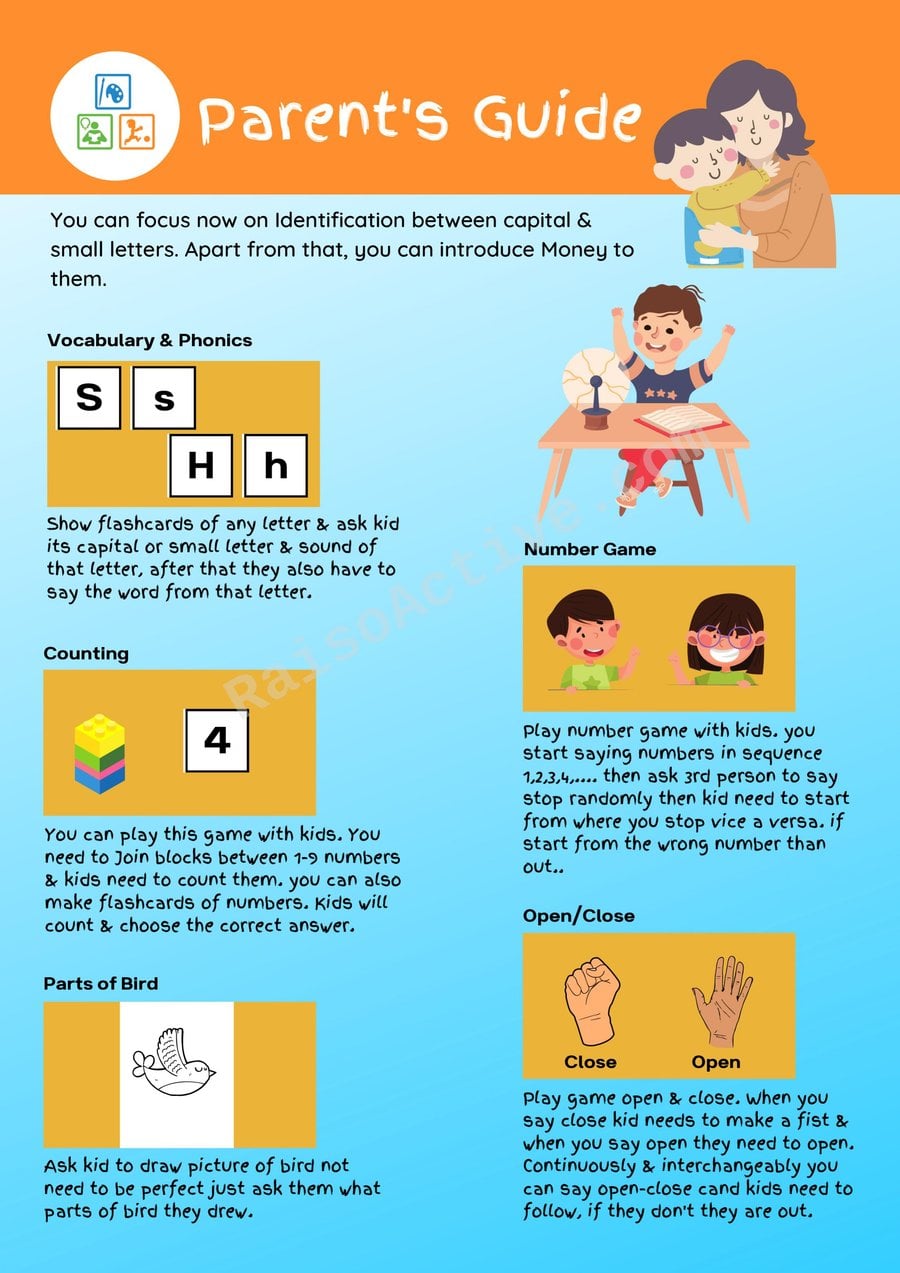
This parent guide brings together three foundational early-learning concepts for children ages 3-5 — capital and lowercase letter identification, basic counting, and the spatial concepts of open and close — into one set of simple, no-prep activities. Rather than a traditional fill-in worksheet, it gives parents a structured way to practice these skills through conversation and hands-on play, which suits the attention span and learning style of preschool-age children particularly well. Covering letters, numbers, and spatial vocabulary together in one sitting also shows children how different areas of early learning connect to everyday objects around them.

Turtle Life Cycle Flashcard Worksheet for Preschoolers
Ages 3-5 · Preschool–Pre-KAges 3-5 · Nursery–ReceptionAges 3-5 · Nursery–LKGAges 3-5
This flashcard set introduces children ages 3-5 to the stages of a turtle's life, egg, hatchling, and adult, helping them understand that turtles start life very small and vulnerable before growing into their familiar shelled adult form. Discussing where turtles lay their eggs and how hatchlings behave also builds early awareness of animal habitats and instincts.

Shape Counting Fun: Color and Count the Shapes Worksheet
Ages 3-5 · Preschool–Pre-KAges 3-5 · Nursery–ReceptionAges 3-5 · Nursery–LKGAges 3-5
Children ages 3-5 practice recognizing common shapes by sight, then apply early counting skills by tallying how many of each shape appear in the picture. Combining shape identification with counting strengthens both geometric awareness and number sense at the same time.
Summer Pattern Match Worksheet for Preschoolers
Ages 3-5 · Preschool–Pre-KAges 3-5 · Nursery–ReceptionAges 3-5 · Nursery–LKGAges 3-5
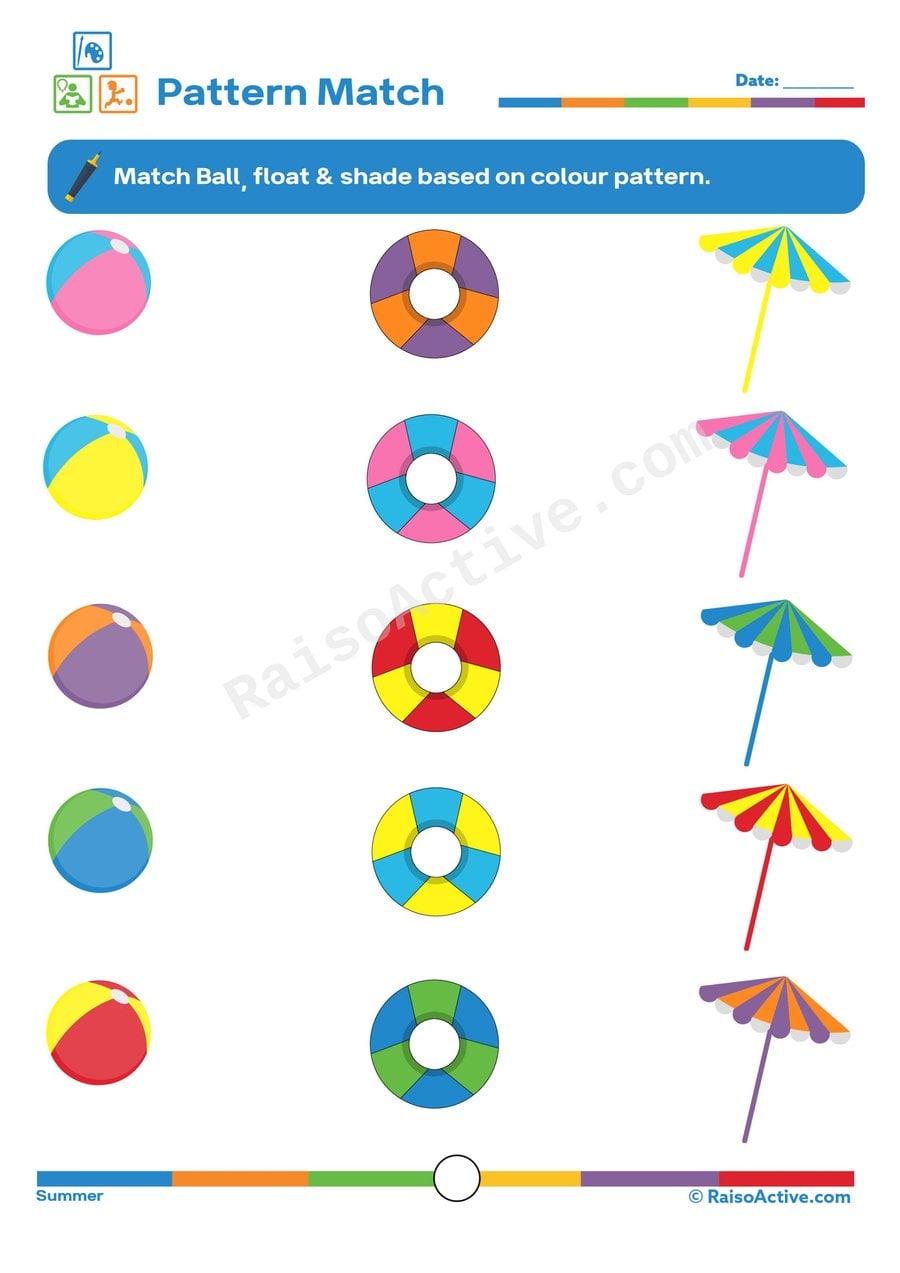
This worksheet asks children ages 3-5 to study the color pattern on a beach ball, pool float, and sun umbrella and match each item to its correctly patterned counterpart, building early pattern recognition, a foundational skill for later math concepts like sequencing and algebraic thinking. Because the match depends on noticing the order and repetition of colors rather than just matching a single color, children must compare details carefully rather than glance quickly. This strengthens visual attention alongside the pattern skill itself.

Post Sequence Worksheet: Ordering Steps for Sending a Letter!
Ages 3-5 · Preschool–Pre-KAges 3-5 · Nursery–ReceptionAges 3-5 · Nursery–LKGAges 3-5
Ordering the steps of sending a letter teaches children to recognize that everyday processes happen in a logical sequence with a clear beginning, middle, and end, a skill that underlies both reading comprehension and later writing organization. For ages 3-5, sequencing also strengthens working memory, since children must hold several images in mind at once while deciding which comes first.
Healthy Food Fun: Color and Cross Out Worksheet
Ages 3-5 · Preschool–Pre-KAges 3-5 · Nursery–ReceptionAges 3-5 · Nursery–LKGAges 3-5
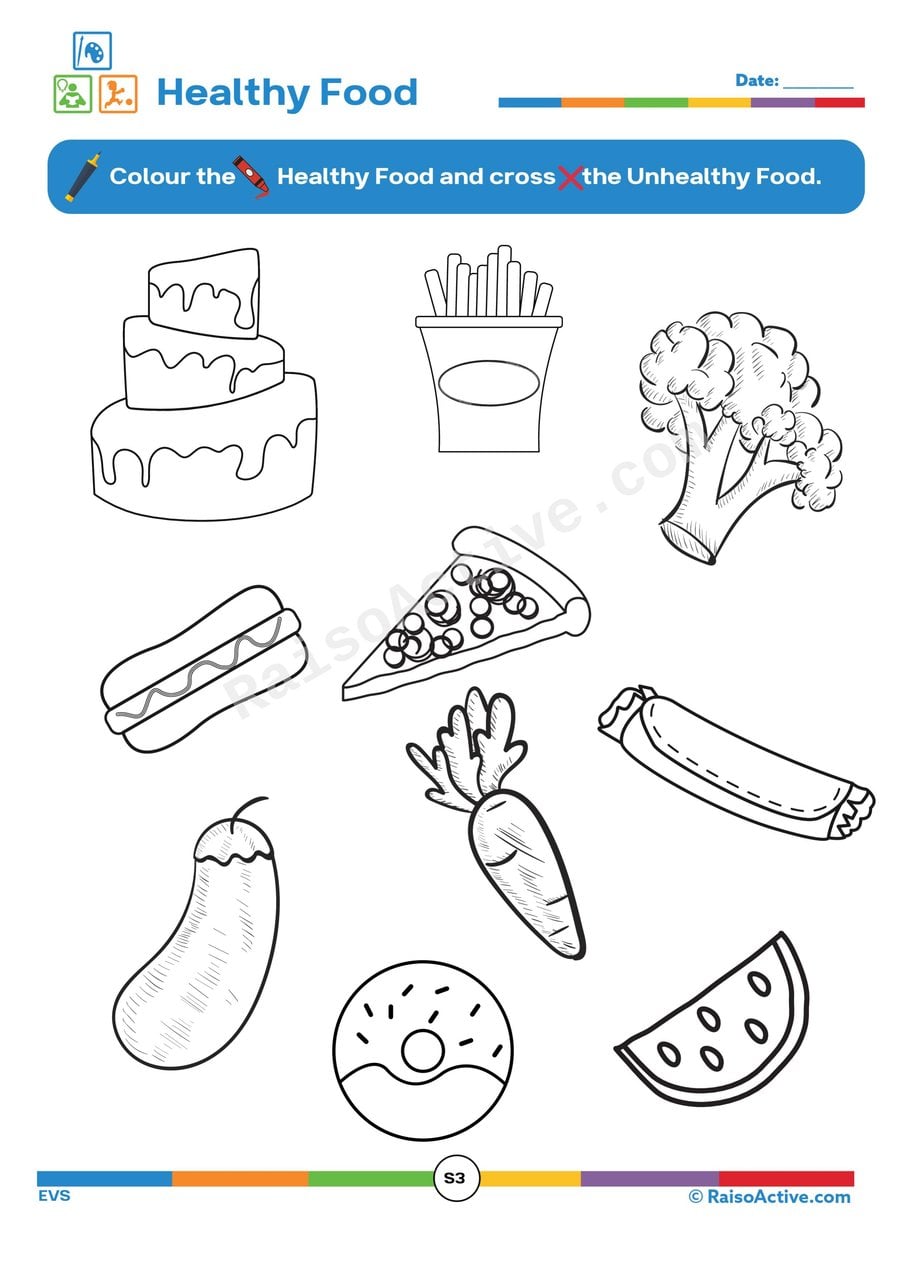
This worksheet builds nutrition awareness in children ages 3-5 by having them make an active choice about each pictured food — coloring the healthy ones and crossing out the unhealthy ones — rather than passively looking at a list. Requiring two different physical responses for two categories reinforces the distinction more strongly than a single sorting action would. Talking through the reasoning behind each choice also builds early critical thinking about cause and effect between food choices and health.

Classify Animals: Sorting Worksheet for Preschoolers
Ages 3-5 · Preschool–Pre-KAges 3-5 · Nursery–ReceptionAges 3-5 · Nursery–LKGAges 3-5
Deciding which category — birds, fish, insects, or reptiles — each animal belongs to builds classification thinking for children ages 3-5, an early scientific skill of grouping things by shared characteristics.

Personal Pronouns Worksheet for Kids: Matching and Writing
Ages 3-5 · Preschool–Pre-KAges 3-5 · Nursery–ReceptionAges 3-5 · Nursery–LKGAges 3-5
Children ages 3-5 practice choosing and writing the correct personal pronoun — I, you, she, it, we, or they — for a picture or phrase, building an early grammar skill that makes their spoken and written sentences sound natural. Matching a pronoun to who or what it refers to also strengthens reading comprehension, since pronouns require tracking who is being talked about.
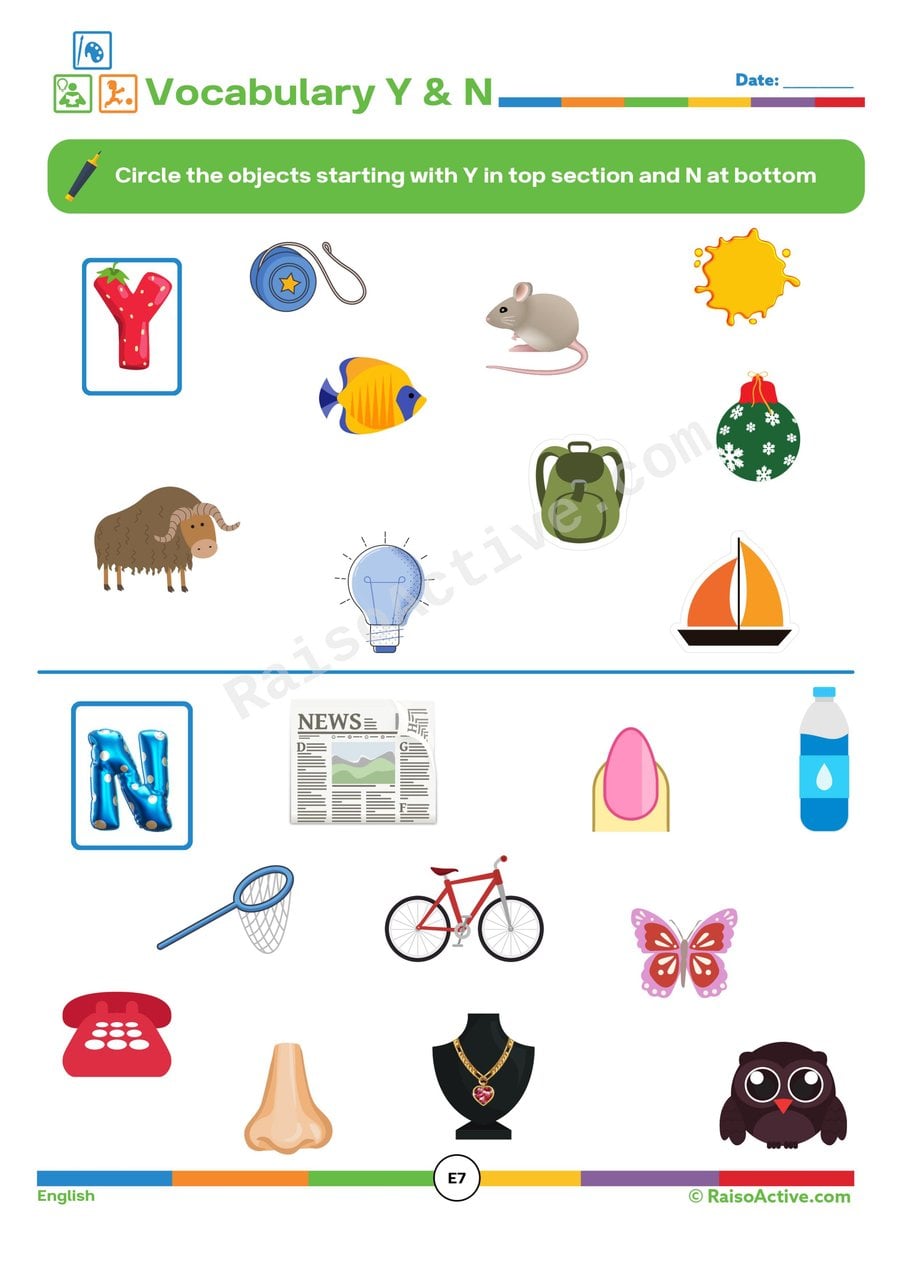
Y and N Vocabulary Worksheet: Circle the Objects!
Ages 3-5 · Preschool–Pre-KAges 3-5 · Nursery–ReceptionAges 3-5 · Nursery–LKGAges 3-5
Deciding whether a pictured object starts with Y or N helps children ages 3-5 practice initial sound discrimination between two distinct consonant sounds, building both vocabulary and listening skills. Circling in the correct top or bottom section adds a simple visual organization step that reinforces the category each object belongs to.

Letter W Tracing Worksheet for Preschoolers: Practice Writing the Letter W!
Ages 3-5 · Preschool–Pre-KAges 3-5 · Nursery–ReceptionAges 3-5 · Nursery–LKGAges 3-5
W is essentially two V shapes joined together, making it one of the most stroke-heavy letters a preschooler encounters — tracing it builds stamina for multi-stroke letters and reinforces the diagonal-line control introduced by simpler letters like V. Practicing uppercase W and lowercase w at ages 3-5 also helps children notice that lowercase w is just a smaller version of the same repeated zigzag.
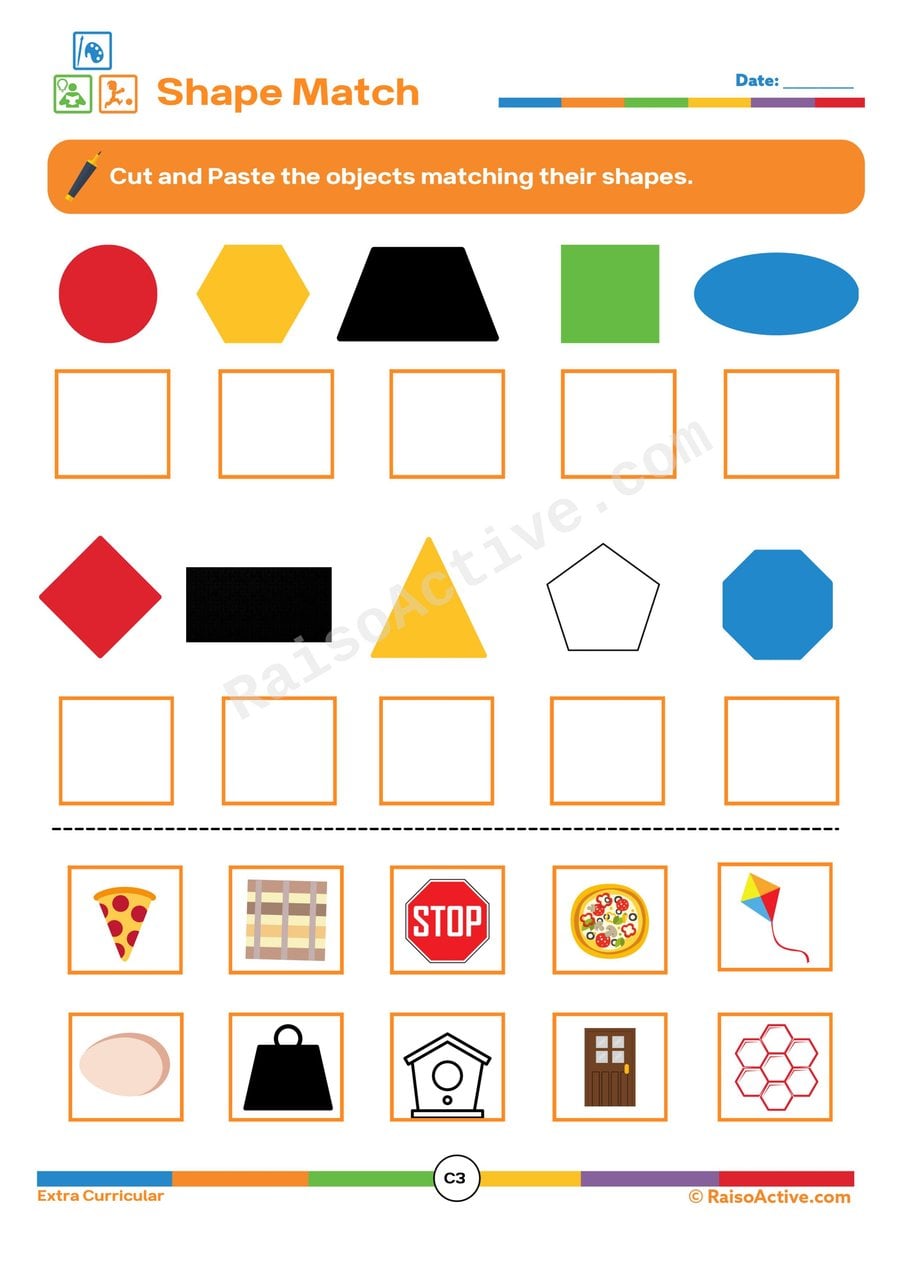
Shape Match Worksheet: Cut and Paste Shapes!
Ages 3-5 · Preschool–Pre-KAges 3-5 · Nursery–ReceptionAges 3-5 · Nursery–LKGAges 3-5
Children ages 3-5 practice shape recognition and visual discrimination as they cut out everyday objects and match each one to the 2D shape it most closely resembles, reinforcing that shapes exist all around them, not just on a worksheet page. This kind of real-world shape matching builds a stronger foundation than memorizing shape names in isolation.

Count and Match: Number Names Worksheet for Preschoolers
Ages 3-5 · Preschool–Pre-KAges 3-5 · Nursery–ReceptionAges 3-5 · Nursery–LKGAges 3-5
Children ages 3-5 practice counting groups of objects and then matching that quantity to both its written numeral and its spelled-out number word, connecting three different representations of the same amount. This triple connection between objects, numerals, and number names builds a deeper, more flexible sense of number than counting alone.

Rocking Santa Card Craft Worksheet for Preschoolers
Ages 3-5 · Preschool–Pre-KAges 3-5 · Nursery–ReceptionAges 3-5 · Nursery–LKGAges 3-5
This rocking Santa card craft has children ages 3-5 cut out individual shape pieces and assemble them onto a folded card base, combining scissor control with an early understanding of how folding creates movement, since the 'rocking' effect comes from the card's fold. Following the assembly steps in order also reinforces sequencing and attention to visual instructions.

Fast and Slow Sorting Worksheet for Preschoolers
Ages 3-5 · Preschool–Pre-KAges 3-5 · Nursery–ReceptionAges 3-5 · Nursery–LKGAges 3-5
This worksheet introduces the comparative concept of fast versus slow by having children sort pictures of animals, vehicles, or people into two categories based on speed. For three- to five-year-olds, sorting by a comparative quality like speed — rather than a fixed trait like color or shape — builds early reasoning skills, since children have to think about how something moves, not just what it looks like.
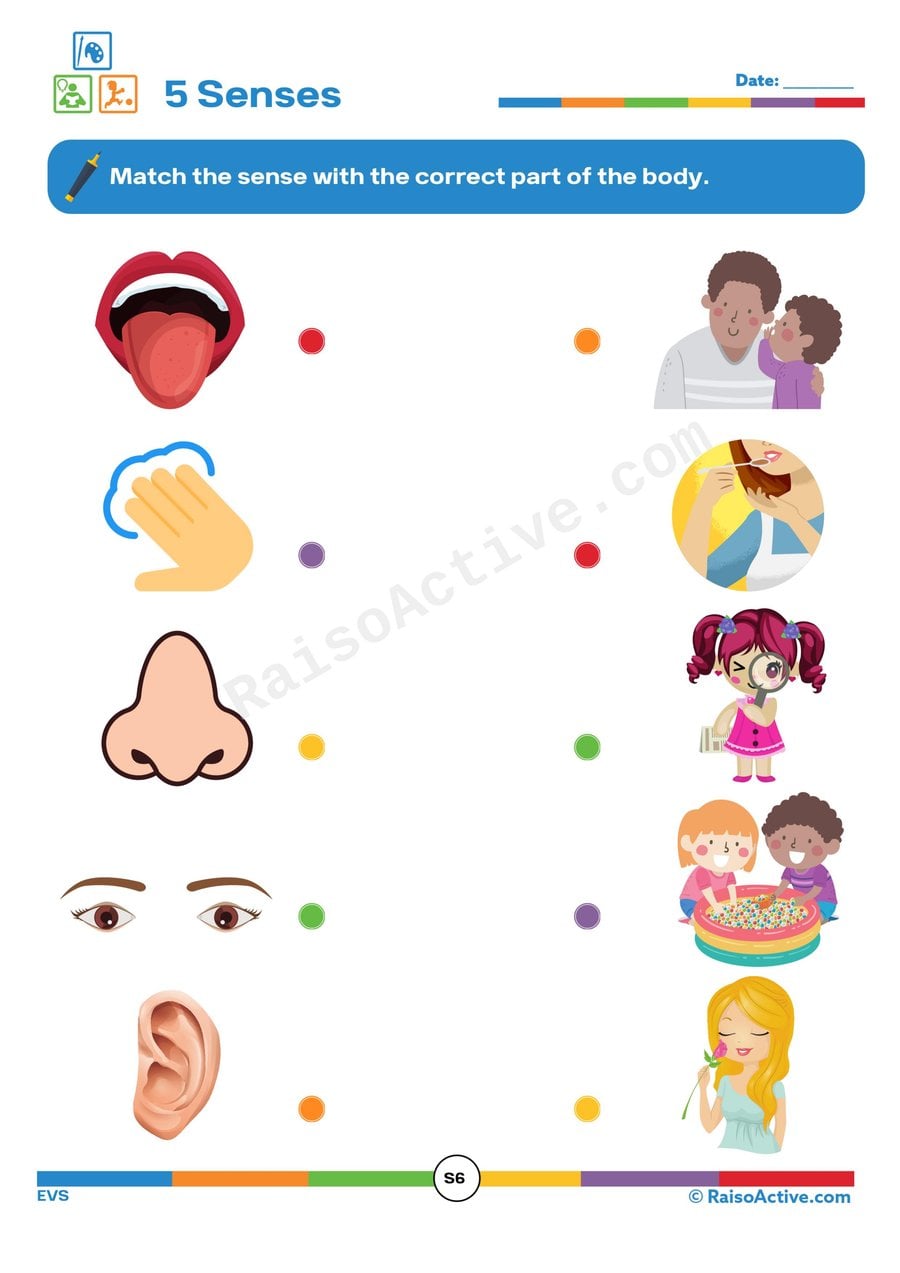
5 Senses Matching Worksheet for Preschoolers
Ages 3-5 · Preschool–Pre-KAges 3-5 · Nursery–ReceptionAges 3-5 · Nursery–LKGAges 3-5
This worksheet introduces children ages 3-5 to the five senses — sight, hearing, smell, taste, and touch — by asking them to match each sense to the body part responsible for it. Understanding that specific body parts are linked to specific senses is an early science concept that builds body awareness and observational vocabulary. Drawing the connecting line for each match also reinforces visual tracking and pencil control.
What preschool worksheets cover
Preschool is about readiness: the physical, language and thinking skills that make formal learning possible later. The Head Start Early Learning Outcomes Framework groups them into approaches to learning, social-emotional development, language and literacy, cognition (including early math) and perceptual, motor and physical development. Worksheets touch the last three most directly, and the first two hardly at all.
- Pre-writing: vertical, horizontal, diagonal and curved strokes, then simple shapes
- Letters: recognizing uppercase letters, starting with the letters in the child's name
- Math: counting objects to 10, matching a numeral to a small set, big and small, more and fewer
- Shapes and colors: circle, square, triangle and rectangle; naming and sorting by color
- Fine motor: cutting along straight lines, gluing, dot-to-dot with a few dots, matching pairs
How to use worksheets with a three-year-old
Print on plain paper and offer a thick crayon or a short, fat pencil, which encourages a proper grip. Sit with your child, read the instruction, and do the first item together. Five minutes is a good session; ten is the ceiling. Treat the sheet as one activity among many, not as school. If your child scribbles across the page instead of tracing, that is normal at three; go back to free drawing and playdough for a few weeks and try again.
Signs your child is ready for worksheets
A child is ready for simple sheets when they can hold a crayon and make deliberate marks, sit at a table for a few minutes, follow a one-step instruction, and show interest in letters or numbers around them. If any of those are missing, sensory and gross motor play (playdough, tweezers, climbing, threading beads) builds the same skills without paper. There is no advantage in starting worksheets early.
Frequently asked questions
What should a 3-year-old know before Pre-K?
There is no fixed list, and preschools expect a wide range. Typical three- to four-year-old milestones include speaking in sentences of four or more words, following two-step directions, counting to 5 or 10 by rote, recognizing some letters (often the first letter of their name), naming a few colors and shapes, drawing a circle, and using scissors with help. Self-care such as toileting and putting on a coat matters more to most programs than academics.
Are worksheets appropriate for preschoolers?
In small doses. Most early childhood educators, and the Head Start framework, favor play-based learning at three and four, because children learn language, self-regulation and thinking through play in ways a worksheet cannot replicate. A short, well-designed sheet with one skill and large pictures is a reasonable table activity for five minutes. Long sessions, small print and drilling are not appropriate at this age.
What is the difference between preschool and Pre-K?
Preschool usually refers to programs for three-year-olds (sometimes two-and-a-half to four), while Pre-K, or pre-kindergarten, is the year immediately before kindergarten, for four- to five-year-olds. Pre-K programs, especially state-funded ones, follow early learning standards that lead into kindergarten, so they add letter sounds, counting to 20 and name writing. Preschool focuses on readiness, routines, language and motor skills.
What order should a preschooler learn letters?
Start with the letters in the child's own name, because those carry meaning, then move to uppercase letters generally, since capitals are easier to tell apart than lowercase. Letter recognition (naming the shape) comes before letter sounds for most three-year-olds, and sounds become the focus in Pre-K and kindergarten. A letter a week, met in many contexts, works better than drilling an alphabet chart.
Are these preschool worksheets free to print?
Yes. Each worksheet can be downloaded free as a watermarked PDF after you create an account, up to five a day. An annual subscription removes the watermark and the daily limit for the full library of more than 1,000 worksheets and all printable packs. Sheets print on US Letter or A4 paper.

Written by
Hemsweta Jain · Teacher Cheena
MBA and Early Childhood Educator, teaching since 2014 · Founder of RaisoActive, Mumbai
Written and reviewed by Hemsweta Jain (Teacher Cheena), who designs every RaisoActive worksheet.
Last reviewed
Printable packs for ages 3–4
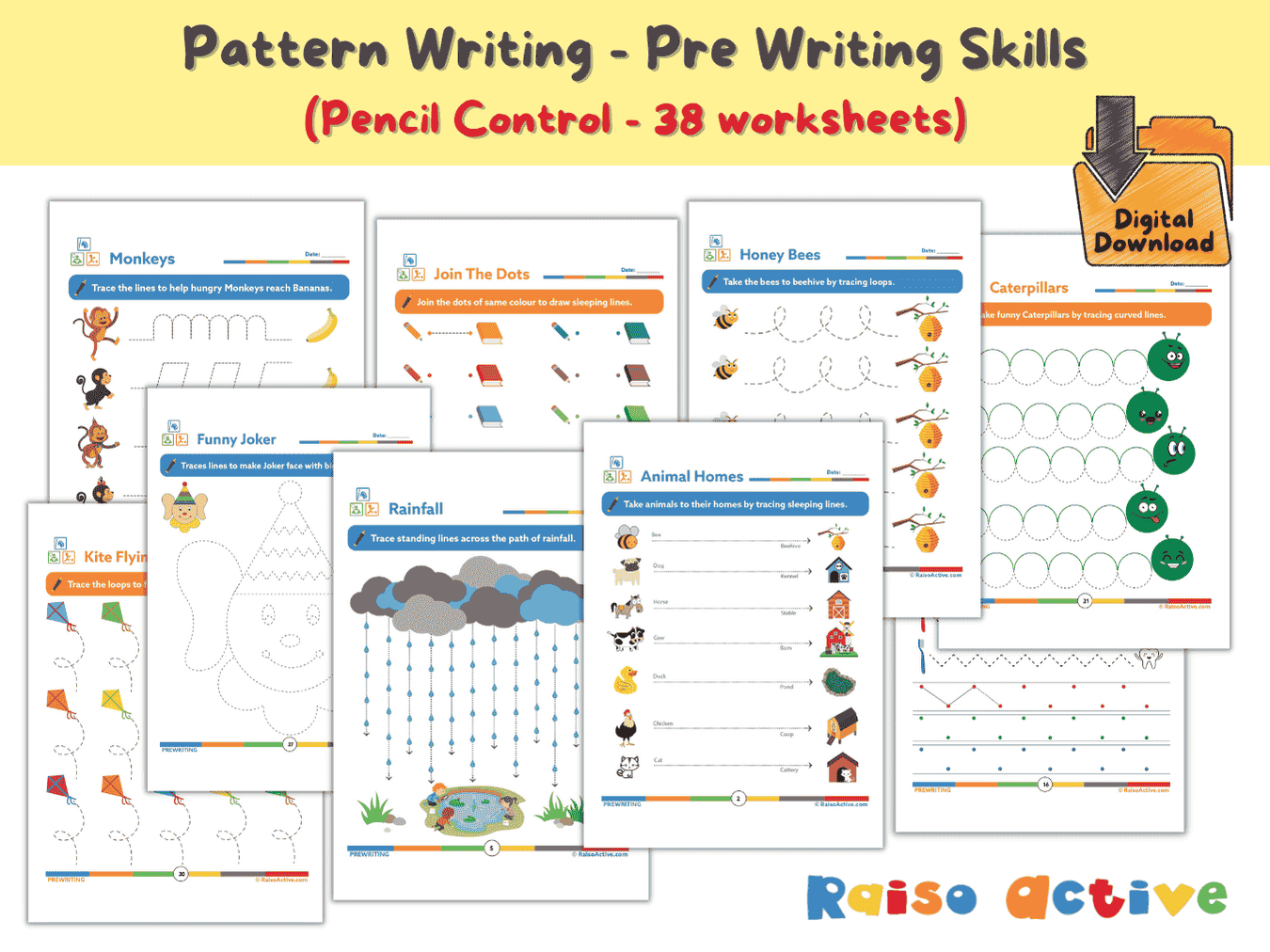

Pattern Writing Pre-writing Skills Activity Book for 3-4 Year Olds
Ages 3-4 · PreschoolAges 3-4 · NurseryAges 3-4 · 44 pages
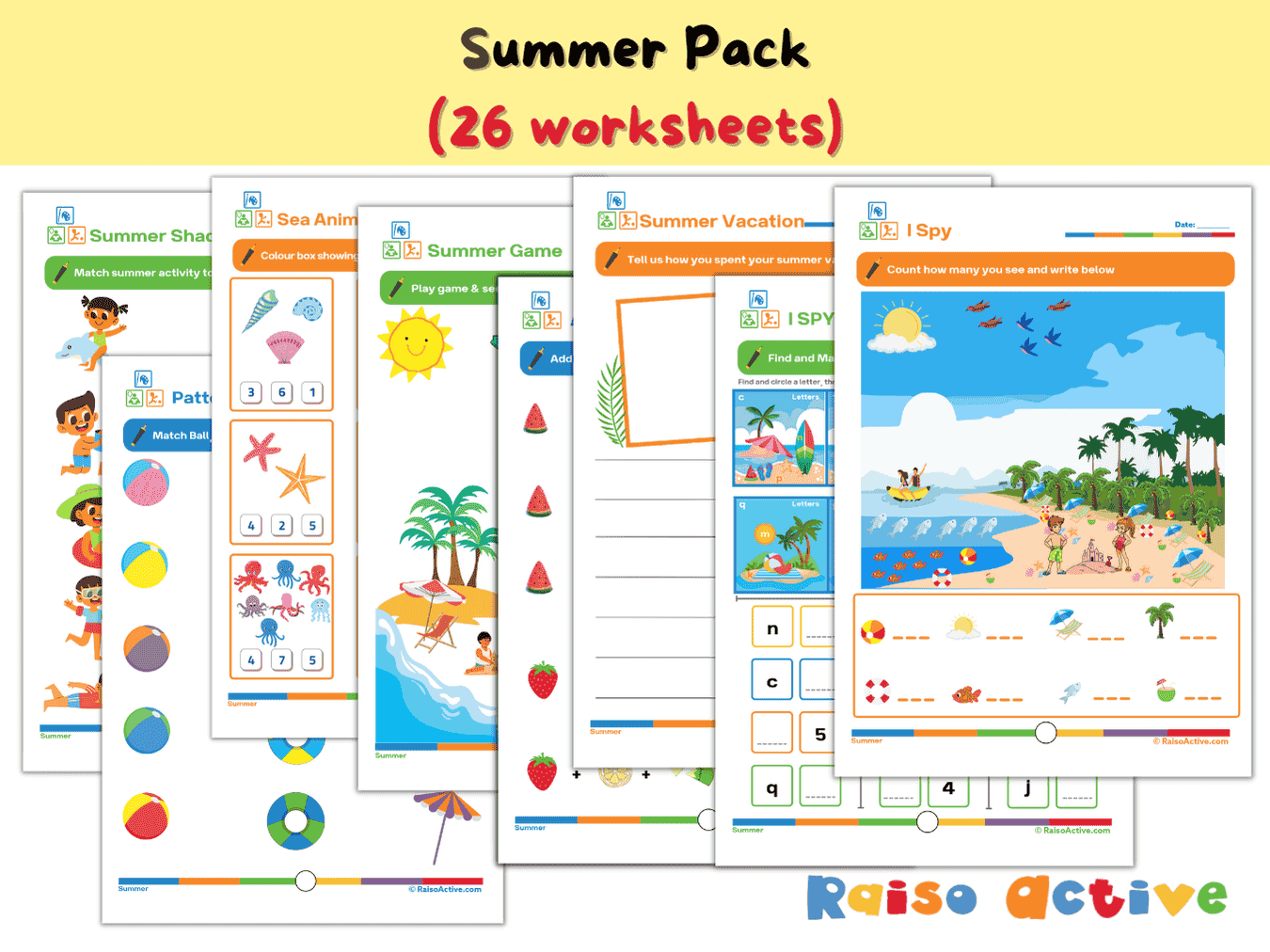

Summer Activity Pack: Math, Literacy, Puzzles & More for Preschool & Kindergarten
Ages 3-7 · Preschool–Grade 1Ages 3-7 · Nursery–Year 2Ages 3-7 · Nursery–Class 1Ages 3-7 · 26 pages
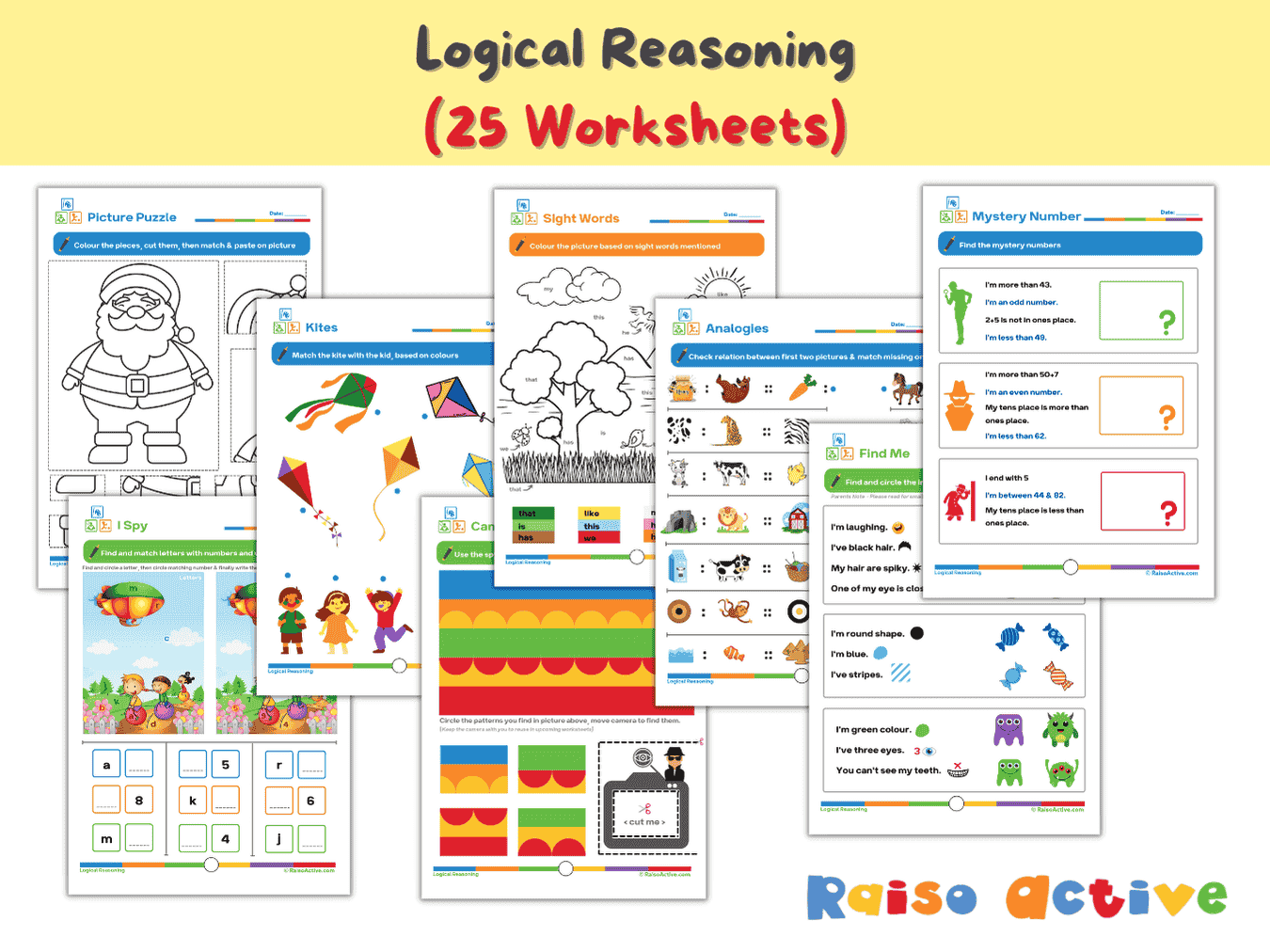

Logical Reasoning Activity Book for Preschool & Kindergarten | Patterns, Sudoku, Mazes & Coding
Ages 4-7 · Pre-K–Grade 1Ages 4-7 · Reception–Year 2Ages 4-7 · LKG–Class 1Ages 4-7 · 34 pages
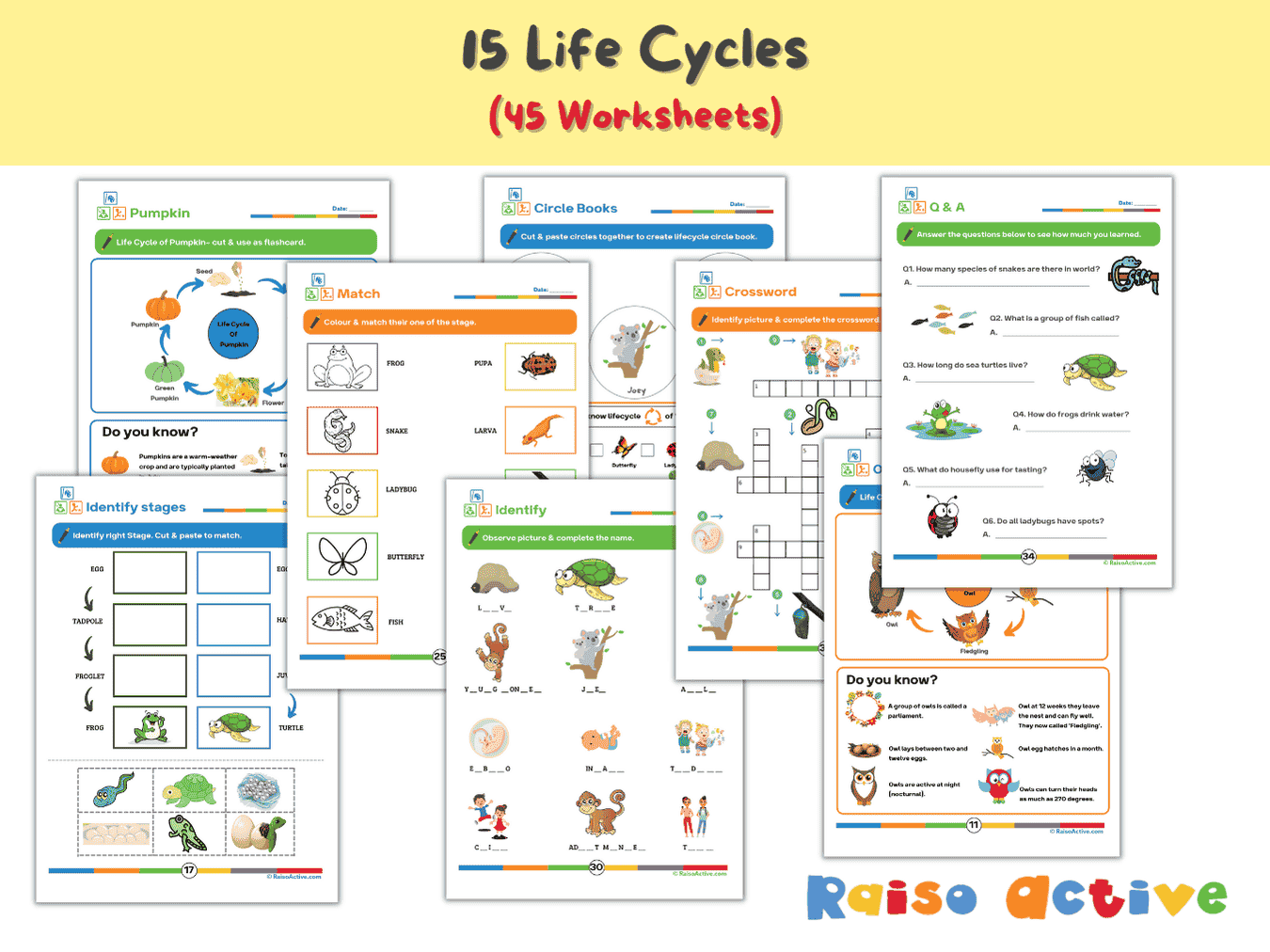

Lifecycles Activity Book & Flashcards for Preschool & Early Elementary
Ages 3-8 · Preschool–Grade 2Ages 3-8 · Nursery–Year 3Ages 3-8 · Nursery–Class 2Ages 3-8 · 46 pages
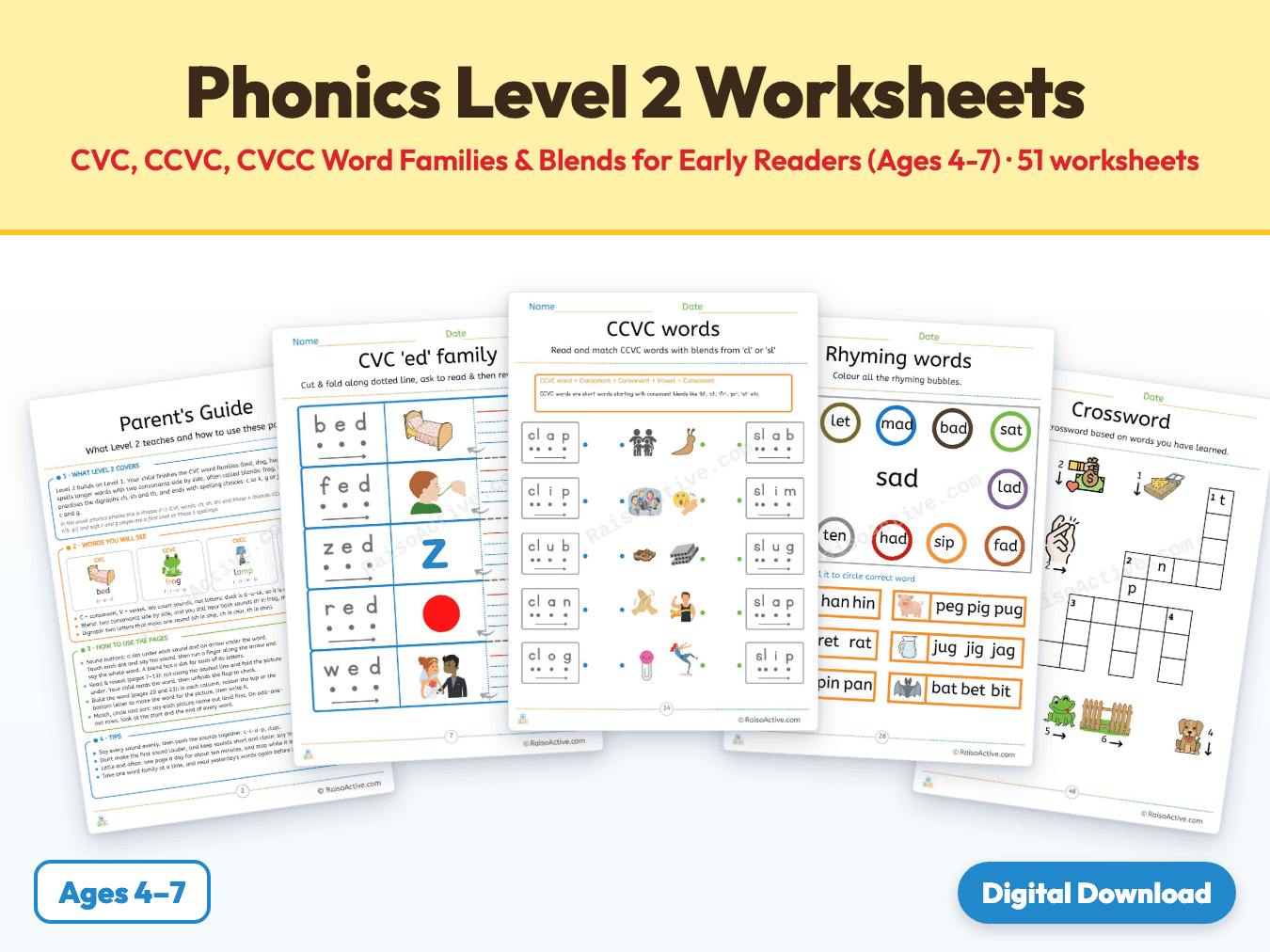

Phonics Level 2 Worksheets: CVC, CCVC, CVCC Word Families & Blends for Early Readers (Ages 4-7)
Ages 4-7 · Pre-K–Grade 1Ages 4-7 · Reception–Year 2Ages 4-7 · LKG–Class 1Ages 4-7 · 52 pages
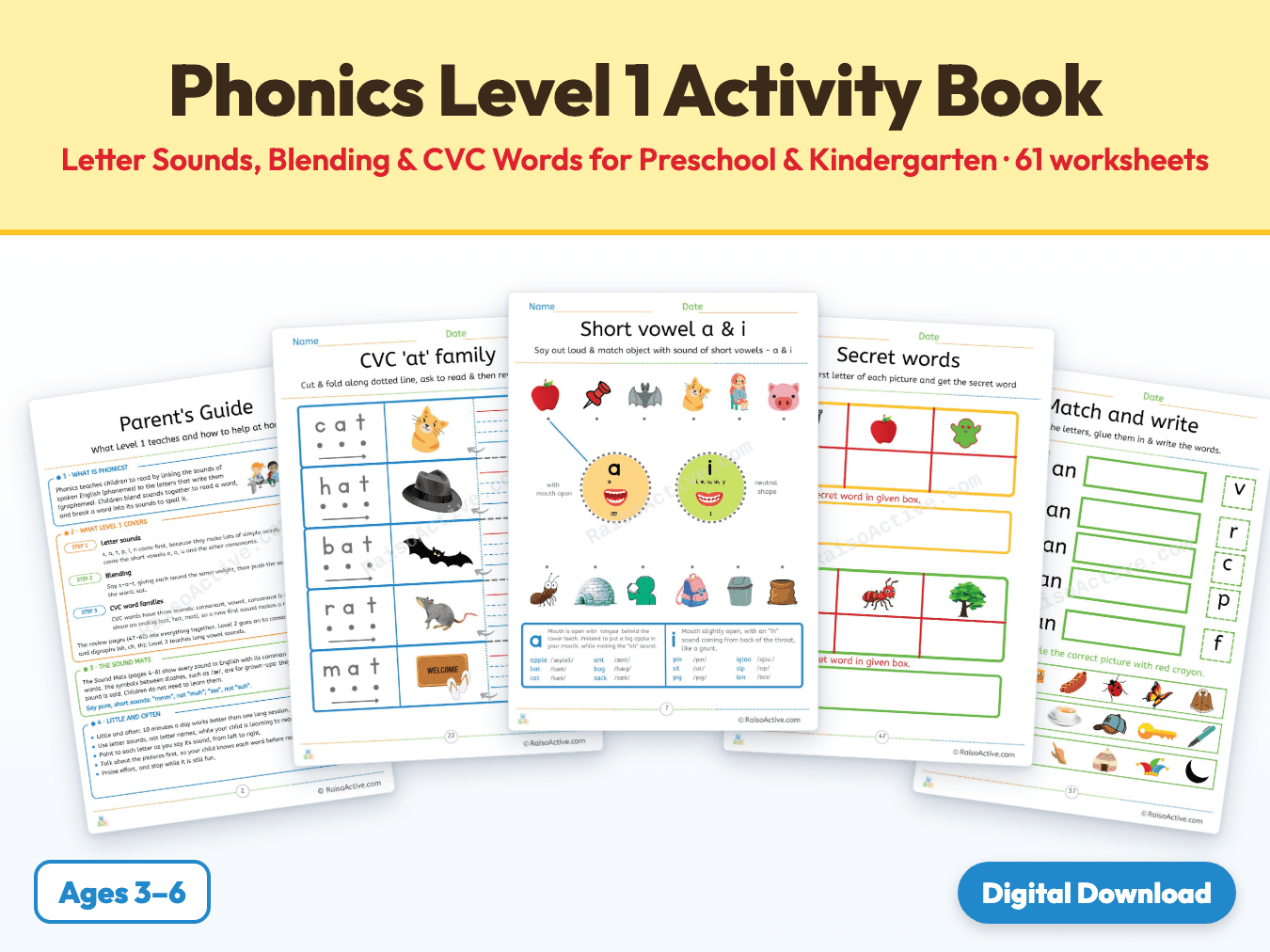
Phonics Level 1 Activity Book: Letter Sounds, Blending & CVC Words for Preschool & Kindergarten
Ages 3-6 · Preschool–KindergartenAges 3-6 · Nursery–Year 1Ages 3-6 · Nursery–UKGAges 3-6 · 62 pages
Guides for parents and teachers
See all guides
Number Formation Rhymes 0–9 and How to Fix Reversals
Original number formation rhymes for 0–9, the correct stroke order for each digit, why 3, 5 and 7 get reversed most often, and multisensory fixes that work.

Pre-Writing Strokes in Order: From Standing Lines to Loops (With Printable Patterns)
The developmental order of pre-writing strokes, from vertical lines to loops, and why practicing them in sequence makes letter formation much easier to learn.

Kindergarten Readiness Checklist: 25 Skills to Practice Before the First Day
A kindergarten readiness checklist of 25 literacy, math, motor, self-regulation and self-help skills, with an 8-week summer plan and notes on when not to worry.
Best Worksheets for 3-Year-Olds: What Works and What to Avoid
What works on worksheets for 3-year-olds: short sessions, crayons, tracing lines, matching, cutting, a free weekly plan, and signs one is too advanced.

Phase 2 Phonics at Home: Sound Order, Blending Games, Worksheets
Phase 2 phonics at home: the five sound sets in order, oral blending, tricky words, a two-week routine, common mistakes, and free worksheets.
Reception Year Explained: EYFS Learning and How to Help at Home
A teacher's plain-English guide to the Reception Year: the seven areas of learning, Early Learning Goals, Phase 2/3 phonics, the RBA and home routines.