Free printable worksheets · India
LKG Worksheets (Ages 4–5)
LKG (Lower Kindergarten, also called Junior KG) worksheets are practice sheets for children aged 4 to 5 in the second year of Indian pre-primary school. They cover tracing and writing capital letters A to Z, numbers 1 to 20, pattern writing, shapes and colours, matching, and EVS topics such as family, animals and seasons.
LKG is the year the alphabet and the number line become real objects a child can write. After a Nursery year of strokes and curves, the four-year-old hand is steady enough for capital letters, so most LKG syllabi teach A to Z in capitals first and hold small letters for UKG. Numbers extend from 5 to 20, with counting objects, writing numerals and matching a numeral to a quantity. Pattern writing continues because it feeds directly into letter formation. LKG teachers typically send one English and one maths sheet home a few days a week, and these worksheets are built for that rhythm: single-skill, large print, A4, with an instruction a parent can read aloud in one breath.
- 24 worksheets
- Free PDF download
- Print on A4 or Letter
Made for your child
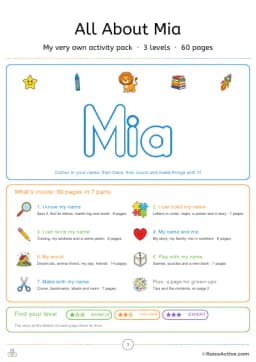
A whole activity pack made with their name
60 pages to spot, build, trace and write their own name, plus pages about their favourites, feelings and family. See a free preview with their name.
Make an All About Me packFree preview · free for members
Or start free: a name tracing sheet with their nameLKG Worksheets to print
Browse all worksheets for ages 4–5
Clothing Pattern Match Worksheet for Preschoolers
Ages 3-5 · Preschool–Pre-KAges 3-5 · Nursery–ReceptionAges 3-5 · Nursery–LKGAges 3-5
This worksheet has children ages 3-5 study repeating patterns on clothing items — stripes, polka dots, or checks — and match each item to its identical twin, building visual discrimination and early pattern-sequencing skills. Distinguishing between similar-looking patterns also sharpens attention to detail, a skill that later supports letter and word recognition.

Sorting Numbers Worksheet: Match the Number to the Picture!
Ages 3-5 · Preschool–Pre-KAges 3-5 · Nursery–ReceptionAges 3-5 · Nursery–LKGAges 3-5
Counting objects in a picture and then pasting that picture next to its matching numeral helps children ages 3-5 connect a written number symbol to an actual quantity, which is the heart of true number sense rather than just numeral naming. Cutting out the picture pieces beforehand also builds scissor control, giving this worksheet a fine motor component alongside the counting practice. The puzzle-piece format adds a satisfying, hands-on element that keeps repetitive counting practice engaging.
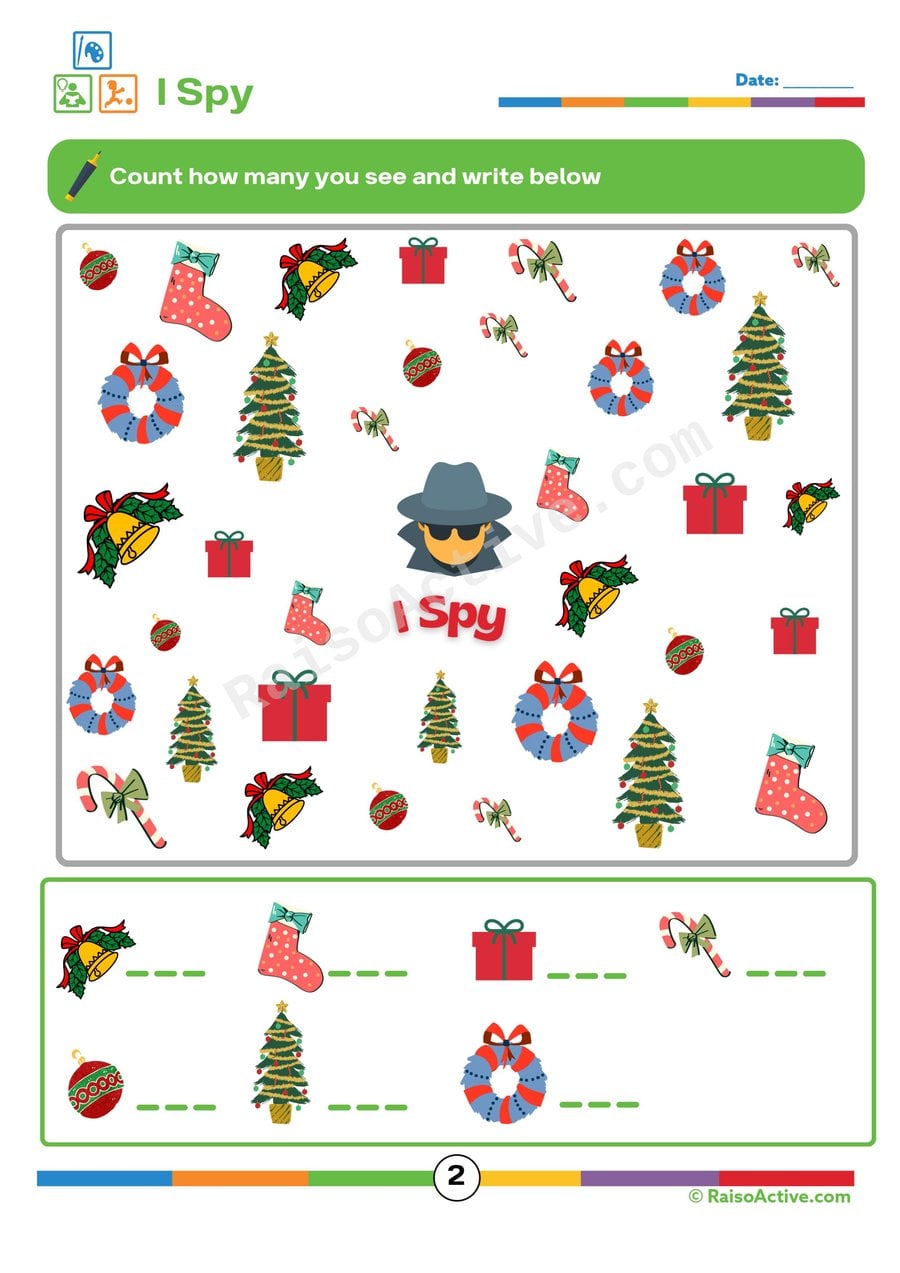
I Spy Christmas Worksheet: Count and Write!
Ages 3-5 · Preschool–Pre-KAges 3-5 · Nursery–ReceptionAges 3-5 · Nursery–LKGAges 3-5
This worksheet strengthens counting accuracy and number writing in children ages 3-5 as they search a busy Christmas scene for specific items and record how many they find. The 'I Spy' search format adds a visual scanning challenge on top of basic counting, since children must first locate every instance of an item scattered across the picture before counting it.

Trace and Write the Letter Y Worksheet for Preschoolers
Ages 3-5 · Preschool–Pre-KAges 3-5 · Nursery–ReceptionAges 3-5 · Nursery–LKGAges 3-5
Tracing the uppercase letter Y gives children ages 3-5 repeated practice with the diagonal-to-vertical stroke pattern that makes Y one of the trickier capital letters to form by hand. Because Y starts words like 'yellow,' 'yarn,' and 'yo-yo,' this page also reinforces the /y/ sound so children begin connecting how a letter looks with how it sounds. That letter-sound pairing is a core building block for early reading.

Head, Shoulders, Knees & Toes Rhyme Worksheet for Preschoolers
Ages 3-5 · Preschool–Pre-KAges 3-5 · Nursery–ReceptionAges 3-5 · Nursery–LKGAges 3-5
This rhyme-based worksheet has children ages 3-5 sing along to 'Head, Shoulders, Knees and Toes' while pointing to and naming each body part, combining music, movement, and vocabulary building in one activity. Rhythmic repetition is one of the most effective ways young children memorize new vocabulary, and pairing each word with a physical touch reinforces the connection between the spoken word and the actual body part. This kind of full-body engagement also supports gross motor coordination alongside language learning.

Reindeer Craft: Follow Instructions and Create a Festive Decoration!
Ages 3-5 · Preschool–Pre-KAges 3-5 · Nursery–ReceptionAges 3-5 · Nursery–LKGAges 3-5
This multi-step reindeer craft has children ages 3-5 follow a sequence of folding and assembly instructions to build a three-dimensional decoration, strengthening both listening comprehension and the fine motor skills needed to position and attach small pieces accurately. Because each step depends on the one before it, children also practice patience and sequencing, skills that carry over into following any multi-step task.

Learn the Sight Word 'My' - Tracing, Coloring, and More!
Ages 3-5 · Preschool–Pre-KAges 3-5 · Nursery–ReceptionAges 3-5 · Nursery–LKGAges 3-5
This worksheet builds sight-word recognition for the possessive word 'my,' one of the earliest words children use to talk about their own belongings and experiences, through tracing, coloring, a word search, and sentence reading. Because possessive words like 'my' appear in nearly every sentence a young child speaks, mastering it in print helps bridge their spoken vocabulary directly into early reading.

Tracing Numbers 13-16 Worksheet for Preschoolers
Ages 3-5 · Preschool–Pre-KAges 3-5 · Nursery–ReceptionAges 3-5 · Nursery–LKGAges 3-5
Tracing the numbers 13 through 16 gives children practice with the trickier teen-number range, where number names and digit order don't always match intuitively, fourteen starts with the digit that comes second, for example, making handwriting practice here also a subtle exercise in number sense. For ages three to five, saying each number aloud while tracing helps cement both its written form and its place in the counting sequence.

Indefinite Pronoun Worksheet: Fill-in-the-Blanks Fun!
Ages 3-5 · Preschool–Pre-KAges 3-5 · Nursery–ReceptionAges 3-5 · Nursery–LKGAges 3-5
Choosing the correct indefinite pronoun to complete each sentence introduces children ages 3-5 to words like something, someone, and anywhere in simple, everyday sentence contexts, building early grammar awareness alongside vocabulary. This gentle, sentence-level practice lays groundwork for more advanced grammar work in later years.

Wild Animals Cut and Paste Worksheet for Preschoolers
Ages 3-5 · Preschool–Pre-KAges 3-5 · Nursery–ReceptionAges 3-5 · Nursery–LKGAges 3-5
Children ages 3-5 practice fine motor cutting and pasting skills while learning to recognize wild animals such as lions, tigers, or elephants that live in jungle habitats rather than around a home. This builds early classification knowledge about animal habitats alongside hands-on scissor practice.
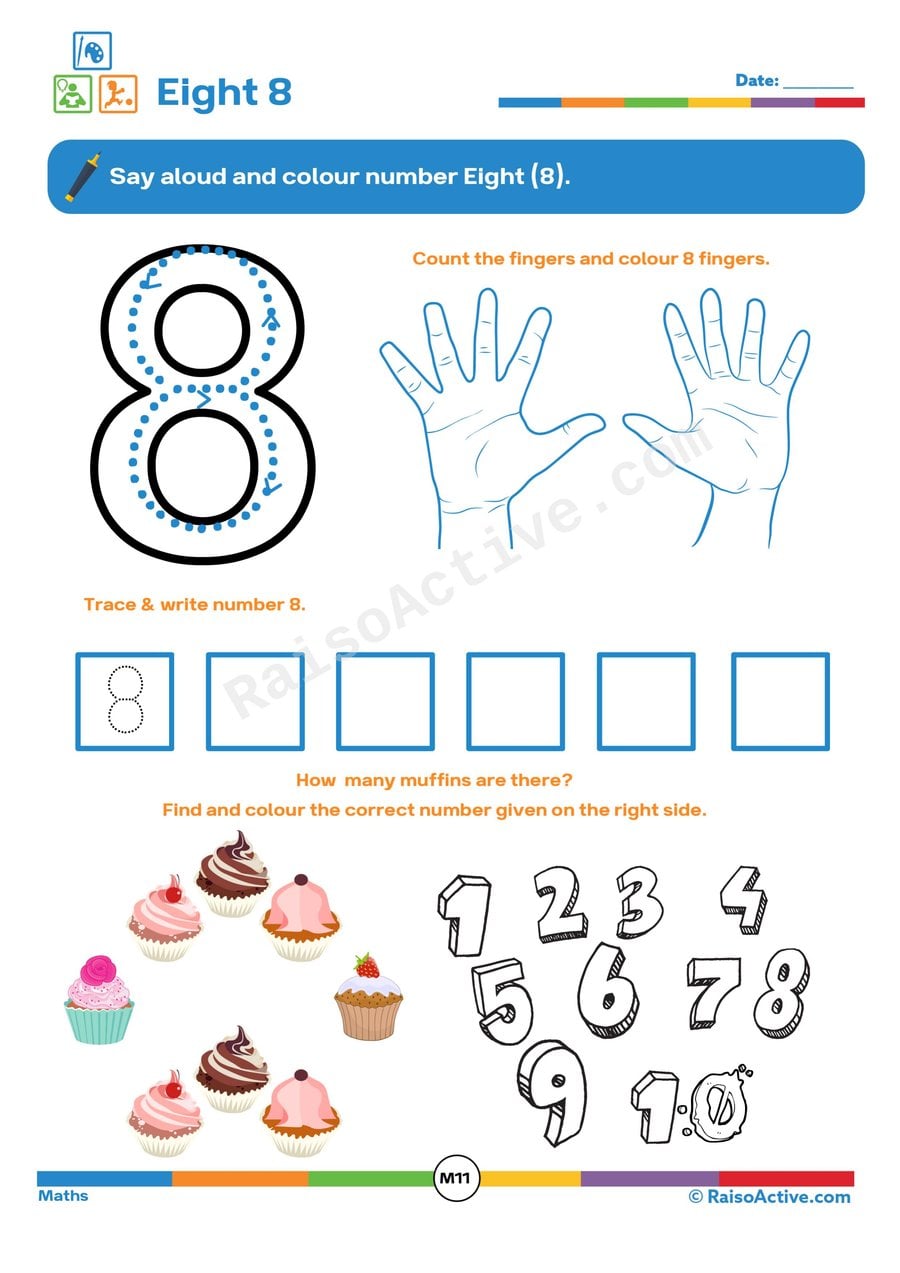
Number Eight (8) Worksheet: Trace, Count, and Color!
Ages 3-5 · Preschool–Pre-KAges 3-5 · Nursery–ReceptionAges 3-5 · Nursery–LKGAges 3-5
This worksheet helps children ages 3-5 learn to recognize, trace, and write the number 8 using its continuous curved stroke, while counting fingers and muffins reinforces one-to-one correspondence for the quantity eight. Circling the correct count among options also sharpens numeral recognition alongside handwriting practice.

Spot the Differences! Fun Picture Puzzle Worksheet for Kids
Ages 3-5 · Preschool–Pre-KAges 3-5 · Nursery–ReceptionAges 3-5 · Nursery–LKGAges 3-5
This spot-the-differences puzzle sharpens visual discrimination in children ages 3-5 by requiring them to compare two nearly identical pictures and notice small changes in detail, color, or position. Scanning systematically for differences also builds sustained visual attention and patience, both important pre-academic skills that support later tasks like proofreading and careful reading.

Dinosaur Friendship Bands Worksheet: Cut, Color, and Create!
Ages 3-5 · Preschool–Pre-KAges 3-5 · Nursery–ReceptionAges 3-5 · Nursery–LKGAges 3-5
This worksheet combines scissor practice with creative design as children ages 3-5 cut out dinosaur-themed friendship bands and color them before wearing or gifting them. Cutting along the dotted lines builds the hand strength and control needed for later writing, while choosing colors and patterns for each dinosaur circle nurtures early creative decision-making.
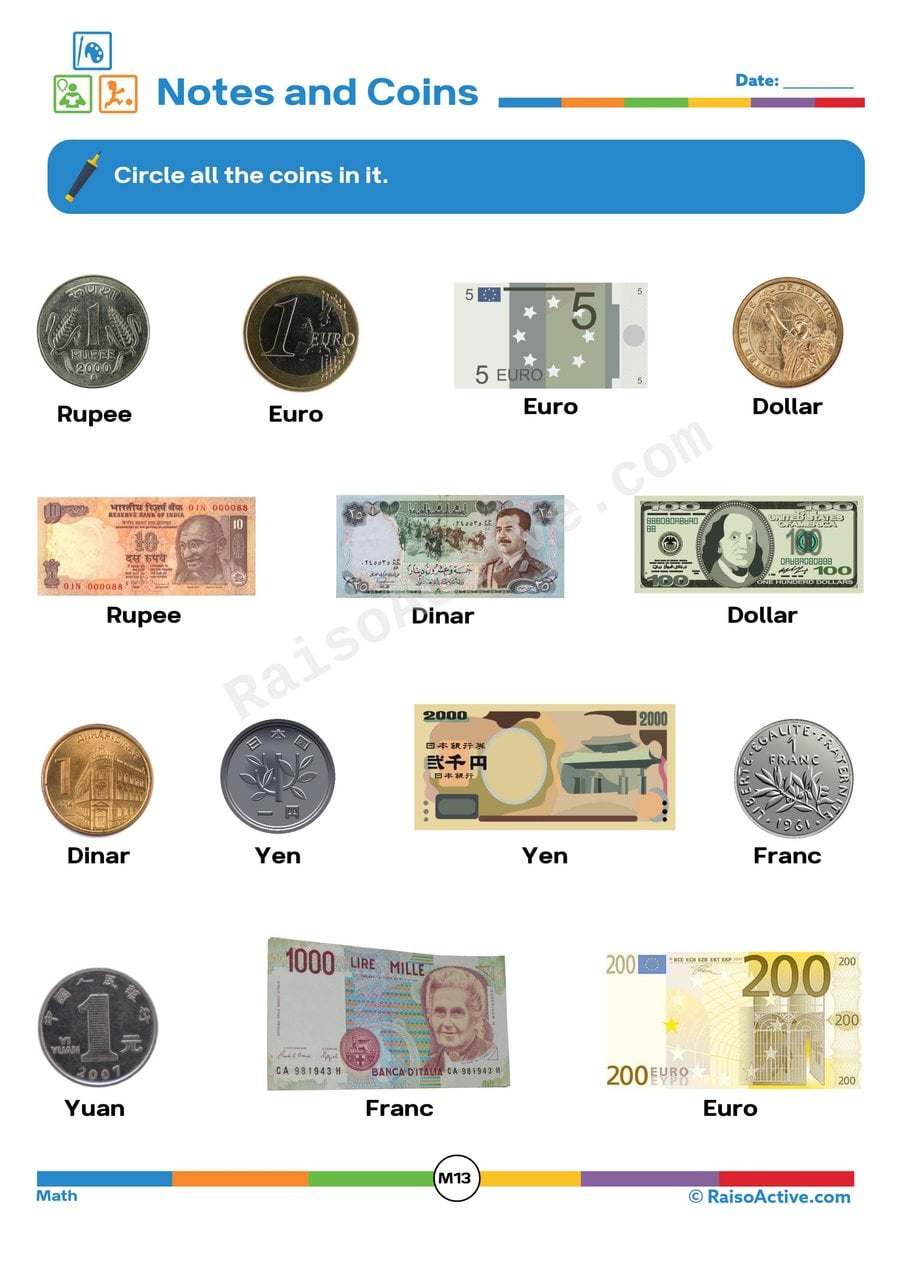
Coin Spotting Fun: Circle the Coins!
Ages 3-5 · Preschool–Pre-KAges 3-5 · Nursery–ReceptionAges 3-5 · Nursery–LKGAges 3-5
This worksheet asks children ages 3-5 to scan a page of mixed images and circle every coin they can find, building early visual discrimination and introducing the concept of money as a distinct category of object. Learning to recognize coins by their round shape and shiny appearance lays early groundwork for later skills like counting money and understanding value.

Pentagon Fun: Shape Recognition and Craft Activity Worksheet
Ages 3-5 · Preschool–Pre-KAges 3-5 · Nursery–ReceptionAges 3-5 · Nursery–LKGAges 3-5
This worksheet combines shape recognition with a hands-on craft, having children build a pentagon out of popsicle sticks and then find and glue pentagon-shaped pictures onto an outline. For ages 3-5, physically constructing a five-sided shape makes an otherwise abstract geometric concept concrete, while the cut-and-paste portion reinforces shape recognition through visual matching.

Classroom Objects Worksheet: Circle the Classroom Items!
Ages 3-5 · Preschool–Pre-KAges 3-5 · Nursery–ReceptionAges 3-5 · Nursery–LKGAges 3-5
This worksheet builds vocabulary and visual discrimination in children ages 3-5 by asking them to scan a mixed set of pictures and identify only the ones that belong in a classroom. Sorting relevant from irrelevant items in this way strengthens categorization skills and attention to detail, since children must compare each picture against their own knowledge of what a classroom contains. It also reinforces school-readiness vocabulary like 'desk,' 'crayons,' and 'books.'

Lifecycle Circle Book: Cut & Paste Activity for Young Learners
Ages 3-5 · Preschool–Pre-KAges 3-5 · Nursery–ReceptionAges 3-5 · Nursery–LKGAges 3-5
Children ages 3-5 compare and sequence the life cycles of two different animals — frogs and turtles — by assembling circular 'lifecycle books' for each. This side-by-side approach helps children notice that not all animals grow the same way, building early skills in comparison and scientific observation.
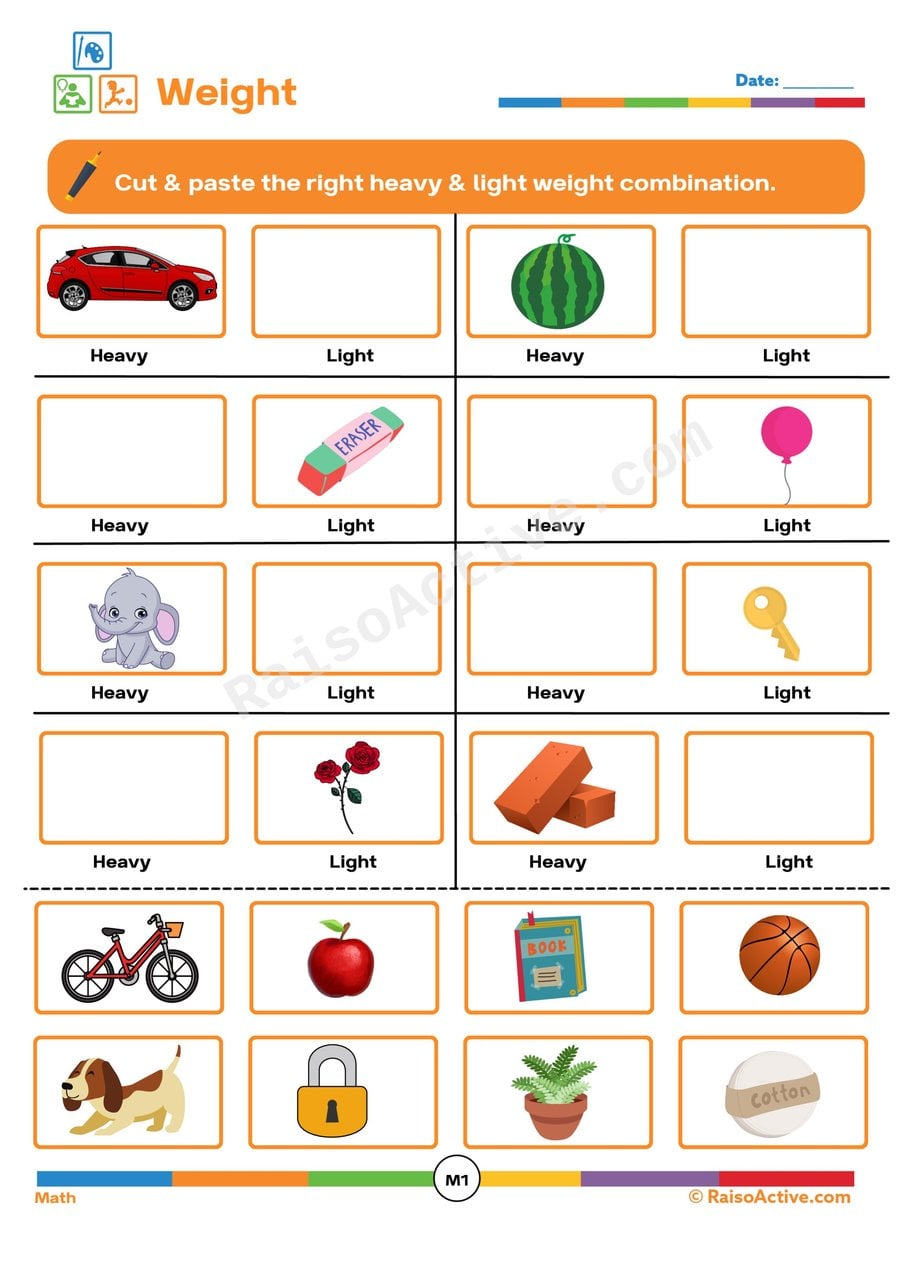
Weight Sorting Worksheet: Heavy vs. Light!
Ages 3-5 · Preschool–Pre-KAges 3-5 · Nursery–ReceptionAges 3-5 · Nursery–LKGAges 3-5
Sorting pictures into 'heavy' and 'light' categories introduces children to comparative reasoning about weight, a physical property they can't always judge from a picture alone, which pushes them to rely on real-world knowledge of the objects shown rather than visual size alone. For ages three to five, this distinction is an early step toward measurement concepts they'll formalize later with scales and standard units.

Top and Bottom Fun: Observe and Tick the Correct Position!
Ages 3-5 · Preschool–Pre-KAges 3-5 · Nursery–ReceptionAges 3-5 · Nursery–LKGAges 3-5
Children ages 3-5 build spatial reasoning and positional vocabulary as they observe pictures and decide whether an object is positioned at the top or the bottom. Understanding positional words like 'top' and 'bottom' supports children's ability to follow multi-step directions and later helps with concepts like graphing and map reading.

Complete the Pattern Worksheet: Ladybugs, Snails, and More!
Ages 3-5 · Preschool–Pre-KAges 3-5 · Nursery–ReceptionAges 3-5 · Nursery–LKGAges 3-5
Continuing a visual pattern like 'ladybug, snail, ladybug' asks preschoolers to notice a repeating rule and predict what comes next, an early form of the logical reasoning that later supports algebra and sequencing in reading. Because the pictures here are garden creatures, this worksheet also builds vocabulary and observation skills as children study small differences between the pieces before choosing the correct one.

Alphabet Cut and Paste Worksheet: Matching Letters and Objects
Ages 3-5 · Preschool–Pre-KAges 3-5 · Nursery–ReceptionAges 3-5 · Nursery–LKGAges 3-5
This cut-and-paste worksheet helps children ages 3-5 practice letter recognition by matching pictures to their correct beginning letter and gluing them into place, combining early phonics with fine motor skill development. Handling scissors and glue at this age builds the hand strength and precision needed for later handwriting, while the matching task reinforces that each letter represents a specific sound. Doing both together makes this a genuinely multi-skill activity rather than a single-purpose worksheet.

Guess the Word: Cut and Paste Worksheet for Early Learners
Ages 3-5 · Preschool–Pre-KAges 3-5 · Nursery–ReceptionAges 3-5 · Nursery–LKGAges 3-5
This cut-and-paste activity asks children ages 3-5 to look at picture clues, say the words aloud, and paste the correct picture to complete a combined word, giving them early practice in visual word-building and vocabulary expansion. Working with picture combinations helps children understand that some words are made by joining two smaller ideas together, a concept that supports later compound word recognition in reading. Saying each word out loud before pasting also builds the habit of connecting spoken language to printed or pictured words.

Parent's Guide: Fun Activities for Early Learning!
Ages 3-5 · Preschool–Pre-KAges 3-5 · Nursery–ReceptionAges 3-5 · Nursery–LKGAges 3-5
This parent's guide compiles a set of short activities spanning early literacy, spatial reasoning, and problem-solving, giving caregivers ready-made ways to build foundational skills through everyday play. For ages 3-5, mixing activity types across one guide, like word games and puzzles, keeps a young child's attention while covering multiple developmental areas in a single session or across a week.

Community Helpers Cut and Paste Worksheet for Preschoolers
Ages 3-5 · Preschool–Pre-KAges 3-5 · Nursery–ReceptionAges 3-5 · Nursery–LKGAges 3-5
This cut-and-paste worksheet focuses specifically on firefighters for children ages 3-5, teaching them to recognize firefighting equipment like a hose, helmet, or ladder and connect each item to a firefighter's job. Learning about a single community helper in depth, rather than several at once, lets young children build a richer, more detailed understanding of what that job actually involves. The cutting, gluing, and circling tasks also build the fine motor coordination needed for more complex craft and writing activities later.
What your child learns in LKG
By the end of LKG a child is expected to recognise and write all capital letters, say the sound of most letters, count and write numbers to 20, compare quantities, copy repeating patterns, name common shapes and colours, and talk about familiar EVS themes such as my family, my body, animals, plants and the weather.
- English: capital letters A–Z tracing and writing, letter sounds, vocabulary by theme, rhymes
- Maths: numbers 1–20, counting objects, number to quantity matching, more and less, shapes, patterns
- EVS: myself and my family, my body, animals and their homes, fruits and vegetables, seasons
- Pattern writing: curves, loops, waves and zigzags that build towards cursive in UKG
- Fine motor: colouring within outlines, cutting along lines, pasting
How to use LKG worksheets at home
Start every session with the pattern or tracing sheet as a warm-up, then move to the main sheet. Read the instruction aloud, point to the example, and step back. Ten to fifteen minutes is enough for a four-year-old. If a letter is formed the wrong way, show the correct starting point once rather than erasing repeatedly.
Keep a simple weekly plan: English on Monday and Wednesday, maths on Tuesday and Thursday, EVS or colouring on Friday. File the finished sheets in date order so you can show a teacher what has been practised, and reuse laminated tracing sheets with a whiteboard marker when a particular letter needs more repetitions.
Common difficulties in LKG and what helps
Reversals of letters such as B, D and S and of numerals like 3 and 7 are normal at four and usually resolve with tracing that starts from a clear dot. Children who press too hard or tire quickly benefit from more colouring and pattern sheets and fewer letter sheets. If counting past 10 keeps slipping, go back to counting real objects before returning to the numeral sheets.
Frequently asked questions
What should an LKG child know by the end of the year?
By the end of LKG most CBSE and ICSE schools expect a child to identify and write capital letters A to Z, know the sounds of most letters, count objects and write numbers to 20, recognise circle, square, triangle and rectangle, name primary and secondary colours, copy a pattern, and speak about family, body parts, animals and seasons in short sentences.
What is taught in LKG English?
LKG English covers recognising and writing the capital alphabet, matching capital letters to pictures that begin with that sound, rhyming words, simple vocabulary grouped by theme such as fruits, animals and colours, and listening to and retelling short stories. Small letters and blending are usually introduced late in the year or left for UKG, depending on the school.
What is taught in LKG maths?
LKG maths covers counting objects and writing numerals from 1 to 20, matching a number to a set, comparing more and less, big and small, tall and short, recognising 2D shapes, extending simple patterns and sorting by colour, size or type. Sums with the plus sign are not expected until UKG, although some schools introduce joining two groups with pictures.
How many worksheets a day are right for LKG?
One to two sheets a day, roughly ten to fifteen minutes, suits a four-year-old. Attention is longer than in Nursery but still short, so a warm-up tracing sheet followed by one English or maths sheet is a good routine. Schools often assign the same amount as homework; if your child already has school sheets, use these for revision at weekends.
Do LKG worksheets follow the CBSE or ICSE syllabus?
LKG does not have a single prescribed syllabus; CBSE, ICSE and state board schools design their own pre-primary programmes around the NEP 2020 Foundational Stage and NCF-FS 2022 learning outcomes. The sheets here cover those outcomes for ages 4 to 5: alphabet, numbers to 20, shapes, patterns, colours, matching and environmental awareness, so they line up with what most schools teach.
Are the LKG worksheets free?
Every LKG worksheet can be downloaded as a watermarked PDF free of charge after creating an account, with five downloads a day. An annual subscription removes the watermark and the daily limit across the full library of more than 1,000 worksheets and printable packs, which teachers and homeschooling parents use to print complete sets.

Written by
Hemsweta Jain · Teacher Cheena
MBA and Early Childhood Educator, teaching since 2014 · Founder of RaisoActive, Mumbai
Written and reviewed by Hemsweta Jain (Teacher Cheena), who designs every RaisoActive worksheet.
Last reviewed
Printable packs for ages 4–5
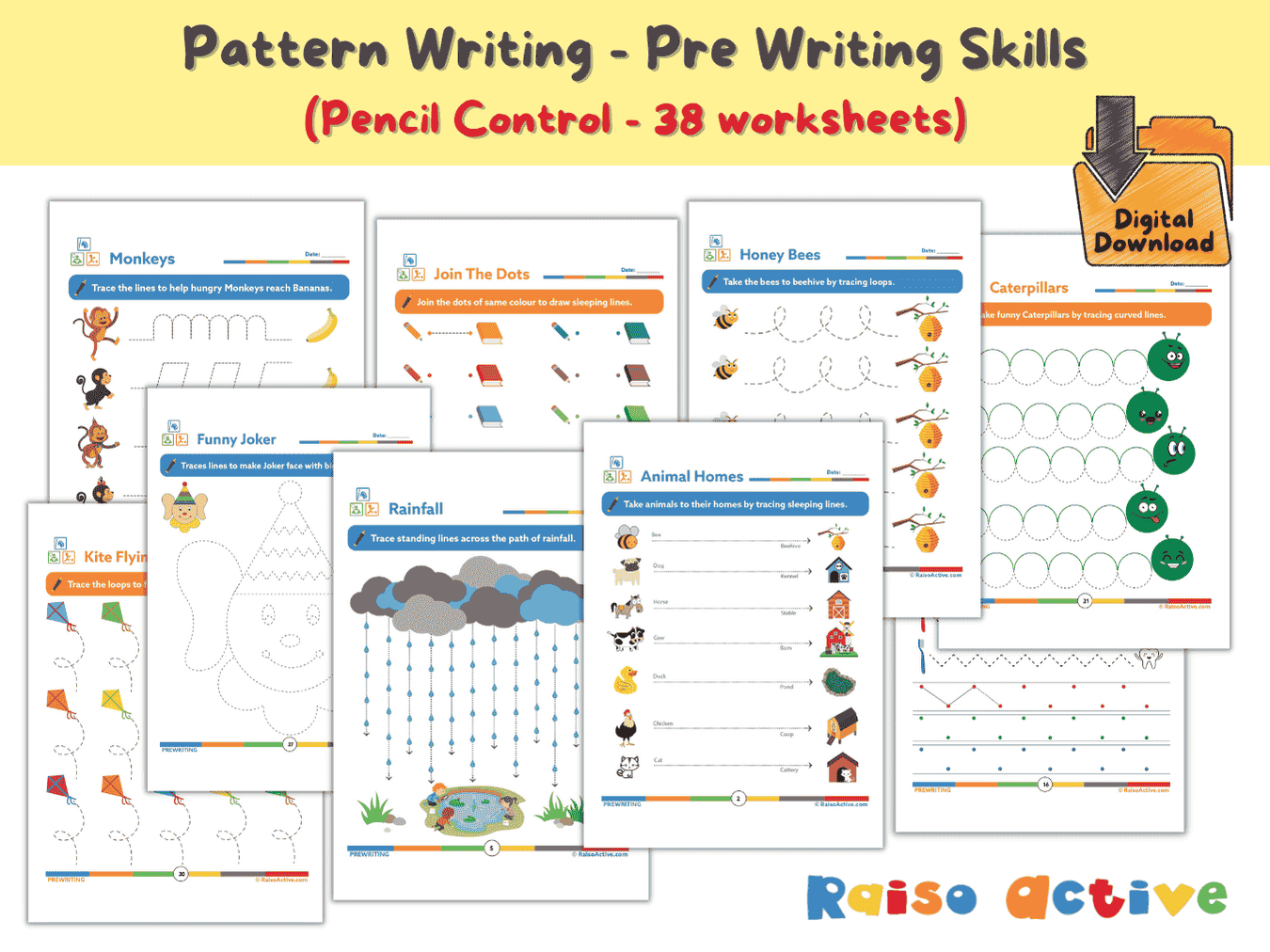

Pattern Writing Pre-writing Skills Activity Book for 3-4 Year Olds
Ages 3-4 · PreschoolAges 3-4 · NurseryAges 3-4 · 44 pages
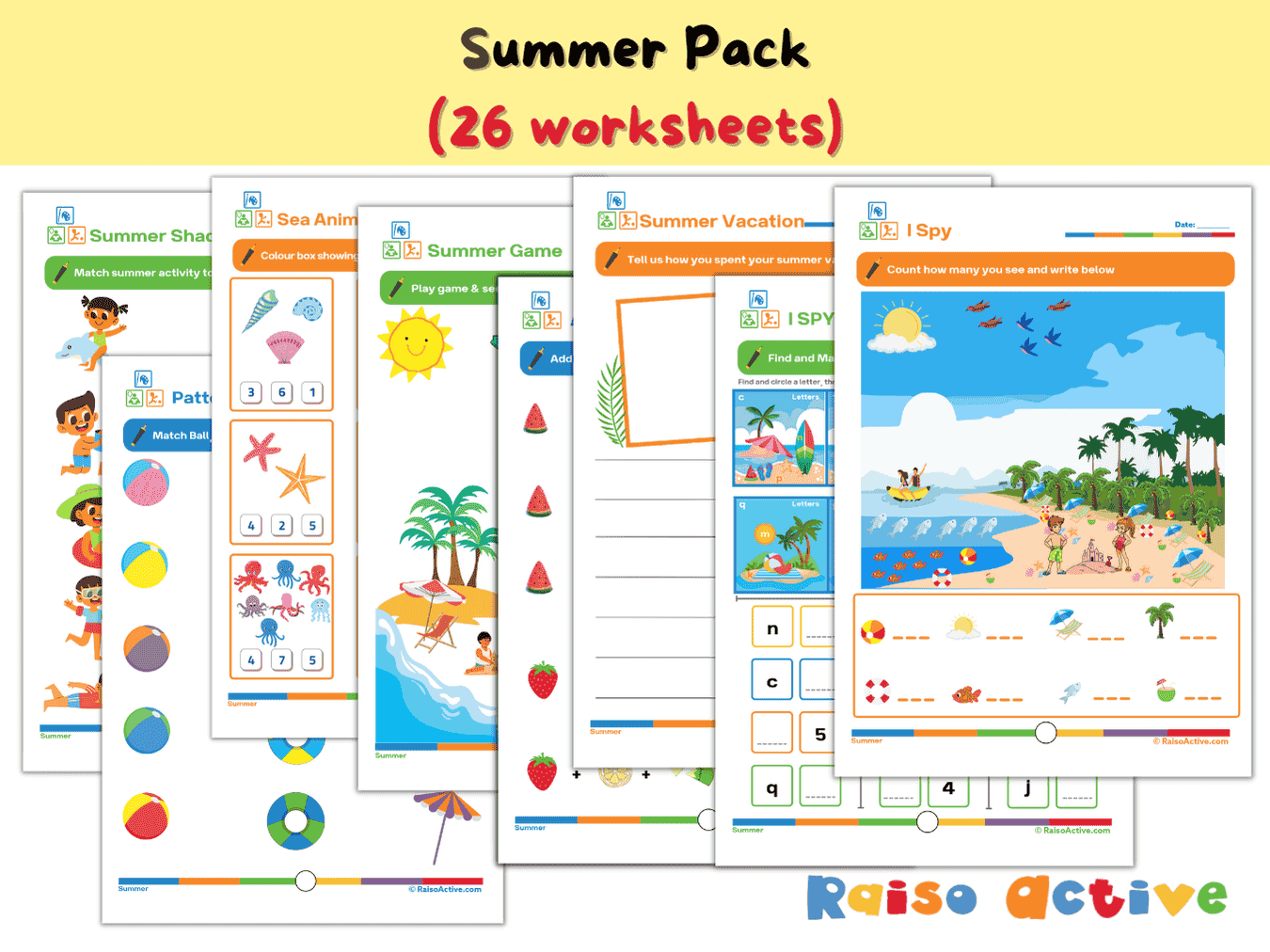

Summer Activity Pack: Math, Literacy, Puzzles & More for Preschool & Kindergarten
Ages 3-7 · Preschool–Grade 1Ages 3-7 · Nursery–Year 2Ages 3-7 · Nursery–Class 1Ages 3-7 · 26 pages
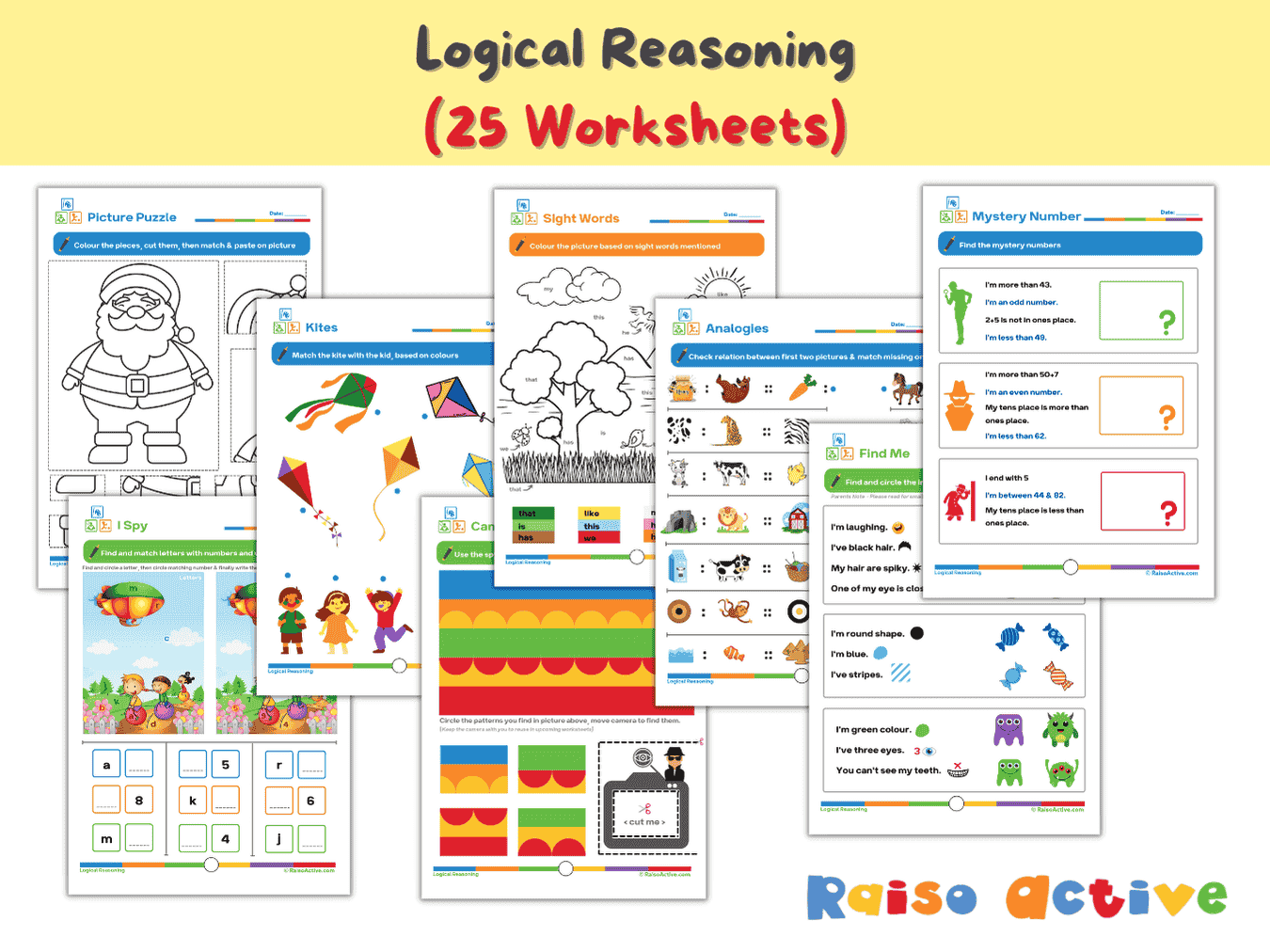

Logical Reasoning Activity Book for Preschool & Kindergarten | Patterns, Sudoku, Mazes & Coding
Ages 4-7 · Pre-K–Grade 1Ages 4-7 · Reception–Year 2Ages 4-7 · LKG–Class 1Ages 4-7 · 34 pages
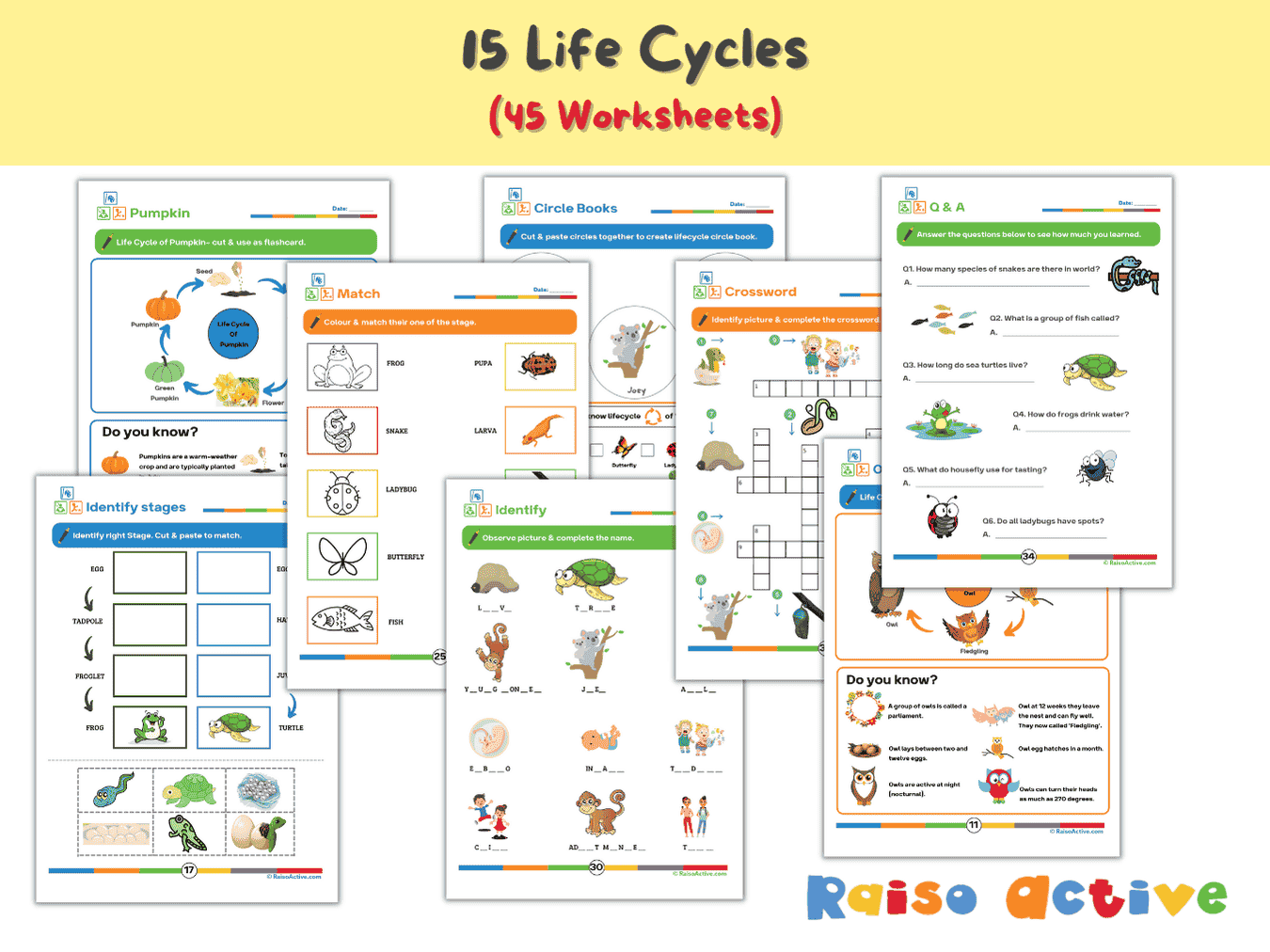

Lifecycles Activity Book & Flashcards for Preschool & Early Elementary
Ages 3-8 · Preschool–Grade 2Ages 3-8 · Nursery–Year 3Ages 3-8 · Nursery–Class 2Ages 3-8 · 46 pages
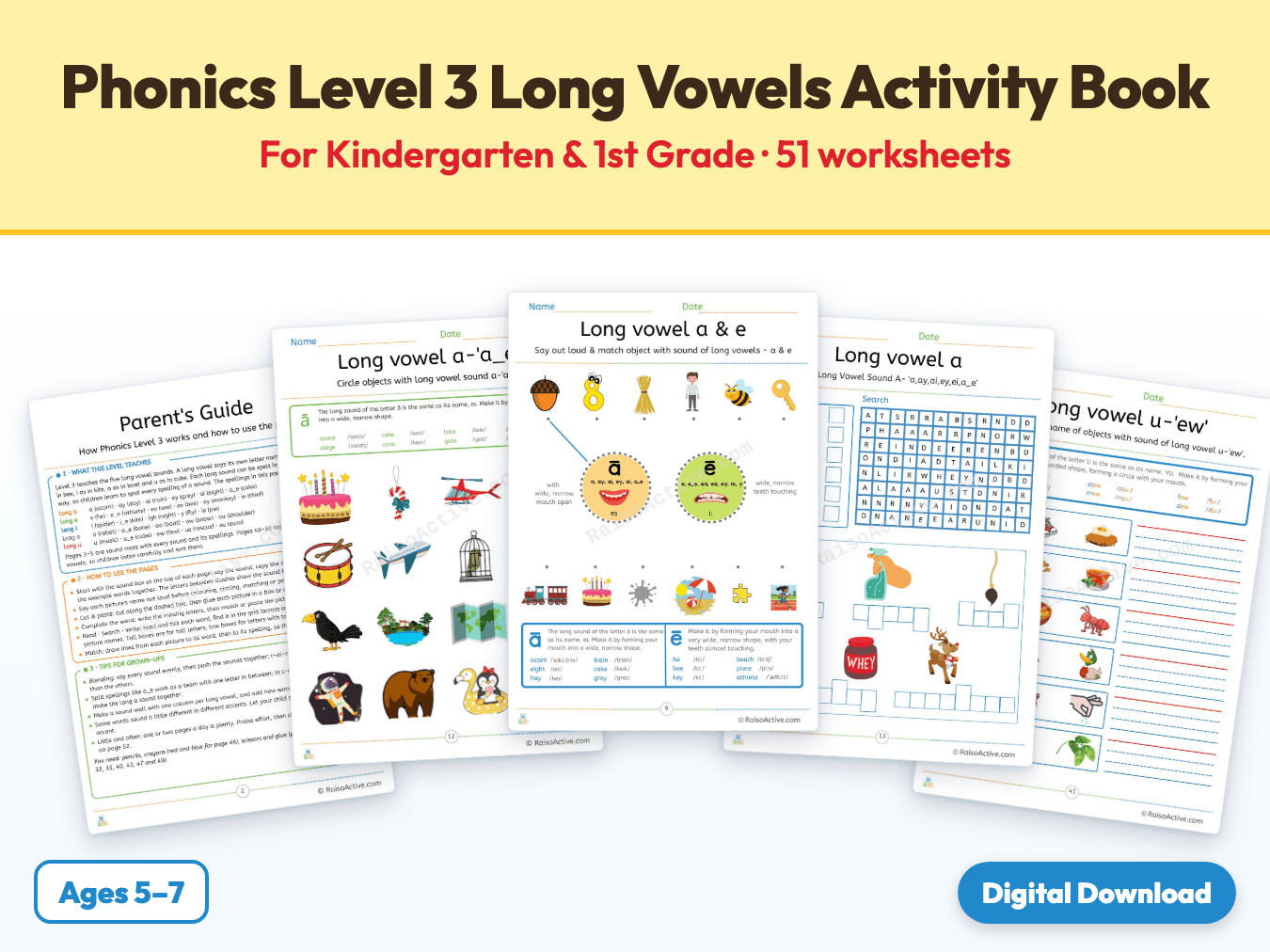

Phonics Level 3 Long Vowels Activity Book for Kindergarten & 1st Grade
Ages 5-7 · Kindergarten–Grade 1Ages 5-7 · Year 1–Year 2Ages 5-7 · UKG–Class 1Ages 5-7 · 52 pages
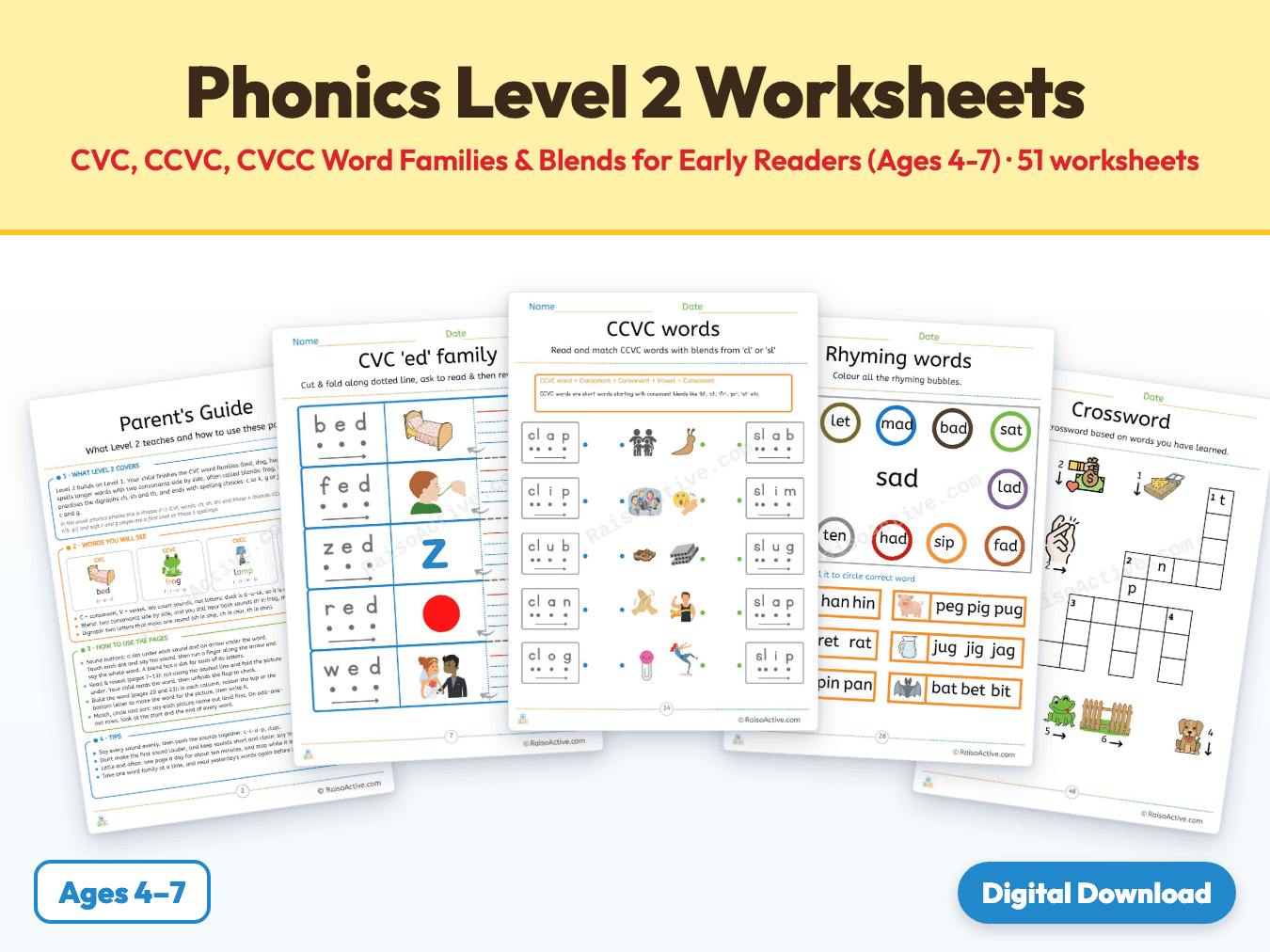
Phonics Level 2 Worksheets: CVC, CCVC, CVCC Word Families & Blends for Early Readers (Ages 4-7)
Ages 4-7 · Pre-K–Grade 1Ages 4-7 · Reception–Year 2Ages 4-7 · LKG–Class 1Ages 4-7 · 52 pages
Guides for parents and teachers
See all guides
Number Formation Rhymes 0–9 and How to Fix Reversals
Original number formation rhymes for 0–9, the correct stroke order for each digit, why 3, 5 and 7 get reversed most often, and multisensory fixes that work.

Pre-Writing Strokes in Order: From Standing Lines to Loops (With Printable Patterns)
The developmental order of pre-writing strokes, from vertical lines to loops, and why practicing them in sequence makes letter formation much easier to learn.

Kindergarten Readiness Checklist: 25 Skills to Practice Before the First Day
A kindergarten readiness checklist of 25 literacy, math, motor, self-regulation and self-help skills, with an 8-week summer plan and notes on when not to worry.
Best Worksheets for 3-Year-Olds: What Works and What to Avoid
What works on worksheets for 3-year-olds: short sessions, crayons, tracing lines, matching, cutting, a free weekly plan, and signs one is too advanced.
Reception Year Explained: EYFS Learning and How to Help at Home
A teacher's plain-English guide to the Reception Year: the seven areas of learning, Early Learning Goals, Phase 2/3 phonics, the RBA and home routines.

UKG Syllabus Explained: English, Maths and EVS Month by Month
What UKG classes typically cover in English, maths and EVS, month by month, aligned to NEP 2020, with ways to support at home and signs your child is behind.