Free printable worksheets · India
LKG CVC Words Worksheets (Ages 4–5)
LKG cvc words worksheets are practice sheets for children aged 4–5 in Lower Kindergarten (Junior KG) in India. CVC words are three-letter consonant-vowel-consonant words, such as cat or sun, practiced as the first words decoded by blending sounds. The sheets on this page cover blending three sounds into a word, short vowel sounds, segmenting a word for spelling and reading simple sentences built from CVC words.
Lower Kindergarten turns a scribbling hand into a writing one: capital letters A to Z and numbers up to twenty become the daily target, alongside pattern practice that keeps curves and loops steady. Reversed letters and numerals are still common at this stage and settle with repetition rather than correction. A four-year-old who knows a dozen letter sounds can begin to blend, and that is the task at this age: look at c-a-t, say each sound, push them together, point to the picture. Worksheets should use one short vowel at a time, usually "a" first, offer a picture beside every word, and keep to a few words per page. Do not expect the child to write the words, or to read them without saying the sounds aloud first.
681+ worksheets · free PDF download · print on A4 or Letter
LKG CVC Words Worksheets to print
Browse all worksheets for ages 4–5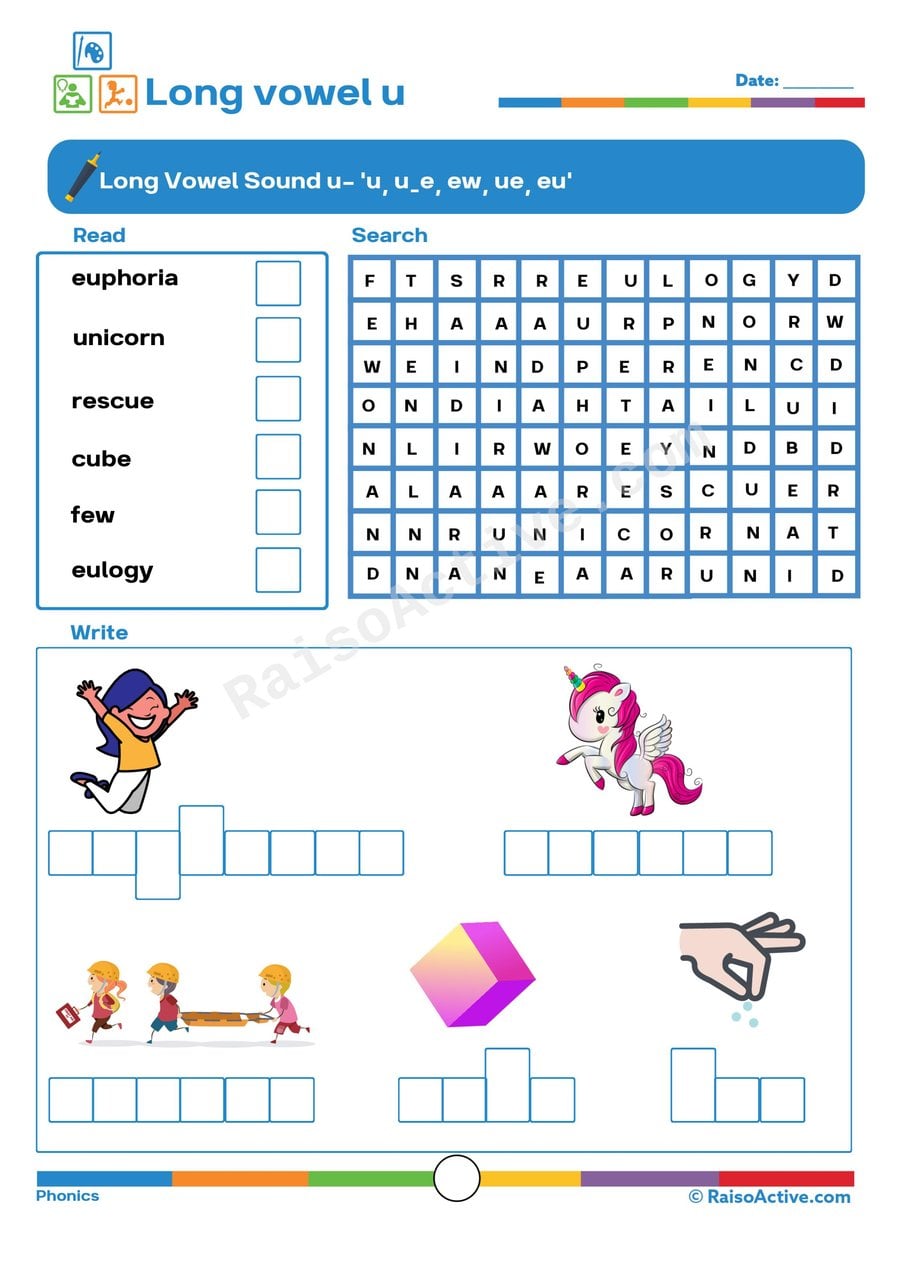
Long Vowel 'u' Worksheet: Read, Search, and Write!
This worksheet guides your 4-5 year old in recognizing and producing the long 'u' sound, often found in words like 'flute' or 'cube.' They'll practice decoding words with this specific vowel pattern and strengthen their early reading skills. Understanding long vowel sounds is a crucial step in moving beyond simple CVC words, building phonemic awareness, and enhancing overall reading fluency and spelling accuracy.

Read and Match: Sentence Matching Worksheet for Preschoolers
Reading a simple sentence and finding its matching picture teaches children ages 4-5 to connect written words directly to meaning, an essential comprehension skill that goes beyond simply decoding individual words. The cut-and-paste format also adds fine motor practice, requiring children to select the correct image from several options and place it precisely next to its sentence.

Lowercase Letter Matching Worksheet for Preschoolers
This worksheet trains children ages 4-5 to connect an uppercase letter to its lowercase counterpart, a skill that's genuinely tricky since many lowercase letters look quite different from their capital form (like G and g, or Q and q). Matching cases correctly is essential groundwork for reading real books and sentences, which are written mostly in lowercase.

Long Vowel U Matching Worksheet for Preschoolers
This worksheet has children ages 4-5 identify the long 'u' sound in a set of words and match each one to its correct picture, combining listening skills with visual matching. Because children must both recognize the sound in a written word and connect it to the right image, this task bridges early reading and vocabulary in a way that's more demanding than sound-sorting alone. Matching written words to pictures also reinforces that printed letters represent real, meaningful things rather than abstract shapes.

Read and Match: Sight Word Sentences Worksheet for Early Readers
Children ages 4-5 practice reading simple sight-word sentences and matching them to the picture that shows their meaning, building early reading comprehension by connecting printed words directly to what they represent. This bridges the gap between recognizing individual sight words and understanding a full sentence's meaning.
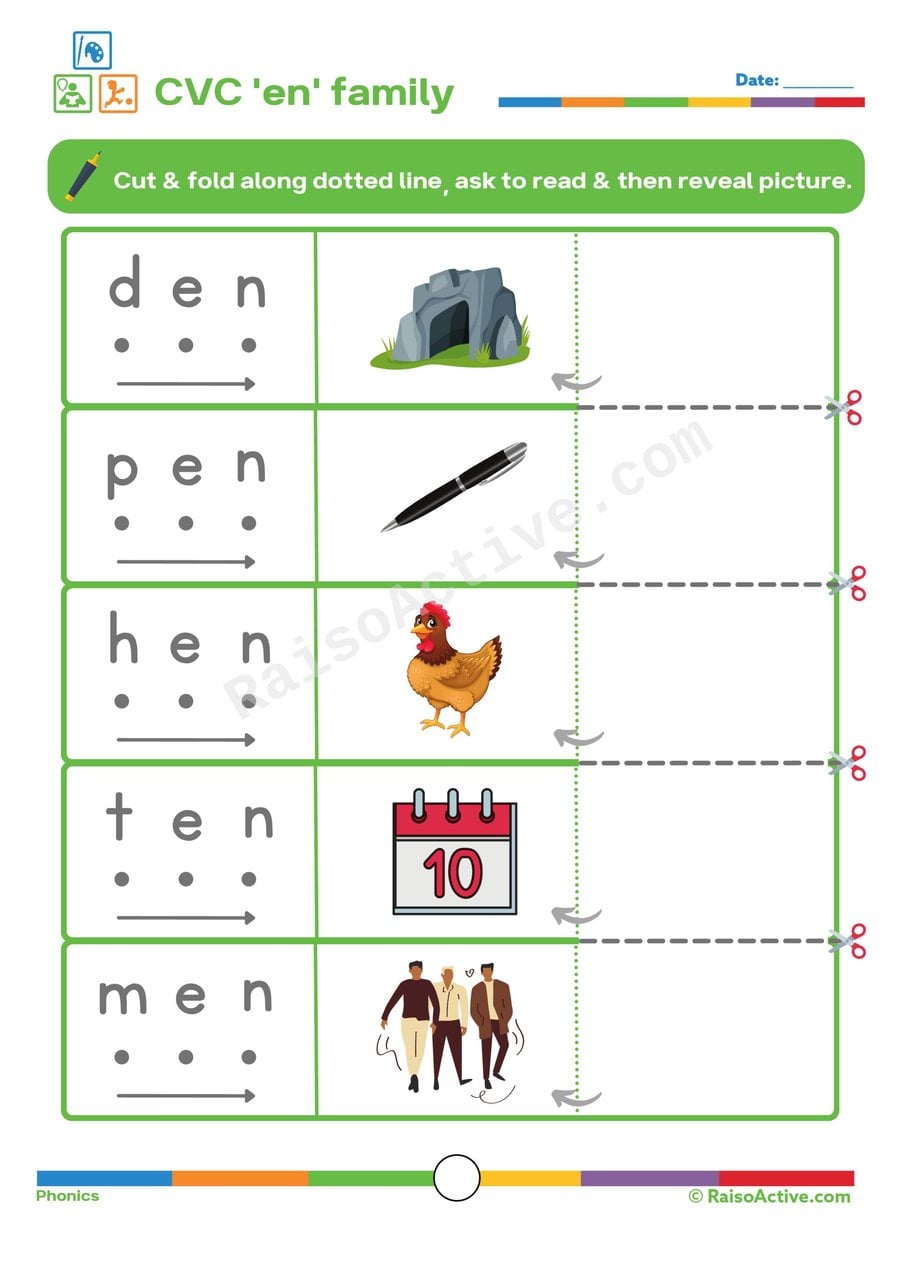
CVC 'en' Family Worksheet: Read, Cut, and Reveal!
The 'en' word family (pen, ten, hen) gives children ages 4-5 practice blending a nasal consonant sound at the end of a word, which can be slightly trickier to hear clearly than simpler endings like 'at' or 'ip.' Reading each word before revealing the hidden picture builds independent decoding confidence, since children have to commit to an answer before checking it rather than reading the picture first. This worksheet also reinforces that reading is a two-step process — sound out, then blend — which is foundational for all future word attack skills.

Family Words Worksheet: Matching and Picture Association
Children ages 4-5 build vocabulary and reading recognition around family-member words — like mom, dad, sister, or brother — by first identifying the correct word for a picture, then matching printed words to pictures through cutting and pasting. Because family vocabulary is deeply familiar and emotionally meaningful, it's an especially effective category for anchoring new sight words in a child's memory.

A-M Alphabet Worksheet: Write and Paste the Correct Picture!
This worksheet has children ages 4-5 identify and write the missing letters from A to M, then match each letter to a corresponding picture, combining alphabet sequencing with beginning-sound picture matching in one activity. Filling in missing letters, rather than tracing a complete alphabet, requires children to actively recall what comes next rather than simply copying a model.

Does Not Match: Circle the Odd Word Out Worksheet
This worksheet builds critical thinking alongside phonics for children ages 4-5 by having them examine a group of words and identify the one that doesn't belong based on its initial sound. Spotting the 'odd one out' requires more than just reading each word individually — your child has to compare all the words in a group simultaneously and reason about which shared feature the majority have in common. This kind of comparative reasoning strengthens both phonemic awareness and early logical thinking, since it's not enough to read correctly; your child also has to analyze and categorize.

Matching Uppercase and Lowercase Letters: q-z Worksheet
This worksheet builds letter recognition by having children match uppercase letters from Q to Z with their corresponding lowercase forms, a pairing that can be tricky since several lowercase letters in this range, like 'q' and 'g,' don't closely resemble their capital counterparts. For four- and five-year-olds, mastering the second half of the alphabet's upper-lowercase pairs completes the foundational letter knowledge needed before reading fluently.

Long Vowel 'A' Worksheet: Complete the Words and Match!
This worksheet has children ages 4-5 complete long 'a' words by filling in missing letters and then matching each finished word to its picture. Combining spelling and matching in one activity reinforces the long 'a' sound from two directions at once — producing the correct letters and recognizing the completed word — which builds a more durable understanding than either skill alone.

Phonics Fun: Beginning Sound Circle Worksheet for Kids
This worksheet builds phonemic awareness by having children say a picture's name aloud and then circle the letter that makes its beginning sound from a set of options. For four- and five-year-olds, choosing the correct letter from several choices is a step up from simply naming a letter, since it requires isolating just the first sound in a word and matching it to a specific written symbol.
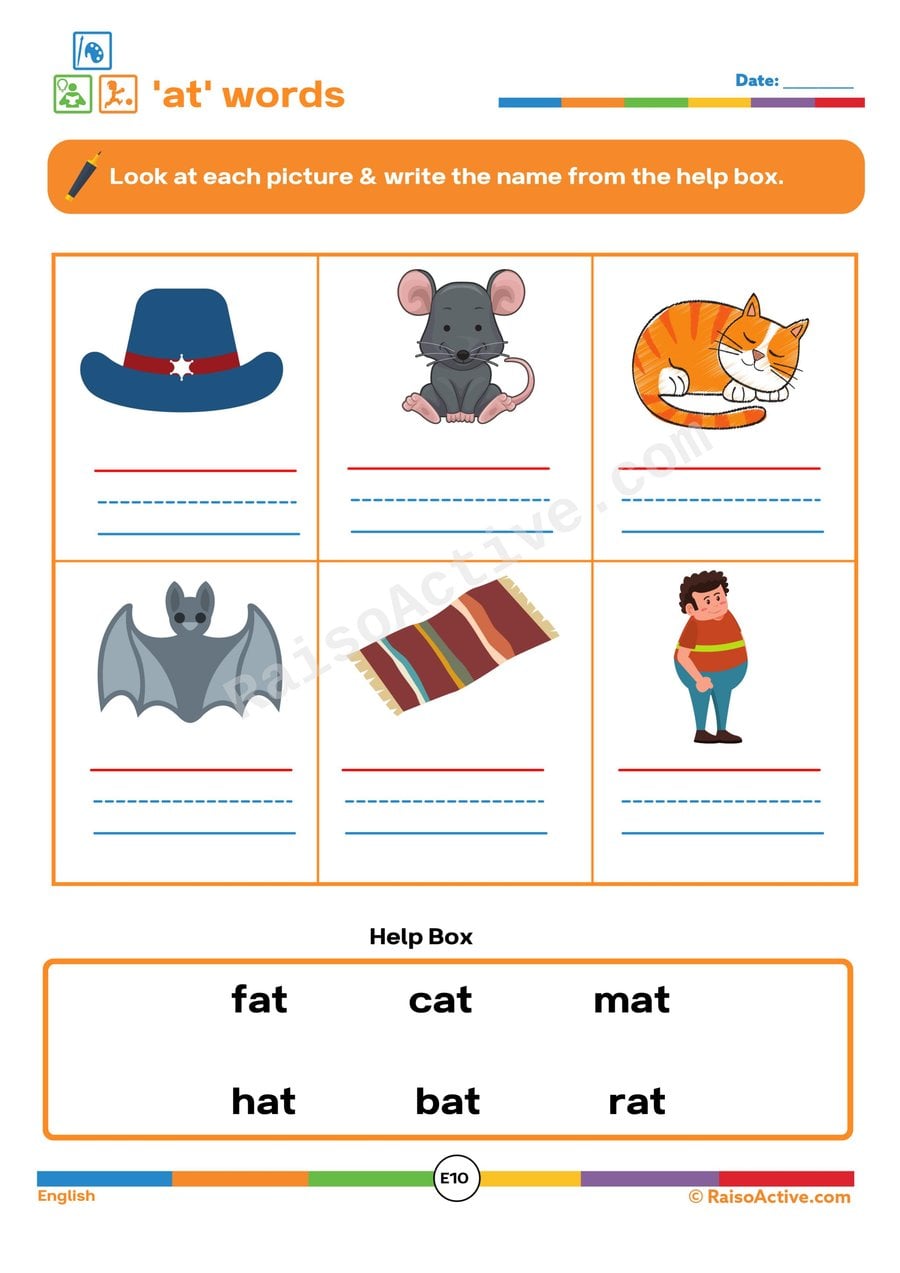
Fun 'at' Word Worksheet for Preschoolers
The 'at' word family (cat, hat, bat) is often one of the very first CVC patterns children ages 4-5 encounter, and this worksheet asks them to go a step further than simple reading by identifying and writing the correct word to match each picture themselves. Choosing the right word from a word bank and writing it out, rather than just reading a word that's already printed, requires children to actively recall spelling rather than passively recognize it. This active recall step is an important bridge between reading CVC words and eventually spelling them independently from memory.

Phonic Sounds Worksheet: Circle the Picture That Starts with the Alphabet Sound!
This worksheet reinforces beginning-sound recognition for children ages 4-5 by presenting a letter at the start of each row and asking them to find the one picture among several that begins with that same sound. Because each row contains multiple pictures, children must test several beginning sounds against the target letter before settling on the correct one, which builds more precise listening skills than simpler one-picture matching tasks. This process also strengthens the letter-sound mapping that underlies early decoding.

Circle the 'pr' Blend Words Worksheet for Preschoolers
Children ages 4-5 practice recognizing the 'pr' consonant blend at the beginning of words, like 'prize' and 'print', which requires blending two distinct sounds together fluently. Circling only the correct 'pr' words trains both auditory sound recognition and careful visual scanning of printed text. This kind of blend practice moves early readers beyond single-letter phonics into decoding more complex word beginnings.

CVCC Word Matching Worksheet: Read, Colour, and Match!
This worksheet builds on basic CVC reading by introducing CVCC words — words ending in two consonants, like 'lamp' or 'nest' — for children ages 4-5 to read, color, and match to pictures. Ending consonant blends require children to hold onto and pronounce two closing sounds without dropping one, refining the precision of their blending skills beyond simple three-letter words.
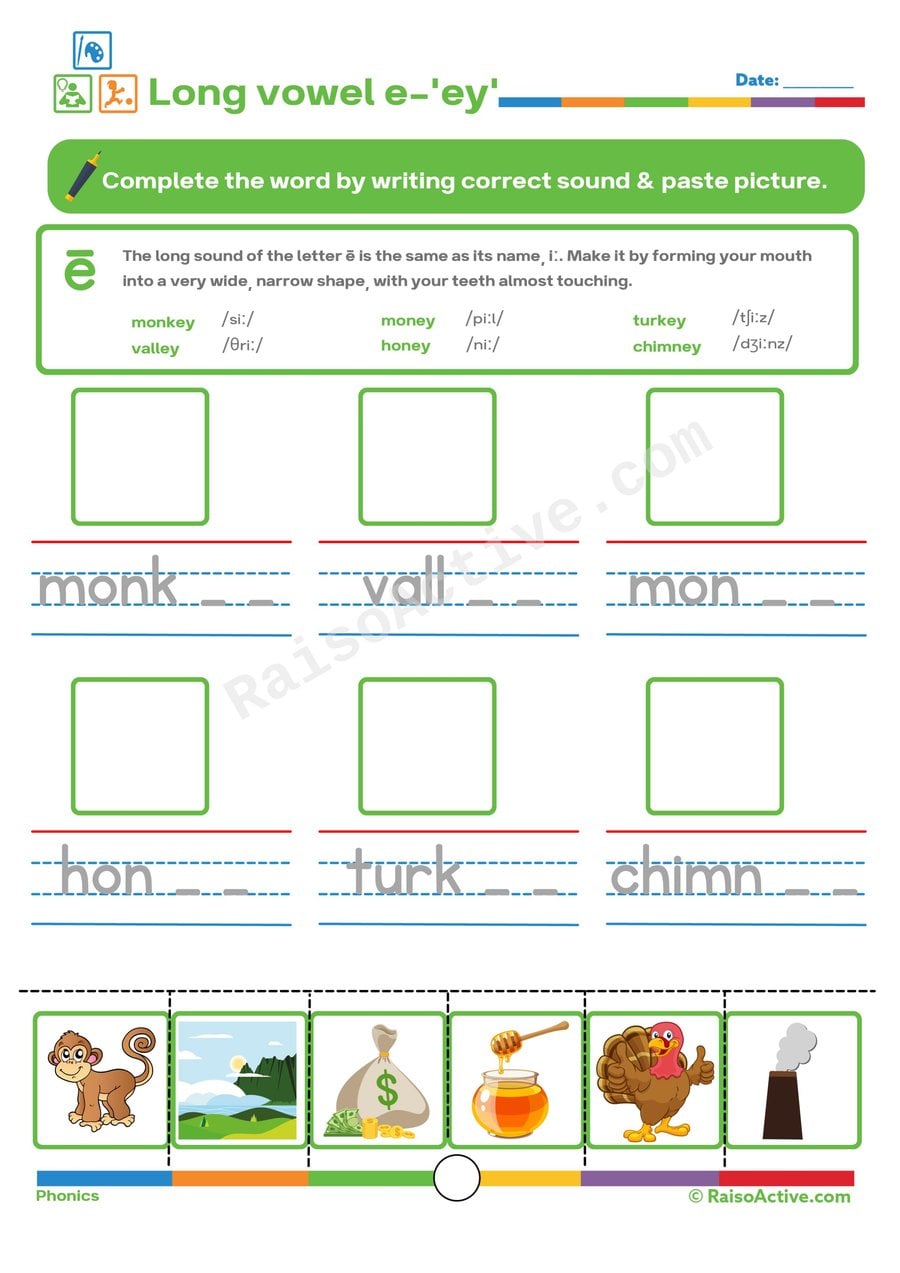
Long Vowel E Worksheet: Write, Match & Paste!
This worksheet gives children ages 4-5 practice with the long 'e' sound, as in 'bee' or 'leaf,' by having them fill in a missing letter to complete a word, match that word to its correct picture, and paste the picture into place. Combining spelling, reading, and picture matching in one activity reinforces the long 'e' sound from multiple angles, helping the sound-spelling connection stick more firmly than any single task alone.

CVC 'ig' Family Worksheet: Read and Reveal the Pictures!
This worksheet builds reading fluency for children ages 4-5 around the 'ig' word family, such as 'pig' and 'big', combining phonics practice with a self-checking cut-and-reveal format. Repeated exposure to the same word ending across several words trains children to recognize that chunk automatically, which is a key step toward reading words in whole units rather than sound by sound. The hidden picture reveal gives children a built-in way to confirm their own reading accuracy.

Long Vowel 'ee' Sound Matching Worksheet for Preschoolers
This worksheet has children ages 4-5 complete long 'ee' words by writing missing letters, then draw lines matching each finished word to its picture. Focusing on the specific 'ee' spelling of the long 'e' sound, as in 'tree' and 'bee', helps children start noticing that vowel sounds can have several different letter patterns representing the same sound.
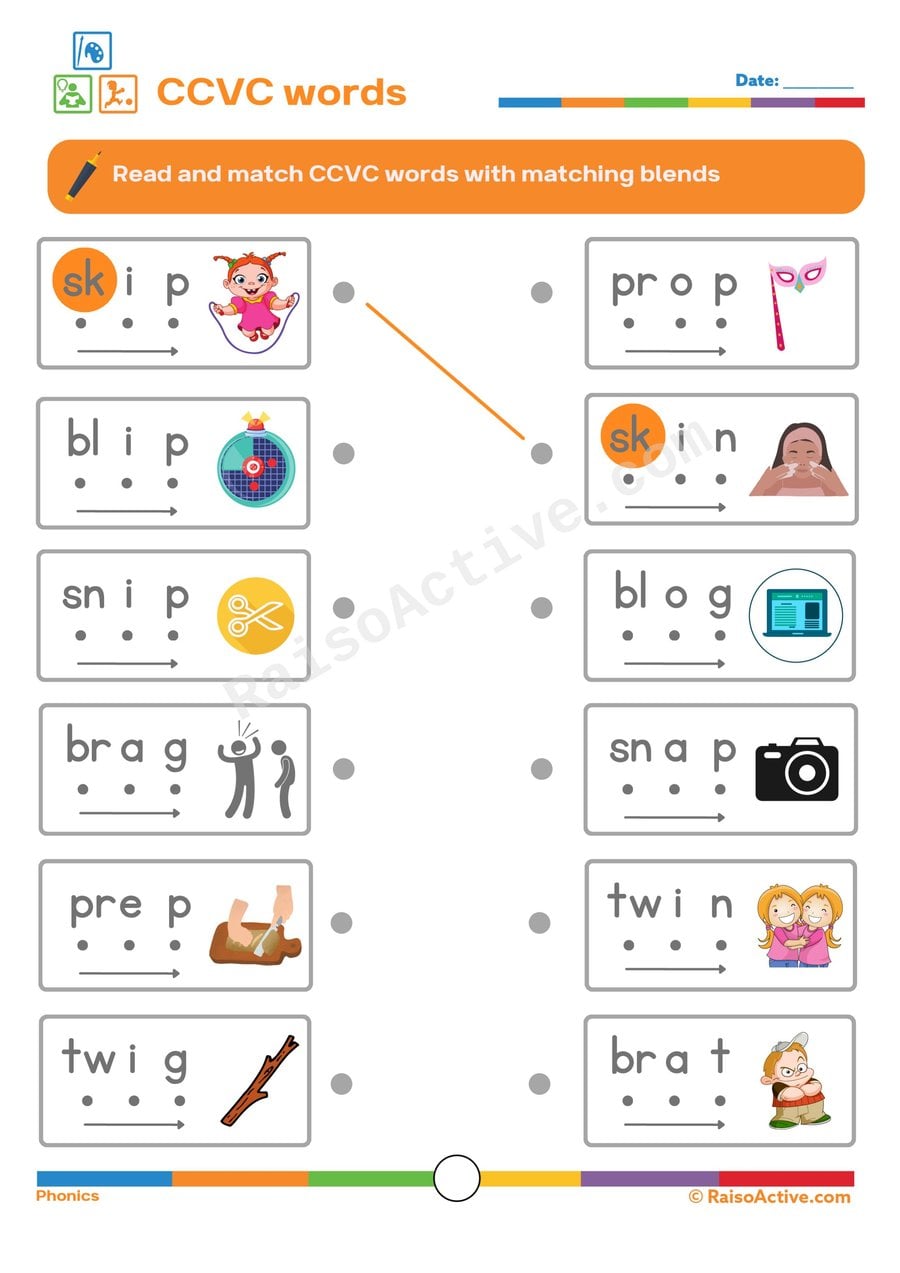
CCVC Word Matching Worksheet for Early Readers
This worksheet introduces children ages 4-5 to CCVC words — words that begin with a consonant blend followed by a vowel and consonant, like 'stop' or 'frog' — and asks them to match each word to its picture. Reading words with initial blends is more demanding than simple CVC words because two consonant sounds must be blended together before reaching the vowel, so this worksheet stretches decoding skills a step further. Matching words to pictures also confirms comprehension, not just sound-out ability.

Number Sequencing Worksheet: Practice Counting and Ordering Numbers!
This worksheet gives children ages 4-5 focused practice writing numerals in order by filling in the missing numbers within several different counting sequences. Unlike simple counting aloud, writing each numeral by hand forces children to connect the spoken number word to its correct written symbol, reinforcing both number recognition and early handwriting control.
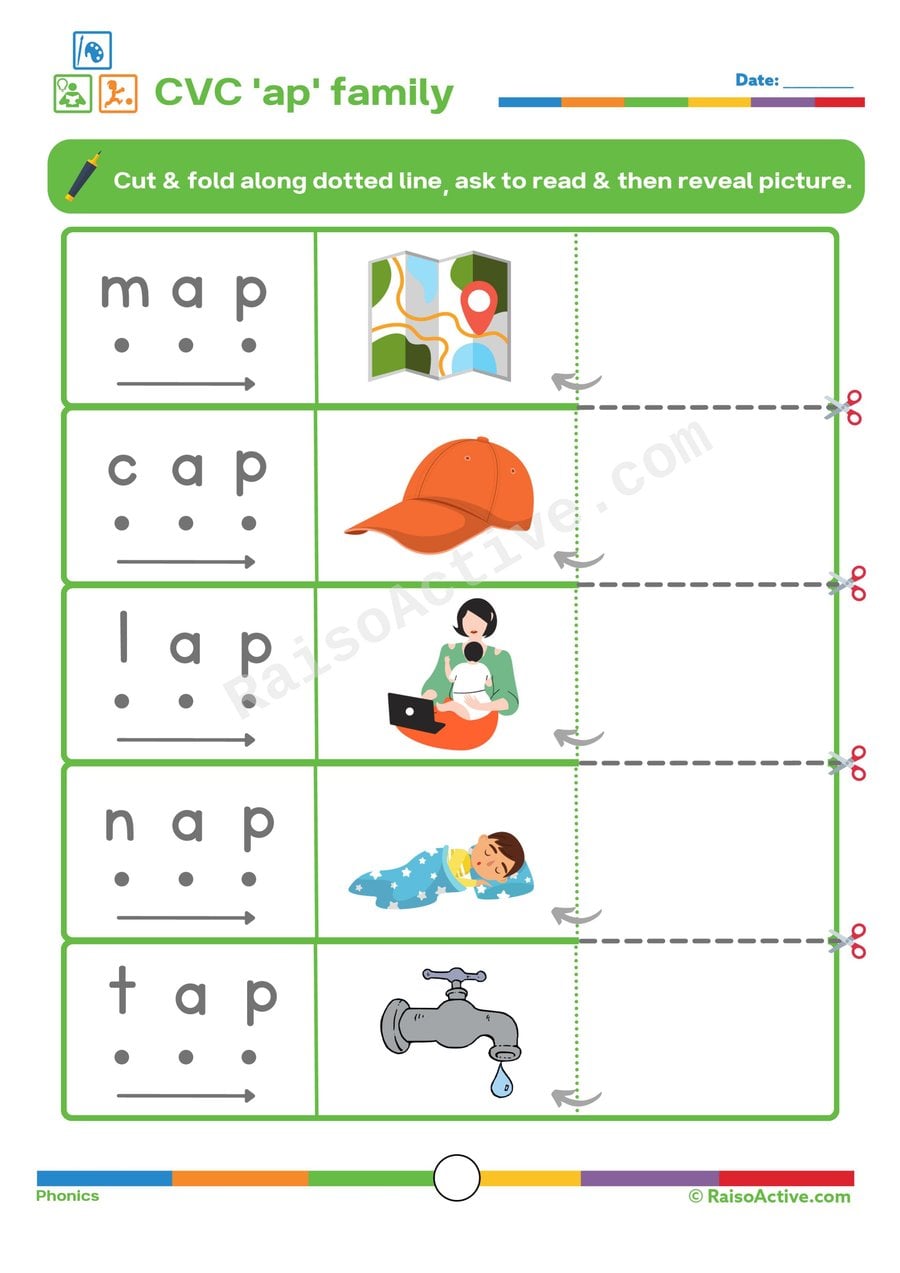
CVC Word Family 'ap' Worksheet: Read, Cut, and Match!
Working through the 'ap' word family (cap, map, nap) helps children ages 4-5 practice both decoding and matching in one activity, reinforcing that a small set of letter patterns can unlock many different words. Cutting apart the word and picture cards adds a fine motor and organizational challenge, requiring children to keep track of pieces while still focusing on reading accuracy. This combination of literacy and hands-on manipulation suits the shorter attention spans typical of this age group.

Sequencing Numbers Train Worksheet for Preschoolers
Writing numbers 0-20 into a sequence of train cars pushes children ages 4-5 to internalize the full early counting range in fixed order, not just recite it aloud, which is a meaningfully different and more durable skill. Filling in the numbers by hand also builds numeral formation alongside sequencing, so children practice both remembering what comes next and writing it correctly. The train-car visual keeps a fairly long numeric range broken into manageable, engaging chunks rather than one intimidating list.

Secret Words Worksheet: Beginning Sounds Practice
Turning beginning-sound practice into a 'secret word' mystery gives children ages 4-5 a strong motivational hook for identifying starting letters and building simple words from them. Isolating the first sound in a picture's name and writing the corresponding letter is a core phonemic awareness skill, and stacking several of those letters together to spell a new mystery word adds an extra layer of problem-solving on top. This worksheet essentially turns phonics practice into a short decoding puzzle, which tends to hold attention better than a plain matching page.
What LKG cvc words worksheets cover
A four-year-old who knows a dozen letter sounds can begin to blend, and that is the task at this age: look at c-a-t, say each sound, push them together, point to the picture. Worksheets should use one short vowel at a time, usually "a" first, offer a picture beside every word, and keep to a few words per page. Do not expect the child to write the words, or to read them without saying the sounds aloud first.
- Say the three sounds in "cat" and blend them into the word
- Match "pig", "dog" and "sun" to the right picture
- Read four -at family words with a picture beside each
- Tap out the sounds in a spoken word before seeing it written
How to use these worksheets at home or in class
Ten to fifteen minutes with one warm-up pattern sheet followed by a single letter or number page fits a four-year-old's attention span. Read each instruction aloud before your child begins, and show a correct starting point once rather than repeatedly erasing an attempt.
Start with the sheet that matches what your child can already do, then move one step up. Keep finished sheets in a folder: LKG teachers often ask for evidence of practice, and children like seeing their own progress.
Is your child ready for LKG cvc words work?
A child entering this stage should already trace straight and curved lines confidently, hold a pencil with three fingers rather than a fist, sit for ten minutes without wandering off, and recognise a handful of capital letters from their own name.
Frequently asked questions
How do I know my four-year-old is ready for CVC words?
Two checks. First, does the child give the sound, not the name, for at least ten to fifteen letters, including a, i and o? Second, when you say "m-a-p" slowly with gaps, can the child tell you the word? Oral blending like that has to work before blending from print does. If either check fails, more letter-sound and listening games are the better use of the time, and the sheets can wait a few months.
What should a LKG child be able to do in cvc words?
A four-year-old who knows a dozen letter sounds can begin to blend, and that is the task at this age: look at c-a-t, say each sound, push them together, point to the picture. Worksheets should use one short vowel at a time, usually "a" first, offer a picture beside every word, and keep to a few words per page. Do not expect the child to write the words, or to read them without saying the sounds aloud first. A child entering this stage should already trace straight and curved lines confidently, hold a pencil with three fingers rather than a fist, sit for ten minutes without wandering off, and recognise a handful of capital letters from their own name.
Do these worksheets follow the LKG curriculum?
The sheets cover blending three sounds into a word, short vowel sounds, segmenting a word for spelling and reading simple sentences built from CVC words, which sit inside the NEP 2020 Foundational Stage (NCF-FS 2022) outcomes for LKG. Pre-K (US), Reception (UK) use the same skills at this age, so the sheets also fit families following those programmes.
Are the LKG cvc words worksheets free to download?
Yes. Every sheet on this page can be downloaded free as a watermarked PDF after creating an account, up to five downloads a day. The annual membership (₹1000) removes the watermark and the daily limit across the full library of more than 1,000 worksheets and all activity packs.

Written by
Hemsweta Jain · Teacher Cheena
MBA and Early Childhood Educator, teaching since 2014 · Founder of RaisoActive, Mumbai
Written and reviewed by Hemsweta Jain (Teacher Cheena), who designs every RaisoActive worksheet.
Last reviewed
Printable packs for ages 4–5
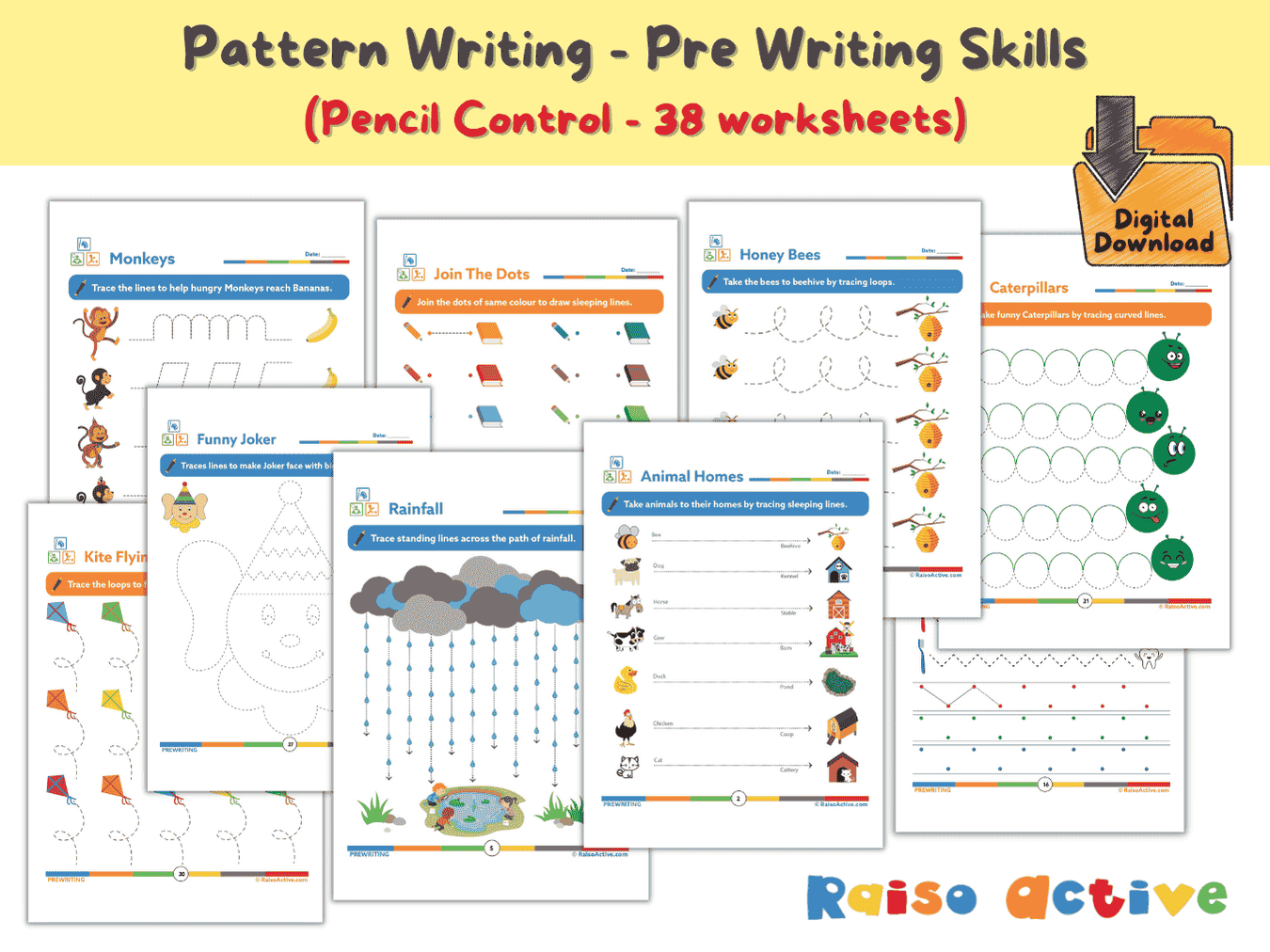
Pattern Writing Pre-writing Skills Activity Book for 3-4 Year Olds
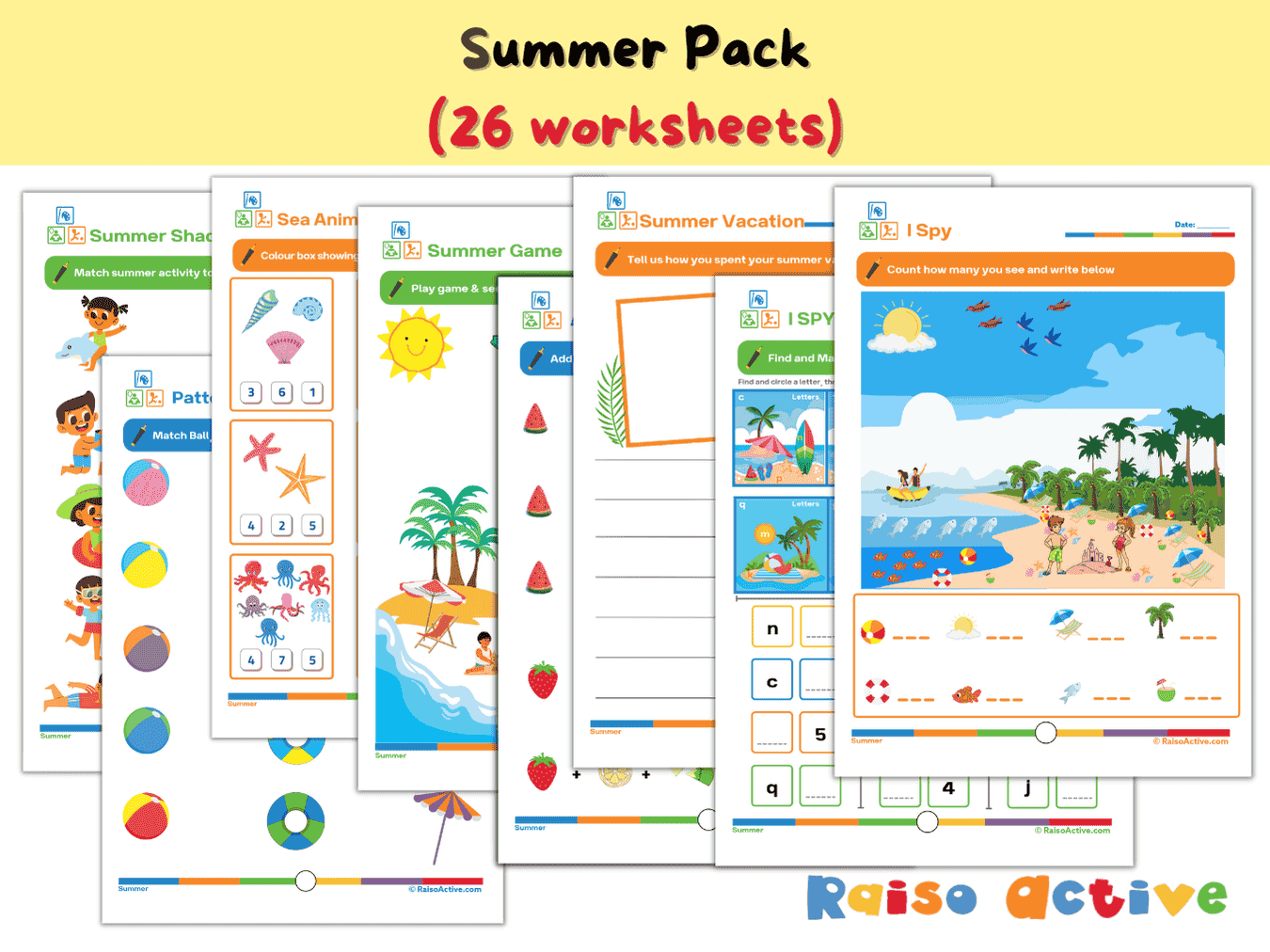
Summer Activity Pack: Math, Literacy, Puzzles & More for Preschool & Kindergarten
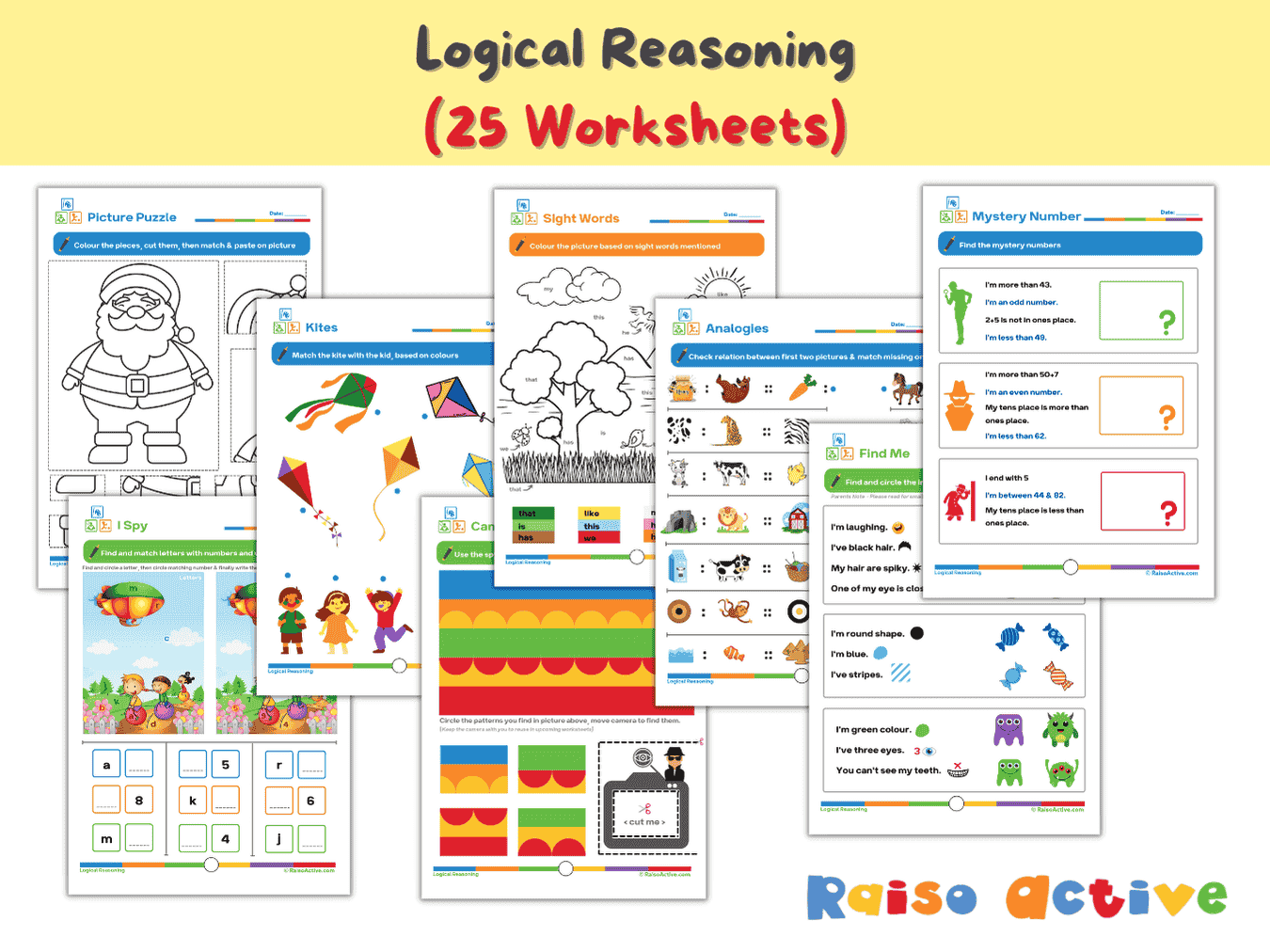
Logical Reasoning Activity Book for Preschool & Kindergarten | Patterns, Puzzles & Analogies
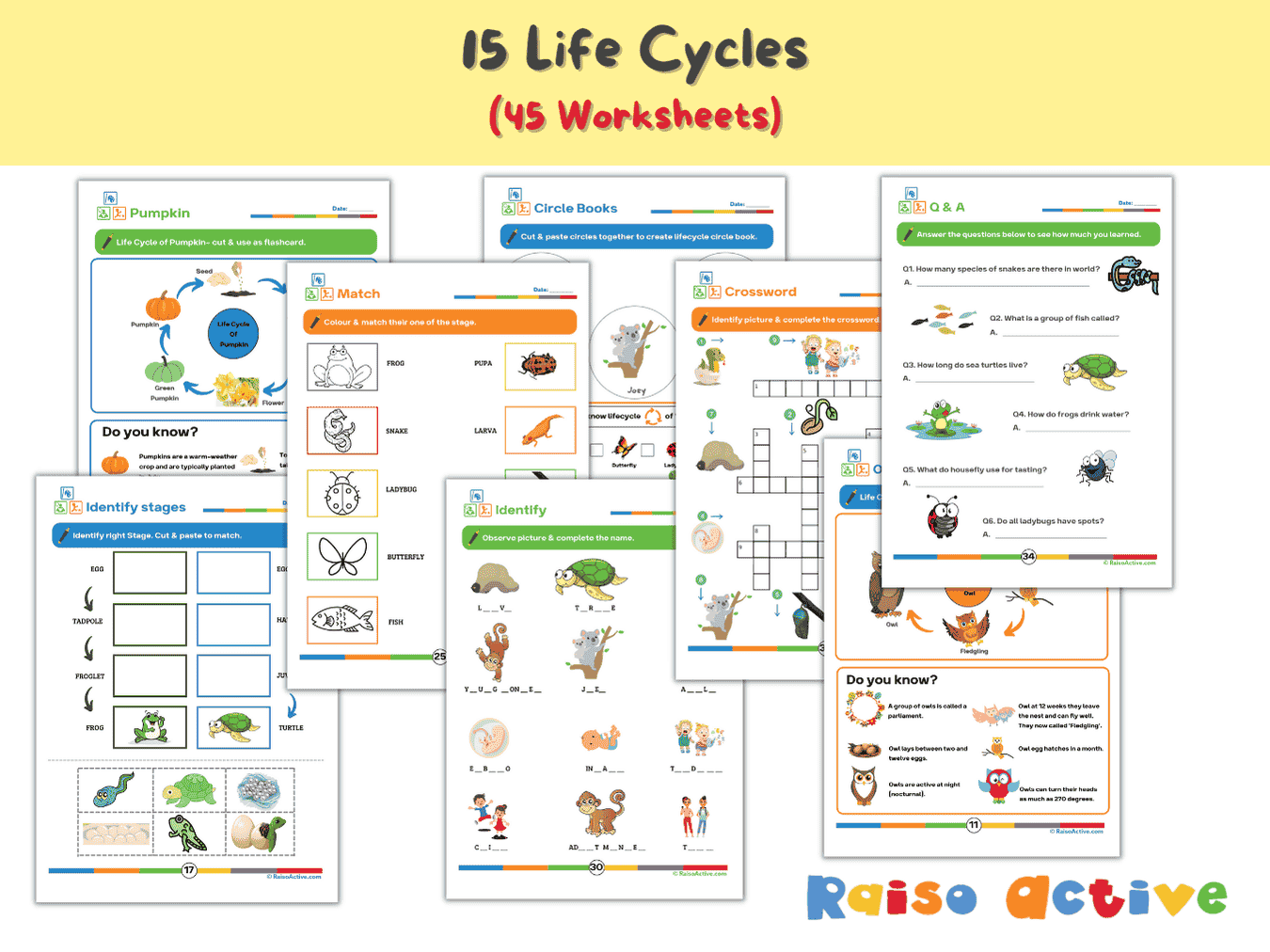
Lifecycles Activity Book & Flashcards for Preschool & Early Elementary
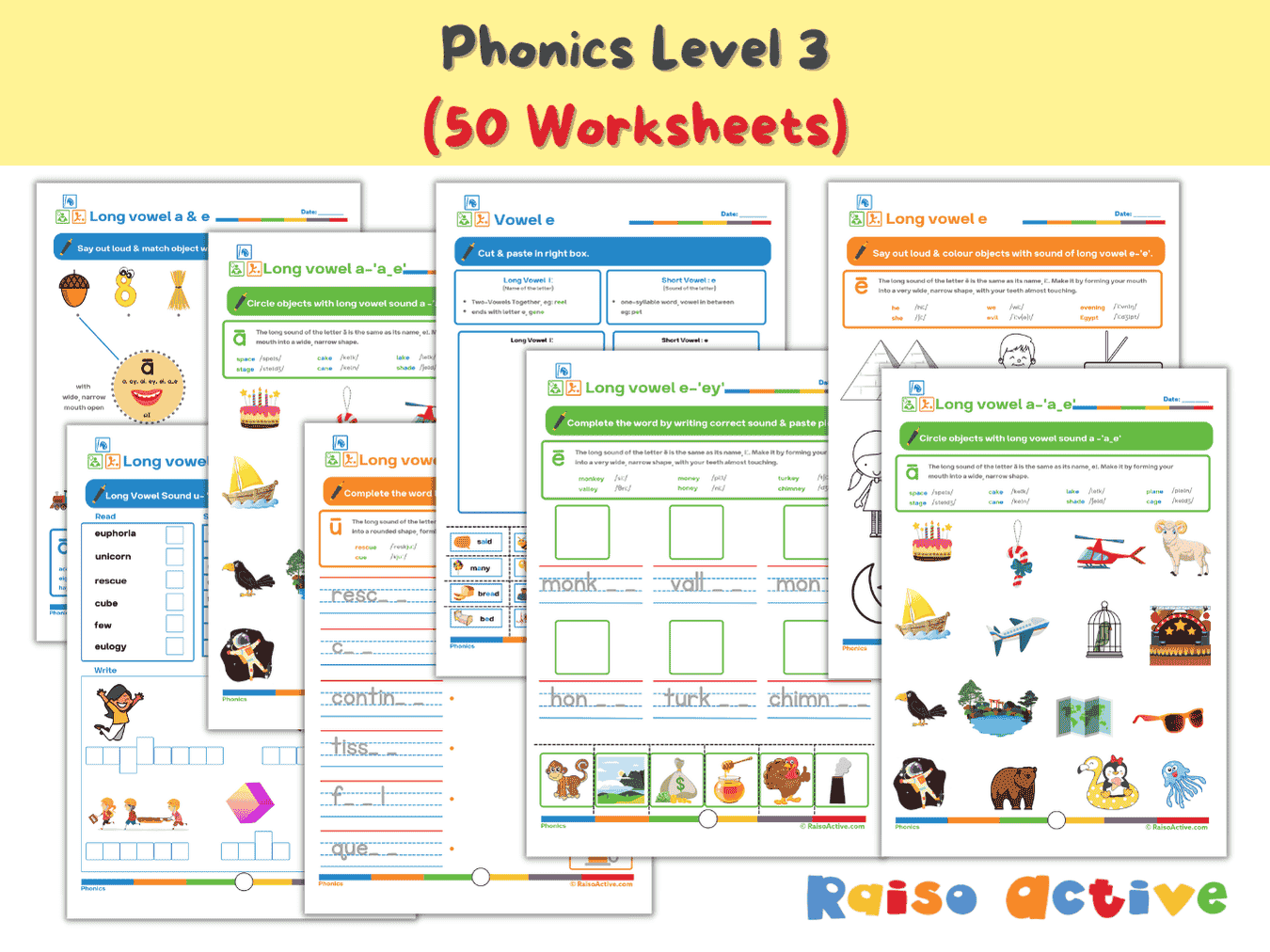
Phonics Level 3 Long Vowels Activity Book for Kindergarten & 1st Grade
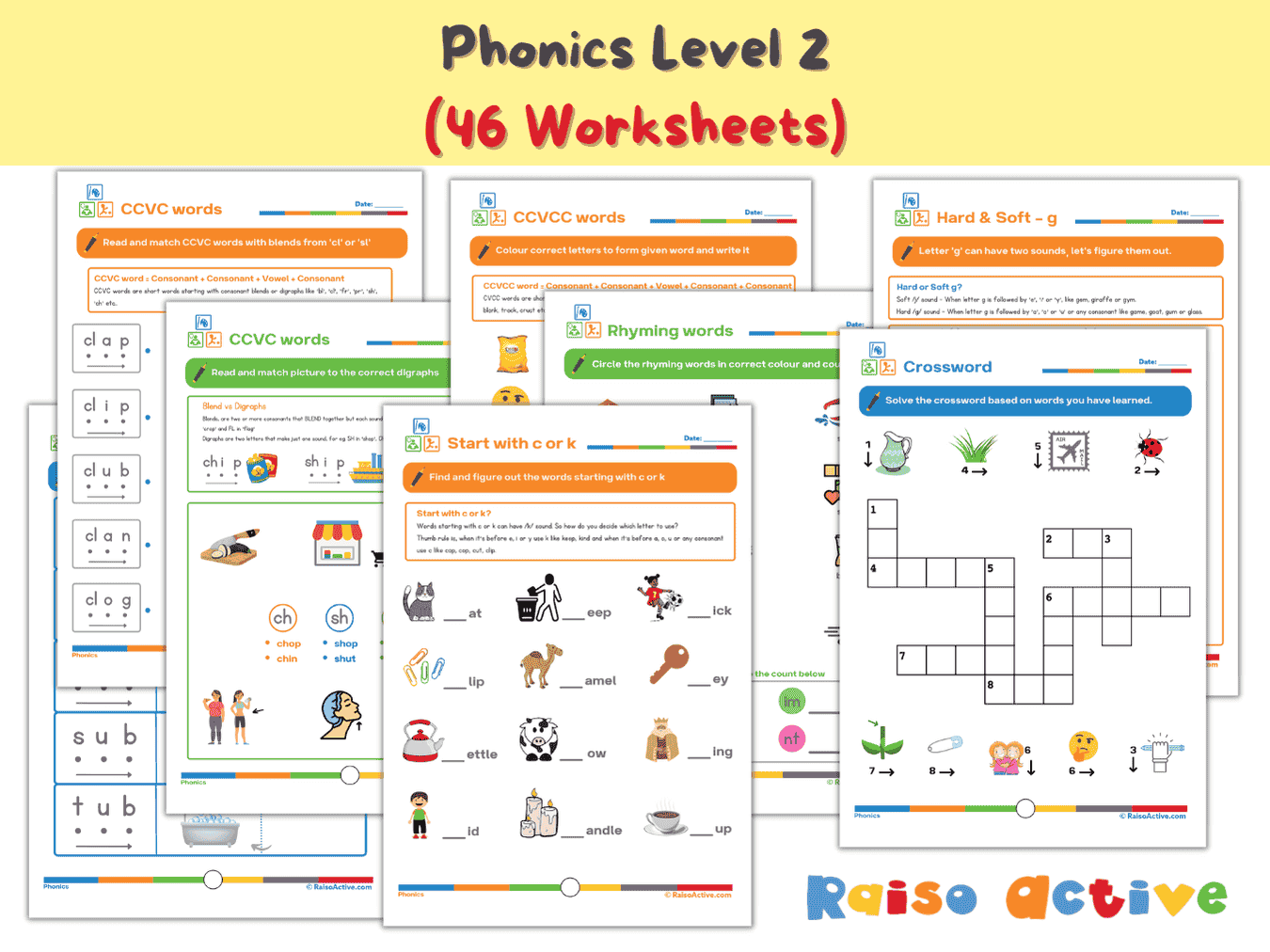
Phonics Level 2 Worksheets: CVC, CCVC, CVCC Word Families & Blends for Early Readers (Ages 4-7)
Guides for parents and teachers
See all guides →Sight Words by Age: The First 50 Words and How to Teach Them Without Flashcard Fatigue
Which sight words to teach first and why, the heart-word method, a read-trace-write-find routine, games, and a by-age table of typical sight-word progress.
How to Teach CVC Blending: A Step-by-Step Method That Works in Two Weeks
A step-by-step method for teaching CVC blending, covering continuous sounds, word families, common errors, and a 14-day plan that most children finish reading CVC words.
Phase 2 Phonics at Home: Sound Order, Blending Games, Worksheets
Phase 2 phonics at home: the five sound sets in order, oral blending, tricky words, a two-week routine, common mistakes, and free worksheets.
Reception Year Explained: EYFS Learning and How to Help at Home
A teacher's plain-English guide to the Reception Year: the seven areas of learning, Early Learning Goals, Phase 2/3 phonics, the RBA and home routines.
UKG Syllabus Explained: English, Maths and EVS Month by Month
What UKG classes typically cover in English, maths and EVS, month by month, aligned to NEP 2020, with ways to support at home and signs your child is behind.
Bridging Two Worlds: A Complete Guide to Teaching Heritage Languages Alongside English
A practical guide to raising bilingual children who speak both their heritage language and English with confidence. Research-backed strategies, activities, and tips for Indian families.