Circle the Correct Letter: Fun Phonics Worksheet for Kids
This phonics worksheet helps children ages 4-5 connect a picture's beginning sound to its matching letter, a key decoding skill on the path to independent reading. Circling the correct letter from a small set of choices also builds visual discrimination, since children must tell similar-looking letters apart under a bit of time pressure.
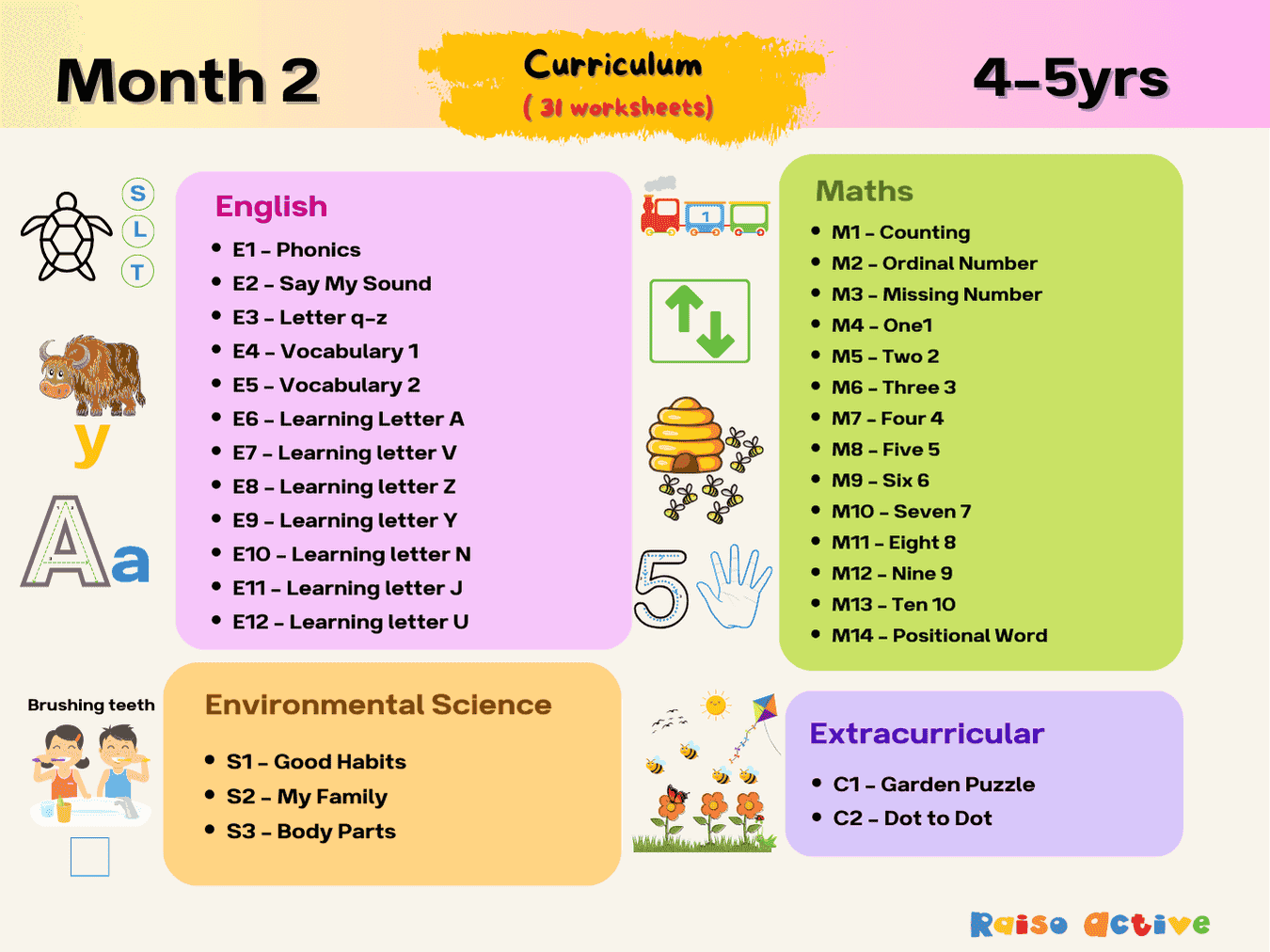
Part of the pack
Month 2: Learning & Development | Ages 4-5
This is page 4 of the pack. Ages 4-5 · Pre-KAges 4-5 · ReceptionAges 4-5 · LKGAges 4-5

Made for your child
Numbers to 20, made for your child
A maths pack with your child's name in it: pictures that explain, practice at three levels, puzzles and story sums about them. Print a new set whenever they finish.
Make a maths packFree preview · free for members
Curriculum
- Phonics - Letter Sounds > Beginning Sounds
How to use this worksheet
Look at the first picture together and say its name slowly, stretching out the very first sound. Have your child repeat the sound and think about which letter makes it. Show them the row of letter choices next to the picture and ask them to circle the one that matches the beginning sound. Continue through the remaining pictures, letting your child work more independently as their confidence grows, and check each answer together at the end.
Materials needed
- Pencil
- Crayons
Extension activities
- 1Cut out or find magazine pictures and sort them into piles by beginning letter sound.
- 2Play a memory-style game matching letter cards to small picture cards.
- 3Go on a letter hunt around the house, finding three objects that start with the same sound.
- 4Have your child draw their own picture and write the letter that matches its beginning sound.

Written by
Hemsweta Jain · Teacher Cheena
MBA and Early Childhood Educator, teaching since 2014 · Founder of RaisoActive, Mumbai
Every RaisoActive worksheet is designed and checked by the founder before publishing.
Published · Last reviewed
More from Month 2: Learning & Development | Ages 4-5
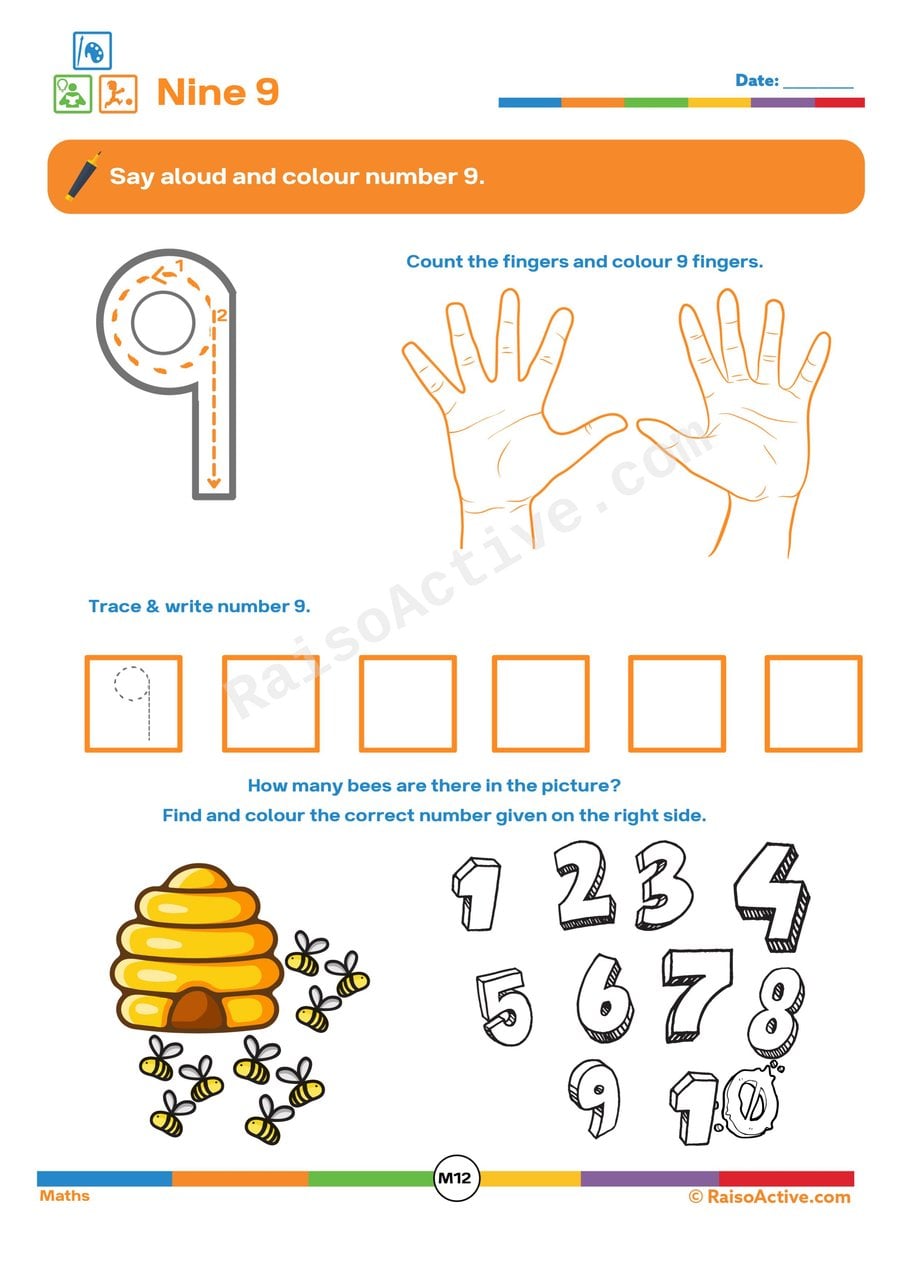
Number 9 Worksheet: Trace, Count, and Color!
Ages 3-5 · Preschool–Pre-KAges 3-5 · Nursery–ReceptionAges 3-5 · Nursery–LKGAges 3-5
This worksheet helps children ages 3-5 learn to recognize and write the number 9 through guided tracing, while counting fingers and bees builds fine motor coordination alongside number sense as they count all the way up to nine. Practicing the same number across three different activities, tracing, writing, and counting, helps the numeral and its quantity stick together in memory.

Letter Recognition Worksheet: Circle the Objects Starting with Y and N!
Ages 3-5 · Preschool–Pre-KAges 3-5 · Nursery–ReceptionAges 3-5 · Nursery–LKGAges 3-5
This worksheet builds letter-sound correspondence for the letters Y and N by having children identify and circle only the pictures whose names begin with those specific sounds. For three- to five-year-olds, practicing two letters side by side, rather than just one, adds a layer of discrimination — children must correctly identify which of two different sounds a word starts with, not just recognize a single target sound.

Tracing and Counting Fun: Number 5 Worksheet for Preschoolers
Ages 4-5 · Pre-KAges 4-5 · ReceptionAges 4-5 · LKGAges 4-5
Children ages 4-5 practice tracing and writing the number 5 while reinforcing counting up to five through a picture-based matching task. Repeating the number in multiple formats — tracing, writing, and counting — helps cement both the shape of the numeral and the quantity it represents.

Letter V Tracing and Coloring Worksheet for Preschoolers
Ages 3-5 · Preschool–Pre-KAges 3-5 · Nursery–ReceptionAges 3-5 · Nursery–LKGAges 3-5
This worksheet builds recognition and formation of the letter V, both uppercase and lowercase, while practicing fine motor skills through tracing and coloring pictures of V words like 'van' or 'volcano.' For three- to five-year-olds, practicing both letter cases together helps children see that uppercase and lowercase V share the same basic shape, which isn't true of every letter and makes V a good confidence-builder.

Alphabet Adventures: Circle the Objects! A Fun Letter Recognition Worksheet
Ages 3-5 · Preschool–Pre-KAges 3-5 · Nursery–ReceptionAges 3-5 · Nursery–LKGAges 3-5
This worksheet builds letter-sound correspondence by having children scan a group of pictures and circle only the ones that start with a specific letter. For three- to five-year-olds, this kind of visual search-and-sort task strengthens both phonics recognition and sustained visual attention, since children have to check each picture against the target sound rather than just glancing at the page.
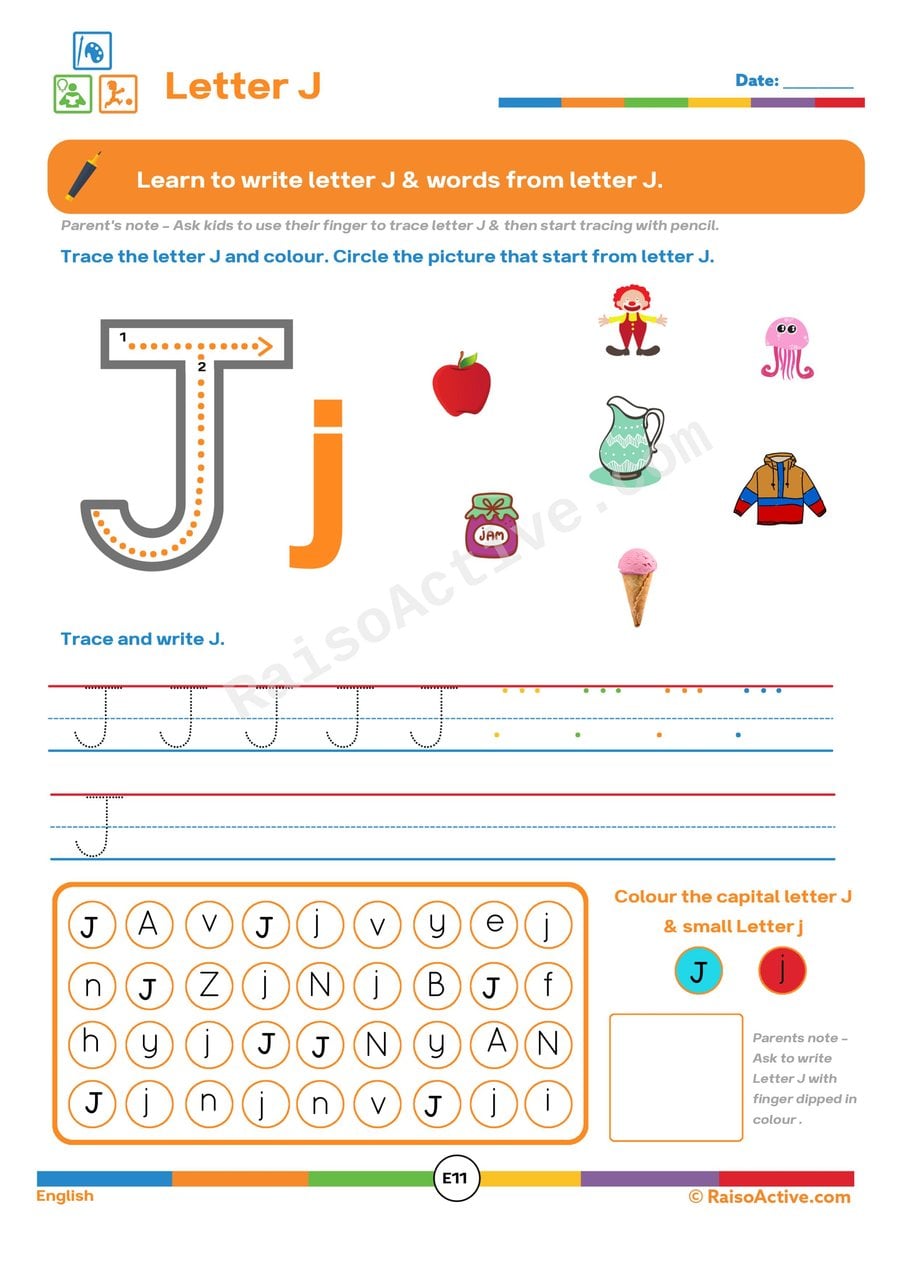
Letter J Worksheet: Trace, Write, and Color!
Ages 3-5 · Preschool–Pre-KAges 3-5 · Nursery–ReceptionAges 3-5 · Nursery–LKGAges 3-5
Children ages 3-5 practice forming the letter J, both uppercase and lowercase, through guided tracing, while also linking the letter to its sound by identifying pictures that begin with J. This combination of motor practice and phonics builds the foundation for both handwriting and early reading.

Body Parts Matching Worksheet for Preschoolers
Ages 3-5 · Preschool–Pre-KAges 3-5 · Nursery–ReceptionAges 3-5 · Nursery–LKGAges 3-5
Children ages 3-5 practice matching each body part to its specific function, like eyes to seeing or legs to walking, building early awareness of how their own body works. This connects body-part vocabulary to real-world purpose rather than just naming parts in isolation.
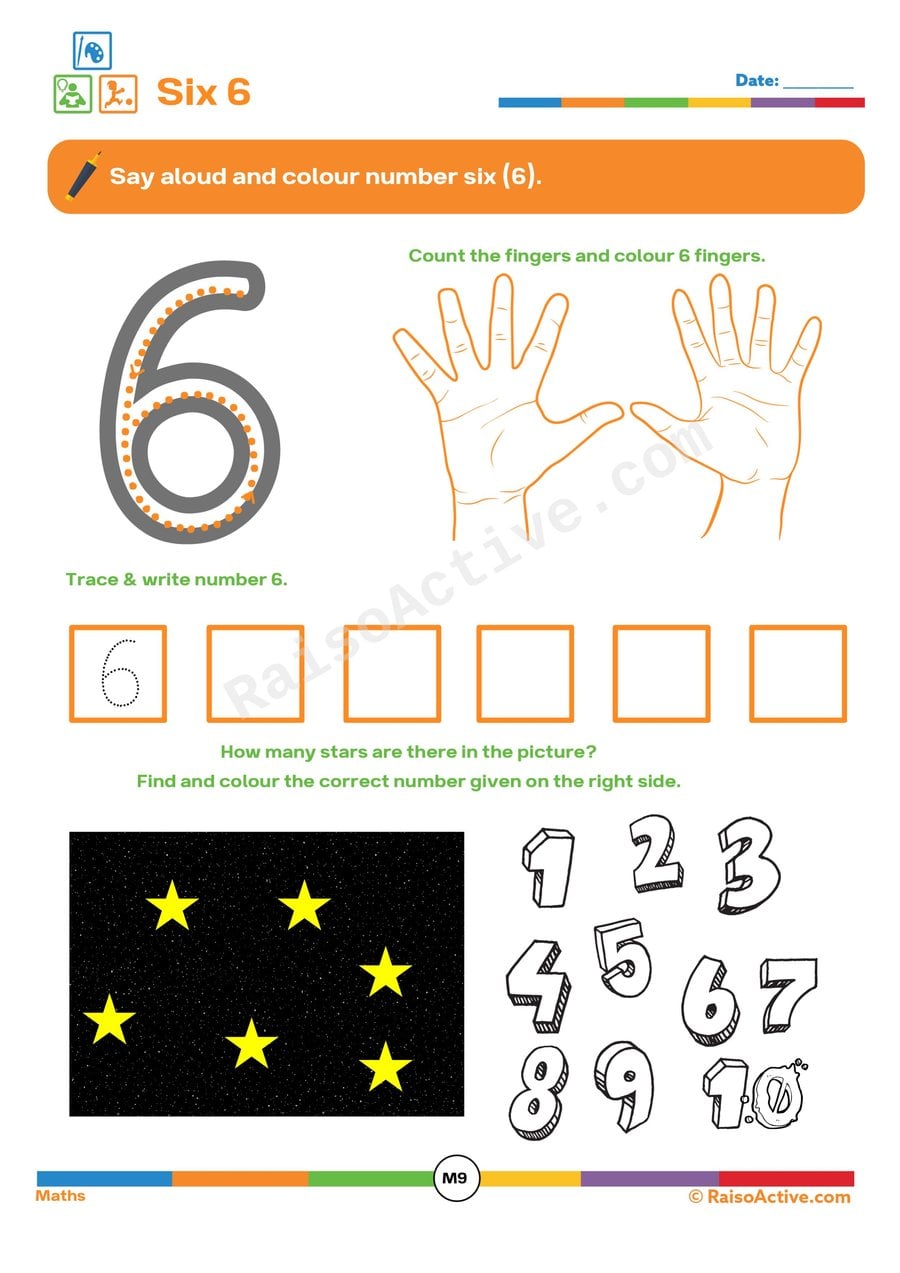
Number Six (6) Worksheet: Trace, Write, and Count!
Ages 4-5 · Pre-KAges 4-5 · ReceptionAges 4-5 · LKGAges 4-5
Children ages 4-5 practice tracing and independently writing the number six while reinforcing the quantity it represents by counting a group of stars. Moving from guided tracing to independent writing, then to counting practice, builds both the motor skill and the number sense needed for early math confidence.
Related worksheets

Capital and Small Letter Matching Worksheet for Preschoolers
Ages 3-5 · Preschool–Pre-KAges 3-5 · Nursery–ReceptionAges 3-5 · Nursery–LKGAges 3-5
Children ages 3-5 build letter recognition fluency by matching each uppercase letter to its corresponding lowercase form, a skill essential for reading since text uses both cases interchangeably. Recognizing that 'B' and 'b' represent the same letter sound despite looking different is a genuinely tricky early literacy milestone. Circling words that begin with a capital letter adds an extra layer of practice noticing capitalization in real context.

Small Letter Matching Worksheet: Cut and Paste Fun!
Ages 3-5 · Preschool–Pre-KAges 3-5 · Nursery–ReceptionAges 3-5 · Nursery–LKGAges 3-5
This worksheet helps children ages 3-5 recognize and match lowercase letters to their corresponding capital letters, a skill children need before they can read text that mixes both letter cases fluently. The cut-and-paste format adds fine motor practice, since children must precisely place a small paper letter next to its match.

Coloring and Matching Fun: Heart, Fish, and Alphabet Worksheet
Ages 3-5 · Preschool–Pre-KAges 3-5 · Nursery–ReceptionAges 3-5 · Nursery–LKGAges 3-5
This multi-part worksheet asks children ages 3-5 to follow a specific coloring instruction and then match letters to objects, building both instruction-following skills and early letter-object association in a single activity. Coloring only the heart red, rather than coloring freely, practices listening comprehension and attention to detail, a skill children need for following classroom directions later on. The letter-matching portion reinforces that letters represent real objects and sounds, an important building block before formal phonics instruction takes over.
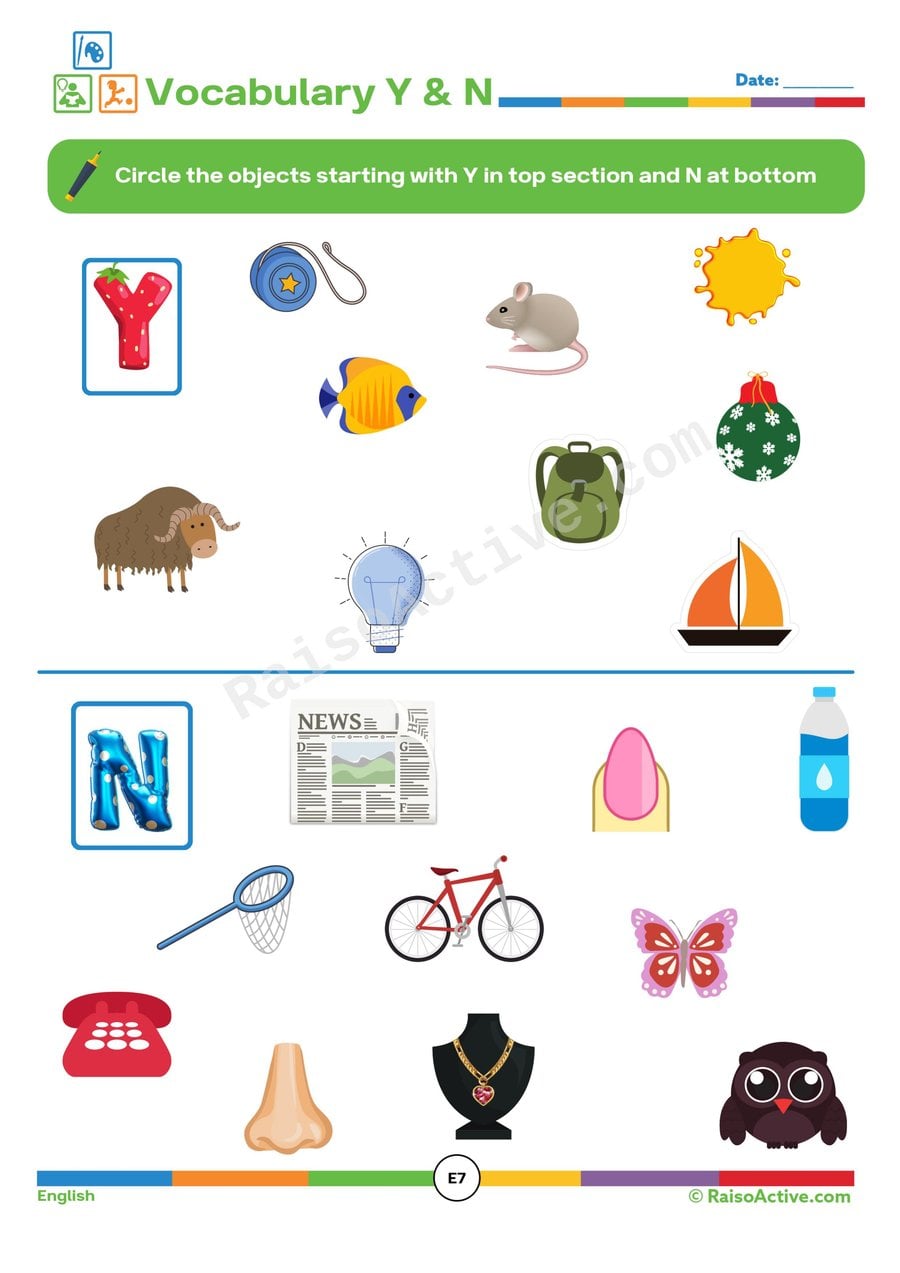
Y and N Vocabulary Worksheet: Circle the Objects!
Ages 3-5 · Preschool–Pre-KAges 3-5 · Nursery–ReceptionAges 3-5 · Nursery–LKGAges 3-5
Deciding whether a pictured object starts with Y or N helps children ages 3-5 practice initial sound discrimination between two distinct consonant sounds, building both vocabulary and listening skills. Circling in the correct top or bottom section adds a simple visual organization step that reinforces the category each object belongs to.

Match the Letters: Fun Vocabulary Worksheet for Preschoolers!
Ages 3-5 · Preschool–Pre-KAges 3-5 · Nursery–ReceptionAges 3-5 · Nursery–LKGAges 3-5
This worksheet helps children ages 3-5 connect familiar vocabulary pictures to their correct starting letters, reinforcing both letter recognition and the idea that written letters represent spoken sounds. Building vocabulary alongside letter knowledge gives children two ways into literacy at once — through meaning and through print — which supports children with different learning strengths.

Match the Pictures: Letter Matching Worksheet for Preschoolers
Ages 3-5 · Preschool–Pre-KAges 3-5 · Nursery–ReceptionAges 3-5 · Nursery–LKGAges 3-5
Connecting pictures to their matching letters helps children ages 3-5 build the foundation of phonics, learning that a printed letter represents the beginning sound of a spoken word. Circling the animals that specifically start with the letter B adds a second layer of practice, requiring children to apply that letter-sound knowledge rather than just matching shapes. This two-step approach moves children from simple visual matching toward true letter-sound recognition, a critical pre-reading skill.
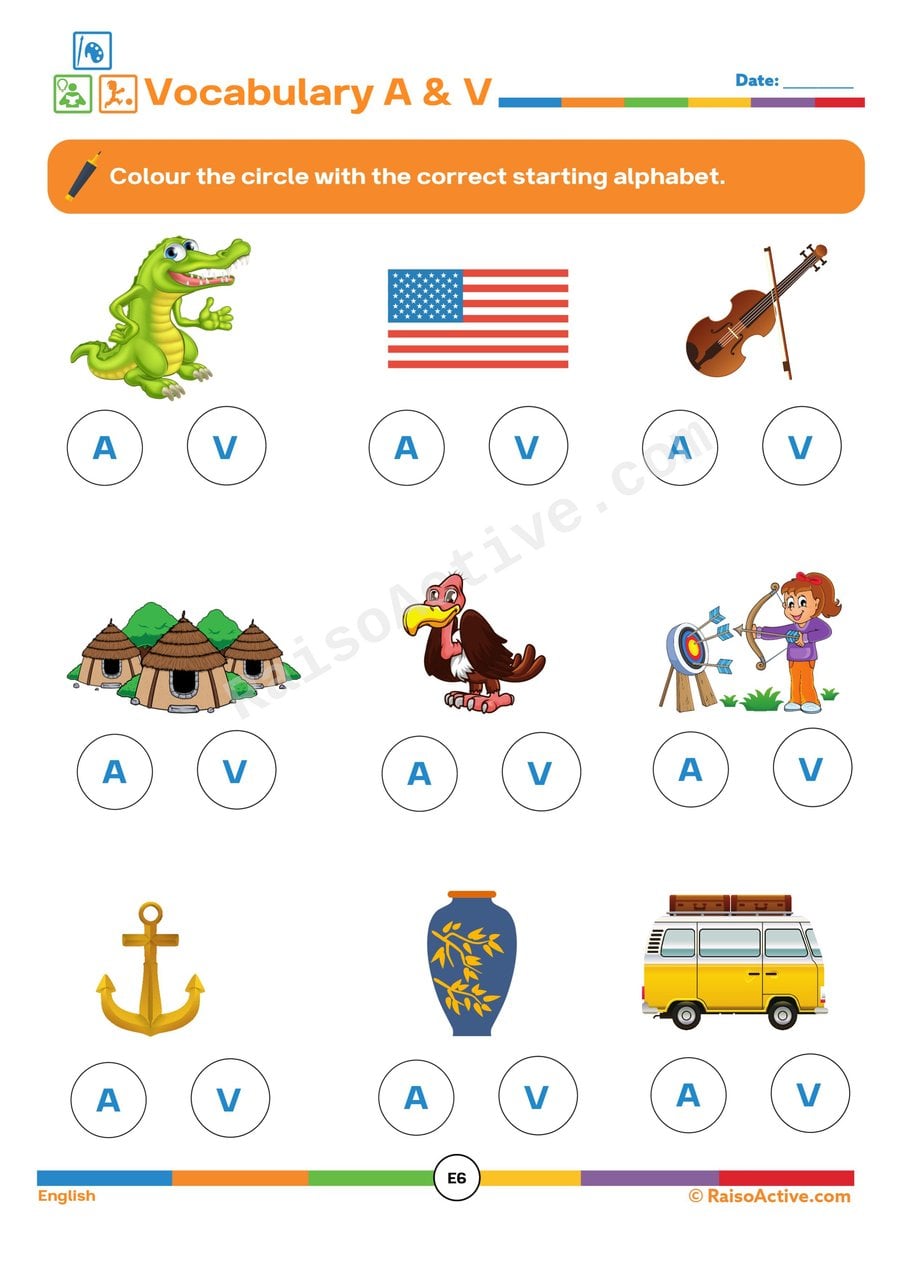
A & V Alphabet Worksheet: Color the Correct Letter!
Ages 3-5 · Preschool–Pre-KAges 3-5 · Nursery–ReceptionAges 3-5 · Nursery–LKGAges 3-5
Deciding whether a pictured word starts with A or V teaches children ages 3-5 to discriminate between two beginning sounds that can seem similar to a new listener, sharpening phonemic awareness in the process. Coloring the correct circle rather than just circling it adds an extra layer of engagement while still reinforcing the letter-sound match.
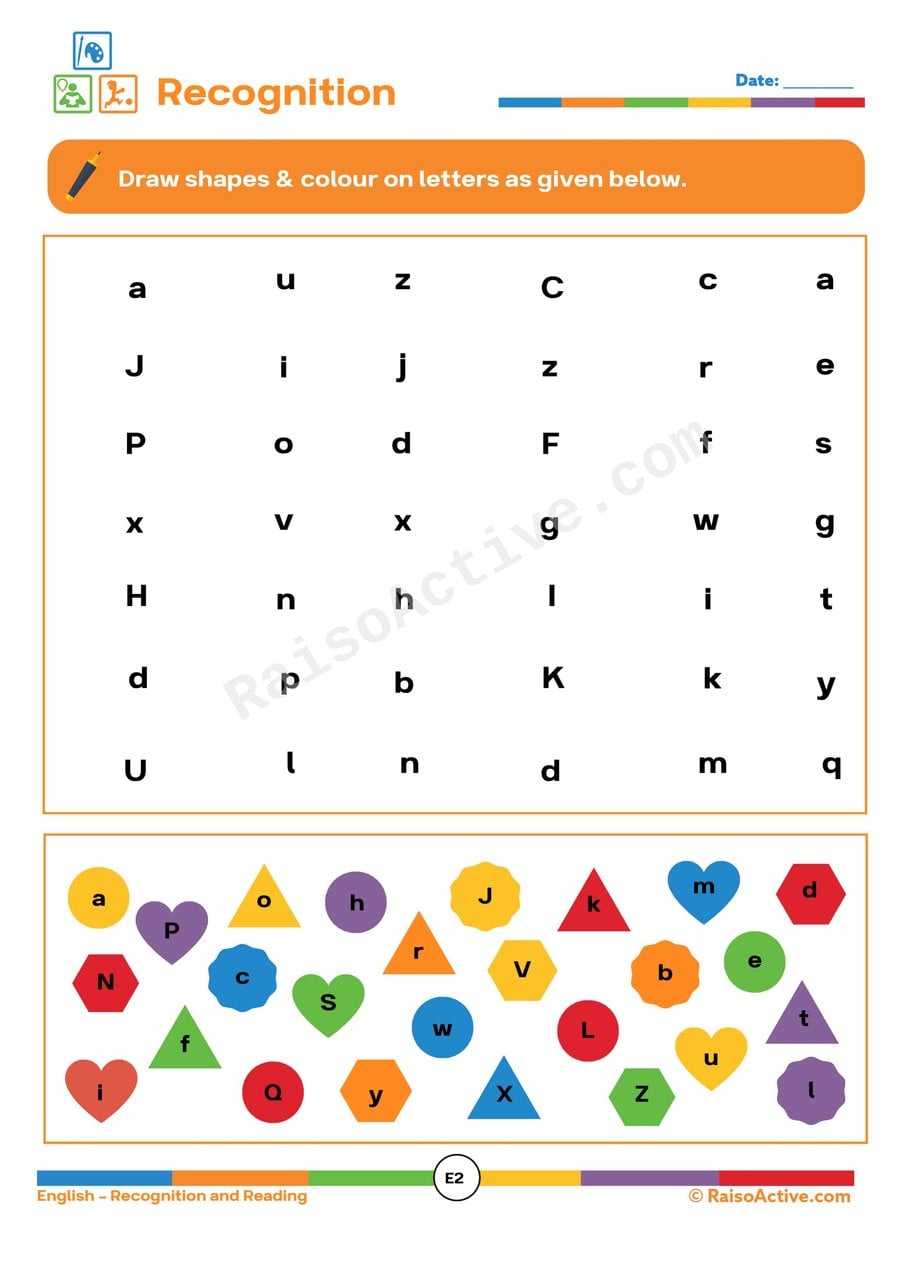
Letter Recognition Worksheet: Draw Shapes & Color!
Ages 3-5 · Preschool–Pre-KAges 3-5 · Nursery–ReceptionAges 3-5 · Nursery–LKGAges 3-5
Pairing letter recognition with drawing shapes gives children ages 3-5 practice on two skills at once: identifying printed letters by sight and following simple shape instructions with a pencil. Coloring the letters afterward reinforces the letter's visual form through repeated, focused attention rather than a quick glance, while the shape-drawing task builds the same pre-writing control needed for forming letters later. Combining these tasks keeps the page varied and engaging for a young attention span.
Guides for this topic

How to Teach CVC Blending: A Step-by-Step Method That Works in Two Weeks
A step-by-step method for teaching CVC blending, covering continuous sounds, word families, common errors, and a 14-day plan that most children finish reading CVC words.

Kindergarten Readiness Checklist: 25 Skills to Practice Before the First Day
A kindergarten readiness checklist of 25 literacy, math, motor, self-regulation and self-help skills, with an 8-week summer plan and notes on when not to worry.
Phase 2 Phonics at Home: Sound Order, Blending Games, Worksheets
Phase 2 phonics at home: the five sound sets in order, oral blending, tricky words, a two-week routine, common mistakes, and free worksheets.
Reviews
Every worksheet for ages 4–5, no watermark
Members download the full library of 1,000+ worksheets and every activity pack without watermarks or daily limits. One year costs ₹999 in India or $20 elsewhere.
See membership plansOr download any worksheet free with a watermark (5 a day).