Free printable worksheets · United Kingdom
EYFS Worksheets (Ages 3–5)
EYFS worksheets are short printable practice sheets for children aged 3 to 5 in Nursery and Reception, the two years of the Early Years Foundation Stage in England. They support the Early Learning Goals in phonics and letter sounds, mark making and letter formation, counting and number recognition to 10, shape and pattern work, and fine motor control.
The Early Years Foundation Stage runs from birth to the end of Reception and is play-based by design: children learn through stories, songs, outdoor play and adult-guided activities rather than desk work. Worksheets have a small but useful place in that mix. A five-minute tracing or counting sheet, done beside an adult, lets a child practise a skill already met through play and shows parents what is being taught. The sheets on this page are organised around the seven areas of learning, with most weight on Literacy, Mathematics and Physical Development, because those are the areas where paper practice helps most. Nursery children should start with mark making and matching; Reception children can move on to letter formation and numbers.
1952+ worksheets · free PDF download · print on A4 or Letter
EYFS Worksheets to print
Browse all worksheets for ages 3–5
Pattern Writing Pre-writing Skills Activity Book for 3-4 Year Olds - Page 40
As one of the later pages in the pre-writing patterns activity book, this page asks 3-4 year olds to apply everything practiced on earlier pages, steady pressure, consistent spacing, and accurate prediction, to a pattern that combines skills built up gradually through the book. Reaching this stage of the book is itself a marker of growing stamina, since completing a full row of repeated strokes reliably takes more sustained focus than the simpler early pages required.

Pattern Writing Pre-writing Skills Activity Book for 3-4 Year Olds - Page 17
This page from the pre-writing patterns activity book asks 3-4 year olds to continue a repeating stroke pattern, which trains their brain to predict what comes next in a visual sequence before their hand draws it. That predicting-then-executing process is a form of early motor planning, the same skill that later lets a child anticipate the next stroke needed to form a letter without stopping to think about each individual line.

Pattern Writing Pre-writing Skills Activity Book for 3-4 Year Olds - Page 11
This page from the pre-writing patterns activity book strengthens hand and finger muscles for 3-4 year olds through repeated stroke motions, building the physical stamina and grip strength a child needs before sustained handwriting becomes comfortable. Repeating the same basic movement many times across a row also builds muscle memory, so the motion starts to feel automatic rather than something the child has to consciously plan each time.

Pattern Writing Pre-writing Skills Activity Book for 3-4 Year Olds - Page 33
This later page in the pre-writing patterns activity book asks 3-4 year olds to track a repeating pattern visually from left to right across the row before their pencil catches up, building the same visual tracking direction used in reading English text. Because this comes further into the book, it also builds a small dose of persistence, since completing a full row of repeated strokes takes more sustained attention than a single short trace.

Pattern Writing Pre-writing Skills Activity Book for 3-4 Year Olds - Page 19
This page from the pre-writing patterns activity book asks 3-4 year olds to keep their pencil pressure steady and consistent while repeating a stroke across a full row, a subtler skill than simply getting the shape right. Learning to apply even, moderate pressure prevents the tearing or overly faint lines common in early writing attempts, and this kind of repeated practice builds that control gradually.

Clothing Pattern Match Worksheet for Preschoolers
This worksheet has children ages 3-5 study repeating patterns on clothing items — stripes, polka dots, or checks — and match each item to its identical twin, building visual discrimination and early pattern-sequencing skills. Distinguishing between similar-looking patterns also sharpens attention to detail, a skill that later supports letter and word recognition.

Light Energy Worksheet: Connect the Sun to Light Sources!
Connecting the sun to other objects that produce light builds early science reasoning for children ages 3-5, introducing the concept that light comes from specific sources rather than simply existing everywhere.

I Spy Summer Fun Worksheet: Counting and Identifying Objects!
This 'I Spy Summer Fun' worksheet helps young learners (ages 3-5) master one-to-one correspondence, a crucial foundational math skill, by counting specific summer-themed objects within a busy scene. Children will practice associating a number name with each item they touch or point to, building early number sense and visual discrimination. This activity strengthens their ability to accurately count quantities up to 20, preparing them for more complex mathematical concepts.

Trace and Write the Letter C Worksheet for Preschoolers
Tracing the uppercase letter C helps children ages 3-5 practice a single smooth curved stroke, which is typically easier to control than letters with straight corners, making it a confidence-building early tracing exercise. This worksheet also reinforces the hard /c/ sound heard at the start of words like 'cat,' 'car,' and 'cup,' connecting the shape of the letter to its sound. Building this early success with curves also lays groundwork for other curved letters like O and G.

Doctor Role Play Worksheet: Patient Emergency Form
Through pretend-play as a doctor filling out a patient form, children practice early functional writing and decision-making, selecting a 'patient,' identifying what hurts, and choosing a treatment. This kind of role play also builds empathy and emotional vocabulary around illness and care, helping ages 3-5 process what happens during real doctor visits in a low-stakes, imaginative context.
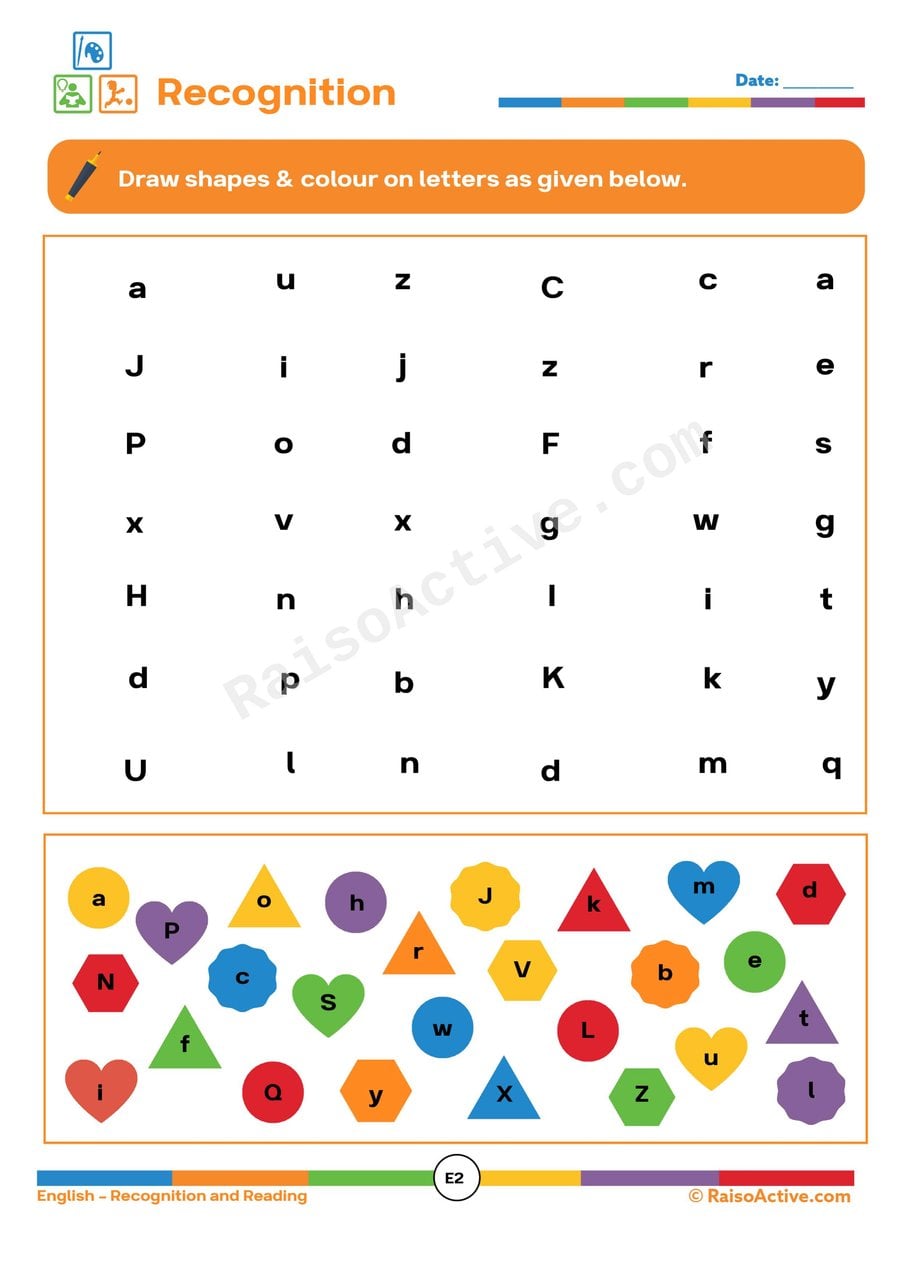
Letter Recognition Worksheet: Draw Shapes & Color!
Pairing letter recognition with drawing shapes gives children ages 3-5 practice on two skills at once: identifying printed letters by sight and following simple shape instructions with a pencil. Coloring the letters afterward reinforces the letter's visual form through repeated, focused attention rather than a quick glance, while the shape-drawing task builds the same pre-writing control needed for forming letters later. Combining these tasks keeps the page varied and engaging for a young attention span.

Shape Craft Dog Worksheet: Count, Write, Colour, Cut & Glue!
Building a dog out of separate shape pieces gives children ages 3-5 hands-on practice recognizing basic shapes like circles, triangles, and squares while also strengthening the fine motor control needed for cutting and gluing. Counting and writing the number of each shape before assembling the dog adds an early math layer, connecting shape recognition directly to quantity. This kind of multi-step craft — count, write, color, cut, glue — also builds the sequencing and attention span children need for more complex classroom projects later on.

3D Cow Craft: Cut and Paste Worksheet for Preschoolers
Folding the body piece and gluing the head onto it to build a standing 3D cow reinforces the same fold-and-assemble sequencing as other 3D animal crafts, while giving children a satisfying, playable result rather than a flat picture. The paired fun fact about cows adds a small piece of real-world knowledge that makes the craft memorable beyond the cutting and gluing itself.

Count and Match: Number Names Worksheet for Preschoolers
Children ages 3-5 practice counting groups of objects and then matching that quantity to both its written numeral and its spelled-out number word, connecting three different representations of the same amount. This triple connection between objects, numerals, and number names builds a deeper, more flexible sense of number than counting alone.

Spot the Differences: Garden Puzzle Worksheet for Preschoolers
Carefully comparing two similar garden scenes to find five differences builds visual discrimination and sustained attention for children ages 3-5, skills that directly support later reading fluency, since spotting small differences between letters is a similar process.

Bean Counting Fun: A Sorting Worksheet for Preschoolers!
Children ages 3-5 practice number recognition and one-to-one correspondence by counting out the exact quantity of beans shown on each numeral and physically placing them onto the matching picture. Handling small, individual beans and placing them one at a time reinforces accurate counting far more effectively than counting printed dots, since a misplaced bean is immediately obvious and easy to correct.

Rainy Season Coloring Worksheet for Preschoolers
This worksheet helps children ages 3-5 identify and learn about objects and scenes associated with the rainy season, like umbrellas, puddles, and raincoats, while practicing coloring skills that build hand control. Connecting a familiar season to specific vocabulary words gives children concrete language for describing the weather they experience.

Days of the Week Sequencing Worksheet for Preschoolers
This worksheet builds sequencing skills for children ages 3-5 as they work with the days of the week in order, first filling in a missing day and then cutting and gluing days into the correct sequence. Understanding that days follow a fixed, repeating order is an early step toward time concepts like yesterday, today, and tomorrow, and this hands-on repetition helps cement a sequence that isn't visually obvious the way counting objects is.

Phonics Worksheet: Write the First Letter and Draw!
Identifying the first letter of a pictured object's name and writing it down builds phonemic awareness and letter-formation practice for children ages 3-5, while the follow-up drawing task builds creative thinking and fine motor control.

Trace and Write the Letter P Worksheet for Preschoolers
Tracing the uppercase letter P introduces children ages 3-5 to a two-part stroke, a straight vertical line followed by a curved loop at the top, which builds on the straight-line control they've likely practiced with letters like T and the curved control practiced with letters like C. This combination stroke is good preparation for other letters that mix lines and curves, such as R and B. The worksheet also reinforces the /p/ sound in words like 'pig,' 'pencil,' and 'popcorn.'

Flags Flashcards: Learn About Countries and Flags!
This flashcard set focuses on just four flags, China, Japan, India, and Russia, giving children ages 3-5 a manageable, memorable set to master before moving on to a wider world of flags. Comparing four distinct flag designs side by side also sharpens visual discrimination, since children must notice specific differences, like a red circle versus a wheel symbol, to tell them apart.

Before and After Numbers Worksheet for Preschoolers
Identifying which numbers come immediately before or after a given number and physically sorting pictures into place links number sequence recall with the fine motor practice of cutting and pasting, building confidence for children ages 3-5.

Simon Says: Follow the Instructions and Get Moving!
This worksheet turns the classic listening game into a written record, having children track which Simon Says instructions they followed correctly. For three- to five-year-olds, the game builds gross motor skills like jumping, spinning, and balancing, while also strengthening auditory attention — the ability to listen carefully and act only when the right cue ('Simon says') is given.
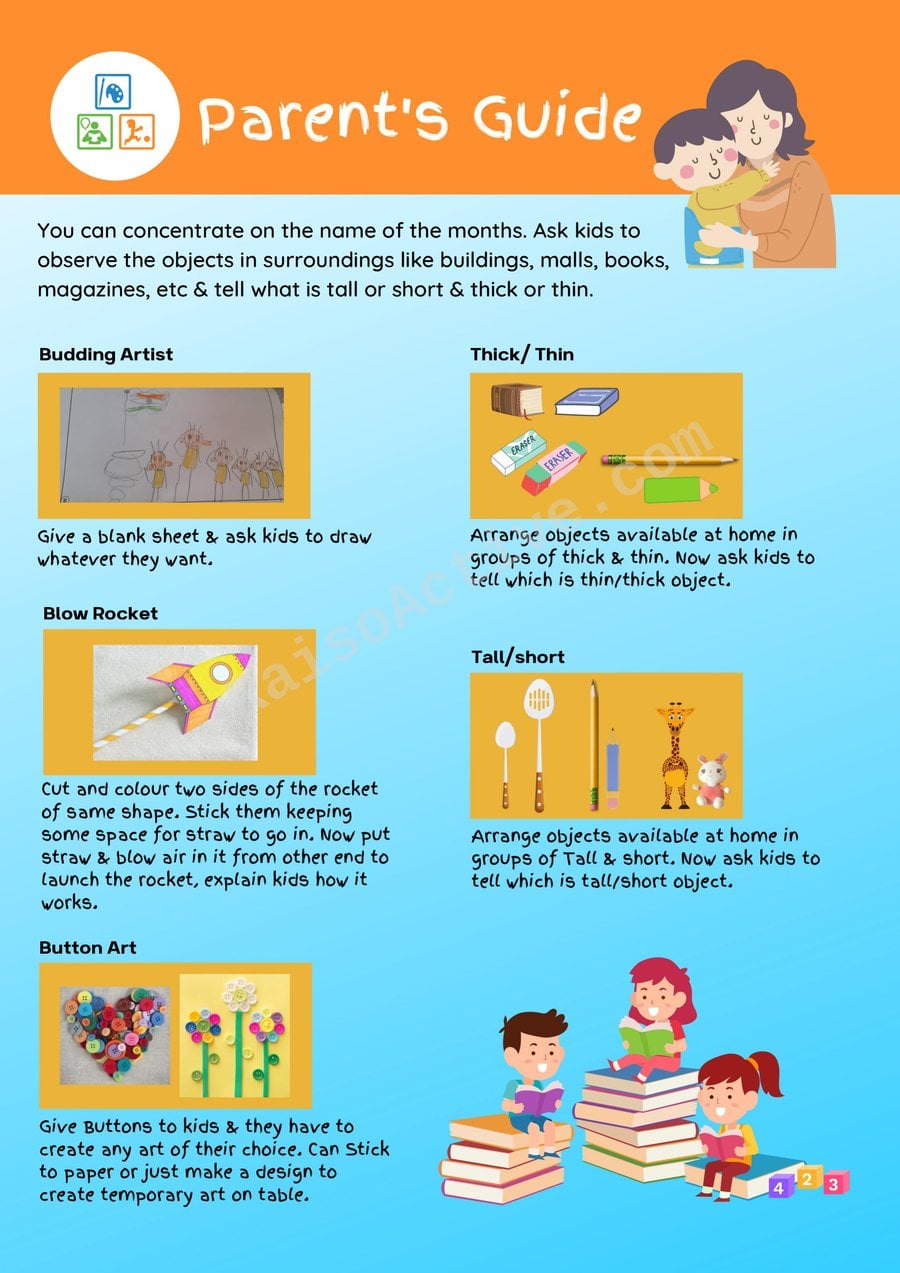
Parent's Guide: Fun Activities for Kids!
This parent's guide bundles several short activities that build early comparison vocabulary - thick versus thin, tall versus short - alongside fine motor practice with buttons and straws and beginning calendar awareness through talking about the months. For children ages 3-5, comparing sizes verbally is an important pre-math skill, while threading buttons onto straws strengthens the pincer grip needed later for writing. Together these activities give a well-rounded session touching language, math, and motor development.
The seven areas of learning
The EYFS framework groups learning into three prime areas and four specific areas. The prime areas develop first and underpin everything else; the specific areas build on them. Each area ends in one or more Early Learning Goals that teachers assess by observation at the end of Reception. Worksheets can support the goals below, though most are reached through play and conversation.
- Communication and Language: listening, understanding and speaking (prime area)
- Physical Development: gross motor and fine motor control, including pencil grip (prime area)
- Personal, Social and Emotional Development: self-regulation, managing self, building relationships (prime area)
- Literacy: comprehension, word reading and writing
- Mathematics: number to 10 and numerical patterns
- Understanding the World: people and communities, the natural world, past and present
- Expressive Arts and Design: creating with materials, being imaginative and expressive
How worksheets fit a play-based curriculum
Keep sheets short and adult-supported. Five to ten minutes at a table, one sheet, with an adult alongside to read the instruction and talk about it, is the right dose for a three- or four-year-old. Use the sheet to consolidate something the child has met in play that week: count the toy cars, then do the counting sheet. Never make worksheets the main activity of the day, and stop the moment interest fades; a half-finished sheet done willingly is worth more than a completed one done under protest.
Nursery versus Reception
Nursery children (3–4) are mostly at the mark making, matching and sorting stage: they need thick crayons, large pictures and single-step instructions. Reception children (4–5) begin Phase 2 phonics and formal number work, so their sheets add letter formation, sound matching, counting to 10 and simple comparisons. Choose sheets by what your child can already do rather than by the age printed on them.
Frequently asked questions
What is EYFS and what ages does it cover?
The Early Years Foundation Stage is the statutory framework for children in England from birth to the end of the school year in which they turn five. In practice it covers Nursery (ages 3–4) and Reception (ages 4–5), and it sets the standards that schools, nurseries and childminders must follow for learning, development and care.
Should children in EYFS be doing worksheets at all?
In moderation. The EYFS framework expects learning through play, and no worksheet replaces talk, stories and hands-on activity. A short sheet used to reinforce a skill already introduced through play, with an adult alongside, is a reasonable supplement. If a child resists or cannot yet hold a pencil comfortably, put the sheets away and return to play-based activities for a few weeks.
What should a child know by the end of EYFS?
The Early Learning Goals assessed at the end of Reception expect a child to say a sound for each letter and read simple words and sentences by blending, write recognisable letters and simple phrases, have a deep understanding of numbers to 10 including number bonds to 5 and some to 10, count beyond 20, compare quantities, and show good pencil control and independent self-care.
What is the difference between EYFS and Key Stage 1?
EYFS covers Nursery and Reception and is assessed against the Early Learning Goals through teacher observation. Key Stage 1 covers Years 1 and 2, follows the National Curriculum programmes of study in English, maths and science, and includes the Year 1 phonics screening check. Moving from EYFS to KS1 is the shift from mainly play-based learning to more structured lessons.
Are these EYFS worksheets free?
Yes. Each worksheet downloads free as a watermarked PDF once you have created an account, up to five downloads a day. An annual subscription removes the watermark and the daily limit across the full library of over 1,000 worksheets and every printable pack. All sheets are laid out for A4 paper.

Written by
Hemsweta Jain · Teacher Cheena
MBA and Early Childhood Educator, teaching since 2014 · Founder of RaisoActive, Mumbai
Written and reviewed by Hemsweta Jain (Teacher Cheena), who designs every RaisoActive worksheet.
Last reviewed
Printable packs for ages 3–5
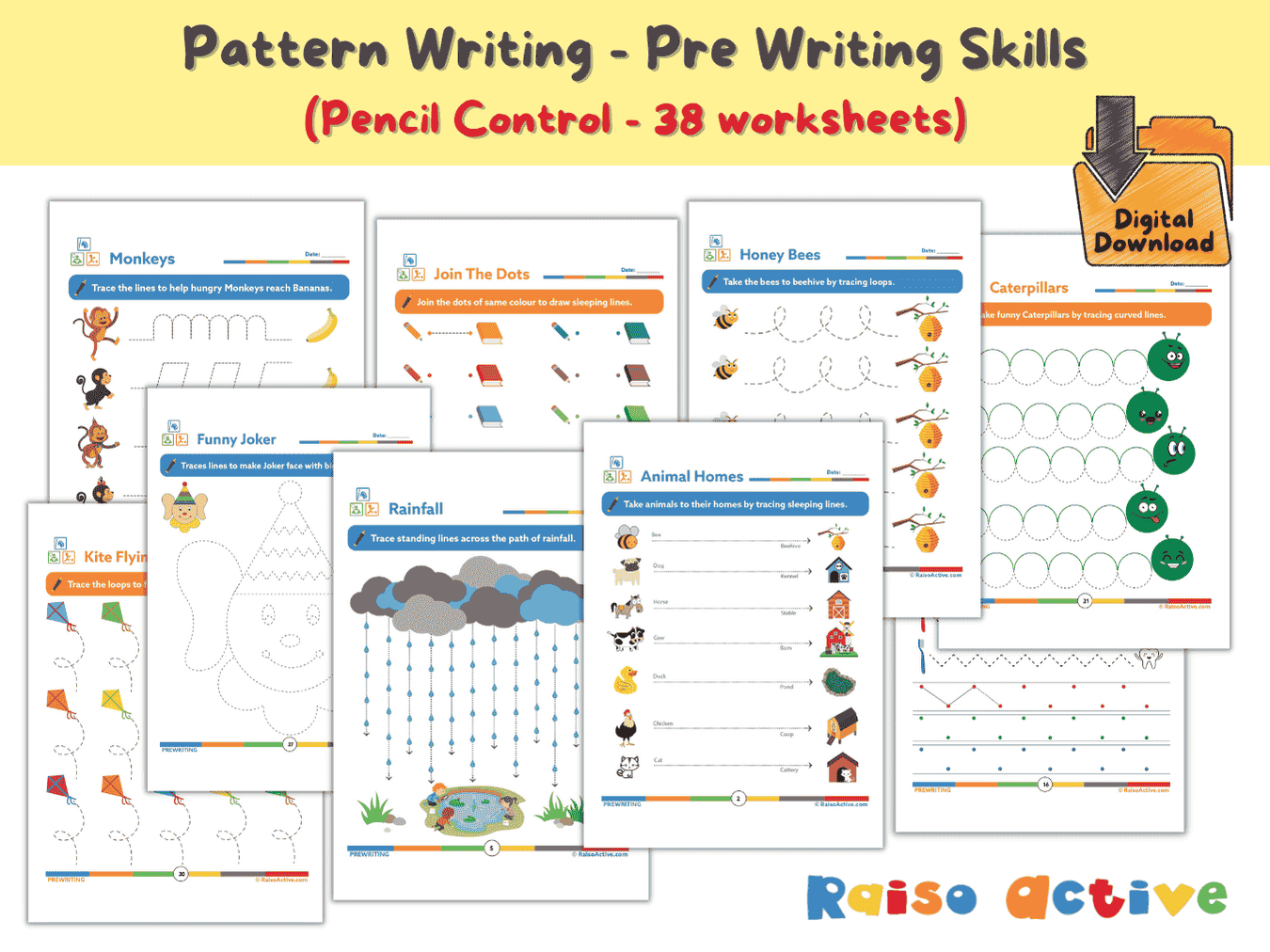
Pattern Writing Pre-writing Skills Activity Book for 3-4 Year Olds
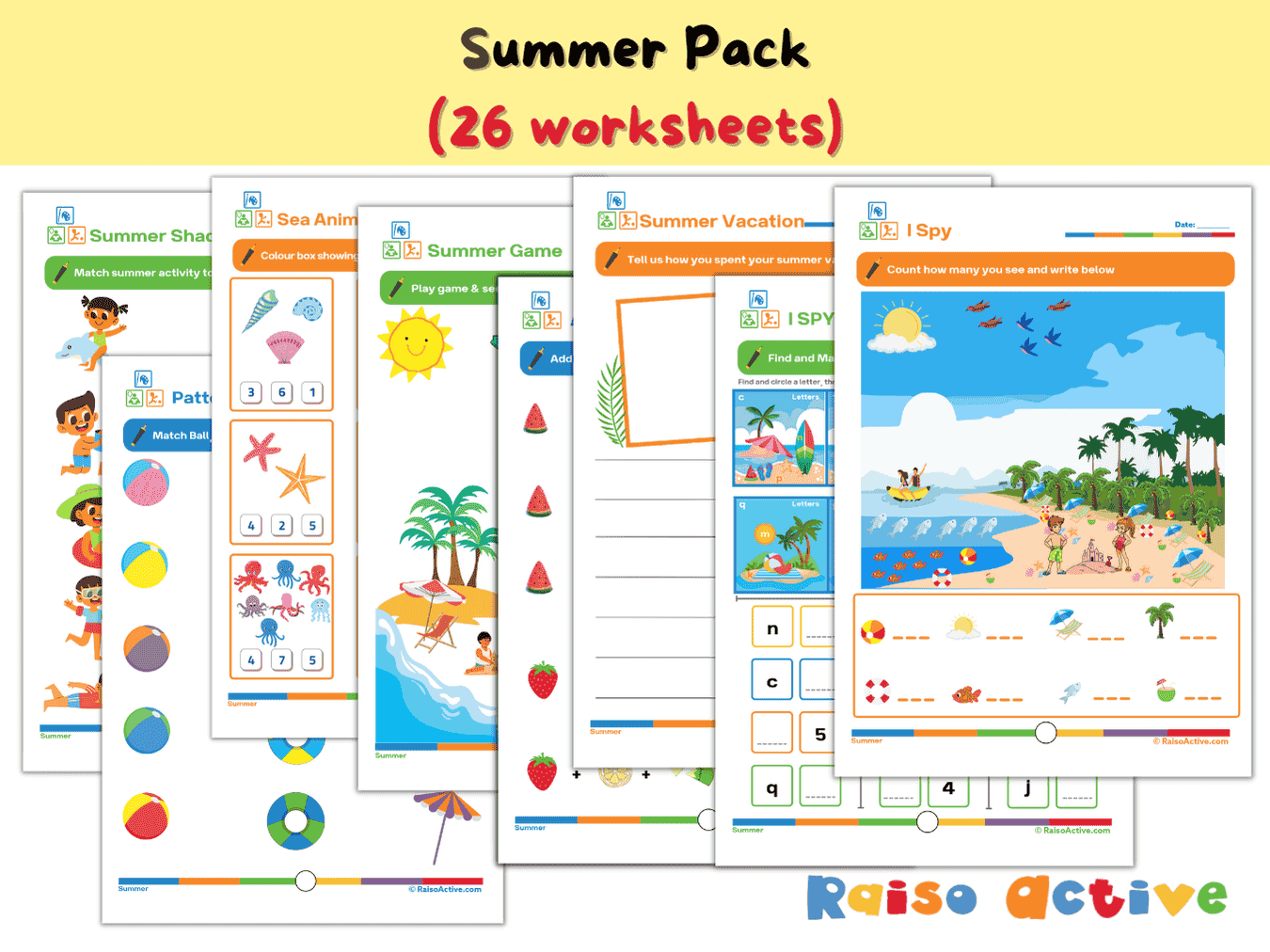
Summer Activity Pack: Math, Literacy, Puzzles & More for Preschool & Kindergarten
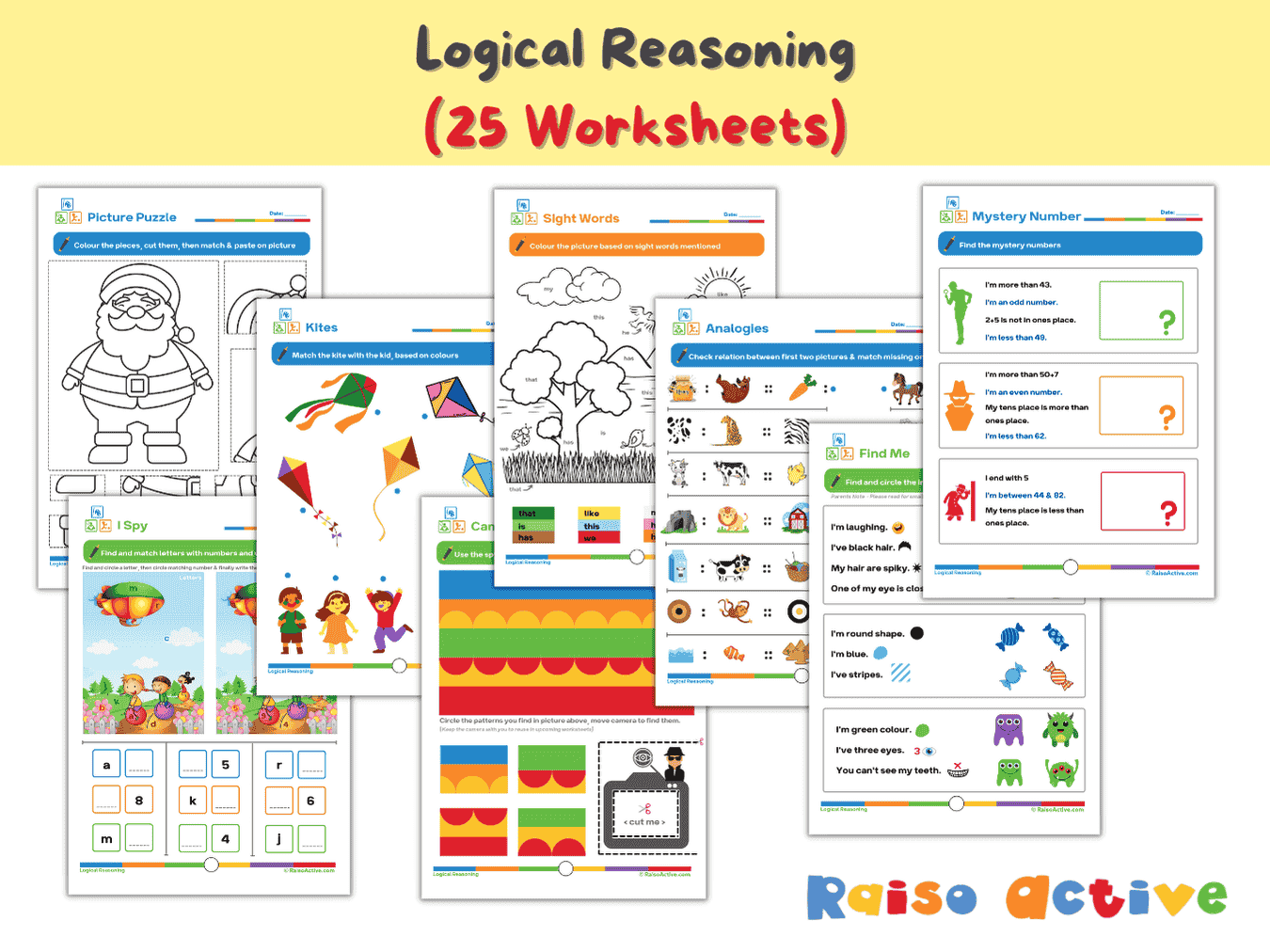
Logical Reasoning Activity Book for Preschool & Kindergarten | Patterns, Puzzles & Analogies
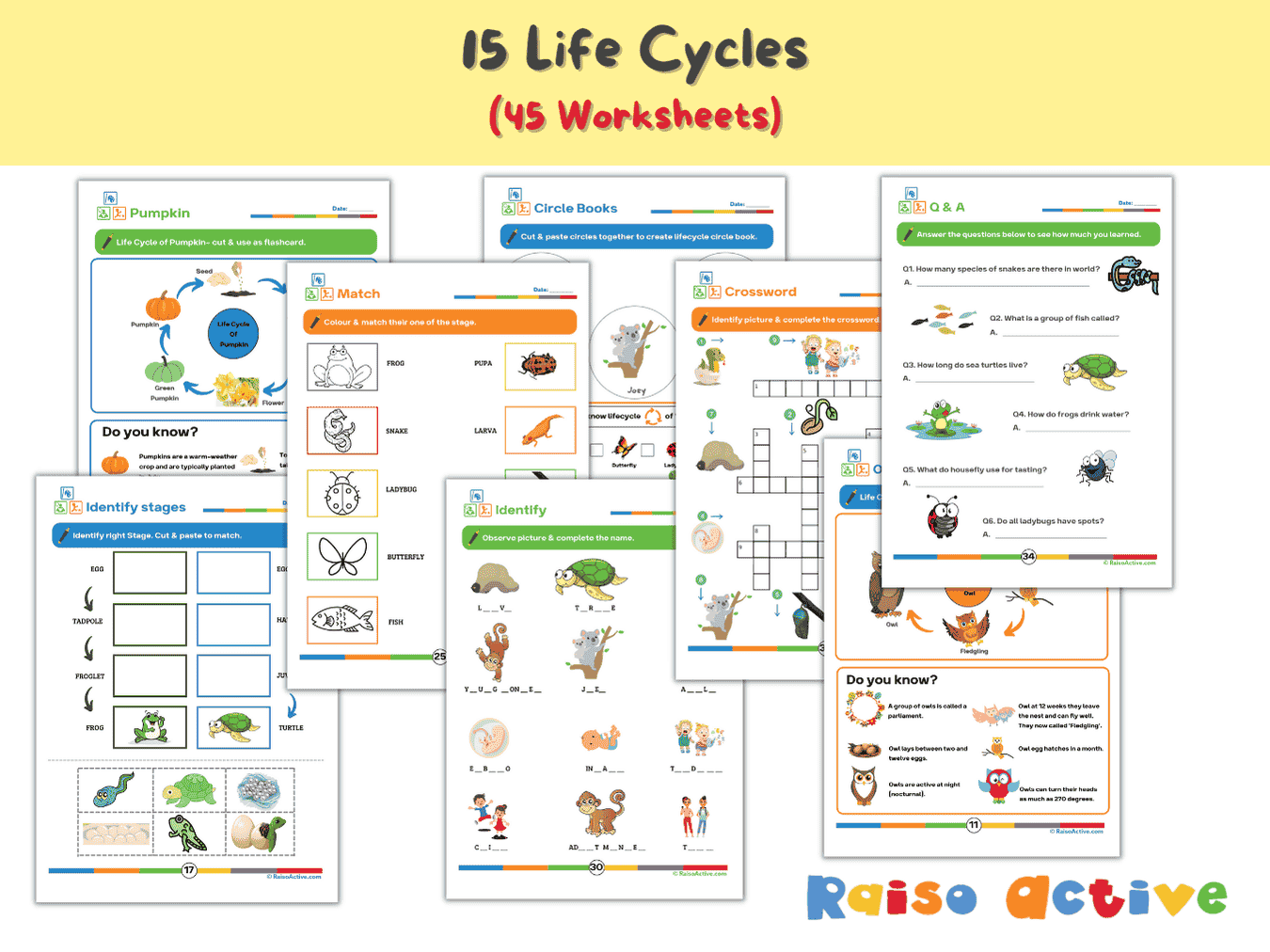
Lifecycles Activity Book & Flashcards for Preschool & Early Elementary
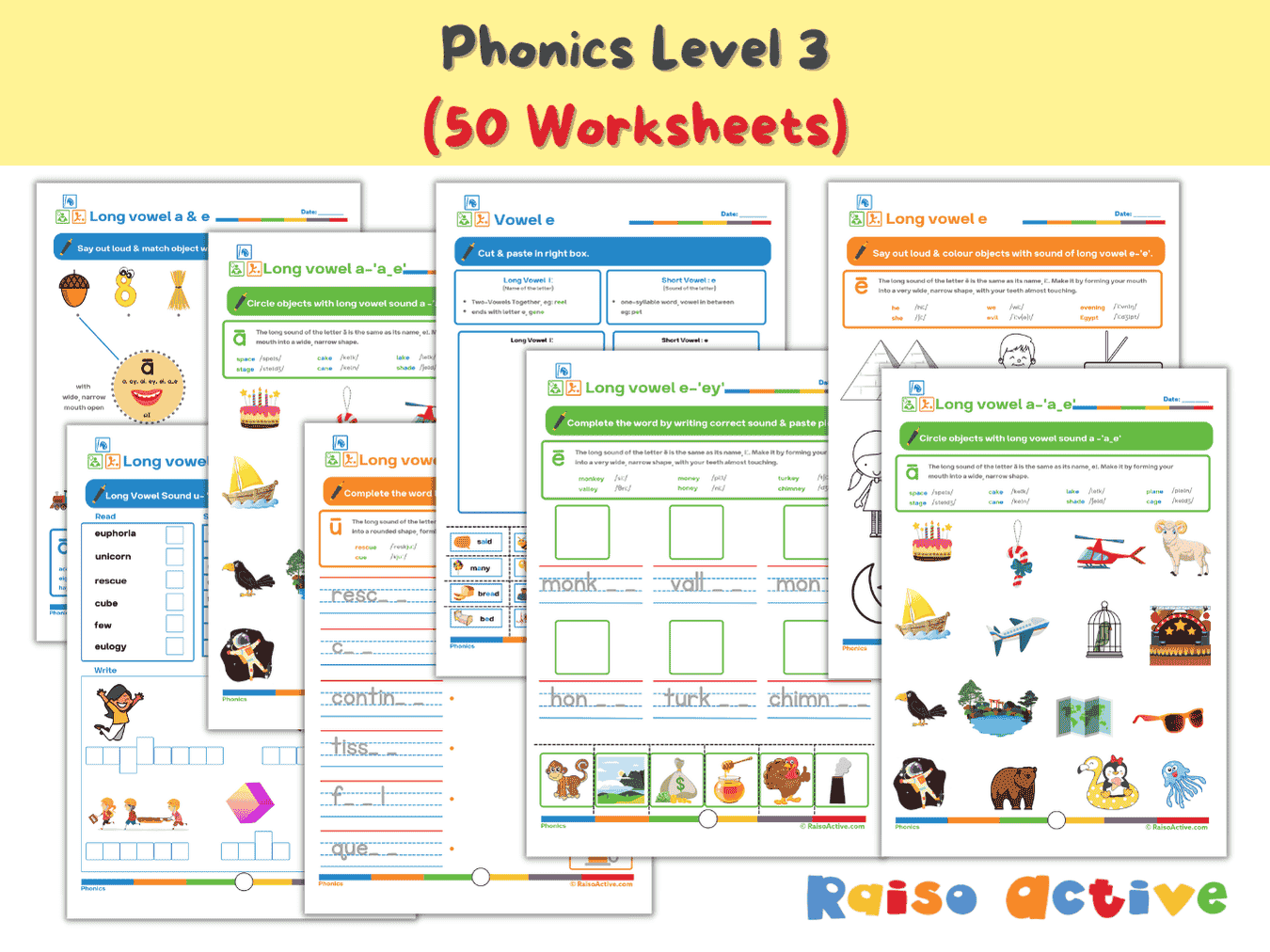
Phonics Level 3 Long Vowels Activity Book for Kindergarten & 1st Grade
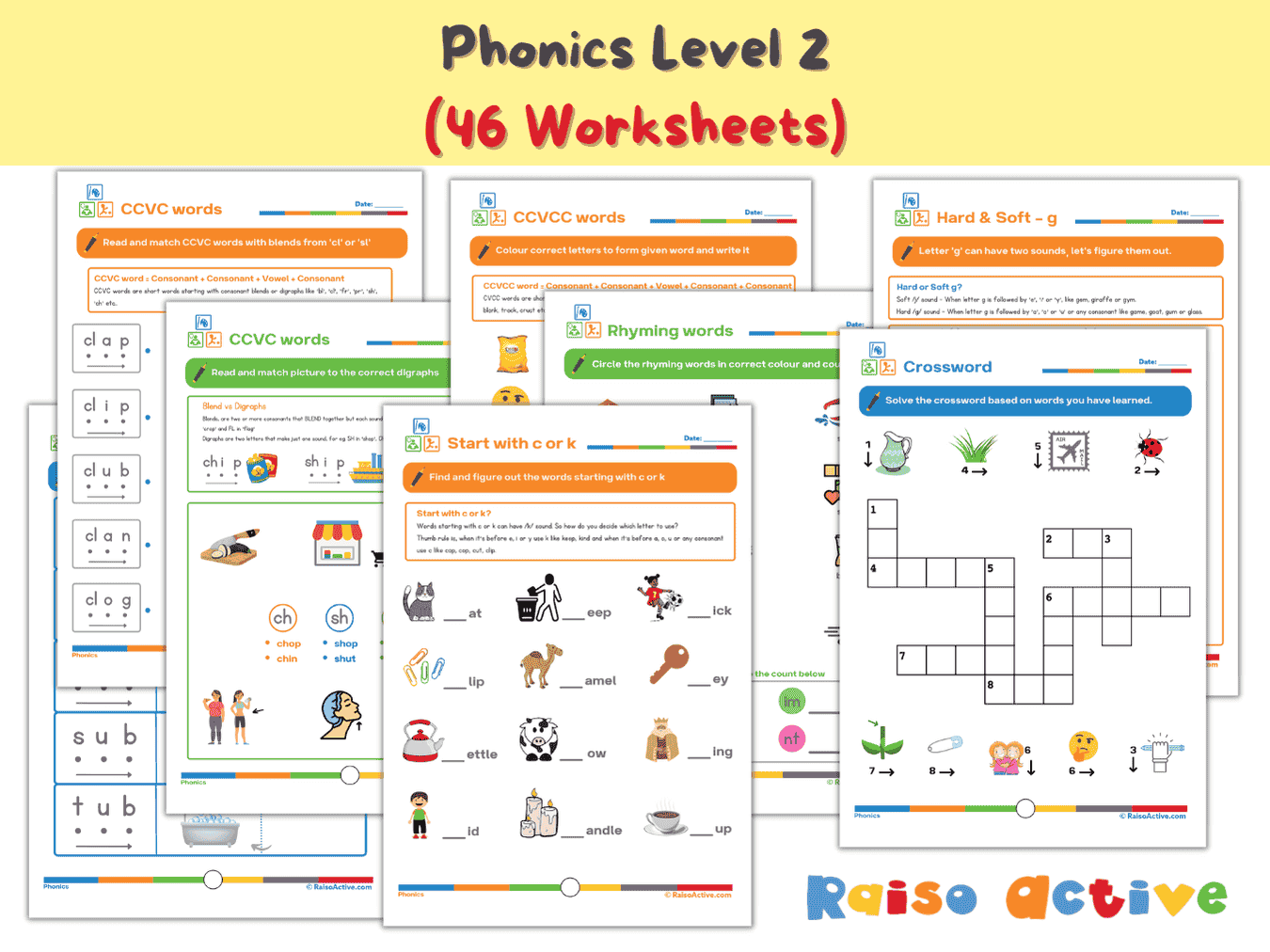
Phonics Level 2 Worksheets: CVC, CCVC, CVCC Word Families & Blends for Early Readers (Ages 4-7)
Guides for parents and teachers
See all guides →Number Formation Rhymes 0–9 and How to Fix Reversals
Original number formation rhymes for 0–9, the correct stroke order for each digit, why 3, 5 and 7 get reversed most often, and multisensory fixes that work.
Pre-Writing Strokes in Order: From Standing Lines to Loops (With Printable Patterns)
The developmental order of pre-writing strokes, from vertical lines to loops, and why practicing them in sequence makes letter formation much easier to learn.
How to Teach CVC Blending: A Step-by-Step Method That Works in Two Weeks
A step-by-step method for teaching CVC blending, covering continuous sounds, word families, common errors, and a 14-day plan that most children finish reading CVC words.
Kindergarten Readiness Checklist: 25 Skills to Practice Before the First Day
A kindergarten readiness checklist of 25 literacy, math, motor, self-regulation and self-help skills, with an 8-week summer plan and notes on when not to worry.
Best Worksheets for 3-Year-Olds: What Works and What to Avoid
What works on worksheets for 3-year-olds: short sessions, crayons, tracing lines, matching, cutting, a free weekly plan, and signs one is too advanced.
Phase 2 Phonics at Home: Sound Order, Blending Games, Worksheets
Phase 2 phonics at home: the five sound sets in order, oral blending, tricky words, a two-week routine, common mistakes, and free worksheets.
Canonical: https://raisoactive.com/worksheets/eyfs