Free printable worksheets · United Kingdom
EYFS Maths Worksheets (Ages 3–5)
EYFS maths worksheets are practice sheets for children aged 3–5 in Early Years Foundation Stage in the UK. Maths covers number sense, counting, the four basic operations, shapes, measurement and patterns, taught through objects before abstract symbols. The sheets on this page cover number sense and counting, addition and subtraction, shapes and measurement and patterns and comparison.
The Early Years Foundation Stage spans Nursery and Reception and treats a worksheet as a small supplement to play rather than the main event. Mark making, matching and sorting dominate the Nursery year; Reception adds letter formation, sound matching and counting to ten as phonics teaching begins in earnest. Three-year-olds count to 10 aloud, touch-count up to five objects reliably, and start to recognise the numerals 1 to 10 as symbols for those amounts. A worksheet set should cover counting pictures and circling the matching numeral, sorting by one attribute, copying and continuing a two-colour pattern, naming circle, square and triangle, and comparing big and small or more and fewer. Tracing 1 to 5 in thick dotted lines is fine; writing numerals unaided is not expected.
586+ worksheets · free PDF download · print on A4 or Letter
EYFS Maths Worksheets to print
Browse all worksheets for ages 3–5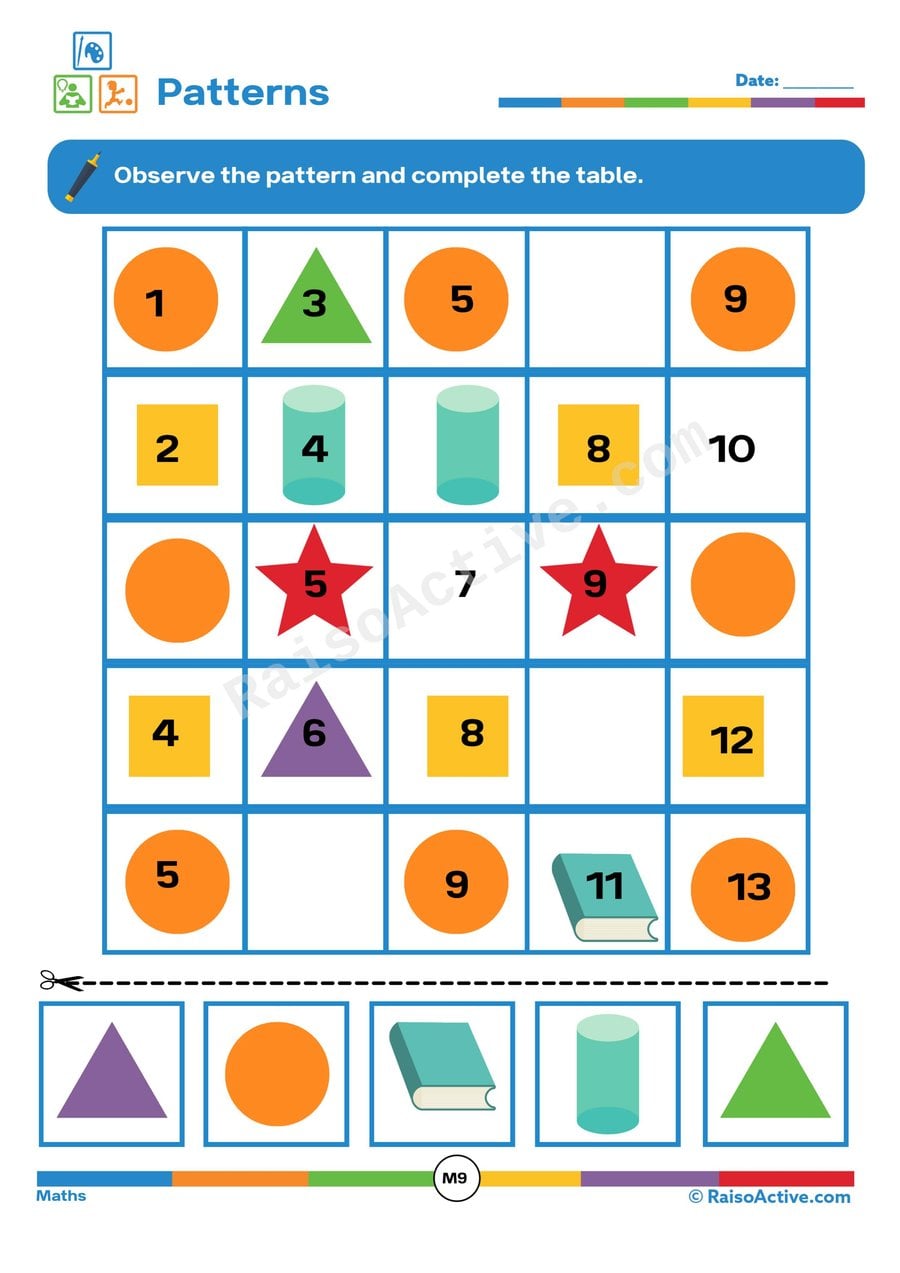
Shape Pattern Worksheet for Preschoolers
This worksheet asks children ages 3-5 to study a repeating sequence of shapes and continue the pattern by drawing the shape that logically comes next in each row. Extending a pattern rather than just identifying one requires a bit more reasoning than simple recognition, since children must hold the rule in mind and apply it to produce a new correct answer rather than choosing from options.

Clean or Dirty Sorting Worksheet for Preschoolers
Sorting pictures into clean and dirty categories teaches children ages 3-5 to make observational judgments and apply reasoning about hygiene, rather than simply naming what they see. Drawing a happy or sad face for each choice also adds an element of emotional expression to what is otherwise a straightforward sorting task.
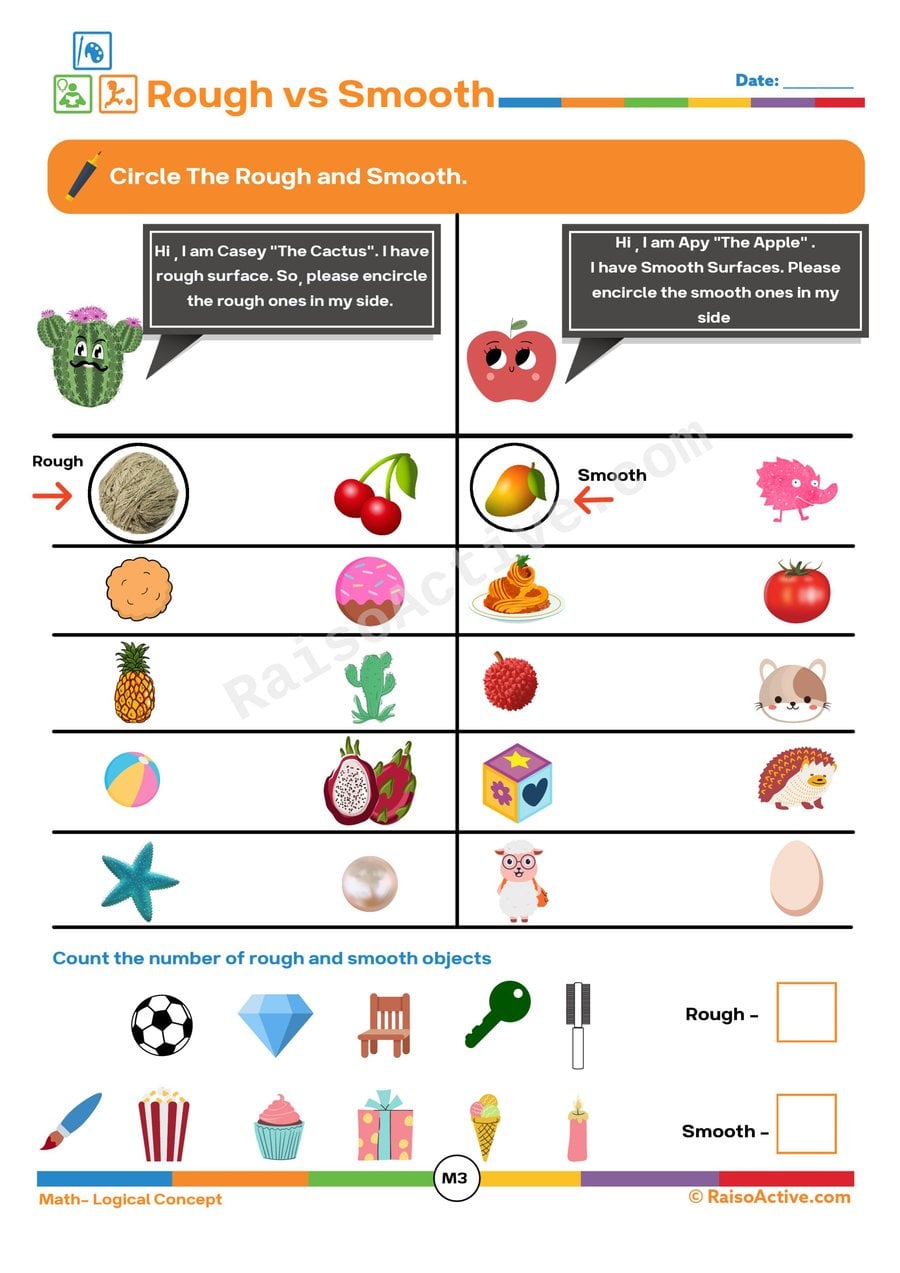
Rough vs. Smooth Worksheet: Circle and Count!
Preschoolers ages 3-5 build early scientific observation by identifying and comparing rough versus smooth textures among a set of pictured objects, engaging their sense of touch conceptually even through a visual worksheet. Counting the rough and smooth objects afterward links this sensory classification to basic number practice. Learning to sort by texture is an early step toward broader material-properties understanding in science.

Count the Sea Animals! A Fun Counting Worksheet for Kids
This worksheet has children ages 3-5 count different sea animals grouped in boxes and then identify the matching numeral for each group, strengthening one-to-one correspondence alongside early ocean and marine-life vocabulary. Because each box features a different sea creature, such as fish, crabs, or starfish, children also practice sorting attention between groups rather than counting one long continuous row. This variety keeps the counting task from becoming rote repetition.

Fast and Slow Sorting Worksheet for Preschoolers
This worksheet introduces the comparative concept of fast versus slow by having children sort pictures of animals, vehicles, or people into two categories based on speed. For three- to five-year-olds, sorting by a comparative quality like speed — rather than a fixed trait like color or shape — builds early reasoning skills, since children have to think about how something moves, not just what it looks like.

Pattern Power! What Comes Next? Worksheet for Preschoolers
This worksheet builds pattern recognition, an early algebraic thinking skill, as children ages 3-5 study a repeating sequence of shapes, letters, or numbers and figure out what belongs next. Spotting what repeats and predicting what comes after it trains logical reasoning and attention to detail that later transfers directly to math sequences and number patterns.
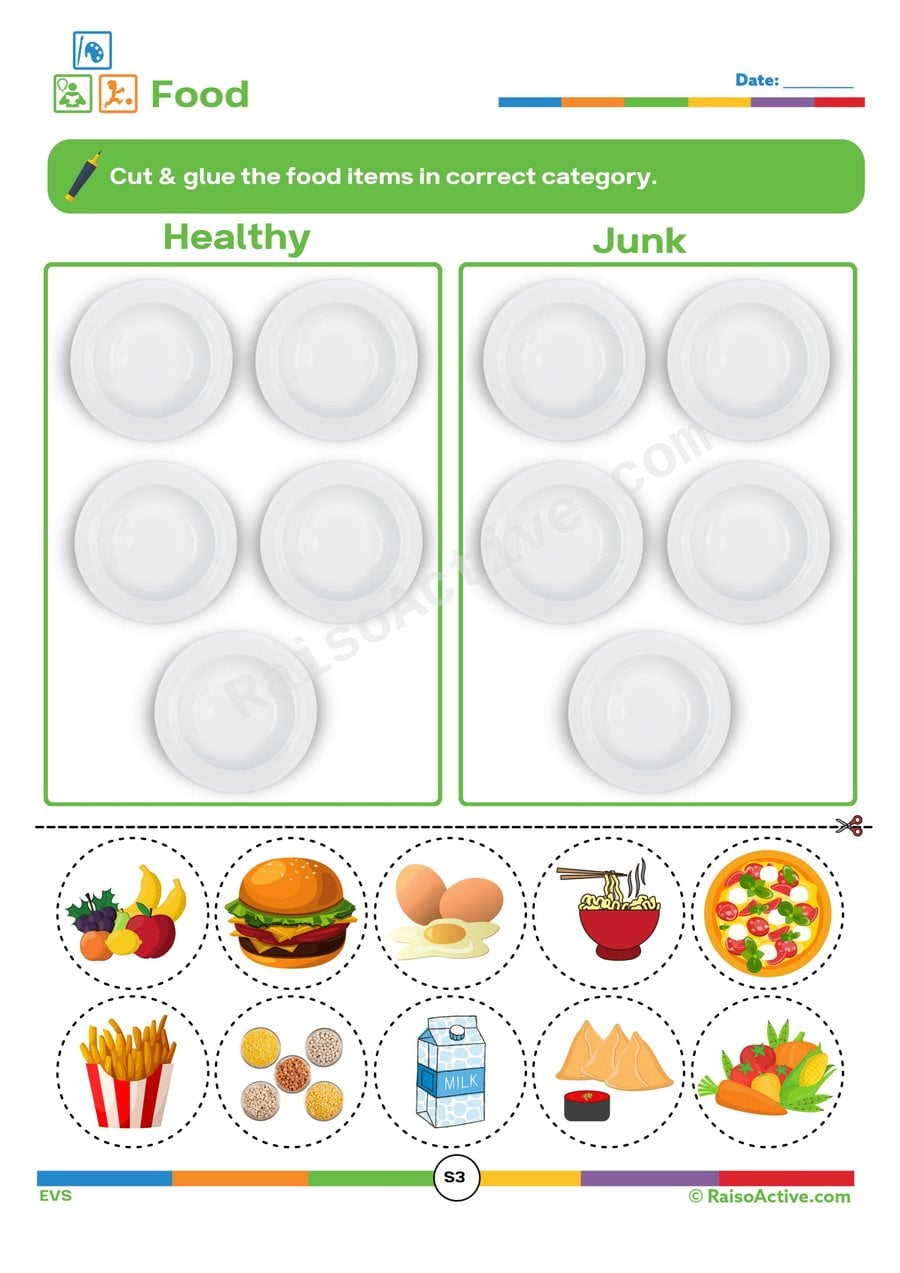
Healthy vs. Junk Food Sorting Worksheet for Kids
This worksheet asks children ages 3-5 to cut out pictures of different foods and sort them into 'Healthy' and 'Junk' categories, building early nutrition awareness alongside classification skills. Learning to categorize foods by type — rather than just naming them — introduces the idea that food choices matter for the body, a concept children will build on throughout their lives.
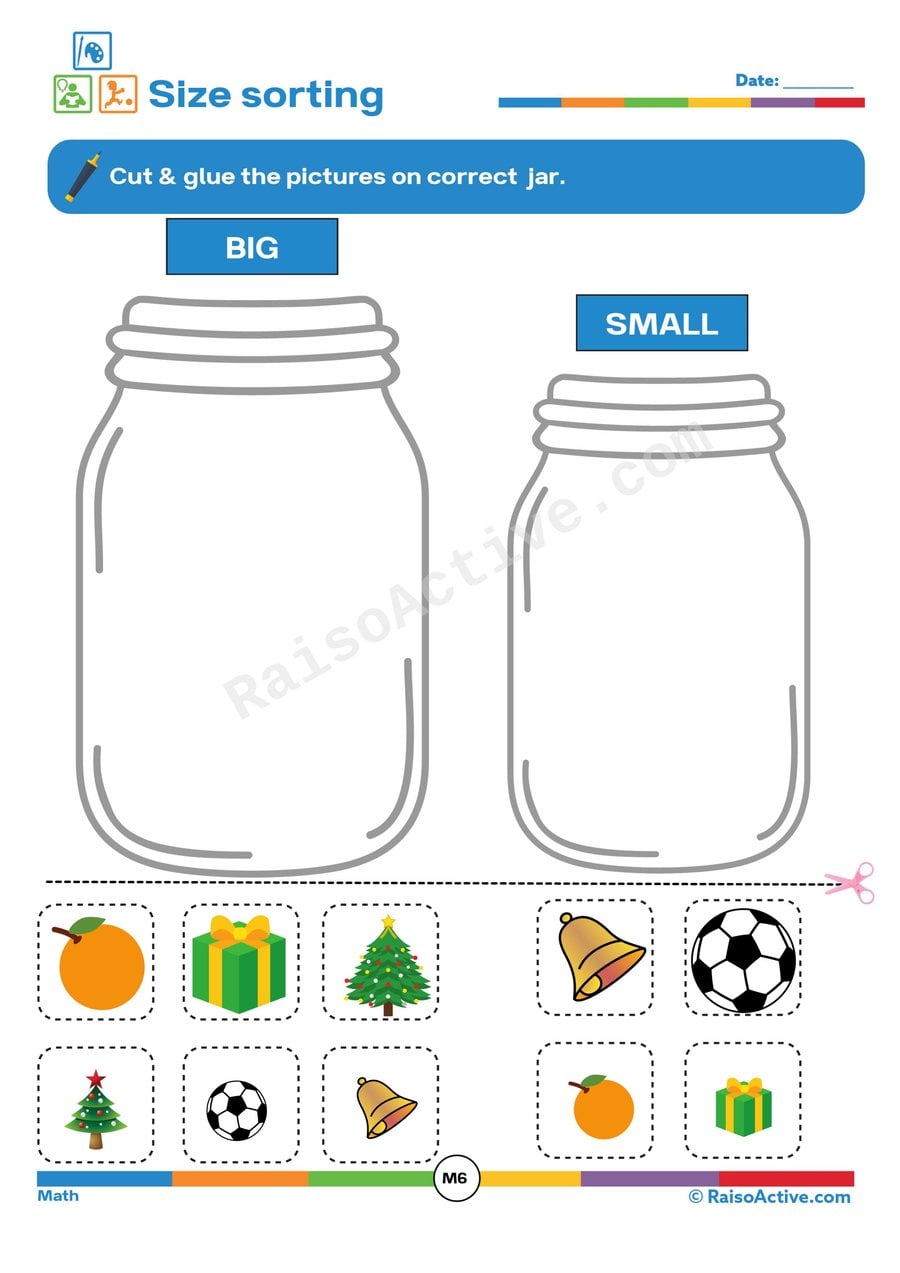
Size Sorting Worksheet: Big vs. Small!
Deciding whether a cut-out picture is big or small and gluing it into the correct jar builds comparative reasoning for children ages 3-5, an early step toward understanding relative size before moving into formal measurement.

Up and Down Worksheet: Counting and Writing Practice for Preschoolers
Children ages 3-5 combine spatial reasoning with counting practice by counting steps or elements going up and down, then writing the totals. Understanding 'up' and 'down' as directional concepts supports later skills like reading graphs, climbing stairs safely, and following spatial instructions. Writing the counted numbers afterward reinforces number formation alongside the counting itself.

Place Value Beads: Count and Fill the Numbers Worksheet
Counting beads on an abacus-style picture and writing the tens and ones totals teaches children ages 3-5 place value through a visual, hands-on representation rather than abstract numerals alone. Solving the final abacus total afterward reinforces that a two-digit number is really the sum of its tens and ones parts.

Counting Fun: Count and Write the Numbers Worksheet for Kids
This worksheet builds core numeracy for children ages 3-5 through the fundamental skill of one-to-one correspondence — counting a group of objects and writing the numeral that represents the total. This is one of the earliest and most essential math skills, since accurately connecting a counted quantity to a written number underlies every later arithmetic concept.

What Comes Next? Pattern Worksheet for Preschoolers
Identifying a repeating sequence of pictures and circling the one that comes next builds pattern-recognition and visual discrimination skills for children ages 3-5, an early form of logical reasoning that connects to later math concepts like skip counting and multiplication.
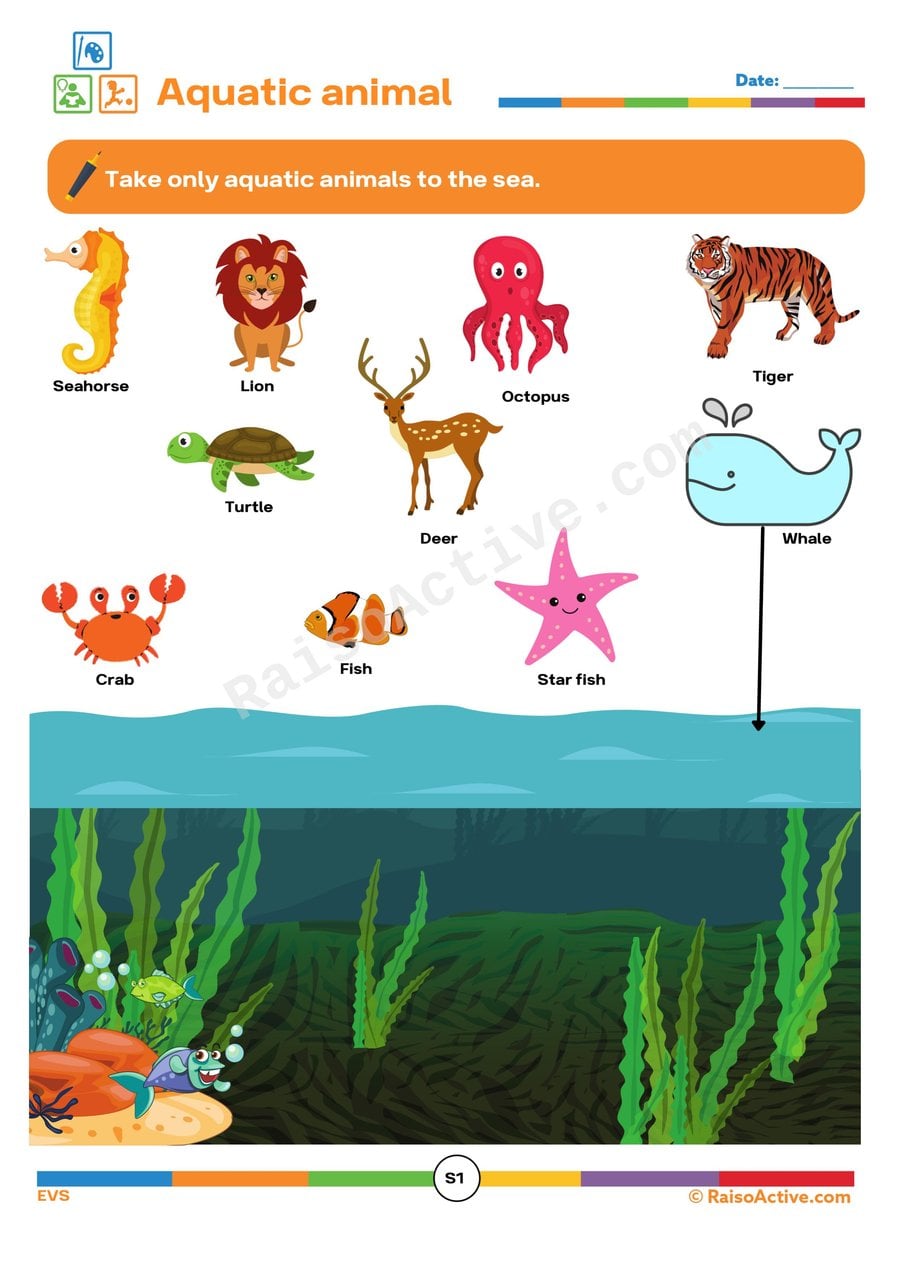
Aquatic Animals Worksheet: Sorting Sea Creatures!
Preschoolers ages 3-5 build early science classification skills by identifying which animals live in the sea and circling them from a mixed group of pictures. Sorting animals by habitat introduces the concept that living things are suited to specific environments, a foundational idea in life science. Following the clear instruction to circle only sea creatures also strengthens listening comprehension and visual discrimination.

Summer Counting Worksheet: Count and Color Summer Objects!
This worksheet has children ages 3-5 count summer objects arranged in separate boxes and write the matching number below each group, giving repeated practice at connecting a counted quantity to its written numeral across several small sets. Working through multiple separate boxes, rather than one long row, keeps each counting task short and manageable while still building the stamina to repeat the process several times in a row. This structure also helps children generalize the skill of counting and labeling rather than memorizing a single group's answer.
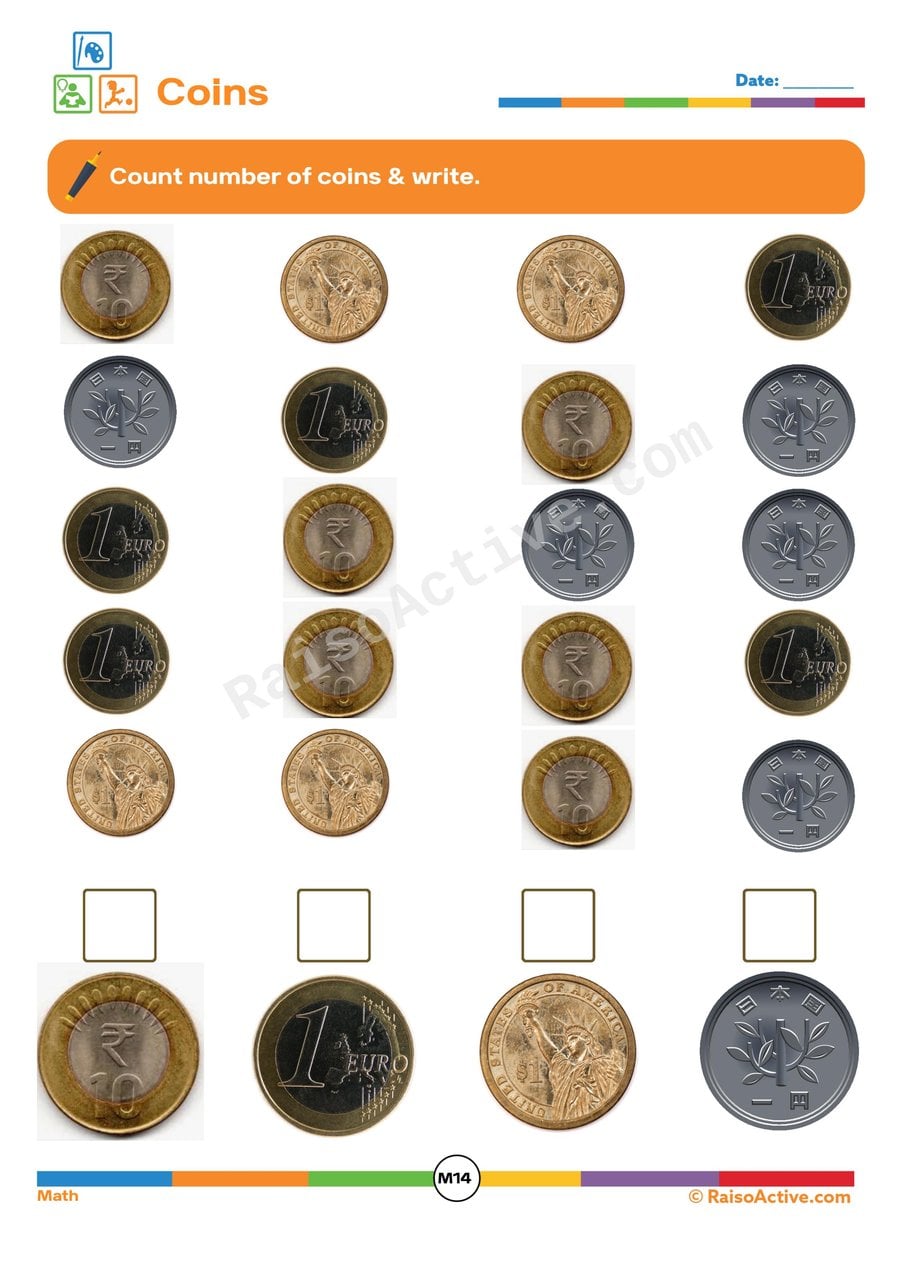
Coin Counting Worksheet for Preschoolers
Counting coins introduces children ages 3-5 to an early form of real-world numeracy, since recognizing different coin types by sight and counting how many of each appear builds both visual discrimination and one-to-one counting practice with a practical, everyday application. This worksheet keeps the task simple by having children count quantities of each coin type rather than calculating monetary value, which is developmentally appropriate for this age before formal money-math skills are introduced. It also plants the early seed of understanding that different coins look different and can be sorted by type.
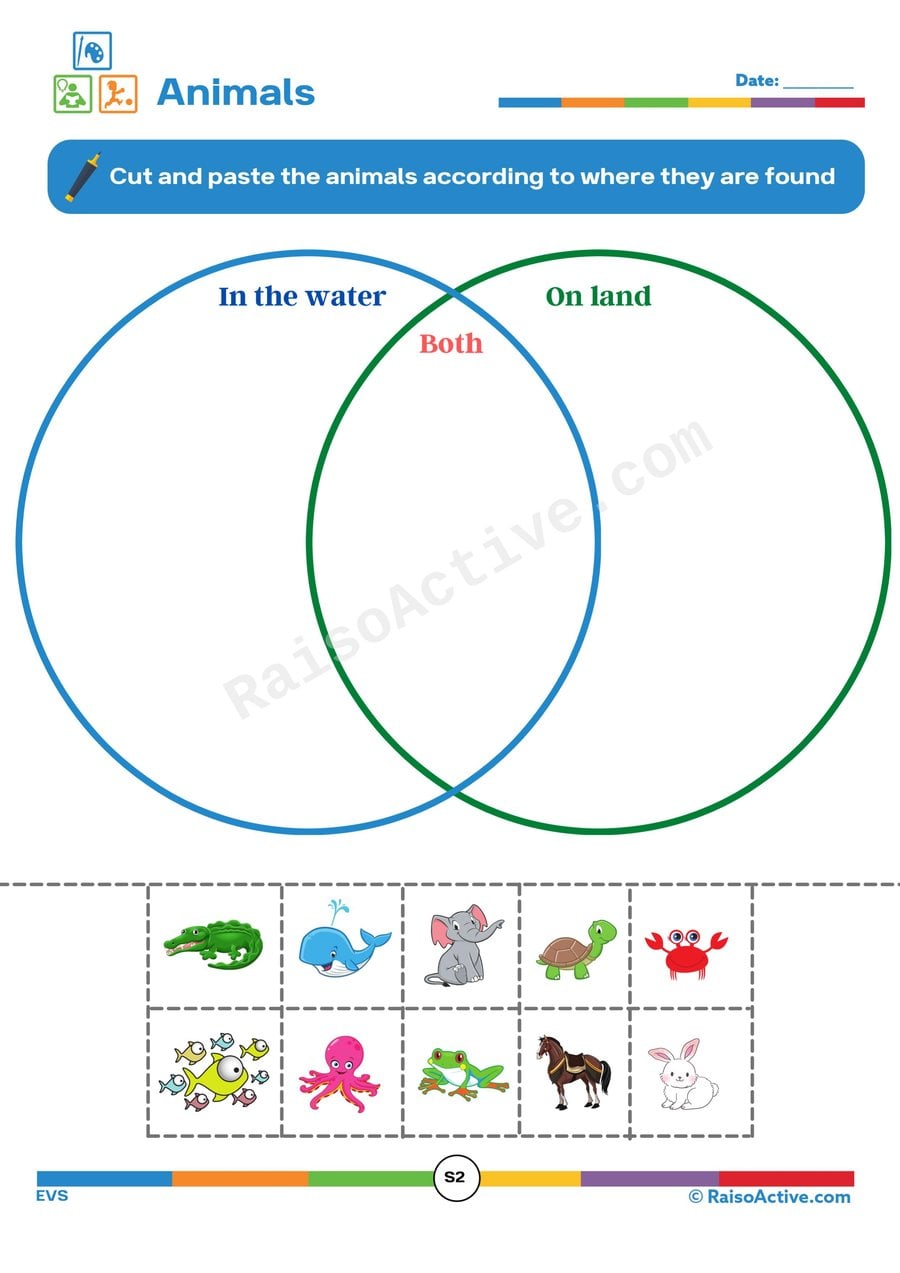
Animals: Sorting Worksheet for Preschoolers
This sorting worksheet has children ages 3-5 cut out animal pictures and paste each one into either a water or land habitat circle, building an early classification skill around where different animals naturally live. Sorting animals by habitat, rather than by type or size, introduces the idea that an animal's environment is a meaningful category on its own.

Front or Behind Sorting Worksheet for Preschoolers
Positional words like 'front' and 'behind' describe relationships between objects rather than the objects themselves, which makes them a genuinely trickier concept for a 3-5 year old than sorting by color or size. Deciding where each picture belongs and sorting it into the right box builds early spatial reasoning that later supports following multi-step directions and understanding maps or diagrams.
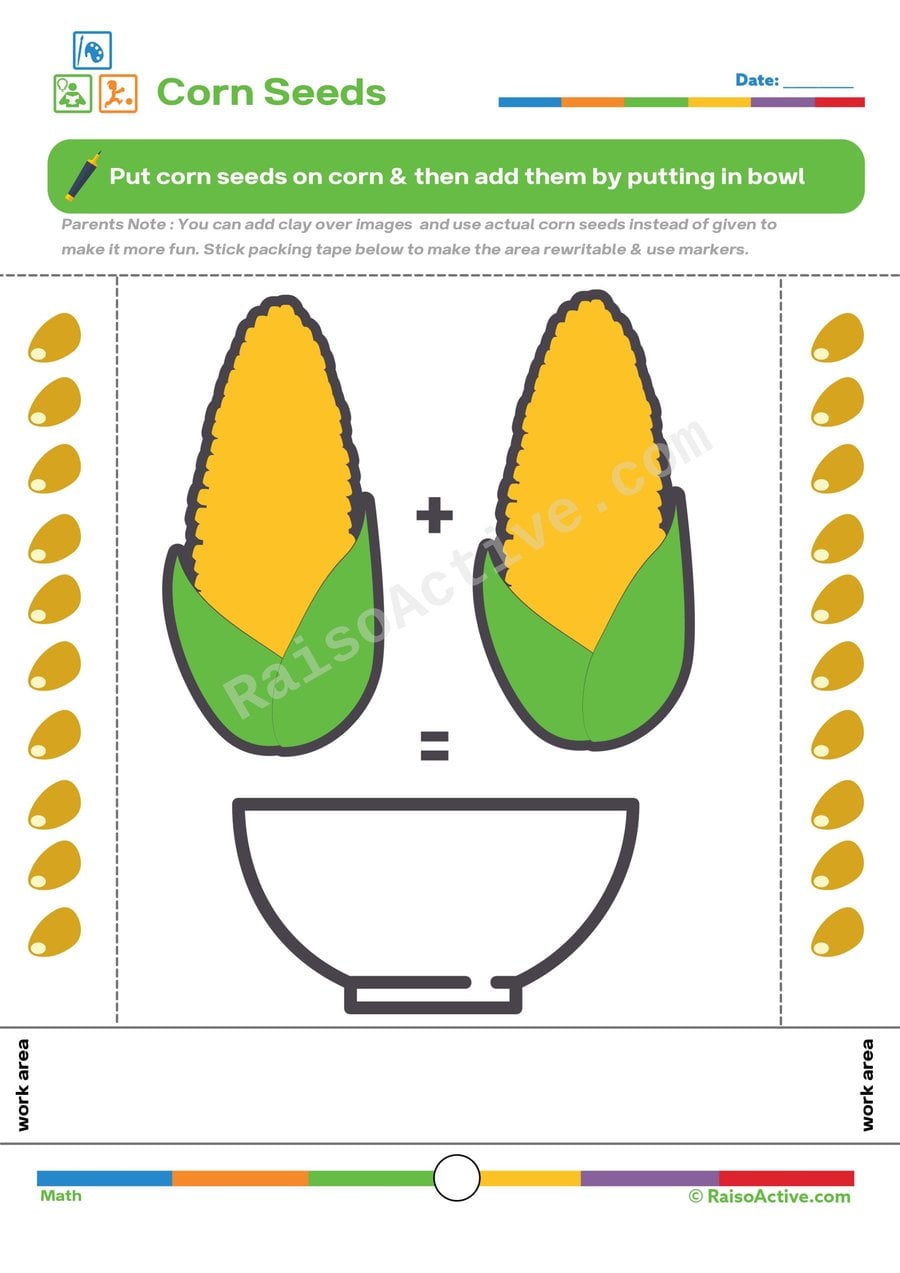
Corn Seed Addition Worksheet for Preschoolers
Counting corn seeds on two ears of corn and combining them into one total teaches children ages 3-5 the core concept of addition as joining groups together, using a concrete, countable image rather than abstract numerals alone. This worksheet also builds one-to-one correspondence, since accurate addition depends on touching or pointing to each seed exactly once while counting.
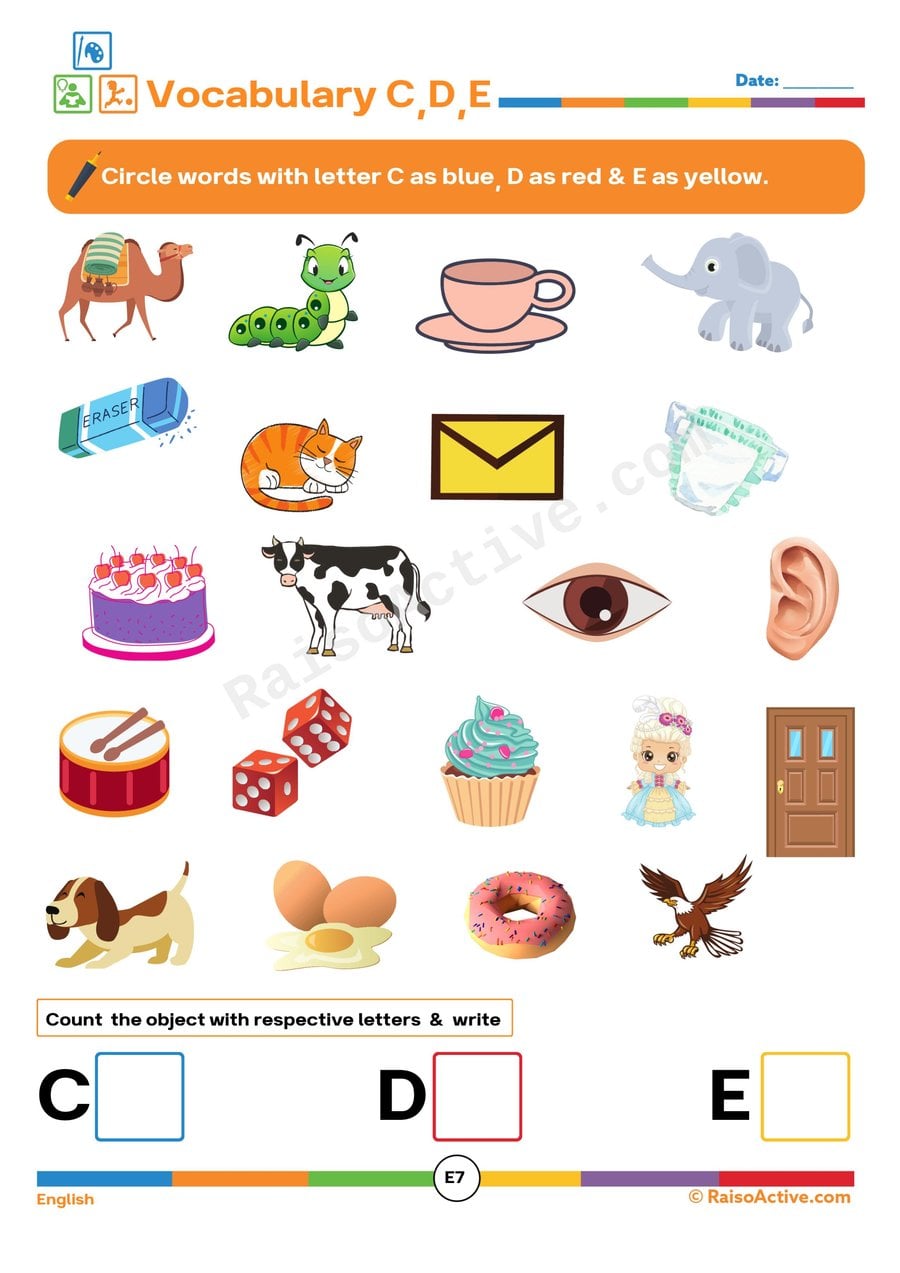
C, D, E Letter Sounds Worksheet: Circle and Count!
This activity gives children ages 3-5 focused practice recognizing the beginning sounds of the letters C, D, and E, asking them to circle matching pictures in different colors for each letter before counting the results. Combining phonics with counting means children practice two skills in one sitting: identifying initial letter sounds and recording a numeric total, both foundational for kindergarten readiness. Color-coding each letter also helps children visually organize the three sounds instead of mixing them together.
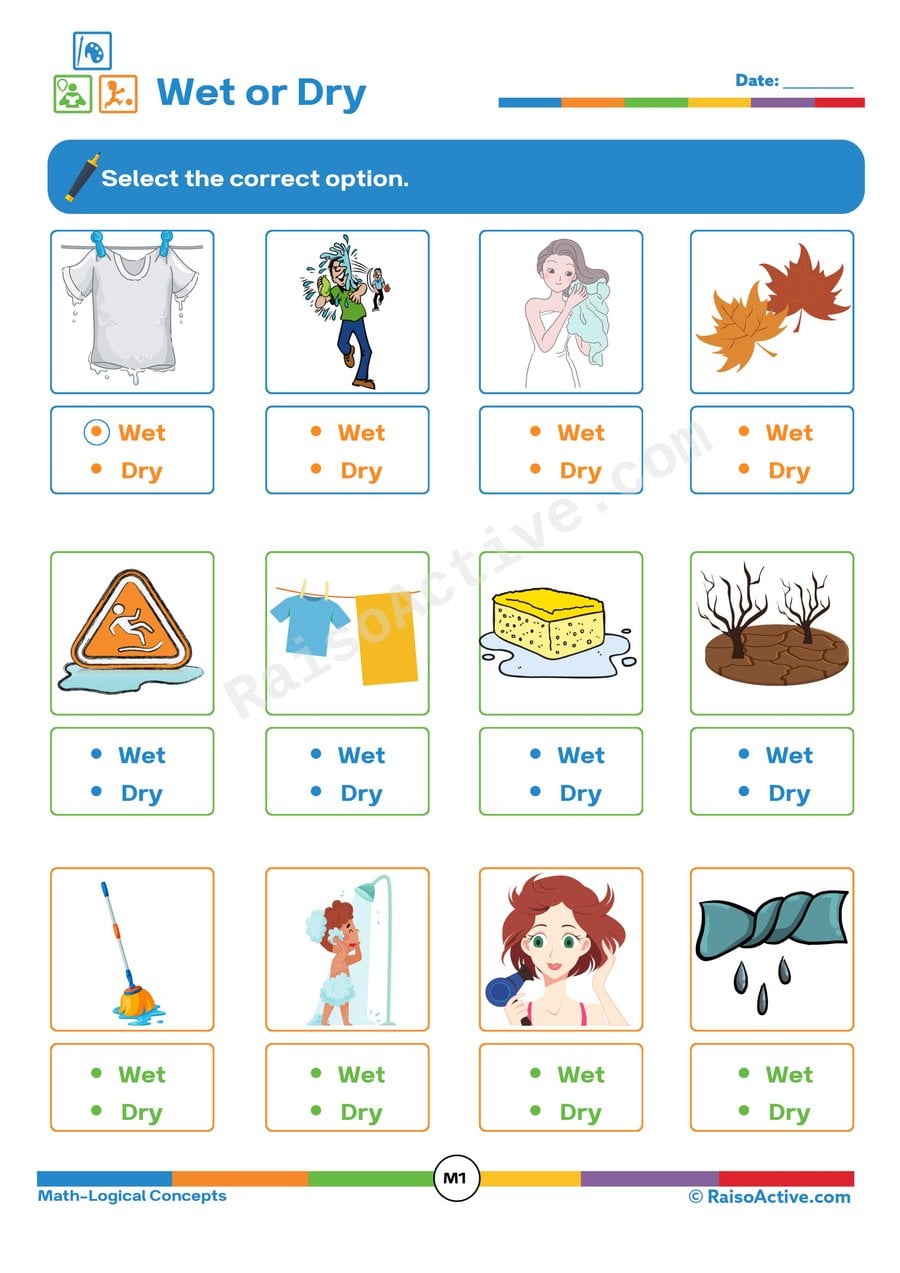
Wet or Dry Sorting Worksheet for Preschoolers
Sorting objects into 'wet' or 'dry' asks preschoolers to reach past the object's identity and notice a physical property instead — a step up from simply naming pictures. This is early scientific classification: your child has to observe a visual clue (a dripping umbrella, a puddle, a dry leaf) and reason about a quality that isn't always obvious from shape or color alone. Because some objects are genuinely tricky (a sponge can be either), the worksheet also opens the door to your child explaining their reasoning, which strengthens vocabulary around cause and state.
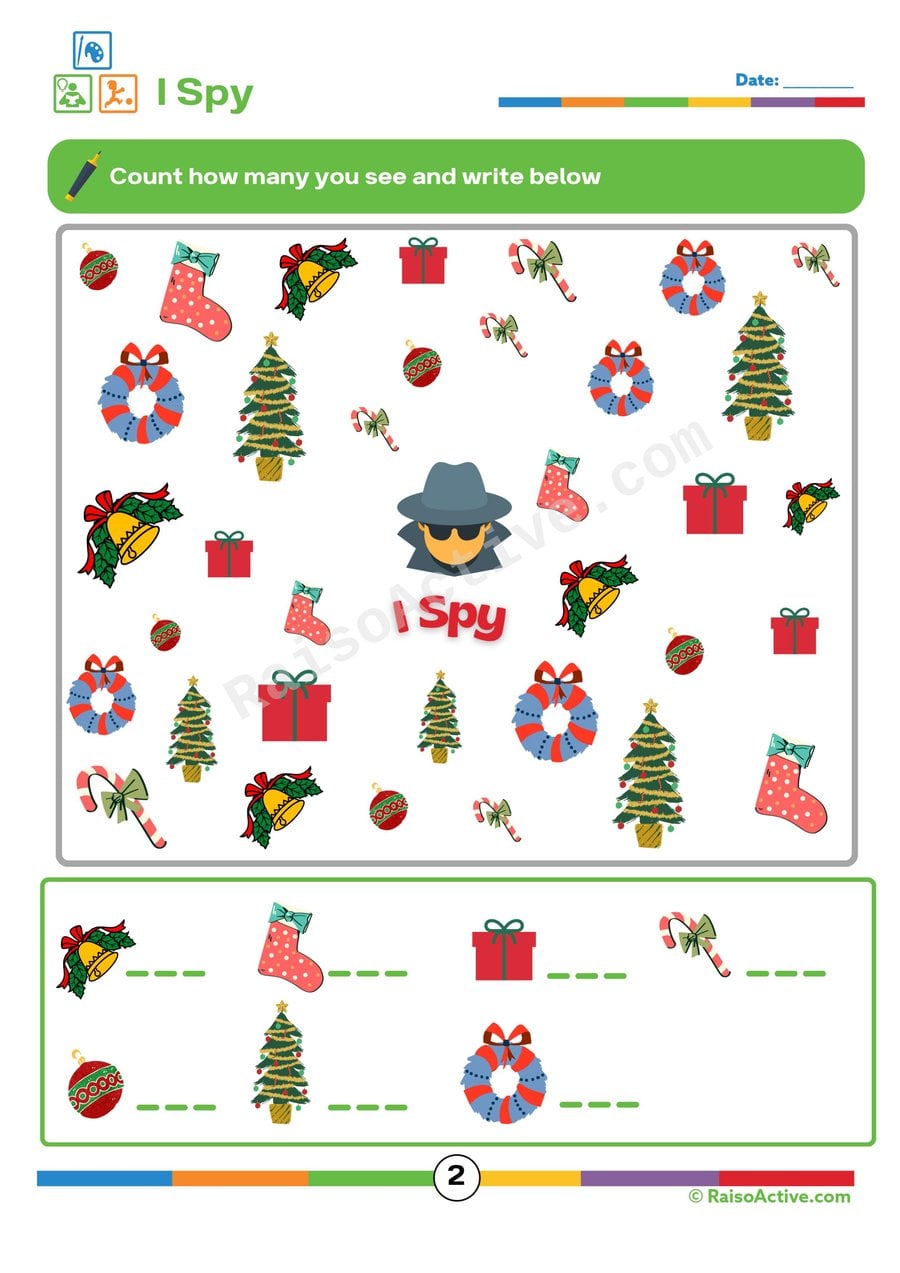
I Spy Christmas Worksheet: Count and Write!
This worksheet strengthens counting accuracy and number writing in children ages 3-5 as they search a busy Christmas scene for specific items and record how many they find. The 'I Spy' search format adds a visual scanning challenge on top of basic counting, since children must first locate every instance of an item scattered across the picture before counting it.
Practice Sheet for Kids: Blank Grid Worksheet
This open blank grid gives children ages 3-5 a flexible space to practice handwriting readiness, drawing, or early patterning, without a fixed correct answer to work toward. Because the grid can be used for letters, numbers, drawings, or patterns depending on what a child is currently learning, it builds the general pencil control and spatial awareness of staying within a defined square, a skill that transfers to nearly every future handwriting task. This flexibility also makes it a useful tool adults can return to repeatedly as a child's skills grow.

Many vs. Few: Object Counting Worksheet for Preschoolers
This worksheet builds early quantity comparison skills as children ages 3-5 look at groups of objects and decide whether each group shows 'many' or 'few.' Beyond simple counting, this task develops relative reasoning — understanding that quantity is judged by comparison, not just a fixed number — which lays groundwork for later concepts like greater than and less than. Circling the correct group also reinforces visual scanning and attention to detail.

Taller or Shorter? Comparing Heights Worksheet for Preschoolers
This worksheet builds early measurement vocabulary for children ages 3-5 as they compare the heights of pictured objects and people, circling the taller or shorter one as instructed. Beyond simple height comparison, the final section asks your child to identify both the tallest and smallest in a group, requiring them to compare more than two items at once, a step up in reasoning from simple pairwise comparison.
What EYFS maths worksheets cover
Three-year-olds count to 10 aloud, touch-count up to five objects reliably, and start to recognise the numerals 1 to 10 as symbols for those amounts. A worksheet set should cover counting pictures and circling the matching numeral, sorting by one attribute, copying and continuing a two-colour pattern, naming circle, square and triangle, and comparing big and small or more and fewer. Tracing 1 to 5 in thick dotted lines is fine; writing numerals unaided is not expected.
- Count up to 10 pictures and circle the matching numeral
- Point to the numeral an adult names, from 1 to 10
- Continue a red-blue-red-blue pattern of shapes
- Sort pictures by size or colour into two groups
- Name a circle, square and triangle by sight
How to use these worksheets at home or in class
Five to ten minutes at a table, with an adult alongside to talk through the sheet, is enough at any point in this stage. Use a worksheet to echo something already met through play that week rather than to introduce a brand new idea.
Start with the sheet that matches what your child can already do, then move one step up. Keep finished sheets in a folder: EYFS teachers often ask for evidence of practice, and children like seeing their own progress.
Is your child ready for EYFS maths work?
Look for a child who can make deliberate marks with a crayon, sit briefly at a table, follow a one-step spoken instruction and show curiosity about letters or numbers seen around the house or classroom.
- Count out 10 objects from a pile and write the numeral
- Compare two groups and circle the one with more
- Write numerals 0 to 10 in order
Frequently asked questions
Should a three-year-old be writing numbers?
Recognizing numerals is the target at three; writing them is not. Tracing 1 to 5 along thick dotted lines is reasonable if the child already holds a crayon with fingers rather than a fist, but the sheet is teaching the shape, not fluent writing. Time spent counting objects and matching a numeral to a quantity pays off more, and unaided numeral writing arrives naturally between four and five.
What should a EYFS child be able to do in maths?
Three-year-olds count to 10 aloud, touch-count up to five objects reliably, and start to recognise the numerals 1 to 10 as symbols for those amounts. A worksheet set should cover counting pictures and circling the matching numeral, sorting by one attribute, copying and continuing a two-colour pattern, naming circle, square and triangle, and comparing big and small or more and fewer. Tracing 1 to 5 in thick dotted lines is fine; writing numerals unaided is not expected. Look for a child who can make deliberate marks with a crayon, sit briefly at a table, follow a one-step spoken instruction and show curiosity about letters or numbers seen around the house or classroom.
Do these worksheets follow the EYFS curriculum?
The sheets cover number sense and counting, addition and subtraction, shapes and measurement and patterns and comparison, which sit inside the EYFS Early Learning Goals (Statutory Framework) outcomes for EYFS. Preschool and Pre-K (US), Nursery and LKG (India) use the same skills at this age, so the sheets also fit families following those programmes.
Are these EYFS maths worksheets free?
Yes. Each worksheet downloads free as a watermarked PDF once you create an account, with a limit of five a day. An annual membership ($20) removes the watermark and the limit for the whole library of over 1,000 worksheets and every printable pack.

Written by
Hemsweta Jain · Teacher Cheena
MBA and Early Childhood Educator, teaching since 2014 · Founder of RaisoActive, Mumbai
Written and reviewed by Hemsweta Jain (Teacher Cheena), who designs every RaisoActive worksheet.
Last reviewed
Printable packs for ages 3–5
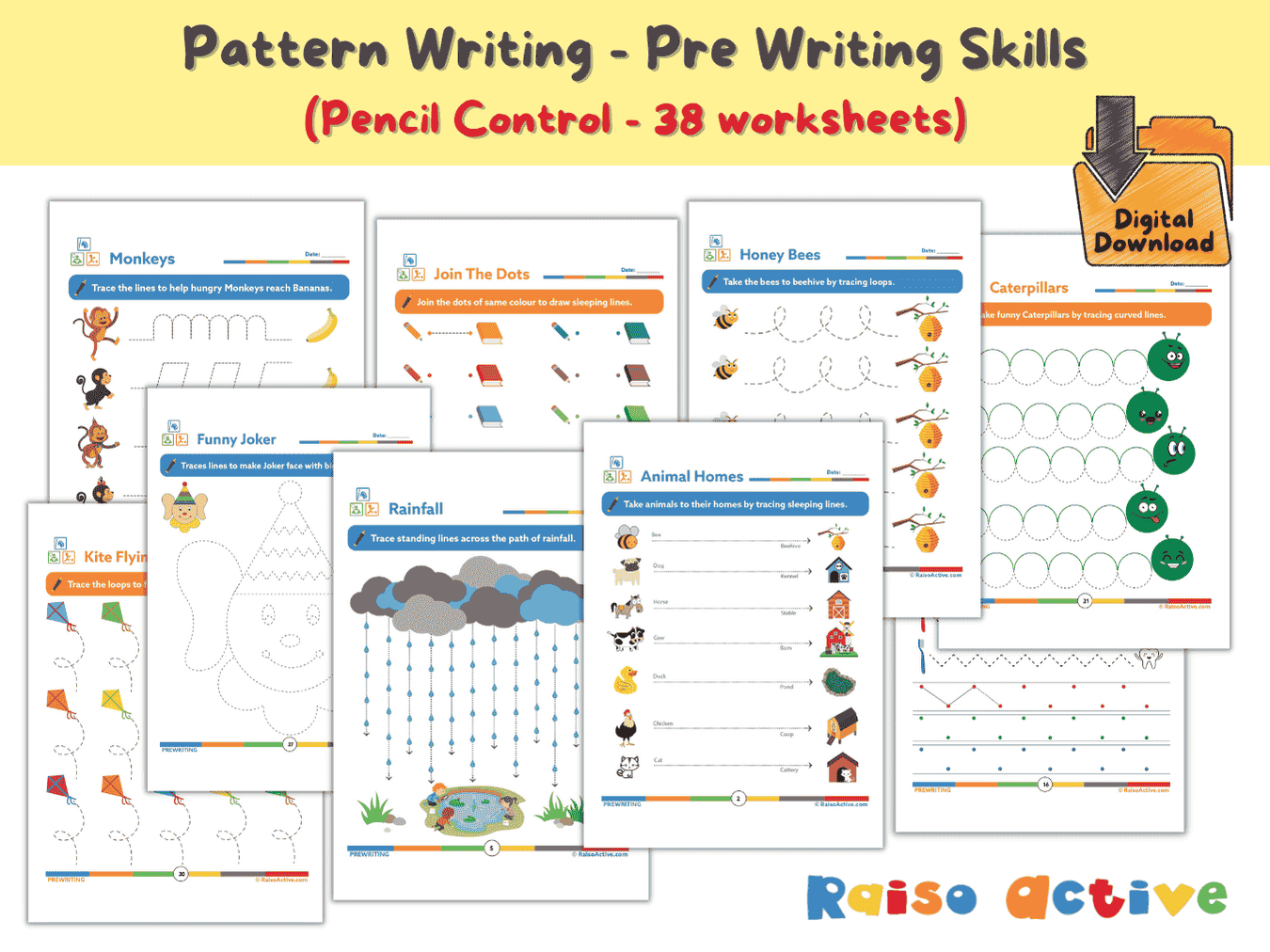
Pattern Writing Pre-writing Skills Activity Book for 3-4 Year Olds
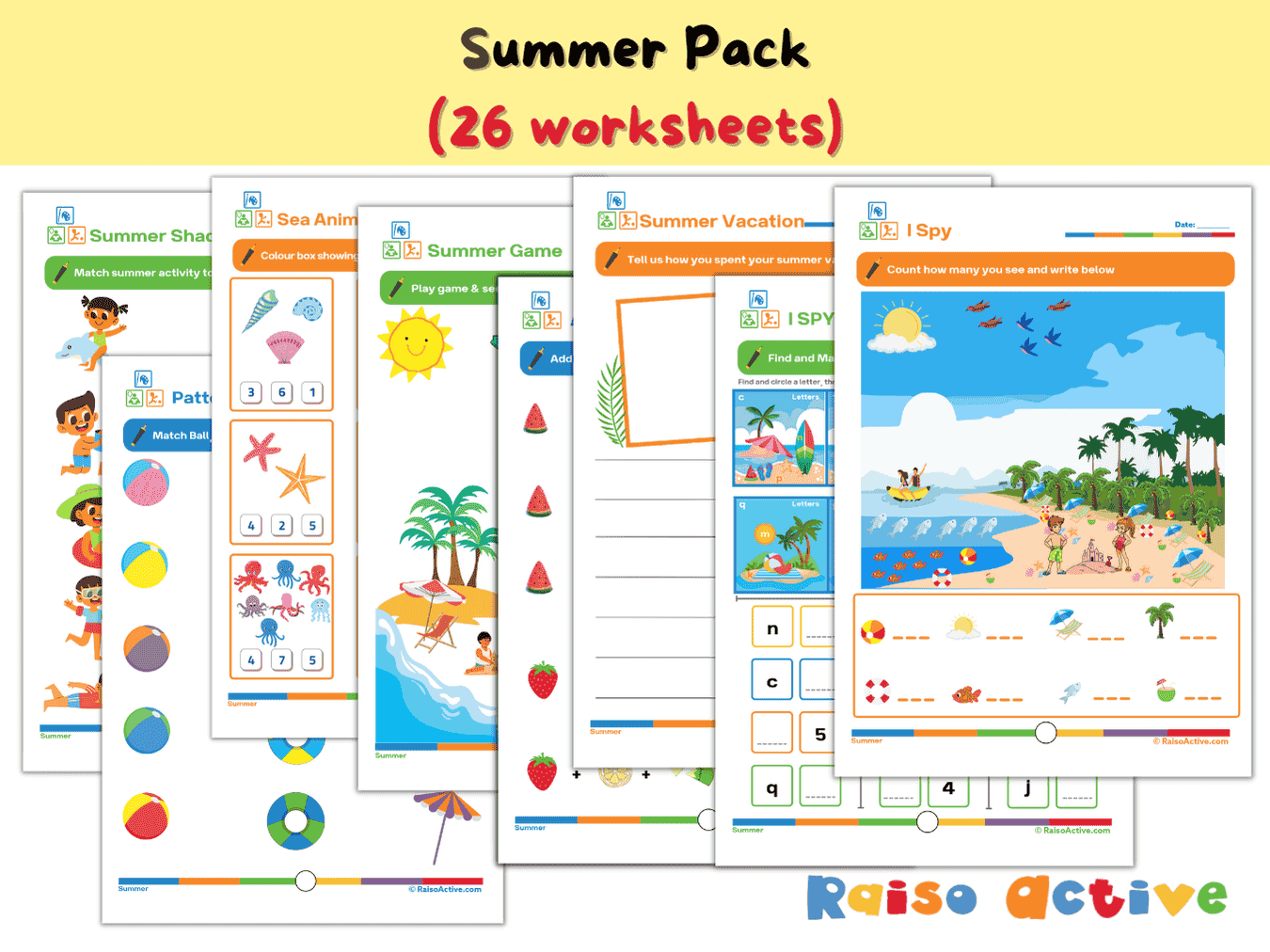
Summer Activity Pack: Math, Literacy, Puzzles & More for Preschool & Kindergarten
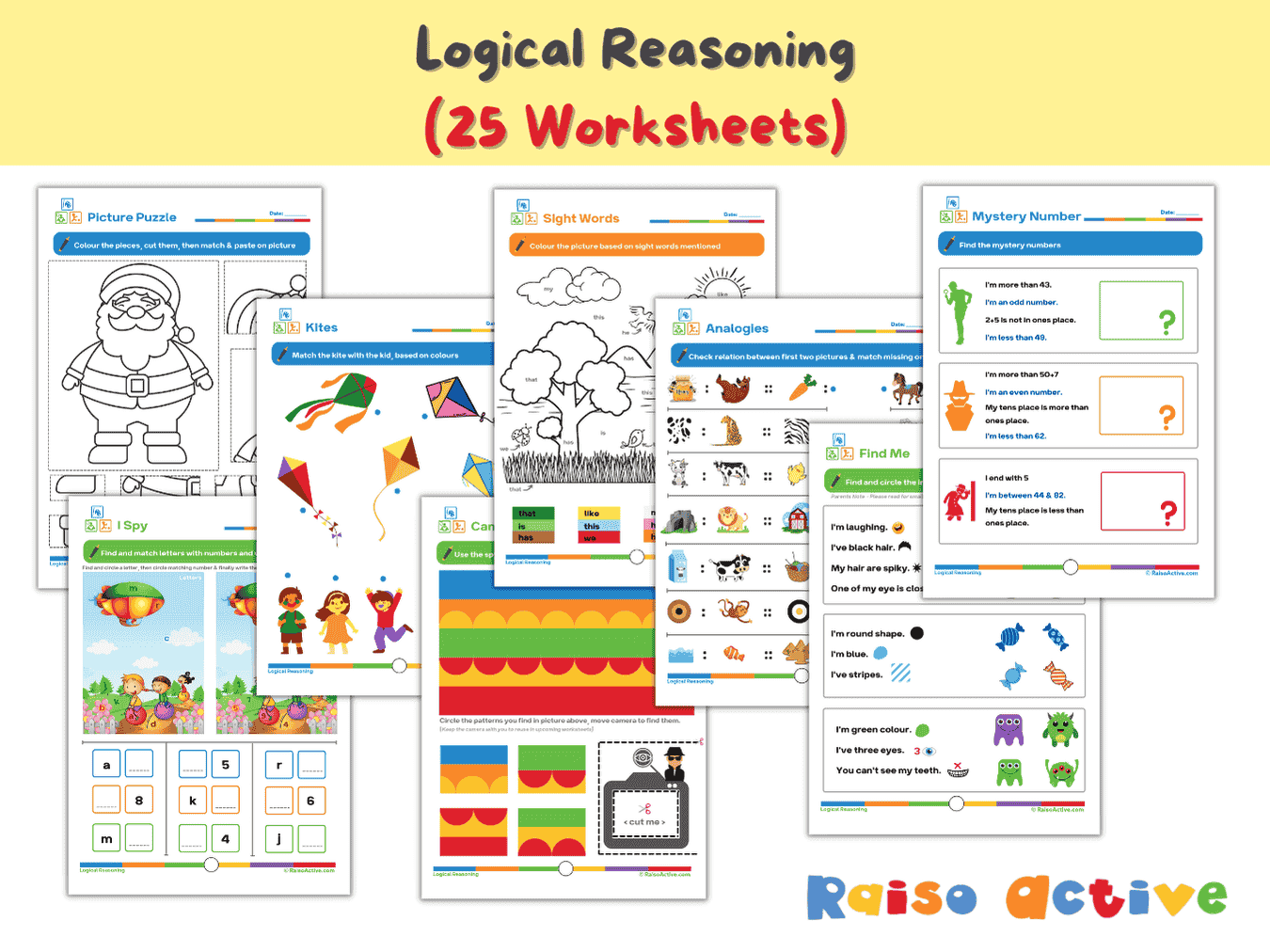
Logical Reasoning Activity Book for Preschool & Kindergarten | Patterns, Puzzles & Analogies
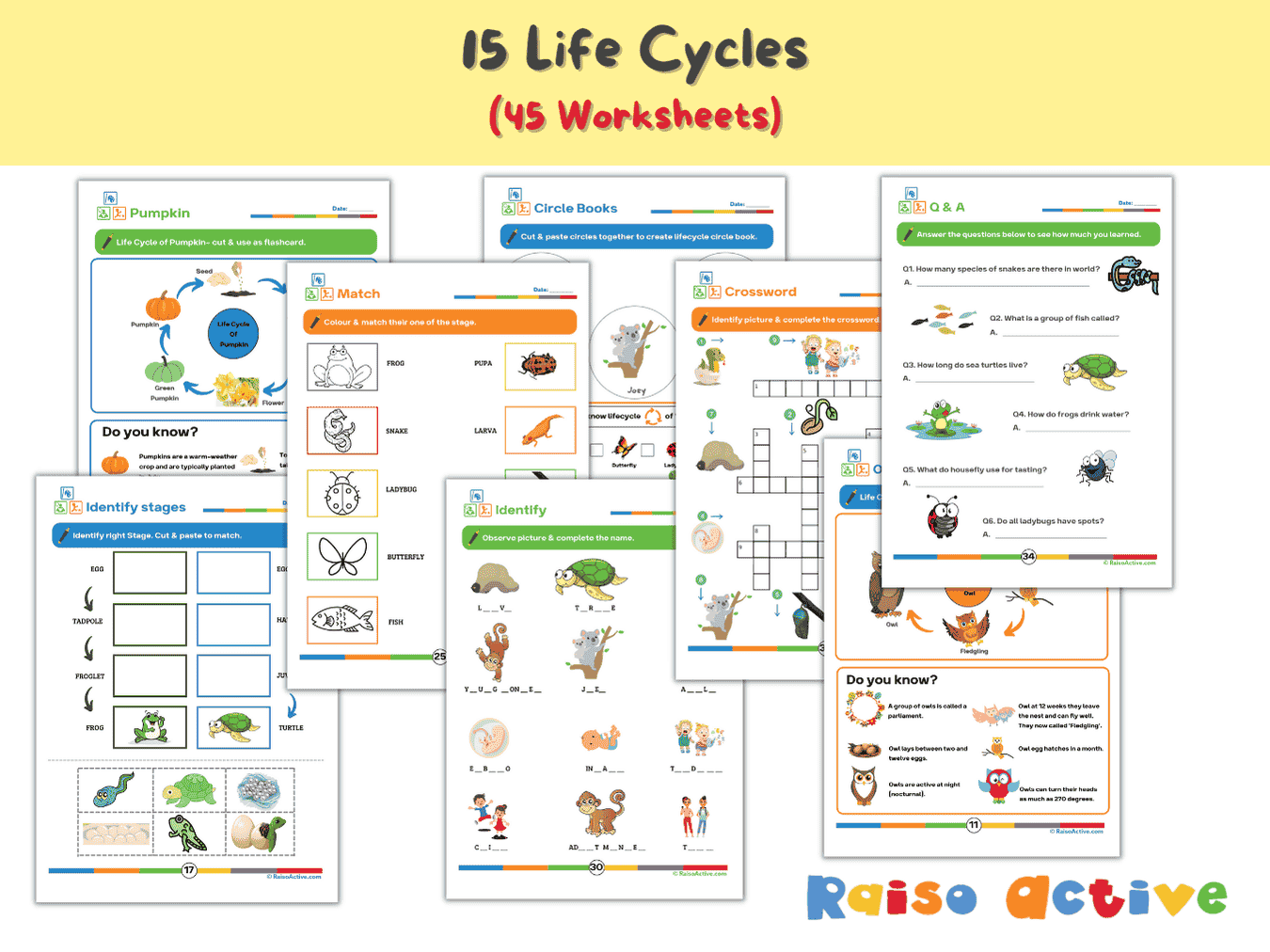
Lifecycles Activity Book & Flashcards for Preschool & Early Elementary
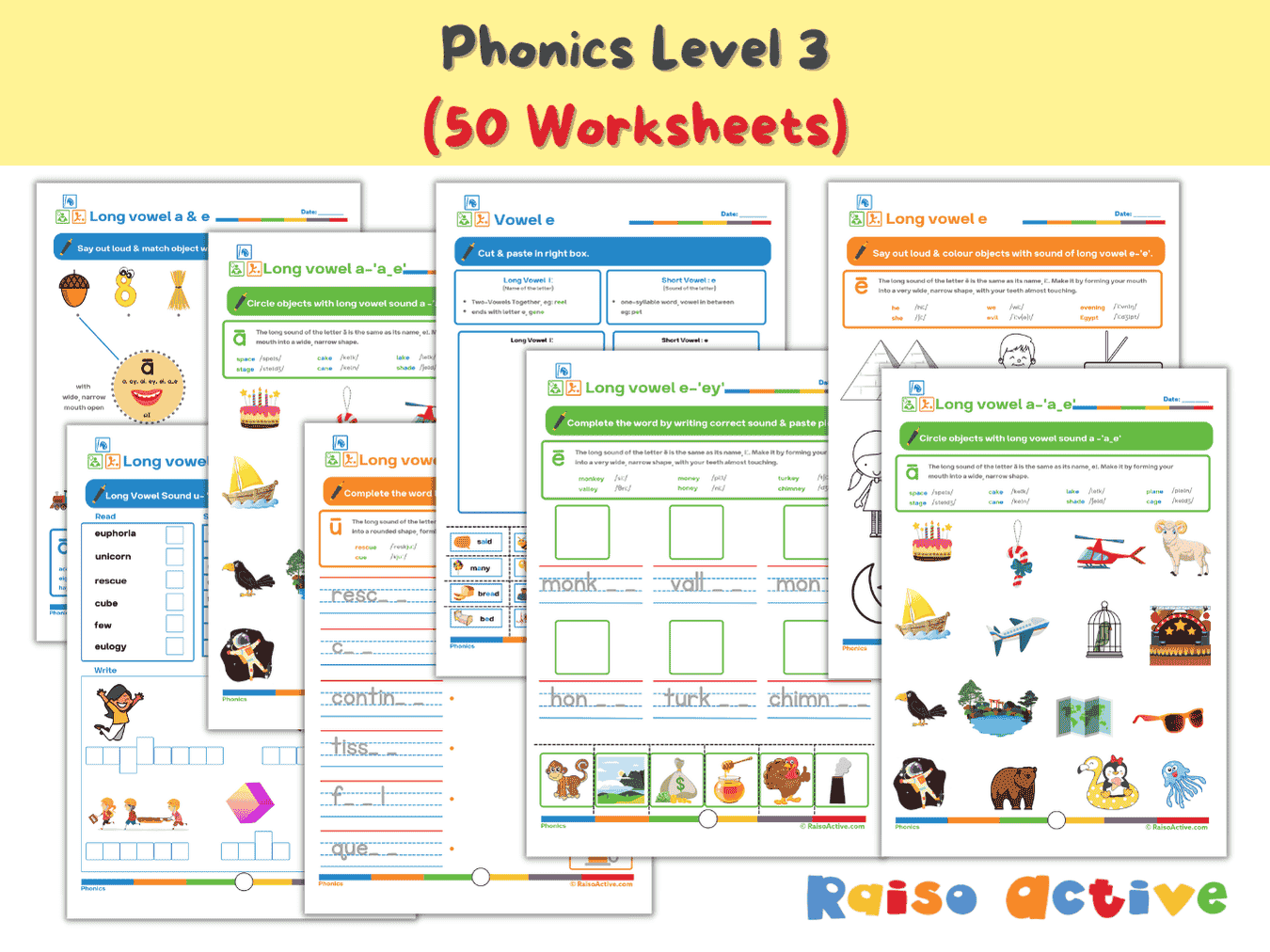
Phonics Level 3 Long Vowels Activity Book for Kindergarten & 1st Grade
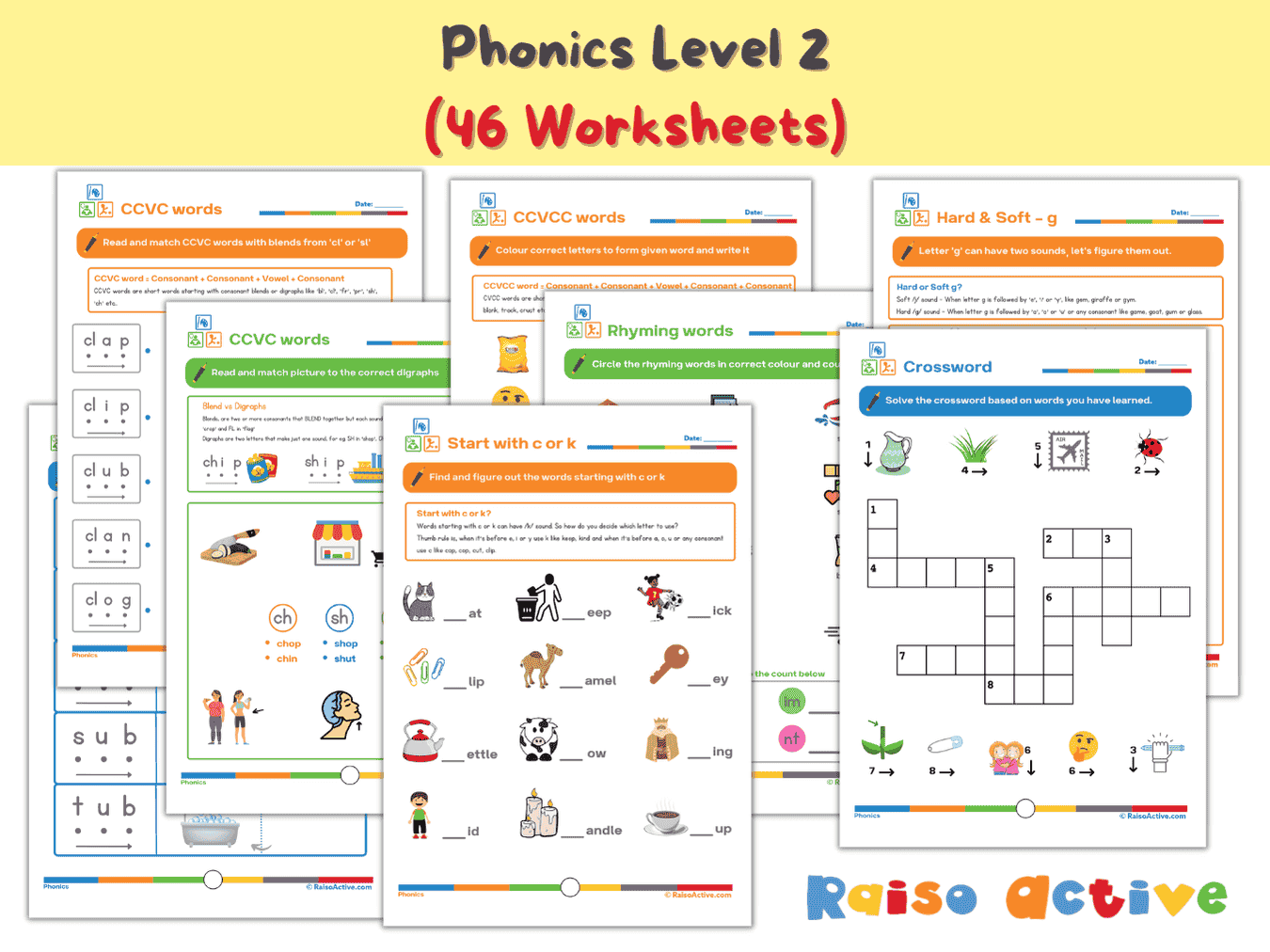
Phonics Level 2 Worksheets: CVC, CCVC, CVCC Word Families & Blends for Early Readers (Ages 4-7)
Guides for parents and teachers
See all guides →Number Formation Rhymes 0–9 and How to Fix Reversals
Original number formation rhymes for 0–9, the correct stroke order for each digit, why 3, 5 and 7 get reversed most often, and multisensory fixes that work.
UKG Syllabus Explained: English, Maths and EVS Month by Month
What UKG classes typically cover in English, maths and EVS, month by month, aligned to NEP 2020, with ways to support at home and signs your child is behind.
Christmas and Winter Activities That Combine Fun and Learning: Creating Magical Educational Experiences
Discover Christmas and winter activities that combine festive fun with real learning. Crafts, counting, literacy, and printable worksheets for ages 2 to 8 — perfect for home and school.
Age-Appropriate Halloween Learning Activities: Balancing Spooks and Skills for Young Learners
Discover fun, age-appropriate Halloween learning activities for young children. Spooky crafts, counting games, literacy ideas, and printable worksheets for ages 2 to 8.
The Power of Music: How Musical Activities Accelerate Learning Development in Young Children
Discover how musical activities accelerate brain development, phonics, maths, and emotional regulation in children ages 1–8. Practical tips for Indian homes and classrooms.
Is Khan Academy Kids Really Free? A Parent's Complete Guide to Costs, Features, and Hidden Fees
Confirmed: Khan Academy Kids has zero subscription fees, ads, or paywalls. See what's included, age-by-age tips, and offline use for Indian families.
Canonical: https://raisoactive.com/worksheets/eyfs-math