The Power of Music: How Musical Activities Accelerate Learning Development in Young Children
Author
RaisoActive - Kids Activities and Fun Learning
Published
Updated
Reading Time
19 min read

- Music activates more areas of the brain simultaneously than almost any other activity — making it one of the most powerful tools available for early childhood learning
- The reading-music connection is real: children who engage regularly with rhythm and rhyme develop stronger phonological awareness and learn to read earlier and more fluently
- Counting songs, clapping rhythms, and number chants are among the most effective ways to build early maths skills in children ages 1–6
- Indian classical music, folk songs, and familiar nursery rhymes are ready-made learning tools that are culturally rich and freely available in every home
- No instruments are needed — the human voice, hands, and household objects are enough to bring the power of music into your child's learning every single day
Why Music Is the Most Underused Learning Tool in Early Childhood
Think back to the last time you heard a song you had not heard since childhood. Within a few notes, the words came flooding back — every verse, every chorus, perfectly intact. That is not nostalgia. That is neuroscience. Music encodes information in the brain differently from ordinary language, weaving it into multiple memory systems at once so that it stays with us long after spoken facts have faded. Now imagine harnessing that same extraordinary retention power for the learning your young child is doing right now — for letters, numbers, concepts, and emotional skills that will shape their entire educational journey.
At RaisoActive, we see this every day in the questions and stories parents share with us. A three-year-old who struggled to remember the alphabet suddenly has it memorised after two weeks of singing it each morning. A five-year-old counts to twenty effortlessly in English using a counting rhyme she learned at playschool but struggles with the same sequence when it is presented as a written exercise. A six-year-old who finds sitting still for worksheets difficult becomes focused and calm during a music-and-movement session. Music is not a treat to offer after the real learning is done — for young children, music often is the most real, most effective learning that is happening.
In this guide, we explore the science behind music's impact on the developing brain, the specific connections between music and reading, maths, memory, and emotional wellbeing, and — most importantly — practical activities grounded in the Indian context that you can begin today, with no instruments, no specialist training, and no preparation beyond a willingness to sing.
Want music-and-learning activity sheets delivered to your inbox?
Subscribe and receive printable rhythm, phonics, and counting activities paired with songs and nursery rhymes — for children ages 1 to 8.
The Neuroscience of Music: What Happens in a Young Brain When the Music Plays
Neuroscientists sometimes call the brain's response to music a 'neural workout' — and the metaphor is apt. Functional MRI studies have shown that listening to and making music activates the auditory cortex, motor cortex, visual cortex, limbic system, and prefrontal cortex nearly simultaneously. No other single activity engages this many brain regions at once. For a child between the ages of one and eight, whose brain is in its most rapid period of development, this coordinated activation has profound consequences.
Research from neuroscientist Nina Kraus at Northwestern University found that children who participate in music programmes show measurably enhanced neural processing of sound — they are better at distinguishing subtle differences between similar sounds, tracking speech in noisy environments, and responding to the rhythmic patterns in language. These are not abstract benefits. They translate directly into stronger phonological awareness, faster reading development, and improved ability to follow classroom instruction. In practical terms: children who regularly engage with music are primed to become better readers and better listeners.
The structural changes are equally impressive. Studies using brain imaging have found that children who receive even short periods of musical training show measurable increases in the thickness of the corpus callosum — the bundle of nerve fibres connecting the left and right hemispheres. A thicker corpus callosum means faster, more efficient communication between the two sides of the brain, which supports skills as varied as reading comprehension, mathematical reasoning, and creative thinking. These changes are not reserved for children in formal music programmes. They have been observed in children who simply sing songs regularly with their caregivers.
Music and Reading: The Phonological Awareness Connection
Of all the ways music benefits learning, perhaps none is more directly practical than its impact on phonological awareness — the ability to hear and manipulate the sounds within words. Phonological awareness is the single strongest predictor of early reading success, more powerful than vocabulary, letter knowledge, or general intelligence. And music, it turns out, is one of the most effective ways to build it.
The link is not accidental. Nursery rhymes, songs, and chants are built on the same structures that make words readable: rhyme, alliteration, syllable division, and rhythm. When a child claps along to 'Ek Do Teen Char, Haathi Ghoda Paiki Var' or bounces to 'Humpty Dumpty,' they are not just having fun — they are learning to hear syllables, to notice rhyming pairs, and to segment words into their component sounds. These are the precise skills that a phonics programme then builds upon when formal reading instruction begins.
YouTube channels like ChuChu TV and Jack Hartmann have built enormous followings — tens of millions of subscribers between them — precisely because parents and teachers recognise this connection intuitively. ChuChu TV's phonics songs present letter sounds within catchy, repetitive musical contexts that children absorb eagerly. Jack Hartmann's 'Alphabet Workout' pairs each letter with a physical movement and a sound, creating a multi-sensory memory hook. When these video experiences are followed up with phonics worksheets — matching beginning sounds, tracing letters, building simple words — the combination of musical engagement and hands-on practice produces dramatically stronger outcomes than either approach alone.
Counting, Patterns, and Rhythm: How Music Builds Mathematical Thinking
Mathematics and music share deep structural roots. Both are built on patterns, sequences, ratios, and the precise measurement of time and space. It is no coincidence that many of the world's most accomplished mathematicians are also skilled musicians, or that mathematics education research consistently finds a correlation between musical engagement and numerical ability. For young children, the relationship is beautifully simple: music gives abstract numbers a physical, auditory reality.
Counting songs are the most obvious example. 'Ek Do Teen,' 'Ten Little Fingers,' 'Five Little Monkeys,' 'Count to 100' — these songs embed number sequences in melodic, rhythmic structures that make them far easier to memorise and recall than a spoken list. But the mathematical benefits go beyond simple counting. Clapping rhythms introduces the concept of equal intervals — the foundation of measurement. Call-and-response songs teach patterning — the foundation of algebra. Dividing a song into verses introduces the concept of grouping and multiplication. These connections are implicit for the child, experienced as fun and play, but they are building genuine mathematical intuition.
Jack Hartmann's skip-counting videos — counting by 2s, 5s, and 10s with body movements — have become staples in kindergarten classrooms around the world because they make an otherwise abstract concept tangible and joyful. In Indian homes, traditional folk songs and slokas often contain numerical sequences and rhythmic patterns that serve the same purpose beautifully. 'Pachhi Pachhi Paanch' and similar counting folk rhymes from various regional traditions are powerful early maths tools hiding in plain sight.
Music for Memory and Vocabulary: Singing Words Into the Brain
Ask any adult to recite the alphabet and they will almost certainly sing it, even silently in their head. Ask them to recall the multiplication table for seven and many will hum the tune of the 'seven times table song' they learned in primary school. Music transforms information that would otherwise require effortful memorisation into something that is recalled automatically, quickly, and with pleasure. For young children who are building vocabulary at a rate of several new words per day, music is an invaluable accelerant.
Songs introduce children to vocabulary they would rarely encounter in ordinary conversation — words like 'twinkle,' 'nimble,' 'merry,' and 'speckled' appear in nursery rhymes and songs long before they would appear in a child's reading books or daily speech. This rich vocabulary exposure, embedded in memorable musical contexts, builds the word knowledge that underpins reading comprehension in later years. Research from Stanford University has found that children from vocabulary-rich environments — which musical homes tend to be — have significantly larger vocabularies by the time they enter formal schooling, and these advantages compound across the school years.
In multilingual Indian homes, music plays an especially powerful role. A child who sings songs in Hindi, English, and their regional language simultaneously builds phonological awareness in multiple languages, deepening literacy potential across all of them. This is not a distraction from learning — it is an acceleration of it. Languages learned through music are retained with remarkable durability, and the cognitive flexibility required to navigate multiple languages is itself a powerful developmental advantage.
Music and Emotional Regulation: Calm, Connection, and Confidence
Young children are emotional beings. Their capacity for self-regulation — the ability to manage their own feelings, calm themselves when distressed, and sustain attention through difficulty — is still developing throughout the early childhood years. Music is one of the most powerful and accessible tools available for supporting this development. Lullabies have been used across every human culture throughout recorded history to calm distressed infants, and the science explains why: music directly modulates the stress response, reducing cortisol levels and activating the parasympathetic nervous system.
For older children, music provides a vocabulary for emotions that words alone often cannot supply. Songs about feeling sad, excited, angry, or scared give children a way to understand and name their emotional experiences. Group singing and music-making create powerful feelings of social connection and belonging — the sense of moving in synchrony with others, which choral singing, action songs, and circle games all provide, is deeply regulating for the nervous system. A child who struggles to settle for learning activities will often transition much more smoothly when a familiar song signals the start of the session.
In Indian educational tradition, this wisdom runs deep. The use of slokas and chants to begin the school day, the singing of the national anthem, the bhajans sung at morning assembly — all of these are instinctively understood as practices that settle the mind, create community, and prepare children for learning. Modern educational neuroscience confirms what Indian educational culture has long practised: beginning a learning session with group singing or rhythmic chanting measurably improves attention, reduces anxiety, and creates the psychological safety that effective learning requires.
Music builds the phonological awareness foundation that all reading and writing skills rest on — it is not a supplement to literacy learning, it is a cornerstone of it.
Children who regularly engage with songs, rhymes, and rhythm show measurably stronger phonological awareness — the ability to hear and manipulate sounds in words — which is the single strongest predictor of reading success. Starting musical engagement in infancy and maintaining it through the early school years gives children a powerful literacy advantage.
You do not need instruments, training, or a subscription — the most powerful musical learning tools are your voice, your hands, and the folk songs and nursery rhymes you already know.
Research consistently shows that caregiver-child singing — even from adults who consider themselves poor singers — produces the same developmental benefits as formal music instruction. The warmth, repetition, and physical presence in an informal singing interaction are what drive the learning, not acoustic quality or technical skill.
Indian classical music, folk songs, and regional nursery rhymes are extraordinary early learning tools that are culturally resonant, freely available, and deeply beneficial for young children.
The rhythmic complexity of Indian classical music — tala systems, intricate patterns, call-and-response structures — provides rich exposure to mathematical concepts through play. Regional folk songs offer vocabulary, phonological awareness, and cultural connection simultaneously. These are not alternatives to 'educational' content; they are among the most educationally rich content available to Indian families.
- Body percussion: teach your child to clap, snap, stomp, and pat their knees in rhythmic patterns — start simple (clap-clap-stomp) and build complexity as they grow
- Kitchen orchestra: fill steel dabbas with dried dal or rice for shakers, use upturned pots as drums, and tap spoons on glasses with different water levels to explore pitch
- Singing conversations: instead of speaking a question or instruction, sing it to any tune that comes naturally — children find this irresistible and it builds musical awareness naturally
- Action rhyme time: choose three or four favourite action songs and sing them as a daily routine — before lunch, before nap, or at bathtime — the repetition deepens both musical and linguistic learning
- Freeze dance: play any music and dance freely; when it stops, freeze! This builds listening attention, body awareness, and self-regulation — and children absolutely love it
- Teach 'Ek Do Teen Char Paanch' and regional counting songs before introducing written number sequences — the musical foundation makes the abstract symbols far easier to grasp
- Use raga-based morning music (like Raag Bhairav) as a calm, focused background during quiet activity time — research on the 'Mozart effect' applies to any structured tonal music
- Folk songs like 'Chanda Mama Door Ke,' 'Machli Jal Ki Rani Hai,' and 'Lakdi Ki Kathi' are filled with rich vocabulary, imagery, and rhythmic structures that build language beautifully
- Introduce simple tala clapping (like teen taal or dadra) as a hands-on maths lesson in pattern, grouping, and rhythm — children find the physical clapping deeply satisfying
- Regional lullabies in the child's mother tongue build the deepest phonological awareness of all — do not underestimate the learning power of a familiar lullaby sung at bedtime
- ChuChu TV's phonics songs work best when followed immediately by a hands-on activity — after watching 'A for Apple,' trace the letter A or find objects in the house that start with A
- Jack Hartmann's counting and skip-counting videos are ideal pre-worksheet warm-ups — watch the video first, then bring out the corresponding number worksheet while the song is still fresh
- Set a clear screen-time boundary: one or two videos, then the screen goes off and the hands-on activity begins — the transition from screen to worksheet is where the deepest learning happens
- Create a 'music playlist' of three to five educational songs for the week's focus topic and cycle through them across multiple days — repetition is essential for young learners
Neuroscientific research has found that making music activates auditory, motor, visual, emotional, and executive function brain regions simultaneously — far more than any other single activity. For children in the critical window of brain development (ages 1–8), this broad activation accelerates the formation of neural connections that underpin all future learning.
Source: Nina Kraus, Brainvolts Auditory Neuroscience Laboratory, Northwestern University
A landmark longitudinal study found that children who received regular musical engagement in the early years entered formal schooling with phonological awareness skills equivalent to children two years older who had not received musical engagement. These advantages in sound discrimination and rhythm perception translated directly into faster, more confident early reading.
Source: Anvari et al., Journal of Experimental Child Psychology
A Complete Music-and-Learning Session for Children Ages 2–6
Open with a greeting song (2–3 minutes)
Begin every session with the same simple greeting song — something as straightforward as 'Hello, hello, how are you today?' sung to a simple tune. This signals to your child's brain that learning time is beginning, creates a sense of ritual and safety, and builds the musical memory that makes subsequent activities easier. Consistency across sessions matters more than the quality of the song.
Action song for the day's concept (5 minutes)
Choose a song that connects to what you want to teach — a counting song if you are working on numbers, an alphabet song for letters, a body parts song for vocabulary. Add physical actions: point, clap, jump, spin, touch. The combination of movement and music engages the motor cortex alongside the auditory cortex, creating stronger, more durable memory traces than either alone.
Repeat with variations (3–4 minutes)
Sing the same song again, but change one element: sing it faster or slower, sing it loudly then in a whisper, leave out a word and let your child fill in the gap. These variations build active listening, predict-and-confirm thinking, and add playful challenge. Singing 'Twinkle twinkle little ___' and waiting for your child to call out 'star!' is a simple but powerful comprehension and phonological activity.
Hands-on activity based on the song (5–8 minutes)
Move directly to a hands-on activity that extends the song's content. After a counting song, count real objects — seeds, buttons, small toys. After an alphabet song, trace the featured letter in a tray of rice or on paper. After a body parts song, draw and label a simple body outline together. This is where the musical learning is consolidated into lasting knowledge.
Free musical play (5 minutes)
Give your child some 'instruments' — a shaker, a drum, spoons — and let them explore freely while you play background music. Free musical play builds creativity, agency, and confidence. It also allows children to process and internalise what they have learned in the structured parts of the session without direct instruction.
Worksheet or drawing activity (5–8 minutes)
Bring in a printed worksheet or simple drawing activity related to the day's concept. After a rhythm-and-counting session, a number tracing or counting worksheet feels like a natural extension rather than a chore. After a phonics song, a beginning-sounds matching worksheet consolidates the audio learning in a visual and motor format. Always frame this as 'let's remember what we sang' rather than 'now it's time for work.'
Close with a goodbye song (1–2 minutes)
End every session the same way — with a brief, cheerful closing song. 'Goodbye, goodbye, we had fun today' sung simply signals that the session is ending on a positive note. This closing ritual helps children regulate the transition out of learning time and creates a satisfying sense of completion that makes them more likely to be enthusiastic about the next session.
- +Concepts encoded in multiple memory systems (auditory, motor, emotional) simultaneously
- +High engagement even for reluctant or fidgety learners
- +Phonological awareness built naturally through rhyme and rhythm
- +Emotional regulation supported by the calming or energising effect of music
- +Cultural connection through Indian folk songs and regional nursery rhymes
- +Learning feels like play — children ask to repeat the activity
- -Concepts encoded primarily in verbal-linguistic memory — more easily forgotten
- -Can feel like 'work,' especially for kinaesthetic or auditory learners
- -Phonological awareness must be built through separate, explicit instruction
- -No inherent emotional regulation benefit
- -Can feel disconnected from cultural and family context
- -May create resistance in young children who are not yet ready for seated tasks
Get Music-Paired Learning Activities Every Week
Subscribe to the RaisoActive newsletter and receive a curated set of printable worksheets and activity ideas paired with songs, nursery rhymes, and rhythm activities — designed for Indian children ages 1 to 8.
Frequently Asked Questions About Music and Learning in Early Childhood
My child is not musically talented. Will music activities still help their learning?
At what age should I start using music for learning?
How do ChuChu TV and Jack Hartmann videos fit into a music-for-learning approach?
Should I use Indian music or English music for learning? My child is learning both languages.
How much time should we spend on music activities each day?
My child loves music but struggles with sitting still for worksheets. How do I connect the two?
Free worksheets for this topic
Browse all worksheets
Treat Count Picture Graph: Halloween Data Handling Worksheet
Ages 4-8 · Pre-K–Grade 2Ages 4-8 · Reception–Year 3Ages 4-8 · LKG–Class 2Ages 4-8
Children count five kinds of Halloween treats, record them as a picture graph and read it to compare amounts.

Pumpkin Patch Maze, Seek and Count and Odd One Out Worksheet
Ages 4-8 · Pre-K–Grade 2Ages 4-8 · Reception–Year 3Ages 4-8 · LKG–Class 2Ages 4-8
Children plan a route through a maze, count small pictures and spot which picture does not belong in a row.
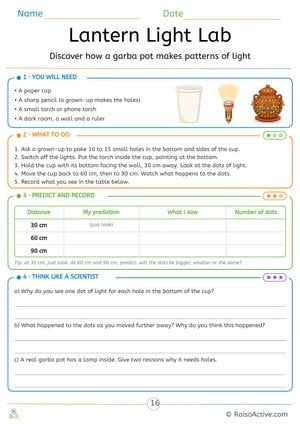
Lantern Light Lab: Navratri Garba Pot Light Experiment
Ages 7-11 · Grade 2–Grade 3Ages 7-11 · Year 3–Year 4Ages 7-11 · Class 2–Class 3Ages 7-11
Children make holes in a paper cup, shine a torch through it and see one spot of light for each hole. They predict and record what happens as they move further from the wall, and explain the results and why a real garba pot needs holes.
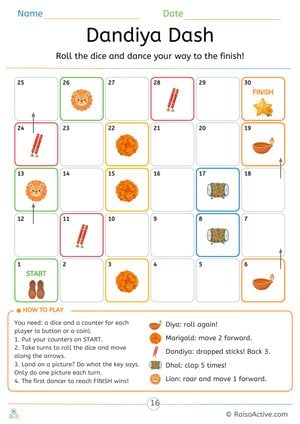
Dandiya Dash: Navratri Board Game for Kids
Ages 4-6 · Pre-K–KindergartenAges 4-6 · Reception–Year 1Ages 4-6 · LKG–UKGAges 4-6
Children count dots on a dice, count on along a number track to 30, take turns and follow simple game rules.

Written by
Hemsweta Jain · Teacher Cheena
MBA and Early Childhood Educator, teaching since 2014 · Founder of RaisoActive, Mumbai
Published · Last reviewed
Related Resources
Printable Resources(10)
View all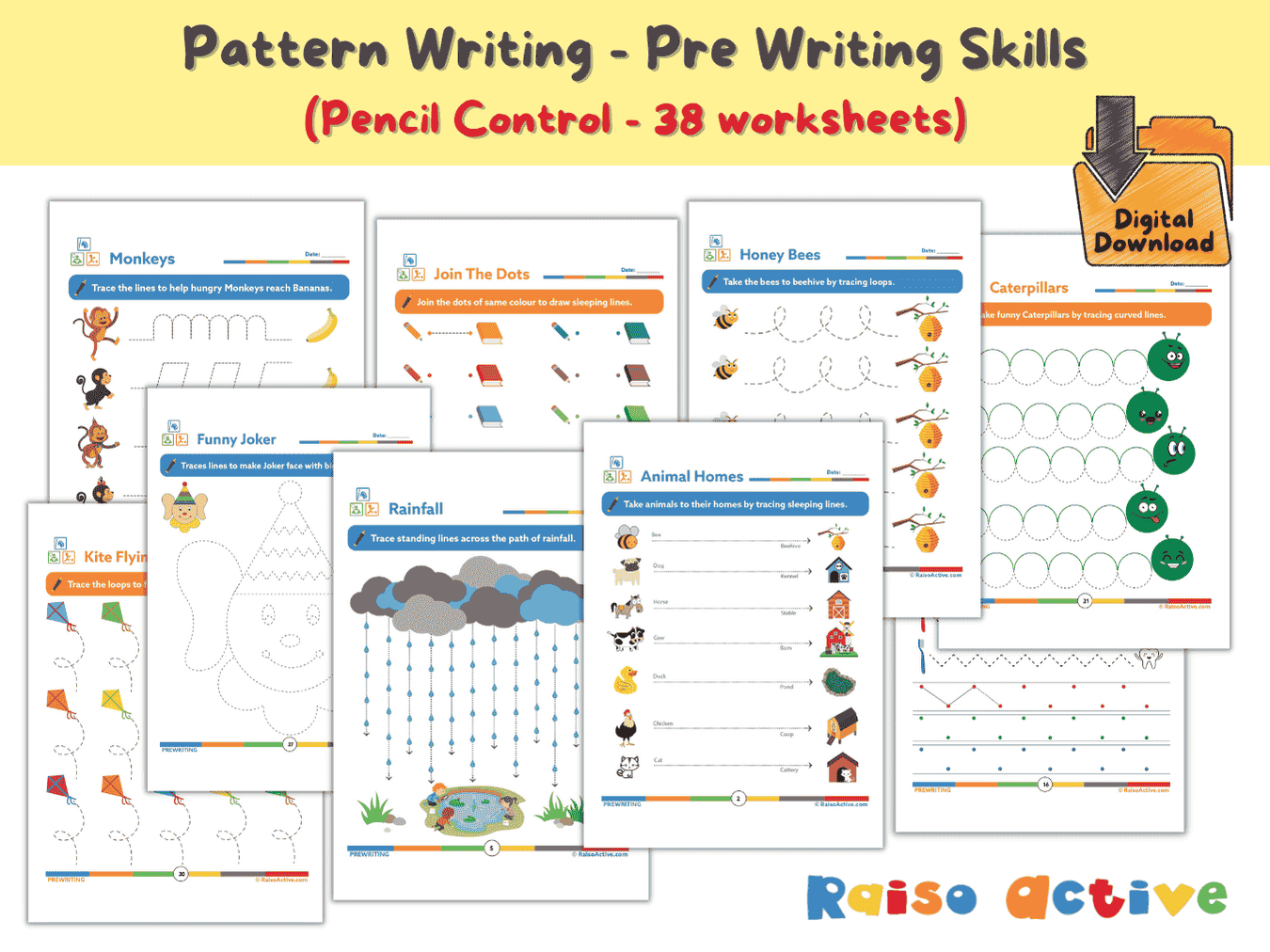
Pattern Writing Pre-writing Skills Activity Book for 3-4 Year Olds
Ages 3-4 · PreschoolAges 3-4 · NurseryAges 3-4 · 44 pages
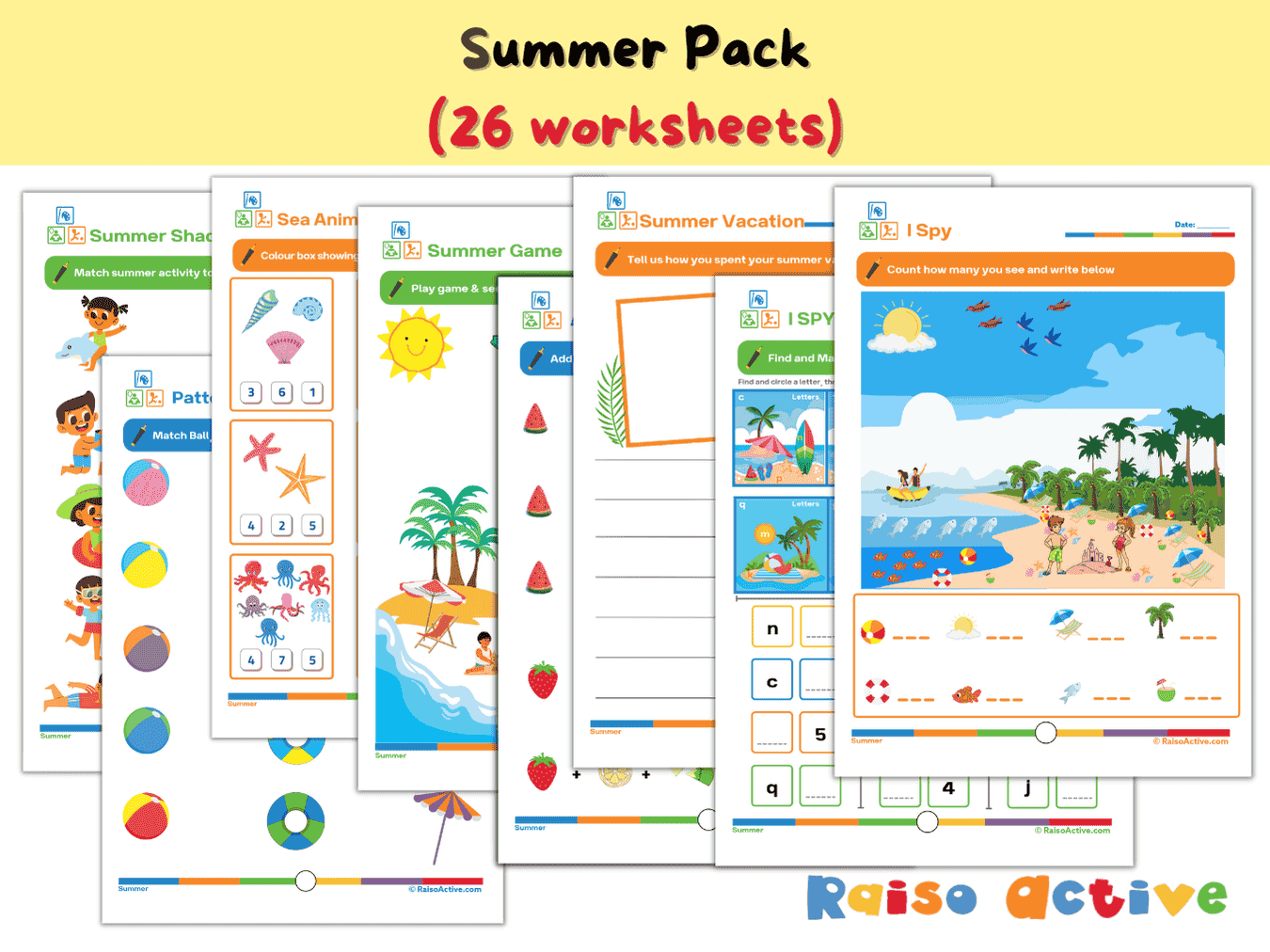
Summer Activity Pack: Math, Literacy, Puzzles & More for Preschool & Kindergarten
Ages 3-7 · Preschool–Grade 1Ages 3-7 · Nursery–Year 2Ages 3-7 · Nursery–Class 1Ages 3-7 · 26 pages
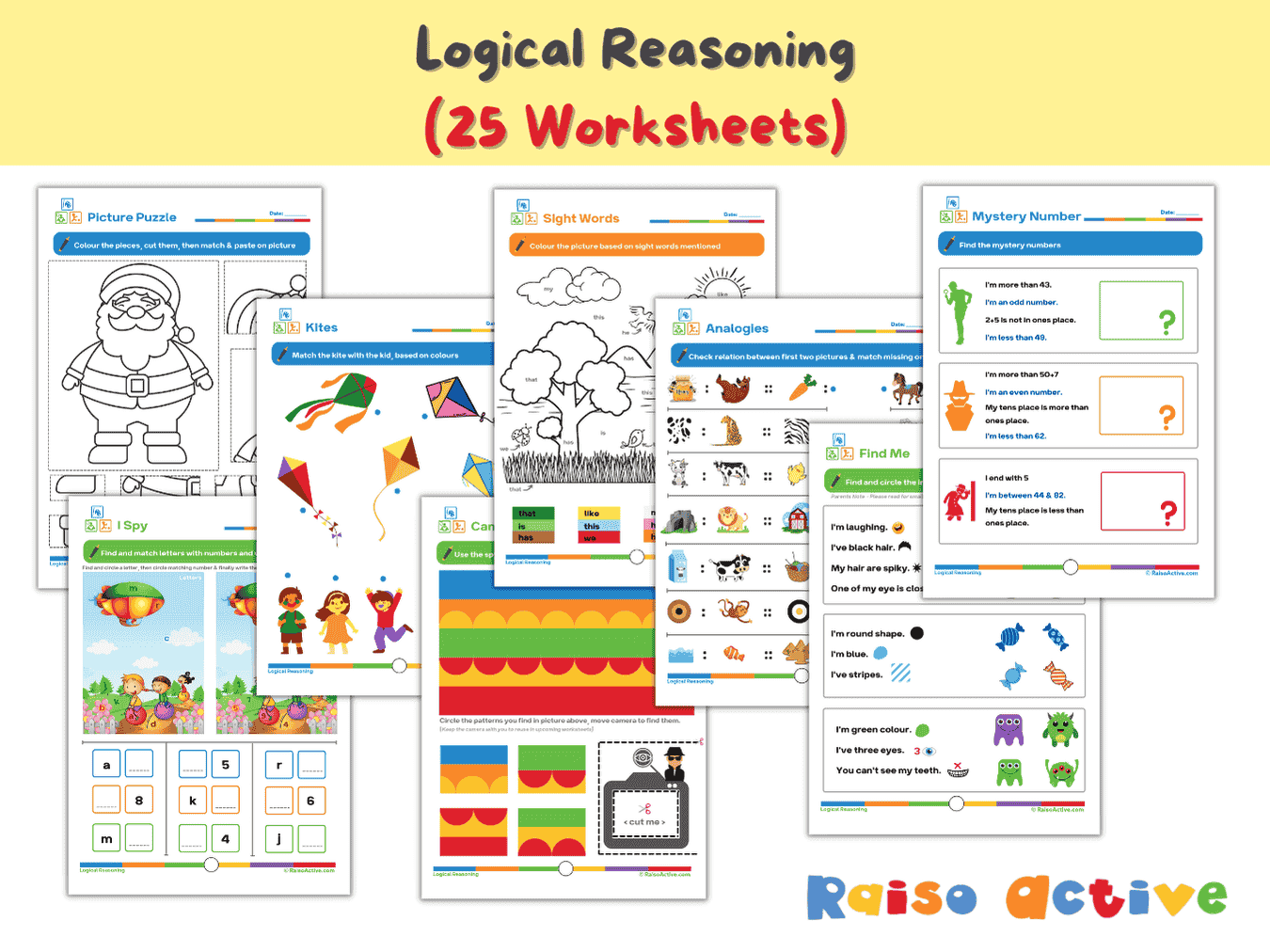
Logical Reasoning Activity Book for Preschool & Kindergarten | Patterns, Puzzles & Analogies
Ages 4-7 · Pre-K–Grade 1Ages 4-7 · Reception–Year 2Ages 4-7 · LKG–Class 1Ages 4-7 · 26 pages
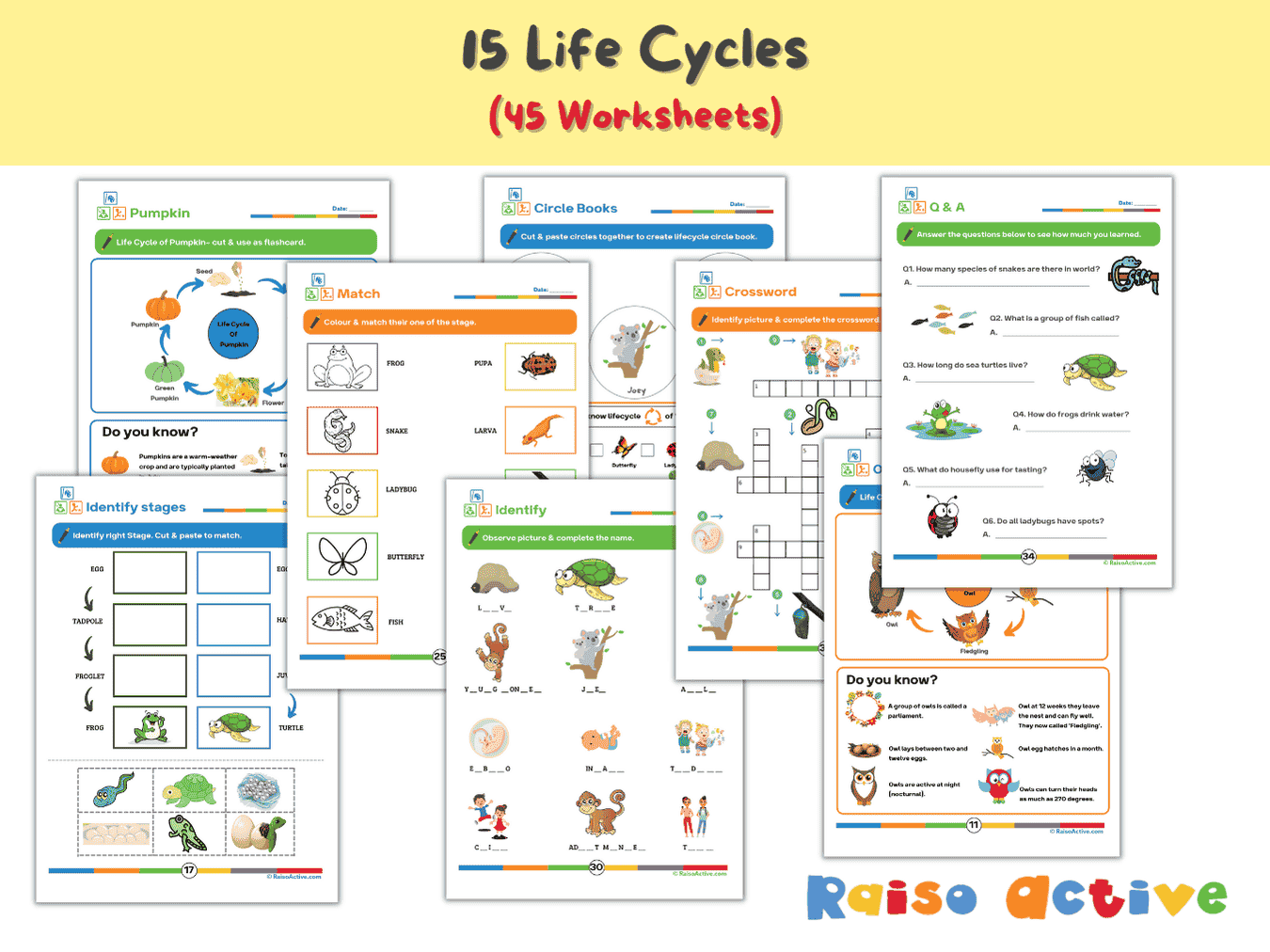

Lifecycles Activity Book & Flashcards for Preschool & Early Elementary
Ages 3-8 · Preschool–Grade 2Ages 3-8 · Nursery–Year 3Ages 3-8 · Nursery–Class 2Ages 3-8 · 46 pages
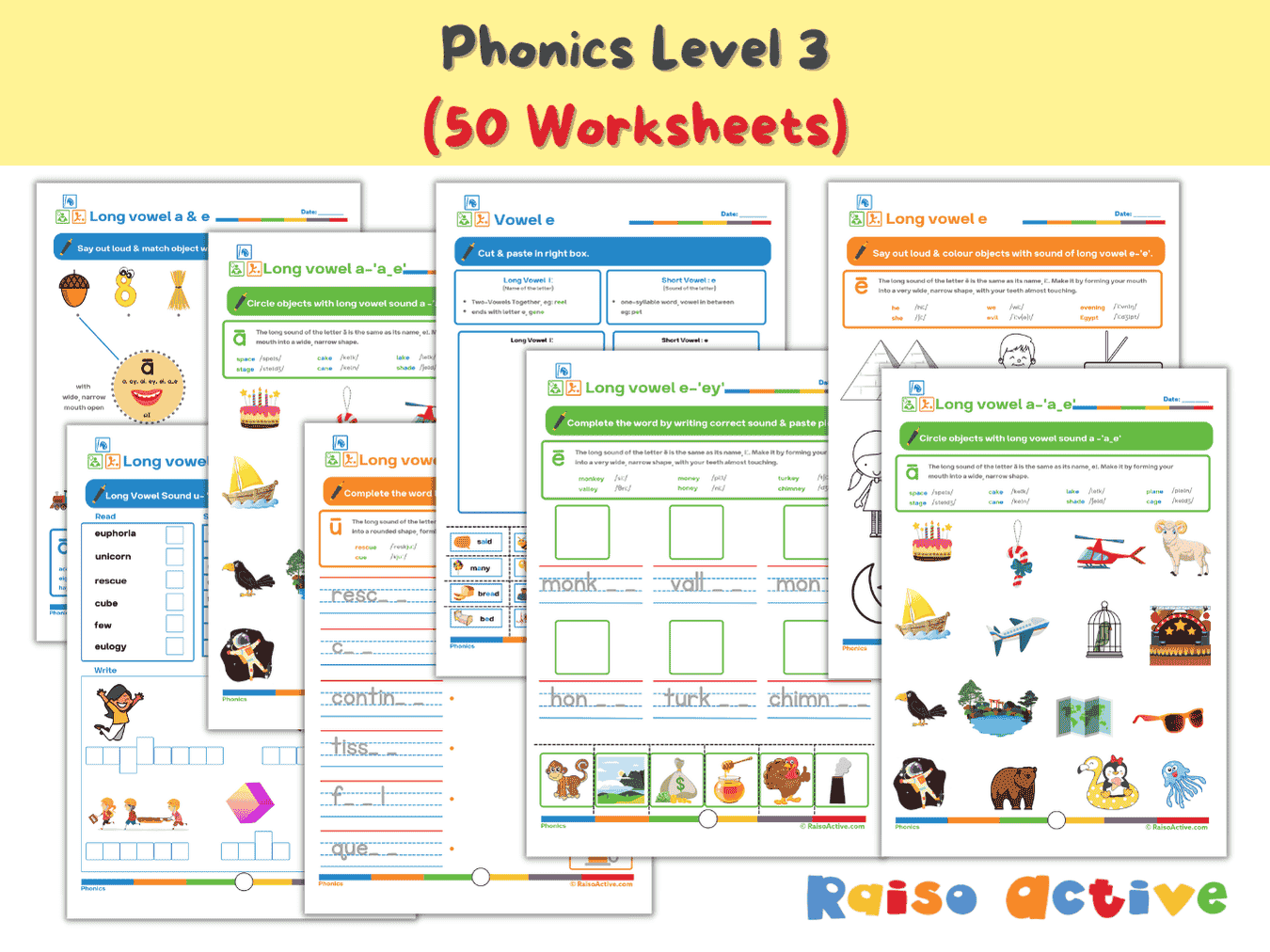

Phonics Level 3 Long Vowels Activity Book for Kindergarten & 1st Grade
Ages 5-7 · Kindergarten–Grade 1Ages 5-7 · Year 1–Year 2Ages 5-7 · UKG–Class 1Ages 5-7 · 51 pages
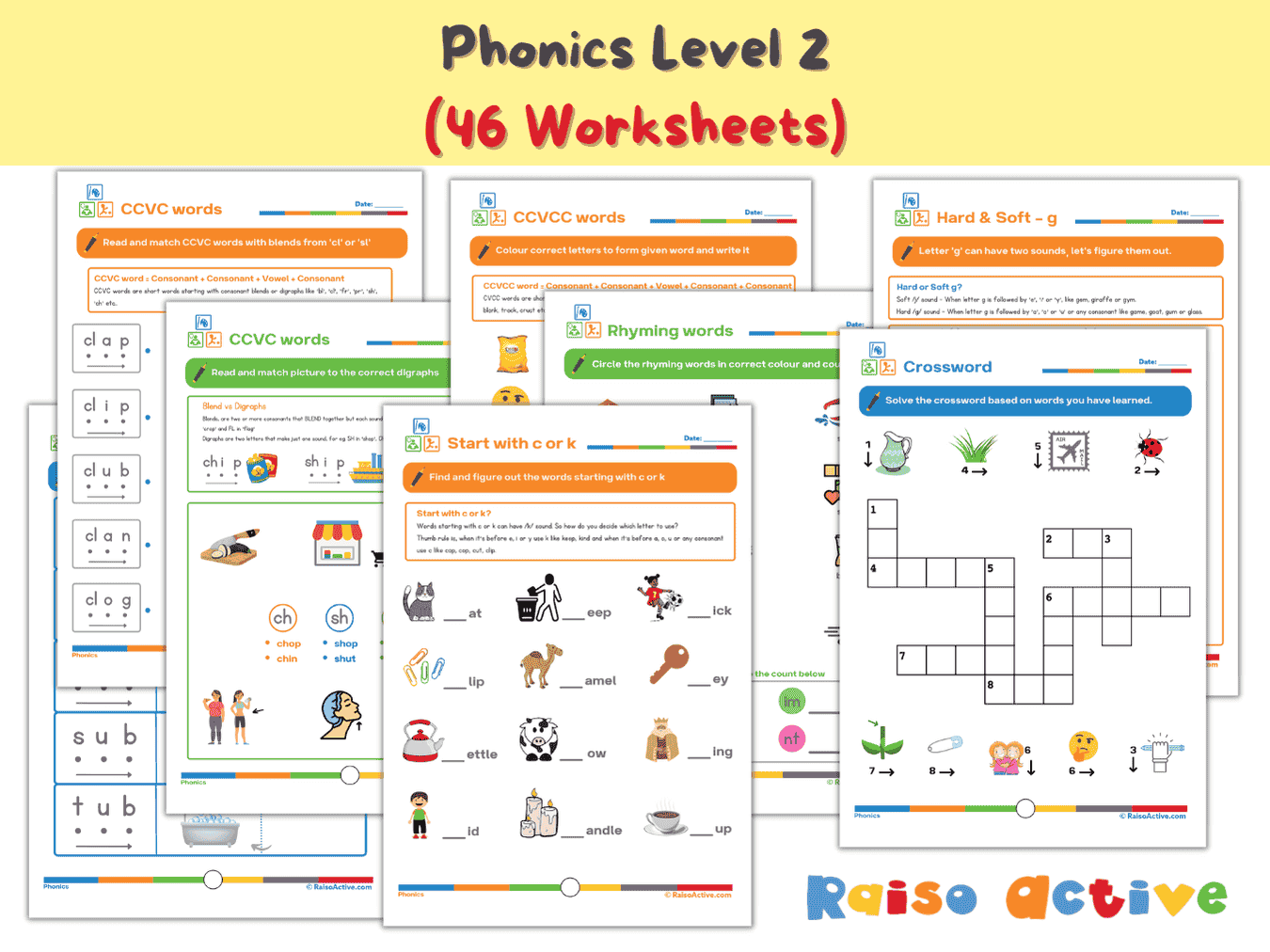
Phonics Level 2 Worksheets: CVC, CCVC, CVCC Word Families & Blends for Early Readers (Ages 4-7)
Ages 4-7 · Pre-K–Grade 1Ages 4-7 · Reception–Year 2Ages 4-7 · LKG–Class 1Ages 4-7 · 47 pages
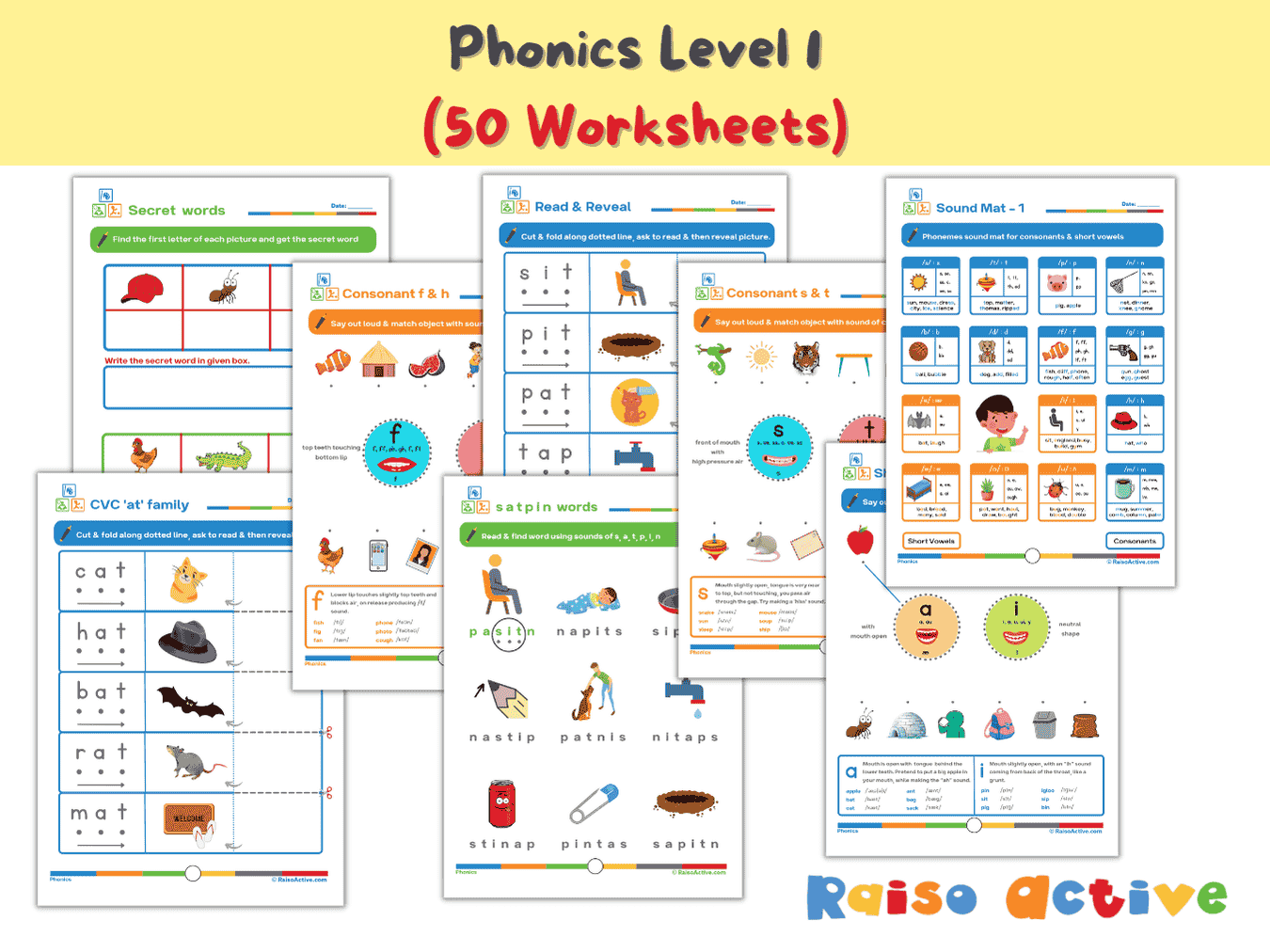
Phonics Level 1 Activity Book: Letter Sounds, Blending & CVC Words for Preschool & Kindergarten
Ages 3-6 · Preschool–KindergartenAges 3-6 · Nursery–Year 1Ages 3-6 · Nursery–UKGAges 3-6 · 60 pages
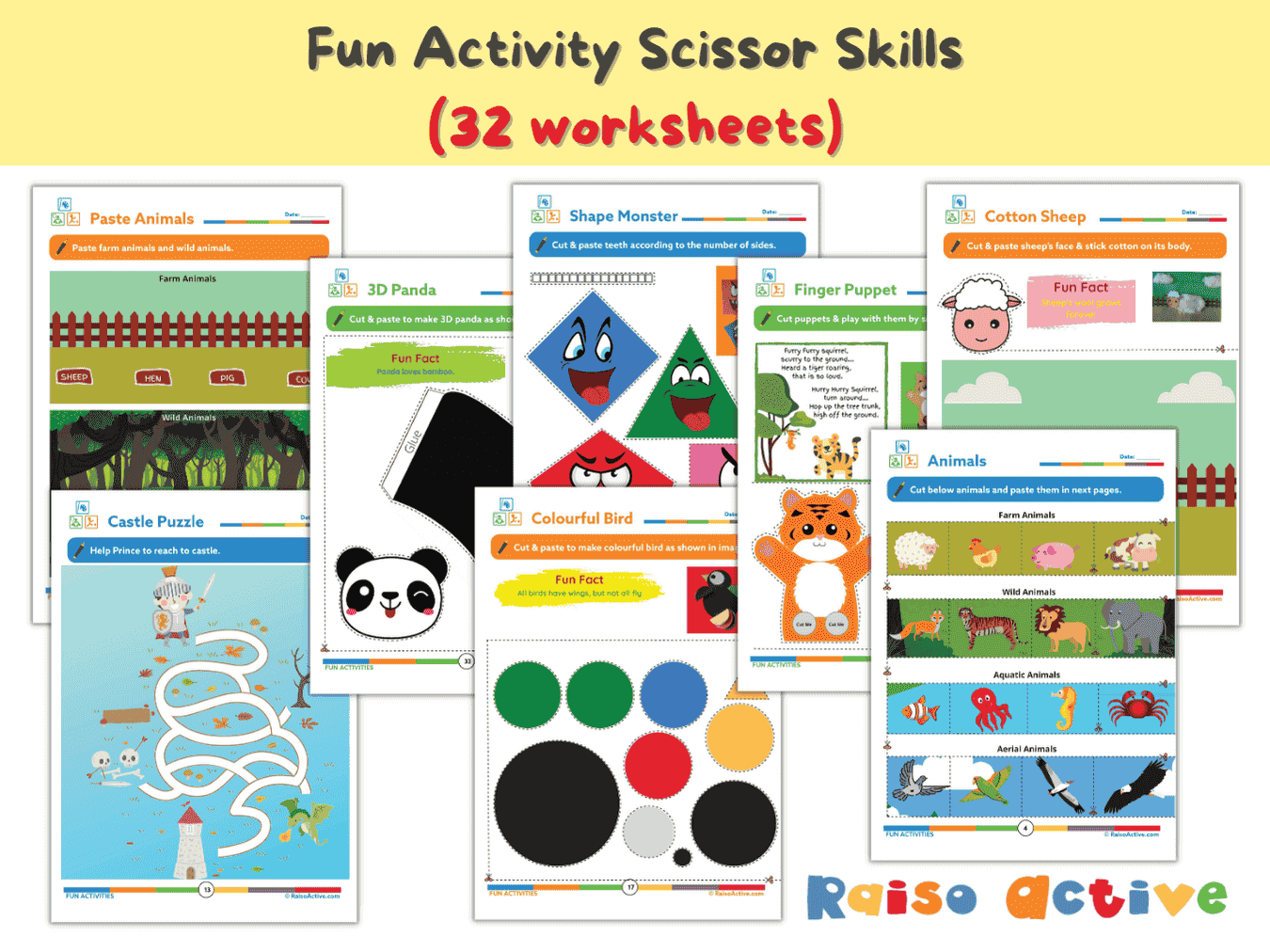
Preschool Scissor Skills Activity Book: Fine Motor & Craft Fun for Ages 3-6
Ages 3-6 · Preschool–KindergartenAges 3-6 · Nursery–Year 1Ages 3-6 · Nursery–UKGAges 3-6 · 35 pages
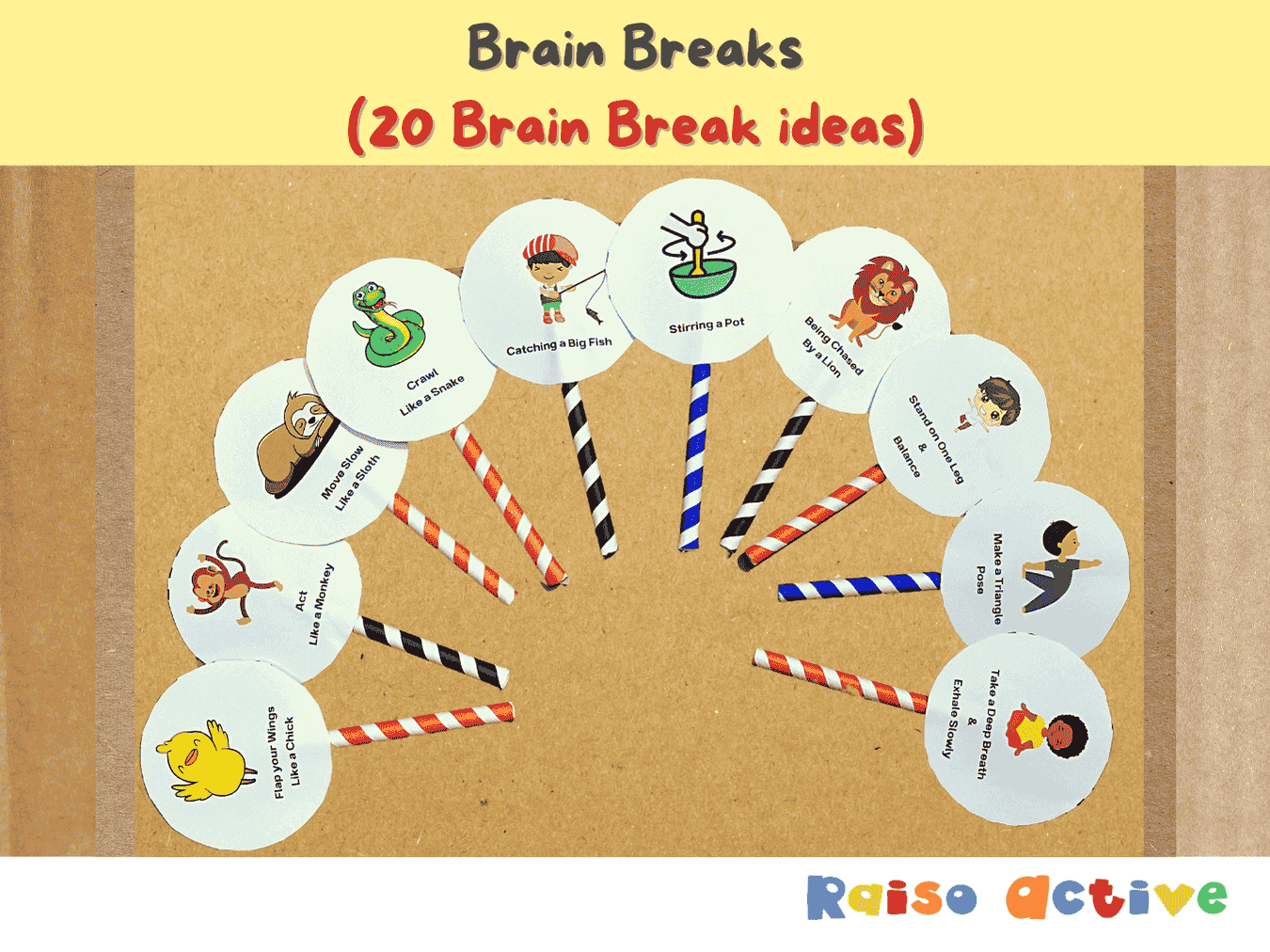
Gross Motor Movement & Imaginative Play Flashcards for Toddlers & Preschoolers
Ages 2-5 · Preschool–Pre-KAges 2-5 · Nursery–ReceptionAges 2-5 · Nursery–LKGAges 2-5 · 5 pages
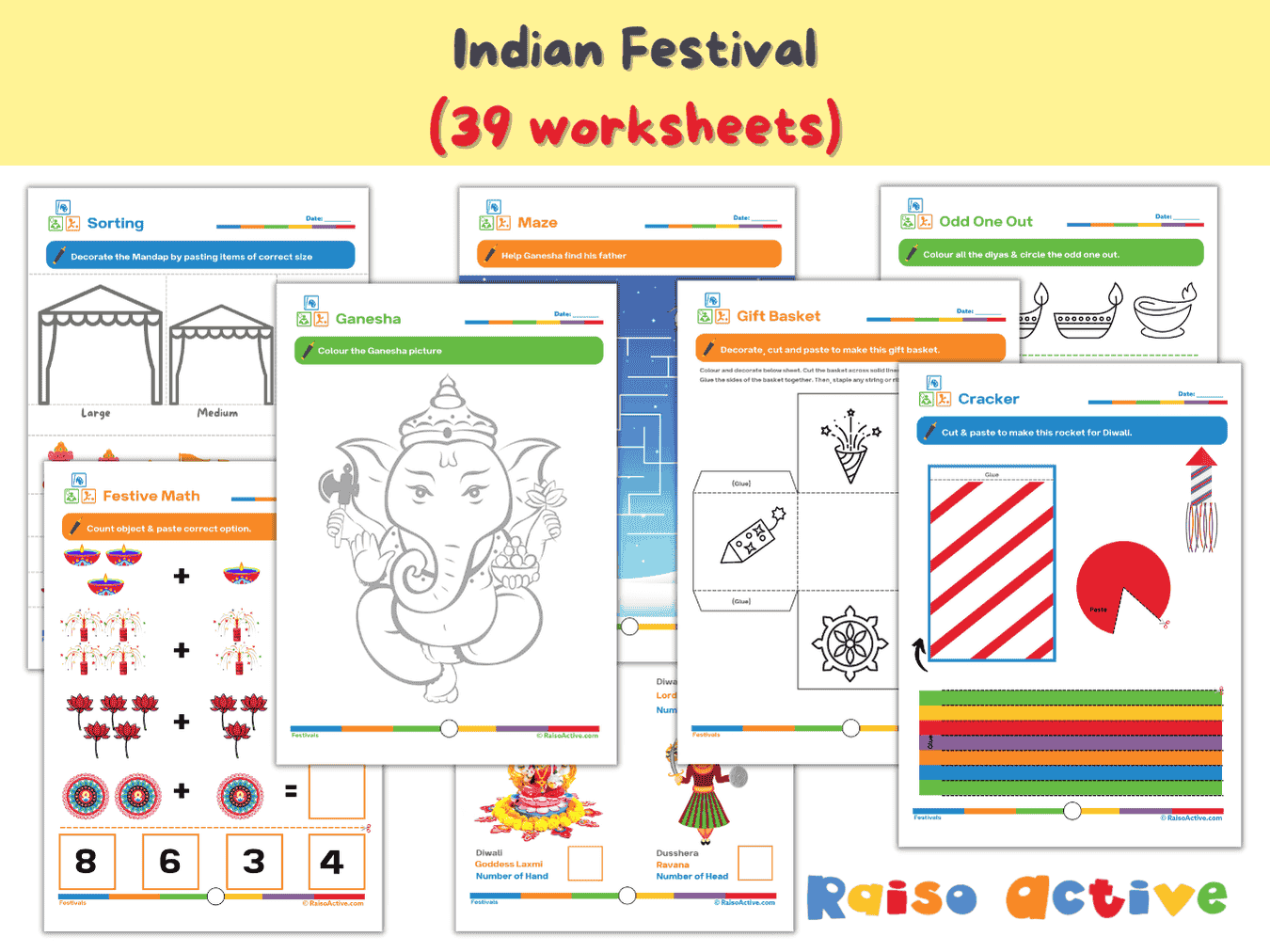
Festivals & Cultural Diversity Activity Book for Kids (Ages 4-8)
Ages 4-8 · Pre-K–Grade 2Ages 4-8 · Reception–Year 3Ages 4-8 · LKG–Class 2Ages 4-8 · 30 pages