Free printable worksheets · United Kingdom
Year 1 Worksheets (Ages 5–6)
Year 1 worksheets are practice sheets for children aged 5 to 6 in the first year of Key Stage 1. They cover Phase 3 to 5 phonics, preparation for the June phonics screening check, number bonds to 10 and 20, place value to 100, one more and one less, and writing sentences with capital letters and full stops.
Year 1 is the first year of the National Curriculum, and the change from Reception is real: more time at tables, daily phonics lessons that move through Phases 3, 4 and 5, and maths that now expects written number sentences rather than counted objects. It is also the year of the phonics screening check, taken in June, in which each child reads 40 words to their teacher, half of them made-up pseudo-words such as vap or blim, to confirm they can decode rather than guess. The worksheets here are built for that year: decodable passages using the sounds taught so far, screening-style word lists, number bonds to 10 and 20, place value with tens and ones, and sentence writing that practises capital letters and full stops every time.
1027+ worksheets · free PDF download · print on A4 or Letter
Year 1 Worksheets to print
Browse all worksheets for ages 5–6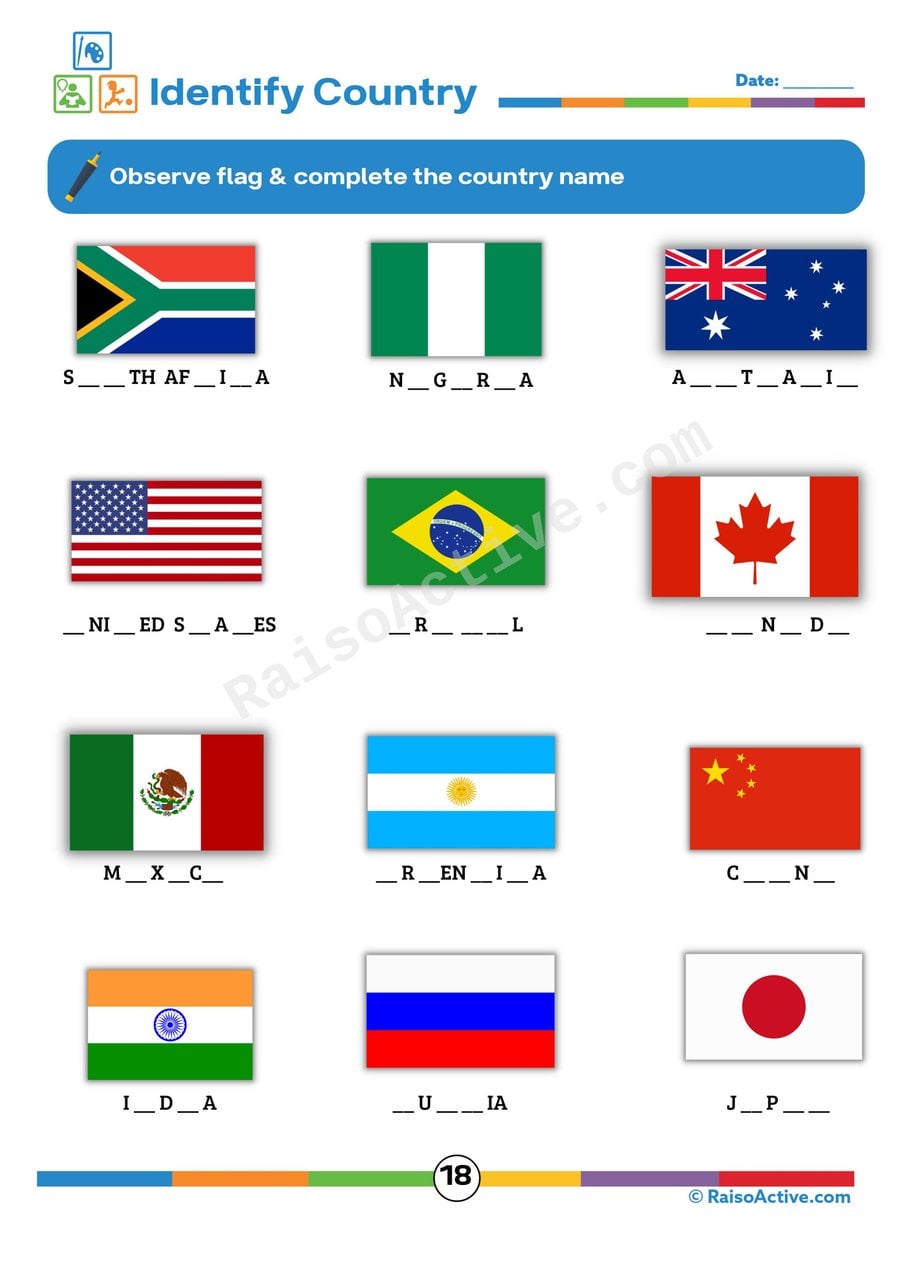
Identify the Country: Flag Matching Worksheet
Filling in the missing letters of each country's name while studying its flag gives children ages 4-7 practice with letter-sound correspondence and spelling patterns, since they must sound out the word and recall which letters are already provided as clues. It also builds early geography knowledge, helping children connect a visual symbol (the flag) to a country's name for the first time. This dual practice of decoding and world knowledge lays groundwork for both literacy and social studies skills.

Sun Safety Worksheet for Kids: Learn About Staying Safe in the Sun!
This worksheet has children ages 4-7 answer questions about sun safety, such as why sunscreen and hats matter, building early health literacy alongside writing practice as they put their understanding into their own words. Because the questions ask children to reason about why certain sun-safety habits matter rather than just label a picture, this worksheet develops early explanatory thinking, a step up from simple factual recall. Practicing writing full answers, even short ones, also builds sentence-forming skills appropriate for this age range.
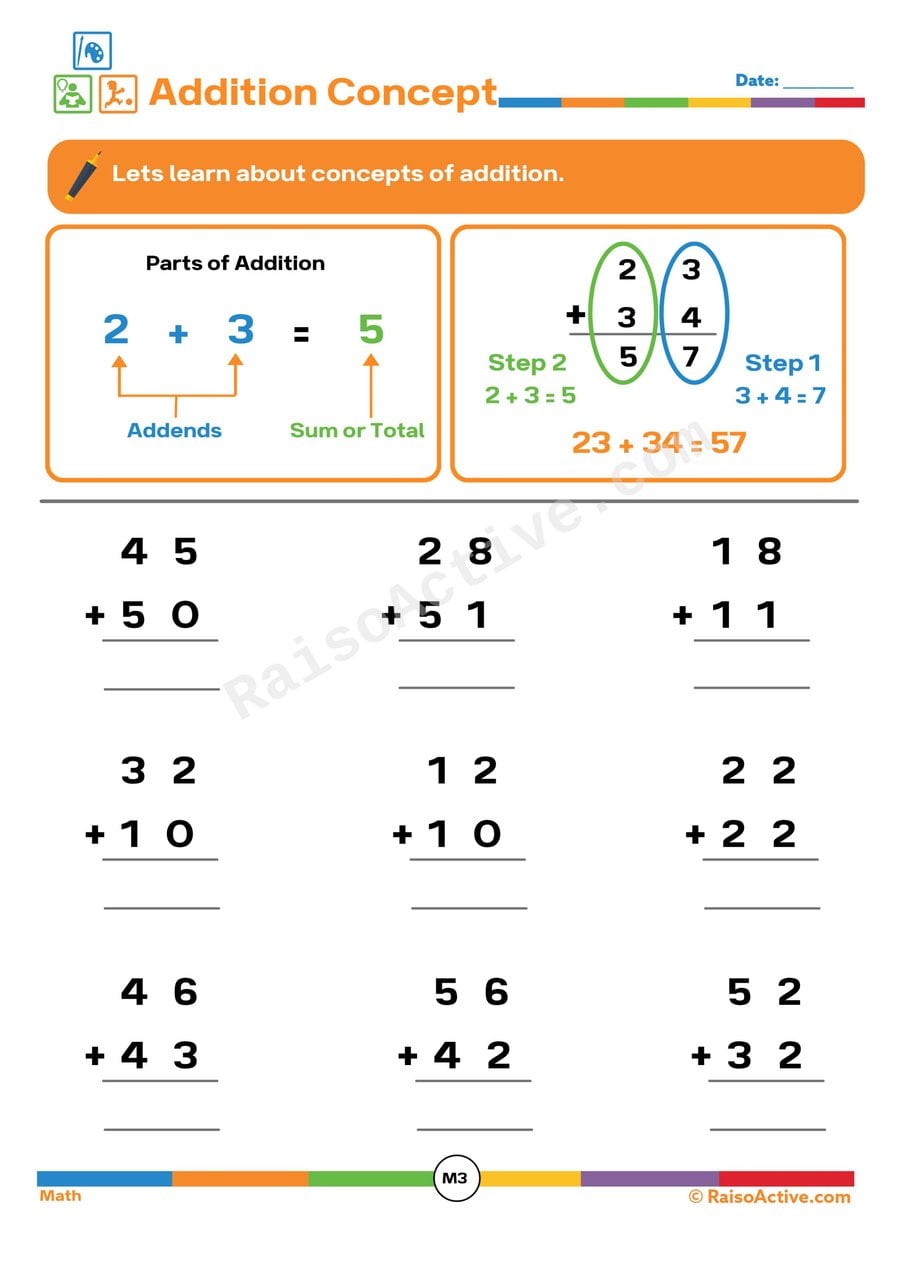
Addition Concepts Worksheet for Preschoolers
Preschoolers ages 4-6 build early number sense by visually combining two small groups into one total, the concrete foundation every later addition fact depends on. Seeing objects physically joined together, rather than just numbers on a page, helps children grasp that addition means 'putting together' before they ever memorize a sum.

Pronoun Power: Fill-in-the-Blanks Worksheet for Kids
Children ages 4-6 practice using indefinite pronouns like 'someone', 'anything', or 'everybody' correctly within sentences, an early grammar skill that helps their spoken and written language sound more natural and precise. Filling in blanks with the right pronoun requires reading comprehension, since children must understand the sentence's meaning to choose correctly. The coloring step adds a quick visual check that reinforces the correct answer.
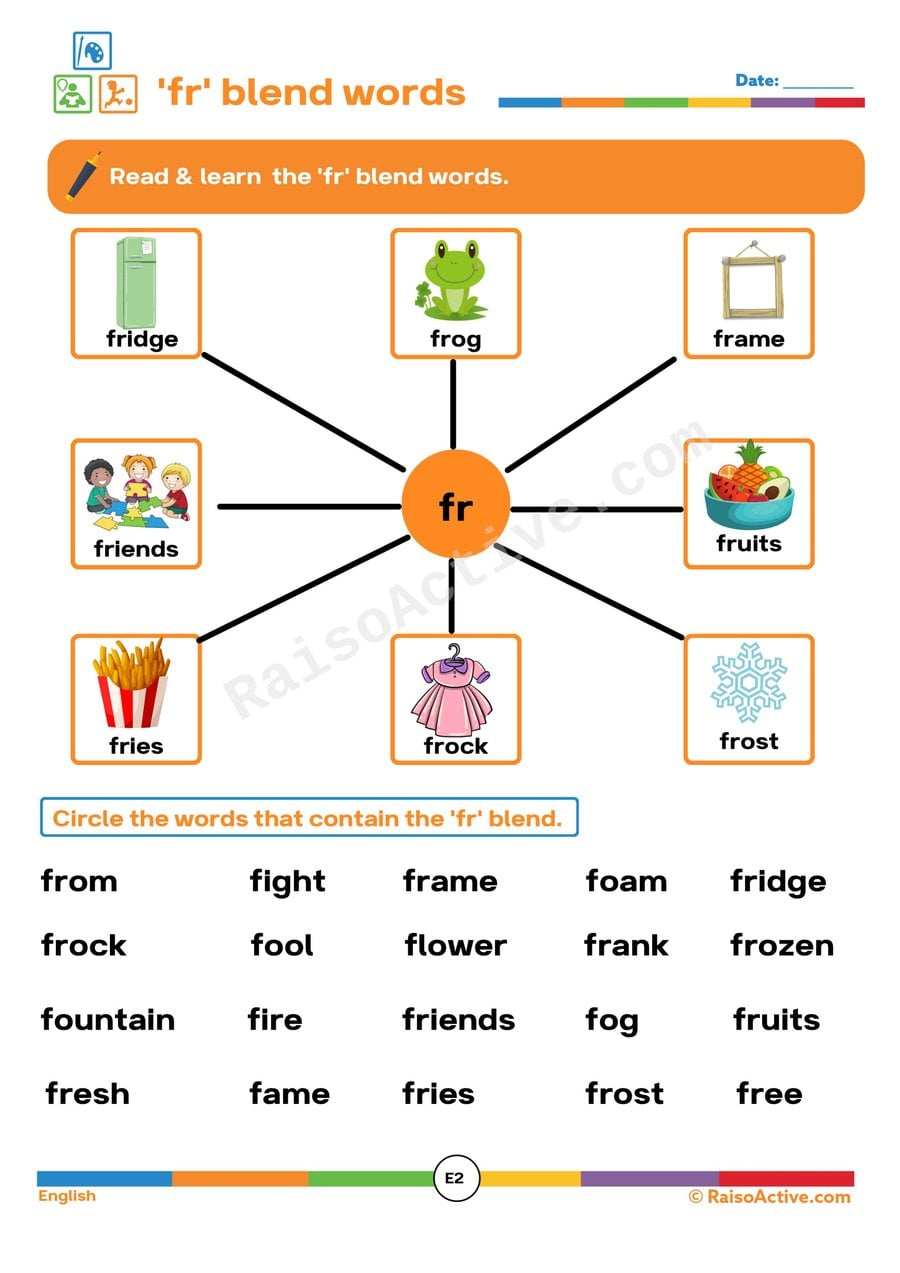
FR Blend Words Worksheet: Circle the Words!
Children ages 4-6 practice recognizing the 'fr' consonant blend at the start of words, like 'frog' and 'friend', which requires blending two distinct sounds smoothly together rather than reading them as separate letters. Circling the correct words trains visual scanning alongside auditory sound recognition, both essential for fluent early reading. This kind of blend practice moves children beyond single-letter phonics into more complex word decoding.
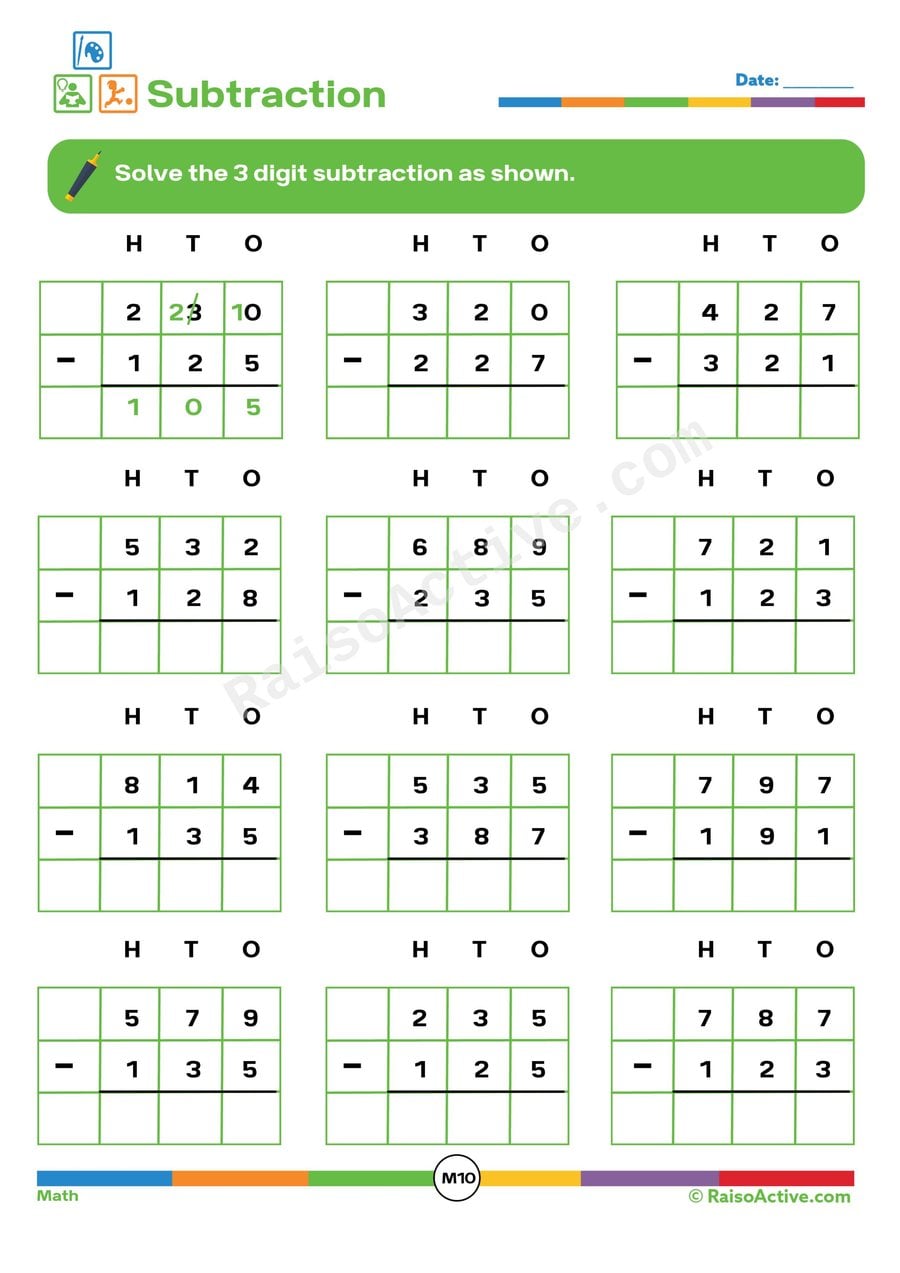
3-Digit Subtraction Worksheet for Kids
Subtracting three-digit numbers introduces children to borrowing, or regrouping, across place value columns, a more demanding skill than simple subtraction since it requires understanding that a ten can be 'broken' into ones when a column doesn't have enough to subtract from. For ages five to seven, this worksheet builds the procedural foundation for confident multi-digit subtraction going forward.

Abbreviations Worksheet: Matching Words and Abbreviations!
This worksheet teaches children common abbreviations, like 'Dr.' for Doctor or 'St.' for Street, by having them match each full word to its shortened form. For four- to six-year-olds who are building early reading and writing fluency, recognizing abbreviations is a practical real-world skill, since these shortened forms appear regularly in addresses, titles, and everyday writing.

Long Vowel i-y Worksheet: Complete the Words and Match the Pictures!
This worksheet has children ages 4-6 complete words by writing the correct ending sound for the long 'i' pattern, which can be spelled with 'i' or 'y,' and then match each finished word to its picture, combining spelling, phonics, and visual matching in one task. Filling in a missing part of a word, rather than writing it entirely from scratch, gives children a scaffolded way to practice spelling without the full demand of unassisted writing. Matching the finished word to a picture also confirms whether their spelling produced the intended word.

Proper Noun Worksheet for Kids: Fill-in-the-Blanks and Identify!
This worksheet teaches children to tell the difference between a common noun and a proper noun, the specific, capitalized name of a particular person, place, or thing, which is foundational for both grammar and correct capitalization in their own writing. Ages four to six are at the right stage to start noticing that names like 'London' or 'Sara' get capital letters while general words like 'city' or 'girl' do not.

Long Vowel i-'ie' Worksheet: Complete the Words & Paste Pictures!
This worksheet introduces yet another spelling of the long 'i' sound — the 'ie' pattern found in words like 'tie' and 'pie' — giving children ages 4-6 practice completing words with missing letters before matching and pasting the correct picture. Filling in missing letters for a specific spelling pattern requires more active recall than simply reading a finished word, since your child has to remember exactly which letters create the long 'i' sound in this particular pattern. Rounding out practice across silent-e, 'igh,' and now 'ie' spellings helps children see that English represents the same sound in several different ways.

Missing Numbers Worksheet: Before, After, and Between!
This worksheet strengthens number sequencing by asking children to figure out which number comes before, after, or between two given numbers, rather than simply counting from one in order. For four- to six-year-olds, working with numbers 'out of context' like this builds a flexible mental number line, an essential foundation for later addition, subtraction, and skip counting.

Apple Picking Fun: A Reading Comprehension Worksheet for Kids
This worksheet builds early reading comprehension skills in children ages 4-6 by having them read a short story about apple picking and then answer simple questions that check their understanding of what happened. Answering questions after reading, rather than just decoding words, pushes children to hold the story's meaning in mind and recall specific details, a critical skill for all future reading. Coloring an apple afterward gives a relaxing, creative close to the comprehension task.

Tens and Ones Worksheet: Practice Place Value with Fun Elephants!
This worksheet has children break two-digit numbers into their tens and ones parts, then apply that understanding to simple addition and subtraction, a natural next step once place value clicks. For ages four to six, using the playful elephant images keeps a fairly abstract math concept approachable while still building the numerical foundation they'll rely on for years of arithmetic to come.

Short Vowel Fun: Complete the Words Worksheet for Kids
This worksheet has children ages 4-6 fill in missing short vowels to complete words based on pictures, then locate and color those same words within a grid, layering active spelling recall with visual word-search practice. Completing a word by choosing the correct short vowel requires your child to distinguish between five different vowel sounds — a, e, i, o, and u — which is a more demanding discrimination task than working with just one or two vowels at a time. Following that with a word search reinforces the completed spelling by having your child recognize and locate the exact same word again.

Identify the Countries! A Fun Flag Worksheet for Kids
This worksheet combines flag recognition with spelling practice as children ages 4-6 study each flag and use provided letters to complete the missing parts of its country's name. Working from a partially filled word bank also teaches children to use context and available clues to solve a problem, rather than needing to know the full spelling from memory.

Long Vowel 'ei' Sound Worksheet: Complete the Words and Paste Pictures!
This worksheet introduces children ages 4-6 to the less common 'ei' spelling pattern for the long vowel sound, as in words like 'vein' or 'eight,' asking them to fill in missing letters to complete each word and then match pictures to their corresponding words. Because 'ei' is a trickier, less intuitive spelling than more familiar long vowel patterns, this practice helps children build awareness that the same sound can be spelled in different ways.

Trace and Write Numbers 11-15: Counting and Writing Worksheet
This worksheet helps children ages 4-6 practice tracing and writing the number words from eleven to fifteen, moving beyond single-digit numbers into the trickier teen range where number names don't always follow an obvious pattern. Matching the number of dots on dice to the correct written number name also reinforces that these longer number words still represent a specific countable quantity.

Long Vowel 'e-ea' Worksheet: Circle and Write the Words!
This worksheet has children ages 4-6 identify pictures whose names contain the long 'e' sound spelled with either 'e' or the two-letter combination 'ea,' building awareness that the same sound can be spelled in more than one way. Circling the correct pictures practices auditory discrimination, while writing the matching words afterward adds spelling practice tied directly to a sound children have just identified by ear. Understanding that sounds can have multiple spellings is an important and often tricky milestone in early phonics.
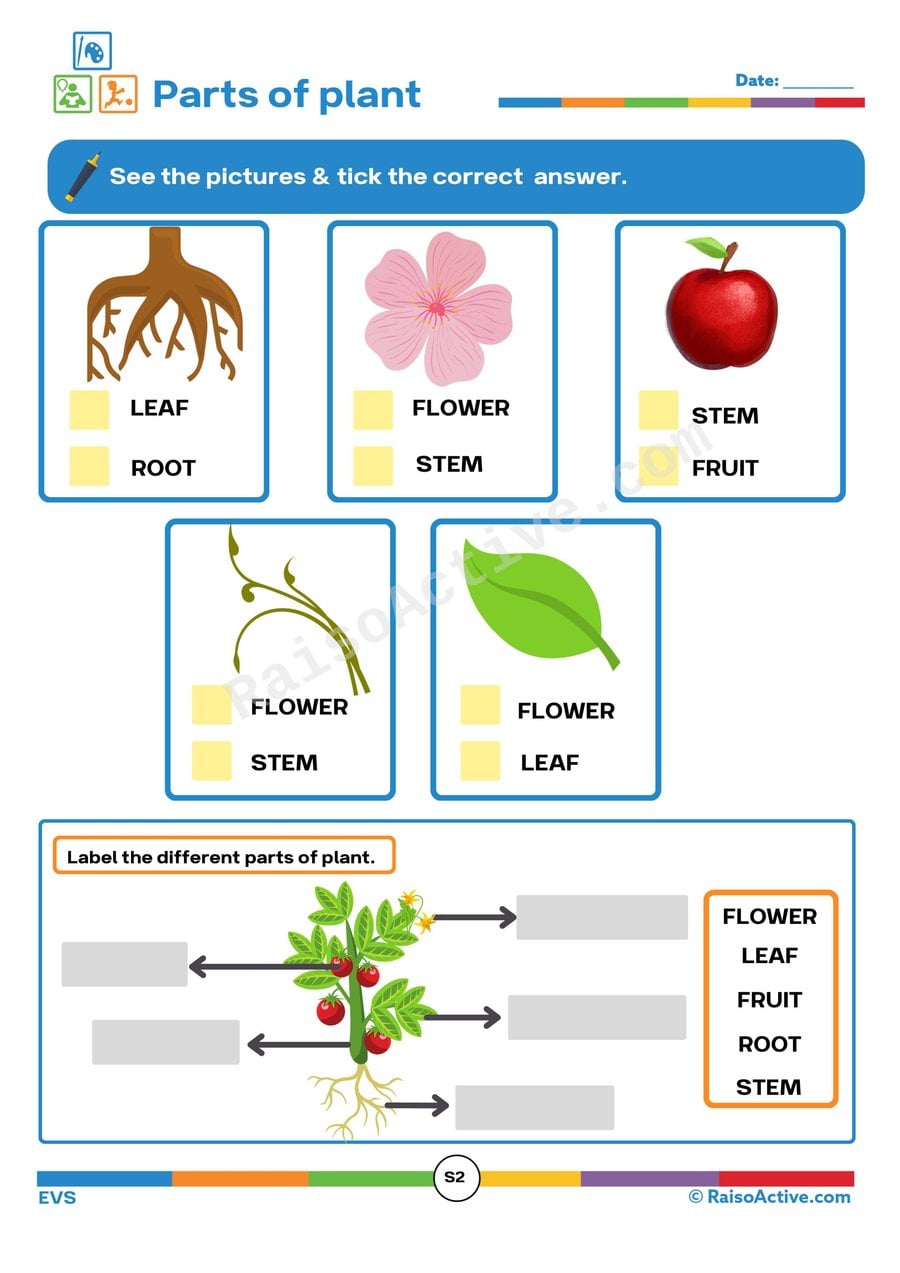
Parts of a Plant Worksheet for Kids
This worksheet helps children ages 4-6 identify and label the main parts of a plant — roots, stem, leaves, flower, and fruit — building foundational botany knowledge. Learning to associate each part with its picture and location on a plant diagram develops both vocabulary and an early understanding of plant structure, which supports later lessons on how plants grow and survive.
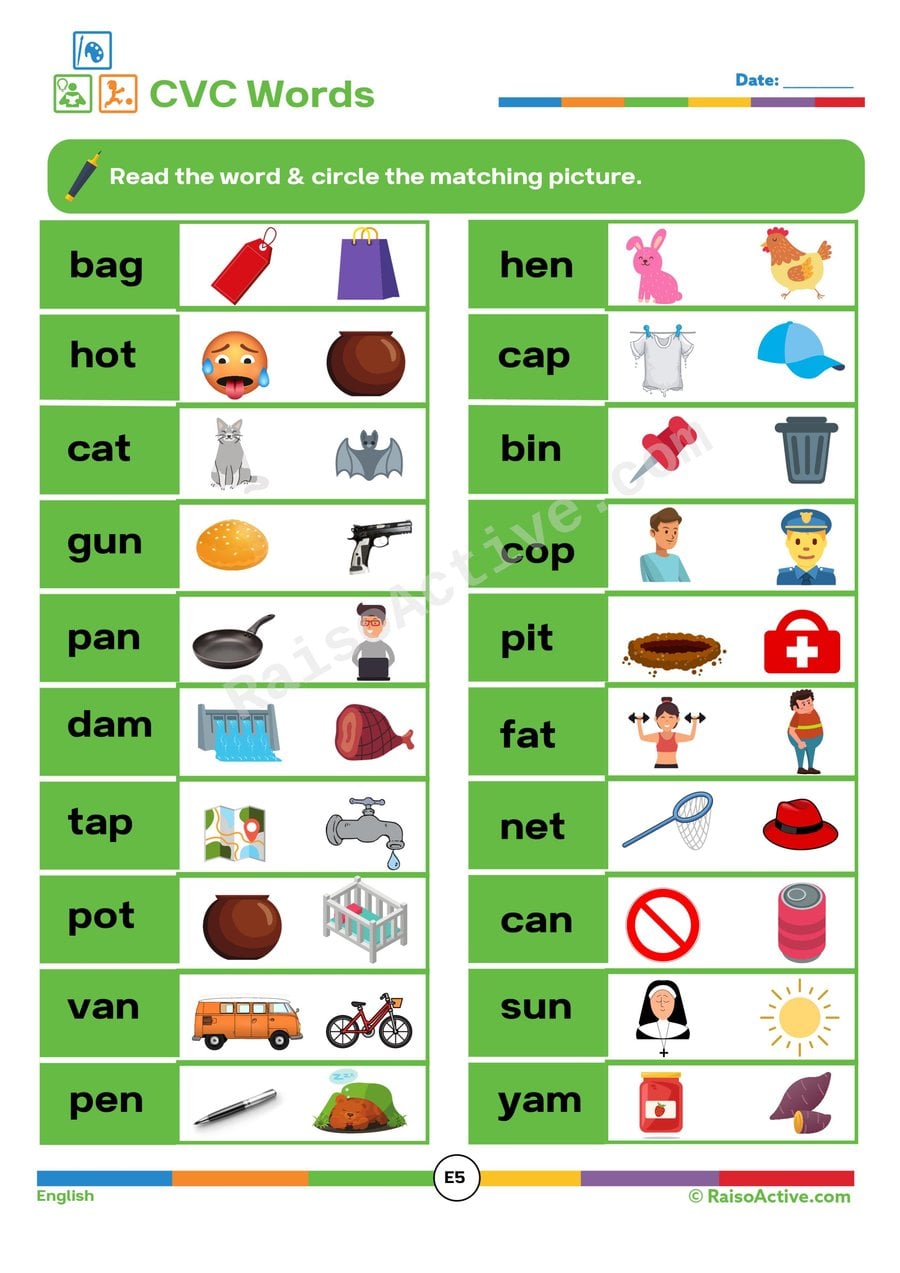
CVC Word Matching Worksheet: Read and Circle!
Sounding out each consonant-vowel-consonant word letter by letter strengthens decoding, and matching that word to its picture connects decoding to meaning — an essential step for children ages 4-6 becoming independent readers.

Before, After, and Between Numbers Worksheet for Preschoolers
This number sequencing worksheet gives children ages 4-6 practice identifying what comes before, after, and between given numbers, a skill that builds the flexible mental number line children need before tackling formal addition and subtraction. Unlike a matching or counting task, this version asks children to write in the missing numbers directly, which requires stronger independent recall of number order rather than recognition from a set of choices. Practicing all three directions — before, after, and between — on one page also reinforces that number sequences can be approached from multiple angles, not just forward counting.

Word Problems Worksheet: Solving for Addition and Subtraction
This worksheet builds the ability to translate real-world scenarios into number sentences, teaching children ages 4-6 to spot clue words like 'gave away' or 'found more' that signal whether to add or subtract. It also practices reading comprehension applied to math, a key step as children move from rote counting toward applied reasoning.

Number Words Worksheet: Complete the Number Words!
Filling in missing letters to complete number words teaches children ages 4-6 to connect a numeral with its written spelling, combining early spelling practice with number vocabulary. This kind of fill-in-the-blank format also encourages careful attention to each letter, since number words often contain tricky spelling patterns that don't follow simple phonics rules.
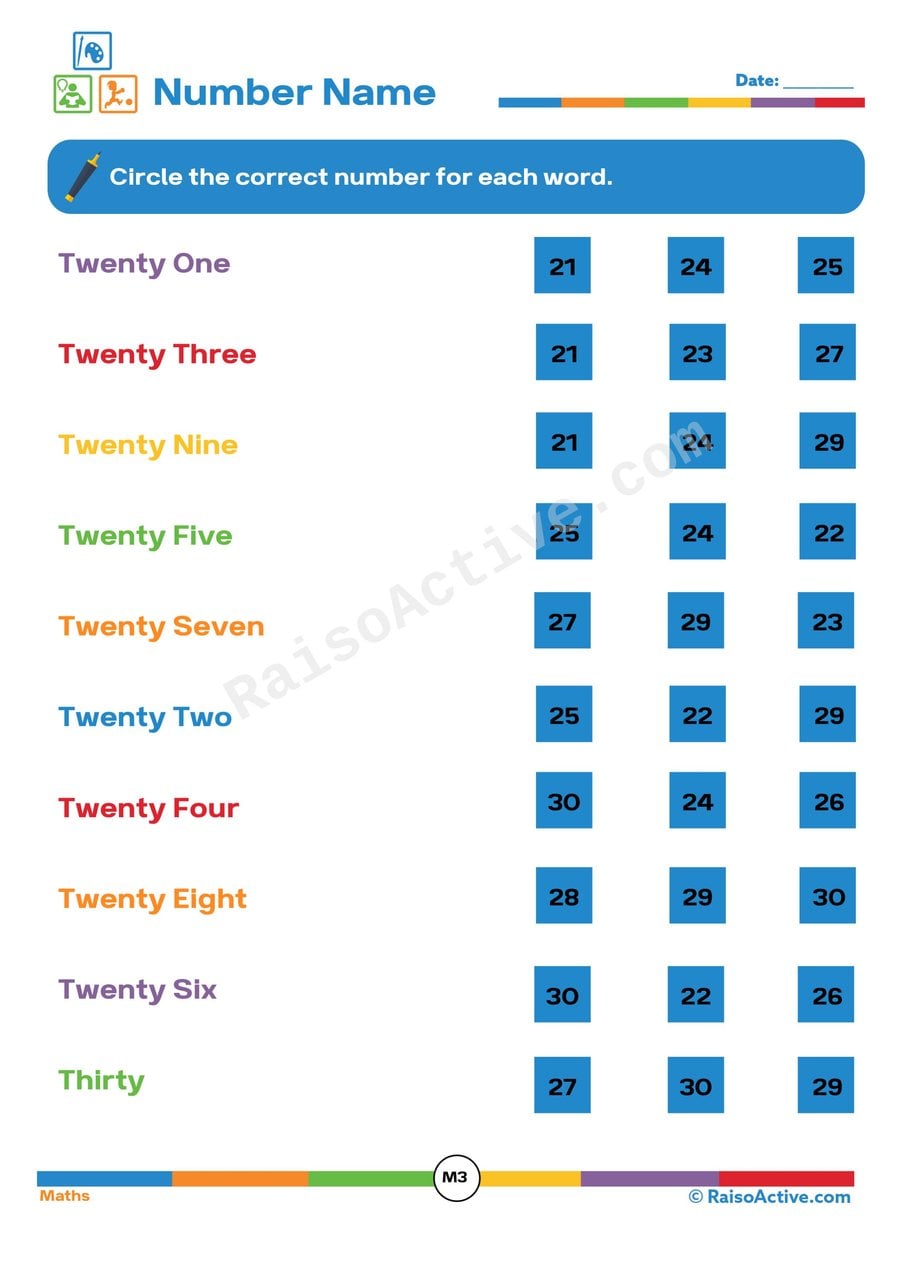
Number Names Matching Worksheet for Kids
This worksheet helps children ages 4-6 connect written number words, like 'five' or 'nine,' to their numeral form by reading each word and circling the matching digit. Recognizing number names in text is a skill separate from counting objects, and it becomes important as soon as children start encountering numbers written out in books, signs, or math word problems.
What your child learns in Year 1
The Year 1 programmes of study expect children to apply phonic knowledge to decode words, read common exception words such as said, one and where, and write sentences they have first composed aloud. In maths they count to and across 100 forwards and backwards, read and write numbers to 100 in numerals, know number bonds within 20, and add and subtract one-digit and two-digit numbers to 20.
- Phonics: Phase 3 digraphs and trigraphs, Phase 4 adjacent consonants (frog, jump), Phase 5 alternative spellings (ai, ay, a-e)
- Reading: decodable books, common exception words, answering simple questions about a short text
- Writing: capital letters, full stops, finger spaces, question marks, joining two ideas with "and"
- Number: counting to 100, place value with tens and ones, number bonds to 10 and 20, one more and one less
- Measurement and geometry: length, mass, time to the hour and half past, common 2D and 3D shapes
Preparing for the phonics screening check
The check takes place in June and lasts five to ten minutes per child, one to one with the teacher. It contains 40 words: 20 real words and 20 pseudo-words, each shown beside a small alien picture so the child knows not to recognise it. The expected standard has been 32 out of 40 in every year the check has run; children below it retake it in Year 2. Regular blending of mixed real and made-up words, not memorising lists, prepares a child well.
How to use these worksheets at home
Follow the phonics phase the school is teaching rather than racing ahead; a Phase 5 sheet given to a child still securing Phase 3 only teaches guessing. Read the decodable passage aloud first, then let your child read it back and answer the questions. For maths, keep a hundred square and some counters nearby so place value is something the child can build and see before writing it down.
Frequently asked questions
What is the Year 1 phonics screening check?
The phonics screening check is a short one-to-one reading assessment that every Year 1 child in an English state school takes in June. The child reads 40 words aloud to their teacher: 20 real words and 20 pseudo-words that follow English spelling patterns but have no meaning. Pseudo-words are marked with an alien picture so the child knows to sound them out. It checks decoding, not comprehension.
What should a child know by the end of Year 1?
By the end of Year 1 a child is expected to decode most Phase 5 words, read the Year 1 common exception words, write several sentences with capital letters and full stops, count to 100, know number bonds to 20, add and subtract within 20, tell the time to the hour and half past, and name common 2D and 3D shapes. These are the Year 1 expectations set out in the National Curriculum programmes of study.
What phonics phase is Year 1?
Most children begin Year 1 consolidating Phases 3 and 4, then spend the bulk of the year on Phase 5, which teaches alternative spellings for sounds already known (for example ai, ay and a-e) and alternative pronunciations for known graphemes (ow in cow and in snow). Schools using other validated schemes cover the same content under different names, and the screening check draws on Phases 2 to 5.
What is the difference between Reception and Year 1 worksheets?
Reception sheets work on single sounds, letter formation and numbers to 20 with plenty of pictures and tracing. Year 1 sheets expect independent reading of short decodable passages, spelling with digraphs and trigraphs, writing full sentences, and written calculations with numbers to 100. Instructions are longer and children are expected to work for 15 to 20 minutes at a stretch.
How can I help my child with the phonics screening check?
Practise blending for a few minutes every day using both real and made-up words, and point out the alien words so your child knows to sound them out rather than guess. Past check papers, which the Department for Education publishes, are useful for getting used to the format. Do not drill the words from earlier papers; the check uses new words each year.

Written by
Hemsweta Jain · Teacher Cheena
MBA and Early Childhood Educator, teaching since 2014 · Founder of RaisoActive, Mumbai
Written and reviewed by Hemsweta Jain (Teacher Cheena), who designs every RaisoActive worksheet.
Last reviewed
Printable packs for ages 5–6
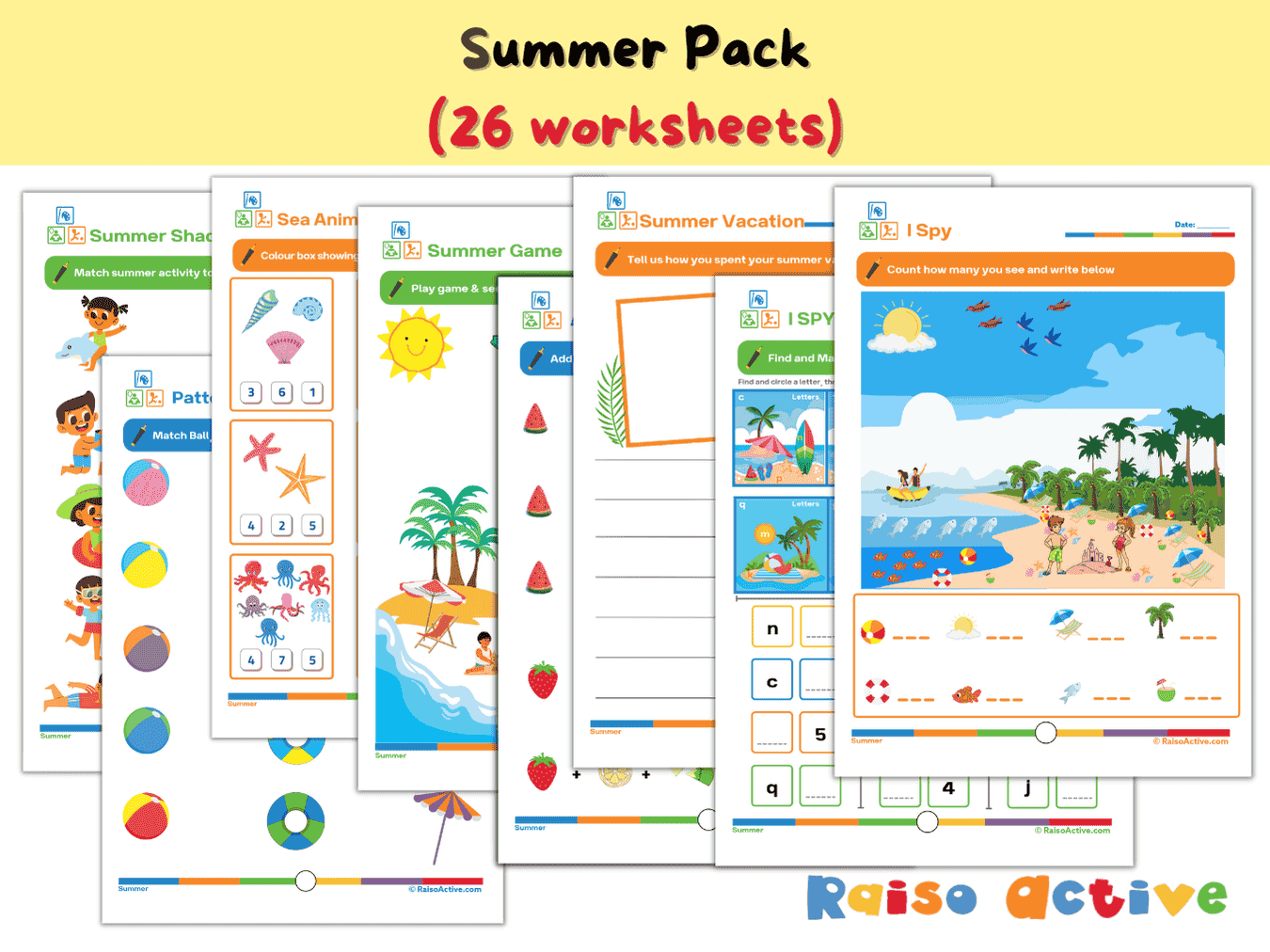
Summer Activity Pack: Math, Literacy, Puzzles & More for Preschool & Kindergarten
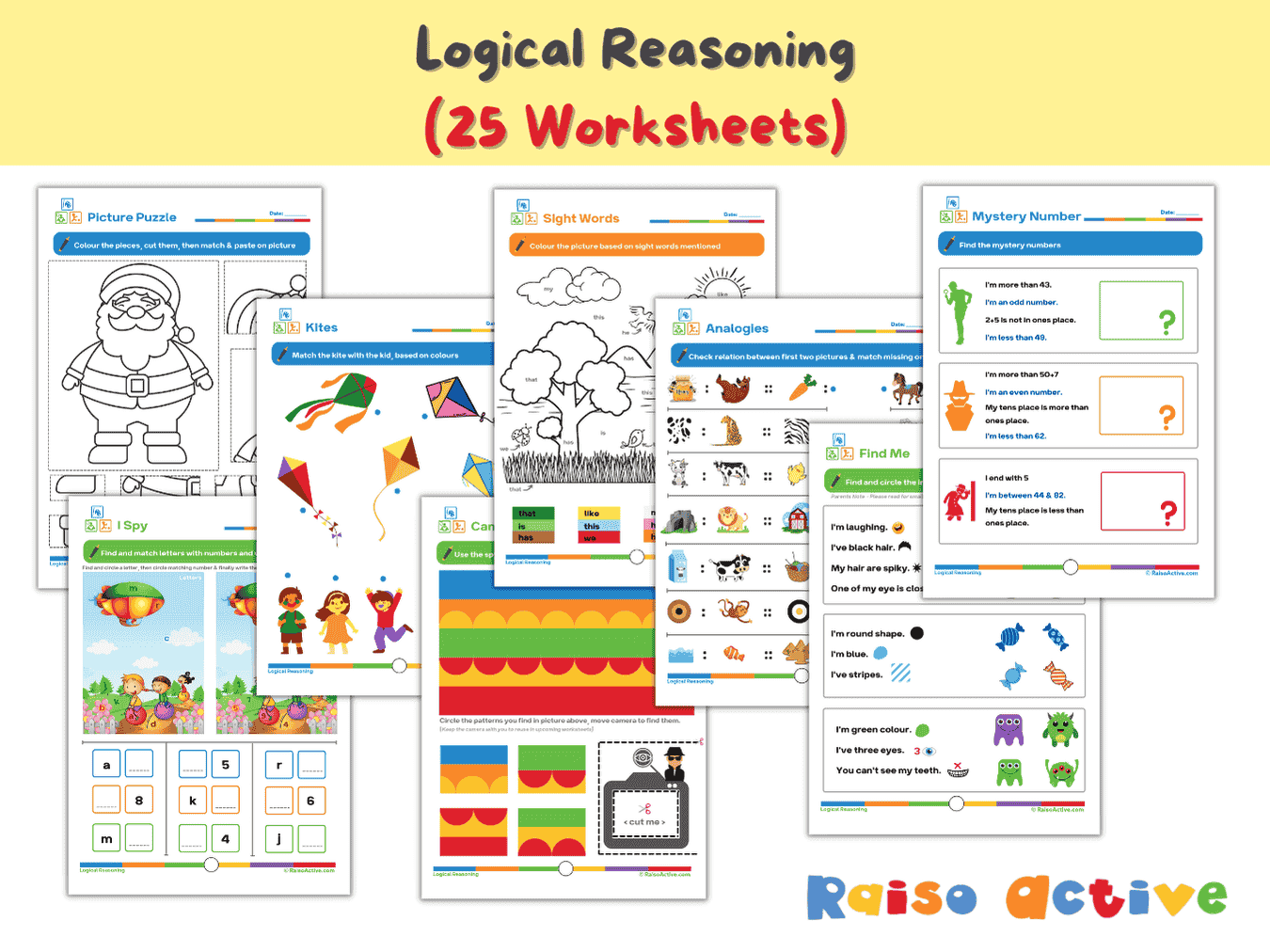
Logical Reasoning Activity Book for Preschool & Kindergarten | Patterns, Puzzles & Analogies
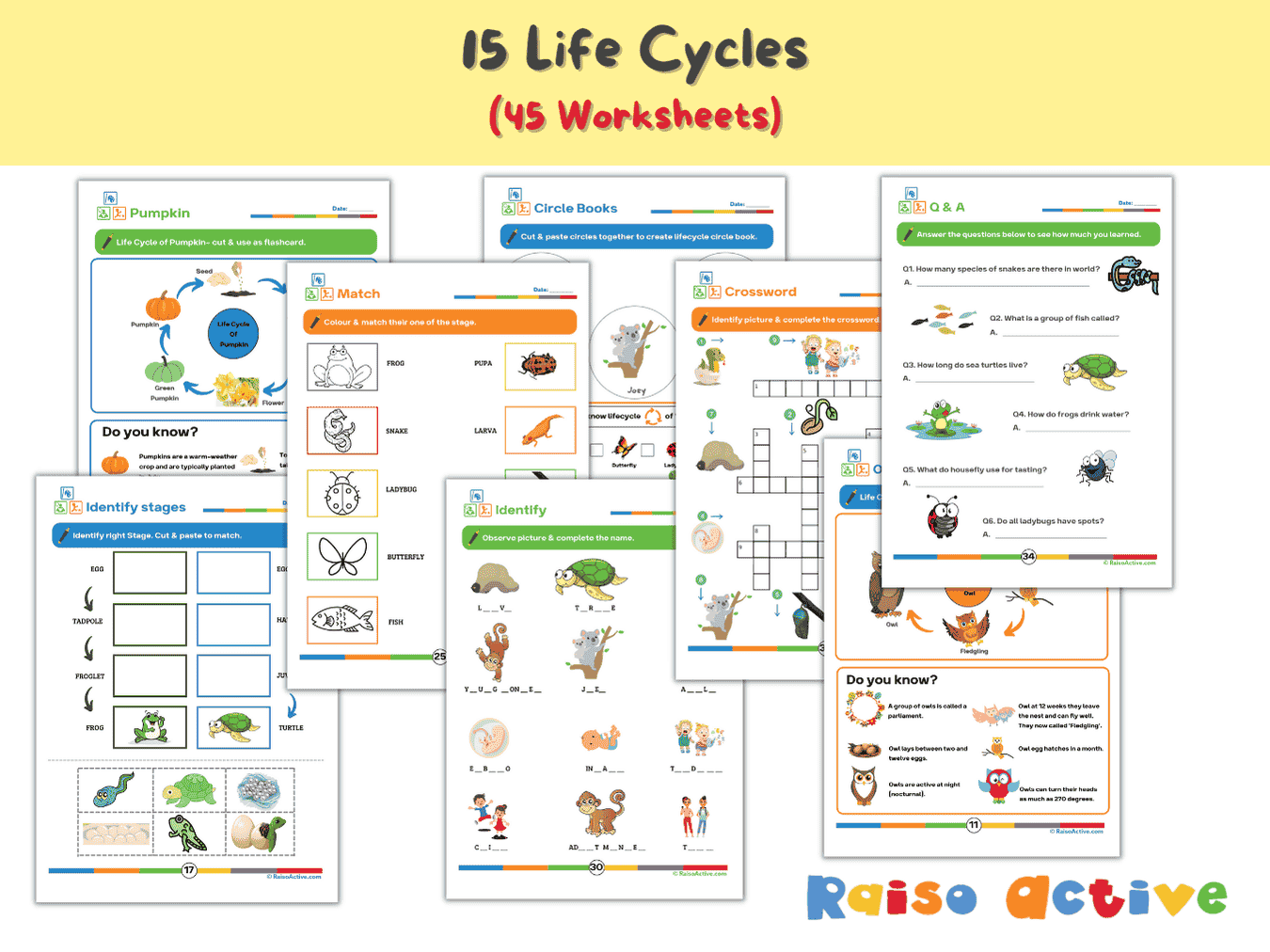
Lifecycles Activity Book & Flashcards for Preschool & Early Elementary
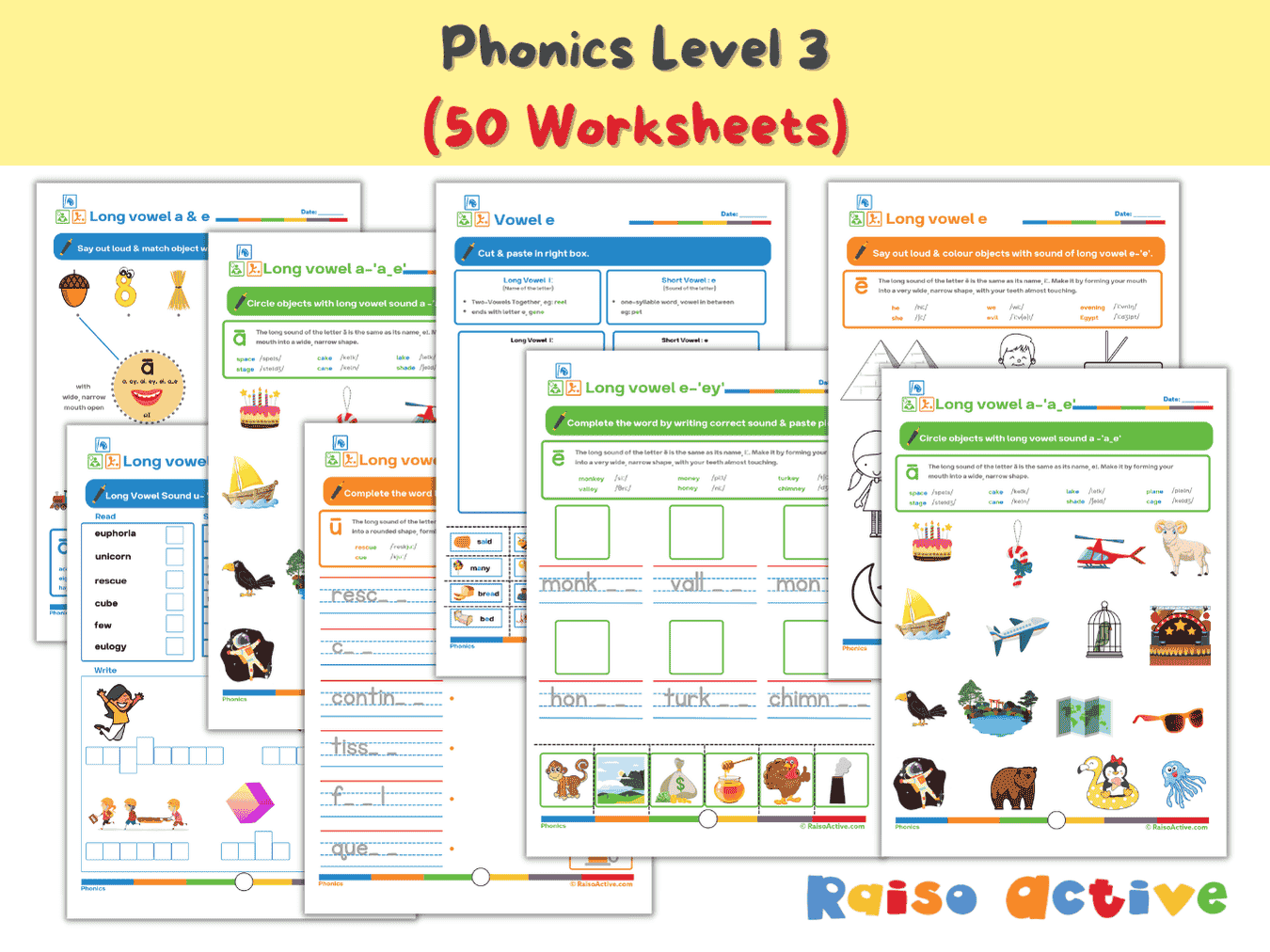
Phonics Level 3 Long Vowels Activity Book for Kindergarten & 1st Grade
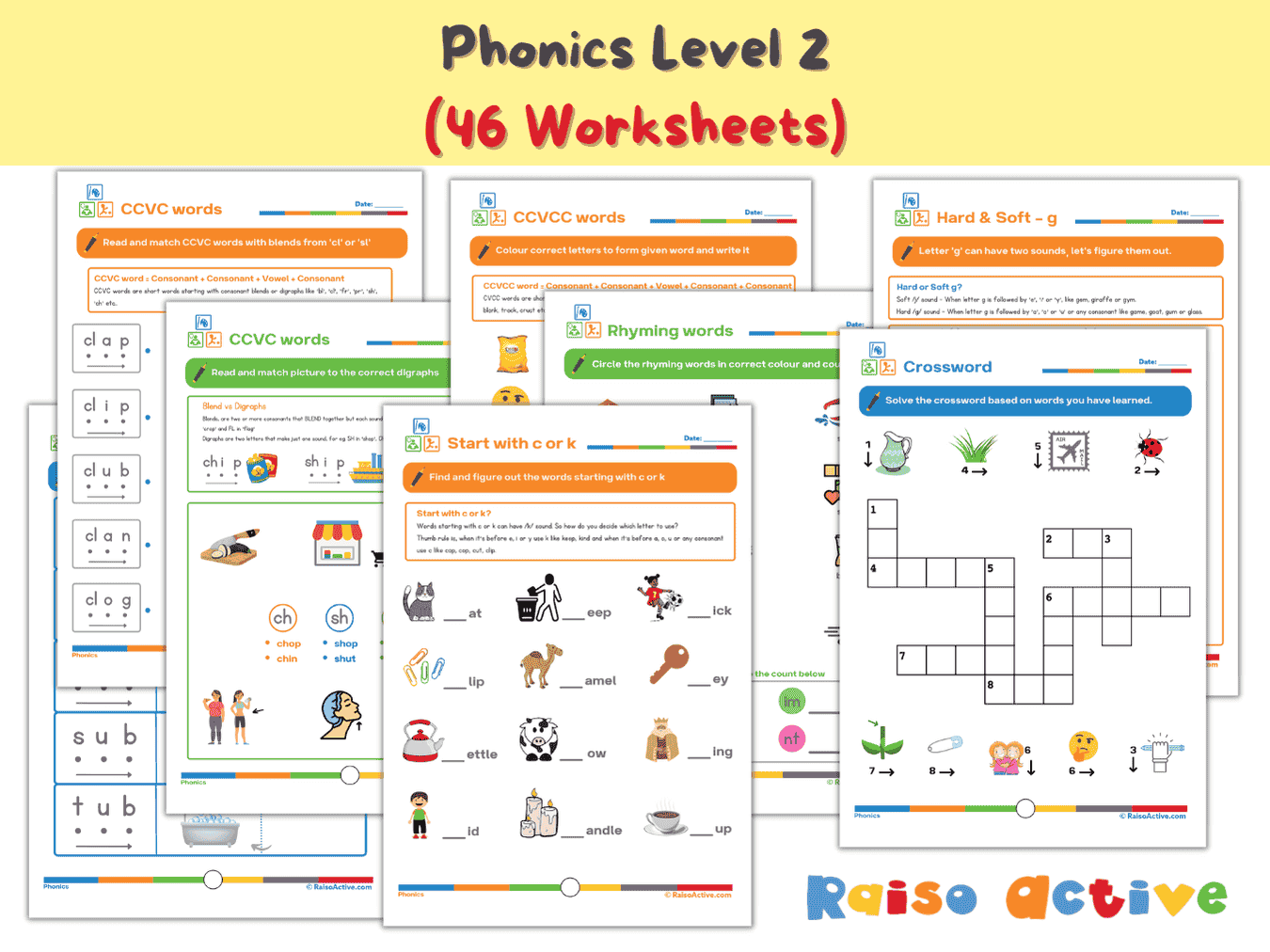
Phonics Level 2 Worksheets: CVC, CCVC, CVCC Word Families & Blends for Early Readers (Ages 4-7)
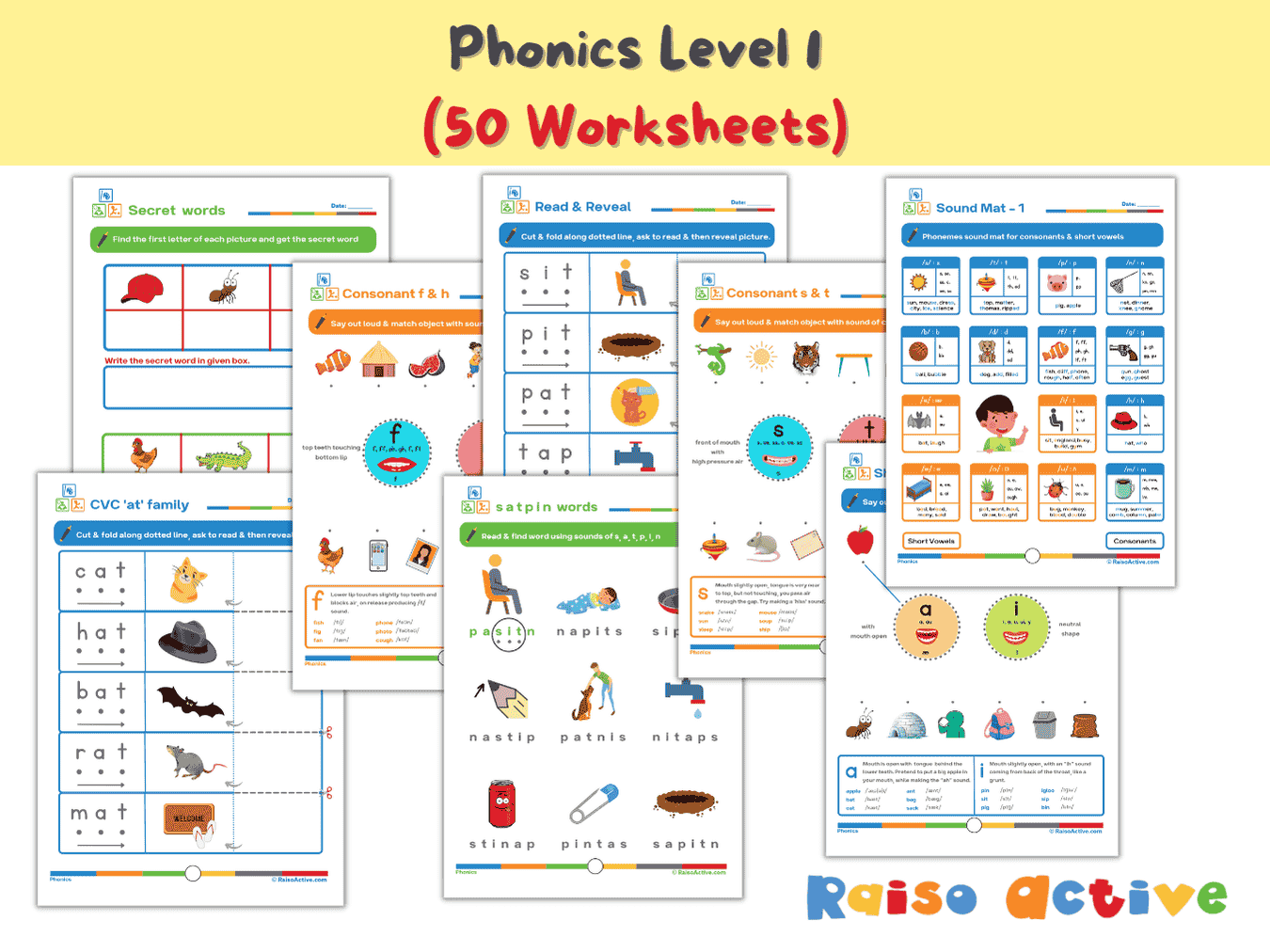
Phonics Level 1 Activity Book: Letter Sounds, Blending & CVC Words for Preschool & Kindergarten
Guides for parents and teachers
See all guides →Sight Words by Age: The First 50 Words and How to Teach Them Without Flashcard Fatigue
Which sight words to teach first and why, the heart-word method, a read-trace-write-find routine, games, and a by-age table of typical sight-word progress.
Number Formation Rhymes 0–9 and How to Fix Reversals
Original number formation rhymes for 0–9, the correct stroke order for each digit, why 3, 5 and 7 get reversed most often, and multisensory fixes that work.
How to Teach CVC Blending: A Step-by-Step Method That Works in Two Weeks
A step-by-step method for teaching CVC blending, covering continuous sounds, word families, common errors, and a 14-day plan that most children finish reading CVC words.
Phase 2 Phonics at Home: Sound Order, Blending Games, Worksheets
Phase 2 phonics at home: the five sound sets in order, oral blending, tricky words, a two-week routine, common mistakes, and free worksheets.
Reception Year Explained: EYFS Learning and How to Help at Home
A teacher's plain-English guide to the Reception Year: the seven areas of learning, Early Learning Goals, Phase 2/3 phonics, the RBA and home routines.
UKG Syllabus Explained: English, Maths and EVS Month by Month
What UKG classes typically cover in English, maths and EVS, month by month, aligned to NEP 2020, with ways to support at home and signs your child is behind.
Canonical: https://raisoactive.com/worksheets/year-1