Free printable worksheets · United Kingdom
Year 1 Matching Worksheets (Ages 5–6)
Year 1 matching worksheets are practice sheets for children aged 5–6 in Year 1 in the UK. Matching is finding and pairing items that are identical, related or belong to the same category, from among several printed options. The sheets on this page cover identifying identical pairs, matching an object to its category, matching uppercase letters to lowercase and matching a numeral to a quantity.
Year 1 opens the National Curriculum proper: daily phonics moves through Phases 3 to 5, written number sentences replace counted objects, and the phonics screening check in June asks each child to read forty words, some of them invented, to confirm they can decode reliably. Five-year-olds read the items they match. Sheets pair a three-letter word with its picture, an addition sum with its answer, a number with the ten frame that shows it, a picture with its ending sound, and opposites such as hot and cold. The line-drawing is now easy, so the value lies entirely in the content, which lets the child practice reading and sums without much writing. Eight to twelve shuffled pairs is a fair length.
461+ worksheets · free PDF download · print on A4 or Letter
Year 1 Matching Worksheets to print
Browse all worksheets for ages 5–6
Numeracy Match: Counting and Number Recognition Worksheet
Children ages 4-6 strengthen number recognition by matching written numerals to their corresponding word names or quantities, reinforcing that numbers can be represented in more than one way. This kind of numeral-to-word matching deepens number sense beyond simple counting, helping children see the relationship between symbol, word, and quantity. Coloring in their birth date personalizes the practice and connects it to something meaningful in their own life.

Abbreviations Worksheet: Matching and Writing Practice
This worksheet introduces children ages 4-6 to common abbreviations — like Mr., Dr., or St. — by having them match each shortened form to the correct sentence context and then write it in correctly. Understanding that some words have a shortened written form is an important early literacy concept, since abbreviations appear constantly in books, signs, and everyday writing. Practicing both matching and writing reinforces the connection between recognizing an abbreviation and producing it correctly from memory.

CVC 'in' Family Matching Worksheet: Read, Color, and Match!
This worksheet extends word-family practice to the 'in' pattern (pin, bin, win, tin), giving children ages 4-6 another opportunity to apply the analogy strategy of recognizing a shared ending and swapping only the first letter to read new words quickly. Practicing several word families over time — 'ad,' 'ag,' 'it,' and now 'in' — helps children generalize the underlying reading strategy rather than memorizing isolated words, which is exactly the kind of transferable skill that speeds up reading development. Coloring and matching each word to its picture adds a multisensory layer that helps the pattern stick.

Phonics Fun: Connect the Letters S-X with Starting Sounds Worksheet
Connecting pictures to their correct beginning letter across the range S through X helps children ages 4-6 extend their phonics practice beyond the most common early letters, building broader letter-sound matching skills. This wider range also introduces children to less frequently practiced sounds, rounding out their overall phonemic awareness.
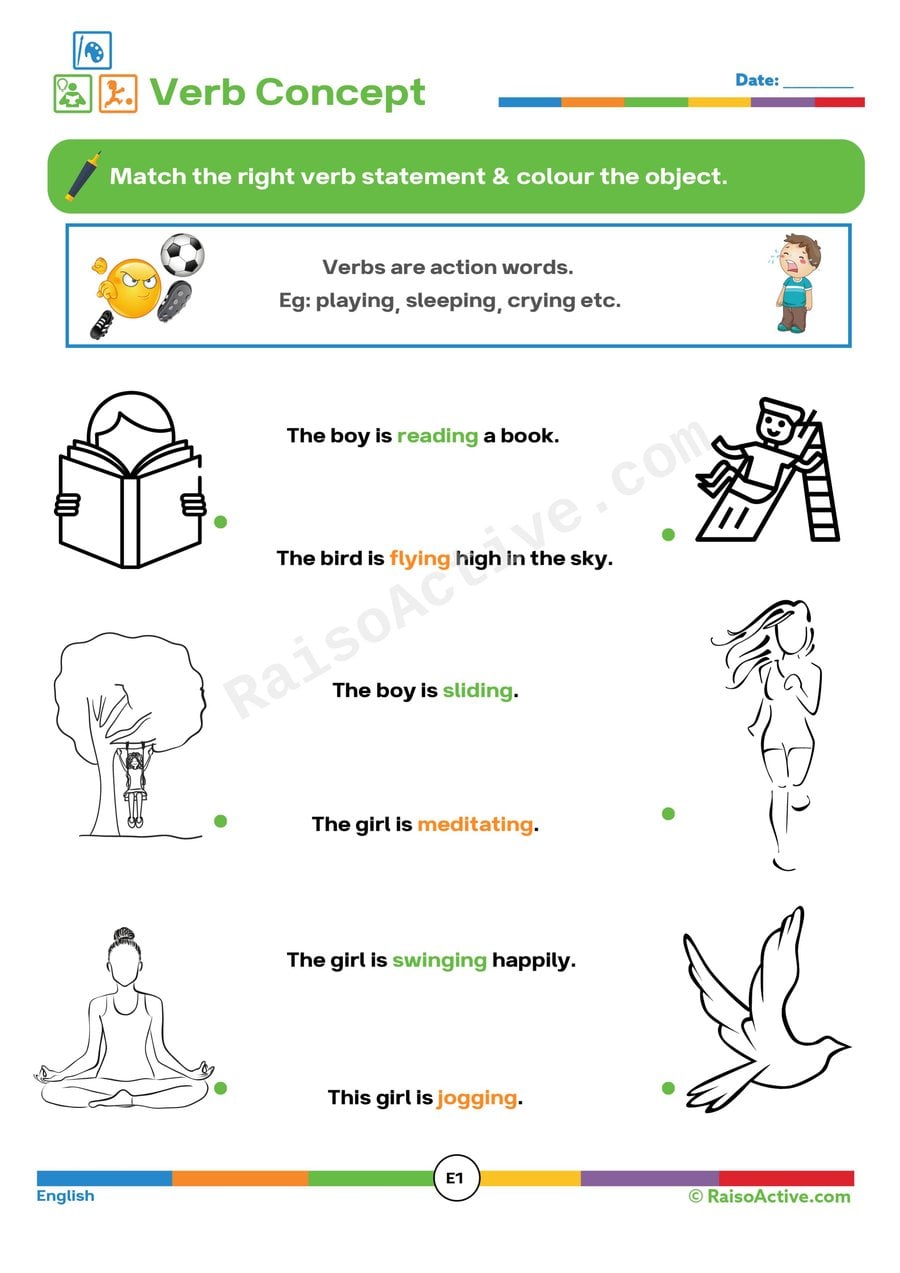
Action Verbs Worksheet: Match and Color!
This worksheet has 4-6 year olds read a short sentence, pick out the action word inside it, and match that sentence to the picture showing the action happening — a skill that bridges early reading with grammar. Identifying the verb specifically (rather than just understanding the sentence generally) is a more advanced task than simple picture-word matching, since children have to isolate one word's job within a whole sentence. Coloring the matched picture afterward gives an easy, low-pressure way to confirm the match was correct.
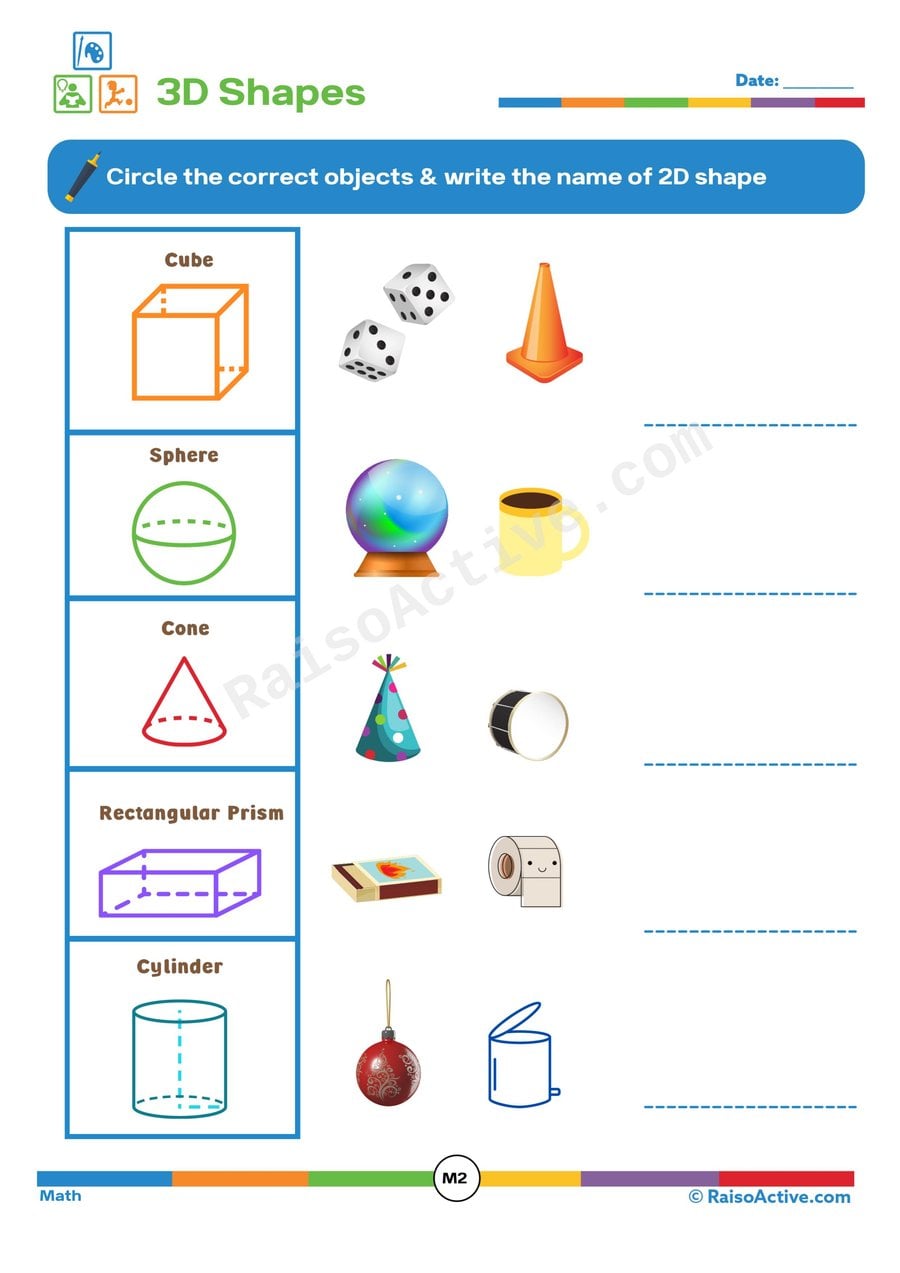
3D Shapes Worksheet: Circle and Name the Shapes!
This worksheet helps children ages 4-6 identify common 3D shapes like spheres, cubes, and cylinders by matching them to real objects, then connects each 3D shape to its related 2D shape, such as a cube's square face or a sphere's circular outline. Understanding that 3D shapes are built from 2D shapes is an important early geometry concept that supports later spatial reasoning and measurement skills.
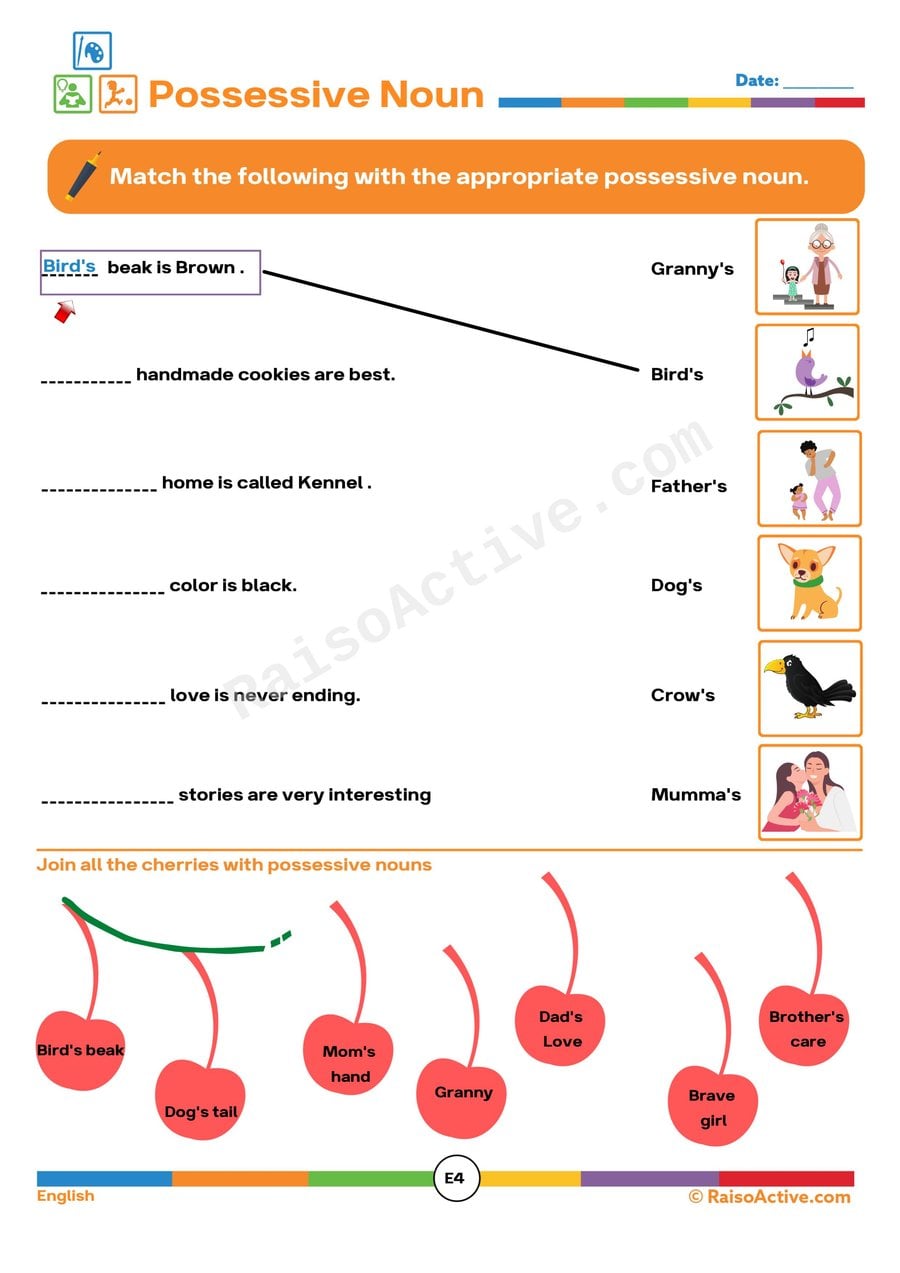
Possessive Noun Matching Worksheet for Kids
Children ages 4-6 learn to identify possessive nouns, like 'the dog's bone' or 'Mia's book', which show ownership using an apostrophe and 's'. Matching possessive phrases to their meaning builds early grammar awareness that will later support correct sentence writing and reading comprehension. The cherry-connecting activity adds a playful visual-tracking layer to reinforce the matching skill.

Abbreviations Worksheet: Matching Words and Abbreviations!
This worksheet teaches children common abbreviations, like 'Dr.' for Doctor or 'St.' for Street, by having them match each full word to its shortened form. For four- to six-year-olds who are building early reading and writing fluency, recognizing abbreviations is a practical real-world skill, since these shortened forms appear regularly in addresses, titles, and everyday writing.
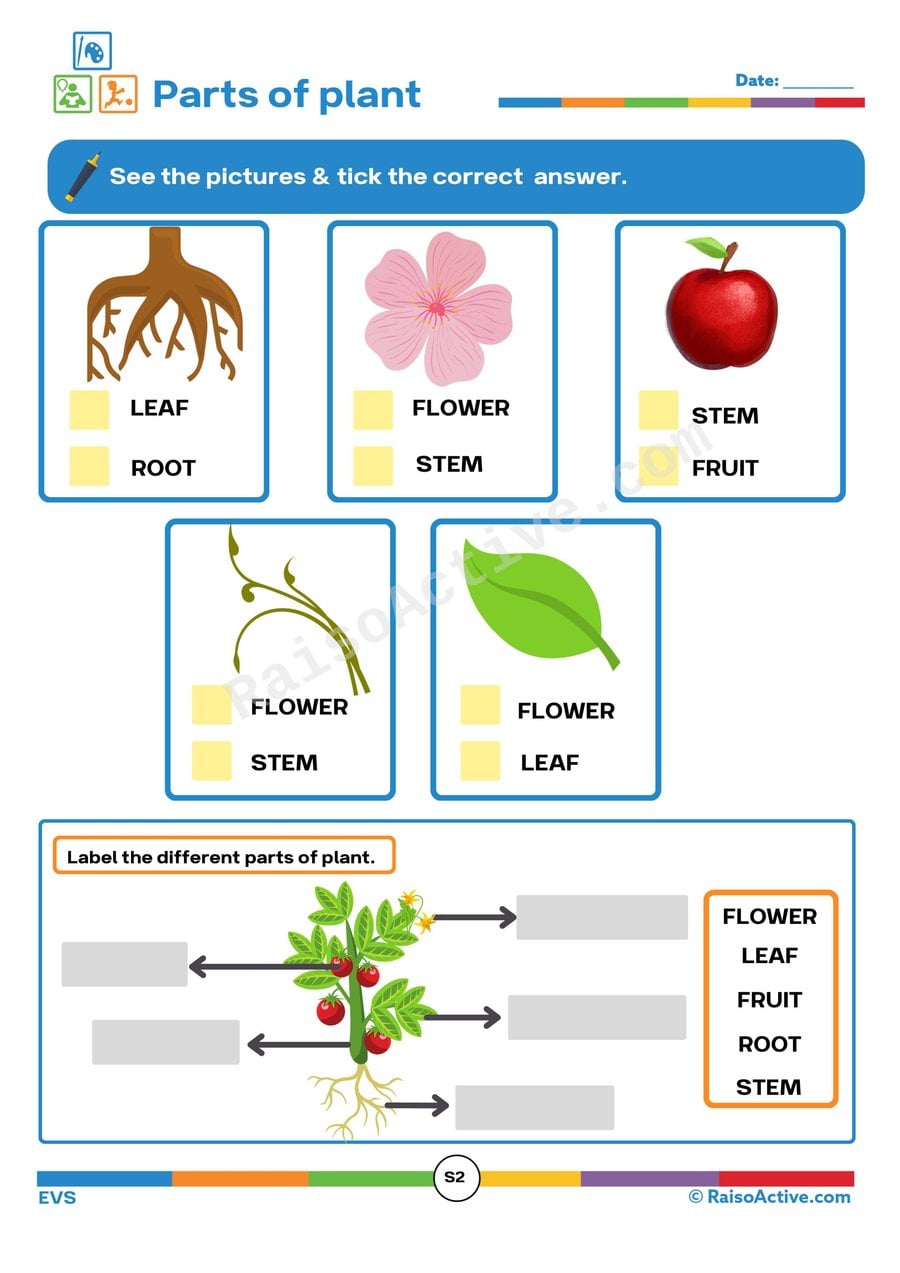
Parts of a Plant Worksheet for Kids
This worksheet helps children ages 4-6 identify and label the main parts of a plant — roots, stem, leaves, flower, and fruit — building foundational botany knowledge. Learning to associate each part with its picture and location on a plant diagram develops both vocabulary and an early understanding of plant structure, which supports later lessons on how plants grow and survive.

Shape Properties Worksheet: Identify and Match Shapes!
This worksheet moves beyond simply naming 3D shapes to analyzing their properties — counting faces, edges, and vertices — which builds the early geometric reasoning children need before formal geometry lessons. For four- to six-year-olds, learning that a cube has 6 faces while a sphere has none introduces the idea that shapes can be described by measurable features, not just their overall look.

Short Vowel Sounds: Matching Objects to Sounds Worksheet
This worksheet helps children ages 4-6 tell apart the short 'o' sound (as in 'fox') from the short 'u' sound (as in 'sun') by matching pictured objects to their correct vowel sound. Short vowels are the building blocks of the earliest CVC words children read, so being able to hear and distinguish them accurately is essential before moving on to more complex word patterns.

Match the Countries with Their Symbols Worksheet
Children ages 4-6 build early social studies awareness by matching country flags to their well-known national symbols, connecting visual recognition with basic geography and cultural knowledge. This kind of matching exercise strengthens careful observation, since children must compare colors, shapes, and details across both the flag and the symbol image. It also plants the seed for understanding that different countries have distinct identities and traditions.
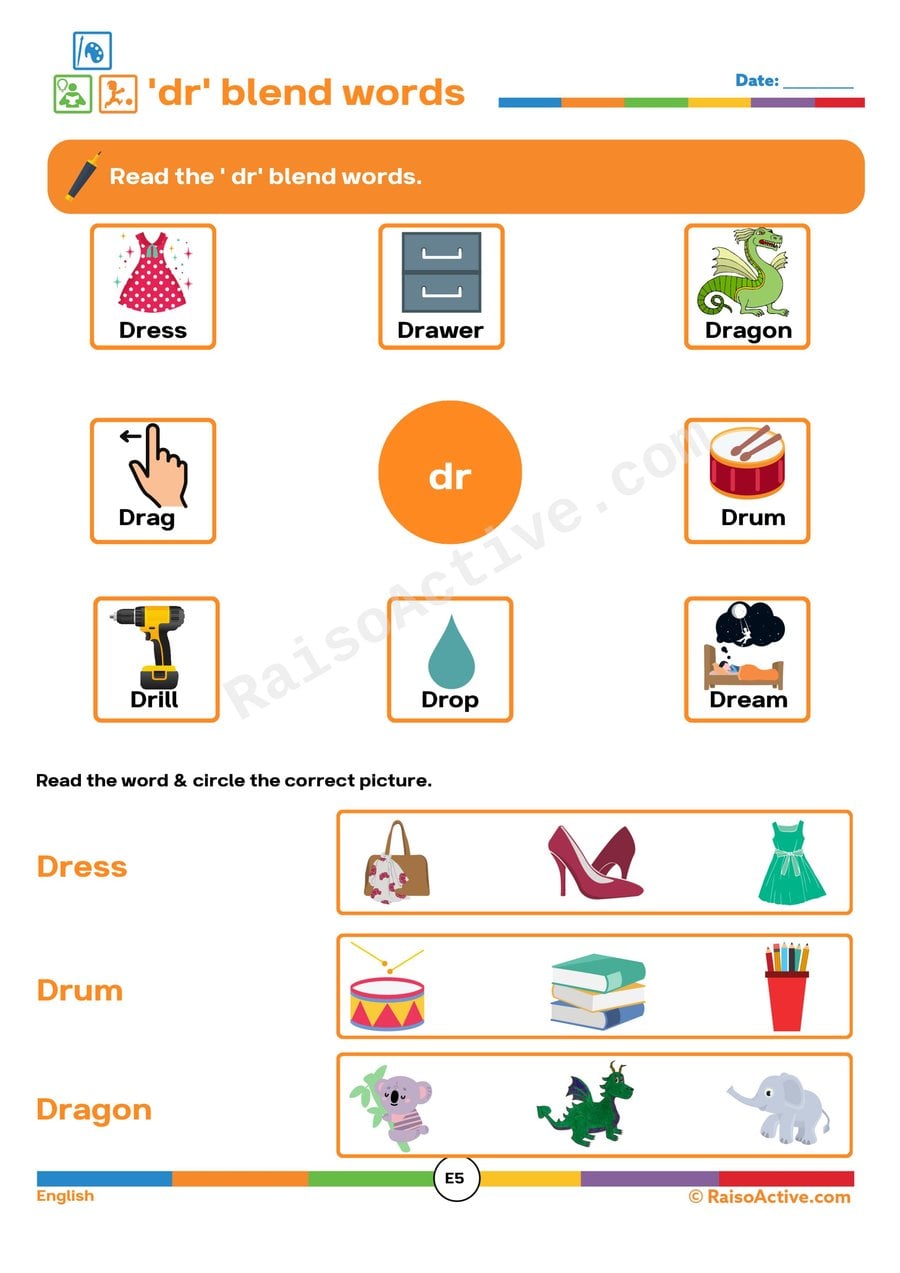
Dr Blend Words Worksheet: Read and Match!
This worksheet focuses on the 'dr' blend, as in 'drum' or 'dress,' asking children to read the word first and then find its matching picture, which reverses the more common picture-first phonics approach and pushes children to truly decode the word rather than guess from an image. For ages four to six, reading the word independently before checking against a picture builds real decoding confidence.
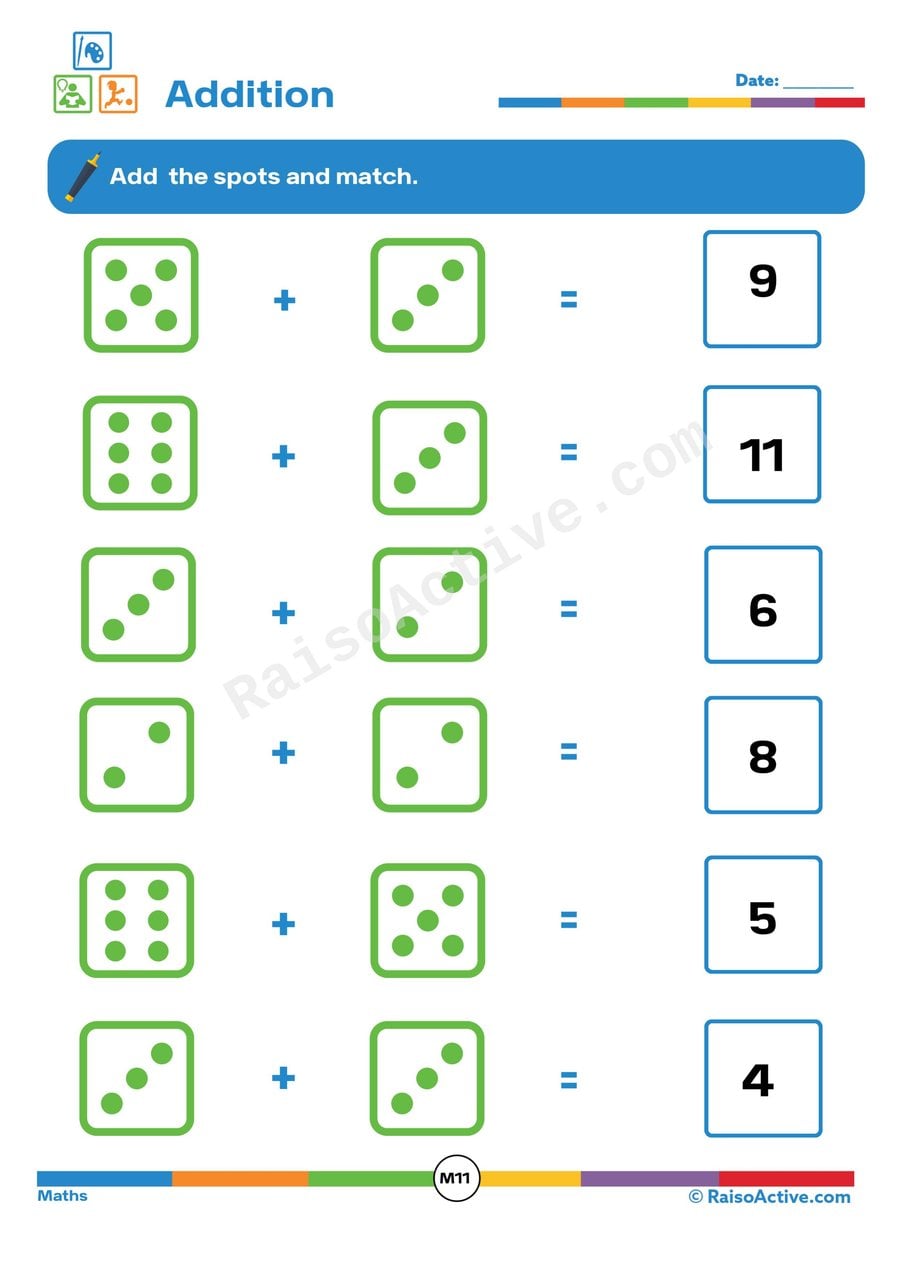
Dice Addition Worksheet: Add the Spots and Match!
This worksheet builds basic addition fluency by having children count the dots on two dice, add the totals together, and match the resulting sum to the correct number. For four- to six-year-olds, using dice as the counting tool adds a layer of subitizing practice — the ability to recognize a small quantity of dots at a glance without counting one by one — which speeds up addition over time.

Pollution Awareness Worksheet for Kids: Circle the Correct Answer!
This worksheet introduces children ages 4-6 to the idea that pollution comes in different forms — air, water, and land — and asks them to connect each type to a picture, building early environmental science vocabulary alongside visual reasoning. Sorting items into recycling categories afterward extends the lesson from simply naming a problem to practicing a real-world solution, which helps young children start to see themselves as capable of taking action. This blend of identification and hands-on sorting suits a preschooler's concrete way of understanding abstract ideas like 'the environment.'
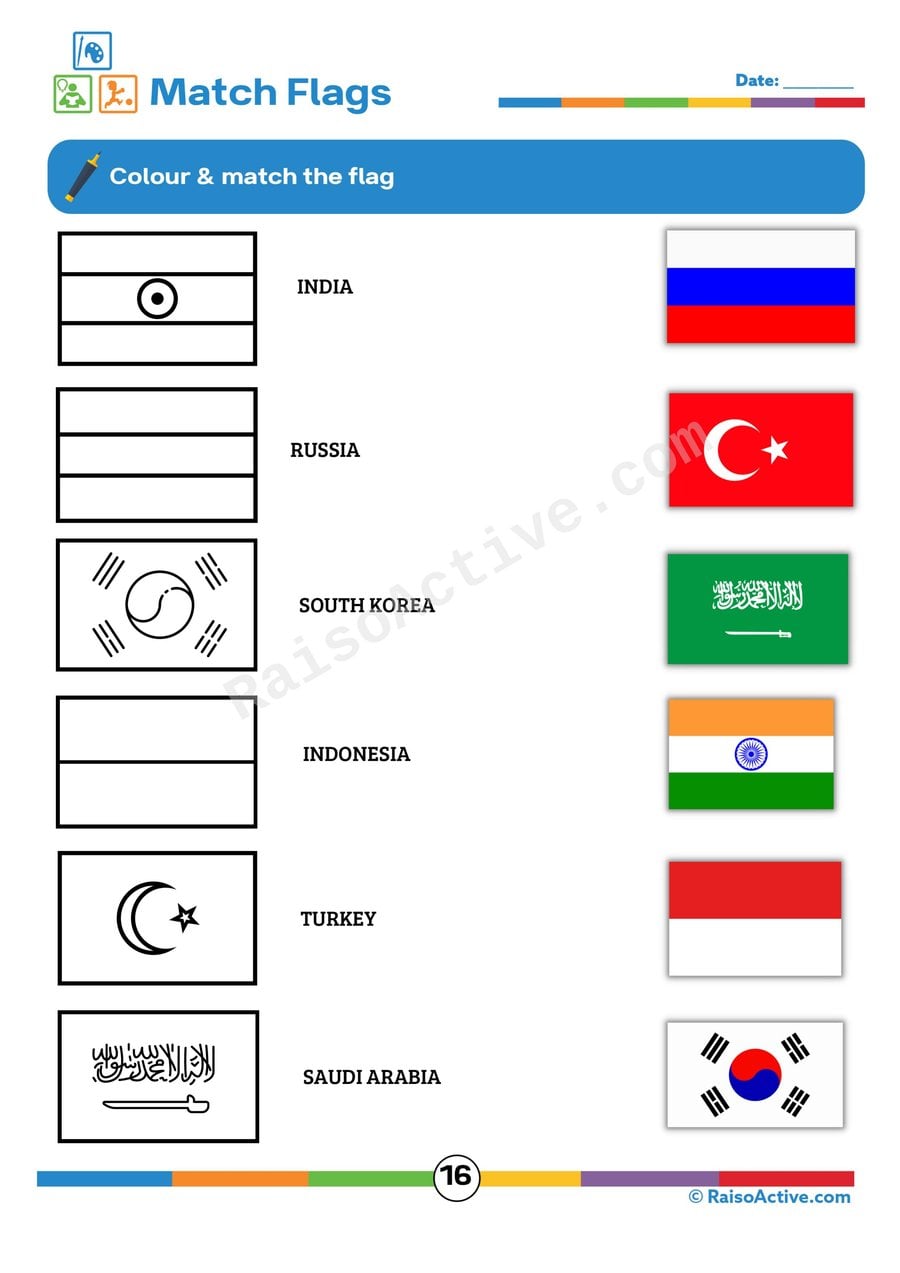
Match the Flags Worksheet for Kids
Children ages 4-6 build flag recognition by matching a set of country flags to their correct names, continuing to strengthen geography vocabulary and visual discrimination through this final flag-focused worksheet. Working with flags is an especially effective way to build visual memory in young children, since each one is a distinct, colorful pattern they can learn to recognize quickly.
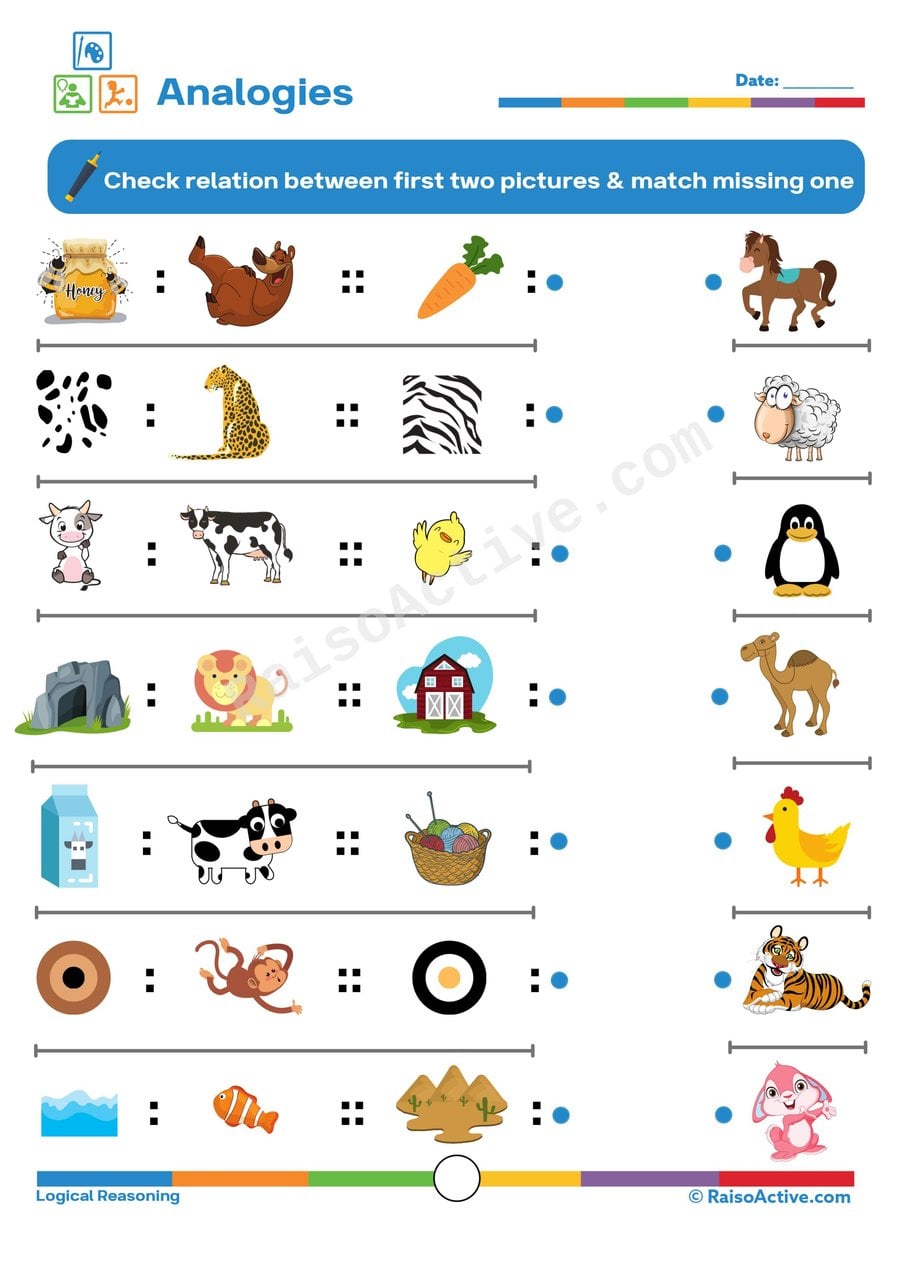
Analogies Worksheet: Match the Pictures!
Identifying the relationship between two pictures and then finding a third picture that completes the same relationship teaches children ages 4-6 an early form of analogical reasoning, a skill that underlies much of later logical and mathematical thinking. Because children must first figure out an abstract relationship, like cause and effect or part to whole, before applying it to a new pair, this worksheet is more advanced than simple picture matching. Drawing a line to connect the completed analogy gives a clear, hands-on way to show their reasoning.

Read and Match: Sentence Matching Worksheet for Early Readers
This worksheet moves children ages 4-6 beyond single words into reading whole simple sentences and matching each one to the picture it describes. Comprehending a full sentence — not just recognizing individual words — is a genuine leap in reading skill, since it requires holding several words in mind together and connecting their combined meaning to an image.
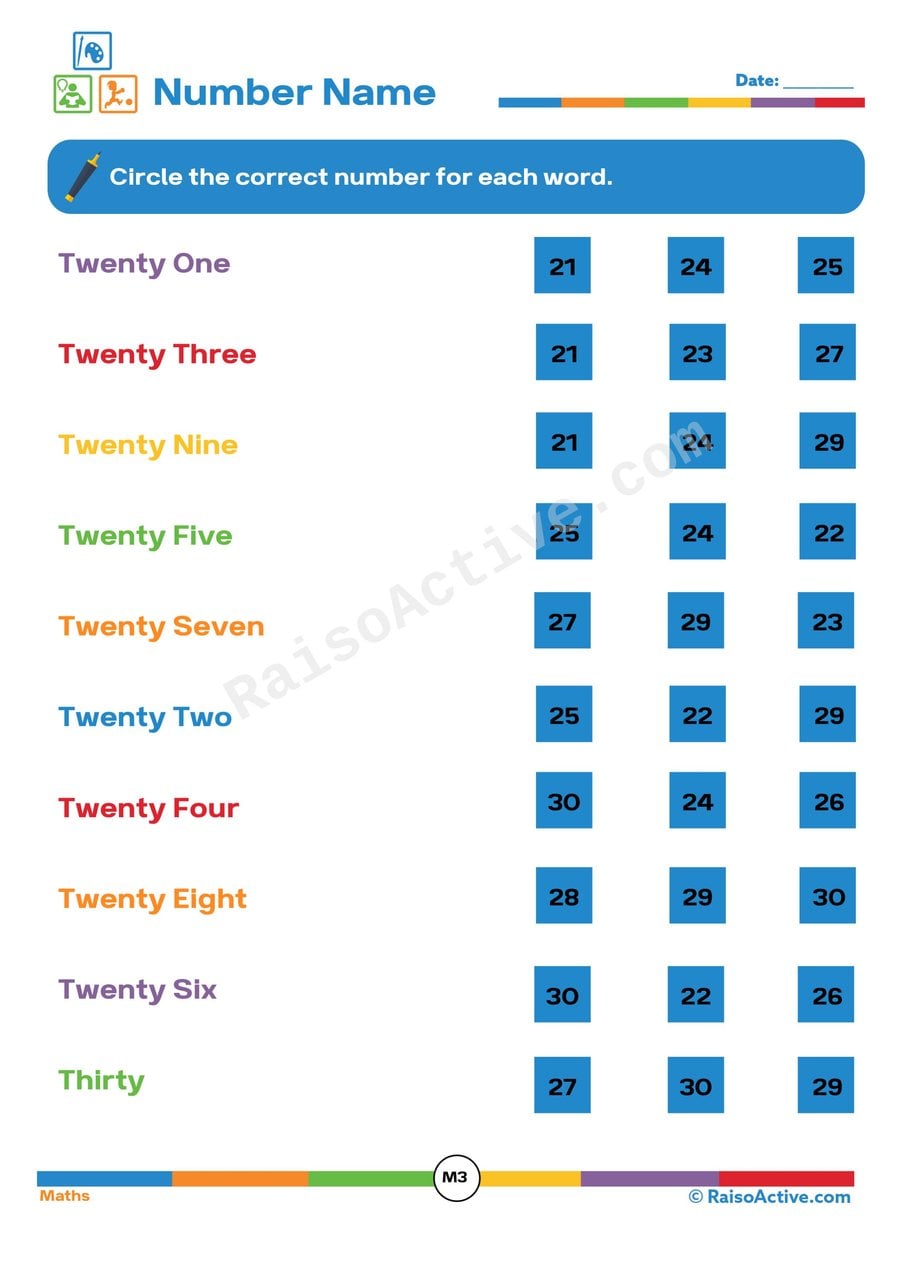
Number Names Matching Worksheet for Kids
This worksheet helps children ages 4-6 connect written number words, like 'five' or 'nine,' to their numeral form by reading each word and circling the matching digit. Recognizing number names in text is a skill separate from counting objects, and it becomes important as soon as children start encountering numbers written out in books, signs, or math word problems.

Family Words Cut and Paste Worksheet for Early Readers
Reading a simple CVC word and matching it to its picture teaches children ages 4-6 to blend individual sounds into a whole word and then connect that word to its meaning, a core decoding skill for early readers. Because CVC words follow a consistent consonant-vowel-consonant pattern, practicing them builds a reliable phonics foundation that transfers to reading many other simple words.
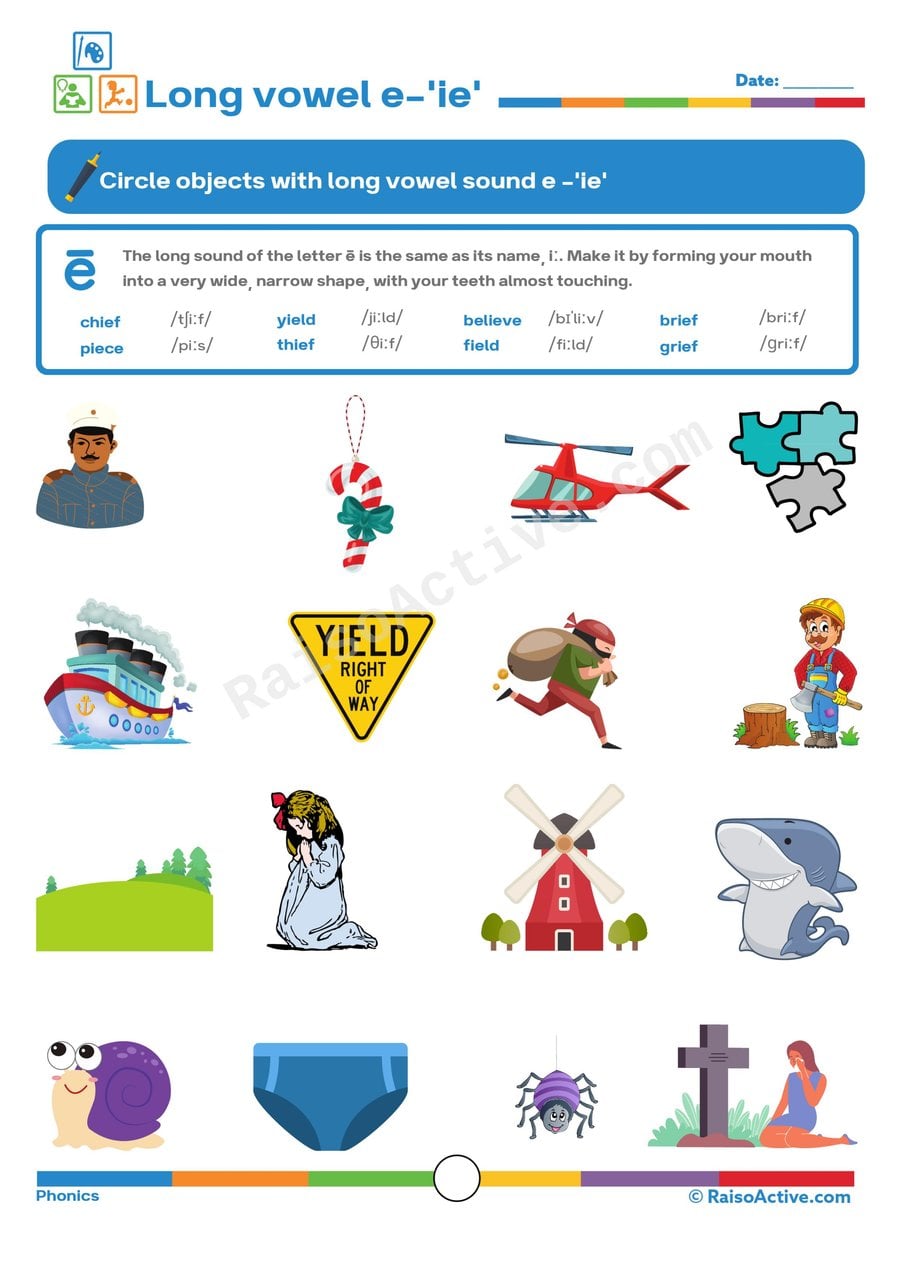
Long Vowel E 'ie' Worksheet: Circle the Pictures!
This worksheet asks children ages 4-6 to identify words with the long 'e' sound spelled using the less common 'ie' pattern, as in 'chief' and 'field', and circle the matching pictures. Because 'ie' is a trickier, less intuitive spelling for the long 'e' sound than more familiar patterns like 'ee', this worksheet stretches children's phonics knowledge toward more advanced and irregular spelling patterns.
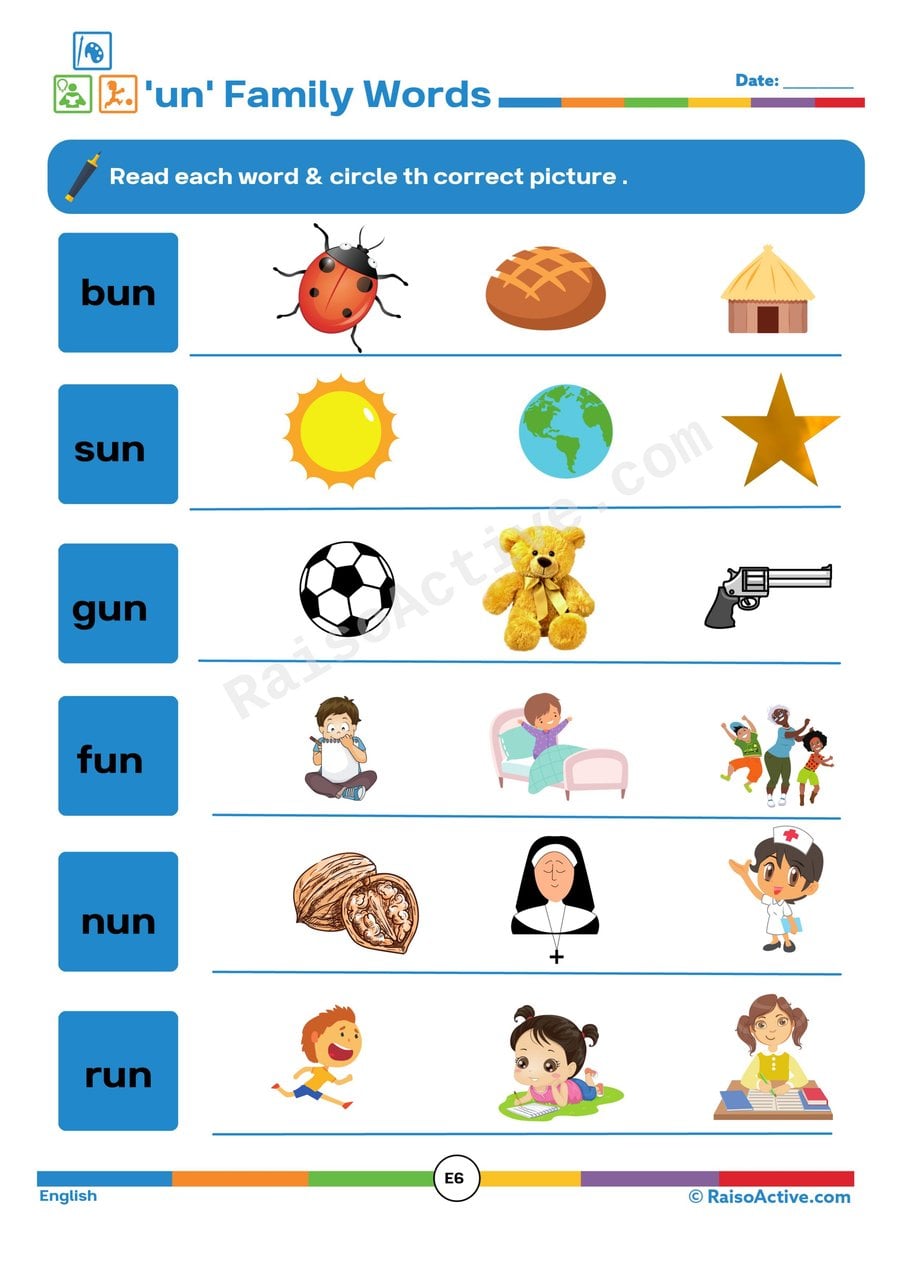
Fun 'un' Family Words Worksheet for Kids
Reading and matching words from the 'un' family, like fun, run, and sun, teaches children ages 4-6 to recognize a shared spelling pattern and use it to decode new words more quickly. Because this word family relies on consistent rhyming sounds, practicing it strengthens the connection between letter patterns and pronunciation that underlies early reading fluency.
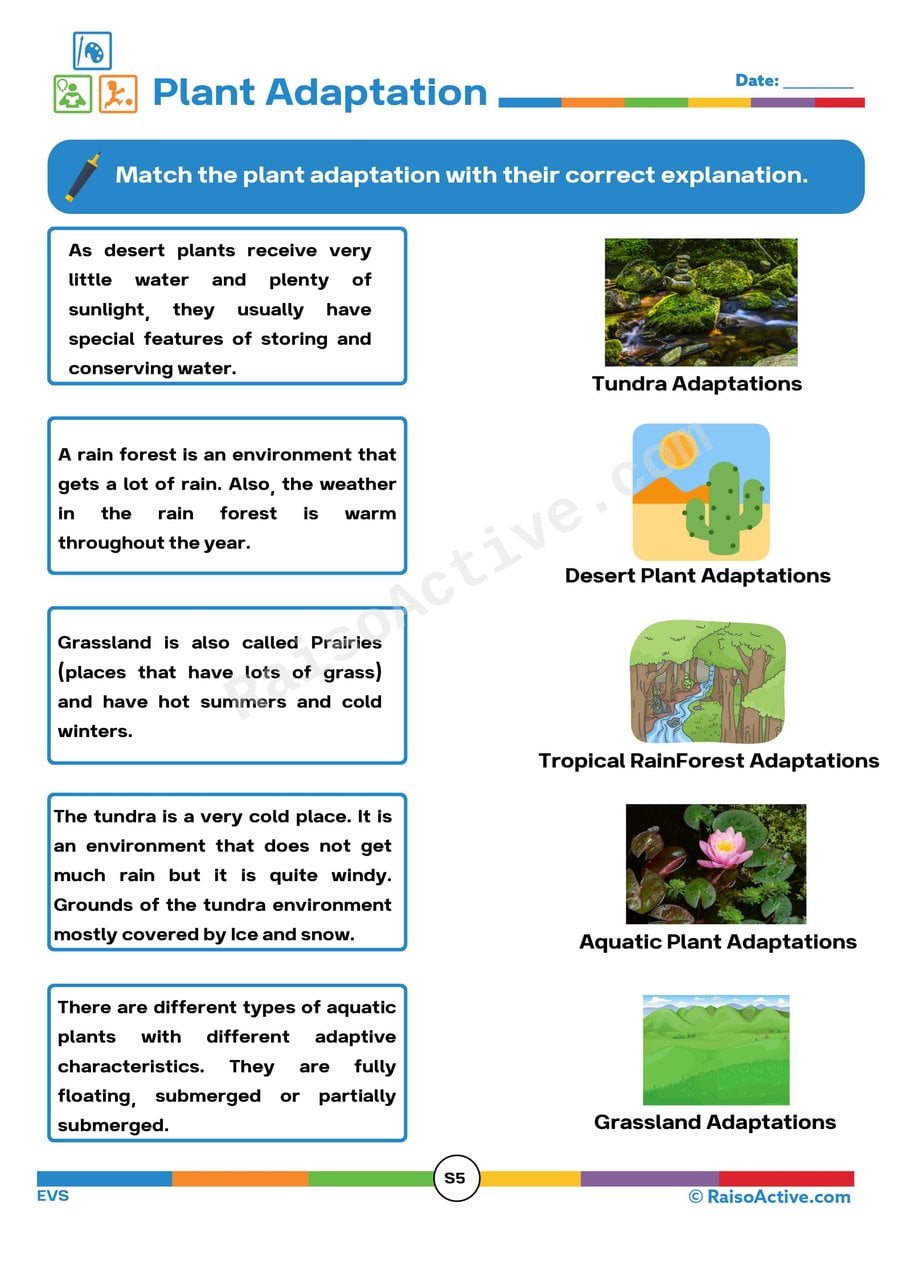
Plant Adaptation Matching Worksheet for Kids
This worksheet has 4-6 year olds match written descriptions of plant adaptations to the correct pictures, building on the idea that plants develop specific features — thick leaves, deep roots, bright flowers — to help them survive in their particular environment. Matching a description to an image requires your child to connect an abstract idea (why does this feature help?) to a concrete picture, which is a genuine step up from simple plant-part identification.

Landforms Worksheet: Identify and Circle the Correct Answer!
Reading a short description and circling the matching landform picture asks children ages 4-6 to connect written or spoken language directly to a visual feature of the natural world, strengthening both reading comprehension and early geography vocabulary. Because landforms like deserts, hills, and mountains can look somewhat similar in simple illustrations, this task also sharpens careful reading and visual comparison rather than quick guessing. Understanding these terms gives children language to describe landscapes they see in books, on trips, or in nature.
What Year 1 matching worksheets cover
Five-year-olds read the items they match. Sheets pair a three-letter word with its picture, an addition sum with its answer, a number with the ten frame that shows it, a picture with its ending sound, and opposites such as hot and cold. The line-drawing is now easy, so the value lies entirely in the content, which lets the child practice reading and sums without much writing. Eight to twelve shuffled pairs is a fair length.
- Match a three-letter word such as dog to its picture
- Draw lines from addition sums to their answers within 10
- Pair opposites such as hot and cold, up and down
- Match a numeral to the ten frame showing that many
- Connect a picture to the letter it ends with
How to use these worksheets at home or in class
A decodable passage or word list most days, plus a short number bonds sheet, keeps pace with a Year 1 classroom. Fifteen minutes is a reasonable ceiling, and reading the passage twice in one sitting builds the fluency the screening check rewards.
Start with the sheet that matches what your child can already do, then move one step up. Keep finished sheets in a folder: Year 1 teachers often ask for evidence of practice, and children like seeing their own progress.
Is your child ready for Year 1 matching work?
Entering this stage, a child should blend most Phase 3 sounds into words, write a few letters correctly formed, count reliably to twenty, and sit through a short table task without needing constant redirection.
Frequently asked questions
Are matching worksheets too easy for a five-year-old?
The format is easy, and that is the point: it lets a child practice reading words or checking sums without the effort of writing them out. What changes at five is the content. If a sheet is finished in a minute without a single error, keep the format but move the content on, for example from word-to-picture pairs to sum-to-answer pairs, or shuffle the columns and add more pairs.
What should a Year 1 child be able to do in matching?
Five-year-olds read the items they match. Sheets pair a three-letter word with its picture, an addition sum with its answer, a number with the ten frame that shows it, a picture with its ending sound, and opposites such as hot and cold. The line-drawing is now easy, so the value lies entirely in the content, which lets the child practice reading and sums without much writing. Eight to twelve shuffled pairs is a fair length. Entering this stage, a child should blend most Phase 3 sounds into words, write a few letters correctly formed, count reliably to twenty, and sit through a short table task without needing constant redirection.
Do these worksheets follow the Year 1 curriculum?
The sheets cover identifying identical pairs, matching an object to its category, matching uppercase letters to lowercase and matching a numeral to a quantity, which sit inside the National Curriculum KS1 (Year 1); Letters and Sounds Phase 3–5 outcomes for Year 1. Kindergarten / 1st Grade (US), UKG (India) use the same skills at this age, so the sheets also fit families following those programmes.
Are these Year 1 matching worksheets free?
Yes. Each worksheet downloads free as a watermarked PDF once you create an account, with a limit of five a day. An annual membership ($20) removes the watermark and the limit for the whole library of over 1,000 worksheets and every printable pack.

Written by
Hemsweta Jain · Teacher Cheena
MBA and Early Childhood Educator, teaching since 2014 · Founder of RaisoActive, Mumbai
Written and reviewed by Hemsweta Jain (Teacher Cheena), who designs every RaisoActive worksheet.
Last reviewed
Printable packs for ages 5–6
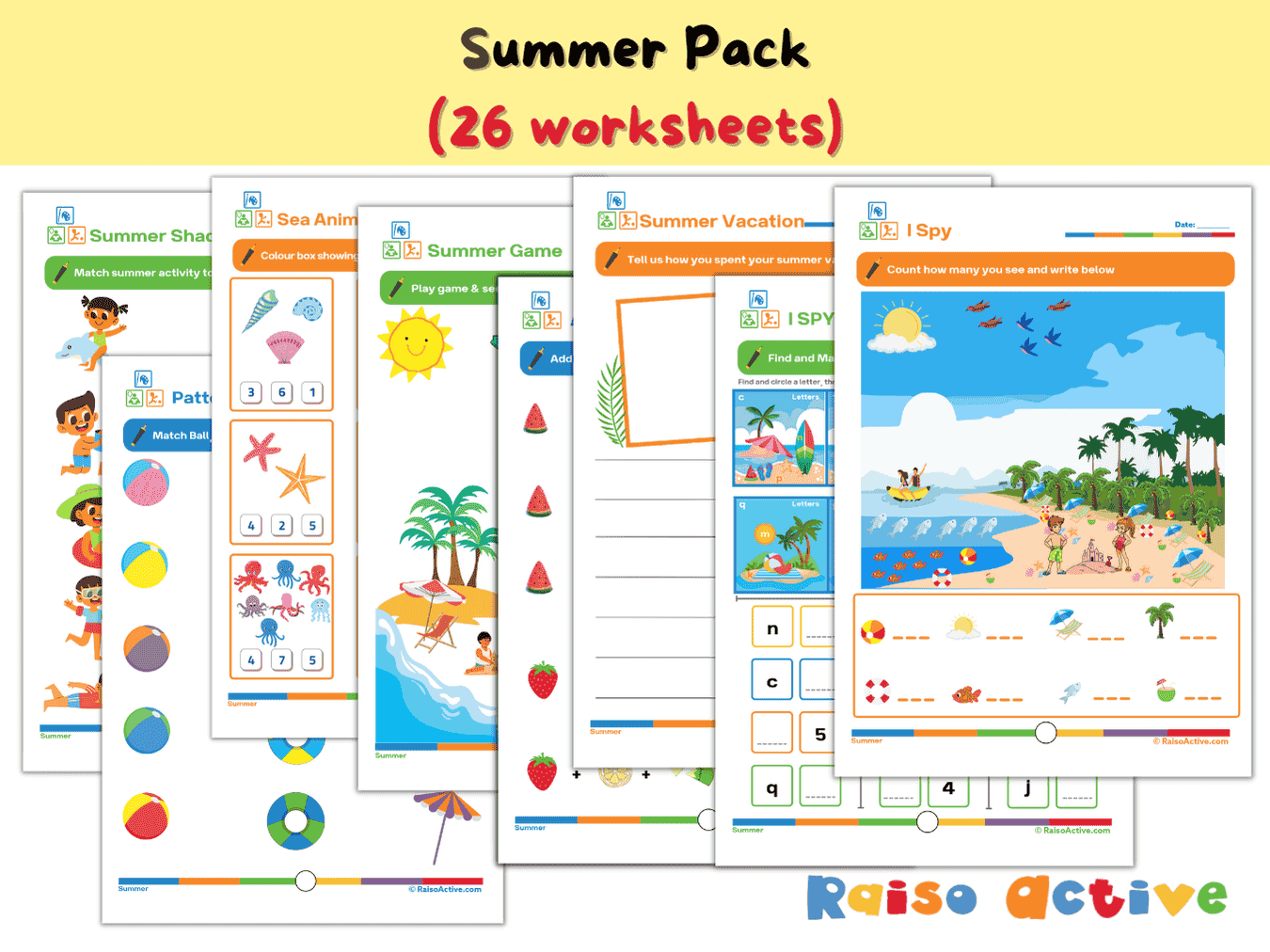
Summer Activity Pack: Math, Literacy, Puzzles & More for Preschool & Kindergarten
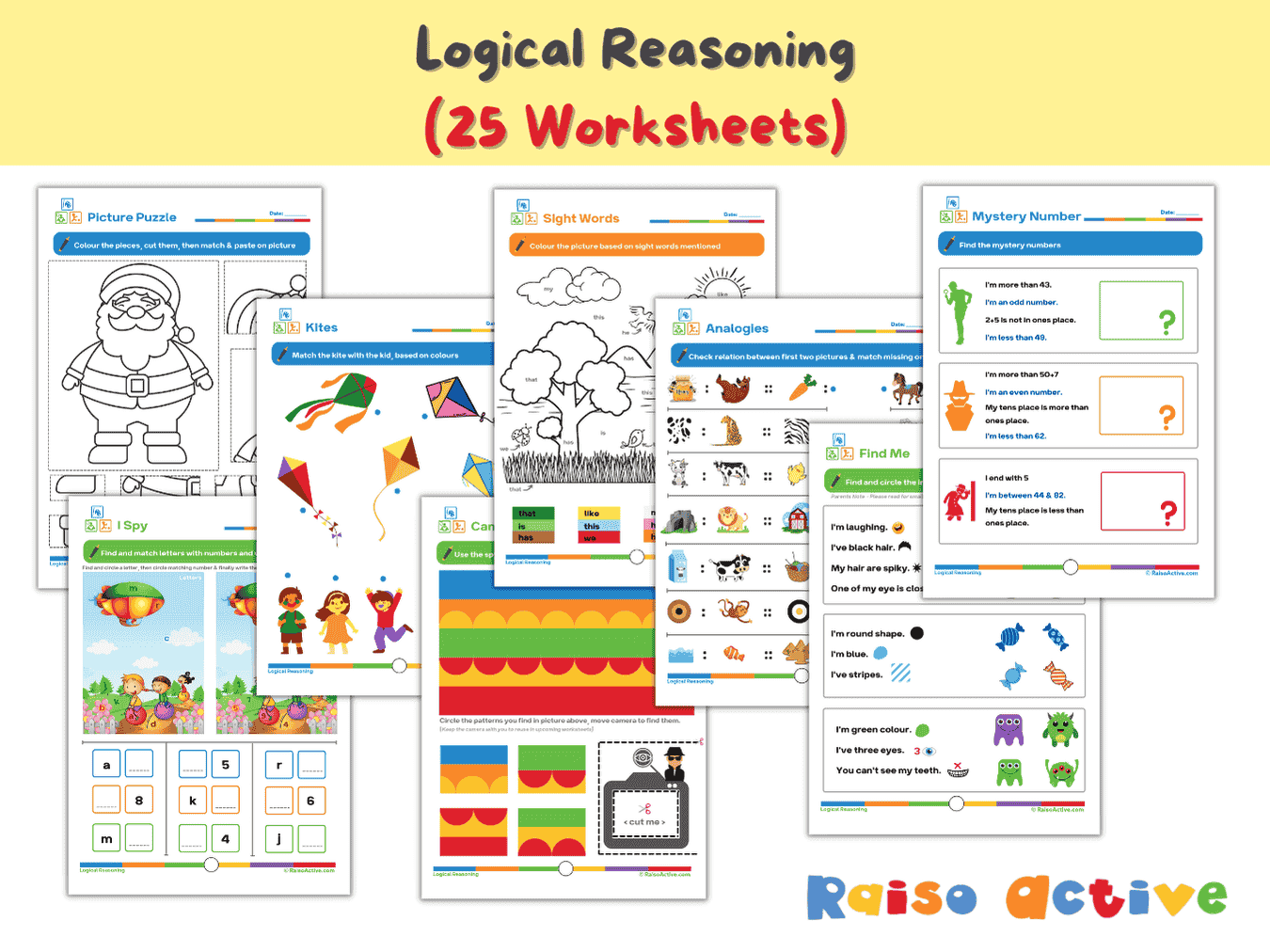
Logical Reasoning Activity Book for Preschool & Kindergarten | Patterns, Puzzles & Analogies
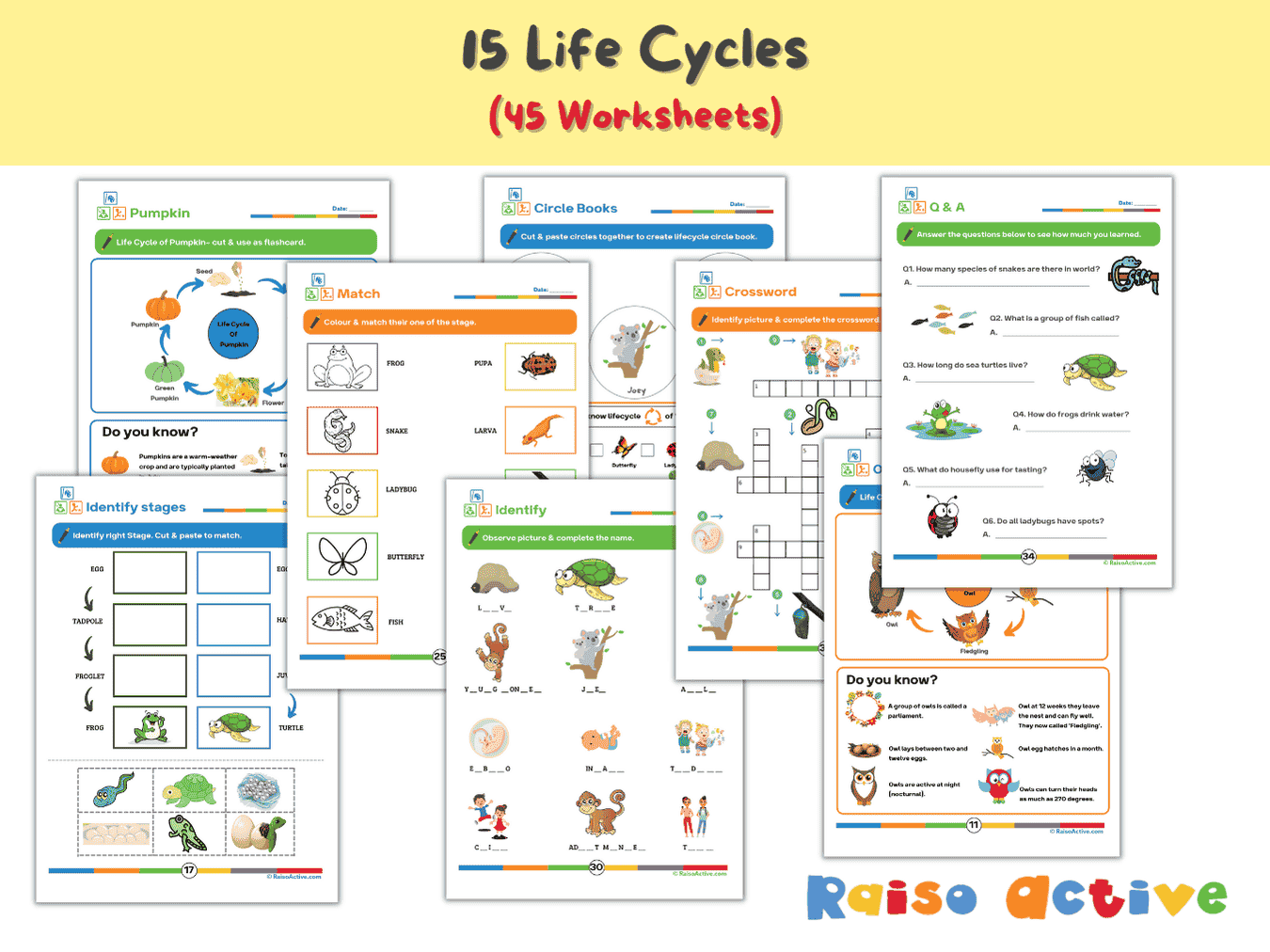
Lifecycles Activity Book & Flashcards for Preschool & Early Elementary
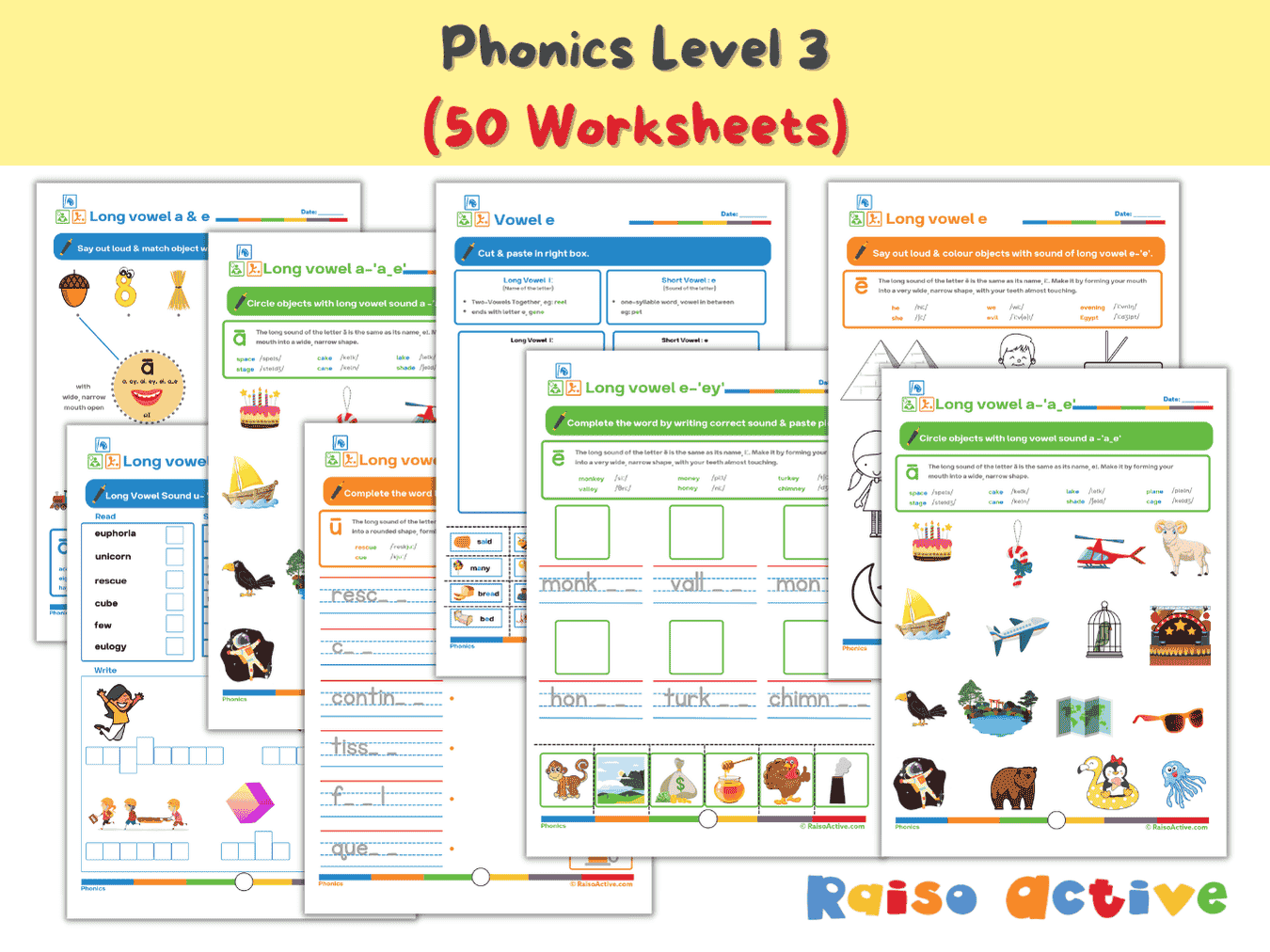
Phonics Level 3 Long Vowels Activity Book for Kindergarten & 1st Grade
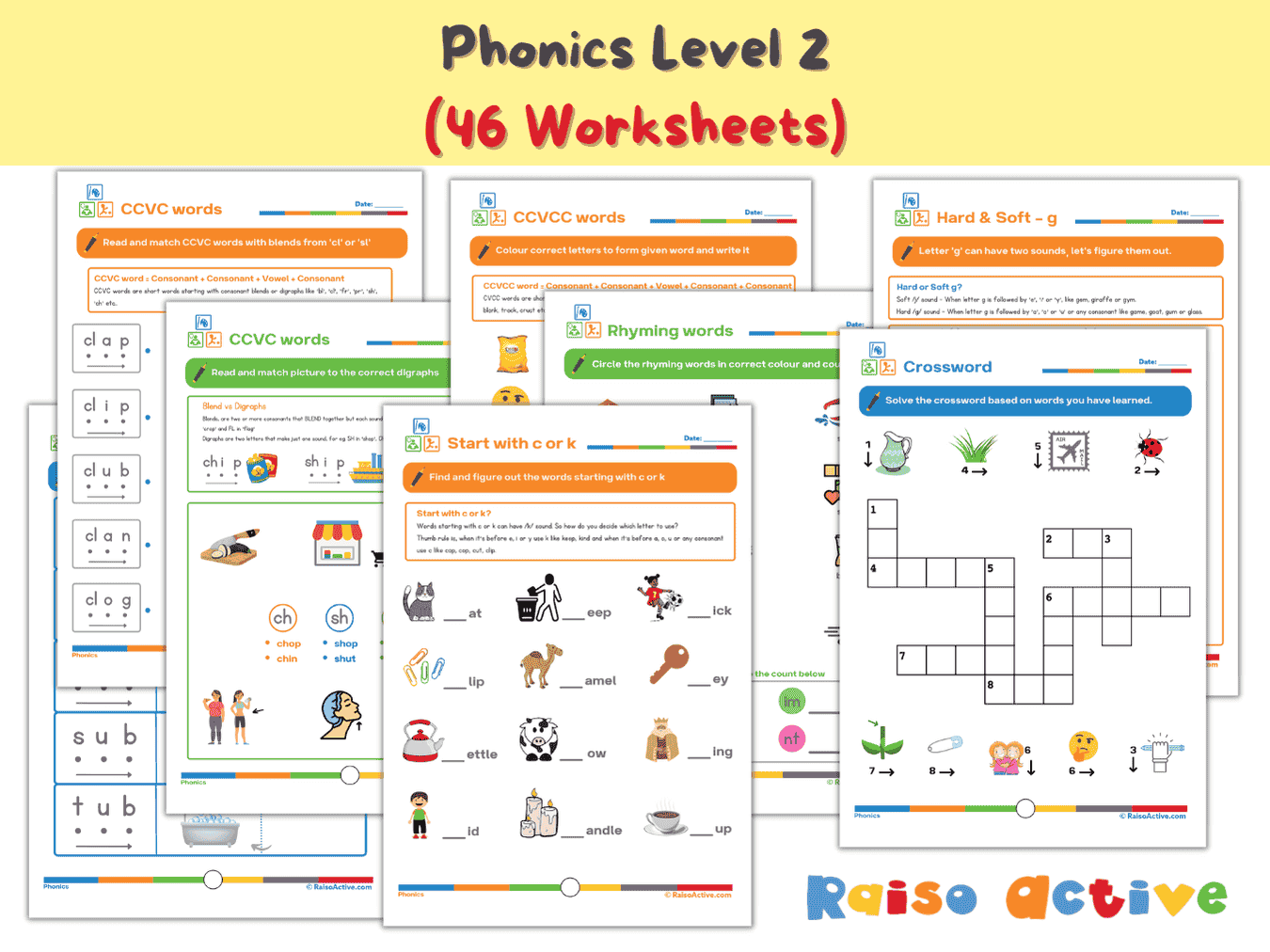
Phonics Level 2 Worksheets: CVC, CCVC, CVCC Word Families & Blends for Early Readers (Ages 4-7)
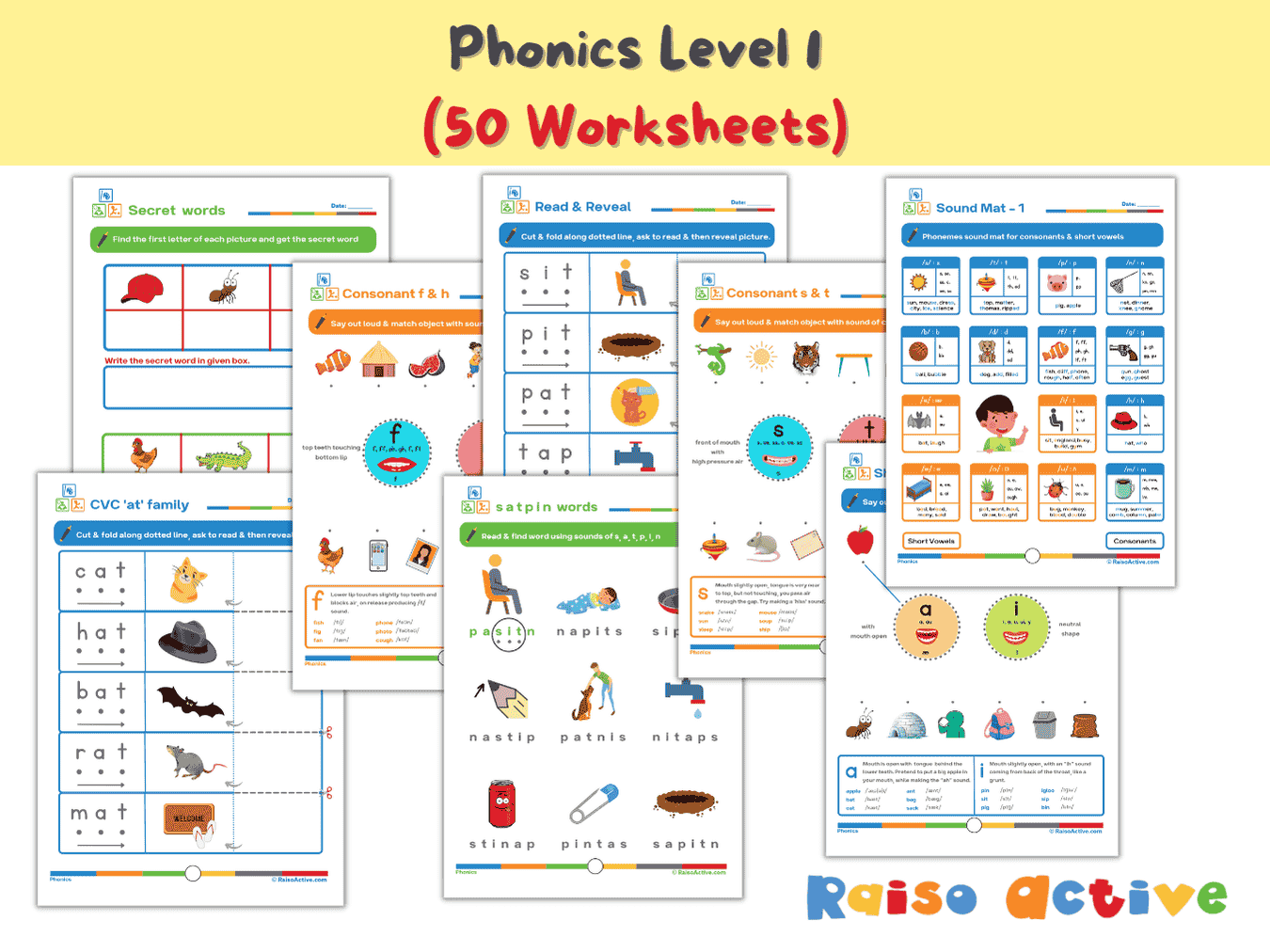
Phonics Level 1 Activity Book: Letter Sounds, Blending & CVC Words for Preschool & Kindergarten
Guides for parents and teachers
See all guides →Best Worksheets for 3-Year-Olds: What Works and What to Avoid
What works on worksheets for 3-year-olds: short sessions, crayons, tracing lines, matching, cutting, a free weekly plan, and signs one is too advanced.
Age-Appropriate Problem-Solving Activities: Building Critical Thinkers from the Ground Up
Discover fun, age-appropriate problem-solving activities for children ages 1-8. Build critical thinking, logic, and reasoning skills through play-based learning.
Critical Thinking Activities That Actually Work for Young Children: Building Tomorrow's Thinkers Today
Discover proven critical thinking activities for young children. Age-wise logic games, questioning techniques, and hands-on ideas to build thinking skills at home.
Coding Activities for Preschoolers: Building Tomorrow's Thinkers Today
Discover 15+ unplugged and screen-based coding activities for preschoolers that build sequencing, logic, and problem-solving skills through play. NEP 2020 aligned.
Canonical: https://raisoactive.com/worksheets/year-1-matching