Free printable worksheets · India
UKG Worksheets (Ages 5–6)
UKG (Upper Kindergarten, also called Senior KG) worksheets are practice sheets for children aged 5 to 6 in the final year of Indian pre-primary school. They cover phonics and early reading, letter and word writing, numbers to 50, simple addition and subtraction, shapes and patterns, and prepare children for Class 1.
UKG is the year Indian children move from recognising letters and numbers to using them: blending sounds into words, writing short sentences, and solving addition and subtraction sums. These worksheets follow that progression. Each sheet targets one skill, uses large illustrations and clear instructions, and prints on A4. Most UKG teachers assign two to three sheets a day; at home, one focused sheet after school is enough to build confidence before Class 1 admissions and assessments.
- 24 worksheets
- Free PDF download
- Print on A4 or Letter
Made for your child
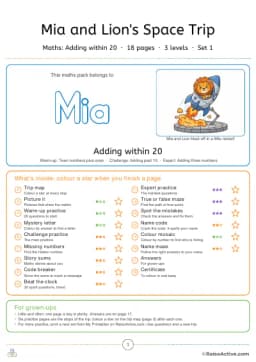
Adding within 10, made for your child
A maths pack with your child's name in it: pictures that explain, practice at three levels, puzzles and story sums about them. Print a new set whenever they finish.
Make a maths packFree preview · free for members
UKG Worksheets to print
Browse all worksheets for ages 5–6
CVC 'um' Word Family Read, Cut and Reveal Worksheet
Ages 4-7 · Pre-K–Grade 1Ages 4-7 · Reception–Year 2Ages 4-7 · LKG–Class 1Ages 4-7
Children read five 'um' words (yum, gum, hum, mum, sum) by blending three sounds, check each one against a hidden picture (a yummy face, bubble gum, a child humming, a mum and a baby, and a sum) and write it, so they see that changing the first sound makes a new word.

Digraph and Blend Words Circle the Word and First Sound Worksheet
Ages 4-7 · Pre-K–Grade 1Ages 4-7 · Reception–Year 2Ages 4-7 · LKG–Class 1Ages 4-7
Children circle the word for each picture (ship, shut, chop, chin, thin, chat), then circle the blend or digraph each picture starts with: st (stem), gr (grab), br (bread), sh (shop), cr (crib) and sl (slug).

CVC Revision: First Sounds and 'og' Rhyming Words Worksheet
Ages 4-7 · Pre-K–Grade 1Ages 4-7 · Reception–Year 2Ages 4-7 · LKG–Class 1Ages 4-7
Children write the first sound of fish, hat, bucket, hook, net and pod, then colour the bubbles that rhyme with dog: fog, log, jog and hog.

CCVC Words with cl and sl Blends Read and Match Worksheet
Ages 4-7 · Pre-K–Grade 1Ages 4-7 · Reception–Year 2Ages 4-7 · LKG–Class 1Ages 4-7
Children read ten CCVC words with sound buttons (clap, clip, club, clan, clog, slab, slim, slug, slap, slip) and draw a line from each word to its picture.

G or J Sound Worksheet: Spell the /j/ Sound
Ages 4-7 · Pre-K–Grade 1Ages 4-7 · Reception–Year 2Ages 4-7 · LKG–Class 1Ages 4-7
Children learn that the /j/ sound is often spelt g before e, i or y and j before a, o or u, and write g or j in jam, gem, gym, ginger, jungle, gel, jacket, giraffe, jump, angel, cage and job.

CVC Vocabulary Write the Words and Cut and Paste Pictures Worksheet
Ages 4-7 · Pre-K–Grade 1Ages 4-7 · Reception–Year 2Ages 4-7 · LKG–Class 1Ages 4-7
Children spell net, box, lid, ten, cap and fig in letter boxes, then cut out ten small pictures and paste each beside its word: bus, dad, sun, bed, cut, mad, cat, sit, mum and dog.

CCVC Words with st, cr and sp Blends Read, Colour and Match Worksheet
Ages 4-7 · Pre-K–Grade 1Ages 4-7 · Reception–Year 2Ages 4-7 · LKG–Class 1Ages 4-7
Children read stag, step, crab, crib, spin and spot, match each word to its outline picture and colour the pictures in.

Phonics Level 2 Sound Mat 1: Consonants and Short Vowels
Ages 4-7 · Pre-K–Grade 1Ages 4-7 · Reception–Year 2Ages 4-7 · LKG–Class 1Ages 4-7
Children see the consonant sounds and the five short vowels, each with a picture, its common spellings and example words.
CCVCC Words Colour the Letters and Write Worksheet
Ages 4-7 · Pre-K–Grade 1Ages 4-7 · Reception–Year 2Ages 4-7 · LKG–Class 1Ages 4-7
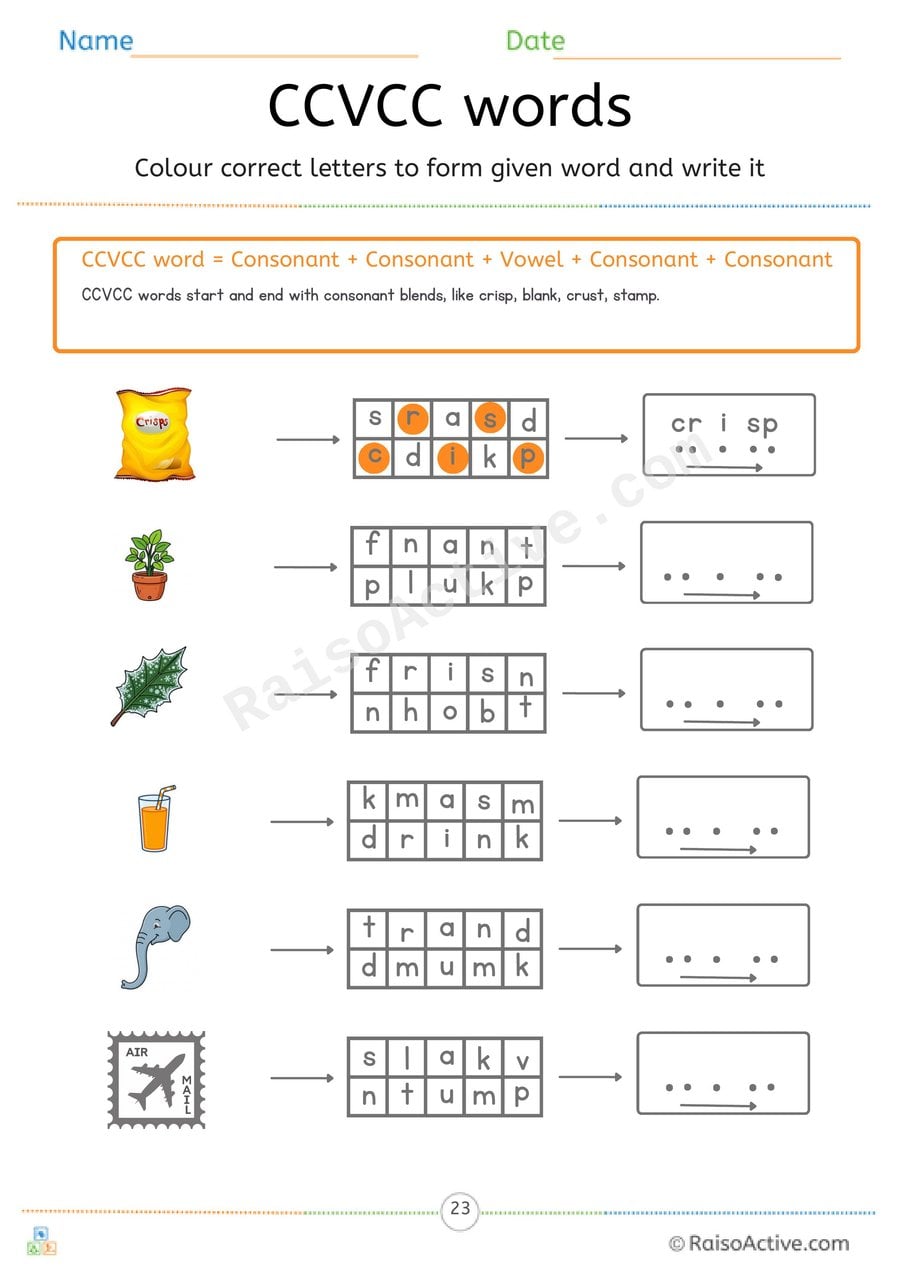
Children build five-sound words that start and end with a blend: they colour the right letters in order and write crisp, plant, frost, drink, trunk and stamp.

Hard and Soft C Sound Sorting Worksheet
Ages 4-7 · Pre-K–Grade 1Ages 4-7 · Reception–Year 2Ages 4-7 · LKG–Class 1Ages 4-7
Children learn that c says /s/ before e, i or y and /k/ before a, o, u or a consonant, then circle soft c words in green (city, rice, pencil, cereal, face) and hard c words in red (cat, camel, crib, cake, corn, crab, cut).

Camera Spy 3: Pattern Recognition Worksheet for Preschoolers
Ages 4-7 · Pre-K–Grade 1Ages 4-7 · Reception–Year 2Ages 4-7 · LKG–Class 1Ages 4-7
This worksheet helps children identify and match patterns by using a 'spy camera'.
CCVC Words with fl, fr, dr, pl and tr Blends Read and Match Worksheet
Ages 4-7 · Pre-K–Grade 1Ages 4-7 · Reception–Year 2Ages 4-7 · LKG–Class 1Ages 4-7
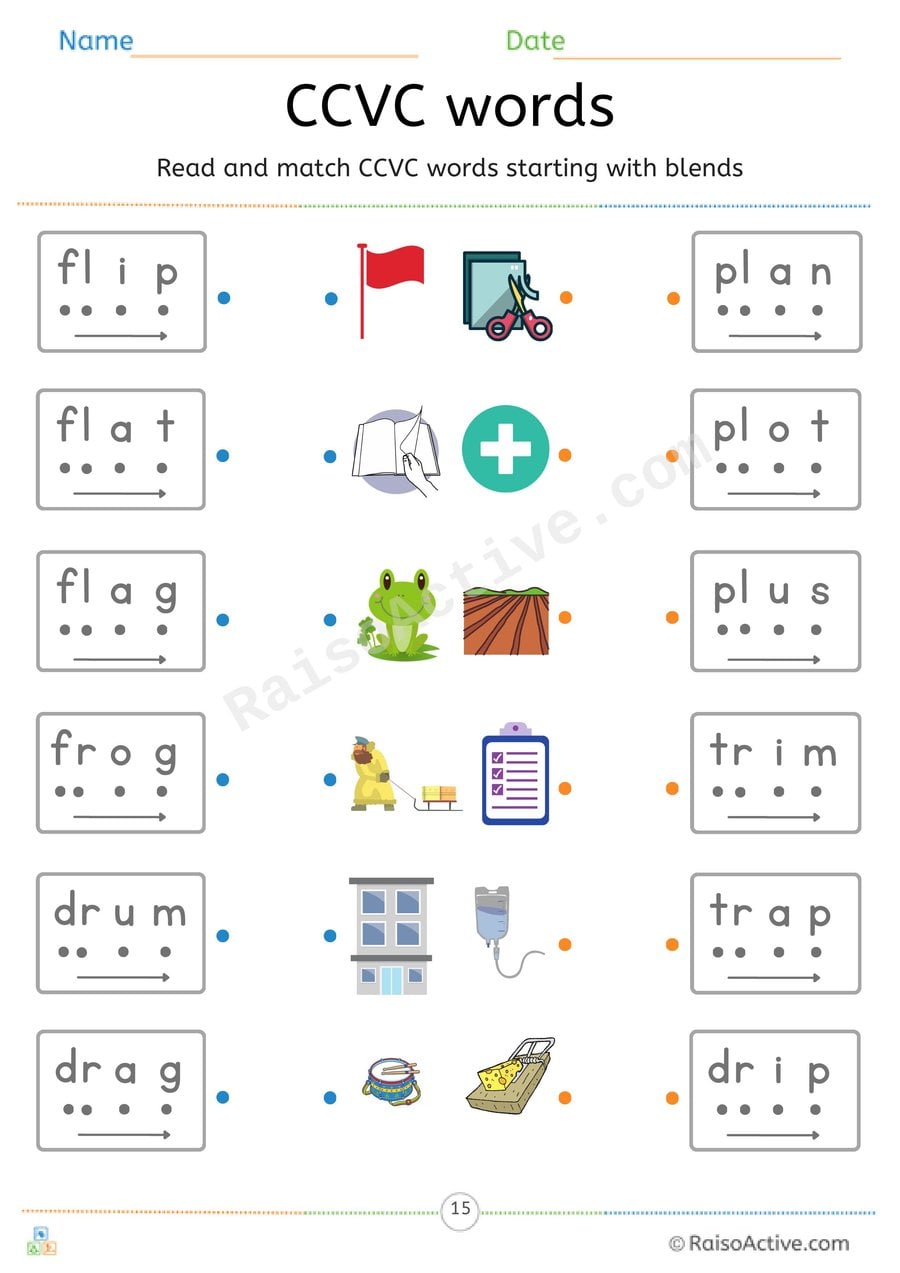
Children read twelve CCVC words (flip, flat, flag, frog, drum, drag, plan, plot, plus, trim, trap, drip) and match each one to its picture.

Picture Sudoku for Kids: Cut and Paste 4x4 Puzzles
Ages 4-7 · Pre-K–Grade 1Ages 4-7 · Reception–Year 2Ages 4-7 · LKG–Class 1Ages 4-7
This worksheet helps children develop logical reasoning and problem-solving skills by completing Sudoku puzzles with holiday-themed pictures.
Hindi Letter ए (e) Practice 1: Write, Fix the Letter and Find | ए का अभ्यास · भाग 1
Ages 4-7 · Pre-K–Grade 1Ages 4-7 · Reception–Year 2Ages 4-7 · LKG–Class 1Ages 4-7
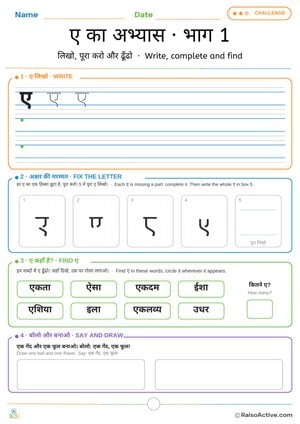
A challenge page: write ए between the lines, complete four letters that are each missing a part and then write the whole ए in box 5, find ए in words such as एकता, एकदम, एशिया and एकलव्य, and draw a picture. ए is not the short form of ऐ; the practice page keeps them apart.

Pizza Pattern Matching Worksheet for Preschoolers
Ages 4-7 · Pre-K–Grade 1Ages 4-7 · Reception–Year 2Ages 4-7 · LKG–Class 1Ages 4-7
This worksheet helps children practice visual discrimination and pattern recognition by matching pizza slices to complete the whole pizza.
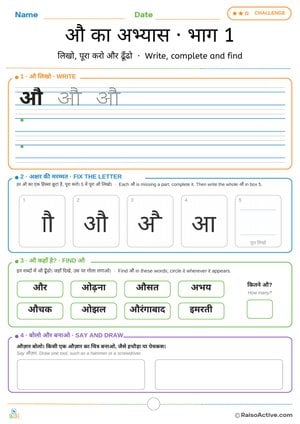
Hindi Letter औ (au) Practice 1: Write, Fix the Letter and Find | औ का अभ्यास · भाग 1
Ages 4-7 · Pre-K–Grade 1Ages 4-7 · Reception–Year 2Ages 4-7 · LKG–Class 1Ages 4-7
A challenge page: write औ between the lines, complete four letters that are each missing a part and then write the whole औ in box 5, find औ in words such as और, औसत, औचक and औरंगाबाद, and draw a picture. औ and ओ are different vowels; औ has two marks on top and ओ has one.

Color by Letter Worksheet: Farm Animals Alphabet Code
Ages 4-7 · Pre-K–Grade 1Ages 4-7 · Reception–Year 2Ages 4-7 · LKG–Class 1Ages 4-7
This worksheet helps children practice following instructions and recognizing colors while associating them with letters.

Phonics Level 2 Sound Mat 4: Consonant Blends and ck
Ages 4-7 · Pre-K–Grade 1Ages 4-7 · Reception–Year 2Ages 4-7 · LKG–Class 1Ages 4-7
Children see how two consonants keep both their sounds in a blend, at the start of words (bl, cl, fl, sl, br, cr, dr, tr, st, sw) and at the end (nd, nt, mp), and that ck makes one /k/ sound.
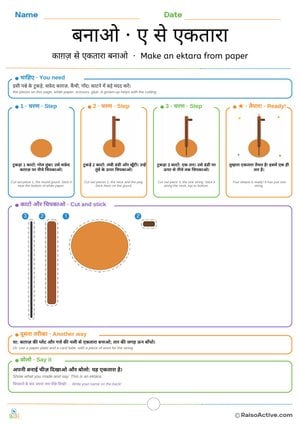
Make a Paper Ektara: Hindi Letter ए (e) Cut and Stick Craft | बनाओ · ए से एकतारा
Ages 4-7 · Pre-K–Grade 1Ages 4-7 · Reception–Year 2Ages 4-7 · LKG–Class 1Ages 4-7
Children cut out the numbered pieces and stick them in order to make a one-string ektara from a gourd, a neck and a single string, then show it and say a full sentence about it. It links the letter ए with a real picture word, एकतारा, and practises scissor control and following steps.

Honeycomb Pattern Matching Worksheet for Preschoolers
Ages 4-7 · Pre-K–Grade 1Ages 4-7 · Reception–Year 2Ages 4-7 · LKG–Class 1Ages 4-7
This worksheet helps children practice pattern recognition and matching skills by cutting out hexagon shapes and matching them to complete a honeycomb.

Hard and Soft G Sound Sorting Worksheet
Ages 4-7 · Pre-K–Grade 1Ages 4-7 · Reception–Year 2Ages 4-7 · LKG–Class 1Ages 4-7
Children learn that g often says /j/ before e, i or y and /g/ before a, o, u or a consonant, then circle soft g words in blue (gem, giraffe, gym, germ, bridge, ginger) and hard g words in pink (goat, game, gum, glass, goal, guest).

CVC Revision: Colour the Word and Build 'ap' Words Worksheet
Ages 4-7 · Pre-K–Grade 1Ages 4-7 · Reception–Year 2Ages 4-7 · LKG–Class 1Ages 4-7
Children colour the word that names each picture (dog, jet, pan, pig) from three rhyming choices, then write the first letter to make map, lap, nap, gap, cap and tap.
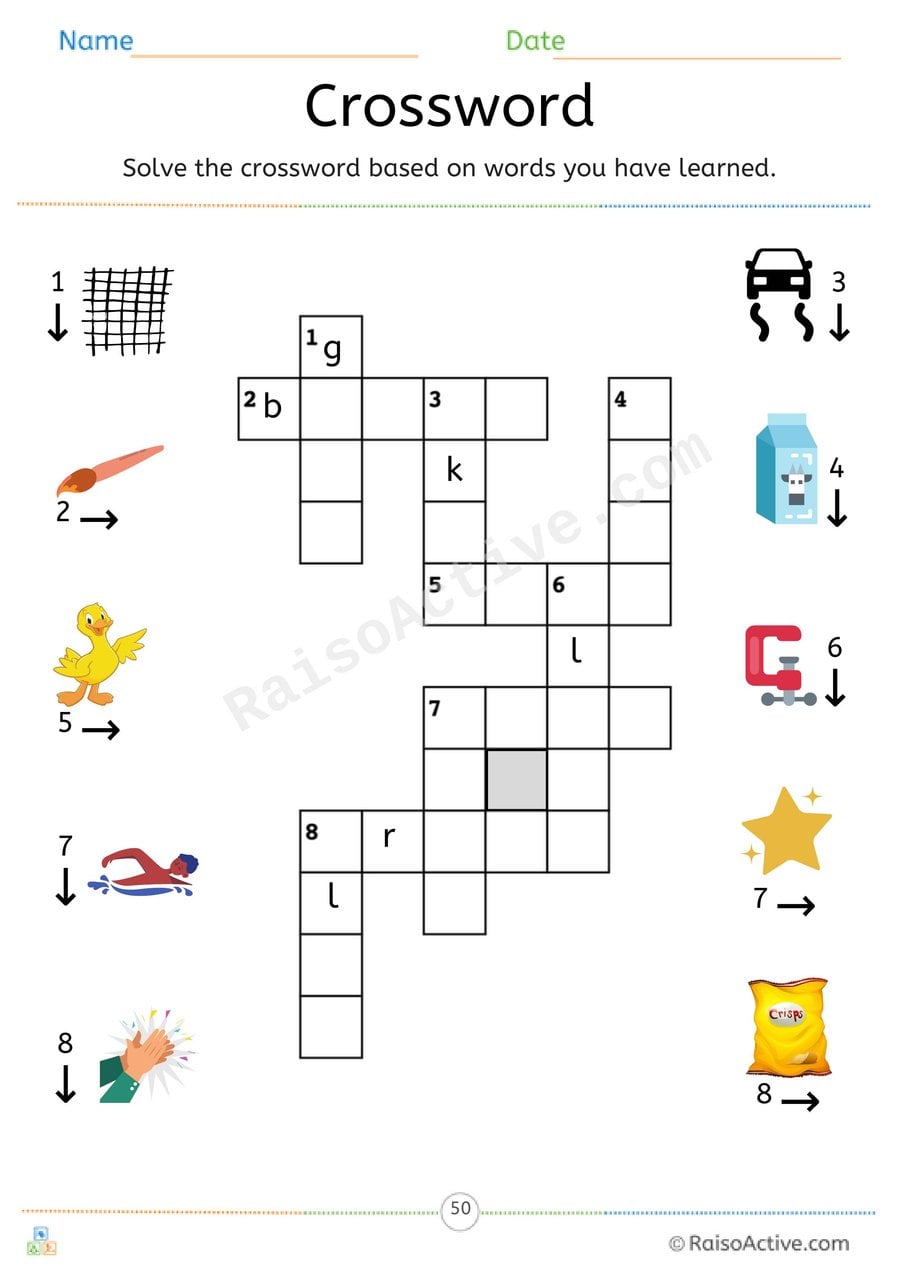
Phonics Level 2 Blends Crossword Puzzle 3
Ages 4-7 · Pre-K–Grade 1Ages 4-7 · Reception–Year 2Ages 4-7 · LKG–Class 1Ages 4-7
Children finish the level with a crossword: across brush, duck, star and crisp; down grid, skid, milk, clamp, swim and clap.

Growing Patterns Worksheet: Draw What Comes Next
Ages 4-7 · Pre-K–Grade 1Ages 4-7 · Reception–Year 2Ages 4-7 · LKG–Class 1Ages 4-7
This worksheet helps children practice observing and identifying patterns, a foundational skill for early math and logical reasoning.
What your child learns in UKG
By the end of UKG a child is expected to read three- and four-letter phonetic words, write their name and simple sentences with capital letters and full stops, count and write numbers to 50, add and subtract within 10 using objects, and identify basic 2D shapes and repeating patterns.
- English: letter sounds, blending CVC words, sight words, sentence writing
- Maths: number names to 20, counting to 50, before/after, addition and subtraction within 10
- EVS: my body, family, seasons, plants and animals, good habits
- Fine motor: cursive strokes, cutting, colouring inside the lines
How to use these worksheets at home
Print the sheet, read the instruction aloud together, and let your child attempt it without help first. Fifteen minutes is plenty. Alternate an English sheet one day with a maths sheet the next so practice stays varied, and keep completed sheets in a folder so progress is visible before school assessments.
Frequently asked questions
What is the difference between LKG and UKG worksheets?
LKG worksheets focus on recognition: tracing letters and numbers, matching, colouring and pre-writing patterns. UKG worksheets ask children to produce: writing letters and words independently, blending sounds to read, and adding and subtracting small numbers. UKG sheets also introduce sentence writing and numbers beyond 20.
What should a UKG child know before Class 1?
Before Class 1 most CBSE and ICSE schools expect a child to read simple phonetic words and a few sight words, write short sentences, count and write numbers to 50, add and subtract within 10, and recognise shapes, colours and patterns. The worksheets on this page cover each of these outcomes.
How many worksheets should a UKG child do each day?
Two to three sheets a day, or about 15 to 20 minutes, is appropriate for a five-year-old. Stop while the child is still engaged. One English and one maths sheet on alternate days is a simple routine that covers the UKG syllabus over a school year.
Are these UKG worksheets aligned with the CBSE syllabus?
The sheets cover the learning outcomes listed for the Foundational Stage in NEP 2020 and the NCF-FS 2022, which CBSE, ICSE and most state boards follow for UKG: phonics and early reading, writing, number sense to 50, basic operations, shapes, patterns and environmental awareness.
Are the UKG worksheets free to download?
Yes. Every worksheet can be downloaded free as a watermarked PDF after creating an account (five downloads a day). An annual subscription removes the watermark and the daily limit for the full library of over 1,000 worksheets and all printable packs.

Written by
Hemsweta Jain · Teacher Cheena
MBA and Early Childhood Educator, teaching since 2014 · Founder of RaisoActive, Mumbai
Written and reviewed by Hemsweta Jain (Teacher Cheena), who designs every RaisoActive worksheet.
Last reviewed
Printable packs for ages 5–6
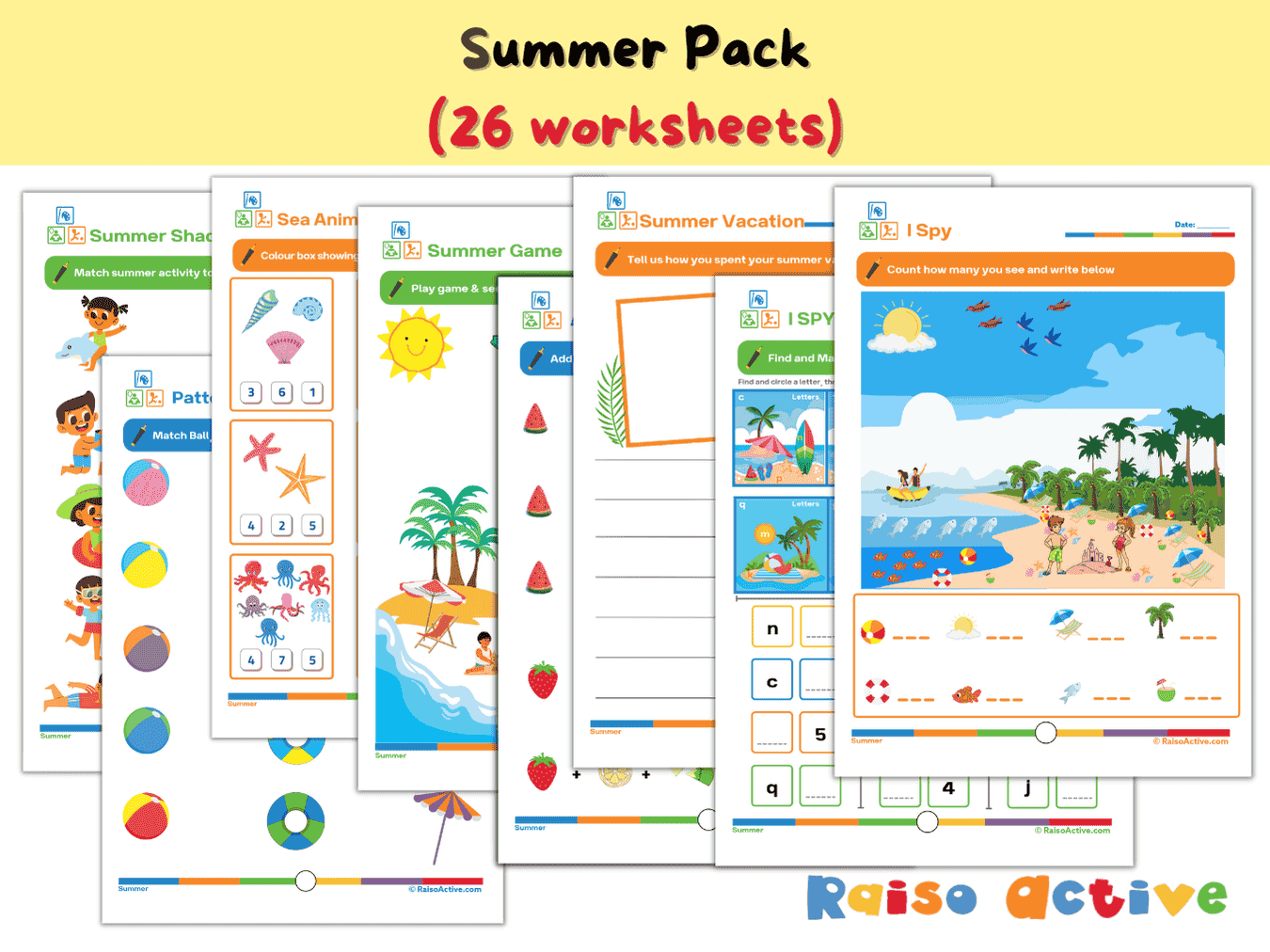

Summer Activity Pack: Math, Literacy, Puzzles & More for Preschool & Kindergarten
Ages 3-7 · Preschool–Grade 1Ages 3-7 · Nursery–Year 2Ages 3-7 · Nursery–Class 1Ages 3-7 · 26 pages
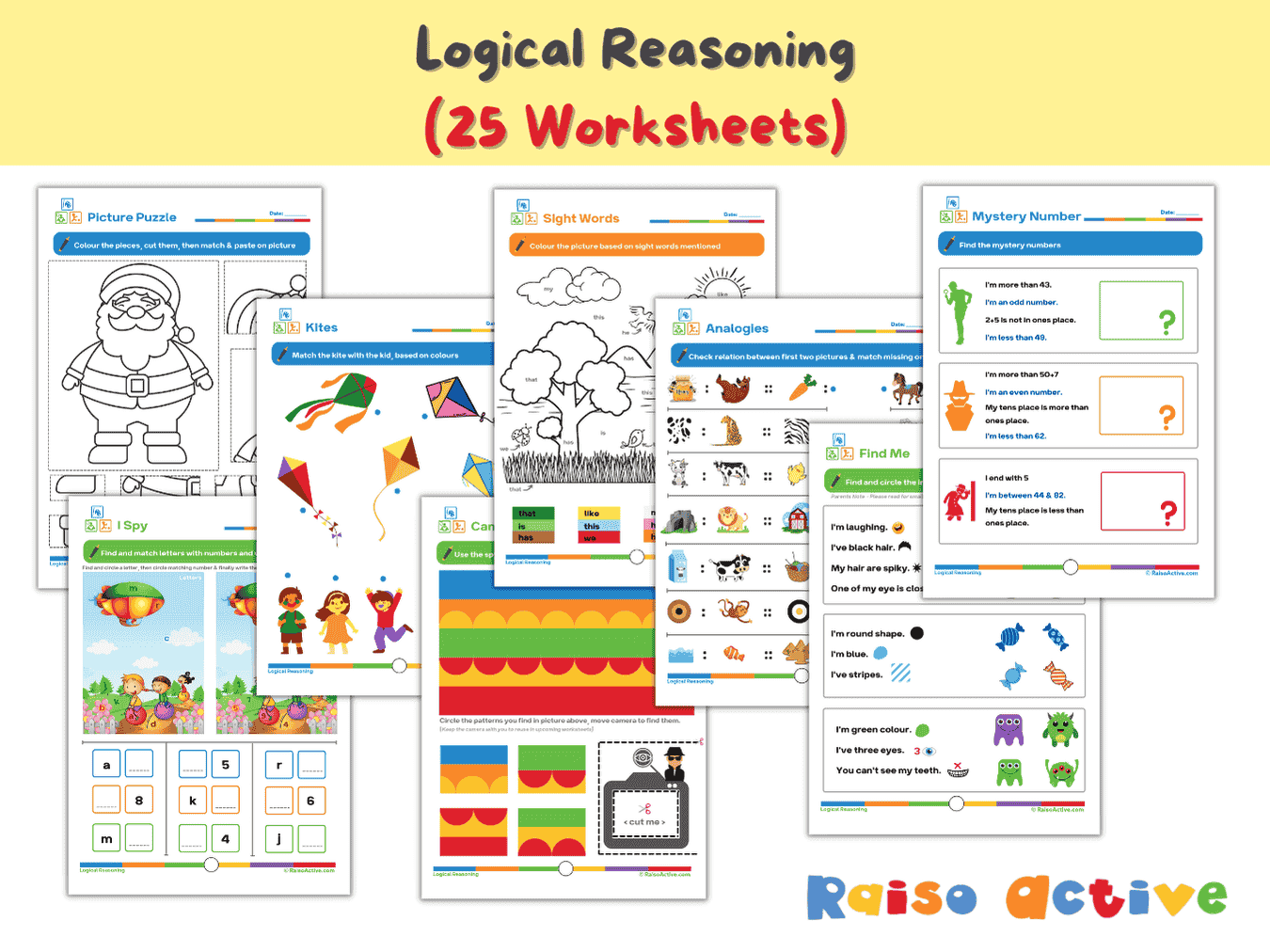

Logical Reasoning Activity Book for Preschool & Kindergarten | Patterns, Sudoku, Mazes & Coding
Ages 4-7 · Pre-K–Grade 1Ages 4-7 · Reception–Year 2Ages 4-7 · LKG–Class 1Ages 4-7 · 34 pages
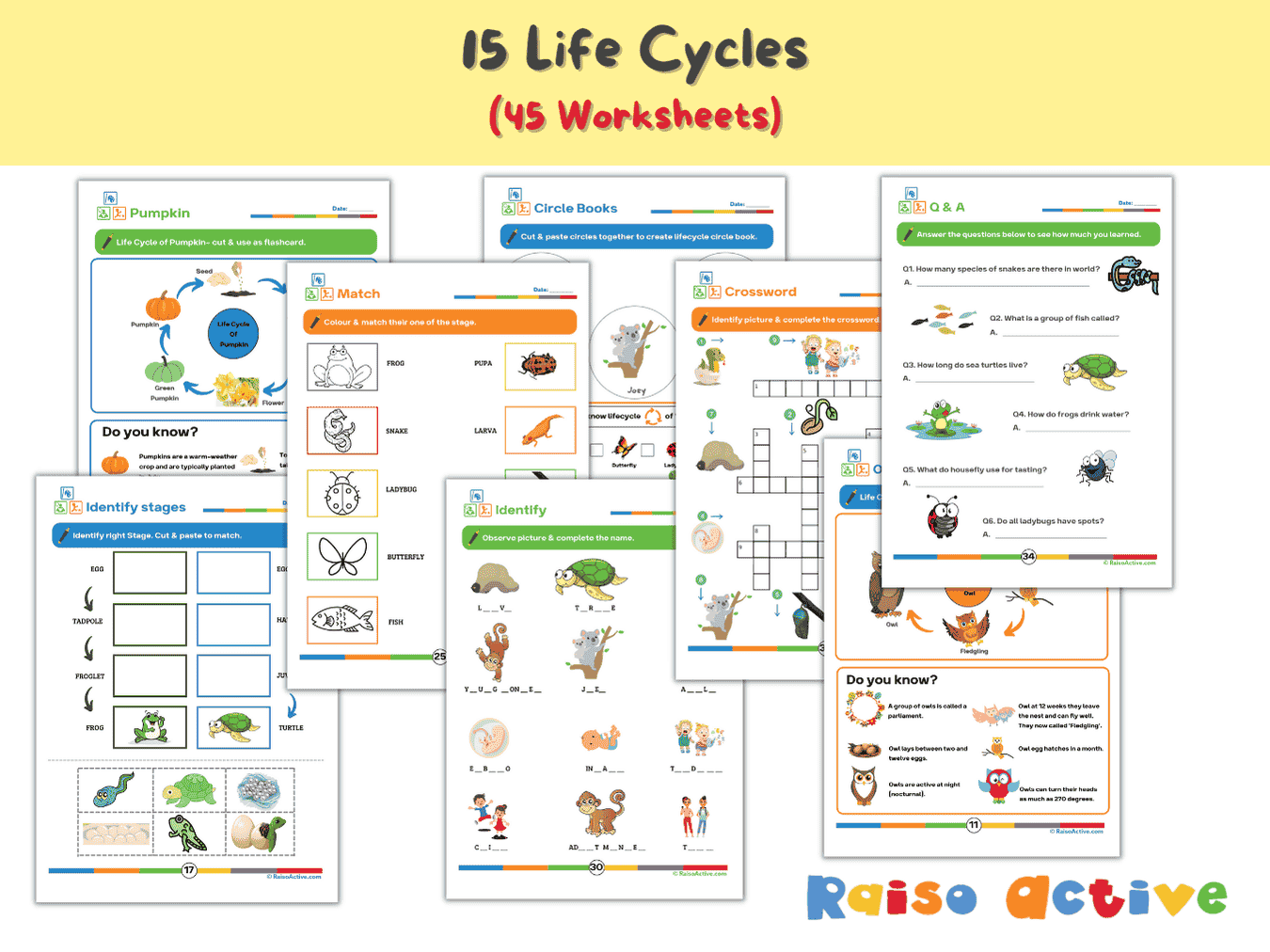

Lifecycles Activity Book & Flashcards for Preschool & Early Elementary
Ages 3-8 · Preschool–Grade 2Ages 3-8 · Nursery–Year 3Ages 3-8 · Nursery–Class 2Ages 3-8 · 46 pages
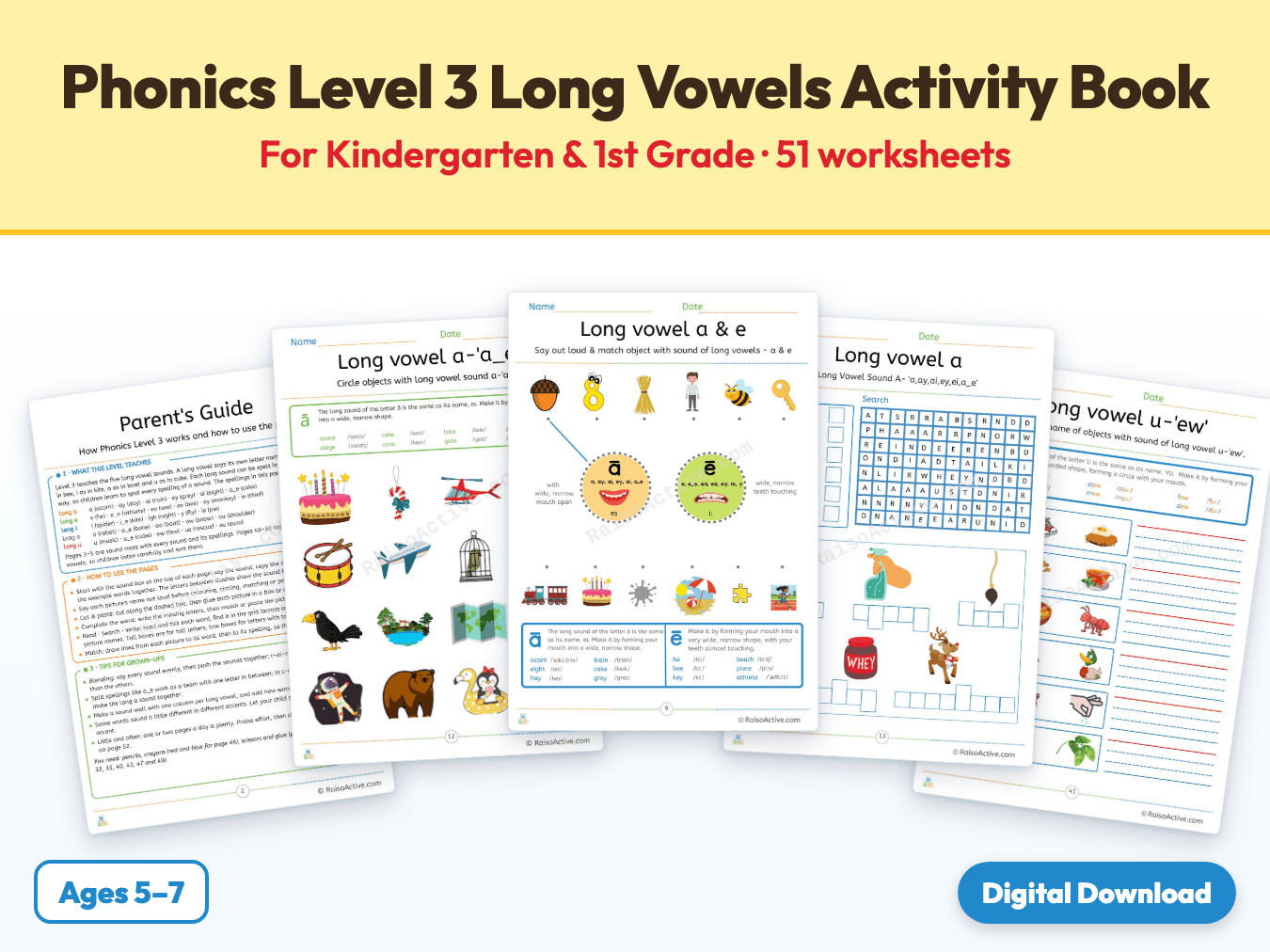

Phonics Level 3 Long Vowels Activity Book for Kindergarten & 1st Grade
Ages 5-7 · Kindergarten–Grade 1Ages 5-7 · Year 1–Year 2Ages 5-7 · UKG–Class 1Ages 5-7 · 52 pages
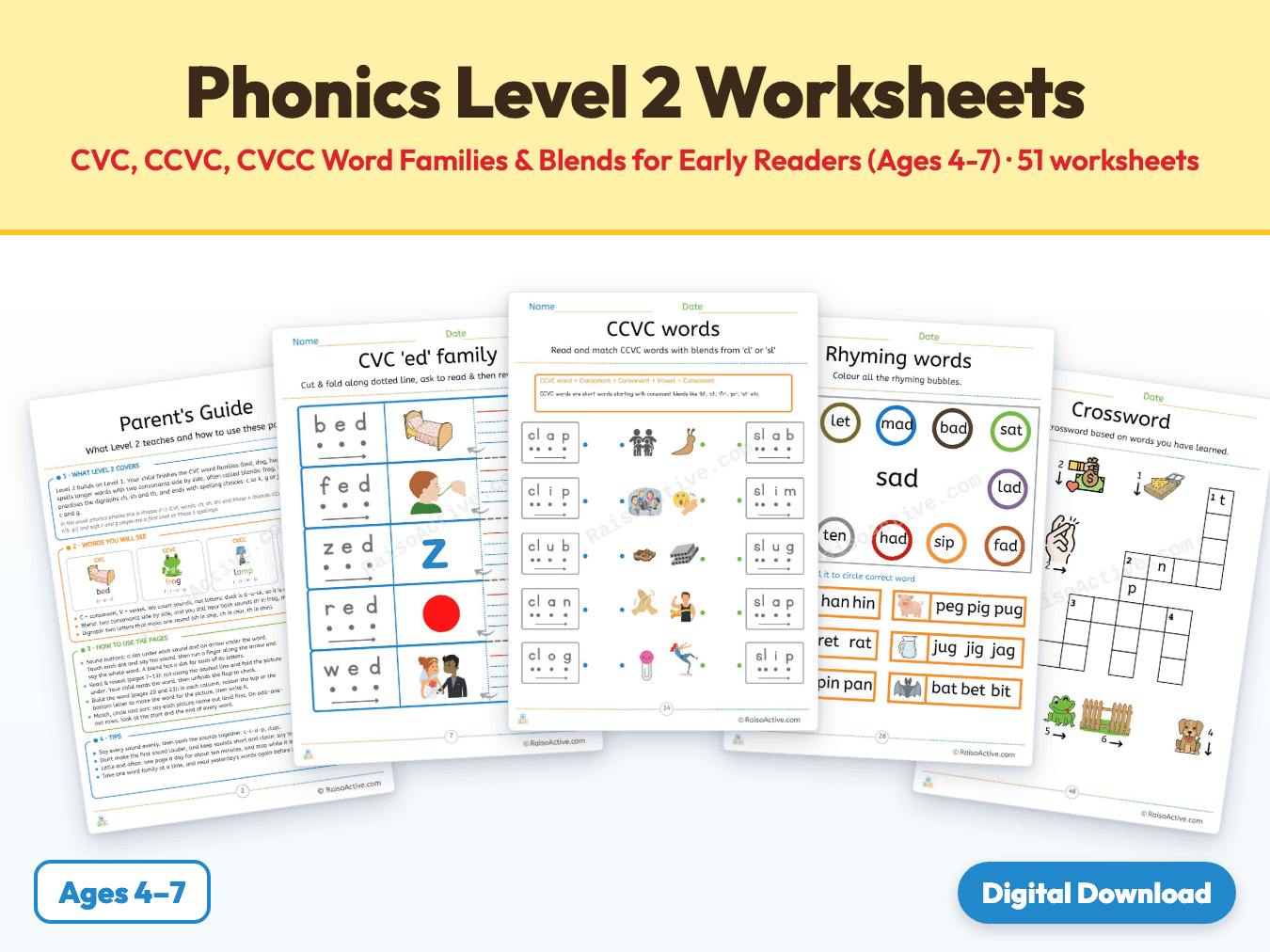
Phonics Level 2 Worksheets: CVC, CCVC, CVCC Word Families & Blends for Early Readers (Ages 4-7)
Ages 4-7 · Pre-K–Grade 1Ages 4-7 · Reception–Year 2Ages 4-7 · LKG–Class 1Ages 4-7 · 52 pages
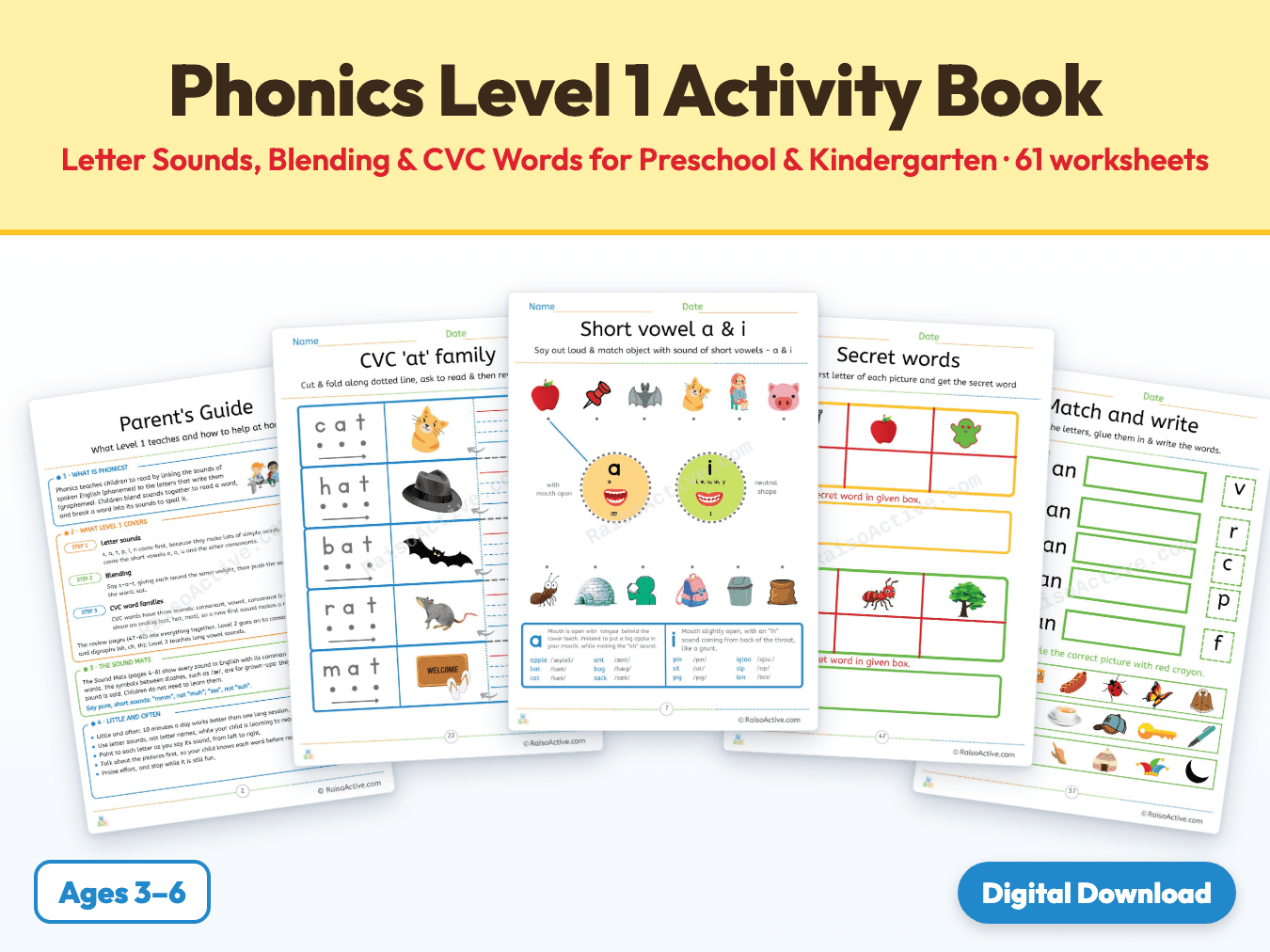
Phonics Level 1 Activity Book: Letter Sounds, Blending & CVC Words for Preschool & Kindergarten
Ages 3-6 · Preschool–KindergartenAges 3-6 · Nursery–Year 1Ages 3-6 · Nursery–UKGAges 3-6 · 62 pages
Guides for parents and teachers
See all guides
Sight Words by Age: The First 50 Words and How to Teach Them Without Flashcard Fatigue
Which sight words to teach first and why, the heart-word method, a read-trace-write-find routine, games, and a by-age table of typical sight-word progress.

Number Formation Rhymes 0–9 and How to Fix Reversals
Original number formation rhymes for 0–9, the correct stroke order for each digit, why 3, 5 and 7 get reversed most often, and multisensory fixes that work.
How to Teach CVC Blending: A Step-by-Step Method That Works in Two Weeks
A step-by-step method for teaching CVC blending, covering continuous sounds, word families, common errors, and a 14-day plan that most children finish reading CVC words.

Kindergarten Readiness Checklist: 25 Skills to Practice Before the First Day
A kindergarten readiness checklist of 25 literacy, math, motor, self-regulation and self-help skills, with an 8-week summer plan and notes on when not to worry.
Phase 2 Phonics at Home: Sound Order, Blending Games, Worksheets
Phase 2 phonics at home: the five sound sets in order, oral blending, tricky words, a two-week routine, common mistakes, and free worksheets.
Reception Year Explained: EYFS Learning and How to Help at Home
A teacher's plain-English guide to the Reception Year: the seven areas of learning, Early Learning Goals, Phase 2/3 phonics, the RBA and home routines.