Free printable worksheets · India
UKG Sorting Worksheets (Ages 5–6)
UKG sorting worksheets are practice sheets for children aged 5–6 in Upper Kindergarten (Senior KG) in India. Sorting is grouping a set of objects or pictures by a shared attribute, such as colour, size, shape or type. The sheets on this page cover grouping objects by one attribute, classifying by size, colour or type, recognizing what does not belong and comparing two groups after sorting.
Upper Kindergarten shifts from recognising symbols to using them: children blend letter sounds into words, write short sentences, and solve small addition and subtraction sums instead of only counting objects. Numbers extend to fifty, and the plus and minus signs appear on the page for the first time. Five-year-olds can sort by a rule they cannot see and by two rules at once. Living and non-living things is the classic invisible rule: does it grow, does it need food, does it move by itself. Two-attribute sorts ask for pictures that are both red and round. Sort-and-count sheets end with a simple chart, and sorting pictures by beginning sound or numbers by size links the skill to reading and maths. Venn diagrams come next year.
696+ worksheets · free PDF download · print on A4 or Letter
UKG Sorting Worksheets to print
Browse all worksheets for ages 5–6
Vowel i Matching Worksheet: Long and Short Sounds
In this worksheet, children ages 4-6 train their ears to tell apart the short 'i' sound (as in 'pig') from the long 'i' sound (as in 'kite'), then sort pictures into the correct category. This side-by-side comparison is a key phonics milestone, because confusing short and long vowels is one of the most common early reading errors, and deliberate practice like this builds the auditory discrimination needed to read unfamiliar words accurately.
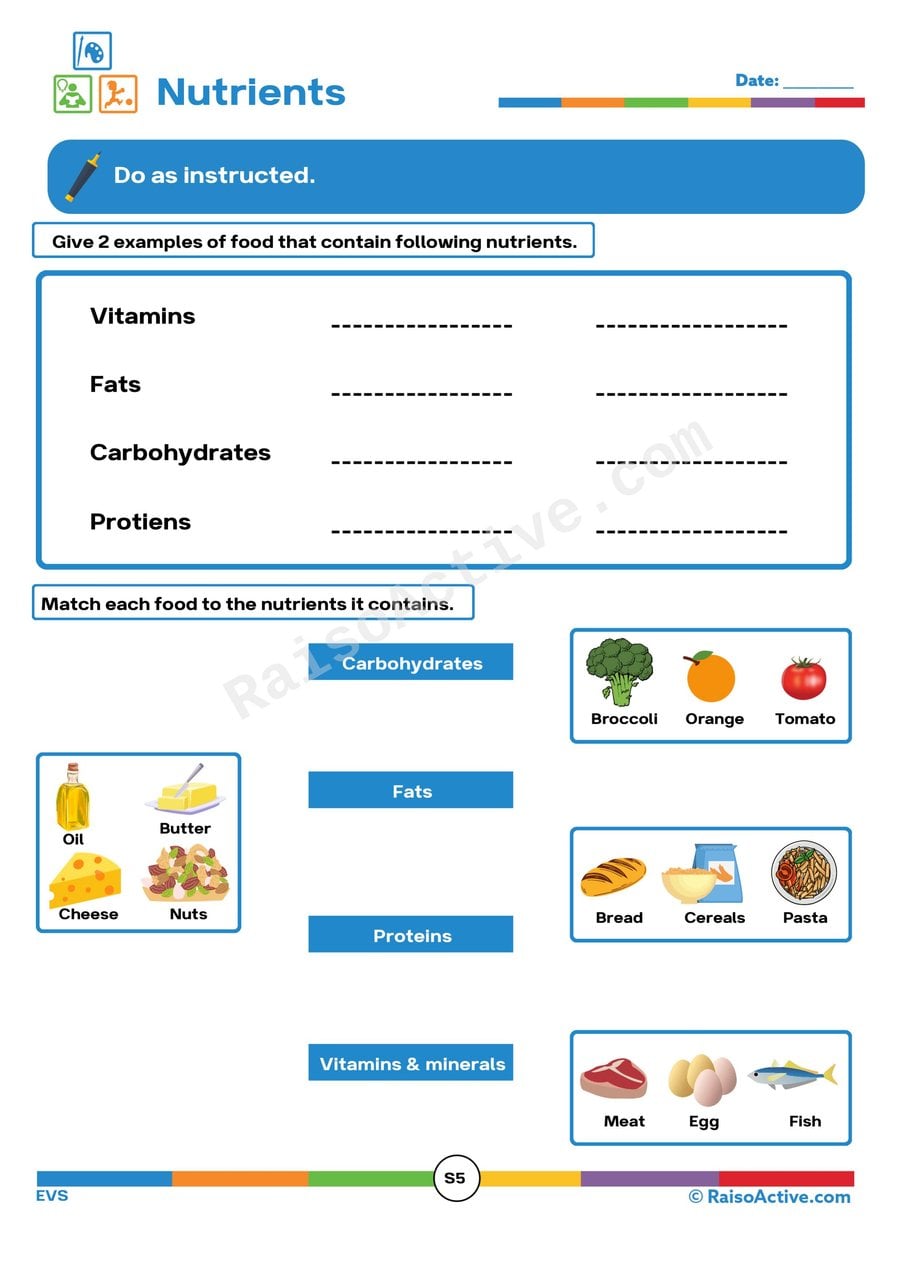
Nutrient Match: Food Examples Worksheet for Kids
This worksheet introduces children ages 4-6 to basic nutrition concepts by having them match food items to the nutrient category they belong to — vitamins, fats, carbohydrates, or proteins — and then name additional food examples for each. Going beyond a simple healthy/unhealthy sort, this task builds a more detailed understanding of why different foods matter for the body, an early foundation for lifelong healthy eating habits.

Pronoun Power: Cut & Paste Matching Worksheet for Preschoolers
Children ages 4-6 practice recognizing and applying pronouns — he, she, it, they, and similar words — by reading a short sentence, deciding which pronoun fits the picture, and physically placing it in the right spot. Cutting and pasting adds a fine motor and sequencing component on top of the grammar skill, since children must locate, cut, and correctly position each pronoun piece. This hands-on format helps pronoun concepts stick better than reading alone.

Identify Numbers Worksheet: Matching Numbers and Words
This worksheet builds number-word recognition by having children match written number names, like 'seven,' to their corresponding numeral, 7. For four- to six-year-olds, learning to read number words alongside numerals adds an important layer to early numeracy, since numbers appear in both written-word and symbol form in books, signs, and everyday life.
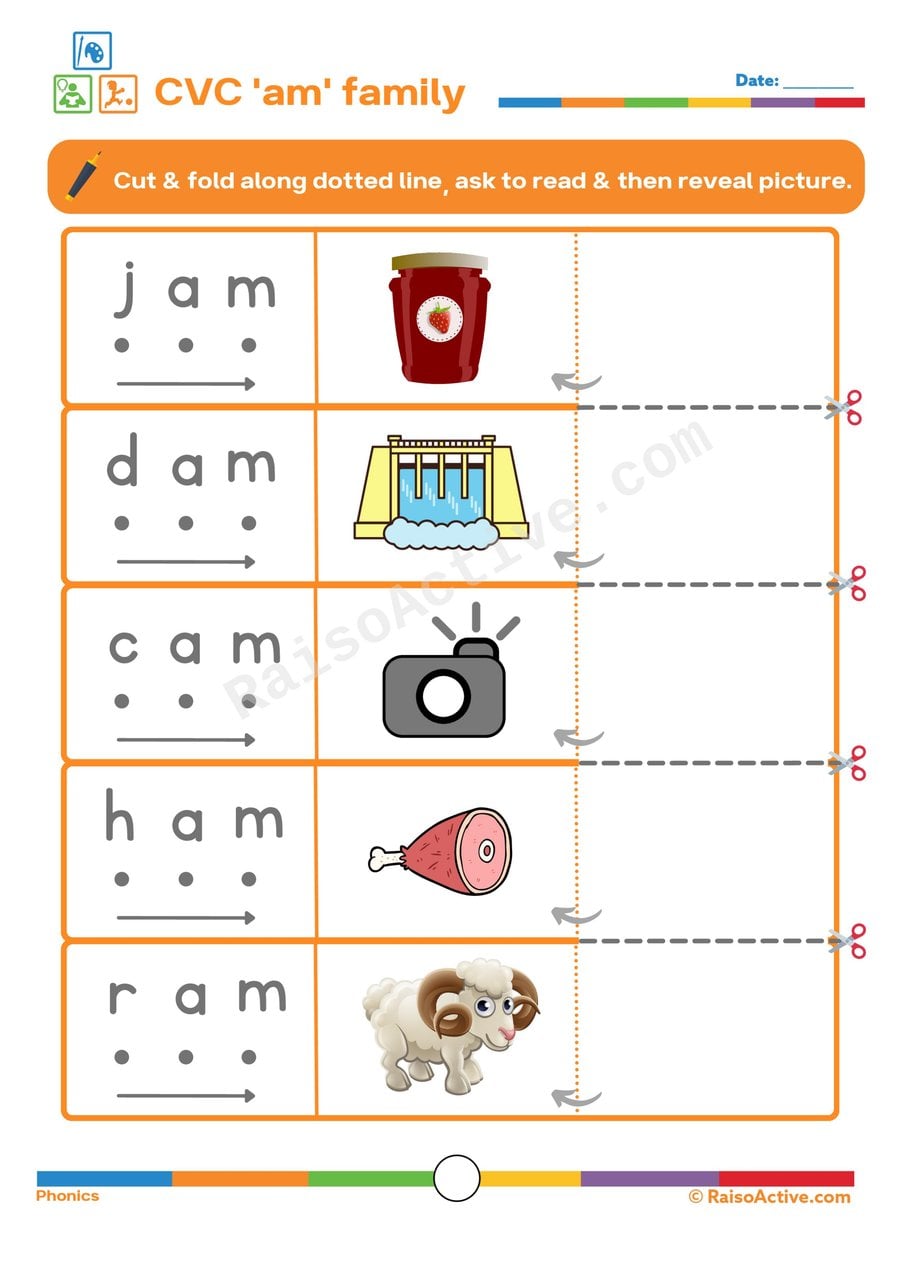
CVC 'am' Family Worksheet: Read, Cut, and Match!
This cut-and-paste worksheet gives children ages 4-6 practice reading CVC words from the 'am' family, like 'ham', 'jam', and 'ram', and matching them to their pictures. Beyond decoding practice, the cutting component strengthens the fine motor control and hand-eye coordination children need for handwriting, making this a dual-purpose literacy and motor-skills activity.

Human Skeleton Cut and Join Worksheet for Preschoolers
This hands-on worksheet introduces children ages 4-6 to basic human anatomy as they cut out individual bone shapes, like the skull, ribs, arms, and legs, and assemble them into a complete skeleton. Beyond scissor control, the activity requires spatial reasoning, since children must figure out where each bone belongs relative to the others to build an accurate body shape.

Solar System Number Matching Worksheet for Preschoolers
This worksheet combines number-word recognition with a color-by-key coloring task for children ages 4-6, asking them to match number names written on planets to their corresponding numerals before coloring each planet according to a color code. Matching written number words in a space-themed context adds novelty that keeps repeated number-word practice fresh, while the color-key step reinforces careful, sequential following of visual instructions. Together, these two tasks combine literacy and numeracy practice in one engaging page.
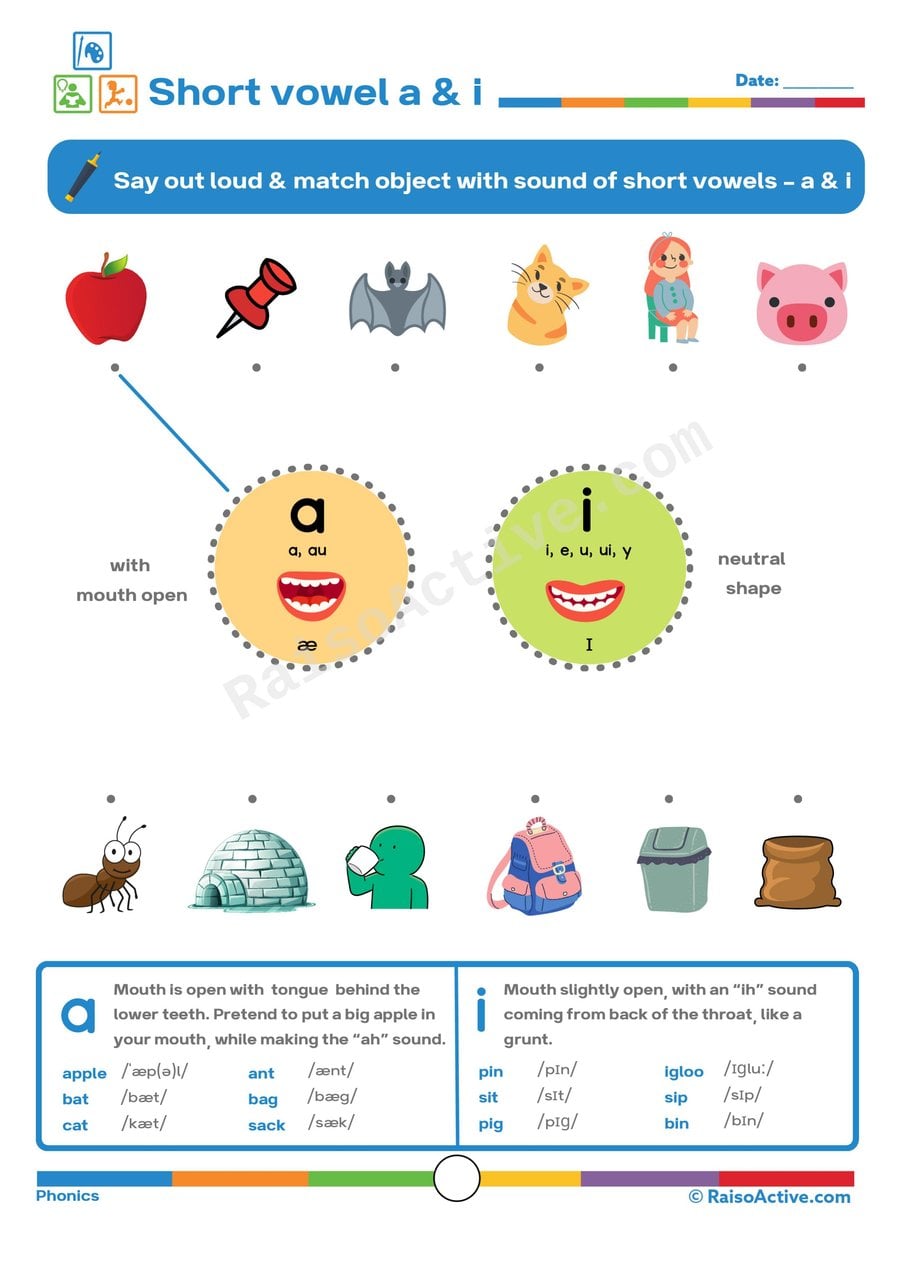
Short Vowel Sounds: Match the Pictures Worksheet
Distinguishing between the short 'a' and short 'i' sounds is a foundational listening skill for children ages 4-6, since these two vowel sounds are easy to confuse and appear constantly in early reading words. This worksheet has children say a word aloud, listen for its vowel sound, and match the picture to the correct sound category, training their ear before they're expected to read or spell independently. Strong auditory discrimination between short vowels directly predicts success decoding CVC words like 'cat' and 'sit' later on.

Vowel e Cut and Paste Worksheet: Long and Short Vowel Sounds
This worksheet asks children ages 4-6 to make a genuinely challenging distinction: sorting words by whether they contain the short 'e' sound (as in 'bed') or the long 'e' sound (as in 'be'), a comparison that requires careful listening since both sounds involve the same letter. Cutting out word cards and pasting them into the correct category forces active decision-making about each word individually, rather than passively reading through a list. This kind of side-by-side vowel-length comparison builds a much deeper phonemic awareness than practicing either sound in isolation.

Cut and Paste Body Parts Worksheet for Preschoolers
This worksheet helps children ages 4-6 learn to name and correctly place major body parts by cutting them out and pasting each one onto the right location on a body outline. Physically assembling a body diagram builds body awareness and vocabulary at the same time, while the cutting and gluing sharpens fine motor precision that supports later handwriting.
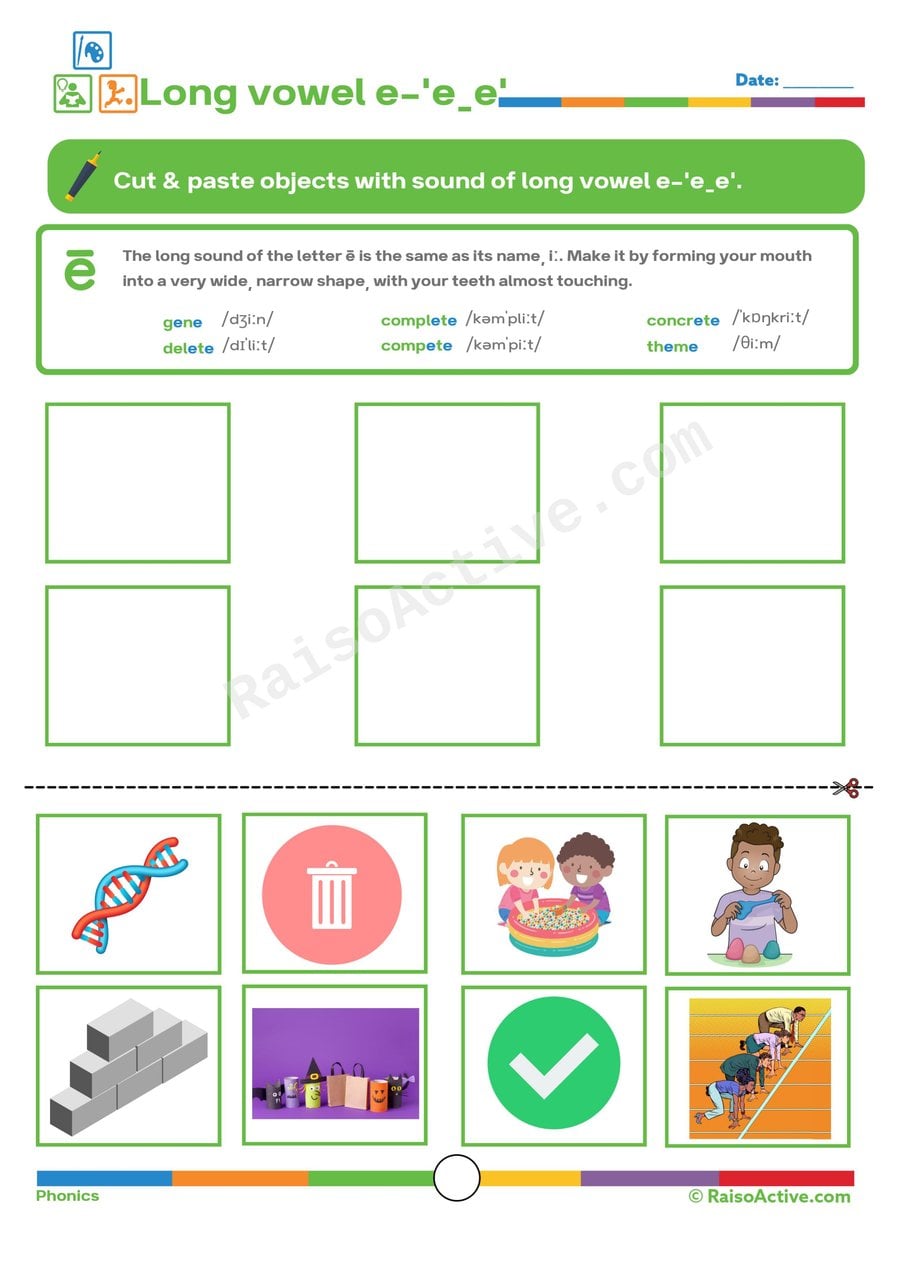
Long Vowel E Worksheet: Cut and Paste Fun!
This worksheet has children ages 4-6 practice identifying the long 'e' sound, as heard in words like 'tree' or 'bee,' by saying picture names aloud and sorting them based on whether they contain that sound. Cutting out each picture and pasting it into the correct category requires children to make a phonics judgment before committing to a placement, which builds more careful listening than simply circling an answer. This sorting-based approach to phonics also strengthens fine motor skills through scissor and glue use alongside the reading skill itself.
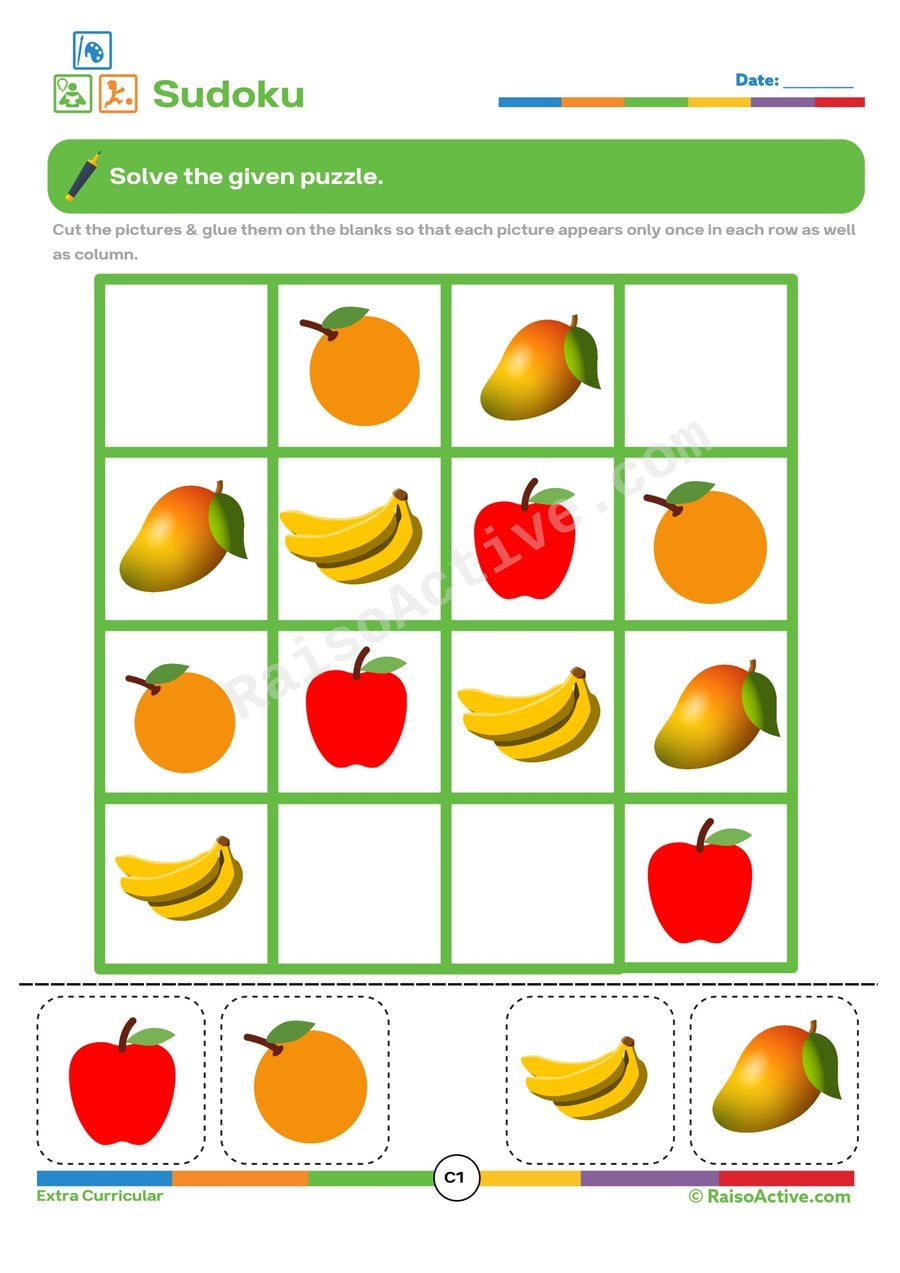
Fruit Sudoku Puzzle Worksheet for Kids
Completing a fruit-themed Sudoku grid builds early logical reasoning for children ages 4-6, requiring them to track which fruits are already placed in a row or column and deduce which one is missing — a foundational problem-solving skill.
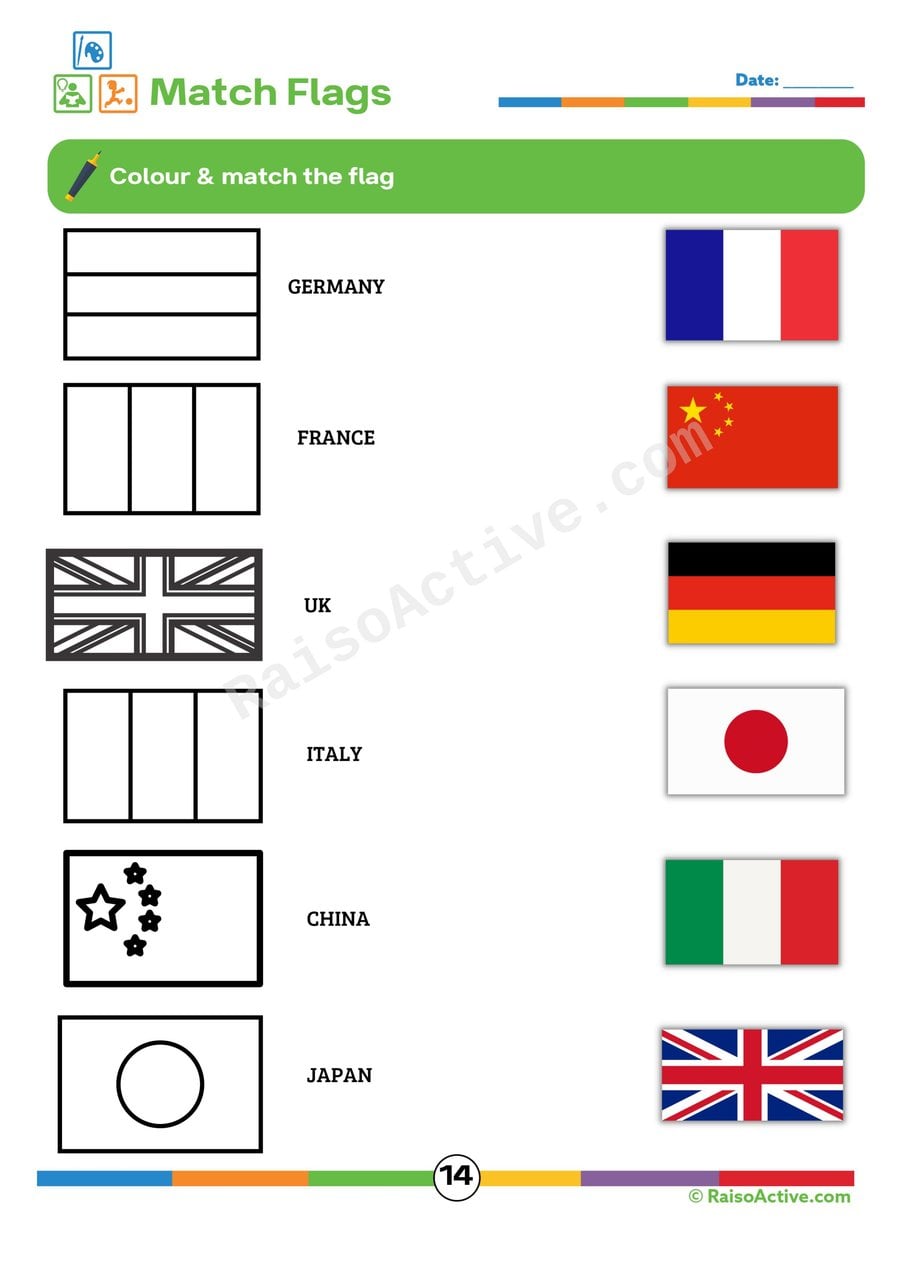
Match the Flags Worksheet: Color and Learn!
This worksheet helps children ages 4-6 recognize different country flags by coloring them accurately and matching each one to its correct country name. Coloring flags with real colors, rather than free choice, adds a layer of factual precision to the usual creative coloring task, reinforcing that flags carry specific, meaningful designs.

Living Things Worksheet: Identifying Living and Non-Living Things
This worksheet asks 4-6 year olds to sort images into living and non-living categories and then separately identify what living things actually need to survive — air, water, food, and space to grow — which moves beyond simple classification into understanding the defining characteristics of life. That two-part structure (sort, then reason about needs) makes this a solid introduction to basic biology concepts that children will build on in later science classes.

Sound Energy Worksheet: Identifying Sound Producers!
This worksheet asks children to identify which objects produce sound and to think about how the ear allows us to hear those sounds, introducing basic science vocabulary around sound energy at an age when they're ready to start reasoning about cause and effect. Circling and matching sound-producing objects also sharpens observation, since children must consider whether an object truly makes noise or is simply pictured near something that does.

Blend Words Worksheet: Circle the Correct Picture!
This worksheet strengthens blending skills for children ages 4-6, asking them to say a consonant blend like 'bl' or 'st' together with different word endings and identify which resulting word matches a picture. Blending two consonant sounds smoothly before adding a vowel is a more advanced phonics skill than single-letter sounds, and this practice directly supports decoding multisyllabic and blended words during independent reading.

Life Cycle Stages Worksheet: Identify and Sequence!
This worksheet asks children ages 4-6 to identify what life-cycle stage is shown in each individual picture and then number a whole set of pictures into the correct growth sequence, moving beyond simple matching into independent ordering and logical reasoning. Because the worksheet likely mixes several different animals' or plants' stages, it also asks children to recognize what type of life cycle a picture belongs to before sequencing it.

Addition Fun: Add and Match the Numbers! (Worksheet)
Children ages 4-6 practice basic addition by counting two groups of pictured objects, finding their total, and then matching that sum to the correct number, combining counting, addition, and visual matching in a single activity. Drawing a line to connect an answer to its number reinforces that a math sentence and a numeral represent exactly the same quantity.

Read and Match: Sentence Reading Worksheet for Early Learners
This worksheet has 4-6 year olds read a full sentence aloud and then identify which picture actually matches its meaning by coloring the circle beside it, building reading comprehension in a format that requires understanding the whole sentence rather than picking out a single keyword. Because more than one picture on the page may share surface similarities, your child has to genuinely process what the sentence says, which is a stronger comprehension check than simple word-picture matching.

Shape Properties Worksheet: Identify and Match Shapes!
This worksheet moves beyond simply naming 3D shapes to analyzing their properties — counting faces, edges, and vertices — which builds the early geometric reasoning children need before formal geometry lessons. For four- to six-year-olds, learning that a cube has 6 faces while a sphere has none introduces the idea that shapes can be described by measurable features, not just their overall look.
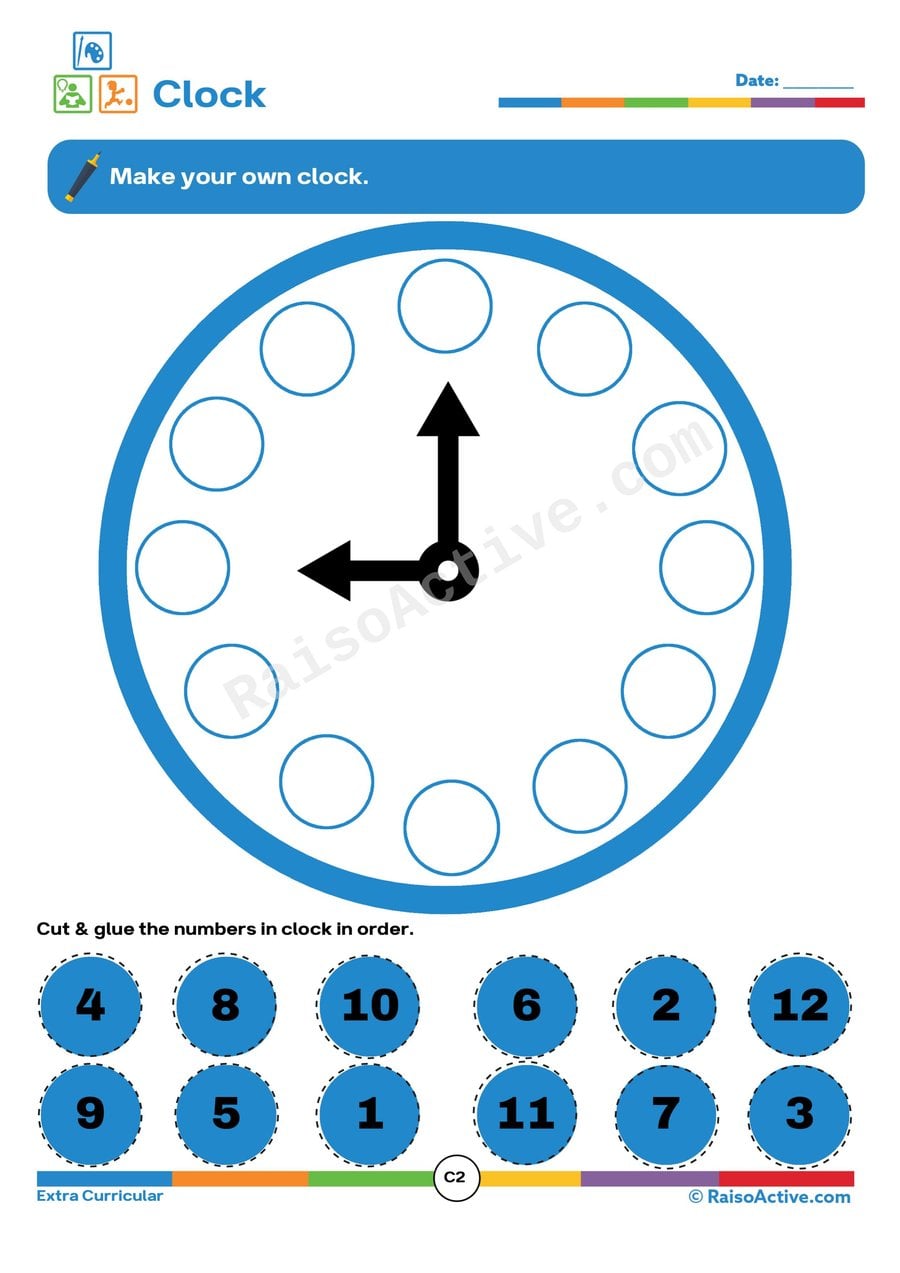
Make Your Own Clock Worksheet: Time Telling Fun!
This hands-on craft has children ages 4-6 cut out and glue numbers in order around a clock face, then draw hands to show different times, combining number sequencing with an introduction to how an analog clock is structured. Physically placing each number themselves, rather than reading a pre-printed clock, helps children internalize why the numbers 1 through 12 are arranged in that specific circular order. Drawing the hands afterward extends the activity from static number placement into functional time-telling practice.

Abbreviations Worksheet: Matching and Writing Practice
This worksheet introduces children ages 4-6 to common abbreviations — like Mr., Dr., or St. — by having them match each shortened form to the correct sentence context and then write it in correctly. Understanding that some words have a shortened written form is an important early literacy concept, since abbreviations appear constantly in books, signs, and everyday writing. Practicing both matching and writing reinforces the connection between recognizing an abbreviation and producing it correctly from memory.

Numeracy Match: Counting and Number Recognition Worksheet
Children ages 4-6 strengthen number recognition by matching written numerals to their corresponding word names or quantities, reinforcing that numbers can be represented in more than one way. This kind of numeral-to-word matching deepens number sense beyond simple counting, helping children see the relationship between symbol, word, and quantity. Coloring in their birth date personalizes the practice and connects it to something meaningful in their own life.

Sports Match-Up Worksheet for Kids: Match the Sports to Their Equipment!
Matching sports to their equipment teaches children ages 4-6 to connect an activity with the tools used to play it, building categorization skills alongside sports vocabulary. This kind of real-world matching helps children make sense of things they may see on television, at the park, or during physical education class.
What UKG sorting worksheets cover
Five-year-olds can sort by a rule they cannot see and by two rules at once. Living and non-living things is the classic invisible rule: does it grow, does it need food, does it move by itself. Two-attribute sorts ask for pictures that are both red and round. Sort-and-count sheets end with a simple chart, and sorting pictures by beginning sound or numbers by size links the skill to reading and maths. Venn diagrams come next year.
- Sort pictures into living things and non-living things
- Find the shapes that are both red and round
- Sort, count each group and record the totals in a chart
- Group pictures by the sound their names begin with
- Sort numbers into less than 10 and more than 10
How to use these worksheets at home or in class
Two short sheets a day, roughly fifteen to twenty minutes altogether, keeps a five-year-old moving without overload. Alternate an English page with a maths page so neither subject stalls, and let your child attempt the first few items before stepping in.
Start with the sheet that matches what your child can already do, then move one step up. Keep finished sheets in a folder: UKG teachers often ask for evidence of practice, and children like seeing their own progress.
Is your child ready for UKG sorting work?
Before this stage a child should write most capital letters from memory, know the sound each letter makes, count objects accurately to twenty, and sit through a full worksheet without needing a break halfway through.
Frequently asked questions
My five-year-old says a plant is not alive. Is that a problem?
It is the most common answer at this age, because the child is using movement as the test. Add the other rules a sheet relies on: living things grow, need food and water, and make new living things. Grow a bean on the windowsill and compare it with a toy car that moves but never changes. Reaching that understanding is the purpose of the living and non-living sort, not a prerequisite for it.
What should a UKG child be able to do in sorting?
Five-year-olds can sort by a rule they cannot see and by two rules at once. Living and non-living things is the classic invisible rule: does it grow, does it need food, does it move by itself. Two-attribute sorts ask for pictures that are both red and round. Sort-and-count sheets end with a simple chart, and sorting pictures by beginning sound or numbers by size links the skill to reading and maths. Venn diagrams come next year. Before this stage a child should write most capital letters from memory, know the sound each letter makes, count objects accurately to twenty, and sit through a full worksheet without needing a break halfway through.
Do these worksheets follow the UKG curriculum?
The sheets cover grouping objects by one attribute, classifying by size, colour or type, recognizing what does not belong and comparing two groups after sorting, which sit inside the NEP 2020 Foundational Stage (NCF-FS 2022) outcomes for UKG. Kindergarten (US), Reception / Year 1 (UK) use the same skills at this age, so the sheets also fit families following those programmes.
Are the UKG sorting worksheets free to download?
Yes. Every sheet on this page can be downloaded free as a watermarked PDF after creating an account, up to five downloads a day. The annual membership (₹1000) removes the watermark and the daily limit across the full library of more than 1,000 worksheets and all activity packs.

Written by
Hemsweta Jain · Teacher Cheena
MBA and Early Childhood Educator, teaching since 2014 · Founder of RaisoActive, Mumbai
Written and reviewed by Hemsweta Jain (Teacher Cheena), who designs every RaisoActive worksheet.
Last reviewed
Printable packs for ages 5–6
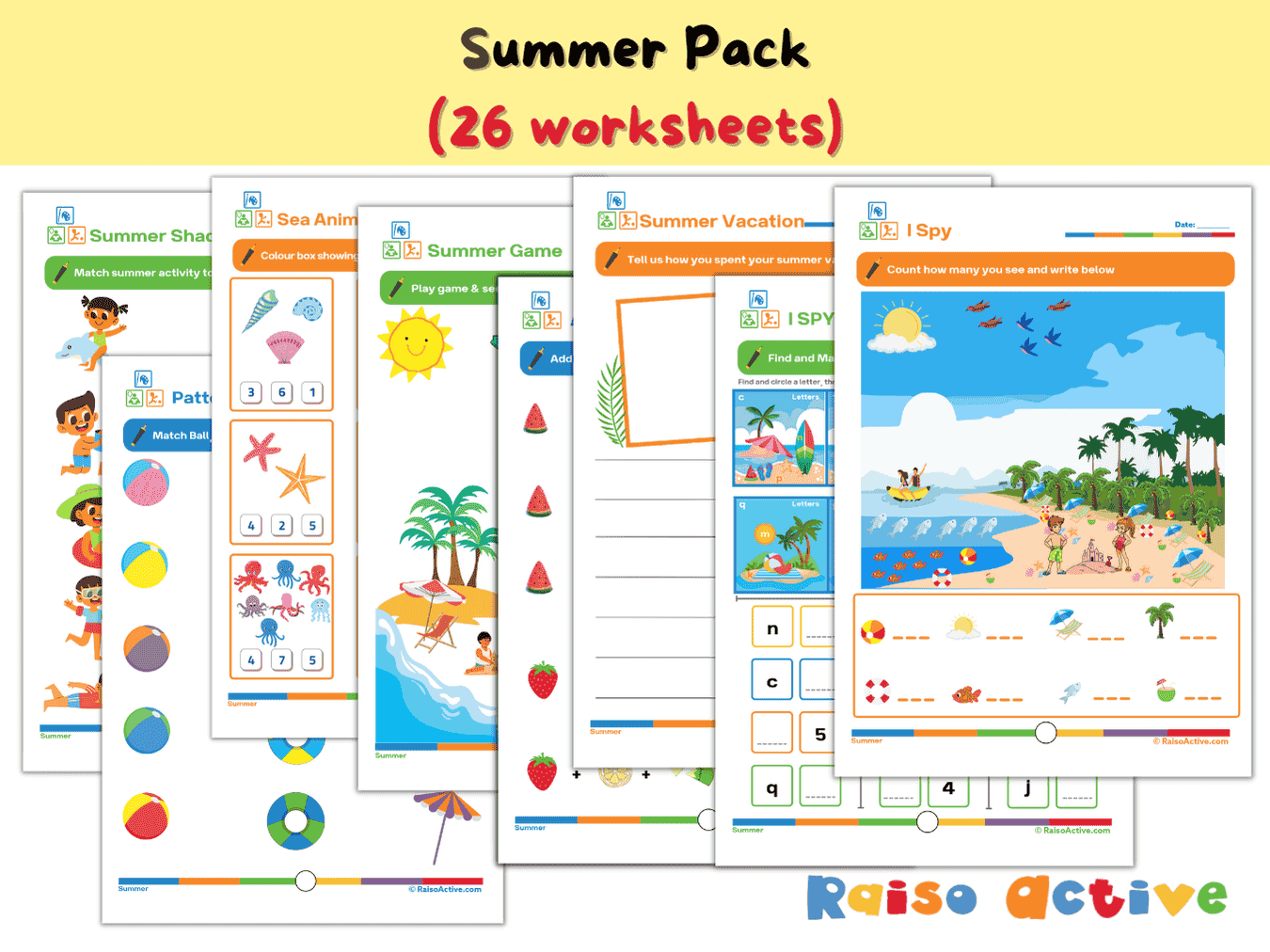
Summer Activity Pack: Math, Literacy, Puzzles & More for Preschool & Kindergarten
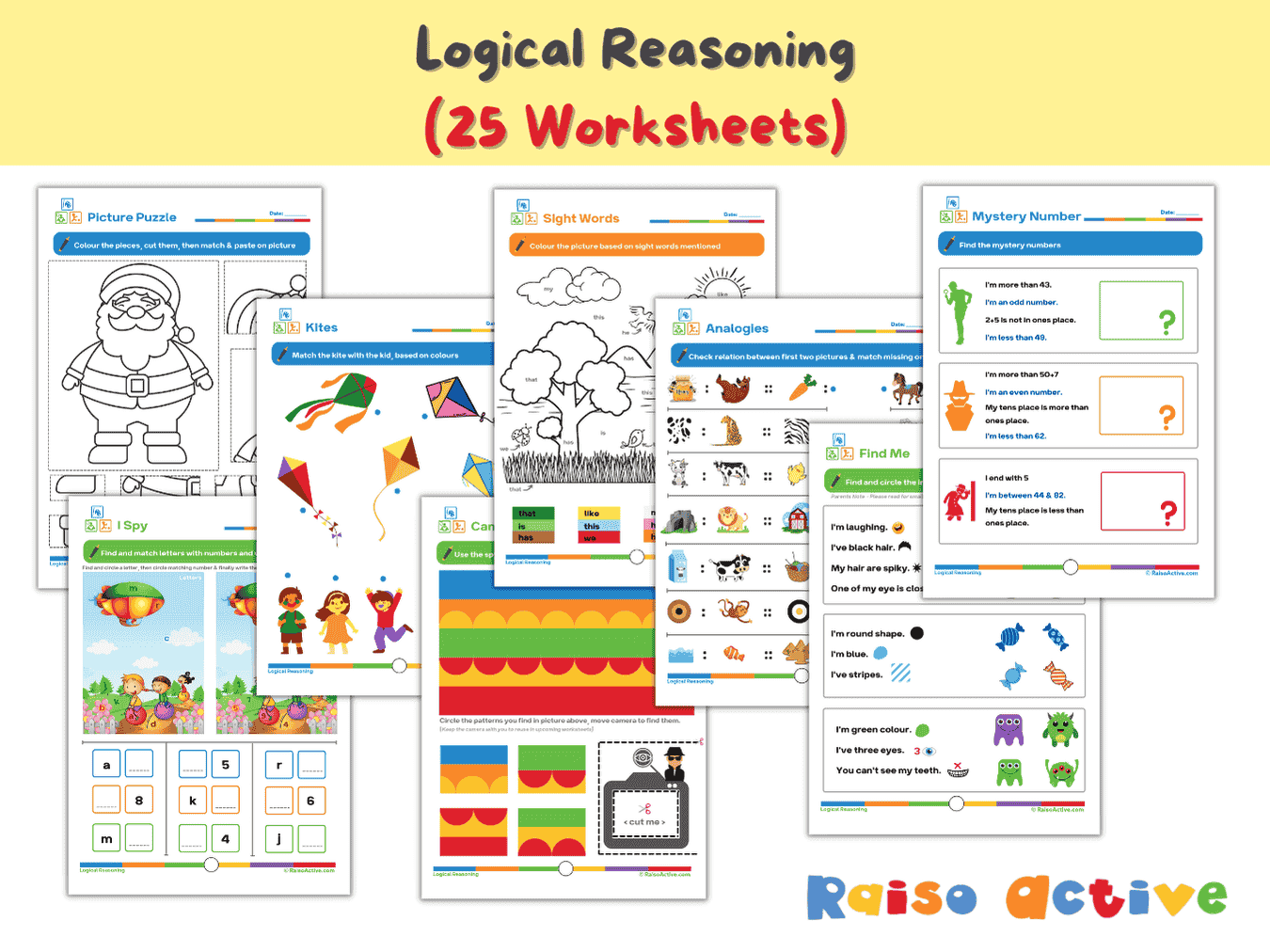
Logical Reasoning Activity Book for Preschool & Kindergarten | Patterns, Puzzles & Analogies
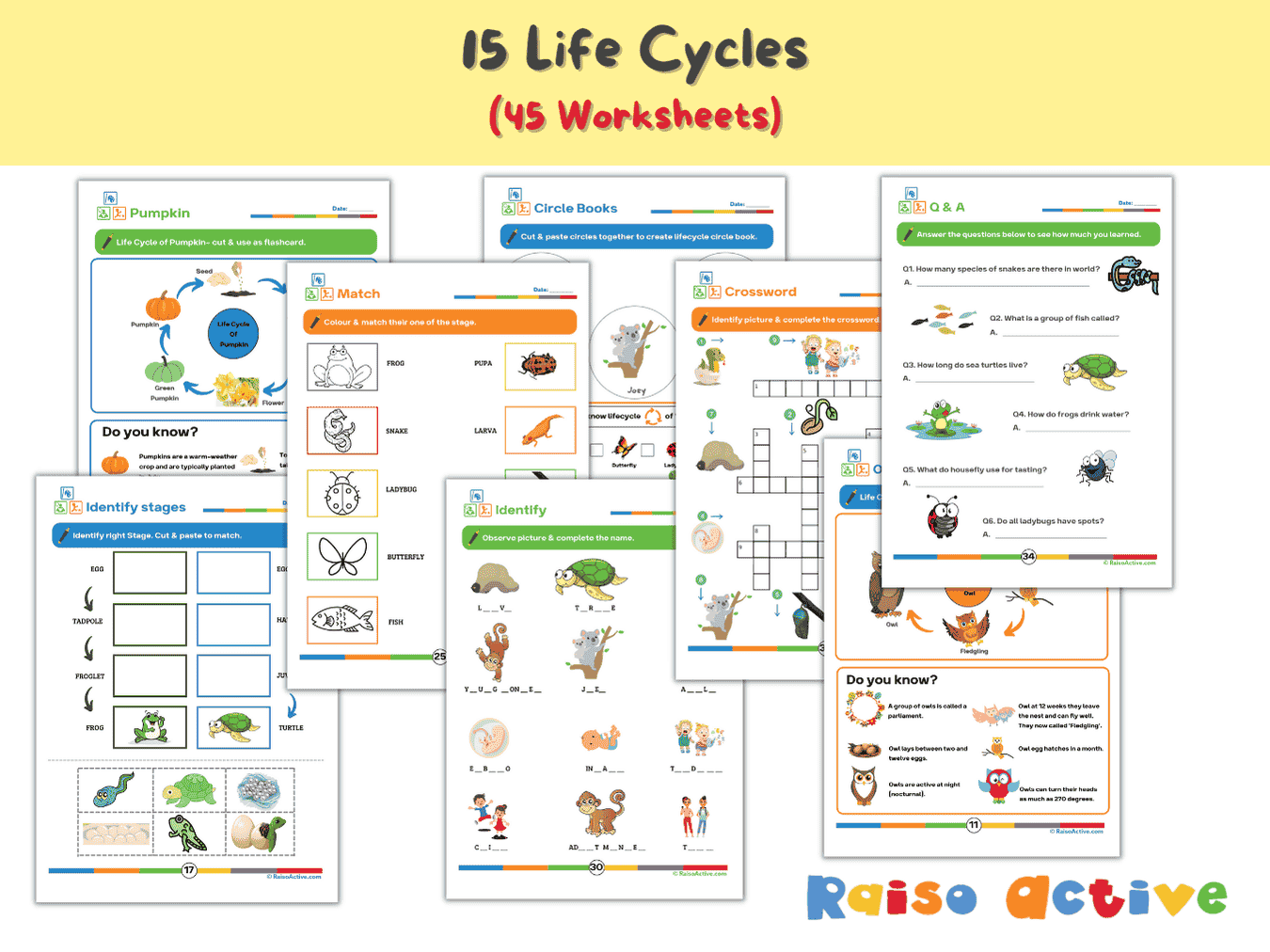
Lifecycles Activity Book & Flashcards for Preschool & Early Elementary
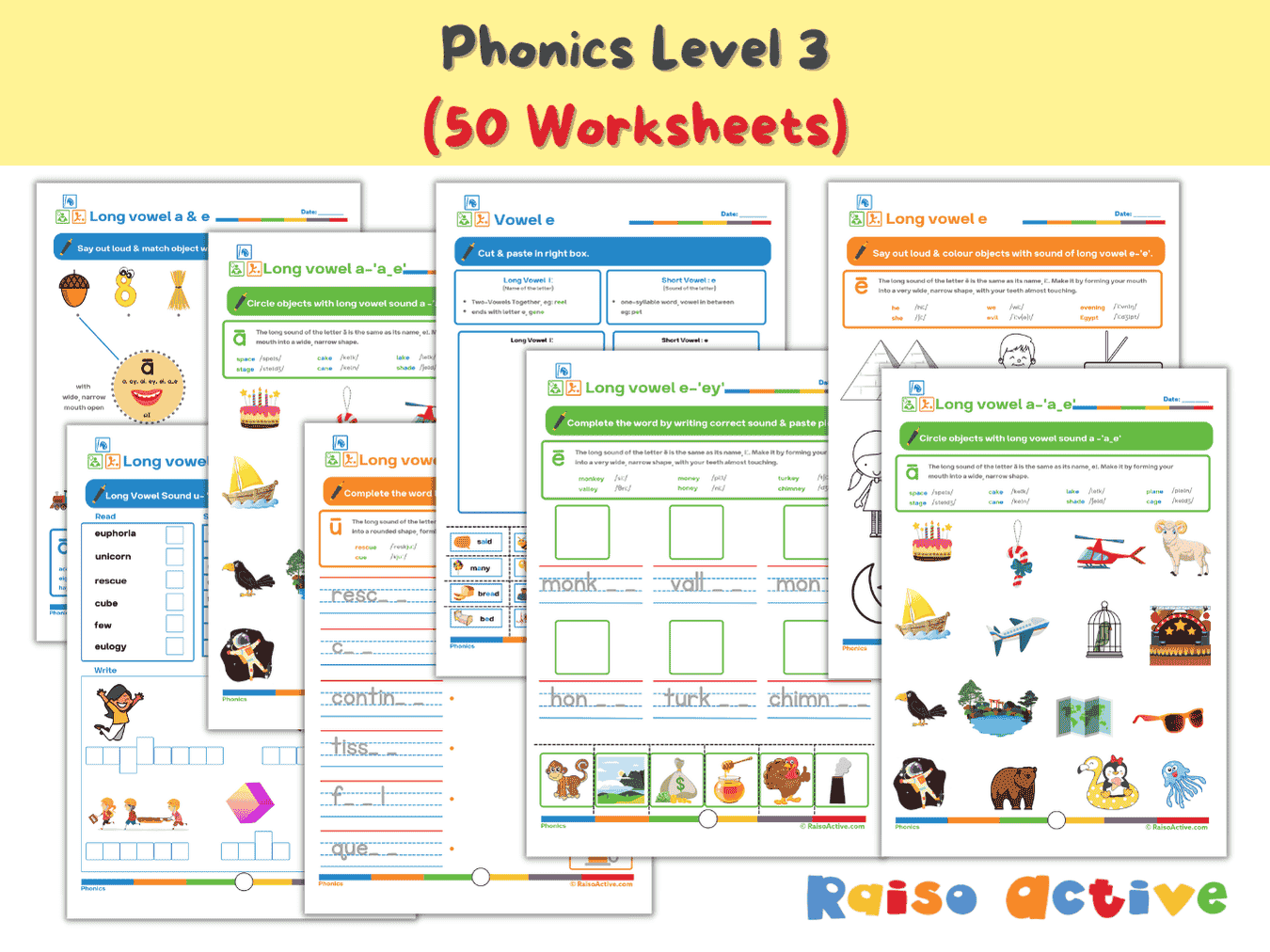
Phonics Level 3 Long Vowels Activity Book for Kindergarten & 1st Grade
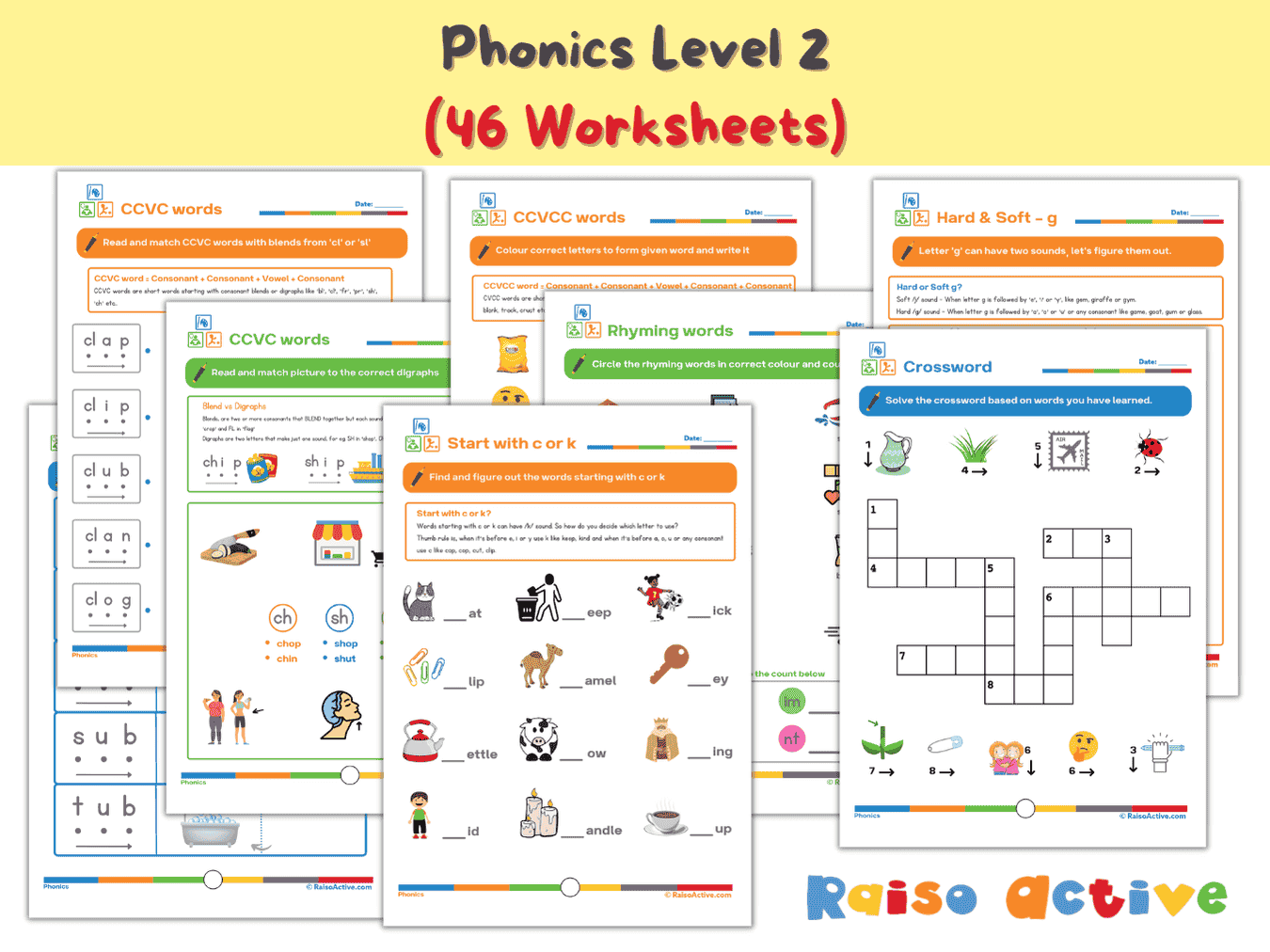
Phonics Level 2 Worksheets: CVC, CCVC, CVCC Word Families & Blends for Early Readers (Ages 4-7)
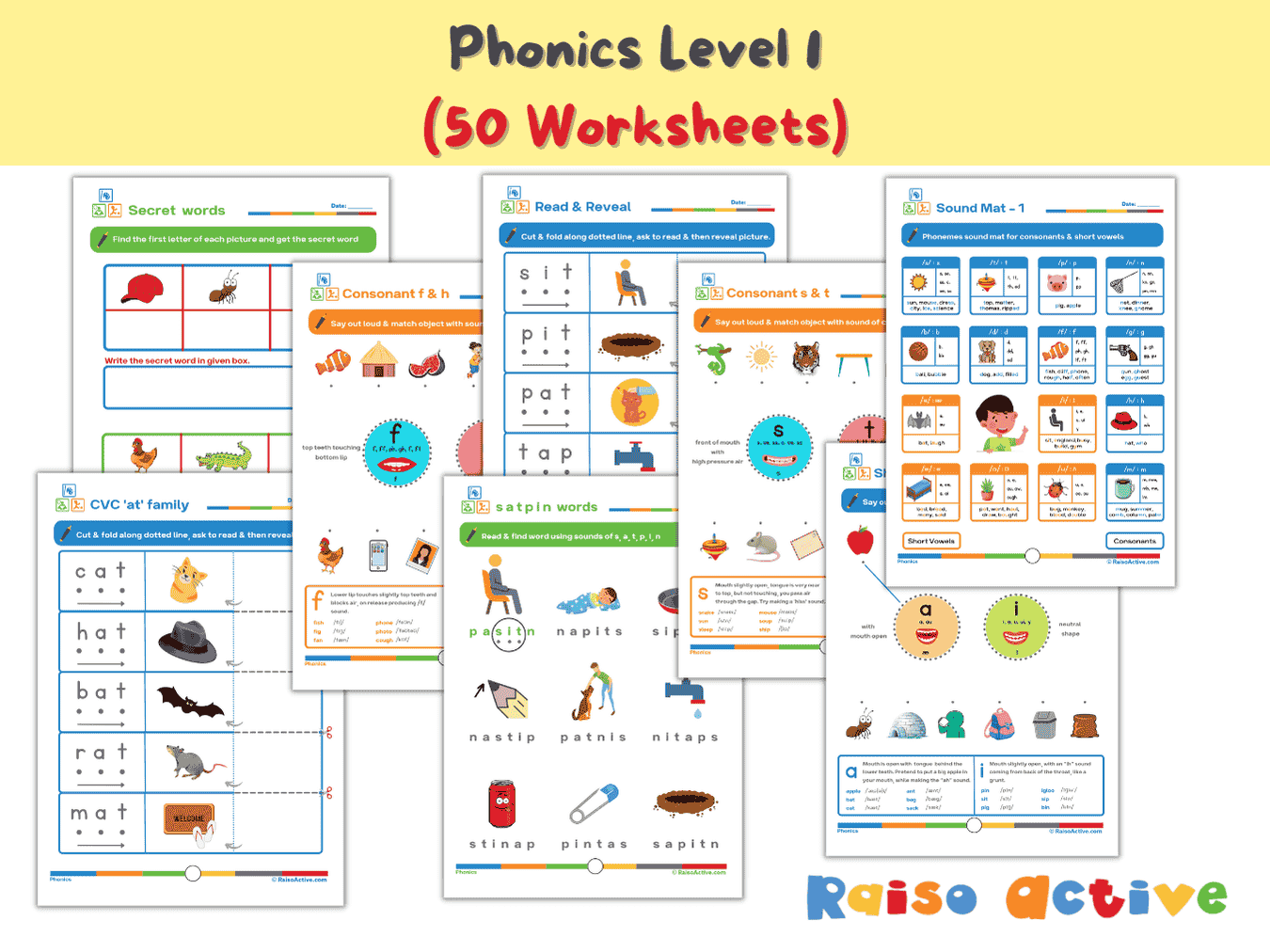
Phonics Level 1 Activity Book: Letter Sounds, Blending & CVC Words for Preschool & Kindergarten
Guides for parents and teachers
See all guides →Age-Appropriate Problem-Solving Activities: Building Critical Thinkers from the Ground Up
Discover fun, age-appropriate problem-solving activities for children ages 1-8. Build critical thinking, logic, and reasoning skills through play-based learning.
Critical Thinking Activities That Actually Work for Young Children: Building Tomorrow's Thinkers Today
Discover proven critical thinking activities for young children. Age-wise logic games, questioning techniques, and hands-on ideas to build thinking skills at home.
Coding Activities for Preschoolers: Building Tomorrow's Thinkers Today
Discover 15+ unplugged and screen-based coding activities for preschoolers that build sequencing, logic, and problem-solving skills through play. NEP 2020 aligned.
Montessori Activities for 3-4 Year Olds: A Complete Guide to Purposeful Learning
Discover practical Montessori activities for 3-4 year olds — practical life, sensorial, language, and maths — with Indian kitchen adaptations and budget shelf ideas.