Free printable worksheets · US · UK · India
Sorting Worksheets (Ages 2–6)
Sorting worksheets are printable activities for children aged 2 to 6 in which the child groups objects by a shared attribute: color, size, shape, or category such as animals, food, or living and non-living things. They develop classification, observation, comparing and contrasting, vocabulary, early data handling and the logical thinking that underpins later math and science.
Sorting is how a two-year-old first organizes the world: these are mine, those are yours; these go in the basket, those on the shelf. Worksheets put that instinct on paper. At two and three, in Playgroup, Nursery and Toddler classes, sorting means one obvious attribute with big pictures, usually color or size. At four, in Pre-K, Reception and LKG, shape and category sorting appears: farm animals versus wild animals, fruits versus vegetables, things that belong in the kitchen. At five and six, in Kindergarten, Year 1 and UKG, children sort living from non-living things for environmental studies, sort by two attributes at once (red and round), and count each group, which is the start of data handling. This hub is arranged along that path.
745+ worksheets · free PDF download · print on A4 or Letter
Sorting Worksheets to print
Browse all worksheets for ages 2–6
Clothing Pattern Match Worksheet for Preschoolers
This worksheet has children ages 3-5 study repeating patterns on clothing items — stripes, polka dots, or checks — and match each item to its identical twin, building visual discrimination and early pattern-sequencing skills. Distinguishing between similar-looking patterns also sharpens attention to detail, a skill that later supports letter and word recognition.

Number Names Matching Worksheet for Preschoolers
This worksheet helps children ages 3-5 connect written number words — like 'three' or 'seven' — to their matching numerals, an important step beyond simple numeral recognition toward full number literacy. Drawing a line from a number name to the numeral it stands for requires children to read or recall the word and hold it in mind while scanning for its match, which builds working memory alongside early reading and number skills.

Summer Shadows Matching Worksheet for Preschoolers
This worksheet has children ages 3-5 match pictures of summer activities, like swimming or building a sandcastle, to their correct shadow silhouettes, building visual discrimination through shape recognition rather than color or detail. Because these shadows represent action scenes rather than single objects, children must recognize more complex outlines, including body positions and poses, which is a step up from matching simpler object shadows. This adds a layer of visual reasoning about how shapes and motion relate.

Pizza Pattern Matching Worksheet for Preschoolers
This worksheet uses a pizza-slice theme to build visual discrimination and pattern-completion skills in children ages 3-5, asking them to match a missing pizza slice to the whole pizza it belongs to. Matching a piece to its correct whole requires children to compare small visual details, like topping arrangement or slice shape, which sharpens attention to detail beyond simple color or shape matching. The food theme adds a fun, relatable context that keeps young children engaged with the visual comparison task.

Shape Sorting Fun: Cut and Paste Worksheet for Preschoolers
Matching pictures of everyday objects to the 2D shape they resemble builds shape recognition and categorization for children ages 3-5, helping them see geometric shapes as patterns that exist in the real world around them.

Animal Homes: Cut and Paste Sorting Worksheet for Preschoolers
Matching each animal to its home using numbered cut-and-paste pieces gives children ages 3-5 practice with number-based sorting while also building early knowledge of animal habitats, like a bird's nest or a bee's hive. Using numbers as the matching key, rather than just visual similarity, adds a layer of number recognition and one-to-one matching to the classification task. Understanding that different animals live in different kinds of homes is an early building block of basic life science and habitat concepts.
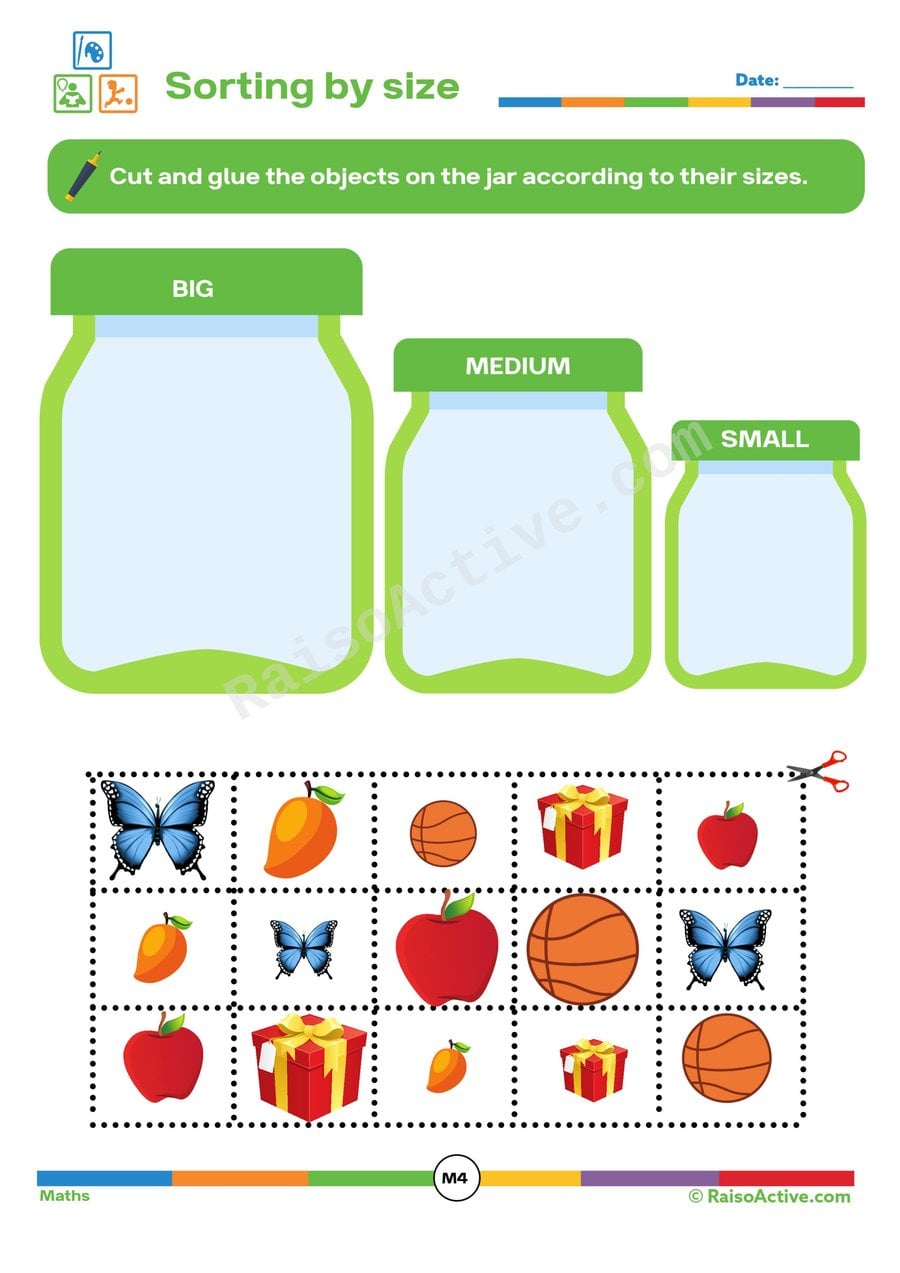
Sorting by Size: Cut and Paste Worksheet
This cut-and-paste worksheet asks 3-5 year olds to compare objects by size — big, medium, and small — and sort them into the correct jar, which is a genuinely tricky comparison since 'medium' only makes sense relative to the other two sizes rather than as an absolute category. Working through this sorting builds early comparative reasoning alongside the fine motor practice of cutting and gluing small pieces accurately.

Elephant Shapes: Fun Sorting Worksheet for Preschoolers!
This playful sorting worksheet has children ages 3-5 use an elephant's 'trunk' (their own hand reaching through a cut circle) to pick and sort shapes, building both shape recognition and simple classification skills. Physically selecting and grouping shapes by type, rather than just naming them on sight, helps solidify the concept that shapes can share a category even when their size or color differs.
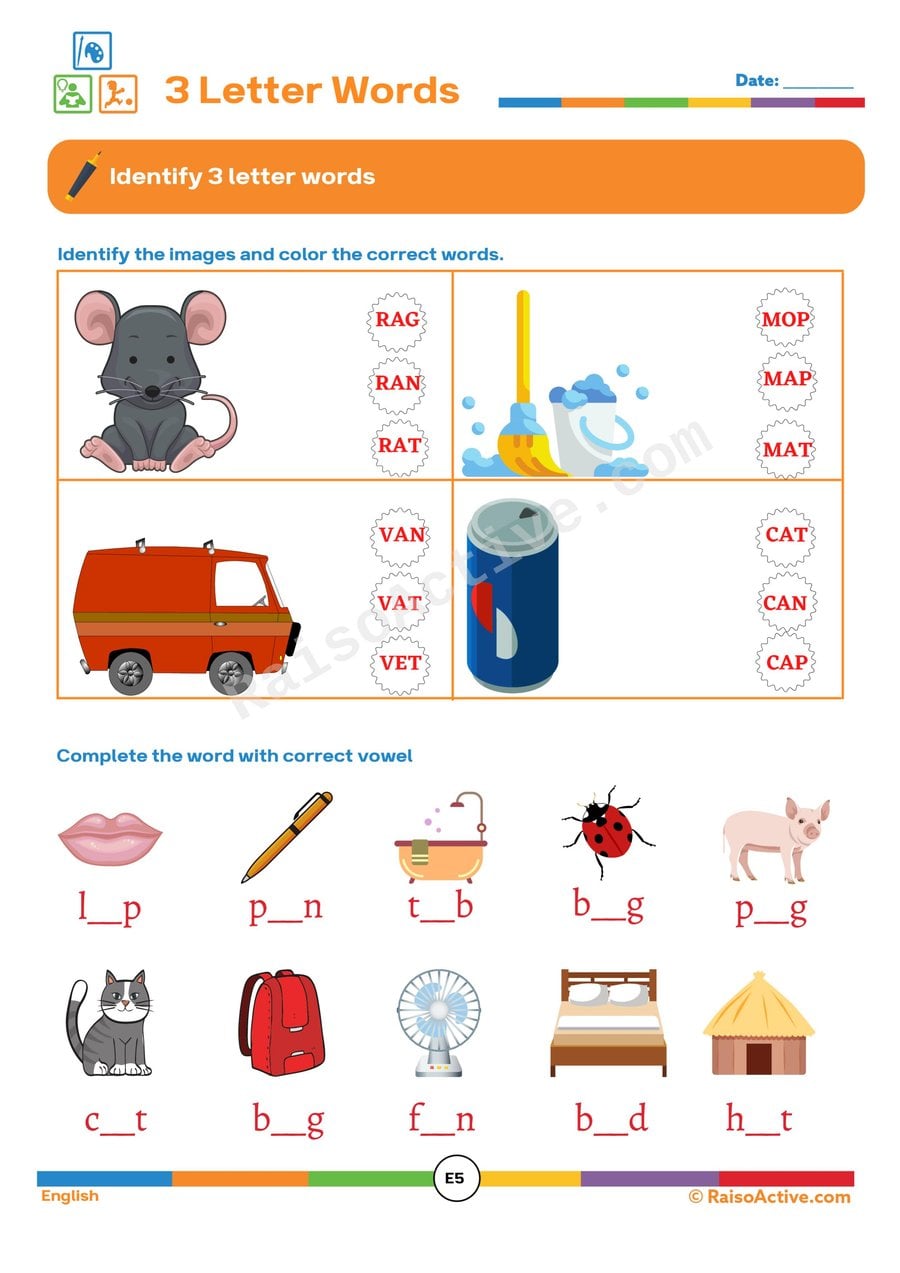
3 Letter Words Worksheet: Identify and Color!
This worksheet helps children ages 3-5 identify and recognize simple three-letter words by matching pictures to their written word and then completing each word by filling in a missing vowel. Working with short, consistent words like these builds the beginning reading skills that let children start decoding independently.

Animal Sorting Worksheet: Wild, Domestic, and Sea Animals!
This worksheet asks children ages 3-5 to classify animals into three categories - wild, domestic, and sea animals - based on where and how each one lives, building early categorization skills alongside animal and habitat vocabulary. Learning to sort by a shared characteristic, like habitat, is foundational scientific thinking that children will use again and again as they group and compare other things in the world around them.
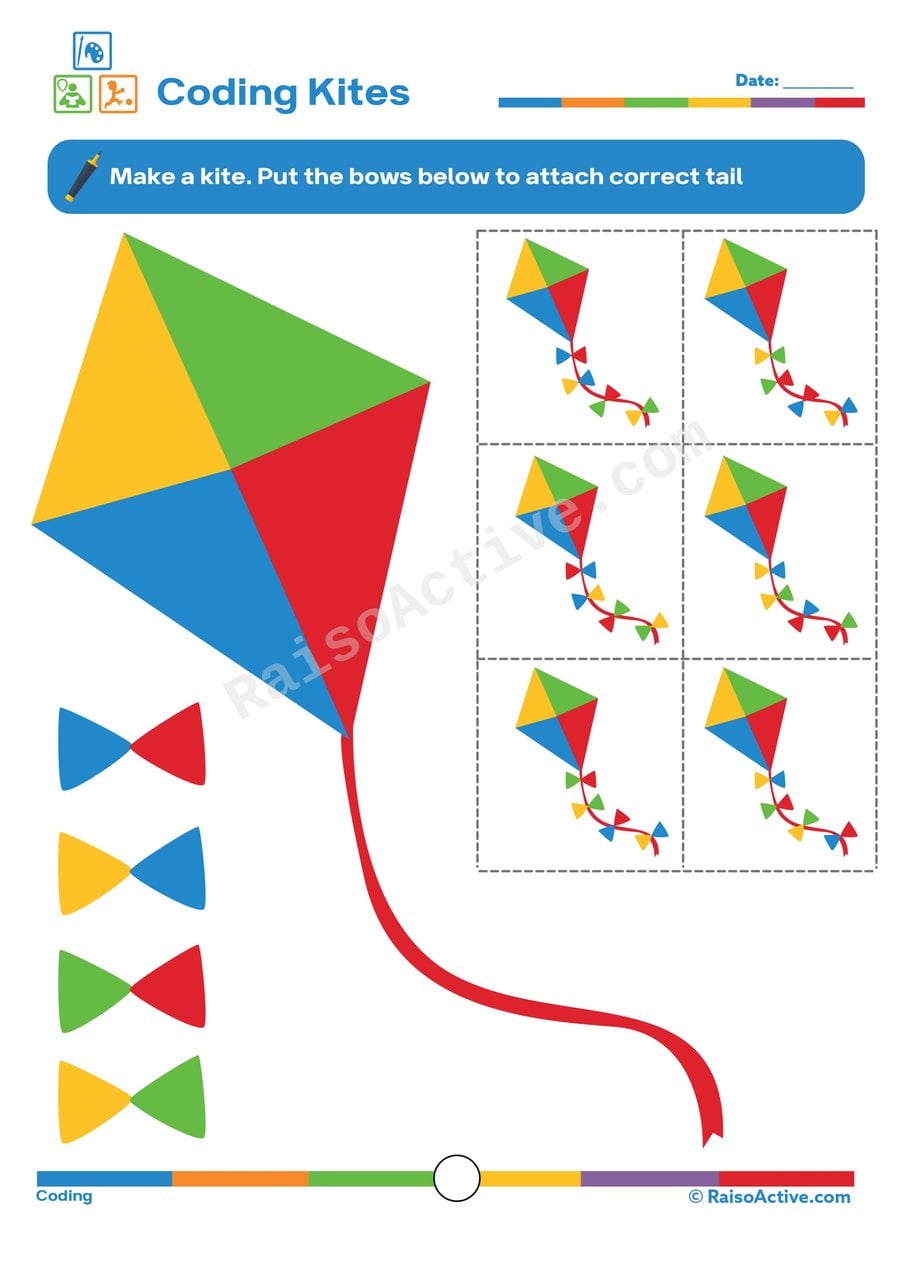
Coding Kites Worksheet: Match the Bows!
This activity sharpens visual observation in children ages 3-5 as they compare color sequences on each kite to a set of loose bows and find the exact match. Careful, systematic comparison — checking each color in order rather than glancing quickly — builds an attention-to-detail habit that transfers directly to early reading and number work.
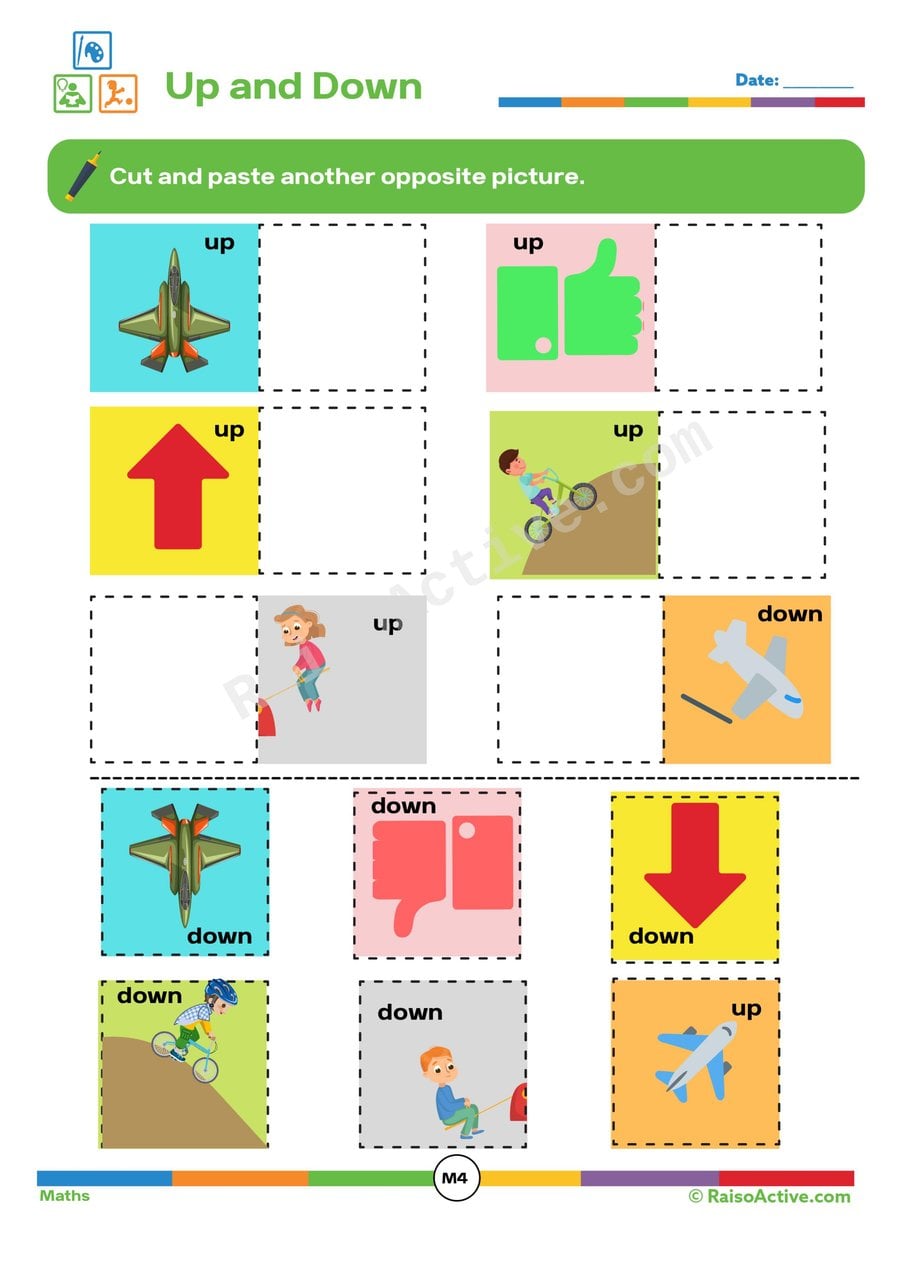
Up and Down Worksheet: Cut and Paste Opposites!
Children ages 3-5 build spatial vocabulary and comparative reasoning as they identify pictures representing 'up' and match them to their opposite, 'down,' by cutting and pasting. Understanding opposite pairs like up/down strengthens both language development and the early logical thinking needed to compare and categorize.

Colorful Butterfly Cut and Paste Worksheet for Preschoolers
Cutting out heart shapes and arranging them into a butterfly gives children ages 3-5 focused practice with scissor control and precise gluing, since the final picture only comes together correctly if each heart is placed in the right spot. Following a visual example to build a specific, recognizable shape also strengthens spatial reasoning, requiring children to compare their work to a model rather than assembling pieces at random. This kind of guided craft bridges basic coloring and more advanced, independent art projects.

Letter Sounds: Cut and Paste 'Ii' and 'Jj' Pictures Worksheet
Sorting pictures by their beginning sound into 'Ii' and 'Jj' groups builds phonemic awareness for children ages 3-5, training their ear to isolate the first sound of a word before connecting it to its written letter.

Animal Homes Matching Worksheet for Preschoolers
By matching each animal to its home, children ages 3-5 build early classification skills and expand their vocabulary around habitats like nests, dens, hives, and burrows. This kind of cause-and-effect pairing — this animal lives in this particular place — lays groundwork for later science concepts about how living things depend on their environment.

Shape Pattern Fun: Complete the Pattern Worksheet for Preschoolers
This worksheet introduces children ages 3-5 to pattern recognition using shapes, asking them to notice a repeating sequence and supply the missing piece. Continuing a pattern requires children to detect a rule and predict what comes next, an early form of the logical reasoning that later supports algebra and sequencing skills. Cutting and pasting the correct shape also reinforces shape recognition and fine motor precision.

Tall and Short Worksheet: Comparing Sizes for Preschoolers
Comparing objects and circling the tallest and shortest one in each row teaches children ages 3-5 comparative size vocabulary, an early math skill that goes beyond simply describing single objects as big or small. This worksheet requires children to look across an entire row and rank items relative to one another, which builds visual comparison skills that later support measurement concepts like longer, shorter, and equal. Using varied pictures for each comparison also keeps children engaged while practicing the same underlying skill repeatedly.
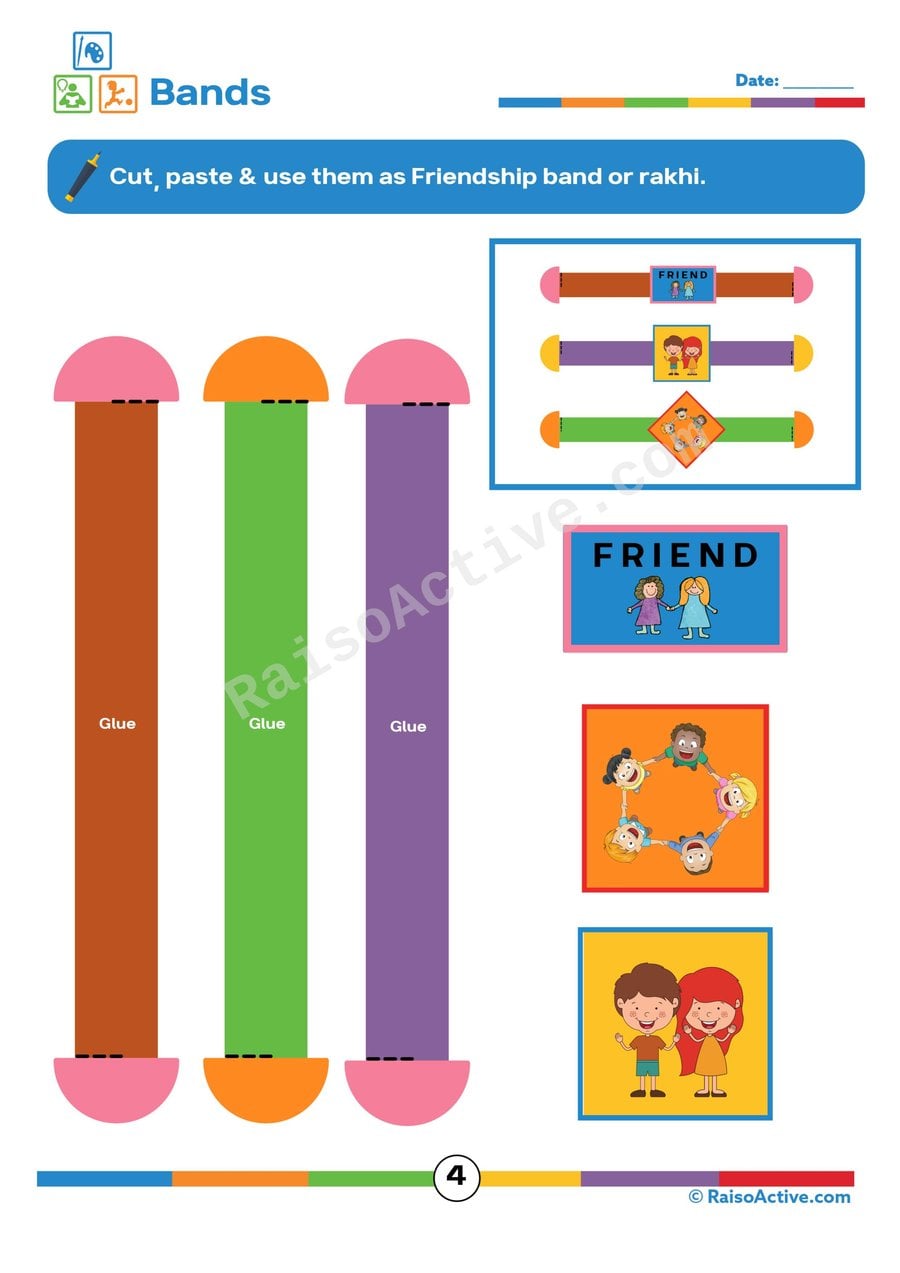
Friendship Band Craft: Cut, Paste, and Create!
Children ages 3-5 practice precise scissor cuts and glue control as they assemble their own wearable friendship band from printed templates. Forming the loop and securing the ends also builds an early understanding of shape and structure, turning a flat strip into a wearable circle, while decorating the band encourages open-ended creative choices.

Landforms Cut and Paste Worksheet for Preschoolers
This worksheet introduces preschoolers to the idea that the Earth's surface takes many different forms — mountains, beaches, islands — and asks them to match a picture of each landform to its name, an early step in geography and classification skills. Sorting pictures by category also reinforces visual discrimination, since children must notice defining features, like water on all sides for an island or a peak for a mountain, rather than relying on color or size alone.

Animal Homes Matching Worksheet for Preschoolers
Children ages 3-5 practice matching animals to their correct habitats, like a bird to a nest or a fish to water, building early science knowledge about how different animals are suited to different environments. This kind of habitat matching lays groundwork for later ecosystem and adaptation concepts in school science.
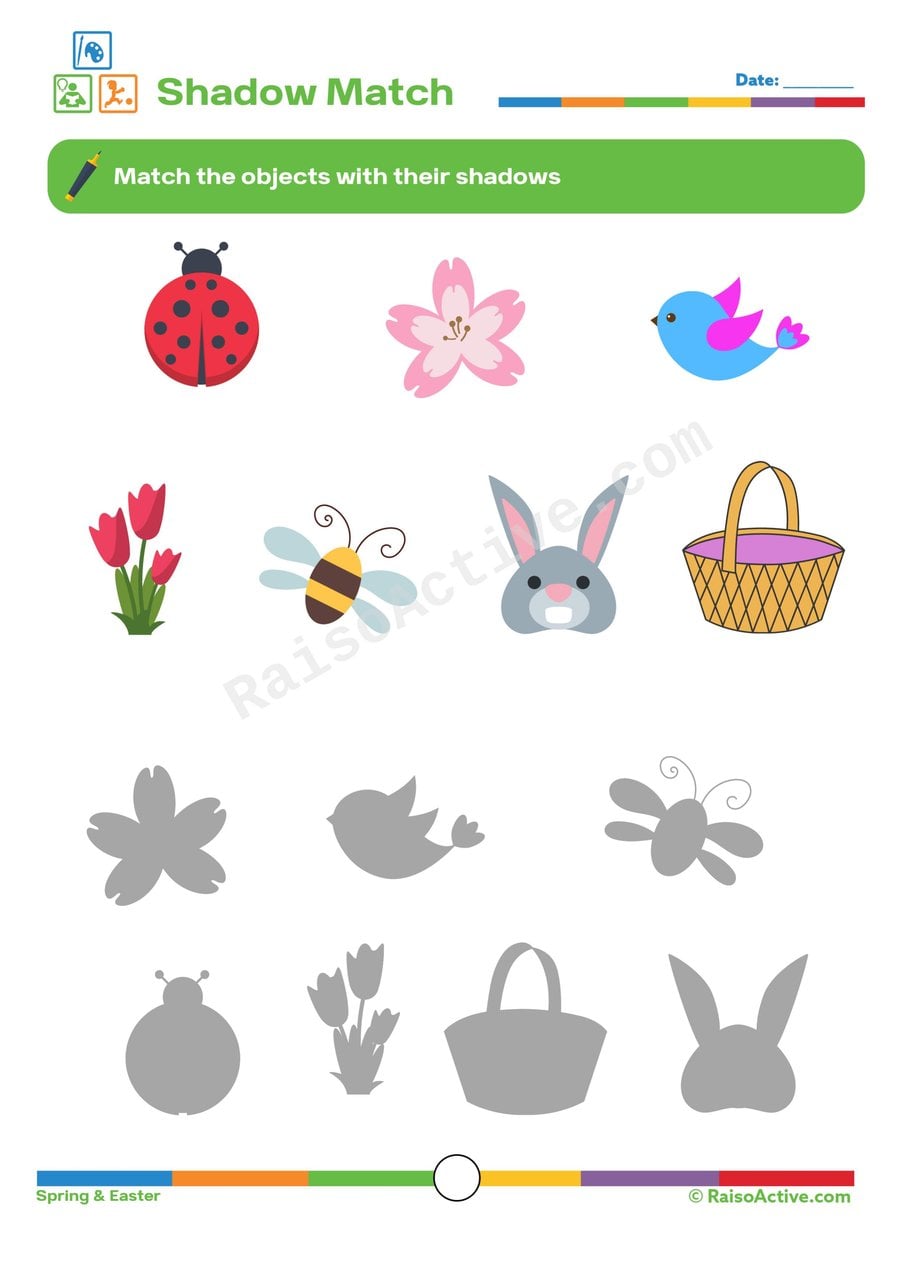
Spring Shadow Match Worksheet for Preschoolers
Children ages 3-5 practice visual discrimination by matching spring-themed objects to their correct silhouette shadows. Because shadows strip away color and detail, leaving only outline shape, this activity sharpens a child's ability to focus on form alone — a more advanced visual skill than matching by color or pattern.
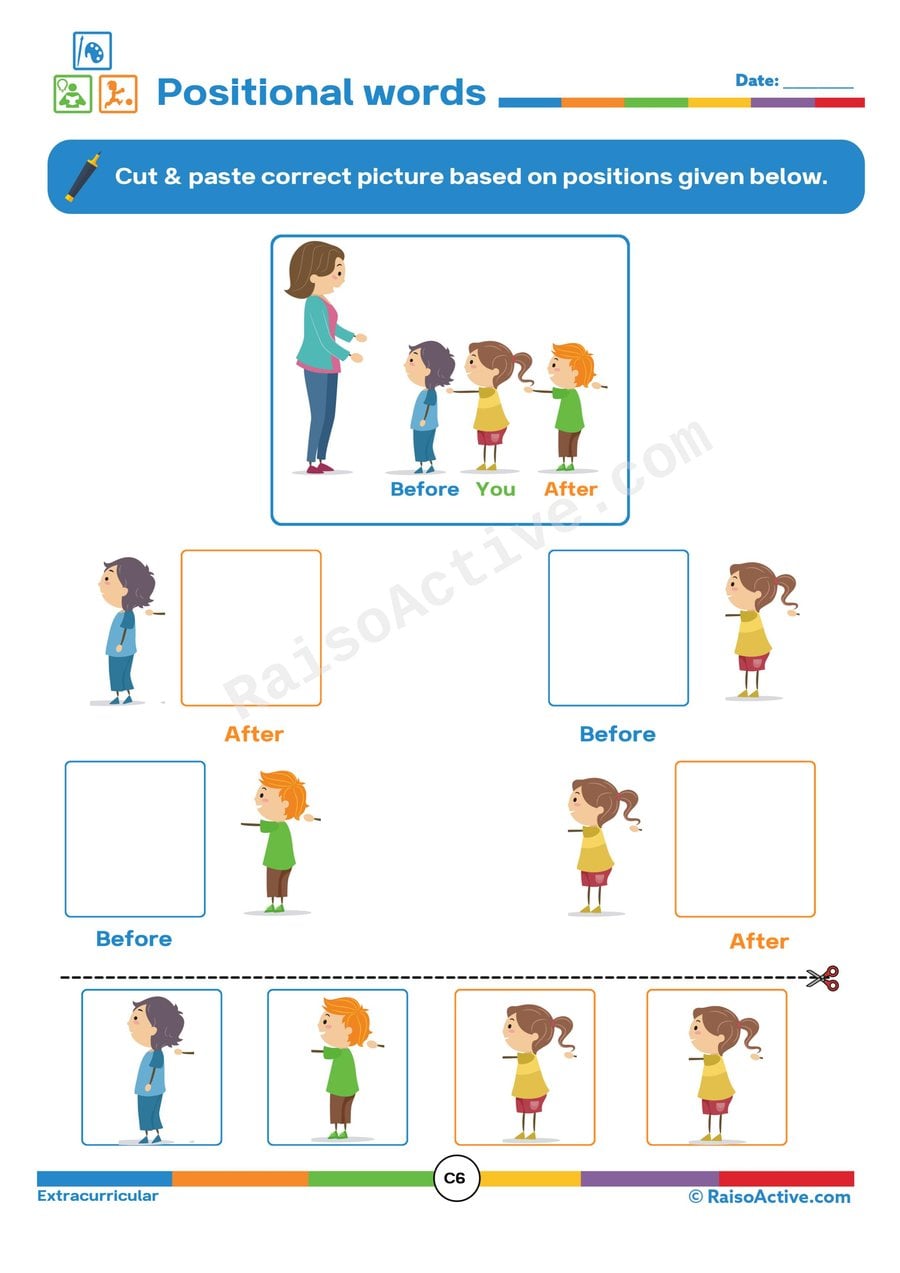
Positional Words Worksheet: Before, You, and After!
This cut-and-paste worksheet teaches children ages 3-5 to apply the positional words 'before' and 'after' to a sequence of objects or people, connecting an abstract language concept to a visual, hands-on task. Understanding order words like these is an important building block for later skills such as retelling stories in sequence and understanding time concepts like yesterday and tomorrow. Choosing and placing the correct picture also reinforces careful listening and following two-step directions.
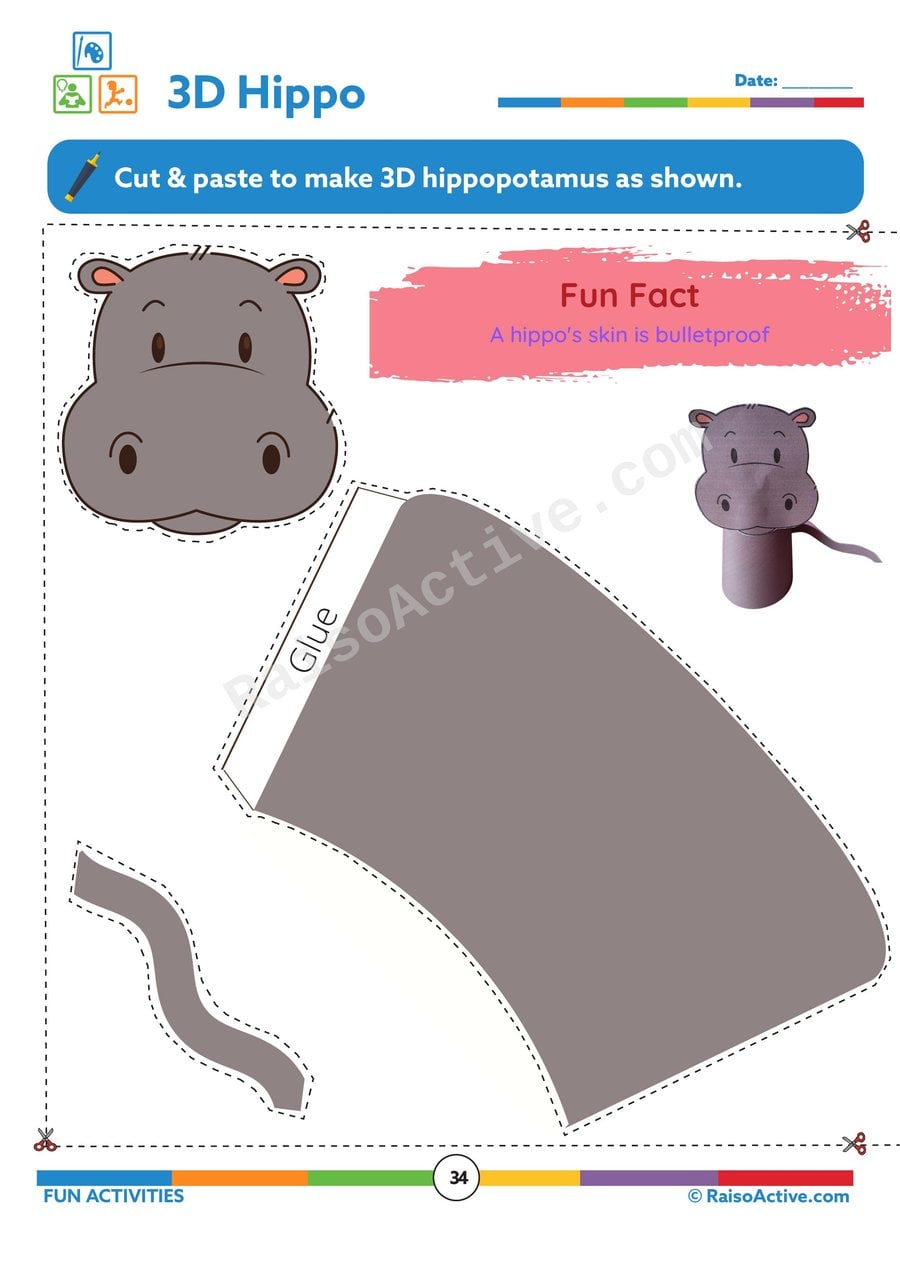
3D Hippo Cut & Paste Worksheet for Preschoolers
Like other 3D paper crafts, building this hippo from flat cut pieces that fold and glue into a standing shape helps 3-5 year olds grasp that paper can be transformed from flat to solid, while the multi-step process — cut, fold, glue — builds sequencing skills beyond a single-action worksheet. The hippo theme also gives an easy hook for a fun animal fact conversation.

Match the Fruits to Their Plants Worksheet for Preschoolers
This worksheet helps children ages 3-5 build early plant science knowledge by matching common fruits to the plant or tree they actually grow on, such as an apple to a tree or a strawberry to a low bush. This task moves beyond simply naming fruits into understanding where food comes from, an important first step in connecting nature to the food children eat every day.
Sorting attributes by age
The attribute a child can sort by is a good measure of what they are noticing. Color and size are perceptual and come first. Shape needs the child to ignore color and size, which takes a little longer. Category sorting (animals, vehicles, food) depends on vocabulary and world knowledge, and living versus non-living asks for a rule that is not visible, which is why it appears in UKG, Reception and Kindergarten rather than earlier.
- Ages 2–3: color (red or blue), size (big or small), same or different
- Ages 3–4: shape, hot and cold, day and night, things that go together
- Ages 4–5: animals by habitat, food groups, seasons, land, water and air transport
- Ages 5–6: living and non-living, two attributes at once, odd one out with a reason
- Ages 6–7: Venn diagrams and two-way tables, sorting by a rule the child writes
Why sorting matters for math and science
Classification is the first step of mathematics and of science. Counting a group requires deciding what belongs in the group; graphing requires categories; and every science lesson from "living things" to "materials" is a sorting exercise with a stated rule. The Common Core Kindergarten standard K.MD.B.3 asks children to classify objects and count the categories, and UK and Indian early years frameworks list classification under both mathematics and understanding the world. Sorting sheets give this practice in a form that can be checked.
How to use sorting worksheets
Start with real objects: sort the laundry, the cutlery or a handful of buttons, and say the rule aloud. Then move to the sheet. Cut-and-paste versions let two- and three-year-olds place pictures physically before they can draw or circle; older children can draw lines to two boxes or color-code the groups. Always ask "why does this one go here?" so the child states the rule, and ask for a second way to sort the same set once the first is done.
Frequently asked questions
What are sorting worksheets?
A sorting worksheet is an activity sheet on which a child groups pictures by a shared attribute, such as color, size, shape or category, usually by cutting and pasting into labeled boxes, drawing lines or circling. They are used from about age 2 to 6, in Playgroup and Nursery through UKG in India, Nursery and Reception in the UK, and Toddler through Kindergarten in the US, and lead into graphing and data handling.
At what age can a child sort by color?
Most children can sort objects into two color groups between 2 and 2½, and into three or four colors by 3. Naming the colors reliably often comes slightly later than sorting them, around 3 to 4. If a child mixes colors up, sort by size or shape first and return to color; the ability to sort is separate from color vocabulary, and both develop with practice.
What should a 4 year old be able to sort?
By age 4, in Pre-K, Reception or LKG, a child is typically expected to sort by color, size and shape, group familiar objects by category such as animals, food, clothes and vehicles, spot the odd one out in a set of four, and explain the rule they used. Sorting by two attributes at once (small and blue) and sorting living from non-living things are 5- to 6-year-old expectations in Kindergarten, Year 1 and UKG.
What is the difference between sorting and matching?
Matching finds one partner for each item (a shoe with its pair, a numeral with a quantity). Sorting divides a whole set into groups by a rule, so several items end up together. Matching comes first, from around 2, and sorting by one attribute follows at 2 to 3. A useful sequence is match, then sort by one attribute, then sort the same objects a different way, then sort by two attributes.
What is living and non-living sorting?
Living and non-living sorting asks a child to decide whether each pictured item is alive, using rules such as: living things grow, need food and water, move by themselves and have babies. Plants are a common sticking point because they do not visibly move. It is taught in UKG and Class 1 EVS in India, Reception and Year 1 science in the UK, and Kindergarten science in the US, usually around age 5 to 6.

Written by
Hemsweta Jain · Teacher Cheena
MBA and Early Childhood Educator, teaching since 2014 · Founder of RaisoActive, Mumbai
Written and reviewed by Hemsweta Jain (Teacher Cheena), who designs every RaisoActive worksheet.
Last reviewed
Printable packs for ages 2–6
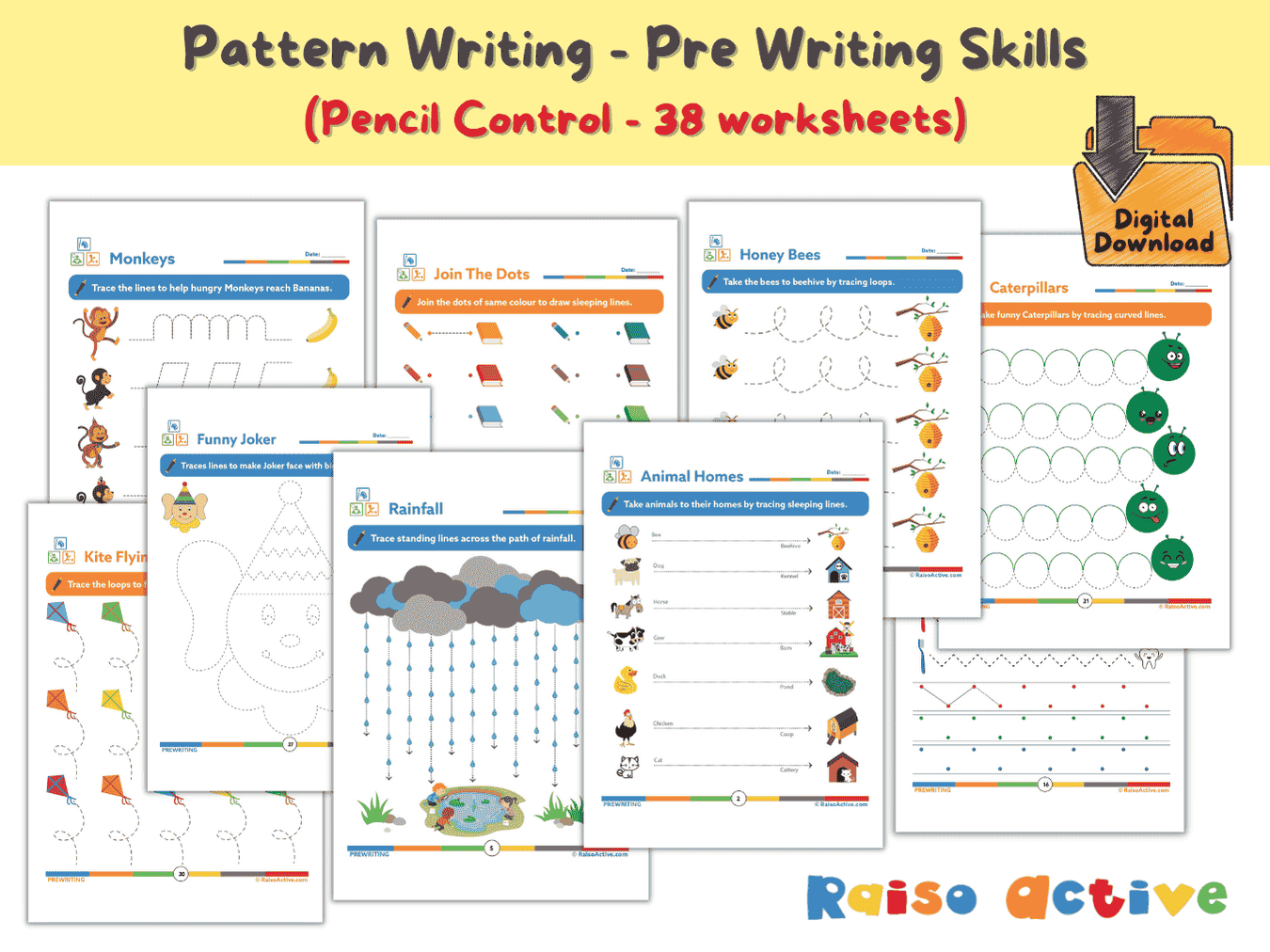
Pattern Writing Pre-writing Skills Activity Book for 3-4 Year Olds
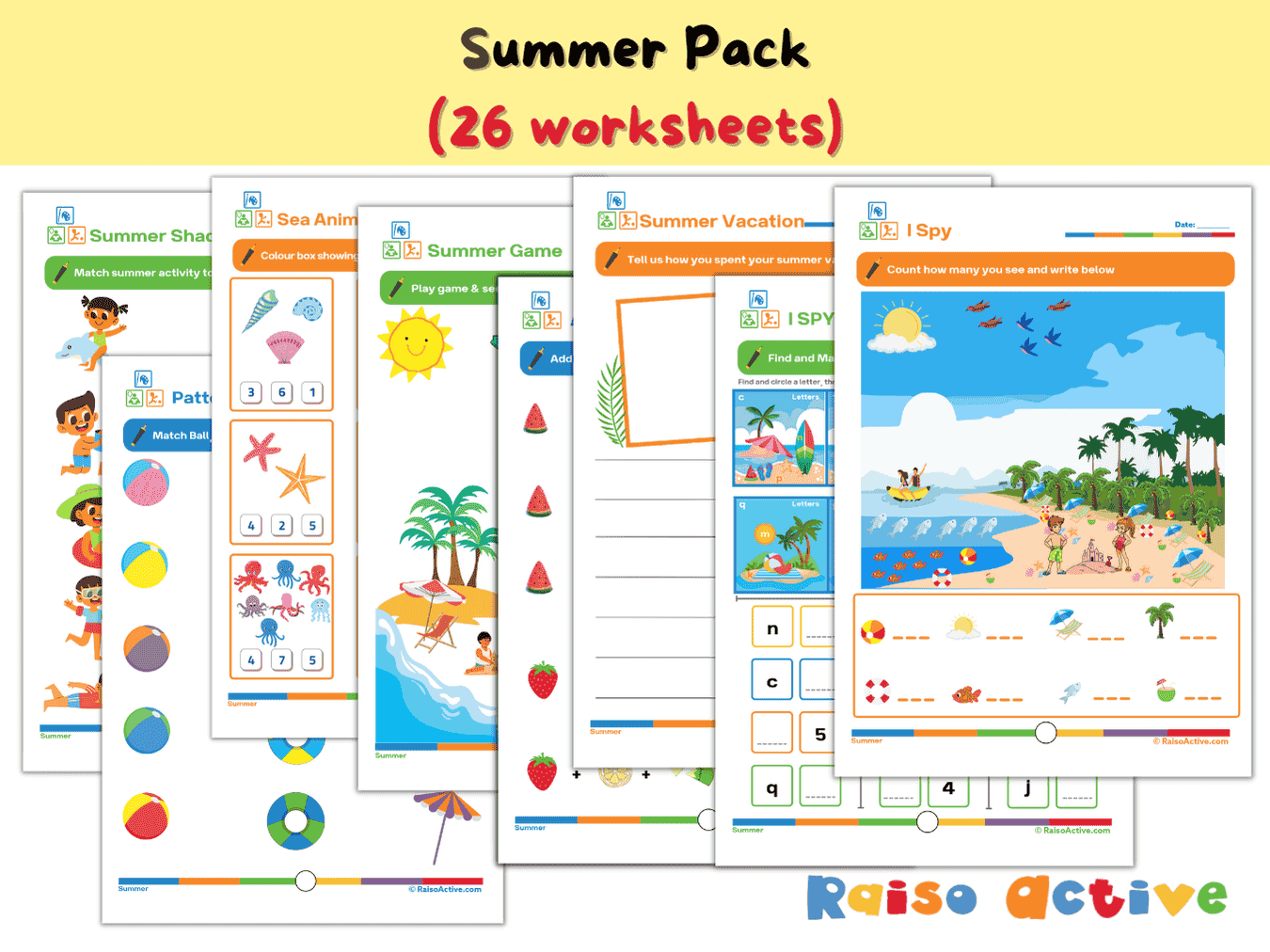
Summer Activity Pack: Math, Literacy, Puzzles & More for Preschool & Kindergarten
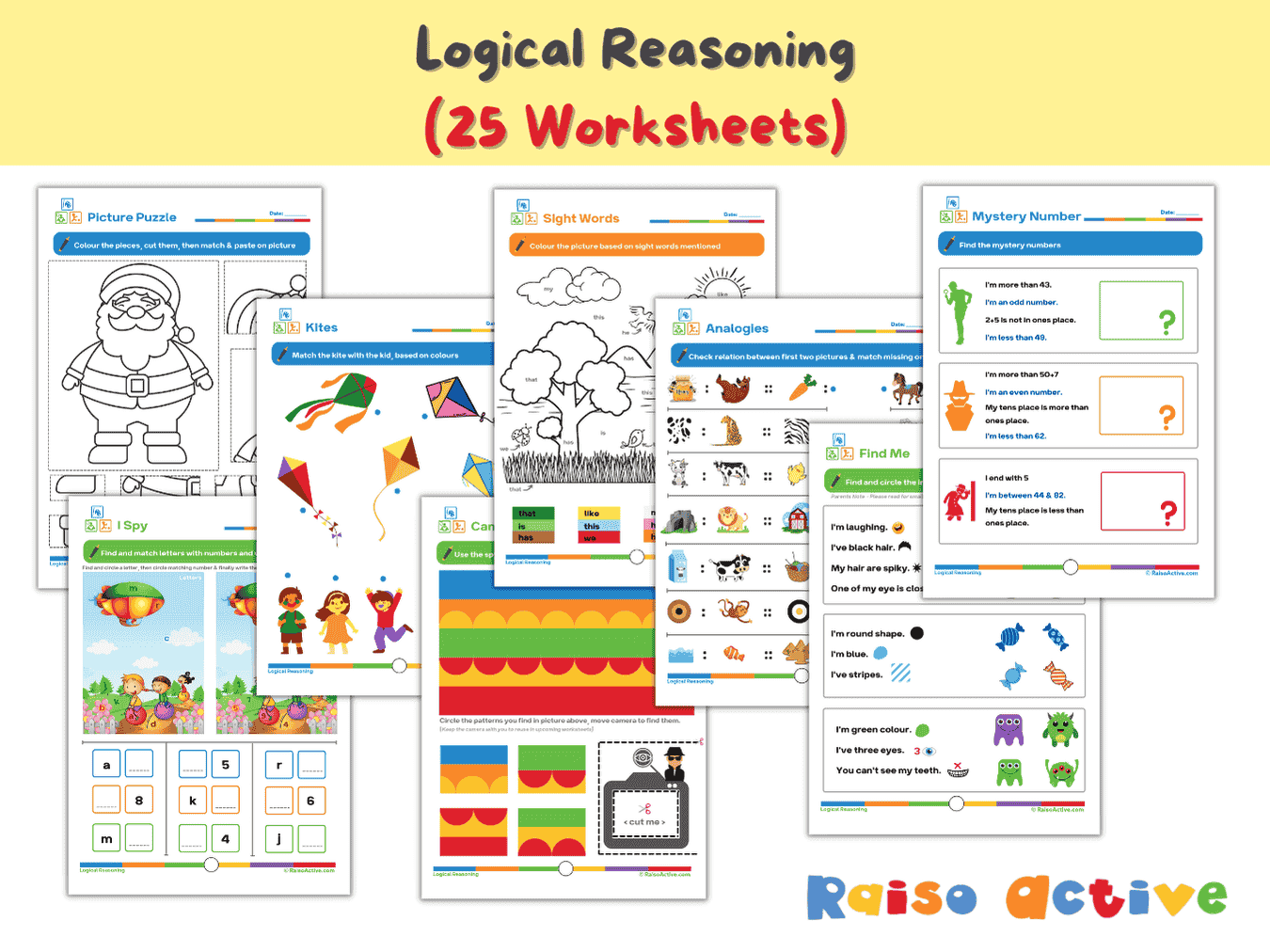
Logical Reasoning Activity Book for Preschool & Kindergarten | Patterns, Puzzles & Analogies
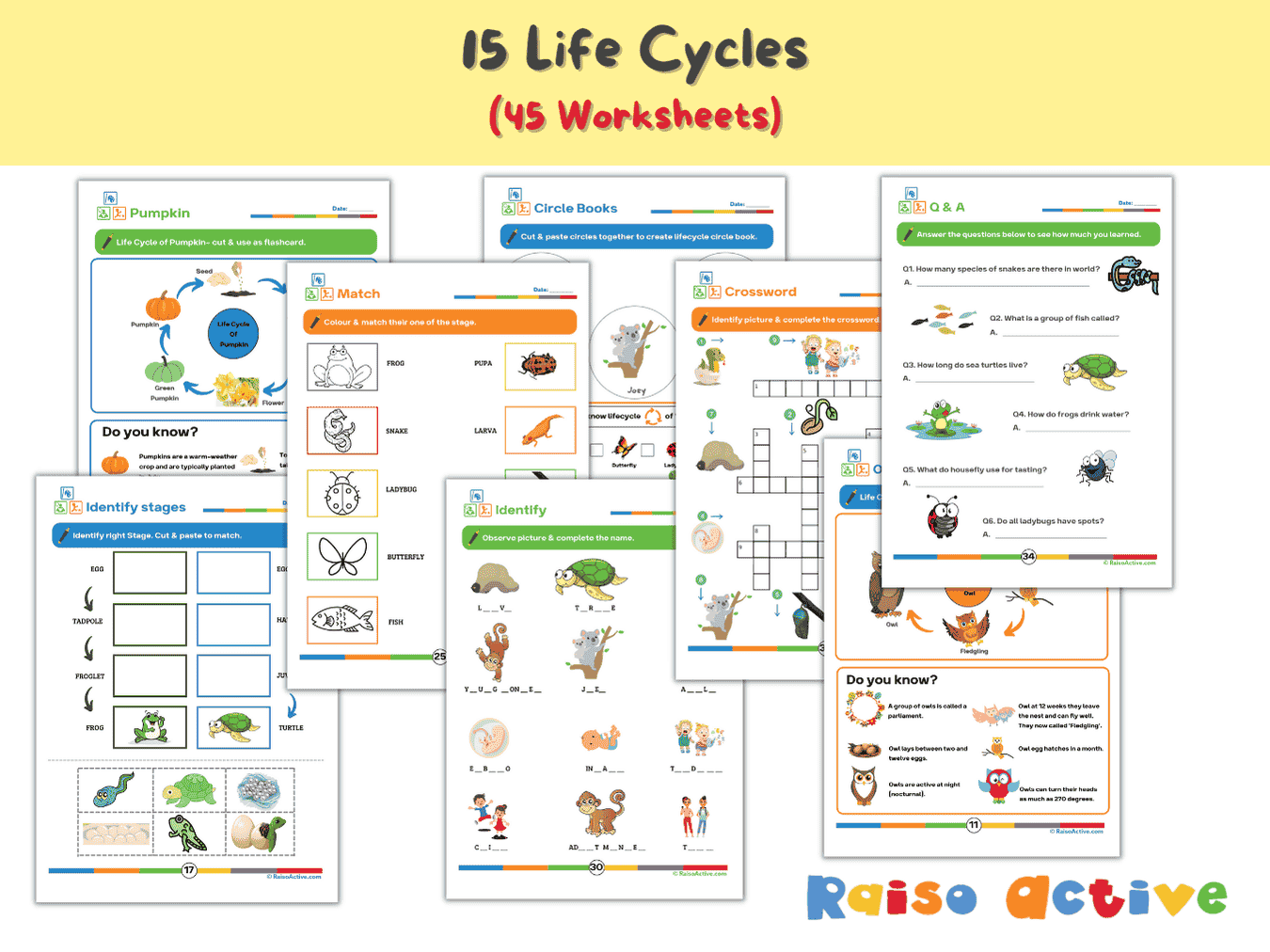
Lifecycles Activity Book & Flashcards for Preschool & Early Elementary
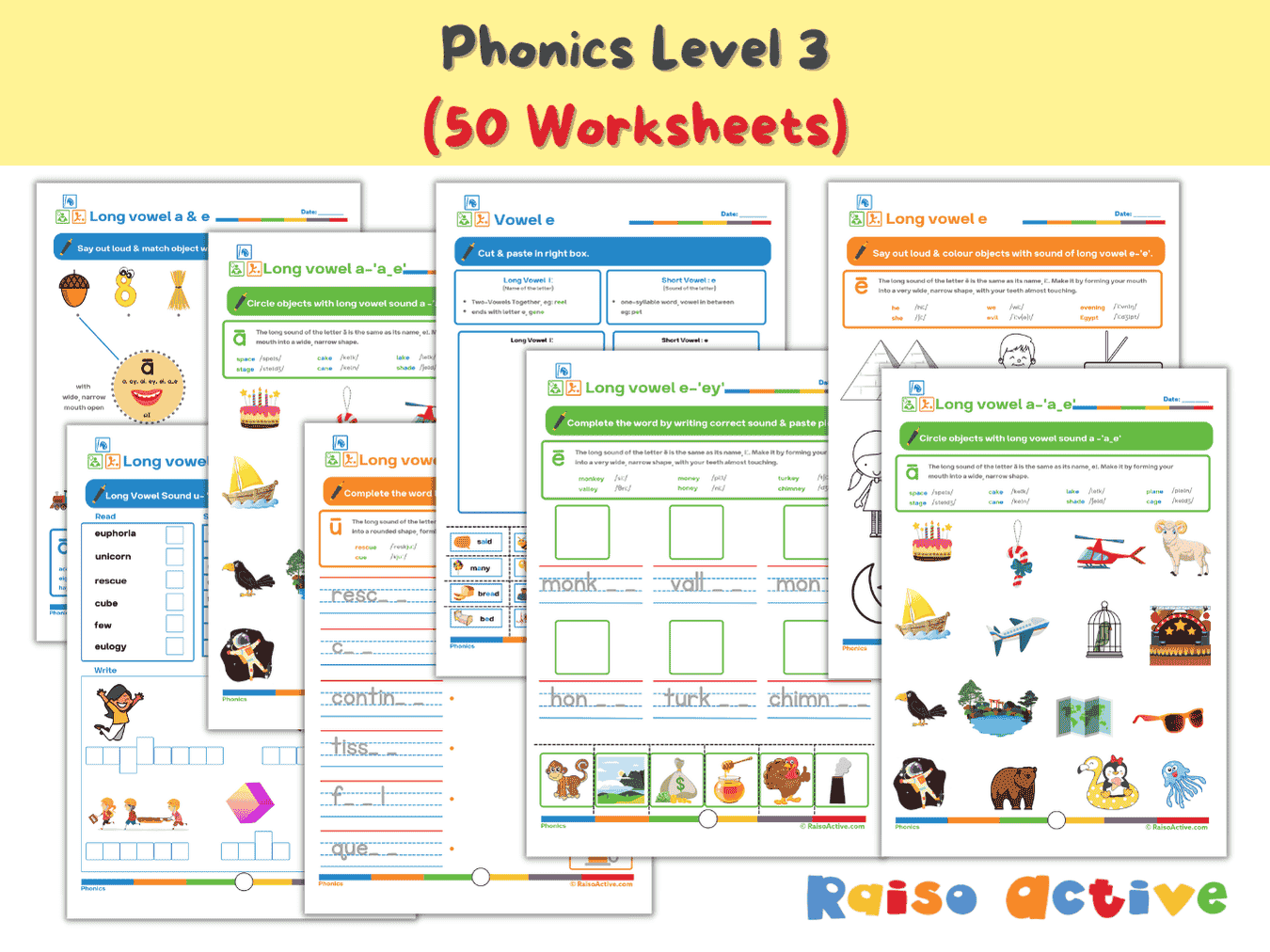
Phonics Level 3 Long Vowels Activity Book for Kindergarten & 1st Grade
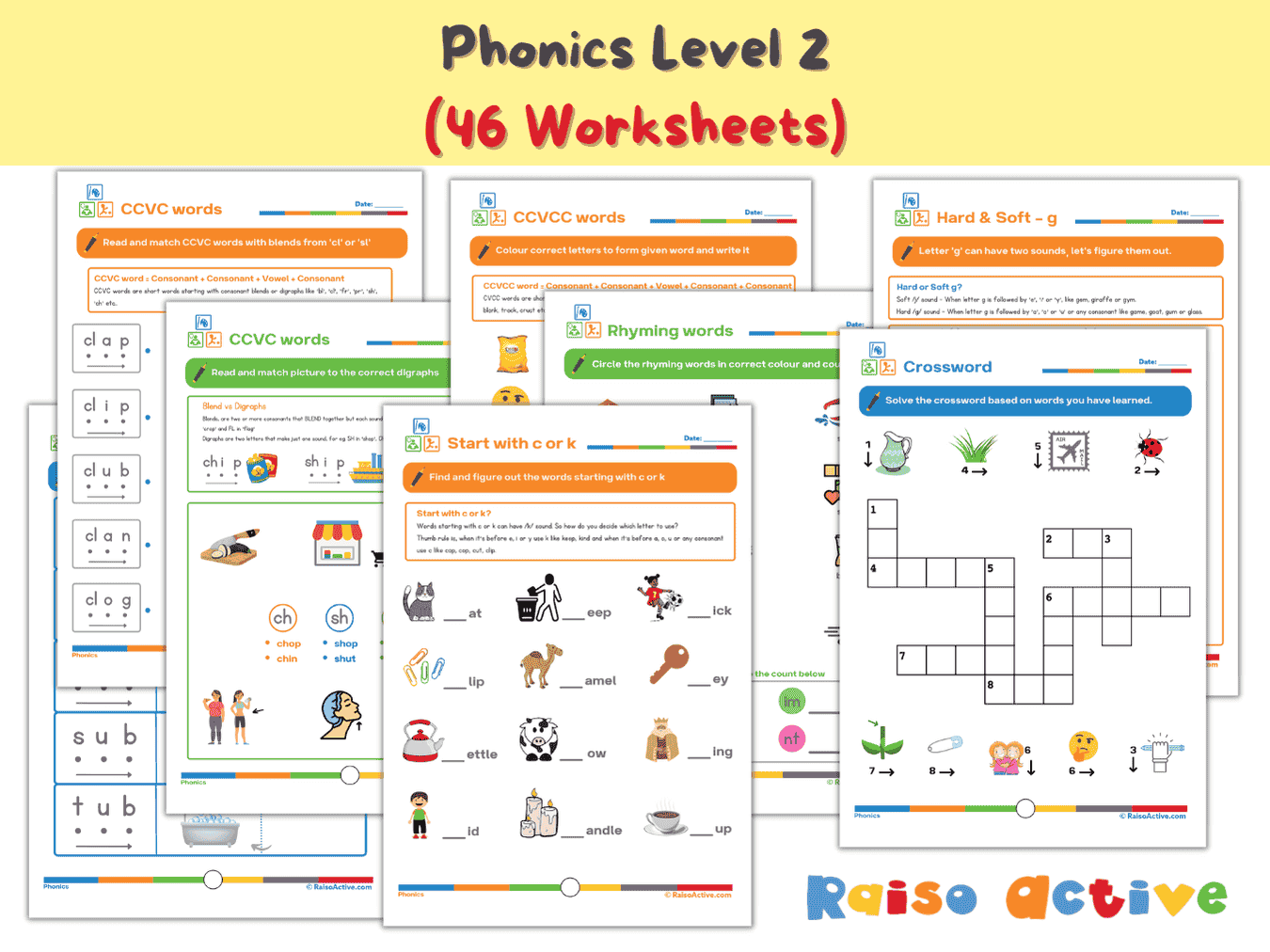
Phonics Level 2 Worksheets: CVC, CCVC, CVCC Word Families & Blends for Early Readers (Ages 4-7)
Guides for parents and teachers
See all guides →Age-Appropriate Problem-Solving Activities: Building Critical Thinkers from the Ground Up
Discover fun, age-appropriate problem-solving activities for children ages 1-8. Build critical thinking, logic, and reasoning skills through play-based learning.
Critical Thinking Activities That Actually Work for Young Children: Building Tomorrow's Thinkers Today
Discover proven critical thinking activities for young children. Age-wise logic games, questioning techniques, and hands-on ideas to build thinking skills at home.
Coding Activities for Preschoolers: Building Tomorrow's Thinkers Today
Discover 15+ unplugged and screen-based coding activities for preschoolers that build sequencing, logic, and problem-solving skills through play. NEP 2020 aligned.
Teaching Basic Computer Skills to Young Children: A Parent's Complete Guide
Help your child ages 3-8 build digital literacy with age-appropriate computer skills: mouse, keyboard, safe internet, and top apps for Indian families.
What's the Difference Between Educational and Busy Work? A Parent's Guide to Meaningful Learning Activities
Learn to tell educational activities from busy work for young children. Discover what makes learning meaningful, how to evaluate worksheets, and how to transform rote tasks into rich experiences.
How to Know if Activities Are Developmentally Appropriate: A Parent's Guide to Age-Appropriate Learning
Learn how to tell if a learning activity truly fits your child's developmental stage. Age-by-age guide, red flags, DAP principles, and practical tips for parents.
Canonical: https://raisoactive.com/worksheets/sorting