Free printable worksheets · United States
1st Grade Sorting Worksheets (Ages 6–7)
1st Grade sorting worksheets are practice sheets for children aged 6–7 in First Grade in the US. Sorting is grouping a set of objects or pictures by a shared attribute, such as color, size, shape or type. The sheets on this page cover grouping objects by one attribute, classifying by size, color or type, recognizing what does not belong and comparing two groups after sorting.
First grade pushes reading toward fluency and math toward larger numbers: consonant digraphs, long vowels and silent e appear in decodable passages, while place value work extends to 120 and addition and subtraction move from within 10 to within 20. From six, sorting becomes a way of thinking about properties. Shapes are sorted by number of sides and corners, numbers into odd and even, words by vowel sound or spelling pattern, materials by whether they bend or float. Venn diagrams with an overlap and two-way tables let one set be sorted by two rules at once. A good sheet asks the child to write the rule used and then sort the same set a second way.
164+ worksheets · free PDF download · print on A4 or Letter
1st Grade Sorting Worksheets to print
Browse all worksheets for ages 6–7
Vowel i Matching Worksheet: Long and Short Sounds
In this worksheet, children ages 4-6 train their ears to tell apart the short 'i' sound (as in 'pig') from the long 'i' sound (as in 'kite'), then sort pictures into the correct category. This side-by-side comparison is a key phonics milestone, because confusing short and long vowels is one of the most common early reading errors, and deliberate practice like this builds the auditory discrimination needed to read unfamiliar words accurately.

Sentence Matching Worksheet: Read and Match the Sentences!
Reading a short sentence and pasting it beneath its matching picture builds reading comprehension for children ages 4-6, requiring them to understand the full meaning of a sentence rather than recognizing isolated words. This task also reinforces fine motor precision as children position and glue a small strip of text accurately within a defined space.
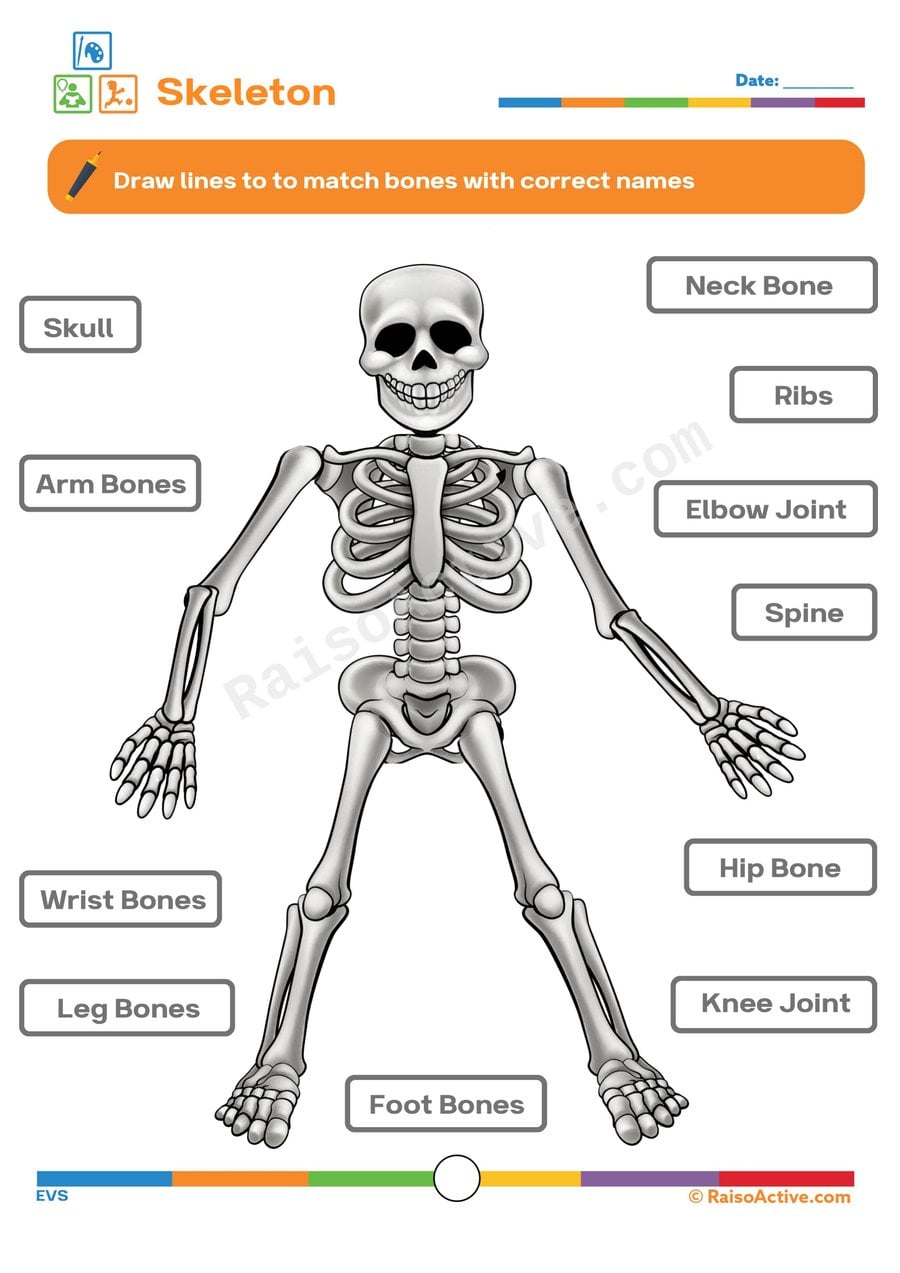
Skeleton Matching Worksheet: Learn About Bones!
Drawing lines from bone names to their locations on a skeleton diagram introduces children ages 4-6 to basic human anatomy vocabulary, such as skull, ribs, or spine, while practicing left-to-right reading and matching skills. Because children must read a word and then visually locate the correct part of the body, this worksheet also strengthens the connection between written language and real-world objects, an important step toward reading comprehension. The Halloween-skeleton framing makes an otherwise academic science topic feel playful and approachable.

Noun, Pronoun, or Adjective? Match the Words! Worksheet for Kids
This worksheet introduces children ages 4-6 to three foundational parts of speech — nouns, pronouns, and adjectives — by asking them to sort individual words into the correct grammatical category. Learning to tell these word types apart early gives children a vocabulary for talking about language itself, which supports both reading comprehension and their own sentence writing later on. Matching words to pictures also keeps an abstract grammar concept grounded in something concrete and visual.

Blend Words Matching Worksheet: Read and Circle the Picture!
This worksheet gives children ages 4-6 further practice reading consonant blend words and connecting them to their matching picture, this time by circling rather than cutting and pasting, which keeps the focus purely on reading and visual scanning. Repeated blend practice across different formats — matching, circling, and later independent writing — helps these two-consonant sounds become automatic rather than something a child has to sound out every time.
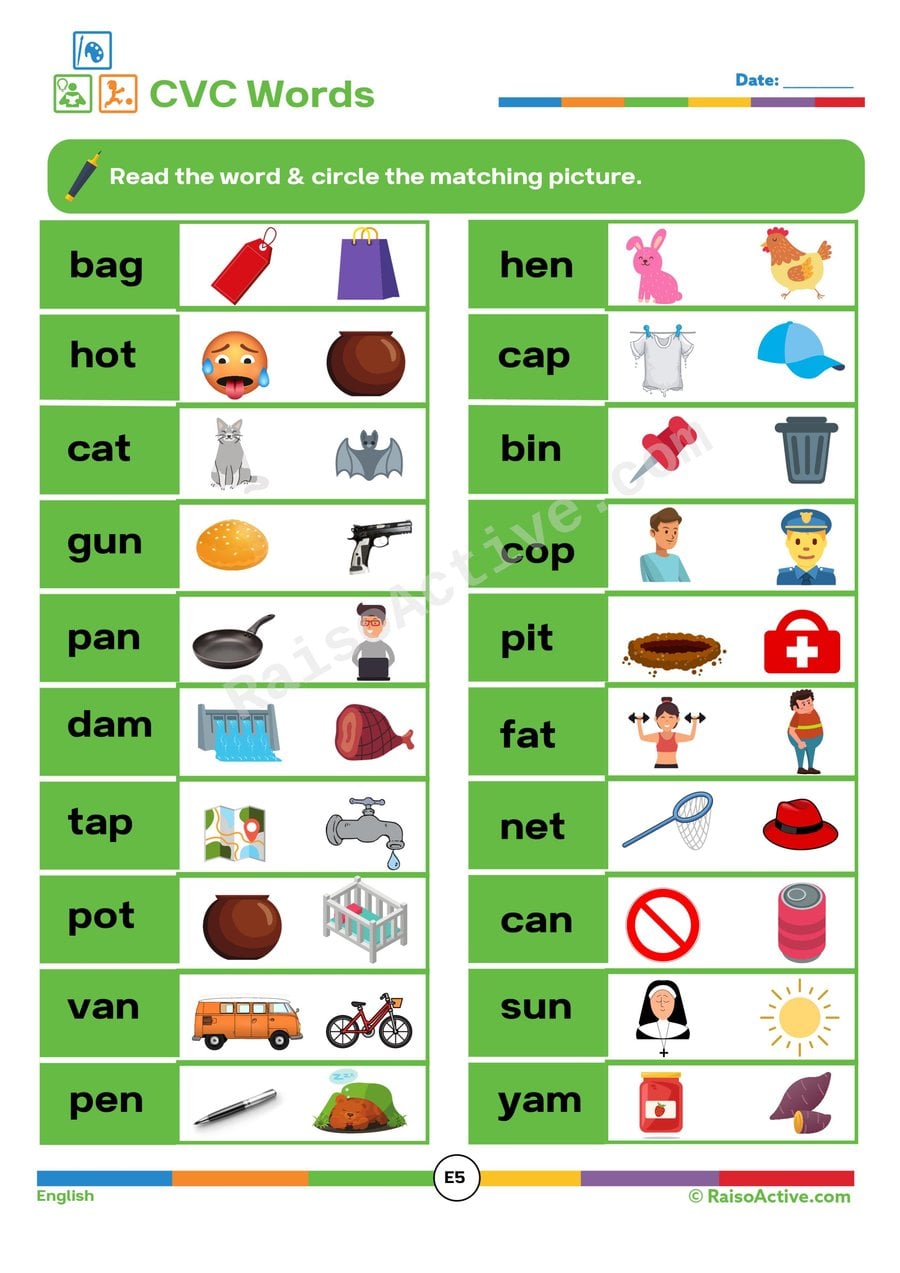
CVC Word Matching Worksheet: Read and Circle!
Sounding out each consonant-vowel-consonant word letter by letter strengthens decoding, and matching that word to its picture connects decoding to meaning — an essential step for children ages 4-6 becoming independent readers.

Family Words Worksheet: Picture Matching and Word Recognition
Children ages 4-6 practice recognizing and reading words from the 'family' word group, like 'candle' becoming 'candle-family' patterns or similar word-family endings, by matching written words to their corresponding pictures. Word family practice builds phonics pattern recognition, helping children read new words faster by spotting familiar chunks within them.

Time Routine Cut and Paste Worksheet for Preschoolers
Matching a clock face showing a specific time to the daily activity that happens then — like breakfast or bedtime — connects the abstract skill of clock reading to concrete routines, helping children ages 4-6 build a real-world sense of how time structures a day.
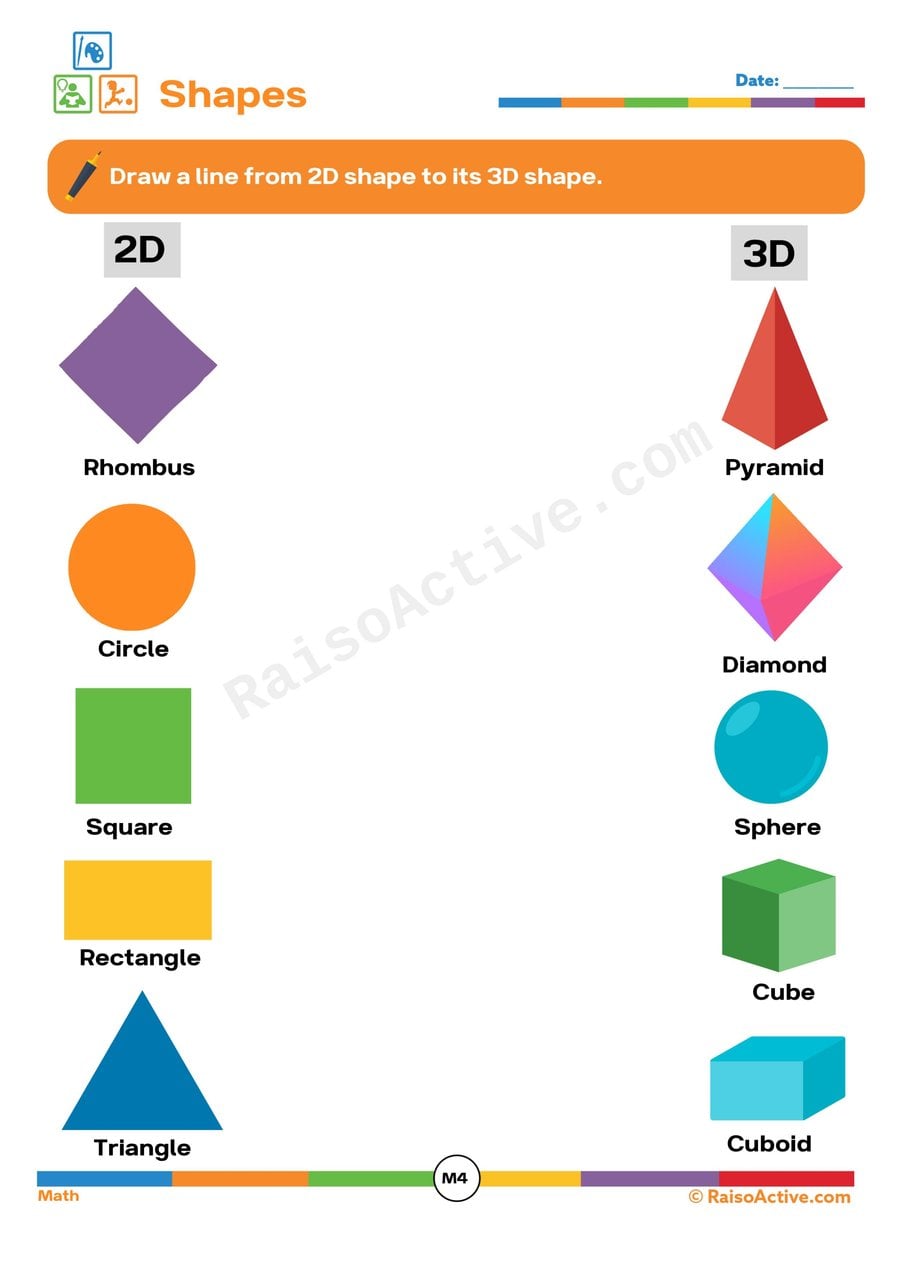
Shape Match: 2D to 3D Shapes Worksheet
This worksheet introduces 4-6 year olds to the relationship between flat 2D shapes and solid 3D shapes — connecting a circle to a sphere, a square to a cube — which is an important spatial reasoning leap, since a 3D shape's flat 'face' is what actually corresponds to its related 2D shape. Making this connection explicit helps children understand that the shapes they've been learning aren't just flat pictures but also describe the surfaces of real, solid objects around them.

Add and Subtract Worksheet: Fun Math Practice for Kids!
This worksheet pairs addition and subtraction practice with a cut-and-paste answer selection, asking children ages 4-6 to solve simple equations using pictured objects and then find and paste the matching numeral from a set of options. Choosing the correct answer from several options, rather than writing it freehand, adds a layer of number recognition practice alongside the arithmetic itself.

Living Things Worksheet: Identifying Living and Non-Living Things
This worksheet asks 4-6 year olds to sort images into living and non-living categories and then separately identify what living things actually need to survive — air, water, food, and space to grow — which moves beyond simple classification into understanding the defining characteristics of life. That two-part structure (sort, then reason about needs) makes this a solid introduction to basic biology concepts that children will build on in later science classes.

Family Words Worksheet: Picture Matching and Word Recognition
This worksheet gives children ages 4-6 another round of practice recognizing family-member vocabulary words, reinforcing the connection between a printed word and the picture it names through both a tick-the-answer step and a cut-and-paste matching step. Repeating this pairing across two different formats on one page helps move these words from recognition with support toward more independent reading.
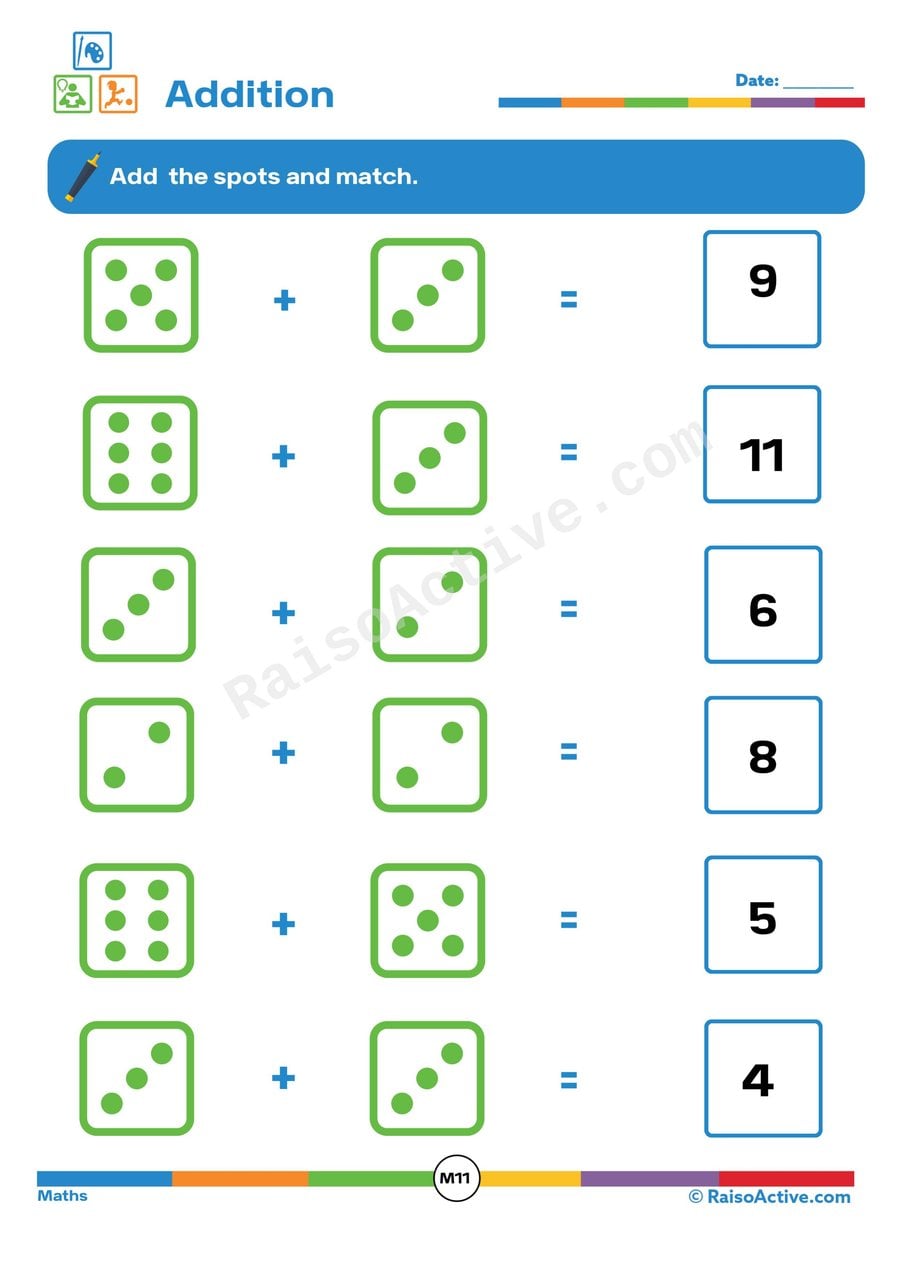
Dice Addition Worksheet: Add the Spots and Match!
This worksheet builds basic addition fluency by having children count the dots on two dice, add the totals together, and match the resulting sum to the correct number. For four- to six-year-olds, using dice as the counting tool adds a layer of subitizing practice — the ability to recognize a small quantity of dots at a glance without counting one by one — which speeds up addition over time.

Transport Worksheet: Cut and Paste the Correct Mode of Transport!
Reading a sentence and choosing the correct vehicle to complete it teaches children ages 4-6 to use context clues from text to guide a decision, an early reading comprehension skill that goes beyond simple word recognition. The cutting and pasting also reinforces vocabulary for different modes of transportation as children physically match each picture to its described purpose.

States of Matter Worksheet: Exploring Solids, Liquids, and Gases!
This worksheet introduces children ages 4-6 to the three states of matter — solid, liquid, and gas — by having them examine images and sort each one into its correct category. Learning to classify familiar objects (like ice, water, and steam) by their physical state builds early scientific reasoning, since children must look past an object's identity and focus on its underlying properties.

Transportation Match-Up Worksheet for Preschoolers
Matching a written description to the correct vehicle picture builds reading comprehension for children ages 4-6, requiring them to connect specific details, like where a vehicle travels or what it carries, to a visual image. This strengthens both transportation vocabulary and the broader skill of using descriptive clues to identify something, which supports comprehension in future reading tasks.

Safety Signs Matching Worksheet for Early Learners
This worksheet has children ages 4-6 cut and paste safety signs to match their correct descriptions and fill in blanks identifying travel and safety symbols, deepening the recognition skill of reading signs by their shape, color, and symbol rather than by words alone. Building fluency in reading safety signs is a genuinely practical life skill that supports children's growing independence as pedestrians.

Short Vowel Sounds: Matching Objects to Sounds Worksheet
This worksheet helps children ages 4-6 tell apart the short 'o' sound (as in 'fox') from the short 'u' sound (as in 'sun') by matching pictured objects to their correct vowel sound. Short vowels are the building blocks of the earliest CVC words children read, so being able to hear and distinguish them accurately is essential before moving on to more complex word patterns.

Informal Language Fun: Cut and Paste Worksheet for Kids
Sorting sentences as informal helps children ages 4-6 begin to notice that the same idea can be expressed differently depending on who's listening — a friend versus a teacher, for example — which is an early step toward social and audience awareness in language. The cutting and pasting also reinforces this recognition kinesthetically, since children must physically place each sentence where it belongs rather than just circling an answer.

Pronoun Power: Cut & Paste Matching Worksheet for Preschoolers
Children ages 4-6 practice recognizing and applying pronouns — he, she, it, they, and similar words — by reading a short sentence, deciding which pronoun fits the picture, and physically placing it in the right spot. Cutting and pasting adds a fine motor and sequencing component on top of the grammar skill, since children must locate, cut, and correctly position each pronoun piece. This hands-on format helps pronoun concepts stick better than reading alone.
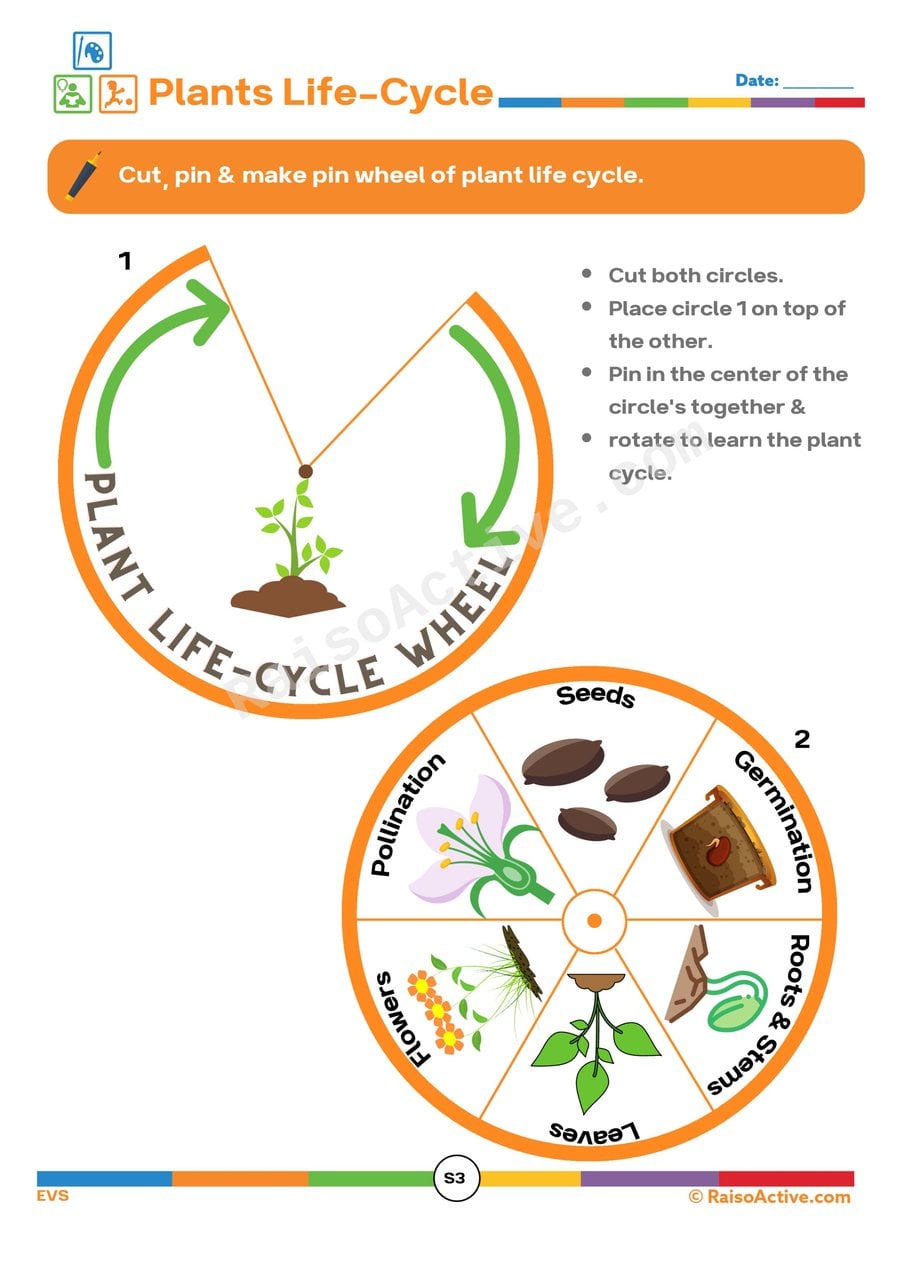
Plant Life Cycle Wheel: Cut, Pin & Learn!
Building a spinning wheel that shows a plant's life cycle helps children ages 4-6 understand that growth happens in a repeating sequence of stages — seed, sprout, growing plant, flower — rather than as a single instant event. This hands-on 3D craft turns an abstract scientific process into something children can physically rotate and observe, which suits how young learners grasp sequence and cause-and-effect best. Assembling the two-circle wheel with a paper fastener also builds fine motor precision beyond typical flat cut-and-paste tasks.

Missing Number Puzzle: Cut and Paste to Reveal the Hidden Picture!
Children ages 4-6 practice number recognition and sequencing by identifying which numbers are missing from a grid and placing the correct cut-out pieces to reveal a hidden picture underneath. The reveal element adds motivation and delayed gratification, encouraging children to complete every number rather than rushing through a few. This activity also builds scissor precision and spatial planning as pieces must fit exact spots.

Earlier or Later Time Sequencing Worksheet for Kids
Sorting pictures into 'earlier' and 'later' categories builds on basic sequencing by introducing explicit time vocabulary, helping children understand that events happen in a specific order across a day or story. For ages four to six, this concept supports both reading comprehension and the ability to talk about their own schedule and routines with growing precision.

Identify Flags Worksheet: Cut and Paste Matching Activity
This worksheet helps children ages 4-6 practice matching a country's flag to its written name, building both visual discrimination and early geography vocabulary. Pairing a flag's specific colors and pattern with a country name strengthens the same visual-matching skill children later use for letter and word recognition.
What 1st Grade sorting worksheets cover
From six, sorting becomes a way of thinking about properties. Shapes are sorted by number of sides and corners, numbers into odd and even, words by vowel sound or spelling pattern, materials by whether they bend or float. Venn diagrams with an overlap and two-way tables let one set be sorted by two rules at once. A good sheet asks the child to write the rule used and then sort the same set a second way.
- Place items in a two-circle Venn diagram with an overlap
- Sort shapes by how many sides and corners they have
- Group words by vowel sound or spelling pattern
- Sort numbers to 50 into odd and even
- Write the rule used, then sort the same set another way
How to use these worksheets at home or in class
Fifteen to twenty minutes on most school days, split between a decodable passage with questions and a math page, matches what many first grade teachers assign. Keep base-ten blocks or bundled straws nearby so place value stays physical before it becomes purely written.
Start with the sheet that matches what your child can already do, then move one step up. Keep finished sheets in a folder: 1st Grade teachers often ask for evidence of practice, and children like seeing their own progress.
Is your child ready for 1st Grade sorting work?
A child ready for this stage decodes CVC words automatically, writes a simple sentence with a capital letter and end punctuation, adds and subtracts fluently within 10, and counts and writes numerals confidently to 20.
Frequently asked questions
Is sorting still worth doing at six, or has my child outgrown it?
The skill changes rather than ends. At six the rules are invisible or abstract: sides and corners, odd and even, spelling patterns, what a material does. Venn diagrams and two-way tables are the beginning of data handling, and every science topic about animals, plants or materials is a sorting exercise with a stated rule. What a six-year-old has outgrown is color and size sorting, not sorting itself.
What should a 1st Grade child be able to do in sorting?
From six, sorting becomes a way of thinking about properties. Shapes are sorted by number of sides and corners, numbers into odd and even, words by vowel sound or spelling pattern, materials by whether they bend or float. Venn diagrams with an overlap and two-way tables let one set be sorted by two rules at once. A good sheet asks the child to write the rule used and then sort the same set a second way. A child ready for this stage decodes CVC words automatically, writes a simple sentence with a capital letter and end punctuation, adds and subtracts fluently within 10, and counts and writes numerals confidently to 20.
Do these worksheets follow the 1st Grade curriculum?
The sheets cover grouping objects by one attribute, classifying by size, color or type, recognizing what does not belong and comparing two groups after sorting, which sit inside the Common Core Grade 1 (1.OA, 1.NBT, RF.1.3) outcomes for 1st Grade. Year 1 / Year 2 (UK), Class 1 (India) use the same skills at this age, so the sheets also fit families following those programmes.
Are these 1st Grade sorting worksheets free?
Yes. Each worksheet downloads free as a watermarked PDF once you create an account, with a limit of five a day. An annual membership ($20) removes the watermark and the limit for the whole library of over 1,000 worksheets and every printable pack.

Written by
Hemsweta Jain · Teacher Cheena
MBA and Early Childhood Educator, teaching since 2014 · Founder of RaisoActive, Mumbai
Written and reviewed by Hemsweta Jain (Teacher Cheena), who designs every RaisoActive worksheet.
Last reviewed
Printable packs for ages 6–7
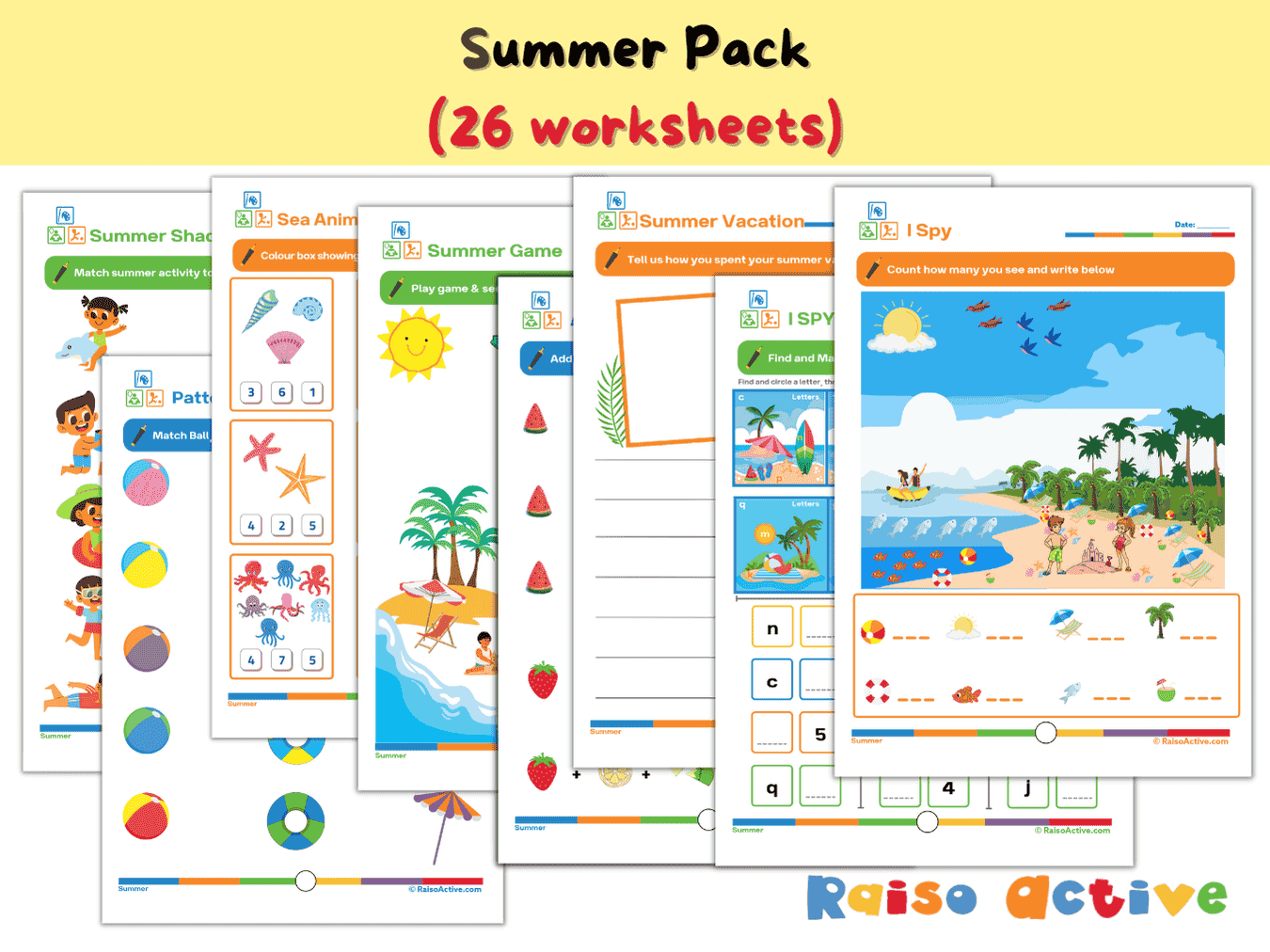
Summer Activity Pack: Math, Literacy, Puzzles & More for Preschool & Kindergarten
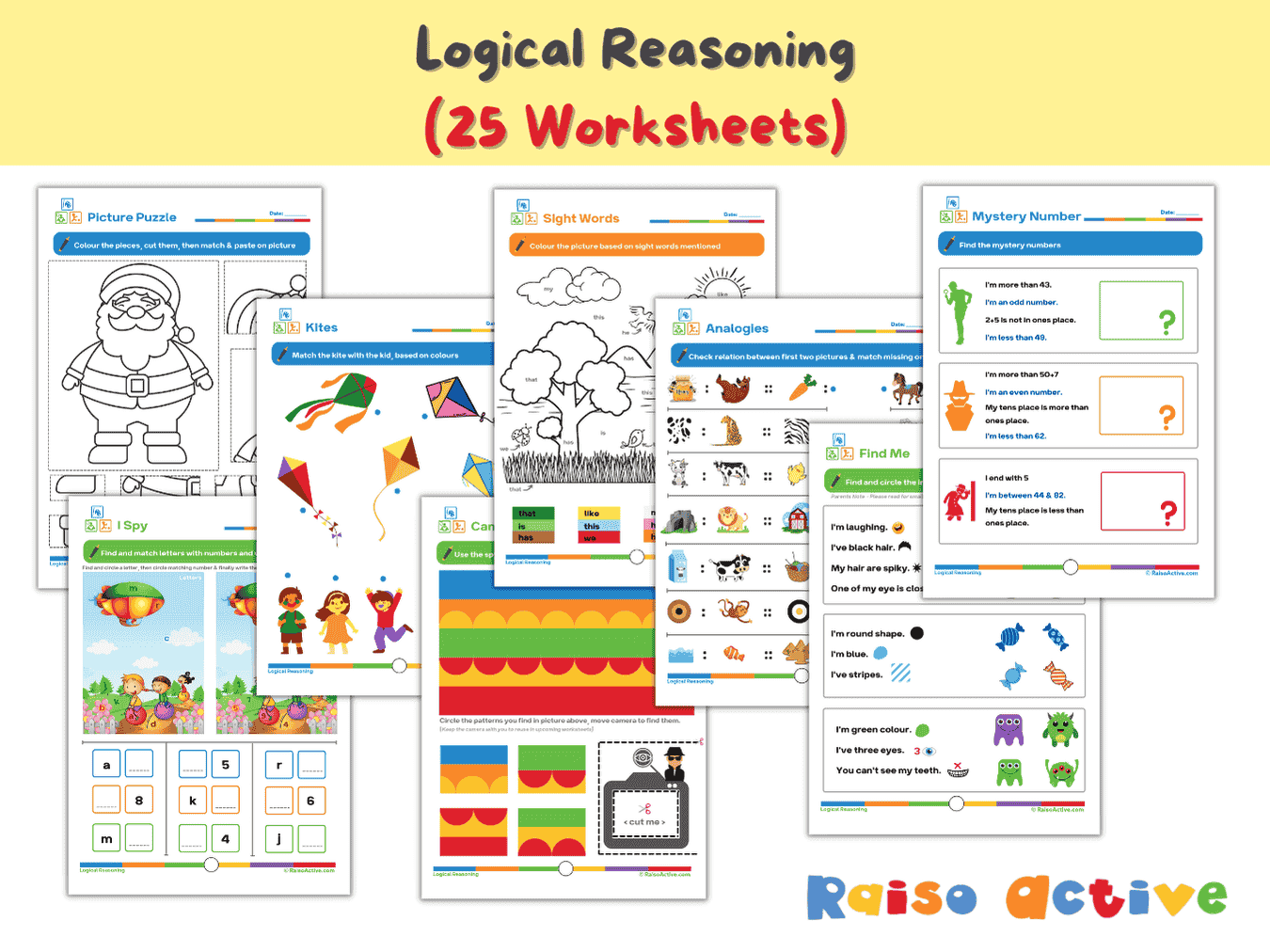
Logical Reasoning Activity Book for Preschool & Kindergarten | Patterns, Puzzles & Analogies
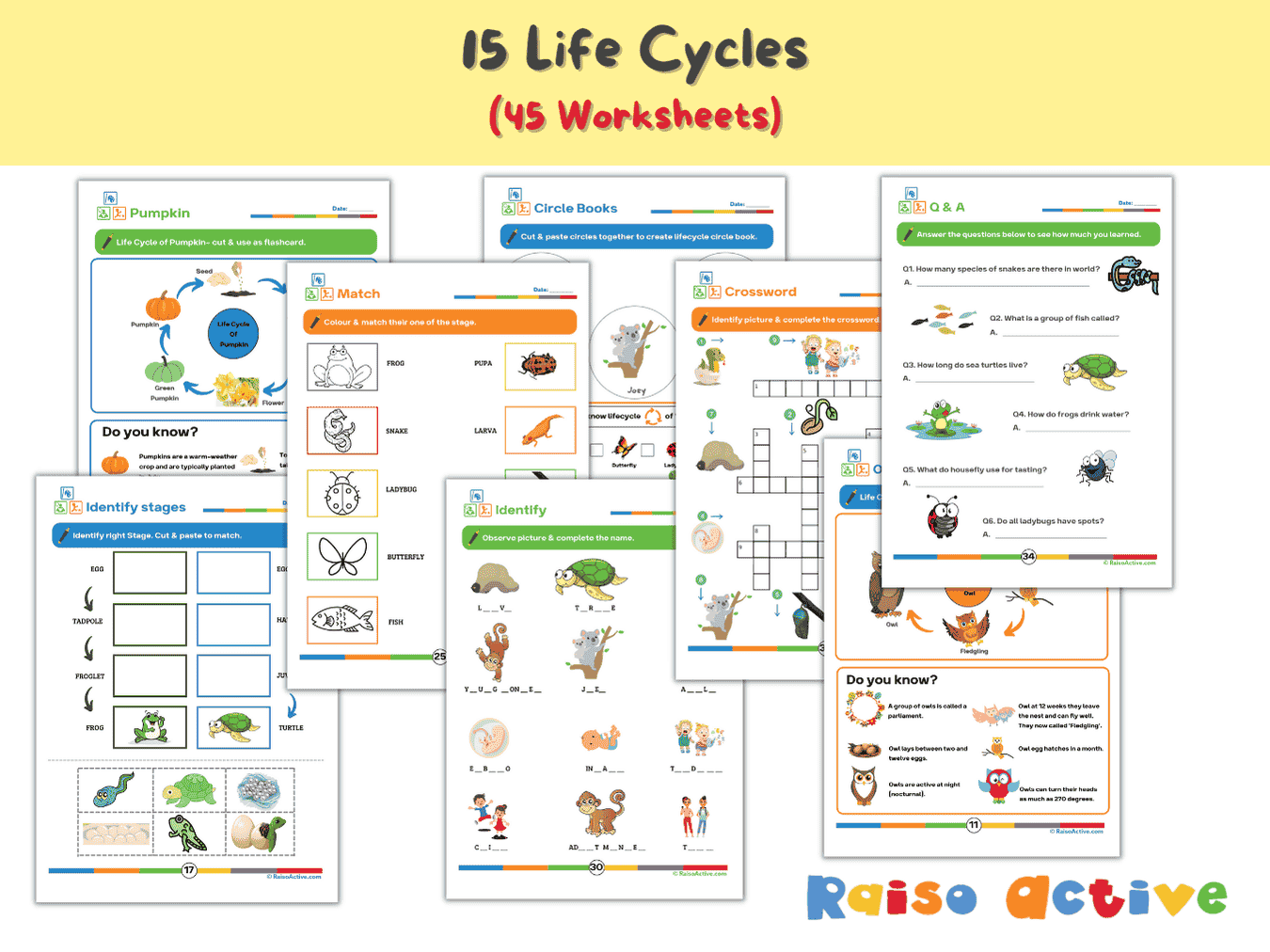
Lifecycles Activity Book & Flashcards for Preschool & Early Elementary
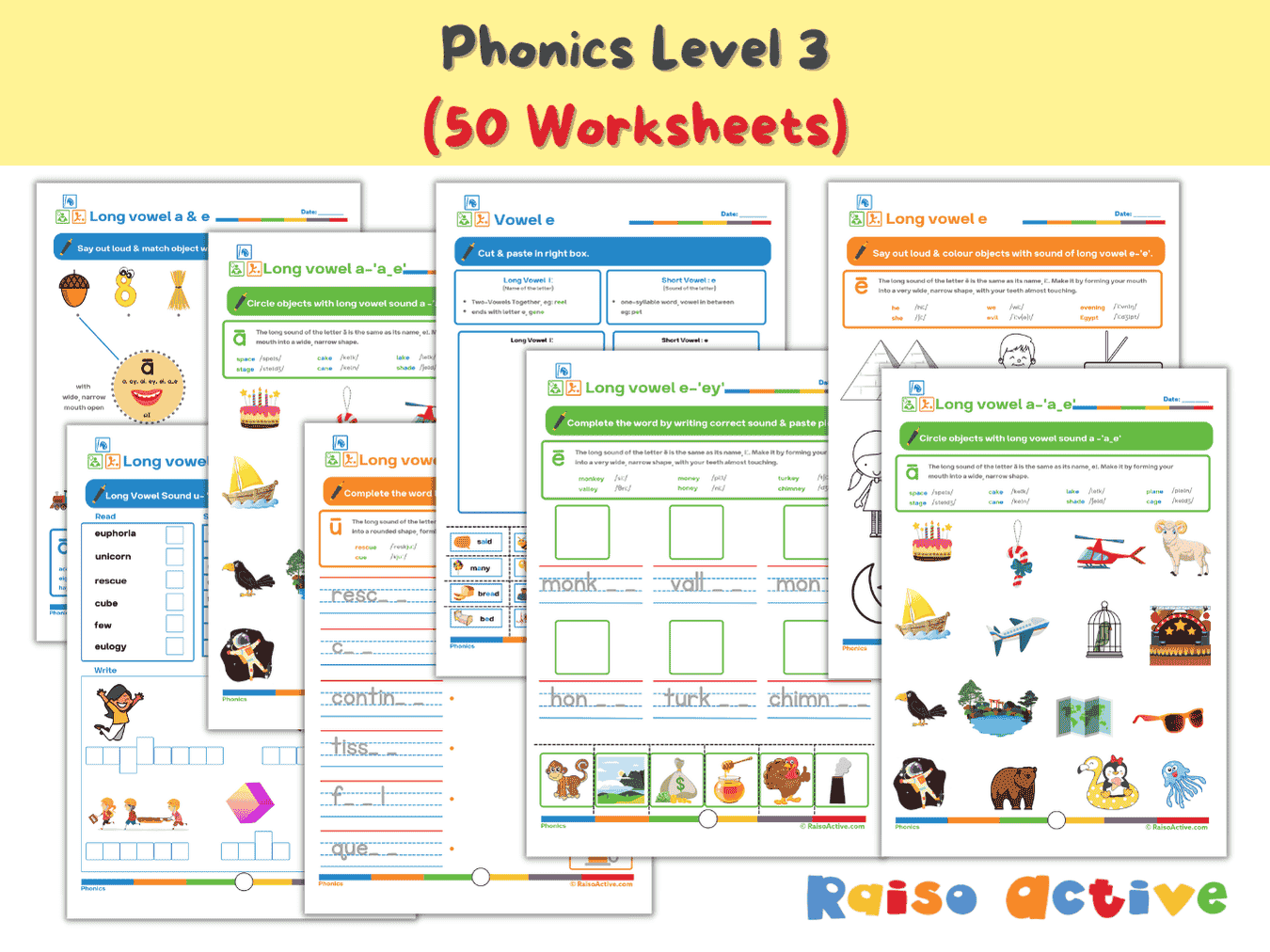
Phonics Level 3 Long Vowels Activity Book for Kindergarten & 1st Grade
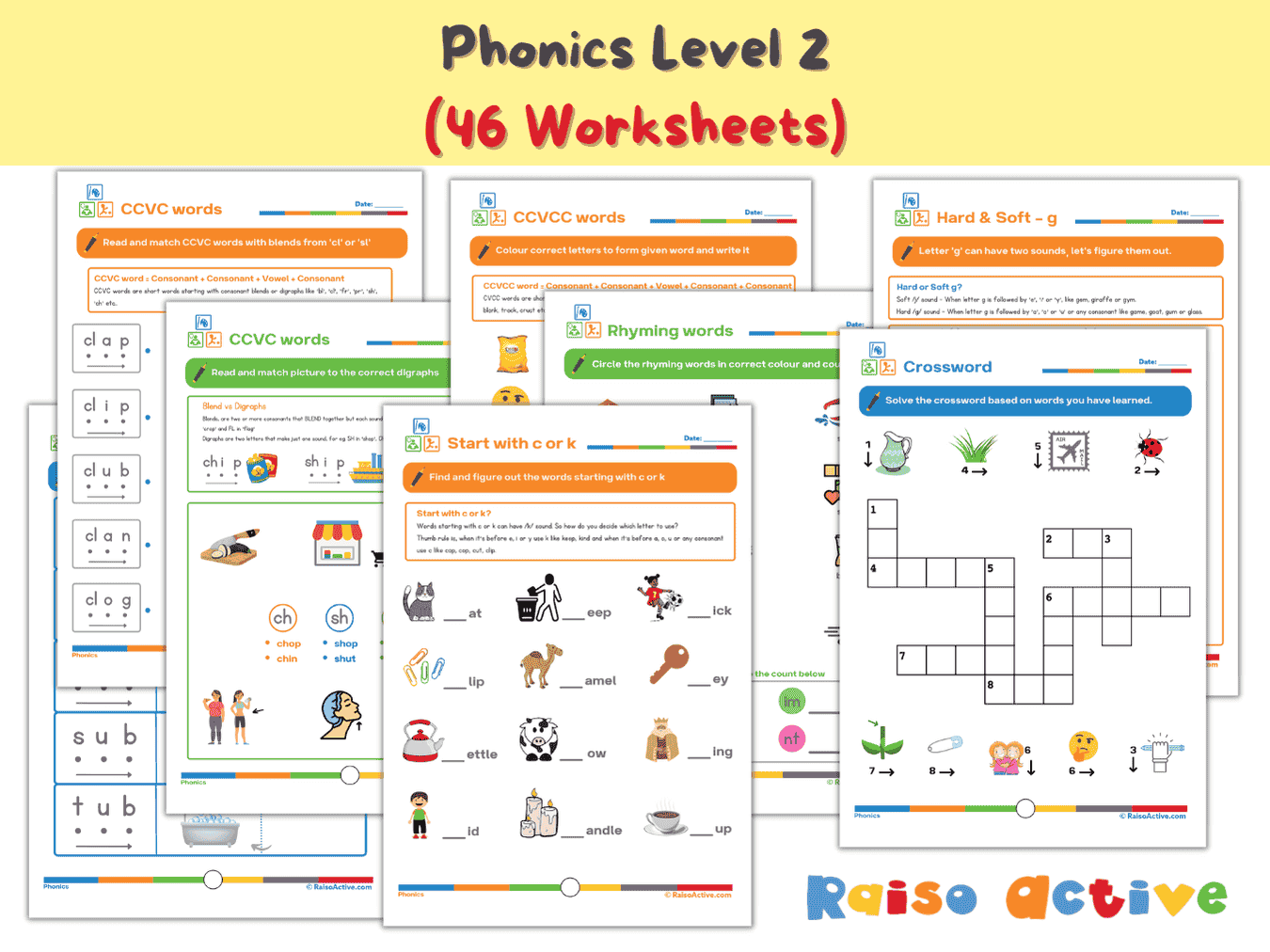
Phonics Level 2 Worksheets: CVC, CCVC, CVCC Word Families & Blends for Early Readers (Ages 4-7)
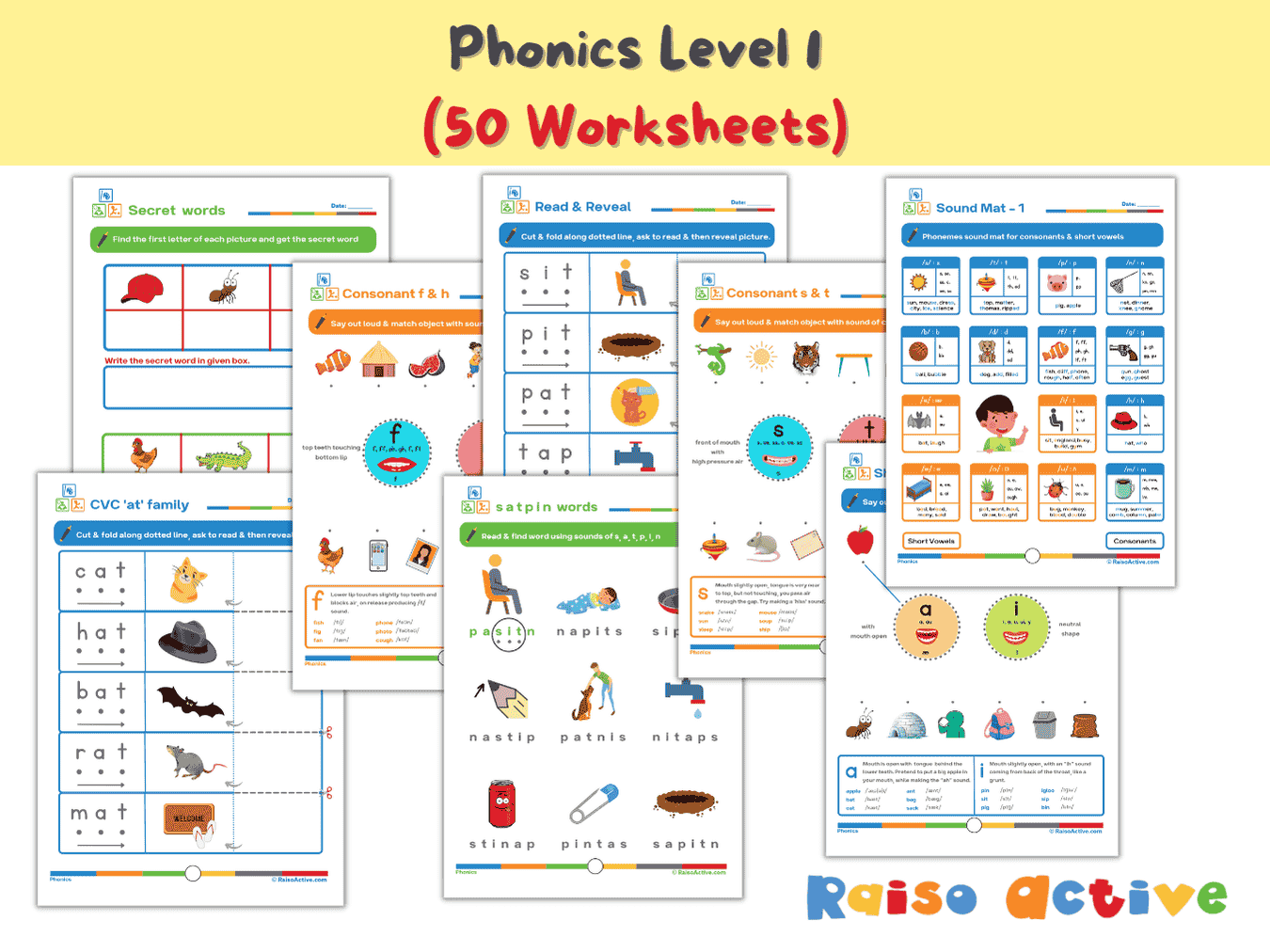
Phonics Level 1 Activity Book: Letter Sounds, Blending & CVC Words for Preschool & Kindergarten
Guides for parents and teachers
See all guides →Age-Appropriate Problem-Solving Activities: Building Critical Thinkers from the Ground Up
Discover fun, age-appropriate problem-solving activities for children ages 1-8. Build critical thinking, logic, and reasoning skills through play-based learning.
Critical Thinking Activities That Actually Work for Young Children: Building Tomorrow's Thinkers Today
Discover proven critical thinking activities for young children. Age-wise logic games, questioning techniques, and hands-on ideas to build thinking skills at home.
Coding Activities for Preschoolers: Building Tomorrow's Thinkers Today
Discover 15+ unplugged and screen-based coding activities for preschoolers that build sequencing, logic, and problem-solving skills through play. NEP 2020 aligned.
Montessori Activities for 3-4 Year Olds: A Complete Guide to Purposeful Learning
Discover practical Montessori activities for 3-4 year olds — practical life, sensorial, language, and maths — with Indian kitchen adaptations and budget shelf ideas.
Canonical: https://raisoactive.com/worksheets/first-grade-sorting