Living Things Worksheet: Identifying Living and Non-Living Things
This worksheet asks 4-6 year olds to sort images into living and non-living categories and then separately identify what living things actually need to survive — air, water, food, and space to grow — which moves beyond simple classification into understanding the defining characteristics of life. That two-part structure (sort, then reason about needs) makes this a solid introduction to basic biology concepts that children will build on in later science classes.
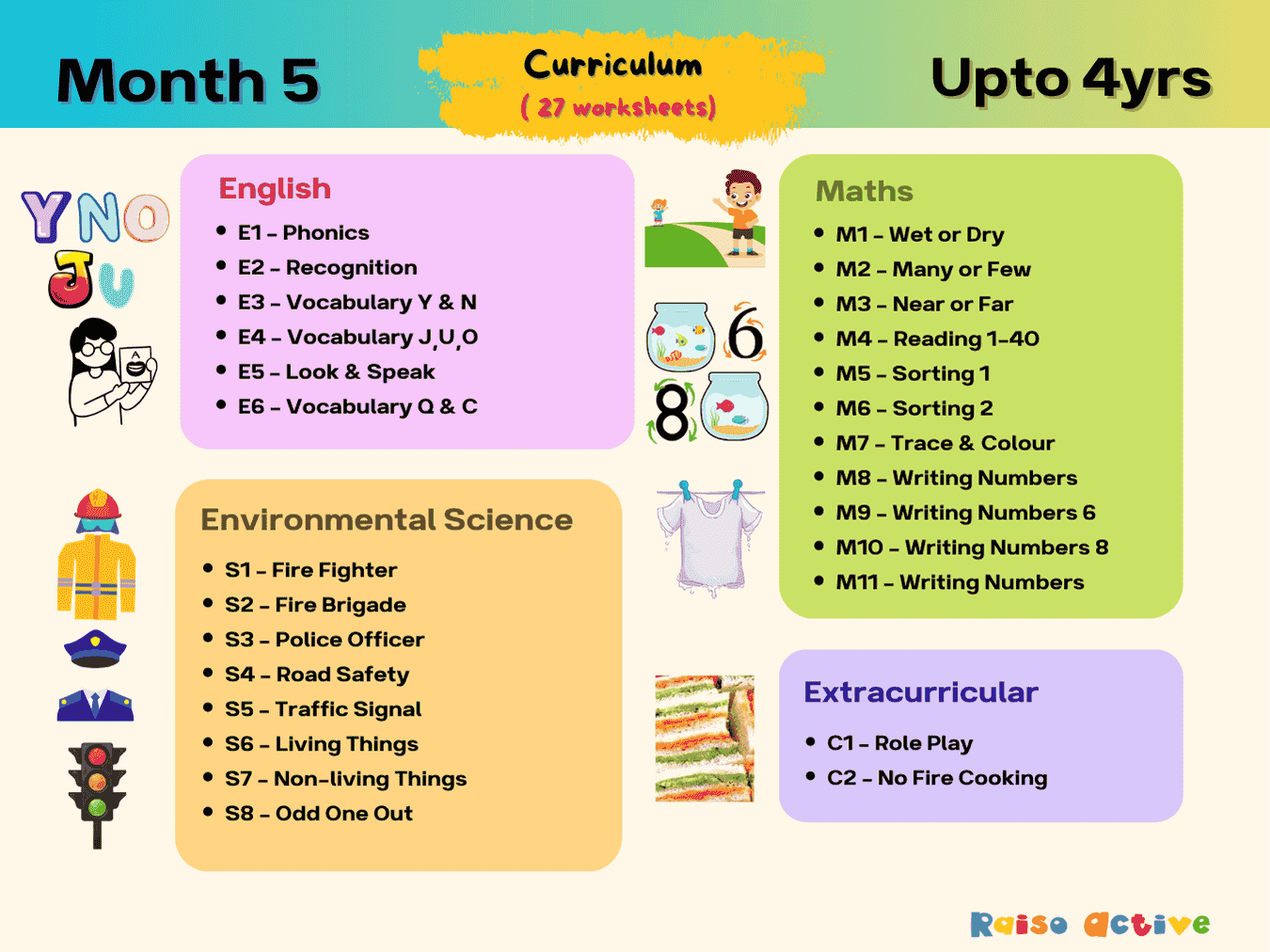
Part of the pack
Month 5: Preschool Subjects and Play | Ages Up to 4
This is page 26 of the pack. Ages 2-4 · PreschoolAges 2-4 · NurseryAges 2-4
Made for your child
Numbers to 20, made for your child
A maths pack with your child's name in it: pictures that explain, practice at three levels, puzzles and story sums about them. Print a new set whenever they finish.
Make a maths packFree preview · free for members
Curriculum
- Living Things - Animals > Living & Non-Living Things
How to use this worksheet
Look at the images together and talk about what makes something 'living' — can it grow, move, breathe, or need food? Have your child circle every living thing on the page, explaining their reasoning as they go. Have them cross out the non-living things next, again explaining why each one doesn't fit the living category. Finally, have them circle the items that living things need to survive, discussing why each one matters.
Materials needed
- Pencil
- Crayons
Extension activities
- 1Go on a nature walk and point out living things (birds, insects, plants) versus non-living things (rocks, benches).
- 2Draw a picture of a living thing along with the things it needs to survive, like water and sunlight for a plant.
- 3Make a collage using magazine cutouts of things living creatures need.
- 4Care for a houseplant or pet together for a week, checking off its needs each day.
- 5Play a quick sorting game with household objects and toy animals, deciding living versus non-living.

Written by
Hemsweta Jain · Teacher Cheena
MBA and Early Childhood Educator, teaching since 2014 · Founder of RaisoActive, Mumbai
Every RaisoActive worksheet is designed and checked by the founder before publishing.
Published · Last reviewed
More from Month 5: Preschool Subjects and Play | Ages Up to 4

Phonics Fun: Identify and Match Letters Worksheet
Ages 4-5 · Pre-KAges 4-5 · ReceptionAges 4-5 · LKGAges 4-5
Matching a picture to the letter that starts its name requires children ages 4-5 to isolate the very first sound in a spoken word, a phonics skill called initial sound identification that directly predicts later reading success. This worksheet turns that listening skill into a visual matching task, asking children to connect what they hear to a printed letter rather than just naming pictures aloud. Building this sound-to-letter link is one of the clearest early indicators that a child is ready to start sounding out simple words.

Community Helpers & Early Learning Activities Worksheet
Ages 3-5 · Preschool–Pre-KAges 3-5 · Nursery–ReceptionAges 3-5 · Nursery–LKGAges 3-5
This worksheet bundles several community-helper-themed activities, coloring, role-play, and object identification, to build vocabulary and social understanding around the different people who help in a community, like police officers or firefighters. For ages 3-5, learning about community helpers builds both social awareness and early classification skills as children learn to associate specific tools or uniforms with specific jobs.
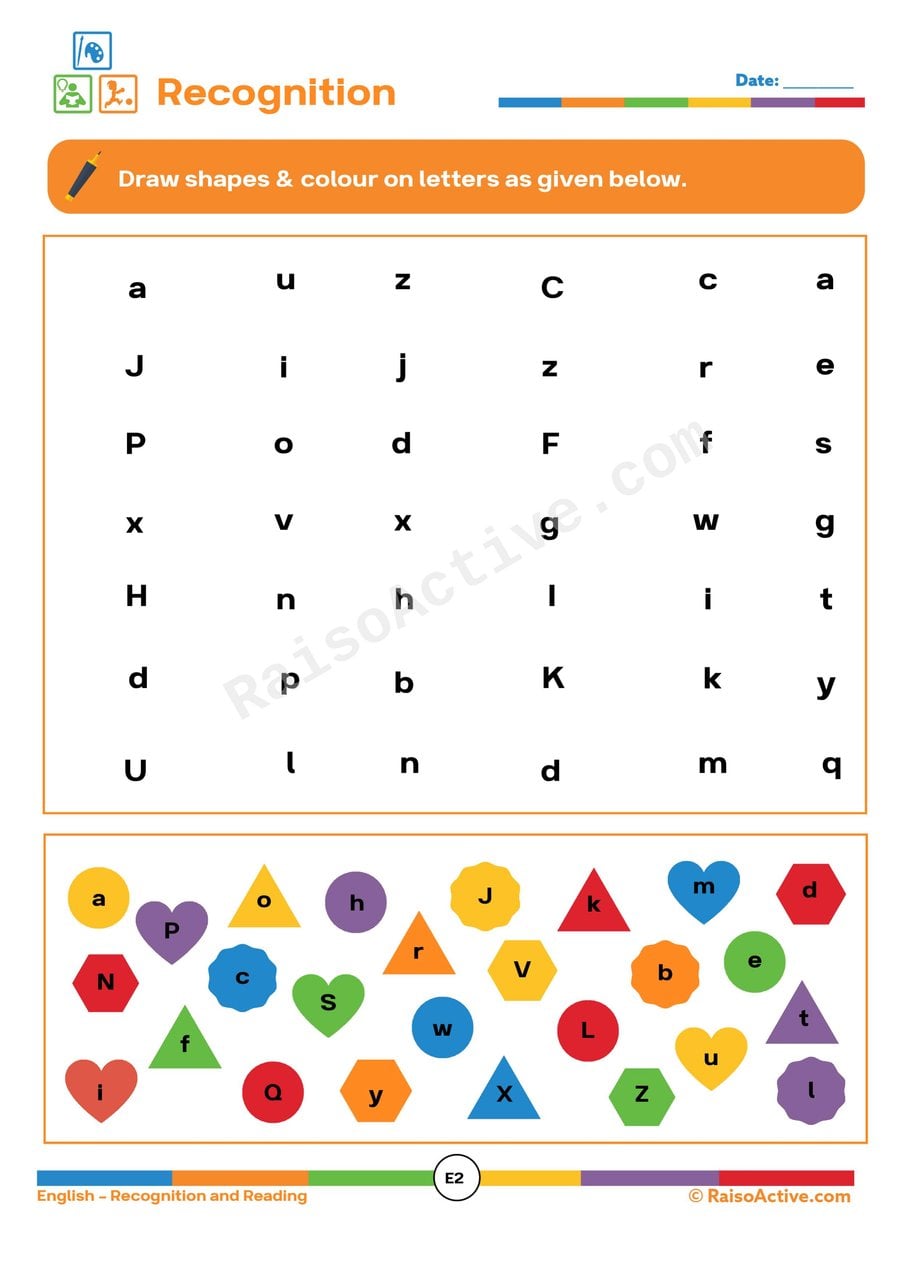
Letter Recognition Worksheet: Draw Shapes & Color!
Ages 3-5 · Preschool–Pre-KAges 3-5 · Nursery–ReceptionAges 3-5 · Nursery–LKGAges 3-5
Pairing letter recognition with drawing shapes gives children ages 3-5 practice on two skills at once: identifying printed letters by sight and following simple shape instructions with a pencil. Coloring the letters afterward reinforces the letter's visual form through repeated, focused attention rather than a quick glance, while the shape-drawing task builds the same pre-writing control needed for forming letters later. Combining these tasks keeps the page varied and engaging for a young attention span.

Number 8 Worksheet: Trace, Count, and Color Butterflies!
Ages 3-5 · Preschool–Pre-KAges 3-5 · Nursery–ReceptionAges 3-5 · Nursery–LKGAges 3-5
Tracing the number 8 while counting and coloring eight butterflies helps children ages 3-5 connect the written numeral to the actual quantity it represents, reinforcing number sense alongside handwriting. The final step, drawing any eight objects of the child's choosing, moves beyond guided practice into independent application, checking whether the concept of 'eight' has truly transferred rather than just been copied. This progression from tracing to counting to free drawing builds a complete, layered understanding of one specific number.

Non-Living Things Coloring Worksheet for Preschoolers
Ages 3-5 · Preschool–Pre-KAges 3-5 · Nursery–ReceptionAges 3-5 · Nursery–LKGAges 3-5
Coloring only the non-living things on the page asks children ages 3-5 to apply a real scientific rule — that living things grow, move, breathe, and eat, while non-living things do not — rather than just naming objects. This requires them to think through each picture individually and test it against the rule, building early classification and critical thinking skills. Learning to separate living from non-living things is one of the first formal science concepts children encounter and sets up later lessons about plants, animals, and the environment.
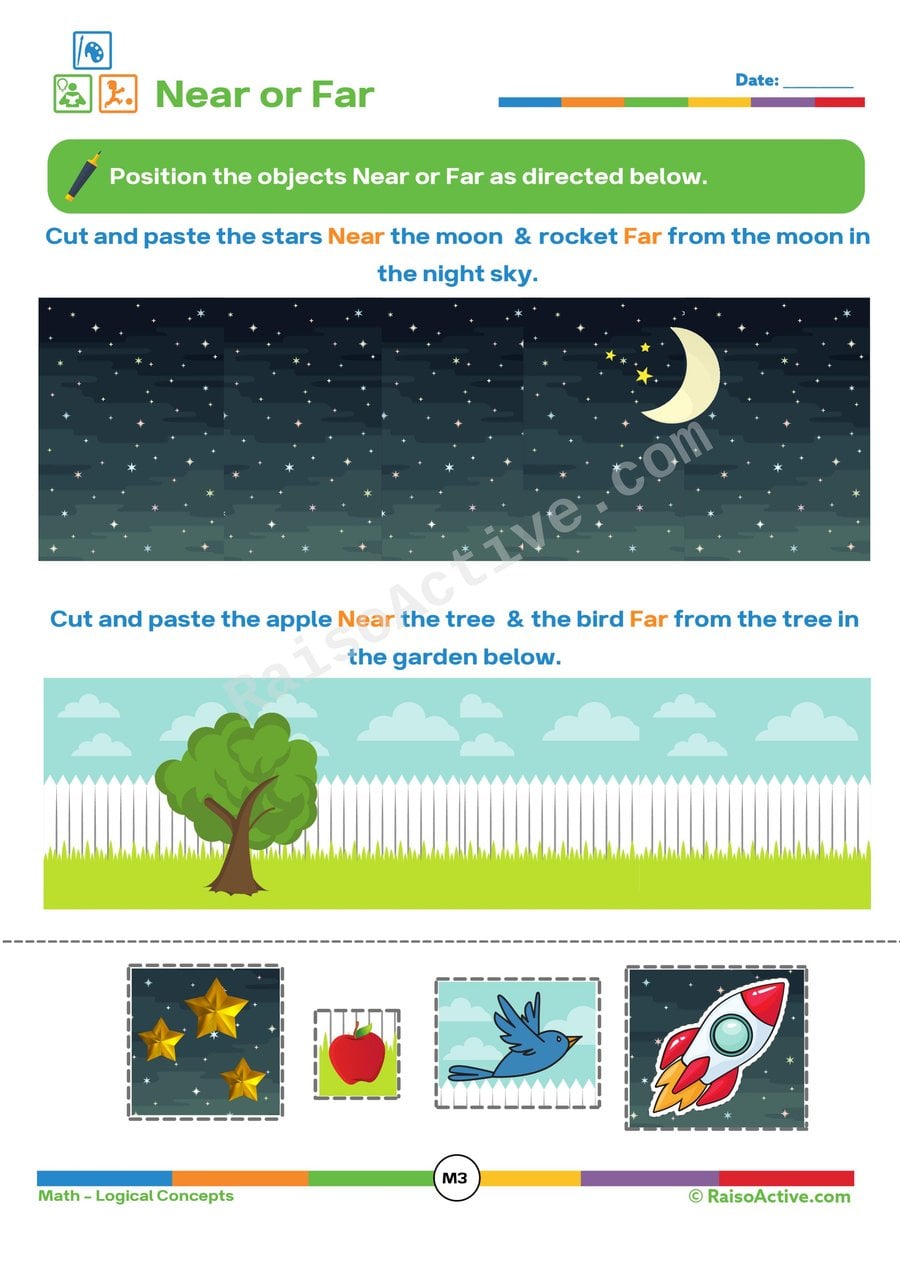
Near or Far Worksheet: Cut and Paste Fun!
Ages 3-5 · Preschool–Pre-KAges 3-5 · Nursery–ReceptionAges 3-5 · Nursery–LKGAges 3-5
Cutting and pasting objects into 'near' and 'far' positions relative to a fixed point, like a moon or a tree, gives children ages 3-5 concrete practice applying spatial vocabulary rather than just hearing the words in passing. This hands-on placement task requires children to think about relative distance, an early step toward more advanced spatial reasoning and measurement concepts. The specific, varied instructions across the page — near the moon, far from the moon, near the tree, far from the tree — also build careful listening and multi-step following of directions.

Trace and Color the Fruits: Number Matching Worksheet
Ages 4-6 · Pre-K–KindergartenAges 4-6 · Reception–Year 1Ages 4-6 · LKG–UKGAges 4-6
This worksheet links three number skills together for 4-6 year olds: tracing dotted numerals for handwriting practice, counting a row of fruit for quantity, and then checking that the fruit count actually matches the traced number — a self-checking loop that reinforces number-to-quantity correspondence rather than treating tracing and counting as separate tasks. That verification step (does the fruit count really match?) pushes your child to count carefully rather than just glance and guess.
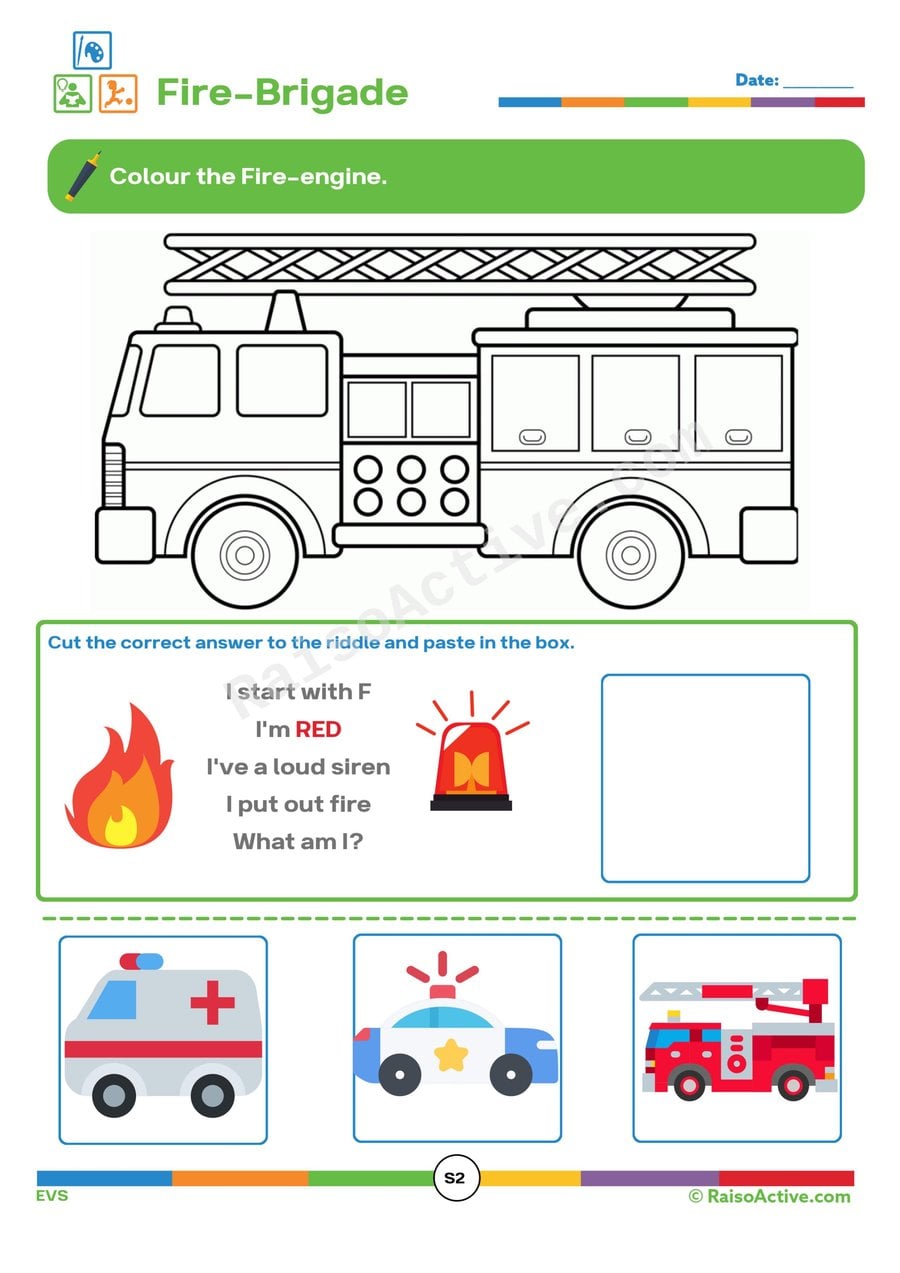
Fire Engine Fun: Color and Solve the Riddle!
Ages 3-5 · Preschool–Pre-KAges 3-5 · Nursery–ReceptionAges 3-5 · Nursery–LKGAges 3-5
This worksheet pairs creative coloring with a light dose of deductive reasoning — after coloring the fire engine, children have to solve a simple riddle and pick out the correct picture answer to paste in place. That riddle-solving step goes beyond coloring practice into comprehension and logical thinking, since your child has to listen to clues, consider a few possible answers, and choose the one that actually fits, all while learning about firefighters as community helpers.
Related worksheets

Living Things: Color the Smiles! A Fun Sorting Worksheet
Ages 3-5 · Preschool–Pre-KAges 3-5 · Nursery–ReceptionAges 3-5 · Nursery–LKGAges 3-5
Preschoolers ages 3-5 build foundational science classification skills by distinguishing living things from non-living things, indicated by coloring a smiley face only on the items that are alive. This concept requires children to think beyond appearance and consider whether something grows, breathes, or needs food, an abstract but essential early science idea. The playful smiley-face format keeps a genuinely tricky classification concept approachable and fun.
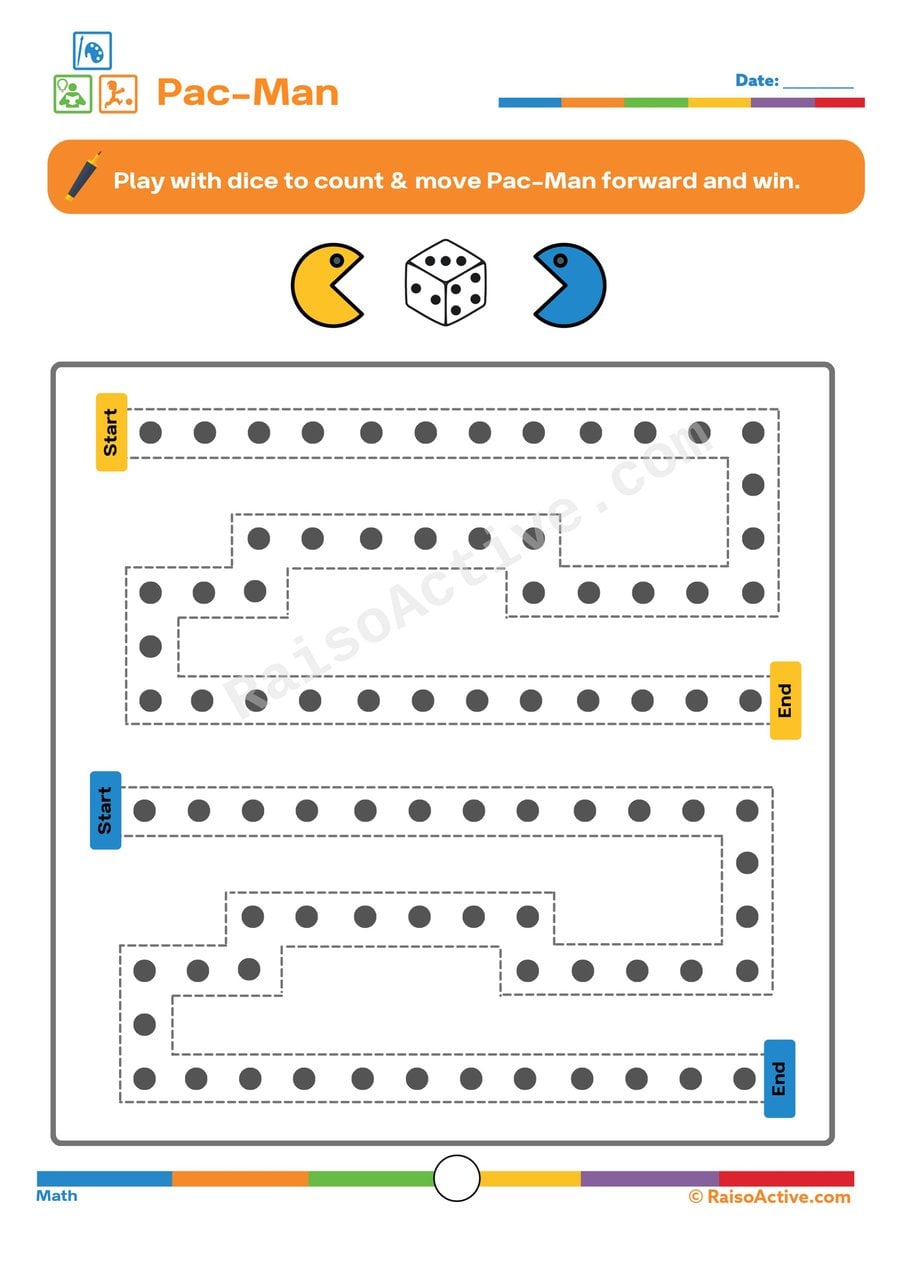
Pac-Man Maze Worksheet: Count and Move!
Ages 3-5 · Preschool–Pre-KAges 3-5 · Nursery–ReceptionAges 3-5 · Nursery–LKGAges 3-5
This dice-counting maze gives children ages 3-5 repeated practice matching a rolled number to the correct number of moves, reinforcing accurate counting under a bit of playful pressure. Tracking Pac-Man's current position after each roll also builds short-term spatial memory, since children must remember where they left off before moving again.
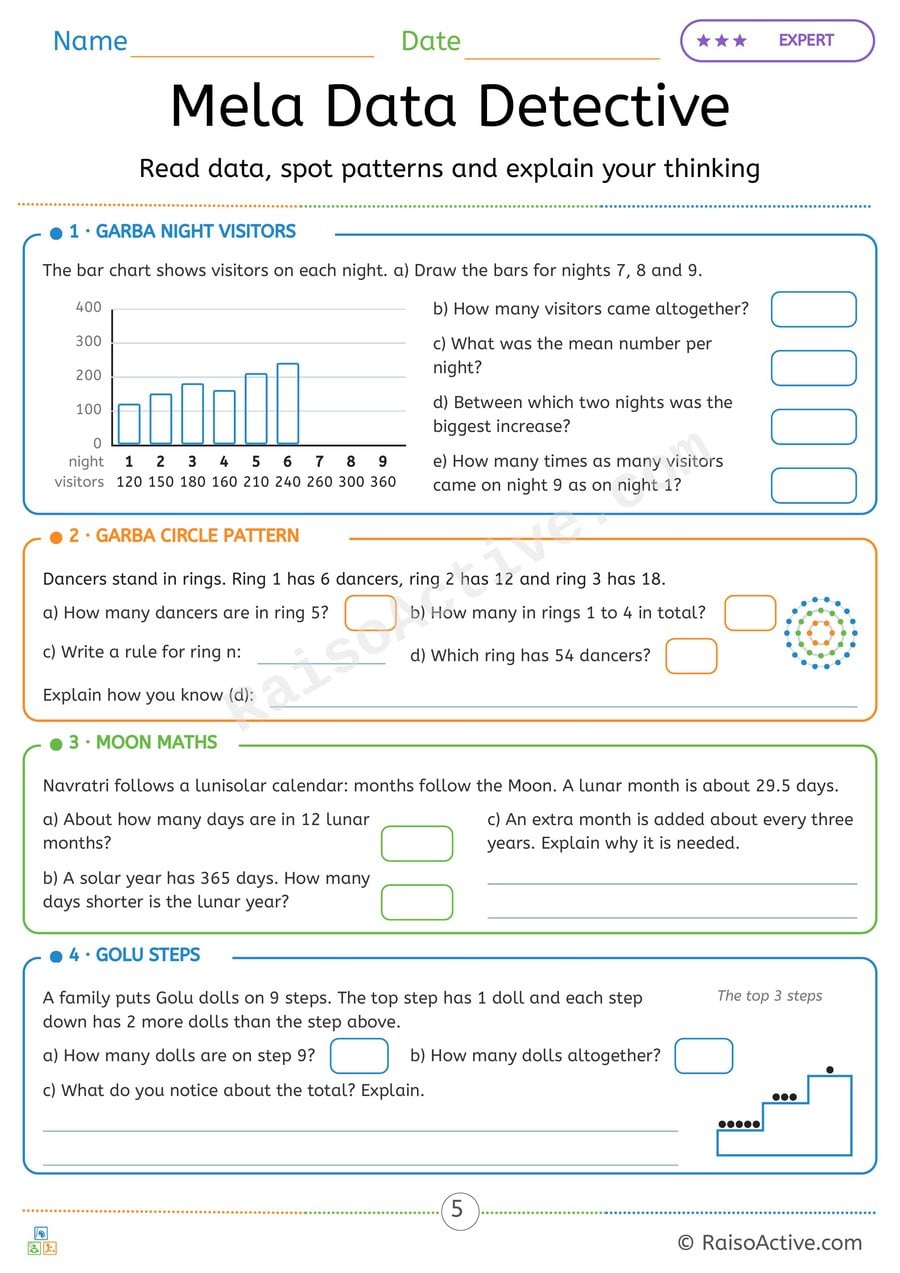
Mela Data Detective: Navratri Bar Chart, Patterns and Moon Maths
Ages 7-11 · Grade 2–Grade 3Ages 7-11 · Year 3–Year 4Ages 7-11 · Class 2–Class 3Ages 7-11
Children complete a bar chart of nine nights of visitors, find the total, the mean and the biggest increase, find and explain the rule for a growing pattern of dancers, compare a lunar year with a solar year, and add the dolls on nine Golu steps to discover a square number.

Easter Egg Color by Hints Worksheet for Preschoolers
Ages 3-5 · Preschool–Pre-KAges 3-5 · Nursery–ReceptionAges 3-5 · Nursery–LKGAges 3-5
This worksheet has children ages 3-5 listen to or read simple written hints describing shapes and colors, then apply that information correctly while coloring each Easter egg, building early reading comprehension and the ability to follow multi-step verbal instructions. Because the hints must be followed precisely rather than colored freely, children also practice patience and careful attention to detail.

Easter Egg Match: Add and Find the Matching Designs!
Ages 3-5 · Preschool–Pre-KAges 3-5 · Nursery–ReceptionAges 3-5 · Nursery–LKGAges 3-5
This worksheet blends early addition with visual matching as children ages 3-5 combine two separate shape groups and then search for the Easter egg design that shows the same total. Because the 'answer' is a picture rather than a written number, children practice quantity comparison and pattern-matching without needing to know written numerals yet.

Taste Bud Sorting Worksheet: Identify and Sort Foods by Taste!
Ages 4-6 · Pre-K–KindergartenAges 4-6 · Reception–Year 1Ages 4-6 · LKG–UKGAges 4-6
This worksheet introduces children ages 4-6 to four basic taste categories — salty, sour, bitter, and sweet — by having them sort pictured foods into the correct group. Beyond taste vocabulary, sorting foods by an invisible property like flavor (rather than an obvious one like color or shape) pushes children to draw on memory and prior experience, building more advanced classification skills.

Clothing Pattern Matching Worksheet for Preschoolers
Ages 3-5 · Preschool–Pre-KAges 3-5 · Nursery–ReceptionAges 3-5 · Nursery–LKGAges 3-5
By comparing clothing items and connecting each one to its pattern match, children ages 3-5 build visual discrimination skills, learning to notice fine differences in stripes, dots, or repeated shapes. This close-looking practice supports the same attention-to-detail children will later need to tell similar-looking letters and numbers apart.

Pumpkin Pattern Worksheet: Make the Correct Faces!
Ages 3-5 · Preschool–Pre-KAges 3-5 · Nursery–ReceptionAges 3-5 · Nursery–LKGAges 3-5
This worksheet builds pattern recognition and fine motor drawing skills in children ages 3-5 as they study a sequence of pumpkin faces and draw the missing face to complete each pattern. Unlike matching or pasting, drawing the answer requires children to actively recall and reproduce the pattern rather than simply selecting from options, which deepens their understanding.
Guides for this topic

Age-Appropriate Problem-Solving Activities: Building Critical Thinkers from the Ground Up
Discover fun, age-appropriate problem-solving activities for children ages 1-8. Build critical thinking, logic, and reasoning skills through play-based learning.
Critical Thinking Activities That Actually Work for Young Children: Building Tomorrow's Thinkers Today
Discover proven critical thinking activities for young children. Age-wise logic games, questioning techniques, and hands-on ideas to build thinking skills at home.

Preparing Your Child for a Rapidly Changing World: Essential Skills for Future Success
Discover the essential 21st century skills your child needs for future success. Practical tips on creativity, critical thinking, digital literacy & emotional intelligence for ages 1-8.
Reviews
Every worksheet for ages 4–6, no watermark
Members download the full library of 1,000+ worksheets and every activity pack without watermarks or daily limits. One year costs ₹999 in India or $20 elsewhere.
See membership plansOr download any worksheet free with a watermark (5 a day).