Non-Living Things Coloring Worksheet for Preschoolers
Coloring only the non-living things on the page asks children ages 3-5 to apply a real scientific rule — that living things grow, move, breathe, and eat, while non-living things do not — rather than just naming objects. This requires them to think through each picture individually and test it against the rule, building early classification and critical thinking skills. Learning to separate living from non-living things is one of the first formal science concepts children encounter and sets up later lessons about plants, animals, and the environment.
Part of the pack
Month 5: Preschool Subjects and Play | Ages Up to 4
This is page 27 of the pack. Ages 2-4 · PreschoolAges 2-4 · NurseryAges 2-4
Made for your child
A whole activity pack made with their name
60 pages to spot, build, trace and write their own name, plus pages about their favourites, feelings and family. See a free preview with their name.
Make an All About Me packFree preview · free for members
Or start free: a name tracing sheet with their nameCurriculum
- Living Things - Animals > Living & Non-Living Things
How to use this worksheet
Before starting, review the rule together: non-living things don't grow, move, breathe, or eat. Look at the first picture and ask your child to decide whether it's living or non-living, checking it against each part of the rule out loud. If it's non-living, have them color it in; if it's living, they should leave it uncolored. Continue through the rest of the pictures the same way, encouraging your child to explain their reasoning for a few of their answers.
Materials needed
- Crayons or colored pencils
- Pencil
Extension activities
- 1Go on a walk or look around your house and sort real objects into living and non-living groups.
- 2Create a two-column poster labeled 'Living' and 'Non-Living' and add magazine cutouts to each side.
- 3Play a quick verbal quiz game, naming an object and having your child shout 'living' or 'non-living.'
- 4Look at a houseplant or pet together and list out loud all the ways you know it's living.
- 5Sort toy figures and real objects, like a toy dog versus a real plant, into the two categories.

Written by
Hemsweta Jain · Teacher Cheena
MBA and Early Childhood Educator, teaching since 2014 · Founder of RaisoActive, Mumbai
Every RaisoActive worksheet is designed and checked by the founder before publishing.
Published · Last reviewed
More from Month 5: Preschool Subjects and Play | Ages Up to 4

Road Safety Signs Matching Worksheet for Preschoolers
Ages 3-5 · Preschool–Pre-KAges 3-5 · Nursery–ReceptionAges 3-5 · Nursery–LKGAges 3-5
Matching road safety signs teaches 3-5 year olds to recognize specific shapes, colors, and symbols and connect them to their real-world meaning — an early form of symbol literacy that matters well beyond the worksheet, since these are signs your child will actually encounter on walks and car rides. Coloring the signs first, then matching them, reinforces visual recognition through repetition before the matching task asks them to recall each sign's identity without color cues alone.

Police Officer Worksheet: Learn About Community Helpers!
Ages 3-5 · Preschool–Pre-KAges 3-5 · Nursery–ReceptionAges 3-5 · Nursery–LKGAges 3-5
Beyond coloring practice, this worksheet builds early community-helper knowledge by asking children to identify which specific items — a badge, a hat, handcuffs, a whistle — actually belong to a police officer's job. Circling the correct items requires visual discrimination and recall of a real-world role, which is the beginning of understanding that different jobs come with different tools and responsibilities. Drawing the officer's face afterward adds a layer of personal expression to a lesson that's otherwise about categorization.

Odd One Out Worksheet: Find the Object That Doesn't Belong!
Ages 3-5 · Preschool–Pre-KAges 3-5 · Nursery–ReceptionAges 3-5 · Nursery–LKGAges 3-5
Spotting 'the odd one out' in a row of objects trains visual discrimination — the ability to notice small differences in shape, color, size, or category that make one item not belong with the rest. For 3-5 year olds, this is genuine critical thinking practice: they have to compare every item against every other item before deciding which one breaks the pattern, rather than just naming what they see. It's also an early step toward categorization skills that later support sorting, grouping, and basic reasoning tasks in school.
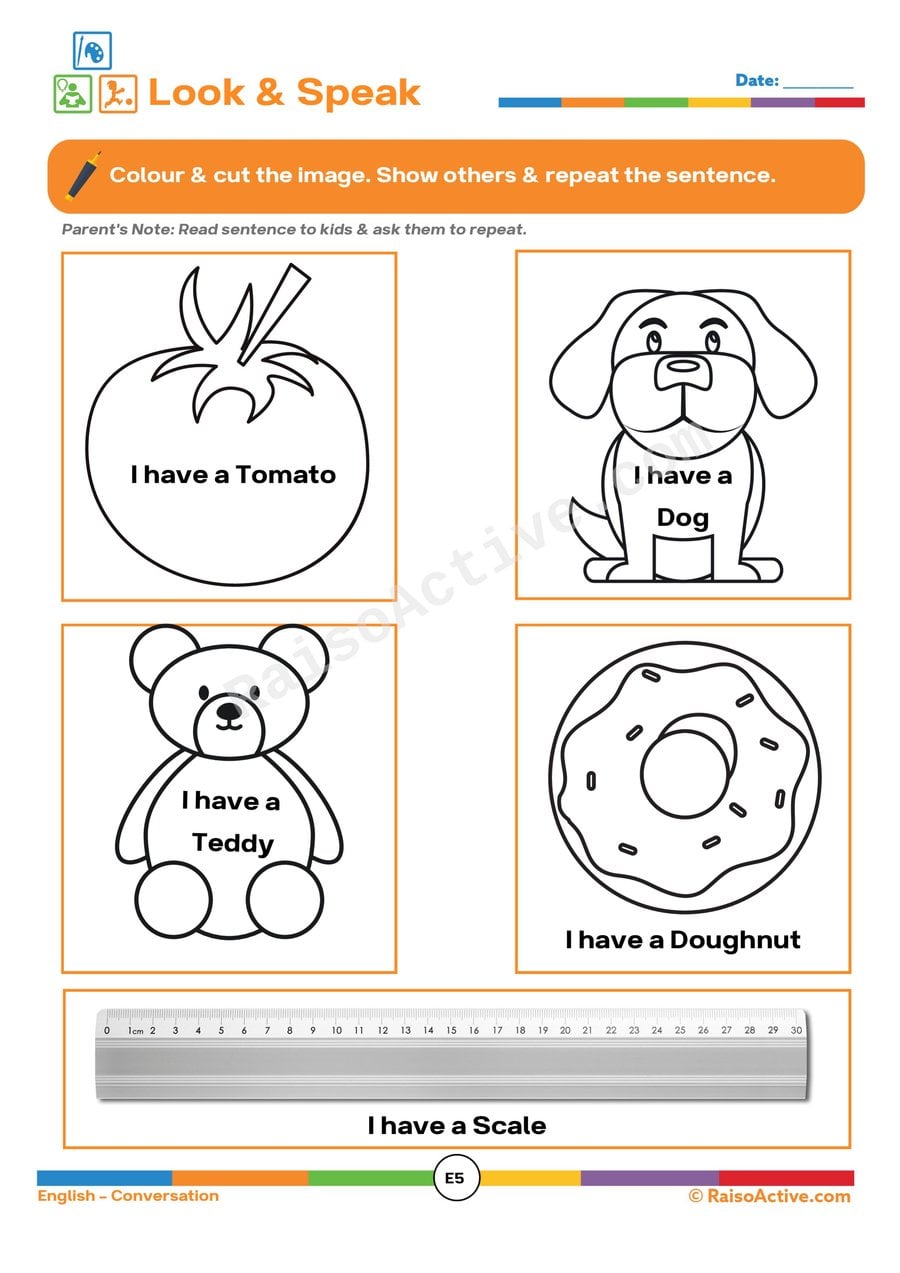
Look & Speak: Color and Repeat the Words Worksheet
Ages 3-5 · Preschool–Pre-KAges 3-5 · Nursery–ReceptionAges 3-5 · Nursery–LKGAges 3-5
This worksheet builds early vocabulary and oral language skills by having children color familiar images and then read and repeat a simple sentence describing each one aloud. For ages 3-5, the combination of coloring, reading, and speaking reinforces new words through multiple senses, helping vocabulary stick more effectively than reading alone.
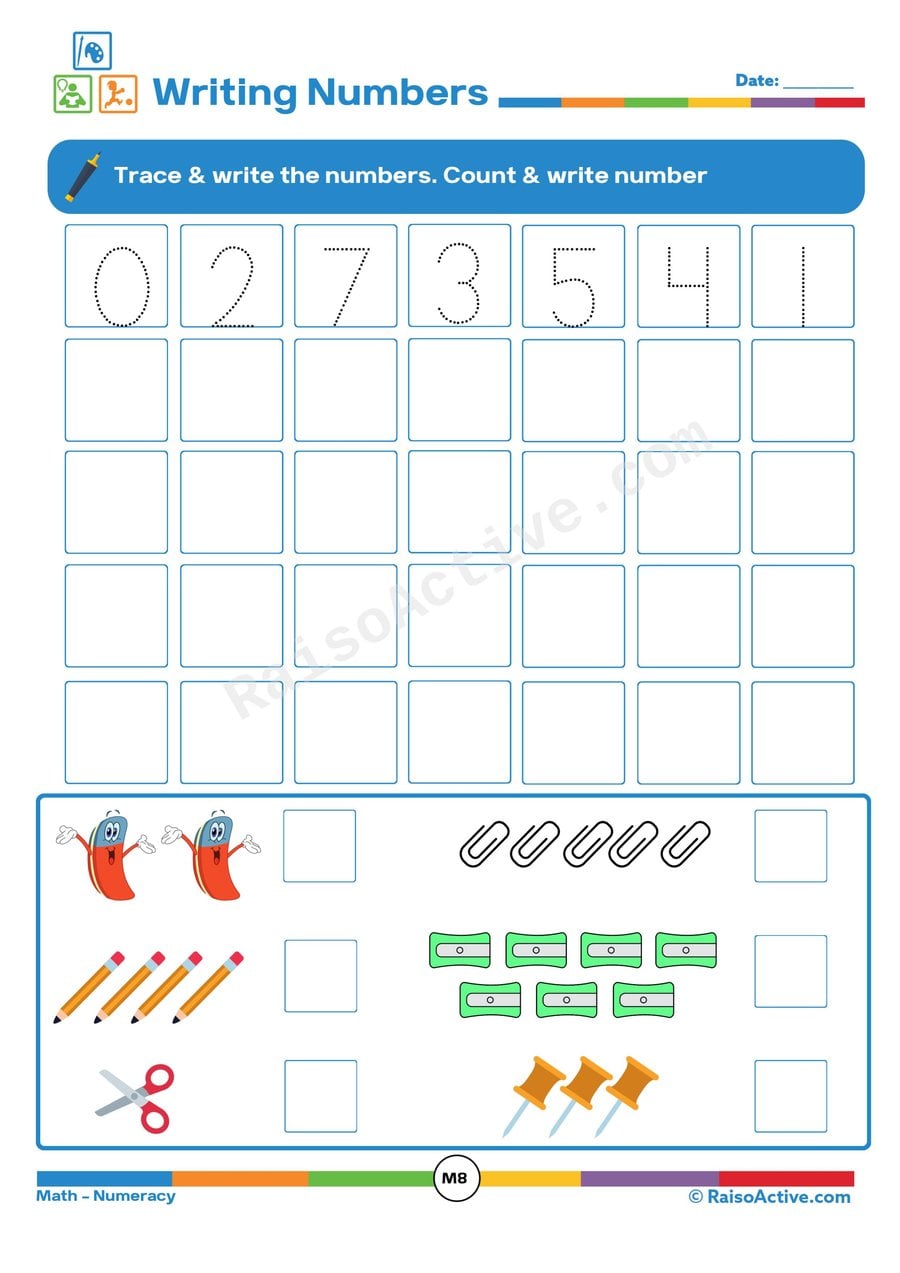
Trace and Write Numbers 0-5 Worksheet
Ages 3-5 · Preschool–Pre-KAges 3-5 · Nursery–ReceptionAges 3-5 · Nursery–LKGAges 3-5
Tracing and writing the numbers 0 through 5 builds the specific hand strokes needed to form each numeral correctly, a skill that develops separately from simply being able to count or recognize numbers by sight for children ages 3-5. Following the tracing with a counting-and-writing section, where children count objects and record the total themselves, connects the motor skill of writing numbers directly to their meaning as quantities. Practicing this small, foundational range first builds the confidence needed before tackling larger numbers later.

Q and C Vocabulary Worksheet: Circle and Square the Pictures!
Ages 3-5 · Preschool–Pre-KAges 3-5 · Nursery–ReceptionAges 3-5 · Nursery–LKGAges 3-5
Distinguishing between the letters Q and C by sight and sound is a genuine phonics challenge for children ages 3-5, since both letters can look and even sound similar in casual speech. This worksheet asks children to apply a different marking — a circle for Q, a square for C — for each letter's pictures, which forces active decision-making rather than passive letter recognition. Strengthening this kind of visual and auditory discrimination helps prevent letter mix-ups that commonly appear in early reading and writing.

Living Things Worksheet: Identifying Living and Non-Living Things
Ages 4-6 · Pre-K–KindergartenAges 4-6 · Reception–Year 1Ages 4-6 · LKG–UKGAges 4-6
This worksheet asks 4-6 year olds to sort images into living and non-living categories and then separately identify what living things actually need to survive — air, water, food, and space to grow — which moves beyond simple classification into understanding the defining characteristics of life. That two-part structure (sort, then reason about needs) makes this a solid introduction to basic biology concepts that children will build on in later science classes.

Firefighter Fun: Circle the Equipment & Maze Worksheet
Ages 3-5 · Preschool–Pre-KAges 3-5 · Nursery–ReceptionAges 3-5 · Nursery–LKGAges 3-5
Circling firefighter equipment builds vocabulary and visual discrimination for children ages 3-5, since they must identify which pictured items — a hose, helmet, or ladder — actually belong to a firefighter's tools versus unrelated objects. Guiding the fire truck through a maze to reach the station afterward adds a hands-on problem-solving and fine motor challenge, requiring children to plan and trace a path with a pencil. Combining a community-helper theme with a maze keeps the page varied while introducing real vocabulary about an occupation many young children find exciting.
Related worksheets

Living Things: Color the Smiles! A Fun Sorting Worksheet
Ages 3-5 · Preschool–Pre-KAges 3-5 · Nursery–ReceptionAges 3-5 · Nursery–LKGAges 3-5
Preschoolers ages 3-5 build foundational science classification skills by distinguishing living things from non-living things, indicated by coloring a smiley face only on the items that are alive. This concept requires children to think beyond appearance and consider whether something grows, breathes, or needs food, an abstract but essential early science idea. The playful smiley-face format keeps a genuinely tricky classification concept approachable and fun.
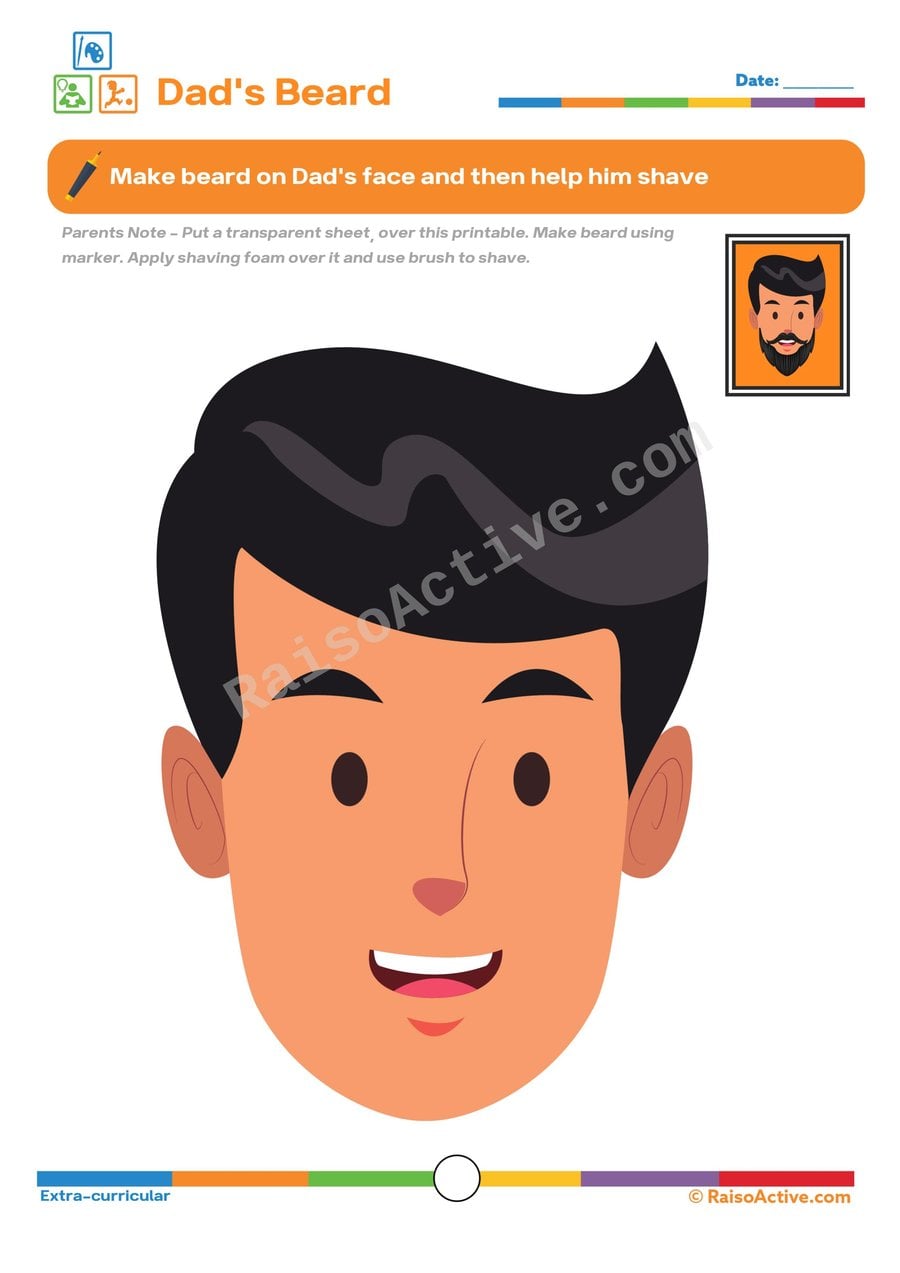
Dad's Beard: A Fun Shaving Activity for Kids!
Ages 3-5 · Preschool–Pre-KAges 3-5 · Nursery–ReceptionAges 3-5 · Nursery–LKGAges 3-5
This playful pretend-shaving activity builds fine motor control and bilateral coordination in children ages 3-5, as they draw a beard with a marker and then 'shave' it away using foam and a brush in careful, controlled strokes. It also introduces a simple science idea — that shaving foam can be applied and removed in layers — while giving children a hands-on, sensory way to imitate an everyday grown-up routine.
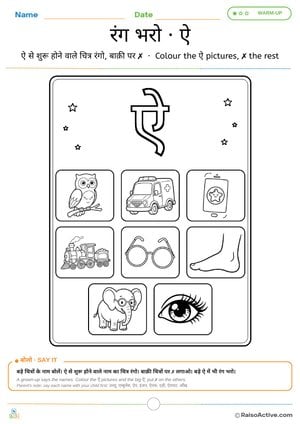
Colour the ऐ Words – Hindi Letter ऐ (ai) Colouring Worksheet | ऐ वाली चीज़ों में रंग भरो
Ages 3-7 · Preschool–Grade 1Ages 3-7 · Nursery–Year 2Ages 3-7 · Nursery–Class 1Ages 3-7
Children say each picture name aloud, decide whether it starts with ऐ, colour the matching pictures (ऐनक, ऐरावत and ऐप) and the big outline letter, and put a cross on the rest. Sorting by first sound trains the ear and colouring builds hand control.
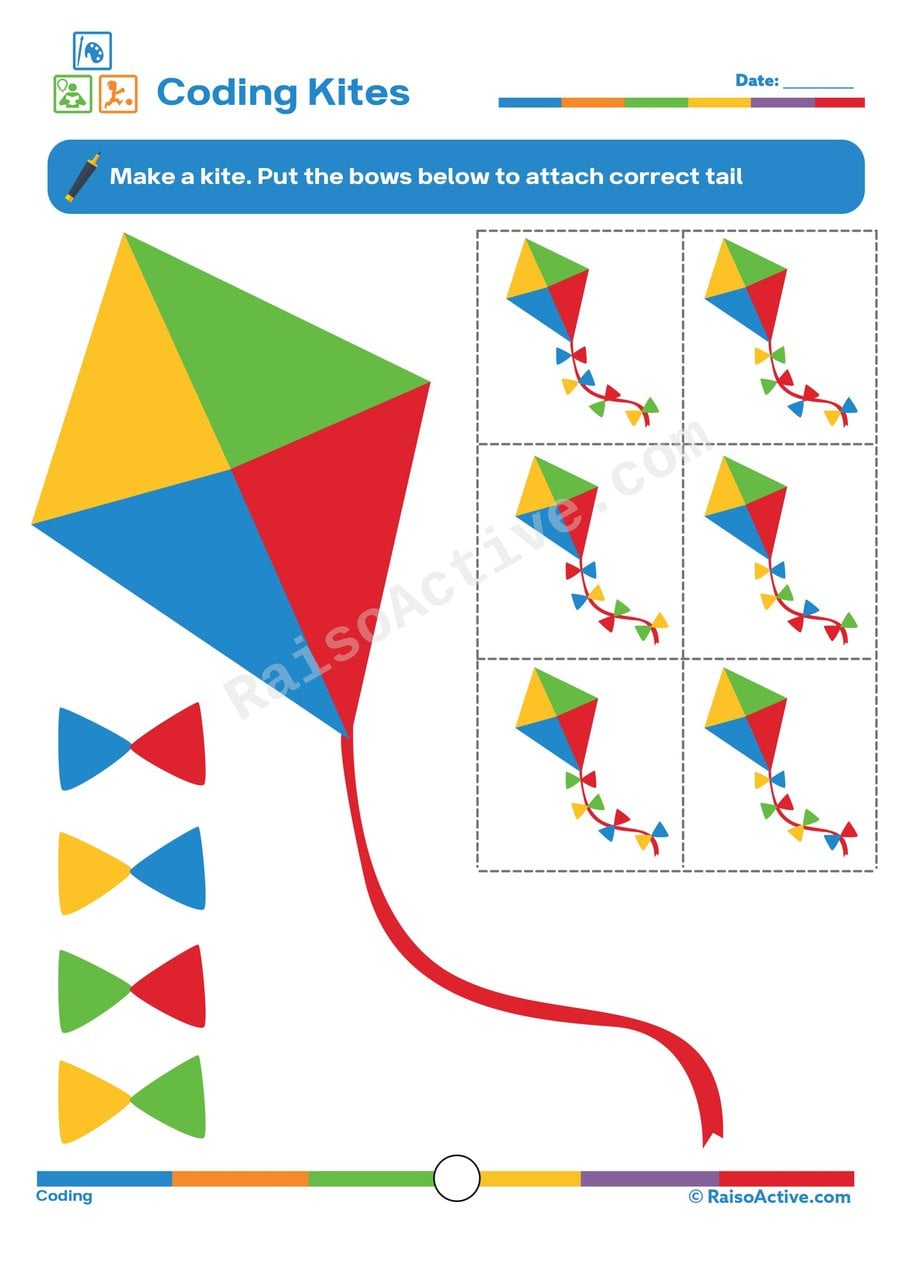
Coding Kites Worksheet: Match the Bows!
Ages 3-5 · Preschool–Pre-KAges 3-5 · Nursery–ReceptionAges 3-5 · Nursery–LKGAges 3-5
By matching each colorful bow to the kite sharing its color pattern, children ages 3-5 practice visual pattern recognition — an early form of the same logical sequencing used in beginner coding concepts. Cutting, matching, and gluing the correct bow also reinforces color-word vocabulary and precise hand-eye coordination.

Indian Cities Crossword Puzzle Worksheet for Kids
Ages 4-6 · Pre-K–KindergartenAges 4-6 · Reception–Year 1Ages 4-6 · LKG–UKGAges 4-6
This crossword challenges children ages 4-6 to identify famous Indian cities from picture clues of their landmarks and then spell out each city's name in the puzzle grid, combining observation skills with early geography knowledge. Counting the crossword boxes to match each city's letter count also reinforces attention to word length before writing.
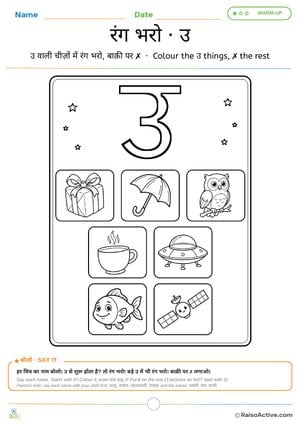
Colour the उ Things: Hindi Letter उ Colouring Page | रंग भरो · उ
Ages 3-7 · Preschool–Grade 1Ages 3-7 · Nursery–Year 2Ages 3-7 · Nursery–Class 1Ages 3-7
Children listen for the first sound of each picture name and decide whether it starts with उ. They colour the उ pictures, cross out the others and colour the big letter.

Navratri Rangoli Colour by Number and Symmetry Diya
Ages 4-6 · Pre-K–KindergartenAges 4-6 · Reception–Year 1Ages 4-6 · LKG–UKGAges 4-6
Children match numbers to colours using a key, colour a rangoli pattern carefully and draw the other half of a shape so both sides match.

Sequencing Worksheet for Kids: First, Next, Last
Ages 4-7 · Pre-K–Grade 1Ages 4-7 · Reception–Year 2Ages 4-7 · LKG–Class 1Ages 4-7
Children put three-step stories in order using first, next and last, then work backwards to find what came before a picture. This builds sequencing, time vocabulary and cause and effect thinking.
Guides for this topic

Best Worksheets for 3-Year-Olds: What Works and What to Avoid
What works on worksheets for 3-year-olds: short sessions, crayons, tracing lines, matching, cutting, a free weekly plan, and signs one is too advanced.

Age-Appropriate Problem-Solving Activities: Building Critical Thinkers from the Ground Up
Discover fun, age-appropriate problem-solving activities for children ages 1-8. Build critical thinking, logic, and reasoning skills through play-based learning.
Fostering Creativity in Structured Learning: The Perfect Balance for Young Minds
Learn how to blend creativity with structured learning for children ages 1-8. Practical strategies, activities, and printable worksheets for parents and teachers.
Reviews
Every worksheet for ages 3–5, no watermark
Members download the full library of 1,000+ worksheets and every activity pack without watermarks or daily limits. One year costs ₹999 in India or $20 elsewhere.
See membership plansOr download any worksheet free with a watermark (5 a day).