Free printable worksheets · United States
1st Grade Worksheets (Ages 6–7)
1st grade worksheets are practice sheets for children aged 6 to 7 in the second year of elementary school. They cover the Common Core first grade standards: addition and subtraction within 20 (1.OA), place value to 120 (1.NBT), phonics with digraphs, long vowels and silent e (RF.1.3), reading comprehension, telling time to the hour and half hour, and money.
First grade is where reading takes off. A child who left kindergarten decoding CVC words now meets consonant digraphs (sh, ch, th), long vowels with silent e (cake, bike), vowel teams (ai, ee, oa) and two-syllable words, and by spring is reading short chapter books and answering who, what, where and why questions about them. Math makes an equally big jump: 1.OA moves from adding within 10 to fluent facts within 10 and strategies within 20, and 1.NBT introduces tens and ones, counting to 120 and adding two-digit numbers. Teachers typically run a daily phonics block, a guided reading group and a math lesson, each with a short practice page. The worksheets on this page mirror that: decodable passages with comprehension questions, fact fluency grids, place value sheets, and clocks and coins.
295+ worksheets · free PDF download · print on A4 or Letter
1st Grade Worksheets to print
Browse all worksheets for ages 6–7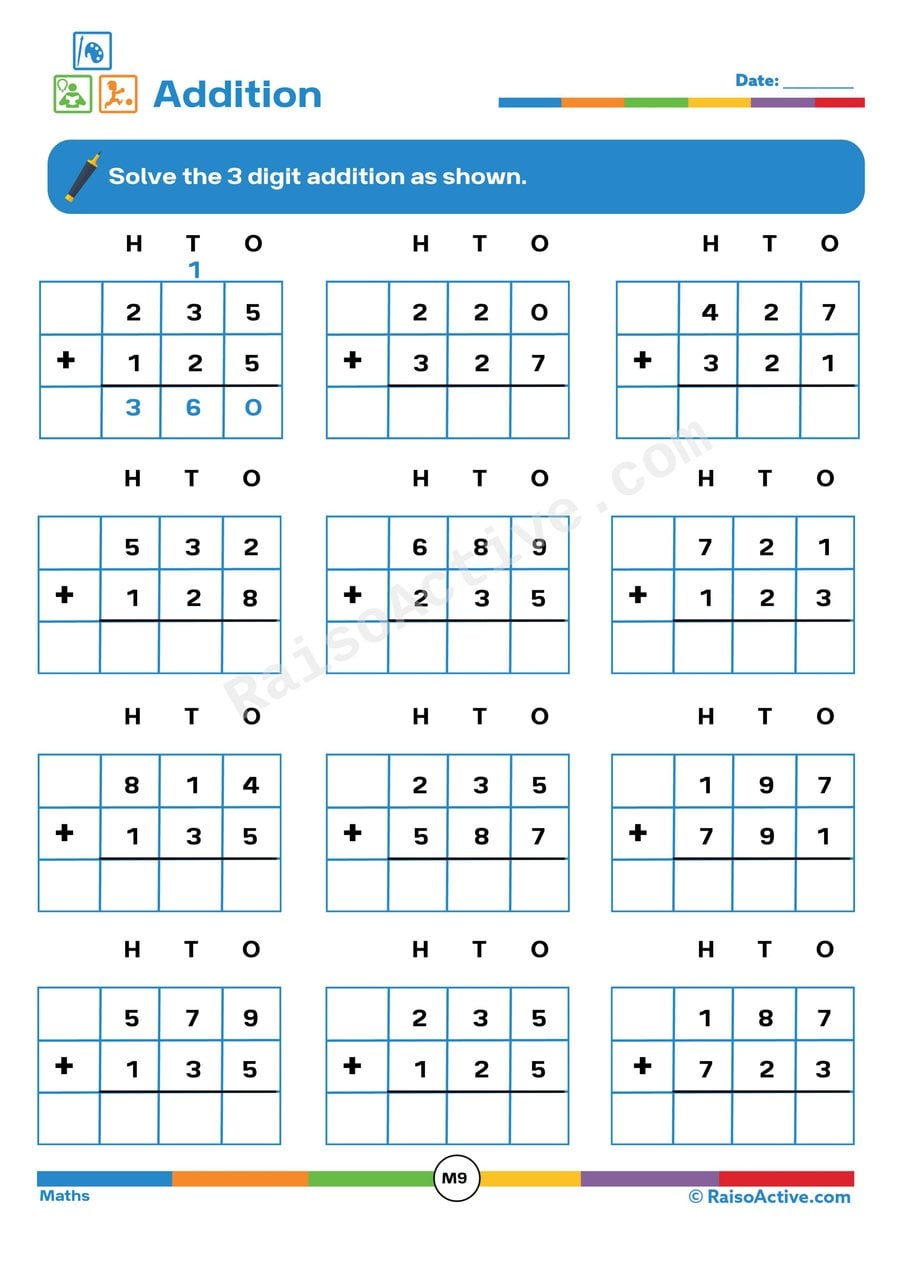
3-Digit Addition Worksheet for Kids
Adding two three-digit numbers requires children to work through the ones, tens, and hundreds columns in order and understand how a sum in one column can carry over into the next, a significant step up from single-digit addition. For ages six to eight, mastering this column-based process builds the procedural fluency needed for all future multi-digit arithmetic.

Personal Pronouns Worksheet for Kids: Circle and Underline!
Circling the subject pronoun and underlining the object pronoun in each sentence teaches children ages 5-7 to recognize that pronouns play different grammatical roles depending on their position in a sentence, an important step toward more advanced grammar understanding. This careful, close-reading task also builds attention to sentence structure that supports stronger writing later on.
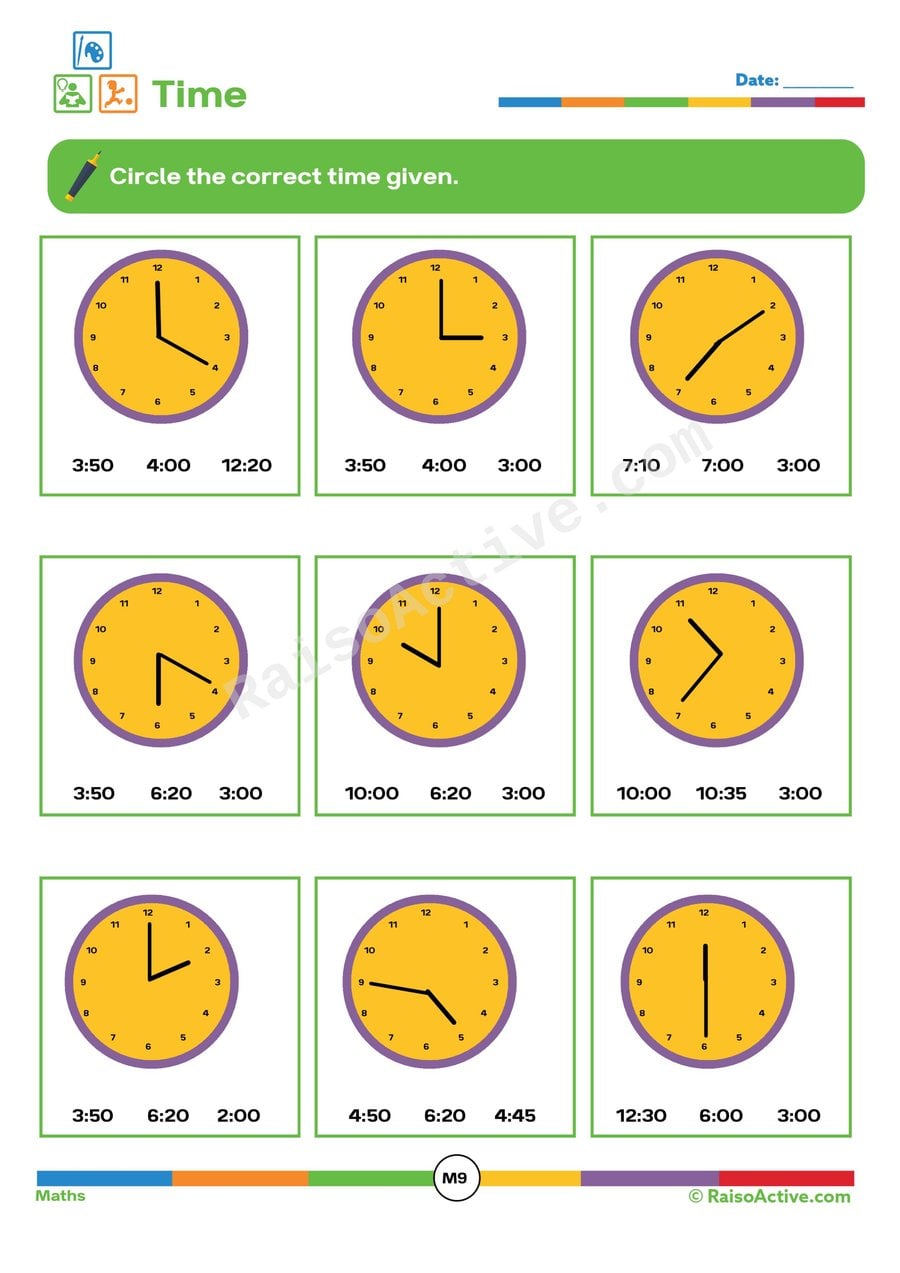
Time Telling Worksheet: Circle the Correct Time!
Reading an analog clock face and choosing the matching time from three written options builds clock-reading fluency for children ages 5-7, requiring them to interpret both the hour and minute hands together rather than guessing from a single hand.
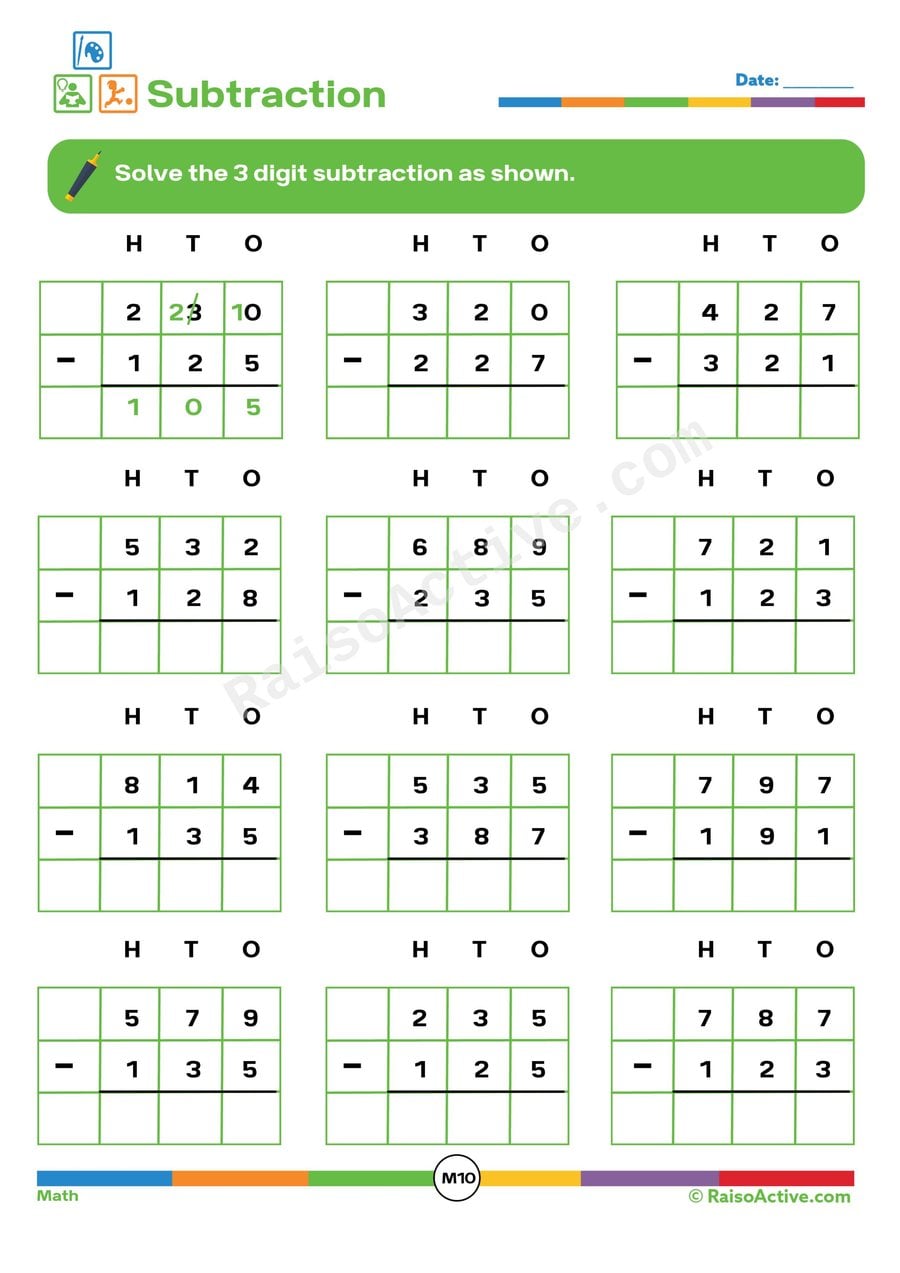
3-Digit Subtraction Worksheet for Kids
Subtracting three-digit numbers introduces children to borrowing, or regrouping, across place value columns, a more demanding skill than simple subtraction since it requires understanding that a ten can be 'broken' into ones when a column doesn't have enough to subtract from. For ages five to seven, this worksheet builds the procedural foundation for confident multi-digit subtraction going forward.

Punctuation Adventure: End Punctuation Worksheet for Kids
Children ages 5-7 practice choosing between periods, question marks, and exclamation points based on the meaning and tone of a sentence, a skill that connects punctuation directly to how a sentence should sound when read aloud. This builds the foundation for expressive, correctly punctuated writing later in school.
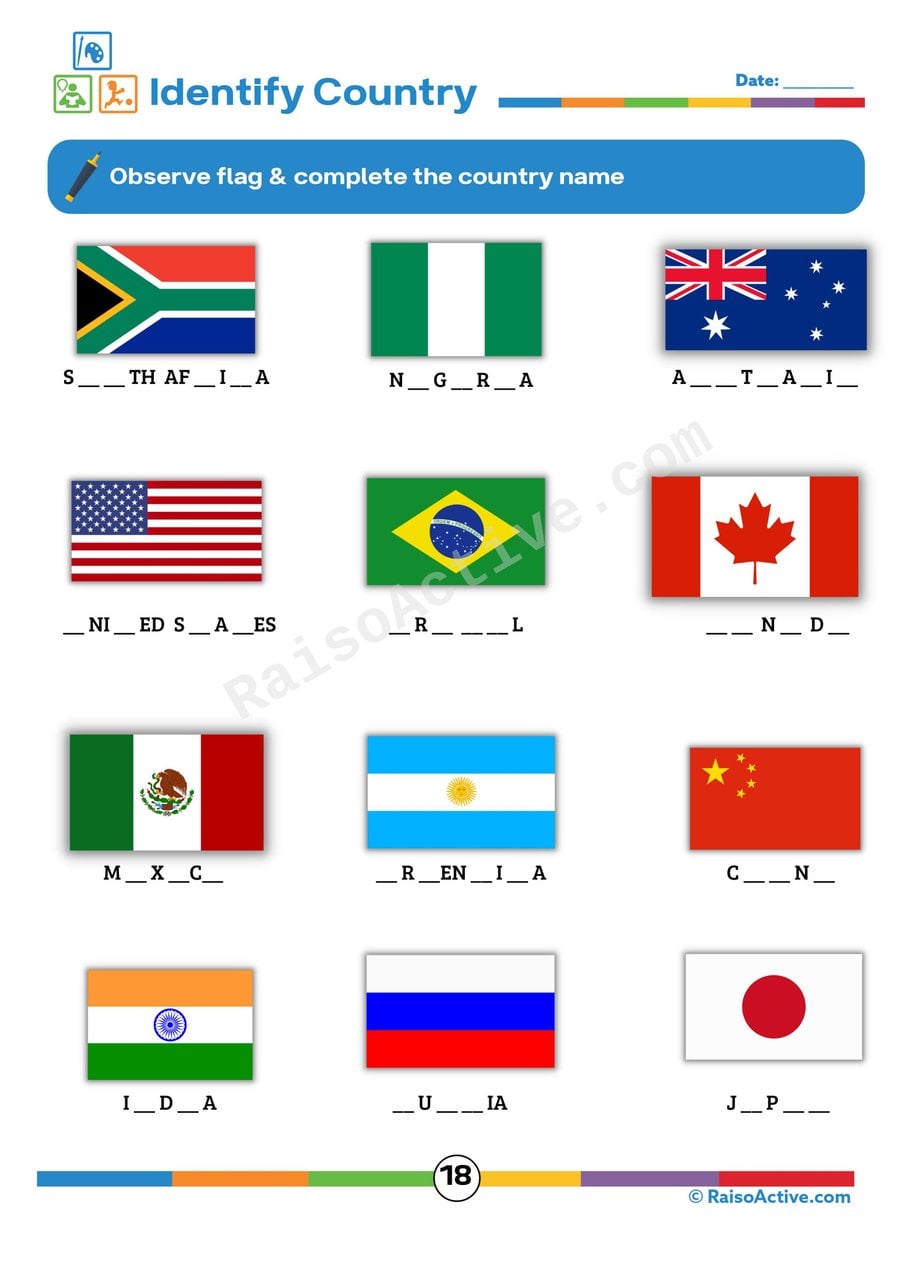
Identify the Country: Flag Matching Worksheet
Filling in the missing letters of each country's name while studying its flag gives children ages 4-7 practice with letter-sound correspondence and spelling patterns, since they must sound out the word and recall which letters are already provided as clues. It also builds early geography knowledge, helping children connect a visual symbol (the flag) to a country's name for the first time. This dual practice of decoding and world knowledge lays groundwork for both literacy and social studies skills.

Sun Safety Worksheet for Kids: Learn About Staying Safe in the Sun!
This worksheet has children ages 4-7 answer questions about sun safety, such as why sunscreen and hats matter, building early health literacy alongside writing practice as they put their understanding into their own words. Because the questions ask children to reason about why certain sun-safety habits matter rather than just label a picture, this worksheet develops early explanatory thinking, a step up from simple factual recall. Practicing writing full answers, even short ones, also builds sentence-forming skills appropriate for this age range.
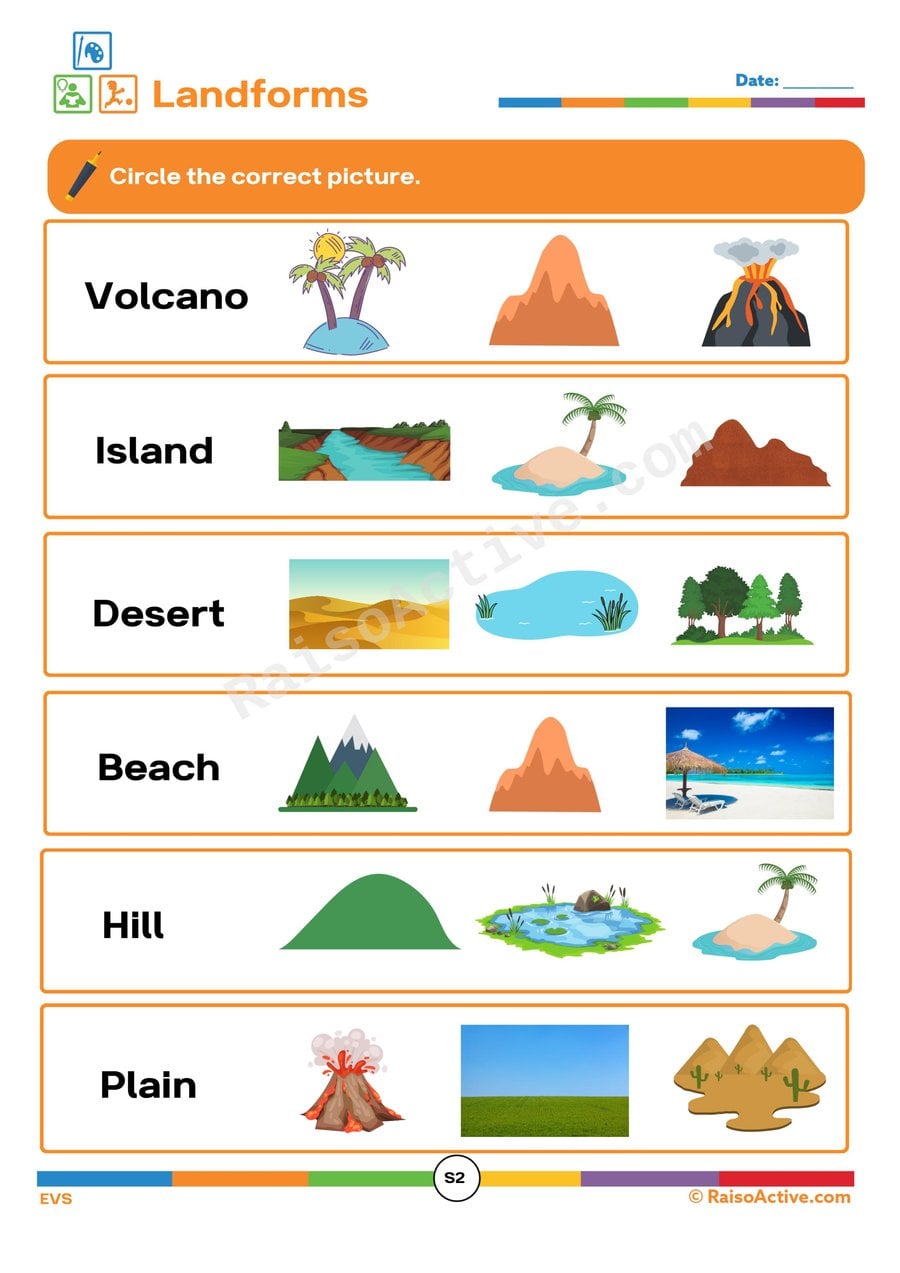
Landforms Worksheet: Circle the Correct Picture!
This worksheet introduces children ages 4-6 to basic landform vocabulary — words like mountain, valley, island, or river — by asking them to read or hear a landform's name and circle the picture that matches it. Connecting a geography term to its correct visual representation builds early science and social studies vocabulary well before children can read complex nonfiction text on their own. This kind of word-to-picture matching also reinforces observational skills, since children must notice the distinguishing visual features that make one landform different from another.

Alligator Comparison Worksheet: Greater Than, Less Than, and Equal To!
This worksheet teaches children ages 4-6 to compare two numbers using the 'hungry alligator' mnemonic, where the alligator's mouth always opens toward the larger number. Understanding greater than, less than, and equal to is an essential building block for later place value, ordering, and basic algebra concepts.
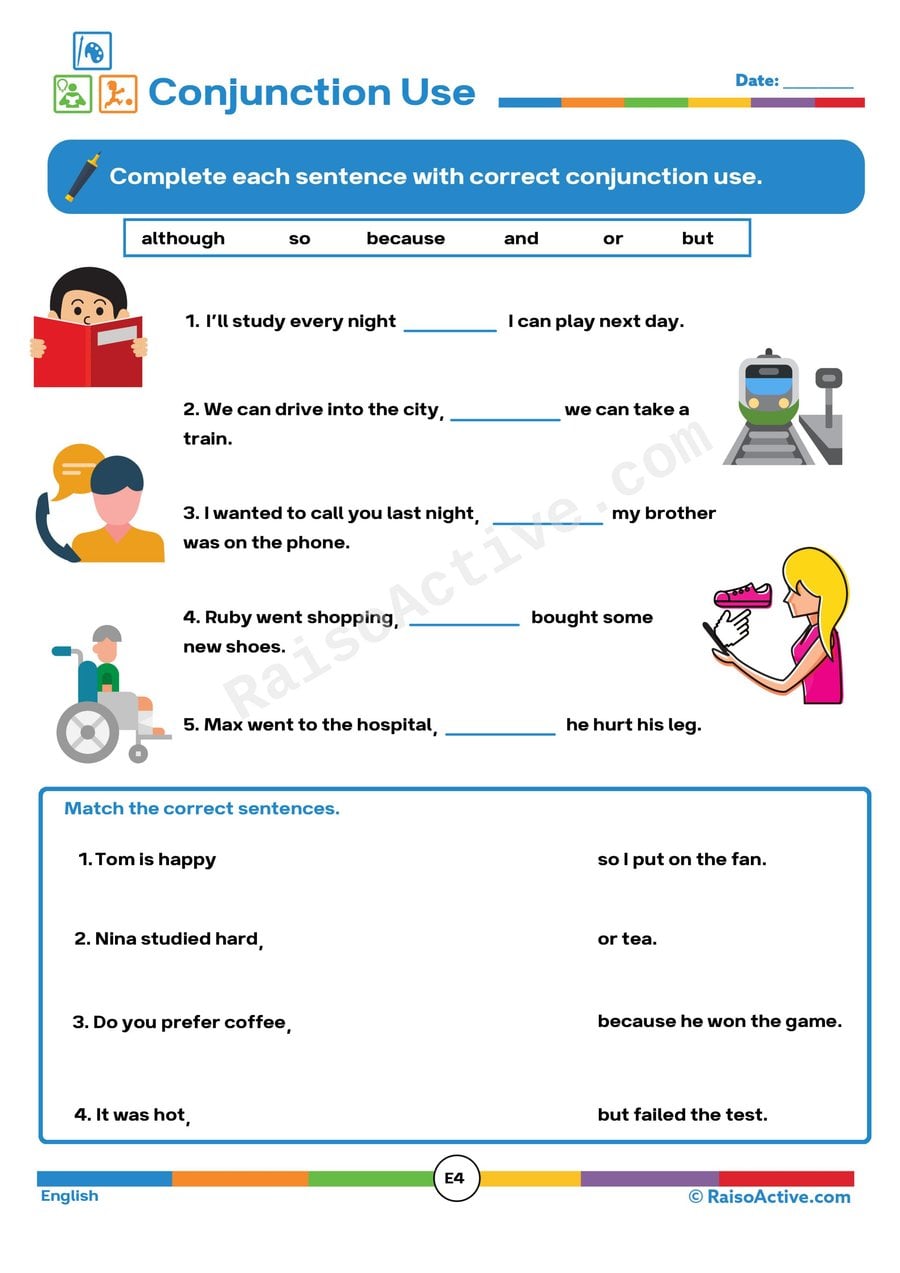
Conjunctions Worksheet: Complete the Sentences!
Choosing the correct conjunction to complete a sentence teaches children ages 4-6 how small connecting words like 'and,' 'but,' and 'or' link two ideas together into one longer, more complex thought. Practicing this helps move children from simple, short sentences toward the more sophisticated sentence structures they'll need for both reading comprehension and their own writing.

Festive Math Fun: Counting and Addition Worksheet for Kids
Children ages 4-6 sharpen counting accuracy and practice basic addition using festive Christmas visuals, including a snowman scene where sums are recorded directly on its body. This worksheet also introduces subtraction-style thinking by having children count what remains after some objects are 'struck out,' giving an early, concrete preview of take-away math.
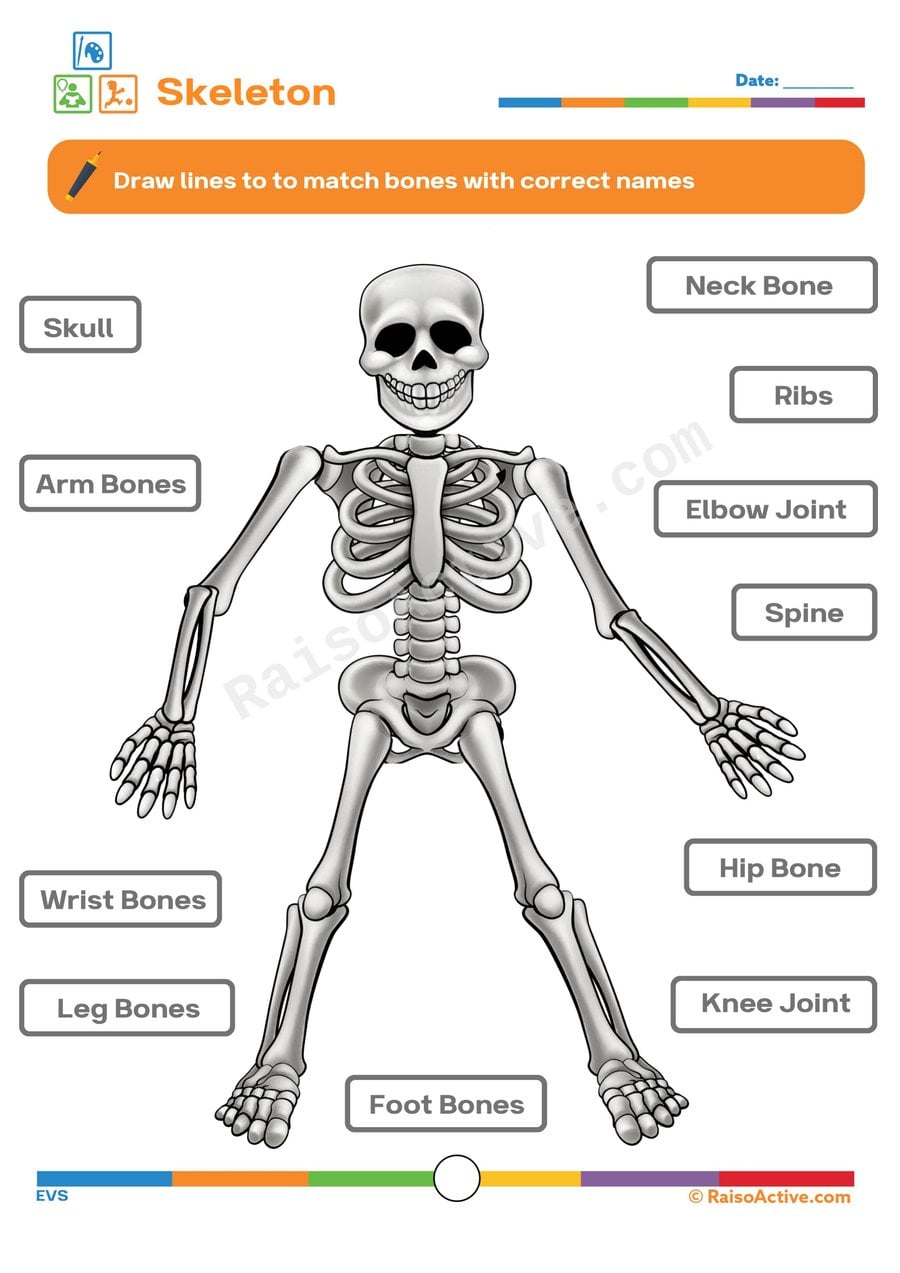
Skeleton Matching Worksheet: Learn About Bones!
Drawing lines from bone names to their locations on a skeleton diagram introduces children ages 4-6 to basic human anatomy vocabulary, such as skull, ribs, or spine, while practicing left-to-right reading and matching skills. Because children must read a word and then visually locate the correct part of the body, this worksheet also strengthens the connection between written language and real-world objects, an important step toward reading comprehension. The Halloween-skeleton framing makes an otherwise academic science topic feel playful and approachable.
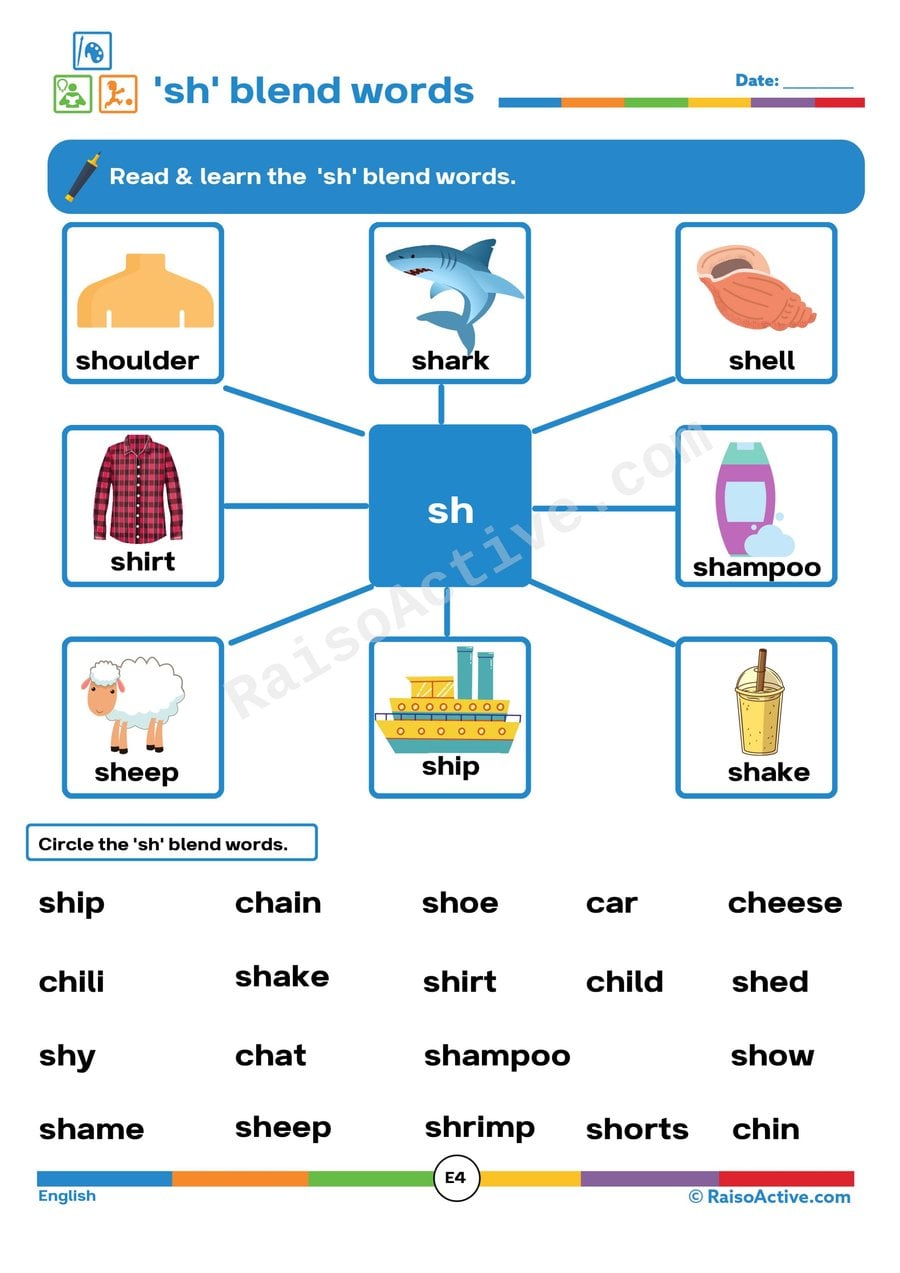
Sh Blend Words Worksheet: Read, Learn, and Circle!
The 'sh' blend is one of the most common digraphs in early English words, appearing in everyday vocabulary like 'ship,' 'shell,' and 'shop,' which makes this worksheet especially useful for children ages 4-6 building toward independent reading. Recognizing that two letters, 's' and 'h,' combine to make one brand-new sound (rather than two separate sounds) is a key phonics milestone, since digraphs behave differently from regular consonant blends. Reading and then circling 'sh' words from a list reinforces both the sound and the specific letter pattern that represents it.

Pollution Awareness Worksheet for Kids: Circle the Correct Answer!
This worksheet introduces children ages 4-6 to the idea that pollution comes in different forms — air, water, and land — and asks them to connect each type to a picture, building early environmental science vocabulary alongside visual reasoning. Sorting items into recycling categories afterward extends the lesson from simply naming a problem to practicing a real-world solution, which helps young children start to see themselves as capable of taking action. This blend of identification and hands-on sorting suits a preschooler's concrete way of understanding abstract ideas like 'the environment.'

Numeracy Match: Counting and Number Recognition Worksheet
Children ages 4-6 strengthen number recognition by matching written numerals to their corresponding word names or quantities, reinforcing that numbers can be represented in more than one way. This kind of numeral-to-word matching deepens number sense beyond simple counting, helping children see the relationship between symbol, word, and quantity. Coloring in their birth date personalizes the practice and connects it to something meaningful in their own life.

Addition Fun: Count and Add the Pictures Worksheet!
Counting two separate groups of pictured objects and combining their totals introduces children ages 4-6 to the core concept of addition as joining quantities together, before they ever see an addition sign written out. Writing the final sum in the answer box connects this hands-on counting process to numeral writing, reinforcing that a math answer is a specific, countable quantity rather than an abstract symbol. This picture-based approach to addition builds a concrete foundation that supports later work with number-only equations.
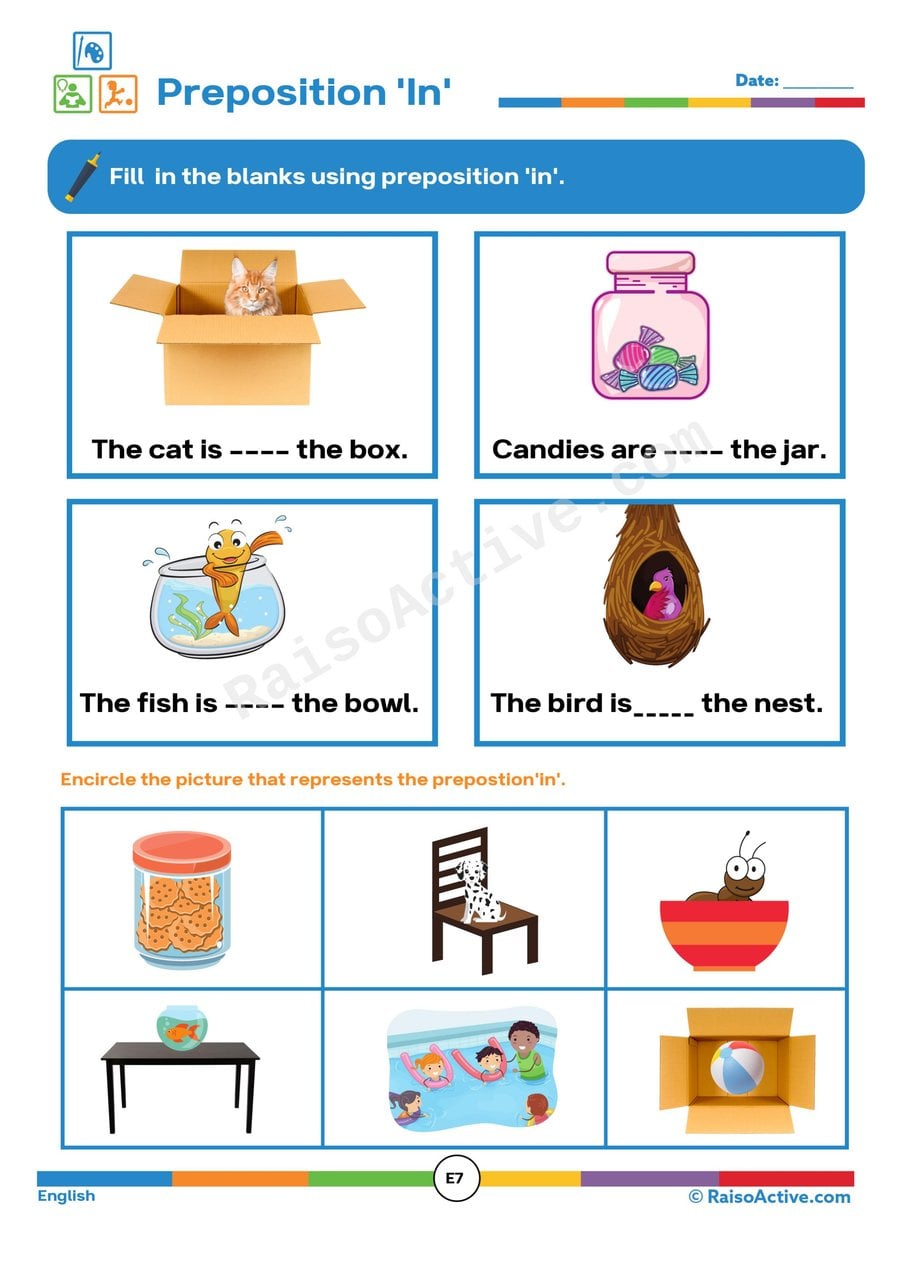
Preposition 'In' Worksheet: Fill-in-the-Blanks Fun!
This worksheet introduces the preposition 'in' as a specific positional word describing something located inside another object, building both grammar knowledge and spatial vocabulary. For ages 4-6, understanding prepositions like 'in' is essential for constructing clear, descriptive sentences and following spatial directions in everyday life.

Sports Match-Up Worksheet for Kids: Match the Sports to Their Equipment!
Matching sports to their equipment teaches children ages 4-6 to connect an activity with the tools used to play it, building categorization skills alongside sports vocabulary. This kind of real-world matching helps children make sense of things they may see on television, at the park, or during physical education class.

Time Telling Worksheet: Write the Time on the Clocks!
Reading the position of the hour and minute hands on an analog clock and writing the matching time builds clock-reading fluency for children ages 4-6, a more advanced step than simply recognizing a given time, since it requires producing the answer independently.

Addition Worksheet for Kids: Add Horizontally and Vertically!
Children ages 4-6 practice basic addition by solving problems arranged both horizontally, like '3 + 2 =,' and vertically, in a stacked column format, building flexibility with the two most common ways addition problems appear in early math worksheets and textbooks. Learning both formats now means neither will feel unfamiliar once formal school math introduces them side by side.

Number Words Worksheet: Complete the Number Words!
Filling in missing letters to complete number words teaches children ages 4-6 to connect a numeral with its written spelling, combining early spelling practice with number vocabulary. This kind of fill-in-the-blank format also encourages careful attention to each letter, since number words often contain tricky spelling patterns that don't follow simple phonics rules.

Sound Energy Worksheet: Identifying Sound Producers!
This worksheet asks children to identify which objects produce sound and to think about how the ear allows us to hear those sounds, introducing basic science vocabulary around sound energy at an age when they're ready to start reasoning about cause and effect. Circling and matching sound-producing objects also sharpens observation, since children must consider whether an object truly makes noise or is simply pictured near something that does.

Family Words Worksheet: Picture Matching and Word Recognition
Children ages 4-6 practice recognizing and reading words from the 'family' word group, like 'candle' becoming 'candle-family' patterns or similar word-family endings, by matching written words to their corresponding pictures. Word family practice builds phonics pattern recognition, helping children read new words faster by spotting familiar chunks within them.

Pronoun Power: Complete the Sentences Worksheet for Kids
This worksheet gives children ages 4-6 practice choosing the correct pronoun — like 'he', 'she', 'it', or 'they' — to complete simple sentences, reinforcing an early grammar skill that makes spoken and written language flow more naturally. Learning to replace a repeated noun with the right pronoun is a subtle but important step toward writing sentences that sound natural rather than repetitive.
What your child learns in 1st grade
The first grade Common Core standards expect fluency where kindergarten expected exposure. In reading, RF.1.3 lists the phonics skills: digraphs, long vowel spellings, silent e, vowel teams, inflectional endings (-s, -ed, -ing) and reading two-syllable words by breaking them into syllables. In math, 1.OA requires fluent addition and subtraction within 10 and the ability to solve within 20 using strategies such as making ten, and 1.NBT covers place value with tens and ones.
- Phonics: sh, ch, th, wh; silent e (a_e, i_e, o_e); vowel teams ai, ay, ee, ea, oa; r-controlled vowels; -ed and -ing endings
- Reading: decodable passages, retelling with details, who / what / where / why questions, Dolch first grade sight words
- Writing: complete sentences with capitals and end punctuation, short narratives and opinion pieces
- Math: addition and subtraction within 20, missing addends, place value to 120, comparing two-digit numbers with >, < and =
- Measurement and data: time to the hour and half hour, ordering objects by length, reading simple graphs; coins are introduced in many states
Fact fluency and spiral review
First graders need to know their addition and subtraction facts within 10 automatically and to have reliable strategies within 20: counting on, doubles, doubles plus one and making ten. Short timed grids (twenty facts, two minutes) build automaticity once the strategies are understood, not before. Spiral review sheets, which mix a few problems from every topic covered so far, stop skills from fading; one a week is enough.
How to use 1st grade worksheets at home
Match the phonics pattern to what the class is teaching; most teachers send home a weekly word list. Have your child read the decodable passage aloud, then answer the questions in a full sentence. For math, keep base-ten blocks or bundles of straws for place value, and a play clock and real coins for time and money. Fifteen to twenty minutes a day, four or five days a week, is what most first grade teachers suggest.
Frequently asked questions
What should a child know by the end of 1st grade?
By the end of first grade a child is expected to read grade-level text with digraphs, long vowels and two-syllable words, retell a story and answer questions about it, write several sentences with correct capitals and punctuation, add and subtract fluently within 10 and with strategies within 20, understand tens and ones to 120, compare two-digit numbers, tell time to the hour and half hour, and measure and compare lengths.
What phonics is taught in 1st grade?
RF.1.3 covers consonant digraphs (sh, ch, th, wh, ck), long vowel spellings including silent e and vowel teams (ai, ay, ee, ea, oa, ow), r-controlled vowels (ar, or, er), inflectional endings such as -s, -ed and -ing, and reading two-syllable words by dividing them into syllables. Children also learn the first grade sight words and keep building fluency with short decodable passages.
What is the difference between kindergarten and 1st grade worksheets?
Kindergarten sheets work with single sounds, CVC words, counting and adding within 10, and usually have a picture for every item. First grade sheets add digraphs and long vowels, short passages with comprehension questions, addition and subtraction within 20 with missing numbers, and place value to 120. They expect independent reading of the instructions and 15 to 20 minutes of sustained work.
How much homework should a first grader have?
The guideline many US districts and parent-teacher associations use is about ten minutes per grade level, so around ten to twenty minutes a night for first grade, plus reading aloud or independently. That is typically one worksheet and a book. If homework regularly takes longer, the sheet is too hard or too long; shorten it and talk to the teacher rather than pushing through.
Do 1st graders learn money in Common Core?
Not directly. Common Core places counting coins and solving money problems in second grade (2.MD.8), but many state standards, including those of states that have modified Common Core, introduce penny, nickel, dime and quarter recognition and counting in first grade. Money worksheets here start with identifying coins and their values and move on to counting like coins, which suits either sequence.

Written by
Hemsweta Jain · Teacher Cheena
MBA and Early Childhood Educator, teaching since 2014 · Founder of RaisoActive, Mumbai
Written and reviewed by Hemsweta Jain (Teacher Cheena), who designs every RaisoActive worksheet.
Last reviewed
Printable packs for ages 6–7
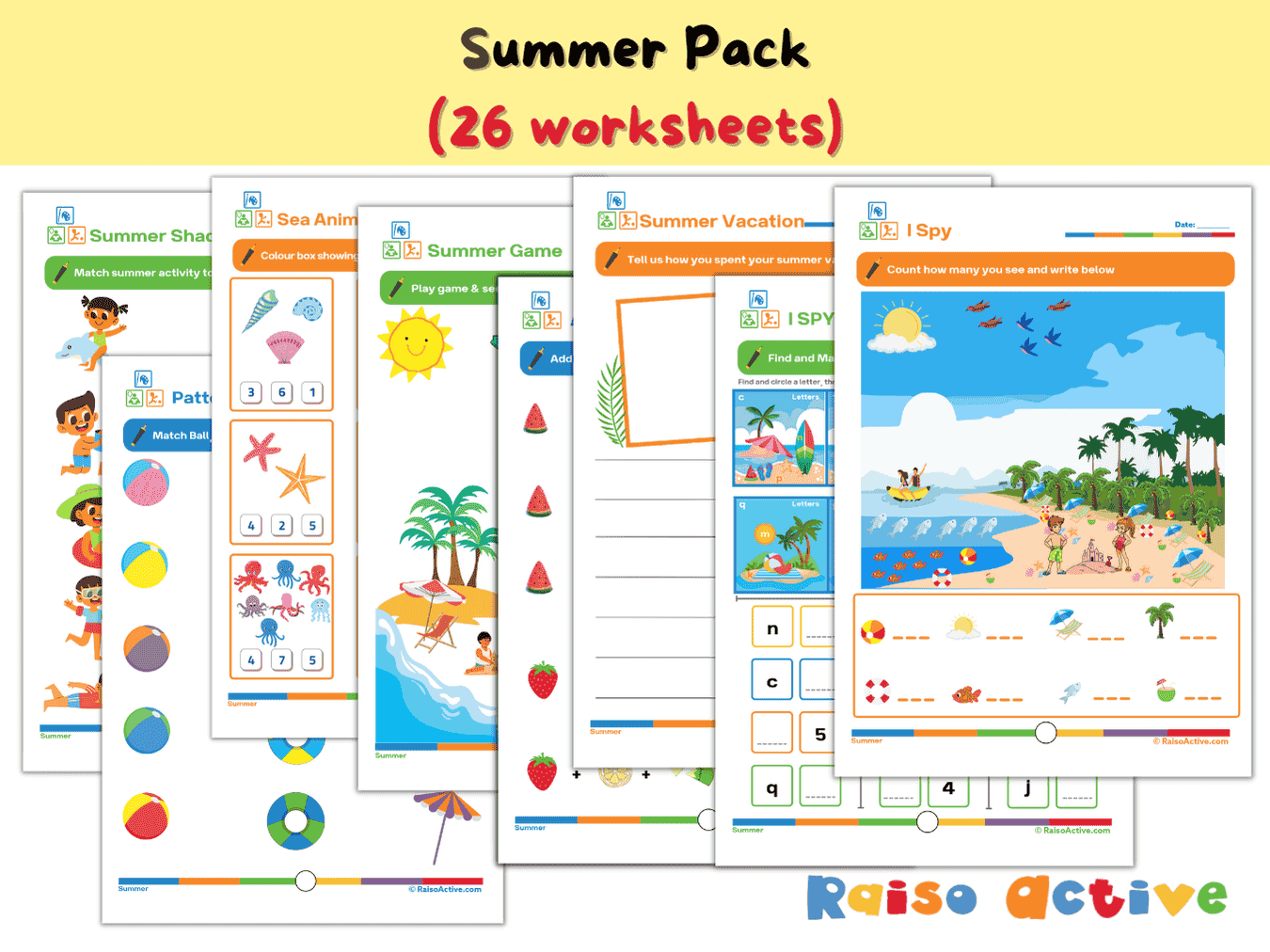
Summer Activity Pack: Math, Literacy, Puzzles & More for Preschool & Kindergarten
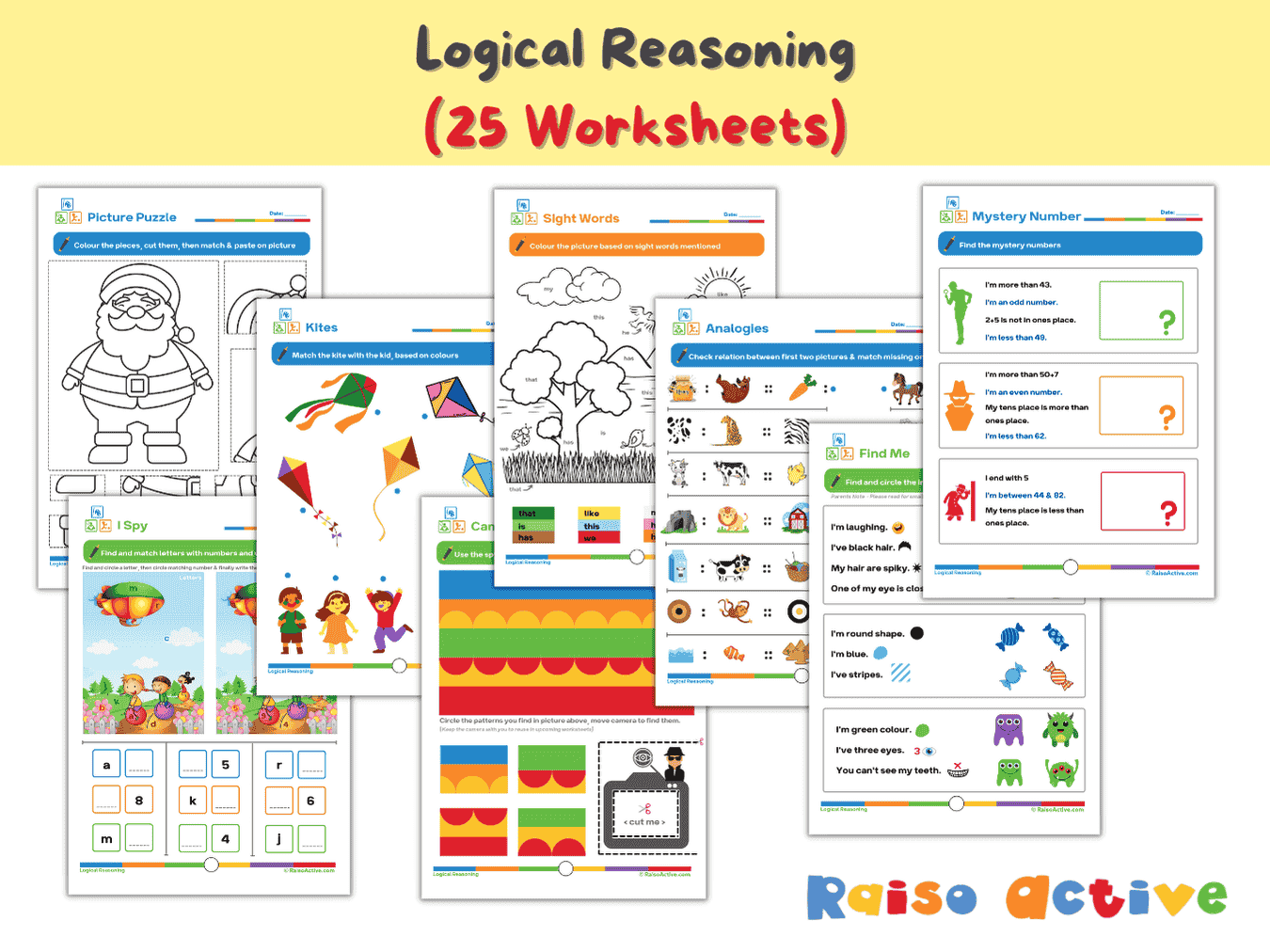
Logical Reasoning Activity Book for Preschool & Kindergarten | Patterns, Puzzles & Analogies
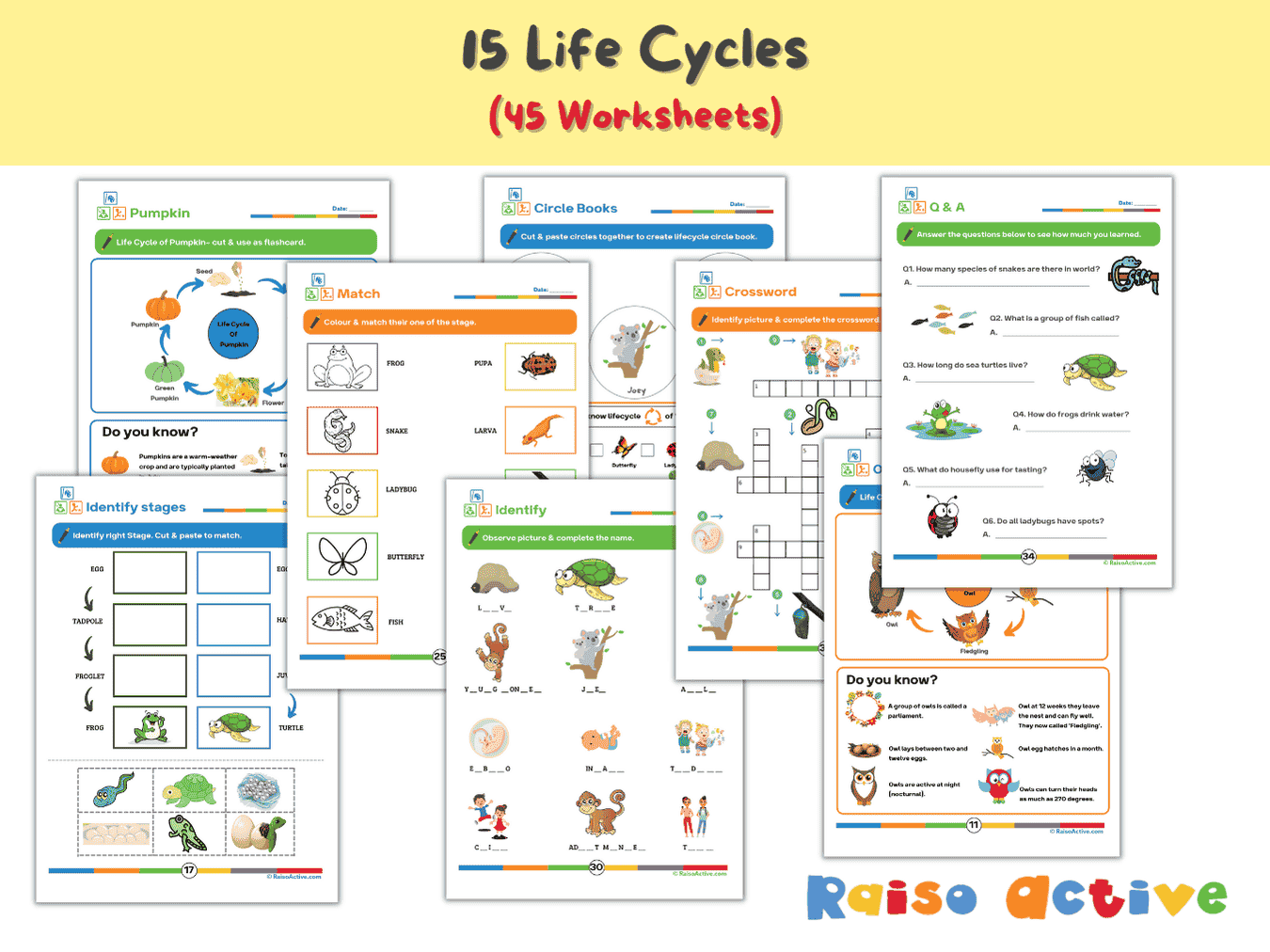
Lifecycles Activity Book & Flashcards for Preschool & Early Elementary
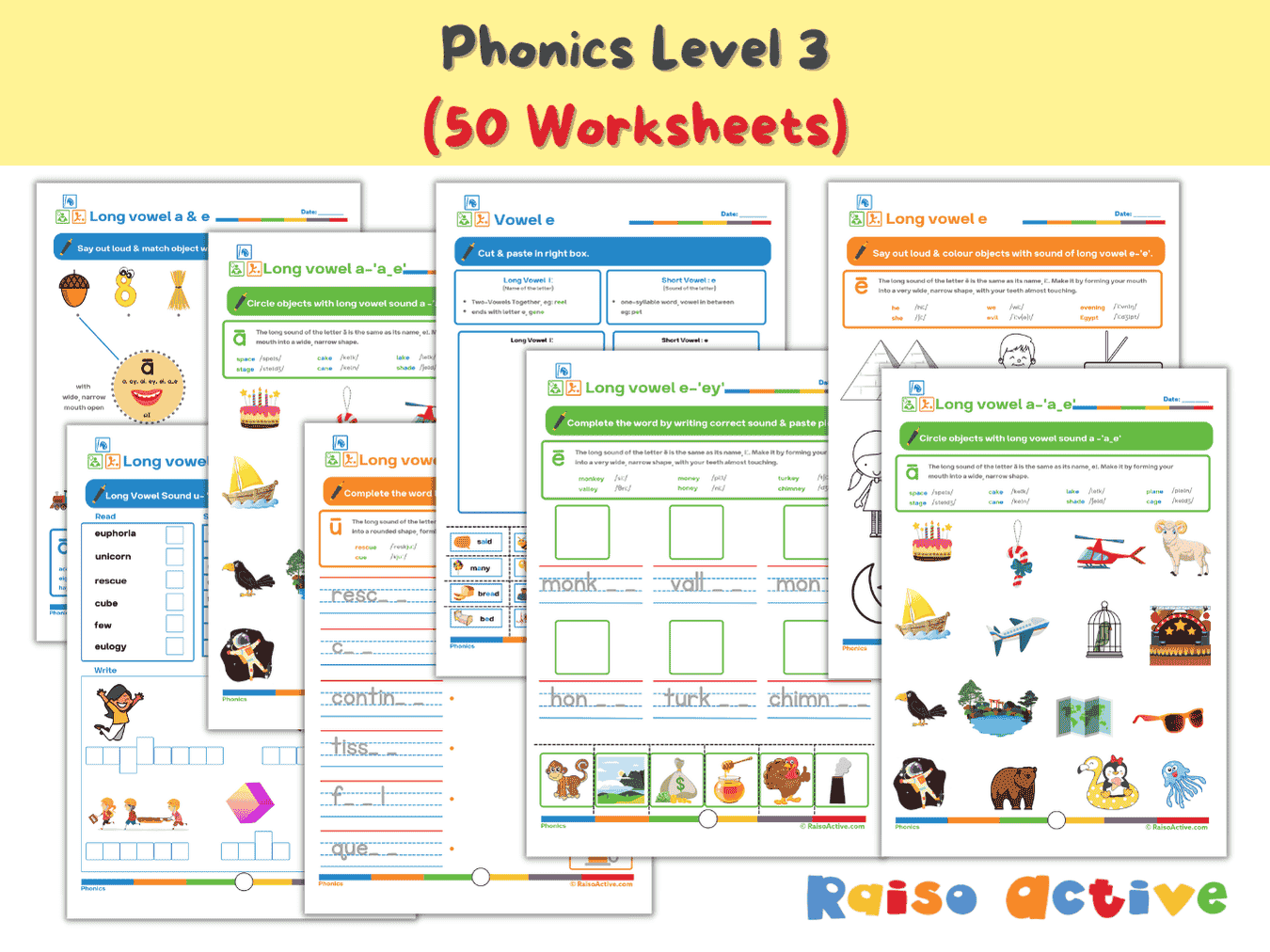
Phonics Level 3 Long Vowels Activity Book for Kindergarten & 1st Grade
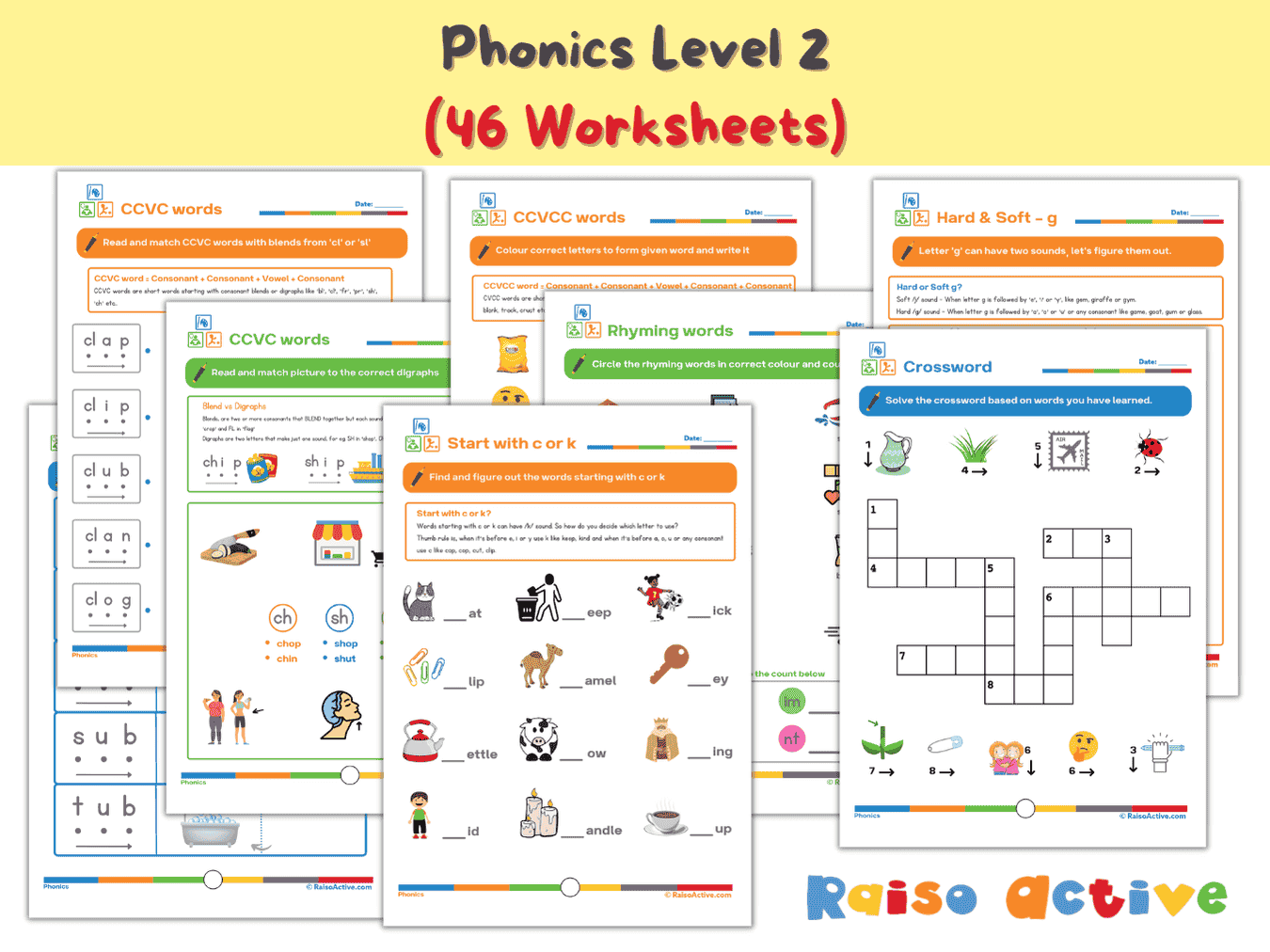
Phonics Level 2 Worksheets: CVC, CCVC, CVCC Word Families & Blends for Early Readers (Ages 4-7)
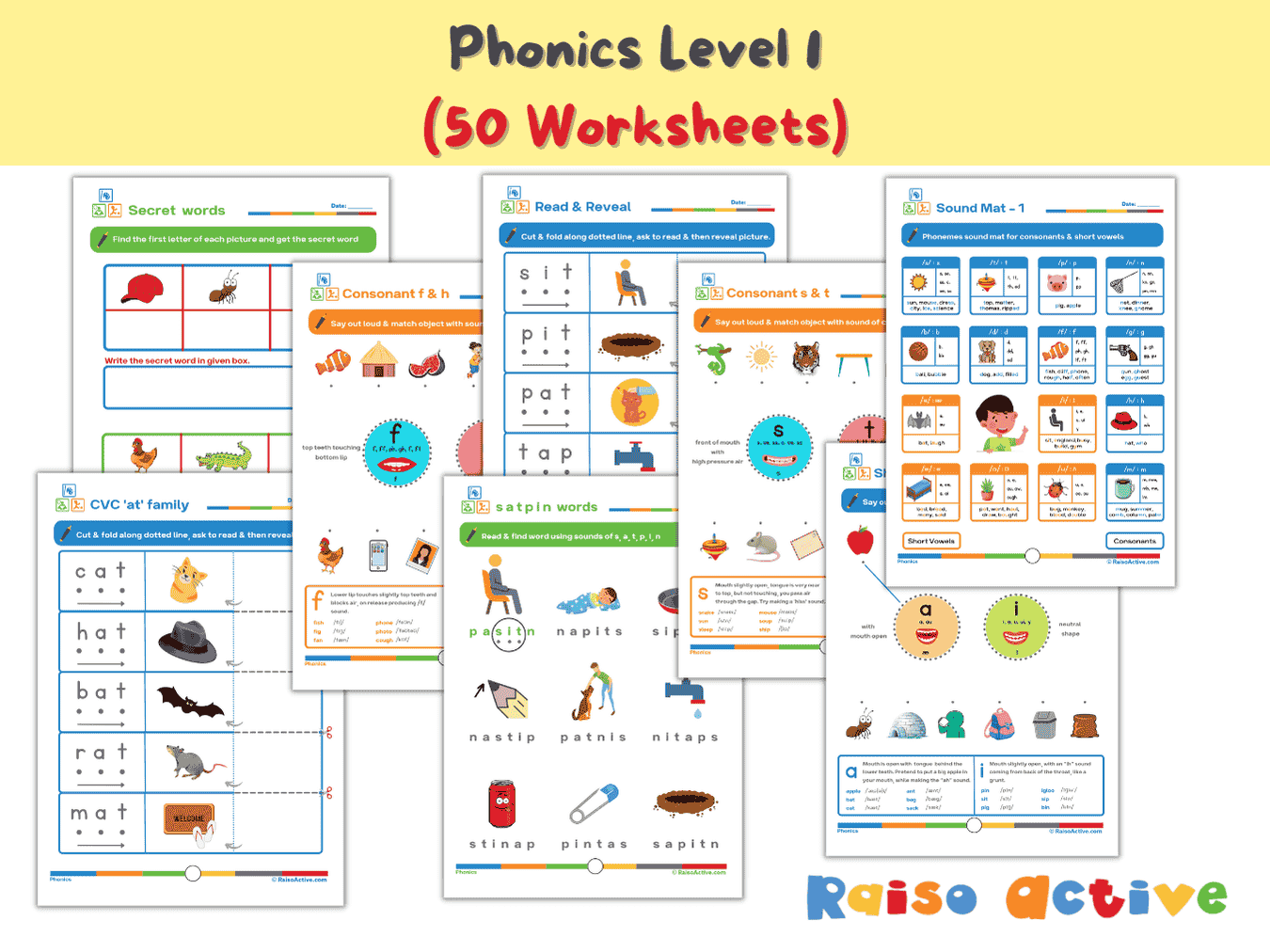
Phonics Level 1 Activity Book: Letter Sounds, Blending & CVC Words for Preschool & Kindergarten
Guides for parents and teachers
See all guides →Sight Words by Age: The First 50 Words and How to Teach Them Without Flashcard Fatigue
Which sight words to teach first and why, the heart-word method, a read-trace-write-find routine, games, and a by-age table of typical sight-word progress.
How to Teach CVC Blending: A Step-by-Step Method That Works in Two Weeks
A step-by-step method for teaching CVC blending, covering continuous sounds, word families, common errors, and a 14-day plan that most children finish reading CVC words.
Phase 2 Phonics at Home: Sound Order, Blending Games, Worksheets
Phase 2 phonics at home: the five sound sets in order, oral blending, tricky words, a two-week routine, common mistakes, and free worksheets.
Reception Year Explained: EYFS Learning and How to Help at Home
A teacher's plain-English guide to the Reception Year: the seven areas of learning, Early Learning Goals, Phase 2/3 phonics, the RBA and home routines.
UKG Syllabus Explained: English, Maths and EVS Month by Month
What UKG classes typically cover in English, maths and EVS, month by month, aligned to NEP 2020, with ways to support at home and signs your child is behind.
Documenting Learning Without Drowning in Data: A Practical Guide for Parents and Teachers
Learn practical ways to document your child's learning without overwhelm. Simple portfolios, observation tips, and printable trackers for ages 1-8.