Free printable worksheets · United States
1st Grade Addition Worksheets (Ages 6–7)
1st Grade addition worksheets are practice sheets for children aged 6–7 in First Grade in the US. Addition is combining two or more groups of objects or numbers to find a total, using objects, pictures or written number sentences. The sheets on this page cover combining two groups into one, number bonds and doubles, counting on from a number and making ten.
First grade pushes reading toward fluency and math toward larger numbers: consonant digraphs, long vowels and silent e appear in decodable passages, while place value work extends to 120 and addition and subtraction move from within 10 to within 20. Six-year-olds recall many addition facts within 20 without counting, especially doubles and facts made from ten, and begin adding two-digit numbers in columns, keeping tens and ones lined up. Worksheets should mix a page of fact recall against the clock with column addition problems that do not need regrouping, and a few word problems where the child chooses to add rather than being told to. Regrouping across a ten in column addition is next year's step.
105+ worksheets · free PDF download · print on A4 or Letter
1st Grade Addition Worksheets to print
Browse all worksheets for ages 6–7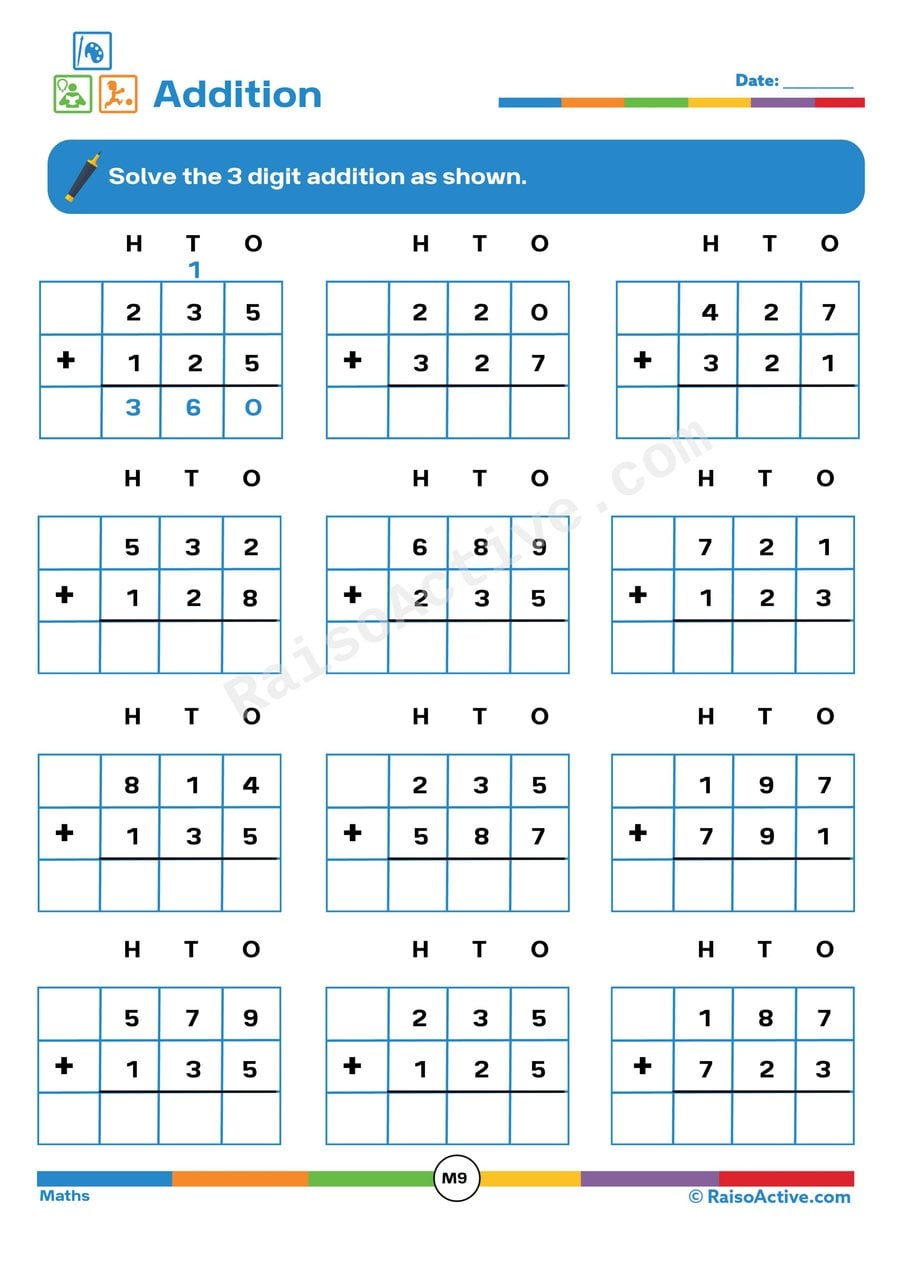
3-Digit Addition Worksheet for Kids
Adding two three-digit numbers requires children to work through the ones, tens, and hundreds columns in order and understand how a sum in one column can carry over into the next, a significant step up from single-digit addition. For ages six to eight, mastering this column-based process builds the procedural fluency needed for all future multi-digit arithmetic.
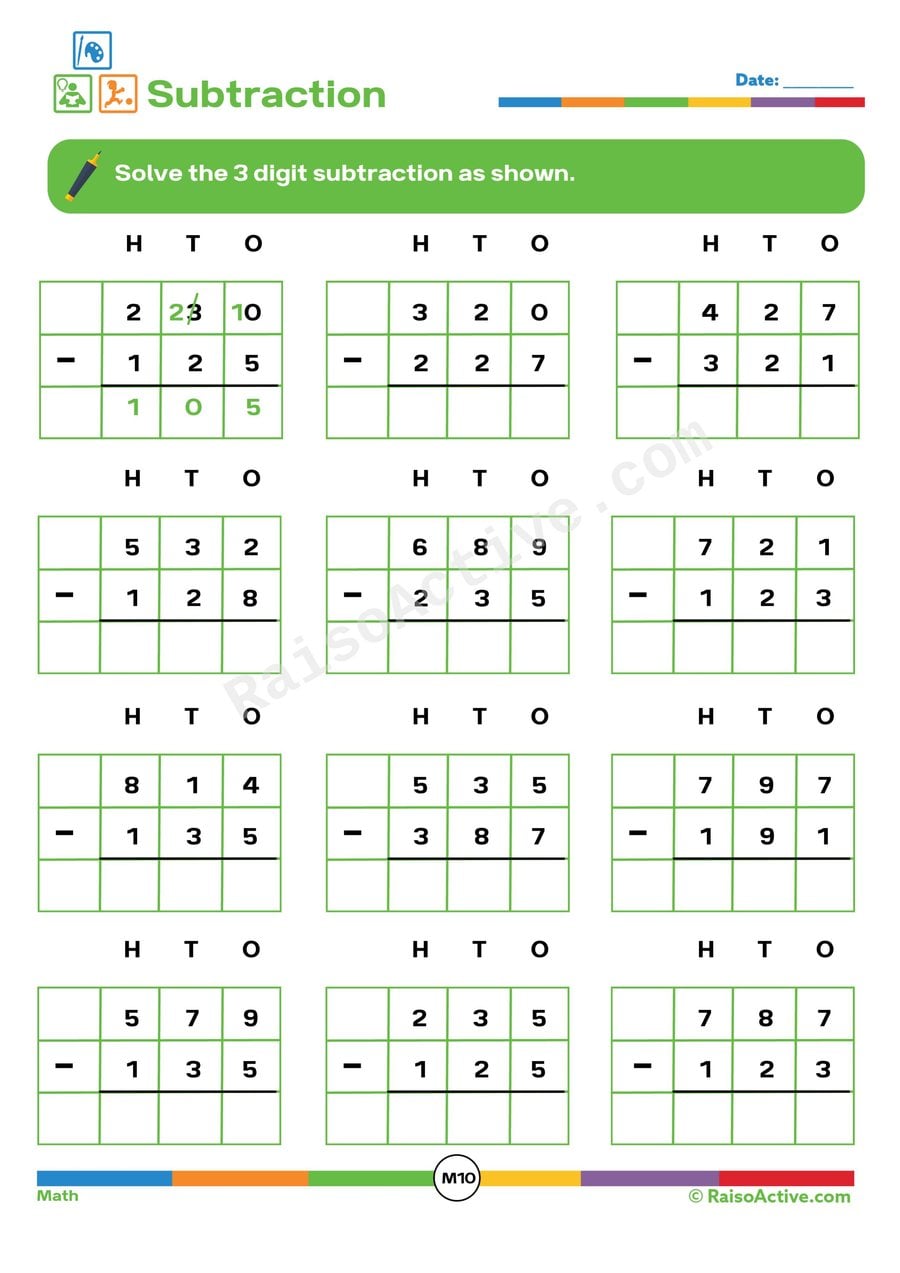
3-Digit Subtraction Worksheet for Kids
Subtracting three-digit numbers introduces children to borrowing, or regrouping, across place value columns, a more demanding skill than simple subtraction since it requires understanding that a ten can be 'broken' into ones when a column doesn't have enough to subtract from. For ages five to seven, this worksheet builds the procedural foundation for confident multi-digit subtraction going forward.
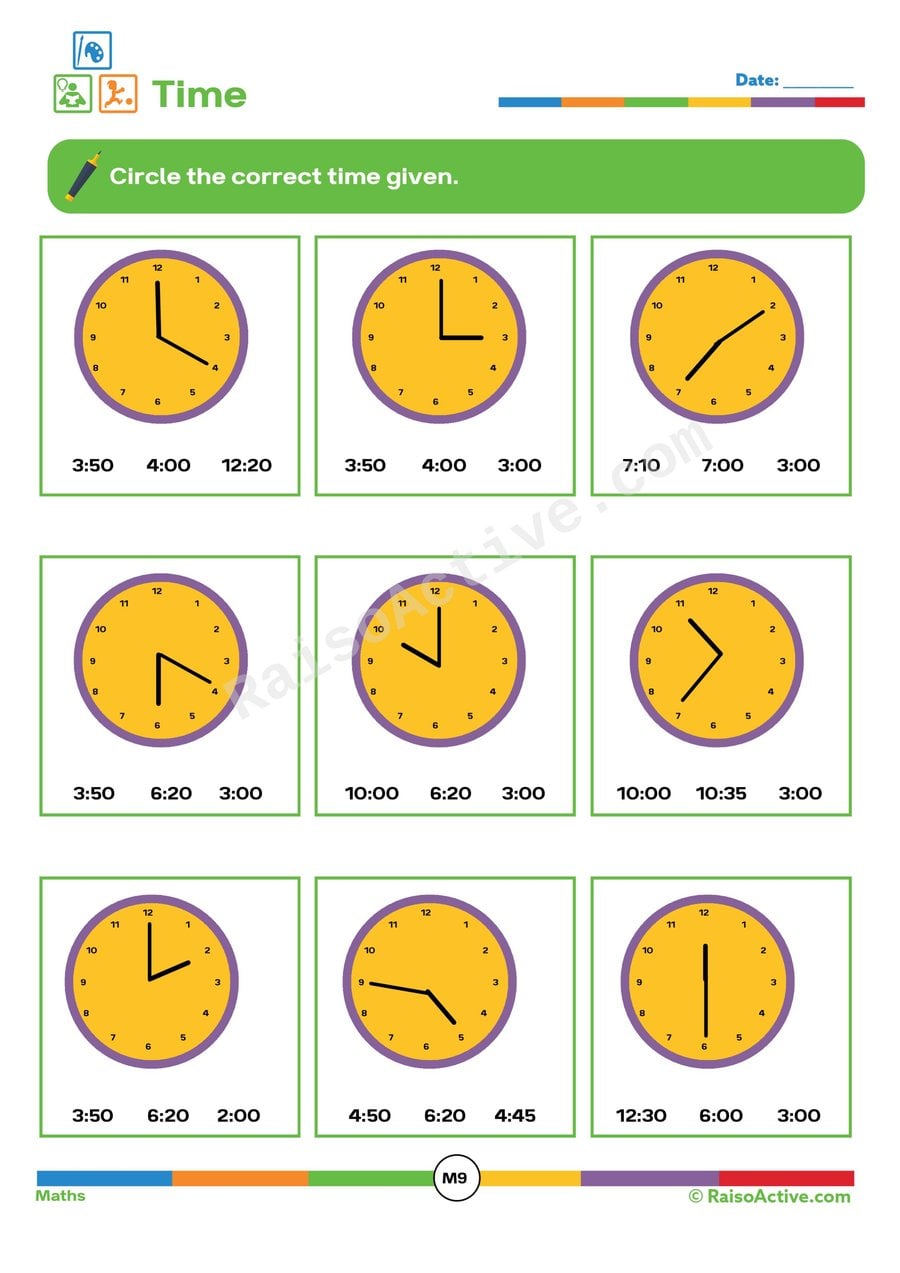
Time Telling Worksheet: Circle the Correct Time!
Reading an analog clock face and choosing the matching time from three written options builds clock-reading fluency for children ages 5-7, requiring them to interpret both the hour and minute hands together rather than guessing from a single hand.
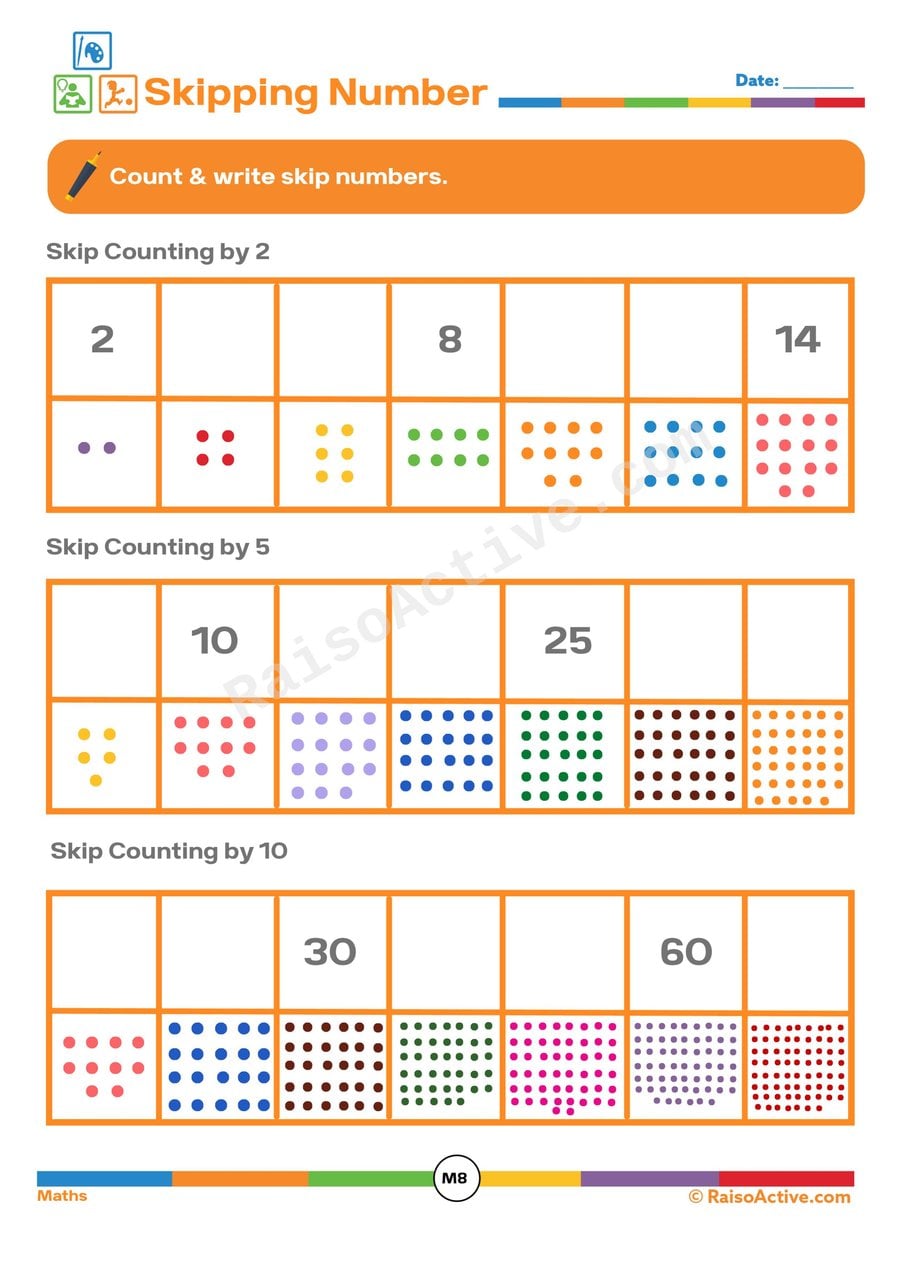
Skip Counting Adventure: Counting by 2, 5, and 10!
Children ages 4-6 practice skip counting by 2s, 5s, and 10s, recognizing the repeating number patterns that let them count large groups faster than counting one by one. Skip counting is an early stepping stone toward multiplication and a genuinely useful shortcut children can apply well beyond this worksheet.

Tens and Ones Counting Worksheet for Preschoolers
Counting grouped tens and ones blocks introduces children ages 4-6 to place value, the idea that a two-digit number is really made up of groups of ten plus some leftover ones. This concept is foundational for understanding larger numbers and for later work with addition and subtraction that involves regrouping.
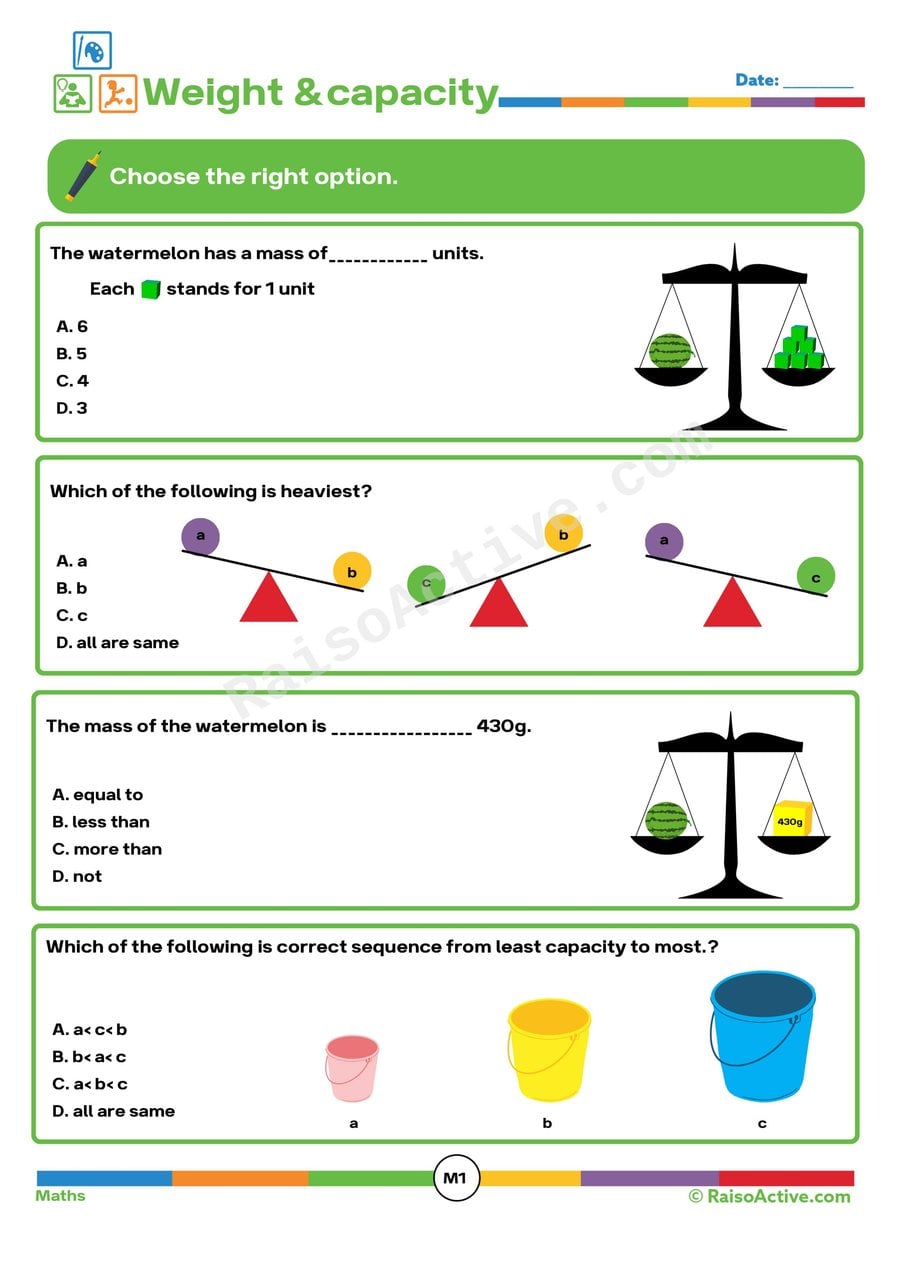
Weight and Capacity Worksheet for Preschoolers
Comparing objects visually to judge which is heavier or holds more introduces children ages 4-6 to early measurement concepts, building the comparative reasoning that underlies later formal measurement with scales and measuring cups.

Alligator Comparison Worksheet: Greater Than, Less Than, and Equal To!
This worksheet teaches children ages 4-6 to compare two numbers using the 'hungry alligator' mnemonic, where the alligator's mouth always opens toward the larger number. Understanding greater than, less than, and equal to is an essential building block for later place value, ordering, and basic algebra concepts.

Word Problem Fun: Solving Burger and Bird Problems!
Solving addition and subtraction word problems featuring burgers and birds gives children ages 4-6 practice applying arithmetic to playful, concrete scenarios, strengthening the link between story context and the correct math operation.
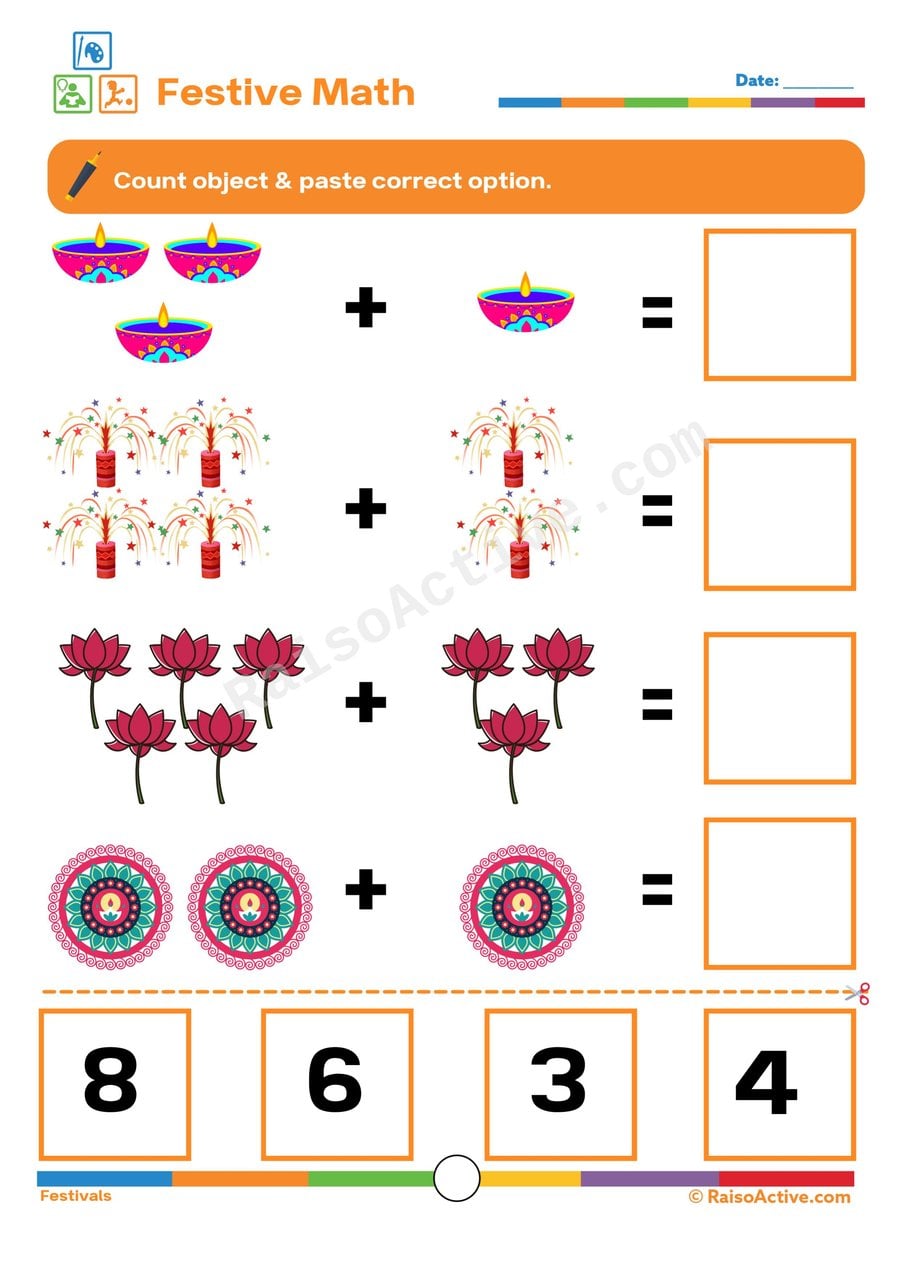
Festive Math: Count and Add Objects Worksheet
Children ages 4-6 practice counting groups of festival-themed objects and combining them through simple addition, building early number sense and the concept that addition means putting two groups together. Counting festive imagery keeps the math concrete and visual, which is especially important before children can add using abstract numerals alone.

Subtraction Fun: Count and Subtract with Hands and Objects!
This worksheet introduces basic subtraction by having children count a starting group of objects and then 'take away' a smaller amount indicated by the minus sign, connecting the abstract concept of subtraction to something they can see and count. For four- to six-year-olds, visualizing subtraction as physically removing objects from a group — rather than just manipulating numbers — makes the concept concrete before they move to solving subtraction problems with numbers alone.

Mental Addition Worksheet: Add Dots and Find the Total!
This worksheet bridges concrete counting and mental addition by having children count visible dots, add them to a given number, and then draw missing dots to complete equations, reinforcing that addition means combining quantities together. For ages 4-6, physically drawing the missing dots makes the abstract equation tangible, helping cement the connection between a math symbol and what it actually represents.

Skip Counting Adventure: Help Community Helpers! A Fun Math Worksheet
Filling in missing numbers while skip counting by 5s and 10s builds a foundation for multiplication and faster counting for children ages 4-6, using a community helpers theme to make the abstract number pattern feel purposeful.

Comparing Numbers Worksheet: Greater Than, Less Than, and Equal To!
Children ages 4-6 learn to compare two numbers and choose the correct symbol — greater than, less than, or equal to — building an essential foundation for later work with inequalities and algebra. Comparing quantities and representing the relationship symbolically is a more abstract skill than simple counting, so this worksheet stretches children just past straightforward number recognition into true numerical reasoning.
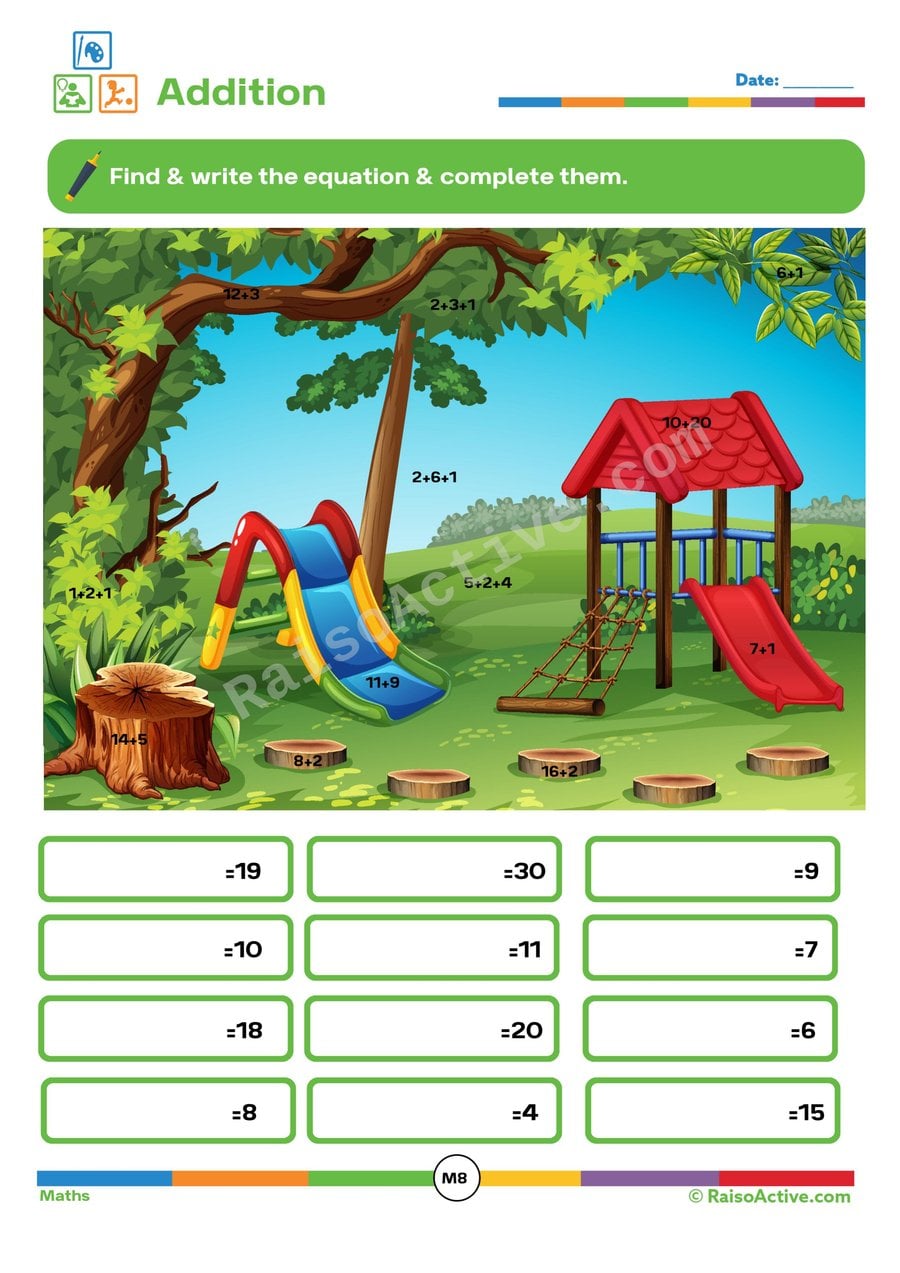
Addition Worksheet: Find and Write Equations!
Writing an addition equation from a picture — rather than solving one that's already written — asks children ages 4-6 to translate a visual quantity into mathematical symbols, a more demanding skill than simply computing a given sum. This worksheet has children count grouped objects, represent what they see as a written equation, and then solve it, connecting concrete counting to abstract number sentences. Practicing this translation step is exactly what builds true number sense, rather than just memorized addition facts.
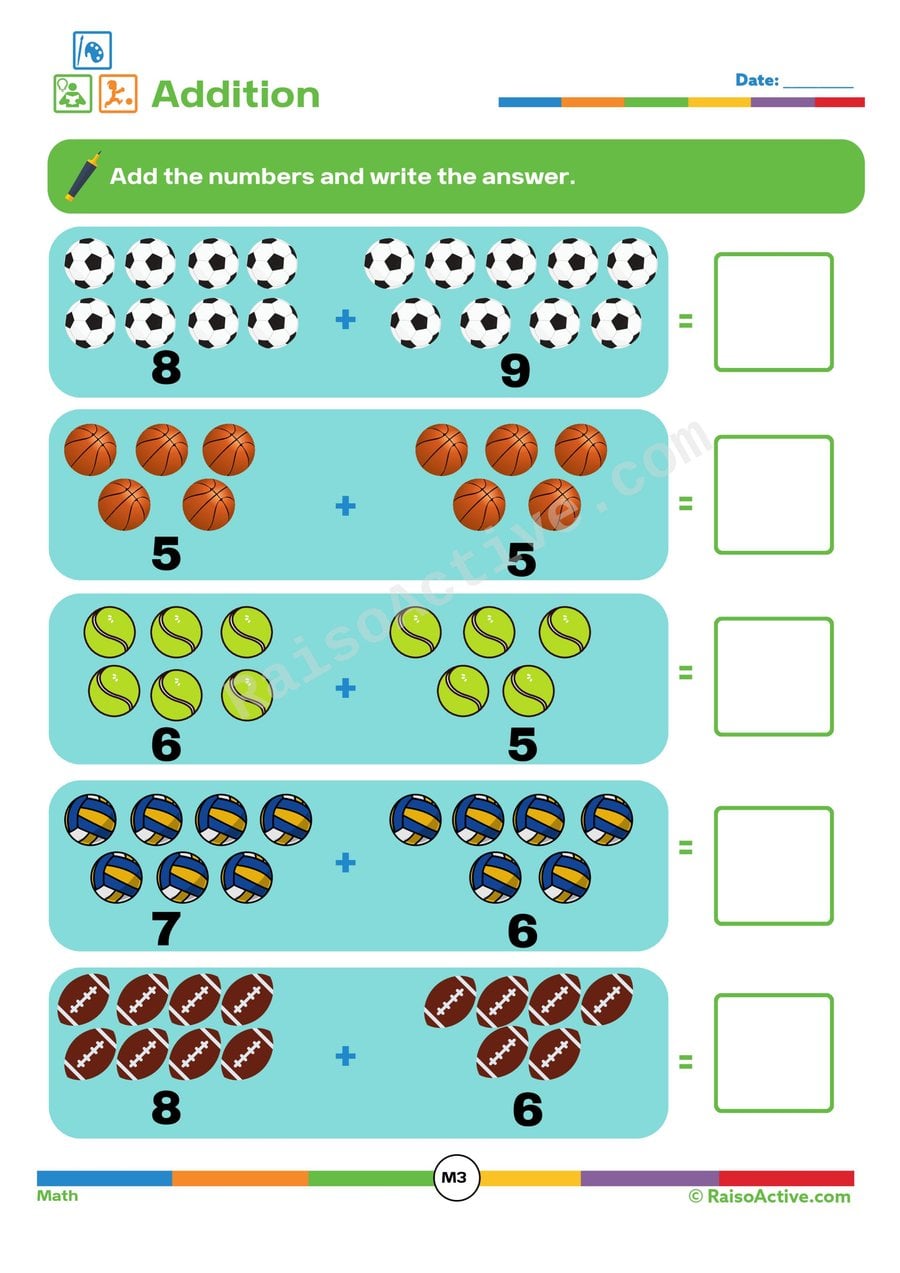
Sports Addition Worksheet for Kids
Featuring sports-themed pictures like balls, bats, and trophies, this worksheet gives children ages 4-6 engaging practice with simple addition, counting two separate sets of objects and combining them into a single total. Using a familiar, high-interest theme like sports can help maintain focus during repetitive counting practice, while still building the same foundational addition skills as any other worksheet.

Addition Fun: Count and Add the Pictures Worksheet!
Counting two separate groups of pictured objects and combining their totals introduces children ages 4-6 to the core concept of addition as joining quantities together, before they ever see an addition sign written out. Writing the final sum in the answer box connects this hands-on counting process to numeral writing, reinforcing that a math answer is a specific, countable quantity rather than an abstract symbol. This picture-based approach to addition builds a concrete foundation that supports later work with number-only equations.

Tens and Ones Worksheet: Practice Place Value with Fun Elephants!
This worksheet has children break two-digit numbers into their tens and ones parts, then apply that understanding to simple addition and subtraction, a natural next step once place value clicks. For ages four to six, using the playful elephant images keeps a fairly abstract math concept approachable while still building the numerical foundation they'll rely on for years of arithmetic to come.

Counting Fun: Count by 5 or 10 Worksheet for Preschoolers!
Counting objects arranged in groups of five or ten teaches children ages 4-6 skip counting, a faster strategy for finding a total than counting every single object one by one. This early efficiency strategy builds a foundation for later multiplication and for quickly estimating larger quantities.

Froggy Skip Counting Worksheet: Practice Number Patterns!
This worksheet introduces children ages 4-6 to skip counting — counting forward by a number other than one, such as by 2s or 5s — using a playful frog theme to keep the repetitive number pattern engaging. Recognizing and continuing a skip-counting sequence builds early number pattern awareness, a skill that later supports multiplication, telling time, and counting money.

Crossword Math Worksheet: Fill in the Missing Numbers!
This crossword-style worksheet has 4-6 year olds solve a series of subtraction equations to fill in missing numbers, then cross-check their answers by matching them across and down within the grid — a built-in accuracy check that regular subtraction worksheets don't offer. Because an answer has to be correct in both directions to complete the crossword properly, this format naturally encourages your child to double-check their subtraction rather than move on after a single attempt.

Missing Numbers Worksheet: Before, After, and Between!
This worksheet strengthens number sequencing by asking children to figure out which number comes before, after, or between two given numbers, rather than simply counting from one in order. For four- to six-year-olds, working with numbers 'out of context' like this builds a flexible mental number line, an essential foundation for later addition, subtraction, and skip counting.

Word Problems Worksheet: Addition Practice for Young Learners
Solving simple addition word problems teaches children ages 4-6 to translate a short story into a number sentence, practicing both reading comprehension and the mechanics of combining two groups into a total.

Subtraction Fun: Candy and Treats Worksheet for Kids!
This worksheet gives children ages 4-6 concrete practice with subtraction by counting pictured candies and treats, then taking away a stated amount to find the difference. Using a visually appealing, countable context like candy makes the abstract idea of 'taking away' easier to grasp than numbers alone, helping children build the one-to-one counting and comparison skills that subtraction depends on.

Froggy Fun: Word Problems Worksheet for Early Learners
This worksheet introduces basic addition word problems using a frog theme, teaching children to translate a short story into a math equation they can solve. For four- to six-year-olds, this is a critical bridge skill — moving from simply adding numbers on a page to understanding what a real-world situation like '3 frogs on a lily pad, 2 more hop on' is actually asking them to find.
What 1st Grade addition worksheets cover
Six-year-olds recall many addition facts within 20 without counting, especially doubles and facts made from ten, and begin adding two-digit numbers in columns, keeping tens and ones lined up. Worksheets should mix a page of fact recall against the clock with column addition problems that do not need regrouping, and a few word problems where the child chooses to add rather than being told to. Regrouping across a ten in column addition is next year's step.
- Recall doubles and facts within 20 without counting
- Add two-digit numbers in columns, tens under tens
- Solve a word problem by choosing to add
- Use a known fact, like 5 + 5, to solve a near double
How to use these worksheets at home or in class
Fifteen to twenty minutes on most school days, split between a decodable passage with questions and a math page, matches what many first grade teachers assign. Keep base-ten blocks or bundled straws nearby so place value stays physical before it becomes purely written.
Start with the sheet that matches what your child can already do, then move one step up. Keep finished sheets in a folder: 1st Grade teachers often ask for evidence of practice, and children like seeing their own progress.
Is your child ready for 1st Grade addition work?
A child ready for this stage decodes CVC words automatically, writes a simple sentence with a capital letter and end punctuation, adds and subtracts fluently within 10, and counts and writes numerals confidently to 20.
Frequently asked questions
How do I help my six-year-old memorize addition facts instead of counting every time?
Start with the easiest groups: doubles like 4 + 4, and facts that make ten, such as 6 + 4, since both are useful anchors for working out others. Practice one small group of facts at a time with short, frequent drills rather than one long list, and connect new facts to known ones, such as 5 + 6 being one more than 5 + 5. Fingers used only for facts not yet secure is a normal, temporary stage.
What should a 1st Grade child be able to do in addition?
Six-year-olds recall many addition facts within 20 without counting, especially doubles and facts made from ten, and begin adding two-digit numbers in columns, keeping tens and ones lined up. Worksheets should mix a page of fact recall against the clock with column addition problems that do not need regrouping, and a few word problems where the child chooses to add rather than being told to. Regrouping across a ten in column addition is next year's step. A child ready for this stage decodes CVC words automatically, writes a simple sentence with a capital letter and end punctuation, adds and subtracts fluently within 10, and counts and writes numerals confidently to 20.
Do these worksheets follow the 1st Grade curriculum?
The sheets cover combining two groups into one, number bonds and doubles, counting on from a number and making ten, which sit inside the Common Core Grade 1 (1.OA, 1.NBT, RF.1.3) outcomes for 1st Grade. Year 1 / Year 2 (UK), Class 1 (India) use the same skills at this age, so the sheets also fit families following those programmes.
Are these 1st Grade addition worksheets free?
Yes. Each worksheet downloads free as a watermarked PDF once you create an account, with a limit of five a day. An annual membership ($20) removes the watermark and the limit for the whole library of over 1,000 worksheets and every printable pack.

Written by
Hemsweta Jain · Teacher Cheena
MBA and Early Childhood Educator, teaching since 2014 · Founder of RaisoActive, Mumbai
Written and reviewed by Hemsweta Jain (Teacher Cheena), who designs every RaisoActive worksheet.
Last reviewed
Printable packs for ages 6–7
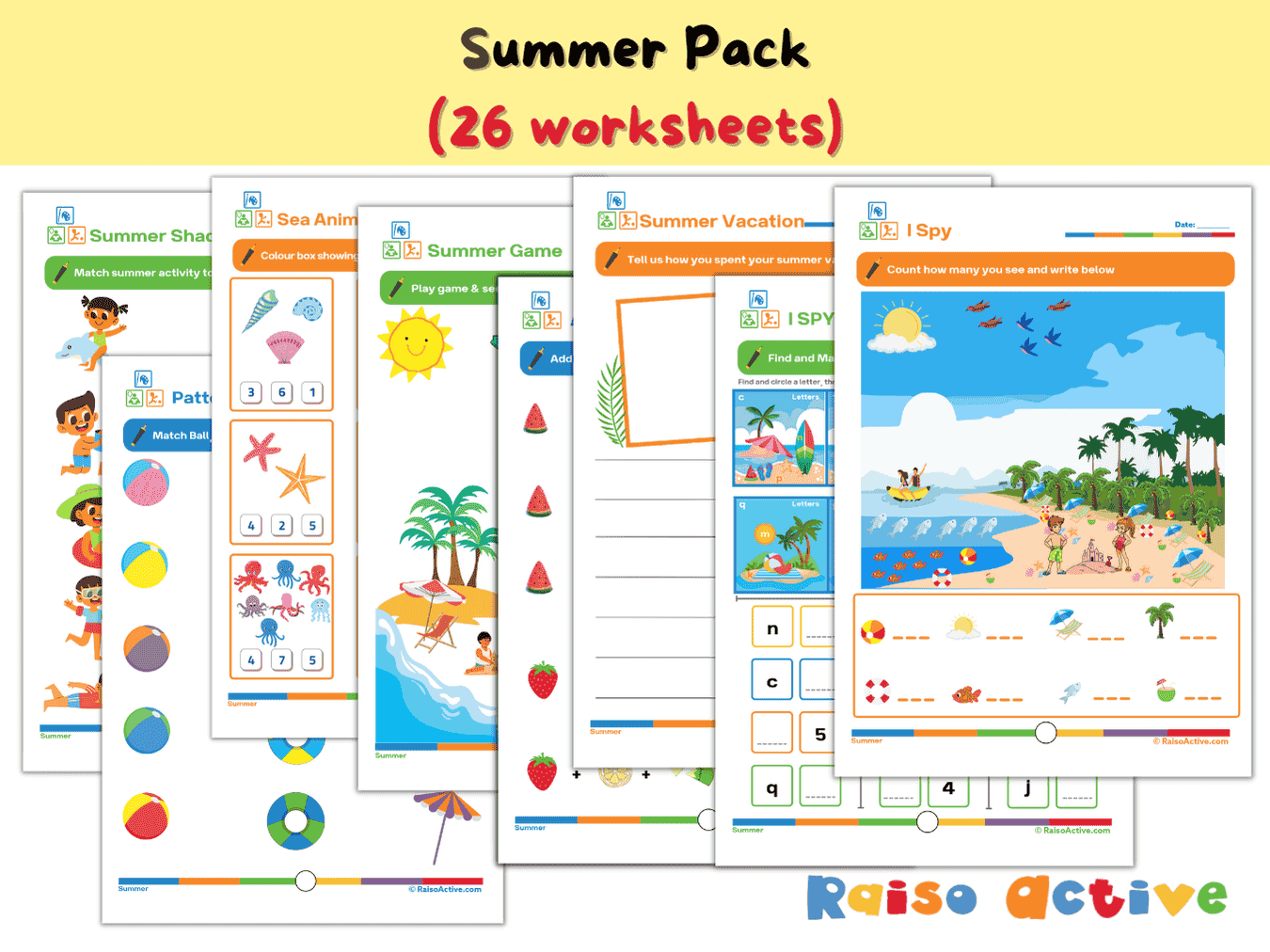
Summer Activity Pack: Math, Literacy, Puzzles & More for Preschool & Kindergarten
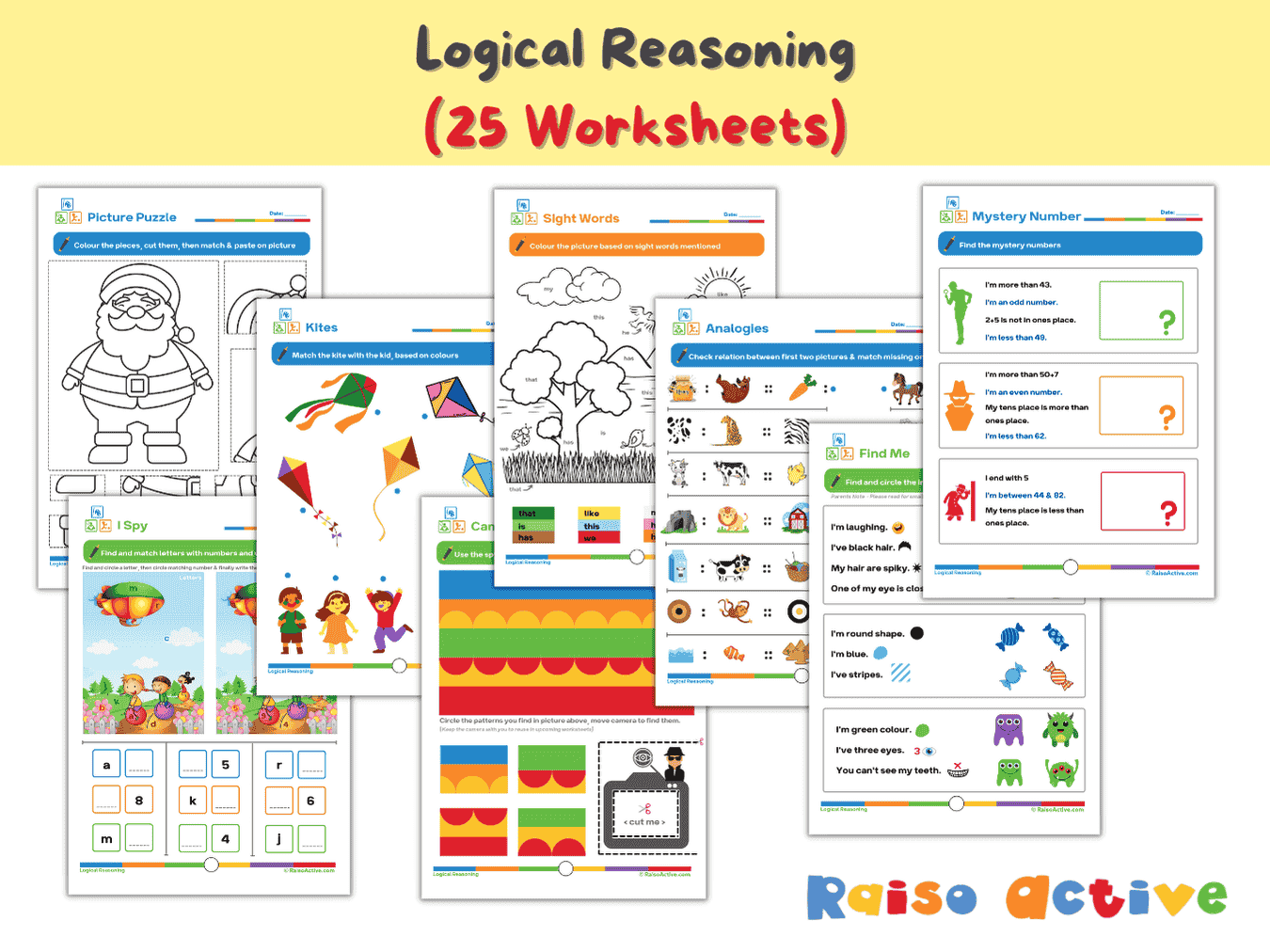
Logical Reasoning Activity Book for Preschool & Kindergarten | Patterns, Puzzles & Analogies
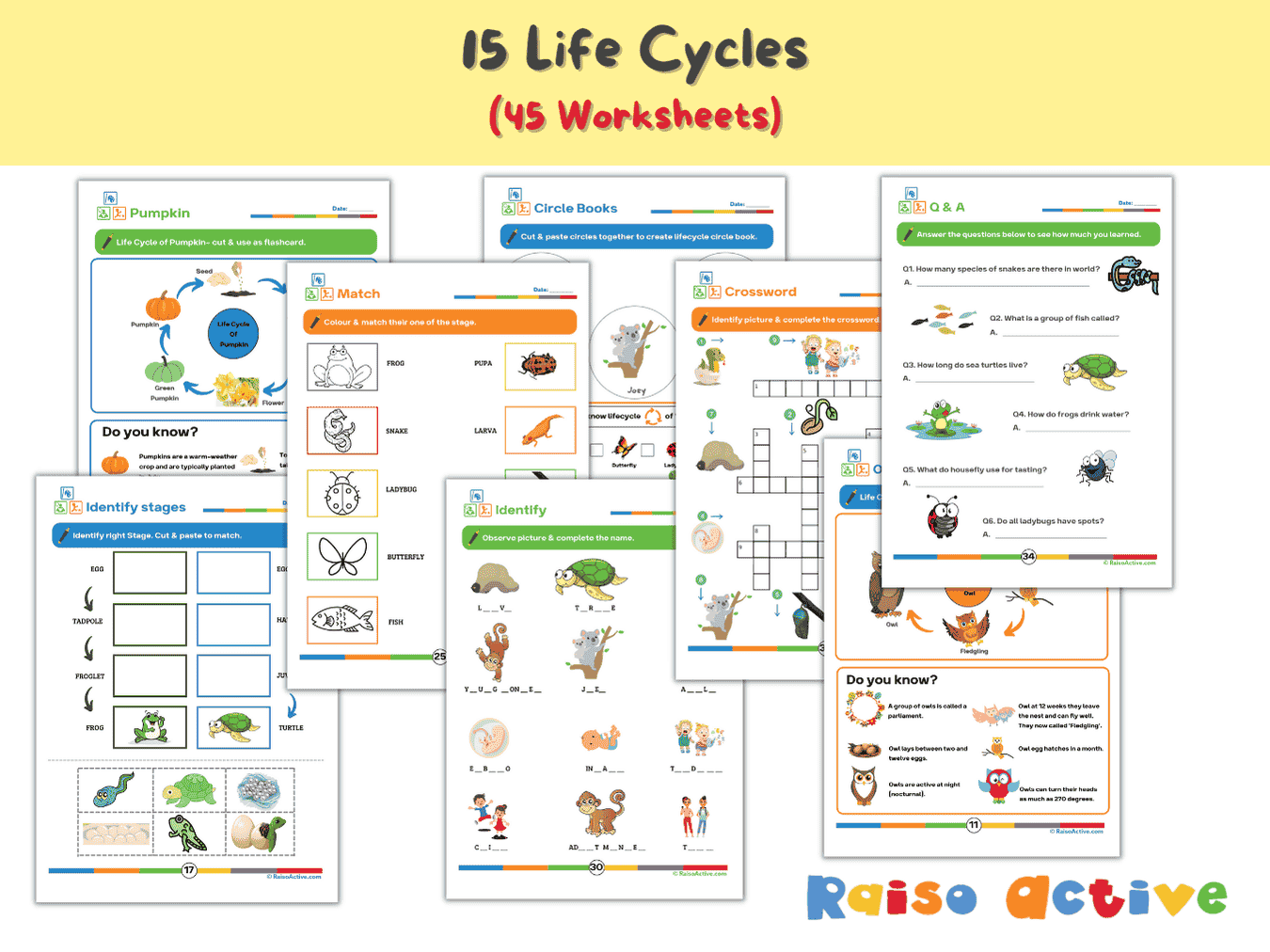
Lifecycles Activity Book & Flashcards for Preschool & Early Elementary
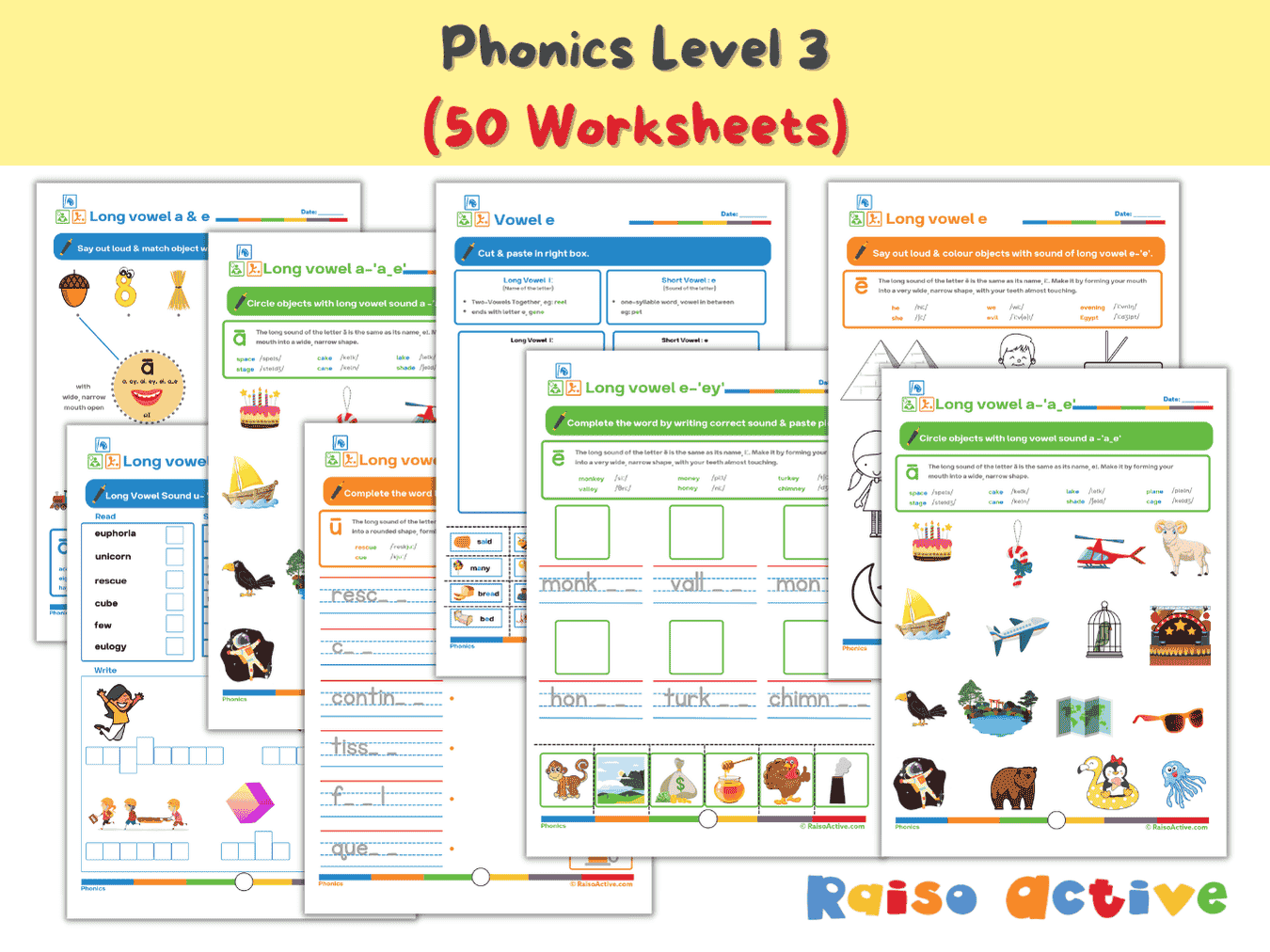
Phonics Level 3 Long Vowels Activity Book for Kindergarten & 1st Grade
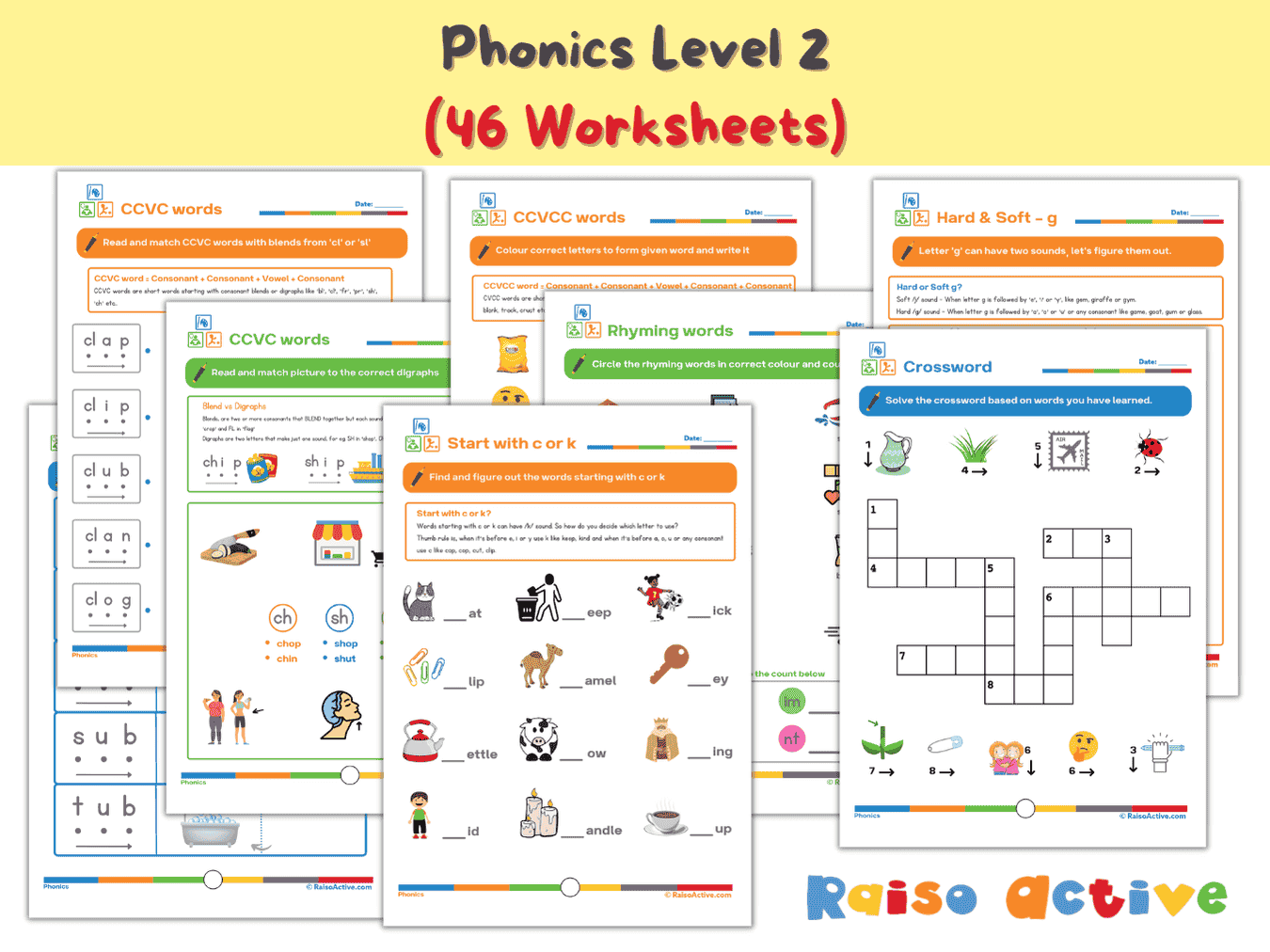
Phonics Level 2 Worksheets: CVC, CCVC, CVCC Word Families & Blends for Early Readers (Ages 4-7)
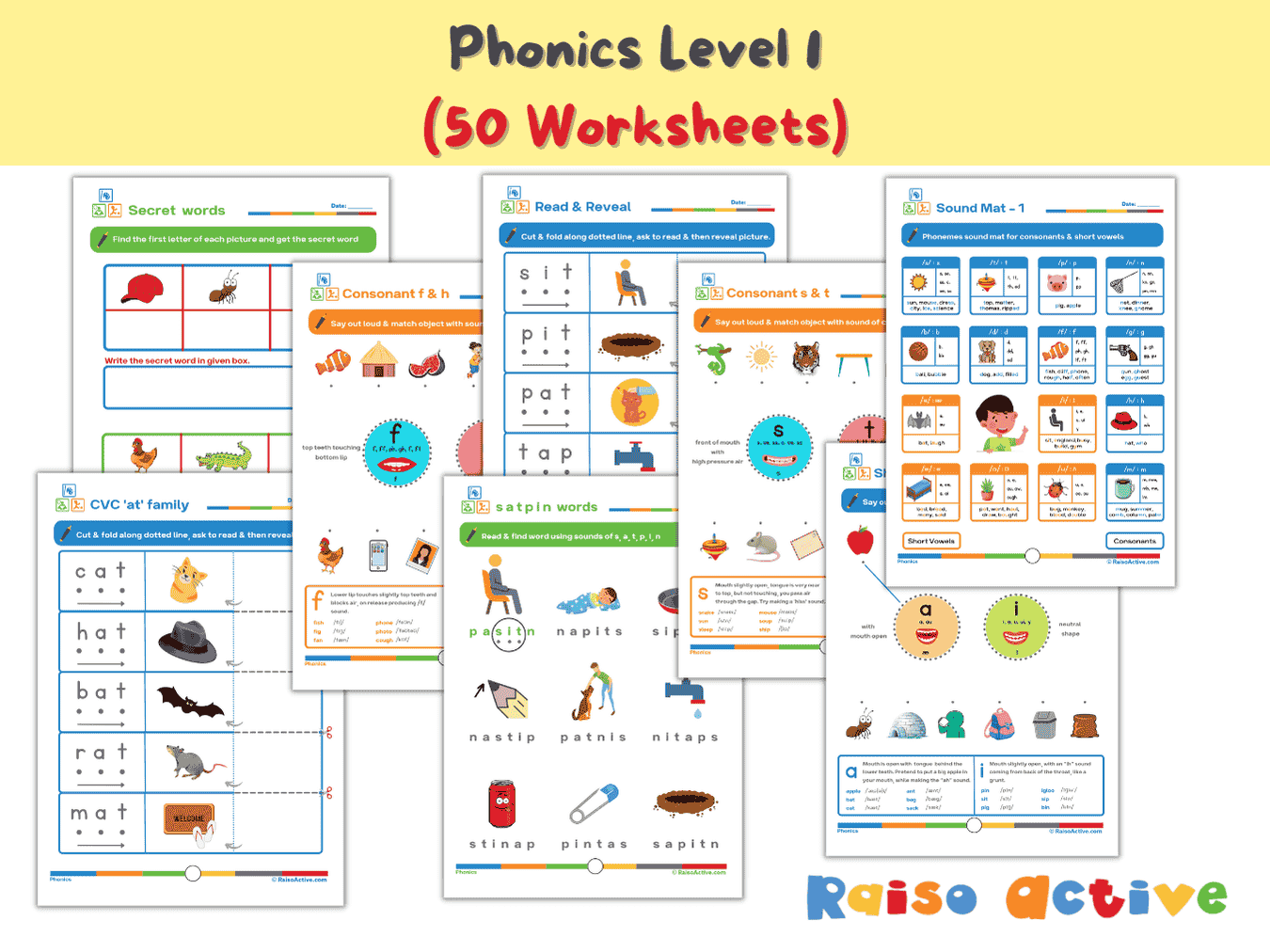
Phonics Level 1 Activity Book: Letter Sounds, Blending & CVC Words for Preschool & Kindergarten
Guides for parents and teachers
See all guides →Number Formation Rhymes 0–9 and How to Fix Reversals
Original number formation rhymes for 0–9, the correct stroke order for each digit, why 3, 5 and 7 get reversed most often, and multisensory fixes that work.
UKG Syllabus Explained: English, Maths and EVS Month by Month
What UKG classes typically cover in English, maths and EVS, month by month, aligned to NEP 2020, with ways to support at home and signs your child is behind.
Christmas and Winter Activities That Combine Fun and Learning: Creating Magical Educational Experiences
Discover Christmas and winter activities that combine festive fun with real learning. Crafts, counting, literacy, and printable worksheets for ages 2 to 8 — perfect for home and school.
Age-Appropriate Halloween Learning Activities: Balancing Spooks and Skills for Young Learners
Discover fun, age-appropriate Halloween learning activities for young children. Spooky crafts, counting games, literacy ideas, and printable worksheets for ages 2 to 8.
The Power of Music: How Musical Activities Accelerate Learning Development in Young Children
Discover how musical activities accelerate brain development, phonics, maths, and emotional regulation in children ages 1–8. Practical tips for Indian homes and classrooms.
Is Khan Academy Kids Really Free? A Parent's Complete Guide to Costs, Features, and Hidden Fees
Confirmed: Khan Academy Kids has zero subscription fees, ads, or paywalls. See what's included, age-by-age tips, and offline use for Indian families.
Canonical: https://raisoactive.com/worksheets/first-grade-addition