Free printable worksheets · US · UK · India
Tracing Worksheets (Ages 2–6)
Tracing worksheets are printable pre-writing sheets for children aged 2 to 6 that guide a pencil along dotted paths so the hand learns the strokes used in handwriting. They progress from lines to shapes, then letters, numerals and short words, and build pencil grip, hand control and left-to-right movement in Preschool, Nursery, Pre-K, LKG and Reception.
Tracing exists to teach the hand before the head has to think about letters. A two-year-old holding a crayon in a fist makes marks that go where the whole arm goes; by four the wrist and fingers are steering; by six the child is forming letters from memory and tracing is nearly finished with. The tracing worksheets on this page are ordered along that path: wide straight lines, then zigzags and waves, then closed shapes, then letters, numerals and words. Nursery and Preschool teachers use the early sheets as a daily warm-up; LKG, Pre-K and Reception teachers use the letter and number sheets to fix stroke direction before independent writing begins. If your child can already copy a letter without dots, they have moved past tracing for that letter.
- 353 worksheets
- Free PDF download
- Print on A4 or Letter
Made for your child
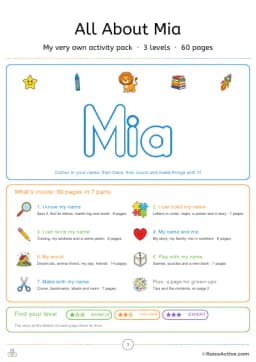
A whole activity pack made with their name
60 pages to spot, build, trace and write their own name, plus pages about their favourites, feelings and family. See a free preview with their name.
Make an All About Me packFree preview · free for members
Or start free: a name tracing sheet with their nameTracing Worksheets to print
Browse all worksheets for ages 2–6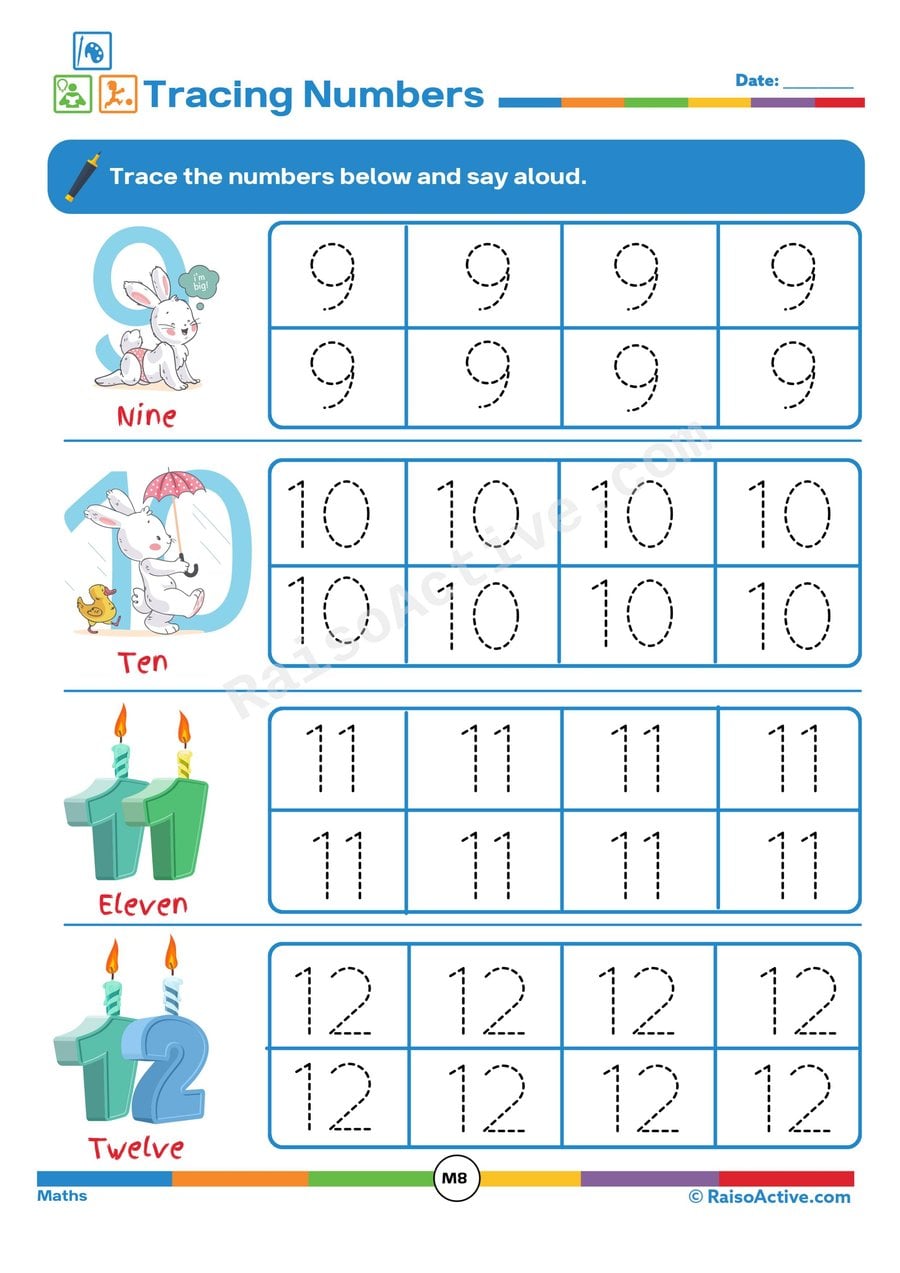
Trace the Numbers: Practice Writing Numbers 9-12!
Ages 3-5 · Preschool–Pre-KAges 3-5 · Nursery–ReceptionAges 3-5 · Nursery–LKGAges 3-5
Tracing numerals 9 through 12 strengthens the small hand muscles and pencil control preschoolers need for later handwriting, while repeated exposure to each numeral's shape builds the visual memory that underlies number recognition. Ages 3-5 are also learning that a written numeral represents a specific quantity, so pairing the traced digit with its name reinforces early number sense alongside the motor skill.
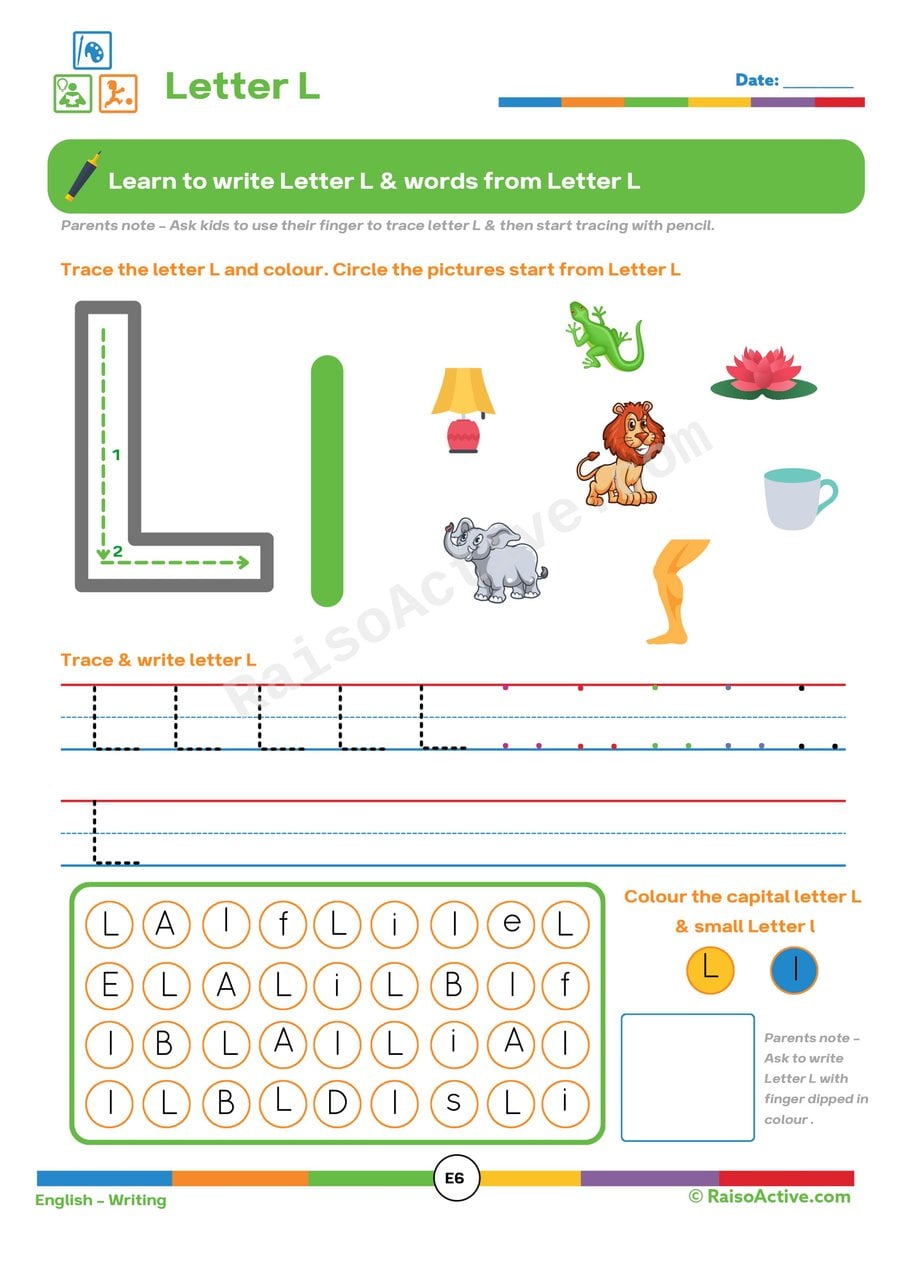
Letter L Worksheet: Trace, Color, and Learn!
Ages 3-5 · Preschool–Pre-KAges 3-5 · Nursery–ReceptionAges 3-5 · Nursery–LKGAges 3-5
Tracing the letter L builds the top-to-bottom, left-to-right pencil strokes that show up again in dozens of other letters, so this is one of the more transferable shapes a 3-5 year old can practice. Naming and coloring objects that start with L — a lion, a ladder, a leaf — ties the shape to its sound, which is exactly how early readers start linking print to speech.

Letter V Tracing Worksheet: Practice Uppercase and Lowercase 'V'
Ages 3-5 · Preschool–Pre-KAges 3-5 · Nursery–ReceptionAges 3-5 · Nursery–LKGAges 3-5
V is formed from two diagonal strokes that meet at a single point, giving 3-5 year olds practice angling a pencil in two different directions within one letter — a step up from letters made of straight up-and-down or side-to-side lines. Repeating the uppercase V and lowercase v also reinforces that the two forms share the same basic V shape, just at different sizes.
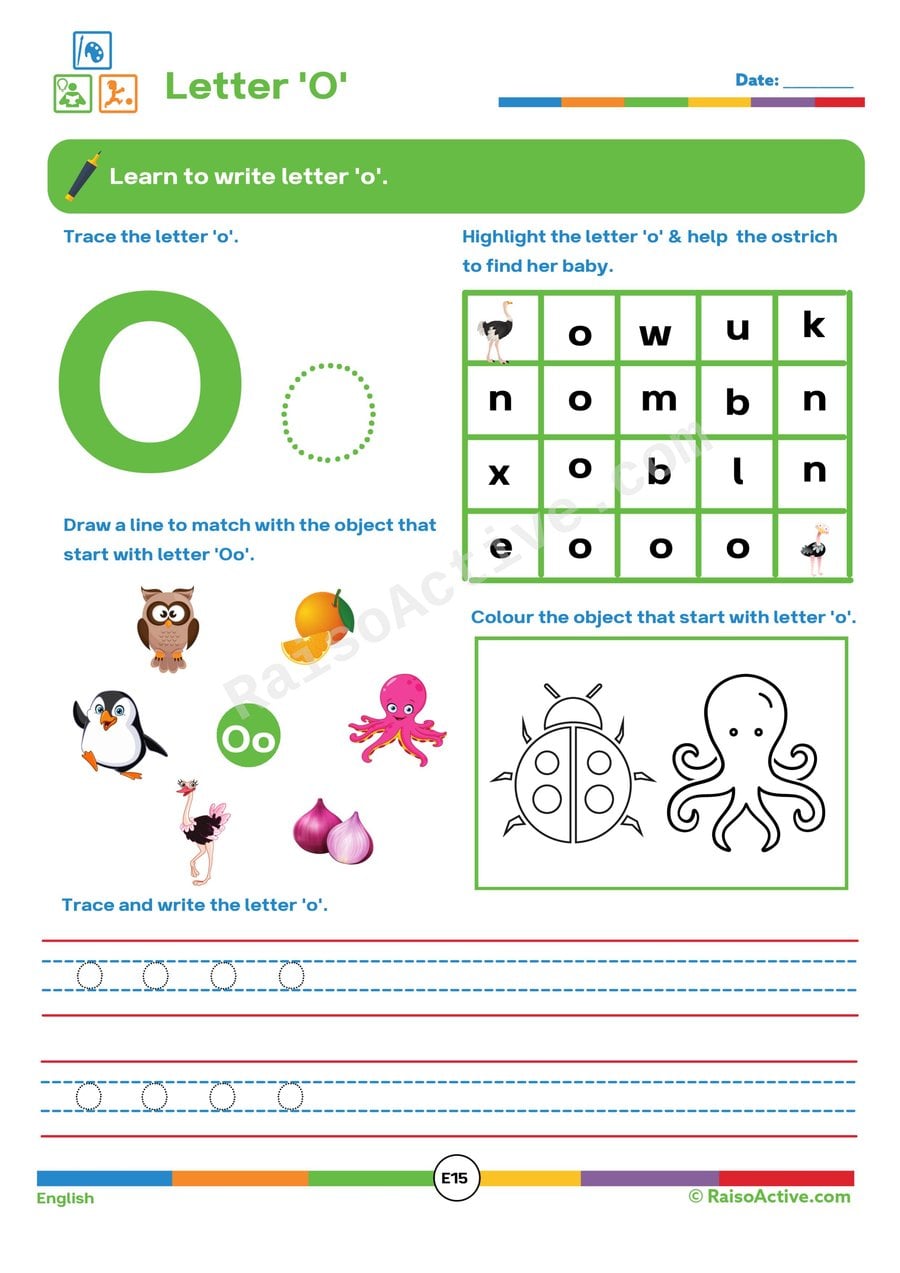
Letter 'O' Worksheet: Trace, Match, and Color!
Ages 3-5 · Preschool–Pre-KAges 3-5 · Nursery–ReceptionAges 3-5 · Nursery–LKGAges 3-5
Tracing, matching, and coloring the letter 'O' gives children ages 3-5 practice with one of the simplest letter shapes to form, making it a great confidence-building letter alongside its sound recognition value for words like 'octopus' and 'ostrich.' Matching pictures that start with 'O' to the letter reinforces the sound-symbol connection through familiar, often fun animal vocabulary. Highlighting the letter within a busy grid adds a visual search challenge that builds focus and letter discrimination beyond simple tracing.

Sight Word 'HE' Worksheet: Trace, Color, and Practice!
Ages 3-5 · Preschool–Pre-KAges 3-5 · Nursery–ReceptionAges 3-5 · Nursery–LKGAges 3-5
This worksheet helps children ages 3-5 learn to recognize, write, and use the sight word 'HE' in simple sentences, giving repeated exposure to a short, high-frequency word that appears in nearly every early reader book. Practicing the word across six different formats, tracing, coloring, circling, writing, filling in, and cutting and pasting, builds recognition through many different types of practice in one sitting.

Letter V Tracing and Coloring Worksheet for Preschoolers
Ages 3-5 · Preschool–Pre-KAges 3-5 · Nursery–ReceptionAges 3-5 · Nursery–LKGAges 3-5
This worksheet builds recognition and formation of the letter V, both uppercase and lowercase, while practicing fine motor skills through tracing and coloring pictures of V words like 'van' or 'volcano.' For three- to five-year-olds, practicing both letter cases together helps children see that uppercase and lowercase V share the same basic shape, which isn't true of every letter and makes V a good confidence-builder.

Letter J Tracing Worksheet for Preschoolers: Practice Writing the Letter J!
Ages 3-5 · Preschool–Pre-KAges 3-5 · Nursery–ReceptionAges 3-5 · Nursery–LKGAges 3-5
J is a short vertical or curved line with a hook at the bottom and a dot on top for the uppercase form, combining features from both straight and curved letters in one relatively uncommon shape. Tracing J at ages 3-5 also introduces the idea of a letter that dips slightly below the writing line, similar to g and y, preparing children for that concept ahead of time.

Sight Word 'Get' Worksheet: Trace, Color, and Practice!
Ages 3-5 · Preschool–Pre-KAges 3-5 · Nursery–ReceptionAges 3-5 · Nursery–LKGAges 3-5
This multi-step worksheet builds deep familiarity with the sight word 'get' for children ages 3-5 through six different formats — tracing, coloring, sentence completion, circling, writing, and cut-and-paste spelling — giving far more repetition than a single tracing task would. High-frequency sight words like 'get' don't sound out easily, so this kind of repeated exposure across formats is exactly how early readers learn to recognize them instantly.
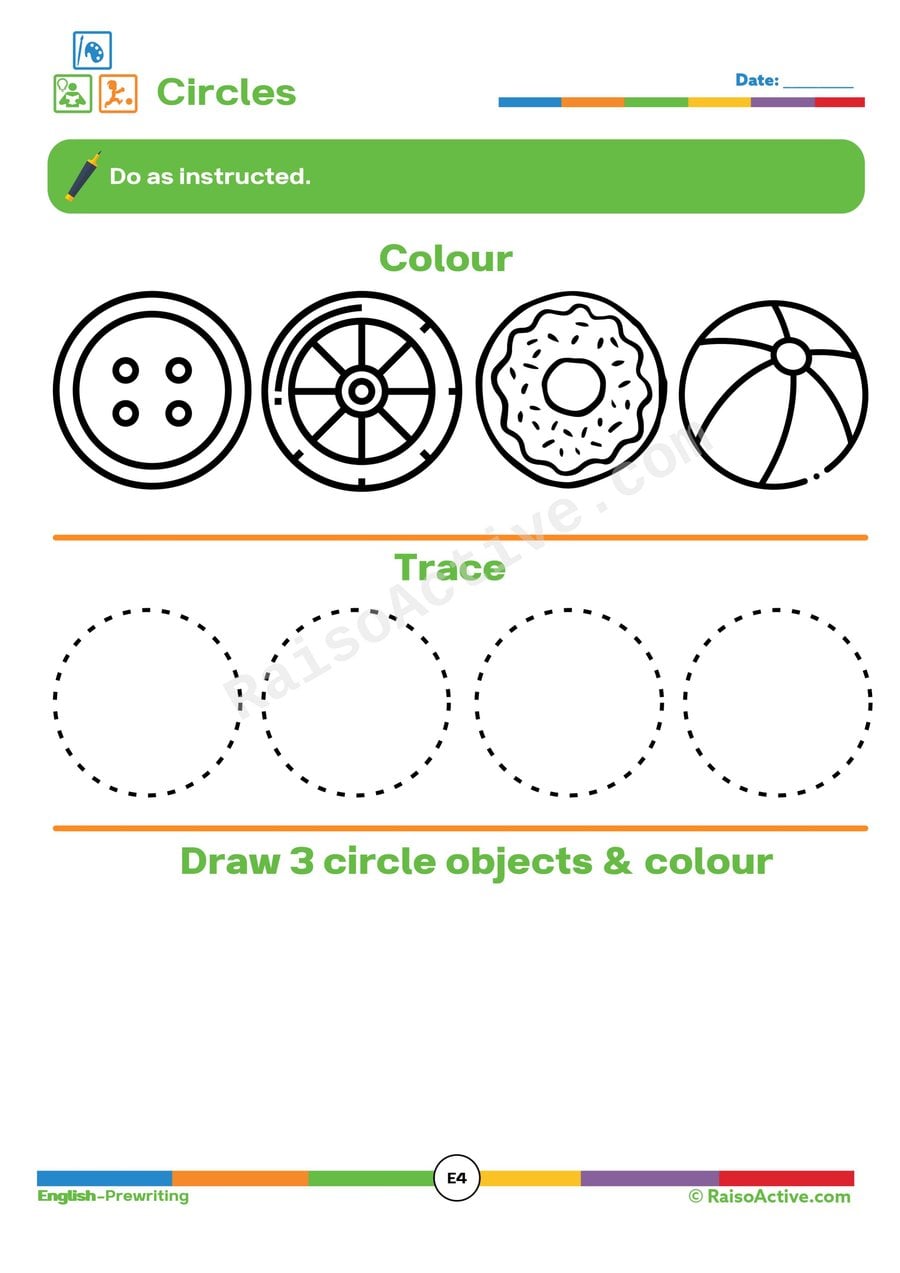
Circle Shapes Worksheet: Trace, Color, and Draw!
Ages 3-5 · Preschool–Pre-KAges 3-5 · Nursery–ReceptionAges 3-5 · Nursery–LKGAges 3-5
This worksheet builds shape recognition and drawing skills as children ages 3-5 trace dotted circles, color pictures of circular objects, and then draw three circle-shaped objects entirely on their own. Moving from tracing to independent drawing tracks a real developmental progression — first following a guide, then applying the shape from memory — which builds true shape mastery rather than just copying.

Letter 't' Tracing and Matching Worksheet for Preschoolers
Ages 3-5 · Preschool–Pre-KAges 3-5 · Nursery–ReceptionAges 3-5 · Nursery–LKGAges 3-5
Tracing, matching, and writing the letter 't' gives children ages 3-5 repeated exposure to one of the more frequent letters in early reading vocabulary, building both the motor memory for its cross-stroke shape and the sound-to-symbol connection for its sharp /t/ sound. Matching pictures that start with 't' to the letter itself reinforces that recognition beyond just the written form, connecting it to real objects and words. This kind of combined tracing-and-matching practice suits how young children learn best: through repetition across slightly different tasks.
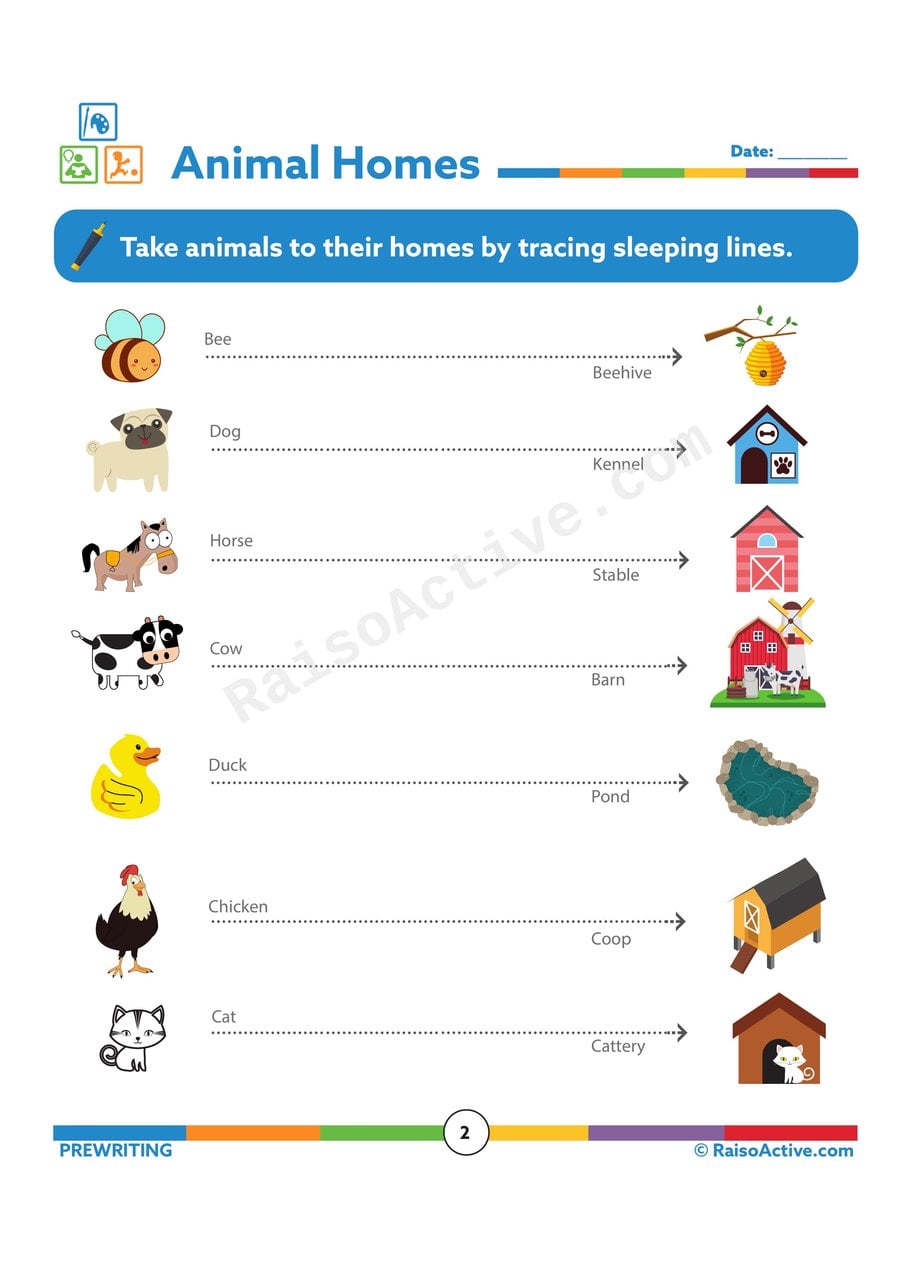
Animal Homes Tracing Worksheet for Preschoolers
Ages 3-5 · Preschool–Pre-KAges 3-5 · Nursery–ReceptionAges 3-5 · Nursery–LKGAges 3-5
Tracing a line from each animal to its home helps children ages 3-5 build pencil control while also introducing an early science concept: that different animals live in different kinds of homes, like a bird's nest or a dog's kennel. Saying the animal and its home aloud while tracing connects the physical tracing motion to new vocabulary, reinforcing both skills at once.
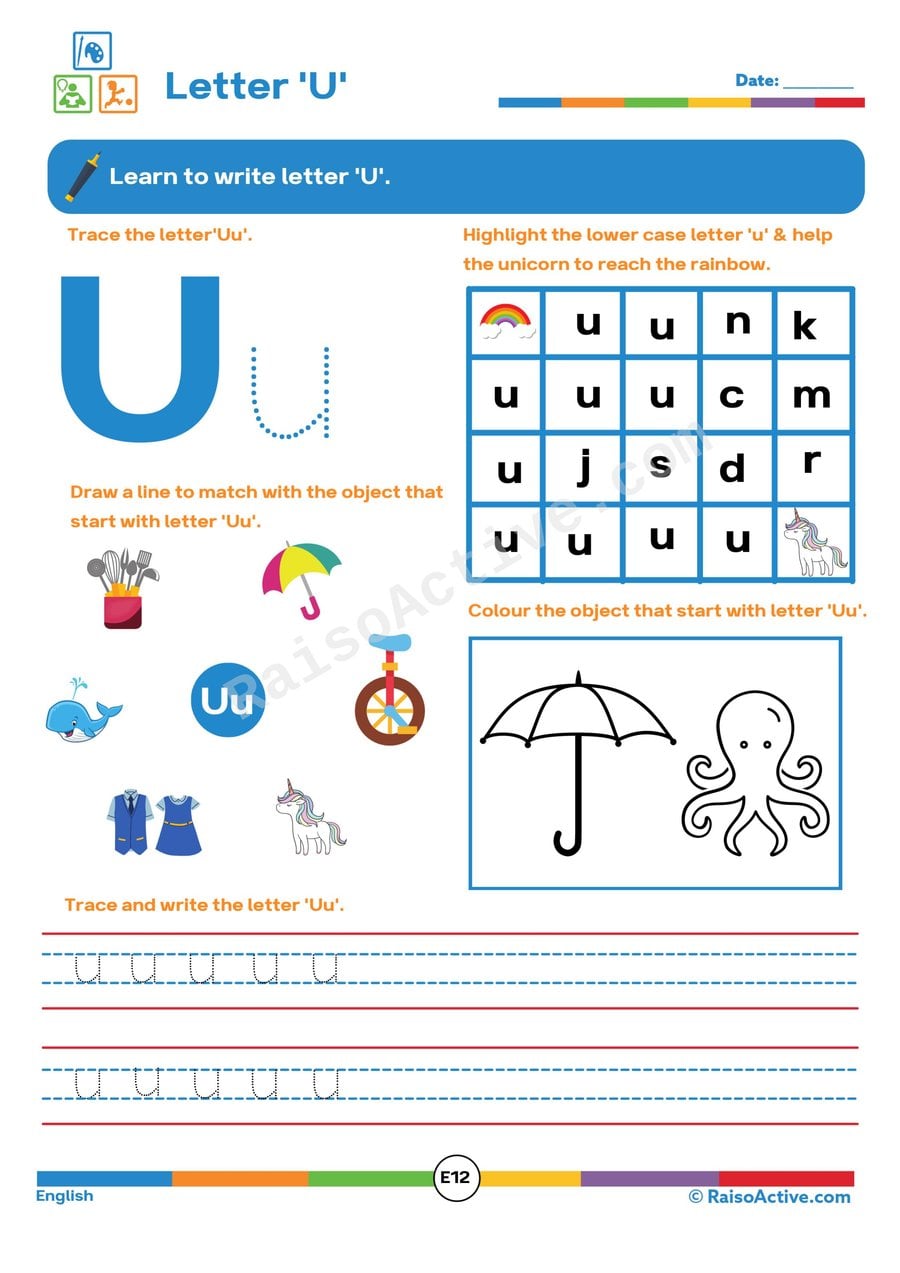
Letter 'U' Worksheet: Trace, Match, and Color!
Ages 3-5 · Preschool–Pre-KAges 3-5 · Nursery–ReceptionAges 3-5 · Nursery–LKGAges 3-5
Tracing, matching, and coloring the letter 'U' gives children ages 3-5 focused repetition on a rounded letter shape while building the sound-symbol connection for its short /u/ sound, as in 'umbrella' or 'up.' Matching pictures that start with 'U' to the letter reinforces recognition beyond the written form, tying it to real, familiar objects. Combining tracing, matching, and coloring in a single page suits a preschooler's need for varied, short activities rather than one long repetitive drill.

Trace and Write the Letter F Worksheet for Preschoolers
Ages 3-5 · Preschool–Pre-KAges 3-5 · Nursery–ReceptionAges 3-5 · Nursery–LKGAges 3-5
With just the uppercase F to focus on, children get concentrated practice on its vertical line and two separate horizontal strokes without the distraction of a second letter form, helping them build clean, confident stroke order. This focused repetition at ages 3-5 strengthens the fine motor control needed for the two distinct horizontal lines to land at the right heights.
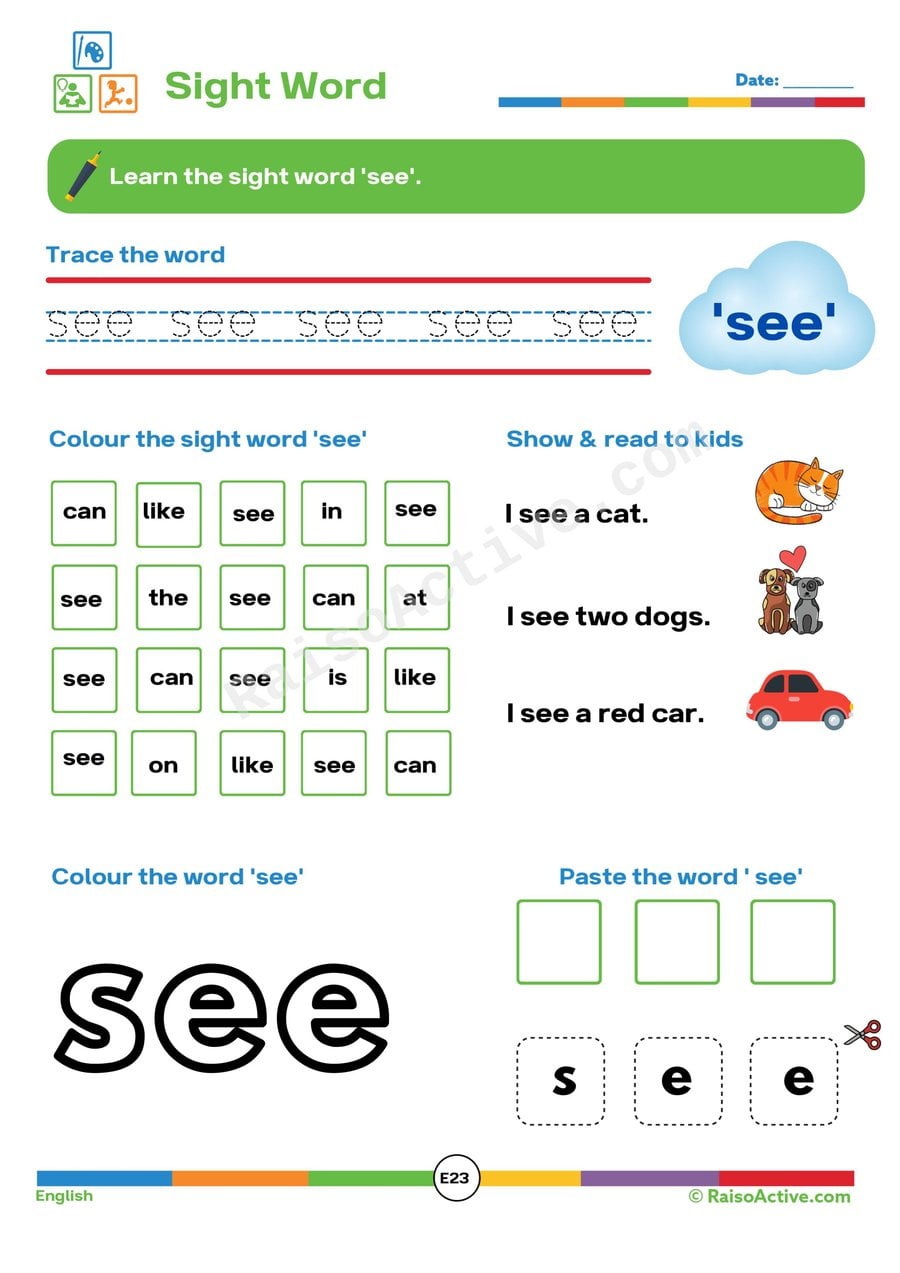
See Sight Word Worksheet: Trace, Color, and Paste!
Ages 3-5 · Preschool–Pre-KAges 3-5 · Nursery–ReceptionAges 3-5 · Nursery–LKGAges 3-5
Children ages 3-5 get repeated, varied practice with the high-frequency sight word 'see' through tracing, coloring, sentence reading, and a cut-and-paste spelling activity, building the instant word recognition that fluent reading depends on. Reading the accompanying sentences also gives early exposure to how the word functions in context, not just in isolation.

Letter S Tracing Worksheet: Learn to Write and Identify the Letter S!
Ages 3-5 · Preschool–Pre-KAges 3-5 · Nursery–ReceptionAges 3-5 · Nursery–LKGAges 3-5
This worksheet helps children ages 3-5 learn to recognize and write the letter S, both uppercase and lowercase, using its distinctive curving stroke, while also practicing identifying words that start with the letter S. Because S makes a long, continuous hissing sound that's easy to isolate, this letter is often one of the more approachable sounds for early phonics practice.

Letter H Worksheet: Trace, Write, and Color the Letter H!
Ages 3-5 · Preschool–Pre-KAges 3-5 · Nursery–ReceptionAges 3-5 · Nursery–LKGAges 3-5
This worksheet gives children ages 3-5 layered practice with the letter H, moving from finger tracing to pencil tracing and finally to identifying and coloring pictures that begin with the H sound. Starting with a finger trace before picking up a pencil is a gentle way to build the motor pattern for a letter's shape without the added challenge of pencil control, making this a good scaffolded approach for less confident writers. Circling H pictures afterward reinforces the connection between the letter's shape and its beginning sound.
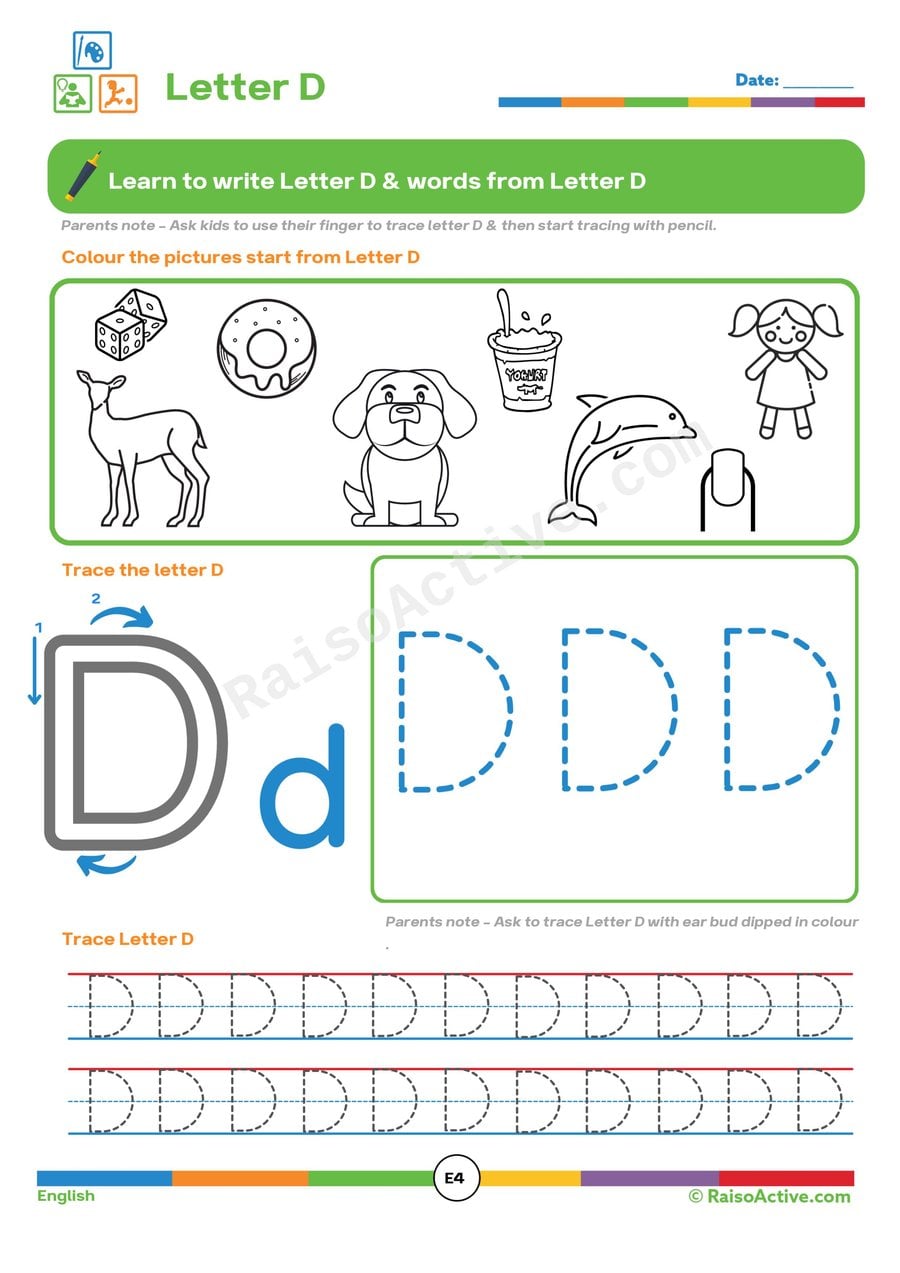
Letter D Tracing Worksheet: Learn to Write & Color!
Ages 3-5 · Preschool–Pre-KAges 3-5 · Nursery–ReceptionAges 3-5 · Nursery–LKGAges 3-5
Tracing both uppercase and lowercase D repeatedly builds the fine motor muscle memory needed for correct letter formation, while the accompanying picture coloring reinforces the 'D' sound by asking children to identify objects that start with it. For ages three to five, combining tracing with picture-based sound practice teaches the letter as both a shape and a sound at the same time, rather than as an isolated symbol.

Number Writing Worksheet: Trace, Write, Count, and Paste Numbers!
Ages 3-5 · Preschool–Pre-KAges 3-5 · Nursery–ReceptionAges 3-5 · Nursery–LKGAges 3-5
This multi-step worksheet strengthens number formation, counting, and one-to-one correspondence all in one activity, as children ages 3-5 trace and write numerals, then count a group of objects and paste the matching quantity in a box. Combining writing with hands-on counting and cutting helps children connect the written symbol to the actual amount it represents, a key milestone in early numeracy.
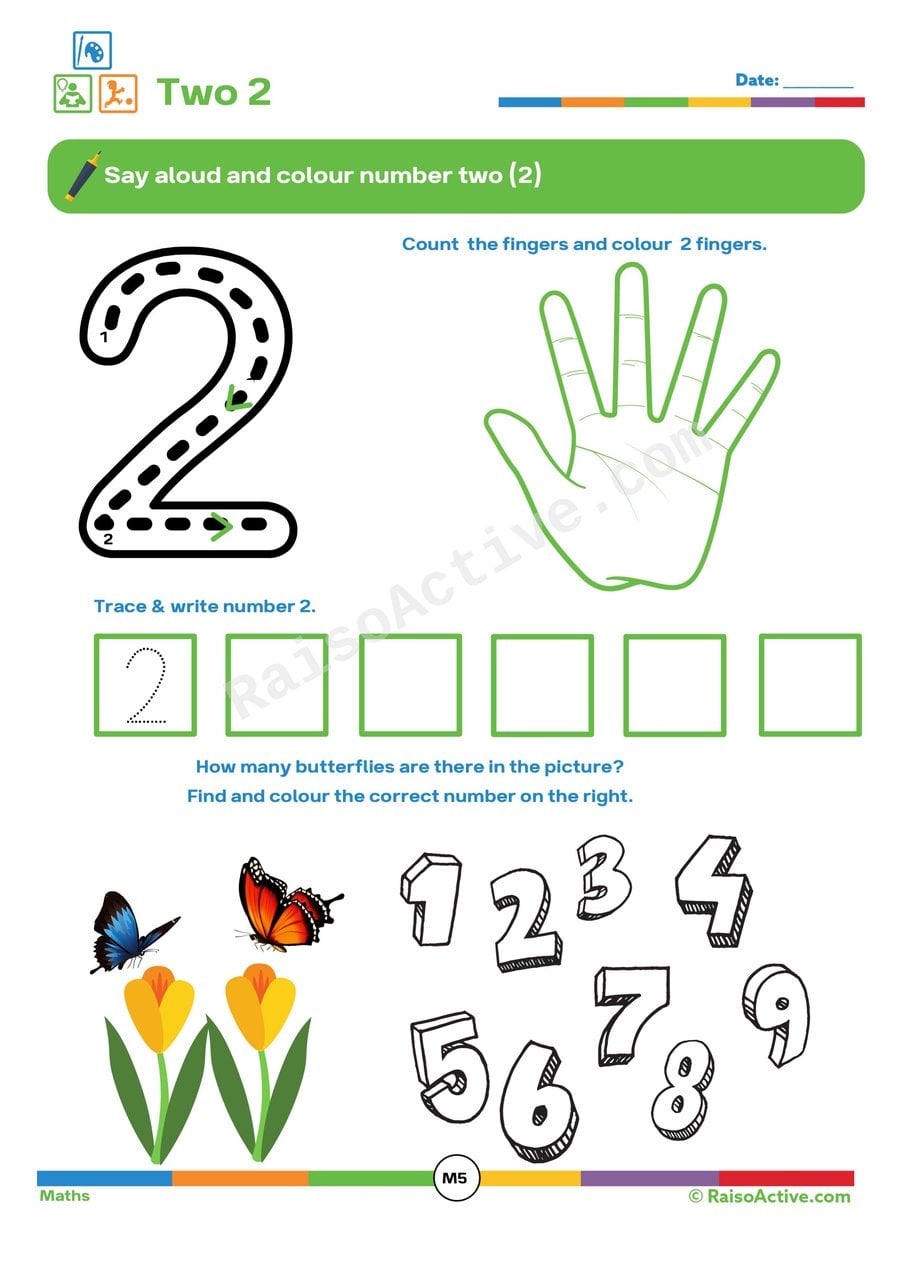
Number Two Worksheet: Trace, Count, and Color!
Ages 3-5 · Preschool–Pre-KAges 3-5 · Nursery–ReceptionAges 3-5 · Nursery–LKGAges 3-5
This worksheet helps children ages 3-5 learn to recognize and write the number two, count to two, and follow multi-step instructions across tracing, coloring, and counting sections. Practicing such a small number thoroughly, across several activities, builds the routine and confidence children need before moving on to larger numbers.

Tracing Numbers 13-16 Worksheet for Preschoolers
Ages 3-5 · Preschool–Pre-KAges 3-5 · Nursery–ReceptionAges 3-5 · Nursery–LKGAges 3-5
Tracing the numbers 13 through 16 gives children practice with the trickier teen-number range, where number names and digit order don't always match intuitively, fourteen starts with the digit that comes second, for example, making handwriting practice here also a subtle exercise in number sense. For ages three to five, saying each number aloud while tracing helps cement both its written form and its place in the counting sequence.

Letter R Tracing Worksheet for Preschoolers: Learn to Write & Identify Words
Ages 3-5 · Preschool–Pre-KAges 3-5 · Nursery–ReceptionAges 3-5 · Nursery–LKGAges 3-5
This worksheet has children trace the letter R in multiple formats, a large model, dotted guides, and practice lines, while also identifying words that begin with the 'R' sound, building both handwriting muscle memory and phonics recognition together. For ages three to five, repeated tracing practice across several formats on one page reinforces correct stroke direction far more effectively than a single trace attempt.

Trace and Write the Letter K Worksheet for Preschoolers
Ages 3-5 · Preschool–Pre-KAges 3-5 · Nursery–ReceptionAges 3-5 · Nursery–LKGAges 3-5
Isolating the uppercase K lets children give full attention to its trickiest feature — the two diagonal lines meeting the vertical stroke at the same point — without the added demand of a differently-shaped lowercase k. At ages 3-5, mastering this single case thoroughly builds the angled-stroke precision that will make future letters like R and X easier to approach.

Trace the Curved Lines: Give Balloons to the Girls! Worksheet
Ages 3-5 · Preschool–Pre-KAges 3-5 · Nursery–ReceptionAges 3-5 · Nursery–LKGAges 3-5
This worksheet has children ages 3-5 trace curved balloon strings, practicing the rounded, flowing pencil motion needed later for letters like c, o, and s. Curved lines demand a different wrist and finger movement than straight lines, since the hand has to continuously adjust direction rather than pushing in one line, which makes this an important complement to straight-line tracing practice.
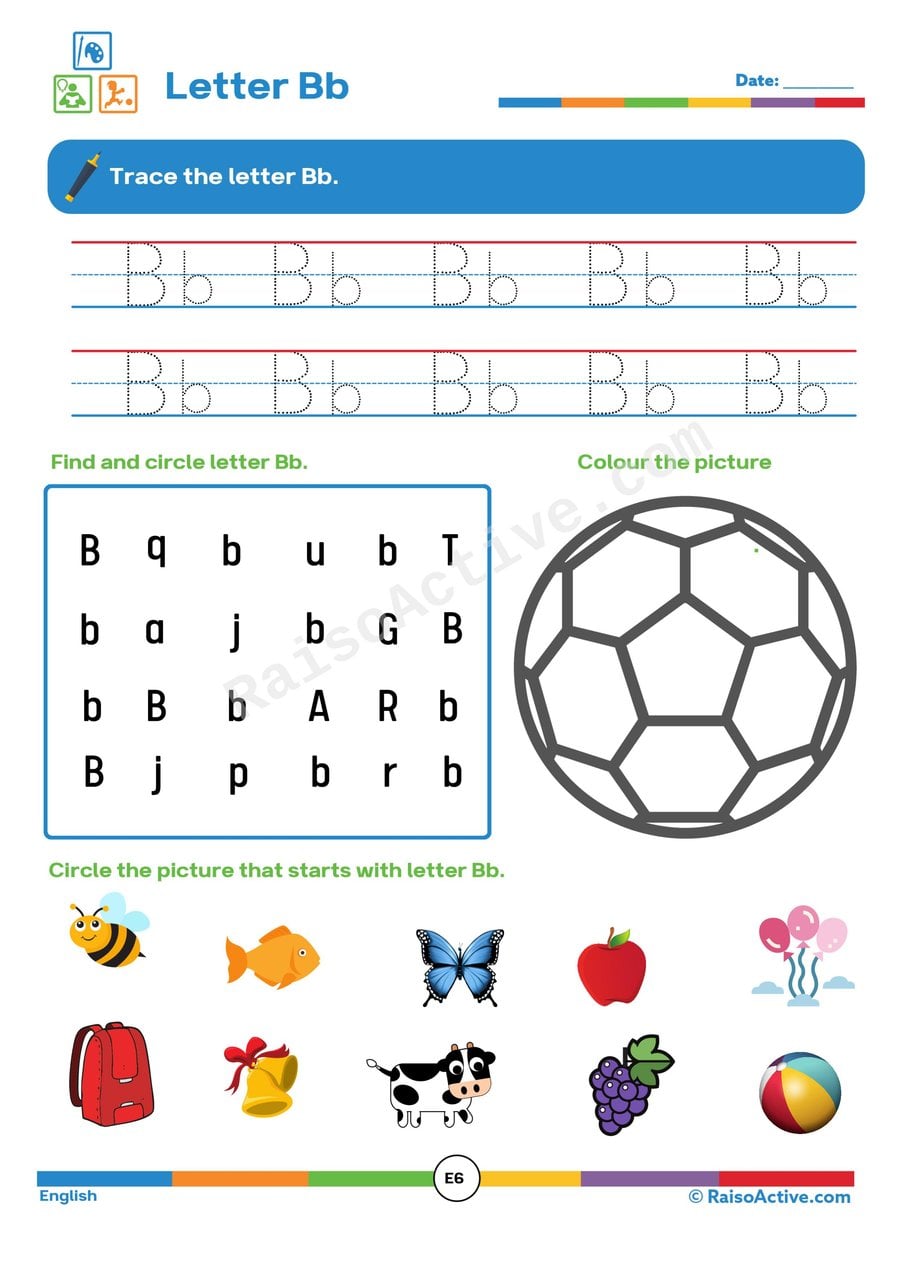
Letter Bb Worksheet: Trace, Find, and Color!
Ages 3-5 · Preschool–Pre-KAges 3-5 · Nursery–ReceptionAges 3-5 · Nursery–LKGAges 3-5
This worksheet builds letter recognition and handwriting readiness as children ages 3-5 trace both uppercase and lowercase Bb, hunt for the letter among a group of other letters, and identify pictures of objects that start with the Bb sound. Practicing a letter across several formats — tracing, spotting, and sound matching — helps cement both its shape and its sound more effectively than tracing alone.
The tracing progression from lines to words
Lines come first because every letter is built from them: vertical, horizontal, diagonal, curve and circle. Zigzag and wave paths add changes of direction. Shapes close the strokes into a circle, square and triangle, which require stopping and turning at the right point. Letters combine those strokes in a fixed order and direction; numerals do the same with more curves. Words add spacing and the left-to-right sweep across a line.
A child who traces a circle counterclockwise from the top, as the letters a, c, d, g and o require, is learning something that will make every later letter easier. That is why the direction arrows on these sheets matter more than the final mark on the page.
- Ages 2–3: thick straight lines, big curves, coloring inside a wide path
- Ages 3–4: zigzags, waves, loops, tracing a circle and a cross
- Ages 4–5: uppercase letters, numerals 1–10, tracing own name
- Ages 5–6: lowercase letters, numerals to 20, short words on lines, then copying without dots
Pencil grip and posture
Before age 3 a fist or palm grip is normal and a chunky crayon is the right tool. Between 3 and 4 most children shift to holding the pencil with fingers, and by 5 the tripod grip (thumb and first finger pinching, resting on the middle finger) should be in place. Short pencils and broken crayons encourage a pinch grip because there is nothing to hold in a fist. Feet flat on the floor and the paper tilted slightly help the wrist move freely.
When tracing stops being useful
Tracing teaches the shape and direction of a stroke; it does not teach a child to produce the stroke from memory. Once a letter or number is traced correctly, the next step is copying it from a model, then writing it when it is named. Tracing sheets that continue after that point become coloring. For most children this transition happens letter by letter between 5 and 6, so the handwriting hubs pick up where these sheets end.
Frequently asked questions
What age should a child start tracing worksheets?
Line and shape tracing can start at 2 to 3 with a chunky crayon on wide paths, as long as the child is already scribbling freely. Letter and number tracing works best from 4, when the tripod grip is forming and the child recognizes the letters being traced. Starting letter tracing earlier tends to produce a cramped grip and letters drawn rather than written.
What should a 4-year-old be able to trace?
By 4, the end of Nursery or Preschool, a child can usually trace a vertical line, horizontal line, circle and cross, follow a wavy or zigzag path without lifting the crayon, and trace most uppercase letters and the numerals 1 to 5 with some wobble. Tracing their own name in capitals is a typical LKG and Pre-K goal for the following year.
Does tracing actually help handwriting?
Tracing helps with the parts of handwriting that are motor rather than visual: which stroke to start with, which direction to go, and where to stop. It does not by itself create letter memory, so it should be paired with copying and then writing from dictation. Used in that sequence it shortens the time a child spends forming letters wrongly, which is the habit that is hardest to undo later.
Should children trace with a pencil or a crayon?
Under 3, a thick crayon or washable marker, because a thin pencil needs finger strength the child does not have yet. From 3 to 4, a short thick pencil or triangular pencil that encourages a pinch. From 4 upward, a standard pencil. Pen and thin markers tend to slide and hide the effort, so keep them for coloring rather than tracing.
My child traces well but cannot write the letter alone. What should I do?
This is the expected gap between tracing and writing, not a problem. Cover the traced example, show a model letter, and ask the child to copy it beside the example. Then say the letter and ask for it with no model. If the copy is wrong, go back to tracing with attention to the starting point and direction arrows, since the error is almost always a stroke started in the wrong place.
Are the tracing worksheets free to download?
Yes. Once you have an account, every tracing sheet is available as a watermarked PDF at no cost, up to five downloads a day. A yearly subscription (₹1000 or $20) removes the watermark and the daily cap across all worksheets and printable packs. Sheets are set up to print on both A4 and US Letter paper.

Written by
Hemsweta Jain · Teacher Cheena
MBA and Early Childhood Educator, teaching since 2014 · Founder of RaisoActive, Mumbai
Written and reviewed by Hemsweta Jain (Teacher Cheena), who designs every RaisoActive worksheet.
Last reviewed
Printable packs for ages 2–6
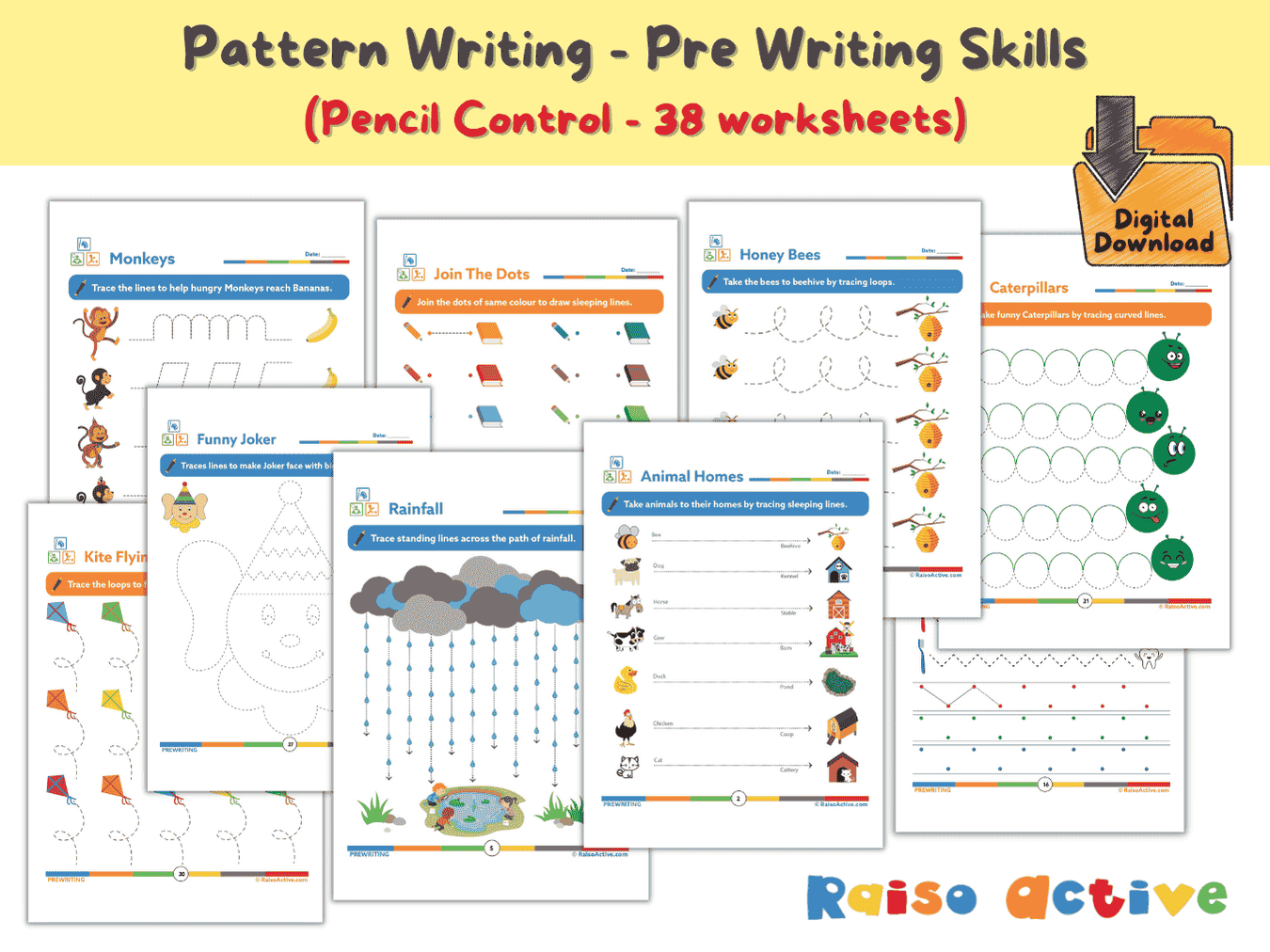

Pattern Writing Pre-writing Skills Activity Book for 3-4 Year Olds
Ages 3-4 · PreschoolAges 3-4 · NurseryAges 3-4 · 44 pages
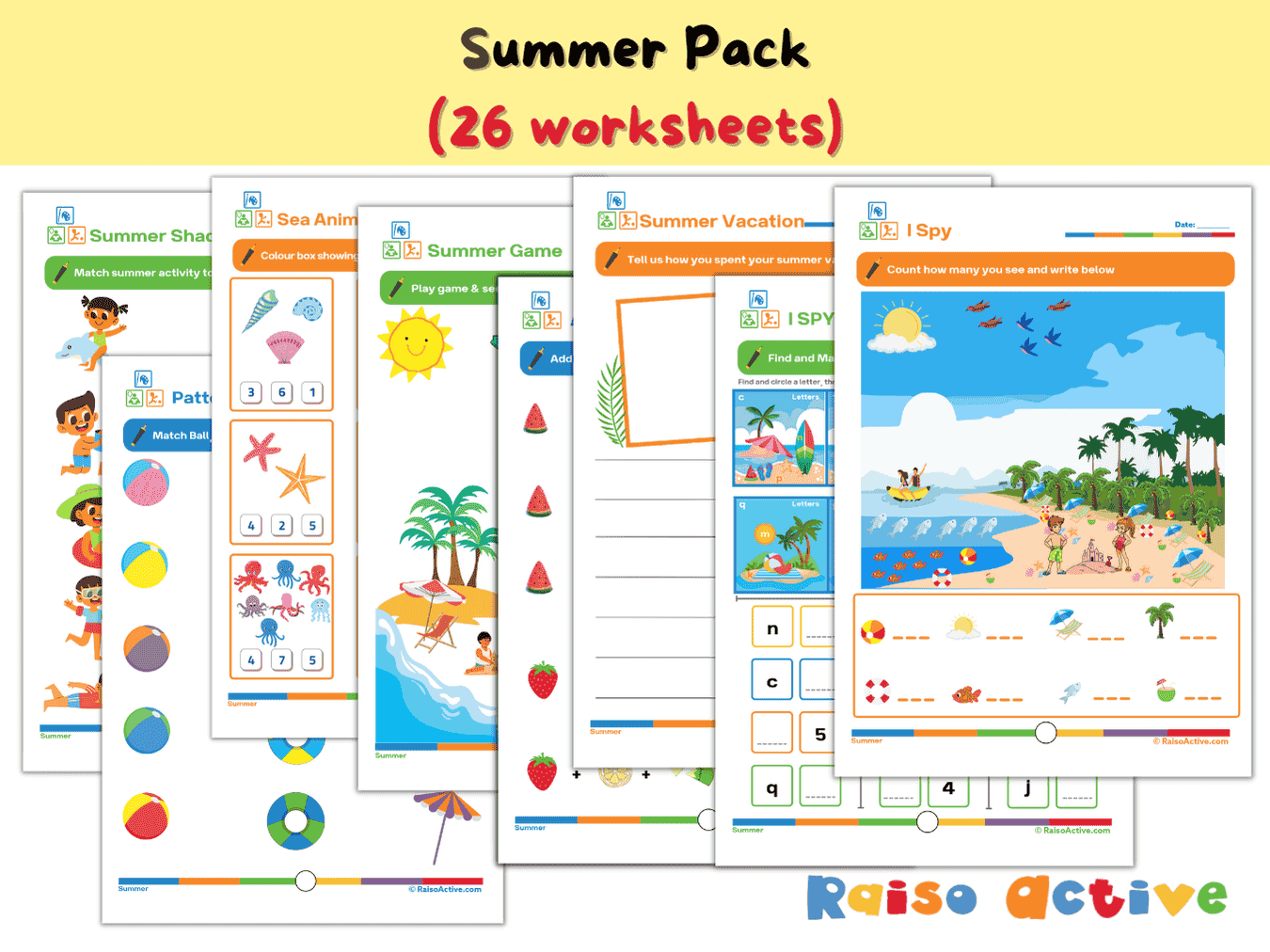

Summer Activity Pack: Math, Literacy, Puzzles & More for Preschool & Kindergarten
Ages 3-7 · Preschool–Grade 1Ages 3-7 · Nursery–Year 2Ages 3-7 · Nursery–Class 1Ages 3-7 · 26 pages
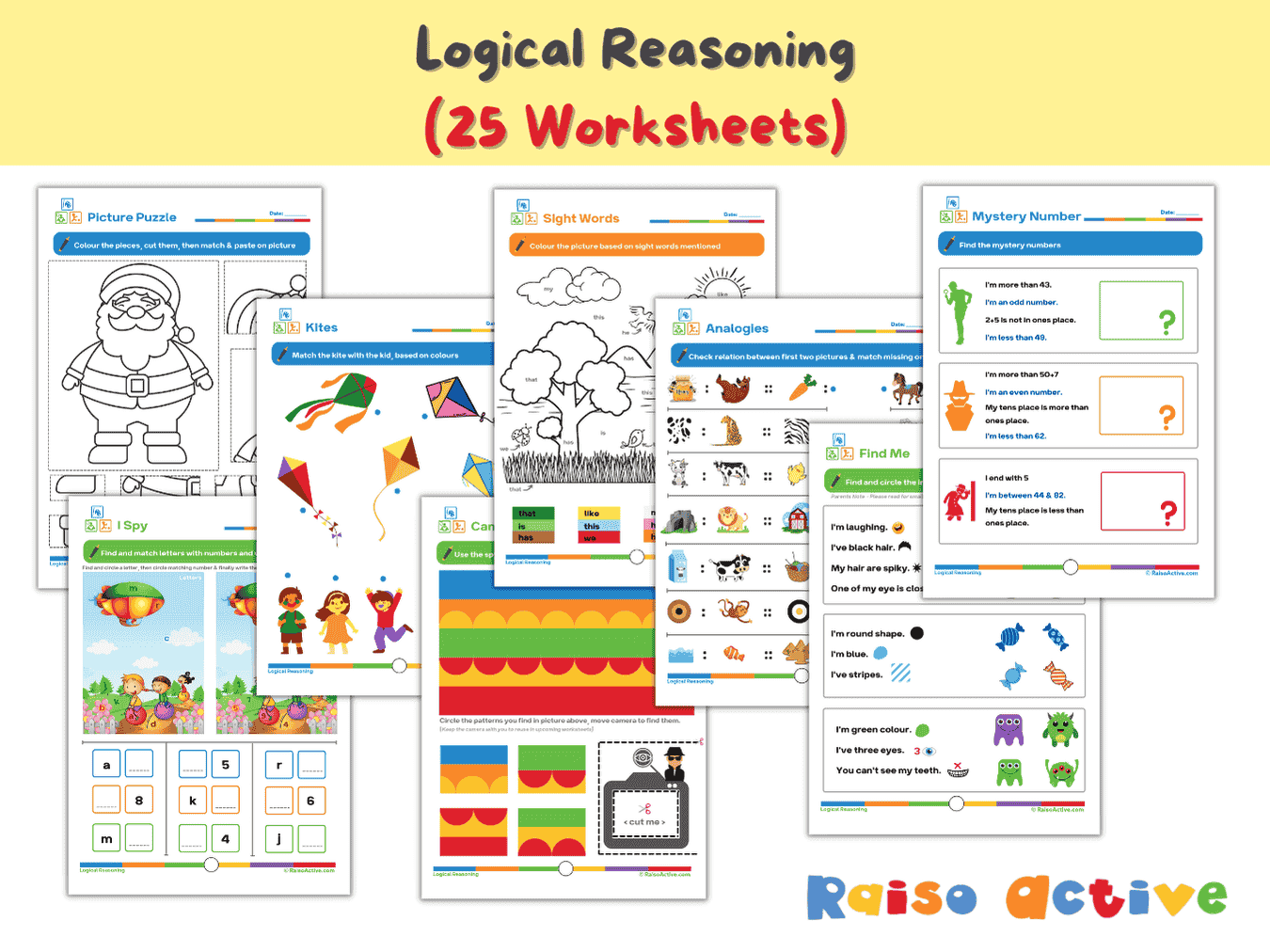

Logical Reasoning Activity Book for Preschool & Kindergarten | Patterns, Sudoku, Mazes & Coding
Ages 4-7 · Pre-K–Grade 1Ages 4-7 · Reception–Year 2Ages 4-7 · LKG–Class 1Ages 4-7 · 34 pages
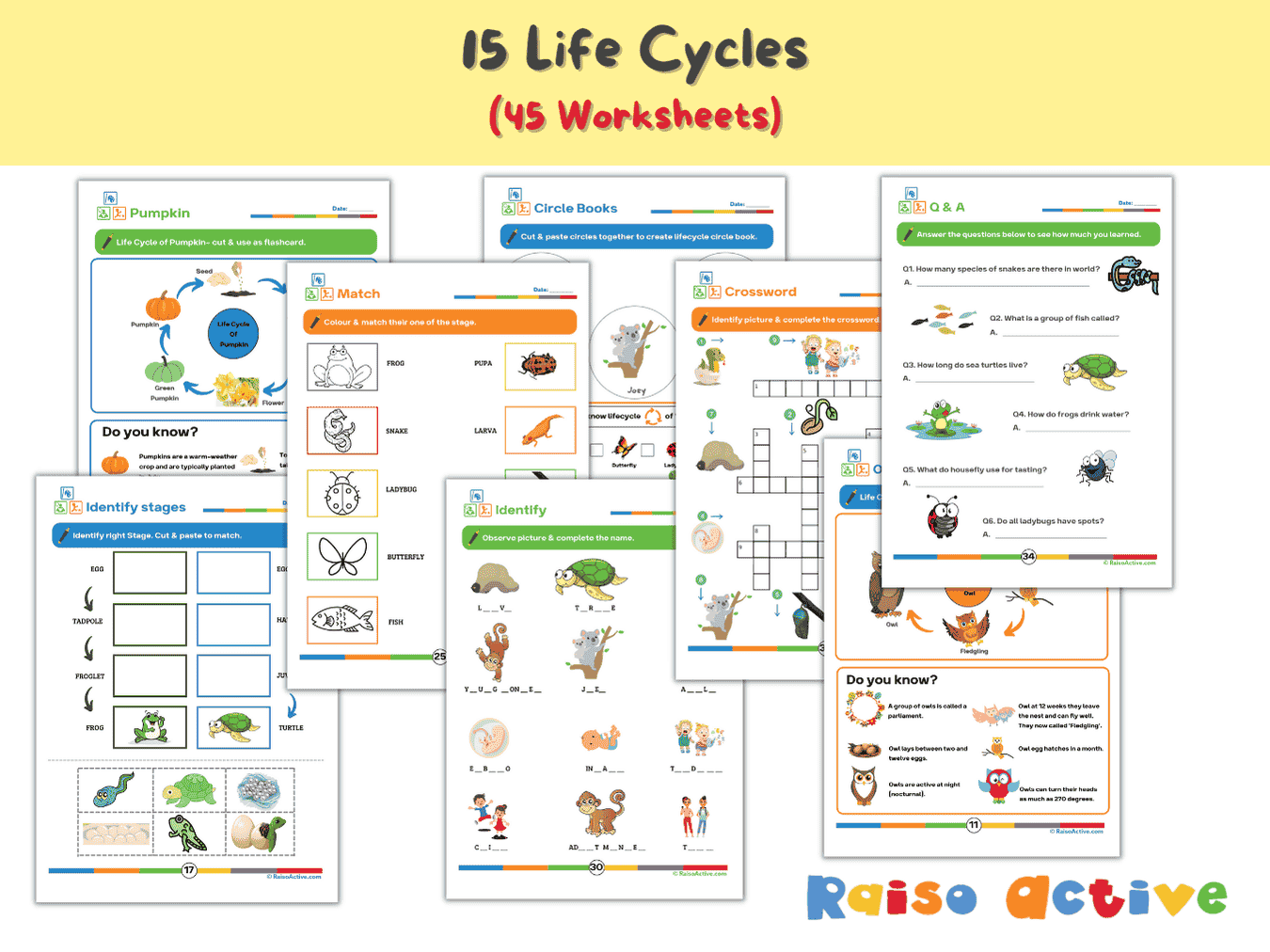

Lifecycles Activity Book & Flashcards for Preschool & Early Elementary
Ages 3-8 · Preschool–Grade 2Ages 3-8 · Nursery–Year 3Ages 3-8 · Nursery–Class 2Ages 3-8 · 46 pages
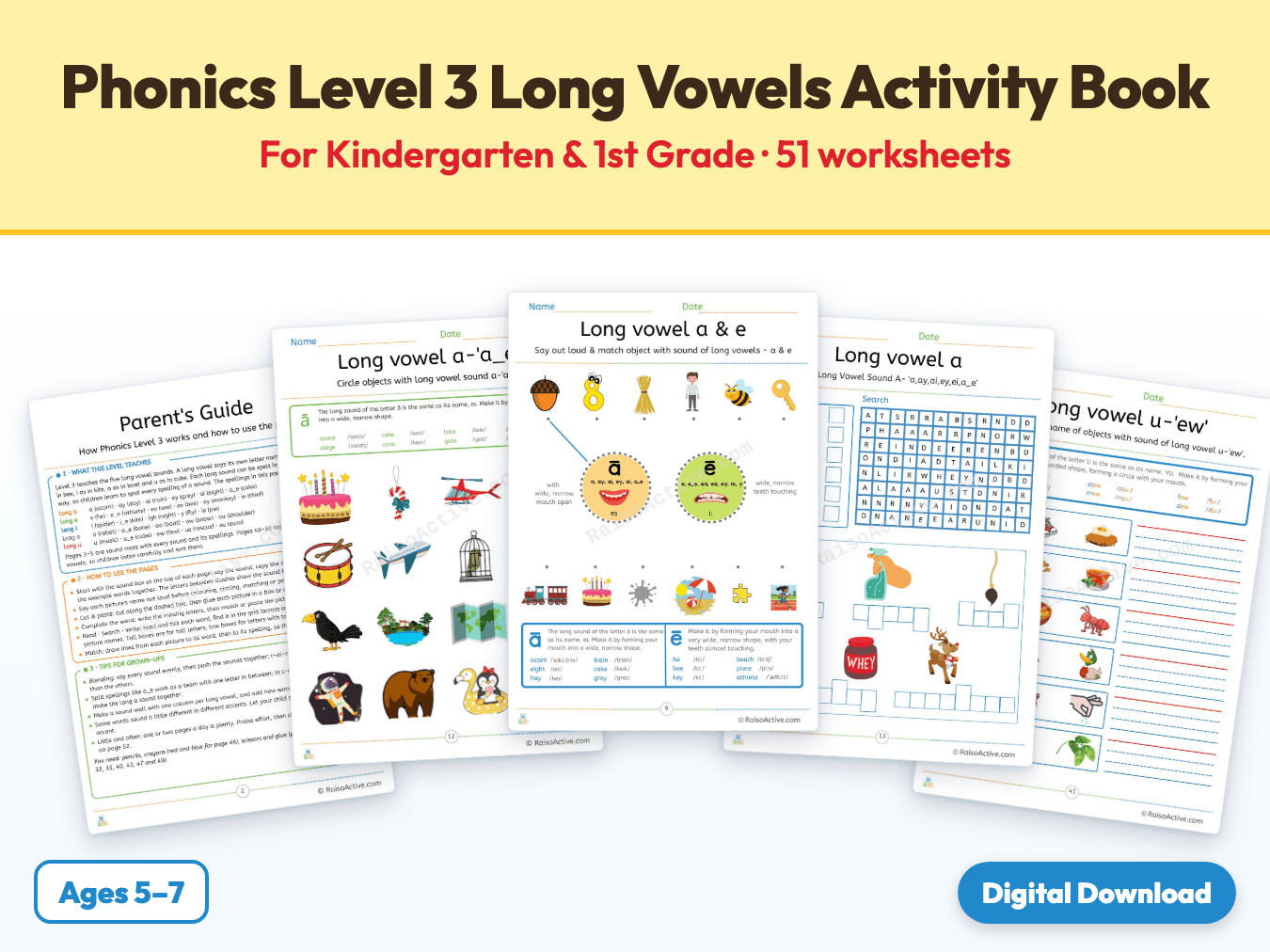

Phonics Level 3 Long Vowels Activity Book for Kindergarten & 1st Grade
Ages 5-7 · Kindergarten–Grade 1Ages 5-7 · Year 1–Year 2Ages 5-7 · UKG–Class 1Ages 5-7 · 52 pages
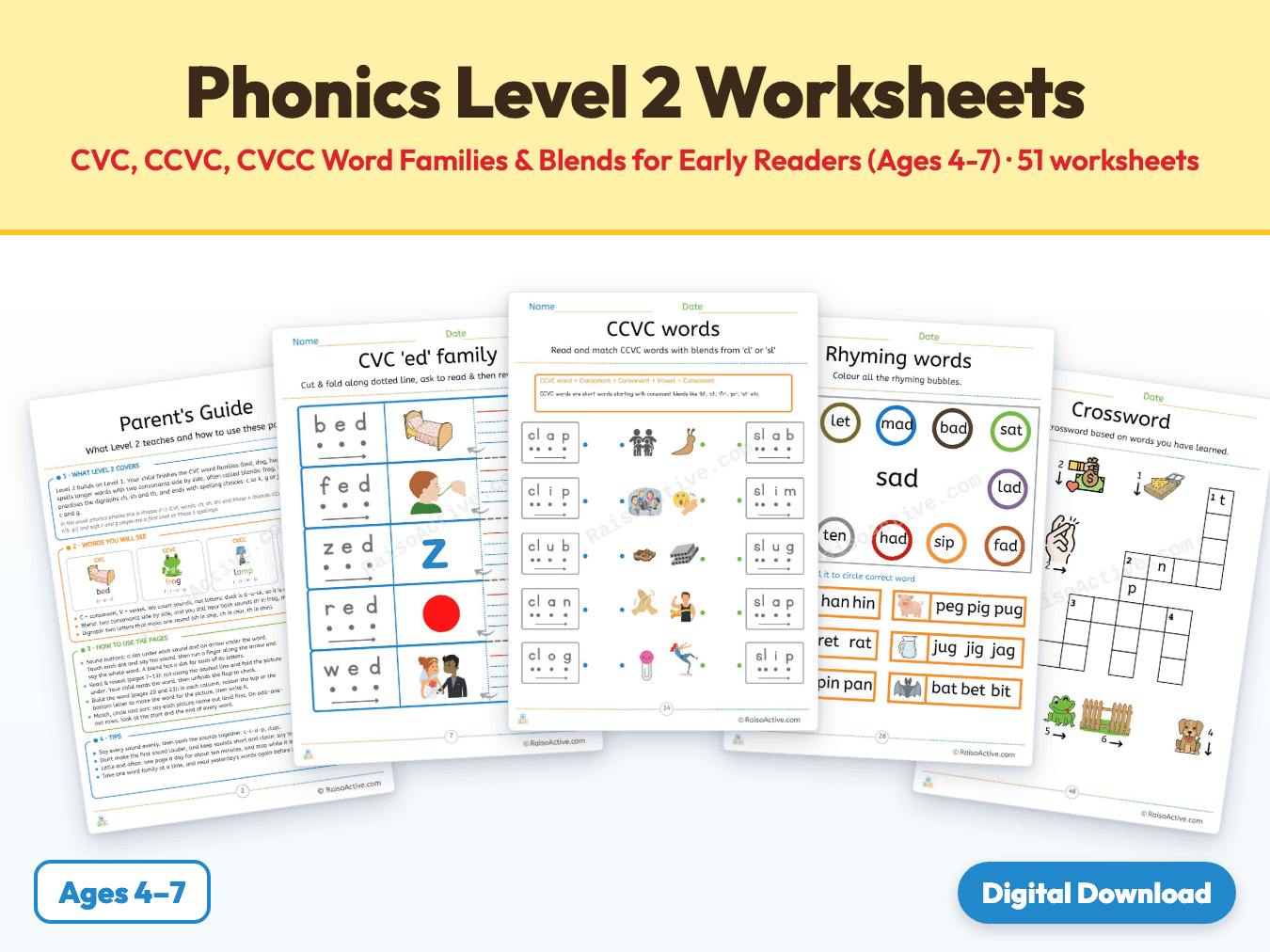
Phonics Level 2 Worksheets: CVC, CCVC, CVCC Word Families & Blends for Early Readers (Ages 4-7)
Ages 4-7 · Pre-K–Grade 1Ages 4-7 · Reception–Year 2Ages 4-7 · LKG–Class 1Ages 4-7 · 52 pages
Guides for parents and teachers
See all guides
Number Formation Rhymes 0–9 and How to Fix Reversals
Original number formation rhymes for 0–9, the correct stroke order for each digit, why 3, 5 and 7 get reversed most often, and multisensory fixes that work.

Pre-Writing Strokes in Order: From Standing Lines to Loops (With Printable Patterns)
The developmental order of pre-writing strokes, from vertical lines to loops, and why practicing them in sequence makes letter formation much easier to learn.

Kindergarten Readiness Checklist: 25 Skills to Practice Before the First Day
A kindergarten readiness checklist of 25 literacy, math, motor, self-regulation and self-help skills, with an 8-week summer plan and notes on when not to worry.
Best Worksheets for 3-Year-Olds: What Works and What to Avoid
What works on worksheets for 3-year-olds: short sessions, crayons, tracing lines, matching, cutting, a free weekly plan, and signs one is too advanced.
Reception Year Explained: EYFS Learning and How to Help at Home
A teacher's plain-English guide to the Reception Year: the seven areas of learning, Early Learning Goals, Phase 2/3 phonics, the RBA and home routines.
What Should a 4-Year-Old Know Before LKG? A Readiness Checklist
A calm, teacher-written LKG readiness checklist for 4-year-olds: language, pattern writing, numbers to 10, self-help and social skills, plus a 6-week plan.