Sight Word 'HE' Worksheet: Trace, Color, and Practice!
This worksheet helps children ages 3-5 learn to recognize, write, and use the sight word 'HE' in simple sentences, giving repeated exposure to a short, high-frequency word that appears in nearly every early reader book. Practicing the word across six different formats, tracing, coloring, circling, writing, filling in, and cutting and pasting, builds recognition through many different types of practice in one sitting.
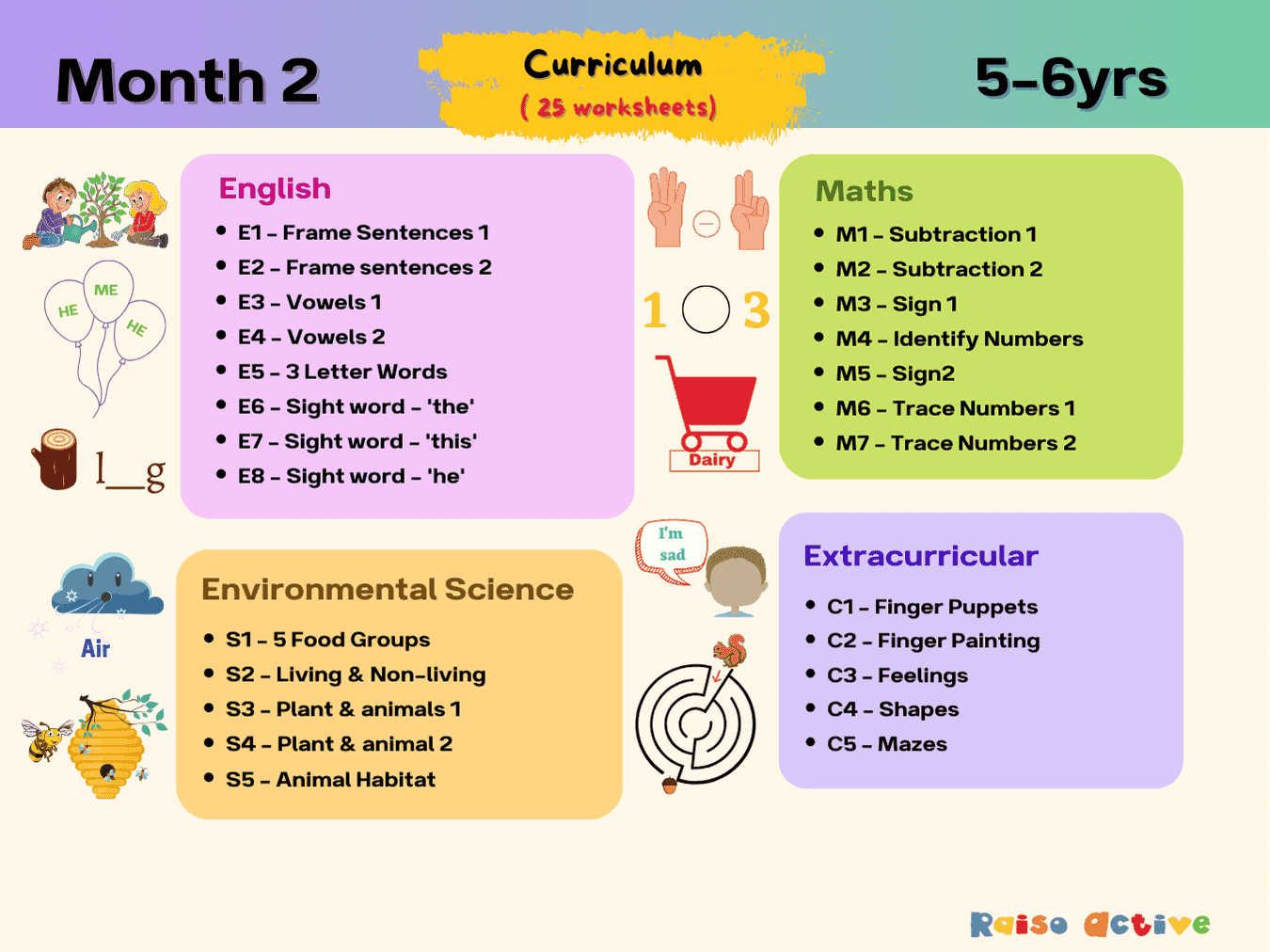
Part of the pack
Month 2: Learning & Development | Ages 5-6
This is page 11 of the pack. Ages 5-6 · KindergartenAges 5-6 · Year 1Ages 5-6 · UKGAges 5-6
Made for your child
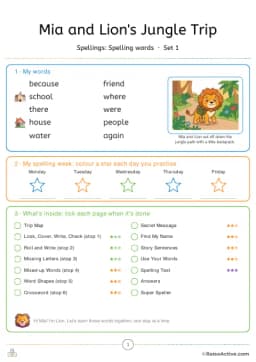
Spelling practice, made for your child
Their own spelling words turned into a pack: trace or look-cover-write-check, roll and write, a secret picture code, a word search, a crossword and a test, with their name in it.
Make a spelling packFree preview · free for members
Or start free: a word search with sight wordsCurriculum
- Fluency > Sight Words
How to use this worksheet
Start by having your child trace the letters of the word 'HE' along the dotted lines. Have them color the word 'HE' wherever it appears inside the balloon shapes on the page. Read the example sentences together and have your child circle the sight word each time they spot it, then write the word once more on the practice line. Have them fill in the missing word in a sentence using 'HE,' and finish by cutting out the letters and pasting them in the correct order to spell the word one more time.
Materials needed
- Pencil
- Crayons
- Scissors
- Glue (optional)
Extension activities
- 1Create a sentence using the word 'HE,' pointing to a boy or man you both know as the subject.
- 2Find the word 'HE' in a book you're reading together and point to it each time it appears.
- 3Write the word 'HE' multiple times on a whiteboard, racing to see how fast it can be written neatly.
- 4Play a simple game where your child says a sentence starting with 'He' about a family member.

Written by
Hemsweta Jain · Teacher Cheena
MBA and Early Childhood Educator, teaching since 2014 · Founder of RaisoActive, Mumbai
Every RaisoActive worksheet is designed and checked by the founder before publishing.
Published · Last reviewed
More from Month 2: Learning & Development | Ages 5-6

Shape Counting Fun: Color and Count the Shapes Worksheet
Ages 3-5 · Preschool–Pre-KAges 3-5 · Nursery–ReceptionAges 3-5 · Nursery–LKGAges 3-5
Children ages 3-5 practice recognizing common shapes by sight, then apply early counting skills by tallying how many of each shape appear in the picture. Combining shape identification with counting strengthens both geometric awareness and number sense at the same time.

Sight Word 'This' Worksheet: Trace, Write, and Identify!
Ages 3-5 · Preschool–Pre-KAges 3-5 · Nursery–ReceptionAges 3-5 · Nursery–LKGAges 3-5
This worksheet helps children ages 3-5 learn to recognize, write, and use the sight word 'this' in sentences, building automatic recognition of a word that appears constantly in early reading but doesn't sound out easily. Cutting and pasting letters to spell the word adds a hands-on layer that reinforces letter order alongside whole-word recognition.
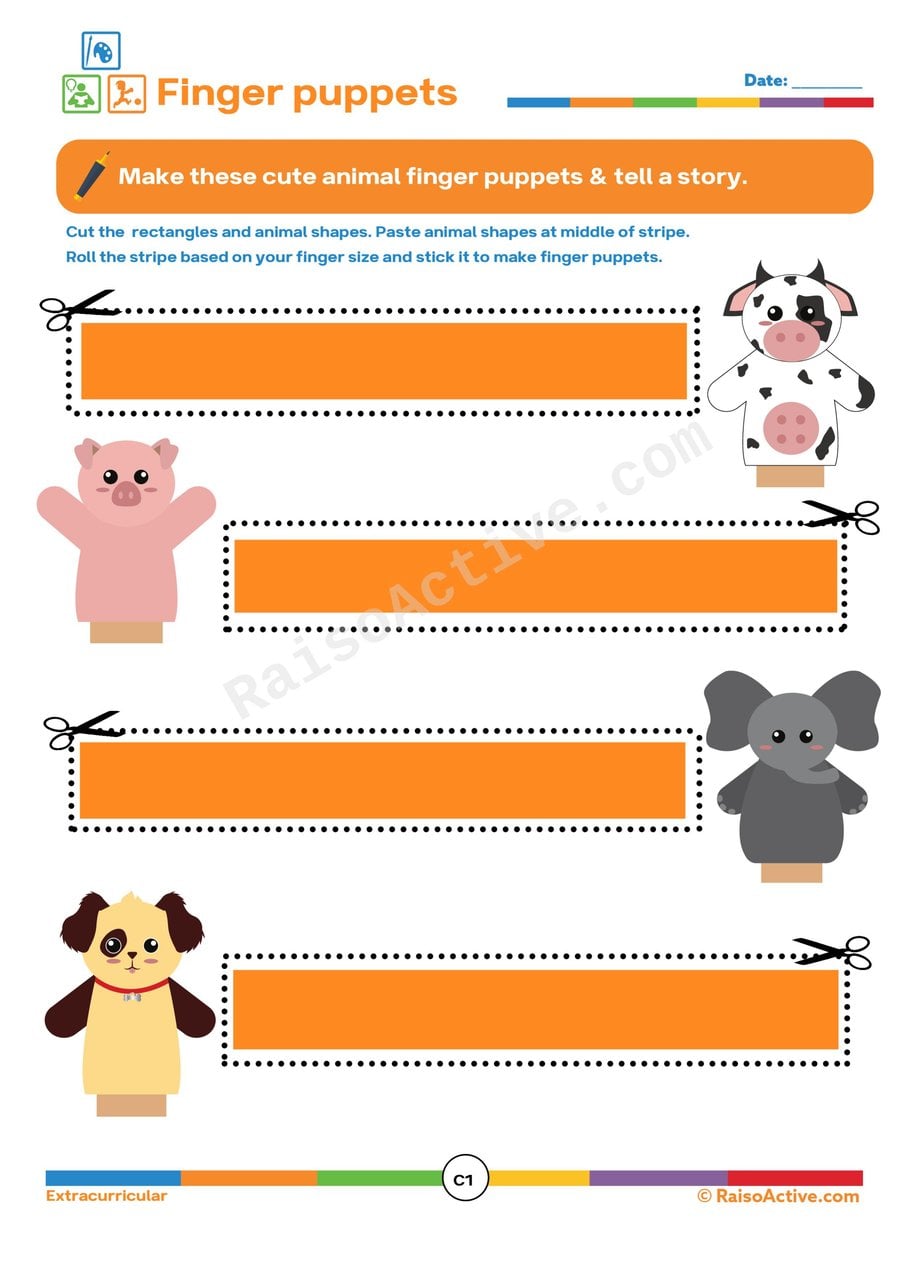
Make Finger Puppets! Fun Animal Craft Worksheet
Ages 3-5 · Preschool–Pre-KAges 3-5 · Nursery–ReceptionAges 3-5 · Nursery–LKGAges 3-5
This hands-on craft worksheet builds scissor control and fine motor precision in children ages 3-5 as they cut out animal shapes and rectangles, then roll and secure the rectangle into a puppet that fits their finger. The three-dimensional assembly step also introduces early spatial reasoning, since children must figure out how a flat shape becomes a wearable tube.

Vowel Fun! Find, Color, and Fill-in the Missing Vowels Worksheet
Ages 3-5 · Preschool–Pre-KAges 3-5 · Nursery–ReceptionAges 3-5 · Nursery–LKGAges 3-5
This worksheet gives children ages 3-5 focused practice identifying the five vowels, A, E, I, O, U, and recognizing which vowel sound completes a familiar picture word. Because vowels appear in nearly every word, this early, targeted practice builds a phonics foundation that supports reading many more words later.
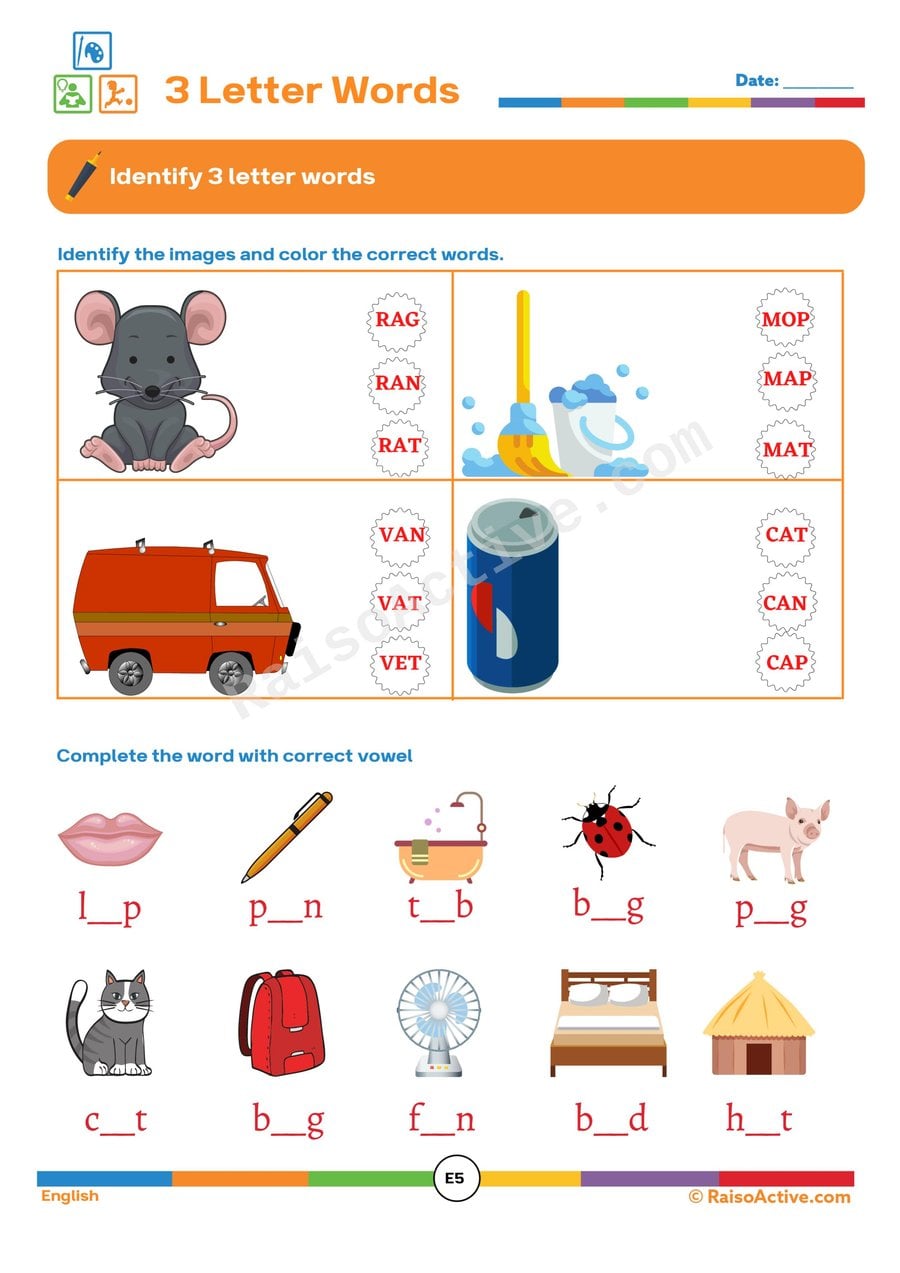
3 Letter Words Worksheet: Identify and Color!
Ages 3-5 · Preschool–Pre-KAges 3-5 · Nursery–ReceptionAges 3-5 · Nursery–LKGAges 3-5
This worksheet helps children ages 3-5 identify and recognize simple three-letter words by matching pictures to their written word and then completing each word by filling in a missing vowel. Working with short, consistent words like these builds the beginning reading skills that let children start decoding independently.

Short and Long Vowel Sounds Worksheet for Preschoolers
Ages 4-6 · Pre-K–KindergartenAges 4-6 · Reception–Year 1Ages 4-6 · LKG–UKGAges 4-6
This worksheet builds phonemic awareness by having children listen for whether a picture's name contains a short vowel sound (like the 'a' in 'cat') or a long vowel sound (like the 'a' in 'cake') and sort accordingly. For four- to six-year-olds, distinguishing short and long vowels is one of the more subtle early phonics skills, since it requires listening closely to a sound rather than just recognizing a letter shape.
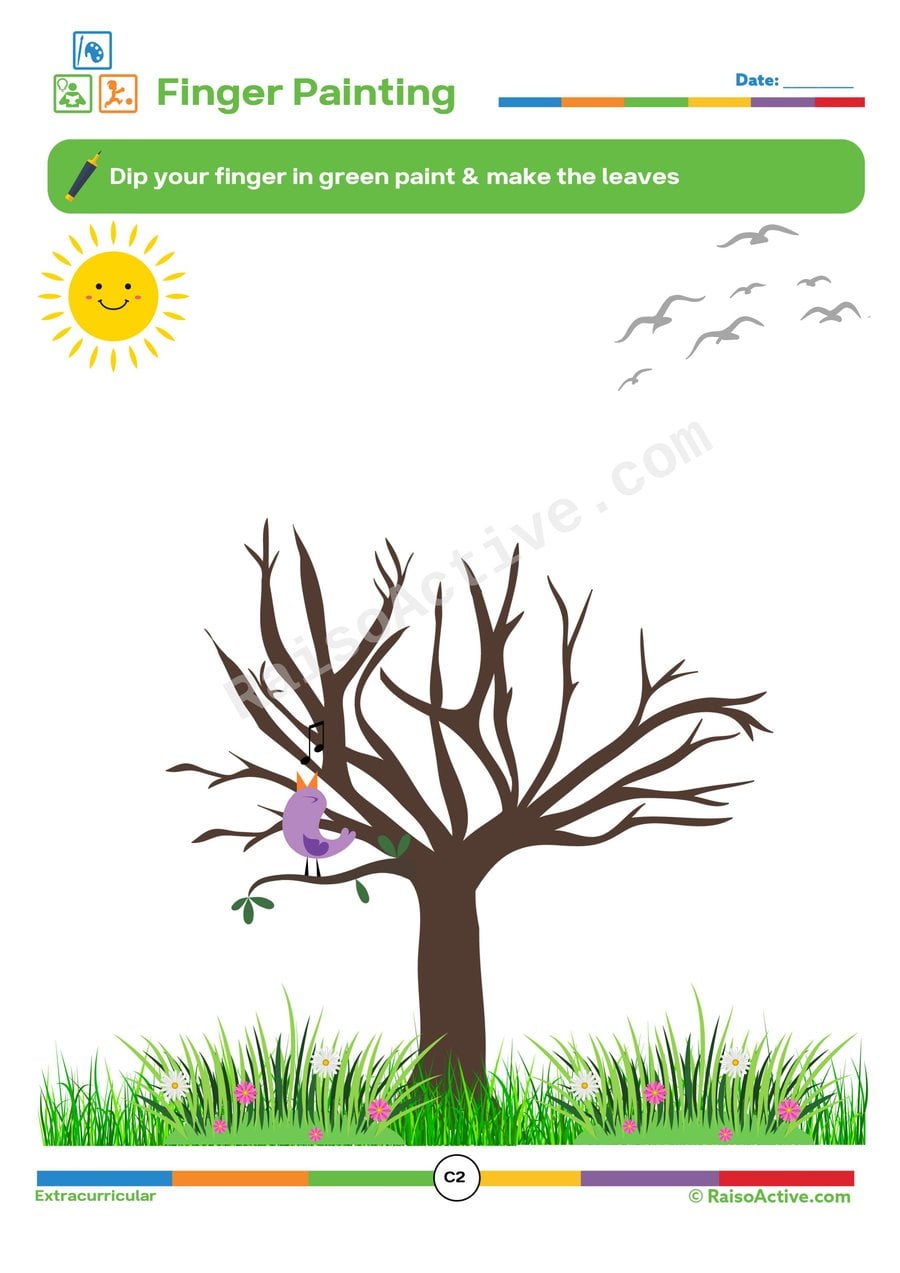
Finger Painting Fun: Make Leaves on the Tree!
Ages 3-5 · Preschool–Pre-KAges 3-5 · Nursery–ReceptionAges 3-5 · Nursery–LKGAges 3-5
This worksheet develops fine motor control and sensory creativity by having children use their fingertip, rather than a brush, to dab green paint onto tree branches to create leaves. For three- to five-year-olds, finger painting builds precise fingertip control in a low-pressure, playful way, and repeating the same dabbing motion across the page also reinforces the concept of filling a space with a repeated mark.

Trace and Write Numbers 11-15: Counting and Writing Worksheet
Ages 4-6 · Pre-K–KindergartenAges 4-6 · Reception–Year 1Ages 4-6 · LKG–UKGAges 4-6
This worksheet helps children ages 4-6 practice tracing and writing the number words from eleven to fifteen, moving beyond single-digit numbers into the trickier teen range where number names don't always follow an obvious pattern. Matching the number of dots on dice to the correct written number name also reinforces that these longer number words still represent a specific countable quantity.
Related worksheets

Sight Word Coloring Fun: 'am', 'has', 'had', and 'have' Worksheet
Ages 3-5 · Preschool–Pre-KAges 3-5 · Nursery–ReceptionAges 3-5 · Nursery–LKGAges 3-5
This worksheet helps children ages 3-5 build automatic recognition of four common sight words — am, has, had, and have — words that appear so frequently in early reading that sounding them out every time would slow a beginning reader down. Coloring by a color key also reinforces visual discrimination, since children must distinguish between similar-looking short words rather than relying on pictures.

Sight Words Coloring Worksheet: 'His', 'My', and 'Her' Fun!
Ages 3-5 · Preschool–Pre-KAges 3-5 · Nursery–ReceptionAges 3-5 · Nursery–LKGAges 3-5
This coloring activity helps children ages 3-5 recognize and internalize the common sight words 'his,' 'my,' and 'her' by following a color-coded key, an approach that builds sight word memory through repeated visual association rather than isolated flashcard drilling. Because sight words like these don't sound out easily using phonics rules, repeated exposure in a fun context like coloring is one of the most effective ways for young children to memorize them. The activity also reinforces fine motor control as children carefully color within the lines of each labeled section.

Learn the Sight Word 'Can' - Fun Tracing and Coloring Worksheet
Ages 3-5 · Preschool–Pre-KAges 3-5 · Nursery–ReceptionAges 3-5 · Nursery–LKGAges 3-5
This worksheet gives children ages 3-5 repeated, multi-format practice with the sight word 'can,' a common verb that appears frequently in early reading, through tracing, coloring, and a cut-and-paste spelling activity. Because 'can' is a short, high-frequency word that shows up constantly in beginning readers, building instant recognition of it now pays off across nearly every book your child picks up next.

Sight Word 'Get' Worksheet: Trace, Color, and Practice!
Ages 3-5 · Preschool–Pre-KAges 3-5 · Nursery–ReceptionAges 3-5 · Nursery–LKGAges 3-5
This multi-step worksheet builds deep familiarity with the sight word 'get' for children ages 3-5 through six different formats — tracing, coloring, sentence completion, circling, writing, and cut-and-paste spelling — giving far more repetition than a single tracing task would. High-frequency sight words like 'get' don't sound out easily, so this kind of repeated exposure across formats is exactly how early readers learn to recognize them instantly.

Sight Word 'Your' Worksheet: Tracing, Coloring, and Sentence Practice
Ages 4-5 · Pre-KAges 4-5 · ReceptionAges 4-5 · LKGAges 4-5
Children ages 4-5 build sight word automaticity for 'your' — a word that can't be sounded out with basic phonics rules and must instead be recognized instantly for fluent reading. Multiple exposure formats (coloring, tracing, searching, and using it in a sentence) help move the word from short-term recognition into long-term memory, a rehearsal strategy that is especially important for high-frequency 'trick' words.
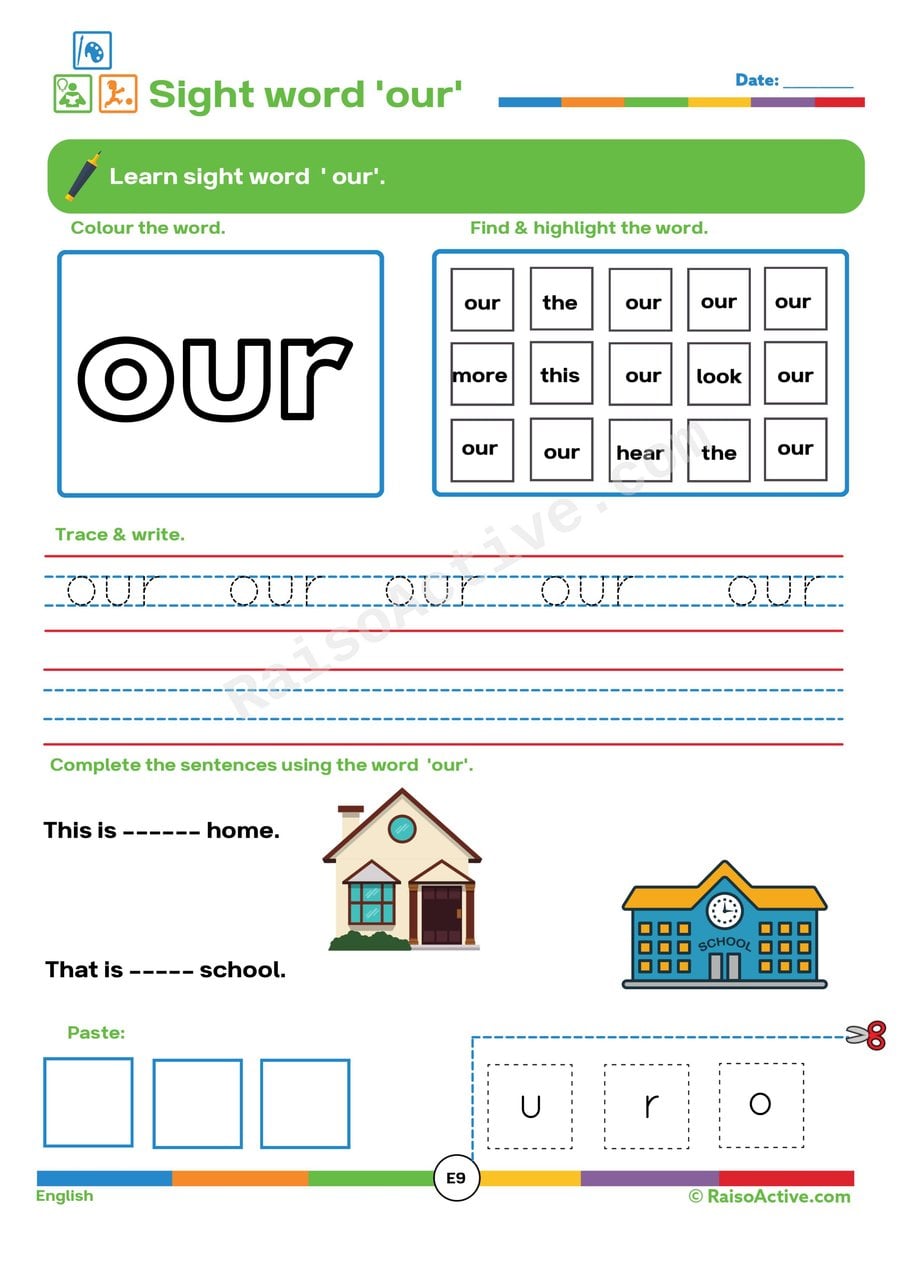
Our Sight Word Fun: Trace, Find, and Paste!
Ages 4-5 · Pre-KAges 4-5 · ReceptionAges 4-5 · LKGAges 4-5
The possessive word 'our' appears often in classroom and family language, and this worksheet gives children ages 4-5 focused, multi-format practice recognizing it — tracing, word searching, sentence completion, and a cut-and-paste spelling activity. Repeated exposure across these different formats is what moves a word from effortful sounding-out into instant sight recognition, which is essential since 'our' doesn't follow predictable phonics rules cleanly. Practicing the word inside full sentences also reinforces its meaning as a word that shows shared ownership, a slightly abstract grammar concept for this age.

Sight Word 'For' Worksheet: Learn to Read and Write!
Ages 4-5 · Pre-KAges 4-5 · ReceptionAges 4-5 · LKGAges 4-5
The word 'for' appears constantly in early reading material but doesn't follow simple sound-it-out rules, so children ages 4-5 need repeated practice to recognize it instantly as a sight word. Working through tracing, a word search, and sentence completion in one sitting gives multiple angles of exposure, which research on early literacy shows helps cement tricky high-frequency words into memory.

Color the Sight Words! A Fun Coloring Worksheet for Preschoolers
Ages 3-5 · Preschool–Pre-KAges 3-5 · Nursery–ReceptionAges 3-5 · Nursery–LKGAges 3-5
This worksheet helps children ages 3-5 recognize common sight words by finding and coloring them within a brick-wall design according to a color key. Because sight words like 'the,' 'and,' or 'is' don't follow regular phonics rules, repeated visual exposure like this coloring task is one of the most effective ways for young children to memorize them by sight rather than sounding them out each time.
Guides for this topic

Sight Words by Age: The First 50 Words and How to Teach Them Without Flashcard Fatigue
Which sight words to teach first and why, the heart-word method, a read-trace-write-find routine, games, and a by-age table of typical sight-word progress.
How to Teach CVC Blending: A Step-by-Step Method That Works in Two Weeks
A step-by-step method for teaching CVC blending, covering continuous sounds, word families, common errors, and a 14-day plan that most children finish reading CVC words.
Phase 2 Phonics at Home: Sound Order, Blending Games, Worksheets
Phase 2 phonics at home: the five sound sets in order, oral blending, tricky words, a two-week routine, common mistakes, and free worksheets.
Reviews
Every worksheet for ages 3–5, no watermark
Members download the full library of 1,000+ worksheets and every activity pack without watermarks or daily limits. One year costs ₹999 in India or $20 elsewhere.
See membership plansOr download any worksheet free with a watermark (5 a day).