Free printable worksheets · US · UK · India
Worksheets for 2 Year Olds
Worksheets for 2 year olds are simple printable activities for toddlers aged 2 to 3, the Playgroup, Nursery or preschool-twos stage, that need no pencil control. They cover coloring large shapes with chunky crayons, matching identical pictures with stickers, dot-marker pages, big and small sorting, first counting to 3 and naming colors and animals.
At two, a child grips a crayon in a fist, scribbles in arcs, and is far more interested in the crayon than the paper. That is normal and no worksheet should try to change it. The pages on this hub are built for the hand and attention span of a two-year-old: outlines the size of a palm, one task per page, stickers or dot markers instead of pencils, and nothing that requires staying inside a line. Five minutes is a full session. The real learning at this age is language (naming what is on the page), sorting (big elephant, small elephant) and the habit of sitting at a table for a moment. Use these alongside blocks, water play and books, never instead of them.
1240+ worksheets · free PDF download · print on A4 or Letter
Worksheets for 2 Year Olds to print
Browse all worksheets for ages 2–3
Month 6: Toddler Preschool Foundational Skills | Ages Up to 4 - Page 19
As part of an ongoing toddler foundational skills series, this page gives children up to age 4 low-pressure practice with coloring and simple fine motor prompts, building the pencil and crayon grip control that comes before formal writing instruction. Repeated, varied activity pages like this one help very young children build attention span and comfort with sitting down to a focused task, both important readiness skills for structured learning ahead.

Pattern Writing Pre-writing Skills Activity Book for 3-4 Year Olds - Page 17
This page from the pre-writing patterns activity book asks 3-4 year olds to continue a repeating stroke pattern, which trains their brain to predict what comes next in a visual sequence before their hand draws it. That predicting-then-executing process is a form of early motor planning, the same skill that later lets a child anticipate the next stroke needed to form a letter without stopping to think about each individual line.

Pattern Writing Pre-writing Skills Activity Book for 3-4 Year Olds - Page 33
This later page in the pre-writing patterns activity book asks 3-4 year olds to track a repeating pattern visually from left to right across the row before their pencil catches up, building the same visual tracking direction used in reading English text. Because this comes further into the book, it also builds a small dose of persistence, since completing a full row of repeated strokes takes more sustained attention than a single short trace.

Pattern Writing Pre-writing Skills Activity Book for 3-4 Year Olds - Page 11
This page from the pre-writing patterns activity book strengthens hand and finger muscles for 3-4 year olds through repeated stroke motions, building the physical stamina and grip strength a child needs before sustained handwriting becomes comfortable. Repeating the same basic movement many times across a row also builds muscle memory, so the motion starts to feel automatic rather than something the child has to consciously plan each time.

Pattern Writing Pre-writing Skills Activity Book for 3-4 Year Olds - Page 19
This page from the pre-writing patterns activity book asks 3-4 year olds to keep their pencil pressure steady and consistent while repeating a stroke across a full row, a subtler skill than simply getting the shape right. Learning to apply even, moderate pressure prevents the tearing or overly faint lines common in early writing attempts, and this kind of repeated practice builds that control gradually.

Pattern Writing Pre-writing Skills Activity Book for 3-4 Year Olds - Page 40
As one of the later pages in the pre-writing patterns activity book, this page asks 3-4 year olds to apply everything practiced on earlier pages, steady pressure, consistent spacing, and accurate prediction, to a pattern that combines skills built up gradually through the book. Reaching this stage of the book is itself a marker of growing stamina, since completing a full row of repeated strokes reliably takes more sustained focus than the simpler early pages required.

Clothing Pattern Match Worksheet for Preschoolers
This worksheet has children ages 3-5 study repeating patterns on clothing items — stripes, polka dots, or checks — and match each item to its identical twin, building visual discrimination and early pattern-sequencing skills. Distinguishing between similar-looking patterns also sharpens attention to detail, a skill that later supports letter and word recognition.

Hard and Soft 'g' Sounds Worksheet for Preschoolers
This worksheet teaches children ages 3-5 that the letter 'g' can make two different sounds — a hard /g/ as in 'goat' and a soft /j/ as in 'giraffe' — and asks them to sort words by color to show which sound applies. Understanding that one letter can represent more than one sound is an important step beyond basic phonics, preparing children for the many spelling irregularities they'll encounter as readers.
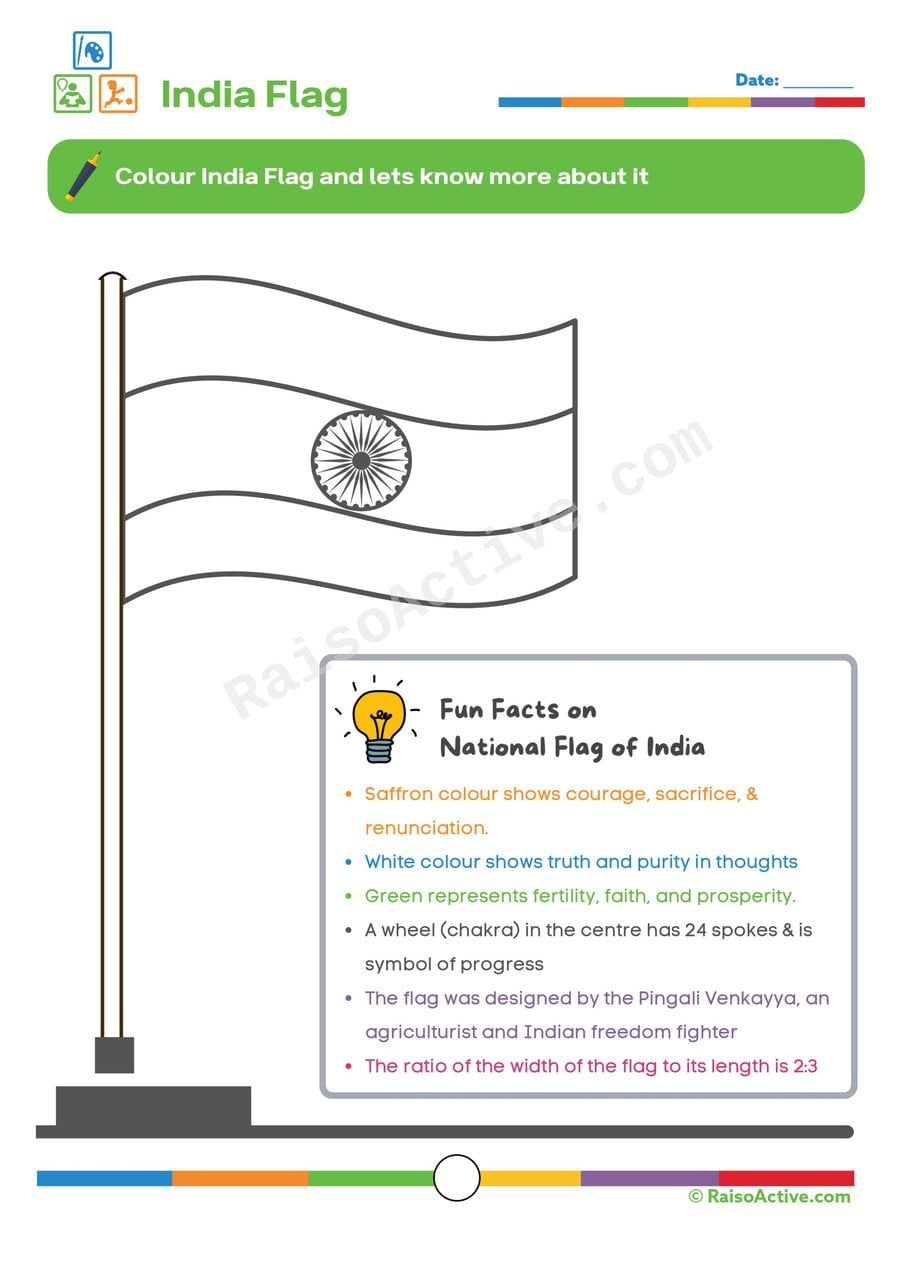
Color the India Flag Worksheet for Preschoolers
This worksheet teaches children ages 3-5 the three colors and layout of the Indian national flag, saffron, white, and green with the navy wheel, while practicing careful, section-by-section coloring. Reading a few simple facts about the flag alongside the coloring also introduces the idea that national symbols carry meaning, an early building block for civic and cultural awareness.

Preposition Worksheet: Identifying Where Things Are!
This worksheet asks children to identify the correct preposition, words like 'in,' 'on,' 'under,' or 'behind', that describes where an object is located in a picture, building spatial vocabulary that supports both everyday communication and following multi-step instructions. For ages three to five, prepositions are often used correctly in speech before children can identify them on paper, so this worksheet helps make that intuitive knowledge explicit.

Count and Add: Fruits, Vehicles, and Sweets Worksheet for Preschoolers
This worksheet practices counting and basic addition by having children count several different groups of everyday objects — fruits, vehicles, and sweets — and then add the totals together. For three- to five-year-olds, varying the objects being counted across different sections keeps the counting practice fresh while reinforcing that the process of counting and adding works the same way no matter what's being counted.

Letter E Tracing Worksheet for Preschoolers: Practice Writing the Letter 'e'
Tracing the tall, three-armed shape of uppercase E and the shorter horizontal strokes of lowercase e gives children practice with the left-to-right, top-to-bottom pencil movements that all English letters are built from. At ages 3-5, repeating this motion strengthens the finger and wrist muscles needed for a stable pencil grip, while saying the /e/ sound aloud connects the shape to a sound they'll need for reading.

Food Bingo Worksheet: Identify Healthy and Unhealthy Foods!
This bingo-style activity helps children ages 3-5 practice distinguishing healthy foods from unhealthy ones by physically placing tokens on matching pictures, turning nutrition education into an active game rather than a lecture. Scanning the board for matches also reinforces visual search skills similar to those used in matching and memory games. Because bingo requires a full row to win, children stay motivated to keep scanning and comparing even after finding a few matches.

Move the Cars! Pre-Writing Tracing Worksheet for Preschoolers
Tracing a road-shaped path for a car gives children ages 3-5 pencil control practice disguised as a familiar, motivating theme, since most young children have pushed a toy car along an imaginary road before. The winding or straight path on this worksheet builds the same steady, controlled pencil movement needed for handwriting, while the driving theme keeps attention high through an activity that might otherwise feel repetitive.
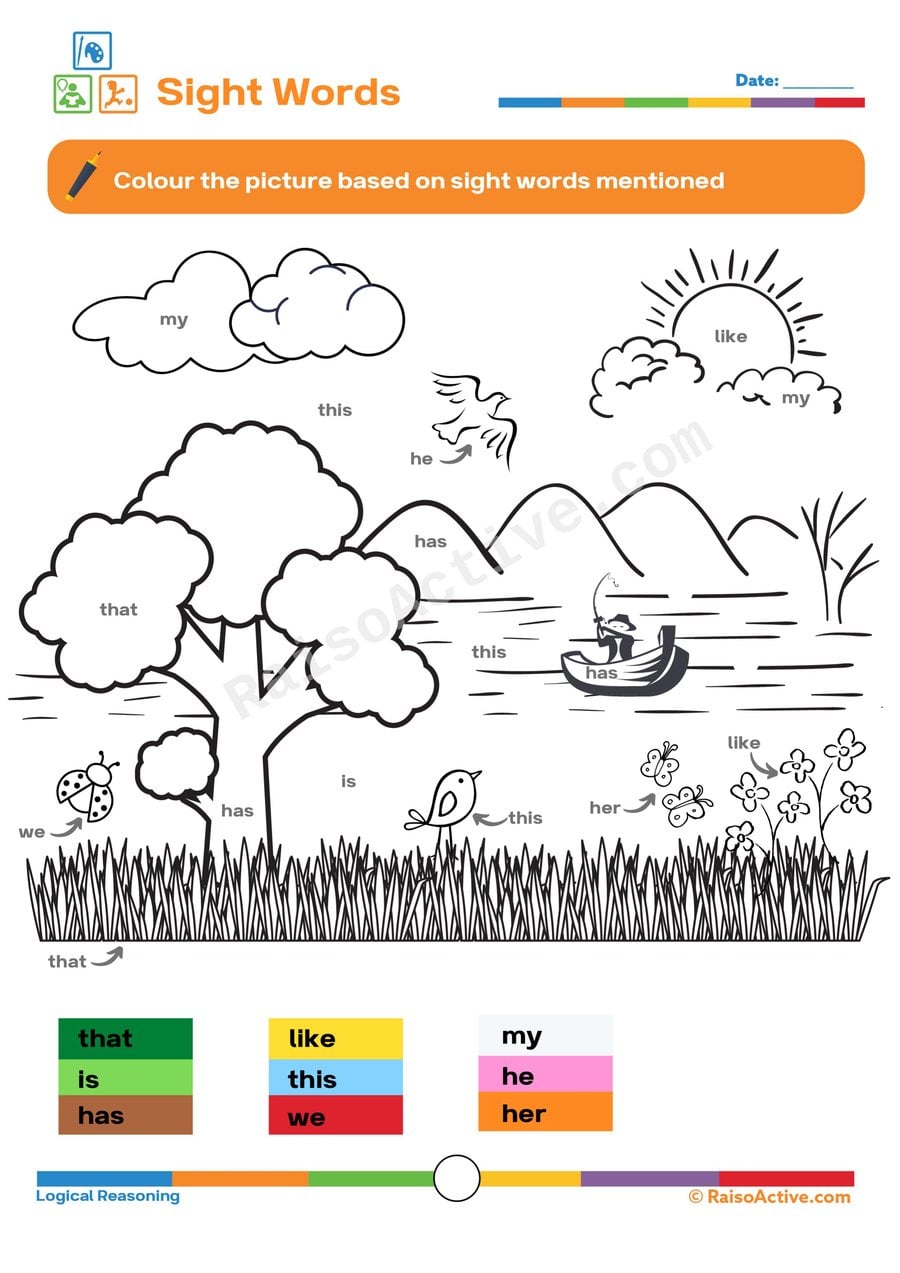
Sight Word Coloring Worksheet for Preschoolers
This worksheet helps children ages 3-5 build sight-word recognition by having them read common high-frequency words and use a color key to decide how to color the corresponding pictures. Connecting a printed word to a coloring decision requires children to actually read and recall the word's meaning, rather than just copying or tracing it, which is a genuine step toward independent reading. The coloring format also keeps the repeated word-reading practice feeling like an art activity rather than a drill.

Parent's Guide: Fun Activities for Blend Words, Addition, and More!
This parent's guide brings together several early-learning skill areas — blend words, addition and subtraction, plant parts, and landforms — into one set of hands-on activities designed for children ages 3-5, giving families a ready toolkit for reinforcing what's covered across the individual worksheets. Rather than another printable page, it offers concrete ways to extend learning through sensory play, flashcards, and conversation, which suits how young children absorb new concepts most naturally. Having a single reference guide also helps parents connect several worksheet topics into one cohesive home-learning routine.

Float or Sink: Cut and Paste Worksheet for Preschoolers
This worksheet introduces children ages 3-5 to a basic science concept — that different materials and objects behave differently in water — by having them sort pictures into 'float' and 'sink' categories. Making a prediction and then physically sorting an object reinforces early scientific reasoning, since children must think about an object's properties, like weight or material, before deciding where it belongs. This kind of hands-on categorizing builds observation and classification skills that are foundational to all later science learning.

Tracing and Counting Worksheet: Learning the Number 3!
This worksheet helps children ages 3-5 learn to recognize, trace, and write the number 3 using its correct stroke pattern, while a hands-and-ducks counting activity reinforces that the numeral 3 represents exactly three objects. Combining tracing with counting connects the written symbol to its real quantity, which is central to early number sense.

Road Safety Worksheet for Kids: Fill-in-the-Blanks
This worksheet teaches children ages 3-5 essential road safety vocabulary and rules — like looking both ways, using crosswalks, and obeying traffic signals — by having them choose the correct word to complete each safety-related sentence. Learning these rules in a reading and writing context, rather than just hearing them, helps reinforce safety habits that protect children in real traffic situations.

Months of the Year: Sequencing Worksheet for Preschoolers
Choosing which month comes next from a set of options builds sequencing skills and calendar vocabulary for children ages 3-5, reinforcing the fixed order of the twelve months through repeated practice rather than memorization alone.

Spot the Differences! Fun Coloring Worksheet for Kids
This spot-the-difference worksheet challenges children ages 3-5 to compare two nearly identical pictures and circle every visual difference they find, sharpening close observation and attention to detail. Coloring both images first, using slightly different choices between the two, adds an extra layer of visual comparison since children must notice both original design differences and any coloring variation. This kind of side-by-side visual analysis is a foundational skill for later proofreading and detail-oriented tasks.

Match the Fruits to Their Plants Worksheet for Preschoolers
This worksheet helps children ages 3-5 build early plant science knowledge by matching common fruits to the plant or tree they actually grow on, such as an apple to a tree or a strawberry to a low bush. This task moves beyond simply naming fruits into understanding where food comes from, an important first step in connecting nature to the food children eat every day.

Near and Far Worksheet: Identifying Distance for Preschoolers
Judging whether an object is near or far and connecting objects based on that positional relationship builds spatial vocabulary for children ages 3-5, an early skill that supports understanding distance, maps, and following directional instructions.

Parent's Guide: Fun Activities for Gross Motor Development and Emotional Learning
This parent guide equips caregivers of children ages 3-5 with activities spanning gross motor skills, emotional expression, family concepts, shape recognition, and calendar awareness, using role play, finger puppets, and simple games. Combining physical movement with emotional vocabulary practice, such as making different facial expressions, helps children build body awareness and feelings vocabulary side by side. Rotating through several distinct activity types in one guide also keeps a young child's attention across a longer play session.
What a 2 year old can do on paper
A typical two-year-old can scribble with a fist grip, make marks on purpose, place a sticker roughly where asked, point to a named picture, match two identical pictures, tell big from small, and by three may draw a rough circle. They cannot yet trace a line, color inside an outline or hold a pencil with three fingers, and sheets that expect this frustrate everyone.
- Coloring: single large shapes or animals, using chunky crayons or dot markers, no expectation of staying inside the line
- Matching: put the sticker on the matching picture, find the same animal, pair the sock
- Sorting: big and small, same and different, one color at a time
- Language: point to and name colors, animals, body parts and everyday objects on the page
- First numbers: one, two and three objects, counting aloud together while touching each one
How to use worksheets with a 2 year old
Tape the page to the table so it does not slide. Offer one chunky crayon or a dot marker, name what is on the page, and let your child make whatever marks they like. Talk more than you direct: "you found the big dog", "that is red". Stop after five minutes or as soon as interest drops, and put the finished page on the fridge.
Skip anything that looks like tracing or letter work; that belongs at three and four. Pair a page with a matching physical activity, such as sorting real socks after a sorting sheet or counting three grapes after a counting sheet. Two or three short sessions a week is plenty at this age.
What to avoid with toddler worksheets
Avoid thin pencils, small pictures, tracing lines, letters and numerals to copy, and any page with several tasks on it. Avoid correcting marks or asking a two-year-old to try again. If they refuse the page, that is information, not defiance; return to it in a few weeks. Worksheets should be a small part of a day that is mostly movement, sensory play, songs and conversation.
Frequently asked questions
What should a 2 year old know or be able to do?
Most two-year-olds can speak in two- or three-word phrases, follow a two-step instruction, point to pictures in a book, scribble with a crayon, stack a few blocks, kick a ball, sort by an obvious feature like color, and begin to count to two or three. Naming a few colors and body parts, and matching identical pictures, are also typical by two and a half. Pencil control and letter recognition are not expected.
Are worksheets appropriate for a 2 year old?
Yes, if the worksheet is really a large picture to color, stick on or point to, and the session lasts a few minutes. Worksheets that require tracing, staying inside lines or copying symbols are not appropriate at two. Used briefly alongside play, a printable page gives a toddler practice at sitting, holding a crayon and naming things, which is all that is wanted.
What is the best crayon or pencil for a 2 year old?
Chunky or egg-shaped crayons, dot markers and thick washable markers suit a two-year-old's fist grip and need little pressure. Standard pencils are too thin and too faint for this age. Triangular jumbo pencils can be introduced around three, once the child starts holding a crayon with fingers rather than a whole hand.
How long should a 2 year old sit for a worksheet?
About five minutes, and often less. A toddler's attention span for a table activity is short, and pushing past it makes the next session harder. One page, finished or not, is a success. Two or three sessions a week are enough; most learning at this age happens through play, movement and talking, not paper.
Should a 2 year old be learning letters and numbers?
Hearing letter and number words in songs and books is fine and useful, but a two-year-old is not expected to recognize or write them. Counting to three with real objects and noticing "lots" versus "one" are the real number skills at this age. Letter recognition typically begins between three and four, and letter writing after four, in preschool, Nursery or LKG.
Are the worksheets for 2 year olds free?
Yes. Each page downloads free as a watermarked PDF after creating an account, up to five a day. An annual subscription removes the watermark and the daily limit across the whole library, which is convenient for daycare and playgroup settings that print the same page for a group.

Written by
Hemsweta Jain · Teacher Cheena
MBA and Early Childhood Educator, teaching since 2014 · Founder of RaisoActive, Mumbai
Written and reviewed by Hemsweta Jain (Teacher Cheena), who designs every RaisoActive worksheet.
Last reviewed
Printable packs for ages 2–3
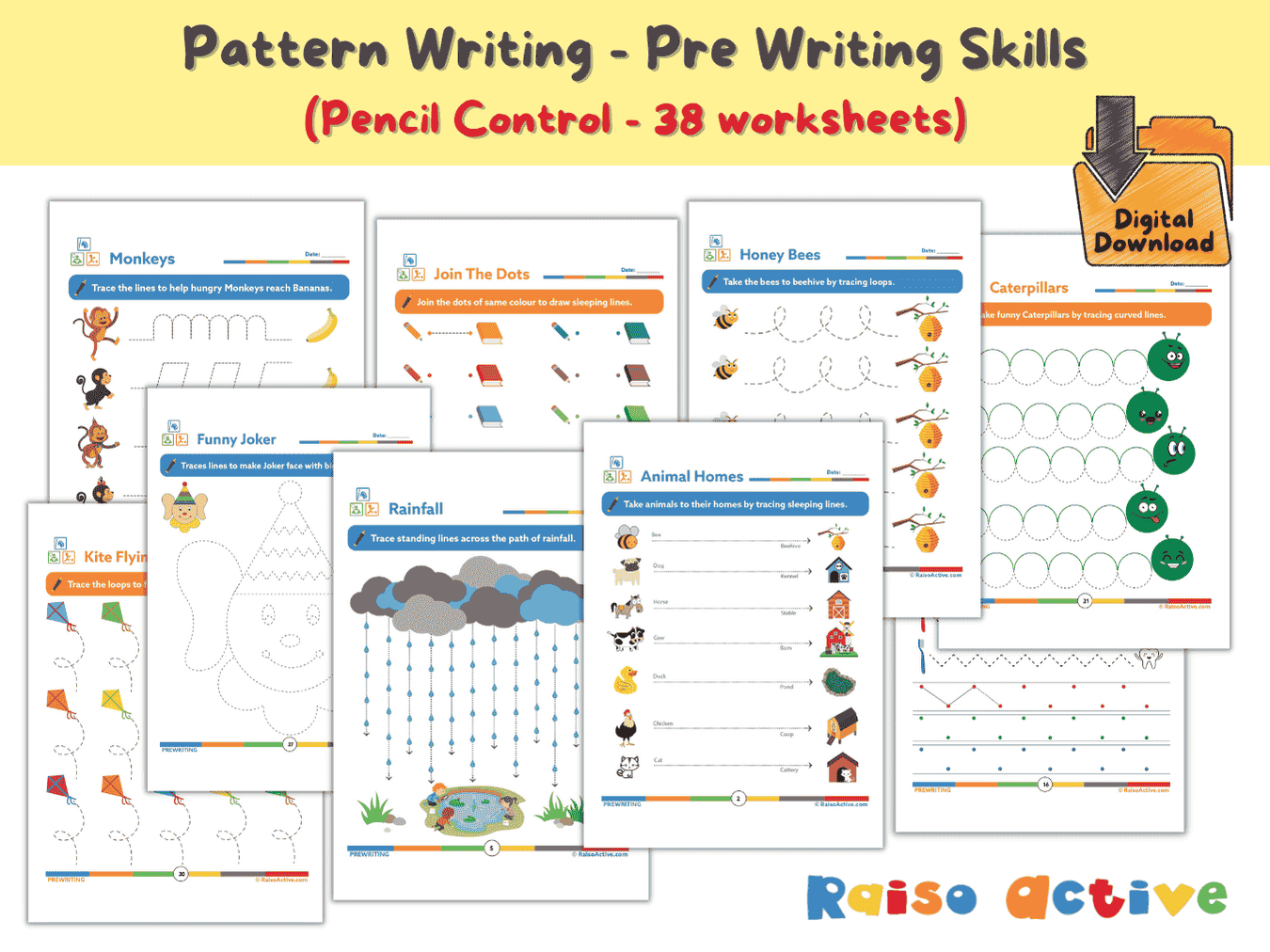
Pattern Writing Pre-writing Skills Activity Book for 3-4 Year Olds
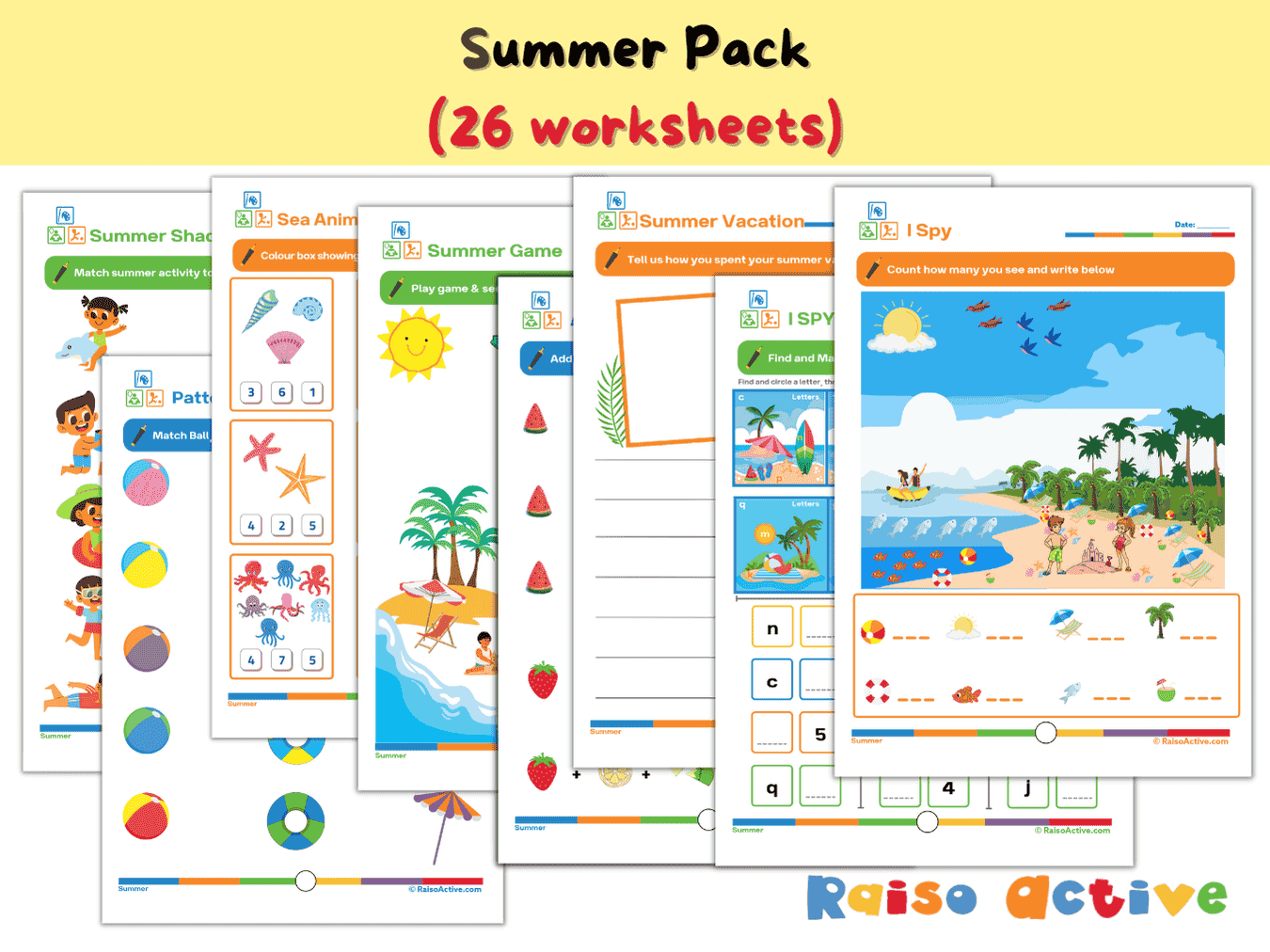
Summer Activity Pack: Math, Literacy, Puzzles & More for Preschool & Kindergarten
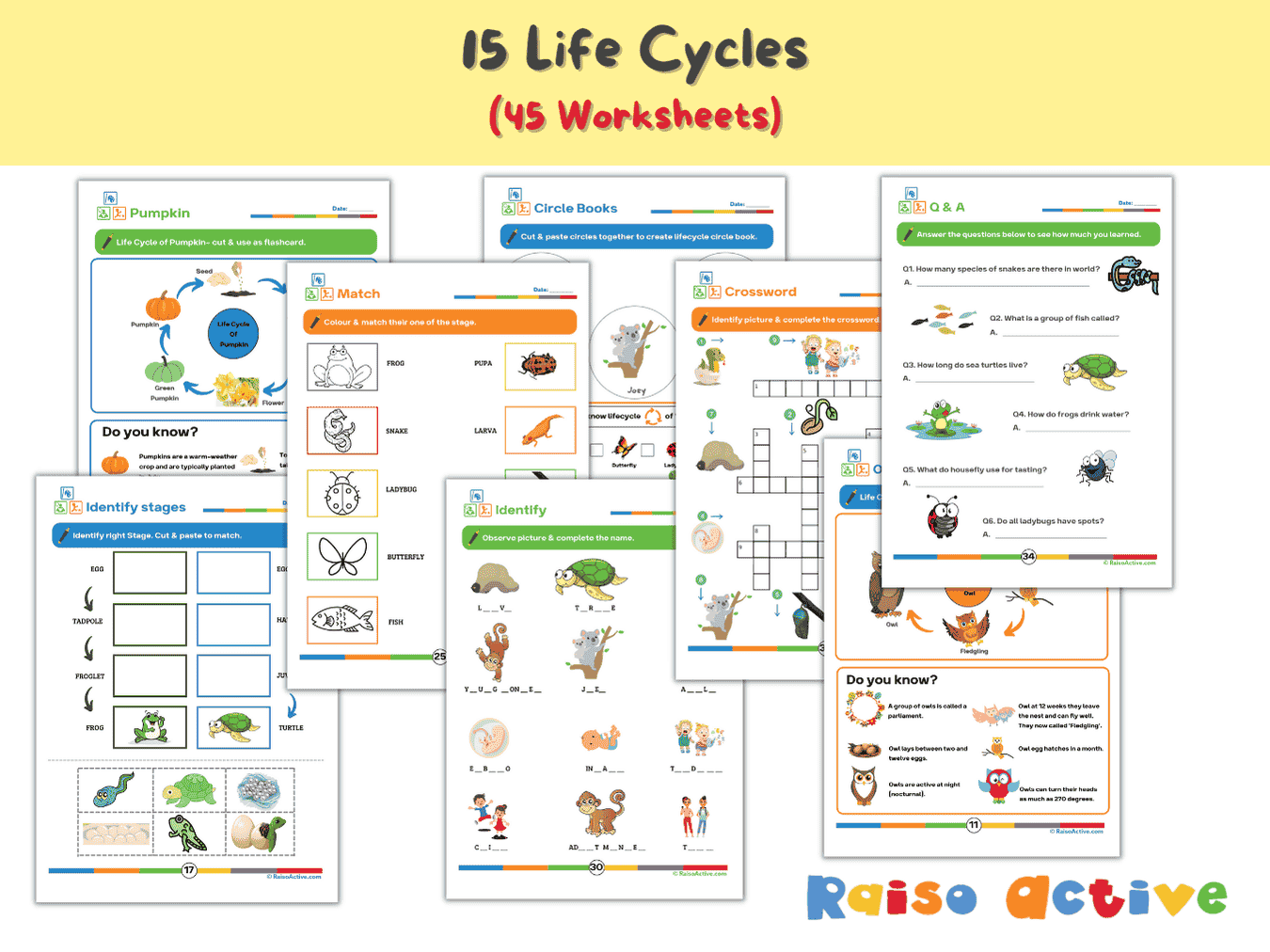
Lifecycles Activity Book & Flashcards for Preschool & Early Elementary
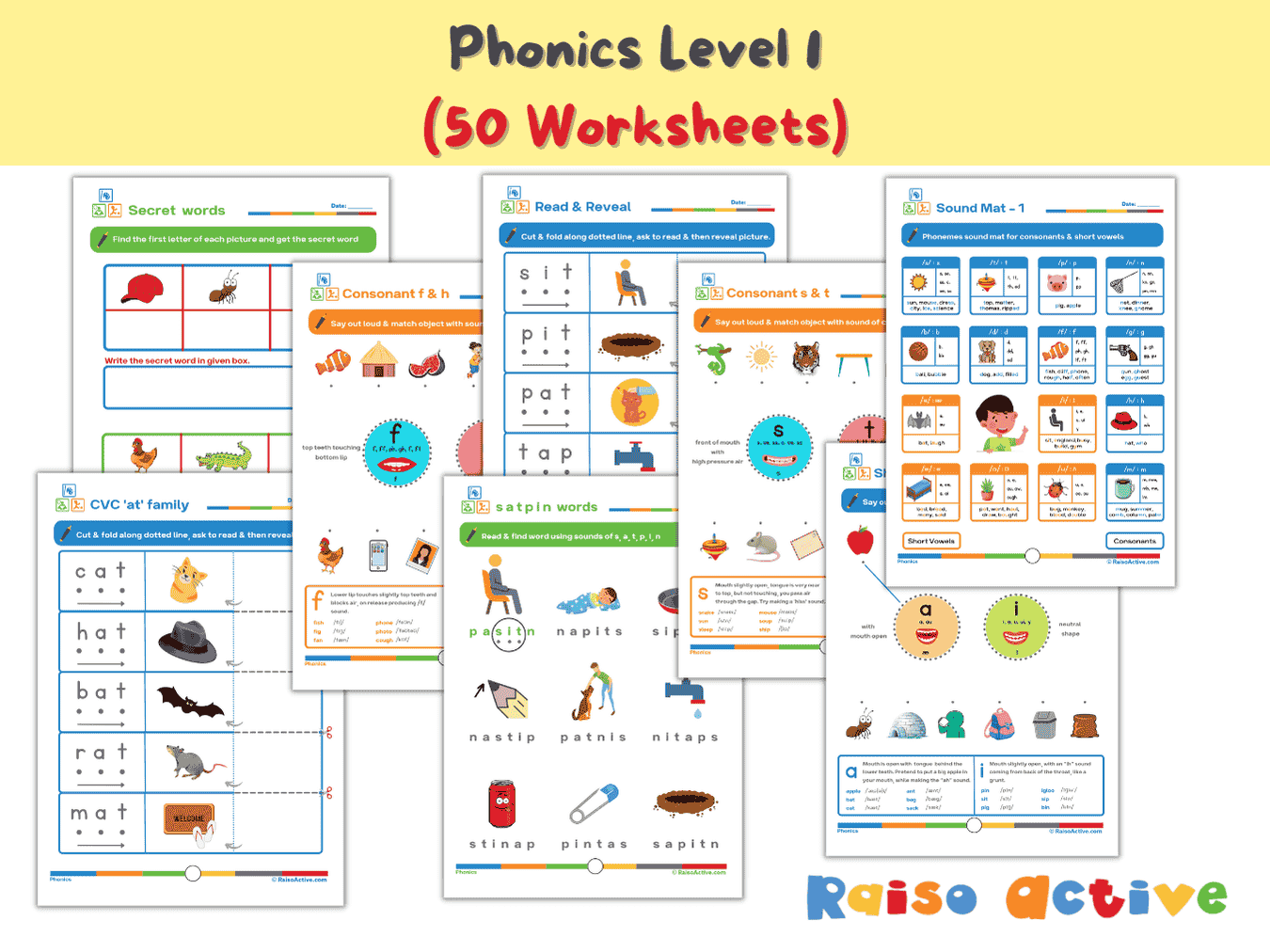
Phonics Level 1 Activity Book: Letter Sounds, Blending & CVC Words for Preschool & Kindergarten
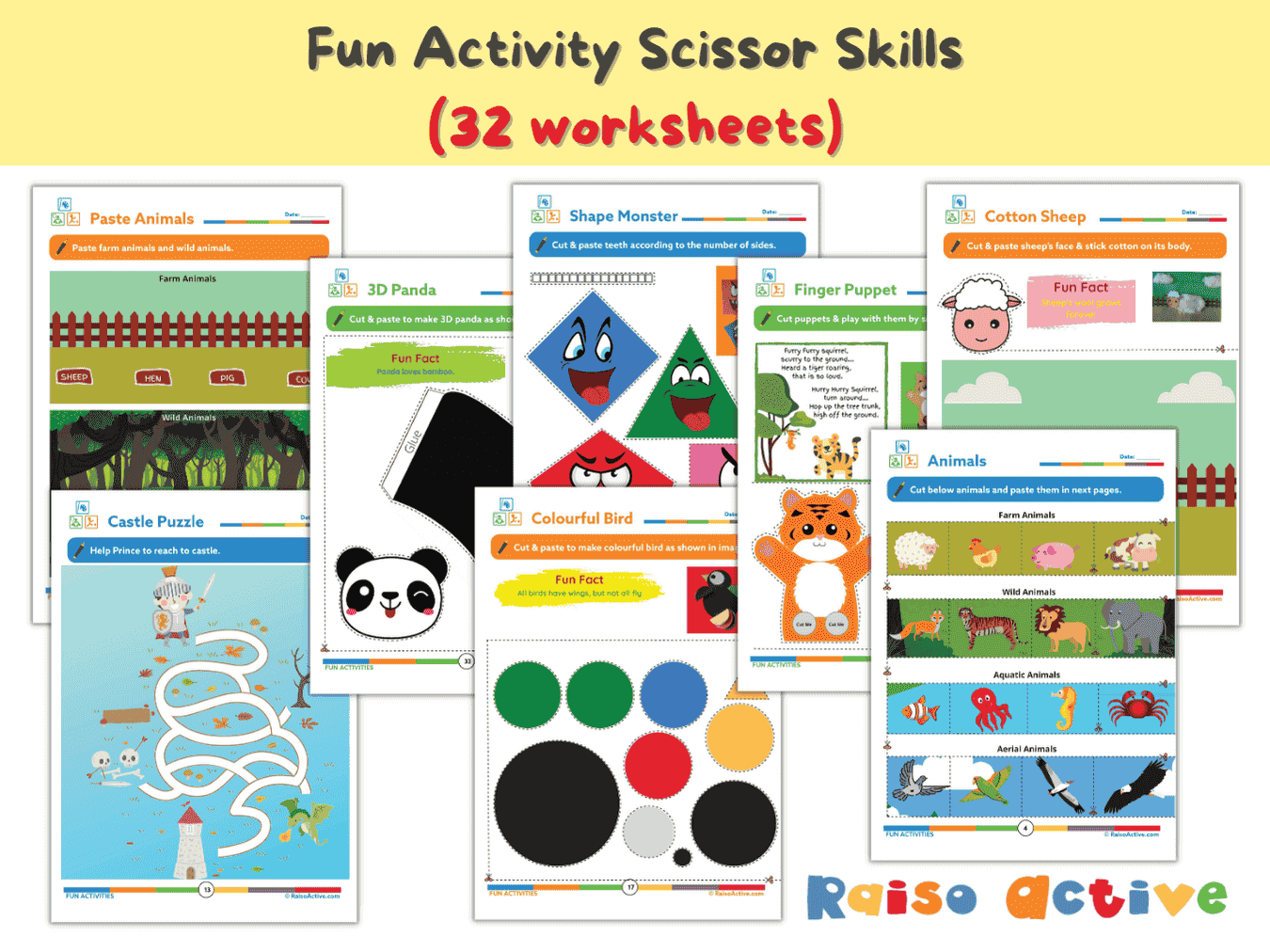
Preschool Scissor Skills Activity Book: Fine Motor & Craft Fun for Ages 3-6
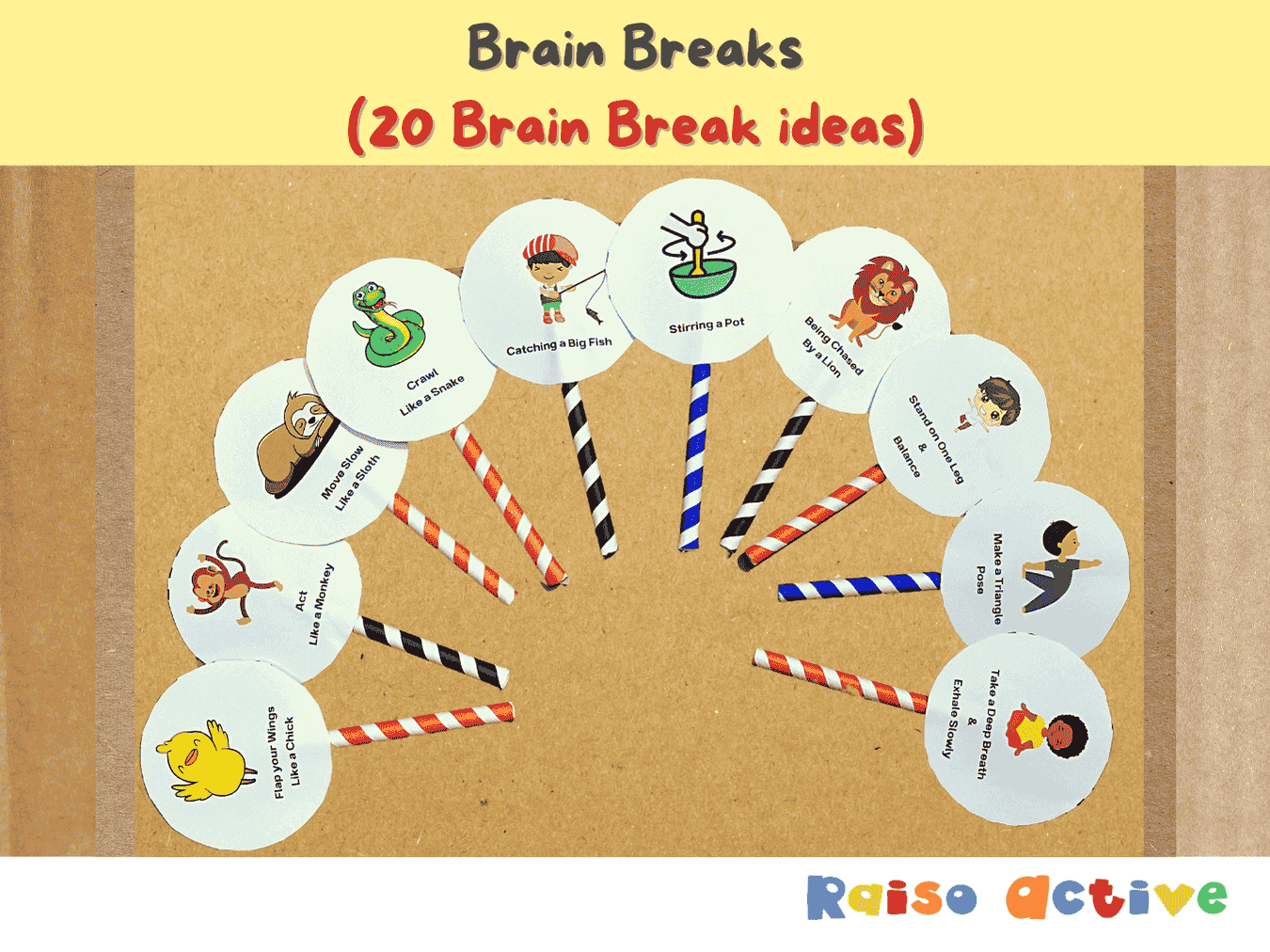
Gross Motor Movement & Imaginative Play Flashcards for Toddlers & Preschoolers
Guides for parents and teachers
See all guides →Sight Words by Age: The First 50 Words and How to Teach Them Without Flashcard Fatigue
Which sight words to teach first and why, the heart-word method, a read-trace-write-find routine, games, and a by-age table of typical sight-word progress.
Number Formation Rhymes 0–9 and How to Fix Reversals
Original number formation rhymes for 0–9, the correct stroke order for each digit, why 3, 5 and 7 get reversed most often, and multisensory fixes that work.
Pre-Writing Strokes in Order: From Standing Lines to Loops (With Printable Patterns)
The developmental order of pre-writing strokes, from vertical lines to loops, and why practicing them in sequence makes letter formation much easier to learn.
Kindergarten Readiness Checklist: 25 Skills to Practice Before the First Day
A kindergarten readiness checklist of 25 literacy, math, motor, self-regulation and self-help skills, with an 8-week summer plan and notes on when not to worry.
Best Worksheets for 3-Year-Olds: What Works and What to Avoid
What works on worksheets for 3-year-olds: short sessions, crayons, tracing lines, matching, cutting, a free weekly plan, and signs one is too advanced.
Reception Year Explained: EYFS Learning and How to Help at Home
A teacher's plain-English guide to the Reception Year: the seven areas of learning, Early Learning Goals, Phase 2/3 phonics, the RBA and home routines.
Canonical: https://raisoactive.com/worksheets/worksheets-for-2-year-olds