Match the Fruits to Their Plants Worksheet for Preschoolers
This worksheet helps children ages 3-5 build early plant science knowledge by matching common fruits to the plant or tree they actually grow on, such as an apple to a tree or a strawberry to a low bush. This task moves beyond simply naming fruits into understanding where food comes from, an important first step in connecting nature to the food children eat every day.

Part of the pack
Month 11: Learning & Development | Ages Up to 4
This is page 23 of the pack. Ages 2-4 · PreschoolAges 2-4 · NurseryAges 2-4
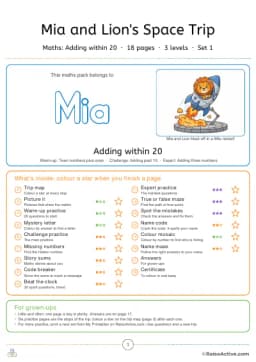
Made for your child
Counting to 10, made for your child
A maths pack with your child's name in it: pictures that explain, practice at three levels, puzzles and story sums about them. Print a new set whenever they finish.
Make a maths packFree preview · free for members
Curriculum
- Cognitive - Attention > Observation Skills
How to use this worksheet
Look at the fruits pictured on the left side of the page and name each one together. Then look at the plants pictured on the right and talk about what your child notices about each one — is it a tall tree, a vine, or a low bush? Ask your child which plant they think grows each fruit before drawing a line to connect the matching pair. Once finished, review the matches together and talk about what each fruit tastes like and how it might be harvested.
Materials needed
- Pencil
- Crayons
Extension activities
- 1Visit a garden, orchard, or farmers market and look for fruits still growing on their plants.
- 2Draw your favorite fruit growing on its plant, including roots, stem, and leaves.
- 3Plant a fruit seed, like an apple or avocado seed, and observe it over time.
- 4Sort fruit pictures by whether they grow on trees, vines, or bushes.

Written by
Hemsweta Jain · Teacher Cheena
MBA and Early Childhood Educator, teaching since 2014 · Founder of RaisoActive, Mumbai
Every RaisoActive worksheet is designed and checked by the founder before publishing.
Published · Last reviewed
More from Month 11: Learning & Development | Ages Up to 4
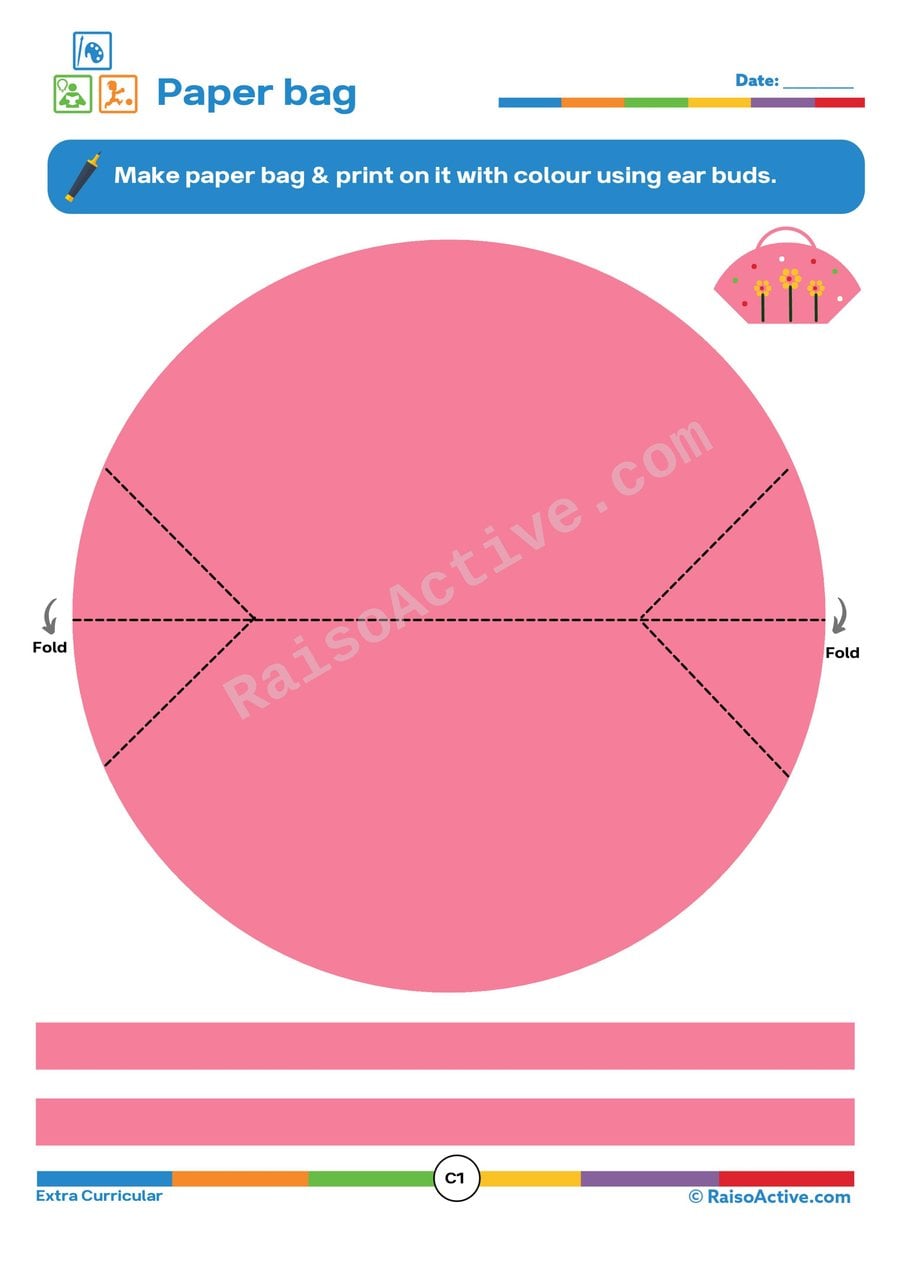
Paper Bag Craft Worksheet for Kids
Ages 3-5 · Preschool–Pre-KAges 3-5 · Nursery–ReceptionAges 3-5 · Nursery–LKGAges 3-5
Children ages 3-5 practice fine motor control and following multi-step craft instructions by folding a paper bag and decorating it using a cotton swab dipped in color, an unusual painting tool that builds hand control and creative expression at the same time. Following each folding and coloring step in order also strengthens early sequencing and listening skills.

Color the Circles: Vocabulary Worksheet for Preschoolers
Ages 3-5 · Preschool–Pre-KAges 3-5 · Nursery–ReceptionAges 3-5 · Nursery–LKGAges 3-5
Matching a chart of letter-color pairings to circles below reinforces alphabet recognition for children ages 3-5 while training them to hold a two-step visual instruction in mind — find the letter, then find its color — while coloring.

Alphabet Adventures: Write the First Letter - A to T Worksheet
Ages 4-5 · Pre-KAges 4-5 · ReceptionAges 4-5 · LKGAges 4-5
This worksheet builds early phonemic awareness in children ages 4-5 by asking them to identify a pictured object, say its name aloud, and isolate the very first sound to write as a letter. Practicing this across a wide range of letters, A through T, gives children repeated exposure to the letter-sound connection that underlies all future reading and spelling. It also strengthens letter formation as children physically write each capital letter.
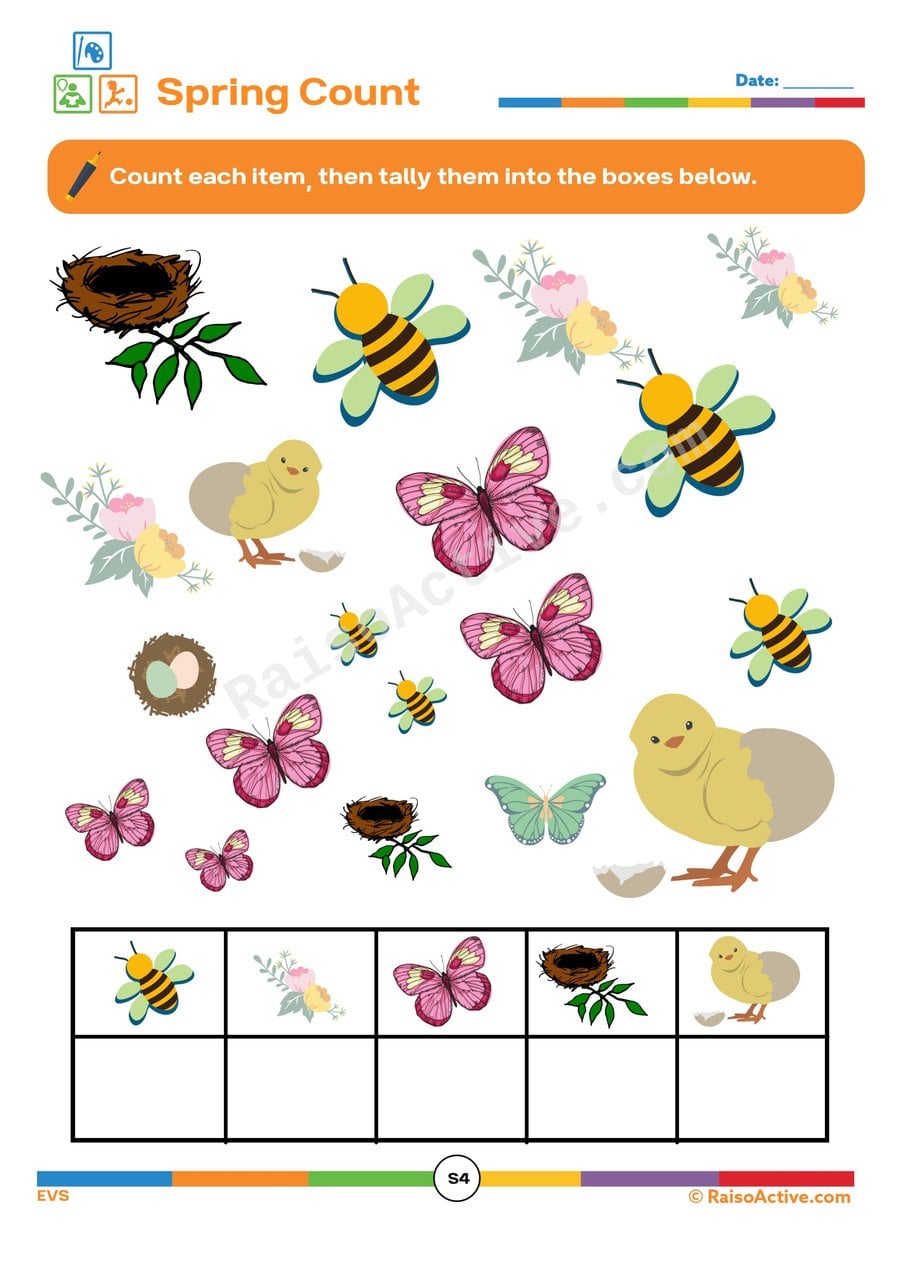
Spring Count: Tally the Spring Items Worksheet
Ages 3-5 · Preschool–Pre-KAges 3-5 · Nursery–ReceptionAges 3-5 · Nursery–LKGAges 3-5
Introduces tally marks as a way of recording a count, teaching children ages 3-5 to count spring-themed objects and represent the total visually in groups of five — an early step toward understanding how numbers can be organized.

Counting Fun: Count and Write the Numbers Worksheet for Kids
Ages 3-5 · Preschool–Pre-KAges 3-5 · Nursery–ReceptionAges 3-5 · Nursery–LKGAges 3-5
This worksheet builds core numeracy for children ages 3-5 through the fundamental skill of one-to-one correspondence — counting a group of objects and writing the numeral that represents the total. This is one of the earliest and most essential math skills, since accurately connecting a counted quantity to a written number underlies every later arithmetic concept.

Alphabet U-Z Worksheet: Find the Letter and Count!
Ages 4-6 · Pre-K–KindergartenAges 4-6 · Reception–Year 1Ages 4-6 · LKG–UKGAges 4-6
This worksheet extends alphabet mastery to the less-practiced letters U through Z for children ages 4-6, combining beginning-sound identification with a counting task for each object pictured. Because letters at the end of the alphabet appear less often in early reading material, dedicated practice here helps round out full alphabet fluency, while the counting component keeps numeracy skills active alongside literacy.
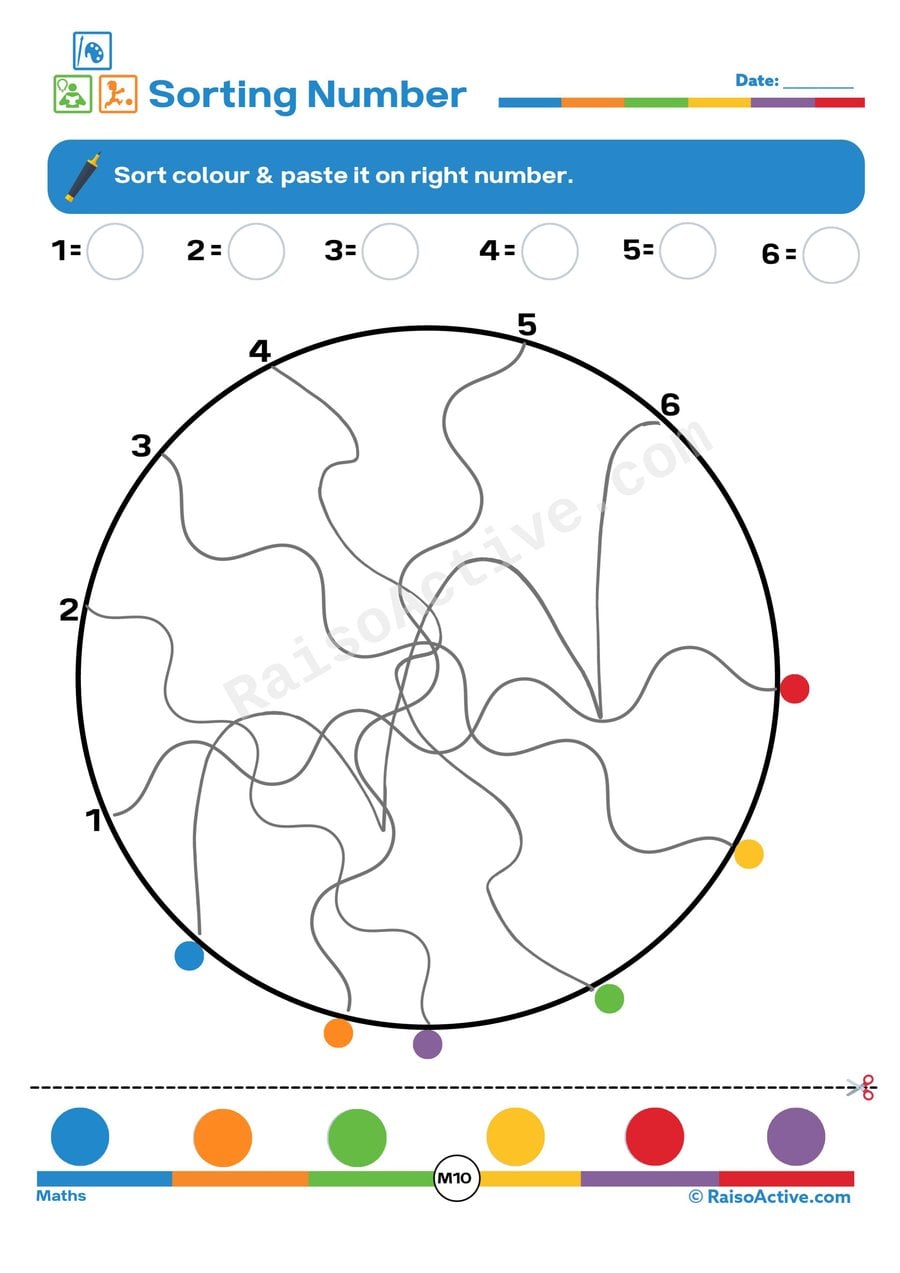
Sorting Numbers Worksheet: Color and Paste!
Ages 3-5 · Preschool–Pre-KAges 3-5 · Nursery–ReceptionAges 3-5 · Nursery–LKGAges 3-5
Children ages 3-5 practice matching quantities to written numerals by counting sets of colored dots and pasting them next to the correct number, reinforcing both counting accuracy and number recognition in a hands-on cut-and-paste format. Sorting by matching color groups to numbers also builds early visual categorization skills.

Summer Count: A Fun Counting Worksheet for Preschoolers!
Ages 3-5 · Preschool–Pre-KAges 3-5 · Nursery–ReceptionAges 3-5 · Nursery–LKGAges 3-5
Counting groups of summer-themed objects like sunglasses, beach balls, or ice creams builds one-to-one correspondence for children ages 3-5, and recording the total in writing gives them foundational practice before moving into simple addition.
Related worksheets
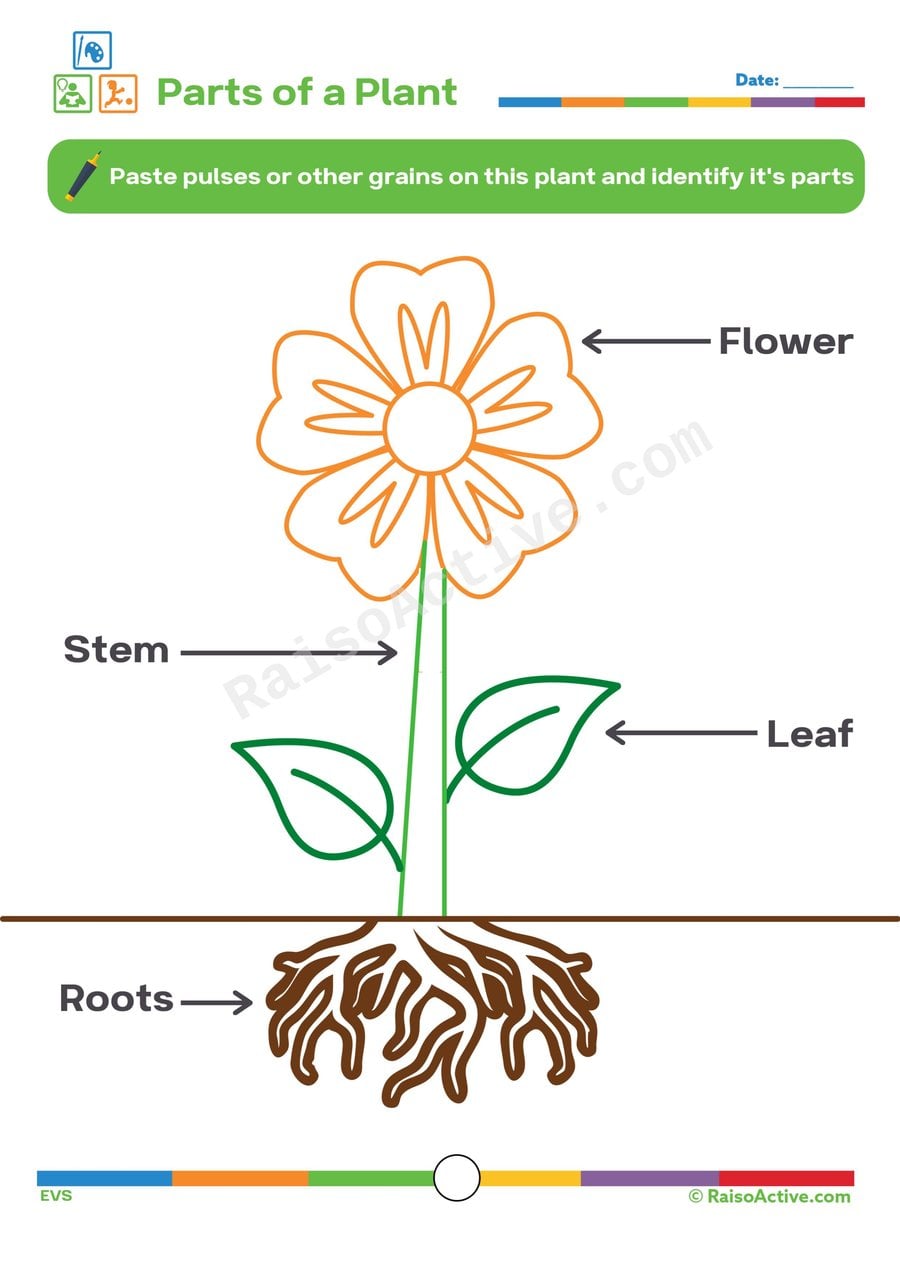
Parts of a Plant Worksheet: Identify and Label!
Ages 3-5 · Preschool–Pre-KAges 3-5 · Nursery–ReceptionAges 3-5 · Nursery–LKGAges 3-5
This activity teaches children ages 3-5 the basic parts of a plant — flower, stem, leaf, and roots — by having them label a diagram and add texture using real pulses or grains glued onto the plant shape. Combining a tactile material with each labeled part helps young children retain the vocabulary better than labeling alone, since touch and sight reinforce the same information.

Find the Similar Objects Worksheet for Preschoolers
Ages 3-5 · Preschool–Pre-KAges 3-5 · Nursery–ReceptionAges 3-5 · Nursery–LKGAges 3-5
Comparing a row of objects to find the ones that match and identify the one that's different builds visual discrimination skills for children ages 3-5, an early foundation for noticing the subtle differences between similar-looking letters later in reading.

States of Matter Worksheet: Exploring Solids, Liquids, and Gases!
Ages 4-6 · Pre-K–KindergartenAges 4-6 · Reception–Year 1Ages 4-6 · LKG–UKGAges 4-6
This worksheet introduces children ages 4-6 to the three states of matter — solid, liquid, and gas — by having them examine images and sort each one into its correct category. Learning to classify familiar objects (like ice, water, and steam) by their physical state builds early scientific reasoning, since children must look past an object's identity and focus on its underlying properties.
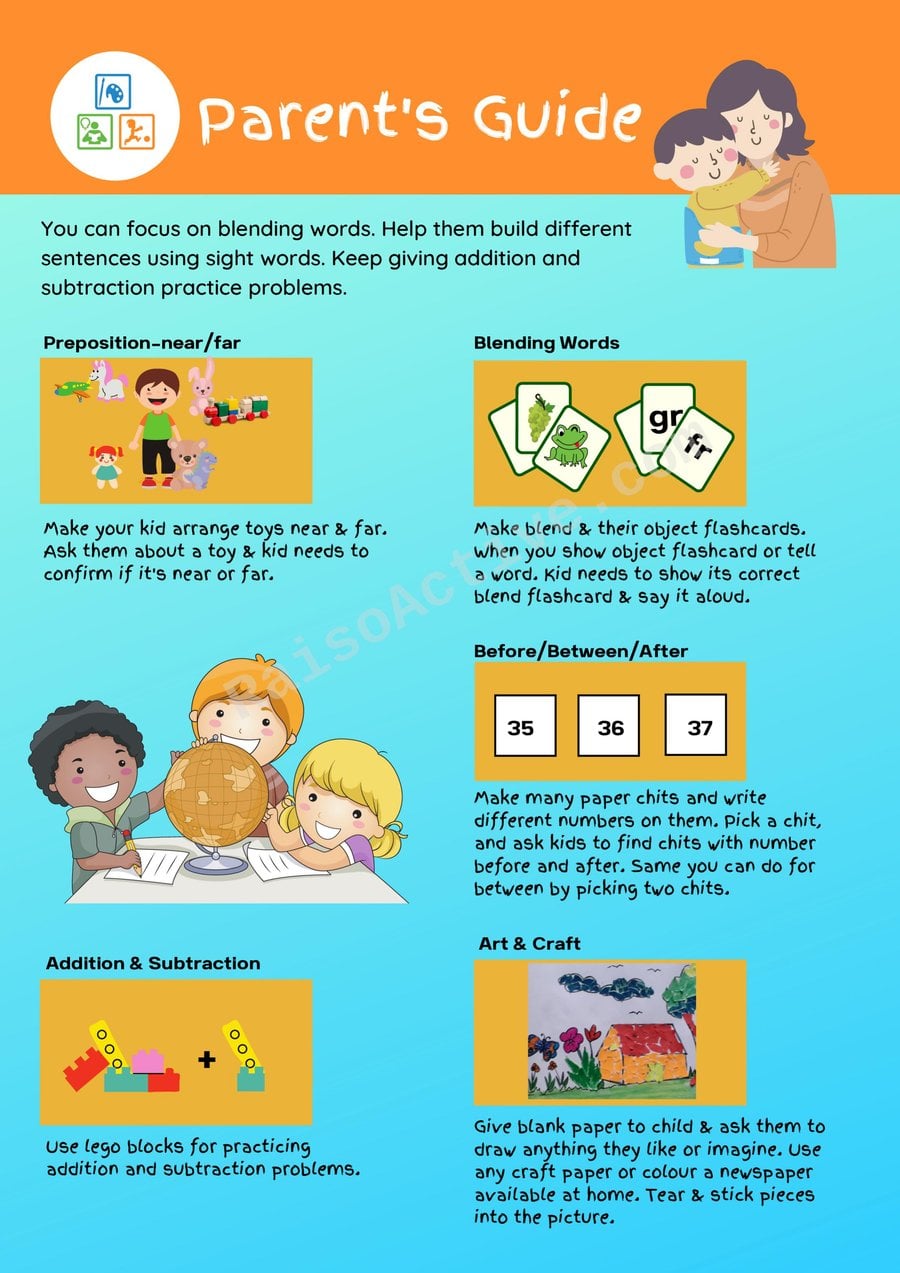
Parent's Guide: Fun Activities for Early Learning
Ages 3-5 · Preschool–Pre-KAges 3-5 · Nursery–ReceptionAges 3-5 · Nursery–LKGAges 3-5
This parent guide bundles three separate early-learning activities, blending sounds into words, understanding prepositions like 'near' and 'far,' and practicing basic math, into one set of hands-on games rather than a single printed page. Combining these skills in short, varied activities matches how preschoolers actually learn best: through play, repetition, and movement rather than sitting through one long task.

Sound Energy Worksheet: Identifying Sound Producers!
Ages 4-6 · Pre-K–KindergartenAges 4-6 · Reception–Year 1Ages 4-6 · LKG–UKGAges 4-6
This worksheet asks children to identify which objects produce sound and to think about how the ear allows us to hear those sounds, introducing basic science vocabulary around sound energy at an age when they're ready to start reasoning about cause and effect. Circling and matching sound-producing objects also sharpens observation, since children must consider whether an object truly makes noise or is simply pictured near something that does.
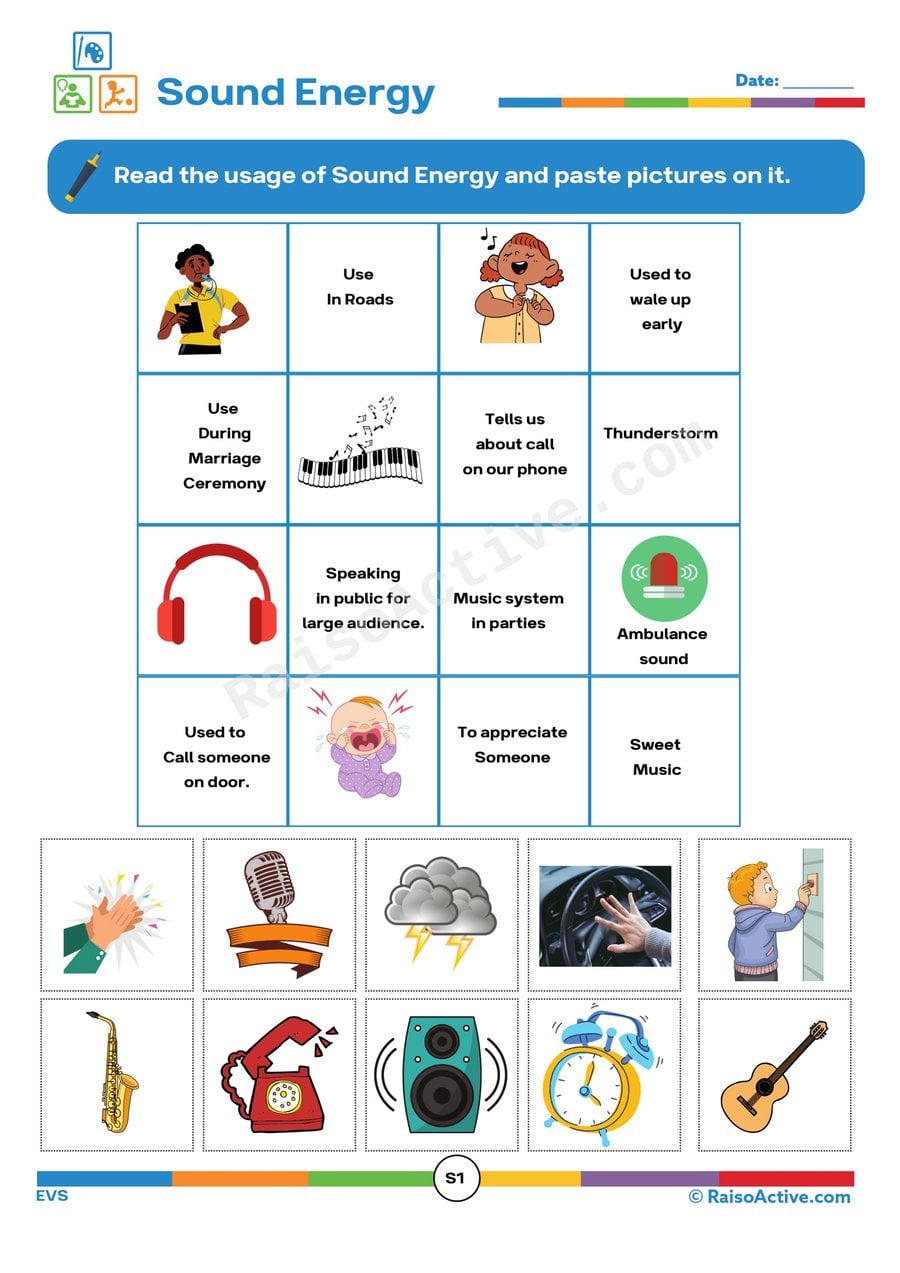
Sound Energy Matching Worksheet for Kids
Ages 4-6 · Pre-K–KindergartenAges 4-6 · Reception–Year 1Ages 4-6 · LKG–UKGAges 4-6
This worksheet introduces children ages 4-6 to the science concept of sound energy by having them match short descriptions of sound sources to the correct picture. Reading or listening to a description and then identifying the matching image builds comprehension alongside early science reasoning, helping children understand that sound is produced by different actions and objects in the world around them.
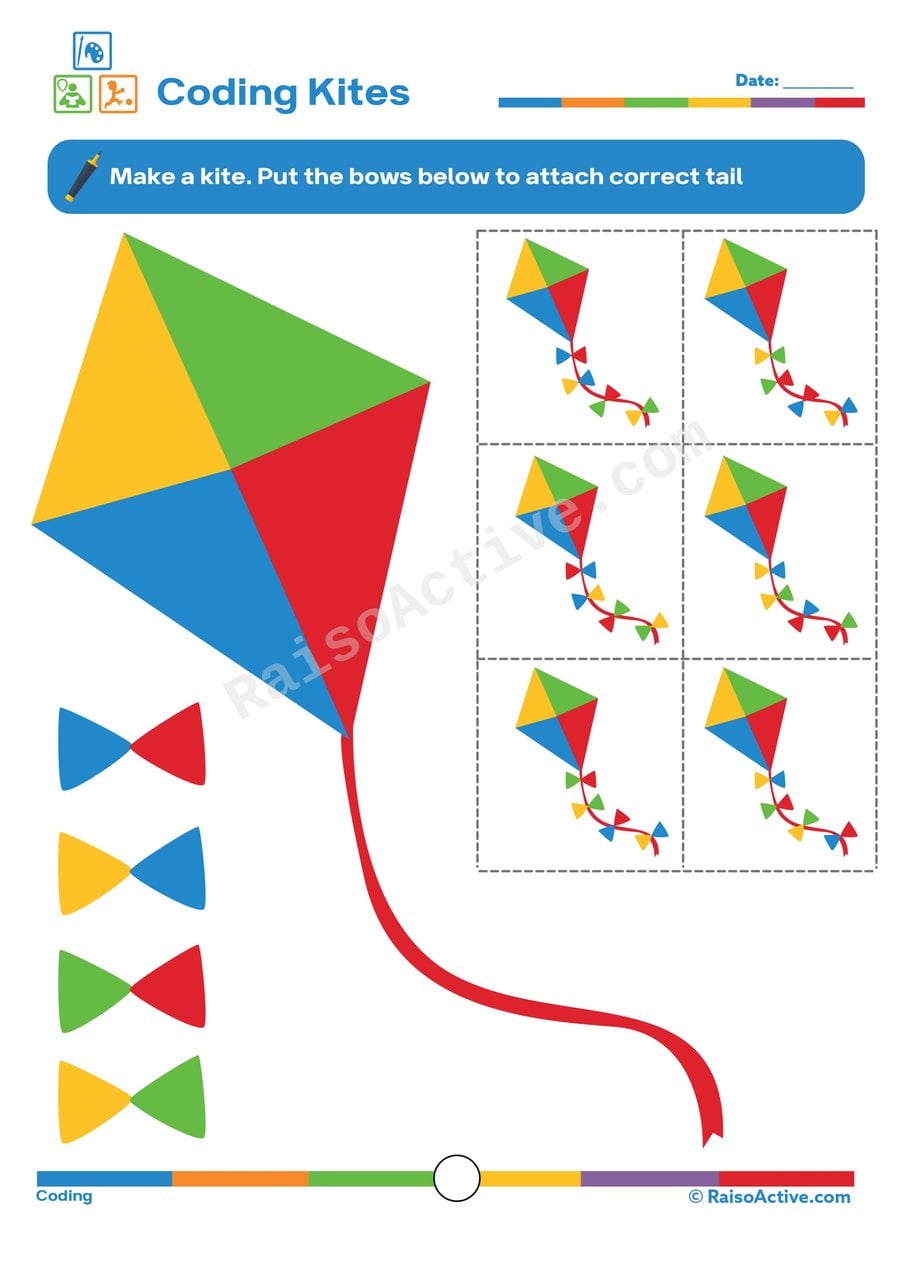
Coding Kites Worksheet: Match the Bows!
Ages 3-5 · Preschool–Pre-KAges 3-5 · Nursery–ReceptionAges 3-5 · Nursery–LKGAges 3-5
This activity sharpens visual observation in children ages 3-5 as they compare color sequences on each kite to a set of loose bows and find the exact match. Careful, systematic comparison — checking each color in order rather than glancing quickly — builds an attention-to-detail habit that transfers directly to early reading and number work.

Match the Countries with Their Symbols Worksheet
Ages 4-6 · Pre-K–KindergartenAges 4-6 · Reception–Year 1Ages 4-6 · LKG–UKGAges 4-6
Children ages 4-6 build early social studies awareness by matching country flags to their well-known national symbols, connecting visual recognition with basic geography and cultural knowledge. This kind of matching exercise strengthens careful observation, since children must compare colors, shapes, and details across both the flag and the symbol image. It also plants the seed for understanding that different countries have distinct identities and traditions.
Guides for this topic

Best Worksheets for 3-Year-Olds: What Works and What to Avoid
What works on worksheets for 3-year-olds: short sessions, crayons, tracing lines, matching, cutting, a free weekly plan, and signs one is too advanced.

Age-Appropriate Problem-Solving Activities: Building Critical Thinkers from the Ground Up
Discover fun, age-appropriate problem-solving activities for children ages 1-8. Build critical thinking, logic, and reasoning skills through play-based learning.
Critical Thinking Activities That Actually Work for Young Children: Building Tomorrow's Thinkers Today
Discover proven critical thinking activities for young children. Age-wise logic games, questioning techniques, and hands-on ideas to build thinking skills at home.
Reviews
Every worksheet for ages 3–5, no watermark
Members download the full library of 1,000+ worksheets and every activity pack without watermarks or daily limits. One year costs ₹999 in India or $20 elsewhere.
See membership plansOr download any worksheet free with a watermark (5 a day).